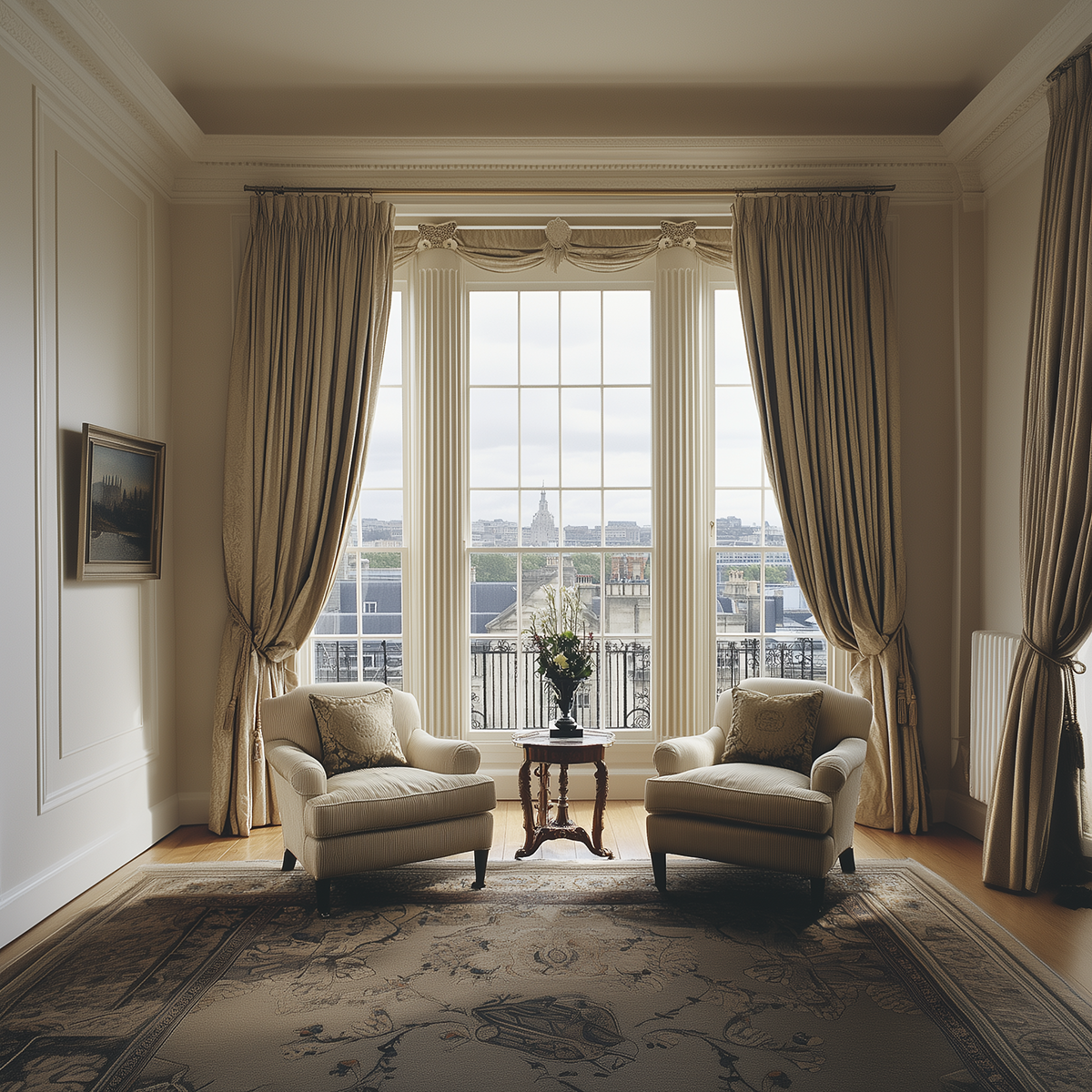
Selecting the perfect curtains for sash windows can transform your living space. Sash windows, with their unique sliding mechanism and classic charm, require careful consideration when it comes to window treatments. Made-to-measure curtains offer a tailored solution that ensures a perfect fit and enhances the overall aesthetic of your room.
Choosing the right curtains involves more than just picking a fabric you like. Factors such as window size, room style, and desired functionality all play crucial roles. With sash windows, it’s essential to consider how the curtains will interact with the window’s operation, ensuring they don’t interfere with the sliding mechanism.
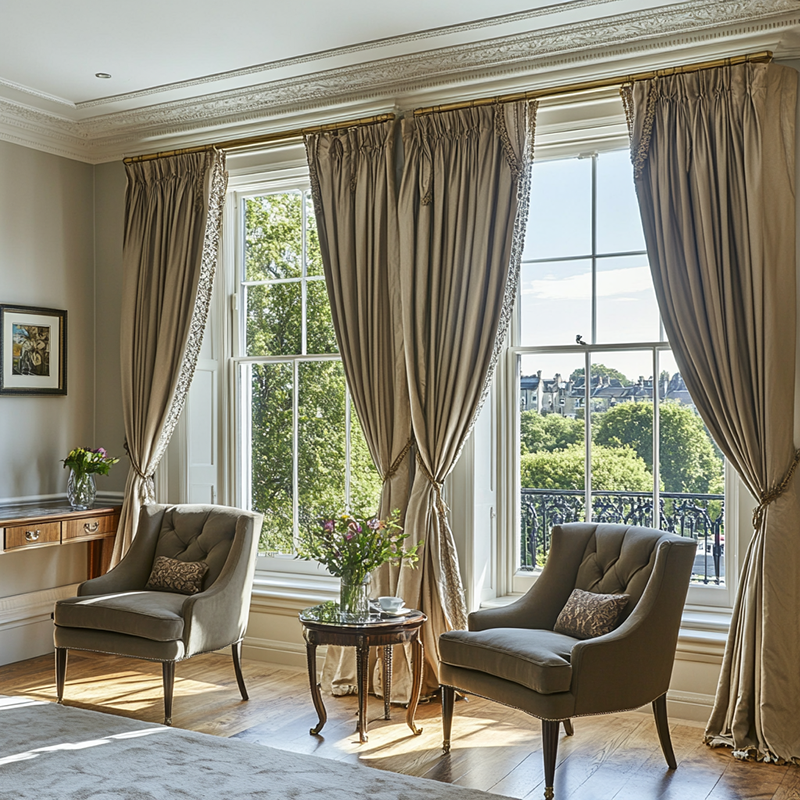
When opting for made to measure curtains, you have the advantage of customizing every aspect. From precise measurements to fabric selection and design details, you can create window dressings that perfectly complement your sash windows and interior décor.
Key Takeaways
- Accurate measurements are crucial for achieving the perfect fit for sash window curtains
- Consider the curtain’s interaction with the window’s sliding mechanism when selecting styles
- Custom-made curtains offer flexibility in design, allowing for a tailored look that enhances your space
Assessing Your Sash Window Specifications
Accurate measurements and appropriate hardware selection are crucial for achieving the perfect fit and functionality of made-to-measure curtains for sash windows. Precise dimensions and suitable fixtures ensure a polished, tailored look that complements the window’s unique design.
Measuring Window Dimensions
To measure sash windows correctly, start with the width. Measure across the top, middle, and bottom of the window frame, using the smallest measurement as the final width. For length, measure from the top of where the curtain rod will be placed to the desired endpoint – typically the windowsill or floor.
For accuracy, use a metal tape measure and record measurements to the nearest 1/8 inch. Note any obstructions like handles or locks that may affect curtain placement. Consider the stack-back space needed when curtains are open to ensure full window access.
Selecting the Appropriate Curtain Hardware
Choosing the right hardware is essential for both aesthetics and functionality. For sash windows, curtain poles or tracks are common options. Poles offer a decorative element and work well with heavier fabrics. Tracks provide a sleek look and are ideal for lighter curtains.
When selecting hardware, consider the curtain weight and desired opening style. Ensure the pole or track extends beyond the window frame to allow curtains to stack clear of the glass. For bay windows, flexible tracks or custom-bent poles may be necessary.
Measure the width of the window plus additional allowance on each side (typically 6-12 inches) to determine the hardware length. This extra space ensures full coverage and a luxurious appearance when curtains are closed.
Choosing the Curtain Design Details
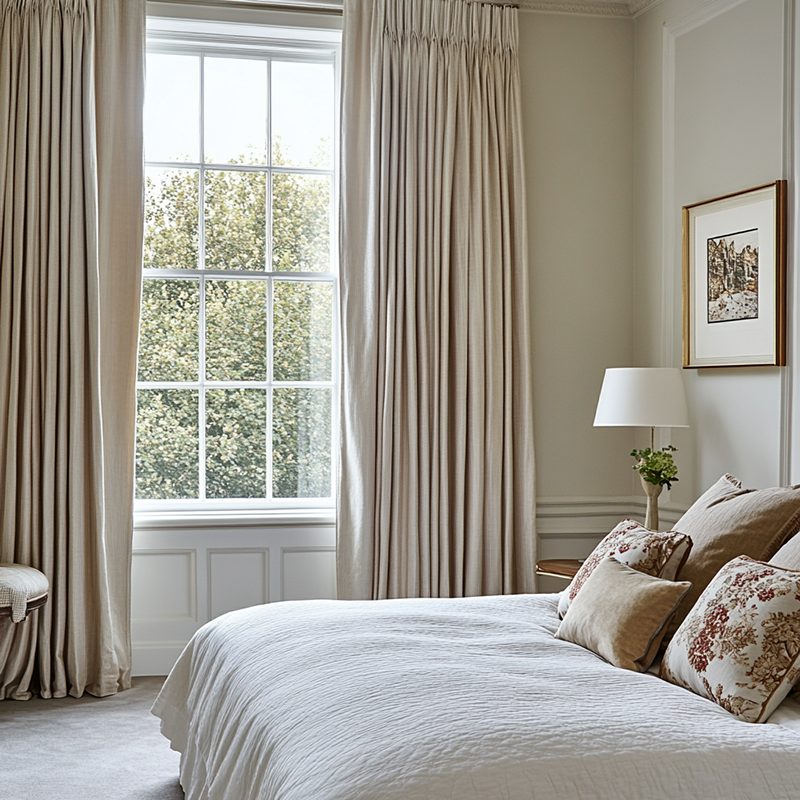
Made-to-measure curtains offer endless possibilities for customization. The fabric, style, heading, and length all play crucial roles in achieving the perfect look for your sash windows.
Determining Fabric and Style
Selecting the right fabric and style sets the tone for your entire window treatment. Consider the room’s décor and purpose when choosing. Light, airy fabrics like cotton or linen work well in casual spaces. Heavier materials such as velvet or brocade suit formal areas.
Solid colors provide versatility, while patterns add visual interest. Keep in mind pattern repeats when selecting patterned fabrics. Large repeats may require more fabric to match properly across panels.
For sash windows, opt for styles that complement their traditional charm. Roman shades offer a sleek look, while pinch-pleat curtains add elegance. Café curtains can provide privacy while allowing light through the upper portion of the window.
Understanding Curtain Headings and Fullness
The curtain heading affects both appearance and functionality. Popular options for sash windows include:
- Pencil pleat: Versatile and easy to adjust
- Pinch pleat: Formal and structured
- Eyelet: Modern and easy to open/close
Fullness refers to the amount of fabric used in relation to the rod width. A fullness ratio of 2:1 or 2.5:1 is standard for most curtains. Increase fullness for a more luxurious look or decrease it for a tailored appearance.
Consider the curtain’s weight when choosing a heading. Heavier fabrics may require sturdier headings like pinch pleats to support their weight properly.
Considering Curtain Length and Functionality
Length impacts both aesthetics and practicality. For sash windows, common options include:
- Sill length: Ends at the window sill
- Below sill: Extends slightly past the sill
- Floor length: Reaches the floor
Floor-length curtains create a formal, elegant look. They also provide better insulation. Shorter lengths work well in areas where long curtains may be impractical, such as above radiators or in high-traffic zones.
Consider the curtain’s primary function. Light-filtering fabrics allow natural light while maintaining privacy. Blackout curtains block light completely, ideal for bedrooms. Lined curtains enhance insulation and light control.
For sash windows, ensure the chosen length allows for easy operation of the window. Avoid lengths that interfere with handles or locks.
Conclusion
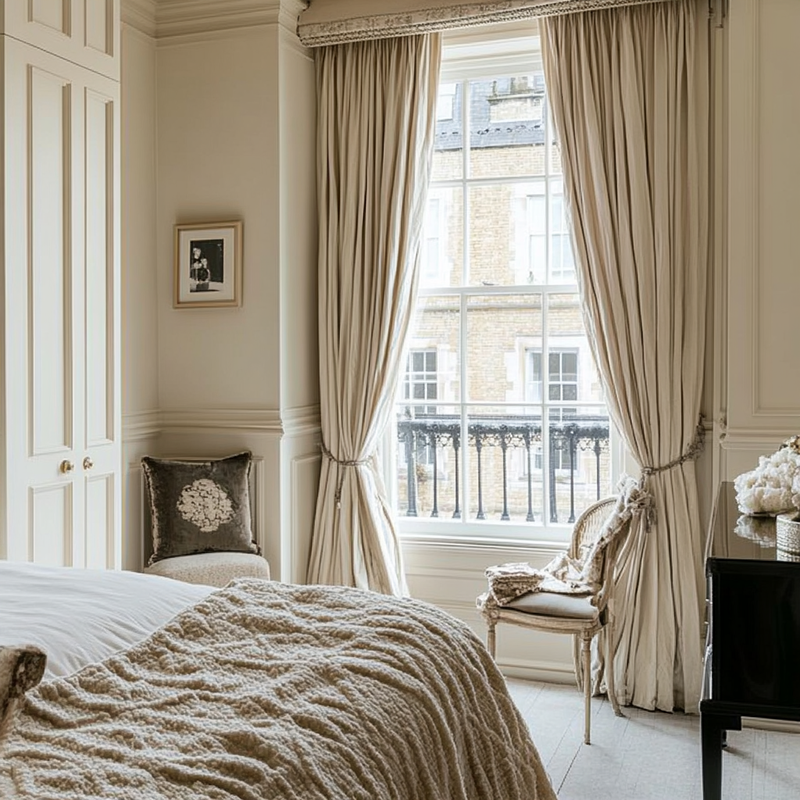
Selecting made-to-measure curtains for sash windows requires careful consideration of fabric, style, and measurements. Proper sizing ensures a perfect fit, while choosing the right fabric enhances both functionality and aesthetics. Custom curtains offer a tailored solution that complements the unique charm of sash windows.
With the right approach, homeowners can create a beautiful window treatment that enhances their space. Made-to-measure curtains provide an excellent opportunity to showcase personal style while addressing the specific needs of sash windows.

Leave a Reply