hacklink hack forum hacklink film izle hacklink marsbahisizmir escortsahabetpornJojobetcasibompadişahbetjojobet

Tag: arguments

  • Closing arguments to begin in trial over stabbing death of Cash App founder Bob Lee

    Closing arguments to begin in trial over stabbing death of Cash App founder Bob Lee

    SAN FRANCISCO — Closing arguments will begin on Monday in the trial of a tech consultant in the 2023 stabbing death of Cash App founder Bob Lee in San Francisco, an event that shocked the broader tech community whose members mourned the loss of an entrepreneur they called charismatic and kind.

    San Francisco prosecutors say Nima Momeni stabbed Lee three times after a dispute over his treatment toward Momeni’s sister, Khazar Momeni, with whom Lee was friends.

    Defense attorneys say Lee, 43, was on a multi-day drug bender of cocaine and ketamine that made him agitated and violent, forcing Momeni to use his Krav Maga martial arts skills to fend off the paring knife Lee brandished in the early morning hours of April 4, 2023 after a “ bad joke.”

    Momeni faces 26 years to life if convicted. He has pleaded not guilty.

    The trial, which began Oct. 14, has been emotionally taxing for family members of both men. Mahnaz Tayarani, mother of the defendant, has sat on one side of the court room while Lee’s father, brother and ex-wife sat on the other.

    Surveillance video of Bob joking around on his final night and autopsy photos of his wounds have been difficult to view, said Lee’s brother, Timothy Oliver Lee. He dismissed Momeni’s explanation of events as a fabrication.

    “Even if he was under the influence, he was still Bob. He was never aggressive. He was always a teddy bear and always a great guy,” he said.

    Surveillance video shows the two men leaving the posh condo of Khazar Momeni around 2 a.m. and getting into Momeni’s BMW. Other surveillance then shows them getting out of the car in an isolated section of the city by the Bay Bridge.

    Momeni testified he stopped his car after going over a pothole that caused Lee to spill the beer he was holding. Momeni said he then cracked a joke suggesting Lee should spend his last night visiting the city with family instead of trying to find a strip club to keep the party going.

    That’s when Lee suddenly pulled a knife, Momeni said. He said Lee later walked away, showing no signs he was injured.

    “I was scared for my life,” Momeni said in testimony that was at times rambling and contentious. “I had to defend myself.”

    Lee was found staggering on a deserted downtown San Francisco street at 2:30 a.m., dripping a trail of blood and calling for help. He later died at a hospital.

    Prosecutors say Momeni was furious with Lee after he introduced Khazar to a drug dealer who gave her GHB, known as a date-rape drug, hours before the stabbing. They say Momeni grilled Lee earlier in the evening about what might have happened to his sister at the drug dealer’s apartment.

    Jurors were allowed to ask questions and, through San Francisco Superior Court Judge Alexandra Gordon, asked why Momeni did not call police, either after Lee’s knife attack or after Momeni realized Lee had been stabbed to death.

    A knife recovered from the area where Lee was stabbed showed Momeni’s DNA on the handle, but the defense said the handle should have been tested for Lee’s fingerprints.

    Lee’s death stunned the tech community as fellow executives and engineers penned tributes to his generosity and brilliance. He was chief product officer of cryptocurrency platform MobileCoin when he died.
    Source link

  • Judge to hear arguments on whether Google’s advertising tech constitutes a monopoly

    Judge to hear arguments on whether Google’s advertising tech constitutes a monopoly

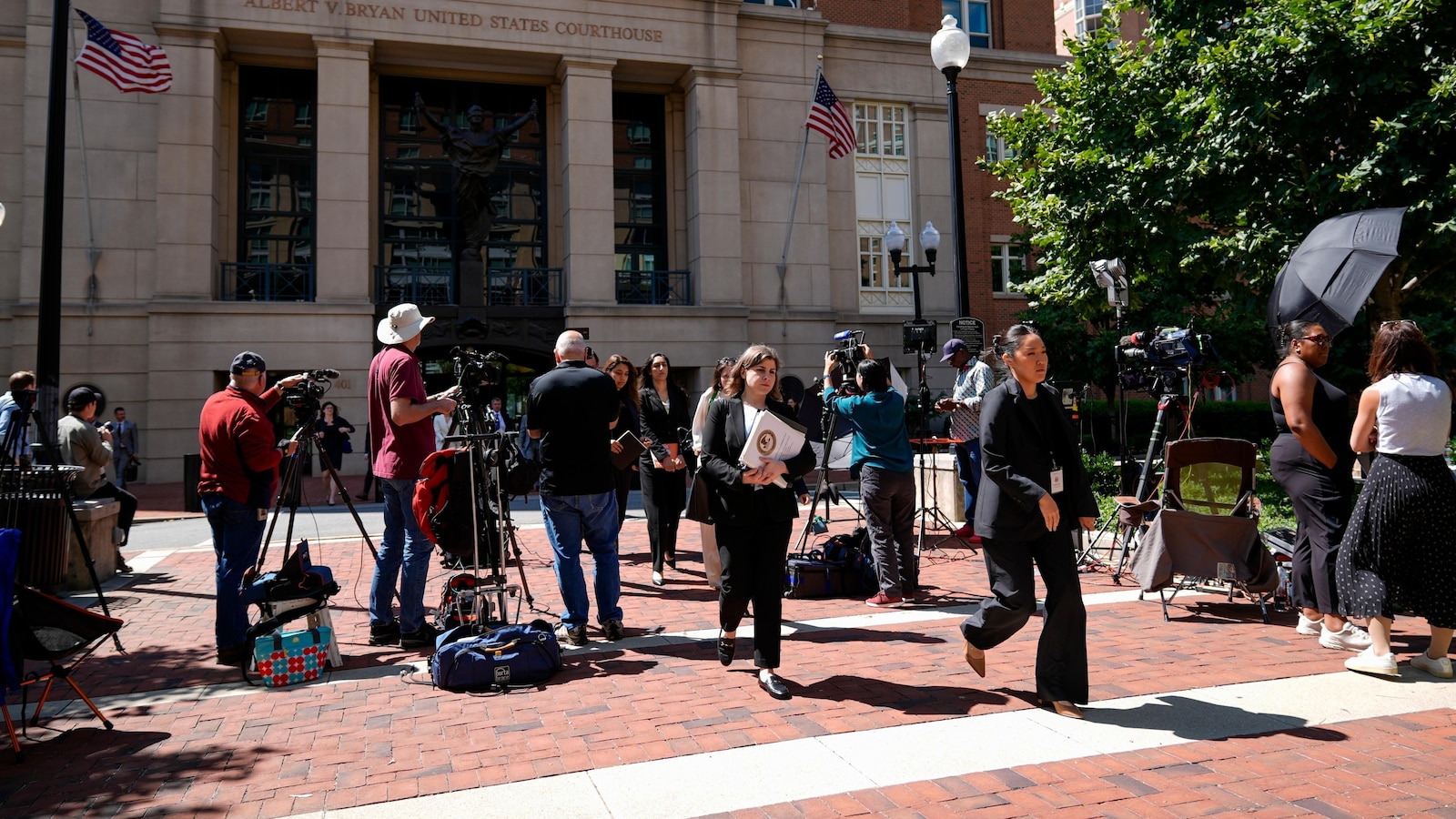
    ALEXANDRIA, Va. — Google, already facing a possible breakup of the company over its ubiquitous search engine, is fighting to beat back another attack by the U.S. Department of Justice alleging monopolistic conduct, this time over technology that puts online advertising in front of consumers.

    The Justice Department and Google are scheduled to make closing arguments Monday in a trial alleging Google’s advertising technology constitutes an illegal monopoly.

    U.S. District Judge Leonie Brinkema in Alexandria, Virginia, will decide the case and is expected to issue a written ruling by the end of the year. If Brinkema finds Google has engaged in illegal, monopolistic conduct, she will then hold further hearings to explore what remedies should be imposed.

    The Justice Department, along with a coalition of states, has already said it believes Google should be forced to sell off its ad tech business, which generates tens of billions of dollars annually for the Mountain View, California-based company.

    After roughly a month of trial testimony earlier this year, the arguments in the case remain the same.

    The Justice Department contends Google built and maintained a monopoly in “open-web display advertising,” essentially the rectangular ads that appear on the top and right-hand side of the page when one browses websites.

    Google dominates all facets of the market: A technology called “DoubleClick” is used pervasively by news sites and other online publishers, while “Google Ads” maintains a cache of advertisers large and small looking to place their ads on the right webpage in front of the right consumer.

    In between is another Google product, AdExchange, that conducts nearly instantaneous auctions matching advertisers to publishers.

    In court papers, Justice Department lawyers say Google “is more concerned with acquiring and preserving its trifecta of monopolies than serving its own publisher and advertiser customers or winning on the merits.”

    As a result, content providers and news organizations have never been able to generate the online revenue they should due to Google’s excessive fees for brokering transactions between advertisers and publishers, the government says.

    Google argues the government’s case improperly focuses on a narrow niche of online advertising. If one looks more broadly at online advertising to include social media, streaming TV services, and app-based advertising, Google says it controls only 25% of the market, a share that is dwindling as it faces increased and evolving competition.

    Google alleges in court papers that the government’s lawsuit “boil(s) down to the persistent complaints of a handful of Google’s rivals and several mammoth publishers.”

    Google also says it has invested billions in technology that facilitates the efficient match of advertisers to interested consumers and it should not be forced to share its technology and success with competitors.

    “Requiring a company to do further engineering work to make its technology and customers accessible by all of its competitors on their preferred terms has never been compelled by U.S. antitrust law,” the company wrote.

    The Virginia case is separate from an ongoing lawsuit brought against Google in the District of Columbia over its namesake search engine. In that case, the judge determined the search engine constitutes an illegal monopoly but has not decided what remedy to impose.

    The Justice Department said last week it will seek to force Google to sell its Chrome Web browser, among a host of other penalties. Google has said the department’s request is overkill and unhinged from legitimate regulation.

    Source link

  • Judge in Alex Jones’ bankruptcy to hear arguments on The Onion’s bid for Infowars

    Judge in Alex Jones’ bankruptcy to hear arguments on The Onion’s bid for Infowars

    A bankruptcy judge is set to hear arguments Monday in conspiracy theorist Alex Jones ’ effort to stop the satirical news outlet The Onion from buying Infowars and turning it into a parody.

    Jones alleges fraud and collusion marred the bankruptcy auction in which The Onion was named the winning bidder on Nov. 14 over a company affiliated with him.

    It’s not clear how soon U.S. Bankruptcy Judge Christopher Lopez in Houston will issue a ruling. He could allow The Onion to move forward with the sale, order a new auction or name the other bidder as the winner. At stake is whether Jones gets to stay at Infowars’ studio in Austin, Texas, under a new owner friendly to him, or whether he gets kicked out by The Onion.

    The other bidder, First United American Companies, runs a website in Jones’ name that sells nutritional supplements.

    Regardless, Jones has set up a new studio, websites and social media accounts that would allow him keep airing his show. And his personal account with 3.3 million followers on the social platform X was not part of the sale, although Lopez will be deciding whether it should be included in the liquidation and sold off later.

    Jones’ bankruptcy and the liquidation of his assets came about after he was ordered to pay nearly $1.5 billion to relatives of victims of the Sandy Hook Elementary School shooting in Newtown, Connecticut. Jones was found liable for defamation and emotional distress damages in lawsuits in Connecticut and Texas for repeatedly calling the 2012 shooting that killed 20 first graders and six educators a hoax staged by actors to increase gun control.

    Proceeds from the liquidation are to go to Jones creditors, including the Sandy Hook families who sued him.

    Jones alleged The Onion’s bid was the result of fraud and collusion involving many of those families, the humor site and a court-appointed trustee who is overseeing the liquidation.

    First United American Companies submitted a $3.5 million sealed bid, while The Onion offered $1.75 million in cash. But The Onion’s bid also included a pledge by Sandy Hook families to forgo some or all of the auction proceeds due to them to give other creditors a total of $100,000 more than they would receive under other bids.

    The trustee, Christopher Murray, said that made The Onion’s proposal better for creditors and he named it the winning bid. He has denied any wrongdoing.

    Jones and First United American Companies claimed that the bid violated Lopez’s rules for the auction by including multiple entities and lacking a valid dollar amount. Jones also alleged Murray improperly canceled an expected round of live bidding and only selected among the sealed bids that were submitted.

    Jones called the auction “rigged” and a “fraud” on his show, which airs on the Infowars website, radio stations and Jones’ X account.

    In a court filing, Murray called the allegations “a disappointed bidder’s improper attempt to influence an otherwise fair and open auction process.”

    Lopez’s September order on the auction procedures made a live bidding round optional. And it gave broad authority to Murray to conduct the sale, including the power to reject any bid, no matter how high, that was “contrary to the best interests” of Jones, his company and their creditors.

    But at a Nov. 14 hearing Lopez said he was concerned about the process and transparency.

    “We’re all going to an evidentiary hearing and I’m going to figure out exactly what happened,” he said. “No one should feel comfortable with the results of this auction.”

    The assets of Infowars’ parent company, Free Speech Systems, that were up for sale included the Austin studio, Infowars’ video archive, video production equipment, product trademarks, and Infowars’ websites and social media accounts.

    Jones is appealing the $1.5 billion in judgments citing free speech rights, but has acknowledged that the school shooting happened.

    Jones has brought in millions of dollars a year in revenue by hawking nutritional supplements, clothing, survival gear and other merchandise — including more than $22 million this year through Sept. 30 from his Infowars Store website, according to court documents.

    Many of Jones’ personal assets, including real estate as well as guns and other personal belongings, also are being sold as part of the bankruptcy.

    Documents filed in court earlier this year said Jones has about $9 million in personal assets, while Free Speech Systems had about $6 million in cash and more than $1 million worth of inventory.

    Source link