hacklink hack forum hacklink film izle hacklink marsbahisizmir escortsahabetpornJojobetcasibompadişahbetjojobet

Tag: Automakers

  • Automakers showcase their latest advances for in-vehicle experiences at CES

    Automakers showcase their latest advances for in-vehicle experiences at CES

    LAS VEGAS — Interior lighting aimed at reducing motion sickness. Shiny holographic dashboards displayed on windshields. And AI-powered voice assistants paired with infotainment systems to keep you company on long drives.

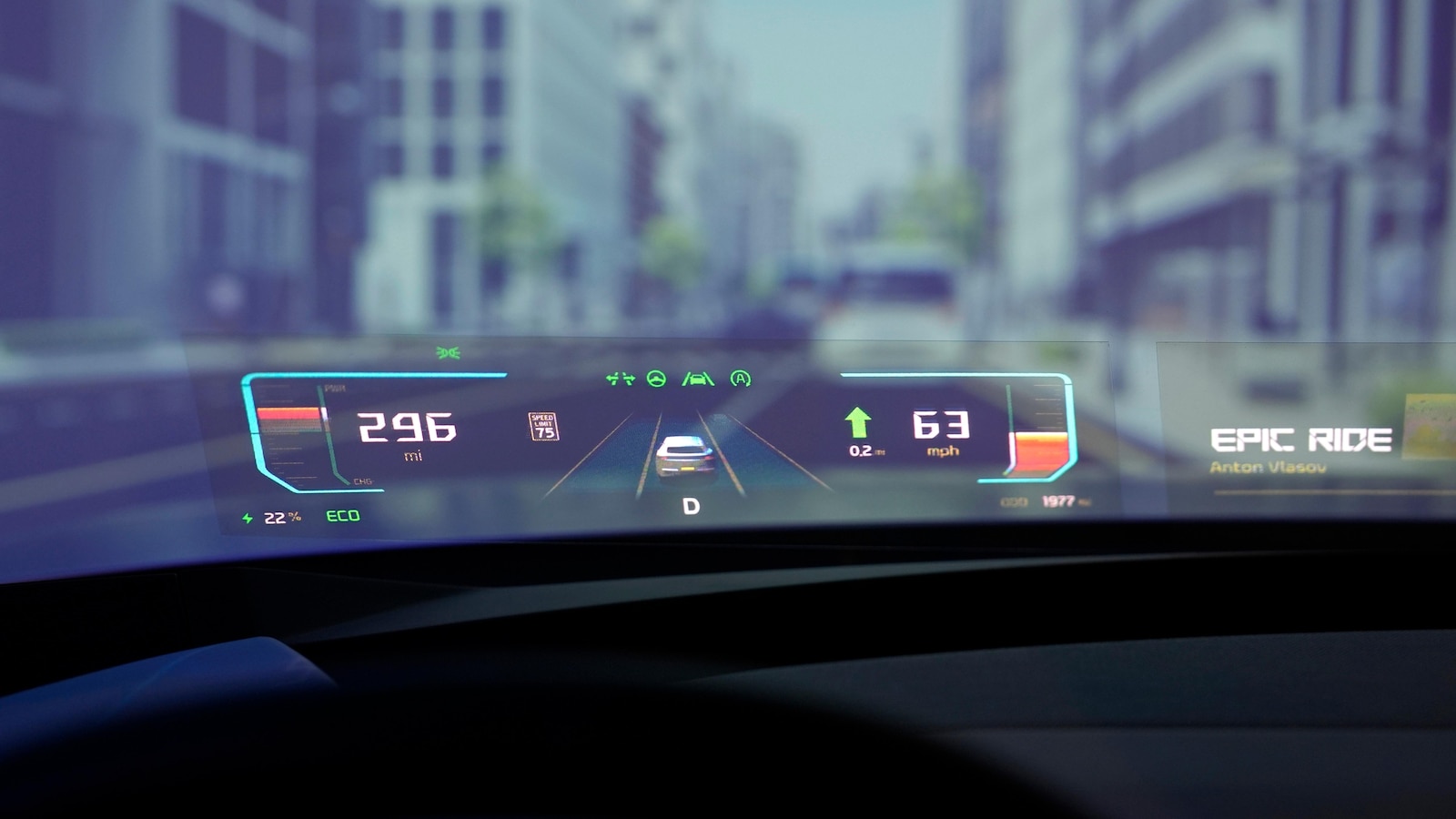
    Automakers pulled out all the stops to showcase their latest advances for in-vehicle experiences at CES, the Consumer Technology Association’s annual trade show of all things tech, in Las Vegas this week. Hyundai Mobis unveiled a full-windshield holographic technology, while BMW spotlighted its new “iDrive” panoramic display. And Honda and Sony Honda Mobility showed what consumers can expect with their upcoming electric vehicles.

    Many of these driving enhancements aim to “make life on board more comfortable,” explains Axel Maschka, executive vice president and head of the business division at Hyundai Mobis. And for some consumers today, he adds, “this ‘living space’” of a car’s interior has become a dominant part of a vehicle’s appeal.

    Hyundai Mobis’ holographic windshield display provides a glimpse into that. The technology, which won’t be on the market for at least several more years, projects information ranging from driving speed to safety alerts across the entire windshield, and also provides some entertainment options for those who aren’t behind the wheel. To keep the driver’s eyes on the road, the panoramic display looks different depending on where you sit. A demo from the South Korean company show the front row passenger can watch a movie or play a video game projected ahead of them, for example, but it’s not visible to the driver.

    Maschka claims the holographic windshield gives drivers an easier view of key information in their line of sight and keeps other distractions in the car out of sight.

    And Hyundai Mobis isn’t the only one giving the view from cars’ front seats a makeover. BMW also showed off its new Panoramic iDrive and Operating System X this week.

    BMW’s iDrive will soon be featured in all of new models that will hit the market starting at the end of this year. The system projects a panoramic display onto the vehicles’ lower windscreen — controlled by a touchscreen below and voice commands — and can be personalized by different colors, apps and other preferences.

    Honda and Sony Honda Mobility also spotlighted in-cabin features that drivers will soon encounter in their new EV lineup.

    Sony Honda Mobility says “Afeela 1″ will include an interactive AI-powered voice agent. In Monday’s remarks, CEO Yasuhide Mizuno said that “customers can be entertained by communicating with Afeela 1” — noting that Afeela’s agent is “focused on conversation” and “proactively talks to you” to provide useful information as you drive.

    The Afeela 1, scheduled to go on sale later this year with deliveries anticipated for mid-2026, also touts a panoramic screen and infotainment system filled with a variety of entertainment apps. Online reservations for the car opened in California this week.

    Meanwhile, Honda spotlighted “ultra-personal optimization” for customers of its upcoming 0 series of election vehicles — the first two models of which are set to launch in North America next year. The Japanese car giant unveiled the operating system that it plans to use in all 0 series models, “AISMO OS,” which it says will be integrated into vehicle operations ranging from automated driving and advanced driver assistance to in-car infotainment.

    In-vehicle software functions will also continue to be updated after purchase. “The more it is used, the more personalized it will become,” Katsushi Inoue, global head of electrification business development at Honda, said in Tuesday remarks.

    While there’s ample excitement around the latest bells and whistles announced from car companies like those on display at CES this week, questions also emerged about how many new features are too many features.

    “It’s definitely easy to get a little bit overwhelmed by the amount of technology in cars … especially when you have cars that have three, four, five (or) six different touchscreens that offer different interfaces,” said Tim Stevens, an automotive analyst and freelance journalist who attended CES this week.

    But, Stevens added, this also shows how promising the integration of technology like AI can be — such as with in-car voice assistants. If you can “have a conversation with your car” to ask for detailed directions or restaurant suggestions, he explains, that can reduce distractions like trying to reach for your phone.

    In addition to in-vehicle experiences, EVs showcased at CES this week also put a spotlight on the state of sustainable energy in the car industry today — and the need to expand access sources for consumers. In addition to a previously-announced venture with seven other automakers to create the “IONNA” charging network in North America, Honda on Tuesday said it plans to expand such efforts “to ensure that Honda 0 Series owners will have access to more than 100,000 charging stations by 2030.”

    Honda is also exploring ways to provide “personalized” charging experiences for its EV customers down the road. The company said it’s considering incorporating AI technology from Amazon Web Services to help individuals find nearby charging facilities, for example, or simplify payments.

    ________

    AP Video Journalist Cassandra Allwood contributed to this report in Las Vegas.

    Source link

  • What a merger between Nissan and Honda means for the automakers and the industry

    What a merger between Nissan and Honda means for the automakers and the industry

    BANGKOK — Japanese automakers Honda and Nissan will attempt to merge and create the world’s third-largest automaker by sales as the industry undergoes dramatic changes in its transition away from fossil fuels.

    The two companies said they had signed a memorandum of understanding on Monday and that smaller Nissan alliance member Mitsubishi Motors also had agreed to join the talks on integrating their businesses. Honda will initially lead the new management, retaining the principles and brands of each company.

    Following is a quick look at what a combined Honda and Nissan would mean for the companies, and for the auto industry.

    The ascent of Chinese automakers is rattling the industry at a time when manufacturers are struggling to shift from fossil fuel-driven vehicles to electrics. Relatively inexpensive EVs from China’s BYD, Great Wall and Nio are eating into the market shares of U.S. and Japanese car companies in China and elsewhere.

    Japanese automakers have lagged behind big rivals in EVs and are now trying to cut costs and make up for lost time.

    Nissan, Honda and Mitsubishi announced in August that they will share components for electric vehicles like batteries and jointly research software for autonomous driving to adapt better to dramatic changes in the auto industry centered around electrification. A preliminary agreement between Honda, Japan’s second-largest automaker, and Nissan, third largest, was announced in March.

    A merger could result in a behemoth worth about $55 billion based on the market capitalization of all three automakers.

    Joining forces would help the smaller Japanese automakers add scale to compete with Japan’s market leader Toyota Motor Corp. and with Germany’s Volkswagen AG. Toyota itself has technology partnerships with Japan’s Mazda Motor Corp. and Subaru Corp.

    Nissan has truck-based body-on-frame large SUVs such as the Armada and Infiniti QX80 that Honda doesn’t have, with large towing capacities and good off-road performance, said Sam Fiorani, vice president of AutoForecast Solutions.

    Nissan also has years of experience building batteries and electric vehicles, and gas-electric hybird powertrains that could help Honda in developing its own EVs and next generation of hybrids, he said.

    “Nissan does have some product segments where Honda doesn’t currently play,” that a merger or partnership could help, said Sam Abuelsamid, a Detroit-area automotive industry analsyt.

    While Nissan’s electric Leaf and Ariya haven’t sold well in the U.S., they’re solid vehicles, Fiorani said. “They haven’t been resting on their laurels, and they have been developing this technology,” he said. “They have new products coming that could provide a good platform for Honda for its next generation.”

    Nissan said last month that it was slashing 9,000 jobs, or about 6% of its global work force, and reducing global production capacity by 20% after reporting a quarterly loss of 9.3 billion yen ($61 million).

    Earlier this month it reshuffled its management and its chief executive, Makoto Uchida, took a 50% pay cut to take responsibility for the financial woes, saying Nissan needed to become more efficient and respond better to market tastes, rising costs and other global changes.

    Fitch Ratings recently downgraded Nissan’s credit outlook to “negative,” citing worsening profitability, partly due to price cuts in the North American market. But it noted that it has a strong financial structure and solid cash reserves that amounted to 1.44 trillion yen ($9.4 billion).

    Nissan’s share price has fallen to the point where it is considered something of a bargain. A report in the Japanese financial magazine Diamond said talks with Honda gained urgency after the Taiwan maker of iPhones Hon Hai Precision Industry Co., better known as Foxconn, began exploring a possible acquisition of Nissan as part of its push into the EV sector.

    The company has struggled for years following a scandal that began with the arrest of its former chairman Carlos Ghosn in late 2018 on charges of fraud and misuse of company assets, allegations that he denies. He eventually was released on bail and fled to Lebanon.

    Honda reported its profits slipped nearly 20% in the first half of the April-March fiscal year from a year earlier, as sales suffered in China.

    Toyota made 11.5 million vehicles in 2023, while Honda rolled out 4 million and Nissan produced 3.4 million. Mitsubishi Motors made just over 1 million. Even after a merger Toyota would remain the leading Japanese automaker.

    All the global automakers are facing potential shocks if President-elect Donald Trump follows through on threats to raise or impose tariffs on imports of foreign products, even from allies like Japan and neighboring countries like Canada and Mexico. Nissan is among the major car companies that have adjusted their supply chains to include vehicles assembled in Mexico.

    Meanwhile, analysts say there is an “affordability shift” taking place across the industry, led by people who feel they cannot afford to pay nearly $50,000 for a new vehicle. In American, a vital market for companies like Nissan, Honda and Toyota, that’s forcing automakers to consider lower pricing, which will eat further into industry profits.

    ____

    AP Auto Writer Tom Krisher contributed to this report from Detroit.

    Source link