Breast cancer is one of the most common types of cancer that affects women all over the world. It happens when cancerous cells in your breast grow into tumours. It can affect both women and men, although it is more common in women.
It is common to think that breast cancer can only affect older women but given the sedentary lifestyle the young generation follows, young women are also prone to getting affected with breast cancer. It all begins from a young age. How one treats their body when they’re young determines their fitness at an older age. Women especially, need to make healthy decisions, be aware of early detections and reduce the risk of developing breast cancer.
Canva
Lifestyle changes needed to prevent breast cancer
In order to improve your health, you need to make certain lifestyle changes and be consistent in following them to maintain a good fitness level. One of the greatest ways to prevent breast cancer is certainly to maintain a healthy weight. Obesity and excess body fat have been linked to an increased risk of breast cancer, especially after menopause. A balanced diet full of fruits, vegetables, whole grains, and lean meats is the main focus in the 20s. In addition to meeting the body’s basic requirements, these meals have vitamins and minerals that may help prevent cancer. Cutting less on processed meals, sugary desserts, and beverages will help control weight and avoid diseases like cancer.
Canva
Dr. Bhavisha Ghugare, Senior Consultant – Surgical Breast Oncology, HCG Cancer Centre, Borivali shared her insights on the changes an individual needs to make to prevent breast cancer. “Engaging in at least 150 minutes of moderate aerobic activity or 75 minutes of vigorous activity each week can help maintain a healthy weight and reduce the risk for breast cancer. Walking, running, swimming, or even participation in group fitness classes, among others, contribute both physically and mentally to the well-being of an individual. These exercises have been proven to reduce a person’s stress and anxiety levels, and this is very helpful because chronic stress can impede the immune system and affect health negatively,” she said.
She also mentioned how alcohol consumption can be a significant risk factor of breast cancer. According to various research, it has been established that alcohol leads to an increased risk of breast cancer. “Nonetheless, if you still choose to drink, moderation is the key. Taking one drink a day may not exceed the marked limit and therefore, be a good way of avoiding the risk. Smoking is also a factor and should generally be omitted from your life,” she added.
Canva
How to prevent Breast Cancer with early detection?
It is important for women to educated and self-aware about breast cancer and its symptoms. Conducting self-examinations can be a easy way detect any early signs and a check-up is always a better idea to avoid complications.
“Monthly self-exams, ideally one week after your period, can help you note what’s normal for your body. Whenever you find anything unusual, like lumps, seek a doctor’s opinion right away. Routine mammography screening is typically encouraged to begin at age 40, but those younger than that should be more vigilant regarding their family background. If breast cancer runs in the family, you may want to discuss it with your physician who may suggest earlier screening, or if such tests will be required to know how much of a risk you are,” Dr. Bhavisha added.
Photo-Illustration: by The Cut; Photo: Getty Images
I’m a nurse with a good job at a hospital in Manhattan. I’m making more money than I ever have before (about $120,000, plus overtime), and I’m thrilled to be living here after spending years in the small midwestern city where I got my degree. Overall, my life is great. I have an apartment I love, good friends, and I get to do fun stuff on weekends like travel and go out and enjoy my life as a 28-year-old. I don’t want kids, so I don’t feel pressure to “settle down.” But lately, I’ve realized that my spending is catching up to me. My rent went up this year by $100 a month ($2,900 per month total), which is manageable, but still a lot. And when I go through my credit-card bill, it’s a million $40 or $150 paper cuts that I barely even remember.
I’m not in financial trouble; I can afford to pay my bills most of the time. (I do have pretty hefty student-loan bills; I have never missed a payment, but occasionally my credit-card bill suffers for it.) I don’t have much savings at all, and that worries me. I wish I didn’t feel so strapped and high-maintenance. I’ve tried to stick to a budget before, but I never seem to manage it. When I think back to my early 20s, I used to live on almost nothing — I don’t miss that lifestyle, but I do miss how self-sufficient I was, and how little I needed. How do I reverse some of this lifestyle creep so that I can save more?
Lifestyle creep encapsulates the small, insidious upgrades you make as your income grows. You get a raise — congratulations! — so you try a slightly more expensive moisturizer, take an Uber or three, and discover that $32 workout classes really are better than the grungy basement gym you never used. Eventually, you might move to a more expensive apartment, opt for a meal-subscription service, buy a new car … the list goes on.
These choices aren’t necessarily bad, but they do add up. Sprinkle inflation on top, and suddenly it seems like your money is disappearing, even though you’re making more of it than ever and you haven’t done anything wildly indulgent.
The worst part of lifestyle creep is that it’s hard to reverse. Maybe you spent the first 25 years of your life perfectly happy without grocery delivery, but now you feel like you can’t function without Instacart. Or your higher-paying job infringes on meal-prep time, so you’re spending a lot on takeout and don’t know what you’d eat otherwise. Or your friends always want to go out to dinner, so you go along to spend time with them. Lifestyle creep isn’t just an endless parade of treating yourself — it might feel fun and luxurious at first, but it quickly becomes habit. You’re spending this money just to maintain your standards.
The first step in fighting lifestyle creep is realizing that it’s happening in the first place — and that you have some agency to stop it. How do you put the brakes on in a way that gives you more control and doesn’t feel like a downgrade? I talked to a number of people who successfully reversed the hamster wheel of spending and kept it at bay. Here’s how they did it.
When I spoke to Mallory Baska, a financial coach who found herself in a similar position to yours about a decade ago — making decent money but blowing through it quickly — she told me that it helps to have a strong motive to change. Hers was simple: She was harassed at work and desperately needed to quit her job. “I felt trapped because I couldn’t afford to leave,” she says. “I had no choice but to return to this awful environment every day, simply because I’d prioritized material goods over my own financial security.”
I hope your situation doesn’t come to this (or worse). But no matter what, get some clarity on why you want to turn your financial ship around. No reason is too small or mundane, but it does need to be compelling to you — otherwise it won’t stand a chance against the temptation of a new sweater/weekend trip/whatever your kryptonite happens to be. Once you pick your motive, create reminders that will steer you straight. (I recently took a photo of my overstuffed closet and look at it whenever I’m tempted to buy yet another item of clothing.)
It also helps to save up for something specific. “A rainy day” isn’t very inspiring, but if you can envision something you genuinely want, keep it front of mind. When a friend decided she needed to curb her spending, she renamed her accounts after certain goals — for instance, the down payment for her dream car goes in the “vroom vroom” fund. “The slight change in language makes saving feel like a joy and not a sacrifice,” she says. These objectives can change over time, but make them fun! This doesn’t need to be a slog.
Okay, this part might suck, but bear with me: You need to go through your bills line by line. It might be a crime scene, but you can’t move forward until you sift through the evidence and know where you stand.
Manisha Thakor, a certified financial planner and author of Money Zen: The Secret to Finding Your Enough, recommends doing what she calls a “joy audit” of your expenses. “Go through all your transactions and highlight the things that brought you the most enjoyment,” she says. “The objective isn’t to deny yourself. It’s to be more aware of what actually makes you content and what doesn’t.”
Do this audit every week at first. You’re basically Marie Kondo–ing your finances: dumping everything out, sorting through it, and deciding what to keep going forward. Sure, paying your phone bill might not bring you joy, but you’ll learn to weed out the stuff that truly no longer adds value to your life (so many subscriptions!), and the process will become easier — maybe even satisfying. This practice is often called a “money date”: Designate a special time for it, light a candle, get a snack, pour yourself a beverage, and make it nice. Once you get a better handle on where your money is going, you can space them out to once a month.
Quit Amazon Prime. Delete your credit-card information from your phone and internet browser. Try a no-spend month or shopping ban. Move to a cheaper apartment, neighborhood, or city. These are just some of the tactics that people shared with me when I asked them how they managed to wrestle lifestyle creep into its rightful place. When in doubt, try living without something for a while — you might not miss it as much as you think.
One of my friends decided to quit all beauty maintenance at once, cold turkey, because she realized it had become too much. “I went through a withdrawal period and felt SUPER ugly for a few weeks, especially quitting eyelash extensions and manicures, but then I arrived at a new normal and now I feel just as good as I used to,” she says. (I did something similar a few years ago, and maybe I’m delusional, but I actually think I look better now that I’m using fewer products and not trying so hard.)
Feeling unencumbered is its own reward, too. When Thakor and Baska were going through their respective lifestyle overhauls, both sold a lot of stuff that they had acquired — fancy handbags, shoes, and jewelry. “I told myself that if I really regretted getting rid of it, I could always buy it again,” says Baska. “But I never did.”
This probably won’t surprise you, but a 2018 study found that social-media consumption directly correlated with more impulse shopping. Pay attention to who you’re following and what they make you want to buy! Baska says she did a massive purge when she started her financial overhaul. “I scrolled through every single account I followed and, if they weren’t a close friend or a person who made me feel good about myself, I muted or unfollowed them,” she says.
Thakor says she also found herself getting the shopping itch after she took a gander at her feeds, so she decided to create boundaries: She looks at Instagram during a two-hour window of time on Friday afternoons, and that’s it. She’s also not allowed to buy anything she sees until she’s waited at least a week.
Remember, though, that you’re not just comparing yourself to people you see online. Your peers affect your desires, too. When Thakor first moved to a rural area of Maine a few years ago, she was happy as a clam with her bare-bones cabin. Then, after a year, she noticed that her neighbors had paddleboards and a fancy water pump, and she started wanting them too. “We are all socialized to want what we see other people in our circles having,” she says. “Be aware that this is normal — but you don’t have to give in.”
Your desires will change, and that’s okay! “Maybe you get really into a show for a few seasons, so you subscribe to HBO, but then the show ends and you realize you’re not using it anymore,” says Thakor. “It’s normal to change priorities or realize that something you once loved isn’t working for you anymore. Just get rid of it.”
A big driver of lifestyle creep is that the rush of “leveling up” or purchasing something new wears off quickly. This is known as the hedonic treadmill: the idea that most people have a “set point” of happiness that they return to after good or bad things happen. According to this theory, money and achievements can’t make you that much happier than you already tend to be — or at least, not beyond a temporary bump. The good news is that giving up certain things won’t make you that much less happy, either. Sure, that loss might feel a little sad and constricting at first, but then you’ll get over it. Or you might feel better than normal, actually, knowing that your long-term self-sufficiency has won out over your ephemeral urge. There’s only one way to find out.
Email your money conundrums to mytwocents@nymag.com(and read our submission terms here.)
Stay informed with Hindustan Times’ live updates! Track the latest lifestyle news including fashion trends, style guide & Tips, India & World Events. Don’t miss today’s key news for October 18, 2024.
Latest news on October 18, 2024: Want to avoid festive weight gain? Ghee is the secret to healthier Diwali munchies
Get the latest news updates and breaking news stories from the world of lifestyle. Track all the latest fashion trends, delicious recipes, travel tips and more. Disclaimer: This is an AI-generated live blog and has not been edited by Hindustan Times staff.…Read More
Follow all the updates here:
Oct 18, 2024 4:30 PM IST
Health News LIVE: Want to avoid festive weight gain? Ghee is the secret to healthier Diwali munchies
Beneficial fats in ghee can help lower cholesterol and promote heart health? Here’s how ghee-fried snacks may be the gut-friendly festive game-changer you need.
Health News LIVE: New hope for liver cancer patients: Biomarker may predict response to immunotherapy
Liver cancer immunotherapy breakthrough: Researchers find key biomarkers for success. Could these proteins predict immunotherapy success in liver cancer?
Fashion News LIVE: Best ethnic wear for women: Eye-catching picks from FabIndia, BIBA and W on Myntra
Leave an impression on any celebration with eye-catching ethnic wear. Shop FabIndia, BIBA and W on Myntra for ethnic wear for women to stand out in style.
Fashion News LIVE: Best sneakers for men and women: Find Puma, Campus, Adidas and more on Myntra
Give your shoe collection a stylish makeover with Myntra BFF’24 sale’s trendy sneakers at a discount! Elevate your casual style without emptying your wallet.
Fashion News LIVE: Priyanka Chopra weird beauty secret: Using haemorrhoid cream under eyes!
Priyanka Chopra revealed her top beauty secrets in a fun rapid-fire session with Grazia India, including her daring use of haemorrhoid cream under her eyes.
Fashion News LIVE: Radhika Merchant wears the same Ananya Panday lehenga from Rohit Bal’s fashion show for a friend’s wedding
Radhika Merchant attended a friend’s wedding recently. She wore the same lehenga to the ceremony that Ananya Panday wore to close Rohit Bal’s fashion show.
Brunch News LIVE: All’s not well: Health advice that is just a marketing gimmick
Is cortisol giving you belly flab? Can magnesium pills help you sleep? Is alkaline water even a thing? Actual advice, from actual experts to counter internet wisdom
Fashion News LIVE: Kiara Advani’s stunning red ethnic ensemble will have you ditching your saree this Karwa Chauth. Her outfit costs…
When it comes to festive fashion, Kiara Advani never disappoints. Her latest red ethnic look is the perfect blend of modern elegance and traditional charm.
Art and Culture News LIVE: Amazon Great Indian Festival Diwali Sale is LIVE: Enjoy over 50% off on garden and outdoor furniture and solar lights
Amazon Great Indian Festival Diwali Special Price Revealed! Save more than 50% on garden and outdoor furniture, including solar lights, lounge chairs, and more.
Travel News LIVE: Free noodles and train tickets in Japan? Tokyo Metro’s IPO perks are worth the ride
Oct 18, 2024 9:32 AM IST
Recipes News LIVE: Got some ripe bananas lying at home? Transform them into a healthy banana halwa you’ll love | Recipe
Healthy banana halwa recipe: This Friday, enjoy best of both the worlds — a delightful sweet and nutritious treat that fits into a health-conscious lifestyle.
Fashion News LIVE: Janhvi Kapoor, Ranveer Singh, Ananya Panday, Suhana and others stun at Radhika Merchant’s birthday bash: Who wore what
Radhika Merchant’s birthday bash was a star-studded affair, with Bollywood’s finest bringing their fashion A-game. Here’s a quick rundown of who wore what.
Fashion News LIVE: Priyanka Chopra shows Bollywood babes how it’s done in sparkly mini dress and Ariana Grande-style ponytail. Watch
Priyanka Chopra wows fans at the Max Factor India launch in Mumbai, flaunts a glamorous Stella McCartney ensemble complemented by stunning makeup and hair.
Nausea can make your stomach feel queasy at the worst possible times. Although it is a very common digestive issue, nausea can make even the thought of food unbearable. Whether your nausea is triggered by bad food, motion sickness, a health concern, or something else, dealing with this digestive problem is no fun. Did you know that what you eat and avoid during this condition can play a huge role in how quickly you feel better? Yes, you read that right! Although food might be the last thing on your mind when you are nauseous, eating a small amount of certain foods can help you feel like yourself again! Read on to find out which foods you should definitely consume and which ones to avoid when your stomach feels like a rollercoaster.
Also Read:Feeling Bloated And Gassy? Try These 5 Superfoods For Natural Relief
Photo: iStock
Here Are 5 Foods You Must Eat When You Are Nauseous:
1. Ginger
If you have a queasy stomach, ginger can be your go-to. You can have ginger in any form — tea, ale, or even sliced—as this root has anti-nausea properties. According to research published in StatPearls, the bioactive compounds in ginger interact with your nervous system to improve nausea. The best part is that you don’t need much; just a small amount of ginger tea or a slice can help settle your stomach.
2. Plain Toast
There’s a reason why bland, starchy foods are recommended when you’re feeling nauseous—they’re easy on your stomach. Plus, strong smells can make your stomach go haywire. However, this is not the case with bland and starchy foods. Just make sure to eat it plain—without any butter or jam—and this will keep your stomach calm.
3. Bananas
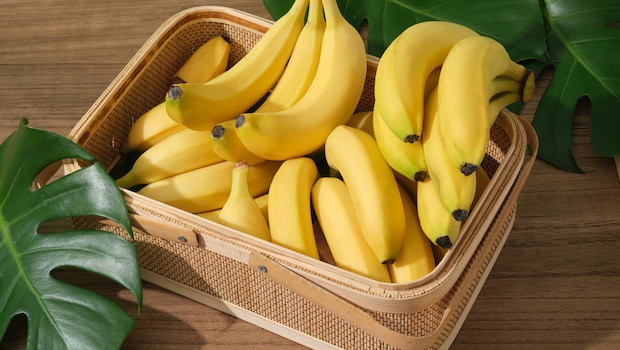
Bananas are not just gentle on your stomach; they’re also packed with potassium, which can help replenish any electrolytes you may have lost during vomiting. This fruit’s soft texture and mildly sweet flavor are perfect for calming your stomach. Plus, bananas are easy to digest and can provide a much-needed energy boost after vomiting.
Photo Credit: iStock
4. Rice or Plain Potatoes
As mentioned above, bland and starchy foods should be your go-to if your stomach feels uneasy. Rice or plain potatoes are easy to prepare and high in calories, which can help settle your stomach and provide energy. Just make sure to eat them as they are and avoid adding any butter, spices, or sauces.
5. Apple Sauce
Apple sauce is another great (kid-friendly) option if you want to keep nausea at bay. This condiment is not just mildly sweet and easy to digest; it also contains pectin, which can help calm your stomach lining and regulate digestion. You can make your own version of apple sauce at home with no sugar (our recommendation). Just have a spoonful whenever you feel nauseous.
Photo Credit: iStock
Here Are 5 Foods You Must Avoid If You Have Nausea:
1. Fried or Greasy Foods
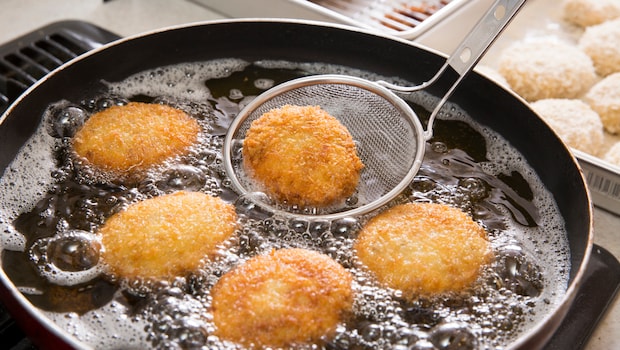
When your stomach is upset, the last thing you want to eat is something fried and greasy. These foods are hard for your stomach to digest, which can worsen your nausea. According to a 2019 study published in Ultrasound International Open, fried and greasy foods tend to sit in your stomach for a long time, putting even more pressure on it. So, it’s best to avoid fried and greasy foods when you’re feeling nauseous.
2. Dairy
Even though dairy might seem harmless in your daily diet, it could worsen your nausea. Milk, cheese, yogurt, and other dairy products can irritate the stomach lining, especially if you’re nauseous and already on the brink of vomiting. Dairy items can also take a toll on your health if you are lactose intolerant and may further cause digestive problems.
3. Spicy Foods
Spicy foods are definitely a no-no when you’re nauseous. When you’re nauseous, your stomach lining is already inflamed, and the fiery kick from spicy food can irritate it further. This could lead to vomiting and make your situation worse. If you love spice, it’s best to set your favourite foods aside until your stomach settles down.
Photo Credit: iStock
4. Caffeine
Caffeine is not your best friend when it comes to tackling nausea. Caffeinated beverages—soft drinks, tea, and coffee—can dehydrate your body, resulting in even worse nausea. According to a review published in Nutrients, coffee’s reaction to stomach acid secretion can cause several digestive problems, including nausea.
5. Acidic Foods
Foods high in acid, like citrus fruits, tomatoes, or vinegar-based condiments, can irritate your stomach lining and worsen your nausea. These foods can cause your stomach to produce more acid, leading to discomfort and a greater chance of vomiting. So, if you’re feeling queasy, it’s best to avoid acidic foods for a while.
Also Read:Is Your Digestive System In Good Shape? Here Are 5 Signs That Say Yes
Disclaimer: This content including advice provides generic information only. It is in no way a substitute for qualified medical opinion. Always consult a specialist or your doctor for more information. NDTV does not claim responsibility for this information.
Content creator Daniel LaBelle often takes us on a laughter-filled ride with his physical comedy skits. His food-related videos are a visual treat that we can watch on repeat. His ability to blend culinary and humorous elements is simply on-point. Recently, he posted a video in which he is seen sprinting through the streets wearing an apron while holding a glass of Coke. To add an element of difficulty, he continues adding more glasses of Coke to his running feat, resulting in a challenging yet comical series of events. The video begins with him running at great speed with one Coke in hand, followed by him darting at the same speed, but with two beverages. When the number of Cokes increases to five, the content creator uses a tray to hold the glasses. Slowly, the number of glasses rises to 10, then 20, and finally 30. Unbelievable, right? What’s even more impressive is that he barely spills a drop. Things take a turn when Daniel attempts to run with two trays holding 60 glasses of Coke. After taking a few steps, he falters, and the trays fall from his hands, spilling onto the road. “Sprinting with more and more drinks,” read his caption. Also Read: Guinness World Records: Canadian YouTuber Eats More Than 1 Kg Sriracha Hot Sauce In Just 3 Minutes
In the comments section, Daniel LaBelle revealed, “So I spilled 60 cups RIGHT in front of my neighbour’s driveway, and he was outside watching me. I didn’t know it until after I spilled.” Social media users loved the video. One person expressed a desire to become Daniel’s “neighbour,” presumably to see him execute the extraordinary feat with their own eyes. Almost everyone was impressed by his accomplishment, and one person wrote, “60 was wildly impressive.” Also Read: Pizza At A Langar?! Viral Video Shows Volunteers Serving It But Internet Is Not Happy Guess who else commented on the post? Coca-Cola itself. “And not a single drop on the apron,” read the comment. “That arm strength is impressive to do that while running,” noted one user. “Can someone please get footage of the neighbour’s reactions?” asked a curious individual. “Raising the bar, one profession at a time,” read another remark. “Don’t waste food,” wrote a critic.
What are your thoughts on this video? Share them with us in the comments section below!
Navratri is known to be one of the biggest Hindu festivals, which also marks the beginning of a string of festivities including Dussehra and Diwali. With this, the devotees of Goddess Durga have started their nine-day Navratri fasting ritual as well. While some devotees may observe a fast for all nine days or choose to keep it in pairs- either on the first and the last day or the last two days. There are certain fasting dos and don’ts that people are required to follow when it comes to their daily diet. For instance, you can include vrat ingredients like samak ke chawal, singhare ka atta, kuttu ka atta, fruits, and some vegetables in your diet during fasting. However, a lot of us may be confused about what kind of vegetables can be consumed during the fast and the ones that should be avoided. While it may depend on the rituals and fasting practices followed by different households and regions, there are some vegetables that are strictly avoided during the Navratri fast. What vegetables should be avoided and which ones can you consume during these fasts? We have all the answers for you.
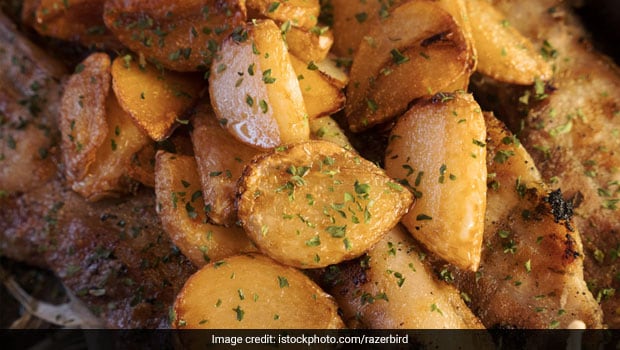
Potatoes are most commonly used during fasting meals, but what about other vegetables like tomatoes, spinach, cucumber and carrots? According to Chef Manjusha Sinha, “One is allowed to eat bottle gourd or lauki, yellow pumpkin, arbi, potato, cucumber, colocasia and sweet potato or shakarkand. Basically, one can consume any root vegetable or tubers during these fasts.”
Navratri 2024: Potatoes are most commonly used during the fasting meals
We also asked Culinary Expert and Food Blogger, Chef Reetu Uday Kugaji, to throw some light on the same, “Our goal as spiritual seekers should be to understand our true identity. Besides what we do i.e. karma, food also plays a major role in helping us attain this goal because we are what we eat. The Bhagvad Gita and Vedic Scriptures have categorized foods under Sattvic, Rajasic and Tamasic categories and only those vegetables that are sattvik in nature should be consumed during Navratri fasts.”
Sattvik food refers to ingredients that have prana or a life-like force that may include fresh fruits and vegetables. Rajasic of Tamasic foods that are generally bitter, sour, pungent, salty or dry should be avoided as they are known to induce negativity, dullness and restlessness. During the Navratri fasts, we turn to sattvik bhojan and adopt a simple lifestyle.
Here are the vegetables as suggested by Chef Reetu that may or may not be allowed during the Navratri fasts:
Navratri 2024:Sattvic food refers to ingredients that have prana or a life-like force.
Vegetables you can consume in Navratri
Potato
Sweet potato
Pumpkin
Colocasia
Raw banana
Raw papaya
Bottle gourd
Tomatoes (it is technically considered a fruit)
Ginger
Lemon
Yam or Suran
Cucumber
Carrots
These vegetables are sattvik in nature, provide lots of energy, keep you hydrated and have mild flavours.
Vegetables you should avoid in Navratri
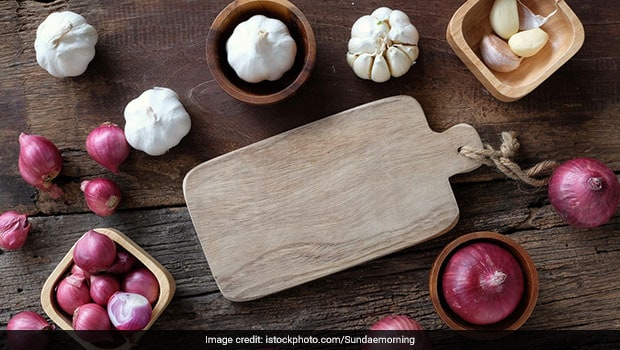
Onions and garlic fall in this category as they are tamasic in nature. Other vegetables that are considered tamasic may include leeks, shallots and mushrooms.
Navratri 2024: Onion and garlic are a big no during Navratri.
Stick to these basics and observe the Navratri fasts keeping in mind your health and well-being.
Charlton Athletic should be looking to extend Miles Leaburn’s contract, with the striker’s current deal due to expire in the summer of 2025.
Miles Leaburn is one of the most exciting young strikers in League One, having scored 15 goals in 48 appearances in the third tier for Charlton Athletic at just 20 years of age.
The promising forward, who is the son of former Charlton striker Carl, broke into the Addicks’ first team on the opening day of the 2022/23 season, marking his debut with a goal against Accrington Stanley before going on to score a further 11 times in the league over the course of the campaign.
He continued his good form into the start of last season, scoring seven goals in all competitions during the first few months of the campaign, before suffering a serious hamstring injury in Charlton’s win over Cheltenham Town at the end of November last year.
The club reported at the time that, following successful surgery, Leaburn would be sidelined for up to five months, but now, almost ten months later, he is still yet to have featured again in a first team matchday squad.
The youngster spent six weeks on a rehab programme at St George’s Park over the summer, and started for the Addicks’ under-21s against Leeds United under-21s at The Valley last week, so he could be in line for a return soon.
Charlton Athletic should try and keep hold of Leaburn
Charlton should look to take advantage of the fact that Leaburn has been sidelined for so long by tying him down to a new contract before his stock rises again once he returns to first team action.
Prior to his hamstring injury last year, Premier League clubs including Chelsea and Brentford were reportedly interested in making an offer for the physical striker during the January transfer window.
Leaburn has also attracted interest from Aston Villa, while Charlton rejected an offer of £3 million from an unnamed Bundesliga club for his services in the summer of 2023.
With his contract set to expire next year, Charlton should do everything they can to try and agree fresh terms with Leaburn, or they will risk losing him for a cut-price transfer fee in January, or worse, seeing him leave for a compensation figure in the summer.
Considering his latest injury, there will of course be concerns about Leaburn’s ability to stay fit, but the Addicks seem to have become better at looking after their players since the arrival of Dr Will Abbott from Brighton & Hove Albion, with Chuks Aneke’s improved availability a vindication of the impact that he has seemingly had in his first year at The Valley.
Abbott arrived at Charlton a few days after Leaburn sustained his injury. If the Addicks can tie the striker down to a new deal and keep him fit for an extended period, they will have a valuable asset on their hands as well as a talented striker.
Miles Leaburn may want to continue his development at Charlton Athletic
Leaburn left Chelsea’s academy prior to joining Charlton as a teenager, so there could be a chance that he is happy to stay in SE7 and continue his development in a first team environment.
His pace and physicality make him the ideal profile of striker for Nathan Jones’ system, so if he stays, it would be no surprise if he becomes one of the first names on the teamsheet under the Welshman once he returns to full fitness.
Leaburn’s mother, Tracey, is Player Liaison Officer at Charlton, and she plays a key role in looking after the players, which could potentially increase the chances of her son extending his stay at the club.
Chelsea signed striker Mason Burstow from Charlton for £1.5 million in January 2022, and Leaburn has done more for the Addicks than he had at the time, so it would be a real disappointment if he left the club for a lower fee. Therefore, it is vitally important that the club tries to negotiate a new contract over the next few months.
What’s the first thing that you do while going for a weight loss diet? In India, most people would say – give up on rice, shift to roti, use less oil in sabzis, and of course, avoid greasy fried foods like papad, pakoda, and more. This means, you not only disrupt your daily food habit but also end up making your meals tasteless and less nutritious. After all, Ayurveda states that a quintessential Indian thali includes every nutrient your body needs to stay healthy. What if we say you do not need to compromise on anything you are eating, even when on a weight loss diet? You heard us!
According to nutritionist Apurva Agarwal, all you need to do is mindfully control the portion of each type of dish on an everyday thali. “We don’t need to change what we eat, just to lose or maintain weight and stay healthy,” she states, adding, that we just need to learn “how to plate our desi food” to enjoy it without guilt.
Also Read:Going Back To Roots: 8 Health Benefits Of An Indian Thali
Why Is It Important To Control Portion Of An Indian Thali?
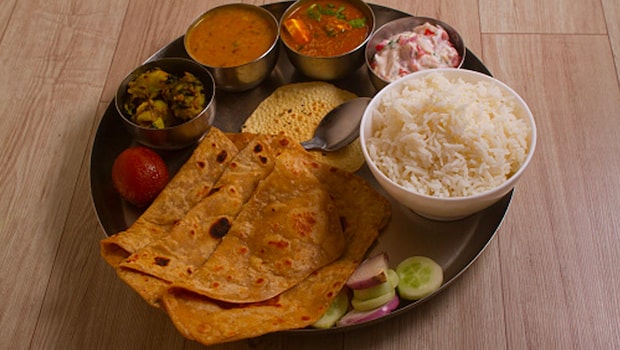
If you look into an Indian thali meticulously, you will find it to be far more complex than its global counterparts. It comprises, rice, roti, sabzi, dal, meat, condiments, dahi, and more – each of which has a unique role to play in your complete diet.
But what makes Indian food far more complicated is when we try to separate them in terms of nutrients, explains Nutritionist Apurva. She further explains that dal has both protein and carbs, while dahi, along with protein and carbs, has fat in it as well. On the other hand, vegetables are enriched with dietary fibre, much like rice and roti.
Hence, it becomes yet more important to understand the portion size of each type of dish you are eating to maintain a healthy nutrient balance in the body.
Also Read:How To Control Your Meal Portion At Indian Wedding? Watch Viral Video
A complete Indian thali (Photo Credit: iStock)
3 Smart Hacks To Balance An Indian Meal:
Tip 1. For carb-rich foods:
Any kind of carb-loaded food including rice, roti, idli, upma, dosa, dal, etc, shouldn’t hold more than one-fourth portion of your entire plate. So if you are eating both dal and rice, balance them out as per your wish to not exceed the given portion size.
Tip 2. For vegetables:
If you notice, our daily meal comprises some kind of vegetable daily. Be it raw, cooked, steamed, baked, or air-fried, half of your plate should be filled with it on an everyday basis.
Tip 3. For protein-packed foods:
Be it dahi or paneer or chicken, fish, and eggs, we include some kind of protein in our meals every day. Whatever you eat, make sure that shouldn’t exceed one-fourth of your total plate size. That’s it!
You must be wondering, how to add fats to your daily diet. Fret not, cooking your meals does the job automatically. “There’s the oil used to cook lentils and veggies and that’s fat!” Nutritionist Apurva states.
Now that you have the smart hack handy, we suggest modifying your meal carefully to get every micro and macronutrient your body needs to stay healthy and full for a long time.
Have you been eating out for quite some time now? Have you not been keeping a check on your calorie intake? Is the sudden thought of uncontrolled weight gain dreading you? If yes, then dear reader, we have the perfect solution for you. Fret not, we would never ask you to not enjoy the delicacies from your favourite food joints. Instead, you can just be a bit mindful and balance out your next few meals carefully. Trust us, it’s all about balance! And to help you with that, Nutritionist Richa Gangani shared a few quick tips on Instagram. Let’s check them out. Also Read: 5 Smart Strategies To Plan A Healthy Food Chart And Lose Weight
Here Are 5 Tips To Balance Your Meals: How To Avoid Weight Gain After Eating Out:
“I love to eat out but gaining the weight next is very frustrating. But here is my cheat sheet to avoid weight gain the next day,” Richa Gangani shares.
Tip 1. Eat light dinner:
Try to avoid eating heavily at night. This slows down your metabolism process throughout the night, making you feel bloated the next morning. “Try going easy on your stomach and balance out the heavy lunch with a moderately light dinner,” the expert states.
Tip 2. Drink warm water or green tea:
By now, we all know that warm water helps aid digestion and burn excess fat in the body. Moreover, green tea is packed with antioxidants and helps reduce oxidative stress in the body, making the digestive system faster. Also Read: Should You Drink Water Before Or After Meals? Here’s The Best Time To Have Water
Tip 3. Go for a small walk:
Always go for a small walk after a heavy meal. Walks help reduce bloating, making you feel lighter, and aiding metabolism and overall gut health.
Tip 4. Don’t try crash dieting:
It is absolutely okay if you have overindulged. Don’t be hard on yourself or your body for consuming those extra calories. Avoid starving or going on a crash diet to balance out your meals.
Tip 5. Don’t skip meals:
This is the worst thing you can do to yourself. Skipping meals may make your metabolism slower. In fact, starving to shed kilos is a temporary solution that comes with various side effects.
So, be judicious while planning your healthy meal and go slow and steady to enjoy good health for a long time.
About Somdatta SahaExplorer- this is what Somdatta likes to call herself. Be it in terms of food, people or places, all she craves for is to know the unknown. A simple aglio olio pasta or daal-chawal and a good movie can make her day.
Becs Gentry, a Peloton running instructor, has seen the glow of beginner runners time and time again. That newfound energy can be infectious and addicting.
Beginner runners, she said, can “get really enamoured by this buzz and the high that running gives them, and they jump into it and they want to get that feeling every day,” Gentry said. (She gets it. In November, she’ll attempt to run seven marathons in seven days across seven continents.)
But training too often at the start of a running habit can be a recipe for burnout or injury.
Instead, exercise patience as you build your endurance and adapt to a running routine. A good guideline for new runners is two to three days a week of walk/jog intervals – for example, three minutes of jogging followed by one minute of walking – which can be adjusted based on your current fitness level.
Many beginners also start out by running too fast, Gentry said. Work on finding your conversational pace (a speed at which you could chat with a friend) and do most of your runs around that pace. If you find yourself gasping for breath on a run, challenge yourself to hold back.
Running clubs became more popular during the pandemic and continue to grow. Photo / 123RF
Set goals that fit your lifestyle
Before signing up for a race or committing to a training plan, consider what is realistic for you and your lifestyle, Gentry said. How often can you fit in a run every week, and how long can you dedicate to running on those days?
If you think 30 minutes twice a week is manageable, for example, identify goals that fit within that framework. Your goal could be reaching a certain distance within that time, increasing your speed or simply enjoying the movement. Signing up for a race may be a motivating goal for some new runners, but it’s not a prerequisite for beginning a running habit.
Try not to get caught up in other people’s training goals while setting your own, said Mirna Valerio, an ultrarunner and former cross-country coach.
“Ask yourself: Am I Eliud Kipchoge or Nikki Hiltz?” she said, referring to the former world-record holder in the marathon and the American Olympian. “No? OK, now that’s out of the way, the second question is: Where is my fitness right now?”
Build your goals from there, she said, not from where you wish you were.
Fuel before and after your runs
Meghann Featherstun, a sports dietitian, said she sees runners of all levels who don’t eat before morning runs. That’s a mistake, she said. Your body is fasting overnight and doesn’t have much energy for running at its disposal when you spring out of bed. Over time, failing to eat properly can increase your chances of injury and negatively impact your hormones and metabolism, she said.
Prerun fuelling may look different for everyone, Featherstun said, but the key is eating simple carbohydrates that can be easily digested: a few crackers, a packet of applesauce, a banana or a slice of bread are all good options.
For runners, such as this reporter, who have trouble working up an appetite before an early-morning run, Featherstun recommends training your body. The more you practice prerun fuelling, the better your body will adapt over time. Start with one graham cracker square and work up from there.
When you finish a run, focus on protein-heavy foods paired with carbs and healthy fats to help with recovery. Generally speaking, Featherstun recommends eating 25 to 40g of protein within an hour of finishing your workout. If you are on the go, try a protein shake, a protein bar or chocolate milk. Better yet, aim for a balanced meal, such as an egg sandwich or overnight oats with protein powder and Greek yoghurt.
Many runners don’t realise the importance of pre-run fuelling for performance. Photo / 123RF
Find a running crew, and consider a coach
Valerio recommended finding a running group – or a coach, if that’s within your means – to hold you accountable, keep you motivated and connect you with a community.
It’s now common for coaches and clients to find each other through social media, but you should still do your research. Education and foundational knowledge can’t be replaced by a lot of followers, said Emily Abbate, a running coach who primarily works with beginner marathoners.
Don’t be afraid to ask a prospective coach if they have a coaching certification, or to ask the leader of a running group if they have formal coaching experience, Abbate said. You can also ask if a group attracts a certain type of runner (beginners or experienced marathoners, for example) or if a coach specialises in a particular type of training.
“Finding a good running coach using social media like Instagram or TikTok can be just as risky as searching a diagnosis when you’re not feeling well from Google,” Abbate said.
Joining a running group provides accountability and community support for beginners. Photo / 123rf
Keep your gear simple
It’s surprisingly easy to spend a lot of money on running-related gear, between expensive apparel, fancy GPS watches and ever-evolving racing shoes. But when you’re just starting out, only the basics matter – and the gear will not run the miles for you.
Start simple: Buy a good pair of training shoes, ideally with the help of an expert at a local running store. The best shoe for you will depend on your stride, foot shape and body type.
Gentry also recommends investing in running-specific socks. Blisters happen, but socks made from sweat-wicking material can help prevent them.
A good pair of running shoes, fitted by an expert, can prevent common foot problems. Photo / 123rf
Master the art of resting
It may be counterintuitive, but part of running well means taking time away from running. You need rest days so your body can repair itself as it adapts to more training. Days off also help prevent overuse injuries and mental exhaustion, Gentry said.
Taking rest time comes naturally to some beginner runners. For others, Gentry recommends building it into a training plan so you don’t skip it. If you are starting a new running routine, alternate rest days and running days.
“Recovery is as much a part of the process of training as the actual movement in the body,” Gentry said.










 Navratri 2024: Potatoes are most commonly used during the fasting meals
 Navratri 2024: Sattvic food refers to ingredients that have prana or a life-like force.