hacklink hack forum hacklink film izle hacklink marsbahisizmir escortsahabetpornJojobetcasibompadişahbetGorabetcasibom9018betgit casinojojobetmarsbahismatbetmatbet

Tag: Banning

  • Banning cellphones in schools gains popularity in red and blue states

    Banning cellphones in schools gains popularity in red and blue states

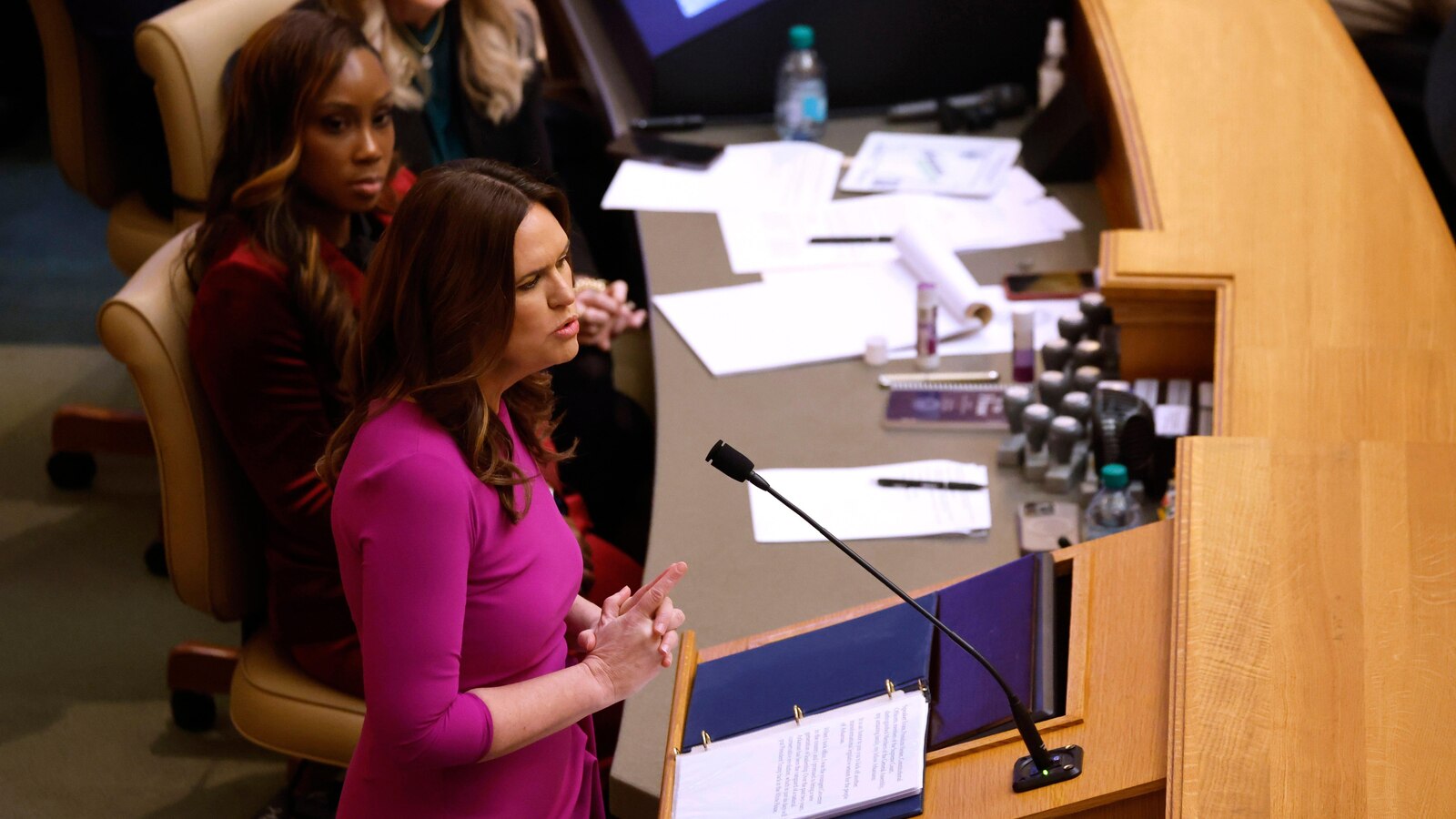
    LITTLE ROCK, Ark. — Arkansas’ Republican Gov. Sarah Huckabee Sanders and California’s Democratic Gov. Gavin Newsom have little in common ideologically, but the two have both been vocal supporters of an idea that’s been rapidly gaining bipartisan ground in the states: Students’ cellphones need to be banned during the school day.

    At least eight states have enacted such bans over the past two years, and proposals are being considered in several more states this year.

    Here is a look at the push by states for such bans.

    The push for cellphone bans has been driven by concerns about the impact screen time has on children’s mental health and complaints from teachers that cellphones have become a constant distraction in the classroom.

    Surgeon General Dr. Vivek Murthy, who has called on Congress to require warning labels on social media platforms about their effects on young people’s lives, has said schools need to provide phone-free times.

    Nationally, 77% of U.S. schools say they prohibit cellphones at school for non-academic use, according to the National Center for Education Statistics. But that number is misleading. It does not mean students are following those bans or all those schools are enforcing them.

    Kim Whitman, co-founder of the Phone Free Schools Movement, said the issue is catching on because parents and teachers in both red and blue states are struggling with the consequences of kids on mobile devices.

    “It doesn’t matter if you live in a big city or a rural town, urban or suburban, all children are struggling and need that seven-hour break from the pressures of phones and social media during the school day,” she said.

    At least eight states — California, Florida, Indiana, Louisiana, Minnesota, Ohio, South Carolina and Virginia — have enacted measures banning or restricting students’ use of cellphones in schools.

    The policies range widely. Florida was the first state to crack down on phones in school, passing a 2023 law that requires all public schools to ban cellphone use during class time and block access to social media on district Wi-Fi.

    A 2024 California law requires the state’s nearly 1,000 school districts to create their own cellphone policies by July 2026.

    Several other states haven’t banned phones, but have encouraged school districts to enact such restrictions or have provided funding to store phones during the day.

    Sanders announced a pilot program last year providing grants to schools that adopt phone-free policies, and more than 100 schools signed on. In her state of the state address this week, Sanders proposed an outright ban.

    “We will ban cellphones in our schools, bell to bell, so that our kids are not distracted, in class or out of it,” Sanders said.

    Other governors recently calling for bans include Kelly Ayotte of New Hampshire, who was sworn in this month, Iowa Gov. Kim Reynolds and Nebraska Gov. Jim Pillen. New York Gov. Kathy Hochul has suggested she’ll seek a statewide policy, but has not offered specifics.

    The cellphone bans have faced opposition from some parents who say they need to be able to contact their children directly in case of emergency.

    Some parents have pointed to recent school shootings where having access to cellphones was the only way some students were able to communicate with loved ones for what they thought might be the last time.

    But supporters of the bans have noted that students’ phones could pose additional dangers during an emergency by distracting students or by revealing their location during an active shooter situation.

    Parents opposed to the ban have also said they want their children to have access to their phones for other needs, such as coordinating transportation.

    Keri Rodrigues, president of the National Parents Union, said she agrees about the dangers of social media on children but that the bans sought by states are taking too broad of an approach. Banning the devices during the school day is not going to solve underlying issues like bullying or the dangers of social media, she said.

    “We have not done our job as grown-ups to try to teach our kids the skills they need to actually navigate this technology,” she said. “We’ve just kicked the can down the road and thrown them into the deep end of the pool when they’re by themselves after school.”

    ___

    Associated Press writers Hannah Fingerhut, Margery Beck, Holly Ramer and Anthony Izaguire contributed to this report.
    Source link

  • Australian father of teen sextortion victim backs banning young children from social media

    Australian father of teen sextortion victim backs banning young children from social media

    MELBOURNE, Australia — Wayne Holdsworth became an advocate for banning Australian children younger than 16 from social media because his son took his own life after falling victim to an online sextortion scam.

    Mac Holdsworth died last year at his Melbourne family home at the age of 17 after a 47-year-old Sydney man who purported to be an 18-year-old woman demanded money for an intimate image the boy had shared.

    Since then, the grieving father has taken his tragic story to around 20 schools to warn students of the risks of social media.

    “I saw firsthand the damage that social media could do. I saw Mac, my son, get sexually extorted on social media,” Holdsworth said. “His mental health deteriorated at a rapid rate.”

    Online predators began approaching the teenager before his 16th birthday and his father believes such a ban could have saved his life.

    Australia’s House of Representatives on Wednesday voted for such a ban and the Senate is expected to make it law soon.

    Holdsworth said most of the 3,000 students he’s spoken to, from age 12 to 17, agree with a ban on children under the age of 16.

    “They come up to me and they say, ‘I’m so glad that this is going to be implemented,’” Holdsworth said. “Even the kids see it now that they’re going to be protected from those predators outside that are preying on them.”

    He said three girls approached him after a school address on Monday to tell him that they were being subjected to sextortion. One had already handed over 2,500 Australian dollars ($1,600) of her parents’ money to a blackmailer.

    Holdsworth said he was the first adult they had confided in.

    “The parent won’t know until the credit card statement comes out,” he said.

    “So it’s prevalent. It happened last night and it’ll happen tonight,” he added.

    Holdsworth described the government plan to ban children younger than 16 from social media as “absolutely essential for the safety of our children.”

    But not all parents are convinced that banning young children from social media is the answer.

    Critics say the legislation was rushed through Parliament without adequate scrutiny, would not work, would create privacy risks for users of all ages and would take away parents’ authority to decide what’s best for their children.

    They also argue the ban would isolate children, deprive them of positive aspects of social media, drive children to the dark web, make children too young for social media reluctant to report harms they encounter, and take away incentives for platforms to make online spaces safer.

    Independent Sydney lawmaker Kylea Tink on Tuesday became the first member of the House of Representatives to speak publicly against the bill, which would make platforms including TikTok, Facebook, Snapchat, Reddit, X and Instagram liable for fines of up to 50 million Australian dollars ($33 million) for systemic failures to prevent young children from holding accounts.

    “As a mom of three young adults … I’m very aware of the negative impacts of social media and the challenges of parenting in this digital world,” Tink told Parliament. “I also recognize, however, that my children are digital natives and are very literate about how these platforms work. For this reason, I encourage everyone involved in this debate to ensure they are listening to the voices of young Australians when it comes to this decision-making process rather than assuming that the grownups in the room know best.”

    Tink was among 13 lawmakers who voted against the bill in the House on Wednesday. They were overwhelmed by 102 legislators who voted for it.

    The platforms have urged a Senate committee that examined the legislation on Monday to delay a vote until after a government-commissioned evaluation of age assurance technologies is completed next June.

    The four-hour committee meeting on Monday attracted 15,000 written submissions.

    X Corp. told the committee that billionaire entrepreneur Elon Musk’s platform had “serious concerns as to the lawfulness of the bill,” including its compatibility with the U.N. Convention on the Rights of the Child and the International Covenant on Civil and Political Rights.

    “There is no evidence that banning young people from social media will work and to make it law in the form proposed is highly problematic,” X said.

    Meta, which owns Facebook and Instagram, said the legislation was “inconsistent with what Australian parents have told us that they want, which is a simple and effective way for them to set controls and manage their teens’ online experience.”

    Under the bill, parental consent for children to use social media does not override the ban.

    Lizzie O’Shea, chair of the Digital Rights Watch charity, which aims to uphold the digital rights of Australians, said she was appalled by the process and limited timeframe the government used to pass such significant and contentious legislation.

    She said she was very aware of the serious risks posed by social media platforms, “but I do not support a ban personally because I understand both the limits of that particular policy and the expert evidence that is coming out from people who work in this space about the problems for young people being excluded from those spaces,” O’Shea said.

    Her concerns centered on privacy, negative mental health impacts on excluded children and the possibility that young children would find ways to access social media spaces that would become even less child friendly as a result of the ban.

    “I’m profoundly aware of the dangers of large social media platforms running a certain kind of business model that prioritizes data extraction and exploitation of vulnerability over the public interest or the building of community and the protection of democracy,” she said.

    Swinburne University digital media expert Belinda Barnet, who supports the ban, feels she is part of a minority among professionals in the digital field.

    “I like it mainly because I think many of the social media platforms as they exist right now are not suitable environments for young children,” she said.

    Source link