
hacklink hack forum hacklink film izle hacklink marsbahisizmir escortsahabetpornJojobetcasibomgalabetBakırköy Escortcasibom9018betgit casinomarsbahismatbetpiabellacasino girişcasibomlunabetlink 5k depositjojobet

Tag: based

  • Embrace ‘zero carbon’- based lifestyle

    Embrace ‘zero carbon’- based lifestyle

    In the face of a worsening climate crisis, Nobel Laureate Dr Muhammad Yunus has presented a strong vision for a sustainable future rooted in ‘zero carbon and zero waste.’ Addressing global leaders at the COP29 Climate Action Summit in Azerbaijan’s Baku, Dr Yunus highlighted his ‘Three-zero world’ framework—zero net carbon emission, zero wealth concentration and zero unemployment. This visionary framework offers a path forward, welcoming humanity to rethink its economic, social and environmental priorities for the sake of the planet.  

    Our existing economic model is not sustainable adequately, prioritising persistent consumption and profit maximisation at the disbursement of ecological balance and social fairness. As Dr Yunus described, this model thrives on the concept that more consumption and profit indicate progress. Yet, this growth-centric thinking has severe consequences, as the world deals with mounting temperature, extreme weather happening and biodiversity loss. The climate impact is a clear warning that prioritising short-term economic advancement over long-term environmental and social stability is a self-destructive choice.

    An important aspect of Dr Yunus’s ‘Three-zero’ vision

     is empowering youths as 

    leaders in making a sustainable future

    Dr Yunus’s call for a zero-waste, zero carbon lifestyle advocates a transformative shift in how we define success and progress. At its core, this lifestyle underlines necessary consumption and renewable energy. Transitioning away from fossil fuels to clean energy sources is vital for dropping carbon emission and for making a more resilient, resource-aware society. Furthermore, diminishing waste and limiting consumption align with an eco-friendly mindset that prioritises the planet’s health over extreme materialism.     

    An important aspect of Dr Yunus’s ‘three-zero’ vision is empowering youths as leaders in making a sustainable future. In this new world, education would focus on entrepreneurship rather than traditional job-hunting. He suggests an education system that nurtures problem-solving and encourages youths to generate social businesses—initiatives driven by the goal of solving social and environmental challenges rather than maximising profit. This shift would encourage improvement while generating employment and reducing wealth disparity, finally supporting a fairer and more robust economy.    

    Dr Yunus’s vision is especially pleasing to younger generations, who are conscious of the climate crisis and eager for solutions that prioritise sustainability and fairness. This lifestyle, which he believes youths will choose willingly, centers around being a ‘three-zero’ person—someone who contributes zero net carbon emission, avoids wealth concentration and makes economic value as an entrepreneur. Future generations may forge a fresh evolution grounded in environmental and social responsibility.

    However, realising a zero-carbon, zero-waste world demands systemic changes beyond individual commitment. Managements, businesses and communities must implement policies that support renewable energy, drop carbon footprints and promote responsible consumption. Policy shifts toward encouraging green technology, controlling waste and supporting social initiatives are crucial for turning Dr Yunus’s vision into reality.  As Dr Yunus passionately avowed, “If we dream together, it will happen.” His message highlights the urgent need for cooperative action. Today’s youths hold the power to reform our world, but humanity embraces this fresh vision—one where environmental control and social fairness become the cornerstone of a thriving progress. The path is clear; all that remains is the will to walk it.
    Source link

  • India News | We Have to Adopt a ‘Swa’ Based Lifestyle Along with Modern Development: RSS

    India News | We Have to Adopt a ‘Swa’ Based Lifestyle Along with Modern Development: RSS

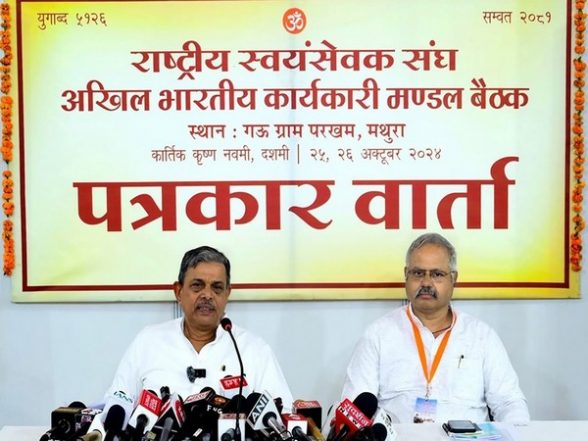
    Mathura (Uttar Pradesh) [India], October 26 (ANI): The two-day Akhil Bharatiya Karyakari Mandal Baithak of the Rashtriya Swayamsevak Sangh (RSS) held at Mathura in Uttar Pradesh concluded on Saturday.

    The meeting was held at Deendayal Gau Vigyan Anusandhan evam Prashikshan Kendra, Gaugram Parkham in Mathura.

    Also Read | Bareilly: Undertrial Prisoner Dies by Suicide in Toilet by Hanging Himself in Uttar Pradesh’s Central Jail.

    Addressing a press conference on the last day of the Baithak, RSS General Secretary Dattatreya Hosabale said that the work of ‘Swa’ is the work of the fragrance of the soil. “Mahatma Gandhi had also said Swarajya. ‘Swa’ means ‘Swadheenta’, Rashtriya Swatva. Here we have to behave with our own tradition, our own civilization, its experiences, follow modernity, do not forget ‘Swa’ even in modernity. He said that this is the 300th year of Punyashloka Ahilyabai Holkar. Social awakening, renovation of temples, efficient governance shows that even 300 years ago, the women power was capable of running the government for the people and public work,” he said, as per a release from the Sangh.

    He further said that the Sangh works for personality development and this process is going on continuously. He said that there will be a Training Camp for the Kaarykartas coming to the ‘Shakha’ and every group.

    Also Read | Hoax Bomb Threats: Government Asks Social Media Platforms To Remove Misinformation Swiftly.

    “Along with this, the current context and the expansion of work of various dimensions related to the Sangh have also been discussed. In the meeting, what we have to do in the coming days, how to connect new ideas, how to connect new people of the society, we have to worry about this, how to connect people of different age groups and how to expand the work by swayamsevaks, this was also discussed in the meeting,” he said.

    Rashtriya Swayamsevak Sangh has entered the Shatabdi Varsh (centenary year) by completing its 99 years this year. It has been thought about how to organize programs on the upcoming Vijayadashami. Karyakartas will go among the society with the topics of Panch Parivartan (Swa-based lifestyle, Samajik Samrasta (social harmony), Kutumb Prabodhan (family enlightenment), Environment and Civic Duty), an official press release stated.

    He told that the first unit of Sangh work is Shakha. In terms of expansion of work, 72,354 shakhas are running in 45,411 places. In this, 3626 places have increased as compared to last year and 6645 shakhas have increased. Similarly, the number of weekly meetings held in a week was 29369, in which there has been an annual increase of 3147.

    He said that where there is no shakha, monthly Sangh Mandali work is going on in such places. This year there are Sangh Mandali in 11,382 places, this year there has been an increase of 750 places. Sangh work is spread across the country in the form of a total of 1,13,105 such units. He told that next year the meeting of Pratinidhi Sabha will be held in Bengaluru and the expansion of work will increase till the Pratinidhi Sabha. He said that the Sangh works to build the character of the workers. This method of character building should not be seen only in discussions but also in conduct and for the past years the society has been experiencing this.

    “In times of disaster in the country, Swayamsevaks take charge. This year too, during the flood in the Tarakeswari river in West Bengal, Swayamsevaks served 25,000 people in relief camps. During the Ordisha floods, 4000 people were provided health and food assistance. In July, one thousand swayamsevaks each were engaged in landslides in Wayanad and Karnataka and provided relief work. Swayamsevaks also arranged for food etc. during the floods in Vadodara, Jamnagar, Dwarka. Along with this, the last rites of 600 people who died in the disaster were also performed, not only Hindus, but the dead of different communities were also cremated according to their traditions,” he said.

    Dattatreya Hosabale said that there should be no attraction towards drugs. The Sangh insists on culture, harmony, education and health. In response to a question, Sarkaryavah ji said that much of what is being shown on all internet platforms is not social. There should be freedom of speech & expression but there should be some regulation like censor board. There is a difference between control and regulations, I am talking about regulation. The government will definitely pay attention to this, the society should also pay attention to this by increasing cultural values. While speaking on the recent Bangladesh incident, he said that the Hindu society does not need to migrate from there. They should stay there, it is their land, and we have Shaktipeeths in Bangladesh.

    He said that Hindus live all over the world. Wherever there is a crisis, Hindus look towards Bharat.

    On the Waqf Board, he said that whatever decisions the JPC will take; the government will work further keeping in mind the public sentiments.

    Speaking on the subject of Shri Krishna Janmabhoomi, he added that the matter is in the court, the court will take a decision. There is no need to do anything on this like Ayodhya, the society will decide. We are with the society. (ANI)

    (This is an unedited and auto-generated story from Syndicated News feed, LatestLY Staff may not have modified or edited the content body)


    Source link

  • India News | We Have to Adopt a ‘Swa’ Based Lifestyle Along with Modern Development: RSS

    India News | We Have to Adopt a ‘Swa’ Based Lifestyle Along with Modern Development: RSS

    Mathura (Uttar Pradesh) [India], October 26 (ANI): The two-day Akhil Bharatiya Karyakari Mandal Baithak of the Rashtriya Swayamsevak Sangh (RSS) held at Mathura in Uttar Pradesh concluded on Saturday.

    The meeting was held at Deendayal Gau Vigyan Anusandhan evam Prashikshan Kendra, Gaugram Parkham in Mathura.

    Also Read | Bareilly: Undertrial Prisoner Dies by Suicide in Toilet by Hanging Himself in Uttar Pradesh’s Central Jail.

    Addressing a press conference on the last day of the Baithak, RSS General Secretary Dattatreya Hosabale said that the work of ‘Swa’ is the work of the fragrance of the soil. “Mahatma Gandhi had also said Swarajya. ‘Swa’ means ‘Swadheenta’, Rashtriya Swatva. Here we have to behave with our own tradition, our own civilization, its experiences, follow modernity, do not forget ‘Swa’ even in modernity. He said that this is the 300th year of Punyashloka Ahilyabai Holkar. Social awakening, renovation of temples, efficient governance shows that even 300 years ago, the women power was capable of running the government for the people and public work,” he said, as per a release from the Sangh.

    He further said that the Sangh works for personality development and this process is going on continuously. He said that there will be a Training Camp for the Kaarykartas coming to the ‘Shakha’ and every group.

    Also Read | Hoax Bomb Threats: Government Asks Social Media Platforms To Remove Misinformation Swiftly.

    “Along with this, the current context and the expansion of work of various dimensions related to the Sangh have also been discussed. In the meeting, what we have to do in the coming days, how to connect new ideas, how to connect new people of the society, we have to worry about this, how to connect people of different age groups and how to expand the work by swayamsevaks, this was also discussed in the meeting,” he said.

    Rashtriya Swayamsevak Sangh has entered the Shatabdi Varsh (centenary year) by completing its 99 years this year. It has been thought about how to organize programs on the upcoming Vijayadashami. Karyakartas will go among the society with the topics of Panch Parivartan (Swa-based lifestyle, Samajik Samrasta (social harmony), Kutumb Prabodhan (family enlightenment), Environment and Civic Duty), an official press release stated.

    He told that the first unit of Sangh work is Shakha. In terms of expansion of work, 72,354 shakhas are running in 45,411 places. In this, 3626 places have increased as compared to last year and 6645 shakhas have increased. Similarly, the number of weekly meetings held in a week was 29369, in which there has been an annual increase of 3147.

    He said that where there is no shakha, monthly Sangh Mandali work is going on in such places. This year there are Sangh Mandali in 11,382 places, this year there has been an increase of 750 places. Sangh work is spread across the country in the form of a total of 1,13,105 such units. He told that next year the meeting of Pratinidhi Sabha will be held in Bengaluru and the expansion of work will increase till the Pratinidhi Sabha. He said that the Sangh works to build the character of the workers. This method of character building should not be seen only in discussions but also in conduct and for the past years the society has been experiencing this.

    “In times of disaster in the country, Swayamsevaks take charge. This year too, during the flood in the Tarakeswari river in West Bengal, Swayamsevaks served 25,000 people in relief camps. During the Ordisha floods, 4000 people were provided health and food assistance. In July, one thousand swayamsevaks each were engaged in landslides in Wayanad and Karnataka and provided relief work. Swayamsevaks also arranged for food etc. during the floods in Vadodara, Jamnagar, Dwarka. Along with this, the last rites of 600 people who died in the disaster were also performed, not only Hindus, but the dead of different communities were also cremated according to their traditions,” he said.

    Dattatreya Hosabale said that there should be no attraction towards drugs. The Sangh insists on culture, harmony, education and health. In response to a question, Sarkaryavah ji said that much of what is being shown on all internet platforms is not social. There should be freedom of speech & expression but there should be some regulation like censor board. There is a difference between control and regulations, I am talking about regulation. The government will definitely pay attention to this, the society should also pay attention to this by increasing cultural values. While speaking on the recent Bangladesh incident, he said that the Hindu society does not need to migrate from there. They should stay there, it is their land, and we have Shaktipeeths in Bangladesh.

    He said that Hindus live all over the world. Wherever there is a crisis, Hindus look towards Bharat.

    On the Waqf Board, he said that whatever decisions the JPC will take; the government will work further keeping in mind the public sentiments.

    Speaking on the subject of Shri Krishna Janmabhoomi, he added that the matter is in the court, the court will take a decision. There is no need to do anything on this like Ayodhya, the society will decide. We are with the society. (ANI)

    (This is an unedited and auto-generated story from Syndicated News feed, LatestLY Staff may not have modified or edited the content body)


    Source link

  • India News | We Have to Adopt a ‘Swa’ Based Lifestyle Along with Modern Development: RSS

    India News | We Have to Adopt a ‘Swa’ Based Lifestyle Along with Modern Development: RSS

    Mathura (Uttar Pradesh) [India], October 26 (ANI): The two-day Akhil Bharatiya Karyakari Mandal Baithak of the Rashtriya Swayamsevak Sangh (RSS) held at Mathura in Uttar Pradesh concluded on Saturday.

    The meeting was held at Deendayal Gau Vigyan Anusandhan evam Prashikshan Kendra, Gaugram Parkham in Mathura.

    Also Read | Bareilly: Undertrial Prisoner Dies by Suicide in Toilet by Hanging Himself in Uttar Pradesh’s Central Jail.

    Addressing a press conference on the last day of the Baithak, RSS General Secretary Dattatreya Hosabale said that the work of ‘Swa’ is the work of the fragrance of the soil. “Mahatma Gandhi had also said Swarajya. ‘Swa’ means ‘Swadheenta’, Rashtriya Swatva. Here we have to behave with our own tradition, our own civilization, its experiences, follow modernity, do not forget ‘Swa’ even in modernity. He said that this is the 300th year of Punyashloka Ahilyabai Holkar. Social awakening, renovation of temples, efficient governance shows that even 300 years ago, the women power was capable of running the government for the people and public work,” he said, as per a release from the Sangh.

    He further said that the Sangh works for personality development and this process is going on continuously. He said that there will be a Training Camp for the Kaarykartas coming to the ‘Shakha’ and every group.

    Also Read | Hoax Bomb Threats: Government Asks Social Media Platforms To Remove Misinformation Swiftly.

    “Along with this, the current context and the expansion of work of various dimensions related to the Sangh have also been discussed. In the meeting, what we have to do in the coming days, how to connect new ideas, how to connect new people of the society, we have to worry about this, how to connect people of different age groups and how to expand the work by swayamsevaks, this was also discussed in the meeting,” he said.

    Rashtriya Swayamsevak Sangh has entered the Shatabdi Varsh (centenary year) by completing its 99 years this year. It has been thought about how to organize programs on the upcoming Vijayadashami. Karyakartas will go among the society with the topics of Panch Parivartan (Swa-based lifestyle, Samajik Samrasta (social harmony), Kutumb Prabodhan (family enlightenment), Environment and Civic Duty), an official press release stated.

    He told that the first unit of Sangh work is Shakha. In terms of expansion of work, 72,354 shakhas are running in 45,411 places. In this, 3626 places have increased as compared to last year and 6645 shakhas have increased. Similarly, the number of weekly meetings held in a week was 29369, in which there has been an annual increase of 3147.

    He said that where there is no shakha, monthly Sangh Mandali work is going on in such places. This year there are Sangh Mandali in 11,382 places, this year there has been an increase of 750 places. Sangh work is spread across the country in the form of a total of 1,13,105 such units. He told that next year the meeting of Pratinidhi Sabha will be held in Bengaluru and the expansion of work will increase till the Pratinidhi Sabha. He said that the Sangh works to build the character of the workers. This method of character building should not be seen only in discussions but also in conduct and for the past years the society has been experiencing this.

    “In times of disaster in the country, Swayamsevaks take charge. This year too, during the flood in the Tarakeswari river in West Bengal, Swayamsevaks served 25,000 people in relief camps. During the Ordisha floods, 4000 people were provided health and food assistance. In July, one thousand swayamsevaks each were engaged in landslides in Wayanad and Karnataka and provided relief work. Swayamsevaks also arranged for food etc. during the floods in Vadodara, Jamnagar, Dwarka. Along with this, the last rites of 600 people who died in the disaster were also performed, not only Hindus, but the dead of different communities were also cremated according to their traditions,” he said.

    Dattatreya Hosabale said that there should be no attraction towards drugs. The Sangh insists on culture, harmony, education and health. In response to a question, Sarkaryavah ji said that much of what is being shown on all internet platforms is not social. There should be freedom of speech & expression but there should be some regulation like censor board. There is a difference between control and regulations, I am talking about regulation. The government will definitely pay attention to this, the society should also pay attention to this by increasing cultural values. While speaking on the recent Bangladesh incident, he said that the Hindu society does not need to migrate from there. They should stay there, it is their land, and we have Shaktipeeths in Bangladesh.

    He said that Hindus live all over the world. Wherever there is a crisis, Hindus look towards Bharat.

    On the Waqf Board, he said that whatever decisions the JPC will take; the government will work further keeping in mind the public sentiments.

    Speaking on the subject of Shri Krishna Janmabhoomi, he added that the matter is in the court, the court will take a decision. There is no need to do anything on this like Ayodhya, the society will decide. We are with the society. (ANI)

    (This is an unedited and auto-generated story from Syndicated News feed, LatestLY Staff may not have modified or edited the content body)


    Source link

  • India News | We Have to Adopt a ‘Swa’ Based Lifestyle Along with Modern Development: RSS

    India News | We Have to Adopt a ‘Swa’ Based Lifestyle Along with Modern Development: RSS

    Mathura (Uttar Pradesh) [India], October 26 (ANI): The two-day Akhil Bharatiya Karyakari Mandal Baithak of the Rashtriya Swayamsevak Sangh (RSS) held at Mathura in Uttar Pradesh concluded on Saturday.

    The meeting was held at Deendayal Gau Vigyan Anusandhan evam Prashikshan Kendra, Gaugram Parkham in Mathura.

    Also Read | Bareilly: Undertrial Prisoner Dies by Suicide in Toilet by Hanging Himself in Uttar Pradesh’s Central Jail.

    Addressing a press conference on the last day of the Baithak, RSS General Secretary Dattatreya Hosabale said that the work of ‘Swa’ is the work of the fragrance of the soil. “Mahatma Gandhi had also said Swarajya. ‘Swa’ means ‘Swadheenta’, Rashtriya Swatva. Here we have to behave with our own tradition, our own civilization, its experiences, follow modernity, do not forget ‘Swa’ even in modernity. He said that this is the 300th year of Punyashloka Ahilyabai Holkar. Social awakening, renovation of temples, efficient governance shows that even 300 years ago, the women power was capable of running the government for the people and public work,” he said, as per a release from the Sangh.

    He further said that the Sangh works for personality development and this process is going on continuously. He said that there will be a Training Camp for the Kaarykartas coming to the ‘Shakha’ and every group.

    Also Read | Hoax Bomb Threats: Government Asks Social Media Platforms To Remove Misinformation Swiftly.

    “Along with this, the current context and the expansion of work of various dimensions related to the Sangh have also been discussed. In the meeting, what we have to do in the coming days, how to connect new ideas, how to connect new people of the society, we have to worry about this, how to connect people of different age groups and how to expand the work by swayamsevaks, this was also discussed in the meeting,” he said.

    Rashtriya Swayamsevak Sangh has entered the Shatabdi Varsh (centenary year) by completing its 99 years this year. It has been thought about how to organize programs on the upcoming Vijayadashami. Karyakartas will go among the society with the topics of Panch Parivartan (Swa-based lifestyle, Samajik Samrasta (social harmony), Kutumb Prabodhan (family enlightenment), Environment and Civic Duty), an official press release stated.

    He told that the first unit of Sangh work is Shakha. In terms of expansion of work, 72,354 shakhas are running in 45,411 places. In this, 3626 places have increased as compared to last year and 6645 shakhas have increased. Similarly, the number of weekly meetings held in a week was 29369, in which there has been an annual increase of 3147.

    He said that where there is no shakha, monthly Sangh Mandali work is going on in such places. This year there are Sangh Mandali in 11,382 places, this year there has been an increase of 750 places. Sangh work is spread across the country in the form of a total of 1,13,105 such units. He told that next year the meeting of Pratinidhi Sabha will be held in Bengaluru and the expansion of work will increase till the Pratinidhi Sabha. He said that the Sangh works to build the character of the workers. This method of character building should not be seen only in discussions but also in conduct and for the past years the society has been experiencing this.

    “In times of disaster in the country, Swayamsevaks take charge. This year too, during the flood in the Tarakeswari river in West Bengal, Swayamsevaks served 25,000 people in relief camps. During the Ordisha floods, 4000 people were provided health and food assistance. In July, one thousand swayamsevaks each were engaged in landslides in Wayanad and Karnataka and provided relief work. Swayamsevaks also arranged for food etc. during the floods in Vadodara, Jamnagar, Dwarka. Along with this, the last rites of 600 people who died in the disaster were also performed, not only Hindus, but the dead of different communities were also cremated according to their traditions,” he said.

    Dattatreya Hosabale said that there should be no attraction towards drugs. The Sangh insists on culture, harmony, education and health. In response to a question, Sarkaryavah ji said that much of what is being shown on all internet platforms is not social. There should be freedom of speech & expression but there should be some regulation like censor board. There is a difference between control and regulations, I am talking about regulation. The government will definitely pay attention to this, the society should also pay attention to this by increasing cultural values. While speaking on the recent Bangladesh incident, he said that the Hindu society does not need to migrate from there. They should stay there, it is their land, and we have Shaktipeeths in Bangladesh.

    He said that Hindus live all over the world. Wherever there is a crisis, Hindus look towards Bharat.

    On the Waqf Board, he said that whatever decisions the JPC will take; the government will work further keeping in mind the public sentiments.

    Speaking on the subject of Shri Krishna Janmabhoomi, he added that the matter is in the court, the court will take a decision. There is no need to do anything on this like Ayodhya, the society will decide. We are with the society. (ANI)

    (This is an unedited and auto-generated story from Syndicated News feed, LatestLY Staff may not have modified or edited the content body)


    Source link

  • India News | We Have to Adopt a ‘Swa’ Based Lifestyle Along with Modern Development: RSS

    India News | We Have to Adopt a ‘Swa’ Based Lifestyle Along with Modern Development: RSS

    Mathura (Uttar Pradesh) [India], October 26 (ANI): The two-day Akhil Bharatiya Karyakari Mandal Baithak of the Rashtriya Swayamsevak Sangh (RSS) held at Mathura in Uttar Pradesh concluded on Saturday.

    The meeting was held at Deendayal Gau Vigyan Anusandhan evam Prashikshan Kendra, Gaugram Parkham in Mathura.

    Also Read | Bareilly: Undertrial Prisoner Dies by Suicide in Toilet by Hanging Himself in Uttar Pradesh’s Central Jail.

    Addressing a press conference on the last day of the Baithak, RSS General Secretary Dattatreya Hosabale said that the work of ‘Swa’ is the work of the fragrance of the soil. “Mahatma Gandhi had also said Swarajya. ‘Swa’ means ‘Swadheenta’, Rashtriya Swatva. Here we have to behave with our own tradition, our own civilization, its experiences, follow modernity, do not forget ‘Swa’ even in modernity. He said that this is the 300th year of Punyashloka Ahilyabai Holkar. Social awakening, renovation of temples, efficient governance shows that even 300 years ago, the women power was capable of running the government for the people and public work,” he said, as per a release from the Sangh.

    He further said that the Sangh works for personality development and this process is going on continuously. He said that there will be a Training Camp for the Kaarykartas coming to the ‘Shakha’ and every group.

    Also Read | Hoax Bomb Threats: Government Asks Social Media Platforms To Remove Misinformation Swiftly.

    “Along with this, the current context and the expansion of work of various dimensions related to the Sangh have also been discussed. In the meeting, what we have to do in the coming days, how to connect new ideas, how to connect new people of the society, we have to worry about this, how to connect people of different age groups and how to expand the work by swayamsevaks, this was also discussed in the meeting,” he said.

    Rashtriya Swayamsevak Sangh has entered the Shatabdi Varsh (centenary year) by completing its 99 years this year. It has been thought about how to organize programs on the upcoming Vijayadashami. Karyakartas will go among the society with the topics of Panch Parivartan (Swa-based lifestyle, Samajik Samrasta (social harmony), Kutumb Prabodhan (family enlightenment), Environment and Civic Duty), an official press release stated.

    He told that the first unit of Sangh work is Shakha. In terms of expansion of work, 72,354 shakhas are running in 45,411 places. In this, 3626 places have increased as compared to last year and 6645 shakhas have increased. Similarly, the number of weekly meetings held in a week was 29369, in which there has been an annual increase of 3147.

    He said that where there is no shakha, monthly Sangh Mandali work is going on in such places. This year there are Sangh Mandali in 11,382 places, this year there has been an increase of 750 places. Sangh work is spread across the country in the form of a total of 1,13,105 such units. He told that next year the meeting of Pratinidhi Sabha will be held in Bengaluru and the expansion of work will increase till the Pratinidhi Sabha. He said that the Sangh works to build the character of the workers. This method of character building should not be seen only in discussions but also in conduct and for the past years the society has been experiencing this.

    “In times of disaster in the country, Swayamsevaks take charge. This year too, during the flood in the Tarakeswari river in West Bengal, Swayamsevaks served 25,000 people in relief camps. During the Ordisha floods, 4000 people were provided health and food assistance. In July, one thousand swayamsevaks each were engaged in landslides in Wayanad and Karnataka and provided relief work. Swayamsevaks also arranged for food etc. during the floods in Vadodara, Jamnagar, Dwarka. Along with this, the last rites of 600 people who died in the disaster were also performed, not only Hindus, but the dead of different communities were also cremated according to their traditions,” he said.

    Dattatreya Hosabale said that there should be no attraction towards drugs. The Sangh insists on culture, harmony, education and health. In response to a question, Sarkaryavah ji said that much of what is being shown on all internet platforms is not social. There should be freedom of speech & expression but there should be some regulation like censor board. There is a difference between control and regulations, I am talking about regulation. The government will definitely pay attention to this, the society should also pay attention to this by increasing cultural values. While speaking on the recent Bangladesh incident, he said that the Hindu society does not need to migrate from there. They should stay there, it is their land, and we have Shaktipeeths in Bangladesh.

    He said that Hindus live all over the world. Wherever there is a crisis, Hindus look towards Bharat.

    On the Waqf Board, he said that whatever decisions the JPC will take; the government will work further keeping in mind the public sentiments.

    Speaking on the subject of Shri Krishna Janmabhoomi, he added that the matter is in the court, the court will take a decision. There is no need to do anything on this like Ayodhya, the society will decide. We are with the society. (ANI)

    (This is an unedited and auto-generated story from Syndicated News feed, LatestLY Staff may not have modified or edited the content body)


    Source link

  • India News | We Have to Adopt a ‘Swa’ Based Lifestyle Along with Modern Development: RSS

    India News | We Have to Adopt a ‘Swa’ Based Lifestyle Along with Modern Development: RSS

    Mathura (Uttar Pradesh) [India], October 26 (ANI): The two-day Akhil Bharatiya Karyakari Mandal Baithak of the Rashtriya Swayamsevak Sangh (RSS) held at Mathura in Uttar Pradesh concluded on Saturday.

    The meeting was held at Deendayal Gau Vigyan Anusandhan evam Prashikshan Kendra, Gaugram Parkham in Mathura.

    Also Read | Bareilly: Undertrial Prisoner Dies by Suicide in Toilet by Hanging Himself in Uttar Pradesh’s Central Jail.

    Addressing a press conference on the last day of the Baithak, RSS General Secretary Dattatreya Hosabale said that the work of ‘Swa’ is the work of the fragrance of the soil. “Mahatma Gandhi had also said Swarajya. ‘Swa’ means ‘Swadheenta’, Rashtriya Swatva. Here we have to behave with our own tradition, our own civilization, its experiences, follow modernity, do not forget ‘Swa’ even in modernity. He said that this is the 300th year of Punyashloka Ahilyabai Holkar. Social awakening, renovation of temples, efficient governance shows that even 300 years ago, the women power was capable of running the government for the people and public work,” he said, as per a release from the Sangh.

    He further said that the Sangh works for personality development and this process is going on continuously. He said that there will be a Training Camp for the Kaarykartas coming to the ‘Shakha’ and every group.

    Also Read | Hoax Bomb Threats: Government Asks Social Media Platforms To Remove Misinformation Swiftly.

    “Along with this, the current context and the expansion of work of various dimensions related to the Sangh have also been discussed. In the meeting, what we have to do in the coming days, how to connect new ideas, how to connect new people of the society, we have to worry about this, how to connect people of different age groups and how to expand the work by swayamsevaks, this was also discussed in the meeting,” he said.

    Rashtriya Swayamsevak Sangh has entered the Shatabdi Varsh (centenary year) by completing its 99 years this year. It has been thought about how to organize programs on the upcoming Vijayadashami. Karyakartas will go among the society with the topics of Panch Parivartan (Swa-based lifestyle, Samajik Samrasta (social harmony), Kutumb Prabodhan (family enlightenment), Environment and Civic Duty), an official press release stated.

    He told that the first unit of Sangh work is Shakha. In terms of expansion of work, 72,354 shakhas are running in 45,411 places. In this, 3626 places have increased as compared to last year and 6645 shakhas have increased. Similarly, the number of weekly meetings held in a week was 29369, in which there has been an annual increase of 3147.

    He said that where there is no shakha, monthly Sangh Mandali work is going on in such places. This year there are Sangh Mandali in 11,382 places, this year there has been an increase of 750 places. Sangh work is spread across the country in the form of a total of 1,13,105 such units. He told that next year the meeting of Pratinidhi Sabha will be held in Bengaluru and the expansion of work will increase till the Pratinidhi Sabha. He said that the Sangh works to build the character of the workers. This method of character building should not be seen only in discussions but also in conduct and for the past years the society has been experiencing this.

    “In times of disaster in the country, Swayamsevaks take charge. This year too, during the flood in the Tarakeswari river in West Bengal, Swayamsevaks served 25,000 people in relief camps. During the Ordisha floods, 4000 people were provided health and food assistance. In July, one thousand swayamsevaks each were engaged in landslides in Wayanad and Karnataka and provided relief work. Swayamsevaks also arranged for food etc. during the floods in Vadodara, Jamnagar, Dwarka. Along with this, the last rites of 600 people who died in the disaster were also performed, not only Hindus, but the dead of different communities were also cremated according to their traditions,” he said.

    Dattatreya Hosabale said that there should be no attraction towards drugs. The Sangh insists on culture, harmony, education and health. In response to a question, Sarkaryavah ji said that much of what is being shown on all internet platforms is not social. There should be freedom of speech & expression but there should be some regulation like censor board. There is a difference between control and regulations, I am talking about regulation. The government will definitely pay attention to this, the society should also pay attention to this by increasing cultural values. While speaking on the recent Bangladesh incident, he said that the Hindu society does not need to migrate from there. They should stay there, it is their land, and we have Shaktipeeths in Bangladesh.

    He said that Hindus live all over the world. Wherever there is a crisis, Hindus look towards Bharat.

    On the Waqf Board, he said that whatever decisions the JPC will take; the government will work further keeping in mind the public sentiments.

    Speaking on the subject of Shri Krishna Janmabhoomi, he added that the matter is in the court, the court will take a decision. There is no need to do anything on this like Ayodhya, the society will decide. We are with the society. (ANI)

    (This is an unedited and auto-generated story from Syndicated News feed, LatestLY Staff may not have modified or edited the content body)


    Source link

  • Your brain literally changes based on daily activities and lifestyle

    Your brain literally changes based on daily activities and lifestyle

    If you’ve ever groaned at the notion of getting out of bed for an early morning workout, or grumbled at the thought of losing a night’s sleep due to a late-night Netflix binge, your brain is echoing your sentiments to the activities.

    In a remarkable and lengthy study, scientists embarked on a fascinating journey to understand this relationship. They closely monitored a single person’s brain activity, physical activity, mood and lifestyle for a whopping five months.

    Brain after daily activities

    “We wanted to go beyond isolated events. Our behavior and mental states are constantly shaped by our environment and experiences,” says research leader Ana Triana.

    Yet, we know little about the response of brain functional connectivity to environmental, physiological, and behavioral changes on different timescales, from days to months.

    “To truly understand the brain, we need to look at how it responds and evolves over time, influenced by our environment, experiences, and daily habits.”

    Triana wasn’t just leading the research; she was the subject, lending a unique, deeply personal perspective to the study.

    Findings from this investigation unveil that our brains don’t just react in knee-jerk, immediate responses to daily events.

    Indeed, the brain seems to have a ‘memory’ of sorts. It evolves according to sleep patterns, physical activity, mood, and even respiratory rate over several days.

    If you thought a restless night or an intense workout only had immediate, short-term effects, think again. These experiences could still be impacting your brain — and your attention, cognition, and memory – well into the next week.

    Brain’s connectivity

    The research didn’t stop at understanding the brain’s behavioral response. It also shed light on fascinating connections between the heart and brain.

    Heart rate variability, a measure of the heart’s adaptability, appears to have a strong link with brain connectivity, particularly during rest.

    So, taking a minute to focus on your breath, engage in mindfulness, or practice any stress management technique could be shaping your brain‘s wiring even when you’re not actively focused on a task.

    Even physical activity positively influences how different regions of the brain interact, potentially impacting memory and cognitive flexibility — the ability to switch between thinking about different concepts, or to think about multiple concepts simultaneously.

    Intriguingly, even minor shifts in mood, and fluctuations in heart rate could leave lasting imprints for up to fifteen days.

    Scanning activities in brain

    “At the beginning, it was exciting and a bit stressful. Then, routine settles in and you forget,” says Triana. Data from the devices and twice-weekly brain scans were complemented by qualitative data from mood surveys.

    The researchers from Aalto University and the University of Oulu identified two distinct response patterns in the brain: a short-term wave, lasting under seven days, and a long-term wave up to fifteen days.

    These waves reflected the brain’s quick adaptability on one hand and more gradual, lasting effects on the other.

    Implications for mental health

    This study holds significant implications for our understanding of mental health and well-being.

    By appreciating that the brain’s responses are not instantaneous but rather span several days to weeks, mental health professionals might develop more effective therapeutic interventions that align with these temporal patterns.

    It also encourages individuals to adopt healthier lifestyle habits, recognizing that daily decisions have lasting effects on brain function and connectivity.

    Importantly, the research suggests that managing stress and maintaining regular physical activity can enhance cognitive flexibility, potentially improving mental health outcomes and overall quality of life.

    Personalized neuroscience

    The pioneering nature of this research offers a framework for personalized neuroscience, where tailored interventions could be designed based on an individual’s unique brain response patterns and lifestyle.

    With wearable technology and continuous monitoring becoming more accessible, it is feasible to integrate these insights into everyday life, allowing individuals to track their brain health in real-time.

    This prospect not only empowers individuals to make informed decisions about their mental and physical health but also opens avenues for further research to explore how external factors, such as nutrition and social interactions, contribute to the brain’s long-term evolution.

    As this field progresses, the potential for more personalized, responsive approaches to brain health and well-being will only grow, paving the way for improved quality of life and a deeper understanding of the human brain.

    Personalized care for brain activity

    The team hopes these findings will inspire future studies to merge brain data with everyday life considerations, driving personalization in mental health treatment.

    “Data from daily life must come into the lab,” insists study co-author, neuroscientist and physician Dr Nick Hayward. “Our approach provides essential context to neuroscience and offers granular understanding of the brain.”

    Could real-time tracking of brain changes revolutionize healthcare? Triana certainly thinks so, saying, “Linking brain activity with physiological and environmental data can transform personalized healthcare, paving the way for earlier interventions and improved results.”

    In conclusion, the way you sleep, the level of your physical activity, your mood, and even your heart rate variability could be influencing your brain in ways we are only beginning to understand.

    So next time you’re grappling with the choice of an extra hour of sleep or an early morning jog, remember, your brain is keeping score.

    The study is published in the journal PLOS Biology.

    —–

    Like what you read? Subscribe to our newsletter for engaging articles, exclusive content, and the latest updates. 

    Check us out on EarthSnap, a free app brought to you by Eric Ralls and Earth.com.

    —–


    Source link

  • Your brain literally changes based on daily activities and lifestyle

    Your brain literally changes based on daily activities and lifestyle

    If you’ve ever groaned at the notion of getting out of bed for an early morning workout, or grumbled at the thought of losing a night’s sleep due to a late-night Netflix binge, your brain is echoing your sentiments to the activities.

    In a remarkable and lengthy study, scientists embarked on a fascinating journey to understand this relationship. They closely monitored a single person’s brain activity, physical activity, mood and lifestyle for a whopping five months.

    Brain after daily activities

    “We wanted to go beyond isolated events. Our behavior and mental states are constantly shaped by our environment and experiences,” says research leader Ana Triana.

    Yet, we know little about the response of brain functional connectivity to environmental, physiological, and behavioral changes on different timescales, from days to months.

    “To truly understand the brain, we need to look at how it responds and evolves over time, influenced by our environment, experiences, and daily habits.”

    Triana wasn’t just leading the research; she was the subject, lending a unique, deeply personal perspective to the study.

    Findings from this investigation unveil that our brains don’t just react in knee-jerk, immediate responses to daily events.

    Indeed, the brain seems to have a ‘memory’ of sorts. It evolves according to sleep patterns, physical activity, mood, and even respiratory rate over several days.

    If you thought a restless night or an intense workout only had immediate, short-term effects, think again. These experiences could still be impacting your brain — and your attention, cognition, and memory – well into the next week.

    Brain’s connectivity

    The research didn’t stop at understanding the brain’s behavioral response. It also shed light on fascinating connections between the heart and brain.

    Heart rate variability, a measure of the heart’s adaptability, appears to have a strong link with brain connectivity, particularly during rest.

    So, taking a minute to focus on your breath, engage in mindfulness, or practice any stress management technique could be shaping your brain‘s wiring even when you’re not actively focused on a task.

    Even physical activity positively influences how different regions of the brain interact, potentially impacting memory and cognitive flexibility — the ability to switch between thinking about different concepts, or to think about multiple concepts simultaneously.

    Intriguingly, even minor shifts in mood, and fluctuations in heart rate could leave lasting imprints for up to fifteen days.

    Scanning activities in brain

    “At the beginning, it was exciting and a bit stressful. Then, routine settles in and you forget,” says Triana. Data from the devices and twice-weekly brain scans were complemented by qualitative data from mood surveys.

    The researchers from Aalto University and the University of Oulu identified two distinct response patterns in the brain: a short-term wave, lasting under seven days, and a long-term wave up to fifteen days.

    These waves reflected the brain’s quick adaptability on one hand and more gradual, lasting effects on the other.

    Implications for mental health

    This study holds significant implications for our understanding of mental health and well-being.

    By appreciating that the brain’s responses are not instantaneous but rather span several days to weeks, mental health professionals might develop more effective therapeutic interventions that align with these temporal patterns.

    It also encourages individuals to adopt healthier lifestyle habits, recognizing that daily decisions have lasting effects on brain function and connectivity.

    Importantly, the research suggests that managing stress and maintaining regular physical activity can enhance cognitive flexibility, potentially improving mental health outcomes and overall quality of life.

    Personalized neuroscience

    The pioneering nature of this research offers a framework for personalized neuroscience, where tailored interventions could be designed based on an individual’s unique brain response patterns and lifestyle.

    With wearable technology and continuous monitoring becoming more accessible, it is feasible to integrate these insights into everyday life, allowing individuals to track their brain health in real-time.

    This prospect not only empowers individuals to make informed decisions about their mental and physical health but also opens avenues for further research to explore how external factors, such as nutrition and social interactions, contribute to the brain’s long-term evolution.

    As this field progresses, the potential for more personalized, responsive approaches to brain health and well-being will only grow, paving the way for improved quality of life and a deeper understanding of the human brain.

    Personalized care for brain activity

    The team hopes these findings will inspire future studies to merge brain data with everyday life considerations, driving personalization in mental health treatment.

    “Data from daily life must come into the lab,” insists study co-author, neuroscientist and physician Dr Nick Hayward. “Our approach provides essential context to neuroscience and offers granular understanding of the brain.”

    Could real-time tracking of brain changes revolutionize healthcare? Triana certainly thinks so, saying, “Linking brain activity with physiological and environmental data can transform personalized healthcare, paving the way for earlier interventions and improved results.”

    In conclusion, the way you sleep, the level of your physical activity, your mood, and even your heart rate variability could be influencing your brain in ways we are only beginning to understand.

    So next time you’re grappling with the choice of an extra hour of sleep or an early morning jog, remember, your brain is keeping score.

    The study is published in the journal PLOS Biology.

    —–

    Like what you read? Subscribe to our newsletter for engaging articles, exclusive content, and the latest updates. 

    Check us out on EarthSnap, a free app brought to you by Eric Ralls and Earth.com.

    —–


    Source link

  • Your brain literally changes based on daily activities and lifestyle

    Your brain literally changes based on daily activities and lifestyle

    If you’ve ever groaned at the notion of getting out of bed for an early morning workout, or grumbled at the thought of losing a night’s sleep due to a late-night Netflix binge, your brain is echoing your sentiments to the activities.

    In a remarkable and lengthy study, scientists embarked on a fascinating journey to understand this relationship. They closely monitored a single person’s brain activity, physical activity, mood and lifestyle for a whopping five months.

    Brain after daily activities

    “We wanted to go beyond isolated events. Our behavior and mental states are constantly shaped by our environment and experiences,” says research leader Ana Triana.

    Yet, we know little about the response of brain functional connectivity to environmental, physiological, and behavioral changes on different timescales, from days to months.

    “To truly understand the brain, we need to look at how it responds and evolves over time, influenced by our environment, experiences, and daily habits.”

    Triana wasn’t just leading the research; she was the subject, lending a unique, deeply personal perspective to the study.

    Findings from this investigation unveil that our brains don’t just react in knee-jerk, immediate responses to daily events.

    Indeed, the brain seems to have a ‘memory’ of sorts. It evolves according to sleep patterns, physical activity, mood, and even respiratory rate over several days.

    If you thought a restless night or an intense workout only had immediate, short-term effects, think again. These experiences could still be impacting your brain — and your attention, cognition, and memory – well into the next week.

    Brain’s connectivity

    The research didn’t stop at understanding the brain’s behavioral response. It also shed light on fascinating connections between the heart and brain.

    Heart rate variability, a measure of the heart’s adaptability, appears to have a strong link with brain connectivity, particularly during rest.

    So, taking a minute to focus on your breath, engage in mindfulness, or practice any stress management technique could be shaping your brain‘s wiring even when you’re not actively focused on a task.

    Even physical activity positively influences how different regions of the brain interact, potentially impacting memory and cognitive flexibility — the ability to switch between thinking about different concepts, or to think about multiple concepts simultaneously.

    Intriguingly, even minor shifts in mood, and fluctuations in heart rate could leave lasting imprints for up to fifteen days.

    Scanning activities in brain

    “At the beginning, it was exciting and a bit stressful. Then, routine settles in and you forget,” says Triana. Data from the devices and twice-weekly brain scans were complemented by qualitative data from mood surveys.

    The researchers from Aalto University and the University of Oulu identified two distinct response patterns in the brain: a short-term wave, lasting under seven days, and a long-term wave up to fifteen days.

    These waves reflected the brain’s quick adaptability on one hand and more gradual, lasting effects on the other.

    Implications for mental health

    This study holds significant implications for our understanding of mental health and well-being.

    By appreciating that the brain’s responses are not instantaneous but rather span several days to weeks, mental health professionals might develop more effective therapeutic interventions that align with these temporal patterns.

    It also encourages individuals to adopt healthier lifestyle habits, recognizing that daily decisions have lasting effects on brain function and connectivity.

    Importantly, the research suggests that managing stress and maintaining regular physical activity can enhance cognitive flexibility, potentially improving mental health outcomes and overall quality of life.

    Personalized neuroscience

    The pioneering nature of this research offers a framework for personalized neuroscience, where tailored interventions could be designed based on an individual’s unique brain response patterns and lifestyle.

    With wearable technology and continuous monitoring becoming more accessible, it is feasible to integrate these insights into everyday life, allowing individuals to track their brain health in real-time.

    This prospect not only empowers individuals to make informed decisions about their mental and physical health but also opens avenues for further research to explore how external factors, such as nutrition and social interactions, contribute to the brain’s long-term evolution.

    As this field progresses, the potential for more personalized, responsive approaches to brain health and well-being will only grow, paving the way for improved quality of life and a deeper understanding of the human brain.

    Personalized care for brain activity

    The team hopes these findings will inspire future studies to merge brain data with everyday life considerations, driving personalization in mental health treatment.

    “Data from daily life must come into the lab,” insists study co-author, neuroscientist and physician Dr Nick Hayward. “Our approach provides essential context to neuroscience and offers granular understanding of the brain.”

    Could real-time tracking of brain changes revolutionize healthcare? Triana certainly thinks so, saying, “Linking brain activity with physiological and environmental data can transform personalized healthcare, paving the way for earlier interventions and improved results.”

    In conclusion, the way you sleep, the level of your physical activity, your mood, and even your heart rate variability could be influencing your brain in ways we are only beginning to understand.

    So next time you’re grappling with the choice of an extra hour of sleep or an early morning jog, remember, your brain is keeping score.

    The study is published in the journal PLOS Biology.

    —–

    Like what you read? Subscribe to our newsletter for engaging articles, exclusive content, and the latest updates. 

    Check us out on EarthSnap, a free app brought to you by Eric Ralls and Earth.com.

    —–


    Source link