hacklink hack forum hacklink film izle hacklink marsbahisizmir escortsahabetpornJojobet

Tag: Billion

  • Trump highlights partnership investing $500 billion in AI

    Trump highlights partnership investing $500 billion in AI

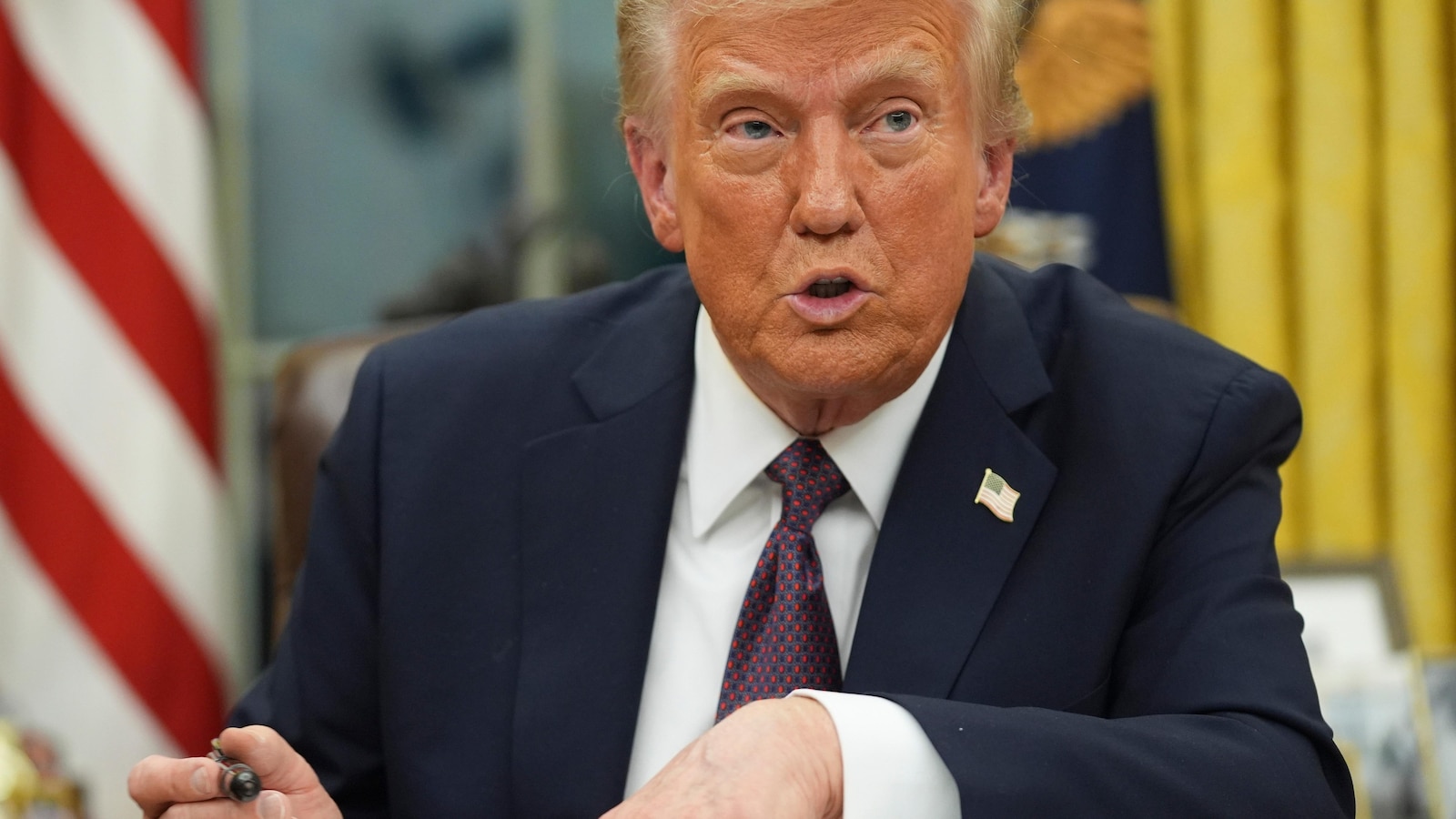
    WASHINGTON — President Donald Trump on Tuesday talked up a joint venture investing up to $500 billion for infrastructure tied to artificial intelligence by a new partnership formed by OpenAI, Oracle and SoftBank.

    The new entity, Stargate, will start building out data centers and the electricity generation needed for the further development of the fast-evolving AI in Texas, according to the White House. The initial investment is expected to be $100 billion and could reach five times that sum.

    “It’s big money and high quality people,” said Trump, adding that it’s “a resounding declaration of confidence in America’s potential” under his new administration.

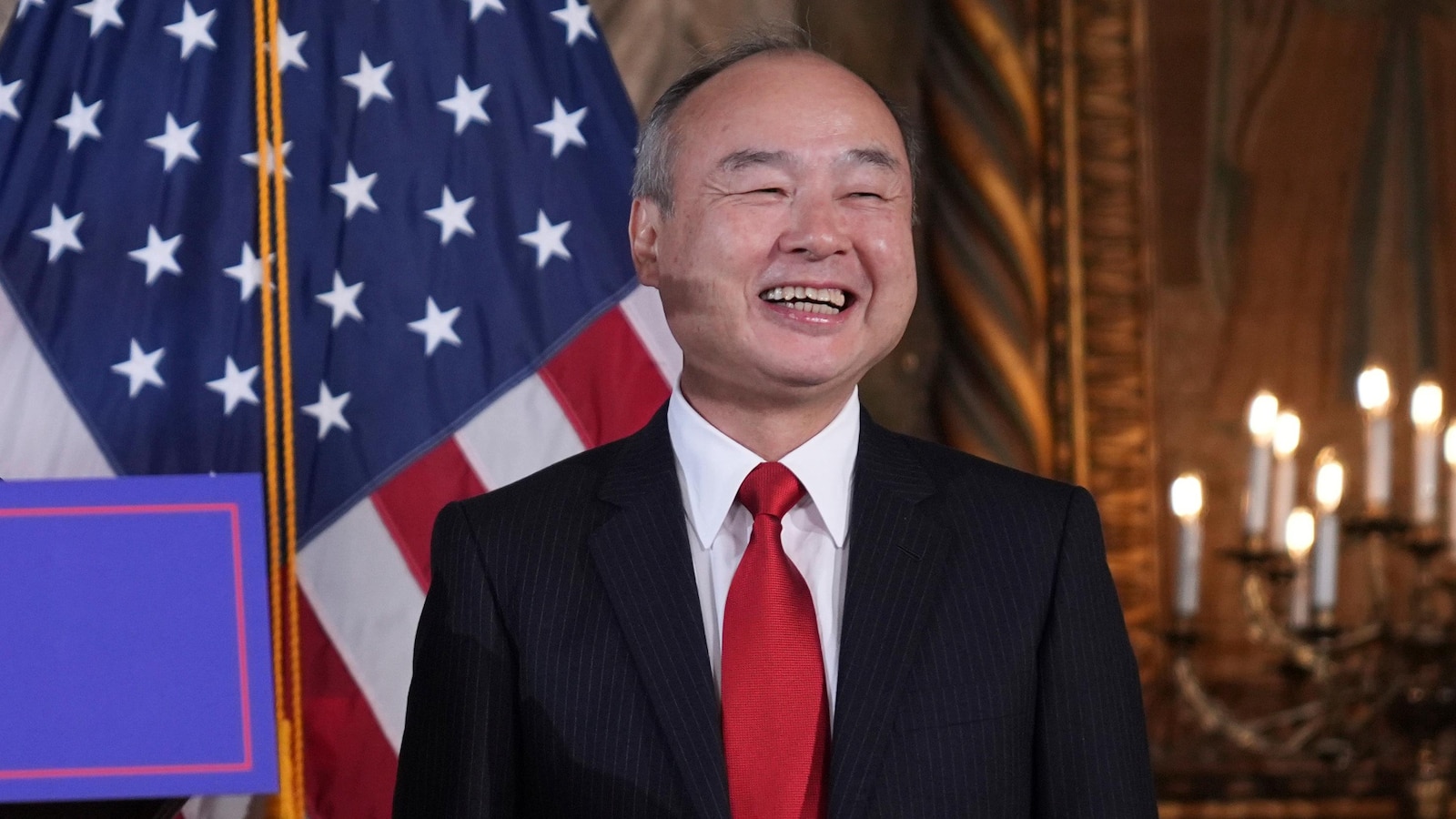
    Joining Trump fresh off his inauguration at the White House were Masayoshi Son of SoftBank, Sam Altman of OpenAI and Larry Ellison of Oracle. All three credited Trump for helping to make the project possible, even though building has already started and the project goes back to 2024.

    “This will be the most important project of this era,” said Altman, CEO of OpenAI.

    Ellison noted that the data centers are already under construction with 10 being built so far. The chairman of Oracle suggested that the project was also tied to digital health records and would make it easier to treat diseases such as cancer by possibly developing a customized vaccine.

    “This is the beginning of golden age,” said Son, referencing Trump’s statement that the U.S. would be in a “golden age” with him back in the White House.

    Son, a billionaire based in Japan, already committed in December to invest $100 billion in U.S. projects over the next four years. He previously committed to $50 billion in new investments ahead of Trump’s first term, which included a large stake in the troubled office-sharing company WeWork.

    While Trump has seized on similar announcements to show that his presidency is boosting the economy, there were already expectations of a massive buildout in data centers and electricity plants needed for the development of AI, which holds the promise of increasing productivity by automating work but also the risk of displacing jobs if poorly implemented.

    The initial plans for Stargate go back to the Biden administration. Tech news outlet The Information first reported on the project in March 2024. OpenAI has long relied on Microsoft data centers to build its AI systems, but it has increasingly signaled an interest in building its own data centers.

    OpenAI wrote in a letter to the Biden administration’s Commerce Department last fall that planning and permitting for such projects “can be lengthy and complex, particularly for energy infrastructure.”

    Other partners in the project include Microsoft, investor MGX and the chipmakers Arm and NVIDIA, according to separate statements by Oracle and OpenAI.

    The push to build data centers predates Trump’s presidency. Last October, the financial company Blackstone estimated that the U.S. would see $1 trillion invested in data centers over five years, with another $1 trillion being committed internationally.

    Those estimates for investments suggest that much of the new capital will go through Stargate as OpenAI has established itself as a sector leader with the 2022 launch of its ChatGPT, a chatbot that captivated the public imagination with its ability to answer complex questions and perform basic business tasks.

    The White House has put an emphasis on making it easier to build out new electricity generation in anticipation of AI’s expansion, knowing that the United States is in a competitive race against China to develop a technology increasingly being adopted by businesses.

    Still, the regulatory outlook for AI remains somewhat uncertain as Trump on Monday overturned the 2023 order signed by then-President Joe Biden to create safety standards and watermarking of AI-generated content, among other goals, in hopes of putting guardrails on the technology’s possible risks to national security and economic well-being.

    CBS News first reported that Trump would be announcing the AI investment.

    Trump supporter Elon Musk, worth more than $400 billion, was an early investor in OpenAI but has since challenged its move to for-profit status and has started his own AI company, xAI. Musk is also in charge of the “Department of Government Efficiency” created formally on Monday by Trump with the goal of reducing government spending.

    Trump previously in January announced a $20 billion investment by DAMAC Properties in the United Arab Emirates to build data centers tied to AI.

    ___

    AP reporter Matt O’Brien contributed to this report from Providence, Rhode Island.
    Source link

  • Why is tech giant SoftBank investing over $100 billion in the US?

    Why is tech giant SoftBank investing over $100 billion in the US?

    BANGKOK — Japanese tycoon Masayoshi Son and President-elect Donald Trump have announced plans for technology and telecoms giant SoftBank Group to invest $100 billion in projects in the United States over the coming four years.

    Trump said the investments in building artificial intelligence infrastructure would create 100,000 jobs, twice the 50,000 promised when Son pledged $50 billion in U.S. investments after Trump’s victory in 2016.

    Son, a founder and CEO of SoftBank Group, is known for making bold choices that sometimes pay big and sometimes don’t. SoftBank has investments in dozens of Silicon Valley startups, along with big companies like semiconductor design company Arm and Chinese e-commerce giant Alibaba. The stock market rally and craze for AI has boosted the value of its assets, but it’s unclear whether its investments will create that many jobs.

    Son founded SoftBank in the 1980s, expanding it from a telecoms carrier to encompass renewable energy and technology ventures. A leading figure in Japan’s business world, he was an early believer in the internet, pouring billions into Silicon Valley start-ups and other technology companies.

    Son comes from a humble background. While at the University of California, Berkeley, he invented a pocket translator that he sold for $1 million to Japanese electronics maker Sharp Corp. He has made a career of risk-taking, pushing adoption of broadband services when the internet was still relatively new in Japan. His $20 billion takeover of U.S. mobile phone carrier Sprint Nextel Corp. in 2012 was Japan’s biggest foreign acquisition at the time.

    Son is philosophical about his missteps, such as SoftBank’s $18.5 billion investment in co-working space provider WeWork, which sought bankruptcy protection last year. SoftBank also invested in the failed robot pizza-making company Zume. Son is canny: SoftBank-related spending on lobbying and donations to U.S. politicians and parties runs into the billions of dollars. And both times Trump was elected, Son was quick to show his support.

    SoftBank has benefitted in recent months from rising values of some investments, such as U.S.-based e-commerce company Coupang, Chinese mobility provider DiDi Global and Bytedance, the Chinese developer of TikTok.

    Son built his fortune on early investments in search engine Yahoo and China’s Alibaba, an astute initial outlay of $20 million in what has become an e-commerce and financial empire with a market cap of more than $200 billion.

    SoftBank has investments in T-Mobile, Deutsche Telekom, Microsoft, Nvidia and ride-sharing platform Uber, among hundreds of other companies that it groups together in its Vision Funds. The Saudi Arabian sovereign wealth fund and Abu Dhabi national wealth fund are among the biggest investors in those funds.

    The hundreds of start-ups that have received SoftBank investments include Nuro, a robo-delivery company; the dog-walking app Wag; South Korean logistics company Coupang; the Southeast Asian ride-sharing app Grab; and the office messaging app Slack.

    After several rough years, SoftBank returned to profitability in the last quarter, helped by returns from its Vision Fund investments. A big factor? Royalties and licensing related to its holdings in the UK-based computer chip-designing company Arm, whose business spans smartphones, data centers, networking equipment, automotive, consumer electronic devices, and AI applications.

    SoftBank investor presentations have sometimes featured images of a goose labeled “AI Revolution” laying golden eggs.

    Son has said he believes artificial intelligence will surpass human intelligence within a decade, affecting every industry, from transportation and pharmaceuticals to finance, manufacturing, logistics and others and that companies and people working with AI will be the leaders of the next 10 to 20 years. SoftBank’s roughly 90% stake in Arm has positioned it well for expansion of AI applications since most mobile devices operate on Arm-based processors.

    Trump and Son said the $100 billion that SoftBank has promised to invest will go to building AI infrastructure, but the nature of that spending remains unclear. The eventual impact of AI on jobs remains an open question, but much of its infrastructure is based on energy-guzzling data processing centers that are likely to employ relatively few people once they are built.

    Even if SoftBank actually invested the promised $50 billion last time Trump was headed to the White House, it’s unclear how many jobs that created.

    Shutdowns during the COVID-19 pandemic complicated matters. Foxconn Technology Group, a Taiwan company best known for making Apple iPhones, won Trump’s praise after saying in 2017 it would build a $10 billion complex employing 13,000 people in a small town just south of Milwaukee. But that investment was scaled back drastically.

    SoftBank itself says it had 65,352 employees as of March.

    Officials in Tokyo praised Son’s initiative, viewing it as a goodwill gesture at a time of huge concern over whether Trump will impose blanket tariff hikes on imports from allies like Japan, as well as China.

    “Generally speaking, I believe expansion of investment through steady accumulation of efforts between Japanese and U.S. companies would help further strengthen Japan-U.S. economic ties, so I find it delightful,” said Yoji Muto, Japan’s Trade and Industry minister.

    ___

    Associated Press writer Mari Yamaguchi in Tokyo contributed.

    Source link

  • Athletes in $2.8 billion college lawsuit tell judge they want to create a players’ association

    Athletes in $2.8 billion college lawsuit tell judge they want to create a players’ association

    The athletes whose lawsuit against the NCAA is primed to pave the way for schools to pay them directly also want a players’ association to represent them in the complex contract negotiations that have overtaken the sport.

    Grant House, Sedona Prince and Nya Harrison wrote to the judge overseeing what’s known as the House settlement, saying that although they are generally happy with the terms of the proposed settlement “there still remains a critical need for structural changes to protect athletes and prevent the failures of the past.”

    That, they said, would be a players’ association, which they believe will help their voices be better heard as the NCAA and its schools move toward a system to share hundreds of millions in TV and ticket revenue with players.

    The players said an association would help standardize name-image-likeness (NIL) contracts to establish minimum payments and health protections “and to create an ecosystem where athletes can thrive.”

    “While professional leagues include athletes in these decisions through their respective players’ associations, the college system continues to prevent our players’ association from representing us at the decision-making tables,” the letter said.

    The settlement, with a price tag of $2.8 billion that will be distributed over the next 10 years to players both past and present, does not address whether athletes should be considered employees of the schools. That’s an issue the NCAA is asking Congress to prevent for fear the costs could wreck college sports.

    The NCAA did not immediately respond to a message from The Associated Press seeking comment Tuesday.

    Earlier this year, the head of the National College Players Association confirmed that a licensing organization that works with the NFL Players’ Association had emailed thousands of college football players, encouraging them to join the NCPA. Separately, the chairman of another group trying to organize college athletes, athletes.org, said it already had some 4,000 members. The players who wrote the letter said they wanted to work with athletes.org.

    A hearing to approve the settlement is set for April 7. The request could shape how U.S. Judge Claudia Wilken views the settlement’s long-term chances of succeeding, but plaintiffs’ attorney Jeffrey Kessler said the letter was an endorsement of the settlement and he doesn’t expect it to impact the agreement.

    “All three of these athletes fully support approval of the settlement but wanted to express their additional views that a players’ association is also desirable,” Kessler said. “I salute their devotion to these issues and their fellow college athletes.”

    Whether college athletes can ever be considered school employees is a thorny topic. There are multiple issues in front of the National Labor Relations Board, including a complaint against USC and the Pac-12; a unionization effort by the men’s basketball team at Dartmouth; an unfair labor complaint against Notre Dame; and a federal lawsuit in Pennsylvania filed by former Villanova football player Trey Johnson.

    All of it could lead to college athletes being granted employee status, though court battles are assured.

    ___

    Get poll alerts and updates on the AP Top 25 throughout the season. Sign up here. AP college football: https://apnews.com/hub/ap-top-25-college-football-poll and https://apnews.com/hub/college-football

    Source link

  • Meta to build $10 billion AI data center in Louisiana as Elon Musk expands his Tennessee AI facility

    Meta to build $10 billion AI data center in Louisiana as Elon Musk expands his Tennessee AI facility

    NEW ORLEANS — The largest artificial intelligence data center ever built by Facebook’s parent company Meta is coming to northeast Louisiana, the company said Wednesday, bringing hopes that the $10 billion facility will transform an economically neglected corner of the state.

    Republican Gov. Jeff Landry called it “game-changing” for his state’s expanding tech sector, yet some environmental groups have raised concerns over the center’s reliance on fossil fuels — and whether the plans for new natural gas power to support it could lead to higher energy bills in the future for Louisiana residents.

    Meanwhile, Elon Musk’s AI startup, xAI, is expanding its existing supercomputer project in Memphis, Tennessee, the city’s chamber of commerce said Wednesday. The chamber also said that Nvidia, Dell, and Supermicro Computer will be “establishing operations in Memphis,” without offering further details.

    Louisiana is among a growing number of states offering tax credits and other incentives to lure big tech firms seeking sites for energy-intensive data centers.

    The U.S. Commerce Department found that there aren’t enough data centers in the U.S. to meet the rising AI-fueled demand, which is projected to grow by 9% each year through 2030, citing industry reports.

    Meta anticipates its Louisiana data center will create 500 operational jobs and 5,000 temporary construction jobs, said Kevin Janda, director of data center strategy. At 4 million square feet (370,000 square meters), it will be the company’s largest AI data center to date, he added.

    “We want to make sure we are having a positive impact on the local level,” Janda said.

    Congressional leaders and local representatives from across the political spectrum heralded the Meta facility as a boon for Richland parish, a rural part of Louisiana with a population of 20,000 historically reliant on agriculture. About one in four residents are considered to live in poverty and the parish has an employment rate below 50%, according to the U.S. census data.

    Meta plans to invest $200 million into road and water infrastructure improvements for the parish to offset its water usage. The facility is expected to be completed in 2030.

    Entergy, one of the nation’s largest utility providers, is fast-tracking plans to build three natural gas power plants in Louisiana capable of generating 2,262 megawatts for Meta’s data center over a 15-year period — nearly one-tenth of Entergy’s existing energy capacity across four states.

    The Louisiana Public Service Commission is weighing Entergy’s proposal as some environmental groups have opposed locking the state into more fossil fuel-based energy infrastructure. Meta said it plans to help bring 1,500 megawatts of renewable energy onto the grid in the future.

    Louisiana residents may ultimately end up with rate increases to pay off the cost of operating these natural gas power plants when Meta’s contract with Entergy expires, said Jessica Hendricks, state policy director for the Alliance for Affordable Energy, a Louisiana-based nonprofit advocating for energy consumers.

    “There’s no reason why residential customers in Louisiana need to pay for a power plant for energy that they’re not going to use,” Hendricks said. “And we want to make sure that there’s safeguards in place.”

    Public service commissioner Foster Campbell, representing northeast Louisiana, said he does not believe the data center will increase rates for Louisiana residents and views it as vital for his region.

    “It’s going in one of the most needed places in Louisiana and maybe one of the most needed places in the United States of America,” Foster said. “I’m for it 100%.”

    Environmental groups have also warned of the pollution generated by Musk’s AI data center in Memphis. The Southern Environmental Law Center, among others, says the supercomputer could strain the power grid, prompting attention from the Environmental Protection Agency. Eighteen gas turbines currently running at xAI’s south Memphis facility are significant sources of ground-level ozone, better known as smog, the group said.

    Patrick Anderson, an attorney at the law center, said xAI has operated with “a stunning lack of transparency” in developing its South Memphis facility, which is located near predominantly Black neighborhoods that have long dealt with pollution and health risks from factories and other industrial sites.

    “Memphians deserve to know how xAI will affect them,” he said, “and should have a seat at the table when these decisions are being made.”

    _____

    Sainz reported from Memphis, Tennessee. Associated Press writer Matt O’Brien in Providence, Rhode Island, contributed to this report.

    _____

    Brook is a corps member for The Associated Press/Report for America Statehouse News Initiative. Report for America is a nonprofit national service program that places journalists in local newsrooms to report on undercovered issues. Follow Brook on the social platform X: @jack_brook96

    Source link

  • Biden administration will loan $6.6 billion to Rivian to build Georgia factory that automaker paused

    Biden administration will loan $6.6 billion to Rivian to build Georgia factory that automaker paused

    ATLANTA — President Joe Biden’s administration announced Tuesday that the U.S. Department of Energy will make a $6.6 billion loan to Rivian Automotive to build a factory in Georgia that had stalled as the startup automaker struggled to become profitable.

    It’s unclear whether the administration can complete the loan before Donald Trump becomes president again in less than two months, or whether the Trump administration might try to claw the money back.

    Trump previously vowed to end federal electric vehicle tax credits, which are worth up to $7,500 for new zero-emission vehicles and $4,000 for used ones. Trump later softened his stance as Tesla CEO Elon Musk became a supporter and adviser.

    Rivian made a splash when it went public and began producing large electric R1 SUVs, pickup trucks and delivery vans at a former Mitsubishi factory in Normal, Illinois, in 2021. Months later, the California-based company announced it would build a second, larger, $5 billion plant about 40 miles (64 kilometers) east of Atlanta, near the town of Social Circle.

    The R1 vehicles cost $70,000 or more. The original plan was to produce R2 vehicles, a smaller SUV, in Georgia with lower price tags aimed at a mass market. The first phase of Rivian’s Georgia factory was projected to make 200,000 vehicles a year, with a second phase capable of another 200,000 a year. Eventually, the plant was projected to employ 7,500 workers.

    But Rivian was unable to meet production and sales targets and rapidly burned through cash. In March, the company said it would pause construction of the Georgia plant. The company said it would begin assembling its R2 SUV in Illinois instead.

    CEO RJ Scaringe said the move would allow Rivian to get the R2 to market more quickly, sometime in 2026, and save $2.25 billion in capital spending. Since then, German automaker Volkswagen AG said in June it would invest $5 billion in Rivian in a joint venture in which Rivian would share software and electrical technology with Volkswagen. The money eased Rivian’s cash crunch.

    Tuesday’s announcement throws a lifeline to Rivian’s grander plans. The company says its plans to make the R2 and the smaller R3 in Georgia are back on.

    The money would come from the Advanced Technology Vehicles Manufacturing Loan Program, which has $17.7 billion to provide low-cost loans to make fuel-efficient vehicles and components. The program has focused mostly on loans to new battery factories for electric vehicles in recent years but also helped finance the initial production of the Tesla Model S and Nissan Leaf, two electric vehicle pioneers in the U.S.

    The program, created in 2007, requires a “reasonable prospect of repayment” of the loan.

    Democratic U.S. Sen. Jon Ossoff, who has been a vocal supporter of electric vehicle and solar manufacturing in Georgia, hailed Tuesday’s announcement as “yet another historic federal investment in Georgia electric vehicle manufacturing.” Ossoff had asked Energy Secretary Jennifer Granholm to support the loan in July.

    “Our federal manufacturing incentives are driving economic development across the state of Georgia,” Ossoff said in a statement.

    Georgia Gov. Brian Kemp says his goal is to make Georgia a center of the electric vehicle industry. But the Republican has had a strained relationship with the Biden administration over its industrial policy, even as some studies have found Georgia has netted more electric vehicle investment than any other state.

    Kemp has long claimed that manufacturers were picking Georgia before Biden’s signature climate law, the Inflation Reduction Act, was passed. Garrison Douglas, a spokesperson for Kemp, said earlier this month that the governor wants Trump to prioritize “a market-based approach to economic growth.”

    “As the e-mobility space was already growing in Georgia before the federal government’s intervention, the governor remains vocally opposed to the Biden administration’s decision to not only pick winners and losers but impose counterproductive mandates that disadvantage Georgia-based auto manufacturers and disincentivizes organic consumer adoption of electric vehicles,” Douglas said.

    The loan to Rivian could rescue one of the Kemp administration’s signature economic development projects even as Biden leaves office. That could put Rivian and Kemp in the position of defending the loan if Trump tries to quash it.

    State and local governments offered Rivian an incentive package worth an estimated $1.5 billion in 2022. The deadline for the company to complete its investment and hiring under that deal was extended to 2030. Neighbors opposed to development of the Georgia site mounted legal challenges.

    State and local governments were projected to spend more than $125 million to buy the nearly 2,000-acre (810-hectare) site, clear trees and grade land. That work has been finished. The state also has completed most of $50 million in roadwork that it pledged.

    The pause at Rivian contrasts with rapid construction at Hyundai Motor Group’s $7.6 billion electric vehicle and battery complex near Savannah. The plant in Ellabell, announced in 2022, could grow to 8,500 employees. The Korean automaker said in October that it has begun production there.

    Source link

  • Why is Diego Pavia Suing NCAA? $1.1 Billion College Football Controversy Pushes Vanderbilt QB to Edge

    Why is Diego Pavia Suing NCAA? $1.1 Billion College Football Controversy Pushes Vanderbilt QB to Edge

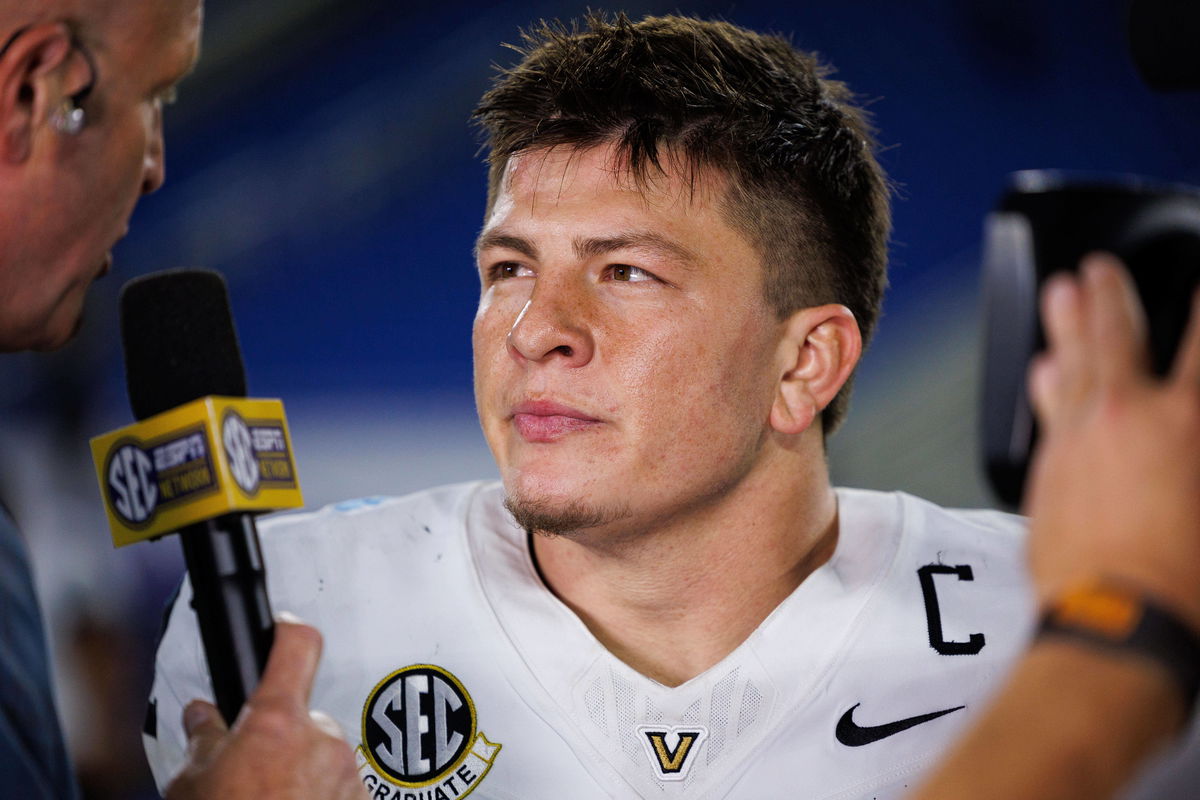
    The Commodores are having an incredible season, and Diego Pavia, their star quarterback, deserves all the praise for his outstanding on-field play. His play this season has drawn notice, particularly after he led Vanderbilt to important wins, such as an upset victory against Alabama. But all of a sudden, his daring action—rather than his performance—made him the talk of the town. He filed a lawsuit against the NCAA. But why such a daring move?

    Pavia has filed the lawsuit, alleging that the rules governing junior college (JUCO) eligibility are unjust and onerous. Pavia’s case contests regulations that he claims are unjust to athletes making the move from community institutions to Division I programs. He argues, in particular, that these regulations restrict the number of seasons that former junior college players can play NCAA football, which he claims is against antitrust laws and prevents them from making money off of their NIL rights. Mit Winter, attorney at Kennyhertz Perry LLC, reported it on his X post, which read the details of the lawsuit.


    ADVERTISEMENT

    Article continues below this ad

    He alleges NCAA rules that count juco seasons towards NCAA eligibility & that prohibit redshirts from being used after an athlete has played 4 years at an NCAA school violate antitrust law,” wrote Mit Winter. Pavia’s complaint argues that these eligibility requirements put junior college athletes at a competitive disadvantage and requests a court order to change them. The NCAA has a rule that counts time spent at a JUCO towards a player’s overall college eligibility. So, if you play two years at a JUCO and then transfer to a Division I school, you only have two years left to play. Plus, once you’ve played four years at the Division I level, you can’t redshirt another year. Pavia argues that these rules limit his earning potential through NIL deals, as they reduce the number of years one can play college sports.

    If you are not aware, Diego Pavia began his collegiate football career at the New Mexico Military Institute. After playing the 2021 season, he transferred to New Mexico State University and eventually joined Vanderbilt. Due to his own career experience, he realized that the JUCO Eligibility Bylaws could affect a player’s compensation. That is why Pavia’s case might establish a standard for upcoming litigation against the NCAA over athlete earnings and eligibility regulations.

    However, the question of the $1.1 billion debate in the CFB world, which puts the quarterback on the border, still stands. Let’s explore it thoroughly.

    ADVERTISEMENT

    Article continues below this ad

    Nitty-gritty of Diego Pavia’s lawsuit

    Over the past four decades, college athletics’ market realities have undergone a significant shift. For example, CBS spent $16 million annually to broadcast the March Madness Division I men’s basketball tournament from 1982-1984. Those yearly television rights generated about $1.1 billion in 2016. This means that the NCAA can no longer claim any “sort of judicially ordained immunity from the terms of the Sherman Act for its restraints of trade.”

    On July 1, 2021, the NCAA repealed its ban on NCAA players receiving NIL compensation in response to the Alston lecture. The market for NCAA Division I athletes’ NIL payment options has grown rapidly in the last three years; the 2024 college football NIL market is projected to be worth $1.1 billion.

    ADVERTISEMENT

    Article continues below this ad

    Importantly, NCAA Division 1 athletes are essentially the only ones who can take advantage of those NIL Compensation chances. In actuality, non-NCAA Division I football players are expected to get just $6.5 million, or less than six-tenths of 1%, of this year’s projected $1.1 billion in football NIL Compensation.

    Therefore, you can see there is no genuine opportunity for football players who play outside of the NCAA monopolies to profit from NIL. Given this condition, Pavia’s lawsuit seems quite reasonable. And Ryan Downton is handling the quarterback’s case, which was filed with the U.S. District Court on November 8. Now we’ll have to wait and see how this case plays out.


    Source link

  • Bangkok Post – Robinson Lifestyle Invests 2.5 Billion Baht to Redefine Retail

    Bangkok Post – Robinson Lifestyle Invests 2.5 Billion Baht to Redefine Retail


    Robinson Lifestyle, under Central Retail, announces 2.5 Billion Baht Investment to Transform Shopping Center and Expand New Branches, Enhancing Experiences for Customers, Partners, and Communities 

    Robinson Lifestyle has announced a proactive initiative to enhance customer experiences and cater to diverse lifestyles. The company plans to transform its shopping centers across Thailand into comprehensive lifestyle hubs, guided by its “Lifestyle and Experiential Community” strategy, to meet the needs of all customer segments. This approach positions Robinson Lifestyle as a Complete Lifestyle Destination, offering a variety of destinations, such as Dining, Family, Sport, Pet, and Tourist, while bolstering Thailand’s economy and supporting sustainable growth. 

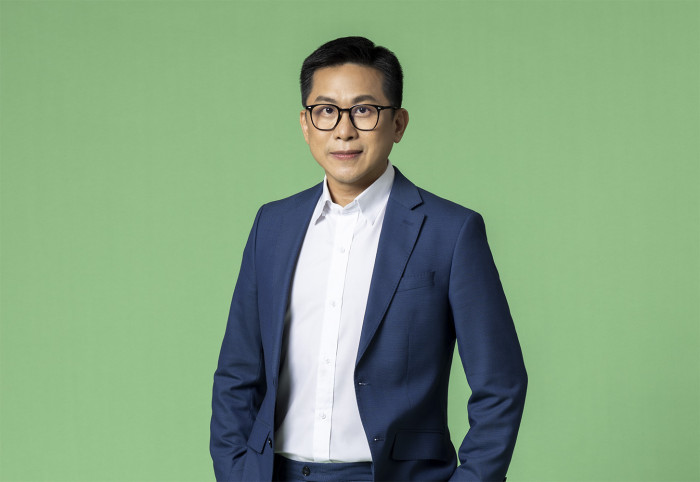
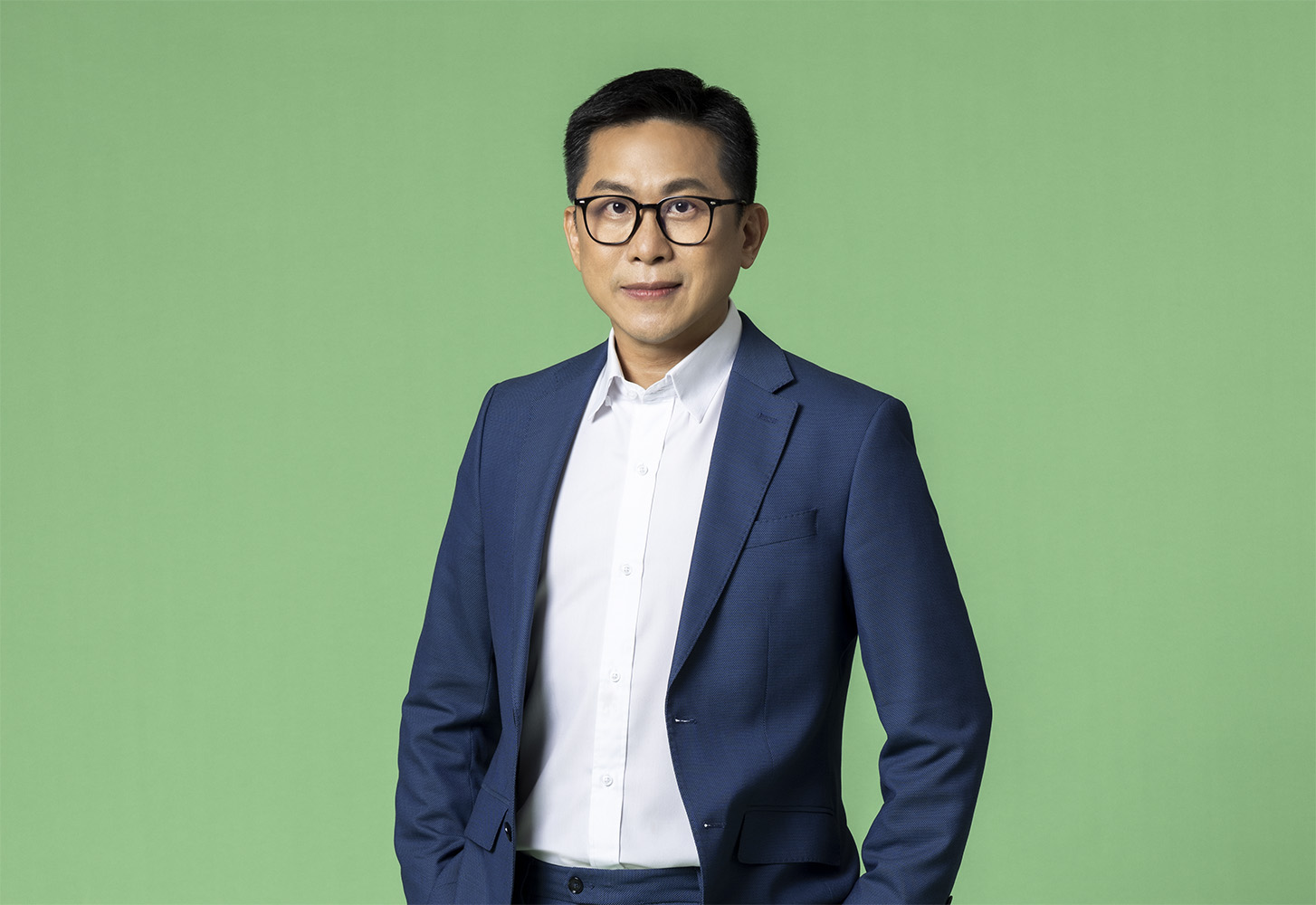
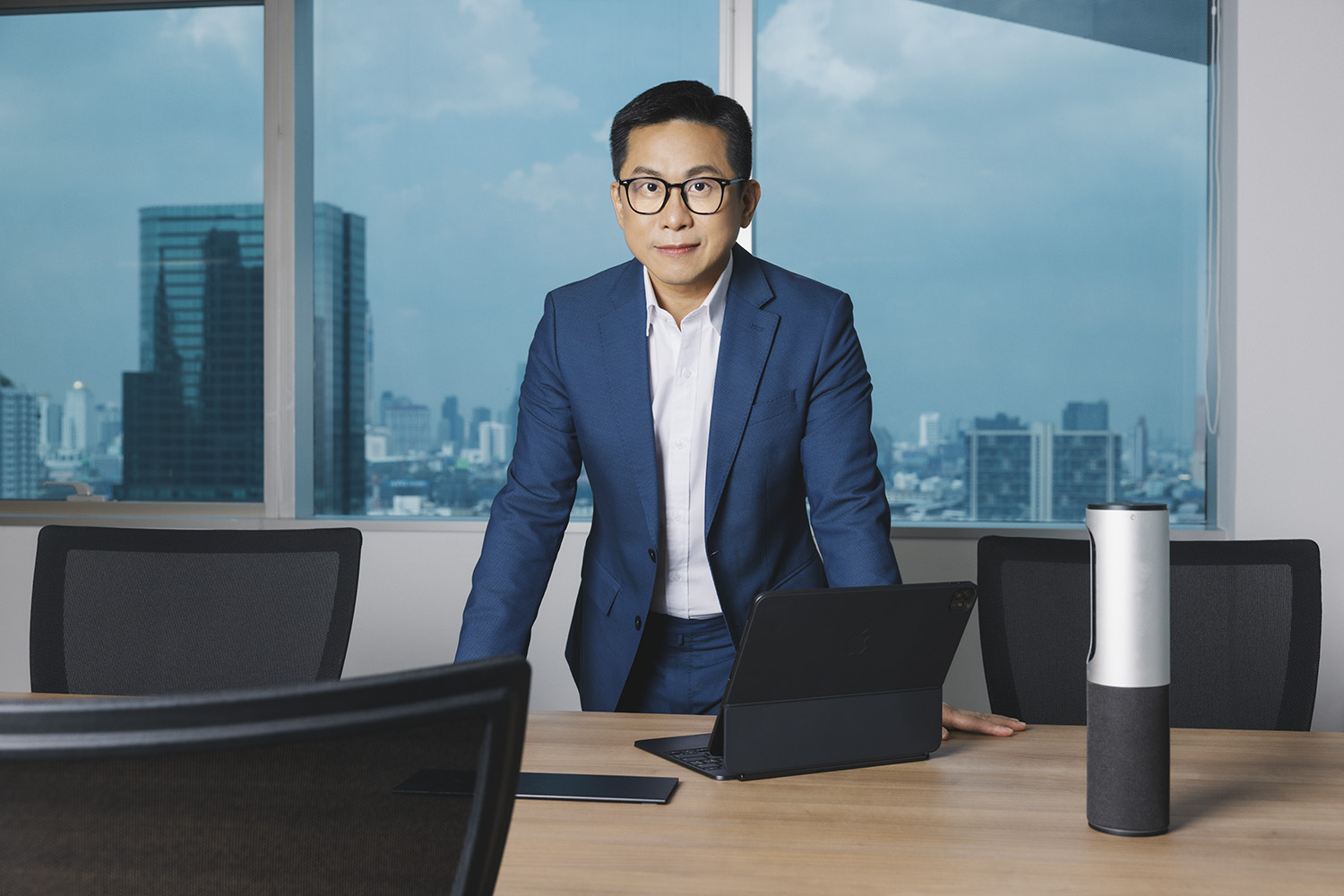
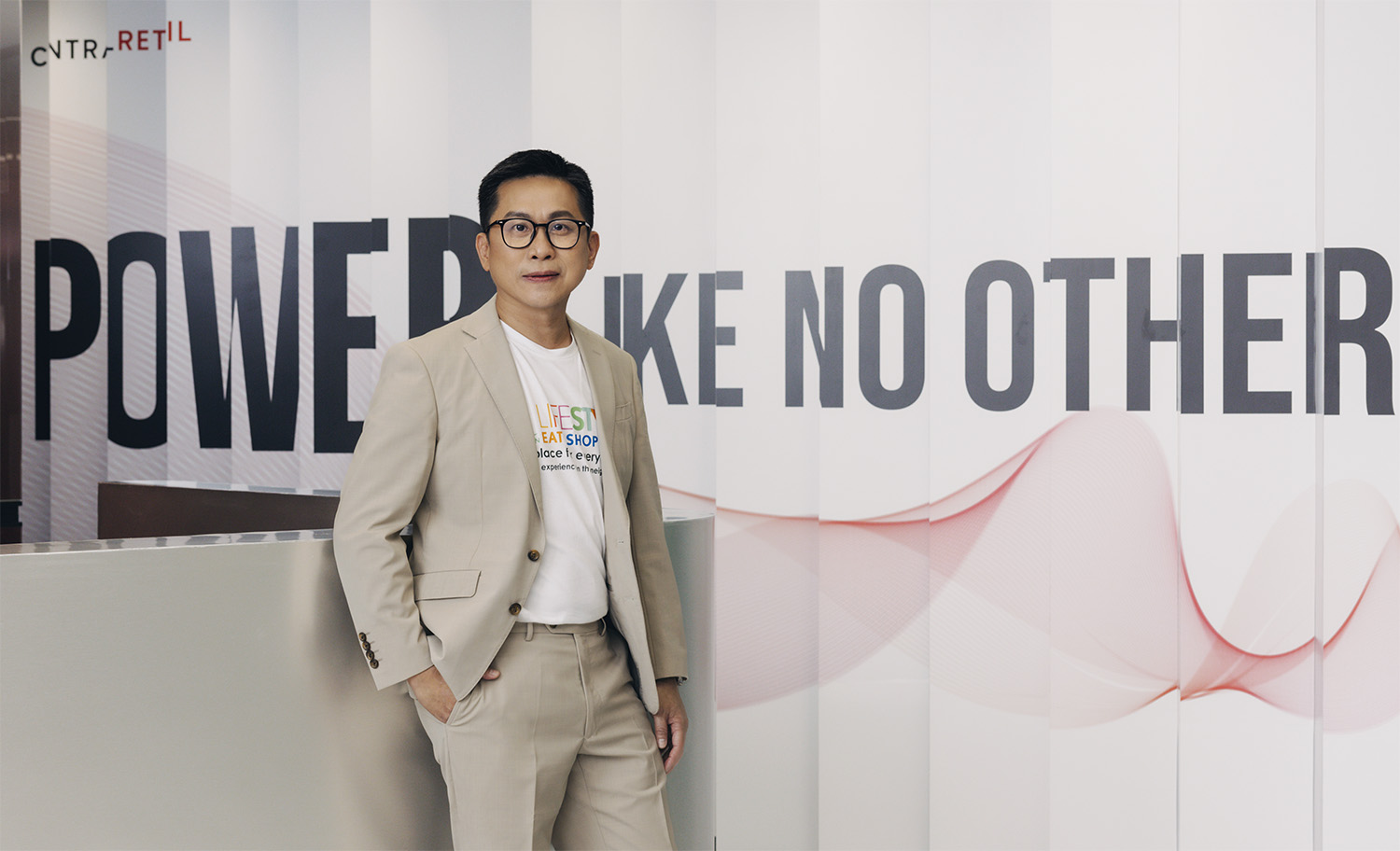
    Mr. Lertvit Pumipitak, President of Robinson Lifestyle under Central Retail, expressed the company’s dedication to transforming its shopping centers into vibrant community hubs, aiming to become customers’ top destination of choice. In response to evolving global lifestyle trends, the company is investing over 2.5 billion baht in a major renovation initiative. This project includes upgrades to branches in Kanchanaburi and Samut Prakan, as well as the opening of two new locations, all slated for completion within two years. Each site’s design is inspired by the distinctive cultural heritage of its location, modernised to offer a contemporary aesthetic while delivering immersive lifestyle experiences that encourage customers to enjoy a full day at the center. 

    To deliver a comprehensive experience that meets all customer needs, the pilot branches will be developed as large mixed-use projects encompassing various dimensions. These will include a shopping center, a semi-outdoor mall, a commercial strip mall, and a hotel. Key features include: 

    • Robinson Lifestyle Shopping Center: This center highlights new zoning concepts with renowned stores catering to current trends, making it a haven for fashion and food lovers.

      • Urbanista: A collection of trendy fashion shops featuring popular Instagram brands such as Matchbox, With It, High School, Yuedpao, and other well-known names.
      • Urban Street-Food: A food zone offering renowned local dishes, such as the legendary Phuket pork knuckle from a Michelin Star holder for five consecutive years, “Ros Niyom” chicken rice from Saraburi with a 70-year legacy, “Baan Saiyid” halal chicken biryani from Saraburi, and the famous “Pad Thai Je Tum” from Tha Maka, Kanchanaburi. 

    The company is collaborating with its affiliates and over 300 new brands to meet all lifestyle needs, providing customers with a one-stop experience for dining, shopping, and entertainment.

    • Eat: A selection of popular restaurants is ready to serve all valued customers, including MK Restaurant, Bar B Q Plaza, The Pizza Company, Santa Fe, Sukishi, Fuji, Yayoi, Shinkanzen Sushi, Starbucks, After You, Swensen’s, and many more.
    • Shop: Enjoy a diverse shopping experience that meets all customers’ needs, starting with Robinson Department Store, Supersports, Power Buy, Watson, BEAUTRIUM, OfficeMate, and B2S, and continuing with tech stores like IT City, Studio 7, Jaymart, Samsung, and Banana IT.
    • Play: At Sunday Playland, a modern, premium indoor amusement park for children, kids can let their imaginations run wild while learning without limits. Echo offers game machines and karaoke rooms featuring the latest hits, perfect for daily hangouts. Joyliday and Let’s Play are spaces filled with various arcade games for endless fun. Additionally, SF Cinema and Major Cineplex, renowned theatres nationwide, are available, including special family and children’s cinemas. 

    Customer convenience is prioritised by making financial transactions easier, with services gathered from over 20 financial institutions (banks) and non-bank financial service providers. 

    • Semi-Outdoor Mall: A pet-friendly space for families and hangouts, built around the “For-Rest” concept, inspired by the region’s natural tourism appeal. The space integrates greenery, offering a semi-outdoor experience connected to the main shopping center. It includes: 

      • The most comprehensive collection of pet products and services in the region, catering specifically to pet lovers.
      • Language and music schools to boost children’s IQ and EQ development.
      • Health & Wellness services tailored to the latest health trends of the new generation.
      • Popular restaurants and cafés from around the country. 

    • Strip Mall: A two-storey commercial building with over 40 units located at the entrance of the shopping center. Designed for easy access, it features a wide range of shops and services from local entrepreneurs, including: 

      • Food: Fast food and unique provincial bakeries, perfect for all-day dining.
      • Health & Wellbeing: Beauty clinics, barber shops, alternative medicine, spas, and sports facilities.
      • Education: Language schools, art schools, and maths academies to enhance children’s skills.
      • Daily Life Service: Parcel delivery, credit services, and laundry services.
      • Go Hotel: A premium design hotel integrated with the shopping center, providing customers with the ultimate blend of shopping and relaxation, making it the most complete lifestyle hub in the province. 

    One of the key factors contributing to the success of a shopping center is its “partners.” Robinson Lifestyle is committed to supporting its partners’ needs, using a Business Partnership approach for both large and small partners. This commitment includes comprehensive support such as: 

    • Financial & Funding Support: Acting as an intermediary to secure investors and business operators with expertise in various fields, helping partners achieve sustainable and stable growth.
    • Business Management Support: Providing marketing consultation and performance analysis to help partners make more effective, targeted adjustments more quickly. 

    In addition to business goals, Robinson Lifestyle is dedicated to giving back to the community, aiming to improve quality of life across three key areas: education, economy, and the environment. 

      • Creating spaces within shopping centers as Art & Culture Lifestyle hubs, fostering youth development by showcasing works from local artists.
      • Collaborating with provincial chambers of commerce and government agencies to organise educational events that promote continuous learning opportunities. Examples include the Student Fun Fair at the Ratchaphruek branch, World Environment Week activities with the Office of Natural Resources and Environment of Samut Prakan Province, and traditional Thai arts performances in partnership with Bankanokwan Nadtasin in Saraburi Province. 

      • Supporting SME growth within shopping centers through collaborative business planning and year-round marketing activities that stimulate local economic activity, benefiting business owners, creating employment, and generating income for the community, thus contributing to sustainable long-term economic growth.

    • Environment 

      • From 2017 to September 2024, Robinson Lifestyle installed solar rooftops at 26 branch locations, reducing greenhouse gas emissions by 108,681 tons of CO₂—equivalent to planting over 150,000 trees.
      • Responding to the rising use of electric vehicles (EVs) by installing 30 EV Charging Stations, with expansion plans starting at the Thalang branch and continuing nationwide.  

    In addition to its core values of prioritising customers, partners, and society, the organisation is committed to enhancing employee quality of life. Every team member is regarded as a crucial part of the company, with positive results stemming from a solid foundation. After gathering employee input, the “Life is Good, Vibe is Happy” project was launched to create a more enjoyable work environment. This initiative focuses on improving employee benefits, including: 

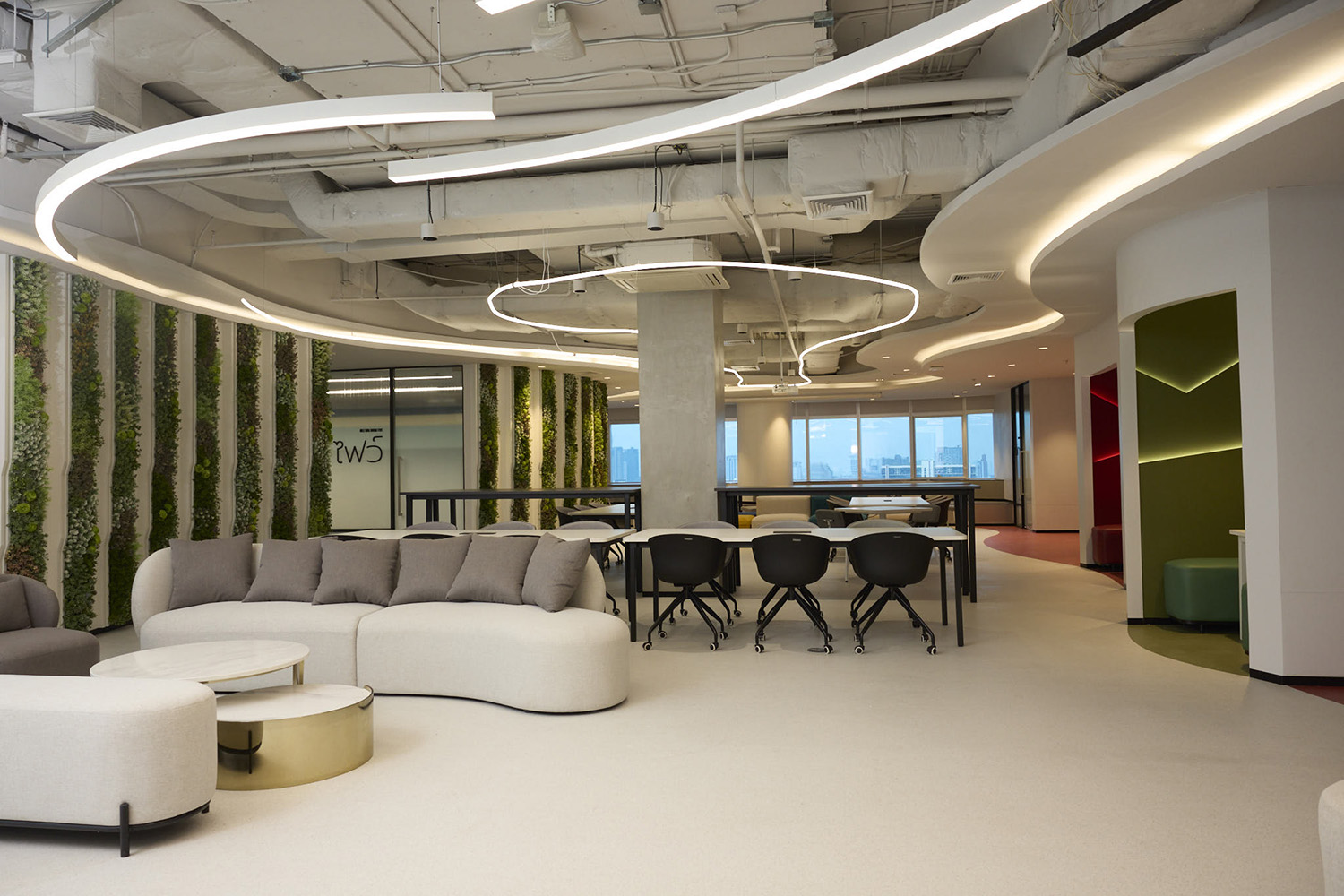
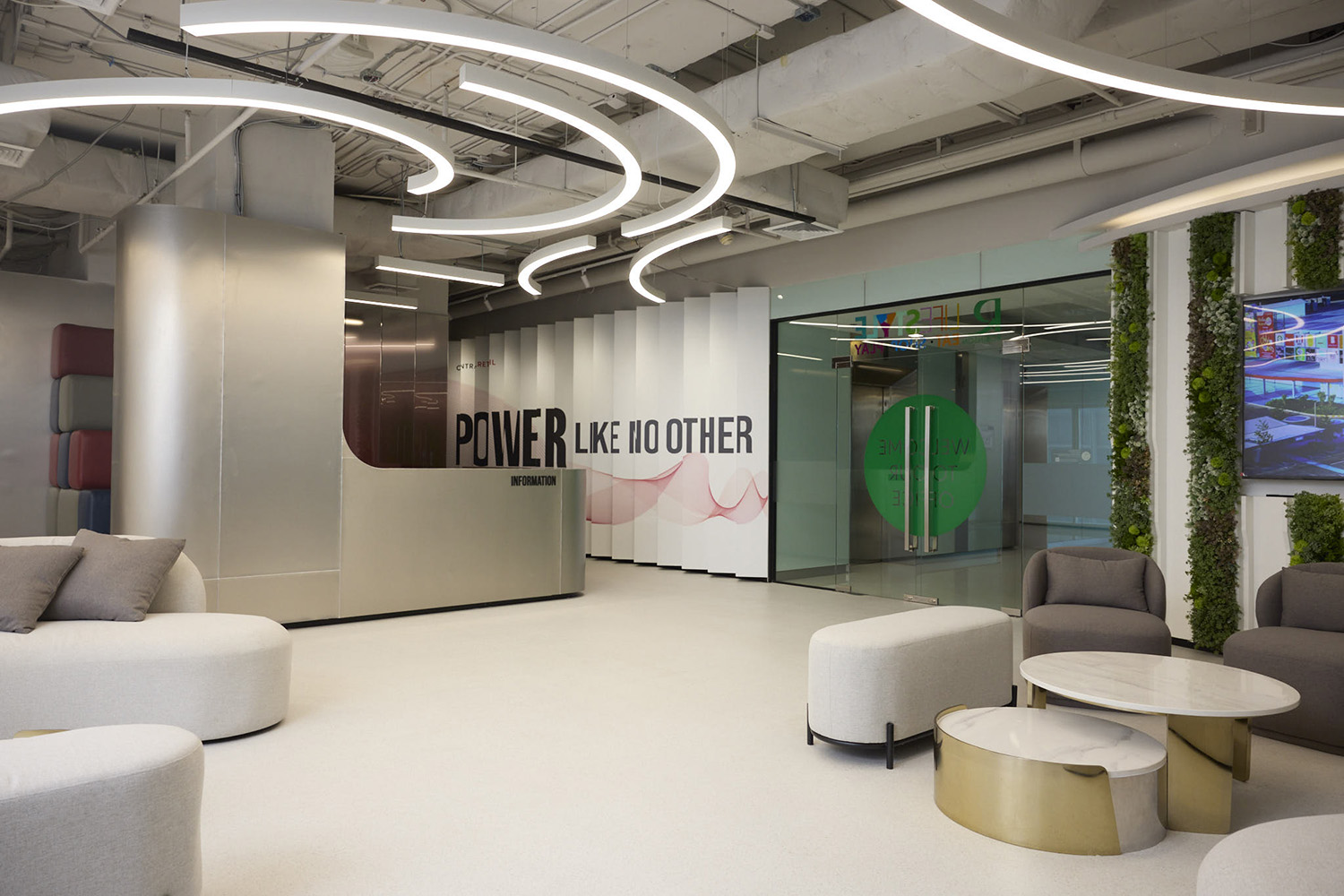
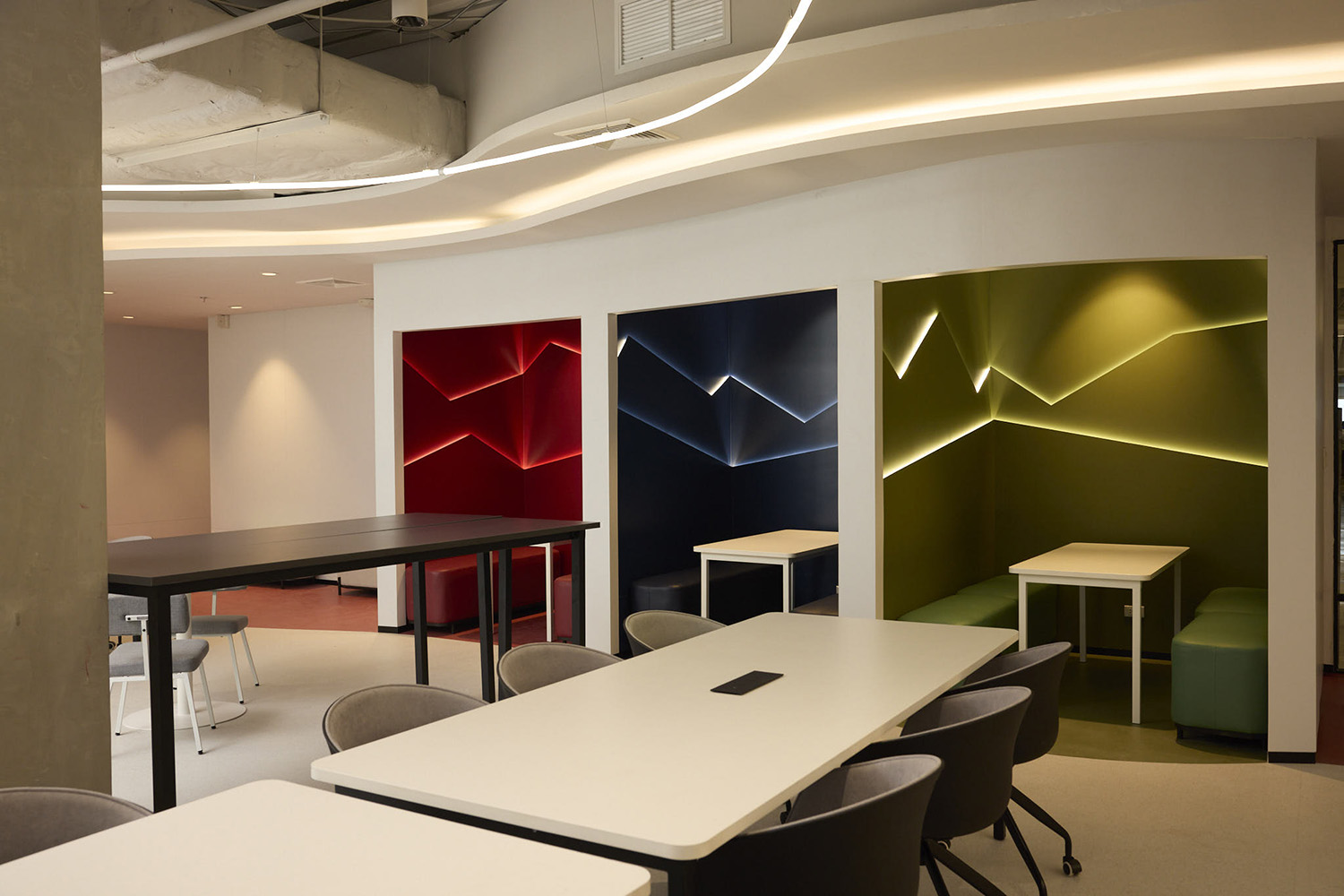
    • Renovating Robinson Lifestyle’s headquarters into an open space to foster a more relaxed work atmosphere, encouraging inspiration and happiness at work. Key improvements include:   

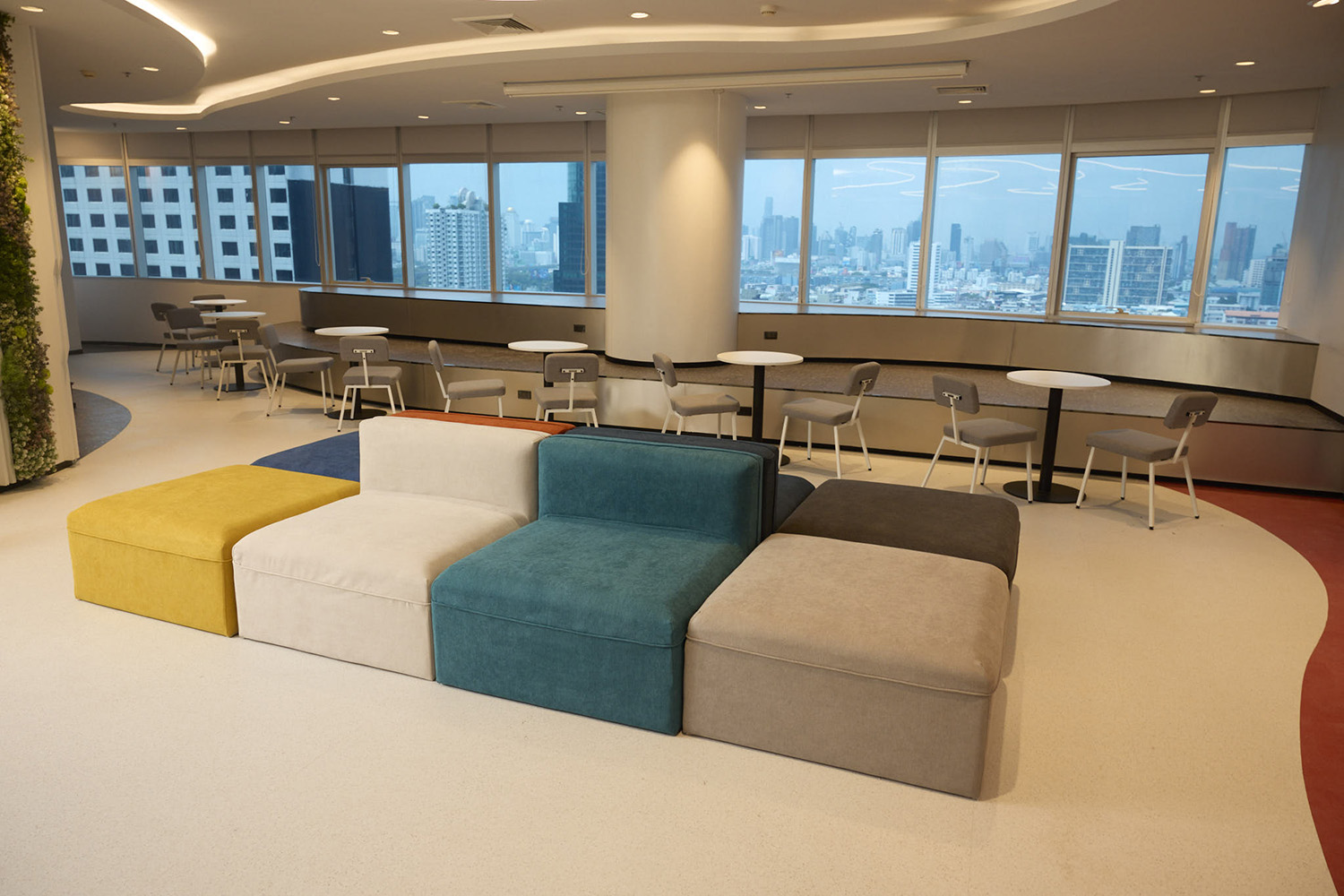
      • Townhall & Mobile Working Space: Providing diverse workspaces for easier collaboration, idea-sharing, and productivity.
      • Café & Pantry: A stylishly designed area offering refreshments, where employees can unwind during breaks.
      • Relax & Entertainment Area: A space for relaxation featuring massage chairs and a pool table, allowing employees to socialise and share daily happiness.

    • Increasing activities and benefits for holistic employee development and care, such as basic financial planning for new graduates, retirement planning, and skill-enhancing seminars by experts. Additionally, in-office sports competitions and other activities are provided. 

    All these initiatives are part of Robinson Lifestyle’s ongoing commitment to addressing the needs of customers, partners, society, and the organisation—priorities that Robinson Lifestyle has always emphasised. 

    “My work principle remains rooted in ‘Always Create the Best.’ While we may do well today, we must do even better tomorrow. This is the key to the continuous management of Robinson Lifestyle shopping centers. We aim to continuously modernise and enhance our centers to meet customer needs in all aspects. By collaborating with our affiliates, partners, and surrounding SMEs, we organise creative marketing events and cultivate an exciting atmosphere. Additionally, we are committed to employee development to build capacity and sustainable growth,” concluded Mr. Lertvit. 

    Source link

  • Apple sells $46 billion worth of iPhones over the summer as AI helps end slump

    Apple sells $46 billion worth of iPhones over the summer as AI helps end slump

    SAN FRANCISCO — Apple snapped out of a recent iPhone sales slump during its summer quarter, an early sign that its recent efforts to revive demand for its marquee product with an infusion of artificial intelligence are paying off.

    Sales of the iPhone totaled $46.22 billion for the July-September period, a 6% increase from the same time last year, according to Apple’s fiscal fourth-quarter report released Thursday. That improvement reversed two consecutive year-over-year declines in the iPhone’s quarterly sales.

    The iPhone boost helped Apple deliver total quarterly revenue and profit that exceeded the analyst projections that sway investors, excluding a one-time charge of $10.2 billion to account for a recent European Union court decision that lumped the Cupertino, California, company with a huge bill for back taxes.

    Apple earned $14.74 billion, or 97 cents per share, a 36% decrease from the same time last year. If not for the one-time tax hit, Apple said it would have earned $1.64 per share — topping the $1.60 per share predicted by analysts, according to FactSet Research. Revenue rose 6% from last year to $94.93 billion, about $400 million more than analysts forecast.

    But investors evidently were hoping for an even better quarter. Apple’s stock price slipped slightly in extended trading after the numbers came out.

    The results captured the first few days that consumers were able to buy a new iPhone 16 line-up that included four different models designed to handle a variety of AI wizardry that the company is marketing as “Apple Intelligence.” The branding is part of Apple’s effort to distinguish its approach to AI from rivals such as Samsung and Google that got a head start on bringing the technology to smartphones.

    Even though the iPhone 16 was specifically built with AI in mind, the technology didn’t become available until Apple released a free software update earlier this week that activated its first batch of technological tricks, including a feature designed to make its virtual assistant Siri smarter, more versatile and more colorful. And those improvements are only available in the U.S. for now.

    “This is just the beginning of what we believe generative AI can do,” Apple CEO Tim Cook told analysts during a Thursday conference call.

    Cook said plans to expand the AI iPhone features into other countries in December, as well as roll out other software updates that will inject even more of the technology in the iPhone 16 and two high-end iPhone 15 models that are also equipped with the special computer chips needed for the slick new features. The December expansion will include an option to connect with OpenAI’s ChatGPT to take advantage of technology that Apple isn’t making on its own.

    Investors are betting that as Apple’s AI becomes more broadly available, it will prompt the hundreds of millions of consumers who are using older iPhones to upgrade to newer models in order to get their hands on the latest technology.

    Although the iPhone sales bounced back, another key part of Apple’s operations — its services division — didn’t fare quite as well as analysts anticipated amid regulatory efforts in Europe and U.S. to force the company to allow more payment options within its app store. That crackdown threatens to undercut a lucrative fee system that enables Apple to exclusively collect a 15% to 30% commission on many of the digital commerce transactions completed within iPhone apps.

    The revenue in Apple’s service division climbed 12% from a year ago to nearly $25 billion, but that figure was about $200 million below analyst projections.

    Apple’s revenue also dipped slightly from a year ago in China, where the company has been facing stiffer competition in the smartphone market.

    Source link

  • Microsoft reports $65.6 billion in quarterly sales as investors look to know if AI spending worth it

    Microsoft reports $65.6 billion in quarterly sales as investors look to know if AI spending worth it

    Microsoft on Wednesday reported an 11% increase in profit for the July-September quarter compared to the same time last year as investors looked for signs that the company’s huge spending on artificial intelligence is paying off.

    The company reported quarterly net income of $24.7 billion, or $3.30 per share, which beat Wall Street expectations.

    The Redmond, Washington-based software maker posted revenue of $65.6 billion in the quarter, up 16% from last year.

    Analysts polled by FactSet Research were expecting Microsoft to earn $3.10 per share on revenue of $64.6 billion.

    Microsoft doesn’t report revenue specifically from AI products but says it has infused the technology and its AI assistant, called Copilot, into all of its business segments, particularly its Azure cloud computing contracts.

    Leading in sales for the quarter was Microsoft’s productivity business segment, which includes its Office suite of email and other workplace products, growing 12% to $28.3 billion.

    Microsoft’s cloud-focused business segment grew 20% from the same time last year to $24.1 billion for the three months ending Sept. 30.

    Its personal computing business, led by its Windows division, grew 17% to $13.2 billion. Microsoft and the computer makers that run its Windows operating system this year unveiled a new class of AI-imbued laptops as the company confronts heightened competition from Big Tech rivals in pitching generative AI technology that can compose documents, make images and serve as a lifelike personal assistant at work or home.

    Building and operating AI systems is costly and Microsoft reported spending $20 billion over the quarter, mostly for its cloud computing and AI needs.

    Microsoft CEO Satya Nadella in a statement Wednesday emphasized the company’s push to get customers applying AI platforms in their workplaces as AI transforms jobs and work tasks.

    Nadella, now in his tenth year as CEO, saw his annual compensation increase 63% this year to $79 million, according to a statement filed ahead of Microsoft’s upcoming annual shareholder meeting in December. That’s despite Nadella offering to have his cash incentive reduced to reflect his personal accountability for handling cybersecurity threats.

    Earlier this year, a scathing report by a federal review board found “a cascade of security failures” by Microsoft let Chinese state-backed hackers break into email accounts of senior U.S. officials.

    Source link

  • Mexico says foreign firms have pledged $20 billion in investments, but many are old or uncertain

    Mexico says foreign firms have pledged $20 billion in investments, but many are old or uncertain

    MEXICO CITY — Mexican officials announced Tuesday what they claimed was $20 billion in new foreign direct investment in Mexico, but much of that was neither new, nor completely certain.

    Investor confidence in Mexico has been shaken recently by controversial reforms to the energy sector and the judiciary, and the government is eager to regain the trust of foreign companies.

    Among the bigger announcements Tuesday was what appeared to be a final investment decision by Mexico Pacific LLC for an LNG gas terminal on Mexico’s Gulf of California, also known as the Sea of Cortez.

    That $15 billion project would import U.S. natural gas, liquefy it and ship it to customers largely in Asia. It is planned for Puerto Libertad, between the coastal towns of Guaymas and Puerto Peñasco.

    Mexico Pacific CEO Sarah Bairstow said “this represents the largest foreign direct investment to date.”

    However, that plan has been on the drawing boards since at least 2020, and still depends on getting cross-border gas pipelines approved and built.

    Mexican Economy Secretary Marcelo Ebrard said the second-largest investment was a $6 billion commitment by Amazon.

    While Ebrard did not specify what it was for, Amazon Web Services had already announced in February an investment of “more than $5 billion” to build cloud-computing infrastructure in Mexico.

    And Ebrard said the cruise line Royal Caribbean pledged to invest $1.5 billion in the Caribbean coast resort of Mahahual, south of Tulum.

    That was apparently a reference to the company plan — announced last week — to build a second “Perfect Day Mexico” on-shore facility for cruise ship passengers in Mahahual, which was once a sleepy coastal village until a cruise ship dock was built.

    Ebrard said that, together with other projects, investments could total as much as $30 billion in 2025.

    “The message of President Claudia Sheinbaum is certainty, assurance, investments in Mexico are safe,” Ebrard said at the event.

    However, foreign governments and some foreign business groups have expressed concerns about a reform passed in September that would make all judges — including the justices of the Supreme Court — stand for election.

    The fear is that would politicize court cases and put foreign firms — who obviously have no vote in the elections — at a disadvantage. They fear judges would be likely to heed the will of their constituents than the letter of the law.

    And foreign energy companies are still smarting from their treatment at the hands of Sheinbaum’s predecessor and political mentor, former president Andrés Manuel López Obrador, who left office on Sept. 30.

    López Obrador pushed through laws to guarantee the state-owned electric utility a majority share of the power market. The reforms put foreign-owned electricity generating plants at the back of the line for power purchases, even though their power plants were often cleaner and used more renewables than the government’s dirty coal and fuel-oil fired generators.

    ____

    Follow AP’s coverage of Latin America and the Caribbean at https://apnews.com/hub/latin-america

    Source link