Claudia Lin, an online dating detective in the age of AI, is hunting once again through a dark cybersphere of tech systems in “The Rivals,” the second novel in a new mystery series by Jane Pek.
Pek, who introduced Claudia in her 2022 debut book, “The Verifiers,” has given the mystery genre fresh trappings — a vivid New York City landscape of chatbots and apps that can create chaos or sniff out fraud, and a delightfully plucky new sleuth, who is in her mid-20s, Asian American and gay.
In “The Rivals,” Claudia and Becks Rittel are the co-owners of the fact-checking firm Veracity. It’s a tiny business — it only has one other employee, the unkempt gamer Squirrel — but helps clients of giant matchmaking platforms make sure the strangers they meet for dates are not unscrupulous liars or worse.
“The Rivals” opens with a couple of customers from online meet-up sites seeking different kinds of assistance. One wants Veracity to make sure his new lady friend, the charming Amalia Suarez, is all she claims to be; the other, Pradeep Mehta, anxiously asks for help taking down a false online gay-dating profile that could ruin his life.
Claudia takes on both projects, despite Becks’ protests and disparagement. A curt, tough-minded colleague in her mid-30s, Becks is nicknamed the “Blonde Assassin.” In short order, both cases present Claudia with false turns, odd developments and scary possibilities. These twists make “The Rivals” a modern mystery unfolding amid synthetic culprits — cyberworld bots known as “synths” — that can wreck real lives.
Pek adds a few vital human ingredients to the story’s digital mix. One is Claudia’s striving but dysfunctional family. Her siblings, Charles and Coraline, and their irritable mother are introduced in an early chapter as they gather in the West Village for a meal celebrating the Chinese New Year. Coraline’s beau is there, too. Their father is out of the picture. A celebration the meal is not, but the Lin family fracas adds sparks to the narrative throughout.
Pek also makes neighborhoods and go-to sites of Manhattan, Brooklyn and other city environs an integral and appealing part of the story. Claudia, for example, plays Ultimate frisbee in Prospect Park and takes the reader on her many rendezvous, from the touristy High Line to a bike path through Fort Washington Park.
Claudia’s sexuality is not a central tug-of-war plot issue. But it does give an edgy lift to the story line when Claudia, as the novel’s narrator, notes the inner romantic tingles set off in her by others.
Pek writes with wit and AI savvy. At times “The Rivals” unfolds with so much tech-heavy dialogue that it can be hard to follow. But Claudia is a winning new entry in the field of modern serial detectives. “The Rivals” hints that she has more work in store. With the freshness of Pek’s staging of online love and death, a third entry in the series will be welcome.
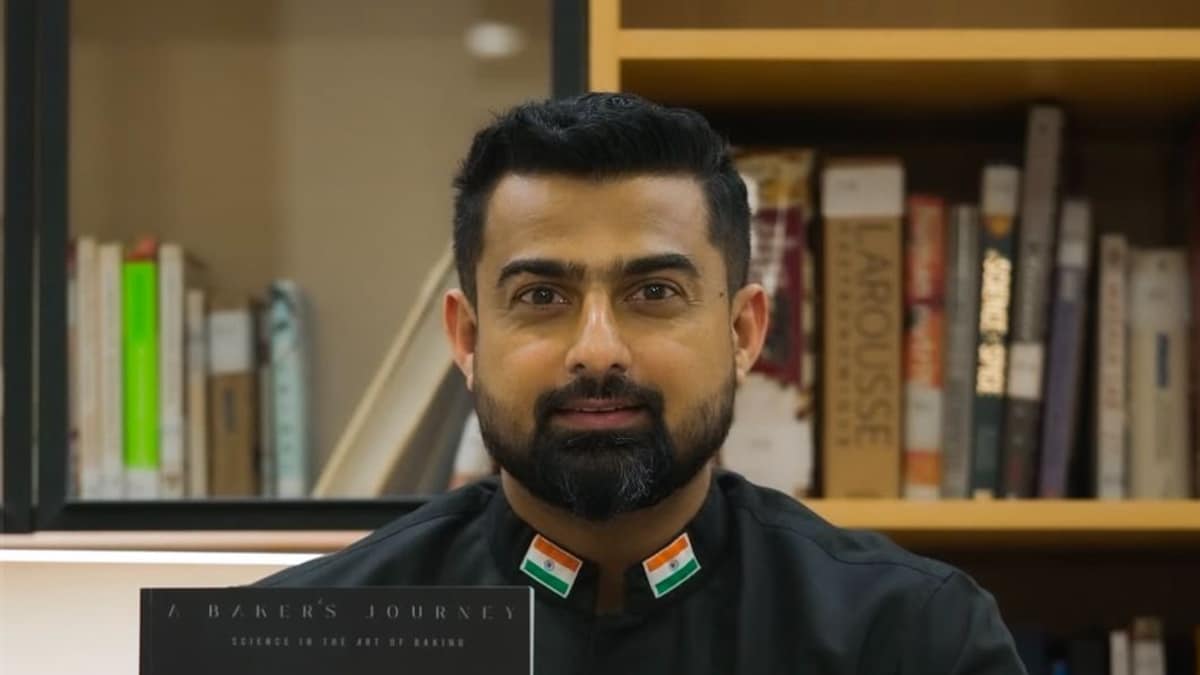
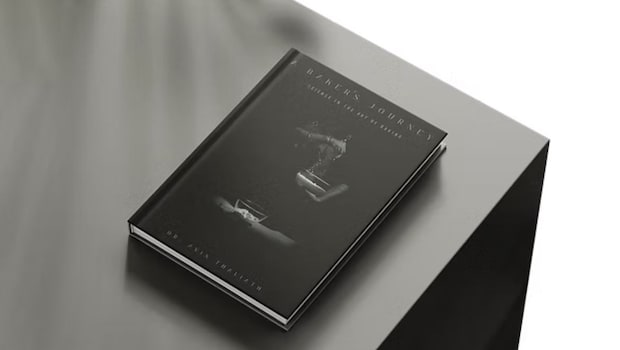
Dr Avin Thaliath’s A Baker’s Journey- Science in the Art of Baking is an eloquent blend of culinary science, historical anecdotes, and practical artistry. This book explores the intricate processes that define the craft of baking while celebrating the transformative power of bread-making as both an art and a science. Thaliath, a seasoned pastry chef and educator, has penned a resource that caters to novices, home bakers, and professionals alike.
Content Overview
The book is thoughtfully divided into chapters, each unravelling the mysteries of core ingredients like flour, sugar, and yeast, and their chemical interplay in baking. Starting from fundamental insights such as the anatomy of a wheat kernel to advanced topics like dough dynamics and gluten structure, Thaliath systematically builds the reader’s understanding. Particularly engaging are the sections on “Magic Within” and “Heat’s Serenade,” where he marries chemistry with culinary techniques. Recipes sprinkled throughout the chapters offer practical applications of the scientific principles discussed. From classic baguettes to quinoa bread and rye loaves, these are crafted with precision and clarity, making them approachable yet rewarding for all skill levels.
Strengths
Scientific Depth: Thaliath excels in making the science of baking accessible. Concepts such as the interaction between protein and water in gluten formation are presented with clarity, ensuring readers grasp the “why” behind techniques.
Cultural and Historical Insights: Stories like the origin of the baguette or the evolution of focaccia root the book in cultural richness, offering a narrative that’s as delightful as the recipes themselves.
Professional Expertise: With years of teaching and baking experience, Thaliath’s passion and depth of knowledge shine through. The book is a testament to his belief in blending tradition with modern techniques.
User-Friendly Format: The structured layout, complete with tables, illustrations, and easy-to-follow recipes, enhances usability.
Areas for Improvement
The book, while comprehensive, is primarily ingredient-focused. Expanding on presentation and plating techniques, especially for aesthetic-driven bakes like pastries, would enrich the reader’s journey further. Additionally, more visual aids, such as step-by-step photos for complex techniques, could enhance its appeal to visual learners.
Conclusion
A Baker’s Journey – Science in the Art of Baking is not just a cookbook; it’s an educational odyssey. Dr Avin Thaliath has successfully bridged the gap between scientific precision and culinary passion, creating a resource that will undoubtedly inspire bakers to innovate and perfect their craft. This book is a must-have for anyone passionate about understanding the science behind their bakes and elevating their skills to professional levels.
Rating: 4.5/5
I recommend this book for culinary enthusiasts, aspiring bakers, and seasoned professionals seeking to deepen their baking knowledge.
In Ili comprises nine stories and s narrated from the perspective of the writer Lao Wang, who records his encounters with the local people of Xinjiang. [Photo provided to chinadaily.com.cn]
In 1965, the renowned writer Wang Meng went to the Ili Kazak autonomous prefecture in Xinjiang Uygur autonomous region for work. He ate and lived with the farmers, learning to use iron tools, mastering the Uygur language, and deeply adapted into the Uygur way of life.
Based on this six-year experience in Ili, Wang wrote the In Ili series of works between 1983 and 1984. This book was originally released by The Writers Publishing House in 1984 and has been republished by the same publishing house in July 2024.
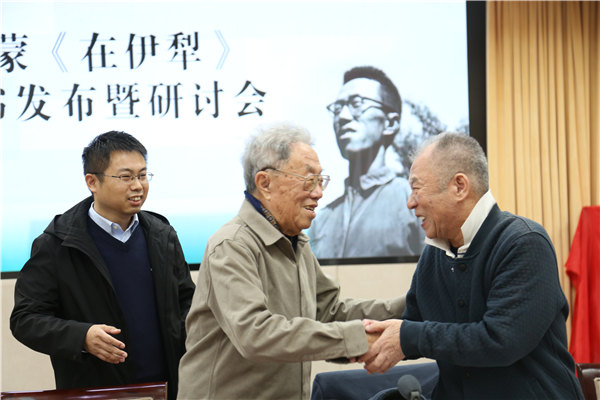
“I deeply appreciate the republication of In Ili. It felt as though time had rewound back 40 years, and I was recounting memories of my 30s. It was a special time of youth and the prime of my life.” Wang said at the launch of the new edition in Beijing on Oct 29.
In Ili comprises nine stories and s narrated from the perspective of the writer Lao Wang, who records his encounters with the local people of Xinjiang. The narrative depicts scenes of people from diverse backgrounds playing together, working in unison, and confronting life’s challenges hand in hand. Through a prose-style portrayal of daily life and destinies of individual characters, the work provides readers a glimpse into the personalities of Uygur people.
This new edition includes a fresh preface Wang wrote in 1981 upon his return to Bayandai town in Ili, nearly two years after his departure. In this preface, he recounts a heartfelt reunion with his Uygur farmer friends, offering valuable insights into the characters and inspirations behind In Ili.
In the eyes of the Uygur people, individuals who fluently speak two languages are labeled as “two tongues”, a term that suggests wit and is one of respect within the community.
One reviewer, Gulnar Obul, a member of the Party leadership group and vice-chairman of the Xinjiang Uygur Autonomous Region Association for Science and Technology, remarks, “because Lao Wang can speak both Mandarin and the Uygur language, he is a typical ‘two tongues’ person. Through his bilingual ability, I always sense the presence of two Lao Wangs, and this way of telling stories navigates between two cultures, showcasing dialogues and contemplation within Uygur culture”.
In Ili comprises nine stories and s narrated from the perspective of the writer Lao Wang, who records his encounters with the local people of Xinjiang. [Photo provided to chinadaily.com.cn]
In 1965, the renowned writer Wang Meng went to the Ili Kazak autonomous prefecture in Xinjiang Uygur autonomous region for work. He ate and lived with the farmers, learning to use iron tools, mastering the Uygur language, and deeply adapted into the Uygur way of life.
Based on this six-year experience in Ili, Wang wrote the In Ili series of works between 1983 and 1984. This book was originally released by The Writers Publishing House in 1984 and has been republished by the same publishing house in July 2024.
“I deeply appreciate the republication of In Ili. It felt as though time had rewound back 40 years, and I was recounting memories of my 30s. It was a special time of youth and the prime of my life.” Wang said at the launch of the new edition in Beijing on Oct 29.
In Ili comprises nine stories and s narrated from the perspective of the writer Lao Wang, who records his encounters with the local people of Xinjiang. The narrative depicts scenes of people from diverse backgrounds playing together, working in unison, and confronting life’s challenges hand in hand. Through a prose-style portrayal of daily life and destinies of individual characters, the work provides readers a glimpse into the personalities of Uygur people.
This new edition includes a fresh preface Wang wrote in 1981 upon his return to Bayandai town in Ili, nearly two years after his departure. In this preface, he recounts a heartfelt reunion with his Uygur farmer friends, offering valuable insights into the characters and inspirations behind In Ili.
In the eyes of the Uygur people, individuals who fluently speak two languages are labeled as “two tongues”, a term that suggests wit and is one of respect within the community.
One reviewer, Gulnar Obul, a member of the Party leadership group and vice-chairman of the Xinjiang Uygur Autonomous Region Association for Science and Technology, remarks, “because Lao Wang can speak both Mandarin and the Uygur language, he is a typical ‘two tongues’ person. Through his bilingual ability, I always sense the presence of two Lao Wangs, and this way of telling stories navigates between two cultures, showcasing dialogues and contemplation within Uygur culture”.
In Ili comprises nine stories and s narrated from the perspective of the writer Lao Wang, who records his encounters with the local people of Xinjiang. [Photo provided to chinadaily.com.cn]
In 1965, the renowned writer Wang Meng went to the Ili Kazak autonomous prefecture in Xinjiang Uygur autonomous region for work. He ate and lived with the farmers, learning to use iron tools, mastering the Uygur language, and deeply adapted into the Uygur way of life.
Based on this six-year experience in Ili, Wang wrote the In Ili series of works between 1983 and 1984. This book was originally released by The Writers Publishing House in 1984 and has been republished by the same publishing house in July 2024.
“I deeply appreciate the republication of In Ili. It felt as though time had rewound back 40 years, and I was recounting memories of my 30s. It was a special time of youth and the prime of my life.” Wang said at the launch of the new edition in Beijing on Oct 29.
In Ili comprises nine stories and s narrated from the perspective of the writer Lao Wang, who records his encounters with the local people of Xinjiang. The narrative depicts scenes of people from diverse backgrounds playing together, working in unison, and confronting life’s challenges hand in hand. Through a prose-style portrayal of daily life and destinies of individual characters, the work provides readers a glimpse into the personalities of Uygur people.
This new edition includes a fresh preface Wang wrote in 1981 upon his return to Bayandai town in Ili, nearly two years after his departure. In this preface, he recounts a heartfelt reunion with his Uygur farmer friends, offering valuable insights into the characters and inspirations behind In Ili.
In the eyes of the Uygur people, individuals who fluently speak two languages are labeled as “two tongues”, a term that suggests wit and is one of respect within the community.
One reviewer, Gulnar Obul, a member of the Party leadership group and vice-chairman of the Xinjiang Uygur Autonomous Region Association for Science and Technology, remarks, “because Lao Wang can speak both Mandarin and the Uygur language, he is a typical ‘two tongues’ person. Through his bilingual ability, I always sense the presence of two Lao Wangs, and this way of telling stories navigates between two cultures, showcasing dialogues and contemplation within Uygur culture”.
After an exhilarating 120 minutes of football followed by a nail-biting penalty shoot-out, Lionel Messi finally got his moment – the one he’d been dreaming of his whole life.
At long last, the best footballer of all time in the eyes of many had the one medal missing from his glittering collection, having ended Argentina’s 36-year wait for the World Cup crown with victory over France.
Going back through the highlight reels, the scenes of previous World Cup trophy lifts have been iconic, moments etched in the history books forever.
Diego Maradona (1986) and Zinedine Zidane (1998) both donning the blue and white colours of their nations, Pele in 1970 in the famous yellow of Brazil, and Bobby Moore four years earlier in England’s famed red strip at Wembley Stadium. Moments burned into the minds of millions across the globe.
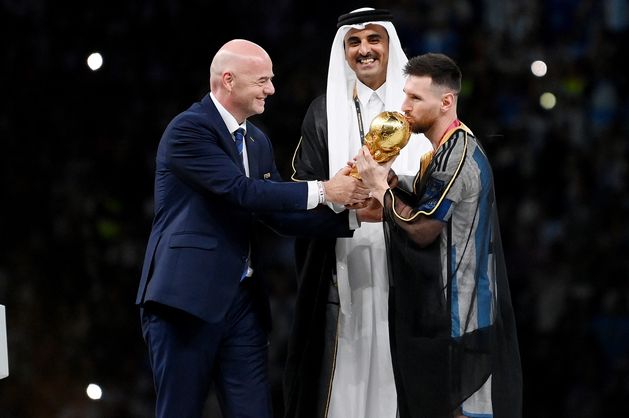
But as Messi walked up to collect his long-awaited prize at the Lusail Stadium, it wasn’t his legendary number 10 shirt on show. The blue and white of Argentina was hidden after the emir of Qatar put a black bisht (traditional Arab cloak) around his shoulders. FIFA president Gianni Infantino stood beside him, smiling and clapping during this surreal scene.
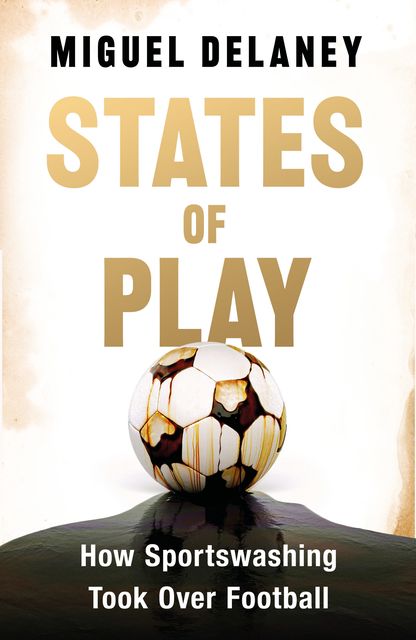
Miguel Delaney’s new book States of Play
Qatar 2022 was unlike any other World Cup, and its final moments only served to solidify that point.
Miguel Delaney was in the press box that evening in Qatar. The Independent’s chief football writer had the idea for a book about sportswashing for some time, but it ended up becoming far more than that.
What began as a detailing of how the rich and powerful have taken over football developed into a comprehensive history of just how the game has reached this point, from the 1936 Olympics, to Roman Abramovich purchasing Chelsea in 2003, all the way to those four controversial weeks in Qatar.
“A must-read on how modern football works,” is how Ian Wright described it.
So in 2024, who really owns and runs football?
“There was a realisation that there were bigger forces influencing football that were worth further scrutiny, more than just what was happening on the pitch,” explains Delaney, in an exclusive interview with the Irish Independent ahead of the release of his new book, States of Play: How Sportswashing Took Over Football.
“I had been covering a few of the issues for a few years, like state ownership. There were a few moments that crystallised that there was really something bigger going on worth assessing, like PSG signing Neymar [in 2017 for a world-record €222m], Manchester City winning the treble in 2019, and the long build-up to the Qatar World Cup.
“Once it got into doing the book itself, you realise you can’t talk about the topic of sportswashing or influence without talking about the context and what football is at the moment – which I would see as a sport where there’s almost a contradiction. It is, by a distance, the most popular sport in the world, but that popularity is basically being distilled into a few clubs.
“It’s almost like a map of global capitalism, sucking up interest and money from everywhere and then distributing it very narrowly.
“If you stand back, what has football become? It’s essentially interests that are far more powerful than the game – be it states or capitalist interests – seeing this very popular thing and essentially looking to hijack it for their own ends, just looking to extract profit from it. There’s no concern for what the game is or its direction.
“Underneath it was the failure of football’s authorities to assess what was going on. You could see situations where more and more leagues were getting more predictable. Things like Bayern Munich winning 10 Bundesliga titles in a row [in 2022], that had never happened before in this era. So, a book about sportswashing really became a modern history of football.”
Delaney’s book, which spans 436 pages, traces roots back to the 1890s but largely focuses on events over the last four decades. Having worked as a football journalist across the globe for nearly 20 years, he explains how a lack of foresight from authorities was a major factor in how the game has ended up where it is today.
“There are so many big moments you can track,” says the Greystones native. “From Tottenham Hotspur being floated on the London Stock Exchange in 1983, to the Bosman ruling [in 1995], a huge one was Figo’s signing for Real Madrid [2000], and a key one in state interest was the creation of Pep Guardiola’s first Barcelona team. It was almost this vision of football, it didn’t just bring excitement, it brought adulation.
“Autocratic states looking to get into football saw that and wanted it. It was the fact that it all came together and there was really no vision from the game over what to do. Graham Kelly [FA chief executive 1989-’98] basically puts it as ‘we were guilty of a tremendous lack of foresight’. That’s almost the story of regulation in football.”
In the modern game, sportswashing is a term regularly thrown around, but Delaney says it goes far deeper than just a word.
“I do have a specific chapter on what sportswashing means, this highly disputed term,” he explains.
“At this point the word itself is almost a superficial shorthand for something that’s much more complicated. Really, it’s the political use of football by autocratic states with a lot of centralised power, with probably more money than any entities have ever had in history to be able to use, all for the purposes of sustaining the structure of those autocratic states.
“Sportwashing used to be as basic as you could get, just staging a tournament, like the 1934 World Cup under Benito Mussolini [Italian fascist dictator], the 1936 Olympics [in Nazi Germany], or the 2018 World Cup in Russia. The idea of staging events for political purposes really goes back to Roman games in the Colosseum.
“Then you suddenly saw Emirates plastered everywhere, Qatar Airways too. There was a natural leap from tournaments, to sponsorship, to buying clubs and now we’re on to the next stage where it’s almost trying to buy competitions as you can see with Saudi Arabia’s supercharging of the Saudi Pro League.
“Although it should be said, developing one’s domestic league is a legitimate goal in its own right, but there’s never been a league like this where it’s so integrated into state policies,” he says, as the state’s Public Investment Fund bought 75pc stakes in four of the league’s biggest clubs last year.
“The partnership they have with FIFA now is absolutely remarkable. It’s amazing that the global regulator, who is supposed to safeguard the future game, is intertwining themselves with an autocratic state like that which has its own interest.”
The mention of Saudi Arabia leads us on to the state that borders it in the Arabian Gulf, Qatar. For Delaney, that night in Doha is still fresh in the memory.
“That whole moment was sportswashing distilled,” he says, having been chief football writer at the Independent since 2017. “Messi winning the World Cup, it’s the equivalent of Muhammad Ali reclaiming the heavyweight title, one of these sporting stories that will go down in history.
“But in Messi’s moment of victory, the ruler of Qatar essentially envelops the moment. When I wrote about it I remember getting pushback at the time, about how the bisht shouldn’t be seen as a negative, and that’s true, it’s a garment that’s usually very honourable. But the problem, and this is almost the story of the entire book in a way, is that you can’t detach the garment from who gave it to Messi and why.
“If you look back in history, every other World Cup lift is just the colours of the national team but in this one it’s the bisht. So in 30 or 40 years’ time people will ask why he was wearing it. It immediately associates that moment with the emir of Qatar, that’s where it is so powerful for Qatar.
“As someone said to me during the writing of the book, Qatar is now being associated with potentially the greatest football story in history. Doha is associated with Messi in the same way the Azteca is associated with Maradona or Pele. You can’t buy that emotional power.”
While social media commentary is often a cesspit nowadays, Delaney’s reporting on the game’s important issues has also attracted some in-person criticism from supporters of state-backed clubs like City and Newcastle United.
“I have had incidents in airports, with fans pointing and tutting at me, ‘there he is, f**king Delaney’. I’ve had fans screeching at me about what I’m writing.
“I remember the day Newcastle got to the League Cup final last year. I was walking up Wembley Way, and heard a Newcastle fan beside me say, ‘there he is, f**king d***head’. On one level you can sort of understand it, all people want to do is go to the game like they have done for years.
“But suddenly they are being confronted with all these discussions on human rights and whether this team they just want to enjoy is morally compromised. So I can understand it from that point of view, but it’s that emotion that states are trying to appropriate.
“I do have sympathy for the fans who have screamed in my face, that some of the greatest days in their lives are being discussed in this way, but the job of a football journalist has to look at these issues for the reader, for the good of the sport and the good of society.”
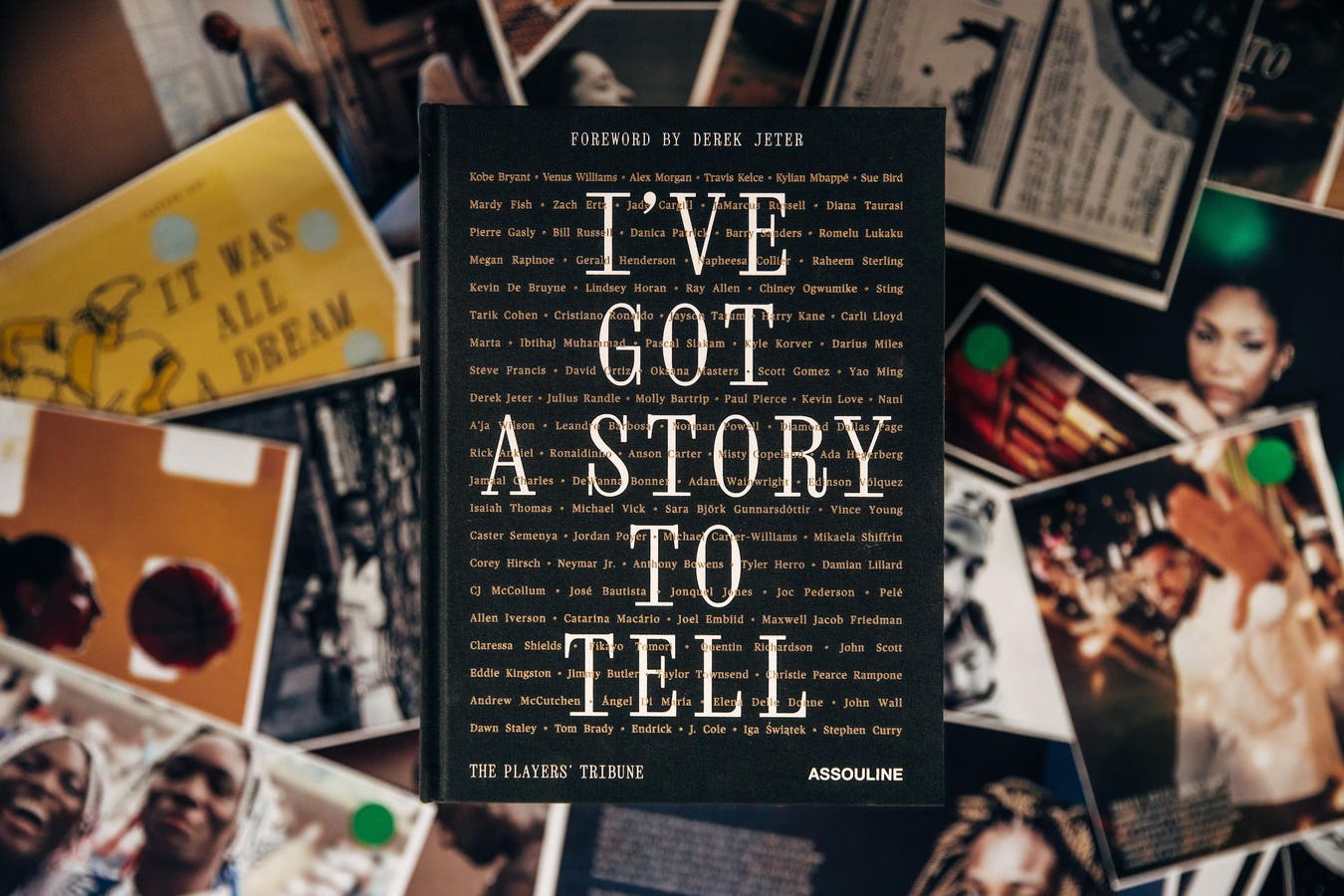
Cover of The Players’ Tribune’s new book: I’ve Got A Story To Tell
The Players’ Tribune / Assouline
Today not only marks World Mental Health Day but also a significant event for The Players’ Tribune– this month is its 10th anniversary. In celebration of this milestone, they have launched a limited edition book, I’ve Got a Story to Tell. The Players’ Tribune (TPT) was co-founded by Derek Jeter, a baseball legend, back in 2014, and revolutionized sports journalism by creating a platform for athletes to share their stories in their voices.
At the time of The Players’ Tribune’s Launch, mental health concerns were often seen as a weakness and were not commonly talked about in public. However, over the past 10 years, we’ve seen a tremendous shift in athletes using their platforms to normalize the conversation surrounding mental health, and The Players’ Tribune has contributed to providing athletes with a safe space to share their messages in a way that’s comfortable for them.
In 2018, Kevin Love, NBA champion, shared a detailed description of a panic attack he experienced during a game in The Players’ Tribune. Love’s story didn’t just break the silence on discussing mental health so openly, but it started a movement. “Fast forward six years, and I think — and hope — that the story I shared on The Players’ Tribune helped open the door for others to talk about their own challenges, and that it serves as a constant reminder that we’re all human, and everyone is going through something,” shares Love.
His story shared through that article truly opened the door for countless athletes being vulnerable by using their platform to describe their lived experiences and struggles with mental health challenges as well. Love’s story, as well as the narratives of many other athletes, are featured in I’ve Got a Story to Tell, which is a curated collection of athlete-driven stories that highlight both achievements and challenges.
The Evolution of Athlete Storytelling
Sean Conboy, Editor-in-Chief of The Players’ Tribune since its inception, spoke to me about how different the sports media landscape was when TPT launched 10 years ago. “It was such a different world – Snapchat had just come out not long before and the level of vulnerability that athletes display today wasn’t common,” Conboy explains. “Back then, if an athlete spoke about depression, it was seen as a taboo, as though something was ‘wrong’ with them. But athletes just want to be seen as human beings, and we’ve created a platform where they can share their full selves.”
There is no doubt that athletes have grown increasingly comfortable being more of their authentic selves and speaking out about not only the good, but some of the challenges too. “Athletes are now free to be vulnerable,” Conboy says. “When we started speaking to them and building trust, mental health came up—whether it was anxiety, depression, or other issues. That shift is something we’re proud to have played a part in.” The growing openness has not only redefined athletes as human beings like everyone else, but it has also helped lower the stigma around mental health in sports.
Kevin Love’s Impactful Story
Kevin Love’s candid account of experiencing a panic attack during an NBA game was a turning point, not only for TPT but for sports culture at large. His vulnerability in sharing his story created a ripple effect throughout sports at large, which encouraged others to follow in his footsteps. “Kevin’s story was huge,” Conboy recalls. “We had done mental health stories before—but Kevin’s account of a panic attack during an NBA game really resonated and after that, we saw a flood of stories from athletes who felt empowered to speak up about their own mental health.” Love shares his perspective with me as well: “We went from viewing mental health as a weakness to understanding it and even destigmatizing it with more athletes starting to open up about their personal experiences. It also was the catalyst for starting my foundation, the Kevin Love Fund, which works to inspire people to live their healthiest lives by creating equity between mental and physical health.”
While Love’s story is certainly well-known, there are many other stories shared in I’ve Got a Story to Tell. The book includes stories from athletes across various sports and about different topics, as it’s not solely a book on mental health. “There are so many mental health stories in the book,” Conboy says. “From OCD to anorexia, the range of experiences is vast—what ties them together is the trust we’ve built with athletes—they know they can come to us when they’re ready to share their most personal struggles.”
Looking Ahead
As The Players’ Tribune celebrates its 10-year anniversary, they are releasing I’ve Got a Story to Tell on World Mental Health Day, October 10. The platform is taking its mission a step further—using the power of storytelling to continue pushing the conversation around mental health forward. “The Players’ Tribune gives us a space to share our stories, unfiltered and in our own words, which humanizes us beyond the game,” says Love. “Being able to talk about my mental health struggles on TPT not only helped me personally, but it showed people that athletes aren’t immune to the same challenges everyone faces.”
For Conboy, it is of the utmost importance to maintain the trust they’ve built with athletes through their platform, in the way they share authentic stories. “We’ve been able to create something incredibly unique, and that’s why athletes keep coming to us. They know they can be themselves here, and that’s what makes our stories so powerful.”
There’s no doubt that as The Players’ Tribune moves into its second decade, it will continue to make an ever-lasting impact on the world of sports. With the new book launch and a continued celebration of mental health storytelling, The Players’ Tribune looks forward to the future as athletes share their resilience and challenges on their terms.
Love states, “TPT continues to be a powerful platform for normalizing conversations about mental health because it allows athletes to be vulnerable, and in doing so, it encourages others to be open about their experiences. It’s a platform that reminds people that we’re human beings first.”