At any other Olympic games, Jessica Hull would be returning home with a gold medal around her neck.
But she had to run the race in front of her.
In the final of the 1,500 metres at Paris, Hull was up against the greatest ever middle-distance runner – Faith Kipyegon.
She did everything right; shaved ten seconds off her previous Olympic time and even ran faster than Kipyegon did when she won gold in Tokyo.
Hull was fast, the Kenyan was faster.
Rounding the turn into the last hundred metres with her rival in front, the 27-year-old had one thing on her mind.
“I was just so focused on ‘I am getting a medal’, I didn’t really have any understanding of the time,” she said.
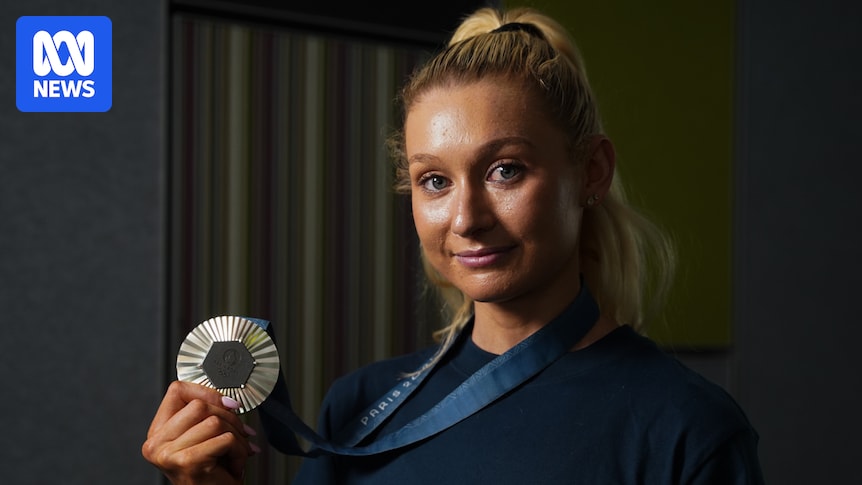
Jessica Hull finished with a personal best time to claim silver. (Getty Images: Henk Jan Dijks/Marcel ter Bals/DeFodi Images/DeFodi)
She crossed the finish line in second place, becoming the first Australian to win a medal in the event.
It capped a remarkable season for the runner which included setting a new world record in the 2,000 metres at the Diamond League in Monaco.
Hull ended the year with 15 podium finishes.
Athletics Australia nicknamed her the smiling assassin after her record-breaking year.
It is an clear reference to the runner’s sunny disposition and ruthlessness on the track.
Athletics interest soars
Hull has returned to where her Olympic dream started — her hometown of Albion Park on the New South Wales south coast.
“I remember winning my first state title in the under 12s and it fuel the dream of maybe I can go to the Olympics one day,” she said.
Jess Hull shares her Olympic journey with young athletes. (ABC Illawarra: Tim Fernandez)
Her junior club, Albion Park Little Athletics, has become a breeding ground for Olympians.
They have included fellow middle-distance runners Jye Edwards and Ryan Gregson.
Hull said Gregson making the final of the 1,500 metres in Rio de Janeiro was a turning point for Australians targeting that event.
“I think that was huge for the sport in Australia, to see an Australian make that final,” she said.
Australia won seven medals at the Paris games, its best track and field performance since the Melbourne games in 1968.
Hull said the games showed Australians could be competitive across athletics.
“Our medals were so widespread that I think it is a good advertisement for little A’s,” Hull said.
“Come down and try it and find your event.”
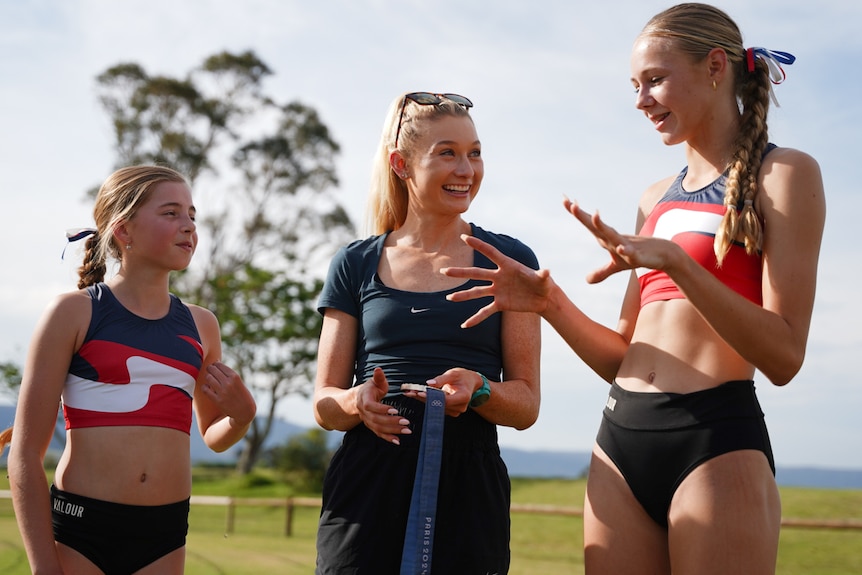
Jess Hull shares her silver medal with Brooklyn McWilliams and Chelsea Nicol, two young runners hoping to follow in her footsteps. (ABC Illawarra: Tim Fernandez)
Little Athletics memberships have climbed more than 20 per cent this year in the Illawarra.
More than 45,000 kids have signed up across the state.
The grass track where Hull trained as a kid hasn’t changed much since she first began her journey.
But young athletes inspired by Hull’s exploits are turning up with dreams of following in her footsteps.
Chelsea Nicol, 14, is turning heads by breaking records set by Hull.
“Seeing her on TV running at such a high level and actually succeeding at what all us athletes are dreaming about is really cool,” she said.
Chelsea Niccol and Brooklyn McWilliams are dreaming of competing at the Olympics. (ABC Illawarra: Tim Fernandez)
Meanwhile, 11-year-old Brooklyn McWilliams was inspired watching the Paris games to pursue her own Olympic dream.
“I watched it, and I was like, ‘I want to be like her when I grow up,” she said.
“I always remember Jess when I run, I remember how she does so well, and I want to be just like her.”
Aiming for gold
Hull has resumed her training program with another busy year of events on the cards.
After narrowly missing out on gold, her ultimate goal is Los Angeles 2028.
“It is crazy how quickly your mind goes to “I want a gold now’,” Hull said.
“It is no easy feat and just because you want it, there is a lot of work to do to put you in the position to do that.”
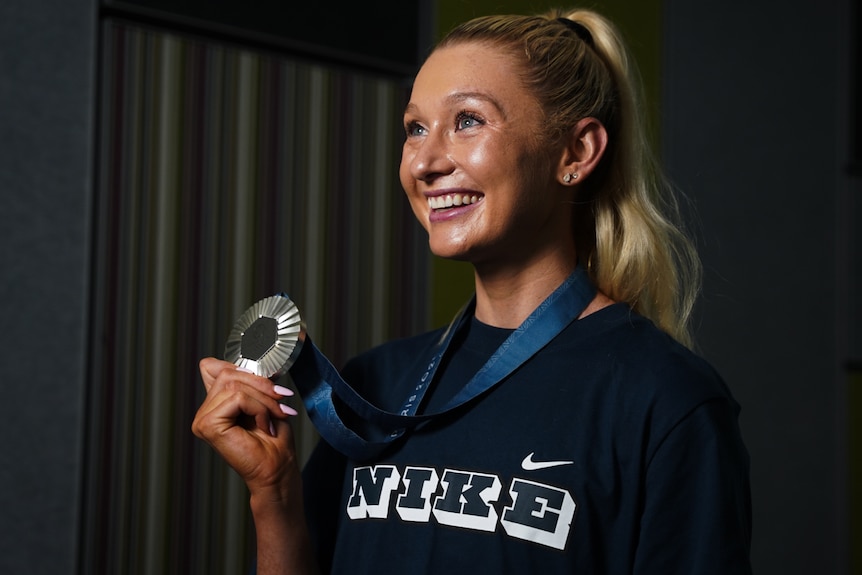
Jess Hull says she wants an Olympic gold medal. (ABC Illawarra: Tim Fernandez)
She said Australia would be competitive for years to come, with a home Olympics on the horizon.
“I hope I’ve shown those girls that yes there is a medal in the middle distances,” she said.
“Who knows when we have a home Olympics in 2032 who the superstars will be knocking on the door for maybe a gold by then.”
In a quiet laboratory in Nairobi, Angus Nassir, a biomedical scientist and bioinformatician, oversees perhaps one of Kenya’s busiest DNA testing clinics. As the chief scientist at Bioinformatics Institute, when Lifestyle drops by, he reveals he handles about 125 paternity test cases every month.
This was not the case eight years ago.
“When we opened, we had zero clients. Sometimes we could get one client an entire month,” he says.
Then with time, their numbers grew progressively to three, five, 10, and so on.
A majority of their customers are men carrying the weight of uncertainty about whether they are truly the biological fathers of their children.
“Out of every 10 paternity tests that we do, three or four turn out to be negative. And this remains constant year after year,” says Mr Nassir.
Once a time-consuming and complicated process, DNA testing has become accessible. The availability of faster technologies and specialists has also strengthened Kenyans’ drive to know their relatives or if they sired the children who call them daddy.
Another clinic that has seen a steady increase in demand for such tests is the DNA Solution Center in Nairobi. Esther Mbula, the director, says they conduct about seven paternity tests each week.
“In a month, we roughly do 30 paternity tests,” Ms Mbula says, “In most cases, the men come by themselves.”
When the center started over 12 years ago, they would get about five to eight clients, according to the director. This trend is reshaping conversations about responsibility, trust, and the definition of fatherhood in a society where traditional values often clash with modern realities.
According to the Kenya DNA report released earlier this year by the Bioinformatics Institute of Kenya (KIBS) after analysing 6,169 DNA profiles from relationship testing samples, out of every 30 men who take paternity tests, 10 are raising children who are not biologically theirs. The study showed that while 64 percent of tests confirmed paternity, a significant 32 percent resulted in exclusion – meaning the men tested were not biologically related to the children they believed to be theirs.
The report also uncovered several notable trends in DNA testing patterns across Kenya. Paternity tests dominated, accounting for 94 percent of all DNA tests conducted, with siblingship tests a distant second at two percent.
Interestingly, 93 percent of all tests were performed discreetly for personal knowledge rather than legal purposes, highlighting the private nature of these inquiries. The study also revealed a gender disparity in testing: maternity tests accounted for less than one percent of all DNA tests, and notably, all women who suspected their babies had been switched at birth were proven wrong.
Growing demand for paternity, ancestry, and legal DNA tests has spurred investment in private labs and hospitals offering these services. Mr Nassir says there are about 10 laboratories offering DNA currently, from two a few years ago. DNA testing in Kenya has expanded beyond government facilities like Kenyatta National Hospital and Kenya Medical Research Institute (Kemri).
As the facilities increase, so does the number of specialists. Mr Nassir, who holds a bioinformatics postgraduate degree from Jomo Kenyatta University of Agriculture and Technology, says he is part of about 2,000 bioinformaticians in Kenya with less than 200 practising.
Expensive licenses
However, setting up a DNA testing business is not cheap. Licenses and equipment are the most expensive.
“To meet the Level F and above requirements of the Kenya Medical Laboratory Technicians and Technologists Board, we had to make substantial investments. The lab license alone for a Level F lab costs Sh450,000. Additional licenses were required, including standard City Council permits and about Sh250,000 for the National Commission for Science, Technology, and Innovation (NACOSTI) license,” Dr Nassir says.
For equipment, an investor has to acquire a wide range of specialised tools, including a biosafety cabinet, DNA quantification instrument (Qubit), genetic analyser machine, and standard molecular biology equipment such as pipettes, -20°C freezers, among others.
Five to Eight days
What is also driving the demand is the turnaround time and accuracy of the results unlike before. Benedict Mwela, a molecular biotechnologist at Kibs Institute says; “Currently, it takes around seven to 18 days to have the results for paternity and maternity tests. For more complex cases like grandparent testing, it can take two to three weeks. But with good samples, we can sometimes deliver results in as little as five to eight days.”
The types of DNA tests available have also become diverse, catering to various scenarios. The standard paternity test involves sampling both the alleged father and the child. However, when the alleged father is unavailable, alternative options exist.
“We can determine paternity of a child using samples from the paternal grandmother,” Mr Nassir says, “This is based on the fact that grandchildren will always carry 25 percent of the DNA of their grandparents.”
Other options include avuncular tests (using samples from paternal uncles or aunts who share 25 percent of their DNA with nieces and nephews), siblingship tests, and Y chromosome tests for male children. “The Y chromosome test is only applicable to male children because the Y chromosome is passed across the patrilineal lineage,” the biomedical scientist says.
The standard test costs Sh30,000, a price that many seem willing to pay for peace of mind. The process is surprisingly simple: most tests use mouth swabs, which Mr Nassir describes as “non-invasive, painless, and easy to collect. You just put the swab in the mouth and rub the inner lining, then put it in a sterile envelope.”
But Ms Mbula, whose clinic charges Sh26,000 for one parent and a child with an additional Sh3,000 for each extra child, says the cost of the tests is still inhibitive.
“Many people want to know [if they sired the child], but they find it a bit expensive,” she says.
The experts in Kenya have also widened the sample list.
Mr Nassir says they now accept non-standard samples such as hair (with roots), toothbrushes, teeth, used drinking straws, and even bottles or cups someone has used. For deceased individuals, they can extract DNA from nails, bones (typically femur), or teeth.
Privacy and ethical considerations have also calmed clients’ nerves.
“Usually, the report will be encrypted with a password only known to you. The data in the database is also encrypted and anonymised. If by any chance someone hacks the database, they will not be able to connect that data to you,” Mr Nassir says.
Shattered family
James Wanyonyi, (not his real name), is among those who say has benefitted from the DNA clinics. After 18 years of marriage and raising three teenagers he believed were his own, a DNA test revealed a truth that shook him to his core: he is not their biological father.
“It feels like dying whilst still breathing,” the 47-year-old businessman says.
James’s story begins like many others – a young man in his 20s, ambitious and in love. He met his wife, Margaret*, at university in 1999. They married in 2005, after he had secured a job as a junior accountant, teaching at a local secondary school. Their first child, Joy*, arrived a year later.
The first cracks appeared in his marriage three years ago. Margaret became distant, spent more time in church, and was often “working late.” James, consumed by his role as provider, initially dismissed the signs. Then came the request for divorce in January this year.
It was not until James’s lawyer suggested a DNA test as part of the divorce proceedings that his world truly fell apart. The results arrived in a sterile, white envelope two weeks later.
All the three children were not his. James moved out of the family home, but the separation from the children has been excruciating. James says he is waiting for his first-born daughter to finish the Kenya Certificate of Secondary Education exams to tell them that he is not their father.
The legal implications of the DNA results are complex. Under Kenyan law, James is still considered the children’s legal father, having been married to their mother and listed on their birth certificates.
In his darkest moments, James has found an unexpected lifeline – a support group for men in similar situations. They meet monthly in a church hall in the Westlands area of Nairobi, sharing stories and silence in equal measure.
Through the group, James connected with a therapist who specialises in paternity fraud cases. “She’s helping me understand that my love for the children isn’t diminished by DNA,” he says. “She says Biology makes fathers, but love makes dads. I’m trying to hold onto that.”
“These children are innocent,” he says. “They didn’t ask for any of this. Whatever happens with Margaret, whatever the DNA says, I’m the only father they’ve ever known. I’ve been there for every skinned knee, every school play, every triumph and tragedy of their lives. DNA can’t erase that.”
“The worst part is the uncertainty; will they hate me for not being their ‘real’ father? Will they hate their mother for the lie? Will they want a relationship with their biological father? There are so many questions and no good answers,” he says.
Psychologist’s take
While the scientific process may be straightforward, the human impact is profound and complex. This is where Michael Mwangi enters the picture. With a background in medicine and counselling psychology, Mr Mwangi has spent the last three years working with men grappling with questions of paternity.
“We have to prepare them for any possible outcome through pre-counseling, intra-counseling during the processing, and post-counseling as we relay the results,” Mr Mwangi says.
One of Mr Mwangi’s key strategies is what he calls “catharsis” – giving men the space to process their emotions. “Some of them can break down explaining the betrayal. They never fathomed that such a matter could happen,” he says.
As a fitness enthusiast, he often recommends exercise to help process the emotions. “I prescribe sessions for them where they can use exercises to push out anger and heal,” he says. He also connects clients with support groups of men who have gone through similar experiences, helping them understand they’re not alone.
Mr Mwangi offers a scientific perspective on why paternity fraud occurs. He explains that nature influences women to seek what they perceive as “alpha” genes.
“Historically, women get babies with men they perceive as alpha, the strong genes,” Mr Mwangi explains. He argues that in modern society, where women may have multiple partners before marriage, this can lead to complicated situations. A woman might settle down with a “provider” while still being drawn to men she perceives as having stronger genes.
“If she doesn’t perceive the man she has married as having strong genes, there’s a high likelihood that she will conceive for the man she perceives as having high testosterone.”
When a test comes back negative, the path forward is not always clear. Mr Mwangi describes how men typically respond: “Most men continue with normalcy for a couple of weeks or months. Then I guide them to structure a way forward.”
Some men choose to maintain their relationship with the child, perhaps continuing to pay school fees or treating them as adopted children. Others opt for immediate detachment. Mr Mwangi’s role is to help them evaluate all possibilities and guide them in decision-making.
While most cases do not end up in court, Mr Mwangi is prepared to guide clients through legal processes when necessary. “If there’s a push and pull, if the woman doesn’t accept the non-legal results, we can do a legal test,” he says. However, he notes that this is rare: “Most of the time we don’t go there because DNA will not change.”
For men grappling with doubts, Mr Mwangi is clear: “Paternity test needs to be mandatory,” he says. “We all want what we call genetic legacy.”
He argues that knowing the truth, however painful, is better than living in uncertainty. “I think it’s masculine to confront your challenges and get the truth,” he says. “If you’re providing, if you’re protecting children who are not yours, you think you have a genetic legacy and you don’t.”
Free DNAs
Anne Nyakarura, who coordinates a donor-funded initiative and does the Genesis DNA show on YouTube providing free DNA tests, has witnessed the impact of making these tests accessible at the DNA Testing services clinic in Hurlingham, Nairobi. It has been operational for over two decades. Since May, her programme has facilitated tests for 12 men. Of these, four received negative results – learning they were not the biological fathers of children they had been raising.
Anne Nyakarura, coordinates a donor-funded initiative and does the Genesis DNA show on YouTube providing free DNA tests based in Nairobi.
Photo credit: POOL
“They were all very shocked,” Ms Nyakarura says. “Though one was happy because he already had another family and didn’t want this other child to be his responsibility, most were just in disbelief.”
Ms Nyakarura’s initiative is to try to address these broader implications. “We’re looking for counsellors, especially volunteer counsellors,” she says. “Most of our clients need counselling. Some are young and confused about their responsibilities. Others are in relationships and don’t know how to handle the results. We are also looking for non-governmental organisations and donors who are passionate about ending gender-based violence and child negligence/abandonment that have been brought about by paternity doubt.”
But as paternity testing becomes almost a norm, it forces us to question what truly makes a father—biology or bonds forged through years of love and care?
“People say we’re breaking families,” Ms Mbula says, “but if a married man finds out a child isn’t his, many blame the test for breaking the family. The truth was already there – we just uncovered it.”
The artificial intelligence boom has benefited chatbot makers, computer scientists and Nvidia investors. It’s also providing an unusual windfall for Anguilla, a tiny island in the Caribbean.
ChatGPT’s debut nearly two years ago heralded the dawn of the AI age and kicked off a digital gold rush as companies scrambled to stake their own claims by acquiring websites that end in .ai.
That’s where Anguilla comes in. The British territory was allotted control of the .ai internet address in the 1990s. It was one of hundreds of obscure top-level domains assigned to individual countries and territories based on their names. While the domains are supposed to indicate a website has a link to a particular region or language, it’s not always a requirement.
Google uses google.ai to showcase its artificial intelligence services while Elon Musk uses x.ai as the homepage for his Grok AI chatbot. Startups like AI search engine Perplexity have also snapped up .ai web addresses, redirecting users from the .com version.
Anguilla’s earnings from web domain registration fees quadrupled last year to $32 million, fueled by the surging interest in AI. The income now accounts for about 20% of Anguilla’s total government revenue. Before the AI boom, it hovered at around 5%.
Anguilla’s government, which uses the gov.ai home page, collects a fee every time a .ai web address is renewed, Identity Digital Chief Strategy Officer Ram Mohan said the fee — $140 for two years — won’t change. It also gets paid when new addresses are registered and expired ones are sold off. Some sites have fetched tens of thousands of dollars.
The money directly boosts the economy of Anguilla, which is just 35 square miles (91 square kilometers) and has a population of about 16,000. Blessed with coral reefs, clear waters and palm-fringed white sand beaches, the island is a haven for uber-wealthy tourists. Still, many residents are underprivileged and tourism has been battered by the pandemic and, before that, a powerful hurricane.
Anguilla doesn’t have its own AI industry though Premier Ellis Webster hopes that one day it will become an hub for the technology. He said it was just luck that it was Anguilla, and not nearby Antigua, that was assigned the .ai domain in 1995 because both places had those letters in their names.
Webster said the money takes the pressure off government finances and helps fund key projects, but cautioned that “we can’t rely on it solely.”
“You can’t predict how long this is going to last,” Webster said in an interview with the AP. “And so I don’t want to have our economy and our country and all our programs just based on this. And then all of a sudden there’s a new fad comes up in the next year or two, and then we are left now having to make significant expenditure cuts, removing programs.”
To help keep up with the explosive growth in domain registrations, Anguilla said Tuesday it’s signing a deal with a U.S.-based domain management company, Identity Digital, to help manage the effort. They said the agreement will mean more revenue for the government while improving the resilience and security of the web addresses.
Identity Digital, which also manages Australia’s .au domain, expects to migrate all .ai domain services to its systems by the start of next year, Mohan said in an interview.
A local software entrepreneur had previously helped Anguilla set up its registry system decades earlier.
There are now more than 533,000 .ai web domains, an increase of more than 10-fold since 2018. The International Monetary Fund said in a May report that the earnings will help diversify the economy, “thus making it more resilient to external shocks.
Webster expects domain-related revenues to rise further, and could even double this year from last year’s $32 million.
He said the money will finance the airport’s expansion, free medical care for senior citizens and completion of a vocational technology training center at Anguilla’s high school.
The income also provides “budget support” for other projects the government is eyeing, such as a national development fund it could quickly tap for hurricane recovery efforts. The island normally relies on assistance from its administrative power, Britain, which comes with conditions, Webster said.
Mohan said working with Identity Digital will also defend against cyber crooks trying to take advantage of the hype around artificial intelligence.
He cited the example of Tokelau, an island in the Pacific Ocean, whose .tk addresses became notoriously associated with spam and phishing after outsourcing its registry services.
“We worry about bad actors taking something, sticking a .ai to it, and then making it sound like they are much bigger or much better than what they really are,” Mohan said, adding that the company’s technology will quickly take down shady sites.
Another benefit is .AI websites will no longer need to connect to the government’s digital infrastructure through a single internet cable to the island, which leaves them vulnerable to digital bottlenecks or physical disruptions.
Now they’ll use the company’s servers distributed globally, which means it will be faster to access them because they’ll be closer to users.
“It goes from milliseconds to microseconds,” Mohan said.
College athletes are facing “significant abuse” amid a surge in harassment unleashed by America’s gambling boom, according to US sports officials who say students are increasingly subject to death threats, harassment and demands for money.
A handful of state regulators have moved to ban legal gambling platforms from offering certain types of bets on collegiate sports as a result of the “inherently problematic” surge in harassment of college athletes online, at venues and in dorms.
But some of the gambling sector’s biggest players have lobbied against these moves, according to documents seen by the Guardian – claiming such restrictions pose a “far more significant” risk.
The National Collegiate Athletics Association (NCAA) is calling for a ban on “proposition bets” – prop bets – linked to specific student athletes. These side wagers – the first player to score a touchdown, for example – are not directly tied to a game’s final result.
For student athletes as young as 18, prop bets “put a target on their back”, said Clint Hangebrauck, managing director of enterprise risk management at the NCAA, and leave them “much more susceptible to receive harassment”.
As gambling exploded across college campuses, harassment has “really steadily increased in almost direct correlation with the steady increase of legalized sports betting in America”, Hangebrauck said in an interview. “It’s really been an unfortunate growing phenomenon.”
Officials are particularly concerned about the safety of athletes and the integrity of games, beyond the bright lights of collegiate sports’ top tiers. “This is not just happening at the elite levels,” said John Parsons, interim senior vice-president of the NCAA’s Sport Science Institute. “This is happening across all of our divisions.”
Sports betting is now legal across 38 states. Each time a state legalized the activity, the NCAA has seen a notable increase in students and coaches in the region facing abuse, according to Hangebrauck.
He described a wave of “highly negative and critical messages” aimed at students, officials and coaches that he claimed had a “direct” link to sports betting. “There’s no doubt the nexus of how this abuse is generated is somebody angry because they lost a bet.”
‘They don’t deserve that’
Four states have this year banned prop betson specific collegiate athletes.Ohio was first, in February.
The previous year, a prominent college basketball coach in the state had broken from his typical postgame recap to issue a blunt intervention. “I have to say something because I think it’s just necessary at this point,” Anthony Grant, coach of the Dayton Flyers, remarked at a press conference in January 2023.
Urging fans to remember “we’re dealing with 18, 21, 22 year-olds”, he said: “There’s some laws that have recently been enacted, that really to me – it could really change the landscape of what college sports is all about. And when we have people that make it about themselves and attack kids because of their own agenda, it sickens me. They have families. They don’t deserve that. Mental health is real.”
Grant was prompted to speak out when, following a game, his team received a torrent of abuse on social media from bettors. Sports gambling had been legal in Ohio for just 16 days.
This case did not prove to be an outlier. The Ohio Casino Control Commission started to hear “a lot” about student athletes “getting Venmo requests from their peers when they lost a game, or didn’t make a free throw”, Amanda Blackford, its director of operations, told the Guardian.
There has “certainly been a shift” since sports betting was legalized, according to Blackford. “Social media’s always been rough for athletes,” she said. “But it was never about money, or the bets they were making.”
Betting firms push back
After a request from the NCAA, the Ohio commission scrutinized the prop betting market around collegiate sports and concluded a ban on student-specific prop bets would be a sound trade-off, Blackford explained: between a “hopefully minimal” impact on sports betting firms’ profits, and a “potentially significantly larger” impact on the safety and wellbeing of young athletes.
But the industry pushed back. A string of legal gambling firms lobbied the state to reconsider.
Penn Entertainment, which struck a deal with Disney to wrap ESPN, the biggest brand in US sports broadcasting, around its wagering platform, cautioned a ban “may serve only to push these wagers” to the illegal market, which it said would constitute a “far more significant” risk than the status quo.
In a joint letter BetMGM, DraftKings, FanDuel and Fanatics – four of America’s dominant sports betting groups – suggested a ban “could in fact increase” problems. College athletes and their sports are “better protected in the light of licensed sports wagering than in the darkness of illegal gambling”, the firms argued.
Penn Entertainment and BetMGM did not respond to requests for comment on whether they commissioned any analysis which prompted these warnings. FanDuel, DraftKings and Fanatics declined to comment.
Hangebrauck expressed skepticism over the warnings. “If you have data that supports that, pray tell,” he said. “We really haven’t seen anything that’s supportive of it.”
Ohio plowed ahead, confident that removing prop bets on students from legal gambling platforms will reduce harassment. “Having it as an illegal activity hopefully means they don’t feel like they can openly come after athletes in the way that they have,” said Blackford.
With the latest college football season now in full swing, the operators did not comment on whether issues had increased as a result of Ohio’s ban, as they cautioned could happen.
‘We can’t put our head in the sand’
Do betting firms agree that harassment has worsened since legalization? “Individuals who harass athletes, amateur or professional, over a sports bet should not be tolerated,” said Joe Maloney, senior vice-president at the American Gaming Association, a gambling industry lobby group. “Importantly, the legal sports wagering market is providing the transparency critical to discuss solutions to reducing player harassment for the first time – an opportunity illegal market actors do not provide.”
After Ohio,Maryland, Vermont and Louisiana introduced their own bans on student-based prop bets in college sports.
Unlike these states, Massachusetts did not allow such wagers when it legalized sports betting in the first place. “These are kids,” Jordan Maynard, interim chair of the state’s gaming commission, said this summer.
At a conference organized in July by the National Council on Problem Gambling, Maynard gave a frank assessment of gambling’s impact on college sports. “We’ve all been at these games. Don’t lie – to yourself, or to anybody else,” he said. “The people screaming at these kids, this has gotten worse since sports wagering passed … We can’t put our head in the sand and say it’s not an issue.”
But operators, the moderator suggested, would likely argue that banning legal prop bets on collegiate athletes will drive gamblers to illegal sports books. “I have a lot of thoughts on the boogie man,” Maynard replied.
‘I hope your dog gets cancer’
“Even if you just go to a game, it’s so prevalent now that you just overlook it,” said Ricardo Hill, basketball coach at Indian Hill high school in Ohio. “You can hear it at every game.”
His former players, having reached college, are now grappling with the impact of gambling on their sports. Several have described to him “how the fans are harassing them”, Hill told the Guardian.
In a new statewide campaign, collegiate athletes in Ohio read out the messages they have been sent. “You deserve to get unalive for blowing my bet,” said one received by Tyler, a pre-law student. “You cost me two grand,” read a message sent to another student, “I hope your dog gets cancer.”
Officials hope the campaign, More Than a Bet, will make gamblers think twice before sending abusive messages.
Hill has seen enough. As far as he’s concerned, gambling and college sports should not go together. “It’s too dangerous and too risky for the collegiate athletes.”
“Sportsbetting is a billion-dollar industry,” he said. “That’s what’s driving the changes. Unfortunately the athletes are on the bottom of the totem in decision making.”
‘It’s not something we condone’
As the Guardian reported this story, the Responsible Online Gaming Association (ROGA)– a new body formed by betting firms – announced plans to roll out an education program next year, with videos and events for students.
Several operators that declined to comment on the issues unfolding around college sports referred the Guardian to ROGA. Does the association – or the gambling companies behind it – agree with the NCAA, regulators, coaches and students who say harassment has increased markedly since sports betting’s legalization?
“I don’t know we have enough information to make that judgment,” said Jennifer Shatley, executive director of ROGA. “I will say that perception does point to the importance of responsible gaming, and having these types of programs in the first place.”
Harassment of student athletes “is sort of outside the realm of what we’re doing”, she added. “However, I will say obviously it’s not something we condone.”
Operators have invested in ads and marketing around “responsible gaming”, reminding gamblers to bet responsibly. Critics argue this approach overlooks those at risk of developing gambling problems, and shifts responsibility away from the industry.
“Everybody involved in legalized gambling has some responsibility – be it governments, be it operators, be it the players,” said Shatley. “Everybody has a shared responsibility.
“So it’s really [about] making sure we’re all fulfilling our own responsibilities. But absolutely, everyone that’s involved in the industry has a responsibility.”