hacklink hack forum hacklink film izle hacklink marsbahisizmir escortsahabetpornJojobetcasibompadişahbet

Tag: Brazil

  • New Brazil law restricts use of smartphones in elementary and high schools

    New Brazil law restricts use of smartphones in elementary and high schools

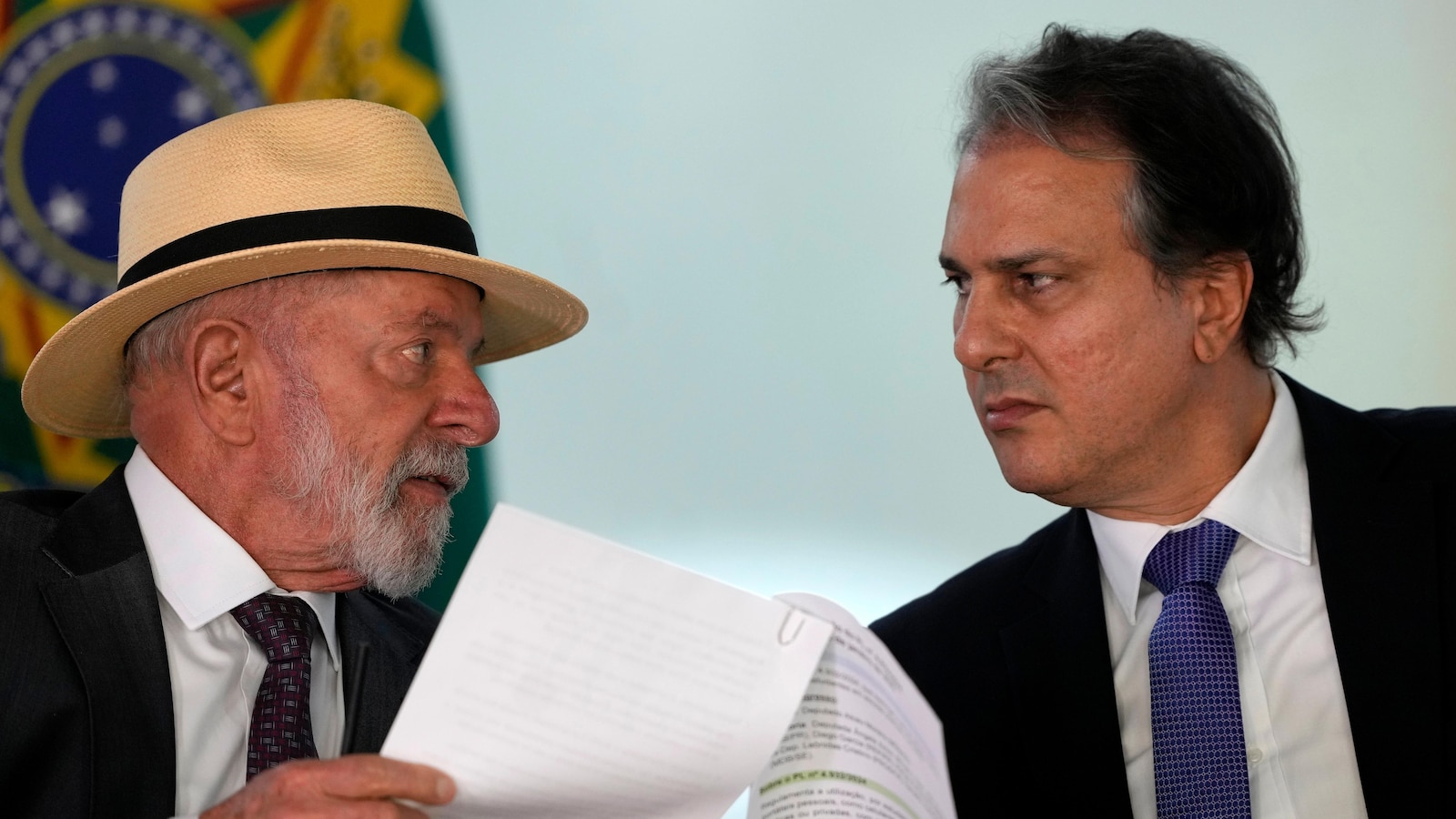
    SAO PAULO — Brazil’s President Luiz Inácio Lula da Silva on Monday signed a bill restricting the use of smartphones at school, following a global trend for such limitations.

    The move will impact students at elementary and high schools across the South American nation starting in February. It provides a legal framework to ensure students only use such devices in cases of emergency and danger, for educational purposes, or if they have disabilities and require them.

    “We cannot allow humanism to be replaced by algorithms,” Lula said in a closed ceremony at the presidential palace in the capital, Brasilia, adding that the bill “acknowledges the work of every serious person in education, everyone who wants to take care of children and teenagers in this country.”

    In May, Fundacao Getulio Vargas, a leading think-tank and university, said Brazil had more smartphones than people, with 258 million devices for a population of 203 million Brazilians. Local market researchers said last year that Brazilians spend 9 hours and 13 minutes per day on screens, one of the world’s highest figures.

    Education minister Camilo Santana told journalists that children are going online at early ages, making it harder for parents to keep track of what they do, and that restricting smartphones at school will help them.

    The bill had rare support across the political spectrum, both from allies of leftist Lula and his far-right foe, former President Jair Bolsonaro.

    Many parents and students also approved the move. A survey released in October by Brazilian pollster Datafolha said that almost two-thirds of respondents supported banning the use of smartphones by children and teenagers at schools. More than three-quarters said those devices do more harm than good to their children.

    “(Restricting cell phones) is tough, but necessary. It is useful for them to do searches for school, but to use it socially isn’t good,” said Ricardo Martins Ramos, 43, father of two girls and the owner of a hamburger restaurant in Rio de Janeiro. “Kids will interact more.”

    His 13-year-old daughter Isabela said her classmates struggled to focus during class because of their smartphones. She approved the move, but doesn’t see it as enough to improve the learning environment for everyone.

    “When the teacher lets you use the cell phone, it is because he wants you to do searches,” she said. “There’s still a lot of things that schools can’t solve, such as bullying and harassment.”

    As of 2023, about two-thirds of Brazilian schools imposed some restriction on cellphone use, while 28% banned them entirely, according to a survey released in August by the Brazilian Internet Steering Committee.

    The Brazilian states of Rio de Janeiro, Maranhao and Goias have already passed local bills to ban such devices at schools. However, authorities have struggled to enforce these laws.

    Authorities in Sao Paulo, the most populous state in Brazil, are discussing whether smartphones should be banned both in public and private schools.

    Gabriele Alexandra Henriques Pinheiro, 25, works at a beauty parlor and is the mother of a boy diagnosed with autism spectrum disorder. She also agrees with the restrictions, but says adults will continue to be a bad example of smartphone use for children.

    “It is tough,” she said. “I try to restrict the time my son watches any screens, but whenever I have a task to perform I have to use the smartphone to be able to do it all,” she said.

    Institutions, governments, parents and others have for years associated smartphone use by children with bullying, suicidal ideation, anxiety and loss of concentration necessary for learning. China moved last year to limit children’s use of smartphones, while France has in place a ban on smartphones in schools for kids aged six to 15.

    Cell phone bans have gained traction across the United States, where eight states have passed laws or policies that ban or restrict cellphone use to try to curb student phone access and minimize distractions in classrooms.

    An increasing number of parents across Europe who are concerned by evidence that smartphone use among young kids jeopardizes their safety and mental health.

    A report published in September by UNESCO, the United Nations Educational, Scientific and Cultural Organization, said one in four countries has already restricted the use of such devices at schools.

    Last year in a U.S. Senate hearing, Meta CEO Mark Zuckerberg apologized to parents of children exploited, bullied or driven to self harm via social media. He also noted Meta’s continued investments in “industrywide” efforts to protect children.

    ____

    Rodrigues reported from Rio de Janeiro. Associated Press writers Gabriela Sá Pessoa in Sao Paulo and Jocelyn Gecker in San Francisco contributed.

    Source link

  • Australia v Brazil: international women’s football friendly – live | Matildas

    Key events

    Samantha Lewis has been following the Matildas since well before they were cool and has dug deep into her notebooks to pull out a close look at their history of clashes with Brazil. The blue touch paper was lit on the rivalry during the Women’s World Cup 2007 when Australia reached the quarter-finals for the first time (spoiler alert: Brazil were runners-up).

    Their first opponents in the knockout stage were Brazil: a team who have since become one of the Matildas’ longest-standing rivals, and who were led, back then, by the great Marta, who would go on to win the tournament’s Golden Boot and MVP awards.

    Australia lost that game 3-2 – not a boilover, by any stretch – with the core of that team going on to become the country’s first Asian Champions just three years later.

    Brazil XI

    Brazil: Natascha (gk), Fe Palermo, Isa Hass, Vitoria Calhau, Yasmim (capt), Laís Estevam, Duda Sampaio, Gabi Portilho, Aline Gomes, Marilia, Amanda Gutierres

    Matildas XI

    Clare Polkinghorne starts and wears the captain’s armband in her 168th and last appearance for Australia. The defender scored in the Matildas’ back-to-back friendlies against Brazil three years ago and no doubt would love another tonight to sign off in style.

    Emily Van Egmond becomes the fourth player to make 150 appearances for the Matildas, drawing equal with Lisa De Vanna and now one cap behind Cheryl Salisbury. Winonah Heatley is very much at the other end of her career and will start after a debut against Germany last month amid a very defensive looking line up.

    Matildas: Mackenzie Arnold (gk), Winonah Heatley, Clare Polkinghorne (capt), Clare Hunt, Alanna Kennedy, Steph Catley, Ellie Carpenter, Emily Van Egmond, Kyra Cooney-Cross, Hayley Raso, Caitlin Foord.

    While we can hope to see some fresh faces for the Matildas this evening, one of the true stalwarts of the side will be closing the curtain on an illustrious career in her home town Brisbane. Clare Polkinghorne will line up for the national side for the 168th time – a record number of caps for an Australian footballer – since making her debut in 2006.

    Our own Jack Snape looks at Polkinghorne’s career in green and gold and what comes next for the former Australia captain (with some kind words from interim coach Tom Sermanni thrown in).

    She is the defensive stalwart for the sporting team that has become Australia’s darling, yet after 18 years with the Matildas, Clare Polkinghorne has a clear-cut view of retirement: “I’ll definitely need a job.”

    Preamble

    Martin Pegan

    Martin Pegan

    Hello and welcome to live coverage of the women’s international friendly between the Matildas and Brazil at Suncorp Stadium. This is the beginning of a two-match series between the highly-ranked teams, with the second clash to come on Sunday, as Australia return to Brisbane for the first time since the Women’s World Cup last year.

    The Matildas and Brazil took different paths through the global showcase as the hosts reached the semi-finals and the visitors were knocked out at the group stage, though they have been heading in opposite directions since then. Brazil have risen to No 8 in the Fifa rankings after their silver medal at the Paris Games, while Australia have slumped to No 15 – their lowest ranking since 2007 – in part due to a disappointing Olympic campaign.

    Australia are taking tentative steps towards regeneration since the departure of coach Tony Gustavsson and are likely to field a dash of the old mixed with the new tonight, especially with several stars sitting out. Mary Fowler has joined Cortnee Vine in taking a break from the Matilda’s four-match home series, while captain Sam Kerr is of course still recovering from an ACL injury.

    Football Australia revealed about two hours ago that only 1,000 tickets remain for the friendly at Suncorp Stadium, so if you’re still intending to try your luck at the gate I suggest you run, don’t walk. The likely sell-out will make it the 15th home match in a row where the doors are shut behind the Matildas. A competitive showing, perhaps even a victory, feels increasingly critical to ensuring the sheen remains on the women’s team.

    Kick-off time in Brisbane is 8pm local / 9pm AEDT. I’ll be back shortly with the line-ups and team news.

    In the meantime, get in touch with any comments, questions, thoughts and predictions. You can shoot me an email, or find me on Bluesky @martinpegan.bsky.social and X @martinpegan. Let’s get into it!

    Share

    Updated at 


    Source link

  • Jogo boo-nito: jeers for Brazil and not enough love for Wales | Soccer

    THE SELEÇ-OW!

    In its largely forgotten previous incarnation before the big rebrand, Football Daily rarely bothered to muddy its spats in the world of South American football unless it was to poke fun at the kind of news we would otherwise be forced to tut sanctimoniously over if it happened closer to home. A ref getting booted repeatedly up the backside after being chased around the pitch by an angry Ecuadorian centre-back, for example. Or a mass brawl that resulted in three Chileans and two Paraguayans getting shown straight reds and refusing to leave the field. Or perhaps a pitch invasion led by angry Peruvians upset that one of their players has been sent off for blowing his trumpet in the fourth official’s ear at full blast. In summary, the kind of scenes that “nobody wants to see”, unless of course they happen to unfold thousands of miles away, in which case we all want to see them.

    So, when we spoke to the Football Daily Ed earlier and suggested that Wales topping their Nations League group with a fine win over Iceland, coupled with Craig Bellamy’s post-match remarks about only taking the job to prove to everyone that he is not completely crazy [well, that’s spoiled Quote of the Day – Football Daily Ed], was the only show in town for today’s thrilling instalment of the world’s most daily football email, our curiosity was piqued when that idea was shot down in flames and we were told to “do something on what happened in Brazil instead”. Oblivious to overnight news of any crowd violence, pitch invasions, acts of GBH on a match official or the Delapping of severed animal heads on to the field of play during Brazil’s World Cup qualifier against Uruguay, we immediately went a’Googling to see what on earth had happened during the game and find out how it had passed us by.

    The answer? Not a great deal, apart from Brazil getting booed off in Salvador because they only drew 1-1 in a game low on chances, leaving their chances of qualifying for the next World Cup in jeopardy so mild you could mistake it for a warm sea breeze on a sunny summer’s day. Having gone behind to a fine strike from Uruguay’s Fede Valverde, Brazil equalised soon after courtesy of Gerson (not that one), whose first goal for his country leaves them fifth in the South American qualifying table, two points off second place and still set extremely fair to be among the six teams that qualify automatically. And quite frankly, if thinking such a scenario is far less interesting than Bellamy’s amusing take on why he became manager of Wales is wrong, then Football Daily doesn’t want to be right.

    However, we’re just here to follow orders, here’s what Raphinha had to say about the barracking to which he and his teammates were subjected. “I think the booing is more about the result, because in my opinion we gave it all,” he gasped. “I’m proud of those who played and even those on the bench. We did everything we could to get the result. We played a lot of football and we have to leave with our heads held high.” The same cannot be said for Football Daily, whose head could scarcely hang any lower as it slinks apologetically into your spam folder with this disappointingly inconsequential news at the tail-end of what has been, by our snakebelly low standards, an otherwise uncharacteristically productive interlull.

    LIVE ON BIG WEBSITE

    Join Sarah Rendell from 8pm GMT for minute-by-minute coverage of Chelsea 4-1 Celtic in Women’s Big Cup.

    QUOTE OF THE DAY

    “I probably feel it was important to show people I am not a lunatic – I’m quite sane. People thought I was going to be running on the pitch and pushing the ref and stuff, getting sent off. I probably felt more pushed into management to show I am not like that. People used to bring temperament up. ‘Oh yeah, but his temperament.’ I was like: ‘Really?’ Now you get to see this side of me” – Craig Bellamy responds to those judgmental types [cough – Football Daily Ed] who have been left wondering where the real Craig Bellamy is after his Zen-like approach to leadership guided Wales to Nations League promotion.

    Harry Wilson wangs one home in the 4-1 win over Iceland. Photograph: Dan Istitene/Getty Images

    Re: yesterday’s Football Daily. I see one of San Marino’s goals was scored by Nicola Nanni. A few more and Nanni could be their Goat” – Trevor Field.

    I’ll admit, I was sniffy about the Nations League when it was first introduced, but there’s nothing like a plucky underdog story to win the doubters round. I actually found myself getting quite emotional seeing this nation of part-time pub players secure not just one, but two scarcely believable victories, when I and many others had given up hope of ever seeing them win a competitive fixture in my lifetime. Huge congratulations to Steve Clarke and everyone at the SFA who made it possible” – Ollie Forrest.

    Mexico’s Aguirre hit by a beer can (yesterday’s News, Bits and Bobs, full email edition)? Was it the Wrath of Grog?” – Tim Grey.

    Send letters to the.boss@theguardian.com. Today’s letter o’ the day winner is … Tim Grey, who lands their very own piece of Football Weekly merch. Terms and conditions for our competitions can be viewed here.

    Source link

  • Sports betting addiction takes hold in Brazil where armed loan sharks rule

    Sports betting addiction takes hold in Brazil where armed loan sharks rule

    Your support helps us to tell the story

    From reproductive rights to climate change to Big Tech, The Independent is on the ground when the story is developing. Whether it’s investigating the financials of Elon Musk’s pro-Trump PAC or producing our latest documentary, ‘The A Word’, which shines a light on the American women fighting for reproductive rights, we know how important it is to parse out the facts from the messaging.

    At such a critical moment in US history, we need reporters on the ground. Your donation allows us to keep sending journalists to speak to both sides of the story.

    The Independent is trusted by Americans across the entire political spectrum. And unlike many other quality news outlets, we choose not to lock Americans out of our reporting and analysis with paywalls. We believe quality journalism should be available to everyone, paid for by those who can afford it.

    Your support makes all the difference.

    “King” doesn’t disclose his real name. Even clients of his Sao Paulo newsstand have to call him by his moniker. The Brazilian online sports gambling addict lowered his profile after a loan shark threatened to put bullets in his head if he didn’t pay up.

    Broke and embarrassed, King sought treatment and support earlier this year.

    “I was once addicted to slot machines, but then sports betting was so easy that I changed. I got carried away all the time,” he told The Associated Press.

    King’s story is that of many vulnerable Brazilians in recent years. The country has become the third-biggest market in the world for sports betting, following the U.S. and the U.K., a report by data analysis company Comscore said last year. But unlike those countries, rampant advertising and sponsorship have been coupled with an unregulated market. The government is now — belatedly, some say — striving to get a handle on the epidemic.

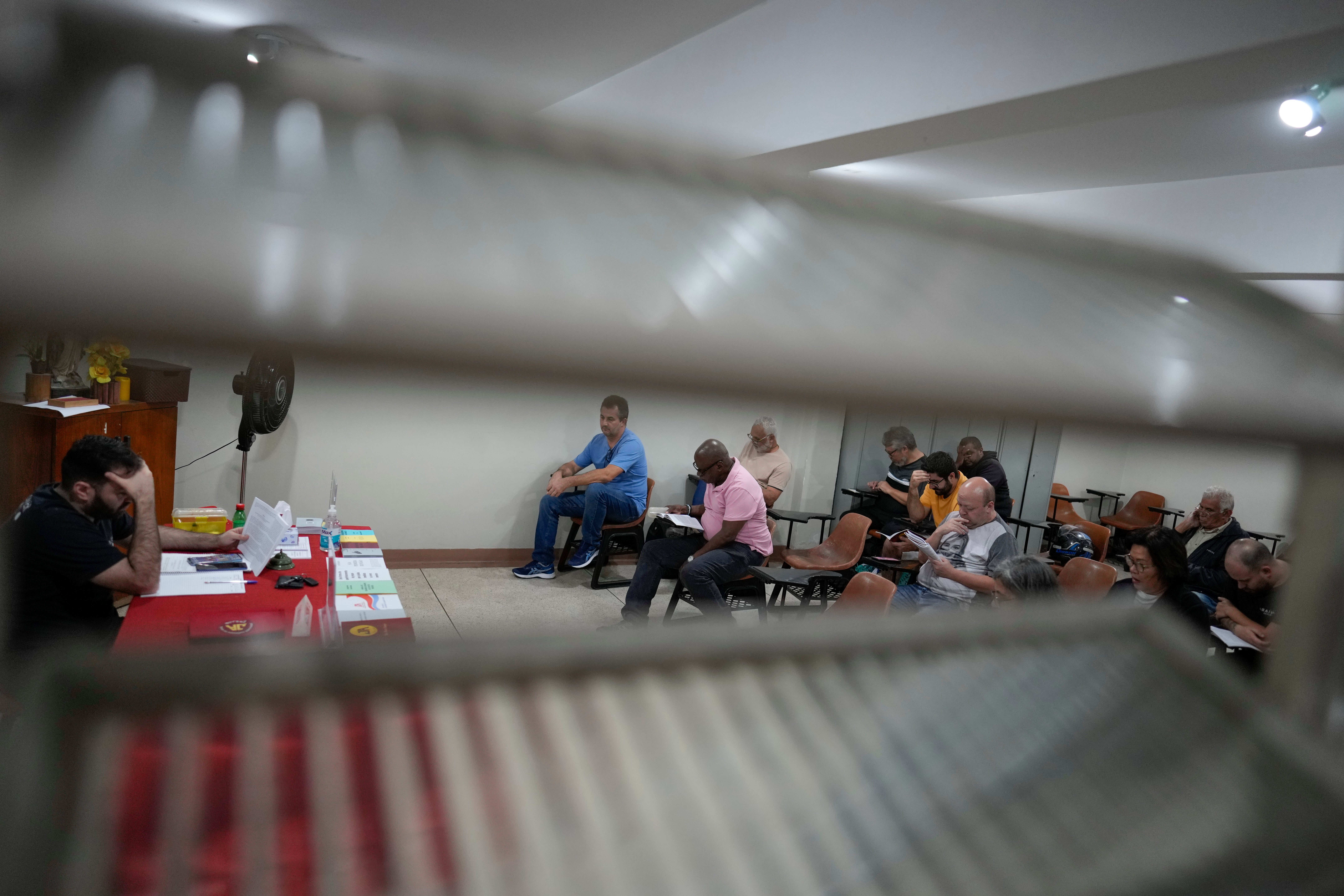
    On a recent evening, King’s Gamblers Anonymous meeting took place in an improvised classroom inside a church, with coffee and cookies to keep everyone awake, and supportive messages scrawled onto the blackboard. One that’s become ubiquitous in Brazil and beyond: “Only for today I will avoid the first bet.”

    King and other attendees, all Christian, started a prayer and the meeting began.

    King said his financial problems arose from his addiction to online sports betting, chiefly on soccer.

    “I miss the adrenaline rush when I don’t bet,” he said before the gathering. “I have managed to stop for a couple of months, but I know that if I do it once again, even a small bet, it will all come back.”

    Gamblers in recovery attend a Gamblers Anonymous meeting in Sao Paulo, Monday, Oct. 21, 2024

    Gamblers in recovery attend a Gamblers Anonymous meeting in Sao Paulo, Monday, Oct. 21, 2024 (Copyright 2024 The Associated Press. All rights reserved)

    The COVID-19 pandemic was a key driver for Brazilians embracing sports betting. King said he transformed almost every sale during that time into a bet. His hook was the non-stop advertising on TV, radio, social media as well as sponsorship of local soccer teams’ jerseys. He asked for bank loans to pay his gambling debts and then, to cover those, went to the moneylender. His total debt now amounts to 85,000 reais ($15,000) — impossible to pay off with his monthly income of 8,000 reais.

    Digging oneself out of debt in Brazil is especially daunting with its sky-high interest rates. Loans from Brazilian banks could add interest of almost 8% per month to the borrowed sum, and from loan sharks could be even more.

    Four Gamblers Anonymous meetings attended by the AP in October featured discussions about difficulties paying down debts, forcing working-class members to postpone housing payments and cancel family vacations.

    Some members of impoverished Brazilian families have used welfare money for betting instead of paying for groceries and housing, official data suggests. In August, beneficiaries of Brazil’s flagship program Bolsa Familia spent 3 billion reais ($530 million) on sports betting, according to a report from the central bank. That was more than 20% of the program’s total outlay in the month.

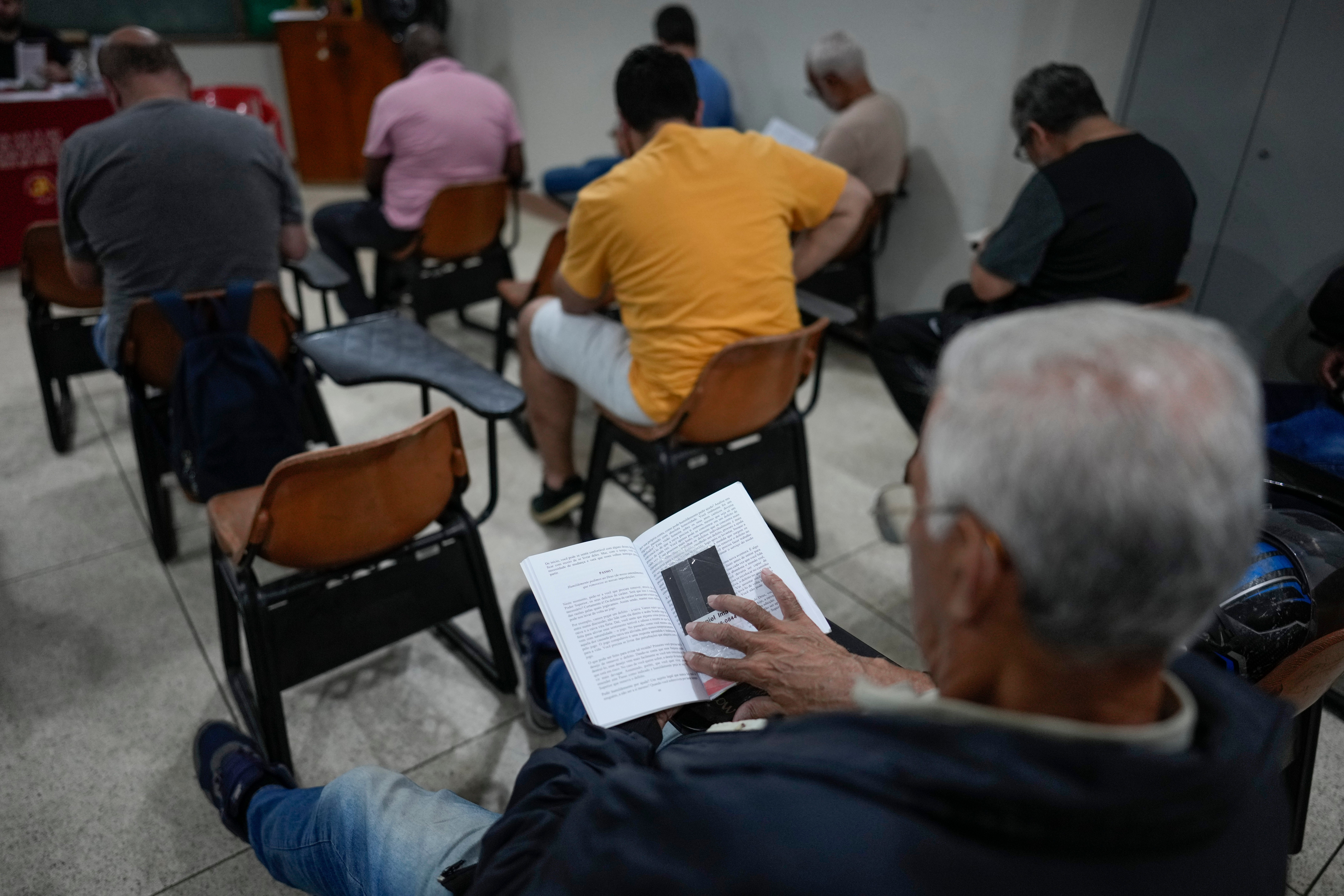
    Gamblers in recovery pray during a Gamblers Anonymous meeting in Sao Paulo

    Gamblers in recovery pray during a Gamblers Anonymous meeting in Sao Paulo (Copyright 2024 The Associated Press. All rights reserved)

    Sports betting was made legal in 2018 in a bill signed by former President Michel Temer. The subsequent turmoil has recently been setting off alarm bells, with addicts venting on social media and media reports of people losing huge sums.

    On Oct. 1, the economy ministry prevented more than 2,000 betting companies from operating in Brazil for having failed to provide all the required documents. Soccer-loving President Luiz Inácio Lula da Silva said in an interview on Oct. 17 that he will shut down the entire market in Brazil if his administration’s new regulations — presented at the end of July— fail to work. And Brazil’s Senate on Oct. 25 opened an investigation into betting companies, focusing on crime and addiction.

    “There’s tax evasion, money laundering of organized crime, the use of influencers to trick people into betting. These companies need to be audited,” Sen. Soraya Thronicke, who proposed the inquiry, told journalists in Brasilia.

    Sérgio Peixoto, a ride-sharing app driver in Rio, is one of many lower-middle-income Brazilians who have reduced their spending due to sports betting debt. Peixoto’s debt currently amounts to 25,000 reais ($4,400). His monthly income is four times less than that.

    “It stopped being a game, it wasn’t fun. I just wanted to get the money back, so I lost even more,” said Peixoto, 26. “I could have invested that money. It would surely have given me more benefits.

    Gamblers in recovery attend a Gamblers Anonymous meeting

    Gamblers in recovery attend a Gamblers Anonymous meeting (Copyright 2024 The Associated Press. All rights reserved)

    Pressure on people to gamble is everywhere. Current and former soccer players, including Vinicius Júnior, Ronaldo Nazário and Roberto Rivellino, are among the poster boys for local and foreign brands. All but one of the top-tier soccer clubs have betting companies among their main sponsors, with their name and logo emblazoned on their kits. There have been cases of kids and teenagers setting up accounts using their parents’ personal information and money, multiple local media outlets have reported.

    Brazil’s economy ministry estimates that Brazil’s sports betting market had $21 billion in transactions last year, a 71% increase compared with the first year of the pandemic, 2020.

    The ministry’s newly presented regulations include facial recognition systems for gamblers to bet, the identification of a single bank account for transactions involving sports betting, new protections against hackers and the government-authorized domain, bet.br, which will host all betting sites that are legal in Brazil. Once they are in place, come January, between 100 and 150 betting companies will continue to operate in the South American nation.

    The changes in Brazil have prompted some companies to take preemptive action. A report by Yield Sec, a technical intelligence platform for online marketplaces, said several betting companies voluntarily restricted their operations in different places after the latest editions of the European Championships and Copa America in the hopes of presenting “the best possible license application face to the Brazilian authorities.”

    Magnho José Santos de Sousa, the president of the Legal Gambling Institute, a betting think tank, said Brazil is currently “invaded by illegal websites that have licenses in Malta, Curação, Gibraltar and the United Kingdom.”

    De Sousa expressed hope that the new regulations for advertising, responsible gambling and qualification of sports betting companies will transform the country’s deregulated arena into a more serious one that doesn’t exploit the vulnerable.

    “The whole operation could turn from water into wine,” he said.

    Meantime, the demand for Gamblers Anonymous meetings in Sao Paulo has grown so much in recent years that the weekly gathering, in place since the 1990s, was no longer enough. Many groups have added a second day in the week to help new people recover, mostly sports bettors.

    Earlier in October, a group on Sao Paulo’s northern edge admitted a man who was struggling with sports betting and card games. The 13 other people in the room stressed that he wasn’t alone.

    “Welcome,” one long-time attendee said, in a greeting that has become a regular for the group. “Today, you are the most important person here.”

    Source link

  • Elon Musk’s X is back in Brazil after its suspension, having complied with all judicial demands

    Elon Musk’s X is back in Brazil after its suspension, having complied with all judicial demands

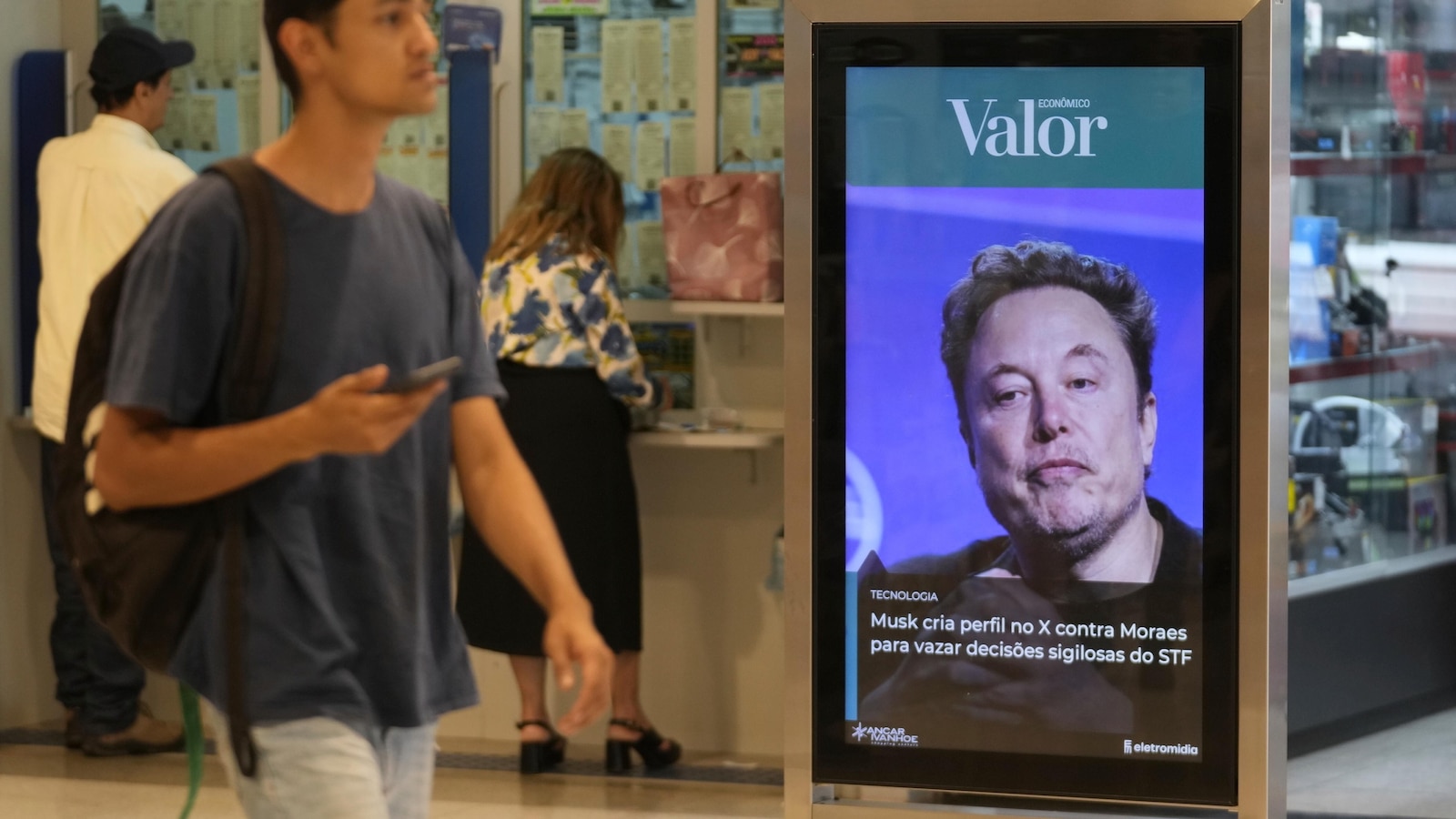
    RIO DE JANEIRO — The social media platform X began returning to Brazil on Wednesday, after remaining inaccessible for more than a month following a clash between its owner, Elon Musk, and a justice on the country’s highest court.

    Internet service providers began restoring access to the platform after Supreme Court Justice Alexandre de Moraes authorized lifting X’s suspension on Tuesday.

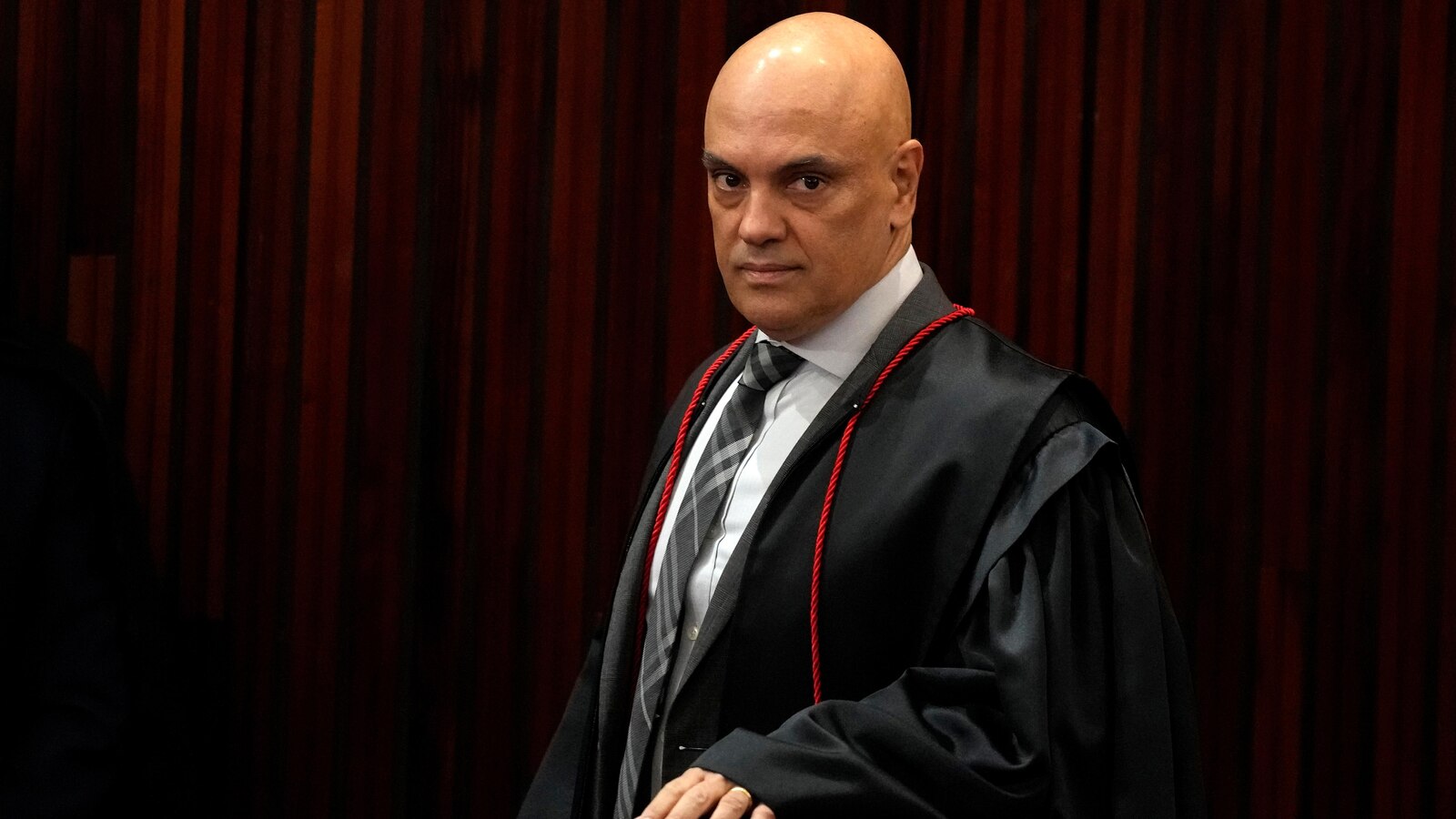
    De Moraes ordered the shutdown of X on Aug. 30 after a monthslong dispute with Musk over free speech, far-right accounts and misinformation. Musk had disparaged de Moraes, calling him an authoritarian and a censor, although his rulings, including X’s nationwide suspension, were repeatedly upheld by his peers.

    Musk’s company ultimately complied with all of de Moraes’ demands. They included blocking certain accounts from the platform, paying outstanding fines and naming a legal representative. Failure to do the latter had triggered the suspension.

    Brazil — a highly online country of 213 million people — is one of X’s biggest markets, with estimates of its user base ranging from 20 million to 40 million.

    “X is proud to return to Brazil,” the company said in a statement posted on its Global Government Affairs account. “Giving tens of millions of Brazilians access to our indispensable platform was paramount throughout this entire process. We will continue to defend freedom of speech, within the boundaries of the law, everywhere we operate.”

    The Aug. 30 ban came two days after the company said it was removing all its remaining staff in Brazil. X said de Moraes had threatened to arrest its legal representative in the country, Rachel de Oliveira Villa Nova Conceição, if the company did not comply with orders to block accounts.

    Brazilian law requires foreign companies to have a local legal representative to receive notifications of court decisions and swiftly take any requisite action — particularly, in X’s case, the takedown of accounts.

    Conceição was first named X’s legal representative in April and resigned four months later. The company named her to the same job on Sep. 20, according to the public filing with the Sao Paulo commercial registry.

    Conceição works for BR4Business, a business services firm. Its two-page website provides no insight into its operations or staff. “Something great is on its way,” the top of the site’s main page reads in English. Its other page is an extensive privacy policy.

    Neither Conceição nor BR4Business returned multiple phone calls and emails from the AP.

    There is nothing illegal or suspect about using a company like BR4Business for legal representation, but it shows that X is doing the bare minimum to operate in the country, said Fabio de Sa e Silva, a lawyer and associate professor of International and Brazilian Studies at the University of Oklahoma.

    “It doesn’t demonstrate an intention to truly engage with the country. Take Meta, for example, and Google. They have an office, a government relations department, precisely to interact with public authorities and discuss Brazil’s regulatory policies concerning their businesses,” Silva added.

    Some of Brazilian X’s users have migrated to other platforms, such as Meta’s Threads and, primarily, Bluesky. It’s unclear how many of them will return to X. In a statement to the AP, Bluesky reported that it now has 10.6 million users and continues to see strong growth in Brazil. Bluesky has appointed a legal representative in the South American country.

    Brazil was not the first country to ban X — far from it — but such a drastic step has generally been limited to authoritarian regimes. The platform and its former incarnation, Twitter, have been banned in Russia, China, Iran, Myanmar, North Korea, Venezuela and Turkmenistan. Other countries, such as Pakistan, Turkey and Egypt, have also temporarily suspended X before, usually to quell dissent and unrest.

    X’s dustup with Brazil has some parallels to the company’s dealings with the Indian government three years ago, back when it was still called Twitter and before Musk purchased it for $44 billion. In 2021, India threatened to arrest employees of Twitter (as well as Meta’s Facebook and WhatsApp), for not complying with the government’s requests to take down posts related to farmers’ protests that rocked the country.

    Musk’s decision to reverse course in Brazil after publicly criticizing de Moraes isn’t surprising, said Matteo Ceurvels, research firm Emarketer’s analyst for Latin America and Spain.

    “The move was pragmatic, likely driven by the economic consequences of losing access to millions of users in its third-largest market worldwide, along with the millions of dollars in associated advertising revenue,” Ceurvels said. “Although X may not be a top priority for most advertisers in Brazil, the platform needs them more than they need it.”

    ___

    Ortutay reported from San Francisco

    Source link

  • Musk’s X to be reinstated in Brazil after complying with Supreme Court demands

    Musk’s X to be reinstated in Brazil after complying with Supreme Court demands

    SAO PAULO — The Brazilian Supreme Court’s Justice Alexandre de Moraes on Tuesday authorized the restoration of social media platform X´s service in Brazil, over a month after its nationwide shutdown, according to a court document that was made public.

    Elon Musk’s X was blocked on Aug. 30 in the highly online country of 213 million people — and one of X’s biggest markets, with estimates of its user base ranging from 20 to 40 million. De Moraes ordered the shutdown after a monthslong dispute with Musk over free speech, far-right accounts and misinformation. Musk had disparaged de Moraes, calling him an authoritarian and a censor, even though his rulings, including X’s suspension, were repeatedly upheld by his peers.

    Despite Musk’s public bravado, X ultimately complied with all of de Moraes’ demands. They included blocking certain accounts from the platform, paying outstanding fines and naming a legal representative in the country. Failure to do the latter had triggered the suspension.

    “The resumption of (X)’s activities on national territory was conditioned, solely, on full compliance with Brazilian laws and absolute observance of the Judiciary’s decisions, out of respect for national sovereignty,” de Moraes said in the court document.

    X did not immediately respond to a request for comment.

    Just two days before the ban, on Aug. 28, X said it was removing all its remaining staff in Brazil “effective immediately,” saying de Moraes had threatened with arrest its legal representative in the country, Rachel de Oliveira Villa Nova Conceição, if X did not comply with orders to block accounts.

    Brazilian law requires foreign companies to have a local legal representative to receive notifications of court decisions and swiftly take any requisite action — particularly, in X’s case, the takedown of accounts. Conceição was first named X’s legal representative in April and resigned four months later. The company named her to the same job on Sep. 20, according to the public filing with the Sao Paulo commercial registry.

    In an apparent effort to shield Conceição from potential violations by X — and risking arrest — a clause has been written into Conceição’s new representation agreement that she must follow Brazilian law and court decisions, and that any legal responsibility she assumes on X’s behalf requires prior instruction from the company in writing, according to the company’s filing.

    Conceição works for BR4Business, a business services firm. Its two-page website provides no insight into its operations or staff. “Something great is on its way,” the top of the site’s main page reads in English. Its other page is an extensive privacy policy.

    At three of its listed Sao Paulo offices, receptionists told the AP that the company’s offices are empty and employees work remotely. Neither Conceição nor BR4Business returned multiple phone calls and emails from the AP.

    There is nothing illegal or suspect about using a company like BR4Business for legal representation, but it shows that X is doing the bare minimum to operate in the country, said Fabio de Sa e Silva, a lawyer and associate professor of International and Brazilian Studies at the University of Oklahoma.

    “It doesn’t demonstrate an intention to truly engage with the country. Take Meta, for example, and Google. They have an office, a government relations department, precisely to interact with public authorities and discuss Brazil’s regulatory policies concerning their businesses,” Silva added.

    Indeed, it is rare for an established, influential company such as X to have only a legal representative, said Carlos Affonso Souza, a lawyer and director of the Institute for Technology and Society, a Rio-based think tank. And that could be problematic going forward.

    “The concern now is what comes next and how X, once back in operation, will manage to meet the demands of the market and local authorities without creating new tensions,” he said.

    Some of Brazilian X’s users have migrated to other platforms, such as Meta’s Threads and, primarily, Bluesky. It’s unclear how many of them will return to X. In a statement to the AP, Bluesky reported that it now has 10.6 million users and continues to see strong growth in Brazil. Bluesky has appointed a legal representative in the South American country.

    Brazil was not the first country to ban X — far from it — but such a drastic step has generally been limited to authoritarian regimes. The platform and its former incarnation, Twitter, have been banned in Russia, China, Iran, Myanmar, North Korea, Venezuela and Turkmenistan. Other countries, such as Pakistan, Turkey and Egypt, have also temporarily suspended X before, usually to quell dissent and unrest.

    X’s dustup with Brazil has some parallels to the company’s dealings with the Indian government three years ago, back when it was still called Twitter and before Musk purchased it for $44 billion. In 2021, India threatened to arrest employees of Twitter (as well as Meta’s Facebook and WhatsApp), for not complying with the government’s requests to take down posts related to farmers’ protests that rocked the country.

    Musk’s decision to reverse course in Brazil after publicly criticizing de Moraes isn’t surprising, said Matteo Ceurvels, research firm Emarketer’s analyst for Latin America and Spain.

    “The move was pragmatic, likely driven by the economic consequences of losing access to millions of users in its third-largest market worldwide, along with the millions of dollars in associated advertising revenue,” Ceurvels said. “Although X may not be a top priority for most advertisers in Brazil, the platform needs them more than they need it.”

    ___

    Ortutay reported from San Francisco

    Source link

  • Brazil judge makes new requests to allow X to be reinstated from suspension

    Brazil judge makes new requests to allow X to be reinstated from suspension

    SAO PAULO — Brazilian Supreme Court Justice Alexandre de Moraes on Friday added conditions for Elon Musk’s X to have its service reestablished in the country, one day after the social media platform said it had complied with all the judge’s demands, including naming a legal representative.

    De Moraes said in a ruling that X may only be reinstated in Brazil after another company linked to the billionaire, satellite-based internet service provider Starlink, withdraws its appeals related to the case. X has been blocked in Brazil for nearly a month. De Moraes ordered the shutdown after sparring with Musk for months over free speech , far-right accounts and misinformation.

    Earlier this month, de Moraes ordered Starlink’s assets be used to cover X’s fines that already exceeded $3 million. The Brazilian justice argued the two companies are part of the same economic group — a justification that has been questioned by some legal experts.

    His new ruling also established a fine of 10 million Brazilian reais ($1.84 million). Experts examining X’s IP addresses — numeric designations that identifies sites’ location on the internet — said the company temporarily routed users through the servers of Cloudflare, a content delivery network.

    X said it changed its servers to service clients in Latin America, which inadvertently brought the social media network back online in Brazil.

    One source familiar with the judge’s decision told The Associated Press that both of de Moraes’ conditions are new. The source spoke on condition of anonymity because he wasn’t authorized to speak publicly.

    De Moraes also accepted X’s newly designated legal representative, but fined her in 300,000 reais ($55,000) for not complying with other decisions he made in August. The company’s lack of a legal representative in the country was the trigger for his decision to suspend the social media channel on Aug. 30.

    The company has clashed with de Moraes since earlier this year over free speech, accounts associated with the far-right and misinformation on the platform, and it claims to be a victim of censorship.

    Musk and his supporters have called de Moraes an authoritarian and a censor for his rulings, but those have been repeatedly upheld by his peers — including X’s nationwide suspension. On Aug. 28, X said it was removing all remaining Brazil staff in the country “effective immediately,” saying de Moraes had threatened its legal representative in the country with arrest.

    The company has reversed course in recent days. On Thursday, X submitted documentation to de Moraes saying it had complied with all his decisions and requesting its reactivation in Brazil, according to sources familiar with the decision, who spoke on condition of anonymity because they weren’t authorized to speak publicly.

    X was blocked in the highly online country of 213 million people, where it was one of X’s biggest markets, with more than 20 million users. Brazil has more restrictive rules on speech than the US.

    X said in a statement on Thursday it is “committed to protecting free speech within the boundaries of the law and we recognize and respect the sovereignty of the countries in which we operate.”

    “We believe that the people of Brazil having access to X is essential for a thriving democracy, and we will continue to defend freedom of expression and due process of law through legal processes,” it said in a post on its Global Government Affairs account.

    __

    AP writer David Biller reported from Rio de Janeiro

    Source link

  • X requests it be reinstated in Brazil after complying with judge’s orders, sources say

    X requests it be reinstated in Brazil after complying with judge’s orders, sources say

    SAO PAULO — In the high-stakes showdown between the world’s richest man and a Brazilian Supreme Court justice, Elon Musk blinked.

    Musk’s social media site X has complied with Alexandre de Moraes’ orders and requested its service be reestablished in the country, two sources said Thursday.

    X complied with orders to block certain accounts from the platform, name an official legal representative in Brazil, and pay fines imposed for not complying with earlier court orders, his lawyers said in a petition filed Thursday, according to the sources, who are familiar with the document. The sources spoke on condition of anonymity because they were not authorized to speak publicly about the matter.

    On Saturday, de Moraes ordered the platform to submit additional documentation about its legal representative for court review, which the sources said has been done.

    X was blocked on Aug. 30 in the highly online country of 213 million people, where it was one of X’s biggest markets, with more than 20 million users. De Moraes ordered the shutdown after sparring with Musk for months over free speech, far-right accounts and misinformation. The company said at the time that de Moraes’ efforts to block certain accounts were illegal moves to censor “political opponents” and that it would not comply. Musk called the judge an enemy of free speech and a criminal. But de Moraes’ decisions have been repeatedly upheld by his peers — including his nationwide block of X.

    In a twist, X’s new representative is the same person who held the position before X shuttered its office in Brazil, according to the company’s public filing with the Sao Paulo commercial registry. That happened after de Moraes threatened to arrest the person, Rachel de Oliveira Villa Nova Conceição, if X did not comply with orders to block accounts.

    In an apparent effort to avoid her getting blamed for potential violations of Brazilian law — and risk arrest — a clause has been written into the representation agreement that any action on the part of X that will result in obligations for her requires prior instruction in writing from the company, according to the company’s filing at the registry.

    Associated Press emails and calls to her office were not returned. The Supreme Court’s press office has not confirmed receipt of X’s documents, and X did not immediately respond to a request from the AP.

    It’s still early to know whether the feud between X and Brazil’s top court is over, said ⁠Bruna Santos, a lawyer and global campaigns manager at nonprofit Digital Action. However, the platform’s decision to appoint a representative indicates the company has entered “a state of good-faith cooperation with Brazilian authorities.”

    And the fact that Brazilian users migrated in droves to rival platforms BlueSky and Threads may have played into X’s backstep, Santos added.

    “There must be a genuine concern on the platform that they are losing users, the core users from the early Twitter days, or the loyal ones, who stick around for good,” she said.

    At a university in Rio de Janeiro, some students told the AP they were heartened by the news.

    “I used it a lot as a way to search for information and news, and I missed it,” said João Maurício Almeida Raposo, a 19-year-old economics student. He started using Threads, but doesn’t like it.

    Brazil is not the first country to ban X — far from it — but such a drastic step has generally been limited to authoritarian regimes. The platform and its former incarnation, Twitter, have been banned in Russia, China, Iran, Myanmar, North Korea, Venezuela and Turkmenistan, for instance. Other countries, such as Pakistan, Turkey and Egypt, have also temporarily suspended X before, usually to quell dissent and unrest.

    X’s dustup with Brazil has some parallels to the company’s dealings with the Indian government three years ago, back when it was still called Twitter and before Musk purchased it for $44 billion. In 2021, India threatened to arrest employees of Twitter (as well as Meta’s Facebook and WhatsApp), for not complying with the government’s requests to take down posts related to farmers’ protests that rocked the country.

    Unlike in the U.S., where free speech is baked into the constitution, in Brazil speech is more limited, with restrictions on homophobia and racism, for example, and judges can order sites to remove content. Many of de Moraes’ decisions are sealed from the public and neither he nor X has disclosed the full list of accounts he has ordered blocked, but prominent supporters of former President Jair Bolsonaro and far-right activists were among those that X earlier removed from the platform.

    Some belonged to a network known in Brazil as “digital militias.” They were targeted by a yearslong investigation overseen by de Moraes, initially for allegedly spreading defamatory fake news and threats against Supreme Court justices, and then after Bolsonaro’s 2022 election loss for inciting demonstrations across the country that were seeking to overturn President Luiz Inácio Lula da Silva’s victory.

    In April, de Moraes included Musk as a target in an ongoing investigation over the dissemination of fake news and opened a separate investigation into the U.S. business executive for alleged obstruction.

    In that decision, de Moraes noted that Musk began waging a public “disinformation campaign” regarding the top court’s actions, and that Musk continued the following day — most notably with comments that his social media company X would cease to comply with the court’s orders to block certain accounts.

    Musk, meanwhile, accused de Moraes of suppressing free speech and violating Brazil’s constitution, and noted on X that users could seek to bypass any shutdown of the social media platform by using VPNs. In an unusual move for a democratic country, de Moraes also set exorbitant daily fines for anyone using virtual private networks, or VPNs, to access the platform.

    X’s defiant stance appears to have softened following the shutdown.

    On Sept. 18, after X became accessible to some users in Brazil despite the ban, the Government Affairs account posted that this was due to a change in network providers and was “inadvertent and temporary.” But, it added, “we continue efforts to work with the Brazilian government to return very soon for the people of Brazil.”

    The score is 1-0, but the game isn’t necessarily over, said Carlos Affonso Souza, a lawyer and director of the Institute for Technology and Society, a Rio-based think tank.

    “The first round ends with a victory for de Moraes, who adopted drastic measures, but which wound up producing the effect of making X do a reversal and comply with orders,” Affonso Souza said.

    ___

    Ortutay reported from San Francisco.

    ___

    Follow AP’s coverage of Latin America and the Caribbean at https://apnews.com/hub/latin-america

    Source link

  • Musk’s X skirts Brazil ban and returns to some users with change to server access

    Musk’s X skirts Brazil ban and returns to some users with change to server access

    RIO DE JANEIRO — Some Brazilian users reconnected with X on Wednesday despite the Supreme Court’s recent nationwide ban, the result of the social network apparently changing the way its servers are accessed. The reunion may be short-lived, however.

    Justice Alexandre de Moraes ordered X blocked nationwide on Aug. 30 after months of tension with billionaire Elon Musk surrounding orders to take down accounts and the limits of free speech in Brazil. He also established fines on anyone using virtual private networks (VPN) to access the platform.

    That rendered X effectively inaccessible in the country until Wednesday, with AP journalists among those who had access. Experts examining X’s IP addresses said there are indications that the company has begun routing users through the servers of Cloudflare, a content delivery network, en route to its own.

    “The service that Elon Musk’s social network has started using works like a ‘digital shield’ that protects the company’s servers,” Pedro Diogenes, Latin America’s technical director for CLM, a distributor that focuses on cybersecurity. It acts as a proxy between users and X’s servers, filtering traffic and preventing the original Internet Protocol (IP) address from being recognized, Diogenes told The Associated Press.

    Brazil’s telecommunications regulator Anatel said in a statement that it is looking into the situation and will report its findings to the Supreme Court, and that there has been no change to de Moraes’ ruling. A panel of fellow justices later upheld his decision, though it hasn’t yet gone before the court’s full bench and his VPN fine in particular has faced blowback, including from the nation’s bar association.

    The Supreme Court declined to comment on possible actions it could take when contacted by the AP, and Cloudflare didn’t immediately respond to a request for comment. Musk, who often uses his platform to disparage de Moraes, hadn’t commented on X by late afternoon.

    Former president Jair Bolsonaro celebrated the return of the social network. He has sided with Musk in the feud with de Moraes and sought to portray the ban as censorship from an overzealous judge.

    “I congratulate you all for the pressure that makes the wheels turn in defence of democracy in Brazil,” Bolsonaro posted Wednesday on X.

    Some Brazilian X users trumpeted the platform’s return — with several addressing de Moraes directly, vowing that they weren’t using a VPN. There have been no reports of fines being levied against people using VPNs.

    Cloudflare, a security company that prides itself on providing services to websites regardless of their content, has a history of protecting sites other companies won’t touch. But only to a point. In 2017, for instance, it dropped the neo-Nazi website Daily Stormer as a customer following a deadly clash at a white-nationalist rally in Charlottesville, Virginia. And in 2022, it dropped the notorious stalking and harassment site Kiwi Farms citing an “immediate threat to human life.”

    But X is a mainstream social media platform – even if it may be home to some extremist content – and it is not yet clear whether Brazil’s ban would be enough for San Francisco, California-based Cloudflare to abandon it.

    Cloudflare has a reputation for cooperating with governments, however, and so may comply with an order from the Supreme Court to cease serving as X’s proxy, David Nemer, who specializes in the anthropology of technology at the University of Virginia, told the AP.

    Ordering internet service providers to block Cloudflare would be impossible, since thousands of Brazilian companies depend on it, Nemer previously wrote on Bluesky, another social media platform.

    De Moraes could also attempt to force Musk’s hand by going after his satellite-based internet service provider Starlink, as he has done since the ban, said Rafael Mafei, a law professor at the University of Sao Paulo.

    Last Friday, de Moraes seized about $3 million from bank accounts belonging to X and Starlink to collect what X owed in fines.

    Legal analysts have questioned de Moraes’ prior decision to freeze Starlink’s bank account until it paid for X’s fines. While Musk owns both X and SpaceX, which operates Starlink, the two companies are separate entities. But de Moraes has shown that he considers the two companies to belong to the same economic group, Mafei said.

    “Under normal circumstances, anyone else who openly took active steps to obstruct judicial measures and investigations, as Musk is doing, would possibly have already had their arrest decreed in Brazil,” Mafei said.

    ___

    Ortutay reported from San Francisco.

    Source link

  • With Musk’s X banned in Brazil, its users carve out new digital homes

    With Musk’s X banned in Brazil, its users carve out new digital homes

    RIO DE JANEIRO — As billionaire Elon Musk’s clash with a Brazilian Supreme Court justice came to a head last week, there were legal twists, insults, ultimatums, defiance and then, finally, capitulation. When the digital dust settled, X had become an ex.

    Musk’s social media platform was banned nationwide and Justice Alexandre de Moraes set a whopping $9,000 daily fine for anyone using a virtual private network (VPN) to skirt the suspension. Brazil’s X users, left casting about for a new platform, mostly started washing up on Threads and Bluesky.

    “Hello literally everyone in Brazil,” Shauna Wright posted on Threads the day de Moraes ordered X’s suspension.

    Everyone hadn’t been on X; Brazil’s social masses are primarily on TikTok, Instagram and Facebook. But X had outsize influence in terms of newsmakers, agenda setting and thought leaders. It was the local battleground of the global culture war and the peanut gallery for soccer games and reality shows, especially Big Brother. So as X went dark in this highly online country of 213 million, its users started migrating.

    Wright’s post was an in-joke for fellow former employees of the company then known as Twitter, and an homage to its award-winning post when Meta’s Instagram, Facebook and WhatsApp all went down in 2021, sending users flocking to Twitter for info. But Wright also intended her throwback as a genuine greeting to all the friendly Brazilians.

    “It took off even among those who didn’t get the reference, but they didn’t have to!” Wright, a content designer who posts as “goldengateblond”, told the Associated Press from San Francisco. “I was glad it made people feel welcome.”

    Meta launched Threads last year amid widespread backlash to Musk’s 2022 purchase of Twitter and his upending many of its policies and features — from content moderation to its user verification system.

    Opening a Threads account was seamless for Instagram users, so it scaled rapidly; it had 175 million monthly users globally as of July, Meta’s CEO Mark Zuckerberg announced. Meta declined to provide specifics on Brazilian users.

    More Brazilians went to Bluesky, a lesser-known platform that not only looks and feels very much like the former Twitter, but also grew out of it. The pet project of former CEO Jack Dorsey was supposed to replace it eventually. Whether it can remains to be seen, but Brazilians have started doing their part. Bluesky gained 2.6 million users since last week, 85% from Brazil, the company said Wednesday, boosting its total to over 8 million.

    “Good morning everyone,” Brazil’s President Luiz Inácio Lula da Silva posted Sunday on Bluesky and Threads. “What do you think of it here?”

    “Our mental health is already showing signs of improvement,” Tatiane Queiroz, 43, replied on Bluesky, where she describes herself as a “Twitter refugee in Mato Grosso,” a state in Brazilian farm country.

    Bluesky has been posting in Portuguese to get Brazilians situated and find those with whom they previously shared connections. They celebrated Wednesday as TV network Globo’s evening news program, which gets over 20 million viewers, presented its new Bluesky account on air. Pioneers with prior footholds are giving tips and sharing so-called “starter packs” of accounts to follow.

    Jefferson Nascimento, a human rights lawyer in Sao Paulo, has created 10 starter packs to help newbies navigate.

    “In some way, to strengthen the environment, make the environment more favorable for other people to go there, so that when Twitter (X) comes back — if it does come back at some point — there isn’t a mass stampede again,” said Nascimento, 42, whose follower count on X was 135,000, more than triple his Bluesky amount.

    Some compared Bluesky to the halcyon days of early-2010s Twitter. Egerton Neto, 30, opened his Bluesky account on the day of X’s shutdown. He has just 8 followers — far below his 252 on X — but appreciates Bluesky’s more peaceful discourse and less intentional addictiveness. He said by phone from Recife that he also likes seeing its developers interact with the community as they build the platform.

    Starting over from scratch online is a bit of déjà vu for Brazilians — at least millenials. They were early adopters of Google’s former social network Orkut and dominated the platform before its 2014 shutdown. They migrated en masse to Facebook.

    Bluesky’s CEO Jay Graber told the AP on Monday that this wave of Brazilians underscores one of its missions: allowing users to move platforms and keep connections, similar to switching cell phone carriers without losing your number or contacts.

    On established social networks like TikTok or Facebook, users can only interact with people on the same platform. There’s no interoperability. Big Tech companies have largely built moats around their online properties, which helps serve their advertising-focused business models. Bluesky is building the technical foundation — what it calls “a protocol for public conversation” — that could make networks work more like email, blogs or phone numbers.

    “The situation users are in today is a bit of a trap because users are locked in and developers are locked out of these social platforms. And then that means that you’re essentially stuck in a place where it should be offering you a service, but now it’s owning your entire social life,” Graber said. “One of the fundamental things we believe is that a user’s social relationships, like their social graph, their connections to their friends, should be something that they own.”

    X had 22 million users in Brazil, according to estimates in the Digital 2024: Brazil report, just one-sixth the number on Instagram, and about one-fifth of Facebook or TikTok. But skimpy figures bely its importance as a gathering place for journalists, politicians, academics and celebrities whose interactions resounded far beyond, according to David Nemer, who specializes in the anthropology of technology at the University of Virginia.

    “Even though Twitter may not have this direct impact on the everyday, common Brazilians, it would impact the press, which eventually would impact indirectly common Brazilians,” said Nemer, who is Brazilian. “That’s the sort of impact that Twitter has — or used to have — in Brazil.”

    According to data from research firm Similarweb, X was Brazil’s fourth-most downloaded social media app from the Google Play store the day before its suspension; Bluesky has since surpassed it. On Apple’s app store, Bluesky became the top downloaded app of any type, social media or otherwise. Bluesky saw daily active Brazilian users reach 3.4 million on Aug. 30, the day de Moraes ordered the shutdown, versus X’s 6.1 million that day.

    Similarweb data also showed many Brazilians using VPNs to stay on X. Nemer said that from his home in Charlottesville he has seen some far-right politicians brazenly posting and defying Brazil’s Supreme Court to levy its exorbitant fine.

    But most Brazilians have gone, and there were those on X lamenting their departure.

    “Losing Brazil is like ‘Sex and the City’ losing Samantha. You’re losing all the best one-liners and the sexual energy that makes the platform/show tick,” posted Sam Stryker, who until 2022 oversaw Twitter’s global branded entertainment channels — even operating Twitter’s Twitter account.

    And Brazilian X users who emigrated were settling into their new digital abodes, like columnist and internet personality Chico Barney.

    “Bluesky as a post-Twitter refuge proving once and for all that it doesn’t matter the place, but the people,” he wrote Wednesday.

    ___

    Ortutay reported from San Francisco

    Source link