Three homegrown Indian chocolate brands have won big at the prestigious Academy Of Chocolate Awards UK 2024. The results, which came out earlier this week, announced 17 accolades in total for Indian chocolate products. The brands that won were Paul and Mike, Bon Fiction and Manam Chocolate. Paul and Mike is based in Kerala, Bon Fiction in Andhra Pradesh and Manam Chocolate in Hyderabad. The three brands work to champion Indian cacao in various ways and have won several awards on the global stage in the past too. Find out which specific creations won recognition below:
Which Indian Chocolates Were Awarded This Year?
At the Academy Of Chocolate Awards UK 2024, Paul and Mike won silver for its ‘Brunost Cheese Fine Milk Chocolate’ and bronze for ‘Rum & Rummy Raisins Mild Dark Chocolate.’ Bon Fiction won four accolades: a gold for ‘A Rose in Pistachio Skies,’ silver for its ‘7 Assorted Bars Gift Pack,’ and bronze for its ‘82% Dark Drinking Chocolate’ and ‘The Mango Menace.’
Manam Chocolate won three silver awards for its ‘Chocolate Lab Tablet No. 2 – Pedda Rasalu Mango’, ‘Chocolate Lab Tablet No. 3 – Chakkarakeli Banana’, and ‘Indian Origin Tablet No. 6 – 66% Dark.’ It won bronze awards for eight of its chocolates, namely ‘Indian Origin Tablet No. 5 – 80% Dark’, ‘Indian Origin Tablet No. 7 – 69% Dark’, ‘Indian Origin Tablet No. 8 – 100% Dark’, ‘International Origin Tablet No. 14 – 80% Dark’, ‘Hazelnut & Cardamom Praline’, ‘Toasted Hazelnut & Cardamom Bonbon’, and ‘45% Milk Chocolate x Yuzu-Scented Caramel Ganache.’
Also Read: 11 Times Indian Food Shone Globally In 2024: A Year In Review
Manam Chocolate took to Instagram to announce the news and stated, “It’s important to reiterate that these awards don’t celebrate the triumph of a single person, but rather, they belong to everyone at Manam-the farmers, the fermenters, the chocolate-makers and the chocolatiers. It’s their ability to grow, harvest, ferment, refine and express cacao into delicious Indian Craft Chocolate, that makes this recognition possible. And together, we continue to carve a new identity for Indian chocolate on the global stage, showcasing the excellence of Indian craftsmanship.”
Earlier this year, Manam Chocolate Karkhana [a factory and experience centre] received global recognition in a different way. It was one of two Indian establishments to be named among TIME magazine’s ‘World’s Greatest Places’ for 2024 (more details here). Some time ago, Paul and Mike also made headlines when it became the first Indian brand to win a Gold at the prestigious International Chocolate Awards. It won the award for its ‘Milk Chocolate Coated Salted Capers’ (read more here).
The three brands (including Bon Fiction) also won multiple accolades at last year’s edition of the Academy Of Chocolate Awards UK. Click here to know more.
In 1899, the Colorado Agricultural College Aggies walked off a live football field with unfinished business.
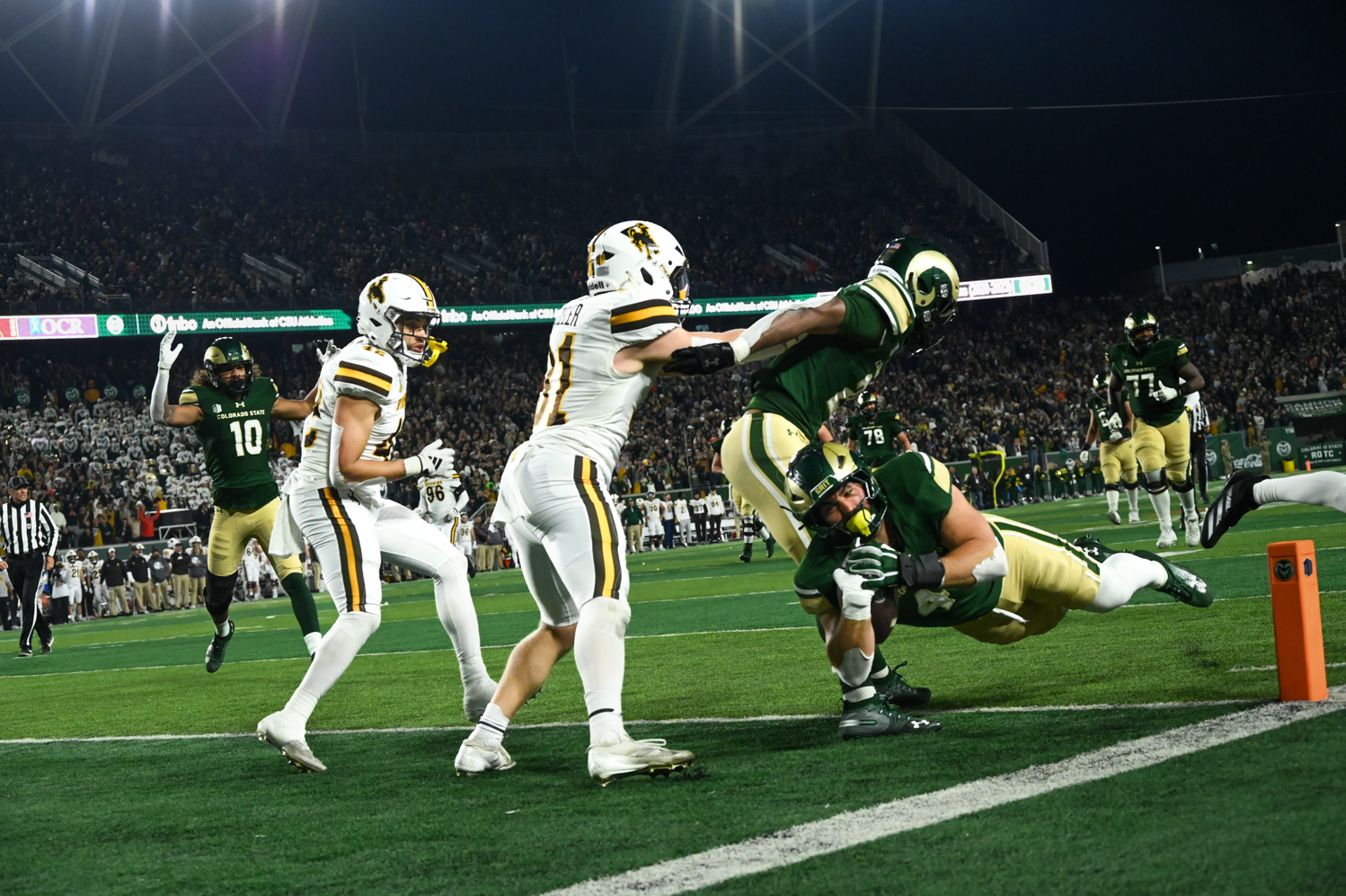
On Friday, Colorado State football rejoiced, Bronze Boot in hand, on the logo in Canvas Stadium. The Rams claimed victory 24-10 in the 115th Border War against Wyoming for the first time since 2020. Still, the goal for this team has always been bigger than that.
Based solely on the box score, it’s plain to see how this team has operated and how it’s found success in the last five weeks: getting everyone involved. On a much larger scale, it’s a way of life for the Rams.
The team often speaks about the entire organization buying in. A win each week is an amalgamation of effort from an army of Rams. Safety Henry Blackburn has been around the organization long enough to see this effect both in prosperity and in famine.
“There’s amazing people in this building,” Blackburn said. “The janitors and the people who are waking up early to, you know, do our laundry — things like that — and the trainers and all the people that are putting all their best, their best foot forward.”
The culture seems to have extended this season to the fans as well. Canvas Stadium broke another record this fall season with 13,723 students in attendance — the most ever. The Border War brought together all kinds of people despite the cold weather.
There to bask in the glory were the stars of the night. Running backs Justin Marshall and Avery Morrow churned out 104 and 84 rushing yards respectively behind an offensive line that continues to impress. Brayden Fowler-Nicolosi benefitted from a night without sacks and posted a passer rating of 196.6 along with 192 passing yards and a touchdown.
“I mean, the amount of depth we have at receiver, running back, O-line, D-line — you’ve seen it all,” Fowler-Nicolosi said. “Like we had plenty of backup guys come in tonight. For example, (Trevyn Heil) at center. (Jacob Gardner) went down, and Trevyn came in, and we didn’t miss a beat.”
In an offense that no longer centers around the quarterback, Fowler-Nicolosi has quietly improved. He now shares a glimpse of a similar experience with others on the team, namely the defense.
Helping hold UW to 237 yards all game, Dom Jones got on the stat sheet with his 10 total tackles. Others like the interior linemen, however, did what they always do: put in the work with little to show for it.
“I mean, there’s guys on the field who, you know — the 3-tech, he’s got to take on a double team,” Blackburn said. “He doesn’t get a stat for that, but he’s got to go do it every single play.”
Staying true to that theme, several offensive players have stepped up to fill voids this season. Scouring the box score, seven athletes garnered one or two touches on the offensive side of the ball; that’s in addition to three running backs, who all received at least nine touches.
Dane Olson has been the big-time playmaker with limited opportunities in past weeks, and he continued that trend with a passing touchdown to Fowler-Nicolosi on a CSU-altered Philly Special. This week, though, true freshman Tommy Maher received his induction into that role.
“You know, when (Tory Horton) went down — he used to do a lot of things with Tory — so other players have kind of been auditioning to do a lot of the things we used to do with Tory,” Norvell said. “But boy, was he ready to go. And, you know, I was really proud of that, that’s a huge play.”
The ability to rely on a deep pocket of playmakers has made up for mistakes the Rams have experienced. CSU’s ability to control the time of possession led to a stagnant fourth quarter, preventing a Cowboy comeback. The game didn’t necessarily have to be anywhere as close, though.
The Rams were stripped of touchdowns twice in the first half from both four and one yard out, with the latter a result of a fumble on a jet sweep. They also missed a 43-yard field goal in the first quarter and a 57-yard attempt early in fourth. Additionally, CSU’s defense gave up their only touchdown following a pass-interference call when a red zone stand looked probable.
For this team, the work clearly isn’t over. The Rams achieved bowl eligibility with their previous win against Nevada and now have won both the Bronze Boot and Ram-Falcon Trophy in the same season for the first time since 2015 — clearly surpassing early-season expectations. Still, the hunt for a Mountain West championship continues as CSU is still tied for first place within their conference with only one more regular season game.
“I mean, we’re in playoff mode,” Norvell said. “I mean, we’re only as good as how we play every Saturday. So, you know, we’re a step closer.”
Reach Michael Hovey at sports@collegian.com or on Twitter @michaelfhovey.
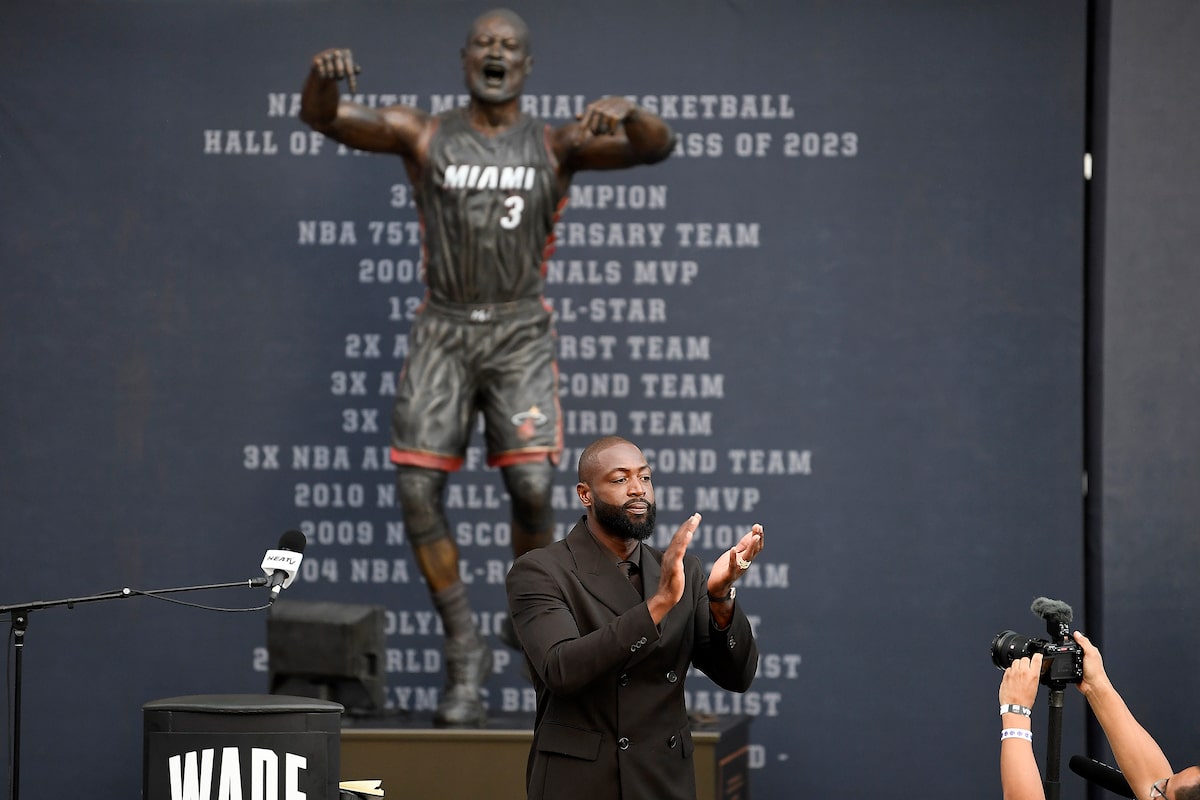
Former Miami Heat NBA basketball player Dwyane Wade thanks the crowd during his statue unveiling ceremony outside Kaseya Center, on Oct. 27, in Miami.Michael Laughlin/The Associated Press
Over the weekend, the Miami Heat unveiled a statue of Dwyane Wade outside their arena. As tends to happen in these cases, it didn’t go well.
Statues are a sign of dissipation. A team (or civilization) that was once vigorous and thriving is no longer. Time to start erecting things. Arenas mostly. But too often, statues.
Unfortunately for Wade, he was at the unveiling. Cameras were able to catch the full horror of the moment.
Wade is a handsome guy. It’s not that his likeness isn’t, exactly. It’s that the life-size representation doesn’t look human. The face is somehow wrong. It’s internet meme face.
As the statue emerged from a burst of dry ice and fire, you could see Wade struggling not to grimace. He stutter-stepped nervously around the monstrosity trying to find its good angle, but it doesn’t have one.
His judgment of what passes for the pinnacle of a sporting life: “You all look at this? You all got videos, photos? Like, that’s crazy. I can’t believe that. Who is that guy?”
Wade gestured over his shoulder at the statue as he said it. Normally, a person would turn and look at what they’re pointing out. But Wade could not bring himself to see it again.
As the recent mania for tearing them down should have taught us, statues of real people are a pickle. Not just politically, but aesthetically and geographically. In museums, fine. In parks, maybe. In public squares, no.
If you want to make a statue of a giant spider (Louise Bourgeois) or a mermaid (Edvard Eriksen) or a child ballet dancer (Edgar Degas) that’s okay because it’s art and it’s abstract. Great art is forever. Abstraction works in every context.
But once you start glorifying specific individuals in bronze you are into religion, which belongs in a house of worship and few other places.
The high-water mark of this bad idea remains a bust of Cristiano Ronaldo unveiled at, and then removed from, an airport in Portugal. It resembled the soccer star reimagined as a character from Scooby Doo.
Ronaldo’s been on a long, slow journey down from the peak of his celebrity. That statue was the part of the hike that he went ass over teakettle and descended a few thousand feet in an hour.
“It’s not my fault,” the sculptor, Emanuel Santos, told the BBC. “All the sculptors in all the parts of the world just make the first step, you know what I mean? It’s the other guys.”
‘The other guys’ – I’ve tried this excuse, too. It’s harder to pull off as a writer.
As with any good rule, there are exceptions that prove it.
The statue of falling Bobby Orr in front of the TD Garden in Boston is wonderful. I’ve spent long moments walking around it, admiring it. But it’s great because it’s not about the subject. It’s about a moment.
You don’t need to know who Bobby Orr is, or understand what’s being represented, to appreciate its mastery. The same way I don’t need to know who the Burghers of Calais are or why they look so miserable.
The skill of makers is part of the problem here. The few great sculptors left work in huge hunks of metal or move dirt around with backhoes. Anybody who’s willing to take a sporting commission is, by definition, second rate.
The firm that did Wade’s statue has a whole business transforming the profane into the sacred. It has done Luc Robitaille, Curly Lambeau and A’ja Wilson, who is 28 years old.
I guess the Little League World Series champions need to really need to start pushing those fundraising chocolate bars if they want to live forever in bronze.
The most amazing thing about Wade’s statue is that he signed off on it.
“I spent a lot of time on my statue,” Wade said.
Is he being literal? Was he, Dwyane Wade, the person holding the chisel? This mystery is deeper than some oceans.
You kind of felt for Wade. This was supposed to be the shining moment of his life – greater than any of his championships or individual prizes. Instead, it’s a daylong ‘get a load of this’ moment in the news cycle, and a lifetime of online ribbing. It’s so bad that, in certain precincts of the internet, Wade’s unruly likeness managed to push the impending U.S. civil war to the background for a few hours.
Maybe that is the point of sports statues – to remind us of the vanity of man and its pointlessness. I can imagine a future Toronto in which a visitor stumbles upon the Legends Row in front of Scotiabank Arena and thinks, ‘This city sure used to have a lot of astronauts.’
After a couple of generations have passed, all statues of people look ridiculous. Here’s guessing sports statues – which tend to show the subject in some pose of athletic domination – will surpass all the guys waving swords on horses in that regard.
You’re standing in front of a likeness of some guy you’ve probably never seen in person, often dead, being told how great he was. Meanwhile, a few hundred feet that way, the people who are currently the world’s best are doing the same thing, in person, right now.
It’s like putting a statue of unknown soldier in front of a live missile battery.
Great athletes don’t require expensive memorials. Their work – captured in words and images – is the memorial. The legends among them will live long past their years in the stories told about them by people who were there.
Then they should fade. Maybe we just haven’t been at this long enough. The mass-media era of global sport began in the 1950s. Many people still alive have seen the whole breadth of it.
But if it keeps on at its current pace, parts of the sports story should fade, along with the people who were there. Any endeavour that spends too much time and effort looking backward is in the midst of failing. And failure is always hard to see coming until you’re right up close to it, looking it in the face.
An athlete will be awarded S$1 million for an Olympic gold, S$500,000 for a silver and S$250,000 for a bronze. The only athlete to have received the top award was swimmer Joseph Schooling, who won the 100m butterfly at the 2016 Rio Games.
It is mandatory for all athletes to give a percentage of their MAP awards to their respective National Sports Associations for future training and development. In Maeder’s case, he will need to give 20 per cent of his prize money, or S$50,000, to the Singapore Sailing Federation.
The MAP awards are also taxable.
“The Olympic Games represent the pinnacle of sporting achievement, where the world’s finest athletes gather not just to compete, but to embody the highest ideals of excellence, friendship and respect,” said SNOC president Grace Fu, who is also Minister for Sustainability and the Environment.
“Our athletes in Paris did just that – representing Singapore with passion, resilience and unwavering determination.
“They carried the hopes of a nation and stood tall on the world’s grandest stage.”
Also attending the event were Minister for Culture, Community and Youth Edwin Tong, Olympians such as Yeo Jia Min and Amita Berthier as well as Maeder’s parents Hwee Keng and Valentin.
A total of 23 athletes represented Singapore at the Paris Olympics, with 15, including Maeder, making their Games debut.
He is also Singapore’s first Olympic sailing medalist.
The 18-year-old, who is the world’s top-ranked kitefoiler, has been in stunning form this year. Prior to taking to the water at the Olympics, Maeder won five consecutive competitions, including the world championships where he defended his title.
“Oh my gosh, my nerves. My nerves were shot after both games.”
CANMORE – They were the type of games that make coaches look away nervously and push players to the limit in tense moments.
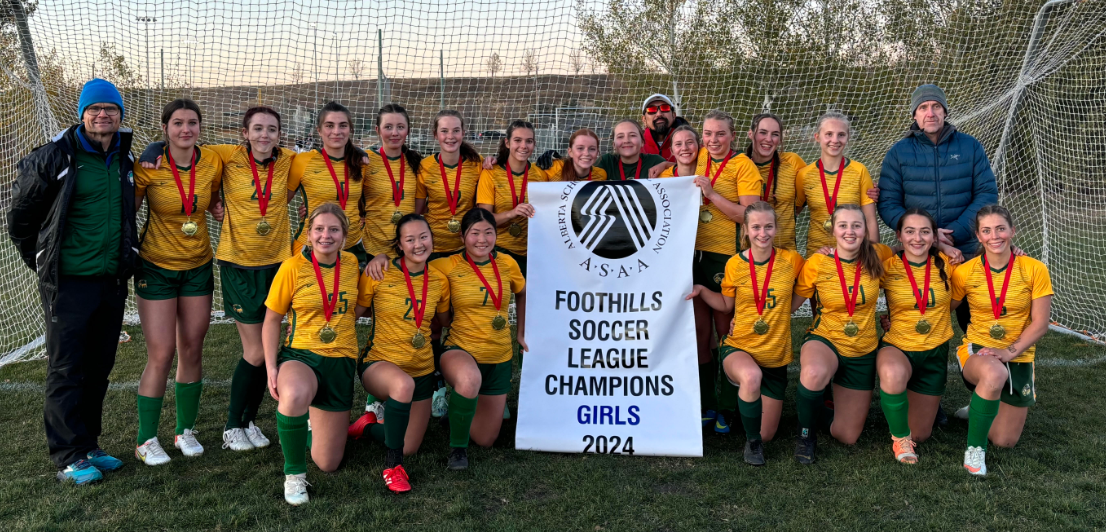
It was crunch time twice for the Canmore Wolverines girls’ soccer team in a span of about 48 hours. Everything was on the line in the league banner game last Thursday (Oct. 17), and then in the bronze medal match at zone championships on Saturday (Oct. 19).
In both instances, the Wolverines were down a goal and needed to make something happen quickly as the clock ticked away.
“Oh my gosh, my nerves. My nerves were shot after both games,” said Grade 12 striker Jewel Weighell. “I was very stressed out, but it was very fun.”
In the league banner game against long-time rival and the always tough Holy Trinity Knights, the Wolverines’ hopes looked grim as the match hit the 80th minute mark, then 85th minute, then 89th minute. It wasn’t until in the 90th minute when the Knights were penalized and the Wolverines had a last-ditch penalty kick.
The news got even worse for the Knights when the girl with the golden boot, Mary Huggill, stepped up for the kick and buried it in the back of the net to send the game into overtime.
Huggill, a league soccer player, had played in a Canada-wide tournament just a few months back.
In extra minutes, team captain Huggill was set up to take a corner kick, with the idea to lob it in the goalie’s box and pray for some favourable bounces. As the ball came into play, a Knights defender made a critical mistake that she soon won’t forget, knocking the ball into her own net.
On the sidelines, as Huggill prepared to kick, head coach Joal Borggard looked away.
“I told them to tell me when it goes in, and sure enough it went in,” said Borggard.
The Wolverines have won the league banner in back-to-back seasons, striking down the Knights both times.
Weighell said the victory was huge for the soccer team because the banner will be displayed in the CCHS gymnasium with everyone’s signatures on it.
“These past few years have been really nice to actually win against [the Knights] and get the banner and it’s been kind of ironic because they’ve both been on their home field so that’s kind of a nice feeling,” she said.
At the zone championship playoffs, the Wolverines didn’t find the success they had a day earlier. The Springbank Phoenix and the revenge-thirsty Knights ended any gold medal dreams for Canmore, handing the local girls back-to-back losses.
The Wolverines said it was partially due to fatigue and being “soccer’d out” after playing in five games in five days.
In the bronze medal game, the Wolverines were once again staring defeat in the face. Down a goal with time fading in the second half, Huggill, who scored three goals at zones, played the hero again and tied things up on a free kick in the 88th minute.
“It was crazy because probably like, I kid you not, a minute after the whistle went. We were like a minute away from losing,” said Weighell.
In overtime, the Wolverines completed the comeback when Airi Watai sealed the deal and found the back of the net.
On the comeback victories, coach Borggard said the well-rounded team had “one speed” in the second half.
“I think we just kind of tend to wear the teams down,” said Borggard. “The other teams I think have trouble keeping up … We always seem to be better as the game goes.”
As the season wraps up, nine of the 20 players will be graduating – Reese Anderson, Aria Grandi, Huggill, Meg Kobayashi, Josie Perron, Asha Pickard, Weighell, Charlotte Wilson and Ruth Wolfe.
Although Weighell isn’t worried about the future of the team.
“This year, we have so many new Grade 9’s on the team who are absolutely insane, like, they’re very skilled players and they’re such nice girls too and it’s so awesome to have that,” said Weighell.
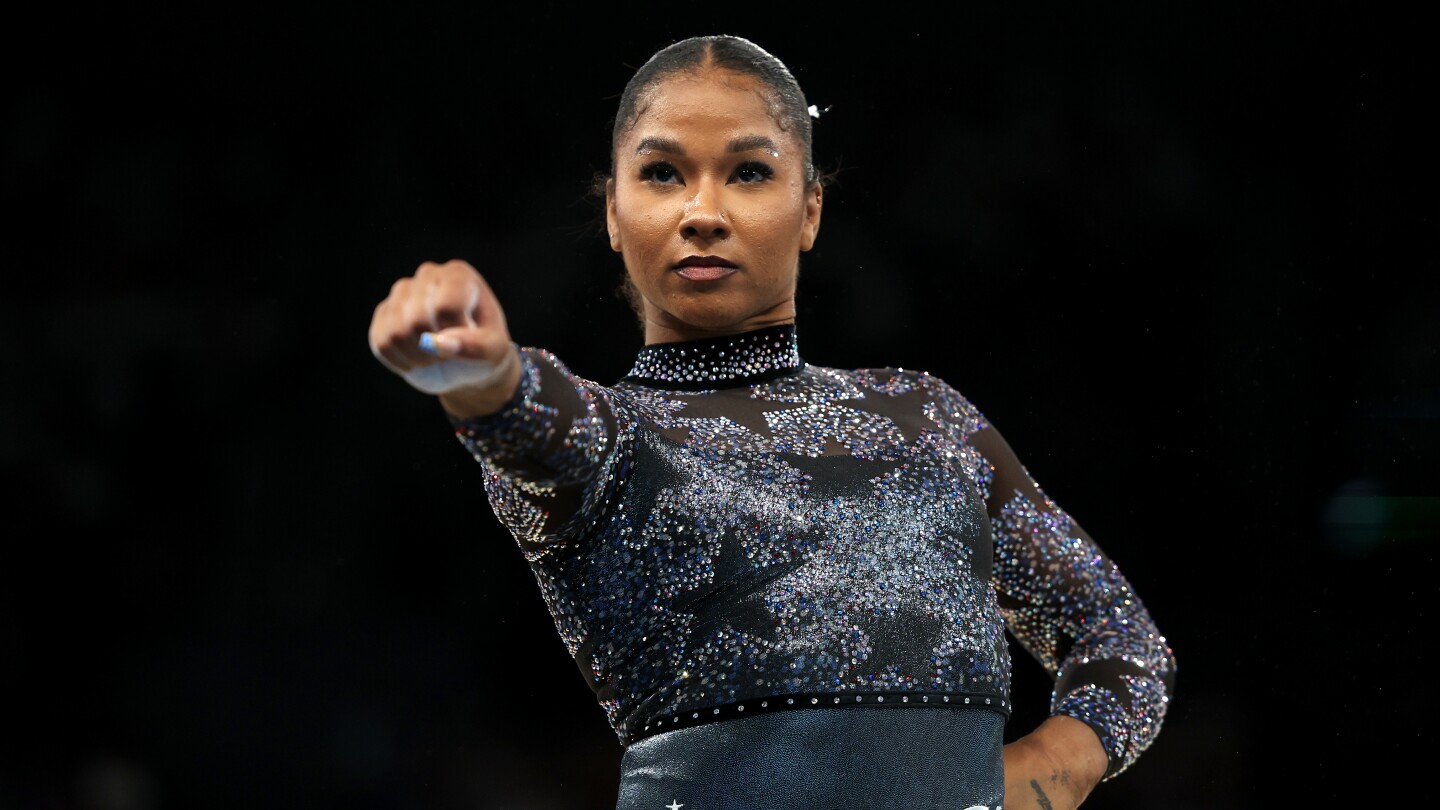
Jordan Chiles and USA Gymnastics filed separate appeals Tuesday in the fight to reclaim the gymnast’s bronze medal from the floor exercise final at the 2024 Paris Olympics, with both asking a Swiss court to re-open the case and order that new video evidence be considered.
The Court of Arbitration for Sport’s decision that resulted in Chiles being stripped of her medal on the final day of the Paris Games was based on a “critical factual error” that her scoring inquiry was filed four seconds too late, the gymnast’s attorneys said in a statement Tuesday announcing the filing. If the case is going to be decided “fairly and accurately,” they said, CAS needs to consider video and audio evidence showing Chiles filed her scoring inquiry in time.
“We believe that CAS must consider the complete audio and video record that shows that Jordan without doubt followed all the rules on the floor and in her inquiry. Failing to do so would be fundamentally unfair and unjust,” Maurice M. Suh, Chiles’ U.S.-based attorney, said in the statement.
In a parallel filing, USA Gymnastics also asked the Swiss Federal Tribunal to re-open the case, citing the video evidence.
“The audiovisual evidence which CAS refused to consider clearly proves Jordan’s bronze-medal finish in Paris was correct,” USA Gymnastics said in a statement. “With today’s filing, we are simply asking that the CAS arbitration be decided based on a true and accurate understanding of facts. As Jordan has publicly stated, the case at this point is about her peace and justice, and the right of all athletes to be treated fairly.”
The new filing by Chiles’ attorneys makes similar arguments to their previous appeal filed last week, which asked the Swiss Federal Tribunal to set aside the CAS ruling.
Chiles’ team filed separate appeals because of lingering questions over when the CAS ruling went into effect. Key video footage, which shows coach Cecile Landi making two verbal inquiries before the 60-second deadline, was discovered after CAS announced its ruling Aug. 10 but before it announced a detailed explanation of the decision Aug.14. Chiles’ lawyers are arguing that the footage either constitutes new evidence, if the decision went into effect Aug. 10, or was unfairly ignored by CAS, if the decision wasn’t final until Aug. 14.
In that filing, Chiles’ attorneys cited three flaws in the process:
Evidence discovered a day after the Aug. 10 CAS ruling – video from the makers of Simone Biles’ Netflix documentary showing coach Cecile Landi making two verbal inquiries before the 60-second deadline – undercuts the basis for the CAS decision. USA Gymnastics tried to present the evidence, but CAS said it was too late.
Chiles, USA Gymnastics and the U.S. Olympic and Paralympic Committee did not have enough time to prepare for the CAS hearing, less than 24 hours, because CAS was sending emails to wrong or outdated addresses. This despite CAS and the USOPC being in communication during the Paris Olympics related to an Aug. 7 ceremony where U.S. figure skaters finally got their medals from the team competition at the 2022 Beijing Games.
The president of the arbitration panel has represented the Romanian government in financial disputes since 2016, including in at least two cases that are ongoing. Though Hamid Gharavi disclosed the relationship and promised to be independent, the Americans did not even know about the potential conflict of interest until several days after the hearing.
Chiles was moved into third place after challenging the judges’ score of one of the elements in her routine, then bumped back down to fifth days later after CAS ruled the challenge was submitted four seconds too late. The International Olympic Committee has since asked Chiles to return her bronze medal and awarded one to Ana Barbosu of Romania, the gymnast who was elevated to third after the CAS ruling.
The Swiss tribunal usually overturns CAS decisions only in cases where there was a blatant procedural violation, lack of jurisdiction or incompatibility with Swiss public policy. But Chiles’ attorney said after her initial filing that the CAS decision casts doubt on the entire arbitration process.
“Jordan Chiles’ appeals present the international community with an easy legal question − will everyone stand by while an Olympic athlete who has done only the right thing is stripped of her medal because of fundamental unfairness in an ad-hoc arbitration process?” Suh said in a statement last week. “The answer to that question should be no. Every part of the Olympics, including the arbitration process, should stand for fair play.”
Promising as the video evidence backing Jordan Chiles’ claim to her bronze medal is, it never should have come to this.
And nothing can ever undo the damage that’s been done or the heartache she’s suffered.
Her bronze medal on floor exercise at the Paris Games should be the crowning personal achievement of Chiles’ career, her first individual medal in two Olympic appearances. Instead, it’s been tainted by legal wranglings and online abuse, her joy and pride now forever colored by disappointment and hurt.
All because other people, people whose jobs it is to know better, screwed up in almost every way imaginable.
The International Gymnastics Federation. The Court of Arbitration for Sport. Even Romanian officials, who trampled over Chiles in their zeal to get for their athletes something they did not deserve.
Chiles and her coach followed the rules, as the video submitted with her appeal filed Monday so clearly shows. Yet Chiles is the one who’s been punished, stripped of her medal — for now — not because of anything she did but because of the incompetence and ineptitude of others.
“Jordan Chiles’ appeals present the international community with an easy legal question — will everyone stand by while an Olympic athlete who has done only the right thing is stripped of her medal because of fundamental unfairness in an ad-hoc arbitration process? The answer to that question should be no,” Maurice M. Suh, counsel for Chiles, said in the statement Monday announcing her appeal to the Swiss Federal Tribunal.
“Every part of the Olympics, including the arbitration process, should stand for fair play.”
And nothing about this process has been fair.
Chiles initially finished fifth in the floor exercise, her score of 13.666 putting her behind Romanians Ana Barbosu and Sabrina Maneca-Voineau. (The Romanians had identical scores of 13.7, but Barbosu placed higher because of a better execution score.) But Cecile Landi, who is Chiles’ personal coach in addition to being the U.S. coach in Paris, appealed her difficulty score, arguing Chiles had not been given full credit for a tour jete, a leap.
A review panel agreed, and the additional 0.100 elevated the American ahead of both Romanians into third place.
That’s when things went sideways.
Romania appealed, submitting several different arguments before settling on the claim that Chiles’ inquiry was filed too late. The Court of Arbitration for Sport sided with the Romanians, ruling that the official timing system showed Chiles’ inquiry had been made four seconds past the 60-second deadline.
But the rules are a gymnast has 60 seconds after a score is posted to make a verbal inquiry, not that the inquiry must show up in the system within 60 seconds. That might seem like splitting hairs, but it’s not. Common sense tells you making a verbal inquiry and registering it are not simultaneous, yet the CAS ruling made the assumption they were.
We know now they were not. The video shows Landi saying, “Inquiry for Jordan!” twice within the 60-second deadline. If there was a delay in registering it, that isn’t Chiles’ fault and can’t be held against her.
As for why CAS didn’t have that video during its hearing, add that to the list of the tribunal’s failings.
Chiles, USA Gymnastics and the U.S. Olympic and Paralympic Committee didn’t know for three days that they were parties to the Romanians’ appeal because CAS was using either wrong or outdated emails. How this was possible, given the USOPC and CAS had been in frequent communication throughout the Games about a medals ceremony in Paris for U.S. figure skaters and the wrong emails were generating bounce-back messages, begs belief. You almost have to try to be that incompetent.
When the Americans finally were informed, it was less than 24 hours before the CAS hearing. There is no way to read the many documents in the case, analyze the arguments, craft a response and prepare for a hearing in that amount of time.
There also was need to. Contrary to Romania’s claim about the need for a quick decision so the medals table would be accurate before the end of the Games, nothing demanded urgency in this case. The floor exercise medals had already been awarded. The gymnastics competition was over. No one’s ability to participate was at stake. There would have been no material difference in a decision made on Oct. 10 from one made on Aug. 10.
Except that maybe it would have given the CAS arbitrators time to have gotten it right. And Chiles wouldn’t have been put through an emotional wringer.
“My heart was broken,” she said last week during an appearance at the Forbes Power Women’s Summit.
This all could have been avoided. And even if Chiles does get the title of bronze medalist back, as she should, it can never make up for everything else she lost.
Follow USA TODAY Sports columnist Nancy Armour on social media @nrarmour.
Jordan Chiles appealed a court decision that moved her from third place back to fifth in the Olympic floor exercise final over the timing of an inquiry into her initial score.
On Aug. 5, Chiles won the Olympic floor exercise bronze medal after a U.S. inquiry into her difficulty score led to the score being raised by one tenth. That moved her from fifth place into bronze-medal position, passing Romanians Sabrina Voinea and Ana Barbosu.
After a Romanian appeal, a CAS panel on Aug. 10 reverted Chiles’ score because the scoring inquiry was recorded as submitted four seconds past the one-minute time limit. Chiles was moved back to fifth place. Barbosu became the bronze medalist.
On Aug. 15, Chiles called the decision “devastating” and that it felt “unjust” in a social media post.
Rulings by CAS, which is headquartered in Switzerland, can be appealed to Swiss federal court on limited procedural grounds.
One of the law firms representing Chiles is asking the Swiss court to find the CAS decision “was procedurally deficient” for two reasons it specified:
CAS refused to consider video evidence found on Aug. 11 that showed the inquiry was submitted on time. (A video, with the aid of footage from a Simone Biles documentary filming, was submitted with Monday’s appeal. In it, Chiles’ score comes up. Her coaches briefly discuss making an inquiry. Then one of her coaches is heard (but not seen) saying “inquiry for Jordan” twice and another time saying “for Jordan” before the one-minute time limit.)
Chiles was not properly informed that CAS panel chair Hamid Gharavi had a conflict of interest. Gharavi “has acted as counsel for Romania for almost a decade and was actively representing Romania at the time of the CAS arbitration,” according to the law firm.
“Given these undeniable deficiencies, Chiles asks the Federal Supreme Court to reinstate the score that she rightfully earned at the floor event final,” the law firm wrote.
The firm also said Chiles was informed of the CAS hearing “a few hours before it began” and “did not receive the necessary time and opportunity to prepare any defense.”
The U.S. Olympic and Paralympic Committee previously said CAS sent emails to incorrect addresses at the USOPC and USA Gymnastics up until less than 24 hours before the hearing and two days past the deadline to submit objections.
CAS previously said it disclosed that Gharavi represents Romania “in investment arbitrations” and that Gharavi’s inclusion on the panel was not objected to before or through the end of the proceedings.
In a statement Monday, USA Gymnastics said it “made a collective, strategic decision to have Jordan lead the initial filing. USAG is closely coordinating with Jordan and her legal team and will make supportive filings with the court in the continued pursuit of justice for Jordan.”
The USOPC said in a Monday statement, “In collaboration with Jordan’s counsel and USA Gymnastics, we are pursuing a coordinated approach, with Jordan’s team leading the initial appeal. Due to the egregious errors and oversight by CAS in handling the case and overlooking clear evidence of Jordan’s rightful bronze win, we are determined to ensure she receives the recognition she deserves. Our commitment to truth in this matter remains steadfast.”
The fight over Jordan Chiles’ bronze medal is not over yet.
Chiles’ attorneys announced Monday that they have filed a formal appeal with the Swiss Federal Tribunal over the results in the women’s floor exercise final at the 2024 Paris Olympics − asking the tribunal to overturn an earlier ruling by the Court of Arbitration for Sport that effectively knocked Chiles off the podium.
Chiles was moved into third place after challenging the judges’ score of one of the elements in her routine, then bumped back down to fifth days later after CAS ruled the challenge was submitted four seconds too late. The International Olympic Committee has since asked Chiles to return her bronze medal and awarded one to Anna Barbosu of Romania, the gymnast who was elevated to third after the CAS ruling.
“Jordan Chiles’ appeals present the international community with an easy legal question − will everyone stand by while an Olympic athlete who has done only the right thing is stripped of her medal because of fundamental unfairness in an ad-hoc arbitration process?” attorney Maurice Suh said in a statement. “The answer to that question should be no. Every part of the Olympics, including the arbitration process, should stand for fair play.”
The statement also said Chiles plans to file an additional petition “seeking additional and alternative relief from the Swiss Federal Supreme Court.”
“Both briefs could result in a retrial of this matter before CAS in order to allow her — for the first time — to prepare a defense and present evidence, including the video footage showing that her coach’s scoring inquiry was submitted on time,” the statement said.
Chiles’ appeal to the tribunal, which is the highest court in Switzerland, marks a significant and relatively rare step. CAS is designed to be the final arbiter of any legal disputes in international sports, so it often has the final word on cases like this one, which was initially filed by the Romanian Gymnastics Federation against the International Gymnastics Federation (FIG).
The Swiss tribunal usually overturns CAS decisions only in cases where there was a blatant procedural violation, lack of jurisdiction or incompatibility with Swiss public policy.
Chiles’ attorneys said in a news release that they are appealing the CAS ruling because it was “procedurally deficient” in two ways. They argue that the American gymnast’s fundamental “right to be heard” was violated when CAS declined to consider new video evidence, obtained after the hearing, that shows her inquiry was submitted on time. And they also say the CAS hearing was unfair because Chiles was not informed that the president of the arbitration panel that heard the case, Hamid Gharavi, has “a serious conflict of interest,” having represented Romania in other proceedings.
“Given these undeniable deficiencies, Chiles asks the Federal Supreme Court to reinstate the score that she rightfully earned at the floor event final,” law firms Gibson Dunn and Homburger AG said in the news release.
The law firms said Chiles’ appeal was accompanied by a letter of support from the U.S. Olympic and Paralympic Committee, which has repeatedly criticized CAS’ handling of the case − specifically with regards to the timeline.
While CAS attempted to notify all of the relevant parties of the dispute on August 6, the USOPC and national governing body USA Gymnastics have said they were not informed about the case until three days later − and less than 24 hours before the hearing was scheduled to begin. The early notices about the case were sent to incorrect email addresses, USA Gymnastics has said.
The governing bodies have also lamented CAS’ decision not to consider the aforementioned video footage, which they say was discovered after the CAS hearing but conclusively proves that Chiles’ inquiry was submitted on time. CAS declined to re-open the case and consider the new video evidence.
“In collaboration with Jordan’s counsel and USA Gymnastics, we are pursuing a coordinated approach, with Jordan’s team handling the initial appeal,” the USOPC said in a statement. “Due to the egregious errors and oversight by CAS in handling the case and overlooking clear evidence of Jordan’s rightful bronze win, we are determined to ensure she receives the recognition she deserves. Our commitment to truth in this matter remains steadfast.”
USA Gymnastics said it supported Chiles’ appeal and will continue to work with her legal team.
“We will make supportive filings with the court in the continued pursuit of justice for Jordan,” USAG said in a statement.
The dispute itself revolves around slim margins – namely one tenth of a point in the floor exercise final, which is the difference between Chiles or Barbosu earning bronze.
Chiles and her coaches believed the 23-year-old was not given full credit for her split leap, known as a tour jete full. Cecile Landi, who was Chiles’ personal coach as well as coach of the U.S. team in Paris, filed what’s known as an inquiry, triggering a review of that element’s scoring. It was successful, and Chiles was credited with an additional 0.10 points, giving her the bronze and knocking Barbosu, 18, off the podium.
The Romanian Gymnastics Federation later took the matter to CAS, arguing that the inquiry had been filed four seconds past the allotted one-minute deadline. CAS agreed and ordered FIG to revise the order of finish in the event, which prompted the IOC to ask Chiles to return her bronze medal.
The CAS ruling in question was filed by the Romanian Gymnastics Federation and Barbosu against FIG and Donatella Sacchi, the president of FIG’s technical committee for women’s gymnastics. While Chiles, the USOPC and USAG were not named in the dispute, they were involved in the arbitral process as “interested parties,” according to CAS.
Chiles spoke about the ordeal publicly for the first time last week, saying during an appearance at the Forbes Power Women’s Summit that her “heart was broken” by the process. The International Gymnastics Federation acknowledged during the CAS hearing that it did not have a mechanism in place to show if inquiries were submitted in time and accepted Chiles’ because it assumed it had been.
Yet Chiles was the one penalized, through no fault of her own. That is why she’s continuing to fight, Chiles said last week.
“At this rate, it’s not really about the medal,” she said. “It’s about my peace and my justice.”