hacklink hack forum hacklink film izle hacklink marsbahisizmir escortsahabetpornJojobet

Tag: Center

  • Musk clashes with OpenAI CEO Sam Altman over Trump-supported Stargate AI data center project

    Musk clashes with OpenAI CEO Sam Altman over Trump-supported Stargate AI data center project

    Elon Musk is clashing with OpenAI CEO Sam Altman over the Stargate artificial intelligence infrastructure project touted by President Donald Trump, the latest in a feud between the two billionaires that started on OpenAI’s board and is now testing Musk’s influence with the new presidential administration.

    Trump on Tuesday had talked up a joint venture investing up to $500 billion through a new partnership formed by OpenAI, the maker of ChatGPT, alongside Oracle and SoftBank.

    The new entity, Stargate, will start building out data centers and the electricity generation needed for the further development of the fast-evolving AI in Texas, according to the White House.

    Trump declared it “a resounding declaration of confidence in America’s potential” under his new administration, with an initial private investment of $100 billion that could reach five times that sum.

    But Musk, a close Trump adviser who helped bankroll his campaign and now leads a government cost-cutting initiative, questioned the value of the investment hours later.

    “They don’t actually have the money,” Musk wrote on his social media platform X. “SoftBank has well under $10B secured. I have that on good authority.”

    Altman responded Wednesday to say Musk was “wrong, as you surely know” and inviting Musk to come visit the first site that is already under construction.

    “(T)his is great for the country. i realize what is great for the country isn’t always what’s optimal for your companies, but in your new role i hope you’ll mostly put (America) first,” Altman wrote, using a U.S. flag emoji to represent America.

    The public clash over Stargate is part of a years-long dispute between Musk and Altman that began with a boardroom rivalry over who should run OpenAI, which both men helped found.

    Musk, an early OpenAI investor and board member, sued the artificial intelligence company last year alleging it had betrayed its founding aims as a nonprofit research lab benefiting the public good rather than pursuing profits.

    Musk has since escalated the dispute, adding new claims and asking for a court order that would stop OpenAI’s plans to convert itself into a for-profit business more fully. A hearing is set for early February in a California federal court.

    The world’s richest man, whose companies include Tesla, SpaceX and X, last year started his own rival AI company, xAI, that is building its own big data center in Memphis, Tennessee. Musk says it faces unfair competition from OpenAI and its close business partner Microsoft, which has supplied the huge computing resources needed to build AI systems such as ChatGPT.

    Tech news outlet The Information first reported on an OpenAI data center project called Stargate in March 2024, indicating that it’s been in the works long before Trump announced it.

    Another company — Crusoe Energy Systems — announced in July it was building a large and “specially designed AI data center” outside Abilene, Texas at a site run by energy technology company Lancium. Crusoe and Lancium said in a joint statement at the time that the project was “supported by a multibillion-dollar investment” but didn’t disclose its backers.

    Both companies also said the energy-hungry project would be powered with renewable sources of electricity such as nearby solar farms, in a way that Lancium CEO Michael McNamara said would “deliver the maximum amount of green energy at the lowest possible cost.” Crusoe said it would own and develop the facility.

    It’s not clear how and when that project became the first phase of the Stargate investment revealed by Trump. Oracle co-founder Larry Ellison said Tuesday that the Abilene project is the first of about 10 data center buildings currently being built and that number could expand to 20.

    Missing from Trump’s press conference Tuesday was Microsoft, which has long supported OpenAI with billions of dollars in investments and enabling its data centers to be used to build the models behind ChatGPT and other generative AI tools.

    Microsoft said this week it is also investing in the Stargate project but put out a statement noting that its OpenAI partnership will “evolve” in a way that enables OpenAI “to build additional capacity, primarily for research and training of models.”

    Asked about Musk’s comments about the Stargate deal Wednesday during a CNBC interview at the World Economic Forum in Davos, Switzerland, Microsoft CEO Satya Nadella pivoted to his company’s own $80 billion plan to build out its global AI infrastructure, of which $50 billion is being spent in the U.S.

    “Look, all I know is, I’m good for my $80 billion,” said Nadella, laughing.

    Source link

  • Meta to build $10 billion AI data center in Louisiana as Elon Musk expands his Tennessee AI facility

    Meta to build $10 billion AI data center in Louisiana as Elon Musk expands his Tennessee AI facility

    NEW ORLEANS — The largest artificial intelligence data center ever built by Facebook’s parent company Meta is coming to northeast Louisiana, the company said Wednesday, bringing hopes that the $10 billion facility will transform an economically neglected corner of the state.

    Republican Gov. Jeff Landry called it “game-changing” for his state’s expanding tech sector, yet some environmental groups have raised concerns over the center’s reliance on fossil fuels — and whether the plans for new natural gas power to support it could lead to higher energy bills in the future for Louisiana residents.

    Meanwhile, Elon Musk’s AI startup, xAI, is expanding its existing supercomputer project in Memphis, Tennessee, the city’s chamber of commerce said Wednesday. The chamber also said that Nvidia, Dell, and Supermicro Computer will be “establishing operations in Memphis,” without offering further details.

    Louisiana is among a growing number of states offering tax credits and other incentives to lure big tech firms seeking sites for energy-intensive data centers.

    The U.S. Commerce Department found that there aren’t enough data centers in the U.S. to meet the rising AI-fueled demand, which is projected to grow by 9% each year through 2030, citing industry reports.

    Meta anticipates its Louisiana data center will create 500 operational jobs and 5,000 temporary construction jobs, said Kevin Janda, director of data center strategy. At 4 million square feet (370,000 square meters), it will be the company’s largest AI data center to date, he added.

    “We want to make sure we are having a positive impact on the local level,” Janda said.

    Congressional leaders and local representatives from across the political spectrum heralded the Meta facility as a boon for Richland parish, a rural part of Louisiana with a population of 20,000 historically reliant on agriculture. About one in four residents are considered to live in poverty and the parish has an employment rate below 50%, according to the U.S. census data.

    Meta plans to invest $200 million into road and water infrastructure improvements for the parish to offset its water usage. The facility is expected to be completed in 2030.

    Entergy, one of the nation’s largest utility providers, is fast-tracking plans to build three natural gas power plants in Louisiana capable of generating 2,262 megawatts for Meta’s data center over a 15-year period — nearly one-tenth of Entergy’s existing energy capacity across four states.

    The Louisiana Public Service Commission is weighing Entergy’s proposal as some environmental groups have opposed locking the state into more fossil fuel-based energy infrastructure. Meta said it plans to help bring 1,500 megawatts of renewable energy onto the grid in the future.

    Louisiana residents may ultimately end up with rate increases to pay off the cost of operating these natural gas power plants when Meta’s contract with Entergy expires, said Jessica Hendricks, state policy director for the Alliance for Affordable Energy, a Louisiana-based nonprofit advocating for energy consumers.

    “There’s no reason why residential customers in Louisiana need to pay for a power plant for energy that they’re not going to use,” Hendricks said. “And we want to make sure that there’s safeguards in place.”

    Public service commissioner Foster Campbell, representing northeast Louisiana, said he does not believe the data center will increase rates for Louisiana residents and views it as vital for his region.

    “It’s going in one of the most needed places in Louisiana and maybe one of the most needed places in the United States of America,” Foster said. “I’m for it 100%.”

    Environmental groups have also warned of the pollution generated by Musk’s AI data center in Memphis. The Southern Environmental Law Center, among others, says the supercomputer could strain the power grid, prompting attention from the Environmental Protection Agency. Eighteen gas turbines currently running at xAI’s south Memphis facility are significant sources of ground-level ozone, better known as smog, the group said.

    Patrick Anderson, an attorney at the law center, said xAI has operated with “a stunning lack of transparency” in developing its South Memphis facility, which is located near predominantly Black neighborhoods that have long dealt with pollution and health risks from factories and other industrial sites.

    “Memphians deserve to know how xAI will affect them,” he said, “and should have a seat at the table when these decisions are being made.”

    _____

    Sainz reported from Memphis, Tennessee. Associated Press writer Matt O’Brien in Providence, Rhode Island, contributed to this report.

    _____

    Brook is a corps member for The Associated Press/Report for America Statehouse News Initiative. Report for America is a nonprofit national service program that places journalists in local newsrooms to report on undercovered issues. Follow Brook on the social platform X: @jack_brook96

    Source link

  • As data center industry booms, an English village becomes a battleground

    As data center industry booms, an English village becomes a battleground

    ABBOTS LANGLEY, England — Originally built to store crops from peasant farmers, the Tithe Barn on the edge of the English village of Abbots Langley was converted into homes that preserve its centuries of history. Now, its residents are fighting to stop a development next door that represents the future.

    A proposal to build a data center on a field across the road was rejected by local authorities amid fierce opposition from villagers. But it’s getting a second chance from British Prime Minister Keir Starmer’s government, which is pursuing reforms to boost economic growth following his Labour party’s election victory in July.

    Residents of Abbots Langley, 18 miles (30 kilometers) northwest of London, worry the facility will strain local resources and create noise and traffic that damages the character of the quiet village, which is home to just over 20,000 people. Off the main street there’s a church with a stone tower built in the 12th century and, further down the road, a picturesque circular courtyard of rustic thatched-roof cottages that used to be a farm modeled on one built for French Queen Marie Antoinette.

    “It’s just hideously inappropriate,” said Stewart Lewis, 70, who lives in one of the converted houses in the 600-year-old Tithe Barn. “I think any reasonable person anywhere would say, ‘Hang on, they want a data center? This isn’t the place for it.’”

    As the artificial intelligence boom fuels demand for cloud-based computing from server farms around the world, such projects are pitting business considerations, national priorities and local interests against each other.

    Britain’s Deputy Prime Minister Angela Rayner has stepped in to review the appeals filed by developers of three data center projects after they were rejected by local authorities, taking the decision out of the hands of town planners. Those proposals include Abbots Langley and two projects in Buckinghamshire, which sits west of London. The first decision is expected by January.

    The projects are controversial because the data centers would be built on “greenbelt” land, which has been set aside to prevent urbanization. Rayner wants to tap the greenbelt for development, saying much of it is low quality. One proposed Buckinghamshire project, for example, involves redeveloping an industrial park next to a busy highway.

    “Whilst it’s officially greenbelt designated land, there isn’t anything ‘green’ about the site today,” said Stephen Beard, global head of data centers at Knight Frank, a property consultancy that’s working on the project.

    “It’s actually an eyesore which is very prominent from the M25″ highway, he said.

    Greystoke, the company behind the Abbots Langley center and a second Buckinghamshire project to be built on a former landfill, didn’t respond to requests for comment. In an online video for Abbots Langley, a company representative says, “We have carried out a comprehensive search for sites, and this one is the very best.” It doesn’t specify which companies would possibly use the center.

    The British government is making data centers a core element of its economic growth plans, deeming them “critical national infrastructure” to give businesses confidence to invest in them. Starmer has announced deals for new centers, including a 10 billion pound ($13 billion) investment from private equity firm Blackstone to build what will be Europe’s biggest AI data center in northeast England.

    The land for the Abbots Langley data center is currently used to graze horses. It’s bordered on two other sides by a cluster of affordable housing and a highway.

    Greystoke’s plans to construct two large buildings totaling 84,000 square meters (904,00 square feet) and standing up to 20 meters (66 feet) tall have alarmed Lewis and other villagers, who worry that it will dwarf everything else nearby.

    They also doubt Greystoke’s promise that it will create up to 260 jobs.

    “Everything will be automated, so they wouldn’t need people,” said tech consultant Jennifer Stirrup, 51, who lives in the area.

    Not everyone in the village is opposed.

    Retiree Bryan Power says he would welcome the data center, believing it would benefit the area in a similar way as another big project on the other side of the village, the Warner Bros.’ Studio Tour featuring a Harry Potter exhibition.

    “It’ll bring some jobs, whatever. It’ll be good. Yeah. No problem. Because if it doesn’t come, it’ll go somewhere else,” said Power, 56.

    One of the biggest concerns about data centers is their environmental impact, especially the huge amounts of electricity they need. Greystoke says the facility will draw 96 megawatts of “IT load.” But James Felstead, director of a renewable energy company and Lewis’ neighbor, said the area’s power grid wouldn’t be able to handle so much extra demand.

    It’s a problem reflected across Europe, where data center power demand is expected to triple by the end of the decade, according to consulting firm McKinsey. While the AI-fueled data boom has prompted Google, Amazon and Microsoft to look to nuclear power as a source of clean energy, worries about their ecological footprint have already sparked tensions over data centers elsewhere.

    Google was forced to halt plans in September for a $200 million data center in Chile’s capital, Santiago, after community complaints about its potential water and energy usage.

    In Ireland, where many Silicon Valley companies have European headquarters, the grid operator has temporarily halted new data centers around Dublin until 2028 over worries they’re guzzling too much electricity.

    A massive data center project in northern Virginia narrowly won county approval last year, amid heavy opposition from residents concerned about its environmental impact. Other places like Frankfurt, Amsterdam and Singapore have imposed various restrictions on data centers.

    Public knowledge about the industry is still low but “people are realizing more that these data centers are quite problematic,” said Sebastian Lehuede, a lecturer in ethics, AI and society at King’s College London who studied the Google case in Chile.

    As awareness grows about their environmental impact, Lehuede said, “I’m sure we will have more opposition from different communities.”

    Source link

  • Successful National Senior Center Month 2024 celebrated with Lifestyle Expo and Senior Games

    Successful National Senior Center Month 2024 celebrated with Lifestyle Expo and Senior Games

    The month of September has been officially recognized as

    National Senior Center Month by the National Council on Aging, and this year, our community came together to celebrate the invaluable contribution of senior centers across the country.

    Events such as the 50+ Lifestyle Expo and Senior Games not only showcased the talents and vitality of our senior population but also promoted healthy living, social engagement, and lifelong learning.

    The vibrant Lifestyle Expo, that took place on Sept. 17 at the Tipton County Fairgrounds, attracted just under 150 attendees, featuring 42 exhibitors. Participants had the opportunity to explore an array of health and wellness resources, learn about technology and home products, and enjoy

    engaging presentations on topics including scams and fraud, as well as balance and fall prevention.

    Interactive sessions encouraged attendees to experience new hobbies, demonstrating that it’s never too late to start something new.

    “In celebrating National Senior Center Month, we aim to highlight the important role senior centers play in promoting wellness and connection in our community,” said Cara Kellerman, event organizer. “The Lifestyle Expo was a remarkable success. Attendance was up more than 56 percent from the inaugural event; showing a growing interest. We are committed to providing attendees and local seniors with the resources and support they need to lead healthy, fulfilling lives.”

    Additionally, the Senior Games that took place on Sept. 24 and 26, brought together more than 100 members of the Encore Center. Members competed in a wide range of activities including

    Bingo, The Price is Right (and other game shows), Mini Golf, Corn Hole and even card games.

    The games featured great prizes and emphasized the importance of staying active with friendly competition, fostering camaraderie among participants.

    The events succeeded in fostering community engagement and raising awareness about the diverse programs and services offered by senior centers nationwide. Local organizations and businesses partnered with Encore to ensure that every aspect of the month was thoughtfully curated

    with the actively aging population in mind.

    Encore extends its heartfelt gratitude to everyone who participated, volunteered, and contributed to making this year’s National Senior Center Month a resounding success. Together, they reaffirm the commitment to enhancing the lives of seniors in the community through continued support and innovative programs.

    For more information about our senior center activities and programs, please visit www.encoreceneter.org, www.facebook.com/encorecentertipton, or call 765-675-4746 extension 12.

    (The mission of the Tipton County Council on Aging is to enrich the quality of life for Tipton County adults 60+ by providing programs and services that support independence, healthy aging, and social connection.

    The center is located at 900 E Jefferson St., Suite A, in Tipton and is open Monday through Friday from 8 a.m. to 4 p.m.

    Source link

  • Successful National Senior Center Month 2024 celebrated with Lifestyle Expo and Senior Games

    Successful National Senior Center Month 2024 celebrated with Lifestyle Expo and Senior Games

    The month of September has been officially recognized as

    National Senior Center Month by the National Council on Aging, and this year, our community came together to celebrate the invaluable contribution of senior centers across the country.

    Events such as the 50+ Lifestyle Expo and Senior Games not only showcased the talents and vitality of our senior population but also promoted healthy living, social engagement, and lifelong learning.

    The vibrant Lifestyle Expo, that took place on Sept. 17 at the Tipton County Fairgrounds, attracted just under 150 attendees, featuring 42 exhibitors. Participants had the opportunity to explore an array of health and wellness resources, learn about technology and home products, and enjoy

    engaging presentations on topics including scams and fraud, as well as balance and fall prevention.

    Interactive sessions encouraged attendees to experience new hobbies, demonstrating that it’s never too late to start something new.

    “In celebrating National Senior Center Month, we aim to highlight the important role senior centers play in promoting wellness and connection in our community,” said Cara Kellerman, event organizer. “The Lifestyle Expo was a remarkable success. Attendance was up more than 56 percent from the inaugural event; showing a growing interest. We are committed to providing attendees and local seniors with the resources and support they need to lead healthy, fulfilling lives.”

    Additionally, the Senior Games that took place on Sept. 24 and 26, brought together more than 100 members of the Encore Center. Members competed in a wide range of activities including

    Bingo, The Price is Right (and other game shows), Mini Golf, Corn Hole and even card games.

    The games featured great prizes and emphasized the importance of staying active with friendly competition, fostering camaraderie among participants.

    The events succeeded in fostering community engagement and raising awareness about the diverse programs and services offered by senior centers nationwide. Local organizations and businesses partnered with Encore to ensure that every aspect of the month was thoughtfully curated

    with the actively aging population in mind.

    Encore extends its heartfelt gratitude to everyone who participated, volunteered, and contributed to making this year’s National Senior Center Month a resounding success. Together, they reaffirm the commitment to enhancing the lives of seniors in the community through continued support and innovative programs.

    For more information about our senior center activities and programs, please visit www.encoreceneter.org, www.facebook.com/encorecentertipton, or call 765-675-4746 extension 12.

    (The mission of the Tipton County Council on Aging is to enrich the quality of life for Tipton County adults 60+ by providing programs and services that support independence, healthy aging, and social connection.

    The center is located at 900 E Jefferson St., Suite A, in Tipton and is open Monday through Friday from 8 a.m. to 4 p.m.

    Source link

  • Successful National Senior Center Month 2024 celebrated with Lifestyle Expo and Senior Games

    Successful National Senior Center Month 2024 celebrated with Lifestyle Expo and Senior Games

    The month of September has been officially recognized as

    National Senior Center Month by the National Council on Aging, and this year, our community came together to celebrate the invaluable contribution of senior centers across the country.

    Events such as the 50+ Lifestyle Expo and Senior Games not only showcased the talents and vitality of our senior population but also promoted healthy living, social engagement, and lifelong learning.

    The vibrant Lifestyle Expo, that took place on Sept. 17 at the Tipton County Fairgrounds, attracted just under 150 attendees, featuring 42 exhibitors. Participants had the opportunity to explore an array of health and wellness resources, learn about technology and home products, and enjoy

    engaging presentations on topics including scams and fraud, as well as balance and fall prevention.

    Interactive sessions encouraged attendees to experience new hobbies, demonstrating that it’s never too late to start something new.

    “In celebrating National Senior Center Month, we aim to highlight the important role senior centers play in promoting wellness and connection in our community,” said Cara Kellerman, event organizer. “The Lifestyle Expo was a remarkable success. Attendance was up more than 56 percent from the inaugural event; showing a growing interest. We are committed to providing attendees and local seniors with the resources and support they need to lead healthy, fulfilling lives.”

    Additionally, the Senior Games that took place on Sept. 24 and 26, brought together more than 100 members of the Encore Center. Members competed in a wide range of activities including

    Bingo, The Price is Right (and other game shows), Mini Golf, Corn Hole and even card games.

    The games featured great prizes and emphasized the importance of staying active with friendly competition, fostering camaraderie among participants.

    The events succeeded in fostering community engagement and raising awareness about the diverse programs and services offered by senior centers nationwide. Local organizations and businesses partnered with Encore to ensure that every aspect of the month was thoughtfully curated

    with the actively aging population in mind.

    Encore extends its heartfelt gratitude to everyone who participated, volunteered, and contributed to making this year’s National Senior Center Month a resounding success. Together, they reaffirm the commitment to enhancing the lives of seniors in the community through continued support and innovative programs.

    For more information about our senior center activities and programs, please visit www.encoreceneter.org, www.facebook.com/encorecentertipton, or call 765-675-4746 extension 12.

    (The mission of the Tipton County Council on Aging is to enrich the quality of life for Tipton County adults 60+ by providing programs and services that support independence, healthy aging, and social connection.

    The center is located at 900 E Jefferson St., Suite A, in Tipton and is open Monday through Friday from 8 a.m. to 4 p.m.

    Source link

  • Renovations Bring New Gameboard, Safer Perimeter Glass to Hockey Center | News

    Renovations Bring New Gameboard, Safer Perimeter Glass to Hockey Center | News

    Renovations on Harvard’s Bright-Landry Hockey Center ended in August, bringing major technological upgrades to the men’s and women’s ice hockey team’s nearly 50-year-old home.

    The arena, which had its last major renovation in 2014, now features a new state of the art video board along with new ribbon boards, a new lighting system throughout the building, and new glass around the rink.

    Initial discussions for renovations began “roughly two or three years ago,” according to Timothy P. Troville, a senior associate director of Harvard Athletics. Ice was removed from the rink in April, and construction on the facility began in May.

    The ice was reinstalled in June for a number of alumni events and hockey camps.

    The most prominent upgrade to Bright-Landry was the installation of a new video board, consisting of four LED screens, each measuring 11.5 by 16.5 feet. The new board is entirely digital as opposed to the old board which had fixed digit components.

    “It was becoming increasingly difficult to get parts in service based on the age of the board. So that was a couple of years ago where we started to plan, to say, ‘We need to start thinking about replacing the board,’” Troville said.

    The renovations also brought new acrylic glass around the rink, replacing the old tempered glass, which Troville said was “important, one, from a player safety standpoint.”

    “It’ll be far softer, and it’ll dissipate energy in a way that should help our players with shoulders and upper body and head-type of collisions with the shielding,” Troville said, adding that with its lighter weight, the glass can also be reconfigured for other events at the Bright-Landry.

    The renovations also included major digital and lighting upgrades, with new ribbon boards at the ends of the rink and updated lighting.

    “They can put colors out. They can do a light show. If there’s a goal scored, which, again, will create a huge excitement for the fan experience — for the kids — it’s going to feel like they’re, so to speak, in an NHL arena,” Gregory S. Shields, the Athletic Facilities Operations Manager, said.

    Troville and Shields said that they hope the renovations will improve the fan experience for Harvard’s hockey teams.

    “We’re hoping that they have such a good time watching our students, and then they enjoy being in the facility that they’ll want to come back again,” said Troville. “We feel like the facility is in an excellent spot to take us into the next 10 years of Harvard hockey.”

    Shields said that renovated facilities are “vital for not only the competition in the student experience, but the fan experience, the recruiting that can help bring in really talented athletes.”

    “I think we really hit it on the head with this one, updating these systems,” he added.

    —Staff Writer Michael R. Carney can be reached at michael.carney@thecrimson.com.

    —Staff Writer Danielle J. Im can be reached at danielle.im@thecrimson.com.

    Source link

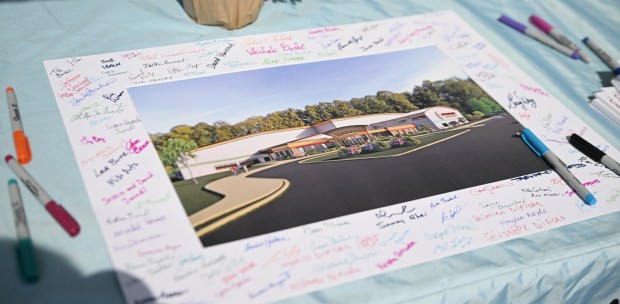
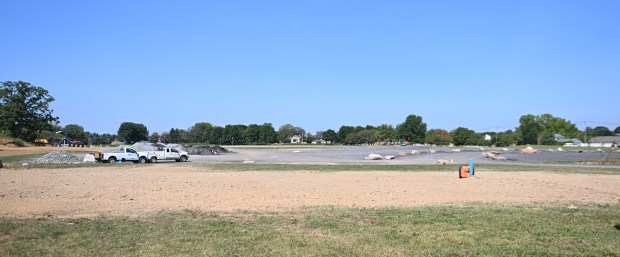
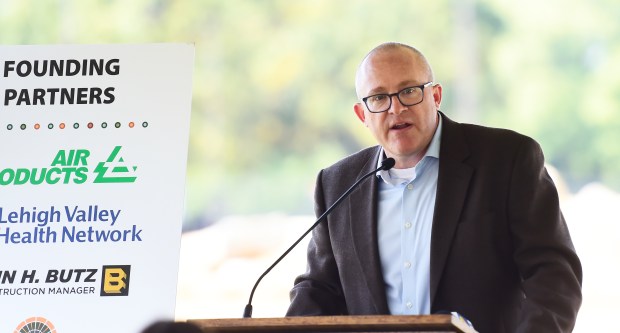
  • Upper Macungie Lifestyle Center breaks ground, to finish within two years

    Upper Macungie Lifestyle Center breaks ground, to finish within two years

Source link

  • What Happens When Politics Takes Center Stage At The Olympics

    What Happens When Politics Takes Center Stage At The Olympics

    The Olympics, often celebrated as a forum for international cooperation and competition, have historically been a stage where the boundaries of sports and politics blur.

    While many athletes focused on their performance, others used the global spotlight to make political statements, revealing the complex interplay between athletic competition and geopolitics. This dual nature of the Olympics—as both a sporting event and a political forum—has raised essential questions about the role of politics in international sports and the challenges of maintaining neutrality in a world fraught with political tension.

    Historical Context and Political Undercurrents

    The Olympics have long served as a platform for political expression, from Jesse Owens’ defiance of Nazi ideology in 1936 to the Black Power salute by Tommie Smith and John Carlos in 1968. These moments underscored the Olympics’ role in advocating for social justice and political change, making them more than just a showcase of athletic prowess. The recent Paris Games continued this tradition, with athletes and nations using the event to highlight political and social issues.

    Taiwan’s participation at under the name “Chinese Taipei,” a designation meant to appease China, illustrated the political sensitivities involved in Olympic participation. This forced compromise required Taiwanese athletes to navigate a complex landscape where national identity and political recognition often conflicted. The New York Times reported, “To be an Olympian from Taiwan is to not exist, at least not officially. To placate China, the island competes at the Games under the awkward designation of Chinese Taipei.” This statement reflected the broader political struggles faced by Taiwanese athletes, who had to balance their personal identities with the need to comply with the International Olympic Committee’s (IOC) regulations.

    The IOC’s Challenge with Neutrality

    The IOC’s attempt to enforce political neutrality was akin to navigating a highly volatile geopolitical environment, requiring a strategic leadership approach. Leaders in such contexts had to employ a delicate balancing act—managing competing interests while upholding core principles. The IOC’s mandate that athletes refrain from making political statements was an effort to preserve the Games as a moment of international harmony. Yet this approach became increasingly difficult to sustain, as evidenced by the controversy over allowing athletes from Russia and Belarus to compete as neutral individuals despite their countries’ involvement in geopolitical conflicts.

    Himanshu Rai, director at Indian Institute of Management Indore, said, “Political neutrality in sports is a myth. The Olympics, by their very nature, are entangled in political dynamics. Decisions about participation, national flags, and even the order of the parade of nations are influenced by political considerations.”

    Economic theory provides further insights into the motivations of nations participating in the Olympics. Countries invested heavily in their Olympic programs not only to win medals but also to boost national prestige and, by extension, political and economic influence. This investment is akin to strategic spending in business where the aim is to maximize returns—in this case, both tangible and intangible, such as global recognition, soft power, and domestic morale.

    Moreover, smaller or politically unrecognized regions like Hong Kong or Chinese Taipei used the Olympics as a platform to assert their unique identities. As reported in the New York Times, “No Olympic truce held during the Paris Games,” highlighting the constant interplay of politics and sports even amidst a supposed ceasefire. The Games served as a low-cost but highly visible form of international diplomacy, where even a single victory could generate significant political and social capital.

    The Olympics as a Platform for Political Statements

    Recent events at the Paris Games showed how the Olympics continue to be a powerful platform for political expression. The refugee team’s first-ever medal, a bronze in boxing won by Cameroonian-born Cindy Ngamba who resettled in Britain, illustrated how the Olympics could spotlight global issues like displacement and migration. Similarly, the victories of Hong Kong’s fencers, whose affiliations with differing political ideologies quickly became the subject of public debate, showed how sports achievements could become politicized.

    “Every victory and defeat at the Olympics was loaded with symbolic meaning,” Vijay Pereira said in an interview. The distinguished professor of international and strategic human capital management at NEOMA Business School added, “For athletes from politically contested regions, their performance could be seen as a statement, whether they intended it or not.”

    The IOC’s leadership faced ongoing challenges in navigating these complex dynamics. The organization’s efforts to keep the Games free from overt political disputes achieved mixed results. On one hand, the IOC managed to sustain the event despite numerous geopolitical challenges. On the other, decisions like permitting athletes from controversial regions to compete under neutral flags were criticized for being inconsistent and potentially hypocritical.

    “Every Olympiad presented a fresh set of political challenges,” Rai observed. “From apartheid to the contemporary disputes involving various nations, the Games have always mirrored the prevailing political landscape. The IOC’s efforts to remain neutral often forced it into paradoxical positions where every decision had far-reaching implications.”

    Looking Ahead to Los Angeles 2028

    As the world looks ahead to the 2028 Summer Olympics in Los Angeles, the lessons from the Paris Games remain fresh. The upcoming Games, officially known as the Games of the XXXIV Olympiad, will likely continue to reflect the intersection of sports and politics. The Los Angeles 2028 organizers will need to consider how to handle similar challenges, from managing geopolitical tensions to ensuring that the Games remain a space for fair competition.

    Both Pereira and Rai suggested that the Los Angeles Olympics could be another testing ground for the IOC’s ability to navigate the fine line between political neutrality and the reality of global politics. The strategic decisions made by the IOC and the LA28 organizing committee will be closely watched, not just by athletes and fans, but also by political leaders around the world.

    “We might expect the next Games to see even more overt expressions of national identity and political statements,” Pereira said. “As global tensions continue to evolve, the Olympics will inevitably reflect these dynamics.”

    Rai added, “The 2028 Games will be a significant opportunity for the IOC to refine its approach to handling political issues in sports. How they manage these complexities will set the tone for future Olympics.”

    As the countdown to Los Angeles 2028 begins, the world will be watching to see how the IOC and the host city navigate these challenges, balancing the ideals of the Olympic spirit with the realities of a politically charged global environment. The Games will continue to be a stage not just for athletic excellence but for the broader struggles and ambitions that shape our world.

    Source link