hacklink hack forum hacklink film izle hacklink marsbahisizmir escortsahabetpornJojobet

Tag: Centers

  • Big Tech wants to plug data centers right into power plants. Utilities say it’s not fair

    Big Tech wants to plug data centers right into power plants. Utilities say it’s not fair

    HARRISBURG, Pa. — Looking for a quick fix for their fast-growing electricity diets, tech giants are increasingly looking to strike deals with power plant owners to plug in directly, avoiding a potentially longer and more expensive process of hooking into a fraying electric grid that serves everyone else.

    It’s raising questions over whether diverting power to higher-paying customers will leave enough for others and whether it’s fair to excuse big power users from paying for the grid. Federal regulators are trying to figure out what to do about it, and quickly.

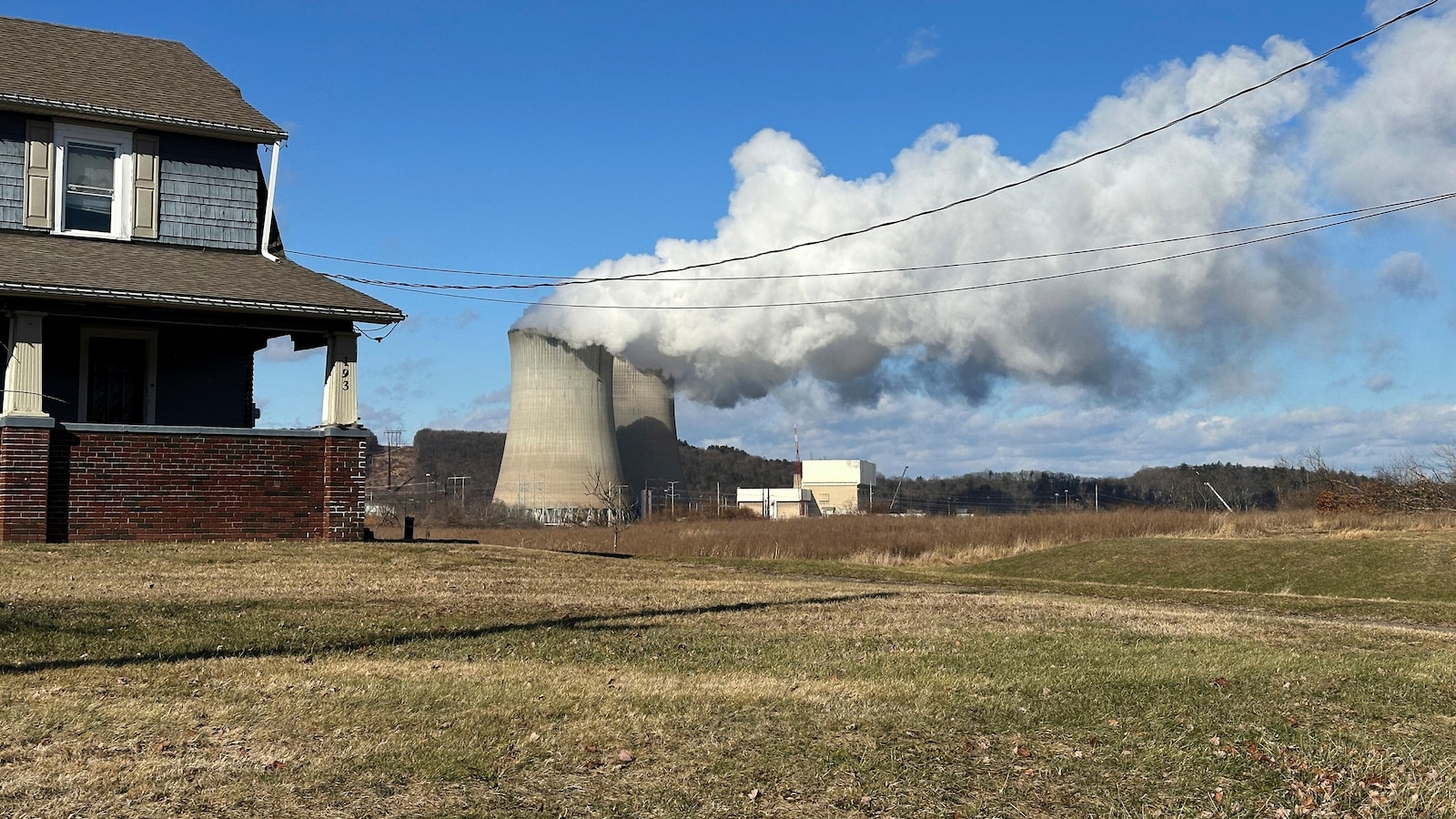
    Front and center is the data center that Amazon’s cloud computing subsidiary, Amazon Web Services, is building next to the Susquehanna nuclear plant in eastern Pennsylvania.

    The arrangement between the plant’s owners and AWS — called a “behind the meter” connection — is the first such to come before the Federal Energy Regulatory Commission. For now, FERC has rejected a deal that could eventually send 960 megawatts — about 40% of the plant’s capacity — to the data center. That’s enough to power more than a half-million homes.

    That leaves the deal and others that likely would follow in limbo. It’s not clear when FERC, which blocked the deal on a procedural ground, will take up the matter again or how the change in presidential administrations might affect things.

    “The companies, they’re very frustrated because they have a business opportunity now that’s really big,” said Bill Green, the director of the MIT Energy Initiative. “And if they’re delayed five years in the queue, for example — I don’t know if it would be five years, but years anyway — they might completely miss the business opportunity.”

    The rapid growth of cloud computing and artificial intelligence has fueled demand for data centers that need power to run servers, storage systems, networking equipment and cooling systems.

    That’s spurred proposals to bring nuclear power plants out of retirement, develop small modular nuclear reactors and build utility-scale renewable installations or new natural gas plants. In December, California-based Oklo announced an agreement to provide 12 gigawatts to data center developer Switch from small nuclear reactors powered by nuclear waste.

    Federal officials say fast development of data centers is vital to the economy and national security, including to keep pace with China in the artificial intelligence race.

    For AWS, the deal with Susquehanna satisfies its need for reliable power that meets its internal requirements for sources that don’t emit planet-warming greenhouse gases, like coal, oil or gas-fueled plants.

    Big Tech also wants to stand up their centers fast. But tech’s voracious appetite for energy comes at a time when the power supply is already strained by efforts to shift away from planet-warming fossil fuels.

    They can build data centers in a couple years, said Aaron Tinjum of the Data Center Coalition. But in some areas, getting connected to the congested electricity grid can take four years, and sometimes much more, he said.

    Plugging directly into a power plant would take years off their development timelines.

    In theory, the AWS deal would let Susquehanna sell power for more than they get by selling into the grid. Talen Energy, Susquehanna’s majority owner, projected the deal would bring as much as $140 million in electricity sales in 2028, though it didn’t disclose exactly how much AWS will pay for the power.

    The profit potential is one that other nuclear plant operators, in particular, are embracing after years of financial distress and frustration with how they are paid in the broader electricity markets. Many say they have been forced to compete in some markets against a flood of cheap natural gas as well as state-subsidized solar and wind energy.

    Power plant owners also say the arrangement benefits the wider public, by bypassing the costly buildout of long power lines and leaving more transmission capacity on the grid for everyone else.

    A favorable ruling from FERC could open the door to many more huge data centers and other massive power users like hydrogen plants and bitcoin miners, analysts say.

    FERC’s 2-1 rejection in November was procedural. Recent comments by commissioners suggest they weren’t ready to decide how to regulate such a novel matter without more study.

    In the meantime, the agency is hearing arguments for and against the Susquehanna-AWS deal.

    Monitoring Analytics, the market watchdog in the mid-Atlantic grid, wrote in a filing to FERC that the impact would be “extreme” if the Susquehanna-AWS model were extended to all nuclear power plants in the territory.

    Energy prices would increase significantly and there’s no explanation for how rising demand for power will be met even before big power plants drop out of the supply mix, it said.

    Separately, two electric utility owners — which make money in deregulated states from building out the grid and delivering power — have protested that the Susquehanna-AWS arrangement amounts to freeloading off a grid that ordinary customers pay to build and maintain. Chicago-based Exelon and Columbus, Ohio-based American Electric Power say the Susquehanna-AWS arrangement would allow AWS to avoid $140 million a year that it would otherwise owe.

    Susquehanna’s owners say the data center won’t be on the grid and question why it should have to pay to maintain it. But critics contend that the power plant itself is benefiting from taxpayer subsidies and ratepayer-subsidized services, and shouldn’t be able to strike deals with private customers that could increase costs for others.

    FERC’s decision will have “massive repercussions for the entire country” because it will set a precedent for how FERC and grid operators will handle the waiting avalanche of similar requests from data center companies and nuclear plants, said Jackson Morris of the Natural Resources Defense Council.

    Stacey Burbure, a vice president for American Electric Power, told FERC at a hearing in November that it needs to move quickly.

    “The timing of this issue is before us,” she said, “and if we take our typical five years to get this perfect, it will be too late.”

    ___

    Follow Marc Levy on X at: https://x.com/timelywriter.

    ___

    The Associated Press’ climate and environmental coverage receives financial support from multiple private foundations. AP is solely responsible for all content. Find AP’s standards for working with philanthropies, a list of supporters and funded coverage areas at AP.org.


    Source link

  • BCN Visuals Partners with Liquid Outdoor Media to Bring 3D Advertising to Lifestyle Centers |

    Revolutionary 3D Digital Experiences Set to Transform the Advertising Landscape in High-Traffic Retail and Lifestyle Destinations

    NEW YORKDec. 4, 2024PRLog — BCN Visuals, a global leader in 3D anamorphic content creation, and Liquid Outdoor Media, a leading boutique outdoor advertising company, have partnered to launch immersive 3D anamorphic activations at lifestyle centers across the United States through BCN Visuals’ groundbreaking stand-alone digital display, Landmarks.

    Landmarks are digital cubes that stand 10 feet tall and wide, which transform any location into a fully immersive experience, driving audience engagement and leaving a lasting impression. This first-to-market product offering is a transformative tool that blends the digital and physical worlds. Landmarks redefine the advertising experience by bringing eye-catching, hyper-realistic 2D and 3D anamorphic digital installations to high-traffic retail and lifestyle destinations.

    BCN Visuals and Liquid Outdoor Media aim to revolutionize the advertising experience for brands looking to enhance their connection with consumers. By introducing 3D anamorphic activations to lifestyle centers, the partnership will allow brands to stand out in a new and innovative way with visuals that appear to burst from the screen, creating highly engaging experiences that invite passersby to stop, watch, and interact.

    “At BCN Visuals, our mission is to push the boundaries of visual storytelling. Through our collaboration with Liquid Outdoor Media, we are excited to bring the wow factor of 3D anamorphic technology to lifestyle centers across the U.S., making digital art a core part of the consumer journey,” said Charles Chimera, Global Chief Growth Officer at BCN Visuals. “Our immersive activations will not only elevate the brand presence of advertisers but also contribute to the vibrancy and appeal of these environments.”

    With more brands seeking innovative ways to captivate audiences, the partnership between BCN Visuals and Liquid Outdoor Media is well-positioned to deliver experiences beyond traditional advertising, allowing brands to make a lasting impression in prime, high-traffic locations.

    “Liquid is the leader in the open-air lifestyle center space, and this powerful addition to the portfolio aligns perfectly with our real-estate partners’ vision to enhance their visitor experience while generating additional ancillary revenue. Most importantly, it provides our advertising clients with a truly unique and powerful medium to deliver their brand message,” said Patrick Sherry, Managing Partner at Liquid Outdoor. “This is the perfect extension to our tech-driven national digital out-of-home media network. We believe this is the ideal environment for the Landmark – properties created as community hubs, designed to host large crowds and frequented by upscale audiences with extended dwell times.”

    Landmarks will debut across multiple high-profile mixed-use properties and tent-pole events in major markets, marking the beginning of this groundbreaking initiative. This launch will showcase the transformative power of 3D anamorphic content in a vibrant, high-traffic environment, setting the stage for future installations across the country. Both BCN Visuals and Liquid Outdoor Media are thrilled to bring this innovative experience to life, redefining how brands connect with audiences in dynamic, real-world settings.

    About BCN Visuals

    BCN Visuals is an award-winning innovation technology company and digital studio. Known for pioneering 3D anamorphic billboards and revolutionizing digital out-of-home, we collaborate with brands and agencies who want to leave an indelible mark. For more information, visit http://bcnvisuals.com and follow us on LinkedIn.

    About Liquid Outdoor Media

    Liquid Outdoor Media is a technology-focused, boutique outdoor advertising company with over 55 static and digital billboards and over 250 digital interactive smart kiosks in 12 major metropolitan markets. Since 2008, Liquid Outdoor has been developing successful projects in both public and private spaces that generate significant ancillary income for its partners.  Headquartered in Manhattan and with regional offices in Los Angeles, Miami, Westchester, NY, and New Jersey, Liquid has a talented team that prides itself on offering unique media assets with exceptional customer service. For more information, visit http://liquidoutdoor.com and follow us on LinkedIn.

    Source link

  • As data centers proliferate, conflict with local communities follows

    As data centers proliferate, conflict with local communities follows

    ALEXANDRIA, Va. — Richard Andre Newman thought he would live the rest of his life in his quiet, leafy neighborhood in suburban Virginia. He was born and raised in Bren Mar Park, where children ride their bikes and neighbors wave hello.

    But now, as he’s approaching 60, he’s considering selling his Fairfax County home and moving away. That’s because he’s getting a new neighbor: Plaza 500, a 466,000-square-foot data center and an adjacent electrical substation to be built a few hundred feet from townhomes, playgrounds and a community center.

    Newman feels helpless to stop it.

    “I planned on staying here until I died,” he said, “until this came up.”

    The sprawling, windowless warehouses that hold rows of high-speed servers powering almost everything the world does on phones and computers are increasingly becoming fixtures of the American landscape, popping up in towns, cities and suburbs across the United States.

    Demand for data centers ballooned in recent years due to the rapid growth of cloud computing and artificial intelligence, and local governments are competing for lucrative deals with big tech companies. But as data centers begin to move into more densely populated areas, abutting homes and schools, parks and recreation centers, some residents are pushing back against the world’s most powerful corporations over concerns about the economic, social and environmental health of their communities.

    Tyler Ray, a vocal critic of data centers and leader in the fight against the Virginia project, said the incentives offered are not enough to counteract the consequences of building a facility so close to homes.

    “All that we are asking for is, as the county is trying to bring in this data center income, that they are doing it in a way that doesn’t run residents away from their homes,” he said.

    In Northern Virginia, more than 300 data centers dot the rolling hills of the area’s westernmost counties. Cyclists who ride the popular Washington & Old Dominion trail are at times flanked by data centers, and the thousands of commuters who head into the nation’s capital each day can see them in the distance from the Metro.

    Plaza 500, one of the latest proposals in the area, is encroaching on neighborhoods like never before, said Newman, who heads a homeowners association in the community.

    The pitch from Starwood Capital Group, the private investment firm founded by billionaire Barry Sternlicht, to Fairfax County officials promised a significant property tax boost and, in addition to permanent positions in the data center itself, hundreds of temporary construction and electrical jobs to build the facility.

    Tyler Ray and his husband moved to the Bren Pointe community in 2022, hoping to balance proximity to Washington with a desire for green space.

    But shortly after the couple moved in, Starwood Capital began scoping out a commercial property near their new home as a possible location for the Plaza 500 project.

    When Ray and his neighbors learned of the proposal, they held protests, attended regular county meetings and drew media attention to their concerns to try and stop the development. But their efforts were largely unsuccessful: the Fairfax County Board of Supervisors in September said all newly proposed data centers must adhere to stricter zoning rules, but the Plaza 500 project would be grandfathered in under the old rules.

    Ray worries that more data centers in the area could compromise the already stressed power grid: Over 25% of all power produced in Virginia in 2023 went to data centers, a figure that could rise as high as 46% by 2030 if data center growth continues at its current pace. Some estimates also show a mid-sized data center commands the same water usage every day as 1,000 households, prompting concerns over the cost of water. Ray also frets over air quality, as the massive diesel generators that help power the data centers’ hardware send plumes of toxic pollutants into the atmosphere.

    A spokesman for the firm declined to respond to questions for this story.

    “I don’t know how a general resident, even someone who has been engaging intently on an issue,” Ray said, “has any chance to go up against the data center industry.”

    For local governments, attracting data centers to their municipalities means a financial boon: Virginia Gov. Glenn Youngkin said in 2024 that Virginia’s existing data centers brought in $1 billion in tax revenue, more than the $750 million in tax breaks given to the tech companies that own them in 2023.

    For average-sized facilities, data centers offer a small number of direct jobs — often fewer than 100 positions. Google announced recently that its two data centers in Loudoun County, which has about 440,000 residents, created only around 150 direct jobs. But data center advocates argue that the number of indirect jobs like construction, technology support and electrical work make the projects worthwhile. In that same announcement, Google said their investment spurred 2,730 indirect jobs.

    Kathy Smith, the vice chair of the Fairfax County Board of Supervisors, voted in favor of the Plaza 500 proposal because, in her estimation, data center growth is inevitable in the region, and Fairfax County should reap the benefits.

    “I have a responsibility to step back from what we do and look at the big picture,” Smith said. “Data centers are not going away.”

    On the other side of the country, in Morrow County, Oregon, Amazon Web Services has built at least five data centers surrounding the 4,200-person town of Boardman, nestled among vast stretches of farmland flecked with mint patches and wind turbines, next to the Columbia river.

    Last year, AWS, which is owned by Amazon, paid roughly $34 million in property taxes and fees stipulated in the agreements after receiving a $66 million tax break. The company also paid out $10 million total in two, one-time payments to a community development fund and spent another $1.7 million in charitable donations in the community in 2023.

    That money has been instrumental in updating infrastructure and bolstering services for the roughly 12,000-person county, going toward a new ladder fire engine, a school resource officer, police body cameras, and $5,000 grants for homebuyers among other things.

    Still, some residents are skeptical of the scale of tax break deals. Suspicions started years ago, when three formerly elected officials allegedly helped approve data center deals while owning a stake in a company that contracted with AWS to provide fiber optic cables for the data centers. In June, they each paid $2,000 to settle an ethics complaint against them.

    Those officials are no longer in office. But some remain wary of the relationships between the company and local officials, and raised eyebrows at one of the latest data center deals which gives AWS an estimated $1 billion in tax breaks spread over the 15 years to build five new data centers.

    Former county commissioner Jim Doherty described a meeting with AWS officials soon after he was elected to office at an upscale restaurant in Boardman, where large windows opened onto the Columbia River.

    The AWS representatives asked what Doherty wanted to accomplish as a commissioner. “They said, ‘Tell us what your dreams are. Tell us what you need. Tell us what we can do for you,’” Doherty recalled. Other former officials have described similar interactions. Doherty said AWS didn’t ask for anything in return, but the exchange left him uneasy.

    “We engage with stakeholders in every community where we operate around the world, and part of that outreach is to better understand a community’s goals,” said Kevin Miller, AWS’ Vice President of global data centers. “This helps AWS be a catalyst for communities to achieve those goals, and reflects our ongoing commitment to being good neighbors.”

    Doherty and another former county commissioner Melissa Lindsay said they pushed unsuccessfully in 2022 for AWS to pay more in taxes in new data center negotiations. They also lobbied to hire outside counsel to negotiate on their behalf, feeling outgunned by the phalanx of AWS-suited lawyers.

    “We didn’t want to blow it up. We didn’t want to run them off,” said Lindsay. “But there were better deals to be made.”

    Boardman Mayor Paul Keefer and Police Chief Rick Stokoe say their direct line to AWS allows them to get the most out of the company.

    “This road right here? Wouldn’t happen if it wasn’t for AWS,” said Keefer, riding in the passenger seat of Stokoe’s cruiser, pointing out the window at construction workers shifting dirt and laying pavement. Both Keefer and Stokoe have been in positions to vote on whether to authorize tax breaks for AWS.

    “These companies would not be here if they weren’t getting some kind of incentive,” Stokoe said. “There wouldn’t be any money to talk about.”

    ___ The Associated Press receives financial assistance from the Omidyar Network to support coverage of artificial intelligence and its impact on society. AP is solely responsible for all content. Find AP’s standards for working with philanthropies, a list of supporters and funded coverage areas at AP.org

    Source link

  • McCarthey Athletic Center’s 20 years packed with milestones, memories, moments

    McCarthey Athletic Center’s 20 years packed with milestones, memories, moments

    The timing and planning of Gonzaga’s new basketball facility more than two decades ago was spot-on, mirroring so many of the key aspects that launched the program’s ascension to national prominence.

    It took bold thinking to make it happen. Mark Few, early in his head coaching tenure, accompanied then-school president Robert Spitzer to Salt Lake City to request donations from brothers Phil and Tom McCarthey for GU’s athletic endowment.

    Except Few drew up a new play and asked Rev. Spitzer to broach the idea of a new basketball arena when they huddled before a meeting with the McCartheys.

    “ Mark laid it on the line: An investment in a new Kennel is going to help us with our recruiting, with our marketing and on down the line – all these things instinctively one would know,” Spitzer told The Spokesman-Review’s John Blanchette in 2009. “I knew right away for Mark that this was going to be essential for him as a coach.

    “So I changed my pitch right away – I’ve told the McCartheys this story – and it became all about the arena. We didn’t have a design, we didn’t have an amount, we didn’t have anything, but we were pitching the arena.”

    That meeting was one of many that led to the McCarthey Athletic Center, which opened 20 years ago in October 2004.

    Gonzaga’s men have lost just 18 times and boast a 94% winning percentage on their home court, so there’s plenty of candidates for the top 20 McCarthey moments.


    The Gonzaga Bulldogs in their first action at McCarthey Athletic Center, an exhibition game against Emporia State on Nov. 5, 2004.  (The Spokesman-Review Photo Archive)
    The Gonzaga Bulldogs in their first action at McCarthey Athletic Center, an exhibition game against Emporia State on Nov. 5, 2004. (The Spokesman-Review Photo Archive)

    Timely

    On-court highlights occupy most of this list, but, as mentioned earlier, the McCarthey Athletic Center came to be at just the right time.

    Building materials were largely budget-friendly when the facility was being built.

    “Garco (Construction) did a fantastic job and was willing to make an honest profit and we had great subcontractors,” Gonzaga athletic director Chris Standiford said. “At the time, the prices for (building materials) were really suppressed and then they came back to normal (after construction). Especially steel, it was really low.”

    Size mattered

    It’s a question Standiford and former AD Mike Roth probably have heard hundreds of times. Why didn’t the $25 million arena have more than 6,000 seats? The answer in a nutshell: It wouldn’t have been anywhere close to a $25 million price tag if the arena required expanding to seat even 8,000.

    “Substantially more on a cost -per -seat basis,” Standiford said. “I know from the design, development phase, it was way more expensive to make the building bigger. We were really pressing to build that building and fund that building as it was.”

    Turiaf thrives in new digs

    Ronny Turiaf felt right at home inside the new arena. The charismatic forward scored 33 points in a win over Portland State on opening night.

    He followed with 20 points against Montana before dropping 40 points in a victory over Idaho in the third game.

    First ranked foe falls

    No. 14 Washington, the first ranked opponent to visit the McCarthey Athletic Center, fell to the Zags 99-87 in December 2004.

    Adam Morrison scored 28 points, Turiaf added 23 points and 13 rebounds and Derek Raivio made five 3-pointers while contributing 21 points.

    Morrison magic

    We could probably assemble a list of Morrison’s top 20 in the McCarthey. Instead, we combined several of his memorable moments for space reasons.

    There was his fadeaway jumper in the final second in a 75-73 win over San Francisco in Feb. 2005. There was Morrison’s 42-point eruption against Portland in January 2006, still the McCarthey Athletic Center record.

    Morrison had 23 points and earned MVP honors as Gonzaga rallied from 15 points down to edge Loyola Marymount 68-67 in the 2006 WCC Tournament title game. He celebrated by hopping on the broadcast table and hanging out in the Kennel Club after LMU’s Chris Ayer missed from close range in the closing seconds.

    GameDay and more Morrison magic

    When ESPN’s GameDay came to GU for the first time in February 2006, Morrison delivered 34 points, 12 in the final three minutes, in an 80-76 win over Stanford.

    P-Mac’s triple, Morrison’s pass

    OK, one more Morrison mention. He had 34 points in a 75-72 victory over San Francisco on Senior Night in February 2006. He had a hand in the game-winner with his lone assist leading to a Pierre Marie Altidor-Cespedes 3-pointer with two seconds remaining.


    J.P. Batista hugs his brother Anderson during 2006 Senior Night at McCarthey Athletic Center.   (Jed Conklin/The Spokesman-Review)
    J.P. Batista hugs his brother Anderson during 2006 Senior Night at McCarthey Athletic Center.  (Jed Conklin/The Spokesman-Review)

    J.P.’s Senior Night surprise

    Gonzaga center J.P. Batista, a native of Brazil, had no idea his older brother Anderson had made the long trip to surprise him on 2006 Senior Night.

    The two shared an emotional embrace after Anderson walked onto the court. It had been four years since Anderson had seen his younger brother.

    Gonzaga pulls rank on UW

    No. 18 Gonzaga routed No. 13 Washington 97-77 on Dec. 9, 2006, in the first McCarthey Athletic Center contest between ranked teams. Raivio drained five 3-pointers and finished with 25 points.

    First home defeat

    Santa Clara toppled the Zags 84-73 in February 2007, ending GU’s 50-game home winning streak – the nation’s longest – that dated back to the Martin Centre.

    It was an unsettling weekend for the Zags, who were without Josh Heytvelt and Theo Davis. Both were suspended after being arrested the night before the game on drug possession charges.

    Zags come up short on Gray’s great day

    Steven Gray tried to will the 11th-ranked Zags to victory, but No. 25 San Diego State’s Billy White and Kawhi Leonard had other ideas in a November 2010 showdown.

    Gray scored 35 points, including 14 of the team’s final 15, but GU couldn’t overcome White’s career-high 30 points and Leonard’s 18 points and 12 boards. “Steven was superhuman,” Few said.

    Pangos hits nine 3s vs. WSU

    In his first start and second collegiate game, freshman Kevin Pangos put on a memorable shooting display in an 89-81 win over the Cougars in November 2011.

    Pangos equaled Dan Dickau’s school record with nine 3-pointers and scored 33 points. He made 9 of 13 3s and handed out six assists.

    Olynyk drops 31 on the Gaels

    Kelly Olynyk was early in his breakout junior season when he scored 31 points in an 83-78 victory over Saint Mary’s, just days after his career high 33 points in a road win over Santa Clara in January 2013.

    Olynyk and Pangos combined for GU’s last 16 points. The 7-footer made a pair of free throws with 13 seconds left after the Gaels had closed within 79-78.

    BYU ends GU’s bid for perfection

    It started like so many Gonzaga games in the 2017 season. The Zags methodically moved in front 18-2 on Senior Night and another blowout was seemingly in the works.

    Not so fast. BYU rallied late to pull off a stunning 79-71 victory, handing GU its first loss after 29 straight wins. The Zags rebounded to win the WCC Tournament and five NCAA Tournament games before falling to North Carolina in the championship game.

    Geno’s crossover

    Geno Crandall introduced himself to the Kennel when he scored 28 points and nearly led North Dakota to a n upset before the Zags rallied for an 89-83 OT win in December 2017.

    Crandall transferred to GU the following season and made this list with a remarkable move that bewildered BYU’s Nick Emery. He shook Emery with a behind-the-back dribble near the 3-point line, followed by a between-the-legs crossover that sent Emery stumbling in the wrong direction as Crandall finished with a layup.

    Emery poked fun at himself, tweeting a video of the play with the comment: “If anyone is wondering, my ankles are okay. You win some, you lose some.”


    Gonzaga forward Rui Hachimura celebrates with Kennel Club members after beating Washington at the McCarthey Athletic Center on 2018.  (Dan Pelle/The Spokesman-Review)
    Gonzaga forward Rui Hachimura celebrates with Kennel Club members after beating Washington at the McCarthey Athletic Center on 2018. (Dan Pelle/The Spokesman-Review)

    Rui connects on game-winner

    Washington rallied from an 11-point second-half deficit to pull even at 79, but Rui Hachimura countered with a 15-foot jumper with less than one second remaining for an 81-79 win in Dec. 2018.

    Hachimura finished with 26 points and the Kennel Club chanted his name as he waited for a post-game interview with ESPN’s Bill Walton and Dave Pasch.

    Blue bloods visit the Kennel

    GU has entertained lots of power conference schools, but the anticipation meter was off the charts when two of the biggest names in the college hoops came to town.

    In 2011, coach Tom Izzo and Michigan State pulled out a 74-67 victory powered by Draymond Green’s 34 points. Jud Heathcote, who led the Spartans to the 1979 national championship during a distinguished coaching career that began at West Valley High, retired in Spokane and watched from the stands.

    The second-ranked Zags handled North Carolina, one of the bluest blue bloods, 94-81 in December 2019. Corey Kispert hit 5 of 6 3-pointers and scored 26 points.

    The Tar Heels, playing without standout point guard Cole Anthony, suffered their fourth straight setback. “We want Wofford!” chided the Kennel Club, in reference to the team responsible for UNC’s third loss in the streak.

    Timme torches Texas

    The Longhorns’ visit in November 2021 was big by any measure, including AP rankings – Gonzaga was No. 1, Texas No. 5.

    Drew Timme, a Texas native, conducted a post-move clinic with a 37-point effort, third in McCarthey Athletic Center history. He made 15 of 19 shots in GU’s 86-74 win.

    GameDay visit, Gaels go down

    In February 2023, ESPN’s GameDay returned to the Kennel for the first time in 14 years. About 12 hours after Mark Few sat down with the GameDay crew and the airing of Drew Timme’s 94 feet segment with Jay Bilas, the 12th-ranked Zags downed No. 15 Saint Mary’s 77-68, avenging a 78-70 loss in Moraga, California.

    Timme had 19 points and Anton Watson added 17 as GU and SMC shared the regular-season title.

    McCarthey Athletic Center’s impact

    Brian Michaelson has a unique perspective on what the McCarthey Athletic Center has meant to the program. When the venue opened in 2004, he was a senior on the team. He joined Gonzaga’s staff in 2008 and he’s entering his 12th season as an assistant coach.

    “The timing was absolutely perfect,” he said. “It was as early in the run as we could have done it and you needed it at that time. It has really helped take it to the next level. A bunch of us played in that old gym (Martin Centre) and it was really special, the atmosphere was special.

    “But for the future, it was huge. The legitimacy of having a real arena was huge for the growth that came down the road.”

    Source link

  • Amazon, Google make dueling nuclear investments to power data centers with clean energy

    Amazon, Google make dueling nuclear investments to power data centers with clean energy

    Amazon on Wednesday said that it was investing in small nuclear reactors, coming just two days after a similar announcement by Google, as both tech giants seek new sources of carbon-free electricity to meet surging demand from data centers and artificial intelligence.

    The plans come as the owner of the shuttered Three Mile Island nuclear power plant said last month it plans to restart the reactor so tech giant Microsoft can buy the power to supply its data centers. All three companies have been investing in solar and wind technologies, which make electricity without producing greenhouse gas emissions. Now they say they need to go further in the search for clean electricity to meet both demand and their own commitments to cut emissions.

    Nuclear energy is a climate solution in that its reactors don’t emit the planet-warming greenhouse gases that come from power plants that burn fossil fuels, such as oil, coal and gas. The demand for power is surging globally as buildings and vehicles electrify. People used more electricity than ever last year, placing strain on electric grids around the world. Much of the demand also comes from data centers and artificial intelligence.

    The International Energy Agency forecasts that data centers’ total electricity consumption could reach more than 1,000 terawatt hours in 2026, more than doubling from 2022. Estimates suggest one terawatt hour can power 70,000 homes for a year.

    “AI is driving a significant increase in the amount of data centers and power that are required on the grid,” Kevin Miller, Amazon Web Services’ vice president of global data centers, told The Associated Press, adding: “We view advanced new nuclear capacity as really key and essential.”

    Energy Secretary Jennifer Granholm said she’s thrilled Amazon is the latest to “BYOP” or “bring your own power” to the buildout of data centers. Granholm spoke at an event for Wednesday’s announcement at Amazon’s second headquarters in Virginia. Virginia’s governor and two U.S. senators also attended.

    The United States aims to reach 100% clean electricity by 2035. Granholm said small modular reactors are a “huge piece of how we’re going to solve this puzzle,” a way to phase out fossil fuel power while responding to the increasing electricity demand from data centers and new factories. She said her department will provide $900 million to deploy more of these reactors.

    Small modular reactors are a type of nuclear reactor that can generate up to roughly one-third the amount of power of a traditional reactor. Developers say small reactors will be built faster and at a lower cost than large power reactors, scaling to fit needs of a particular location. They aim to start spinning up electricity in the early 2030s, if the Nuclear Regulatory Commission gives permission to build and operate their designs and the technology succeeds.

    If new, clean power isn’t added as data centers are developed, the U.S. runs the risk of “browning the grid,” or including more power that isn’t made from clean sources, said Kathryn Huff, a former U.S. assistant secretary for nuclear energy who is now an associate professor at the University of Illinois Urbana-Champaign.

    The reactors are currently under development, with none currently providing power to the electric grid in the U.S. Big investors can help change that, and these announcements could be the “inflection point” that makes scaling up this technology truly possible, Huff said.

    Jacopo Buongiorno, professor of nuclear science and engineering at the Massachusetts Institute of Technology, echoed that, saying the industry needs customers who value the reliability and carbon-free attributes of nuclear and are willing to pay a premium for it at first, until a number of the next-generation reactors are deployed and the cost comes down.

    On Monday, Google said it was signing a contract to purchase nuclear energy from multiple small modular reactors that Kairos Power, a nuclear technology company, plans to develop.

    The news highlights “the technologies that we’re going to need to achieve round the clock clean energy, not only for Google but for the world,” Michael Terrell, Google’s senior director of energy and climate, told the AP.

    With Kairos, Google said it expects to bring the first small modular reactor online by 2030, with more to come through 2035. The deal is projected to bring 500 megawatts of power to the grid. For context, Google consumed more than 24 terawatt hours of electricity last year, according to the company’s annual environmental report. One terawatt is equal to 1,000,000 megawatts.

    Meanwhile, Amazon’s announcements Wednesday included working with utility Dominion Energy to explore putting a small modular reactor near its existing North Anna nuclear power station in Virginia. It’s investing in reactor developer X-energy for its early development work, and collaborating with regional utility Energy Northwest in central Washington to put four of the X-energy reactors there.

    Combined, the three announcements could account for more than 5,000 megawatts of power by the late 2030s with the possibility of more. All of that is still likely only a small fraction of the company’s total energy consumption, a figure that Amazon does not report publicly.

    New reactor designs pair well with industrial applications because they can be built on a small footprint and generate reliable power, with some able to provide high-temperature heat too, at the site, said Doug True, chief nuclear officer at the industry trade association, Nuclear Energy Institute.

    “It seems like a really good fit to support those facilities, and for a lot of different applications depending upon the amount of power that’s needed by the customer,” he said.

    Both Amazon and Google have committed to using renewable energy to address climate change. By 2030, Google has pledged to meet net-zero emissions, and run carbon-free energy every hour of every day on every grid where it operates. It says it has already matched 100% of its global electricity consumption with renewable energy purchases on an annual basis. However, the company has fallen short on decreasing its emissions.

    Amazon has said it would match all of its global electricity consumption with 100% renewable energy by 2030, and recently announced it met that goal early in 2023. Though the company has matched its consumption as far as purchases of an equivalent amount of renewable energy, that does not necessarily mean it is using that to power its operations.

    Amazon saw its electricity emissions drop 11%, but direct emissions — known as Scope 1 — increased 7%, according to its 2023 sustainability report. The company is also targeting net zero-carbon by 2040.

    ___

    Read more of AP’s climate coverage at http://www.apnews.com/climate-and-environment

    ___

    The Associated Press’ climate and environmental coverage receives financial support from multiple private foundations. AP is solely responsible for all content. Find AP’s standards for working with philanthropies, a list of supporters and funded coverage areas at AP.org.

    Source link

  • NFL Centers Taylor Swift in 2024 to 2025 Football Season Promo Video

    NFL Centers Taylor Swift in 2024 to 2025 Football Season Promo Video

    Football is back — which means so is the National Football League’s obsession with Taylor Swift. Ahead of the regular season kicking off this upcoming weekend, the NFL shared a promotional video celebrating the highs of last year’s season. The montage clip highlights touchdowns, end zone dances, and all of the moments when cameras caught Swift cheering on her boyfriend, Kansas City Chiefs tight end Travis Kelce.

    The 30-second clip cycles through each month of the 2023-2024 season, beginning in September. For that section, the selected Swift scene was pulled from her headline-making first appearance at a Chiefs game. October and November center on the athletes — and Dolly Parton — before Swift makes another appearance in January, strutting through the halls of Arrowhead Stadium in a Chiefs jacket.

    The last few seconds of the video come across as a fan edit of Swift and Kelce’s whirlwind romance. It starts with them sharing a kiss on the field before cutting to the singer gunning a beer at the 2024 Super Bowl, where Kelce and co. became champions once again.

    Since the couple debuted their relationship last year, Swift has become a main character in the NFL universe. After she first started showing up at games in late September, it was reported that ratings increased across the board, particularly among women in the 12-17 and 18-49 demographics. Following her first Chiefs game, the NFL’s official e-commerce partner, Fanatics, revealed that Kelce jerseys saw a 400% spike in sales. According to USA Today, Swift scored 55 seconds of screen time during Super Bowl LVIII, while the New York Times reported an average of around 25 seconds of screen time during the other NFL games she attended.

    Trending

    In October, Kelce noted that he was starting to find the league’s coverage of her attendance at his games to be a little excessive. “I think it’s fun when they show who all is at the game,” Kelce said on his New Heights podcast. “I think it brings a little bit more to the atmosphere, brings a little bit more to what you’re watching. But at the same time, they’re overdoing it a little bit for sure… especially my situation. I think they’re trying to have fun with it.”

    The NFL didn’t see this love story coming, but this season, they won’t be letting a single moment go to waste.


    Source link