hacklink hack forum hacklink film izle hacklink marsbahisizmir escortsahabetpornJojobetcasibompadişahbetGorabetcasibom9018betgit casinojojobetmarsbahismatbetmatbet

Tag: Chinas

  • China’s getting a big electric car battery swapping boost in 2025. Would that work across the globe?

    China’s getting a big electric car battery swapping boost in 2025. Would that work across the globe?

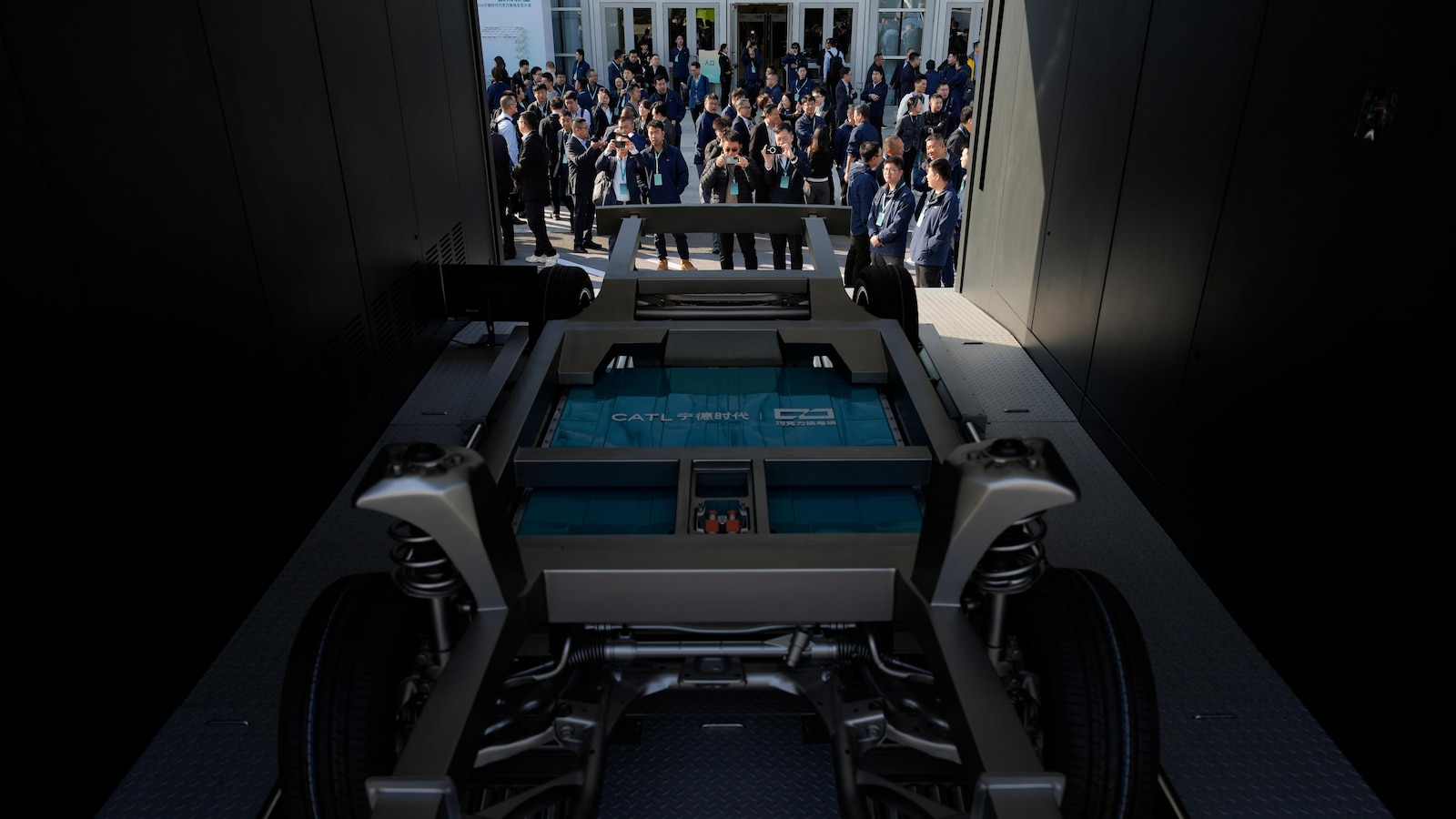
    Detroit — China will soon see a massive expansion of electric vehicle battery swapping, as global battery maker CATL said Wednesday it is investing heavily in stations there next year.

    Battery swapping is not new — but it’s had a challenging journey. Adoption of electric vehicles has varied in regions across the globe over the past several years, and that doesn’t always bode well for building new infrastructure.

    While the technology could do well in China, it’s uncertain whether it could work in other countries.

    Battery swapping allows EV drivers to pull into a station on a low battery and receive a swapped, fully-charged battery within minutes.

    An EV has to be equipped with the right technology to receive a swap — and not many models around the world currently have it. Automakers have to buy into the idea, and EV adoption among consumers also has to grow, so that investing in new infrastructure seems worthwhile. Consumers also have to be comfortable not owning their battery.

    China is much further along in adopting EVs than other countries.

    Not only is it the world’s largest auto market, but in July, the country hit a milestone with 50% of new sales electric — and it accounts for most of this year’s global EV sales.

    China supports EV growth through government subsidies and mandates. So it makes more sense for companies to invest in unique EV infrastructure there because that’s more likely to be needed.

    The most notable example might be Israeli startup Better Place, which tried its hand at swapping in 2007.

    But the company shut down a few years later after investing a lot of money and coming up against roadblocks with logistics. EV adoption was especially low at the time.

    Startup Ample, for example, has a modular battery swapping station that it says can complete a swap in 5 minutes. That’s important as charging time remains a point of concern for prospective EV buyers. Even the fastest fast chargers could take at least 15 minutes for a decent charge.

    But in the U.S., pure EVs only accounted for 8% of new vehicle sales as of November.

    Meanwhile Nio, a rival Chinese EV brand, has about 60 swap stations in northern Europe, and the EV adoption is higher there than the U.S., but the same challenges remain.

    Different automakers put different batteries in their various EV models, so a station would need all of those available if the industry didn’t agree to a standardized battery, and not all of those models are out yet in volume. This is something that really needs scale.

    Swapping could help with EV cost — currently a barrier to adoption for many — because a driver wouldn’t necessarily own the most expensive part of an EV: the battery.

    Greg Less, director of the University of Michigan Battery Lab, said with proper framing and education, people might like the idea of battery swapping. To him, it’s not unlike buying a propane-fueled grill and purchasing a refilled tank every so often. But it would require a rethinking of car ownership.

    “Where I could see it working is if we went entirely away from vehicle ownership and we went to a use-on-demand model,” Less added. “I don’t think we’re there yet.”

    Battery swapping might make most sense for ride-sharing or other fleet vehicles.

    Drivers of buses, taxis, Uber or Lyft vehicles want to spend as much time on the road as possible, transporting customers and making money. If battery swapping can shorten the time needed to charge EVs, that makes driving one less disruptive to their business.

    ___

    Alexa St. John is an Associated Press climate solutions reporter. Follow her on X: @alexa_stjohn. Reach her at ast.john@ap.org.

    ___

    Read more of AP’s climate coverage at http://www.apnews.com/climate-and-environment

    ___

    The Associated Press’ climate and environmental coverage receives financial support from multiple private foundations. AP is solely responsible for all content. Find AP’s standards for working with philanthropies, a list of supporters and funded coverage areas at AP.org.


    Source link

  • US effort to curb China’s and Russia’s access to advanced computer chips ‘inadequate,’ report finds

    US effort to curb China’s and Russia’s access to advanced computer chips ‘inadequate,’ report finds

    WASHINGTON — The Commerce Department’s efforts to curb China’s and Russia’s access to American-made advanced computer chips have been “inadequate” and will need more funding to stymie their ability to manufacture advanced weapons, according to a report published Wednesday by the Senate’s Permanent Subcommittee on Investigations.

    The Biden administration imposed export controls to limit the ability of China and Russia ability to access U.S.-made chips after Russia’s invasion of Ukraine nearly three years ago.

    The agency’s Bureau of Industry and Security, according to the report, does not have the resources to enforce export controls and has been too reliant on U.S. chip makers voluntarily complying with the rules.

    But the push for bolstering Commerce’s export control enforcement comes as the incoming Trump administration says it is looking to dramatically reduce the size and scope of federal government. President-elect Donald Trump has tapped entrepreneurs Elon Musk and Vivek Ramaswamy to lead a new “Department of Government Efficiency” to dismantle parts of the federal government.

    The Trump transition team did not immediately respond to a request for comment on the report.

    BIS’s budget, about $191 million, has remained essentially flat since 2010 when adjusted for inflation.

    “While BIS’ budget has been stagnant for a decade, the bureau works diligently around the clock to meet its mission and safeguard U.S. national security,” Commerce Department spokesperson Charlie Andrews said in a statement in response to the report.

    Andrews added that with “necessary resources from Congress” the agency would be “better equipped to address the challenges that come with our evolving national security environment.”

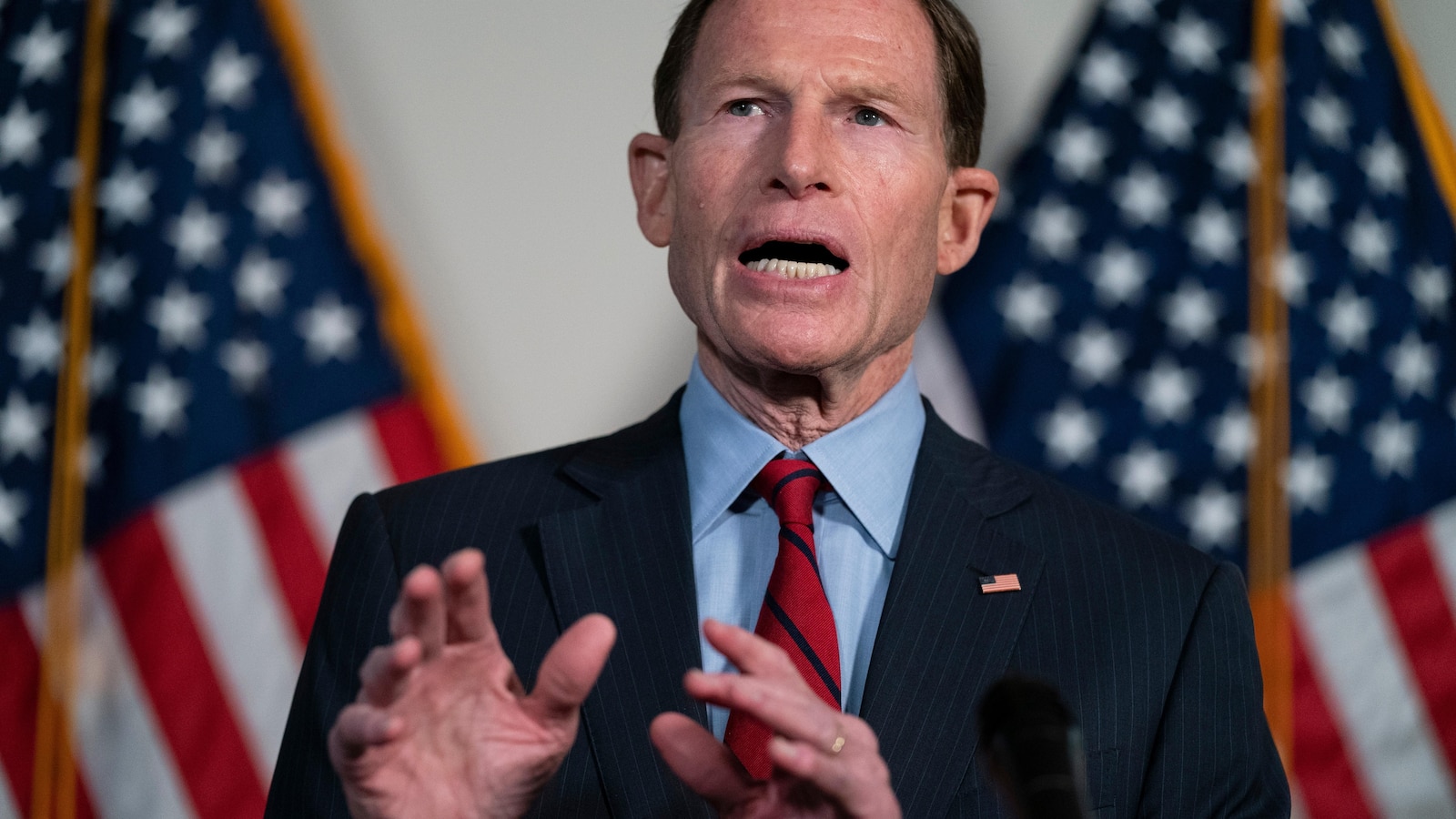
    In a letter to Commerce Secretary Gina Raimondo on Wednesday, Democratic Sen. Richard Blumenthal of Connecticut, chair of the subcommittee, pointed to an audit of Texas Instruments that showed the Russian military continued to acquire components from Texas Instruments through front companies in Hong Kong to illustrate how the export controls are failing as an effective tool.

    The committee’s findings, Blumenthal said, suggest that Texas Instruments “missed clear warning signs” that three companies in its distribution chain had been diverting products to Russia. Texas Instruments did not immediately respond to a request for comment.

    “While Congress must provide BIS more resources to undertake its critical mission, it is long past time for BIS to make full use of the enforcement powers Congress has conferred upon it and take aggressive steps to cut the flow of U.S. semiconductors into the Russian war machine,” Blumenthal wrote.

    It’s not just Texas Instruments that’s the issue. The subcommittee in September published a report that found aggregated exports from four major U.S. advanced chip manufacturers nearly doubled from 2021 to 2022 to Armenia and Georgia.

    Both of those countries are home to front companies known to assist Russia in acquiring advanced chips made in the U.S. despite export controls.

    China, meanwhile, has created “vast, barely disguised smuggling networks which enable it to continue to harness U.S. technology,” the subcommittee report asserts.

    Washington has been gradually expanding the number of companies affected by such export controls in China, as President Joe Biden’s administration has encouraged an expansion of investments in and manufacturing of chips in the U.S.

    But Chinese companies have found ways to evade export controls in part because of a lack of China subject matter experts and Chinese speakers assigned to Commerce’s export control enforcement.

    The agency’s current budget limits the number of international end-use checks, or physical verification overseas of distributors or companies receiving American-made chips that are the supposed end users of products. Currently, Commerce has only 11 export control officers spread around the globe to conduct such checks.

    The committee made several recommendations in its report, including Congress allocating more money for hiring additional personnel to enforce export controls, imposing larger fines on companies that violate controls and requiring periodic reviews of advanced chip companies’ export control plans by outside entities.

    ___

    Boak reported from West Palm Beach, Florida.

    Source link

  • China’s ban on key high-tech materials could have broad impact on industries, economy

    China’s ban on key high-tech materials could have broad impact on industries, economy

    BANGKOK — China has banned exports of key materials used to make a wide range of products, including smartphones, electric vehicles, radar systems and CT scanners, swiping back at Washington after it expanded export controls to include dozens of Chinese companies that make equipment used to produce advanced computer chips.

    Both sides say their controls are justified by national security concerns and both accuse the other of “weaponizing” trade. Analysts say the latest restrictions could have a wide impact on manufacturing in many industries and supply chains.

    “Critical mineral security is now intrinsically linked to the escalating tech trade war,” Gracelin Baskaran and Meredith Schwartz of the Center for Strategic International Studies, wrote in a report on Beijing’s decision.

    The full impact will depend partly on whether U.S. industries can compensate for any loss of access to the strategically important materials, equipment and components.

    Here’s why this could be a tipping point in trade conflict between the two biggest economies, coming at a time when antagonisms already were expected to heat up once President-elect Donald Trump takes office, given his vows to hike tariffs on imports of Chinese-made products.

    China has banned, in principle, exports to the United States of gallium, germanium and antimony — critical minerals needed to make advanced semiconductors, among many other types of equipment. Beijing also tightened controls on exports of graphite, which is used in EV and grid-storage batteries. China is the largest source for most of these materials and also dominates refining of those materials, which are used both for consumer goods and for military purposes.

    The limits announced Tuesday also include exports of super-hard materials, such as diamonds and other synthetic materials that are not compressible and extremely dense. They are used in many industrial areas such as cutting tools, disc brakes and protective coatings.

    Next on the list of potential bans, experts say: tungsten, magnesium and aluminum alloys.

    The Chinese Commerce Ministry announced its measures after the U.S. government ordered a slew of new measures meant to prevent sales to China of certain types of advanced semiconductors and the tools and software needed to make them. Washington also expanded its “entity list” of companies facing strict export controls to include 140 more companies, nearly all of them based in China or Chinese-owned.

    Commerce Secretary Gina Raimondo said the revised rules were intended to impair China’s ability to use advanced technologies that “pose a risk to our national security.” The updated regulations also limit exports to China of high-bandwidth memory chips that are needed to process massive amounts of data in advanced applications such as artificial intelligence.

    Export licenses will likely be denied for any U.S. company trying to do business with the 140 companies newly added to the “entity list,” as well as the dozens of others already on the list. The aim, officials said, is to stop Chinese companies from leveraging U.S. technology to make their own semiconductors.

    The Biden administration has been expanding the number of companies affected by such export controls while encouraging an expansion of investments in and manufacturing of semiconductors in the U.S. and other Western countries.

    Washington also extended the restrictions on exports of advanced semiconductor technology to companies in other countries, though it excluded companies in key allies like Japan, South Korea and the Netherlands that are thought to have adequate export controls of their own.

    In a word: very. For the U.S., Japan, South Korea, Taiwan and other producers of advanced technology and components, access to materials with such properties as high conductivity is crucial: gallium and germanium increasingly are used in advanced semiconductors in place of silicon.

    The materials subject to Chinese export controls are among 50 the United States Geologic Survey has designated as “critical minerals” — non-fuel minerals essential to U.S. economic or national security that have supply chains vulnerable to disruption.

    Gallium topped that list. It is needed to make the same high-bandwidth memory chips the U.S. wants to avoid allowing China to access for use in artificial intelligence and defense applications. It’s used to make LEDs, lasers and magnets used in many products. Germanium is used for optical fiber and solar panels, among other uses.

    A USGS study recently estimated the likely total cost to the U.S. economy from disruptions to supplies of gallium and germanium alone at more than $3 billion. But the situation is complicated. China imposed licensing requirements on exports of both metals in July 2023. It has not exported either to the U.S. this year, according to Chinese customs data. Antimony exports also have plunged.

    China produces the lion’s share of most critical minerals, but there are alternatives. Japan also imports nearly all of its gallium, for example, but it also extracts it by recycling scrap metal.

    Washington has been moving to tap sources other than China, forming a “Minerals Security Partnership” with the EU and 15 other countries. President Joe Biden’s visit to Africa this week highlighted that effort. Potential supply disruptions also have spurred efforts to tap U.S. deposits of rare earths and other critical materials in southeastern Wyoming, Montana, Nevada, Minnesota and parts of the American Southwest.

    Germanium has been extracted from zinc mined in Alaska and Tennessee and the U.S. government has a stockpile. The Department of Defense has a recycling program that can extract scrap germanium from night vision lenses and tank turret windows.

    But China’s dominance as a supplier gives it an overwhelming cost advantage, and U.S. resource companies face strong pressures over the potential environmental impact of mines and refineries.

    Since then-President Trump launched a trade war against Beijing that has ramped up over time, China has adopted a relatively constrained and cautious approach in responding to the U.S. limits on access to advanced technology.

    Much depends on the future course of overall relations. It is unclear if Trump will follow through on his vows to push tariffs sharply higher once he takes office or if such declarations are the opening gambits in future trade negotiations.

    China hit back with its own tariff hikes, but excluded many items crucial for its own economy. It sanctioned certain companies, especially defense contractors doing business with Taiwan, but refrained from outright bans on exports of vital materials to the U.S.

    This time may be different.

    Just after China’s Commerce Ministry announced its export ban, various Chinese industry associations including automakers and the China Semiconductor Association issued statements denouncing Washington’s moves to curb access to strategically sensitive technologies and declaring that U.S. computer chips are unreliable.

    Beijing’s announcement also extends its ban on exporting Chinese-produced gallium and other critical minerals to the U.S. to apply to all countries, entities and individuals, saying violators will “be held accountable according to law.”

    Source link

  • China’s new improbable football stars

    China’s new improbable football stars

    BBC/Katherina Tse Chinese local football team celebrating tournament victoryBBC/Katherina Tse

    The Guizhou Village Super League is a small football festival that has grown in popularity in China

    It is a hot night and thousands of fans have packed into Rongjiang’s football ground for the final of the Guizhou Village Super League.

    Dongmen village is up against Dangxiang village in the climax of this hyper rowdy, very local competition.

    This small, weekly, village football festival has become a viral sensation in China, as images have spread across social media of fans dressed in traditional ethnic costume, banging drums and cheering on the players who might be farmers, students or shopkeepers.

    And these videos have inspired tens of thousands of people from across the country to experience it for themselves on any given weekend.

    Watching the matches in the village league is free but it is quite a hike to get here, a three-hour drive into the mountains from the provincial capital Guiyang.

    Yet millions of Chinese tourists have made the trek over the last 12 months, to soak up the atmosphere, boosting tourist industry revenue by nearly 75%, according to official figures quoted by state-run media.

    The accommodation available is basically small hotels which are often fully booked when the big games are on.

    It’s the ultimate underdog story.

    BBC/Katherina Tse Ceremony ahead of final match of the tournamentBBC/Katherina Tse

    The football tournament has attracted millions of tourists from across the country

    This is an area which was one of the last parts of China to be officially declared free of “extreme poverty”.

    Five years ago its average annual disposable income was just $1,350 in rural areas. Now, this newly organised league – only in its second year – has attracted so much fame it is transforming the place.

    The players can’t quite believe it.

    “We’re not professional footballers. We just love footy,” says Shen Yang.

    “Even if there was no Village Super League, we’d play every week. Without football, I’d feel like life had lost its colour.”

    Shen is a 32-year-old hospital maintenance worker who’s just come off an all-night shift, but, on the field, he is one of the main attacking weapons for Dongmen village.

    He says his parents hated him playing football when he was a kid but now they’re total converts.

    “They didn’t let me play. They threw away my trainers. But now they’ve set up a stall at the gate to the stadium selling ice creams,” he laughs.

    Shen’s parents are not the only small business owners who have benefited from the economic boost this competition has brought to the area.

    It is not as if everyone has suddenly become rich, but this sporting carnival has definitely brought earning opportunities for those running little family hotels, restaurants and street stalls.

    BBC/Katherina Tse The players are farmers, shopkeepers or students from local villagesBBC/Katherina Tse

    The players are farmers, shopkeepers or students from local villages

    Dong Yongheng, a player whose Zhongcheng village was in the final last year, is among those who have benefited from the tournament way beyond his experience on the pitch.

    The former construction worker has turned footballing limelight into family business success.

    The 35-year-old once worked in his auntie’s modest shop preparing rice rolls, a famous Rongjiang street snack.

    Now he has opened his own, multi-story restaurant. It even has a shop attached to it selling his team’s football jerseys and other memorabilia.

    “I think people like the authenticity of the village league,” he tells the BBC.

    “It is really not because of our sporting skills. They like seeing a genuine performance, whether it is by our cheerleading ethnic singers or our players. Tourists love real and original things.”

    The government says that more than 4,000 new businesses have registered in the region since the competition started last year, creating thousands of new jobs in the poor farming community.

    That some fans dress up in traditional clothing to cheer on their village team has definitely given this tournament a unique flavour.

    In the hours before the final, Pan Wenge’s silver headdress jingles and jangles as she speaks enthusiastically, preparing to cheer on Dongmen village.

    “When we watch the game, it’s so exciting. We’re really nervous, you feel your heart pumping. And, when we win, we’re so happy. We sing and dance.”

    BBC/Katherina Tse The tournament has been a boost for the local economy, creating thousands of new jobsBBC/Katherina Tse

    The tournament has been a boost for the local economy, creating thousands of new jobs

    But standing in Dongmen’s way is the younger, faster Dangxiang village team.

    Their star striker, Lu Jinfu, the son of itinerant labourers, has just finished high school. With a shy smile he acknowledges the attention of local kids wanting to take selfies with him.

    “When I started playing I didn’t expect it to be like this. I didn’t expect us to have such an amazing football atmosphere,” he says.

    On the night, his team are indeed too good for Dongmen. Lu scores twice and, after the full-time whistle, the winning team spray each other with soft drinks in celebration.

    But the losers don’t go home empty handed.

    “We won two pigs. That’s not bad,” Shen Yang says with a cheeky smile.

    And, at their party afterwards, you would not think they were the runners-up.

    There is much eating and drinking in an outdoor banquet down the main street of Dongmen village.

    The players get hugs and kisses from their neighbours they refer to as “aunties”. Win, lose, or draw, they’re still seen as heroes.

    And, after all, there is always next year.

    Source link