hacklink hack forum hacklink film izle hacklink marsbahisizmir escortsahabetpornJojobetcasibompadişahbetjojobet

Tag: Chinese

  • In Search Of Soup Dumplings, Thousands On Cycles Clog Roads In Chinese City

    In Search Of Soup Dumplings, Thousands On Cycles Clog Roads In Chinese City

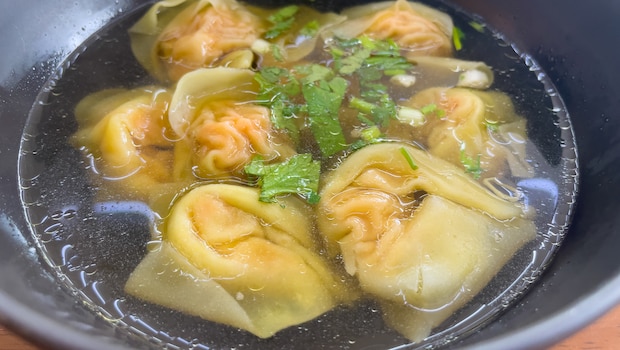
    Police in central China imposed traffic curbs at the weekend to halt a viral craze in which thousands of university students borrowed share bikes to ride overnight to the city of Kaifeng in search of breakfast. The “Night Riding Army”, as some participants described it, clogged a highway on Friday, pictures posted on social media showed, a surge in turnout for a rolling flash mob that had been gathering riders for months. “Last night’s ‘Night Riding Army’ was spectacular!” one rider posted. “Two lanes were opened, but that simply was not enough: The cycling army accounted for four!”

    The event was part of a trend of young Chinese travelling on the cheap – “like special forces” – and spending as little as possible at a time of scarce job prospects, when wages are under pressure. The riders travelled on a straight road more than 60 km (37 miles) long beside the Yellow River that links Zhengzhou, the largest city in Henan province, with Kaifeng, an ancient capital famed for its soup dumplings.

    The trend was set off in June, Chinese media said, after four women college students chronicled their ride on social media to eat dumplings in the morning. “The Night Ride to Kaifeng: Youth is priceless, enjoy it in time,” was the hashtag on social media for the ride, which state broadcaster CMG said tens of thousands of students had completed by the weekend. Key to its success was a glut of shared bikes, which can be rented for as little as $1.95 a month. Pictures posted by riders showed thousands of the bikes had overrun downtown Kaifeng by Saturday.

    In addition to the traffic controls, the largest bike-sharing platforms, Hellobike, DiDi Bike, and Mobile, said their vehicles would lock down if ridden out of a designated zone, while media told the students to grow up. “Youthful freedom does not mean following the trend and indulging oneself,” one news outlet admonished in a comment. “Kaifeng is worth arriving slowly and savouring carefully,” read the headline of another.

    Chinese authorities have cracked down on other spontaneous gatherings. Last month, police turned out in force in the commercial hub of Shanghai to deter a repeat of 2023 Halloween celebrations in which some revellers wore costumes poking fun at issues such as the stock market, youth unemployment and tough COVID-19 curbs.

    (Reporting by Joe Cash; Editing by Clarence Fernandez)

    (Disclaimer: This story has not been edited by NDTV staff and is auto-generated from a syndicated feed. This story has not been edited by NDTV staff and is auto-generated from a syndicated feed.)

    Source link

  • In Search Of Soup Dumplings, Thousands On Cycles Clog Roads In Chinese City

    In Search Of Soup Dumplings, Thousands On Cycles Clog Roads In Chinese City

    Police in central China imposed traffic curbs at the weekend to halt a viral craze in which thousands of university students borrowed share bikes to ride overnight to the city of Kaifeng in search of breakfast. The “Night Riding Army”, as some participants described it, clogged a highway on Friday, pictures posted on social media showed, a surge in turnout for a rolling flash mob that had been gathering riders for months. “Last night’s ‘Night Riding Army’ was spectacular!” one rider posted. “Two lanes were opened, but that simply was not enough: The cycling army accounted for four!”

    The event was part of a trend of young Chinese travelling on the cheap – “like special forces” – and spending as little as possible at a time of scarce job prospects, when wages are under pressure. The riders travelled on a straight road more than 60 km (37 miles) long beside the Yellow River that links Zhengzhou, the largest city in Henan province, with Kaifeng, an ancient capital famed for its soup dumplings.

    The trend was set off in June, Chinese media said, after four women college students chronicled their ride on social media to eat dumplings in the morning. “The Night Ride to Kaifeng: Youth is priceless, enjoy it in time,” was the hashtag on social media for the ride, which state broadcaster CMG said tens of thousands of students had completed by the weekend. Key to its success was a glut of shared bikes, which can be rented for as little as $1.95 a month. Pictures posted by riders showed thousands of the bikes had overrun downtown Kaifeng by Saturday.

    In addition to the traffic controls, the largest bike-sharing platforms, Hellobike, DiDi Bike, and Mobile, said their vehicles would lock down if ridden out of a designated zone, while media told the students to grow up. “Youthful freedom does not mean following the trend and indulging oneself,” one news outlet admonished in a comment. “Kaifeng is worth arriving slowly and savouring carefully,” read the headline of another.

    Chinese authorities have cracked down on other spontaneous gatherings. Last month, police turned out in force in the commercial hub of Shanghai to deter a repeat of 2023 Halloween celebrations in which some revellers wore costumes poking fun at issues such as the stock market, youth unemployment and tough COVID-19 curbs.

    (Reporting by Joe Cash; Editing by Clarence Fernandez)

    (Disclaimer: This story has not been edited by NDTV staff and is auto-generated from a syndicated feed. This story has not been edited by NDTV staff and is auto-generated from a syndicated feed.)

    Source link

  • Chinese online retailer Temu faces European Union investigation into rogue traders and illegal goods

    Chinese online retailer Temu faces European Union investigation into rogue traders and illegal goods

    LONDON — Chinese online retailer Temu is facing a European Union investigation over suspicions it’s failing to prevent the sale of illegal products, the 27-nation bloc’s executive arm said on Thursday.

    The European Commission opened its investigation five months after adding Temu to the list of “very large online platforms” needing the strictest level of scrutiny under the bloc’s Digital Services Act. It’s a wide-ranging rulebook designed to clean up online platforms and keep internet users safe, with the threat of hefty fines.

    Temu started entering Western markets only in the past two years and has grown in popularity by offering cheap goods – from clothing to home products — that are shipped from sellers in China. The company, owned by Pinduoduo Inc., a popular e-commerce site in China, now has 92 million users in the EU.

    Temu said it “takes its obligations under the DSA seriously, continuously investing to strengthen our compliance system and safeguard consumer interests on our platform.”

    “We will cooperate fully with regulators to support our shared goal of a safe, trusted marketplace for consumers,” the company said in a statement.

    European Commission Executive Vice-President Margrethe Vestager said in a press release that Brussels wants to make sure products sold on Temu’s platform “meet EU standards and do not harm consumers.”

    EU enforcement will “guarantee a level playing field and that every platform, including Temu, fully respects the laws that keep our European market safe and fair for all,” she said.

    The commission’s investigation will look into whether Temu’s systems are doing enough to crack down on curb “rogue traders” selling “non-compliant goods” amid concerns that they are able to swiftly reappear after being suspended. The commission didn’t single out specific illegal products that were being sold on the platform.

    Regulators are also examining the risks from Temu’s “addictive design,” including “game-like” reward programs, and what the company is doing to mitigate those risks.

    Also under investigation is Temu’s compliance with two other DSA requirements: giving researchers access to data and transparency on recommender systems. Companies must be detail how they recommend content and products, and give users at least one option to see recommendations that are not based on their personal profile and preferences.

    Temu now has the chance to respond to the commission, which can decide to impose a fine or drop the case if the company makes changes or can prove that the suspicions aren’t valid.

    Brussels has been cracking down on tech companies since the DSA took effect last year. It has also opened an investigation into another ecommerce platform, AliExpress, as well as social media sites like X and Tiktok, which bowed to pressure after the commission demanded answers about a new rewards feature.

    Temu has also faced scrutiny in the United States, where a Congressional report last year accused the company of failing to prevent goods made by forced labor from being sold on its platform.

    Source link

  • What to know about Europe’s tariffs on Chinese electric vehicles

    What to know about Europe’s tariffs on Chinese electric vehicles

    FRANKFURT, Germany — The European Union has finalized its sharply higher customs duties on electric vehicles imported from China. EVs are the latest flash point in a broader trade dispute over Chinese government subsidies and Beijing’s burgeoning exports of green technology to the 27-nation bloc.

    The duties took effect provisionally in July and were finalized after talks between the EU and China failed to resolve their differences. Negotiations are expected to continue, and the EU could lift the duties if an agreement is reached.

    Here are some basic facts about the EU’s customs duties:

    The European Commission, the EU’s executive arm, conducted an eight-month investigation and concluded that companies making electric cars in China benefit from massive government help that enables them to undercut rivals in the EU on price, take a large market share and threaten European jobs.

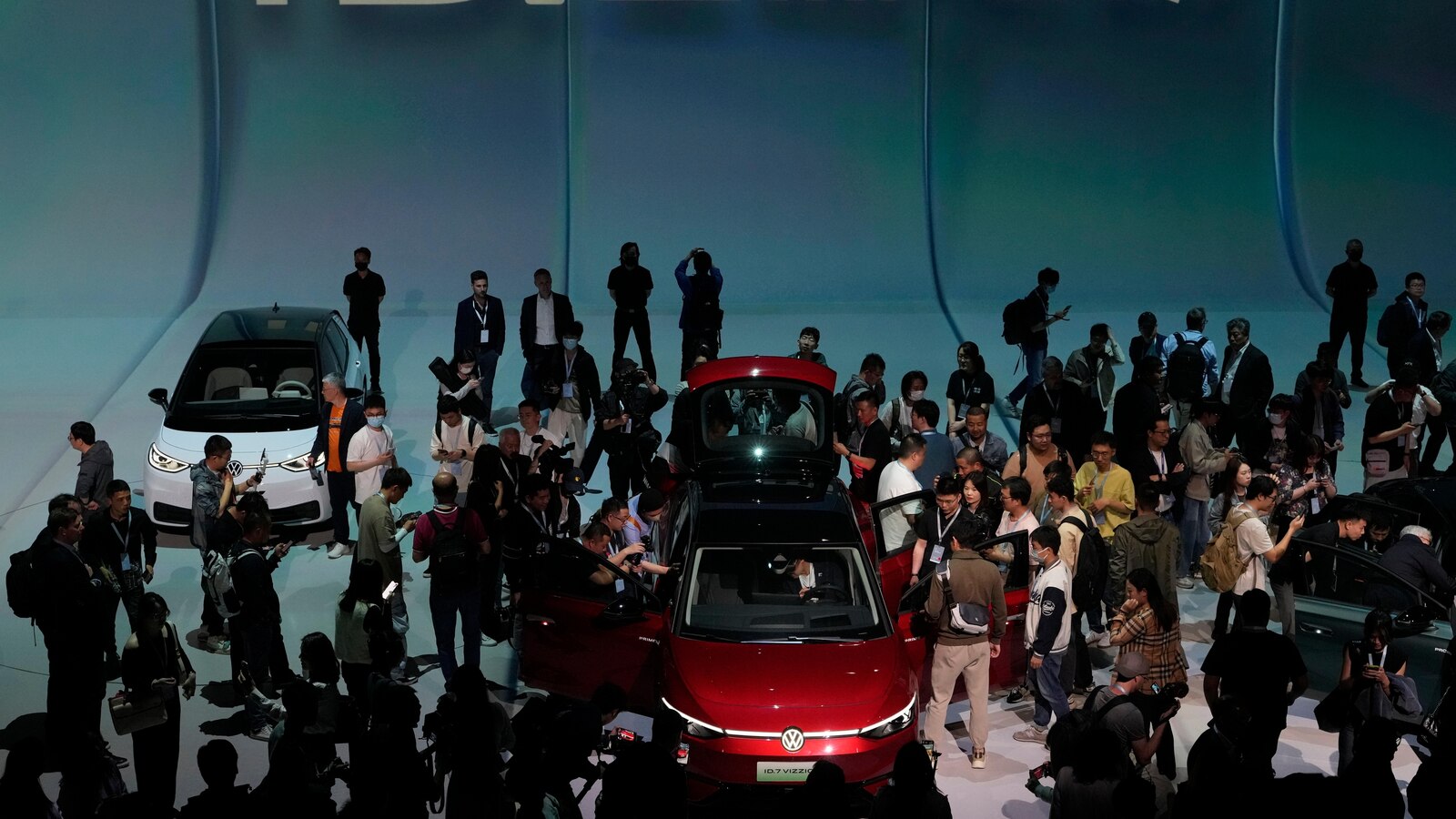
    The duties differ depending on the maker: 17% for BYD, 18.8% for Geely and 35.3% for state-owned SAIC. Other EV manufacturers in China, including Volkswagen and BMW, would be subject to a 20.7% duty. The commission has an individually calculated rate for Tesla of 7.8%.

    “By adopting these proportionate and targeted measures after a rigorous investigation, we’re standing up for fair market practices and for the European industrial base,” European Commission Executive Vice-President Valdis Dombrovskis said.

    The duties will stay in force for five years unless an amicable solution is found.

    Chinese-built electric cars jumped from 3.9% of the EV market in 2020 to 25% by September 2023, the commission has said.

    The commission says companies in China accomplished that with the help of subsidies all along the chain of production, from cheap land for factories from local governments to below-market supplies of lithium and batteries from state-owned enterprises to tax breaks and below-interest financing from state-controlled banks.

    The rapid growth in market share has sparked fears that Chinese cars will eventually threaten the EU’s ability to produce its own green technology needed to combat climate change, as well as the jobs of 2.5 million workers at risk in the auto industry and 10.3 million more people whose jobs depend indirectly on EV production.

    Subsidized solar panels from China have wiped out European producers — an experience that European governments don’t want to see repeated with their auto industry.

    Unusually, the commission acted on its own, without a complaint from the European auto industry. Industry leaders and Germany, home to BMW, Volkswagen and Mercedes-Benz, have opposed the tariffs. That’s because many of the cars that will be hit with tariffs are made by European companies, and China could retaliate against the auto industry or in other areas.

    Beijing has been sharply critical of the investigation and the higher duties as protectionist and unfair.

    The Commerce Ministry has also launched anti-dumping investigations into European exports of brandy, pork and dairy products. Earlier this month, it announced provisional tariffs of 30.6% to 39% on French and other European brandies, after EU member countries voted in favor of finalizing the tariffs on EVs.

    Officials have also said that they are weighing whether to raise tariffs on imports of gasoline-powered vehicles with large engines.

    Talks between the two sides focused in recent weeks on so-called “price commitments” as a possible resolution. In such a scenario, carmakers would agree to a minimum selling price for their EVs in Europe.

    Some Chinese automakers are looking at making cars in Europe to avoid any tariffs and be closer to the market. BYD is building a plant in Hungary, while Chery has a joint venture to build cars in Spain’s Catalonia region.

    The Biden administration is raising tariffs on Chinese EVs to 100% from the current 25%. At that level, the U.S. tariffs block virtually all Chinese EV imports.

    That’s not what Europe is trying to do.

    EU officials want affordable electric cars from abroad to achieve their goals of cutting greenhouse gas emissions by 55% by 2030 — but without the subsidies EU leaders see as unfair competition

    The planned tariffs are aimed at leveling the playing field by approximating the size of the excess or unfair subsidies available to Chinese carmakers.

    European countries subsidize electric cars, too. The question in trade disputes is whether subsidies are fair and available to all carmakers or distort the market in favor of one side.

    It’s not clear what impact the duties will have on car prices. Chinese carmakers are able to make cars so cheaply that they could absorb the duties in the form of lower profits instead of raising prices.

    Currently, Chinese carmakers often sell their vehicles overseas at much higher prices than in China, meaning they are favoring profits over market share, even given their recent market gains. Five of BYD’s six models would still earn a profit in Europe even with a 30% tariff, according to Rhodium Group calculations.

    BYD’s Seal U Comfort model sells for the equivalent of 21,769 euros ($23,370) in China but 41,990 euros ($45,078) in Europe, according to Rhodium. The base model of BYD’s compact Seagull, due to arrive in Europe next year, sells for around $10,000 in China.

    While consumers might benefit from cheaper Chinese cars in the short term, allowing unfair practices could eventually mean less competition and higher prices in the long term, the commission argues.

    ___

    Moritsugu reported from Beijing.

    Source link

  • AP sources: Chinese hackers targeted phones of Trump, Vance, people associated with Harris campaign

    AP sources: Chinese hackers targeted phones of Trump, Vance, people associated with Harris campaign

    WASHINGTON — Chinese hackers targeted cellphones used by Republican presidential nominee Donald Trump, his running mate, JD Vance, and people associated with the Democratic campaign of Kamala Harris, people familiar with the matter said Friday.

    It was not immediately clear what data, if any, may have been accessed. U.S. officials are continuing to investigate, according to the people, who were not authorized to publicly discuss the ongoing inquiry and spoke on the condition of anonymity to The Associated Press.

    An FBI statement did not confirm that Trump and Vance were among the potential targets but said it was investigating “unauthorized access to commercial telecommunications infrastructure by actors affiliated with the People’s Republic of China.”

    “Agencies across the U.S. Government are collaborating to aggressively mitigate this threat and are coordinating with our industry partners to strengthen cyber defenses across the commercial communications sector,” the FBI said.

    U.S. officials believe the campaigns were among numerous targets of a larger cyberespionage operation launched by China, the people said. It was not immediately clear what information China may have hoped to glean, though Beijing has for years engaged in vast hacking campaigns aimed at collecting the private data of Americans and government workers, spying on technology and corporate secrets from major American companies and targeting U.S. infrastructure.

    News that high-profile political candidates were targeted comes as U.S. officials remain on high alert for foreign interference in the final stretch of the presidential campaign. Iranian hackers have been blamed for targeting Trump campaign officials and the Justice Department has exposed vast disinformation campaigns orchestrated by Russia, which is said to favor Trump over Democrat Kamala Harris.

    China, by contrast, is believed by U.S. intelligence officials to be taking a neutral stance in the race and is instead focused on down-ballot races, targeted candidates from both parties based on their stance on issues of key importance to Beijing, including support for Taiwan.

    The New York Times first reported that Trump and Vance had been targeted and said the campaign was alerted by U.S. officials this week. Three people confirmed the news to the AP, including one who said that people associated with the Harris campaign were also targeted.

    A spokesperson for the Chinese embassy in Washington said they were not familiar with the specifics and could not comment, but contended that China is routinely victimized by cyberattacks and opposes the activity.

    “The presidential elections are the United States’ domestic affairs. China has no intention and will not interfere in the U.S. election. We hope that the U.S. side will not make accusations against China in the election,” the statement said.

    Trump campaign spokesman Steven Cheung did not offer any details about the Chinese operation but issued a statement accusing the Harris campaign of having emboldened foreign adversaries, including China and Iran.

    The FBI has repeatedly warned over the last year about Chinese hacking operations, with Director Chris Wray telling Congress in January that investigators had disrupted a state-sponsored group known as Volt Typhoon. That operation targeted U.S.-based small office and home routers owned by private citizens and companies. Their ultimate targets included water treatment plants, the electrical grid and transportation systems across the U.S.

    Last month, Wray said that the FBI had interrupted a separate Chinese government campaign, called Typhoon Flax, that targeted universities, government agencies and other organizations and that installed malicious software on more than 200,000 consumer devices, including cameras, video recorders and home and office routers.

    The Wall Street Journal reported this month that Chinese hackers had burrowed inside the networks of U.S. broadband providers and had potentially accessed systems that law enforcement officials use for wiretapping requests.

    ____

    Michelle L. Price in New York and Jill Colvin in Austin, Texas contributed to this report.

    Source link

  • Ban sought for Chinese, Russian tech used in autonomous vehicles on US roads

    Ban sought for Chinese, Russian tech used in autonomous vehicles on US roads

    NEW YORK — A ban on the sale of connected and autonomous vehicles in the U.S. that are equipped with Chinese and Russian software and hardware is being sought by the U.S. Commerce Department, with the stated goal of protecting national security and U.S. drivers.

    The measure announced Monday is proactive but critical, the agency said, given that all the bells and whistles in cars like microphones, cameras, GPS tracking and Bluetooth technology could make Americans more vulnerable to bad actors and potentially expose personal information, from the home address of drivers, to where their children go to school.

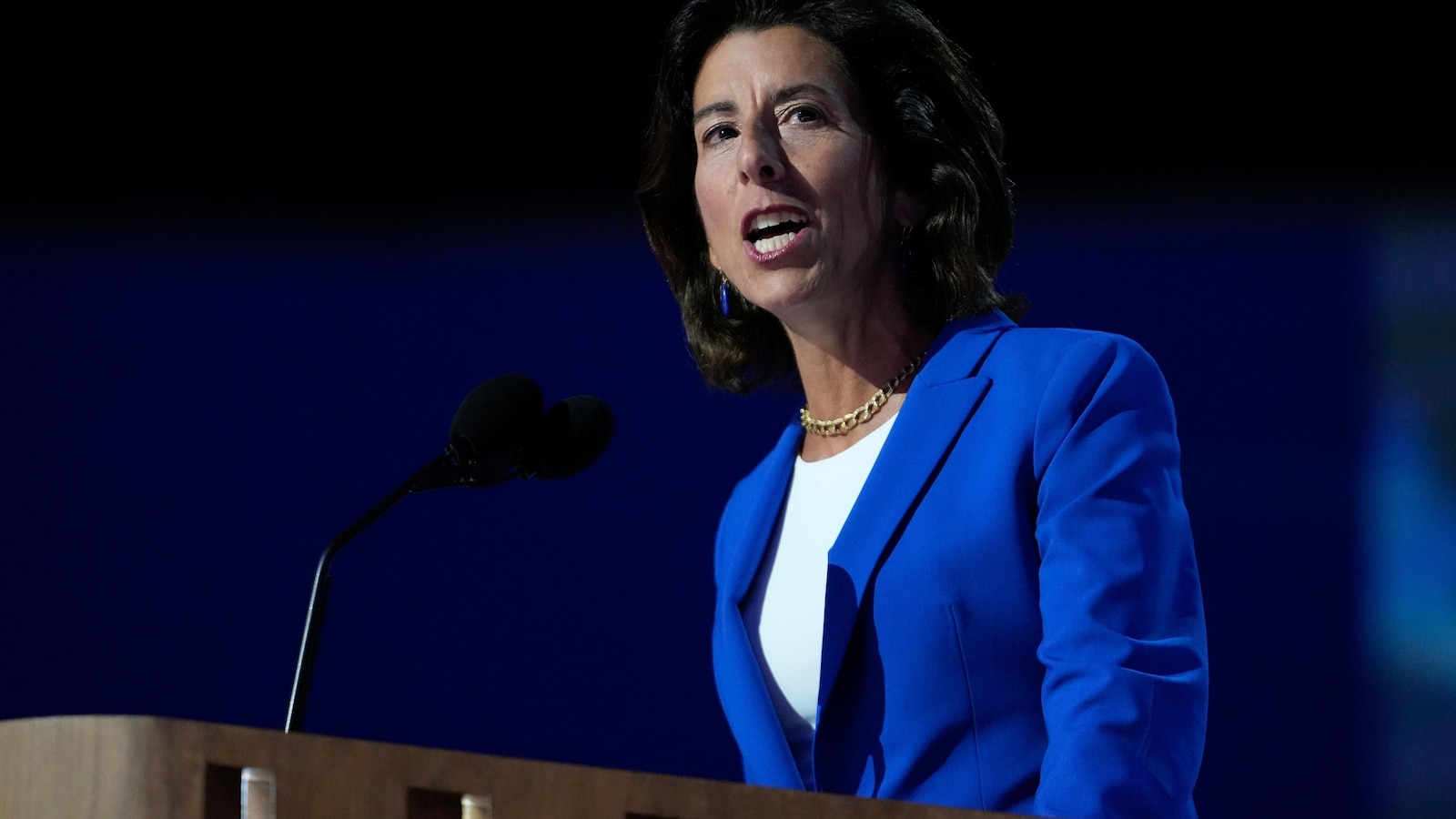
    In extreme situations, a foreign adversary could shut down or take simultaneous control of multiple vehicles operating in the United States, causing crashes and blocking roads, U.S. Secretary of Commerce Gina Raimondo told reporters on a call Sunday.

    “This is not about trade or economic advantage,” Raimondo said. “This is a strictly national security action. The good news is right now, we don’t have many Chinese or Russian cars on our road.”

    But Raimondo said Europe and other regions in the world where Chinese vehicles have become commonplace very quickly should serve as “a cautionary tale” for the U.S.

    Security concerns around the extensive software-driven functions in Chinese vehicles have arisen in Europe, where Chinese electric cars have rapidly gained market share.

    “Who controls these data flows and software updates is a far from trivial question, the answers to which encroach on matters of national security, cybersecurity, and individual privacy,” Janka Oertel, director of the Asia program at the European Council on Foreign Relations, wrote on the council’s website.

    Vehicles are now “mobility platforms” that monitor driver and passenger behavior and track their surroundings.

    A senior administration official said that it is clear from terms of service contracts included with the technology that data from vehicles ends up in China.

    Raimondo said that the U.S. won’t wait until its roads are populated with Chinese or Russian cars.

    “We’re issuing a proposed rule to address these new national security threats before suppliers, automakers and car components linked to China or Russia become commonplace and widespread in the U.S. automotive sector,” Raimondo said.

    It is difficult to know when China could reach that level of saturation, a senior adminstration official said, but the Commerce Department says China hopes to enter the U.S. market and several Chinese companies have already announced plans to enter the automotive software space.

    The Commerce Department added Russia to the regulations since the country is trying to “breathe new life into its auto industry,” senior administration officials said on the call.

    The proposed rule would prohibit the import and sale of vehicles with Russia and China-manufactured software and hardware that would allow the vehicle to communicate externally through Bluetooth, cellular, satellite or Wi-Fi modules. It would also prohibit the sale or import of software components made in Russia or the People’s Republic of China that collectively allow a highly autonomous vehicle to operate without a driver behind the wheel. The ban would include vehicles made in the U.S. using Chinese and Russian technology.

    The proposed rule would apply to all vehicles, but would exclude those not used on public roads, such as agricultural or mining vehicles.

    Commerce officials met with all the major auto companies around the world while it drafted the proposed rule to better understand supply chain networks, according to senior administration officials, and also met with a variety of industry associations.

    While there is minimal Chinese and Russian software deployed in the U.S, the issue is more complicated for hardware. That’s why Commerce officials said the prohibitions on the software would take effect for the 2027 model year and the prohibitions on hardware would take effect for the model year of 2030, or Jan. 1, 2029, for units without a model year.

    The Commerce Department is inviting public comments, which are due 30 days after publication of a rule before it’s finalized. That should happen by the end of the Biden Administration.

    The new rule follows steps taken earlier this month by the Biden administration to crack down on cheap products sold out of China, including electric vehicles, expanding a push to reduce U.S. dependence on Beijing and bolster homegrown industry.

    _____

    AP Business Writer David McHugh contributed to this story from Frankfurt, Germany.

    Source link

  • Congress targets Chinese influence in health tech. It could come with tradeoffs

    Congress targets Chinese influence in health tech. It could come with tradeoffs

    WASHINGTON — A California biotechnology company that helps doctors detect genetic causes for cancer is among those that could be cut out of the U.S. market over ties to China, underscoring the possible tradeoffs between health innovation and a largely bipartisan push in Congress to counter Beijing’s global influence.

    The competition between the world’s superpowers is hitting Complete Genomics, whose employees, some in white lab coats stitched with U.S. flag arm patches, spin samples in test tubes and huddle around computers in San Jose. Its founder and chief scientific officer said he’s frustrated that geopolitics is interfering with science.

    “It’s just a loss for the research and for the industry,” Radoje Drmanac said.

    The U.S. House this week overwhelmingly passed the BIOSECURE Act, which cites national security in preventing federal money from benefiting Complete Genomics and four other companies linked to China. They work with U.S. drugmakers to develop new medications or help doctors diagnose diseases.

    It is part of a sweeping package of bills aimed at countering China’s influence and power, especially in technology, that Congress largely backed this week. The biotech measure, which cleared the House with a 306-81 vote, now heads to the Senate.

    Supporters say the legislation is necessary to protect Americans’ health care data, reduce reliance on China in the medical supply chain and ensure the U.S. gains an edge in the biotech field, which both countries call crucial to their economy and security.

    Opponents say the bill, which would ban China-linked companies from working with firms that receive U.S. government money, would delay clinical trials and hinder development of new drugs, raise costs for medications and hurt innovation.

    Rep. Brad Wenstrup, an Ohio Republican and the bill’s sponsor, said House approval was the first step in protecting Americans’ genetic data and reversing the trend of relying on Beijing for gene testing and basic medical supplies.

    “For too long, U.S. policy has failed to recognize the twin economic and national security threats posed by China’s domination of particular markets and supply chains,” he said.

    Rep. James Comer, a Kentucky Republican who chairs the House Oversight Committee, said it’s necessary to protect U.S. interests before these companies “become more embedded in the U.S. economy, university systems and federal contracting base.”

    Rep. Jim McGovern, D-Mass., argued that the legislation, which he opposed, should not name specific companies without due process, saying, “If one of these five companies does not belong on the list, too bad, Congress doesn’t like you, and that’s that.”

    Drmanac of Complete Genomics, a subsidiary of China-based company MGI, said the privacy of Americans’ personal information is not a concern because his company’s instruments are only connected to local U.S. servers.

    The company also has argued that Congress should broadly apply data protection standards and requirements rather than targeting a small subset of companies.

    Some analysts see the issue as more about industry competition than protecting people’s personal information from the Chinese government.

    “You want to make sure that American pharmaceutical companies and biotechnology companies are on an even footing in terms of their ability to compete both inside the U.S. market and then also abroad,” said Andrew Reddie, a public policy professor at the University of California, Berkeley, who studies the intersection of technology, politics and security and founded the Berkeley Risk and Security Lab.

    Complete Genomics is listed in the legislation along with BGI, MGI, WuXi AppTec and WuXi Biologicis. MGI is a spinoff of BGI, a heavyweight genomics company based in China that offers genetic sequencing services for research purposes in the U.S.

    BGI Group called the bill “a false flag targeting companies under the premise of national security” and said, “We strictly follow rules and laws, and we have no access to Americans’ personal data in any of our work.”

    MGI said the bill would “serve only to stifle competition and foster a monopoly in DNA testing.”

    WuXi AppTec and WuXi Biologics work as contractors providing research, development and manufacturing services for U.S. drugmakers. Such services are considered crucial for American pharmaceutical companies to develop and make new drugs.

    WuXi AppTec said it and others in the industry are concerned about the bill’s impact on biotechnology innovation, drug development, patient care and health care costs. It urged the Senate not to move forward without addressing “these serious consequences.”

    In filings with the U.S. Securities and Exchange Commission, dozens of U.S. biotech companies have flagged the BIOSECURE Act as a concern, saying it could have major effects on the pharmaceutical supply chain because of the industry’s extensive partnerships with Chinese companies.

    Drugmaker Eli Lilly says its third-party suppliers are “sometimes the sole global source for a component” but it has been working to move some development and manufacturing closer to home, which typically takes several years “due to scientific and regulatory complexity and the need to ensure process and product quality.”

    BIO, the largest advocacy group for U.S. biotech companies and research institutions, supports the bill, saying it reinforces the industry’s national security imperative.

    The bill, which gives U.S. companies eight years to break ties with Chinese firms, has provided “a reasonable timeframe” for the decoupling, group CEO John Crowley said.

    ___

    Daley reported from San Jose.

    Source link