hacklink hack forum hacklink film izle hacklink marsbahisizmir escortsahabetpornJojobet

Tag: College

  • 2024 College Football Playoff guide: What to know about the new 12-team format, at-large bids

    2024 College Football Playoff guide: What to know about the new 12-team format, at-large bids

    The 12-team College Football Playoff era has officially begun, and with it, a host of details with which fans will need to familiarize themselves. Here are answers to some frequently asked questions about the sport’s new postseason. Feel free to bookmark and reference as December draws near.

    Why the new postseason?

    For most of its century-plus existence, college football had a “mythical national champion.” The sport’s season champion was determined after teams played in bowl games by various polls and rankings, which, of course, led to significant debate. In 1998, college football introduced the often-controversial Bowl Championship Series, or BCS, which utilized a mix of rankings and computer methodology to ensure that its No. 1 vs. No. 2 teams met in a bowl game.

    In 2012, leaders of the BCS approved the College Football Playoff, which launched in 2014 as a four-team postseason knockout tournament. Because debate and controversy are at the soul of college football, it was decided that the four-team field would be chosen by a 13-person selection committee, comprised of various conference commissioners and athletic directors. And because only four teams would make the postseason, one major Power 5 conference would get left out.

    The CFP upheld the prestige of the bowl games around New Year’s Eve and Day and added the Peach and Cotton bowls to the slate to comprise the New Year’s Six, as they are still called. For several years the postseason carried on, until talks in earnest about expansion picked up in the last three years. After many discussions about possible iterations, a 12-team postseason tournament was approved in September 2022.

    How will the teams be selected for the 12-team field?

    That 13-person selection committee, as it did in the four-team era, will rank its top-25 teams weekly, beginning Nov. 5 and culminating on Dec. 8. The panel consists of current athletic directors and school administrators, and former coaches and players, all of whom are supposed to evaluate the teams based on schedule strength, head-to-head results and their own subjective opinions. Michigan athletic director Warde Manuel is the new chairman.

    The big difference in the new format is that the committee’s five highest-ranked conference champions receive guaranteed berths. While not set in writing, it’s presumed they will go to the ACC, Big Ten, Big 12 and SEC champions, as well as the highest-ranked champion from the Group of 5 leagues (AAC, Conference USA, MAC, Mountain West and Sun Belt).

    The other seven bids go to the highest-ranked teams that did not win their conference.

    How will those 12 teams be slotted into the bracket?

    The four highest-ranked champions will receive the top four seeds, regardless of where they fall in the rankings. If, say, the ACC champion is 10-3 and ranked No. 11 by the committee, and is ranked higher than a No. 14-ranked Group of 5 champion, it would not drop below the No. 4 seed. Conversely, if an SEC team is 12-1 and ranked No. 3 but lost in the conference title game, the highest it could be seeded is No. 5.

    Seeds 1-4 will be incredibly important because those teams have a first-round bye.

    What about Notre Dame and other independents?

    Independents cannot earn a higher seed than No. 5, and therefore cannot receive a bye.

    How do Washington State and Oregon State make the Playoff?

    “The Pac-2” are not eligible for a conference championship. The Cougars and the Beavers must finish the season ranked high enough for an at-large berth.

    When and where will the first round be?

    The conference championships this season will be played across Dec. 6 and Dec. 7. The first round will be held two weekends later, with one game on Friday, Dec. 20 (8 p.m. ET, ABC/ESPN), and three on Saturday, Dec. 21 (Noon and 4 p.m., ET on TNT, 8 p.m. ET on ABC/ESPN).

    This will be the only round with games played at campus stadiums. With the top-four seeds on byes, the No. 5 seed will host the No. 12 seed, No. 6 hosts No. 11, No. 7 hosts No. 10 and No. 8 hosts No. 9.

    Will these be more like a regular home game or an NCAA tournament venue?

    Definitely the former. CFP executive director Richard Clark said visiting teams will only receive around 3,500 tickets. “We want it to feel like a home game,” he said. “You (the higher seed) earned that opportunity.”

    Given the quick turnaround between Selection Sunday and the first games, the CFP has already booked hotel blocks for the visiting team near FBS schools with a realistic shot of hosting and will release rooms as teams fall out of contention.

    Will the bracket be reseeded after the first round, like in the NFL?

    No. The No. 1 seed will play the 8-9 winner, the No. 2 seed will play the 7-10 winner, the No. 3 seed will play the 6-11 winner and the No. 4 seed will play the 5-12 winner.

    It’s very likely the No. 5 seed, the best of all the at-large teams, will be a higher-ranked team than the No. 4 seed, itself either the lowest-ranked Power 4 champion or the Group of 5 champion.

    When and where will the quarterfinals be played?

    The four quarterfinal games and both semifinals will be played at current New Year’s Six bowls (Rose, Sugar, Orange, Fiesta, Cotton and Peach). As in the four-team era, the bowls will rotate hosting the semifinal matchups.

    This year, the Fiesta (Dec. 31, 7:30 p.m. ET), Peach (Jan. 1, 1 p.m.), Rose (Jan. 1, 5 p.m.) and Sugar (Jan. 1, 8:45 p.m. ET) are the four quarterfinal hosts.

    CFP Bowl Games

    Bowl Date Location Round

    Fiesta

    Dec. 31

    Glendale, Ariz.

    Quarterfinals

    Peach

    Jan. 1

    Atlanta

    Quarterfinals

    Rose

    Jan. 1

    Pasadena, Calif.

    Quarterfinals

    Sugar

    Jan. 1

    New Orleans

    Quarterfinals

    Orange

    Jan. 9

    Miami, Fla.

    Semifinals

    Cotton

    Jan. 10

    Arlington, Texas

    Semifinals

    How do they decide which teams play in which bowls?  

    Whenever possible, the teams will be assigned to their conference’s traditional bowl partner. If the SEC or Big 12 champion is the No. 1 seed, it will go to the Sugar Bowl in New Orleans, the Big Ten champion to the Rose Bowl in Pasadena, Calif. The others will be slotted based on geographic proximity.

    For example, if the No. 3 seed is closer to Atlanta than Glendale, Ariz., it will be placed at the Peach Bowl, and then the No. 4 seed heads to the Fiesta.

    Will the teams still experience a traditional bowl week?

    Sadly, the days of teams spending a week in L.A. before the Rose Bowl, eating Lawry’s Beef and gallivanting at Disneyland, may be over. They’ll arrive at the quarterfinal sites on Dec. 29, practice on the 30th, hold a walk-through on the 31st and play the games on Jan. 1. The semifinal stays will be one day shorter than that.

    When are the semifinals?

    The semifinals are Jan. 9 (Orange) and Jan. 10 (Cotton), both on ESPN at 7:30 p.m. ET. With the NFL’s six-game Wild Card round that weekend, the CFP had little choice but to play on a Thursday and Friday night.

    Is there any chance they’ll eventually move the quarterfinals and semifinals to campuses?

    Not likely in the near future. Earlier this year, ESPN and the CFP agreed to a six-year, $7.8 billion extension that runs through the 2031-32 season. While the long-form contract has not yet been finalized, it’s expected to include the same six bowls.

    “We are committed to our bowl partners,” said Clark. “They’re as much a part of college football as anything.”

    One possible wrinkle after the current contract ends in 2026: The Rose Bowl has asked to be left out of the semifinal rotation going forward in favor of keeping its traditional New Year’s Day time slot. If granted, it would host a quarterfinal every year.

    go-deeper

    GO DEEPER

    College Football Playoff 2024 projections: What will Sunday’s final bracket look like?

    When is the national championship game?

    The title game will be played on a Monday night, as it has since 2006 — only it’s now two weeks later. This year’s national championship is at Mercedes-Benz Stadium in Atlanta and will be played on Jan. 20, 2025 (7:30 p.m., ESPN). Next year’s is on Jan. 19, 2026, at Hard Rock Stadium in Miami. Locations beyond that have not been announced.

    How do they divide up the money?

    This year and next fall under the CFP’s original 12-year deal with ESPN. In 2023-24, the distribution was $82.2 million for each of the Power 5 conferences, a combined $103 million split among the Group of 5 leagues, $3.9 million to Notre Dame and $940,000 to the other independents.

    With the demise and fallout of the Pac-12, the CFP adjusted the formula so that each conference’s per-school average remains roughly the same.

    Will the tournament expand to 14 teams next?

    The possibility of an expanded bracket came up earlier this year when the commissioners met to discuss whether to sign off on the ESPN extension. Specifically, Big Ten commissioner Tony Pettiti was advocating for more teams. Those discussions have been “tabled” until after this year’s Playoff.

    “After we see how this season goes, we’ll look at a lot of different things,” said Clark. “The 14-team Playoff is just an option, but we just have to see how the 12 goes.”

    In other words, you may need another primer in two years’ time.

    (Illustration: Dan Goldfarb / The Athletic)
    Source link

  • College Football Playoff System Also Includes Financial Incentives

    College Football Playoff System Also Includes Financial Incentives

    The College Football Playoff committee’s much-anticipated final reveal will be televised live Sunday, when the teams selected for the inaugural 12-team tournament field will be announced.

    Champions from the Atlantic Coast, Big Ten, Big 12 and Southeastern conferences receive automatic berths into the playoff, as will the top-ranked school from the Group of Five.

    The four top-ranked league champions receive a bye into the quarterfinal round, while the lowest-ranked champion will join seven at-large teams to play four first-round games to be held Dec. 20-21.

    The prestige of inclusion in the 12-team field is hardly the only perk. Money is also at stake. The CFP’s financial distribution model rewards conferences for not only how many teams they place in the field but also how far they advance.

    CFP REVENUE DISTRIBUTION

    Per terms of the agreement for playoff participants:

    *A conference will receive $4 million for each team that makes the College Football Playoff and for each team that advances to the quarterfinals.

    *A conference will receive $6 million for each team that advances to the semifinals and each team that advances to the national championship game.

    *A conference whose team makes the field will receive $3 million to cover expenses for each team in each round.

    *Separately, each conference will receive $300,000 for each school whose team meets the NCAA academic progress rate (ARP) for participation in a postseason game. Each independent institution will also receive $300,000 when its football team meets that standard.

    A BYE IS VALUABLE

    It is not difficult to understand why coaches and officials from the Big 12 and the ACC attempted to make a strong case for their conferences after the most recent CFP rankings were announce Tuesday. No. 8 SMU was the only ACC team ranked in the top 12, and none of the Big 12 teams was ranked that high. Arizona State topped out at No. 15.

    The champion of one of those conferences is almost certain to be the No. 5 seed, which would keep the league from maxing out on its potential revenue. The first four CFP seeds will net $8 million for their leagues by virtue of the first-round bye — $4 million for making the field and another $4 million for (automatically) advancing to the quarterfinals.

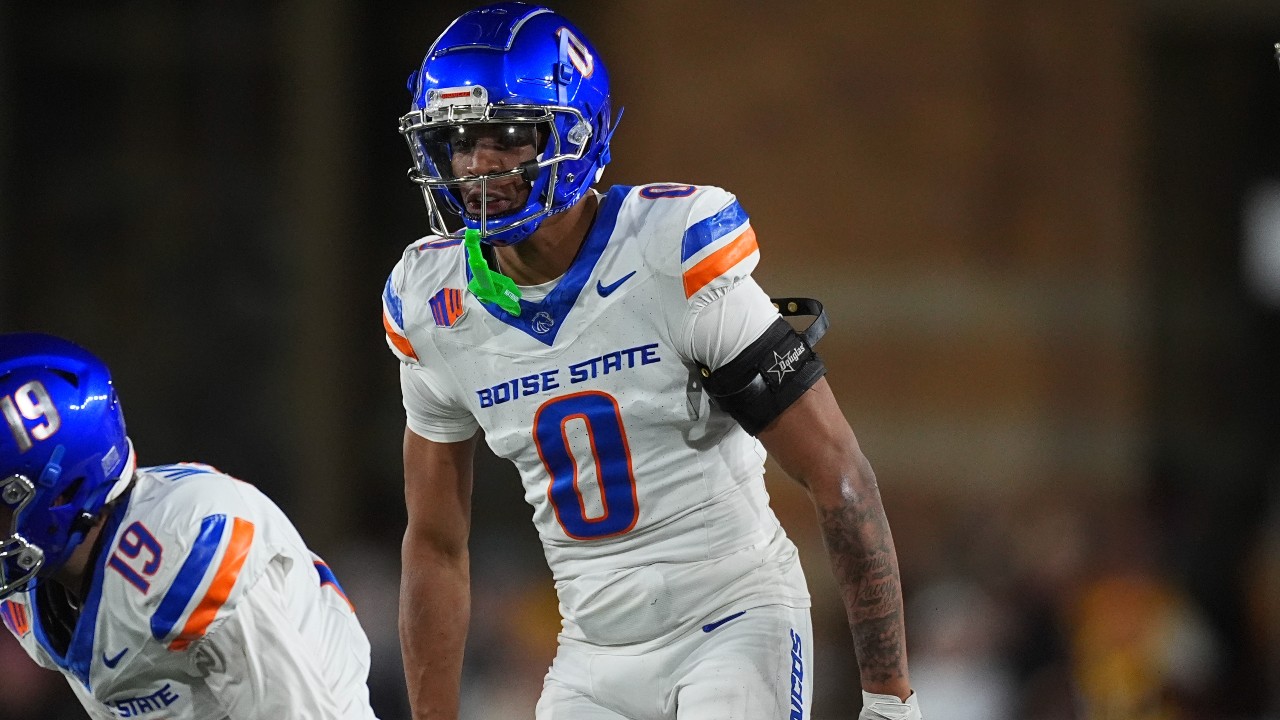
    No. 10 Boise State won its second straight Mountain West championship with a 21-7 victory over No. 20 UNLV on Friday night, and it seems impossible that the Broncos could drop out of the top 12 in favor of a two-loss Big 12 champion or a two- or three-loss ACC winner.

    Arizona State and No. 16 Iowa State (both 10-2) will play for the Big 12 title and SMU (11-1) will play No. 17 Clemson (9-3) for ACC title.

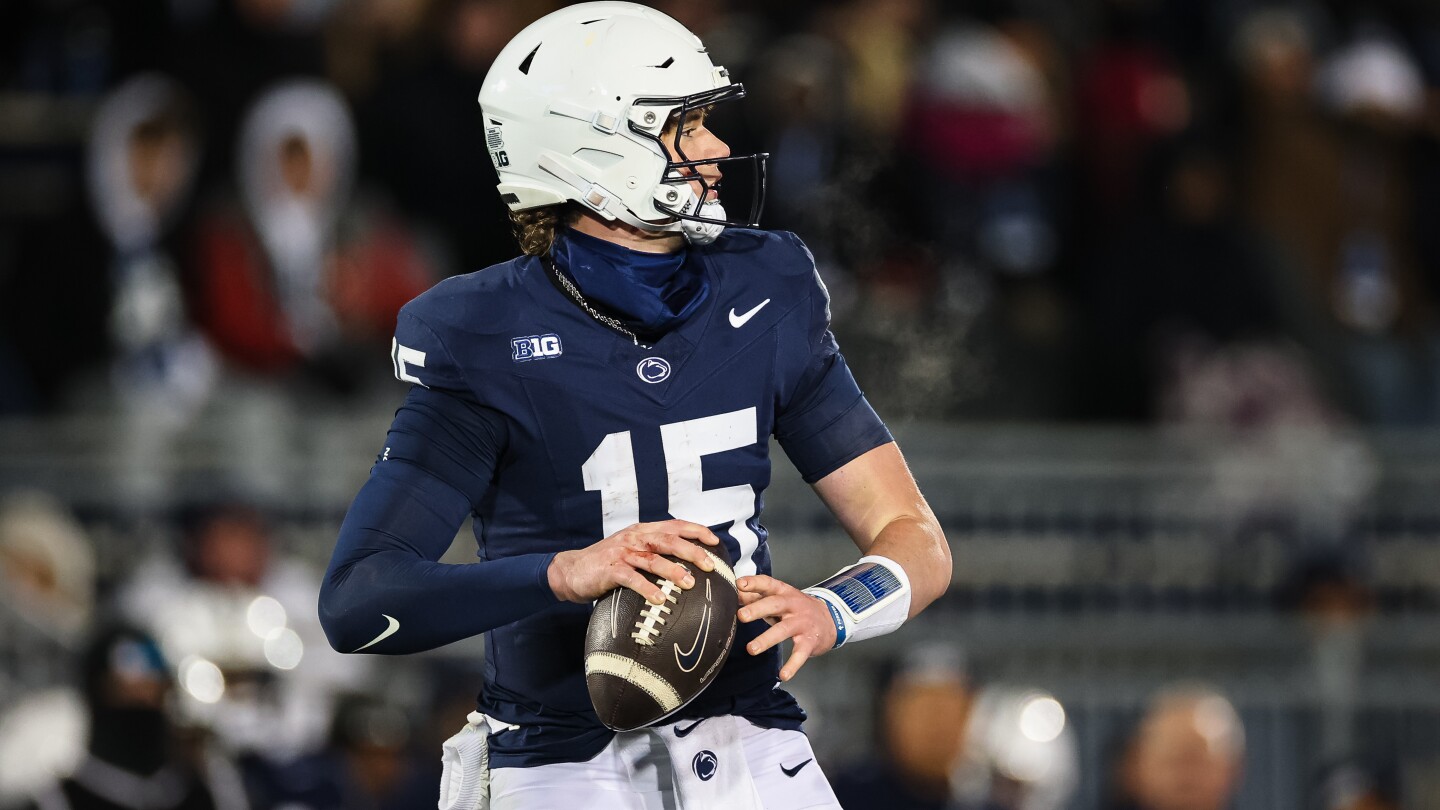
    Saturday’s championship card also includes No. 2 Texas (11-1) against No. 5 Georgia (10-2) in a rematch for the SEC title and No. 1 Oregon (12-0) meeting No. 3 Penn State (11-1) in the Big Ten title game. An an independent, No. 4 Notre Dame (11-1) is not eligible for top five seed per CFP rules.

    THE 2023-24 PAYOUTS

    Based on calculations from the 2023-24 season, the CFP said the following distributions were made in the spring of 2024:

    *For conferences that had contracts for their champions to participate in the Orange, Rose, or Sugar bowls, the base amount combined with the full academic performance pool was approximately $79.41 million for each conference.

    *The five conferences that did not have contracts for their champions to participate in the Orange, Rose or Sugar bowls received approximately $102.77 million in in base and APR pools.

    *Notre Dame received a payment of $3.89 million by meeting the APR standard. the other six independents shared $1.89 million.

    IF LATEST CFP RANKINGS HOLD

    The Big Ten and the SEC stand to be the big winners if nothing changes Sunday from the most recent CFP rankings Dec. 3.

    Four Big Ten schools — Oregon, Penn State, Indiana, Ohio State — and four SEC schools — Texas, Georgia, Mississippi, Alabama — were ranked in the top 11. Alabama landed at No. 11, one spot behind Boise State and one ahead of ACC Miami, which in that instance would be the first team out.

    For that, Big Ten and SEC teams would earn at least $20 million for their conferences in the first two rounds — $16 million for the four teams in the field and another $4 million for the conference champion because it automatically advances.

    That would leave first-round money of $4 million for each Notre Dame, Boise State, the Big 12 champ and the ACC champ. The Mountain West would be the biggest unexpected winner, inasmuch as it could make $8 million if Boise State gets the No. 4 seed and the bye.

    The quarterfinals are Dec. 31-Jan. 1, the semifinals are Jan. 9-10 and and the championship game is Jan. 20 in Mercedes-Benz Stadium in Atlanta.

    Hypothetically, if an SEC team and a Big Ten team meet in the final game, each conference would earn another $12 million apiece — $6 million for reaching the semifinals, another $6 million for making the title game.

    If one conference has both finalists, the windfall would $24 million.

    Source link

  • College Football Playoff overtime rules: How does it work, number of overtimes, possessions, ties

    College Football Playoff overtime rules: How does it work, number of overtimes, possessions, ties

    It’s that time of year: the postseason – when evenly-matched teams face each other more often than not, meaning a higher chance at overtime. So what are the college football overtime rules? Are they different for the College Football Playoff? What’s the record for number of overtimes in a single game?

    Here’s everything you need to know about how college football overtime works.


    What are the rules for overtime in college football?

    A college football game goes to overtime when the game is tied at the end of regulation (after four quarters of play), and the team that scores the most points in overtime wins the game.

    Each team’s captains go to the 50-yard line for the overtime coin toss. The winning team of the coin toss can decide whether they play offense or defense or which end of the field will be used for both possessions of that overtime period. The losing team gets to decide the remaining option.

    This isn’t a modified sudden-death system like the NFL; instead, each team gets a possession in each overtime period until one outscores the other.

    Through the first two overtime periods, teams will start on the 25-yard line (unless relocated by a penalty). The team on offense can choose to start its possession with the football anywhere on or between the hash marks. Each team’s possession continues until it scores (touchdown or field goal) or fails to make a first down. Starting in second overtime, teams are required to try for a 2-point conversion instead of an extra point after a touchdown. Starting in third overtime, teams run alternating 2-point plays, instead of starting another drive.

    Each team will receive one timeout for every overtime period. Timeouts not used during regulation do not rollover to overtime and unused timeouts from previous overtime periods do not rollover to the next. Timeouts used between overtime periods are charged to the following period.


    What happens after two overtimes in college football?

    Starting in second overtime, teams are required to try for a 2-point conversion instead of an extra point after a touchdown. Starting in third overtime, teams run alternating 2-point plays, instead of starting another drive.


    How many overtimes can there be in NCAA college football?

    There is no limit to overtimes in college football.


    Are there ties in college football?

    Since there is no limit to overtimes in college football, there are no ties.

    Prior to the introduction of overtime in 1995, games often ended in ties, but overtime makes it so a winner must be determined.


    How many timeouts do you get in college football overtime?

    Each team will receive one timeout for every overtime period. Timeouts not used during regulation do not rollover to overtime and unused timeouts from previous overtime periods do not rollover to the next. Timeouts used between overtime periods are charged to the following period.


    Are overtime rules the same for the regular season, bowl games, and the College Football Playoff?

    Yes, overtime rules are the same for all college football games.


    What are the longest overtime games in college football history?

    The first and only game to ever reach nine overtimes happened on October 23, 2021, when Illinois and Penn State went back and forth until the Illini scored a two-point conversion in the ninth OT to upset the No. 7 Nittany Lions.

    Most recently, No. 7 Georgia and Georgia Tech delivered an eight-overtime game on November 29, with some dubbing the 2024 edition “Clean, Old Fashioned Eight.” The Yellow Jackets led the Bulldogs 17-0 at halftime, but the Bulldogs rebounded in the second half, tying the game at 27-27 to force OT. In the eighth OT, Georgia was successful in its 2-point attempt after stopping Georgia Tech on their attempt, ultimately winning the game, 44-42.


    Source link

  • How the 12-team College Football Playoff will work, and why seeding is so confusing

    How the 12-team College Football Playoff will work, and why seeding is so confusing

    College football has tripled the size of its Playoff field and, with that one move, it exponentially increased the angst and arguments related to the teams that should make it.

    On Sunday, the selection committee will unveil the first official 12-team College Football Playoff bracket. We’ll see four teams earn first-round byes, four other teams designated as first-round hosts and four teams simply happy to have snuck into the field at all.

    The expanded CFP means more teams, more games and also more confusion. The rules regarding seeding and scheduling are new and significantly more complicated than they were in the past. So, we’re here to help simplify it all.

    The final College Football Playoff rankings of the year will be released at the conclusion of conference championship weekend.

    Ranking vs. seeding

    The most important difference with the new system as opposed to the four-team CFP era is that one team’s seed might not be the same as its ranking. The field is still chosen and ranked by a 13-member selection committee that meets weekly over the final six weeks of the season, using the criteria that has previously been established. But in the four-team era, the Playoff field was simply made up of the top four teams in the final rankings. Now, it’s more complicated, because the top four seeds in the final bracket are required to be conference champions.

    The five conference champions ranked highest by the selection committee receive automatic berths to the CFP. The final seven spots go to the highest-ranked at-large teams. There is no cap on the number of spots one conference can receive.

    Because there are now just four power conferences (the Big Ten, the SEC, the ACC and the Big 12), having five AQ spots for conference champions guarantees one spot for the Group of Five every year. It’s possible that one of the five highest-ranked champions could be ranked outside of the committee’s top 12. If that happens, the champion slides in as the No. 12 seed in the final bracket.

    But because the top four seeds have to be champions of four different leagues, it’s certainly possible that we’ll see the SEC runner-up and the Big Ten runner-up ranked ahead of the champions of the ACC and the Big 12. That’s where it gets confusing, as Penn State could be ranked No. 3 if it loses to Oregon in the Big Ten championship game … but seeded sixth (because it’d be bumped down a few seed lines to make space for the presumed ACC champion as the No. 3 seed and either the Big 12 champion or Mountain West champion as the No. 4 seed.

    This weekend, the committee will first rank its top 25 teams first, then it will plug the automatic qualifiers (conference champions) into the bracket as well as the at-large teams. The committee won’t modify its rankings to avoid rematches between teams that played during the regular season. And there’s no re-seeding after the full bracket is set.

    Top four seeds

    The top four conference champions will receive first-round byes. Seeds 5-8 will host first-round games on campus (or at sites nearby that they’ve designated to be their home fields for the games). No. 5 will host No. 12, No. 6 will host No. 11, and so on. The four first-round games this year will take place on Friday, Dec. 20 and Saturday, Dec. 21. One game will be played on Friday, and three games will be played on Saturday.

    Because the top four seeds will all be conference champions, the bracket is expected to look a little weird — and it’s not going to be truly balanced because seeds 1-4 won’t actually be the four highest ranked teams of the 12 in the field. It’s quite possible that the No. 5 seed is the best spot in the bracket, because that team will get to host a first-round game against the No. 12 seed and, if it wins, then play the No. 4 seed. That path could mean two games against the two weakest conference champions for a spot in the national semifinals.

    Conference championship game upsets can also drastically change the makeup of the bracket. For example, looking at upsets in 2022, 11-2 Clemson, ranked seventh in the final CFP rankings, would have actually been the No. 3 seed under this model. And 10-3 Utah, ranked eighth, would have been the No. 4 seed. Both teams would get a bye, while TCU (ranked third but not a conference champion), Ohio State (ranked fourth but not a conference champion) and Alabama (ranked fifth but not a conference champion) would all be hosting first-round games. Again, the most confusing part is the fact that ranking does not necessarily equal seeding.

    Notre Dame’s path to the Playoff

    Notre Dame, of course, does not play in a conference. The Fighting Irish are ineligible to receive a top four seed (and subsequent bye), because those are required to go to conference champions. But this is a tradeoff that Notre Dame is more than happy to make to maintain its independence while still ensuring access to the national championship.

    The Irish are off during conference championship weekend anyway, so they essentially get a preemptive bye, plus they still get to host games in South Bend, Ind., if they’re in the 5-8 seed range. Then-Notre Dame athletic director Jack Swarbrick was part of the four-person working group that came up with this format in the first place, so of course it’s more than palatable for the Irish.

    Based on the committee’s penultimate set of rankings this week, Notre Dame is all but assuredly going to be hosting a first-round game later this month.

    Later rounds, games and sites

    Quarterfinals will be played at bowl sites and will take place around New Year’s Eve/Day. The Rose Bowl, which loves its designated time slot on Jan. 1 and its subsequent sunsets, is scheduled to host a quarterfinal on Jan. 1 for this season and next. It has asked the CFP if it can be removed from the semifinal rotation and remain as a quarterfinal host on New Year’s Day moving forward.

    This year, the first quarterfinal will be played at the Fiesta Bowl on Dec. 31, followed by games at the Peach, Rose and Sugar Bowl on Jan. 1.

    Semifinal games will be played roughly a week to week-and-a-half after the quarters. The semifinals this year will be played on Thursday, Jan. 9 (at the Orange Bowl) and Friday, Jan. 10 (at the Cotton Bowl). The national championship game will be the latest it has ever been played — on Monday, Jan. 20, 2025. The trophy will be handed out at Mercedes Benz Stadium in Atlanta.

    But before the sport crowns a champion, there’s a lot at stake for individual conferences. According to the CFP, the 12 teams that make the field earn their conferences $4 million each. Conferences then bring in another $4 million per team that reaches the quarterfinals. Each semifinalist earns $6 million more for its league, and the two finalists earn another $6 million apiece. That’s one of the key reasons behind the politicking we’ve seen from the various commissioners over the past week or so. Obviously, they want their best teams to have a chance to play for a national title. But they also want to bring in revenue to help support all of the teams in their conference moving forward.


    Source link

  • Conference championship preview: College Football Playoff spots at stake

    Conference championship preview: College Football Playoff spots at stake

    We’re down to the stretch drive in the battle to book spots in the first NCAA football 12-team playoff bracket.

    Nine conference championship games on Friday and Saturday will be the final chances for teams to earn conference-champion berths or make a case to the committee — which already has been heavily criticized by some teams on the wrong side of the bubble — for an at-large spot ahead of Sunday’s bracket reveal.

    Four of the games figure to have no impact on the College Football Playoff field — Conference USA, Mid-American, American Athletic and Sun Belt finalists are destined for other bowl games — while the other five likely will affect seeding and berths.

    Here’s a look at what’s ahead this weekend when it comes to conference championships and the CFP field.

    CONFERENCE CHAMPIONSHIP SCHEDULE

    Conference USA championship
    Western Kentucky (8-4) at Jacksonville State (8-4), 7 p.m. ET / 4 p.m. PT

    Mountain West championship
    No. 20 UNLV (10-2) at No. 10 Boise State (11-1), 8 p.m. ET / 5 p.m. PT

    American Athletic championship
    Tulane (9-3) at No. 24 Army (10-1), 8 p.m. ET / 5 p.m. PT

    Big 12 championship
    No. 16 Iowa State (10-2) vs. No. 15 Arizona State (10-2), noon ET / 9 a.m. PT at Arlington, Texas

    Mid-American Conference championship
    Ohio (9-3) vs. Miami (Ohio, 8-4), noon ET / 9 a.m. PT at Detroit

    Southeastern Conference championship
    No. 5 Georgia (10-2) vs. No. 2 Texas (11-1), 4 p.m. ET / 1 p.m. PT at Atlanta

    Sun Belt Championship
    Marshall (9-3) at Louisiana (10-2), 7:30 p.m. ET / 4:30 p.m. PT

    Big Ten championship
    No. 1 Oregon (12-0) vs. No. 3 Penn State (11-1), 8 p.m. ET / 5 p.m. PT at Indianapolis

    Atlantic Coast Conference championship
    No. 17 Clemson (9-3) vs. No. 8 SMU (11-1), 8 p.m. ET / 5 p.m. PT

    *1: Oregon (12-0)
    *2: Texas (11-1)
    3: Penn State (11-1)
    4: Notre Dame (11-1)
    5: Georgia (10-2)
    6: Ohio State (10-2)
    7: Tennessee (10-2)
    *8: SMU (11-1)
    9: Indiana (11-1)
    *10: Boise State (11-1)
    11: Alabama (9-3)
    12: Miami (10-2)
    13: Ole Miss (9-3)
    14: South Carolina (9-3)
    +15: Arizona State (10-2)
    16: Iowa State (10-2)
    17: Clemson (9-3)
    18: BYU (10-2)
    19: Missouri (9-3)
    20: UNLV (10-2)

    * The top four conference champions (highest-ranked teams currently are given that designation) earn the top four seeds and first-round byes

    + The fifth-best conference champion also earns a spot in the field, leaving seven at-large spots. The cut-off currently is after No. 11 Alabama.

    Seeds 5-8 host first-round games against seeds 9-12, Dec. 20-21. The top four seeds await the winners for neutral-site quarterfinals Dec. 31 and Jan. 1.

    The final two rounds are also at neutral sites.

    The playoff doesn’t start until Dec. 20, but it unofficially begins this weekend.

    The Mountain West championship and Big 12 championship are seen as win-and-in, lose-and-out games — and perhaps the Atlantic Coast Conference is a third.

    No. 10 Boise State has a chance to earn a top-four seed — and a first-round bye — with a win over No. 20 UNLV on its unique blue field thanks to the Big 12 experiencing a down year in the rankings.

    Broncos running back Ashton Jeanty, battling for the Heisman Trophy with Colorado two-way star Travis Hunter, will be able to make one final case for the top individual prize under a national spotlight with Friday night lights.

    The Mountain West finalists both have key Canadian players. Boise State sophomore safety Ty Benefield of Vancouver is his team’s leading tackler, while Rebels senior defensive back Jett Elad of Mississauga, Ont., is third on his team in tackles. Both were named honourable mention all-Mountain West players

    The Big 12 finalists, No. 16 Iowa State and No. 15 Arizona State, also are battling for a CFP spot — potentially the 12th and final seed. Iowa State hasn’t won a league title since 1912, while Arizona State was picked to finish last in the Big 12 in this year’s media poll.

    Clemson’s CFP hopes were on life support after a non-conference loss to South Carolina last week, but a Syracuse upset over Miami gave the Tigers the right to play SMU in Saturday’s ACC final for what has become an automatic berth.

    While SMU is ranked eighth, committee chair Warde Manuel said Tuesday that there is a chance No. 11 Alabama (9-3) could jump ahead of SMU if the Mustangs (11-1) lose.

    In a hotly debated decision, Alabama was placed ahead of No. 12 Miami (10-2) in the penultimate rankings on Tuesday, essentially pushing the Hurricanes out of contention.

    Canadian QB Kurtis Rourke and the No. 9 Indiana Hoosiers (11-1) figure to be in as one of the last at-large teams.

    It’s Oregon if the top-ranked Ducks stay undefeated with a win over Penn State in the Big Ten final.

    If Oregon slips up, No. 2 Texas (11-1) figures to get that honour with a victory over Georgia in the SEC final.

    If both teams lose, perhaps it’s No. 3 Penn State (11-1) on top.

    Ohio State’s stunning home loss to arch-rival Michigan last week prevented what would have been a 1-2 showdown between the Buckeyes and Oregon in the Big Ten final.

    The No. 6 Buckeyes (10-2) are safe to be in the CFP bracket, but they won’t get a bye.

    After four consecutive losses to Michigan — with the latest marred by a post-game brawl after the Wolverines tried to plant its flag at midfield — questions about Ohio State coach Ryan Day’s job security are growing louder. Anything less than a big run in the playoffs could lead to a coaching change.

    Source link

  • College Football 2024 Conference Championship Week TV and Announcer Schedule

    College Football 2024 Conference Championship Week TV and Announcer Schedule

    12:00 PM: Big 12 Championship: [15] Arizona State vs. [16] Iowa State (in Arlington) (ABC)
    Announcers: Joe Tessitore, Jesse Palmer, Katie George
    The No. 15 Sun Devils (10-2, 7-2) and No. 16 Cyclones (10-2, 7-2) meet for the first time to decide the champion of the Big 12. Arizona State won its last five to emerge from a crowded field in its first Big 12 campaign after departing the Pac-12.

    No. 16 Iowa State (10-2, 7-2) makes its first appearance since 2020; No. 12 Arizona State (10-2, 7-2) plays in the Big 12 Championship in its first year.

    12:00 PM: MAC Championship: Ohio vs. Miami (OH) (in Detroit) (ESPN)
    Announcers: Anish Shroff, Andre Ware, Paul Carcaterra
    The RedHawks (8-4, 7-1) and Bobcats (9-3, 7-1) clash in the Mid-American Conference championship game in Detroit. Miami (Ohio) seeks back-to-back titles, and a third since 2019. Miami defeated Ohio 30-20 on Oct. 19 during a seven-game MAC win streak.

    Ohio (9-3, 7-1) won five-straight games; Miami (8-4, 7-1) beat the Bobcats, 30-20, on Oct. 19 behind three passing touchdowns from Brett Gabbert.

    2:00 PM: SWAC Championship: Southern @ Jackson State (ESPN2)
    Announcers: Tiffany Greene, Jay Walker, Coley Harvey
    The Tigers play the Jaguars in the Southwestern Athletic Conference championship. Jackson State has won its past eight. Southern dropped its past four title-game appearances, including 43-24 to Jackson State in a battle for the 2022 SWAC crown.

    2 PM: FCS Playoffs: Montana @ South Dakota State  (ESPN+)
    Announcers: Lowell Galindo, Fozzy Whittaker 

    2 PM: FCS Playoffs: Villanova @ UIW (ESPN+)
    Announcers: David Saltzman, Taylor McHargue 

    2 PM: FCS Playoffs: Rhode Island @ Mercer (ESPN+)
    Announcers: Michael Reghi, Forrest Conoly 

    3 PM: FCS Playoffs: Tarleton @ South Dakota (ESPN+)
    Announcers: Ted Emrich, Barrett Brooks 

    3 PM: FCS Playoffs: UT Martin @ Montana State  (ESPN+)
    Announcers: Jason Ross Jr.,Tyoka Jackson 

    3 PM: FCS Playoffs: Abilene Christian @ North Dakota State  (ESPN+)
    Announcers: Noah Reed, Craig Haubert 

    4 PM: FCS Playoffs: Illinois State @ UC Davis  (ESPN+)
    Announcers: Richard Cross, Charles Arbuckle 

    4:00 PM: SEC Championship: [2] Texas vs. [5] Georgia (in Atlanta) (ABC)
    Announcers
    ABC: Chris Fowler, Kirk Herbstreit, Holly Rowe 
    ESPN (Field Pass): Harry Douglas, Cole Cubelic, Marty Smith, Ryan McGee
    SEC (Sky Cast): Tim Tebow, Jordan Rodgers, Roman Harper

    No. 5 Georgia (10-2, 6-2) won its season meeting with No. 2 Texas (11-1, 7-1), 30-15, on Oct. 19 behind three rushing touchdowns from Trevor Etienne.

    7:30 PM: Sun Belt Championship: Marshall @ Louisiana (ESPN)
    Announcers: Roy Philpott, Sam Acho, Taylor Davis
    The Ragin’ Cajuns (10-2) host the Thundering Herd (9-3) for the Sun Belt Conference championship game. West Division champ Louisiana Lafayette owns four Sun Belt titles after winning in 2021. East victor Marshall plays for its first SBC crown.

    Marshall (9-3, 7-1) won six-straight games behind Braylon Braxton; Louisiana (10-2, 7-1) makes its first Sun Belt Championship appearance since 2021.

    8:00 PM: ACC Championship: [17] Clemson vs. [8] Southern Methodist (in Charlotte) (ABC)
    Announcers: Sean McDonough, Greg McElroy, Molly McGrath 
    No. 18 Clemson (9-3, 7-1) is 8-1 in the ACC Championship; No. 8 SMU (11-1, 8-0 makes its first appearance in its first year as an ACC member.

    8:00 PM: Big Ten Championship: [3] Penn State vs. [1] Oregon (in Indianapolis) (CBS)
    Announcers: Brad Nessler, Gary Danielson, Jenny Dell
    No. 3 Penn State (11-1, 8-1) makes its first appearance since 2016; No. 1 Oregon (12-0, 9-0) plays in the Big Ten Championship in its first year in the Big Ten.

    9 PM: FCS Playoffs: Lehigh @ Idaho (ESPN+)
    Announcers: Shawn Kenney, Marcus Ray 

    Source link

  • College football recruiting rankings: Georgia, Alabama lead SEC

    Source link

  • Men’s Hockey: Huskies prepared to face No. 3 Boston College in Chestnut Hill 

    Men’s Hockey: Huskies prepared to face No. 3 Boston College in Chestnut Hill 

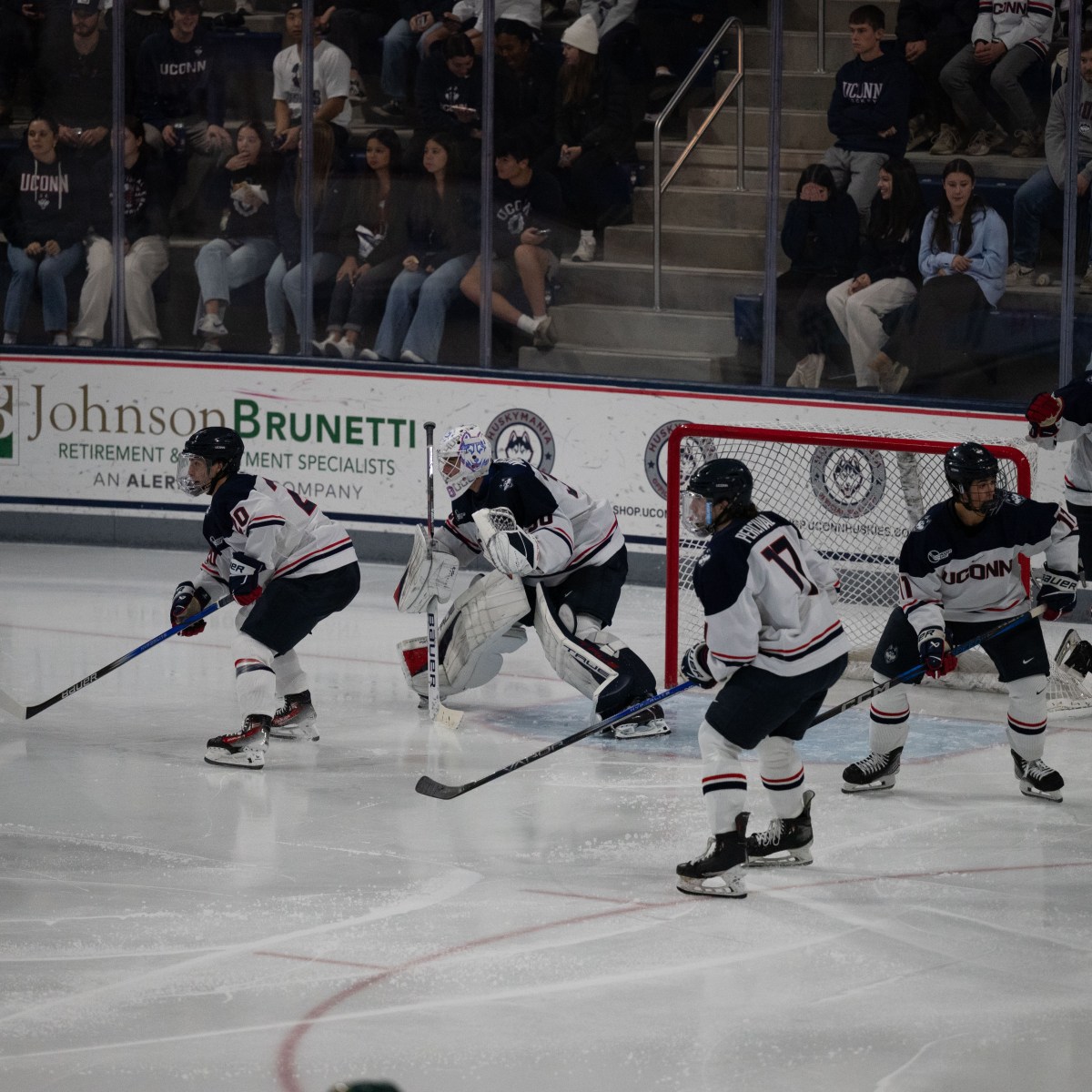
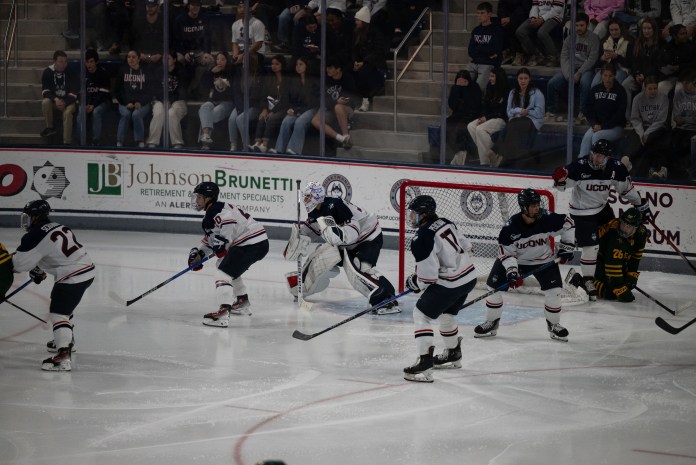
    The UConn Huskies faced UVM at the Toscano Family Ice Forum on Nov. 3, 2024. The Huskies secured the OT victory with a final score of 5-4. Photo by Von Lindenthal/The Daily Campus.

    For the final game of the first half of the season, the UConn men’s hockey team will travel to Chestnut Hill to face No. 3 Boston College. After splitting the weekend with UMass Lowell in their last series, the Huskies had a weekend off to rest and recover. Now all hands are on deck for BC.  

    “I’m excited about the way the team has been playing,” said Head Coach Mike Cavanaugh on Tuesday. “Certainly, the BC game and the two games against Lowell, we played pretty solid hockey for nine periods. We’re looking to continue that trend against the Eagles. We know it’s going to be definitely a tough task at Conte Forum.”  

    “They are, as I said a couple weeks ago when we were getting ready to play them, there’s not many holes in their game,” said Coach Cavanaugh. “From the goaltender to the experienced defenseman, to the elite forwards they have, they’re just dangerous all over the ice. We’re going to have to play a very solid game managing the puck well and disciplined as well if we want to be successful.” 

    It’s a midweek matchup in Chestnut Hill, MA, puck drop is set for 7:00 p.m. on Wednesday, December 4. The Huskies will enter this game with a 7-6-1 overall record and 4-5-1 in Hockey East Action. That puts them in fifth place in the current Hockey East standings. 

    One of the current strengths for UConn has been their special teams. They have four shorthanded goals on the season so far which is one of the most in the country. Coach Cavanaugh described the team as overall well balanced, especially on the offense. Juniors Tristan Fraser, Ryan Tattle and sophomore Joey Muldowney have been some of the most consistent and effective players on the team thus far. However, almost all of the returns and newcomers on the Ice Bus have been able to make an impact. Muldowney and Tattle are tied for the team lead in points with 10 total. Junior Jake Percivial has been an anchor on offense, having the team-best seven goals and freshman Kai Janviriya leads the team in assists with seven.  

    The UConn Huskies beat UVM at the Toscano Family Ice Forum on Nov. 3, 2024. Photo by Von Lindenthal/The Daily Campus.

    Boston College is entering this matchup with a 10-3-0 overall record and 4-2-0 in conference action. They are currently ranked No. 3 in both the USCHO.com and USA Hockey / Rink Live polls. A player to look out for on the Eagles is Lukas Gustafsson. The conference announced that the junior was named Hockey East Defender of the Week. Last week against Dartmouth, Gustafsson notched his first multi-point performance of the season. He tallied two assists in Boston College’s win over No. 15 Dartmouth. Both of his assists came a power-play and short-handed goals in the third period of BC’s Friday night matchup 

    Boston College’s penalty kill is a perfect 30-for-30 this season, they are the only Division I team to now allow a power play goal this year. The Eagles are also undefeated on their home ice this season, they have won the last 16 home games going all the way back to the 2023-24 season. In terms of their offense, Boston College has outscored their opponents 44-24 this season, also including 20-5 in the third period specifically.  

    The last time the Huskies and Eagles met was on November 15 at Toscano Family Ice Forum in Storrs, CT. The physical back and forth battle where the Huskies scored three unanswered goals led them to upsetting (at the time No.2) Boston College 5-4.  

    Now for the rematch, the Huskies will travel up north to face the Eagles in their home arena for their last game of the first half of the regular season schedule. The single game matchup against Boston College is set for Wednesday, Dec. 4. Puck drop is at 7:00 at Conte Forum in Chestnut Hill, MA and will be available to stream on ESPN+. 

    Source link

  • Colorado’s Travis Hunter: college football’s mind-warping dual threat is one of one | College football

    The Heisman Trophy is college football’s supreme individual honor, an annual tribute to the best player in the game, and more often than not it’s the country’s top quarterback who takes the prize. But this could be the year Colorado’s Travis Hunter breaks with tradition.

    Hunter is college football’s mind-warping dual threat, a game-changing wide receiver and cornerback. It’s not uncommon for the nation’s best college football prospects to play offense and defense as high schoolers, especially if there aren’t enough bodies to fill out every position on the roster. At the highest levels of the college game, though, “ironman” players are confined to specialty roles on one side of the ball or the other. Why? Because why double the injury risk? Why mess with convention?

    But Deion Sanders, aka Colorado’s Coach Prime, has never been one to bow to convention. Famously, he set the standard for modern day ironmen in professional sports at the turn of the century – dominating the NFL as a shutdown cornerback, big-play receiver and kick returner while also dazzling Major League Baseball with his prowess as a hitter and baserunner. When Sanders pivoted to coaching college football in 2020, jumping straight into the head job at Jackson State University, his first call was all-out recruiting blitz for Hunter, the nation’s top high school recruit as a defensive back.

    Thing is, Hunter had already verbally agreed to play at Florida State, the school where Sanders broke onto the national scene, with the explicit intention of following the coach’s two-way trajectory. College football’s pundit class was convinced there was no way Sanders could talk Hunter out of that commitment to play for Jackson State – an historically Black college that competes one division down from Florida State. But it turns out all the coach had to say to him was: “If you come here, you’re playing both ways, right?” Which is to say: Unlike Florida State coach Mike Norvell, who envisioned deploying Hunter on offense situationally, Sanders expected him to never leave the field. That article of fact – along with the chance of catching passes from Shadeur Sanders, Coach Prime’s chosen quarterback – was enough to secure Hunter’s signature and seal a deal that turned college football upside down.

    In 2023, his lone year at Jackson State, the nation finally got to see this 6ft bundle of fast-twitch muscle in action. What stood out more than the stats was the ease with which Hunter sustained his high playing level whether on offense or defense. When Jackson State played North Carolina Central in the 2022 Celebration Bowl, Black college football’s de facto national championship, I watched from the Mercedes-Benz Stadium stands slack-jawed in the waning seconds of regulation as Hunter sprinted to the end zone pylon, boxed out his man and pulled down a 19-yard touchdown pass to force overtime. It was one of two TD grabs Hunter had in the game to go with five total tackles: Heisman-worthy stuff. Unfortunately for Hunter, the performance didn’t have a prayer of swaying Heisman voters, who tend to look past potential candidates from HBCU and other small-time football programs in the NCAA’s second-tier Football Championship Subdivision (FCS).

    When Coach Prime left Jackson State for Colorado after that game and took his top recruits with him, there was considerable discussion in the media and online about whether those players could hack at the next level and whether Hunter could continue to play both ways and endure for the forthcoming 2023 season. But Hunter quickly put those doubts to rest, remaining on the field for a staggering 1,036 plays. Altogether, he finished with five receiving touchdowns, three interceptions and 30 tackles; that’s with him sitting out injured for a quarter of the season after he was targeted and knocked out of a game. At the time, the ESPN TV reporter relaying the news likened his injury to “losing two players in one”. Without their best skilled player, Buffaloes lost eight of their last nine games after starting 3-0. Coach Prime can’t say he wasn’t warned.

    This year has been a different story, however. Colorado won nine games, with Hunter playing 80% of time (1,044 snaps). He leads the offense in (92), yards (1,152) and touchdowns (14) and the defense in interceptions (four) and pass breakups (11). Last Saturday against Oklahoma State, Hunter hauled in 10 passes for 116 yards and three touchdowns – and snagged an interception on the game’s first drive. This was all after Hunter had been overlooked for the Thorpe award (ie the trophy given to the nation’s best defensive back) while being heavily touted for the defensive player of the year (ie the Bednarik award).

    Colorado’s Travis Hunter runs for a touchdown during the second half of last month’s game against the Texas Tech Red Raiders in Lubbock, Texas. Photograph: John E Moore III/Getty Images

    “I’m gonna give him mine,” said Sanders, who won the award in 1988, before going on to become the first athlete to play in a Super Bowl and a World Series. “I ain’t using it, just sitting up there collecting dust.” He went on to call the Thorpe snub “the most idiotic thing in college football”. It’s enough to make you wonder whether it could complicate Hunter’s chances of winning the Heisman, too.

    Since 2000, quarterbacks have won the Heisman 19 out of 23 years. Charles Woodson, the winner in 1997, is the only dedicated defensive player who has broken through. Like Hunter, Woodson is officially a cornerback, but what ultimately set him apart from his peers was his production as a receiver and a returner – even though he was nowhere near the menace Hunter is. Unlike Hunter, however, Woodson played his entire college career at Michigan. An FCS player has never won the Heisman trophy. What’s more discouraging: with Colorado ineligible for its conference game this week, Hunter is forced to rest his defense.

    In the meantime, Oregon’s Dillion Gabriel and Miami’s Cam Ward will play on in hopes of keeping the Heisman in the quarterbacks’ pocket, as Boise State’s Ashton Jeanty bids to retake the award for his running back brethren while attempting to smash college football’s all-time rushing record. Heisman voters are such prisoners of the moment, after all. Come Sunday, it wouldn’t come as a surprise if they wound up remembering Hunter when he takes the field again for a postseason bowl game, after the Heisman voting has closed.

    That would be a crying shame. No player this year has been as impactful, as exciting or as deserving as Hunter – who, by the way, is a straight-A student, too. He’s proven so undeniably good at playing both sides of the ball that NFL scouts, football’s most skeptical bunch, have let themselves entertain the idea of Hunter playing both ways in the pros, where he projects as a top-three pick. That he’s managed to change so many minds so quickly speaks to his everlasting impact on the game. All that’s missing now is the hardware.

    Source link

  • How a Former College Athlete Built a Best-in-Class Lifestyle and Wellness Concept

    How a Former College Athlete Built a Best-in-Class Lifestyle and Wellness Concept

    In college, Brianna Keefe was always on the go. As a collegiate cheerleader and scholar, she needed healthy, delicious food options without sacrificing time or taste. Frustrated by the lack of choices for those with active lifestyles, Keefe began designing a better-for-you restaurant brand from scratch.

    “Cooking at home or sitting at a restaurant didn’t work with my schedule, and I kept getting into unhealthy situations,” Keefe says. “I wanted to build a concept where I could create a job for myself and be happy going to work every day. I could feel the demand growing, especially when I moved to Washington, D.C., after college.”

    Toastique CEO and founder Brianna Keefe

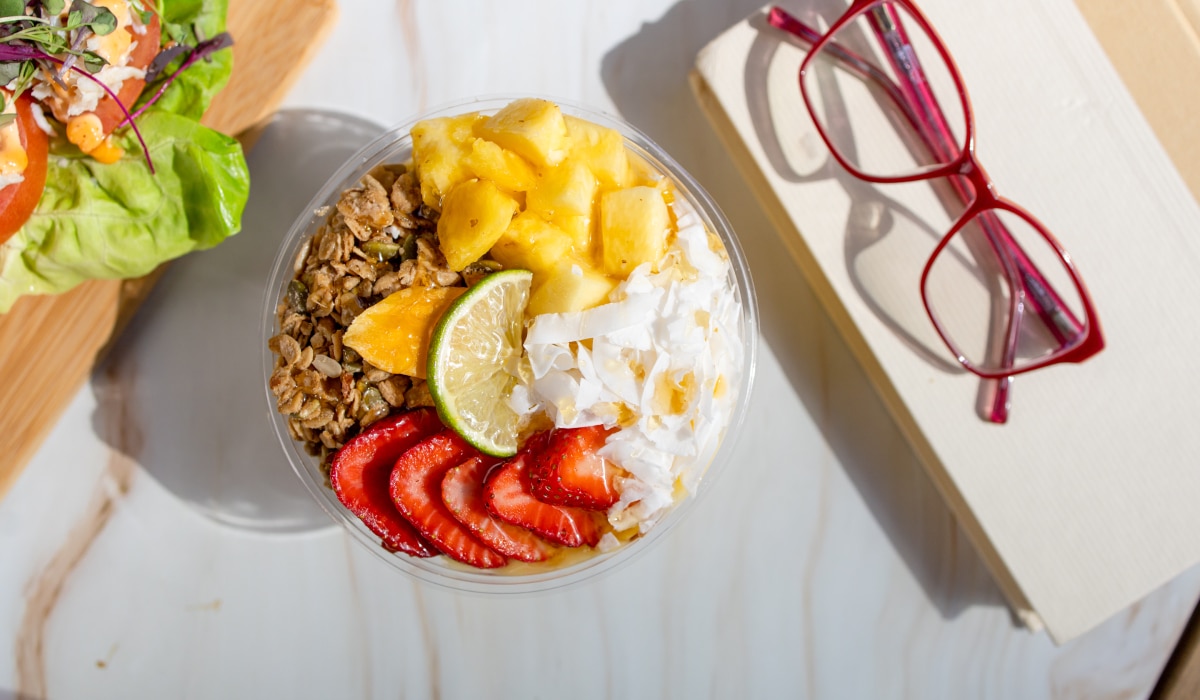
    Keefe’s vision for Toastique was inspired by the beauty of fresh produce in its simplest form. The vibrant colors and flavors of fruits and vegetables became the foundation for a menu of gourmet toast combinations, bowls, cold-pressed juices, smoothies, wellness shots, and collagen-infused coffee beverages.

    “If you can create something that looks just as beautiful as it tastes, it brings the dining experience full circle. All of our food options have nice color and flavor,” Keefe says. “Presentation is so important [to Toastique] because we eat with our eyes first. When customers watch their food being made, they’re delighted … and that instant gratification and validation makes our team feel good too.”

    Toastique’s flagship location, a modest 1,000-square-foot space in the heart of D.C., lacked cooking equipment, so everything was made in-house. Keefe prioritized fresh ingredients and fast service, catering to her busy clientele of working professionals and tourists. In its first year of operation, Toastique generated over $1 million in sales.

    “When we created the original menu, the idea was to try and have something for everyone, hitting all flavors and dietary preferences. Through our growth, we’ve developed new seasonal options or toasts of the month,” Keefe says. “Now, we can listen to our customers in all markets and incorporate their ideas into a concept we’re taking nationwide.”

    One of Toastique’s latest innovations is a cocktail menu that brings its health and wellness focus into a new category. The cocktails are free from artificial colors, sweeteners, and excessive sugar, complementing the brand’s busiest crowd—brunchers.

    “Our clientele appreciates the healthier bar options, and it elevates our brunch menu,” Keefe says. “Breakfast and lunch have the highest foot traffic, so this also introduces the opportunity of a happy hour later in the day when the crowds start to dwindle. You can’t find healthier cocktails anywhere else.”

    Through franchising, Toastique has expanded to 14 states, including new locations in Atlanta and the Bay Area in California. Keefe is particularly excited about growing in West Coast markets.

    “Toastique comes across as a West Coast brand, and we’re excited to expand throughout California. We have three locations there already that are strong performers,” Keefe says. “Nobody does toast like us, and our demographic will love what we have to offer. We’re doing something big and beautiful … entering new markets is one of my favorite things about the brand right now.”

    During this period of growth, Keefe remains focused on connecting with each community. Each new market is an opportunity to partner with passionate entrepreneurs, attend pop-up events and farmers markets, and collaborate with local fitness businesses.

    “As a young brand, being involved in the community and honing in on awareness is crucial. So is educating people about what healthy eating looks like and then making it accessible,” Keefe says. “There are a lot of better-for-you brands that aren’t authentic when you dig deep … and our transparency is something we pride ourselves on. We intentionally choose franchise partners who are comfortable going out and networking with the community.”

    Keefe’s journey from athlete to restaurateur has resulted in a fast-growing national brand, earning her a spot on the Forbes 30 Under 30 list. Reflecting on her success, she credits her willingness to sacrifice everything for her passion.

    “I’m so proud of the team I’ve built to surround our brand. We’ve been able to evolve Toastique into a best-in-class lifestyle brand that integrates wellness and a sense of community. We’re helping people start their day on the right foot,” Keefe says. “We want to be known as a wellness destination. People feel welcome here, regardless of their health journey. We just want to be integrated effortlessly into people’s lives … and treat them to nourishing foods that set the tone for the rest of their day.”

    Source link