hacklink hack forum hacklink film izle hacklink marsbahisizmir escortsahabetpornJojobetcasibompadişahbetjojobet

Tag: Company

  • Upstart Chinese AI company DeepSeek’s founder started out as a low-key hedge fund entrepreneur

    Upstart Chinese AI company DeepSeek’s founder started out as a low-key hedge fund entrepreneur

    BANGKOK — The 40-year-old founder of China’s DeepSeek, an AI startup that has startled markets with its capacity to compete with industry leaders like OpenAI, kept a low profile as he built up a hedge fund and then refined its quantitative models to branch into artificial intelligence.

    Liang Wenfeng, who founded DeepSeek in 2023, was born in southern China’s Guangdong and studied in eastern China’s Zhejiang province, home to e-commerce giant Alibaba and other tech firms, according to Chinese media reports.

    The hedge fund he set up in 2015, High-Flyer Quantitative Investment Management, developed models for computerized stock trading and began using machine-learning techniques to refine those strategies.

    Like many Chinese quantitative traders, High-Flyer was hit by losses when regulators cracked down on such trading in the past year. However, it reportedly manages $8 billion in assets, ample resources for funding DeepSeek’s AI research.

    It also has abundant computing power for AI, since High-Flyer had by 2022 amassed a cluster of 10,000 of California-based Nvidia’s high-performance A100 graphics processor chips that are used to build and run AI systems, according to a post that summer on Chinese social media platform WeChat. The U.S. soon after restricted sales of those chips to China.

    “Thing is, we are sure now that we want to do this, can do this, and are capable of doing this, so we’re among the best-suited candidates to tackle it at this moment,” Liang told Waves, a tech media outlet, in 2023.

    “Currently, neither tech giants nor startups have an unassailable lead. With OpenAI paving the way, everyone is working with published papers and open-source code,” it quoted him as saying.

    Liang said he spends his days reading papers, writing code, and participating in group discussions, like other researchers.

    DeepSeek is exploring what intelligence means, he said.

    “People may think there’s some hidden business logic behind this, but it’s mainly driven by curiosity,” Liang said.

    When DeepSeek was asked, “Who is Liang Wenfeng?” its first answer was to name a different Chinese entrepreneur with the same name, at least as spelled in English letters.

    When asked: “Where is Liang Wenfeng from and where did he go to university?” it said that as of October 2023, the most recent knowledge cutoff for DeepSeek’s R1 AI model, “there is no publicly available information about Liang Wenfeng’s background, including his place of origin or educational history.”

    “If you are referring to the founder of DeepSeek, details about his personal life or academic background have not been disclosed publicly. For more information about DeepSeek, you can visit its official website,” it said.

    Liang’s focused approach fits in with his determination to push AI learning forward. After decades of relying on innovation from the West, he says China should be making its own contributions.

    “What we see is that Chinese AI can’t be in the position of following forever. We often say that there is a gap of one or two years between Chinese AI and the United States, but the real gap is the difference between originality and imitation,” he said in another Waves interview in November. “If this doesn’t change, China will always be only a follower — so some exploration is inescapable.”

    ___

    Associated Press writer Ken Moritsugu in Beijing contributed to this report.

    Source link

  • Nvidia’s stock dips after China opens probe of the AI chip company for violating anti-monopoly laws

    Nvidia’s stock dips after China opens probe of the AI chip company for violating anti-monopoly laws

    Shares of Nvidia fell Monday after China said it is investigating the high-flying U.S. microchip company over suspected violations of Chinese anti-monopoly laws.

    In a brief news release with few details, Chinese regulators appear to be focusing on Nvidia’s $6.9 billion acquisition of network and data transmission company Mellanox in 2019.

    Nvidia shares about 3% Monday. They are still up 179% so far this year.

    Considered a bellwether for artificial intelligence demand, Nvidia has led the AI sector to become one of the stock market’s biggest companies, as tech giants spend heavily on the company’s chips and data centers needed to train and operate their AI systems.

    Nvidia’s shares have surged this year along with the California company’s revenue and profit due to AI demand. According to data firm FactSet, about 16% of Nvidia’s revenue comes from China, second only to its U.S.-generated revenue.

    A spokesperson for the company based in Santa Clara, California, said in an emailed statement that Nvidia is “happy to answer any questions regulators may have about our business.”

    In its most recent earnings release, Nvidia posted revenue of $35.08 billion, up 94% from $18.12 billion a year ago. Nvidia earned $19.31 billion in the quarter, more than double the $9.24 billion it posted in last year’s third quarter. The earnings release did not break out revenue from China.

    The company’s market value rocketed to $3.5 trillion recently, passing Microsoft and briefly overtaking Apple as the world’s most valuable company.

    China’s antitrust investigation follows a report this summer by technology news site The Information that the U.S. Justice Department was investigating complaints from rivals that Nvidia was abusing its market dominance in the chip sector. The allegations reported include Nvidia threatening to punish those who buy products from both itself and its competitors at the same time.

    David Bieri, an international finance expert at Virginia Tech, said that China’s investigation is “not about what Nvidia is doing in China, per se” but rather a signal to the incoming Trump administration. China, Bieri said, is looking to set the tone of future relations.

    The Chinese government, he said, is telling the U.S. “don’t mess with us, because all of your darling corporations that your version of capitalism needs to prosper have entanglements” with China.

    Nvidia will have to revise its strategy in China or come up with provisions in their budgets for the type of uncertainty business with China will bring, Bieri said.

    “I don’t think this is something that they can shake off,” he said. “I also have a tremendous amount of faith in the brilliance of the management strategy of a corporation like Nvidia to not only pay attention to credit risk, market risk and operational risk, but also to political risk.”

    Nvidia’s invention of graphics processor chips, or GPUs, in 1999 helped spark the growth of the PC gaming market and redefined computer graphics.

    Last month, it replaced Intel on the Dow Jones Industrial Average, ending the pioneering semiconductor company’s 25-year run on the index.

    Unlike Intel, Nvidia designs but doesn’t manufacture its own chips, relying heavily on Taiwan Semiconductor Manufacturing Co., an Intel rival.

    ___

    Associated Press Technology Writer Sarah Parvini in Los Angeles contributed to this report.

    Source link

  • Forget driverless cars. One company wants autonomous helicopters to spray crops and fight fires

    Forget driverless cars. One company wants autonomous helicopters to spray crops and fight fires

    HENNIKER, N.H. — When Hector Xu was learning to fly a helicopter in college, he recalled having a few “nasty experiences” while trying to navigate at night.

    The heart-stopping flights led to his research of unmanned aircraft systems while getting his doctorate degree in aerospace engineering at Massachusetts Institute of Technology. Then, he formed Rotor Technologies in 2021 to develop unmanned helicopters.

    Rotor has built two autonomous Sprayhawks and aims to have as many as 20 ready for market next year. The company also is developing helicopters that would carry cargo in disaster zones and to offshore oil rigs. The helicopter could also be used to fight wildfires.

    For now, Rotor is focused on the agriculture sector, which has embraced automation with drones but sees unmanned helicopters as a better way to spray larger areas with pesticides and fertilizers.

    On Wednesday, Rotor plans to conduct a public flight test with its Sprayhawk at an agriculture aviation trade show in Texas.

    “People would call us up and say, ‘hey, I want to use this for crop dusting, can I?’ We’d say, OK maybe,” Xu said, adding that they got enough calls to realize it was a huge untapped market. The Associated Press reporters were the first people outside the company to witness a test flight of the Sprayhawk. It hovered, flew forward and sprayed the tarmac before landing.

    Rotor’s nearly $1 million Sprayhawk helicopter is a Robinson R44, but the four seats have been replaced with flight computers and communications systems allowing it be operated remotely. It has five cameras as well as laser-sensing technology and a radar altimeter that make terrain reading more accurate along with GPS and motion sensers.

    At the company’s hangar in Nashua, New Hampshire, Xu said this technology means there is better visibility of terrain at night.

    One of the big draws of automation in agriculture aviation is safety.

    Because crop dusters fly at around 150 miles an hour and only about 10 feet off the ground, there are dozens of accidents each year when planes collide with powerlines, cell towers and other planes. Older, poorly maintained planes and pilot fatigue contribute to accidents.

    A 2014 report from the National Transportation Safety Board found there were more than 800 agriculture operation accidents between 2001 and 2010 including 81 that were fatal. A separate report from the National Agriculture Aviation Association found nearly 640 accidents from 2014 until this month with 109 fatalities.

    “It is a very, very dangerous, profession and there are multiple fatalities every year,” said Dan Martin, a research engineer with the U.S. Department of Agriculture’s Agriculture Research Service. “They make all their money in those short few months so sometimes it may mean that they fly 10 to 12 hours a day or more.”

    Job hazards also include exposure to chemicals.

    In recent years, safety concerns and the cheaper cost has led to a proliferation of drones flying above farmers’ fields, Martin said, adding that some 10,000 will likely be sold this year alone.

    But the size of the drones and their limited battery power means they only can cover a fraction of the area of a plane and helicopters. That is providing an opening for companies building bigger unmanned aircraft like Rotor and another company Pyka.

    The California-based Pyka announced in August that it had sold its first autonomous electric aircraft for crop protection to a customer in the United States. Pyka’s Pelican Spray, a fixed-wing aircraft, received FAA approval last year to fly commercially for crop protection. The company also sold its Pelican Spray to Dole for use in Honduras and to the Brazilian company, SLC Agrícola.

    Lukas Koch, chief technology officer at Heinen Brothers Agra Services, the company which bought the Pelican Spray in August, has called unmanned aircraft part of a coming “revolution,” that will save farmers money and improve safety.

    The Kansas-based company operates out of airports from Texas to Illinois. Koch doesn’t envision the unmanned aircraft replacing all the the company’s dozens of pilots but rather taking over the riskiest jobs.

    “The biggest draw is taking the pilot out of the aircraft inside of those most dangerous situations,” Koch said. “There’s still fields that are surrounded by trees on all borders, or you’ve got big, large power lines or other just dangers, wind turbines, things like that. It can be tough to fly around.”

    But Koch acknowledges autonomous aviation systems could introduce new dangers to an already chaotic airspace — though that is less of a concern in rural areas with plenty of open space and fewer people.

    “Putting more systems into the air that don’t have a pilot inside could introduce new dangers to our current existing pilots and make their life even more dangerous,” he said. “If you’ve got this full size helicopter flying beyond the line of sight, how is it going to react when it sees you? What is it going to do? … That’s a giant question mark, one that we take very seriously.”

    Companies like Rotor have incorporated built-in in contingencies should something go wrong — its helicopter features a half-dozen communications systems and, for now, a remote pilot in control.

    If the ground team loses contact with the helicopter, Rotor has a system which Xu referred to as a big, red button that ensures the engine can be shut off and the helicopter perform a controlled landing. “That means that we’ll never have an aircraft fly away event,” he said.

    The safety measures will go a long way to helping the company receive what it expects will be FAA regulatory approval to fly its helicopters commercially. Once they have that, the challenge, as Xu sees it, will be scaling up to meet the demand in the United States but also Brazil which has a huge agriculture market but more relaxed regulatory environment.

    “I think 2025 will be production hell as Elon Musk calls it,” Xu said. “It’s kind of the difference between building a couple to building tens and hundreds at scale … These are no longer just like bespoke Rolls-Royces. You want to be stamping these out like you would production automobiles.”

    Source link

  • Company affiliated with Alex Jones seeks to disqualify The Onion’s auction bid on Infowars

    Company affiliated with Alex Jones seeks to disqualify The Onion’s auction bid on Infowars

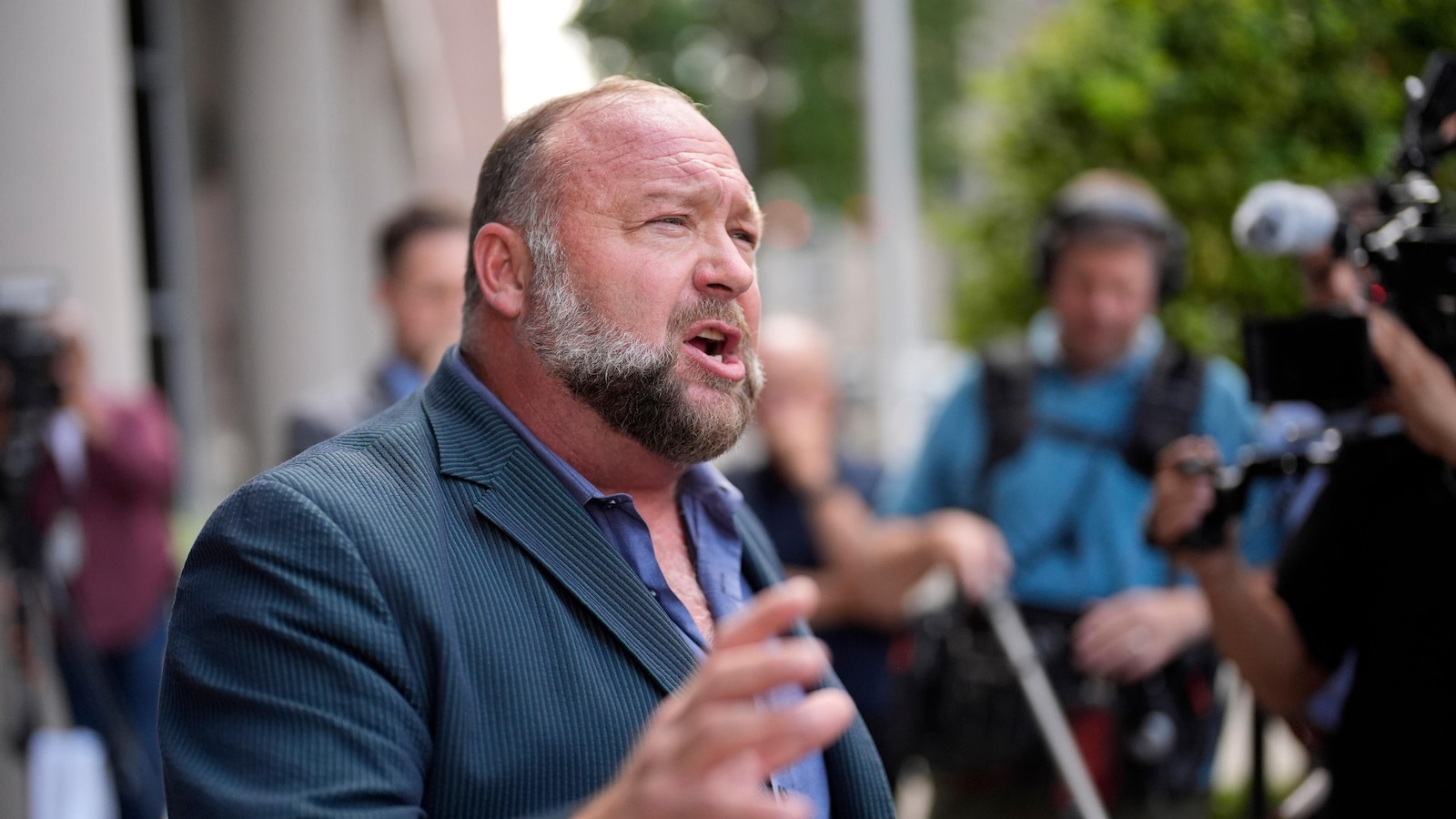
    A company affiliated with conspiracy theorist Alex Jones asked a federal judge on Monday to disqualify a bid by the satirical news outlet The Onion to buy Jones’ Infowars at a bankruptcy auction, alleging fraud and collusion.

    The company, First United American Companies, which is affiliated with a Jones website that sells dietary supplements, was the only other bidder at the recent auction, offering $3.5 million. In a filing in federal bankruptcy court in Houston, a lawyer for the company asked the judge to declare it the winning bidder instead of The Onion.

    The lawyer, Walter Cicack, claimed that the bankruptcy trustee overseeing the auction improperly colluded with The Onion and families of victims of the Sandy Hook Elementary School shooting in Connecticut in naming The Onion the winning bidder. Cicack also alleged the trustee violated rules for the sale set by the judge, and said the company’s cash offer was twice the amount of The Onion’s.

    The bankruptcy auction was held last week as part of the liquidation of Jones’ assets, including Infowars. Proceeds from the sale will go to Sandy Hook families and other creditors. Jones filed bankruptcy in 2022 after he was ordered to pay nearly $1.5 billion in defamation lawsuits filed by the families for calling the 2012 shooting that killed 20 children and six educators a hoax staged by actors to increase gun control.

    Ben Collins, CEO of The Onion’s parent company, Chicago-based Global Tetrahedron, issued a statement Monday through a spokesperson.

    “We’re obviously disappointed he’s lashing out by creating conspiracies, but we’re also not surprised,” he said, referring to Jones.

    The bankruptcy trustee appointed to oversee the sale, Christopher Murray, declined to comment Monday. A lawyer for the Sandy Hook families, Christopher Mattei, also declined to comment.

    In a response filed in court later Monday, Murray called the allegations “baseless.” He said the motion by First United American to disqualify The Onion was “a disappointed bidder’s improper attempt to influence an otherwise fair and open auction process.”

    Murray also wrote, “Having failed in its prior efforts to bully the Trustee and his advisors into accepting its inferior bid, FUAC now alleges, without evidence, collusion and bad faith in an attempt to mislead the Court and disqualify its only competition in the auction.”

    Monday’s filing by First United American Companies included the formal bid submitted by The Onion, revealing that it offered $1.75 million for Infowars along with certain incentives by Sandy Hook families who won their defamation lawsuit against Jones. The families agreed to forgo up to 100% of their share of the Infowars sale proceeds and give it to other Jones creditors.

    With the families’ offer, other Jones creditors would get a total of $100,000 more than they would get if First United American Companies bought Infowars, according to The Onion’s bidding document.

    Murray told the bankruptcy judge during a court hearing Thursday that the families’ incentives made it a better offer than the one by the Jones-affiliated company.

    “The creditors ended up significantly better off,” Murray told the judge, adding that one of his responsibilities was to maximize value for creditors.

    Judge Christopher Lopez, who said he had questions about the sale process and concerns about transparency, ordered a hearing to see exactly what happened with the auction and how the trustee chose The Onion. The date of the hearing has not been set.

    Jones has been criticizing the sale process on his show and social media sites, calling it “rigged” and a “fraud.”

    Over the weekend, Collins posted a series of comments about the auction on X, formerly known as Twitter.

    “Long and short of it: We won the bid and — you’re not going to believe it — the previous InfoWars folks aren’t taking it well,” he wrote.

    Collins said last week that The Onion planned to turn the Infowars website into a parody site, taking aim at conspiracy theorists and other social media personalities while promoting gun violence prevention efforts.

    Cicack also said in Monday’s court filing that the trustee improperly changed the auction process “from a live auction to a secret process.” Cicack said that after sealed bids were submitted Nov. 8, it was expected that there would be a round of live bidding on Nov. 13.

    But instead, he said, Murray decided to ask the two bidders to submit another offer as their final and best proposal, which they did. Murray then chose from those final bids without holding a round of live bidding. He alleged Murray violated the auction rules.

    Lopez’s 20-page order on the sale procedures, issued in September, made such a live bidding round optional. And it gave broad authority to Murray to conduct the sale, including the power to reject any bid, no matter how high, that was “contrary to the best interests” of Jones, his company and their creditors.

    Cicack called the Sandy Hook families’ portion of The Onion’s bid “Monopoly” money with no value.

    “It is also the product of impermissible collusion with the Onion in an effort to ‘rig’ the auction with the goal of achieving a specific result desired by the Connecticut Families,” he wrote.

    Source link

  • Supreme Court seems likely to allow class action to proceed against tech company Nvidia

    Supreme Court seems likely to allow class action to proceed against tech company Nvidia

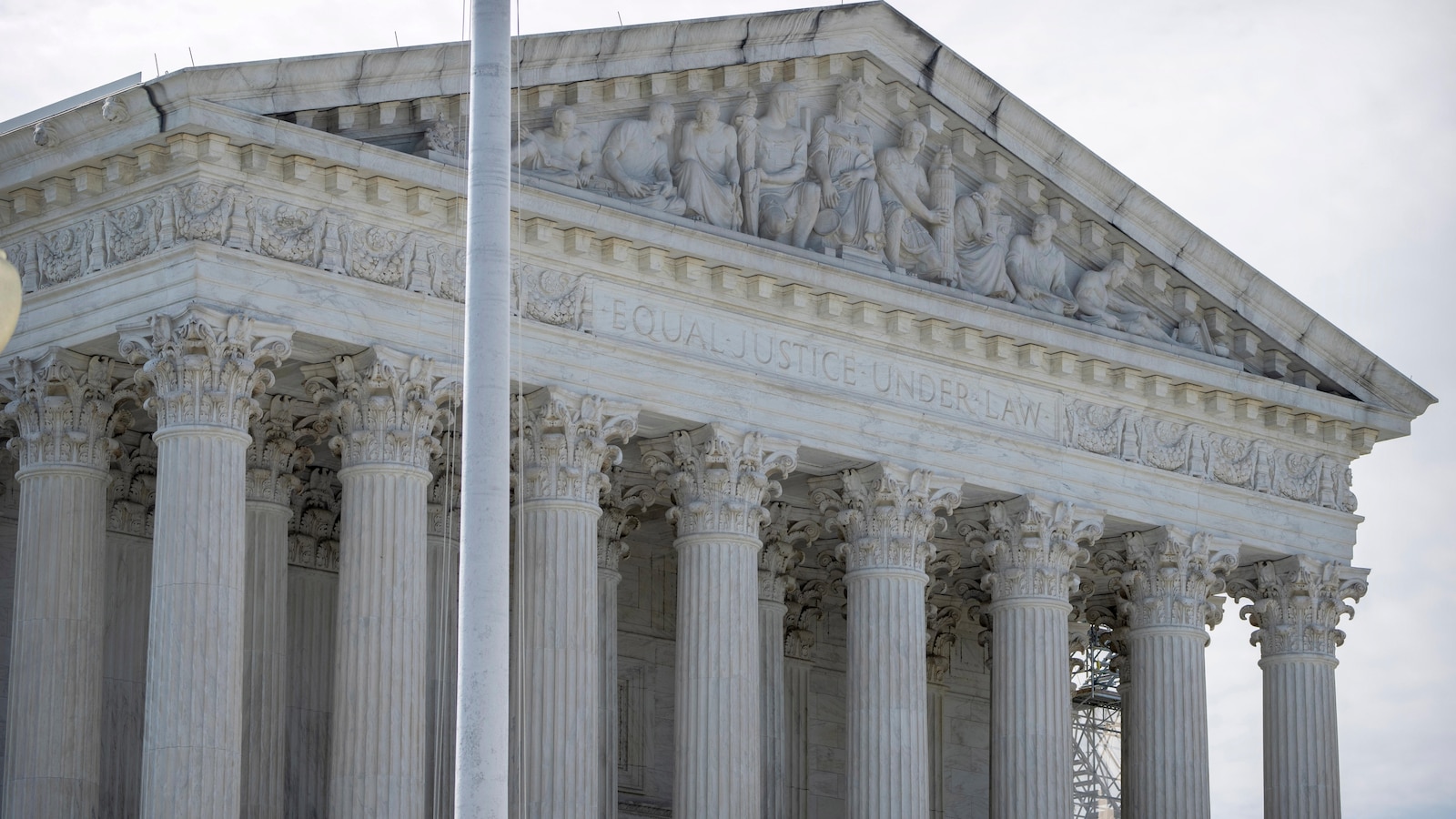
    WASHINGTON — The Supreme Court on Wednesday seemed likely to keep alive a class-action lawsuit accusing Nvidia of misleading investors about its dependence on selling computer chips for the mining of volatile cryptocurrency.

    The justices heard arguments in the tech company’s appeal of a lower-court ruling allowing a 2018 suit led by a Swedish investment management firm to continue.

    It’s one of two high court cases involving class-action lawsuits against tech companies. Last week, the justices wrestled with whether to shut down a multibillion-dollar class action investors’ lawsuit against Facebook parent Meta stemming from the privacy scandal involving the Cambridge Analytica political consulting firm.

    On Wednesday, a majority of the court that included liberal and conservative justices appeared to reject the arguments advanced by Neal Katyal, the lawyer for Santa Clara, California-based Nvidia.

    “It’s less and less clear why we took this case and why you should win it,” Justice Elena Kagan said.

    The lawsuit followed a dip in the profitability of cryptocurrency, which caused Nvidia’s revenues to fall short of projections and led to a 28% drop in the company’s stock price.

    In 2022, Nvidia paid a $5.5 million fine to settle charges by the Securities and Exchange Commission that it failed to disclose that cryptomining was a significant source of revenue growth from the sale of graphics processing units that were produced and marketed for gaming. The company did not admit to any wrongdoing as part of the settlement.

    Nvidia has led the artificial intelligence sector to become one of the stock market’s biggest companies, as tech giants continue to spend heavily on the company’s chips and data centers needed to train and operate their AI systems.

    That chipmaking dominance has cemented Nvidia’s place as the poster child of the artificial intelligence boom — what CEO Jensen Huang has dubbed “the next industrial revolution.” Demand for generative AI products that can compose documents, make images and serve as personal assistants has fueled sales of Nvidia’s specialized chips over the last year.

    Nvidia is among the most valuable companies in the S&P 500, worth over $3 trillion. The company is set to report its third quarter earnings next week.

    In the Supreme Court case, the company is arguing that the investors’ lawsuit should be thrown out because it does not measure up to a 1995 law, the Private Securities Litigation Reform Act, that is intended to bar frivolous complaints.

    A district court judge had dismissed the complaint before the federal appeals court in San Francisco ruled that it could go forward. The Biden administration is backing the investors.

    A decision is expected by early summer.

    ___

    Associated Press writer Sarah Parvini in Los Angeles contributed to this report

    Source link

  • Tesla shares soar 14% as Trump win is seen boosting Elon Musk’s electric vehicle company

    Tesla shares soar 14% as Trump win is seen boosting Elon Musk’s electric vehicle company

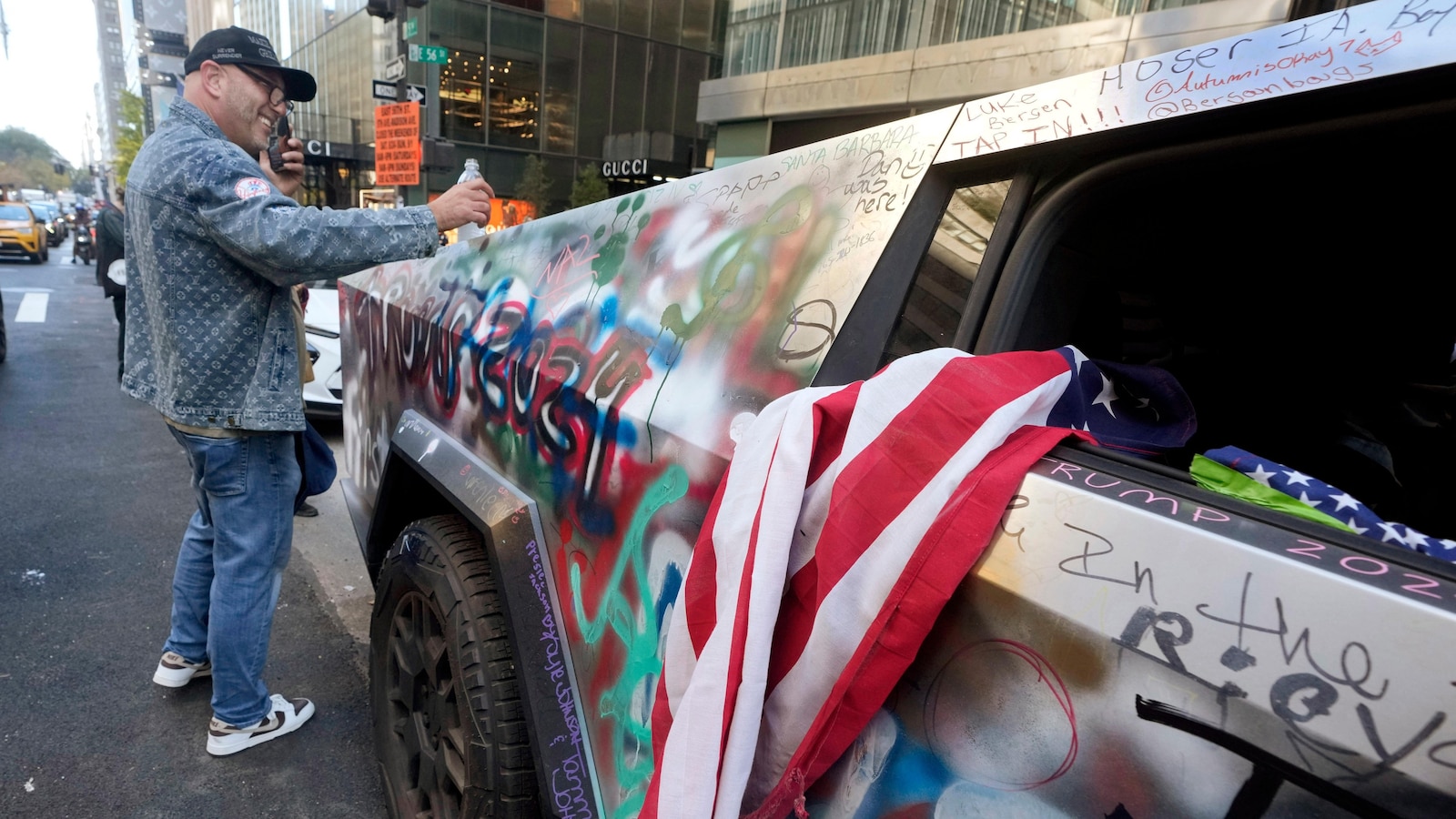
    NEW YORK — Shares of Tesla soared Wednesday as investors bet that the electric vehicle maker and its CEO Elon Musk will benefit from Donald Trump’s return to the White House.

    Tesla stands to make significant gains under a Trump administration with the threat of diminished subsidies for alternative energy and electric vehicles doing the most harm to smaller competitors. Trump’s plans for extensive tariffs on Chinese imports make it less likely that Chinese EVs will be sold in bulk in the U.S. anytime soon.

    “Tesla has the scale and scope that is unmatched,” said Wedbush analyst Dan Ives, in a note to investors. “This dynamic could give Musk and Tesla a clear competitive advantage in a non-EV subsidy environment, coupled by likely higher China tariffs that would continue to push away cheaper Chinese EV players.”

    Tesla shares jumped more than 14% Wednesday while shares of rival electric vehicle makers tumbled. Nio, based in Shanghai, fell 5%. Shares of electric truck maker Rivian dropped 9% and Lucid Group fell almost 8%.

    Tesla dominates sales of electric vehicles in the U.S, with 48.9% in market share through the middle of 2024, according to the Energy Information Administration.

    Subsidies for clean energy are part of the Inflation Reduction Act, signed into law by President Joe Biden in 2022. It included tax credits for manufacturing, along with tax credits for consumers of electric vehicles.

    Musk was one of Trump’s biggest donors, spending at least $119 million mobilizing Trump’s supporters to back the Republican nominee. He also pledged to give away $1 million a day to voters signing a petition for his political action committee.

    In some ways, it has been a rocky year for Tesla, with sales and profit declining through the first half of the year. Profit did rise 17.3% in the third quarter.

    The U.S. opened an investigation into the company’s “Full Self-Driving” system after reports of crashes in low-visibility conditions, including one that killed a pedestrian. The investigation covers roughly 2.4 million Teslas from the 2016 through 2024 model years.

    And investors sent company shares tumbling last month after Tesla unveiled its long-awaited robotaxi at a Hollywood studio Thursday night, seeing not much progress at Tesla on autonomous vehicles while other companies have been making notable progress.

    Tesla began selling the software, which is called “Full Self-Driving,” nine years ago. But there are doubts about its reliability.

    The stock is now showing a 16% gain for the year after rising the past two days.

    Source link

  • Documents show OpenAI’s long journey from nonprofit to $157B valued company

    Documents show OpenAI’s long journey from nonprofit to $157B valued company

    Back in 2016, a scientific research organization incorporated in Delaware and based in Mountain View, California, applied to be recognized as a tax-exempt charitable organization by the Internal Revenue Services.

    Called OpenAI, the nonprofit told the IRS its goal was to “advance digital intelligence in the way that is most likely to benefit humanity as a whole, unconstrained by a need to generate financial return.”

    Its assets included a $10 million loan from one of its four founding directors and now CEO, Sam Altman.

    The application, which nonprofits are required to disclose and which OpenAI provided to The Associated Press, offers a view back in time to the origins of the artificial intelligence giant that has since grown to include a for-profit subsidiary recently valued at $157 billion by investors.

    It’s one measure of the vast distance OpenAI — and the technology that it researches and develops — has traveled in under a decade.

    In the application, OpenAI indicated it did not plan to enter into any joint ventures with for-profit organizations, which it has since done. It also said it did “not plan to play any role in developing commercial products or equipment,” and promised to make its research freely available to the public.

    A spokesperson for OpenAI, Liz Bourgeois, said in an email that the organization’s missions and goals have remained constant, though the way it’s carried out its mission has evolved alongside advances in technology.

    Attorneys who specialize in advising nonprofits have been watching OpenAI’s meteoric rise and its changing structure closely. Some wonder if its size and the scale of its current ambitions have reached or exceeded the limits of how nonprofits and for-profits may interact. They also wonder the extent to which its primary activities advance its charitable mission, which it must, and whether some may privately benefit from its work, which is prohibited.

    In general, nonprofit experts agree that OpenAI has gone to great lengths to arrange its corporate structure to comply with the rules that govern nonprofit organizations. OpenAI’s application to the IRS appears typical, said Andrew Steinberg, counsel at Venable LLP and a member of the American Bar Association’s nonprofit organizations committee.

    If the organization’s plans and structure changed, it would need to report that information on its annual tax returns, Steinberg said, which it has.

    “At the time that the IRS reviewed the application, there wasn’t information that that corporate structure that exists today and the investment structure that they pursued was what they had in mind,” he said. “And that’s okay because that may have developed later.”

    Here are some highlights from the application:

    At inception, OpenAI’s research plans look quaint in light of the race to develop AI that was in part set off by its release of ChatGPT in 2022.

    OpenAI told the IRS it planned to train an AI agent to solve a wide variety of games. It aimed to build a robot to perform housework and to develop a technology that could “follow complex instructions in natural language.”

    Today, its products, which include text-to-image generators and chatbots that can detect emotion and write code, far exceed those technical thresholds.

    The nonprofit OpenAI indicated on the application form that it had no plans to enter into joint ventures with for-profit entities.

    It also wrote, “OpenAI does not plan to play any role in developing commercial products or equipment. It intends to make its research freely available to the public on a nondiscriminatory basis.”

    OpenAI spokesperson Bourgeois said the organization believes the best way to accomplish its mission is to develop products that help people use AI to solve problems, including many products it offers for free. But they also believe developing commercial partnerships has helped further their mission, she said.

    OpenAI reported to the IRS in 2016 that regularly sharing its research “with the general public is central to the mission of OpenAI. OpenAI will regularly release its research results on its website and share software it has developed with the world under open source software licenses.”

    It also wrote it “intends to retain the ownership of any intellectual property it develops.”

    The value of that intellectual property and whether it belongs to the nonprofit or for-profit subsidiary could become important questions if OpenAI decides to alter its corporate structure, as Altman confirmed in September it was considering.

    ___

    The Associated Press and OpenAI have a licensing and technology agreement that allows OpenAI access to part of AP’s text archives.

    ___

    Associated Press coverage of philanthropy and nonprofits receives support through the AP’s collaboration with The Conversation US, with funding from Lilly Endowment Inc. The AP is solely responsible for this content. For all of AP’s philanthropy coverage, visit https://apnews.com/hub/philanthropy.

    Source link

  • X User Applauds Big Basket, Company Says, “Well Do Our Best To Sort This Issue”

    X User Applauds Big Basket, Company Says, “Well Do Our Best To Sort This Issue”

    People nowadays often post complaints about brands and their services on social media, tagging their handles while providing other details. Companies tend to keep an eye out for these posts, some of which go viral and grab many eyeballs. Recently, instead of a complaint, a seemingly appreciative post went viral on X. Amirtha Murugesan praised Big Basket for a combo pack including sanitary pads and ice cream: two products the online retailer assumed many women would order during their periods.

    Sharing a partial screenshot of one such combo, the X user simply captioned it “Well played bigbasket_com.” Her post has clocked over 200K views so far.

    Also Read:Video: Zomato Agent’s Food Delivery In Knee-Deep Water Wins Internet
    Big Basket took note of the same. However, their response was the stock one that was usually given to complaints. Replying to the X user, the company wrote, “We regret the inconvenience caused. Could you please help us with your registered contact number via DM? We’ll do our best to sort this issue out.”

    Several users found Big Basket’s reaction funny. Others reacted to the combo pack shown in the original post. Check out some of the comments below:

    Before this, a person shared his unpleasant experience with a Big Basket order on X, which caught the company’s attention. The user posted a photo of a bag of what he said was supposed to be 1 kilo of onions. The bag, placed on a weighing scale, apparently weighed only 844 grams. After complaining about the same, the user claimed he got a refund but his account was blocked later. Click here to read the full story.
    Also Read:This Indian City Had The Highest Number Of Vegetarian Orders, As Per Swiggy


    Source link

  • OpenAI looks to shift away from nonprofit roots and convert itself to for-profit company

    OpenAI looks to shift away from nonprofit roots and convert itself to for-profit company

    OpenAI’s history as a nonprofit research institute that also sells commercial products like ChatGPT may be coming to an end as the San Francisco company looks to more fully convert itself into a for-profit corporation accountable to shareholders.

    The company’s board is considering a decision that would change the company into a public benefit corporation, according to a source familiar with the discussions who wasn’t authorized to speak publicly about them.

    While OpenAI already has a for-profit division, where most of its staff works, it is controlled by a nonprofit board of directors whose mission is to help humanity. That would change if the company converts the core of its structure to a public benefit corporation, which is a type of corporate entity that is supposed to help society as well as turn a profit.

    No final decision has been made by the board and the timing of the shift hasn’t been determined, the source said.

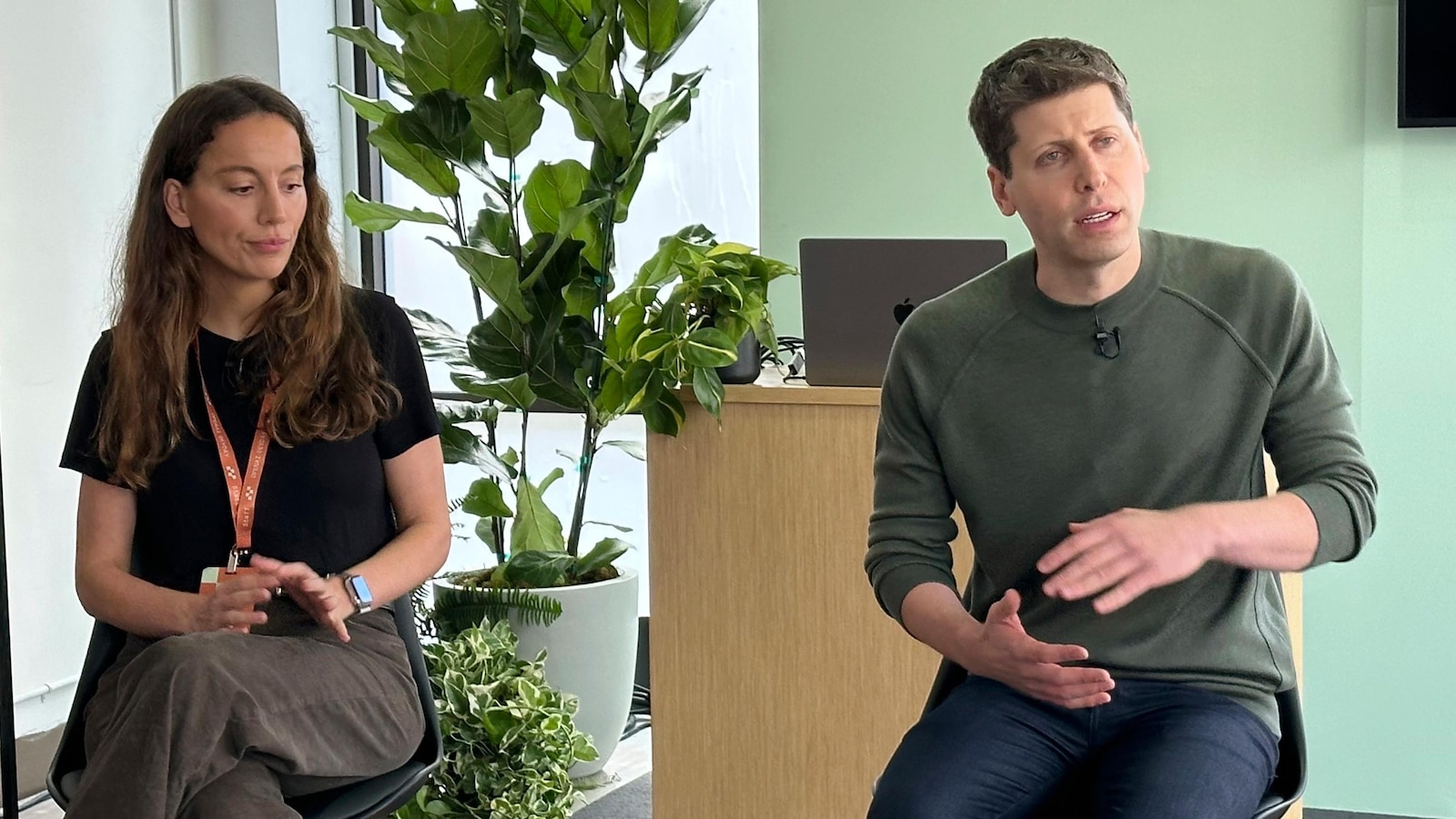
    OpenAI’s CEO Sam Altman acknowledged in public remarks Thursday that the company is thinking about restructuring but said the departures of key executives the day before weren’t related.

    Speaking at a tech conference in Italy, Sam Altman mentioned that OpenAI has been considering an overhaul to get to the “next stage.” But he said it was not connected to the Wednesday resignations of Chief Technology Officer Mira Murati and two other top leaders.

    “OpenAI will be stronger for it as we are for all of our transitions,” Altman told the Italian Tech Week event in Turin. “I saw some stuff that this was, like, related to a restructure. That’s totally not true. Most of the stuff I saw was also just totally wrong,” he said without any more specificity.

    “But we have been thinking about (a restructuring),” he added. OpenAI’s board has been considering a revamp for a year as it tries to figure out what’s needed to “get to our next stage.”

    OpenAI said Thursday that it will still retain a nonprofit arm.

    “We remain focused on building AI that benefits everyone and as we’ve previously shared we’re working with our board to ensure that we’re best positioned to succeed in our mission,” it said in a written statement. “The nonprofit is core to our mission and will continue to exist.”

    The resignations of Murati, Chief Research Officer Bob McGrew and another research leader, Barret Zoph, were “just about people being ready for new chapters of their lives and a new generation of leadership,” Altman said.

    The exits were the latest in a string of recent high-profile departures that also include the resignations of OpenAI co-founder Ilya Sutskever and safety team leader Jan Leike in May. In a statement, Leike had leveled criticism at OpenAI for letting safety “take a backseat to shiny products.”

    Much of the conflict at OpenAI has been rooted in its unusual governance structure. Founded in 2015 as a nonprofit with a mission to safely build futuristic AI to help humanity, it is now a fast-growing big business still controlled by a nonprofit board bound to its original mission.

    This unique structure made it possible for four OpenAI board members — Sutskever, two outside tech entrepreneurs and an academic — to briefly oust Altman last November in what was later described as a dispute over a “significant breakdown in trust” between the board and top executives. But with help from a powerful backer, Microsoft, Altman was brought back to the CEO role days later and a new board replaced the old one. OpenAI also put Altman back on the board of directors in May.

    ——

    The Associated Press and OpenAI have a licensing and technology agreement that allows OpenAI access to part of AP’s text archives.

    Source link

  • Poor most hit on fertility front due to lifestyle issues: IVF specialist | Company News

    Poor most hit on fertility front due to lifestyle issues: IVF specialist | Company News

    Baby

    Smoking/tobacco chewing stands as another lifestyle choice with major implications for reproductive health, Dr Murdia highlighted


    Infertility is not just a medical condition but a crisis fuelled by lifestyle choices, with infertility rates soaring particularly in lower-income groups and tier 2 and 3 cities where access to healthcare is limited, a top IVF specialist said.


    Dr Ajay Murdia, the man behind one of India’s largest fertility chain, Indira IVF, said while advancements in assisted reproductive technologies like In Vitro Fertilization (IVF) offer hope, it is a reality that the underprivileged who are hit hard.


    “Infertility rates are soaring, particularly in lower-income and tier 2 and 3 cities, where access to healthcare, nutrition, and education is limited,” Dr Murdia, founder and chairman of Indira IVF, told PTI.


    “Infertility is no longer just a medical issue; it’s a crisis fuelled by lifestyle choices that hit the underprivileged hardest. Without action, even advancements like IVF will remain out of reach for many,” he said.


    Lifestyle factors such as obesity, poor diet, smoking, and chronic stress, which are often exacerbated in marginalized communities due to lack of resources and awareness, are increasingly recognised as significant contributors to infertility.


    These issues go beyond personal health; they represent barriers to conception that have a more pronounced impact on those with fewer means, Dr Murdia stated.


    “Lifestyle choices in economically weaker sections, compounded by limited access to quality healthcare, are emerging as a central factor in the fertility crisis. The habits we often overlook, particularly in less affluent areas, are now influencing the capacity to conceive,” he noted.


    The scope of this crisis becomes evident when examining the startling statistics surrounding obesity and its impact on fertility.


    The World Health Organization reports that one in eight people worldwide is classified as obese,a condition that dramatically raises the risk of infertility.


    Obese women are three times more likely to struggle with infertility compared to those maintaining a healthy weight, while for men, every additional 9 kg beyond their ideal weight raises their risk of infertility by 10 per cent.


    These trends are often exacerbated in less affluent areas, where healthcare support and lifestyle interventions are scarce, he said.


    Smoking/tobacco chewing stands as another lifestyle choice with major implications for reproductive health, Dr Murdia highlighted.


    Studies show that female smokers have a 54 percent higher chance of delayed conception over a year compared to non-smokers, and men who smoke more than 20 cigarettes a day experience a 19 percent decline in sperm concentration, he said.


    This not only reduces the chances of natural conception but also complicates assisted reproductive technologies, such as IVF where smokers may require nearly twice as many cycles to achieve pregnancy, he said.


    These findings, published by the American Society for Reproductive Medicine and the National Library of Medicine, underscore the severe impact of smoking on fertility and the necessity of public health strategies to address this issue.


    “Late marriages and delayed family planning in tier 2 and 3 cities add to the fertility crisis. While technology helps, the natural decline in fertility with age poses challenges many are unprepared for,” Dr Murdia said.


    The consequences of these lifestyle factors in lower-income communities extend beyond physical health, he said adding infertility can place an enormous emotional and psychological burden on individuals and families, leading to anxiety, depression, and strained relationships.


    This burden is often magnified for those in underprivileged areas, where social stigma around infertility is more pronounced and mental health support is limited, he highlighted.


    Addressing this growing fertility crisis requires a comprehensive approach that integrates medical advancements with proactive lifestyle changes and targeted support for underprivileged communities.


    Dr Murdia advocated increased awareness and education, particularly in tier 2 and 3 cities, stating, “By making informed lifestyle choices and enhancing access to affordable healthcare, we can create a more supportive environment for natural conception, especially for those who need it most”.


    “It is crucial to act now to ensure that dreams of aspiring parents are not dictated by their economic or social status.The urgency to address lifestyle factors, particularly among the poor and underprivileged, cannot be overstated. Ensuring a hopeful future for all aspiring parents, regardless of their economic standing, begins with the choices we make to support and promote reproductive health in every community,” he said.

    (Only the headline and picture of this report may have been reworked by the Business Standard staff; the rest of the content is auto-generated from a syndicated feed.)

    First Published: Sep 22 2024 | 2:51 PM IST

    Source link