That is one takeaway from the fast, detailed data that Tesla collected on the driver of one of its Cybertrucks that exploded in Las Vegas earlier this week. Privacy data experts say the deep dive by Elon Musk’s company was impressive, but also shines a spotlight on a difficult question as vehicles become less like cars and more like computers on wheels.
Is your car company violating your privacy rights?
“You might want law enforcement to have the data to crack down on criminals, but can anyone have access to it?” said Jodi Daniels, CEO of privacy consulting firm Red Clover Advisors. “Where is the line?”
Many of the latest cars not only know where you’ve been and where you are going, but also often have access to your contacts, your call logs, your texts and other sensitive information thanks to cell phone syncing.
The data collected by Musk’s electric car company after the Cybertruck packed with fireworks burst into flames in front of the Trump International Hotel Wednesday proved valuable to police in helping track the driver’s movements.
Within hours of the New Year’s Day explosion that burned the driver beyond recognition and injured seven, Tesla was able to track Matthew Livelsberger’s movements in detail from Denver to Las Vegas, and also confirm that the problem was explosives in the truck, not the truck itself. Tesla used data collected from charging stations and from onboard software — and to great acclaim.
“I have to thank Elon Musk, specifically,” said Las Vegas Metropolitan Police Department Sheriff Kevin McMahill to reporters. “He gave us quite a bit of additional information.“
Some privacy experts were less enthusiastic.
“It reveals the kind of sweeping surveillance going on,” said David Choffnes, executive director of the Cybersecurity and Privacy Institute at Northeastern University in Boston. “When something bad happens, it’s helpful, but it’s a double edged sword. Companies that collect this data can abuse it.”
General Motors, for instance, was sued in August by the Texas attorney general for allegedly selling data from 1.8 million drivers to insurance companies without their consent.
Cars equipped with cameras to enable self-driving features have added a new security risk. Tesla itself came under fire after Reuters reported how employees from 2019 through 2022 shared drivers’ sensitive videos and recordings with each other, including videos of road rage incidents and, in one case, nudity.
Tesla did not respond to emailed questions about its privacy policy. On its website, Tesla says it follows strict rules for keeping names and information private.
“No one but you would have knowledge of your activities, location, or a history of where you’ve been,” according to a statement. “Your information is kept private and secure.”
Auto analyst Sam Abuelsamid at Telemetry Insight, said he doesn’t think Tesla is “especially worse” than other auto companies in handling customer data, but he is still concerned.
“This is one of the biggest ethical issues we have around modern vehicles. They’re connected,” he said. “Consumers need to have control over their data.”
Tensions were high when the Cybertruck parked at the front doors of Trump’s hotel began smoking, then burst into flames. Just hours earlier a driver in another vehicle using the same peer-to-peer car rental service, Turo, had killed 15 people after slamming into a crowd in New Orleans in what law enforcement is calling a terrorist attack.
Shortly before 1 p.m., the Las Vegas police announced they were investigating a second incident.
“The fire is out,” the police announced on the social media platform X, one of Musk’s other companies. “Please avoid the area.”
Tesla shortly thereafter swung into action.
“The whole Tesla senior team is investigating this matter right now,” Musk wrote on X. “Will post more information as soon as we learn anything.”
Over the next few hours, Tesla was able to piece together Livelsberger’s journey over five days and four states by tracking, among other things, his recharging stops in various locations, including Monument, Colorado, Albuquerque, New Mexico, and Flagstaff, Arizona.
There are no federal laws regulating car data similar to those that restrict information collection and sharing by banks and health care providers. And state laws are a grab-bag of various rules, mostly focused on data privacy in general.
Daniels, the privacy consultant, thinks that new national laws are needed because rules have not kept up with technology.
“I think law enforcement should have access to data that can help them solve things quickly,” she said. “But we have a right to privacy.”
Suchir Balaji, a former OpenAI engineer and whistleblower who helped train the artificial intelligence systems behind ChatGPT and later said he believed those practices violated copyright law, has died, according to his parents and San Francisco officials. He was 26.
Balaji worked at OpenAI for nearly four years before quitting in August. He was well-regarded by colleagues at the San Francisco company, where a co-founder this week called him one of OpenAI’s strongest contributors who was essential to developing some of its products.
“We are devastated to learn of this incredibly sad news and our hearts go out to Suchir’s loved ones during this difficult time,” said a statement from OpenAI.
Balaji was found dead in his San Francisco apartment on Nov. 26 in what police said “appeared to be a suicide. No evidence of foul play was found during the initial investigation.” The city’s chief medical examiner’s office confirmed the manner of death to be suicide.
His parents Poornima Ramarao and Balaji Ramamurthy said they are still seeking answers, describing their son as a “happy, smart and brave young man” who loved to hike and recently returned from a trip with friends.
Balaji grew up in the San Francisco Bay Area and first arrived at the fledgling AI research lab for a 2018 summer internship while studying computer science at the University of California, Berkeley. He returned a few years later to work at OpenAI, where one of his first projects, called WebGPT, helped pave the way for ChatGPT.
“Suchir’s contributions to this project were essential, and it wouldn’t have succeeded without him,” said OpenAI co-founder John Schulman in a social media post memorializing Balaji. Schulman, who recruited Balaji to his team, said what made him such an exceptional engineer and scientist was his attention to detail and ability to notice subtle bugs or logical errors.
“He had a knack for finding simple solutions and writing elegant code that worked,” Schulman wrote. “He’d think through the details of things carefully and rigorously.”
Balaji later shifted to organizing the huge datasets of online writings and other media used to train GPT-4, the fourth generation of OpenAI’s flagship large language model and a basis for the company’s famous chatbot. It was that work that eventually caused Balaji to question the technology he helped build, especially after newspapers, novelists and others began suing OpenAI and other AI companies for copyright infringement.
He first raised his concerns with The New York Times, which reported them in an October profile of Balaji.
He later told The Associated Press he would “try to testify” in the strongest copyright infringement cases and considered a lawsuit brought by The New York Times last year to be the “most serious.” Times lawyers named him in a Nov. 18 court filing as someone who might have “unique and relevant documents” supporting allegations of OpenAI’s willful copyright infringement.
His records were also sought by lawyers in a separate case brought by book authors including the comedian Sarah Silverman, according to a court filing.
“It doesn’t feel right to be training on people’s data and then competing with them in the marketplace,” Balaji told the AP in late October. “I don’t think you should be able to do that. I don’t think you are able to do that legally.”
He told the AP that he gradually grew more disillusioned with OpenAI, especially after the internal turmoil that led its board of directors to fire and then rehire CEO Sam Altman last year. Balaji said he was broadly concerned about how its commercial products were rolling out, including their propensity for spouting false information known as hallucinations.
But of the “bag of issues” he was concerned about, he said he was focusing on copyright as the one it was “actually possible to do something about.”
He acknowledged that it was an unpopular opinion within the AI research community, which is accustomed to pulling data from the internet, but said “they will have to change and it’s a matter of time.”
He had not been deposed and it’s unclear to what extent his revelations will be admitted as evidence in any legal cases after his death. He also published a personal blog post with his opinions about the topic.
Schulman, who resigned from OpenAI in August, said he and Balaji coincidentally left on the same day and celebrated with fellow colleagues that night with dinner and drinks at a San Francisco bar. Another of Balaji’s mentors, co-founder and chief scientist Ilya Sutskever, had left OpenAI several months earlier, which Balaji saw as another impetus to leave.
Schulman said Balaji had told him earlier this year of his plans to leave OpenAI and that Balaji didn’t think that better-than-human AI known as artificial general intelligence “was right around the corner, like the rest of the company seemed to believe.” The younger engineer expressed interest in getting a doctorate and exploring “some more off-the-beaten path ideas about how to build intelligence,” Schulman said.
Balaji’s family said a memorial is being planned for later this month at the India Community Center in Milpitas, California, not far from his hometown of Cupertino.
—————-
EDITOR’S NOTE — This story includes discussion of suicide. If you or someone you know needs help, the national suicide and crisis lifeline in the U.S. is available by calling or texting 988.
At least two internal Amazon studies found a link between how quickly the online retailer’s warehouse workers perform tasks and workplace injuries, but the company rejected many safety recommendations out of concern the proposed changes might reduce productivity, according to a U.S. Senate committee report.
The 160-page review issued Sunday night was compiled by the Democratic majority staff of the Senate Committee on Health, Education, Labor, and Pensions. The report is the final product of a probe into Amazon’s warehouse safety practices that U.S. Sen. Bernie Sanders initiated last year.
The Vermont independent, a frequent critic of Amazon who chairs the panel, released an interim report in July that featured some findings from the investigation. The final report, which was mostly based on interviews with nearly 500 former and current Amazon workers, included more details, such as the two internal studies and the reactions they received inside the company.
Amazon pushed back on the findings Monday, saying in a blog post that Sanders “continues to mislead the American public” about the company’s safety practices and that the report was “wrong on the facts and features selective, outdated information that lacks context and isn’t grounded in reality.”
The Senate report said Amazon launched an internal study in 2021 to determine the maximum number of times a warehouse worker could perform the same physical tasks without increased risk of harm and potentially developing musculoskeletal disorders.
The team conducting the Amazon study, known as Project Elderwand, focused on workers who picked items from robotic shelf units. The study concluded that the “likelihood of back injury increases” along with the number of items picked and identified an upper limit on repetitive movements – 1,940 – per 10-hour shift, the report said.
The study recommended using software to implement breaks “according to each worker’s rate.” It suggested expanding an existing Amazon program that recommended “microbreaks” and making them mandatory for employees who worked above the maximum pace.
The team stated that the success of a mini pilot program to test out its idea would be conditional on “any negative impact to the (workers) or customer experience,” according to documents cited in the committee report.
Ultimately, Amazon did not make changes to reduce repetitive worker movements, the report said. The company told the Senate committee it chose not to do so due to “technical reasons” involving the proposed software program, the report said.
Amazon also said in its blog post that the Project Elderwand pilot program showed the study team’s suggested intervention was “ineffective.”
Amazon previously had undertaken another study, known as Project Soteria, in 2020 to identify risk factors for injuries and recommend policy changes that would improve worker safety. The multi-team initiative studied two policies Amazon implemented temporarily during the COVID-19 pandemic – giving workers more time off and pausing disciplinary measures “for workers who failed to meet speed requirements,” the report said.
The study found that both policies lowered injury risks and asked for their permanent adoption.
But company leaders denied the request, saying it might “negatively impact” productivity, according to Amazon documents cited in the Senate committee report. Amazon leaders also changed the focus of the Project Soteria study by telling the people conducting the review to provide recommendations on how to improve productivity without worsening worker injuries, the report said.
Amazon disputed the report’s characterization of the events.
“Project Soteria is an example of this type of team evaluation, where one team explored whether there’s a causal link between pace of work and injuries and another team evaluated the methodology and findings and determined they weren’t valid,” Amazon spokesperson Kelly Nantel said in a written statement.
Nantel also said that information about Project Soteria was raised in a Washington state worker safety case in which Amazon was accused of four safety violations. A judge assigned to the case ruled in Amazon’s favor in July. Regulators are appealing the ruling.
“It’s unfortunate that the senator chose to ignore the facts and all of this context,” Nantel said.
The Senate committee report also alleged that Amazon manipulates its workplace injury data to portray its warehouses as safer than they are, an allegation the company disputed.
Amazon said it produced “thousands of pages of information and data” for the committee. The majority staff, however, said the company failed to produce documents on the connection between the pace of work and injuries.
The author’s of the committee report said they learned about the two internal studies from the Washington worker safety case, not Amazon. Once the committee staff members identified the studies by name, they reached out to the company, which ultimately provided the individual documents.
Lifestyle News Live: Stay informed with Hindustan Times’ live updates! Track the latest lifestyle news including fashion trends, style guide & Tips, India & World Events. Don’t miss today’s key news for November 16, 2024.
Latest news on November 16, 2024: Delhi’s AQI was recorded at 406.
Lifestyle News Live: Get the latest news updates and breaking news stories from the world of lifestyle. Track all the latest fashion trends, delicious recipes, travel tips and more. Disclaimer: This is an AI-generated live blog and has not been edited by Hindustan Times staff.…Read More
Follow all the updates here:
Nov 16, 2024 2:30 PM IST
Health News LIVE: Delhi AQI alert: Smog worsens; pollution continues to raise health concerns
A dense layer of smog enveloped Delhi for the fourth consecutive day and the AQI was recorded at 406 as of 8 am on Saturday morning, according to the CPCB.
Fashion News LIVE: Stay active in style with the best activewear for women – Premium options from Puma and Reebok
Elevate your wardrobe with the impressive collections from Puma and Reebok. Explore the best activewear for women for comfort and style while working out.
Travel News LIVE: Inside Palak Tiwari’s rumoured Maldives holiday with Ibrahim Ali Khan: Know how much the private ocean villas cost
Palak Tiwari and Ibrahim Ali Khan are rumored to be vacationing together in the Maldives. Check out where Palak stayed and the cost of the oceanside villas.
Pet News LIVE: Bathing to paw care: Ultimate guide to dog’s grooming for keeping your furry friend clean and hygienic
Discover a detailed guide to dog care with expert advice from a veterinarian, covering all the essential tips for maintaining your dog’s health and hygiene.
Fashion News LIVE: Best clothing brands for men’s ethnic wear: Sangria, INVICTUS, and Rare Rabbit on Myntra
Sangria, INVICTUS, and Rare Rabbit are top brands for the best men’s ethnic wear. Shop from the best Myntra Fashion Carnival deals on the latest ethnic wear.
Recipes News LIVE: Gajar ka halwa to Pitha: 5 mouth-watering traditional dishes to indulge in this winter
Nov 16, 2024 10:12 AM IST
Health News LIVE: Woman loses 15 kg; goes from 78 to 63 kg with a 4-week workout plan that works for gym and home
A fitness coach shared her 4-week workout plan on Instagram, which helped her lose 15 kg. The plan focuses on strength training and cardio. Check it out.
The government introduced a “strengthened” Football Governance Bill in the House of Lords yesterday, Thursday, to address significant issues facing financial sustainability of elite men’s football in England.
Bury FC is among a number of clubs that has faced ownership difficulties with the two-time FA Cup champions expelled from the Football League in 2019.
The Bill will establish an independent football regulator and a new set of rules to protect clubs, empower fans and keep clubs at the “heart of their communities”.
The regulator, will tackle rogue owners and directors, implement a club licensing regime to help ensure a more consistent approach in how clubs are run, monitor club finances and improve fan engagement throughout the football pyramid from the Premier League to the National League.
It will also have a “backstop” measure to mediate a fair financial distribution down the Leagues should the Premier League and the EFL (English Football League) not be able to come to an agreement.
Some other major changes to the previous draft of the Football Governance Bill are that the regulator will now require clubs to provide effective engagement with their supporters on changes to ticket prices, and any proposals to relocate their home ground.
There will also be a “clear commitment to do more to improve equality, diversity and inclusion within the game”.
The regulator will have the power to compel clubs to democratically select the fan representatives the club must engage with.
This will be instead of clubs making a “unilateral decision”, and the regulator will no longer be required to consider government foreign and trade policy when approving club takeovers.
The new legislation “echoes the sentiment from fans on the need for systemic change in football”, which was set out in Dame Tracey Crouch’s Fan Led Review of Football.
Chair of the Football Supporters Society of Bury, Phil Young, said: “Football supporters in Bury need no reminders of the damage rogue owners playing roulette with football clubs can cause.
“We’ve worked with government and across parties, from Tracey Crouch to Lisa Nandy, to represent Bury and provide positive, proactive advice on how to prevent similar problems from happening in future.
“I managed to get this point across to Premier League CEO, Richard Masters, this week who seemed to accept the bill would make its way into legislation despite resistance from many Premier League clubs.
“Without Bury’s very public failure, and the shock it caused, I doubt this bill would have seen the light of day.
“No legislation is perfect but we think the bill addresses the vast majority of concerns football supporters should have.
“It won’t reverse what happened in 2019 but we should take some pride in that our plight has been used to make football better for all.”
Bury North MP James Frith, who has recently been given a position on the Culture, Media, and Sport Select Committee, backs the incoming law.
He said: “We know all too well here in Bury the cost of financial mismanagement of football clubs.
“The ejection of Bury FC from the football league was a no-fan-fault eviction and this must not be allowed to happen anywhere ever again.
“This new and improved legislation will tackle this, putting fans back at the heart of the game, taking on rogue owners and helping to put clubs across the country on a sound financial footing.”
Bury-born Manchester United legend and football pundit Gary Neville, who co-owns Salford City FC, welcomes the legislation too.
He said: “Football is undoubtedly one of our country’s greatest assets, but now more than ever we need an independent regulator to act as a guardian for our game, to make sure that clubs and their fans are protected for the long term.
“I’ve had the honour of experiencing football as a fan, player, pundit and now as a club co-owner, but I know my role is to act as a temporary custodian of an institution that belongs to its fans and community which will last forever.
“Football is too important in this country to be left solely in the hands of individual owners to design its future.
“We’ve seen inequality across the game grow, but now independent regulation can act as a catalyst to create a thriving and sustainable game for future generations.”
Chris Simon of the New York Islanders fights Todd Fedoruk of the Philadelphia Flyers in a 2007 game at Nassau Coliseum in Uniondale, N.Y.. Simon died in March.Jim McIsaac/Getty Images
Lauri Smith was visiting Orlando this past March when a journalist called about her ex-husband.
She had learned long ago to say “No comment” when reporters asked about Chris Simon, one of the toughest fighters in NHL history. She opted for the same approach this time around, especially considering the guy’s question: Do you have any comment on the death of your ex-husband?
She was stunned. Dead? He was 52, just a decade from his career on the ice, where he seemed virtually indestructible as an enforcer responsible for brutalizing any opposing player who endangered his team’s stars.
Simon’s family believes the brain disorder chronic traumatic encephalopathy (CTE) contributed to his death. Simon leaves the ice in a 2002 game against the Tampa Bay Lightning.CHRIS O’MEARA/The Canadian Press
“I thought it was a joke, to be honest, but then it was followed with my co-worker calling,” says Smith, an Ottawa-area law clerk who spent five years with Simon, who died by suicide on March 18.
For years, she’d been convinced that Simon had suffered a brain injury during a playing career that included stops in Quebec, Colorado and Washington. As far back as his 1993 rookie year with the Nordiques, she had researched his changing behaviour. Why had he begun blinking incessantly? Could blows to the head have triggered his anger-management issues? Can his employer help?
Those questions grew more urgent after their relationship dissolved and their son, Mitch, picked up the game. Would she have to worry about his head, too?
Sitting in Orlando last March, those unresolved questions intruded on her grief. At least with Simon’s death, she thought, the hockey world would be forced to recognize the devastating symptoms of the fighting she witnessed.
She thought wrong.
Instead, a new season has dawned with nary a mention of his name or chronic traumatic encephalopathy (CTE), the brain disorder Simon’s family believes led to his death. Smith, along with some of Simon’s old on-ice foes, want more accountability from the league and more assistance to prevent future deaths.
“I noticed after Chris’s passing that the story just went away,” she says. “No one’s talking about CTE and we should be talking about it more than ever. Did Chris have something hereditary? Was it a mental-health issue? Or was it actually CTE because of his job? I need to know for my son and the rest of the Simon family as well. And I think the NHL owes something to his family in terms of resolution.”
In death, Simon joined a tragic roll call of NHL fighters who died young – Derek Boogaard, Rick Rypien, Wade Belak, Jeff Parker and Todd Ewen, to name a few. All five men were posthumously diagnosed with CTE, which researchers say is caused by repeated brain injuries and can lead to depression, aggression, memory loss and physical impairment – sometimes long after triggering incidents.
Simon looks to shoot on Montreal Canadiens goalie Jose Theodore at Madison Square Garden in New York in December, 2003.KATHY WILLENS/The Canadian Press
In public statements, and in courtrooms, the NHL has denied any link between the game and the disease, and argued that it has gradually made the game safer by increasing penalties for fighting, introducing a concussion protocol and restricting contact to the head.
Two days after Simon’s death, reporter Frank Seravalli asked the NHL’s deputy commissioner, Bill Daly, if the league’s position had changed.
“No,” Daly said. “I think the science is still lacking.”
That’s consistent with the position the NHL took defending a lawsuit brought by hundreds of players who claimed the league ignored the effects of long-term head trauma. A judge declined to certify the class action in 2018 and the NHL eventually agreed to a US$18.9-million settlement with around 300 players – chump change compared with the reported US$1.2-billion the NFL has paid out so far related to a settlement in a similar case.
The Washington Capitals take a moment of silence for Chris Simon after he passed away, on March 20.John McCreary/Getty Images
There are many vocal critics of the league’s attitude toward CTE, but few as authoritative as a former World Wrestling Entertainment heel who went by the stage name Chris Harvard, so named for his Ivy League background. A mistimed drop kick in 2003 caused months of postconcussion syndrome, convincing him to retire and go back to school for a PhD in behavioural neuroscience under his real name, Chris Nowinski. As someone who approaches the issue as both a patient and a researcher, he can’t stomach the NHL’s position on CTE.
“People who care about hockey players need to recognize that what they are saying is not true, and we have to both push for them to tell the truth and also ignore what they’re saying as we try to help these hockey players,” said Nowinski, a doctor who co-founded Concussion Legacy Foundation, a charity that supports athletes and veterans affected by CTE.
Evidence continues to mount in his favour. A 2023 Boston University study found that a person’s risk of developing CTE increased by 23 per cent with each additional year of playing hockey.
Though they didn’t focus on CTE, Columbia University researchers found last year that NHL enforcers died 10 years earlier than non-enforcers. And the enforcer deaths were more strongly linked to drug overdose, suicide and neurodegenerative disease.
Matthew Barnaby of the Colorado Avalanche, right, fights Darren McCarty Detroit Red Wings during a 2004 match. Barnaby estimates he racked up at least 400 fights between his junior and pro career.Brian Bahr/Getty Images
Considering the number of punches that enforcers endure, Nowinski said it’s plausible to assume they have a higher risk of CTE, and potentially other neurodegenerative diseases, than other players.
Scrappers from Simon’s era tend to agree. Matthew Barnaby, a forward on a tough Buffalo Sabres team that terrorized opponents in the mid-90s, estimates he racked up at least 400 fights between his junior and pro career, enduring an average of five punches per bout, or 2,000 blows in total.
“It has to have some cumulative effects,” said Barnaby, 51, though he has not yet personally noticed any symptoms.
Dennis Vial, who led the league with 30 fights in the 1995-96 season, said his head gives him little trouble aside from a bit of anxiety when he hears of fallen foes. He can’t help but wonder what the future will bring. “One day am I going to wake up losing my mind and turning into some violent person?” says Vial, who runs a small business in Nova Scotia. “Will my brain deactivate because of all these injuries? I don’t know.”
One of Barnaby’s former teammates takes a starkly different view. As president of the local Sabres alumni association, Rob Ray said he hears about all manner of health problems among retired players. “The issues I deal with for players who never dropped their gloves are just as bad or worse than those that did,” he says.
“People have a burr up their ass about that physical style of game,” he adds. “They say any player who got in a fight suddenly has something wrong with them. And that bugs the piss out of me.”
Today, those old fights remain like ghosts in his bones. He’s got a plate with five screws in his thumb from the time he tried to give the Islanders’ Steve Webb an uppercut. His jaw occasionally locks up from the time it was broken in a fight. He’s got arthritis in both elbows and his hands are always stiff. But his head? “I’m doing fine, I got a few businesses, wife, family, kids. I don’t have a problem,” he says.
Not everyone’s fine. When NHL players first launched their class-action lawsuit against the league for the effects of head trauma, Mike Peluso was one of the star plaintiffs. A veteran of nine seasons who won a Stanley Cup with the New Jersey Devils, Peluso struggled with grand mal seizures following a 1993 knockout by St. Louis Blues tough-guy Tony Twist. In the years since his 1998 retirement he says he’s battled depression, dementia and suicidal thoughts.
Mike Peluso, left, fights with Tie Domi of the Winnipeg Jets in 1993. Peluso struggled with grand mal seizures following a 1993 fight and since his 1998 retirement he says he’s battled depression, dementia and suicidal thoughts.
A few years back, he loaded some of his prescription medication into a bowl of popcorn, with plans to end his life, but couldn’t stand the thought of his Labrador Retriever, Coors, being alone.
Coors has since died. He keeps the dog’s ashes in a room off his basement for the day they can be buried together.
“Had I known the side effects, I never would have played this game,” he said in an interview at his townhouse in Hudson, Wis., where he said he receives little assistance aside from a US$830-a-month pension.
But that lack of help is starting to change.
Seven years ago, former goalie Glenn Healy took over as president and executive director of the NHL Alumni Association, then known primarily as the organizer of old-timers’ games. From the start, he was inundated with calls about suicide, depression and other problems among players, for whom he had nothing to offer.
So the association hired a medical director, three social workers, a dental consultant and created a mental-health network based in Ottawa, Pittsburgh and Sweden that can see players on a moment’s notice.
Healy says his staff is helping around 200 players right now with anything from brain scans to rent money. “Most of our calls come from the wives saying they want their husband back, or from a kid saying they want their dad back. It’s rarely the player.”
They can’t reach everyone. Peluso dismissed the idea of asking for the association’s help. But nobody’s about to do it on his behalf.
“I don’t have anybody,” says Peluso, surrounded by hockey memorabilia, including a photo of Healy, in his basement. “Hopefully I’ll get a will done some time, and when that time comes, it comes.”
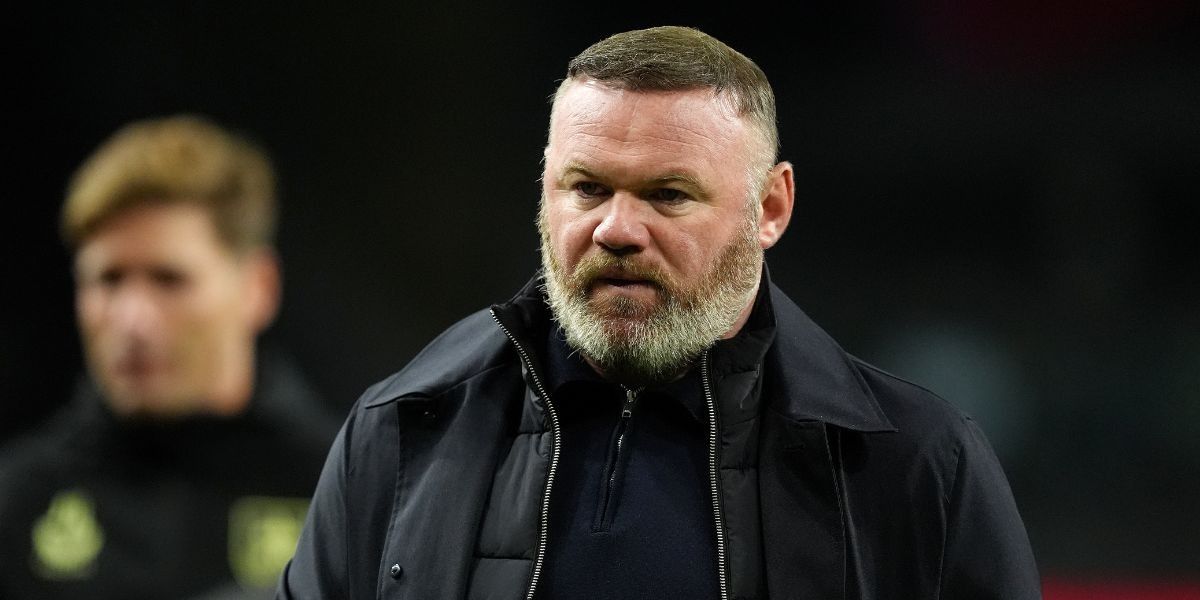
Wayne Rooney’s wife Coleen Rooney is reportedly concerned over her husband’s lifestyle in Plymouth.
The Manchester United legend took charge of Plymouth Argyle over the summer in a surprise move.
And it has been a tough start to life in the south-west with just two wins this season, leaving them 18th in the Championship.
Nevertheless, the club’s form has not been what wife Coleen is most concerned about – instead it is his health.
Wayne Rooney’s health has given his wife cause for concern
PA
According to the Daily Mail, Rooney is living a ‘lone bachelor lifestyle’, hundreds of miles way from his family.
The 38-year-old has reportedly been living on booze and takeaways in Devon while his wife and kids remain in Cheshire nearly 200 miles up north.
One customer at a local bar of Rooney’s revealed that ‘he comes in quite often for a few drinks’, and told the Daily Mail: “He’s definitely put on some weight since he’s been down here, maybe he’s getting stuck into the pasties.”
A video of Rooney went viral recently of the Englishman singing karaoke in a local pub and has also been known to frequent various pub quiz nights.
In the evenings in his rented flat, he is said to spend the evenings alone eating fast food and playing on games consoles while also drinking.
Coleen has had her concerns since Rooney made the move to Plymouth and recently tried to put him on a health plan.
The Rooney family are going on holiday this year and Coleen has been trying to get her husband to slim down before the family trip.
A source said: “Coleen’s told him no more takeaways, so she’s sorting out meal plans as well as making sure he’s busy when he’s not at work.”
Wayne Rooney has been reportedly living on booze and takeaways in Plymouth
PA
Initially, it was thought that Rooney’s wife and four kids would make the move down south with him.
But these plans were scrapped despite a period of time house-hunting as the couple did not want to disrupt their kids’ lives at school.
LATEST SPORT NEWS:
Coleen has been worried about husband Wayne Rooney
Instagram
In a recent interview, Coleen said: ‘We thought long and hard about it (moving to Devon) but with the kids it didn’t work.
Coleen recently said in an interview: “Kai’s now in year 10 and just starting GCSE prep and everything’s going well with football.
“And the other boys are all settled at school, so it didn’t seem fair on the children to pick them up and take them away, and start in a whole new place.”
Wayne Rooney’s wife Coleen Rooney is reportedly concerned over her husband’s lifestyle in Plymouth.
The Manchester United legend took charge of Plymouth Argyle over the summer in a surprise move.
And it has been a tough start to life in the south-west with just two wins this season, leaving them 18th in the Championship.
Nevertheless, the club’s form has not been what wife Coleen is most concerned about – instead it is his health.
Wayne Rooney’s health has given his wife cause for concern
PA
According to the Daily Mail, Rooney is living a ‘lone bachelor lifestyle’, hundreds of miles way from his family.
The 38-year-old has reportedly been living on booze and takeaways in Devon while his wife and kids remain in Cheshire nearly 200 miles up north.
One customer at a local bar of Rooney’s revealed that ‘he comes in quite often for a few drinks’, and told the Daily Mail: “He’s definitely put on some weight since he’s been down here, maybe he’s getting stuck into the pasties.”
A video of Rooney went viral recently of the Englishman singing karaoke in a local pub and has also been known to frequent various pub quiz nights.
In the evenings in his rented flat, he is said to spend the evenings alone eating fast food and playing on games consoles while also drinking.
Coleen has had her concerns since Rooney made the move to Plymouth and recently tried to put him on a health plan.
The Rooney family are going on holiday this year and Coleen has been trying to get her husband to slim down before the family trip.
A source said: “Coleen’s told him no more takeaways, so she’s sorting out meal plans as well as making sure he’s busy when he’s not at work.”
Wayne Rooney has been reportedly living on booze and takeaways in Plymouth
PA
Initially, it was thought that Rooney’s wife and four kids would make the move down south with him.
But these plans were scrapped despite a period of time house-hunting as the couple did not want to disrupt their kids’ lives at school.
LATEST SPORT NEWS:
Coleen has been worried about husband Wayne Rooney
Instagram
In a recent interview, Coleen said: ‘We thought long and hard about it (moving to Devon) but with the kids it didn’t work.
Coleen recently said in an interview: “Kai’s now in year 10 and just starting GCSE prep and everything’s going well with football.
“And the other boys are all settled at school, so it didn’t seem fair on the children to pick them up and take them away, and start in a whole new place.”
Wayne Rooney’s wife Coleen Rooney is reportedly concerned over her husband’s lifestyle in Plymouth.
The Manchester United legend took charge of Plymouth Argyle over the summer in a surprise move.
And it has been a tough start to life in the south-west with just two wins this season, leaving them 18th in the Championship.
Nevertheless, the club’s form has not been what wife Coleen is most concerned about – instead it is his health.
Wayne Rooney’s health has given his wife cause for concern
PA
According to the Daily Mail, Rooney is living a ‘lone bachelor lifestyle’, hundreds of miles way from his family.
The 38-year-old has reportedly been living on booze and takeaways in Devon while his wife and kids remain in Cheshire nearly 200 miles up north.
One customer at a local bar of Rooney’s revealed that ‘he comes in quite often for a few drinks’, and told the Daily Mail: “He’s definitely put on some weight since he’s been down here, maybe he’s getting stuck into the pasties.”
A video of Rooney went viral recently of the Englishman singing karaoke in a local pub and has also been known to frequent various pub quiz nights.
In the evenings in his rented flat, he is said to spend the evenings alone eating fast food and playing on games consoles while also drinking.
Coleen has had her concerns since Rooney made the move to Plymouth and recently tried to put him on a health plan.
The Rooney family are going on holiday this year and Coleen has been trying to get her husband to slim down before the family trip.
A source said: “Coleen’s told him no more takeaways, so she’s sorting out meal plans as well as making sure he’s busy when he’s not at work.”
Wayne Rooney has been reportedly living on booze and takeaways in Plymouth
PA
Initially, it was thought that Rooney’s wife and four kids would make the move down south with him.
But these plans were scrapped despite a period of time house-hunting as the couple did not want to disrupt their kids’ lives at school.
LATEST SPORT NEWS:
Coleen has been worried about husband Wayne Rooney
Instagram
In a recent interview, Coleen said: ‘We thought long and hard about it (moving to Devon) but with the kids it didn’t work.
Coleen recently said in an interview: “Kai’s now in year 10 and just starting GCSE prep and everything’s going well with football.
“And the other boys are all settled at school, so it didn’t seem fair on the children to pick them up and take them away, and start in a whole new place.”
INDIANAPOLIS — The Indiana Court of Appeals has reinstated a lawsuit filed by the state accusing TikTok of deceiving its users about the video-sharing platform’s level of inappropriate content for children and the security of its consumers’ personal information.
In a 3-0 ruling issued Monday, a three-judge panel of the state appeals court reversed two November 2023 decisions by an Allen County judge which dismissed a pair of lawsuits the state had filed in December 2022 against TikTok.
Those suits, which have been consolidated, allege the app contains “salacious and inappropriate content” despite the company claiming it is safe for children 13 years and under. The litigation also argues that the app deceives consumers into believing their sensitive and personal information is secure.
In November’s ruling, Allen Superior Court Judge Jennifer L. DeGroote found that her court lacked personal jurisdiction over the case and reaffirmed a previous court ruling which found that downloading a free app does not count as a consumer transaction under the Indiana Deceptive Consumer Sales Act.
But in Monday’s ruling, Judge Paul Mathias wrote on behalf of the appeals court that TikTok’s millions of Indiana users and the $46 million in Indiana-based income the company reported in 2021 create sufficient contact between the company and the state to establish the jurisdiction of Indiana’s courts over TikTok, The Times of Northwest Indiana reported.
Mathias also wrote that TikTok’s business model of providing access to its video content library in exchange for the personal data of its Indiana users counts as a “consumer transaction” under the law, even if no payment is involved.
“The plain and ordinary definition of the word ‘sale,’ which is not otherwise defined in the DCSA, includes any consideration to effectuate the transfer of property, not only an exchange for money,” Mathias wrote.
“It is undisputed that TikTok exchanges access to its app’s content library for end-user personal data. That is the bargain between TikTok and its end-users. And, under the plain and ordinary use of the word, that is a ‘sale’ of access to TikTok’s content library for the end-user’s personal data. TikTok’s business model is therefore a consumer transaction under the DCSA.”
A spokesperson for the Indiana Attorney General’s office said Tuesday in a statement that the appeals court “took a common sense approach and agreed with our office’s argument that there’s simply no serious question that Indiana has established specific personal jurisdiction over TikTok.”
“By earning more $46 million dollars from Hoosier consumers in 2021, TikTok is doing business in the state and is therefore subject to this lawsuit,” the statement adds.
The Associated Press left a message Tuesday afternoon for a lead attorney for TikTok seeking comment on the appeals court’s ruling.
TikTok is owned by ByteDance, a Chinese company that moved its headquarters to Singapore in 2020. The app has been a target over the past year of state and federal lawmakers who say the Chinese government could access the app’s users’ data.
Indiana Attorney General Todd Rokita has repeatedly personally urged Hoosiers to ”patriotically delete″ the TikTok app due to its supposed ties to the Chinese Communist Party.