hacklink hack forum hacklink film izle hacklink marsbahisizmir escortsahabetpornJojobetcasibompadişahbetBakırköy Escortcasibom9018betgit casinojojobetmarsbahismatbet

Tag: Diabetes

  • Healthy lifestyle key to avoiding diabetes: governor

    Healthy lifestyle key to avoiding diabetes: governor


    Punjab Governor Sardar Saleem Haider Khan addresses a public awareness event organised by the Internal Society of Internal Medicine regarding World Diabetes Day at Governor’s House on November 14, 2024. — Facebook@sardarsaleemhaidergroup
     Punjab Governor Sardar Saleem Haider Khan addresses a public awareness event organised by the Internal Society of Internal Medicine regarding World Diabetes Day at Governor’s House on November 14, 2024. — Facebook@sardarsaleemhaidergroup

    LAHORE: Punjab Governor Sardar Saleem Haider Khan said that diabetes could be avoided by adopting a healthy lifestyle. People cannot get diabetes treatment due to lack of resources in the villages.

    He expressed these views while addressing a public awareness event organised by the Internal Society of Internal Medicine regarding World Diabetes Day at Governor’s House on Thursday.Addressing the ceremony, Punjab Governor said that it is the responsibility of the government to provide health and education facilities to every citizen. He said that all the health centres of Punjab should have free sugar test and treatment facility. He said that for a healthy body, at least one hour should be allocated for exercise every day.

    Punjab governor also requested Prof Dr Javed Akram to provide free treatment to the diabetic government employees of the Governor’s House from one to ten scale.The governor also led a walk to raise awareness about diabetes prevention. Former provincial health minister and President Pakistan Society of Internal Medicine Prof Dr Javed Akram and Vice Chancellor King Edward Medical University Mahmood Ayaz and other doctors also addressed the ceremony. Vice Chancellor Fatima Jinnah Medical University Khalid Masood Gondal, medical students and others were present in the ceremony.

    Meanwhile, Vice Chairperson Overseas Pakistanis Commission Punjab Barrister Amjad Malik called on Punjab Governor Sardar Saleem Haider Khan at Governor’s House. Barrister Amjad briefed the governor about the performance of the institution.

    Speaking on this occasion, Punjab governor said that overseas Pakistanis are the asset of the country who are contributing a lot to the economy of the country by sending remittances. He said that the doors of the Governor’s House are open for overseas Pakistanis. He said that no effort will be spared to solve the problems of the overseas Pakistanis.

    Governor Punjab said that whenever there was a difficult time for the motherland, Pakistanis living abroad always came forward to help. He further said that the protection of life and property of Overseas Pakistanis is the first priority of the government.Barrister Amjad Malik said that prominent overseas Pakistanis living abroad will be included in the advisory process through district overseas committees and advisories.


    Source link

  • World Diabetes Day 2024: 10 Diet And Lifestyle Changes A Diabetic Should Make For Healthy Living

    World Diabetes Day 2024: 10 Diet And Lifestyle Changes A Diabetic Should Make For Healthy Living

    Every year, World Diabetes Day serves as an important occasion to raise awareness about the global health crisis posed by diabetes. On November 14, 2024, the theme is “Breaking Barriers, Bridging Gaps,” which highlights the need for accessible, affordable, and quality care for everyone affected by diabetes. It calls for the reduction of disparities in diagnosis, prevention, and management, emphasizing that with the right interventions, people living with diabetes can lead fulfilling, healthy lives.

    In honour of World Diabetes Day 2024, it’s important to focus on practical and actionable steps for better diabetes management. Diet and lifestyle changes are at the core of controlling blood sugar levels, improving overall health, and preventing complications associated with diabetes. 

    Also Read: 5 Khichdi Recipes That May Help Manage Blood Sugar Level

    Diabetes can be managed with a good diet.

    Diabetes can be managed with a good diet.
    Photo Credit: iStock

    Here are 10 essential diet and lifestyle changes for anyone managing diabetes:

    1. Eat a Balanced, Low-Glycemic Diet

    The glycemic index (GI) measures how quickly a food raises blood sugar levels. For diabetes management, it’s important to focus on low-GI foods, which release glucose slowly into the bloodstream. These include whole grains, legumes, non-starchy vegetables, and fruits such as apples, pears, and berries. Avoid refined carbs and sugary snacks that cause rapid blood sugar spikes.

    2. Increase Fibre Intake

    Fibre helps regulate blood sugar levels by slowing down the absorption of sugar and reducing insulin spikes. Diabetics should aim to include a variety of fibre-rich foods in their diet, such as vegetables, fruits, legumes, and whole grains. Aim for at least 25-30 grams of fibre per day, as it not only aids blood sugar control but also supports digestive health and heart health.

    3. Portion Control and Mindful Eating

    Portion control is essential for managing blood sugar and weight. Diabetics should avoid overeating, which can lead to elevated blood sugar levels. Mindful eating – focusing on food and eating slowly – can help prevent overeating and improve digestion. Using smaller plates, avoiding second servings, and paying attention to hunger cues are all simple yet effective strategies.

    4. Stay Hydrated

    Drinking enough water is essential for managing diabetes. Dehydration can lead to high blood sugar, as the body attempts to compensate by producing more sugar. Aim to drink at least 8 cups of water a day. Avoid sugary drinks, sodas, and excessive caffeine, as they can cause blood sugar fluctuations and dehydration.

    5. Include Healthy Fats

    Healthy fats, such as those found in olive oil, avocados, nuts, and fatty fish (like salmon and mackerel), are crucial for heart health, which is especially important for diabetics who are at higher risk for cardiovascular diseases. These fats can also help you feel full longer and prevent overeating. Just be mindful of portion sizes, as fats are calorie-dense.

    Also Read: Diabetes Diet: This Refreshing Tomato Juice May Help Manage Diabetes Too (Recipe Inside)

    6. Exercise Regularly

    Physical activity is one of the most effective ways to manage blood sugar levels. Exercise helps increase insulin sensitivity, allowing cells to absorb glucose more effectively. Aim for at least 150 minutes of moderate-intensity aerobic exercise per week, such as brisk walking, swimming, or cycling, along with muscle-strengthening exercises twice a week. Always check blood sugar levels before and after exercise to prevent hypoglycemia.

    7. Manage Stress

    Chronic stress can cause blood sugar levels to rise by triggering the release of stress hormones like cortisol and adrenaline. To manage stress, incorporate relaxation techniques such as yoga, meditation, deep breathing, or even hobbies you enjoy. Staying mentally balanced not only supports blood sugar control but also improves overall health and quality of life.

    8. Get Enough Sleep

    Poor sleep can negatively affect blood sugar control by disrupting insulin function. Aim for 7-9 hours of quality sleep per night to promote better overall health and support your body’s ability to manage glucose levels. Establish a consistent sleep schedule, avoid caffeine in the evening, and create a relaxing bedtime routine to improve sleep quality.

    9. Monitor Blood Sugar Levels Regularly

    Regular monitoring of blood sugar is essential for understanding how your body responds to certain foods, activities, and medications. By tracking your blood glucose levels consistently, you can make informed decisions about diet, exercise, and medication adjustments. Discuss with your healthcare provider to determine the best monitoring schedule for you.

    10. Work Closely with Healthcare Providers

    Lastly, diabetes management is a team effort. Regular check-ups with your healthcare provider, including a diabetes specialist or dietitian, can help you stay on track with your diet, medications, and lifestyle changes. They can also help you adjust your treatment plan if necessary. Regular visits ensure you have access to updated information and support in managing the condition effectively.

    By adopting these 10 diet and lifestyle changes, individuals with diabetes can improve their quality of life, prevent complications, and gain better control over their health.

     

    Source link

  • World Diabetes Day: One-Fourth Of People Living With Diabetes In India In 2022: Lancet Study

    World Diabetes Day: One-Fourth Of People Living With Diabetes In India In 2022: Lancet Study

    About 82.8 crore people around the world are estimated to be living with diabetes in 2022, with over a quarter in India, according to an analysis published in The Lancet journal ahead of World Diabetes Day observed every year on November 14.

    The figure of 82.8 crore is over four times the number in 1990, with the largest increase in low and middle-income countries (LMICs), researchers forming the Non-Communicable Disease Risk Factor Collaboration (NCD-RisC) said.

    Between 1990 and 2022, rates of diabetes treatment stagnated at low levels in many of the same LMICs, where cases of the disease drastically increased, resulting in 44.5 crore adults aged 30 and over with the metabolic condition globally (nearly 60 per cent) who did not receive treatment in 2022, the researchers said.

    Of the 82.8 crore, India’s share formed over a quarter (21.2 crore). Another 14.8 crore were in China, while 4.2 crore, 3.6 crore and 2.2 crore lived in the US, Pakistan and Brazil, respectively, the researchers found.

    NCD-RisC is a global network, coordinated by the World Health Organization, of over 1,500 researchers and practitioners providing information on risk factors for non-communicable disease across countries.

    Further, in 2022, almost one-third of the 44.5 crore adults (13.3 crore) with untreated diabetes lived in India.

    “Our findings suggest there is an increasing share of people with diabetes, especially with untreated diabetes, living in low- and middle-income countries,” said author Jean Claude Mbanya, University of Yaounde 1, Cameroon.

    “Most people with untreated diabetes will not have received a diagnosis, therefore increasing detection of diabetes must be an urgent priority in countries with low levels of treatment,” he said.

    Undiagnosed diabetes has been linked with complications such as diabetic retinopathy — when high levels of blood sugar damage the eye’s retina (which is sensitive to light) — which can potentially cause vision loss and blindness.

    A 2022 study, published in the International Journal of Diabetes in Developing Countries, found that in India, 12.5 per cent of people with diabetes (30 lakh) had diabetic retinopathy — of which 4 per cent were said to have vision-threatening diabetic retinopathy — and therefore, are at an “immediate risk of vision loss”.

    The SMART India Study, by researchers, including those from Chennai’s Sanakara Nethralaya, was conducted in 10 Indian States and one union territory, involving over 6,000 patients with diabetes aged 40 years and above who had gradable retinal images. The authors called for screening patients with diabetes for diabetic retinopathy.

    “Given the disabling and potentially fatal consequences of diabetes, preventing diabetes through healthy diet and exercise is essential for better health throughout the world,” said author Ranjit Mohan Anjana, Madras Diabetes Research Foundation, India.

    He said the findings highlighted the need for more ambitious policies restricting unhealthy foods and making healthy ones more affordable.

    There is also a need to “improve opportunities to exercise through measures such as subsidies for healthy foods and free healthy school meals as well as promoting safe places for walking and exercising including free entrance to public parks and fitness centres,” Mohan Anjana said.

    Claude Mbanya said, “Better diagnosis of diabetes requires innovations such as workplace and community screening programmes, extended or flexible healthcare hours to enable people to visit outside of standard working hours, integration with screening and care for diseases like HIV/AIDS and TB which have well-established programmes, and the use of trusted community healthcare providers.”

    (Disclaimer: This story has not been edited by NDTV staff and is auto-generated from a syndicated feed. This story has not been edited by NDTV staff and is auto-generated from a syndicated feed.)

    Source link

  • Dr Maya, ayruveda, world diabetes day, ayurveda doctor, prediabetes, ayurveda treatment, diabetes treatment

    Dr Maya, ayruveda, world diabetes day, ayurveda doctor, prediabetes, ayurveda treatment, diabetes treatment

    Thiruvananthapuram: Around 25% of Kerala’s population now lives with a diabetes diagnosis, a figure experts link to lifestyle choices and an increasing neglect of preventive measures. On World Diabetes Day, Dr. Maya P S, Medical Officer at the Jeevani Project, Government Ayurveda Hospital, Neyyattinkara, spoke to Mathrubhumi about the dangers of this lifestyle disease. She observed that many people under 30 believe diabetes primarily affects older adults, leading them to continue unhealthy lifestyle habits without considering the risks. “Many of our patients are in their early 30s,” she noted. “It’s crucial for individuals to start regular health checkups once they reach 30.”

    In response to this rising trend, we are trying our best to create awareness campaigns and promote preventive measures. This year’s theme, “Breaking Barriers, Bridging Gaps,” highlights efforts to reduce diabetes risks while ensuring that those diagnosed have equitable access to affordable, high-quality care. In a bid to reach younger audiences, Dr Maya mentions that an awareness camp has been scheduled at a nearby school to educate teachers, who play a vital role in shaping the future generation.

    Get Latest Mathrubhumi Updates in English

    Jeevani project: Addressing diabetes through a combined medical approach

    Initiated by the Indian Systems of Medicine in June 2013, the Jeevani Project focuses on preventing and managing diabetes—a rapidly escalating lifestyle disorder. This project is now active in district hospitals across Thiruvananthapuram, Kollam, Ernakulam, and Kannur, where 100-150 patients are selected through initial screenings. The patients are enrolled based on their current health condition. Each patient receives a free monthly blood test and a 20-day supply of prescribed medicine, allowing medical staff to track their health and adjust treatment plans as needed.

    Dr Maya says the project categorises patients into four groups, each representing a unique approach to treatment. Some patients are newly diagnosed and have not yet started any allopathic medications (G1). Another group relies solely on ayurvedic treatments (G2). Some patients gradually transition to allopathic care alone (G3), while others follow both ayurvedic and allopathic treatments (G4). By closely monitoring and adjusting medications, the Jeevani Project provides a flexible and comprehensive approach that caters to each patient’s needs.

    Diabetic woman checking her glucose level
    Diabetic woman checking her glucose level | Photo: Freepik

    Understanding prediabetes: An early warning stage

    Before diabetes fully develops, many individuals enter a state known as prediabetes. In this stage, blood sugar levels are higher than normal but not yet high enough to be classified as diabetes. Without lifestyle changes, prediabetes can progress to type 2 diabetes, increasing risks of severe health complications. However, with timely intervention, prediabetes can often be managed, providing an opportunity to prevent the onset of diabetes and maintain overall health.

    Recognising symptoms of prediabetes

    For those at risk but not yet diagnosed with diabetes, identifying early symptoms of prediabetes can prevent progression. Some key warning signs include:

    Increased Thirst: Persistent thirst may indicate the body’s struggle to manage blood sugar levels. High blood sugar levels can lead to dehydration as the kidneys work harder to filter out excess glucose, leading to frequent urination and heightened thirst.

    Frequent Urination: When blood sugar levels rise, the kidneys excrete excess glucose through urine. This leads to more frequent urination, creating a cycle of increased thirst and fluid loss, which can become uncomfortable.

    Fatigue: Prediabetes can lead to frequent fatigue as the body struggles to convert glucose into energy effectively. Poor sleep quality, often linked with prediabetes symptoms, can worsen fatigue, leaving individuals feeling persistently tired.

    Skin Rashes or Itching: Sometimes, skin conditions, such as rashes or itching, are an early indication of prediabetes.

    Other symptoms to watch for include unintended weight loss, increased hunger, and a higher risk for those with diabetic parents. Dr Maya emphasises that regular testing is essential, especially after age 30, to catch prediabetes early and take preventive steps.

    Treatment approaches for managing prediabetes

    Taking preventive action is crucial for those with prediabetes and those already diagnosed. Dr Maya outlines four key areas that can help manage and control diabetes effectively:

    Balanced Diet: A diet rich in fruits, vegetables, and whole grains significantly reduces the risk of prediabetes. Incorporating fiber-rich foods helps slow down the absorption of sugar into the bloodstream, helping maintain stable blood sugar levels.

    Regular Physical Activity: Exercise plays a major role in managing diabetes. It helps with weight control, uses up sugar for energy, and makes the body more sensitive to insulin. Walking is especially beneficial, but if that’s not possible, consulting a yoga instructor for suitable exercises can also provide the necessary physical activity.

    Consistent Monitoring: Many people overlook the importance of regular health monitoring. Frequent checks, including fasting blood sugar and HbA1c tests, are vital for prediabetics. The HbA1c test measures average blood sugar levels over the past two to three months, providing a clearer picture of long-term blood sugar control. These tests help track blood sugar levels and provide early warnings, enabling timely lifestyle adjustments or treatments.

    Scheduled Meal Times: Eating meals at regular intervals helps stabilize blood sugar. Instead of three large meals, five smaller meals spread throughout the day are recommended. For breakfast, small portions of nutrient-rich foods should be consumed by 8:30 am. Mid-morning snacks, like eggs, salads, or sprouts, should be taken around 11:30 am, followed by a balanced lunch with reduced rice and more vegetables around 1:00 pm. Evening snacks can include ragi, and an early dinner (ideally around 7:00 to 8:00 pm) with foods like millets, which have a low glycemic index, is highly beneficial.

    Understanding the glycemic index for blood sugar control

    Groceries
    Groceries | Photo: Freepik​​​​​

    The glycemic index (GI) ranks foods based on how quickly they raise blood sugar levels. Foods with a low GI are preferable as they cause a gradual increase in blood sugar, while high-GI foods lead to quick spikes. Here are examples of some low-GI foods that manage diabetes or prediabetes:

    Low GI Foods: Soybeans (GI 15), cauliflower (GI 10), cabbage (GI 0-10), carrots (GI 16), almonds (GI 0), buttermilk (GI 20), pomegranate (GI 18), apple (GI 36), and oranges (GI 43).

    With diabetes cases on the rise in Kerala, health experts urge residents to take preventive measures and stay informed about the symptoms and treatments. Dr Maya stresses that simple lifestyle changes, regular monitoring, and awareness can make a significant difference.

    Source link

  • Balancing Work and Wellness: Managing Diabetes in a Fast-Paced Lifestyle

    Balancing Work and Wellness: Managing Diabetes in a Fast-Paced Lifestyle

    Last Updated:

    Managing diabetes in a high-pressure work environment does not mean adjusting for the day but changing the lifestyle to ensure long-term health and professional development

    World Diabetes Day theme for 2024-2026 is Diabetes and Well-being. (Image: Shutterstock)

    World Diabetes Day theme for 2024-2026 is Diabetes and Well-being. (Image: Shutterstock)

    In today’s fast-paced world, the sedentary work life is taking a heavy toll on health, leading to a rise in lifestyle diseases, especially diabetes. Recent data from the Indian Council of Medical Research (ICMR) paints a stark picture, as over 101 million Indians are currently living with diabetes, and over 136 million are living with prediabetes. This number is expected to rise. Regulating lifestyle is crucial for diabetic patients, especially working professionals. While navigating through the intricacies of their professional life, they also have to prioritize their health, striking a balance between work and wellness.

    Managing Diabetes for Sustained Productivity in the Workplace

    Diabetes cannot be cured, but one can manage it and learn to live with it. Type 1 diabetes, often called insulin-dependent diabetes, and type 2 diabetes stem from issues in sugar regulation and use. For working people, frequent fluctuations in sugar levels lead to chronic fatigue, making it harder for them to concentrate. Uncontrolled diabetes can also hamper cognitive abilities, inadvertently diminishing their overall productivity. Hence, controlling the sugar level is the only option. One way is dependency on medicines, but that, too solely, will not help, and lifestyle changes are a must.

    Dr Geetajali Gupta Director, Technical operations & Quality Assurance in Redcliffe Labs shares some lifestyle changes that working individuals can incorporate to manage diabetes:

    1. Regular Blood Sugar MonitoringIn the pursuit of meeting deadlines, people often miss out on their regular health checkups. However, a diabetic person cannot afford to do so. Keeping track of blood sugar levels per their doctor’s direction is the first crucial step toward a healthy lifestyle. Frequent monitoring of the blood sugar level draws an individual closer to knowing how their body reacts to a variety of foods, exercises, and medicines, which would, in turn, help in making informed decisions. Taking notes of the fluctuations in the sugar level enables doctors to make changes, and interventions are made when needed.
    2. Be Mindful of What You EatIt is common for working professionals to consume ready-to-eat processed food in a hurry, which should be avoided at all costs. For a diabetic person, eating the right kind of food in the right quantity every day without fail is very important, as overeating can shoot up the blood sugar level while eating too little will cause it to drop.Seeing how one’s body reacts to different foods helps diversify diets by including the correct ratio of fruits, vegetables, lean meats, and healthy fats. To control the portion size, you can use visual cues such as the size of a baseball serving vegetables. Packing healthy snacks into smaller portions is another way to minimize calorie intake.

      It is common to have hunger pangs during work, and fast food is usually the answer. However, a person with diabetes should always carry healthy snacks such as fruits and nuts that provide immediate satisfaction and energy.

    3. Stay Active at your Workplace:Regular exercise helps regulate blood sugar levels, but one cannot do that in the office. In such scenarios, even short activities such as taking a walk, doing some stretches, or standing up, which people normally engage in during breaks while working, can improve the body’s sensitivity to insulin and uptake of glucose. Using stairs in place of elevators is another good way to remain active. Such simple habits minimize the negative effects of a stationary lifestyle, making it possible to regulate blood sugar levels throughout the day.
    4. Time management for Quality Sleep and Stress ManagementPoor sleep and chronic stress elevate blood sugar levels. Hence, staying up late at night and scrolling through social media are other activities a diabetic person should avoid. They must also get 8 hours of quality sleep time. To manage stress, while effective time management at work reduces the tension of deadlines, deep breathing or meditation also helps.

      Way Forward

    Managing diabetes in a high-pressure work environment does not mean adjusting for the day but changing the lifestyle to ensure long-term health and professional development. Moving away from the inactive lifestyle that comes with a desk job is crucial. Combining simple, office-friendly physical activity with controlled portions and mindful snacking allows one to stay active throughout, which, in turn, helps them stabilize their blood sugar levels. The combination not only serves the purpose of proper diabetes management but also makes people more focused, confident, and at their best in their professional and personal lives.

    News lifestyle Balancing Work and Wellness: Managing Diabetes in a Fast-Paced Lifestyle

    Source link

  • BEST Employees Achieve Diabetes Remission Through Lifestyle Changes | Mumbai News

    BEST Employees Achieve Diabetes Remission Through Lifestyle Changes | Mumbai News

    Lifestyle helps 250+ BEST staff in diabetes remission

    Mumbai: For the last 20 months, BEST’s Mulund bus depot supervisor, Tanaji Jadhav, rarely missed his daily 10 km walk, ate a wada pav, or drank tea with sugar. He also did not take medications for diabetes that he previously took for almost 10 years daily.
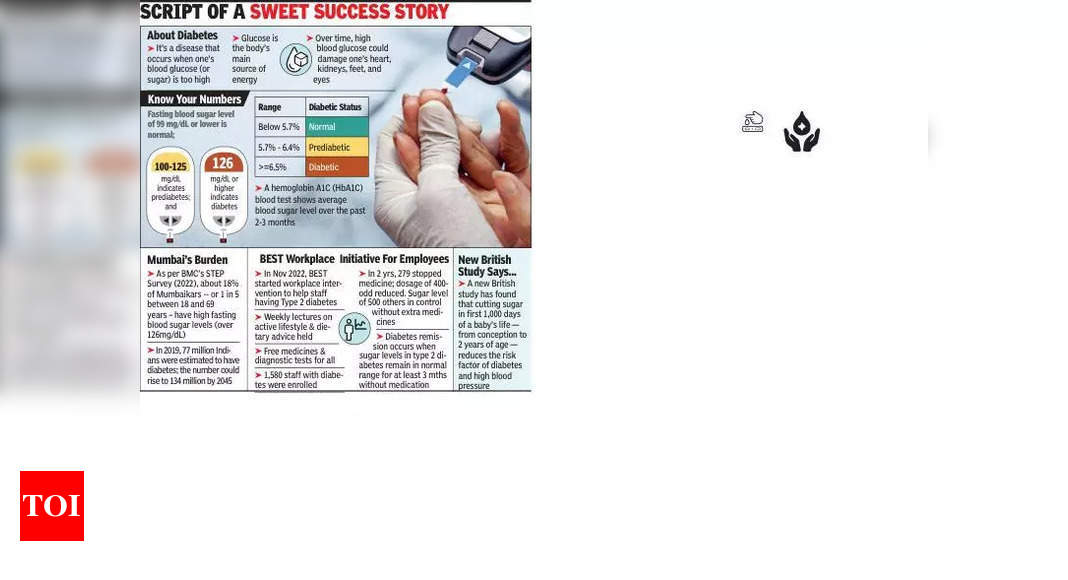
    For Jadhav, along with 278 other BEST employees, diabetes was in remission in the last two years. Thanks to personal diet counselling, monthly tele-monitoring, and three-monthly checkups, a sizeable number of the 1,580 BEST drivers and conductors who have diabetes managed to either stop or reduce their daily medicines. “Apart from 279 in remission, another 400 are on reduced dosage of medicines while another 500 have brought their daily sugar levels in control with medication,” said BEST chief medical officer Dr Anil Kumar Singhal.
    In Nov 2022, the BEST Undertaking started a workplace intervention to help staff suffering from Type 2 diabetes, the most common form of diabetes that roughly affects over 75 million Indians. The programme entailed twice-a-week lectures on leading an active lifestyle and dietary advice at the ‘Diabetes Reflection Centre’ at the Dadar workshop. “We have also started a tele helpline and a WhatsApp group to disburse useful health-related information,” said Dr Singhal.
    In a country where 70% of the patients with diabetes have poor control of their blood sugar levels, such interventions help.
    As Jadhav put it: “During the first lecture I attended, I was asked about what I eat. As a driver on a busy route, I would take 15-20 cups of tea a day and would love to eat sheera. The medical team then explained that if I cut down on these food items and adopted an active exercise regimen, my sugar levels would be in control.”
    Jadhav immediately stopped binging on carbs, cut down on tea, and took up walking. “Within a few months, my sugar levels were in the normal range without medication,” he added.
    BEST general manager Anil Diggikar said, “Our medical team has taken a good initiative in changing lifestyle, incorporating new diet and other preventive measures to ensure that diabetes is reversible for several staffers. We are witnessing positive change and it’s a great initiative by the BEST medical department. We will remain committed to the cause.”
    Dr Tushar Bandgar, head of BMC-run KEM Hospital’s endocrinology department, said diabetes remission with lifestyle changes is a possibility for Type 2 diabetes patients who have a BMI of over 25, provided they were diagnosed less than five years back and aren’t on medicines such as sulfonylureas that cause hypoglycemia (low blood sugar levels).


    Source link

  • BEST Employees Achieve Diabetes Remission Through Lifestyle Changes | Mumbai News

    BEST Employees Achieve Diabetes Remission Through Lifestyle Changes | Mumbai News

    Lifestyle helps 250+ BEST staff in diabetes remission

    Mumbai: For the last 20 months, BEST’s Mulund bus depot supervisor, Tanaji Jadhav, rarely missed his daily 10 km walk, ate a wada pav, or drank tea with sugar. He also did not take medications for diabetes that he previously took for almost 10 years daily.
    For Jadhav, along with 278 other BEST employees, diabetes was in remission in the last two years. Thanks to personal diet counselling, monthly tele-monitoring, and three-monthly checkups, a sizeable number of the 1,580 BEST drivers and conductors who have diabetes managed to either stop or reduce their daily medicines. “Apart from 279 in remission, another 400 are on reduced dosage of medicines while another 500 have brought their daily sugar levels in control with medication,” said BEST chief medical officer Dr Anil Kumar Singhal.
    In Nov 2022, the BEST Undertaking started a workplace intervention to help staff suffering from Type 2 diabetes, the most common form of diabetes that roughly affects over 75 million Indians. The programme entailed twice-a-week lectures on leading an active lifestyle and dietary advice at the ‘Diabetes Reflection Centre’ at the Dadar workshop. “We have also started a tele helpline and a WhatsApp group to disburse useful health-related information,” said Dr Singhal.
    In a country where 70% of the patients with diabetes have poor control of their blood sugar levels, such interventions help.
    As Jadhav put it: “During the first lecture I attended, I was asked about what I eat. As a driver on a busy route, I would take 15-20 cups of tea a day and would love to eat sheera. The medical team then explained that if I cut down on these food items and adopted an active exercise regimen, my sugar levels would be in control.”
    Jadhav immediately stopped binging on carbs, cut down on tea, and took up walking. “Within a few months, my sugar levels were in the normal range without medication,” he added.
    BEST general manager Anil Diggikar said, “Our medical team has taken a good initiative in changing lifestyle, incorporating new diet and other preventive measures to ensure that diabetes is reversible for several staffers. We are witnessing positive change and it’s a great initiative by the BEST medical department. We will remain committed to the cause.”
    Dr Tushar Bandgar, head of BMC-run KEM Hospital’s endocrinology department, said diabetes remission with lifestyle changes is a possibility for Type 2 diabetes patients who have a BMI of over 25, provided they were diagnosed less than five years back and aren’t on medicines such as sulfonylureas that cause hypoglycemia (low blood sugar levels).


    Source link

  • BEST Employees Achieve Diabetes Remission Through Lifestyle Changes | Mumbai News

    BEST Employees Achieve Diabetes Remission Through Lifestyle Changes | Mumbai News

    Lifestyle helps 250+ BEST staff in diabetes remission

    Mumbai: For the last 20 months, BEST’s Mulund bus depot supervisor, Tanaji Jadhav, rarely missed his daily 10 km walk, ate a wada pav, or drank tea with sugar. He also did not take medications for diabetes that he previously took for almost 10 years daily.
    For Jadhav, along with 278 other BEST employees, diabetes was in remission in the last two years. Thanks to personal diet counselling, monthly tele-monitoring, and three-monthly checkups, a sizeable number of the 1,580 BEST drivers and conductors who have diabetes managed to either stop or reduce their daily medicines. “Apart from 279 in remission, another 400 are on reduced dosage of medicines while another 500 have brought their daily sugar levels in control with medication,” said BEST chief medical officer Dr Anil Kumar Singhal.
    In Nov 2022, the BEST Undertaking started a workplace intervention to help staff suffering from Type 2 diabetes, the most common form of diabetes that roughly affects over 75 million Indians. The programme entailed twice-a-week lectures on leading an active lifestyle and dietary advice at the ‘Diabetes Reflection Centre’ at the Dadar workshop. “We have also started a tele helpline and a WhatsApp group to disburse useful health-related information,” said Dr Singhal.
    In a country where 70% of the patients with diabetes have poor control of their blood sugar levels, such interventions help.
    As Jadhav put it: “During the first lecture I attended, I was asked about what I eat. As a driver on a busy route, I would take 15-20 cups of tea a day and would love to eat sheera. The medical team then explained that if I cut down on these food items and adopted an active exercise regimen, my sugar levels would be in control.”
    Jadhav immediately stopped binging on carbs, cut down on tea, and took up walking. “Within a few months, my sugar levels were in the normal range without medication,” he added.
    BEST general manager Anil Diggikar said, “Our medical team has taken a good initiative in changing lifestyle, incorporating new diet and other preventive measures to ensure that diabetes is reversible for several staffers. We are witnessing positive change and it’s a great initiative by the BEST medical department. We will remain committed to the cause.”
    Dr Tushar Bandgar, head of BMC-run KEM Hospital’s endocrinology department, said diabetes remission with lifestyle changes is a possibility for Type 2 diabetes patients who have a BMI of over 25, provided they were diagnosed less than five years back and aren’t on medicines such as sulfonylureas that cause hypoglycemia (low blood sugar levels).


    Source link

  • BEST Employees Achieve Diabetes Remission Through Lifestyle Changes | Mumbai News

    BEST Employees Achieve Diabetes Remission Through Lifestyle Changes | Mumbai News

    Lifestyle helps 250+ BEST staff in diabetes remission

    Mumbai: For the last 20 months, BEST’s Mulund bus depot supervisor, Tanaji Jadhav, rarely missed his daily 10 km walk, ate a wada pav, or drank tea with sugar. He also did not take medications for diabetes that he previously took for almost 10 years daily.
    For Jadhav, along with 278 other BEST employees, diabetes was in remission in the last two years. Thanks to personal diet counselling, monthly tele-monitoring, and three-monthly checkups, a sizeable number of the 1,580 BEST drivers and conductors who have diabetes managed to either stop or reduce their daily medicines. “Apart from 279 in remission, another 400 are on reduced dosage of medicines while another 500 have brought their daily sugar levels in control with medication,” said BEST chief medical officer Dr Anil Kumar Singhal.
    In Nov 2022, the BEST Undertaking started a workplace intervention to help staff suffering from Type 2 diabetes, the most common form of diabetes that roughly affects over 75 million Indians. The programme entailed twice-a-week lectures on leading an active lifestyle and dietary advice at the ‘Diabetes Reflection Centre’ at the Dadar workshop. “We have also started a tele helpline and a WhatsApp group to disburse useful health-related information,” said Dr Singhal.
    In a country where 70% of the patients with diabetes have poor control of their blood sugar levels, such interventions help.
    As Jadhav put it: “During the first lecture I attended, I was asked about what I eat. As a driver on a busy route, I would take 15-20 cups of tea a day and would love to eat sheera. The medical team then explained that if I cut down on these food items and adopted an active exercise regimen, my sugar levels would be in control.”
    Jadhav immediately stopped binging on carbs, cut down on tea, and took up walking. “Within a few months, my sugar levels were in the normal range without medication,” he added.
    BEST general manager Anil Diggikar said, “Our medical team has taken a good initiative in changing lifestyle, incorporating new diet and other preventive measures to ensure that diabetes is reversible for several staffers. We are witnessing positive change and it’s a great initiative by the BEST medical department. We will remain committed to the cause.”
    Dr Tushar Bandgar, head of BMC-run KEM Hospital’s endocrinology department, said diabetes remission with lifestyle changes is a possibility for Type 2 diabetes patients who have a BMI of over 25, provided they were diagnosed less than five years back and aren’t on medicines such as sulfonylureas that cause hypoglycemia (low blood sugar levels).


    Source link

  • BEST Employees Achieve Diabetes Remission Through Lifestyle Changes | Mumbai News

    BEST Employees Achieve Diabetes Remission Through Lifestyle Changes | Mumbai News

    Lifestyle helps 250+ BEST staff in diabetes remission

    Mumbai: For the last 20 months, BEST’s Mulund bus depot supervisor, Tanaji Jadhav, rarely missed his daily 10 km walk, ate a wada pav, or drank tea with sugar. He also did not take medications for diabetes that he previously took for almost 10 years daily.
    For Jadhav, along with 278 other BEST employees, diabetes was in remission in the last two years. Thanks to personal diet counselling, monthly tele-monitoring, and three-monthly checkups, a sizeable number of the 1,580 BEST drivers and conductors who have diabetes managed to either stop or reduce their daily medicines. “Apart from 279 in remission, another 400 are on reduced dosage of medicines while another 500 have brought their daily sugar levels in control with medication,” said BEST chief medical officer Dr Anil Kumar Singhal.
    In Nov 2022, the BEST Undertaking started a workplace intervention to help staff suffering from Type 2 diabetes, the most common form of diabetes that roughly affects over 75 million Indians. The programme entailed twice-a-week lectures on leading an active lifestyle and dietary advice at the ‘Diabetes Reflection Centre’ at the Dadar workshop. “We have also started a tele helpline and a WhatsApp group to disburse useful health-related information,” said Dr Singhal.
    In a country where 70% of the patients with diabetes have poor control of their blood sugar levels, such interventions help.
    As Jadhav put it: “During the first lecture I attended, I was asked about what I eat. As a driver on a busy route, I would take 15-20 cups of tea a day and would love to eat sheera. The medical team then explained that if I cut down on these food items and adopted an active exercise regimen, my sugar levels would be in control.”
    Jadhav immediately stopped binging on carbs, cut down on tea, and took up walking. “Within a few months, my sugar levels were in the normal range without medication,” he added.
    BEST general manager Anil Diggikar said, “Our medical team has taken a good initiative in changing lifestyle, incorporating new diet and other preventive measures to ensure that diabetes is reversible for several staffers. We are witnessing positive change and it’s a great initiative by the BEST medical department. We will remain committed to the cause.”
    Dr Tushar Bandgar, head of BMC-run KEM Hospital’s endocrinology department, said diabetes remission with lifestyle changes is a possibility for Type 2 diabetes patients who have a BMI of over 25, provided they were diagnosed less than five years back and aren’t on medicines such as sulfonylureas that cause hypoglycemia (low blood sugar levels).


    Source link