Real Madrid head coach Carlo Ancelotti said that he “doesn’t feel like talking about football” with … [+] respect to a flooding tragedy in the Valencia region.
Anadolu via Getty Images
Emotional Real Madrid head coach Carlo Ancelotti said that he “doesn’t feel like talking about football” with respect to a flooding tragedy in the Valencia region.
The flood has claimed over 200 lives thus far, and resulted in Los Blancos’ La Liga fixture against Valencia at the Mestalla on Saturday being postponed.
Addressing the media in a prematch press conference to preview Tuesday’s Champions League encounter with former club AC Milan, Ancelotti said he and his squad “have sadness” because of the tragedy.
“This is the emotion we have, we are very close to all the people who have been affected. Hopefully this can be resolved soon and in this sense, I hope you can understand, talking about football is very complicated.
“We are part of this country and all this affects us a lot. Out of respect for you and also not to disrespect people, I will try to make it easy because I don’t feel like talking about football. For me, tomorrow’s game is a very special one… but I will try to talk as little as possible.” Ancelotti added.
Asked how difficult it is to prepare for a match in such circumstances, Ancelotti responded by saying: “This affects everyone because you listen, you read… And what has happened is something terrible. We have prepared for it because we are professionals and we will try to win it obviously. This is what we have to do.”
“Everyone has been clear. Nobody wanted to play. It seemed like the right decision to me, but we are not the ones in charge. Those who are at the top make that decision,” he stated on this.
“There are many ways to help, I think this is different. Football had to stop and then football can and should help.”
Reflecting again on the tragedy, Ancelotti quipped that, “What I think is that football is a party, but you can [only] do it when you’re well.
“If your family is well, then you have a party. But when people are not well, there is no need to have parties. Football has to stop because football is the most important thing… of the least important things in life.”
While Ancelotti was pushed to reveal how the group has handled the past week, he admitted that it had “been a difficult week because the atmosphere is not normal”.
“But it’s nothing that has to do with the Ballon d’Or. [It’s because of] the sadness and the different atmosphere of what is happening in Spain,” he concluded on this.
Stay informed with Hindustan Times’ live updates! Track the latest lifestyle news including fashion trends, style guide & Tips, India & World Events. Don’t miss today’s key news for October 30, 2024.
Latest news on October 30, 2024: Kriti Sanon opened up about botox treatments, how pressure of looking good impacts young girls, and more.
Get the latest news updates and breaking news stories from the world of lifestyle. Track all the latest fashion trends, delicious recipes, travel tips and more. Disclaimer: This is an AI-generated live blog and has not been edited by Hindustan Times staff.…Read More
Follow all the updates here:
Oct 30, 2024 10:39 AM IST
Fashion News LIVE: Kriti Sanon says she doesn’t judge anyone for getting Botox but one has to live with even bad results
Kriti Sanon opened up about how the pressure of getting Botox impacts young girls, how she doesn’t judge people for getting cosmetic surgery, and more.
Fashion News LIVE: Upgrade your Diwali wardrobe: 5 fashion-forward alternatives to classic kurta pyjama for men
As Diwali approaches, it’s time for men to elevate their festive style. While classic kurta pyjama is a staple, here are some trendy alternatives you must try.
Ronaldo is the only player in the history of football to have reached 900 goals
One former Real Madrid star believes that Ronaldo’s ‘only objective’ is to score
LISTEN NOW: It’s All Kicking Off! , available wherever you get your podcasts. New episodes every Monday and Thursday
By Harry Bamforth
Published: | Updated:
A former Real Madrid forward has launched a scathing attack on Cristiano Ronaldo, suggesting the 39-year-old striker is too selfish.
Ronaldo became the first player in the history of the sport to reach 900 goals earlier this month when he scored for Portugal against Croatia.
The Portuguese star has been hailed as one of the most effective goalscorers in the history of the game by many, continuing his exploits in front of goal into his late 30s.
However, Antonio Cassano does not share the same view and while speaking on the Viva El Futbol podcast, the Italian bizarrely criticised Ronaldo despite his landmark achievement.
‘Cristiano Ronaldo doesn’t know how to play football,’ said Cassano. ‘He could score 3000 goals, I don’t give a f***.
Antonio Cassano attacked Cristiano’s mentality when speaking on the Viva El Futbol podcast
Ronaldo scored his 900th career goal to make history for Portugal against Croatia this month
‘Higuain, Aguero, Benzema, Lewandowski, Ibrahimovic and Suarez knew how to link-up with the team.
‘They knew how to do a lot of things, unlike Ronaldo whose only objective has always been to score.’
This is not the first time that Cassano has taken issue with ‘CR7’. Speaking back in 2022, the former Los Blancos striker went as far as to say it was time for Ronaldo to hang up his boots, while he was playing for Manchester United.
‘A guy like Cristiano has to think about himself and if you can’t do it anymore then you have to call it a day,’ Cassano said. ‘It’s a rule in all sports. Retire, that’s enough!
‘He has won everything, he has been a phenomenon, he has earned a lot of money and now he is not a starter at Manchester United.’
Cassano took his own advice in 2017, calling it quits after 18 years in the sport which saw him play in Spain and Italy.
The now 42-year-old started his career at Italian side Bari before making a name for himself during a five-year spell at Roma in Serie A.
Cassano only managed four goals in a two-year spell at Real Madrid between 2006 to 2008
Meanwhile Ronaldo netted at a rate of more than a goal a game in Madrid, scoring 450 goals
His exploits at ‘I Giallorossi’ earned him his big move to Real Madrid, but he only netted four goals in 29 appearances across two years in the Spanish capital before being shipped back permanently to his homeland.
Compare that to Ronaldo who netted at a rate of more than a goal a game in the white of Madrid, scoring 450 goals in 438 games.
Cassano and Ronaldo never crossed paths at Los Blancos, with the former Italy international leaving on loan to Sampdoria in 2007, before a permanent move a year later, while the now Al-Nassr striker arrived at the Spanish giants in 2009.
Cristiano RonaldoReal Madrid
Share or comment on this article:
Ex-Real Madrid star launches bizarre rant at Cristiano Ronaldo – suggesting the legendary striker ‘doesn’t know how to play football’
In Kenya, the weight of caregiving falls heavily on the shoulders of children when parents grow old or become terminally ill. Nursing homes remain a rare and culturally unpopular option, leaving adult children to manage the physical, emotional, and financial toll of caring for ageing or ailing parents.
The burden becomes even heavier when these parents suffer from debilitating conditions like dementia or Alzheimer’s, a disease that destroys memory. For many caregivers, it is a silent struggle to take care of a loved one who does not know who you are. It is an act of love that reshapes their lives, often at a great personal cost.
Elizabeth Mutunga understands this burden all too well. At just 17, her father began showing early signs of dementia, thrusting her into the role of primary caregiver. As the eldest of three, she put her dreams on hold to support her family, becoming the breadwinner while ensuring her younger siblings could finish their education.
“My dad started getting sick in 1992, but it wasn’t until 2007 that we got the official diagnosis; Alzheimer’s disease,” Elizabeth recalls. “Before that, we didn’t know what was happening. He was a policeman, always dressing sharply, but suddenly, he started wearing pyjamas over his clothes. We didn’t have a clue,” the 49-year-old says.
The lack of understanding about dementia made the early years incredibly difficult. With little medical information at the time, the family was left to search for answers on their own.
“The doctor who gave us the diagnosis just told us to go and Google the disease,” Elizabeth remembers. “I had just finished high school and was toying with becoming an air hostess, but those dreams had to wait. My father needed me.” Despite the challenges, Elizabeth found solace in reaching out to others and having a support group.
Her father passed away in 2007.
It was this experience that prompted Elizabeth to found the Alzheimer’s and Dementia Organisation Kenya (ADOK), a support group that guides families affected by dementia.
“Our main focus at ADOK is to support the caregivers. We help them understand what Alzheimer’s is and how to cope with it,” she explains. The stigma surrounding dementia, particularly in rural areas, adds to the burden. Many people still believe that dementia is caused by witchcraft, especially in regions with limited access to information. Elizabeth and her team at ADOK regularly visit villages to debunk these myths.
Elizabeth Mutunga CEO and Founder of Alzheimer’s and Dementia Organisation Kenya during an interview at St. Andrews along Nyerere Road, Nairobi on September 14, 2024.
Photo credit: Wilfred Nyangaresi | Nation
“There’s so much stigma around the disease. People don’t realise it’s a medical condition, not just part of ageing or something caused by witchcraft,” she shares. The support group meets once every month.
Writing became Elizabeth’s emotional outlet, helping her process the mental anguish she endured while caring for her father. “I would write about the pain I was going through, the questions I had, and the frustrations we faced,” she says.
For Elizabeth, one of the most heartbreaking aspects of her father’s illness was his inability to recognise her. “Of all his children, I was the one he couldn’t remember,” she says.
Wedding day
“On my wedding day, when it was time to walk me down the aisle, I told him, ‘Okay, Dad, let’s go.’ But he just looked at me and said, ‘Don’t call me your father.’
It was my wedding day, and I didn’t know whether to cry or laugh,” she recalls. After taking care of the family, Elizabeth went back to school and pursued a Bachelor’s degree in psychology, and she now has two Master’s degrees including a Master’s in dementia.
Real sacrifice
Julisa Rowe is also taking care of her mother, who has Alzheimer’s. When her parents moved back to Kenya, there was a lot of settling in to be done.
“My parents were the founders of Daystar University, and they were called back, so they sold everything they had in the US and moved back to Kenya. This was in 2014, and they were settling down, building a house, and trying to adjust to the new life, we just assumed that maybe mom was having a hard time adopting. One thing that researching Alzheimer’s will tell you is that sometimes the symptoms can mimic many other causes, like anxiety and stress,” she says.
Julisa Rowe an actress and Culture and Communication Specialist during an interview at St. Andrews along Nyerere Road, Nairobi on September 14, 2024.
Photo credit: Wilfred Nyangaresi | Nation
This disease smuggles itself in under the cover of other conditions. It was not until 2016 that they got a diagnosis and were informed that her mother has Alzheimer’s.
Ms Rowe was spared the financial burden as her father had purchased a long-term care insurance policy in the US that helped cover the costs when her mother became frail and was diagnosed with the disease.
“We were lucky that my father had planned for this, but even then, caring for my mother was a huge challenge,” Julisa recalls.
“Medical care was mostly out of pocket, and we had to help her with everything; showering, dressing, and feeding.”
Sitting in silence
Visits were emotionally draining for the 58-year-old. “When you visit your mother, and she can’t communicate, it’s difficult. What do you say? How do you have a conversation when she’s not able to respond? It’s like sitting in silence, staring at the wall.”
Though the experience was overwhelming, Julisa never saw caregiving as a sacrifice. “Yes, you give up certain things, but that’s just part of caring for your parents. I think the real sacrifice for me was my work. It took a back seat while I dealt with my mother’s illness and all the family responsibilities,” says Julisa, who is an actress and holds a doctorate in ethnodramatology, an academic discipline that studies world theatrical traditions.
When her mother passed away a year ago, Julisa turned to acting for therapy, using her roles to express her emotions. She has also collaborated with Mugambi Nthiga to create a play, “In Other Words”, aimed at raising awareness about Alzheimer’s disease.
“The arts can be a powerful way to bring these difficult issues into public conversation. Our play is a tribute to our parents, who have faced this disease with so much strength.”
The play is set to premiere this month.
Remember every face, name
Apart from an unending love for theatre and arts, the other thing that Julisa and Mugambi Nthiga have in common is their parent’s struggle with dementia. In 2019, Mugambi’s father was diagnosed with dementia. Since then, Mugambi’s family has had to adapt to the rapidly changing needs of their father as his condition worsens. “Watching my father change so drastically has been one of the hardest things I’ve ever experienced,” Mugambi says.
“He’s still physically present, but the man I knew, the one who could remember every face and name, has faded.”
Mugambi Nthiga, a film and theatre storyteller during an interview at St Andrews along Nyerere Road, Nairobi on September 14, 2024.
Photo credit: Wilfred Nyangaresi | Nation
Caring for a parent with dementia is not just about memory loss; it affects cognitive function and personality. Mugambi talks about how relationships are built on shared memories, and without them, it becomes difficult to connect.
“You realise just how much your interactions with people are rooted in memory. Without that, it’s like you’re meeting them all over again, every day,” he says.
The financial burden of caregiving has also been significant. Mugambi’s father now requires a full-time caregiver, which costs the family between Sh25,000 and Sh50,000 per month, not including the cost of medication and therapy.
“We’ve been fortunate that my father has a pension and medical insurance from his time working as a policeman. He is now retired. However, it is still incredibly expensive as we have to pay the caregiver,” the 44-year-old says.
Besides the financial and emotional burden, finding the right caregiver for a dementia patient is also not easy either.
“There are many people trained in basic caregiving, but understanding dementia requires more specialised knowledge, and that’s hard to come by,” Mr Nthiga says, noting, “However, old people’s care is growing at a very rapid rate. I fear that sometimes it might be growing at a rate that it’s becoming commoditised without being overseen. There still needs to be a function that oversees this field so that the quality of care for unwell people, particularly older people who are very vulnerable, is kept high. And people don’t come in as opportunists and decide that they’re going to provide care without any oversight,” he says.
Despite the challenges, Mugambi finds solace in gardening and support groups. “You have to find your way to cope. For me, it’s being part of a support group and spending time in the garden. It helps me clear my mind.”
Healthy lessons
Damaris Ndichu’s mother, who had dementia, passed away four years ago, leaving her with valuable lessons on the importance of self-care. After an eight-year journey of caring for her mother through dementia, she realised the need to take care of her own well-being as well.
Damaris Ndichu during an interview at St. Andrews along Nyerere Road, Nairobi on September 14, 2024.
Photo credit: Wilfred Nyangaresi | Nation
“I learned that I needed to care for myself too. It’s okay to take a break, walk away for a few minutes, and focus on your own health.”
Now, the 52-year-old takes long walks and meditates to maintain her physical and mental health.
“I don’t let myself get stressed by life’s challenges anymore. I learned the hard way that I need to prioritise my well-being. It’s not selfish; it’s necessary.”
Elizabeth is also trying to maintain an active lifestyle to help prevent dementia. “I do crossword puzzles every day, and I make time for my friends. Sitting down for a face-to-face conversation is much more fulfilling than just talking on WhatsApp. I’ve also learned the favourite songs of the patients I visit, and I sing for them,” she says.
Taboo of nursing homes
For many families, the question of whether to place an ageing parent in a nursing home is a difficult one. As Elizabeth points out, it depends on the circumstances. She says, “A lot of young people are leaving the country for work abroad, so they may opt to leave their parents in nursing homes,” she explains.
“But for those who are still in the country, it’s often best to keep parents in a familiar environment. Moving them to a new place can be traumatic, especially for someone with dementia. A drastic change like that can cause them to deteriorate even faster.”
Dr Tasneem Yamani a Home health care specialist (geriatrics) during the interview at her home in Nairobi on September 11, 2024.
Photo credit: Lucy Wanjiru | Nation
Dr Tasneem Yamani, a geriatric general practitioner, explains that while the traditional approach is to care for parents at home, nursing homes can provide a supportive environment for ageing individuals.
“Taking a parent to a nursing home is not about abandonment but about providing the right social and physical environment. Nursing homes are not a place to go and put the responsibility of care to the nurses. It’s more about creating a conducive environment for older people to thrive in. Just in the same way that you take a child to kindergarten first, not to primary school, because they will thrive in kindergarten as that is age-appropriate. Older persons also need a social environment that is conducive to ageing. That can be found around like-minded individuals where they are in the same category of activities, levels, and able to get a social life within peers,” she explains.
In Kenya, the weight of caregiving falls heavily on the shoulders of children when parents grow old or become terminally ill. Nursing homes remain a rare and culturally unpopular option, leaving adult children to manage the physical, emotional, and financial toll of caring for ageing or ailing parents.
The burden becomes even heavier when these parents suffer from debilitating conditions like dementia or Alzheimer’s, a disease that destroys memory. For many caregivers, it is a silent struggle to take care of a loved one who does not know who you are. It is an act of love that reshapes their lives, often at a great personal cost.
Elizabeth Mutunga understands this burden all too well. At just 17, her father began showing early signs of dementia, thrusting her into the role of primary caregiver. As the eldest of three, she put her dreams on hold to support her family, becoming the breadwinner while ensuring her younger siblings could finish their education.
“My dad started getting sick in 1992, but it wasn’t until 2007 that we got the official diagnosis; Alzheimer’s disease,” Elizabeth recalls. “Before that, we didn’t know what was happening. He was a policeman, always dressing sharply, but suddenly, he started wearing pyjamas over his clothes. We didn’t have a clue,” the 49-year-old says.
The lack of understanding about dementia made the early years incredibly difficult. With little medical information at the time, the family was left to search for answers on their own.
“The doctor who gave us the diagnosis just told us to go and Google the disease,” Elizabeth remembers. “I had just finished high school and was toying with becoming an air hostess, but those dreams had to wait. My father needed me.” Despite the challenges, Elizabeth found solace in reaching out to others and having a support group.
Her father passed away in 2007.
It was this experience that prompted Elizabeth to found the Alzheimer’s and Dementia Organisation Kenya (ADOK), a support group that guides families affected by dementia.
“Our main focus at ADOK is to support the caregivers. We help them understand what Alzheimer’s is and how to cope with it,” she explains. The stigma surrounding dementia, particularly in rural areas, adds to the burden. Many people still believe that dementia is caused by witchcraft, especially in regions with limited access to information. Elizabeth and her team at ADOK regularly visit villages to debunk these myths.
Elizabeth Mutunga CEO and Founder of Alzheimer’s and Dementia Organisation Kenya during an interview at St. Andrews along Nyerere Road, Nairobi on September 14, 2024.
Photo credit: Wilfred Nyangaresi | Nation
“There’s so much stigma around the disease. People don’t realise it’s a medical condition, not just part of ageing or something caused by witchcraft,” she shares. The support group meets once every month.
Writing became Elizabeth’s emotional outlet, helping her process the mental anguish she endured while caring for her father. “I would write about the pain I was going through, the questions I had, and the frustrations we faced,” she says.
For Elizabeth, one of the most heartbreaking aspects of her father’s illness was his inability to recognise her. “Of all his children, I was the one he couldn’t remember,” she says.
Wedding day
“On my wedding day, when it was time to walk me down the aisle, I told him, ‘Okay, Dad, let’s go.’ But he just looked at me and said, ‘Don’t call me your father.’
It was my wedding day, and I didn’t know whether to cry or laugh,” she recalls. After taking care of the family, Elizabeth went back to school and pursued a Bachelor’s degree in psychology, and she now has two Master’s degrees including a Master’s in dementia.
Real sacrifice
Julisa Rowe is also taking care of her mother, who has Alzheimer’s. When her parents moved back to Kenya, there was a lot of settling in to be done.
“My parents were the founders of Daystar University, and they were called back, so they sold everything they had in the US and moved back to Kenya. This was in 2014, and they were settling down, building a house, and trying to adjust to the new life, we just assumed that maybe mom was having a hard time adopting. One thing that researching Alzheimer’s will tell you is that sometimes the symptoms can mimic many other causes, like anxiety and stress,” she says.
Julisa Rowe an actress and Culture and Communication Specialist during an interview at St. Andrews along Nyerere Road, Nairobi on September 14, 2024.
Photo credit: Wilfred Nyangaresi | Nation
This disease smuggles itself in under the cover of other conditions. It was not until 2016 that they got a diagnosis and were informed that her mother has Alzheimer’s.
Ms Rowe was spared the financial burden as her father had purchased a long-term care insurance policy in the US that helped cover the costs when her mother became frail and was diagnosed with the disease.
“We were lucky that my father had planned for this, but even then, caring for my mother was a huge challenge,” Julisa recalls.
“Medical care was mostly out of pocket, and we had to help her with everything; showering, dressing, and feeding.”
Sitting in silence
Visits were emotionally draining for the 58-year-old. “When you visit your mother, and she can’t communicate, it’s difficult. What do you say? How do you have a conversation when she’s not able to respond? It’s like sitting in silence, staring at the wall.”
Though the experience was overwhelming, Julisa never saw caregiving as a sacrifice. “Yes, you give up certain things, but that’s just part of caring for your parents. I think the real sacrifice for me was my work. It took a back seat while I dealt with my mother’s illness and all the family responsibilities,” says Julisa, who is an actress and holds a doctorate in ethnodramatology, an academic discipline that studies world theatrical traditions.
When her mother passed away a year ago, Julisa turned to acting for therapy, using her roles to express her emotions. She has also collaborated with Mugambi Nthiga to create a play, “In Other Words”, aimed at raising awareness about Alzheimer’s disease.
“The arts can be a powerful way to bring these difficult issues into public conversation. Our play is a tribute to our parents, who have faced this disease with so much strength.”
The play is set to premiere this month.
Remember every face, name
Apart from an unending love for theatre and arts, the other thing that Julisa and Mugambi Nthiga have in common is their parent’s struggle with dementia. In 2019, Mugambi’s father was diagnosed with dementia. Since then, Mugambi’s family has had to adapt to the rapidly changing needs of their father as his condition worsens. “Watching my father change so drastically has been one of the hardest things I’ve ever experienced,” Mugambi says.
“He’s still physically present, but the man I knew, the one who could remember every face and name, has faded.”
Mugambi Nthiga, a film and theatre storyteller during an interview at St Andrews along Nyerere Road, Nairobi on September 14, 2024.
Photo credit: Wilfred Nyangaresi | Nation
Caring for a parent with dementia is not just about memory loss; it affects cognitive function and personality. Mugambi talks about how relationships are built on shared memories, and without them, it becomes difficult to connect.
“You realise just how much your interactions with people are rooted in memory. Without that, it’s like you’re meeting them all over again, every day,” he says.
The financial burden of caregiving has also been significant. Mugambi’s father now requires a full-time caregiver, which costs the family between Sh25,000 and Sh50,000 per month, not including the cost of medication and therapy.
“We’ve been fortunate that my father has a pension and medical insurance from his time working as a policeman. He is now retired. However, it is still incredibly expensive as we have to pay the caregiver,” the 44-year-old says.
Besides the financial and emotional burden, finding the right caregiver for a dementia patient is also not easy either.
“There are many people trained in basic caregiving, but understanding dementia requires more specialised knowledge, and that’s hard to come by,” Mr Nthiga says, noting, “However, old people’s care is growing at a very rapid rate. I fear that sometimes it might be growing at a rate that it’s becoming commoditised without being overseen. There still needs to be a function that oversees this field so that the quality of care for unwell people, particularly older people who are very vulnerable, is kept high. And people don’t come in as opportunists and decide that they’re going to provide care without any oversight,” he says.
Despite the challenges, Mugambi finds solace in gardening and support groups. “You have to find your way to cope. For me, it’s being part of a support group and spending time in the garden. It helps me clear my mind.”
Healthy lessons
Damaris Ndichu’s mother, who had dementia, passed away four years ago, leaving her with valuable lessons on the importance of self-care. After an eight-year journey of caring for her mother through dementia, she realised the need to take care of her own well-being as well.
Damaris Ndichu during an interview at St. Andrews along Nyerere Road, Nairobi on September 14, 2024.
Photo credit: Wilfred Nyangaresi | Nation
“I learned that I needed to care for myself too. It’s okay to take a break, walk away for a few minutes, and focus on your own health.”
Now, the 52-year-old takes long walks and meditates to maintain her physical and mental health.
“I don’t let myself get stressed by life’s challenges anymore. I learned the hard way that I need to prioritise my well-being. It’s not selfish; it’s necessary.”
Elizabeth is also trying to maintain an active lifestyle to help prevent dementia. “I do crossword puzzles every day, and I make time for my friends. Sitting down for a face-to-face conversation is much more fulfilling than just talking on WhatsApp. I’ve also learned the favourite songs of the patients I visit, and I sing for them,” she says.
Taboo of nursing homes
For many families, the question of whether to place an ageing parent in a nursing home is a difficult one. As Elizabeth points out, it depends on the circumstances. She says, “A lot of young people are leaving the country for work abroad, so they may opt to leave their parents in nursing homes,” she explains.
“But for those who are still in the country, it’s often best to keep parents in a familiar environment. Moving them to a new place can be traumatic, especially for someone with dementia. A drastic change like that can cause them to deteriorate even faster.”
Dr Tasneem Yamani a Home health care specialist (geriatrics) during the interview at her home in Nairobi on September 11, 2024.
Photo credit: Lucy Wanjiru | Nation
Dr Tasneem Yamani, a geriatric general practitioner, explains that while the traditional approach is to care for parents at home, nursing homes can provide a supportive environment for ageing individuals.
“Taking a parent to a nursing home is not about abandonment but about providing the right social and physical environment. Nursing homes are not a place to go and put the responsibility of care to the nurses. It’s more about creating a conducive environment for older people to thrive in. Just in the same way that you take a child to kindergarten first, not to primary school, because they will thrive in kindergarten as that is age-appropriate. Older persons also need a social environment that is conducive to ageing. That can be found around like-minded individuals where they are in the same category of activities, levels, and able to get a social life within peers,” she explains.
We live in a world with social constructs where, by and large, we are judged by our marital and socioeconomic statuses. A “successful marriage” is often taken as a sign of success.
What parameters are used to measure a “successful marriage”? Longevity? Stick-to-itiveness? Offspring? I believe a successful marriage is not about longevity or conceived beings and businesses, but about mutual affection and respect; regardless of whether the relationship is as brief as Simon Makonde’s proverbial lifespan or as record-breaking as Methuselah’s.
A person can be present in sickness and in health; but only as a tormentor in the former times and as a pretender in the latter.
This is why I believe a failed marriage does not make a failed person; it makes one a fearless person. Fearlessness is taking the risk of sharing a life and future with someone else. It is exploring the possibilities that life and destiny have in store with someone who is, by all intents and purposes, a stranger.
A failed marriage does not a failed person make; it makes you a person of faith. You took the step of faith to start a new life with someone, hoping that things would work out. Marriage is work, where you mostly work at yourself to become a better version of yourself before you proffer this supreme workmanship gift to someone else.
All your hard work is not in vain, though. You will see. In due time, you will see. Trust me. Such labours are never wasted.
A failed marriage does not a failed person make; it makes you stronger. Sure, the relationship killed some things in you. But it didn’t kill you. You are still here. Still breathing. Still willing to take the risk.
A failed marriage does not a failed person make; it makes you a refined treasure. You have been refined by fire and, like gold, you are glittering. What’s better, you now know your real “mate-worth”. You now know that you cannot cast your pearls before pigs.
A failed marriage does not a failed person make; it makes you an overcomer. You have overcome abuse, toxicity or narcissism. You have overcome depression and attacks that were meant to kill, steal and destroy your self-esteem, joy and dreams. You have overcome temptations to take revenge or take your life or take it on your children.
A failed marriage does not a failed person make; it makes you a phoenix. You are proof that one can rise from their ashes and soar and be and do all they were created for. You are proof that God still gives beauty for ashes.
A failed marriage makes you a living testimony that marriage is not the be-all and end-all. A testimony that we should not be defined by social constructs or expectations.
A failed marriage does not a failed person make; it makes you a responsible person. Responsible in that you accepted the relationship was over and you did not flog a dead horse. You did what many people are afraid to do; exit the stage after the curtains come down.
A failed marriage does not a failed person make; it makes you a sober soul. Many people get drunk with the marriage wine and, when the rubber meets the road, they cannot make correct decisions. Such persons often end up as roadkill.
But you are different, dear. You were sober and you made sober decisions at the right time and place and got out of harm’s way.
We live in a world with social constructs where, by and large, we are judged by our marital and socioeconomic statuses. A “successful marriage” is often taken as a sign of success.
What parameters are used to measure a “successful marriage”? Longevity? Stick-to-itiveness? Offspring? I believe a successful marriage is not about longevity or conceived beings and businesses, but about mutual affection and respect; regardless of whether the relationship is as brief as Simon Makonde’s proverbial lifespan or as record-breaking as Methuselah’s.
A person can be present in sickness and in health; but only as a tormentor in the former times and as a pretender in the latter.
This is why I believe a failed marriage does not make a failed person; it makes one a fearless person. Fearlessness is taking the risk of sharing a life and future with someone else. It is exploring the possibilities that life and destiny have in store with someone who is, by all intents and purposes, a stranger.
A failed marriage does not a failed person make; it makes you a person of faith. You took the step of faith to start a new life with someone, hoping that things would work out. Marriage is work, where you mostly work at yourself to become a better version of yourself before you proffer this supreme workmanship gift to someone else.
All your hard work is not in vain, though. You will see. In due time, you will see. Trust me. Such labours are never wasted.
A failed marriage does not a failed person make; it makes you stronger. Sure, the relationship killed some things in you. But it didn’t kill you. You are still here. Still breathing. Still willing to take the risk.
A failed marriage does not a failed person make; it makes you a refined treasure. You have been refined by fire and, like gold, you are glittering. What’s better, you now know your real “mate-worth”. You now know that you cannot cast your pearls before pigs.
A failed marriage does not a failed person make; it makes you an overcomer. You have overcome abuse, toxicity or narcissism. You have overcome depression and attacks that were meant to kill, steal and destroy your self-esteem, joy and dreams. You have overcome temptations to take revenge or take your life or take it on your children.
A failed marriage does not a failed person make; it makes you a phoenix. You are proof that one can rise from their ashes and soar and be and do all they were created for. You are proof that God still gives beauty for ashes.
A failed marriage makes you a living testimony that marriage is not the be-all and end-all. A testimony that we should not be defined by social constructs or expectations.
A failed marriage does not a failed person make; it makes you a responsible person. Responsible in that you accepted the relationship was over and you did not flog a dead horse. You did what many people are afraid to do; exit the stage after the curtains come down.
A failed marriage does not a failed person make; it makes you a sober soul. Many people get drunk with the marriage wine and, when the rubber meets the road, they cannot make correct decisions. Such persons often end up as roadkill.
But you are different, dear. You were sober and you made sober decisions at the right time and place and got out of harm’s way.
WASHINGTON — WASHINGTON (AP) — Republican presidential nominee Donald Trump on Monday launched his family’s cryptocurrency venture, World Liberty Financial, with an interview on the X social media platform in which he also gave his first public comments on the apparent assassination attempt against him a day earlier.
Trump did not discuss specifics about World Liberty Financial or how it would work, pivoting from questions about cryptocurrency to talking about artificial intelligence or other topics. Instead, he recounted his experience Sunday, saying he and a friend playing golf “heard shots being fired in the air, and I guess probably four or five.”
“I would have loved to have sank that last putt,” Trump said. He credited the Secret Service agent who spotted the barrel of a rifle and began firing toward it as well as law enforcement and a civilian who he said helped track down the suspect.
World Liberty Financial is expected to be a borrowing and lending service used to trade cryptocurrencies, which are forms of digital money that can be traded over the internet without relying on the global banking system. Exchanges often charge fees for withdrawals of Bitcoin and other currencies.
Other speakers after Trump, including his eldest son, Don Jr., talked about embracing cryptocurrency as an alternative to what they allege is a banking system tilted against conservatives.
Experts have said a presidential candidate launching a business venture in the midst of a campaign could create ethical conflicts.
“Taking a pro-crypto stance is not necessarily troubling; the troubling aspect is doing it while starting a way to personally benefit from it,” Jordan Libowitz, a spokesperson for the government watchdog group Citizens for Responsibility and Ethics in Washington, said earlier this month.
During his time in the White House, Trump said he was “not a fan” of cryptocurrency and tweeted in 2019, “Unregulated Crypto Assets can facilitate unlawful behavior, including drug trade and other illegal activity.” However, during this election cycle, he has reversed himself and taken on a favorable view of cryptocurrencies.
He announced in May that his campaign would begin accepting donations in cryptocurrency as part of an effort to build what it calls a “crypto army” leading up to Election Day. He attended a bitcoin conference in Nashville this year, promising to make the U.S. the “crypto capital of the planet” and create a bitcoin “strategic reserve” using the currency that the government currently holds.
Hilary Allen, a law professor at American University who has done research on cryptocurrencies, said she was skeptical of Trump’s change of heart on crypto.
“I think it’s fair to say that that reversal has been motivated in part by financial interests,” she said.
Crypto enthusiasts welcomed the shift, viewing the launch as a positive sign for investors if Trump retakes the White House.
Meanwhile, Vice President Kamala Harris’ campaign has not offered policy proposals on how it would regulate digital assets like cryptocurrencies.
In an effort to appeal to crypto investors, a group of Democrats, including Sens. Chuck Schumer and Kirsten Gillibrand of New York, participated in an online “Crypto 4 Harris” event in August.
Neither Harris nor members of her campaign staff attended the event.
____
Gomez Licon contributed from Fort Lauderdale, Florida.
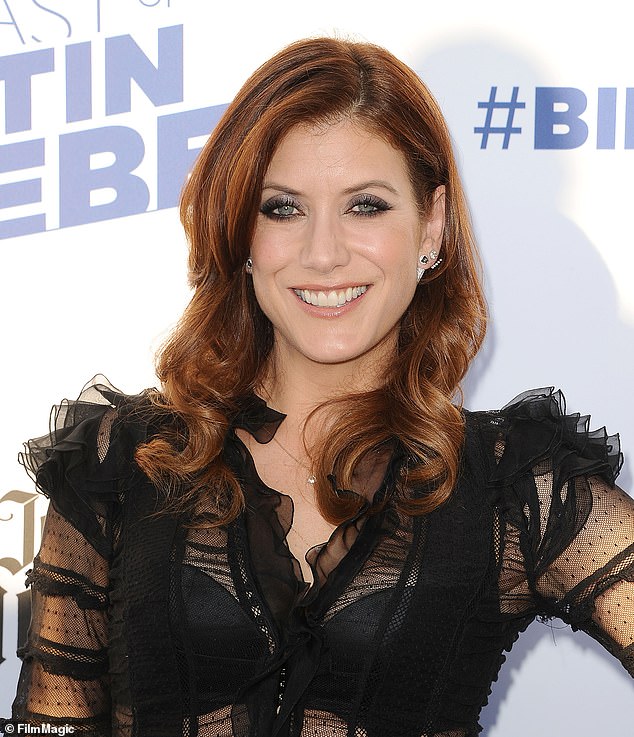
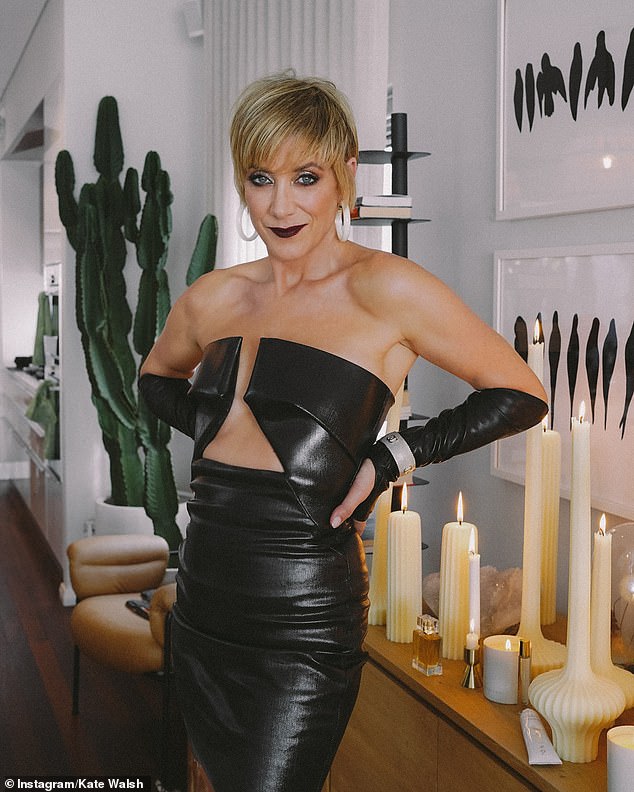
Kate Walsh stunned her fans on Friday when she took to social media to debut a glamorous new hairstyle, which looked worlds apart from her signature look.
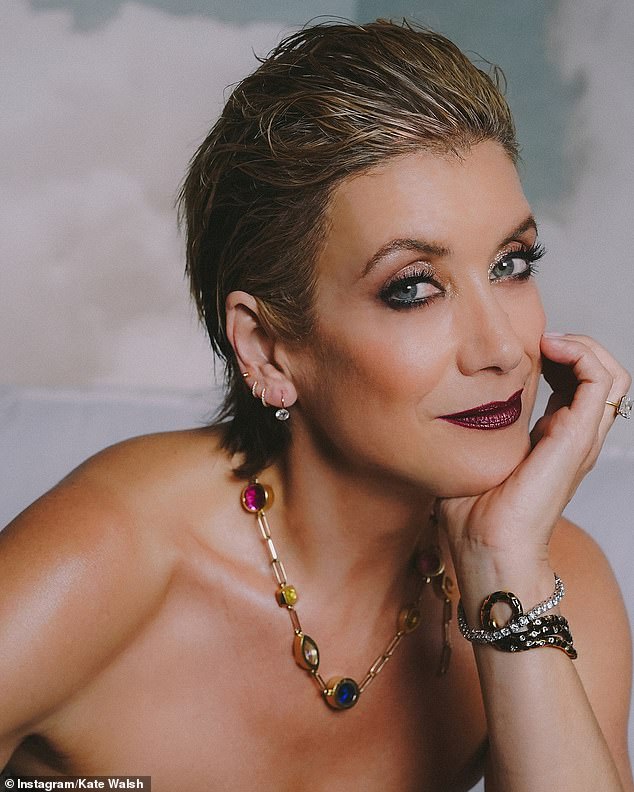
The Grey’s Anatomy star, 56, shared a gallery of photos to Instagram in which she showcased her stunning new pixie ‘do.
The Perth-based, American actress has said goodbye to her trademark stylish long brunette locks and in its place now sports a fiery red chic bob of hair.
The veteran star looked like a completely different person as she flaunted her eye-popping new look in a variety of confident and stylish poses.
She appears to have made the change as part of a promotional campaign for her Boyfriend perfume line.
Kate looked every inch the stunner in the incredible photos as she confidently flaunted her red hot hairdo, and whipped her followers into a frenzy.
Many of Kate’s followers quickly took to the comment section to express their appreciation over her bold makeover.
‘Beyond gorgeous. I love these photos,’ one fan wrote and a second person added: ‘The most beautiful woman who ever lived.’
Kate Walsh (pictured) stunned her fans on Friday when she took to social media to debut a glamorous new hairstyle, which looked world’s apart from her signature look
The Grey’s Anatomy star, 56, shared a gallery of photos to Instagram in which she showcased her stunning new pixie ‘do
The Perth-based actress has said goodbye to her trademark stylish long brunette locks and in its place now sports a fiery red chic bob of hair
The Emily in Paris star lives in Australia with her Aussie farmer fiancé Andrew Nixon, who she met in 2020.
Kate has settled into her new life in Perth after finding love with her fellow Aussie beau.
The actress relocated to the isolated state nearly four years ago after getting engaged to the Western Australian farmer.
She recently revealed she had fallen in love with Australia’s laid back lifestyle and was happy to call Perth home.
‘I really love Western Australia… I think nature here eclipses everything. It drives me,’ she told news.com.au.
‘I like the slowness. It’s really good for me. And then you go back overseas and you’re like, “Oh my god. People are insane,” she added.
Kate clarified she often flew to America for filming and then returned to Australia when she was free to spend more time with her fiancé.
The star looked like a completely different person as she flaunted her eye-popping new look in a variety of confident and stylish poses
Share or comment on this article:
Kate Walsh doesn’t look like this anymore! Glamorous Grey’s Anatomy star unrecognisable as she debuts edgy new look