

hacklink hack forum hacklink film izle hacklink marsbahisizmir escortsahabetpornJojobetcasibom girişgalabetBakırköy Escortcasibom9018betgit casinomarsbahismatbet girişcasibomlink 5k depositjojobetonwinmatbetalobet

Tag: export

  • Indias Organic Food Export Growth Rises To $448 Million, Surpassing Last Years Total

    Indias Organic Food Export Growth Rises To $448 Million, Surpassing Last Years Total

    India’s organic food products export reached $447.73 million in the first eight months of this fiscal (FY25), and are set to surpass last year’s export figures, the Parliament was informed on Monday. In the current financial year, the total amount of organic food product exports reached 263,050 metric tonnes (MT) till November 25 and the export of organic food products stood at $494.80 million last fiscal (FY24), Union Minister of Food Processing Industries, Navneet Singh Bittu, told the Lok Sabha in a written reply. The ministry has not allocated any specific funds to incentivise the industries for producing organic products.
    However, the Agricultural and Processed Food Products Export Development Authority (APEDA) under the Ministry of Commerce and Industries, provides financial assistance to its member exporters, including exporters of organic food products, he added. Further, the APEDA is implementing the National Programme for Organic Production (NPOP). The programme involves the accreditation of Certification Bodies, standards for organic production, promotion of organic farming and marketing, etc.
    The total number of organic-certified processing units under the National Programme for Organic Production in India is 1,016. In September, the APEDA announced a partnership with global retail chain LuLu Group International (LLC) to showcase a wide range of certified Indian organic products in its stores across the United Arab Emirates (UAE). The APEDA will facilitate connections between the organic growers in India, including Farmer Producer Organisations (FPOs), Farmer Producer Companies (FPCs), Cooperatives and the LuLu Group. This will ensure that Indian organic products reach a wider global audience.
    The authority is dedicated to promoting Indian agro and processed food exports. The agency works towards organising B2B exhibitions in different countries, exploring new potential markets, and working closely with the Indian Embassies to promote natural, organic, and Geographical Indication (GI)-tagged agro-products, the minister told the house.
    The export of organic food products stood at $494.80 million last fiscal (FY24), said Union Minister of Food Processing Industries, Navneet Singh Bittu, in a written reply in the Lok Sabha. The ministry has not allocated any specific fund to incentivise the industries for producing the organic products. However, Agricultural and Processed Food Products Export Development Authority (APEDA) under the Ministry of Commerce and Industries, provides financial assistance to its member exporters, including exporters of organic food products.
    Further, APEDA is implementing the National Programme for Organic Production (NPOP). The programme involves the accreditation of Certification Bodies, standards for organic production, promotion of organic farming and marketing, etc. The total number of organic certified processing units under the National Programme for Organic Production in India are 1,016.
    In September, APEDA announced a partnership with global retail chain LuLu Group International (LLC) to showcase a wide range of certified Indian organic products in its stores across the United Arab Emirates (UAE). APEDA will facilitate connections between the organic growers in India, including Farmer Producer Organisations (FPOs), Farmer Producer Companies (FPCs), Cooperatives and the LuLu Group. This will ensure that Indian organic products reach a wider global audience.
    The authority is dedicated to promoting Indian agro and processed food exports. The agency works towards organising B2B exhibitions in different countries, exploring new potential markets, and working closely with the Indian Embassies to promote natural, organic, and Geographical Indication (GI)-tagged agro-products.

    (Disclaimer: Except for the headline, this story has not been edited by NDTV staff and is published from a syndicated feed.)
    Source link

  • US expands list of Chinese technology companies under export controls

    US expands list of Chinese technology companies under export controls

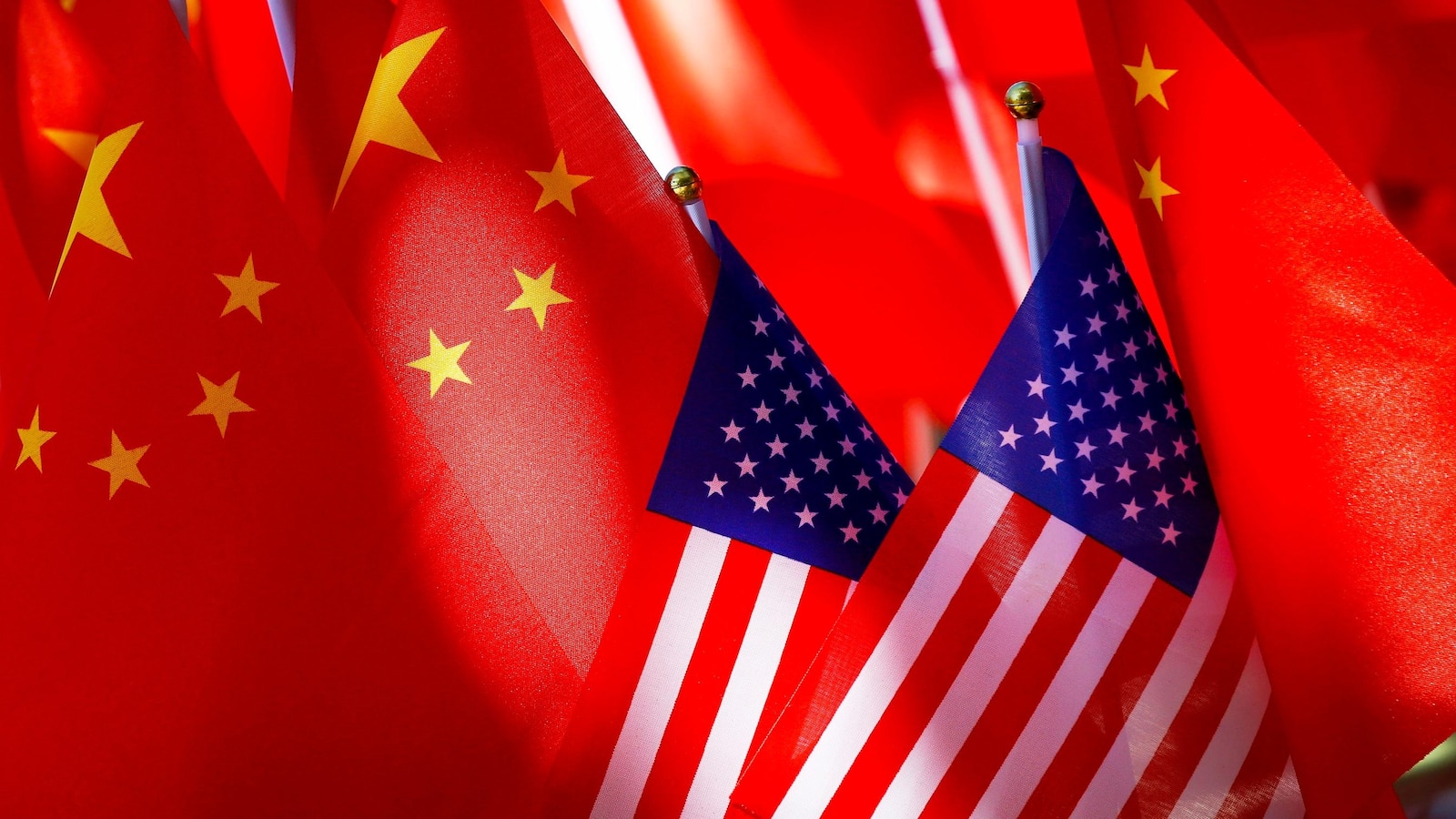
    BANGKOK — The U.S. Commerce Department has expanded the list of Chinese technology companies subject to export controls to include many that make equipment used to make computer chips, chipmaking tools and software.

    The 140 companies newly included in the so-called “entity list” are nearly all based in China. But some are Chinese-owned businesses in Japan, South Korea and Singapore.

    The revised rules were posted Monday on the website of the U.S. Federal Register for publication later this week. They also limit exports of high-bandwidth memory chips to China. Such chips are needed to process massive amounts of data in advanced applications such as artificial intelligence.

    China’s Commerce Ministry protested and said it would act to protect its “rights and interests,” without giving any details.

    “This is a typical act of economic coercion and non-market practice,” the ministry said in a statement.

    Commerce Secretary Gina Raimondo said the move was intended to impair China’s ability to use advanced technologies that “pose a risk to our national security.”

    The addition of the companies to the “entity list” means that export licenses will likely be denied for any U.S. company trying to do business with them.

    Washington has been gradually expanding the number of companies affected by such export controls, as the administration of President Joe Biden has encouraged an expansion of investments in and manufacturing of semiconductors in the U.S.

    “The purpose of these Entity List actions is to stop PRC (Chinese) companies from leveraging U.S. technology to indigenously produce advanced semiconductors,” Matthew S. Axelrod, the assistant secretary for export enforcement, said in a statement. “By adding key semiconductor fabrication facilities, equipment manufacturers, and investment companies to the Entity List, we are directly impeding the PRC’s military modernization, WMD (weapons of mass destruction) programs, and ability to repress human rights.”

    China has accused the U.S. of pursuing “technology hegemony,” as Washington steps up pressure on Chinese tech giant Huawei and other Chinese manufacturers of advanced technology by blocking access to American suppliers.

    It particularly objects to what it calls “long-arm jurisdiction” moves such as the U.S. decision to extend export controls to companies to apply to chip-making equipment makers in South Korea, Taiwan and Singapore if they use any U.S. technology that might be sold to China.

    Pressure from Washington has spurred China to step up its efforts to develop its own advanced computer chips and other technologies, providing billions in subsidies and investments for the industry. Chinese manufacturers have made quick progress even though they remain years behind in some areas.

    Shares in Japanese computer chip makers and makers of related equipment surged Tuesday, with testing equipment maker Advantest surging 4.6%, Tokyo Electron gaining 4.6% and Applied Materials up 4.9%. Disco Corp., another chipmaker, jumped 6.9%, while the Tokyo benchmark Nikkei 225 stock index gained 2.3%.

    Meanwhile, China’s Naura Technology Group, whose companies were included in the new list, fell 3% and Piotech Inc., another chipmaker, lost 5.3%.

    Source link