hacklink hack forum hacklink film izle hacklink marsbahisizmir escortsahabetpornceltabetcasibom girişgalabetİstanbul Escortcasibom9018betgit casinomarsbahismatbetcasibomlink 5k depositjojobetmatbet

Tag: extinction

  • New research shows a quarter of freshwater animals are threatened with extinction

    New research shows a quarter of freshwater animals are threatened with extinction

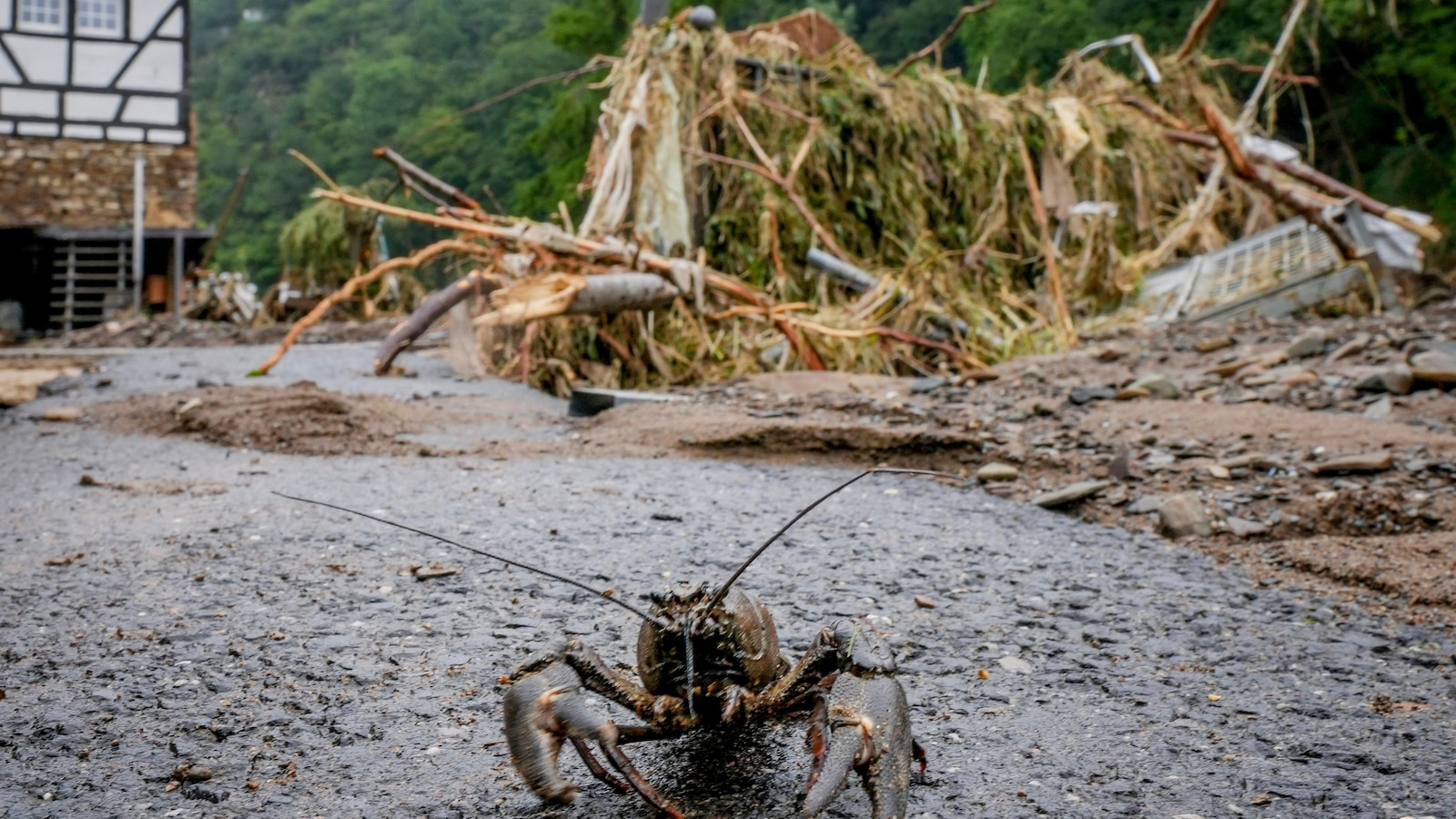
    WASHINGTON — Nearly a quarter of animals living in rivers, lakes and other freshwater sources are threatened with extinction, according to new research published Wednesday.

    “Huge rivers like the Amazon can appear mighty, but at the same time freshwater environments are very fragile,” said study co-author Patricia Charvet, a biologist at Brazil’s Federal University of Ceará.

    Freshwater habitats – including rivers, lakes, ponds, streams, bogs and wetlands – cover less than 1% of the planet’s surface, but support 10% of its animal species, said Catherine Sayer, a zoologist at the International Union for Conservation of Nature in England.

    The researchers examined around 23,500 species of dragonflies, fish, crabs and other animals that depend exclusively on freshwater ecosystems. They found that 24% were at risk of extinction – classified as vulnerable, endangered or critically endangered – due to compounding threats from pollution, dams, water extraction, agriculture, invasive species, climate change and other disruptions.

    “Most species don’t have just one threat putting them at risk of extinction, but many threats acting together,” said Sayer, a study-co-author.

    The tally, published in the journal Nature, is the first that time researchers have analyzed the global risk to freshwater species. Previous studies have focused on land animals including including mammals, birds and reptiles.

    Duke University ecologist Stuart Pimm, who was not involved in the study, called it “a long-awaited and hugely important paper.”

    “Almost every big river in North America and Europe is massively modified” through damming, putting freshwater species at risk, he said.

    In South America, the vast Amazon River ecosystem also faces threats from deforestation, wildfires and illegal gold mining, said Charvet.

    Illegal fires to clear forest result in waves of ash polluting the river, and unlicensed gold miners dump mercury into the water, she said.

    Rivers and wetlands “concentrate everything that happens around them,” she said. “If something goes really wrong, like an acid or oil spill, you can threaten an entire species. There’s nowhere else for these animals to go.”

    ___

    The Associated Press Health and Science Department receives support from the Howard Hughes Medical Institute’s Science and Educational Media Group. The AP is solely responsible for all content.
    Source link

  • This aspect of Neanderthals’ lifestyle may have led to extinction

    Article content

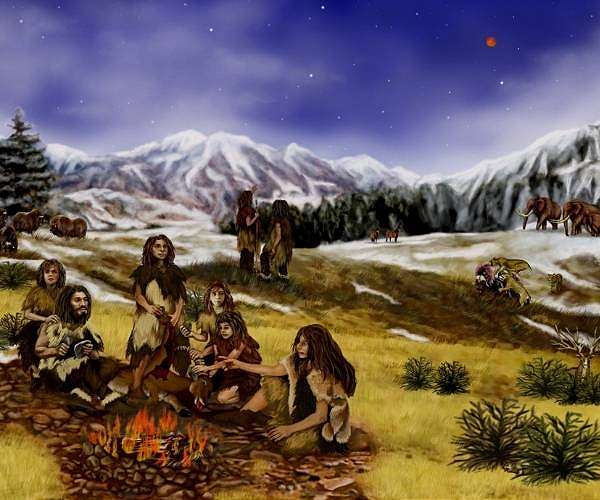
    A new study supports the idea that Neanderthals likely went extinct because of how they lived — in isolation.

    The early human species were antisocial, which could be what led to their demise, according to the study by researchers at the University of Copenhagen’s Globe Institute. It was published in the science journal Cell Genomics on Sept. 11.

    Neanderthals went extinct roughly 40,000 years ago and many scientists have tried to pinpoint why. A widely accepted theory is that they remained isolated; however, evidence was lacking to confirm the theory for Western European Neanderthals until now.

    Article content

    The results from the recently published study suggested there were multiple isolated Neanderthal communities in Europe around the time they went extinct. They had “limited, if any, level of interactions between different Neanderthal populations in their last millennia, even though these populations were geographically very close to each other.”

    The study is based on the discovery of the remains of a male Neanderthal, nicknamed Thorin, in a cave in southern France in 2015. Thorin is the most complete Neanderthal individual found in France since 1979, researchers said. Thorin was part of a small group living at the Grotte Mandrin, a French rock shelter overhanging the Rhône River Valley. The group did not have any genetic crossover with other known European Neanderthals, despite their proximity, according to the study.

    “When we look at these genomes (a complete set of DNA) from Neanderthals, we see that they are quite inbred and therefore don’t have much genetic diversity. They have been living in small groups for many generations,” said Globe Institute associate professor Martin Sikora in a news release. He was one of the researchers of the study.

    Article content

    “We know that inbreeding reduces genetic diversity in a population, which can be detrimental to their ability to survive if it occurs over a longer term.”

    Unlike modern humans, who are more connected, the results from analyzing Thorin “supports the notion that social organization of Neanderthals was different to early modern humans,” said Sikora.

    There is evidence of early modern humans in Siberia “forming so-called mating networks to avoid issues with inbreeding, while living in small communities,” said another researcher from the University of Copenhagen Tharsika Vimala.

    But that behaviour was not found among Neanderthals.

    “This is some of the evidence that we were looking for and needed to figure out how likely this hypothesis of them going extinct because of their isolated lifestyle is,” said Vimala, adding that more genomic data is needed to “paint a better picture of their history.”

    Our website is the place for the latest breaking news, exclusive scoops, longreads and provocative commentary. Please bookmark nationalpost.com and sign up for our newsletters here.

    Share this article in your social network

    Source link

  • Neanderthals’ isolated lifestyle may have contributed to their extinction

    Neanderthals’ isolated lifestyle may have contributed to their extinction

    Neanderthals’ isolated lifestyle may have contributed to their extinction

    by Robert Schreiber

    Berlin, Germany (SPX) Sep 15, 2024


    A newly discovered Neanderthal skeleton found in a French cave has provided further evidence supporting the theory that Neanderthals became extinct due to their isolated and inbred communities, according to researchers from the University of Copenhagen’s Globe Institute.


    Over the past few years, scientists have debated the reasons behind the extinction of Neanderthals, while modern humans thrived around 40,000 years ago. The new study, led by the Globe Institute, reinforces the idea that Neanderthals’ social isolation and limited genetic diversity may have played a key role in their demise.


    “When we look at these genomes from Neanderthals, we see that they are quite inbred and therefore don’t have much genetic diversity. They have been living in small groups for many generations. We know that inbreeding reduces genetic diversity in a population, which can be detrimental to their ability to survive if it occurs over a longer term,” explained Associate Professor Martin Sikora from the Globe Institute.


    The recently discovered male Neanderthal genome in southern France belongs to a different lineage than those previously studied, further supporting the theory that Neanderthals lived in smaller, more isolated groups compared to early modern humans.


    “The newly found Neanderthal genome is from a different lineage than the other late Neanderthals previously studied. This supports the notion that social organization of Neanderthals was different to early modern humans who seemed to have been more connected,” Sikora added.


    In contrast, early modern humans are believed to have maintained broader social networks, which could have helped them survive by allowing for the exchange of knowledge and genes between groups. “This is in the more speculative end, but even just the notion of being able to communicate more and exchange knowledge is something humans do that Neanderthals to some extent might not have done, due to their isolated lifestyles by organizing themselves in smaller groups. And that is an important skill to have,” noted Postdoc Tharsika Vimala. She pointed to evidence of early humans in Siberia creating mating networks to avoid inbreeding, a practice that hasn’t been observed among Neanderthals.


    DNA Insights into Neanderthal History

    Despite the abundance of Neanderthal remains found across Europe and Asia, researchers have extracted relatively few DNA samples from them. Some of the oldest Neanderthal DNA, dating back 120,000 years, has been found in caves such as Denisova Cave in the Altai Mountains, Scladina in Belgium, and Hohlenstein-Stadel in Germany.


    The recently discovered genome from France is only the fifth Neanderthal genome of its kind found in Western Europe that’s younger than 50,000 years. “Our team in Copenhagen extracted DNA from his tooth, sequenced the DNA and analyzed his nuclear genome, which is the DNA found within the core of the cells. The DNA was analysed along with other known Neanderthal genomes to understand their shared history,” Sikora stated.


    Further analysis of another late Neanderthal from France revealed that this individual also carried ancestry from a separate Neanderthal lineage, suggesting that multiple isolated groups may have coexisted in Western Europe shortly before their extinction.


    While the concept of isolated Neanderthal communities contributing to their extinction is not new – having been proposed in relation to Neanderthals from the Altai Mountains – this latest discovery marks the first genomic evidence to support the theory in Western Europe.


    “It is something that we have talked about for a while. But we needed more evidence, and this is some of the evidence that we were looking for and needed to figure out how likely this hypothesis of them going extinct because of their isolated lifestyle is. We do, however, need much more genomic data to paint a better picture of their history,” added Vimala.


    Research Report:Long genetic and social isolation in Neanderthals before their extinction


    Related Links

    University of Copenhagen

    All About Human Beings and How We Got To Be Here


    Source link