hacklink hack forum hacklink film izle hacklink marsbahisizmir escortsahabetpornJojobetcasibompadişahbetGorabetcasibom9018betgit casinojojobetmarsbahismatbetmatbet

Tag: facility

  • US defense contractor to build 4,000-worker advanced manufacturing facility in central Ohio

    US defense contractor to build 4,000-worker advanced manufacturing facility in central Ohio

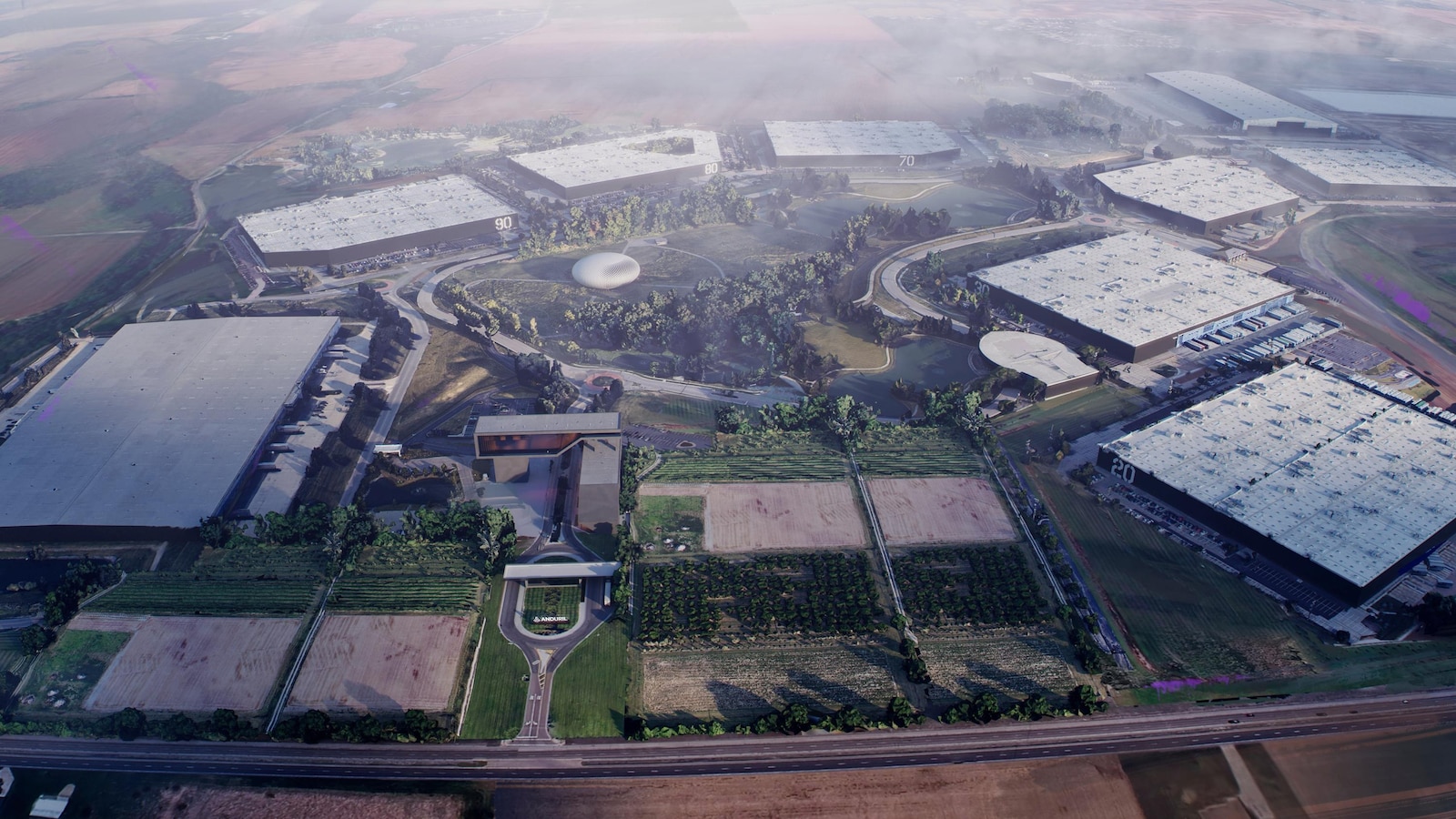
    COLUMBUS, Ohio — U.S. defense contractor Anduril Industries is preparing to build a massive advanced manufacturing facility in central Ohio, adding a planned 4,000 jobs to the area’s burgeoning high-tech sector, state officials announced Thursday.

    The Cosa Mesa, California-based defense technology company plans to begin construction of what it’s calling “Arsenal 1” as soon as state and local approvals are secured. The 5 million-square-foot (464,515-square-meter) facility will be located on a 500-acre (202-hectare) site near Rickenbacker International Airport in rural Pickaway County, about 16 miles (26 kilometers) southeast of Columbus.

    Production of military drones and autonomous air vehicles would begin in July 2026 under the plan, said Christian Brose, Anduril’s chief strategy officer.

    Republican Ohio Gov. Mike DeWine said it is the largest single job creation and payroll project that Ohio has announced. The governor said winning Anduril’s manufacturing plant marks a continuation of Ohio’s history of advanced advanced aviation, which began with the Wright brothers and continues to grow surrounding the Dayton-area Wright-Patterson Air Force Base.

    “We are an aerospace state,” DeWine said. He called Ohio “the brains of the Air Force.”

    DeWine, Lt. Gov. Jon Husted and JobsOhio CEO J.P. Nauseef said that, through targeted economic development efforts, the state boasts a strong and diverse aerospace workforce. They said it also has a network of job training centers, colleges and universities prepared to educate new advanced manufacturing workers. Those helped attract the nationally-competitive deal, they said.

    “Ohio has literally built a strategy around this kind of project, and so we are perfect for them,” Husted said.

    The aerospace sector in Ohio includes the global headquarters of GE Aerospace and a new Joby Aviation manufacturing facility near Dayton that’s preparing to manufacture electric vertical takeoff and landing, or eVTOL, aircraft beginning this year.

    Anduril casts the Ohio facility as integral to its goal to “Rebuild the Arsenal” of U.S. military weapons and platforms by “hyperscaling” manufacturing with advanced software and production technologies.

    The latest development adds to what is becoming known as a “silicon corridor” based in Ohio. It includes Intel, which is building a $20 billion chip factory just east of the Columbus, and Honda and LG Energy Solution of South Korea, which are building a $3.5 billion battery plant in nearby Fayette County that the automaker envisions as its North American electric vehicle hub. Ohio State University also announced plans in 2023 to build a $110 million software innovation center to dovetail with those efforts.

    At separate upcoming state meetings, the Anduril project will pursue a job creation tax credit from the Ohio Department of Development and a $70 million infusion from the All Ohio Future Fund, which the DeWine administration and lawmakers established to help local governments prepare sites for economic development projects. JobsOhio also plans to provide the project a sizeable grant, whose exact amount will be announced once agreements are signed, as well as talent acquisition services.

    ___

    This story has been corrected to remove a reference to both Wright brothers being born in Ohio.
    Source link

  • Meta to build $10 billion AI data center in Louisiana as Elon Musk expands his Tennessee AI facility

    Meta to build $10 billion AI data center in Louisiana as Elon Musk expands his Tennessee AI facility

    NEW ORLEANS — The largest artificial intelligence data center ever built by Facebook’s parent company Meta is coming to northeast Louisiana, the company said Wednesday, bringing hopes that the $10 billion facility will transform an economically neglected corner of the state.

    Republican Gov. Jeff Landry called it “game-changing” for his state’s expanding tech sector, yet some environmental groups have raised concerns over the center’s reliance on fossil fuels — and whether the plans for new natural gas power to support it could lead to higher energy bills in the future for Louisiana residents.

    Meanwhile, Elon Musk’s AI startup, xAI, is expanding its existing supercomputer project in Memphis, Tennessee, the city’s chamber of commerce said Wednesday. The chamber also said that Nvidia, Dell, and Supermicro Computer will be “establishing operations in Memphis,” without offering further details.

    Louisiana is among a growing number of states offering tax credits and other incentives to lure big tech firms seeking sites for energy-intensive data centers.

    The U.S. Commerce Department found that there aren’t enough data centers in the U.S. to meet the rising AI-fueled demand, which is projected to grow by 9% each year through 2030, citing industry reports.

    Meta anticipates its Louisiana data center will create 500 operational jobs and 5,000 temporary construction jobs, said Kevin Janda, director of data center strategy. At 4 million square feet (370,000 square meters), it will be the company’s largest AI data center to date, he added.

    “We want to make sure we are having a positive impact on the local level,” Janda said.

    Congressional leaders and local representatives from across the political spectrum heralded the Meta facility as a boon for Richland parish, a rural part of Louisiana with a population of 20,000 historically reliant on agriculture. About one in four residents are considered to live in poverty and the parish has an employment rate below 50%, according to the U.S. census data.

    Meta plans to invest $200 million into road and water infrastructure improvements for the parish to offset its water usage. The facility is expected to be completed in 2030.

    Entergy, one of the nation’s largest utility providers, is fast-tracking plans to build three natural gas power plants in Louisiana capable of generating 2,262 megawatts for Meta’s data center over a 15-year period — nearly one-tenth of Entergy’s existing energy capacity across four states.

    The Louisiana Public Service Commission is weighing Entergy’s proposal as some environmental groups have opposed locking the state into more fossil fuel-based energy infrastructure. Meta said it plans to help bring 1,500 megawatts of renewable energy onto the grid in the future.

    Louisiana residents may ultimately end up with rate increases to pay off the cost of operating these natural gas power plants when Meta’s contract with Entergy expires, said Jessica Hendricks, state policy director for the Alliance for Affordable Energy, a Louisiana-based nonprofit advocating for energy consumers.

    “There’s no reason why residential customers in Louisiana need to pay for a power plant for energy that they’re not going to use,” Hendricks said. “And we want to make sure that there’s safeguards in place.”

    Public service commissioner Foster Campbell, representing northeast Louisiana, said he does not believe the data center will increase rates for Louisiana residents and views it as vital for his region.

    “It’s going in one of the most needed places in Louisiana and maybe one of the most needed places in the United States of America,” Foster said. “I’m for it 100%.”

    Environmental groups have also warned of the pollution generated by Musk’s AI data center in Memphis. The Southern Environmental Law Center, among others, says the supercomputer could strain the power grid, prompting attention from the Environmental Protection Agency. Eighteen gas turbines currently running at xAI’s south Memphis facility are significant sources of ground-level ozone, better known as smog, the group said.

    Patrick Anderson, an attorney at the law center, said xAI has operated with “a stunning lack of transparency” in developing its South Memphis facility, which is located near predominantly Black neighborhoods that have long dealt with pollution and health risks from factories and other industrial sites.

    “Memphians deserve to know how xAI will affect them,” he said, “and should have a seat at the table when these decisions are being made.”

    _____

    Sainz reported from Memphis, Tennessee. Associated Press writer Matt O’Brien in Providence, Rhode Island, contributed to this report.

    _____

    Brook is a corps member for The Associated Press/Report for America Statehouse News Initiative. Report for America is a nonprofit national service program that places journalists in local newsrooms to report on undercovered issues. Follow Brook on the social platform X: @jack_brook96

    Source link

  • Oregon governor uses new land use law to propose rural land for semiconductor facility

    Oregon governor uses new land use law to propose rural land for semiconductor facility

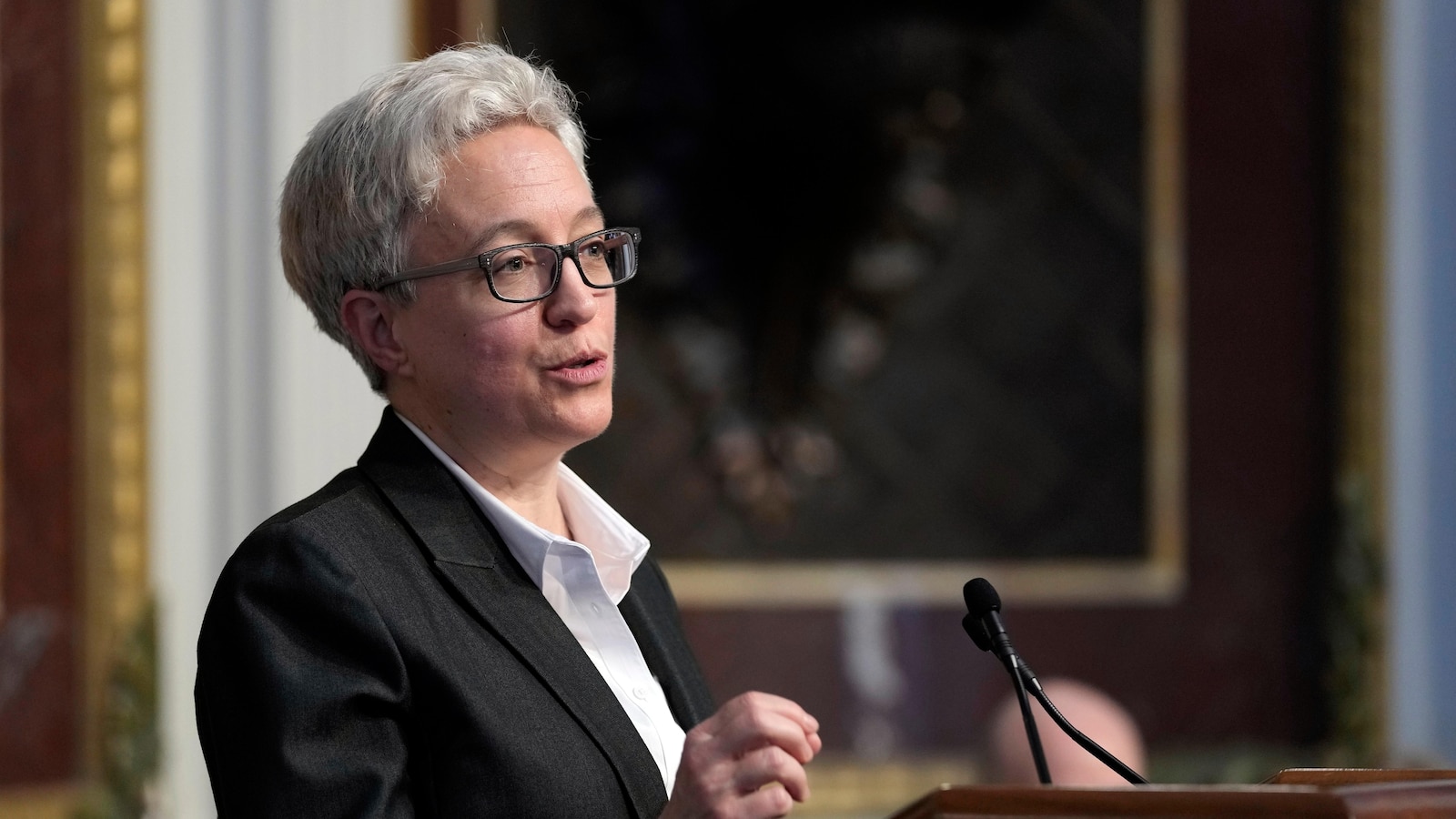
    SALEM, Ore. — Oregon Gov. Tina Kotek is using a new land use law to propose a rural area for a semiconductor facility, as officials seek to lure more of the multibillion-dollar semiconductor industry to the state.

    Kotek has proposed expanding the city boundaries of Hillsboro, a suburb west of Portland that’s home to chip giant Intel, to incorporate half a square mile of new land for industrial development, Oregon Public Broadcasting reported. The land would provide space for a major new research center.

    Oregon, which has been a center of semiconductor research and production for decades, is competing against other states to host multibillion-dollar microchip factories.

    The CHIPS and Science Act passed by Congress in 2022 provided $39 billion for companies building or expanding facilities that will manufacture semiconductors and those that will assemble, test and package the chips.

    A state law passed last year allowed the governor to designate up to eight sites where city boundaries could be expanded to provide land for microchip companies. The law created an exemption to the state’s hallmark land use policy, which was passed in the 1970s to prevent urban sprawl and protect nature and agriculture.

    A group that supports Oregon’s landmark land use policy, Friends of Smart Growth, said in a news release that it would oppose Kotek’s proposal, OPB reported.

    “While the governor hopes this will prove a quick and relatively painless way to subvert the planning and community engagement that Oregon’s land use system is famous for,” the release said, “local and statewide watchdog groups promise a long and difficult fight to preserve the zoning protections that have allowed walkable cities, farmland close to cities, and the outdoor recreation Oregon is famous for.”

    Under the 2023 state law, Kotek must hold a public hearing on proposed expansions of so-called “urban growth boundaries” and allow a 20-day period for public comment before issuing an executive order to formally expand such boundaries. This executive power expires at the end of the year.

    The public hearing on the proposed expansion will be held in three weeks at the Hillsboro Civic Center, according to Business Oregon, the state’s economic development agency.

    The Oregon Legislature also chipped away at the state’s land use policy earlier this year in a bid to address its critical housing shortage. That law, among other things, granted a one-time exemption to cities looking to acquire new land for the purpose of building housing.

    Source link

  • North Korea discloses a uranium enrichment facility as Kim calls for more nuclear weapons

    North Korea discloses a uranium enrichment facility as Kim calls for more nuclear weapons

    SEOUL, South Korea — North Korea offered a rare glimpse into a secretive facility to produce weapons-grade uranium as state media reported Friday that leader Kim Jong Un visited the area and called for stronger efforts to “exponentially” increase the number of his nuclear weapons.

    It’s unclear if the site is at the North’s main Yongbyon nuclear complex, but it’s the North’s first public disclosure of a uranium-enrichment facility since it showed one at Yongbyon to visiting American scholars in 2010. While the latest unveiling is likely an attempt to apply more pressure on the U.S. and its allies, the images North Korea’s media released of the area could provide outsiders with a valuable source of information for estimating the amount of nuclear ingredients that North Korea has produced.

    During a visit to the Nuclear Weapons Institute and the production base of weapon-grade nuclear materials, Kim expressed “great satisfaction repeatedly over the wonderful technical force of the nuclear power field” held by North Korea, the official Korean Central News Agency reported.

    KCNA said that Kim went around the control room of the uranium enrichment base and a construction site that would expand its capacity for producing nuclear weapons. North Korean state media photos showed Kim being briefed by scientists while walking along long lines of tall gray tubes, but KCNA didn’t say when Kim visited the facilities and where they are located.

    KCNA said Kim stressed the need to further augment the number of centrifuges to “exponentially increase the nuclear weapons for self-defense,” a goal he has repeatedly stated in recent years. It said Kim ordered officials to push forward the introduction of a new-type centrifuge, which has reached its completion stage.

    Kim said North Korea needs greater defense and preemptive attack capabilities because “anti-(North Korea) nuclear threats perpetrated by the U.S. imperialists-led vassal forces have become more undisguised and crossed the red-line,” KCNA said.

    North Korea first showed a uranium enrichment site in Yongbyon to the outside world in November 2010, when it allowed a visiting delegation of Stanford University scholars led by nuclear physicist, Siegfried Hecker, to tour its centrifuges. North Korean officials then reportedly told Hecker that 2,000 centrifuges were already installed and running at Yongbyon.

    Satellite images in recent years have indicated North Korea was expanding a uranium enrichment plant at its Yongbyon nuclear complex. Nuclear weapons can be built using either highly enriched uranium or plutonium, and North Korea has facilities to produce both at Yongbyon. It’s not clear exactly how much weapons-grade plutonium or highly enriched uranium has been produced at Yongbyon and where North Korea stores it.

    “For analysts outside the country, the released images will provide a valuable source of information for rectifying our assumptions about how much material North Korea may have amassed to date,” said Ankit Panda, an expert with the Carnegie Endowment for International Peace.

    “Overall, we should not assume that North Korea will be as constrained as it once was by fissile material limitations. This is especially true for highly enriched uranium, where North Korea is significantly less constrained in its ability to scale up than it is with plutonium,” Panda said.

    In 2018, Hecker and Stanford University scholars estimated North Korea’s highly enriched uranium inventory was 250 to 500 kilograms (550 to 1,100 pounds), sufficient for 25 to 30 nuclear devices.

    Some U.S. and South Korean experts speculate North Korea is covertly running at least one other uranium-enrichment plant. In 2018, a top South Korean official told parliament that North Korea was estimated to have already manufactured up to 60 nuclear weapons. Estimates on how many nuclear bombs North Korea can add every year vary, ranging from six to as much as 18.

    Since 2022, North Korea has sharply ramped up weapons testing activities to expand and modernize its arsenal of nuclear missiles targeting the U.S. and South Korea. Analysts say North Korea could perform nuclear test explosions or long-range missile tests ahead of the U.S. presidential election in November with the intent to influence the outcome and increase its leverage in future dealings with the Americans.

    North Korea had conducted test-launches of multiple short-range ballistic missiles on Thursday. In an apparent reference to those launches, KCNA said Kim had supervised test-firing of nuclear-capable 600mm multiple rockets to examine the performance of their new launch vehicles.

    ___

    Follow AP’s Asia-Pacific coverage at https://apnews.com/hub/asia-pacific

    Source link