Infertility can be a difficult journey for couples desiring to become parents. However, advancements in reproductive technology, particularly in vitro fertilisation (IVF), offer hope for those facing challenges in conceiving naturally. IVF, a form of assisted reproductive technology (ART), can be particularly effective for couples dealing with issues such as hormonal imbalances, medical conditions, or age-related factors that impact fertility.
In this article, we explore how making specific lifestyle changes can enhance fertility and improve the chances of a successful IVF outcome, with insights from Dr Sandeep Talwar, a Fertility Specialist at Nova Southend Fertility and IVF in Vasant Vihar, New Delhi.
Lifestyle modifications to improve fertility and the chances of successful IVF:
Nutrients for fertility
Your diet should include essential nutrients that can enhance your IVF chances. As per the expert, this can include essential nutrients like vitamins, folic acid, zinc, omega-3 fatty acids, and antioxidants to support your reproductive health. “Foods like nuts and seeds are good sources of zinc and can help improve sperm health and fertility in men,” added Dr Sandeep.
Canva
Healthy diet
Eating a well-rounded and healthy diet can significantly impact your fertility. Focus more on eating foods like fruits, vegetables, whole grains, lean protein, and healthy fats to improve your reproductive health, emphasised the professional. He further explained, “Be mindful of the foods that you are eating during your IVF treatment. Strictly avoid eating processed, packaged, and junk food that contains heaps of fats, sodium, sugar, and preservatives. Limiting them can help reduce inflammation while keeping you healthy and fit.”
Avoid harmful habits
If you enjoy drinking alcohol or smoking cigarettes, it is important to quit these habits if you want to become a parent. Alcohol and cigarettes can negatively impact your fertility and the success of IVF treatment. “Couples who are actively trying to improve their fertility, conceive, or undergo IVF should adopt a healthy lifestyle and eliminate harmful habits such as smoking or drinking alcohol to promote their reproductive health, advised Dr Sandeep.
Manage your stress levels
Excessive stress and overthinking about the future or parenthood can take a heavy toll on your fertility. Ensure that you avoid taking too much stress while starting your IVF journey. Adding to this, the doctor stated, “High levels of stress can disrupt your hormones, causing an imbalance that can further affect ovulation and production of sperm in men.” Mindful techniques like yoga and deep breathing techniques can help manage your stress.
Regular exercise
According to the expert, individuals with poor physical health, such as those who are overweight, are at a higher risk of facing fertility-related issues. Therefore, it is crucial to engage in regular physical activity and exercise to maintain fitness and overall health.
Low-impact or moderate exercises, such as walking, yoga, and meditation, can help alleviate stress and promote hormonal balance. However, it is advisable to avoid high-impact exercises, as they can negatively affect reproductive health and reduce the chances of successful IVF outcomes.
Infertility can be a difficult journey for couples desiring to become parents. However, advancements in reproductive technology, particularly in vitro fertilisation (IVF), offer hope for those facing challenges in conceiving naturally. IVF, a form of assisted reproductive technology (ART), can be particularly effective for couples dealing with issues such as hormonal imbalances, medical conditions, or age-related factors that impact fertility.
In this article, we explore how making specific lifestyle changes can enhance fertility and improve the chances of a successful IVF outcome, with insights from Dr Sandeep Talwar, a Fertility Specialist at Nova Southend Fertility and IVF in Vasant Vihar, New Delhi.
Lifestyle modifications to improve fertility and the chances of successful IVF:
Nutrients for fertility
Your diet should include essential nutrients that can enhance your IVF chances. As per the expert, this can include essential nutrients like vitamins, folic acid, zinc, omega-3 fatty acids, and antioxidants to support your reproductive health. “Foods like nuts and seeds are good sources of zinc and can help improve sperm health and fertility in men,” added Dr Sandeep.
Canva
Healthy diet
Eating a well-rounded and healthy diet can significantly impact your fertility. Focus more on eating foods like fruits, vegetables, whole grains, lean protein, and healthy fats to improve your reproductive health, emphasised the professional. He further explained, “Be mindful of the foods that you are eating during your IVF treatment. Strictly avoid eating processed, packaged, and junk food that contains heaps of fats, sodium, sugar, and preservatives. Limiting them can help reduce inflammation while keeping you healthy and fit.”
Avoid harmful habits
If you enjoy drinking alcohol or smoking cigarettes, it is important to quit these habits if you want to become a parent. Alcohol and cigarettes can negatively impact your fertility and the success of IVF treatment. “Couples who are actively trying to improve their fertility, conceive, or undergo IVF should adopt a healthy lifestyle and eliminate harmful habits such as smoking or drinking alcohol to promote their reproductive health, advised Dr Sandeep.
Manage your stress levels
Excessive stress and overthinking about the future or parenthood can take a heavy toll on your fertility. Ensure that you avoid taking too much stress while starting your IVF journey. Adding to this, the doctor stated, “High levels of stress can disrupt your hormones, causing an imbalance that can further affect ovulation and production of sperm in men.” Mindful techniques like yoga and deep breathing techniques can help manage your stress.
Regular exercise
According to the expert, individuals with poor physical health, such as those who are overweight, are at a higher risk of facing fertility-related issues. Therefore, it is crucial to engage in regular physical activity and exercise to maintain fitness and overall health.
Low-impact or moderate exercises, such as walking, yoga, and meditation, can help alleviate stress and promote hormonal balance. However, it is advisable to avoid high-impact exercises, as they can negatively affect reproductive health and reduce the chances of successful IVF outcomes.
Please provide your email address to receive an email when new articles are posted on .
We were unable to process your request. Please try again later. If you continue to have this issue please contact customerservice@slackinc.com.
Key takeaways:
Certain foods or lifestyle behaviors are associated with a lower chance of ovulatory fertility.
Setting realistic nutrition goals can help with creating a meal plan that works.
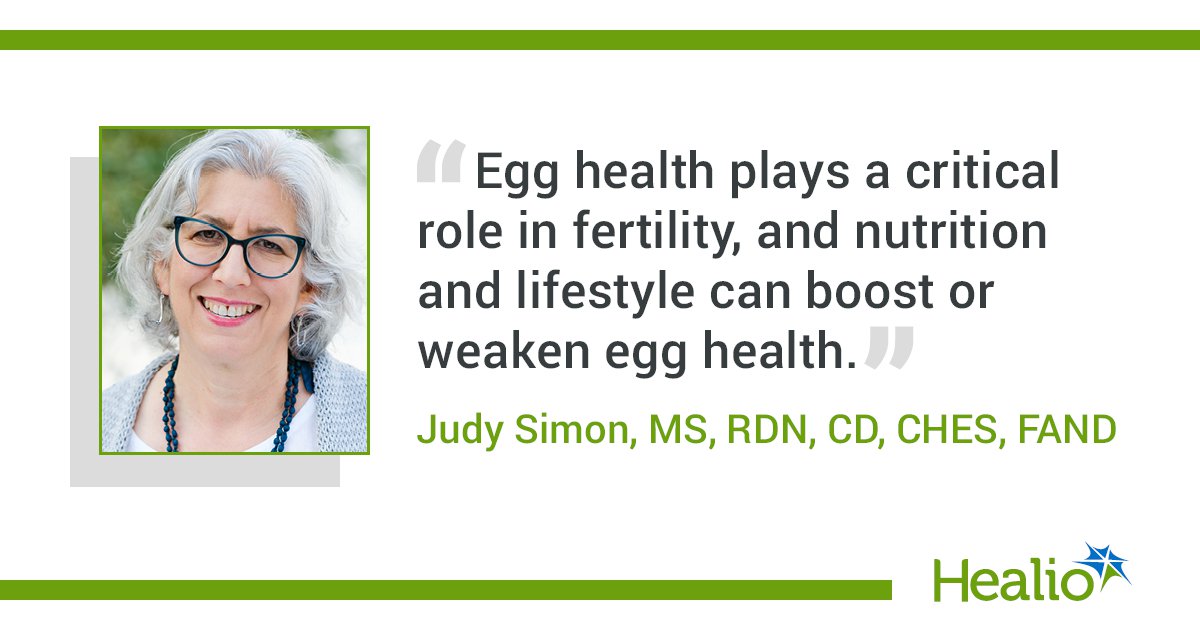
Susan Weiner, MS, RDN, CDN, CDCES, FADCES, talks with Judy Simon, MS, RDN, CD, CHES, FAND, about how women seeking to conceive, whether naturally or with assisted reproduction, can optimize nutrition to boost fertility.
Weiner:How big a factor is nutrition for women’s fertility?
Simon: The prevalence of infertility has increased over the past few decades. WHO reports infertility affects one in six individuals worldwide and, according to the CDC, that number is closer to one in five.
Women are choosing to have children later in life than ever before. We often see women in their 30s or 40s trying for baby No. 1 or No. 2 while their eggs are aging. Fertility is decreased by about half at age 40 years compared with women in their late 20s and early 30s. Meanwhile male fertility does not seem to be affected by age until closer to 50 years.
Advances in reproductive technology now allow women to successfully freeze their eggs at a younger age if they want to delay childbearing.
Age is a major factor that impacts fertility, but diet and lifestyle may also be contributing factors. Red meat and ultraprocessed food consumption has increased along with inadequate intake of fruits, vegetables, legumes and whole grains.
Ideally, 90 days prior to conception is an important time to optimize egg health. The fluid-filled sac (follicle) and granulosa cells in the follicle begin to develop and prepare the egg. Egg health plays a critical role in fertility, and nutrition and lifestyle can boost or weaken egg health. Eating nutritious foods high in antioxidants can reduce oxidative stress to strengthen reproductive health.
The large, observational Nurses’ Health Study established the main advice we now know as the “fertility diet.” This research showed the medical world the link between lifestyle and fertility. Practicing five or more of the following lifestyle factors was associated with a lower chance of ovulatory infertility:
Avoid trans fats mainly found in ultraprocessed and fast foods.
Cook with monounsaturated fats like olive or canola oil.
Consume protein from vegetable sources such as beans.
Choose more whole grains.
Consume full-fat yogurt or milk once a day.
Take multivitamins with folic acid and B vitamins daily.
Get iron from vegetable sources and supplements.
Drink water and avoid sugary sodas.
Lose a small amount of weight — 5% to 10% — if menstrual cycles are irregular.
Exercise 30 minutes or more daily.
Since the Nurses’ Health Study was published, many others have been conducted looking at the effects of different dietary patterns on fertility. Studies on the Mediterranean diet, fruits, vegetables, whole grains, legume, seafood, nuts seeds and olive oil have been shown to be beneficial for natural conception and IVF. Similar findings have been shown for these foods improving male fertility.
Weiner:What are the main nutritional concerns for women seeking to conceive? Do these differ during pregnancy and breastfeeding?
Simon:Optimizing diet for preconception is similar for pregnancy and breastfeeding. Unfortunately, most pregnant and lactating women are eating inadequate servings of fruits, vegetables, whole grains, beans, peas and lentils, according to National Health and Nutrition Examination Survey data. They are also consuming excess amounts of added sugars, saturated fat and sodium.
The 90-day period prior to conception is essential for optimizing gamete function and early placental development. One critical nutrient, for example, is folate, which is essential for neurodevelopment during the first month of pregnancy when a women may not even be aware she is pregnant. Ensuring she has an adequate folate level with diet and folic acid supplementation has been proven to reduce risk for neural tube defects. Omega-3, choline, iron and iodine are also essential nutrients that should be included in a preconception nutrition plan.
Aside from age and diminished ovarian reserve, polycystic ovary syndrome and endometriosis are some of the most common contributors to infertility for women. Eighty percent of women with PCOS have some degree of insulin resistance that affects their ability to ovulate and increases their risk for miscarriage. Improving their glycemic profile with diet, lifestyle and, sometimes, supplements and medications can improve their fertility and prepare them for a healthy pregnancy.
Weiner:Are there special considerations for women undergoing assisted reproduction?
Simon:Women preparing for egg freezing and IVF can greatly benefit by optimizing their diet and lifestyle 3 months prior to egg retrieval. I have worked with many women who had experienced poor retrievals and unsuccessful IVF cycles but achieved positive outcomes after improving their diet — even women with very low ovarian reserves.
IVF techniques have greatly advanced, but never reach 100%. Researchers sought to find out what role nutrition and environment might play.
From 2007 to 2017, Gaskins and colleagues looked at the combined effect of nutrition, lifestyle and environmental factors on fertility among 357 women in a subgroup of the Environment and Reproductive Health (EARTH) study who were using IVF to achieve pregnancy. They all completed a food frequency questionnaire.
The researchers’ “pro-fertility” diet was associated with the highest rates of pregnancy and the lowest rates of pregnancy loss for women undergoing assisted reproduction. This eating pattern emphasized fruits and vegetables, soy, and more seafood consumption over other animal proteins and included supplemental folic acid, vitamin D and vitamin B12 for those who were deficient.
The authors stated in their conclusion, “From a biological perspective, we hypothesize that there are many different pathways through which the ‘pro-fertility’ diet may be acting to promote fertility in women undergoing assisted reproductive technology, including enhancing the body’s capability to synthesize, repair and methylate DNA, suppress oxidative stress and support antioxidant defense, reduce systematic inflammation, and regulate glucose and insulin metabolism.”
A diet that is anti-inflammatory and high in plants, soy and seafood correlates with the highest fertility success.
Weiner:How can women start to redesign their eating plan for fertility? Is a complete dietary overhaul necessary?
Simon:I’ve worked with hundreds of women individually and in our Food for Fertility classes and learned that focusing on what women can add to their diet can be so impactful. Too many women have been fat shamed and blamed for their infertility and think they must be on a restrictive diet and focus on weight loss to get pregnant. Women with PCOS are often told to “just lose weight” and given no evidence-based guidance.
Instead, women should focus on fueling their body and reproductive system. In our book Getting to Baby, we share the three principles of a fertility-promoting diet:
Anti-inflammatory foods and those high in fiber promote a better uterine environment for implantation.
Low glycemic meals and snacks reduce inflammation and insulin resistance.
Foods high in antioxidants strengthen sperm and egg function.
Using our food-first fertility plan, I encourage women to build on the foundations of their preferences while focusing on inclusion of a plant-forward — not a strict vegetarian — meal plan. I encourage them to add in more plant foods while increasing their confidence in their abilities to nourish themselves. Setting small realistic goals, like including two fruits a day, can feel attainable.
Weiner:So many nutritional bars/supplements and vitamins are marketed to women concerned with their fertility. Is there a role for any of these? If so, how might they fit?
Simon:I do recommend a prenatal supplement 3 months prior to conception, but there are several available that are affordable and assessed by independent third parties that will meet most women’s needs.
Women often feel pressured by social media influencers to buy expensive supplements that provide many nutrients that are easily obtained with food. Some women need alternative forms of a prenatal, which are fortunately available.
Women with PCOS may benefit from additional supplements for fertility such as inositol and vitamin D.
Weiner:Women are often advised to reach a normal BMI to improve fertility and pregnancy outcomes. Any tips for losing or gaining weight?
Simon:Reproductive and obstetric medicine are guilty of weight bias, and many clinics have BMI cutoffs. Because IVF is a surgical procedure and many clinics operate in outpatient surgical clinics, they may have BMI cutoffs, usually 40 kg/m2. Luckily, most tertiary medical centers have multidisciplinary teams of health care providers who can provide IVF services to larger women with great success.
I presented at the American Society for Reproductive Medicine Scientific Congress in 2023 on a weight-inclusive approach to fertility. The ASRM obesity and reproduction committee opinion report in 2021 concluded:
Weight should not be the sole criteria for denying access to infertility treatment.
Programs should adopt specific BMI thresholds on the basis of ability to perform procedures.
Shared decision-making should be undertaken.
Research should define best practices to optimize retrievals in higher BMI.
Studies have not shown that weight loss prior to IVF yields better results. Focusing on health, not weight, is where our focus should be. Unfortunately, some women may need to change clinics to receive services. Many of the women in larger bodies who I have worked with have been able to conceive naturally or with medications or intrauterine insemination and have healthy outcomes.
Fertility can be impacted by energy balance and disordered eating patterns that affect ovulation. Women of any size can struggle with hypothalamic amenorrhea. With these women, we work on helping them balance their physical activity and food intake to meet their higher energy needs to help them ovulate. Increasing calorie- and nutrient-dense foods and reducing physical activity to increase available energy can help these women to ovulate and conceive.
Not all women who are thin struggle with fertility and not all women who are fat struggle with fertility. Medicine needs to stop conflating weight with health.
References:
For more information:
Judy Simon, MS, RDN, CD, CHES, FAND,is a registered dietitian nutritionist who specializes in reproductive health. She is the founder of Mind Body Nutrition PLLC, and a clinical instructor and clinic dietitian at the University of Washington. She is co-author of the book Getting to Baby: A Food-first Fertility Plan to Improve Your Odds and Shorten Your Time to Pregnancy and co-founder of the Food for Fertility program. She can be reached atjudy@mind-body-nutrition.com.
Susan Weiner, MS, RDN, CDN, CDCES, FADCES, is the owner of Susan Weiner Nutrition PLLC and the Healio | Women’s Health & OB/GYNNourish to Flourish column editor. She can be reached at susan@susanweinernutrition.com; X (Twitter): @susangweiner.
Smoking/tobacco chewing stands as another lifestyle choice with major implications for reproductive health, Dr Murdia highlighted
4 min read Last Updated : Sep 22 2024 | 2:51 PM IST
Infertility is not just a medical condition but a crisis fuelled by lifestyle choices, with infertility rates soaring particularly in lower-income groups and tier 2 and 3 cities where access to healthcare is limited, a top IVF specialist said.
Dr Ajay Murdia, the man behind one of India’s largest fertility chain, Indira IVF, said while advancements in assisted reproductive technologies like In Vitro Fertilization (IVF) offer hope, it is a reality that the underprivileged who are hit hard.
“Infertility rates are soaring, particularly in lower-income and tier 2 and 3 cities, where access to healthcare, nutrition, and education is limited,” Dr Murdia, founder and chairman of Indira IVF, told PTI.
“Infertility is no longer just a medical issue; it’s a crisis fuelled by lifestyle choices that hit the underprivileged hardest. Without action, even advancements like IVF will remain out of reach for many,” he said.
Lifestyle factors such as obesity, poor diet, smoking, and chronic stress, which are often exacerbated in marginalized communities due to lack of resources and awareness, are increasingly recognised as significant contributors to infertility.
These issues go beyond personal health; they represent barriers to conception that have a more pronounced impact on those with fewer means, Dr Murdia stated.
“Lifestyle choices in economically weaker sections, compounded by limited access to quality healthcare, are emerging as a central factor in the fertility crisis. The habits we often overlook, particularly in less affluent areas, are now influencing the capacity to conceive,” he noted.
The scope of this crisis becomes evident when examining the startling statistics surrounding obesity and its impact on fertility.
The World Health Organization reports that one in eight people worldwide is classified as obese,a condition that dramatically raises the risk of infertility.
Obese women are three times more likely to struggle with infertility compared to those maintaining a healthy weight, while for men, every additional 9 kg beyond their ideal weight raises their risk of infertility by 10 per cent.
These trends are often exacerbated in less affluent areas, where healthcare support and lifestyle interventions are scarce, he said.
Smoking/tobacco chewing stands as another lifestyle choice with major implications for reproductive health, Dr Murdia highlighted.
Studies show that female smokers have a 54 percent higher chance of delayed conception over a year compared to non-smokers, and men who smoke more than 20 cigarettes a day experience a 19 percent decline in sperm concentration, he said.
This not only reduces the chances of natural conception but also complicates assisted reproductive technologies, such as IVF where smokers may require nearly twice as many cycles to achieve pregnancy, he said.
These findings, published by the American Society for Reproductive Medicine and the National Library of Medicine, underscore the severe impact of smoking on fertility and the necessity of public health strategies to address this issue.
“Late marriages and delayed family planning in tier 2 and 3 cities add to the fertility crisis. While technology helps, the natural decline in fertility with age poses challenges many are unprepared for,” Dr Murdia said.
The consequences of these lifestyle factors in lower-income communities extend beyond physical health, he said adding infertility can place an enormous emotional and psychological burden on individuals and families, leading to anxiety, depression, and strained relationships.
This burden is often magnified for those in underprivileged areas, where social stigma around infertility is more pronounced and mental health support is limited, he highlighted.
Addressing this growing fertility crisis requires a comprehensive approach that integrates medical advancements with proactive lifestyle changes and targeted support for underprivileged communities.
Dr Murdia advocated increased awareness and education, particularly in tier 2 and 3 cities, stating, “By making informed lifestyle choices and enhancing access to affordable healthcare, we can create a more supportive environment for natural conception, especially for those who need it most”.
“It is crucial to act now to ensure that dreams of aspiring parents are not dictated by their economic or social status.The urgency to address lifestyle factors, particularly among the poor and underprivileged, cannot be overstated. Ensuring a hopeful future for all aspiring parents, regardless of their economic standing, begins with the choices we make to support and promote reproductive health in every community,” he said.
(Only the headline and picture of this report may have been reworked by the Business Standard staff; the rest of the content is auto-generated from a syndicated feed.)
Smoking/tobacco chewing stands as another lifestyle choice with major implications for reproductive health, Dr Murdia highlighted
4 min read Last Updated : Sep 22 2024 | 2:51 PM IST
Infertility is not just a medical condition but a crisis fuelled by lifestyle choices, with infertility rates soaring particularly in lower-income groups and tier 2 and 3 cities where access to healthcare is limited, a top IVF specialist said.
Dr Ajay Murdia, the man behind one of India’s largest fertility chain, Indira IVF, said while advancements in assisted reproductive technologies like In Vitro Fertilization (IVF) offer hope, it is a reality that the underprivileged who are hit hard.
“Infertility rates are soaring, particularly in lower-income and tier 2 and 3 cities, where access to healthcare, nutrition, and education is limited,” Dr Murdia, founder and chairman of Indira IVF, told PTI.
“Infertility is no longer just a medical issue; it’s a crisis fuelled by lifestyle choices that hit the underprivileged hardest. Without action, even advancements like IVF will remain out of reach for many,” he said.
Lifestyle factors such as obesity, poor diet, smoking, and chronic stress, which are often exacerbated in marginalized communities due to lack of resources and awareness, are increasingly recognised as significant contributors to infertility.
These issues go beyond personal health; they represent barriers to conception that have a more pronounced impact on those with fewer means, Dr Murdia stated.
“Lifestyle choices in economically weaker sections, compounded by limited access to quality healthcare, are emerging as a central factor in the fertility crisis. The habits we often overlook, particularly in less affluent areas, are now influencing the capacity to conceive,” he noted.
The scope of this crisis becomes evident when examining the startling statistics surrounding obesity and its impact on fertility.
The World Health Organization reports that one in eight people worldwide is classified as obese,a condition that dramatically raises the risk of infertility.
Obese women are three times more likely to struggle with infertility compared to those maintaining a healthy weight, while for men, every additional 9 kg beyond their ideal weight raises their risk of infertility by 10 per cent.
These trends are often exacerbated in less affluent areas, where healthcare support and lifestyle interventions are scarce, he said.
Smoking/tobacco chewing stands as another lifestyle choice with major implications for reproductive health, Dr Murdia highlighted.
Studies show that female smokers have a 54 percent higher chance of delayed conception over a year compared to non-smokers, and men who smoke more than 20 cigarettes a day experience a 19 percent decline in sperm concentration, he said.
This not only reduces the chances of natural conception but also complicates assisted reproductive technologies, such as IVF where smokers may require nearly twice as many cycles to achieve pregnancy, he said.
These findings, published by the American Society for Reproductive Medicine and the National Library of Medicine, underscore the severe impact of smoking on fertility and the necessity of public health strategies to address this issue.
“Late marriages and delayed family planning in tier 2 and 3 cities add to the fertility crisis. While technology helps, the natural decline in fertility with age poses challenges many are unprepared for,” Dr Murdia said.
The consequences of these lifestyle factors in lower-income communities extend beyond physical health, he said adding infertility can place an enormous emotional and psychological burden on individuals and families, leading to anxiety, depression, and strained relationships.
This burden is often magnified for those in underprivileged areas, where social stigma around infertility is more pronounced and mental health support is limited, he highlighted.
Addressing this growing fertility crisis requires a comprehensive approach that integrates medical advancements with proactive lifestyle changes and targeted support for underprivileged communities.
Dr Murdia advocated increased awareness and education, particularly in tier 2 and 3 cities, stating, “By making informed lifestyle choices and enhancing access to affordable healthcare, we can create a more supportive environment for natural conception, especially for those who need it most”.
“It is crucial to act now to ensure that dreams of aspiring parents are not dictated by their economic or social status.The urgency to address lifestyle factors, particularly among the poor and underprivileged, cannot be overstated. Ensuring a hopeful future for all aspiring parents, regardless of their economic standing, begins with the choices we make to support and promote reproductive health in every community,” he said.
(Only the headline and picture of this report may have been reworked by the Business Standard staff; the rest of the content is auto-generated from a syndicated feed.)