hacklink hack forum hacklink film izle hacklink marsbahisizmir escortsahabetpornJojobet

Tag: fish

  • Archaeologists discover 4,000-year-old canals used to fish by predecessors of ancient Maya

    Archaeologists discover 4,000-year-old canals used to fish by predecessors of ancient Maya

    WASHINGTON — Long before the ancient Maya built temples, their predecessors were already altering the landscape of Central America’s Yucatan peninsula.

    Using drones and Google Earth imagery, archaeologists have discovered a 4,000-year-old network of earthen canals in what’s now Belize. The findings were published Friday in Science Advances.

    “The aerial imagery was crucial to identify this really distinctive pattern of zigzag linear canals” running for several miles through wetlands, said study co-author Eleanor Harrison-Buck of the University of New Hampshire.

    The team then conducted digs in Belize’s Crooked Tree Wildlife Sanctuary. The ancient fish canals, paired with holding ponds, were used to channel and catch freshwater species such as catfish.

    “Barbed spearpoints” found nearby may have been tied to sticks and used to spear fish, said study co-author Marieka Brouwer Burg of the University of Vermont.

    The canal networks were built as early as 4,000 years ago by semi-nomadic people in the Yucatan coastal plain. According to the study, the canals were used for around 1,000 years or longer, including during the “formative” period when the Maya began to settle in permanent farming villages and a distinctive culture started to emerge.

    “It’s really interesting to see such large-scale modifications of the landscape so early — it shows people were already building things,” said University of Pittsburgh archaeologist Claire Ebert, who was not involved in the study.

    At the height of Maya civilization, people in this region built temples, roads, pyramids and other monuments. They also developed complex systems of writing, mathematics and astronomy. Scientists know far more about this era because there are many more significant archaeological sites, said Ebert.

    But this new study reveals a link between the earlier people on the landscape and the later emergence of Maya culture. These ancient channels for catching fish may have played a role in helping later Maya pyramids rise above the Yucatan rainforest.

    “This shows continuity,” said University of Pennsylvania archaeologist Jeremy Sabloff, who wasn’t part of the research.

    On a practical level, the fish-trapping canals helped the early people in the region to diversify their diets and feed a growing population, building a foundation for later cultural heights.

    ___

    The Associated Press Health and Science Department receives support from the Howard Hughes Medical Institute’s Science and Educational Media Group. The AP is solely responsible for all content.
    Source link

  • Indias Fish Production Doubles To 17.5 Million Tons In A Decade: Fisheries Minister

    Indias Fish Production Doubles To 17.5 Million Tons In A Decade: Fisheries Minister

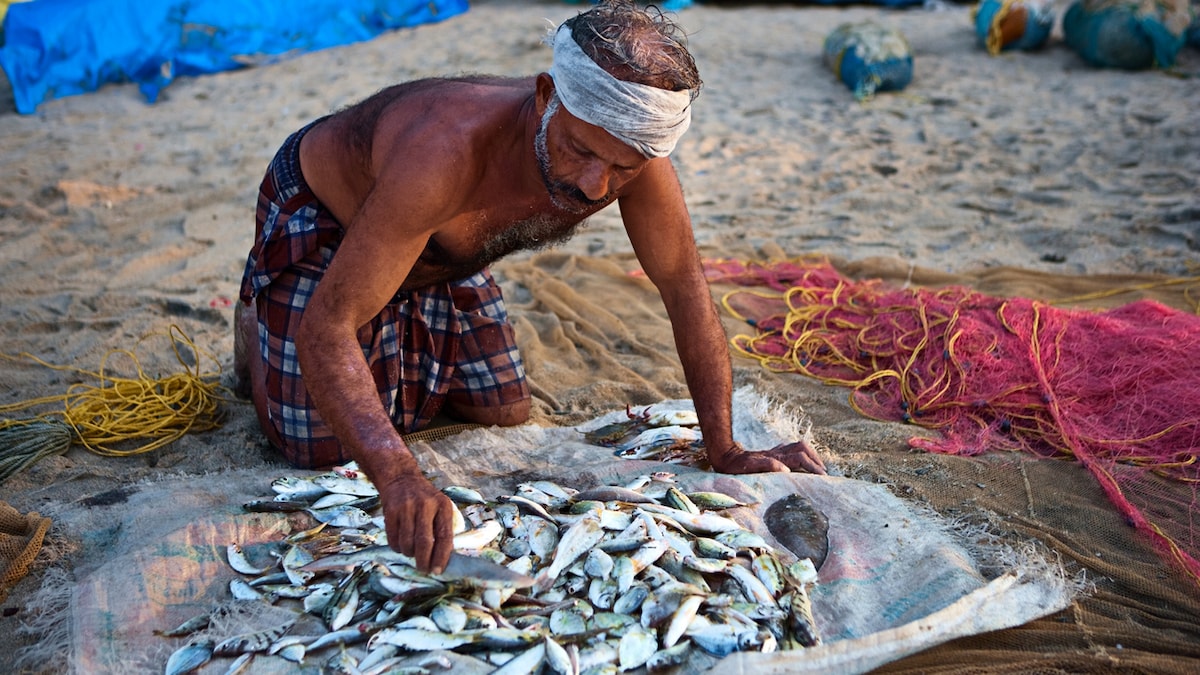
    India’s annual fish production has nearly doubled since 2014 to 17.5 million tons, with inland fishing now surpassing marine fishing, contributing 13.2 million tons, Union Minister of Fisheries, Animal Husbandry & Dairying Rajiv Ranjan Singh alias Lalan Singh said on Thursday.

    In his address here to celebrate World Fisheries Day 2024, the minister said that India has now become the second-largest fish producer globally, with around 30 million people involved in fish production across the value chain. The country accounts for as much as 8 per cent of the world’s total fish production, he added.

    He said that various initiatives by the fisheries department like the Blue Revolution, the Pradhan Mantri Matsya Sampada Yojana (PMMSY), and the Pradhan Mantri Matsya Kisan Samridhi Sah-Yojana (PMMKSY) have resulted in boosting fish production in the country.

    The Minister also congratulated the fishermen and fish farmers for their role in achieving the target.

    Singh launched a series of landmark initiatives and projects aimed at transforming the fisheries sector and strengthening India’s blue economy. These included the launch of the 5th Marine Fisheries Census for data-driven policymaking, the National Plan of Action on Sharks for sustainable shark management and India’s endorsement of the Regional Plan of Action on IUU (Illegal, Unreported and Unregulated) Fishing to prevent illegal, unreported and unregulated fishing in the Bay of Bengal Region jointly in cooperation with Sri Lanka, Bangladesh and Maldives, the International Maritime Organisation-Food and Agricultural Organisation (IMO-FAO) GloLitter Partnership Project to combat marine plastic litter, and Standard Operating Procedures (SOP) for retrofitted LPG kits to promote energy-efficient, low-cost marine fishing fuels.

    Additionally, the New Single Window System (NSWS) by the Coastal Aquaculture Authority was launched to enable online registration of coastal aquaculture farms. A signed MoU was also exchanged to implement a framework for the Voluntary Carbon Market (VCM), harnessing carbon-sequestering practices in the sector.

    The Union Minister also highlighted issues like plastic pollution, carbon emissions from traditional fishing and water pollution, emphasising the government’s efforts to reduce plastics, improve water quality and promote eco-friendly practices.

    Singh mentioned the unorganised nature of the sector and the infrastructural gaps, stressing the need for reforms and initiatives like the Fisheries Infrastructure Development Fund (FIDF). He outlined a vision for sustainable development and economically empowering the fisheries sector, focusing on modern techniques, policy integration and long-term goals to ensure India’s global leadership in fish production.

    Speaking on the occasion, Manuel Barange, ADG and Director Fisheries Division FAO, Rome, emphasised the global challenges of hunger and malnutrition, highlighting the need for innovative solutions to feed a growing population. FAO’s Blue Transformation Initiative was presented during the event, focusing on sustainable aquaculture development, effective fisheries management, and enhancing aquatic food value chains.

    Progressive states, Union Territories (UTs), districts, and individuals were honoured for their remarkable contributions to the growth of the fisheries and aquaculture sector in India.

    Kerala received the award for the Best Marine State, while Telangana was recognised as the Best Inland State. Uttarakhand earned the title of Best Himalayan and Northeastern State, and Jammu & Kashmir was awarded Best Union Territory. Among the districts, Kerala’s Kollam won the Best Marine District award, Chhattisgarh’s Kanker was named Best Inland District while Assam’s Darrang received the Best Himalayan and Northeastern District award and Kulgam in Jammu & Kashmir was honoured as the Best District in a Union Territory.

    (Disclaimer: Except for the headline, this story has not been edited by NDTV staff and is published from a syndicated feed.)

    Source link

  • Air Frying Fish For The First Time? Avoid These 7 Mistakes At All Costs

    Air Frying Fish For The First Time? Avoid These 7 Mistakes At All Costs

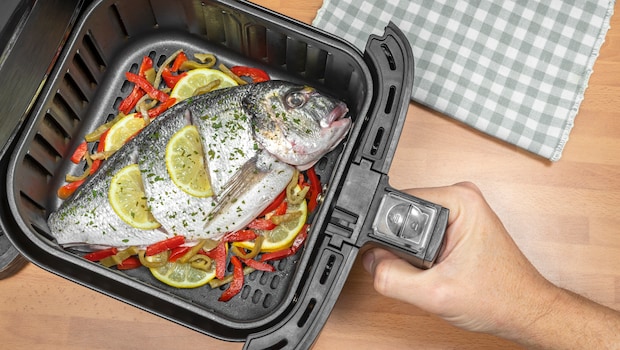
    In the age of healthy cooking, the air fryer has emerged as a best friend for many. Why? Well, it’s easy to use and gives you the desired crispy, golden dishes with minimal oil. You can practically cook anything and everything in the air fryer (with proper instructions, of course!). When it comes to fish, this kitchen appliance can truly be a game-changer – offering a perfect balance of crunch and tenderness. But, as easy as it sounds, air-frying fish isn’t that simple. Since it is delicate meat, air-frying fish can lead to several “oops” moments that can ruin your seafood feast. Are you thinking of air-frying fish for a dish? Then you’ve landed on the right page! Avoid these 7 mistakes to make sure you get the desired fish dish every time.

    Also Read: Hilsa Fish To Kerala Fish Curry: 7 Fish Curries From Around The Country

    Latest and Breaking News on NDTV

    Photo Credit: iStock

    Here Are 7 Mistakes You Should Avoid While Air Frying Fish

    1. Not Preheating

    While quickly putting all the items in the air fryer basket may look tempting, skipping the preheating step can ruin your fish. Preheating is important as it helps cook the fish evenly, removing the possibility of undercooking or overcooking the dish. If you preheat an air fryer, your fish fillet will start cooking instantly, giving you that crispy exterior and moist interior. Trust us, it only takes a few minutes to preheat the air fryer, but this small step can make a huge difference. So, don’t skip this step to make restaurant-style fish at home!

    2. Using Butter to Air Fry Fish

    You’d be surprised to know that you don’t need a lot of fat to air-fry fish. While a dash of butter can improve the fish’s flavour, it can actually ruin your appliance. Butter can be a poor choice at the lowest settings on your air fryer since it has an exceptionally low smoke point. If you’re not careful, your butter will break down in the air fryer, and smoke will come out of the appliance. The same thing will happen if you use cold-pressed oils. Instead, aim to use oils with high smoke points, like avocado, canola, or sesame oils, to avoid discomfort.

    3. Not Wrapping Your Fish

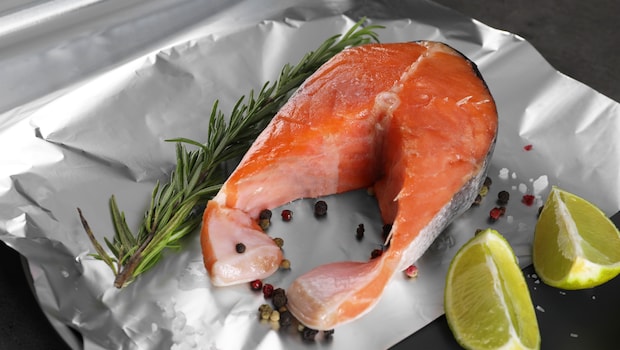
    It is a common mistake to just place fish fillets in the air fryer basket, set the timer, and wait – but this will extract the moisture once the air fryer is in full swing with its hot air. To save your time and dish, always wrap the fish to retain its tenderness. Use tin foil with a little bit of lemon juice or white wine so that the fish cooks and steams in the parcel itself. This will also add different flavours to your dish and prevent it from browning.

    Latest and Breaking News on NDTV

    Photo Credit: iStock

    4. Overcrowding the Basket

    Are you in a rush? Well, you might want to slow down a little if you’re making fish in your air fryer. Placing too many fish fillets into the air fryer basket can ruin your dish. The thing is, the air fryer works like a conventional oven by rotating hot air around the basket. If you crowd the basket with too many fish fillets – especially thick ones – it won’t get enough breathing room to cook properly. Cook in batches if you need to, and thank us later.

    5. Not Lining Your Air Fryer Basket

    If you’re cooking fish in an air fryer, lining the basket with parchment paper is a must. This will save you a lot of trouble with cleaning the basket. When you use parchment paper, the juices released from the fish stay neatly in the liner and don’t drip to the bottom of the basket. This cooks the fish evenly while also soaking it in its own juices. Moreover, using parchment paper will help prevent it from sticking to the bottom of the basket.

    Latest and Breaking News on NDTV

    Photo Credit: iStock

    6. Not Patting Dry The Fish

    Excess moisture is the enemy of fish! If you don’t pat dry your fish fillets before seasoning, you’ll likely end up with steamed fish and a mushy exterior. Use a paper towel to dab the excess moisture before marinating your fish. This will ensure the seasoning or breadcrumbs stick properly and allow the air fryer to get its signature crunch.

    7. Air Frying Wet-Battered Fish

    Air fryers are often seen as deep fryers that give you the desired crispiness without the added fat, but they don’t really fry food. They can achieve crispiness and browning without much fat, but wet-battered fish is not really suitable for the appliance. This is because, once the air fryer starts working, it could blow off the batter before it crisps, causing it to drip to the bottom of the machine. To make fish crispy, choose a dry breaded coating or tighten it with an egg wash to secure it.

    Source link

  • Studies on pigeon-guided missiles, swimming abilities of dead fish among Ig Nobles winners

    Studies on pigeon-guided missiles, swimming abilities of dead fish among Ig Nobles winners

    BOSTON — BOSTON (AP) — A study that explores the feasibility of using pigeons to guide missiles and one that looks at the swimming abilities of dead fish were among the winners Thursday of this year’s Ig Nobels, the prize for comical scientific achievement.

    Held less than a month before the actual Nobel Prizes are announced, the 34th annual Ig Nobel prize ceremony at the Massachusetts Institute of Technology was organized by the Annals of Improbable Research magazine’s website to make people laugh and think. Winners received a transparent box containing historic items related to Murphy’s Law — the theme of the night — and a nearly worthless Zimbabwean $10 trillion bill. Actual Nobel laureates handed the winners their prizes.

    “While some politicians were trying to make sensible things sound crazy, scientists discovered some crazy-sounding things that make a lot of sense,” Marc Abrahams, master of ceremonies and editor of the magazine, said in an e-mail interview.

    The ceremony started with Kees Moliker, winner of 2003 Ig Noble for biology, giving out safety instructions. His prize was for a study that documented the existence of homosexual necrophilia in mallard ducks.

    “This is the duck,” he said, holding up a duck. “This is the dead one.”

    After that, someone came on stage wearing a yellow target on their chest and a plastic face mask. Soon, they were inundated with people in the audience throwing paper airplanes at them.

    Then, the awards began — several dry presentations which were interrupted by a girl coming on stage and repeatedly yelling “Please stop. I’m bored.” The awards ceremony was also was broken up by an international song competition inspired by Murphy’s Law, including one about coleslaw and another about the legal system.

    The winners were honored in 10 categories, including for peace and anatomy. Among them were scientists who showed a vine from Chile imitates the shapes of artificial plants nearby and another study that examined whether the hair on people’s heads in the Northern Hemisphere swirled in the same direction as someone’s hair in the Southern Hemisphere.

    Other winners include a group of scientists who showed that fake medicine that causes side effects can be more effective than fake medicine that doesn’t cause side effects and one showing that some mammals are cable of breathing through their anus — winners who came on stage wearing a fish-inspired hats.

    Julie Skinner Vargas accepted the peace prize on behalf of her late father B.F. Skinner, who wrote the pigeon-missile study. Skinner Vargas is also the head of the B.F. Skinner Foundation.

    “I want to thank you for finally acknowledging his most important contribution,” she said. “Thank you for putting the record straight.”

    James Liao, a biology professor at the University of Florida, accepted the physics prize for his study demonstrating and explaining the swimming abilities of a dead trout.

    “I discovered that a live fish moved more than a dead fish but not by much,” Liao said, holding up a fake fish. “A dead trout towed behind a stick also flaps its tail to the beat of the current like a live fish surfing on swirling eddies, recapturing the energy in its environment. A dead fish does live fish things.”

    Source link