
hacklink hack forum hacklink film izle hacklink marsbahisizmir escortsahabetpornJojobetcasibompadişahbetBakırköy Escortcasibom9018betgit casinojojobet

Tag: GOP

  • Michigan Democrats move to protect reproductive health data before GOP takes control of House

    Michigan Democrats move to protect reproductive health data before GOP takes control of House

    LANSING, Mich. — Michigan Democrats are pushing this month to pass legislation they say will improve reproductive health care, in particular the safety of digital health data, ahead of Republicans taking over the state House in 2025.

    Democratic Gov. Gretchen Whitmer is backing a bill designed to protect reproductive health data including data logged on menstrual cycle tracking apps. Similar legislation that has passed in other states is aimed at keeping the data from being used to target people seeking abortions.

    “This feels like a very urgent need for us to get this done while we have a window in Michigan with the Democratic majority for the next few weeks,” said state Sen. Mallory McMorrow, sponsor of the digital privacy bill.

    The rush is a reaction to expectations that it will be harder to pass the reproductive health care policies Democrats favor after Republicans take control of the state House in January. Democrats kept control of the state Senate in the November election.

    Republicans have opposed the digital privacy bill over a section they say will stifle anti-abortion advertising.

    Other reproductive health bills to be considered during the December session that began Tuesday include a package on Black maternal health and an expansion of access to birth control.

    After the overturn of Roe v. Wade, some women in states with strict abortion bans began to worry that their health information could be used to track their reproductive status. Apps that track menstrual cycles became a major focus point.

    Abortion is constitutionally protected in Michigan. But McMorrow does not trust President-elect Donald Trump’s campaign promise to veto any possible national abortion ban nor his campaign’s efforts to distance itself from Project 2025, which proposed a rollback on abortion and contraception access.

    Period tracking apps allow women to take detailed day-by-day notes about their health, from how heavy their period flow is to additional symptoms such as cramping. They can log pregnancies and miscarriages.

    “These tools are really valuable,” McMorrow said. “I just want to make sure that the guardrails are there when indications from the incoming federal administration is they would potentially weaponize the data in a way that is very dangerous.”

    Federal law bars medical providers from sharing health data without a patient’s consent but doesn’t prevent digital tech companies from tracking menstrual cycles or an individual’s location and selling it to data brokers. Legislation for federal bans have never gained momentum, largely because of opposition from the tech industry.

    How the legislation works varies from state to state. Washington state has digital privacy law that broadly covers all health-related data while Virginia has a law that explicitly prohibits the issuance of search warrants, subpoenas or court orders for electronic or digital menstrual health data.

    Michigan’s proposal would require businesses or organizations to use reproductive health data only for the services it provides, and consumers must be informed of how the data is being used. In order to sell that data, an entity would need explicit, signed consent from the consumer. Consumers would also have the option to opt out from their data being sold at any time.

    It would also regulate retailers, who often compile data to target consumers with advertisements, and the use of geofencing, which allows marketers to target consumers with ads based on their location.

    The bill would prohibit identifying who is receiving reproductive health care by using location information and targeting them with advertisements. This would apply to people visiting fertility or abortion clinics.

    The geofencing provision of the bill has drawn objection from anti-abortion advocates. Genevieve Marnon, legislative director for Right to Life of Michigan, said in committee testimony Tuesday that the bill would prevent women visiting an abortion clinic from being reached by anti-abortion ads.

    “This isn’t safeguarding women’s reproductive health data,” she said. “It is limiting the options presented to women.”

    Republican Sen. John Damoose, who voted against the bill in committee, believes the geofencing provision encroaches on freedom of speech and religion by preventing anti-abortion advertising.

    The bill was voted out of committee Tuesday on party lines and advanced Thursday toward a final vote in the Senate chamber.

    Kimya Forouzan, principal state policy director at the Guttmacher Institute, expects the topic to be taken up by other state legislatures next year. Guttmacher, which supports abortion rights, tracks reproductive health trends.

    Over the past two years, Michigan Democrats have passed bills repealing a number of anti-abortion laws, including the state’s 1931 ban, and adding surrogacy protections to state law. Lawmakers are considering a number of others related to reproductive health this month.

    A group of bills focused on improving maternal health for Black women would create a doula scholarship, among other measures. The Senate voted its package on the topic through to the House on Tuesday.

    Rep. Jaime Churches, a Democrat from the downriver area of Detroit who lost her seat in November, is trying to gain traction for two bills that would require insurance to cover fertility treatments, including in vitro fertilization and intrauterine insemination.

    Three bills seeking to expand access to birth control through insurance have passed the state House. McMorrow also introduced a series of bills aimed at providing long-lasting reversible contraception, such an implants or intrauterine devices, to patients who have given birth before they are discharged from a hospital.

    There is competition among Democrats for time during this short, lame duck session. Advocates for economic development, infrastructure and gun control measures are among the many looking to push through bills in the month that is left. Major contention over new paid sick leave and minimum wage requirements is likely to garner attention. Those discussions could reduce the amount of time available to debate reproductive health measures.

    ___

    The Associated Press’ women in the workforce and state government coverage receives financial support from Pivotal Ventures. AP is solely responsible for all content. Find AP’s standards for working with philanthropies, a list of supporters and funded coverage areas at AP.org.

    Source link

  • Trump names Brendan Carr, senior GOP leader at FCC, to lead the agency

    Trump names Brendan Carr, senior GOP leader at FCC, to lead the agency

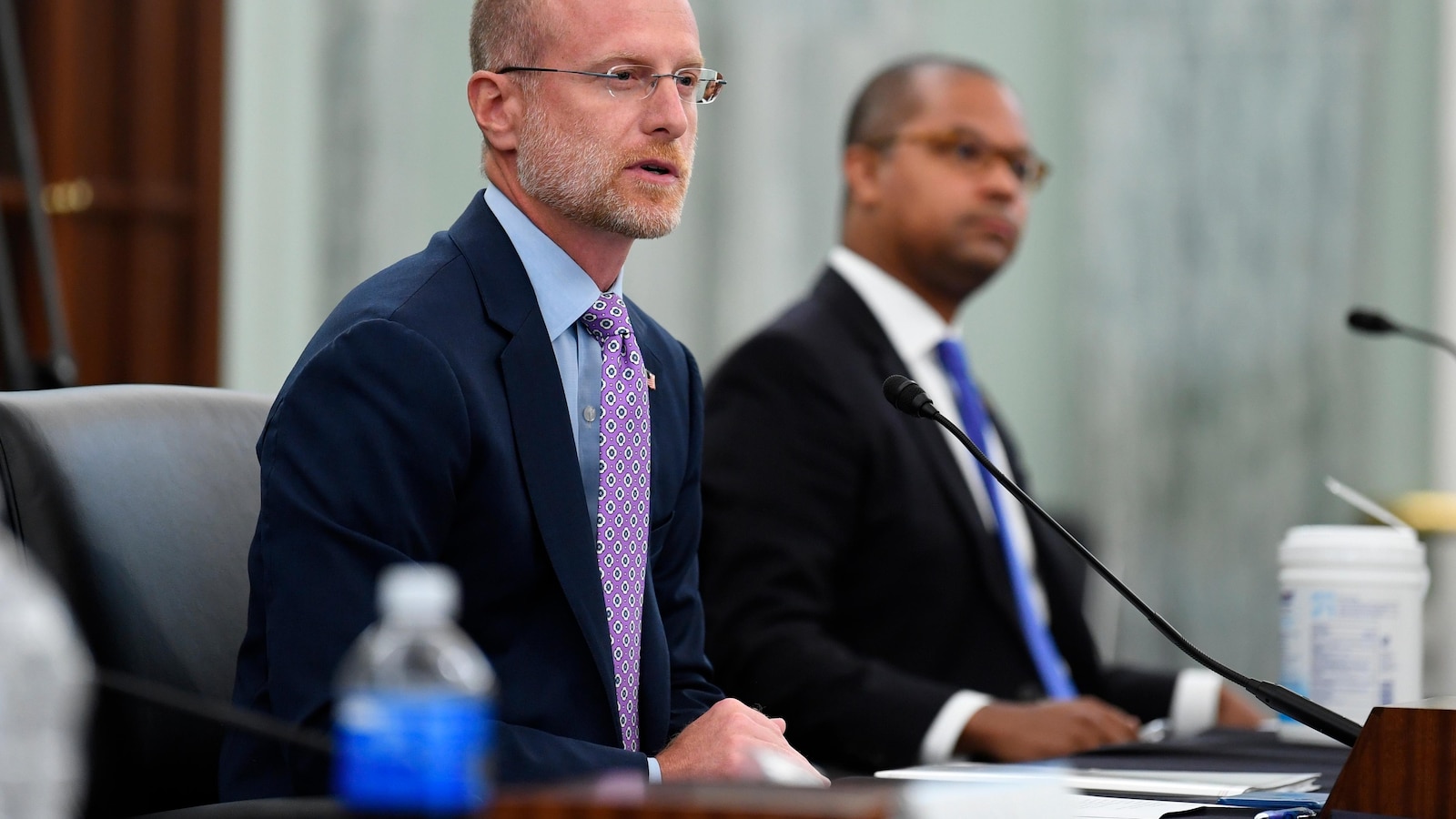
    WEST PALM BEACH, Fla. — President-elect Donald Trump on Sunday named Brendan Carr, the senior Republican on the Federal Communications Commission, as the new chairman of the agency tasked with regulating broadcasting, telecommunications and broadband.

    Carr is a longtime member of the commission and served previously as the FCC’s general counsel. He has been unanimously confirmed by the Senate three times and was nominated by both Trump and President Joe Biden to the commission.

    The FCC is an independent agency that is overseen by Congress, but Trump has suggested he wanted to bring it under tighter White House control, in part to use the agency to punish TV networks that cover him in a way he doesn’t like.

    Carr has of late embraced Trump’s ideas about social media and tech. Carr wrote a section devoted to the FCC in “ Project 2025,” a sweeping blueprint for gutting the federal workforce and dismantling federal agencies in a second Trump administration produced by the conservative Heritage Foundation.

    Trump has claimed he doesn’t know anything about Project 2025, but many of its themes have aligned with his statements.

    Carr said in a statement congratulating Trump on his win that he believed “the FCC will have an important role to play reining in Big Tech, ensuring that broadcasters operate in the public interest, and unleashing economic growth.”

    “Commissioner Carr is a warrior for Free Speech, and has fought against the regulatory Lawfare that has stifled Americans’ Freedoms, and held back our Economy,” Trump said in a statement on Sunday. “He will end the regulatory onslaught that has been crippling America’s Job Creators and Innovators, and ensure that the FCC delivers for rural America.”

    The five-person commission has a 3-2 Democratic majority until next year, when Trump gets to appoint a new member.

    Carr has made appearances on Fox News Channel, including when he slammed Democratic Vice President Kamala Harris ’ appearance on “ Saturday Night Live” the weekend before the election — charging that the network didn’t offer equal time to Trump.

    Also a prolific writer of op-eds, Carr wrote in an opinion piece for The Wall Street Journal last month decrying an FCC decision to revoke a federal award for Elon Musk’s satellite service, Starlink. He said the move couldn’t be explained “by any objective application of the facts, the law or sound policy.”

    “In my view, it amounted to nothing more than regulatory lawfare against one of the left’s top targets: Mr. Musk,” Carr wrote.

    Source link

  • House Speaker Johnson says GOP may try to repeal CHIPS Act, then walks it back

    House Speaker Johnson says GOP may try to repeal CHIPS Act, then walks it back

    WASHINGTON — House Speaker Mike Johnson said Friday that Republicans “probably will” try to repeal legislation that spurred U.S. production of semiconductor chips, a statement he quickly tried to walk back by saying he would like to instead “streamline” it.

    Johnson made the initial comment while campaigning for a vulnerable New York GOP congressman in a district that is anticipating a large new Micron semiconductor manufacturing plant.

    A reporter asked Johnson whether he would try to repeal the CHIPS and Science Act, which Republican presidential nominee Donald Trump had disparaged last week. “I expect that we probably will, but we haven’t developed that part of the agenda yet,” Johnson replied.

    Democrats quickly jumped on the Republican speaker’s comments, warning that it showed how Johnson and Trump are pursuing an aggressive conservative agenda bent on dismantling even popular government programs. The White House has credited the CHIPS Act for spurring hundreds of billions of dollars of investments as well as hundreds of thousands of jobs. Vice President Kamala Harris has pointed to the legislation on the campaign trail as proof that Democrats can be entrusted with the U.S. economy.

    Johnson, who voted against the legislation, later said in a statement that the CHIPS Act, which poured $54 billion into the semiconductor manufacturing industry, “is not on the agenda for repeal.”

    “To the contrary, there could be legislation to further streamline and improve the primary purpose of the bill—to eliminate its costly regulations and Green New Deal requirements,” the speaker’s statement said.

    It wasn’t the first recent comment Johnson has had to walk back. Earlier this week he had to clean up comments he made saying he wanted to “take a blow torch to the regulatory state” and make “massive” changes to the Affordable Care Act. After facing political blowback, he said that repealing the health care law was “not on the table.”

    The incident was emblematic of Johnson’s struggle working closely with Trump and at the same time campaigning for his House colleagues, especially those locked in tough reelection battles that are crucial to Republicans holding a narrow majority. The speaker was campaigning for Rep. Brandon Williams, a New York Republican who worked in the tech industry before running for Congress and supported the CHIPS Act.

    Williams said in a statement that he spoke privately with Johnson after he suggested that the act could be repealed.

    “He apologized profusely, saying he misheard the question,” Williams said.

    Williams’ district is anticipating a large new Micron semiconductor manufacturing plant. The company has said it received grants of $6.1 billion from the CHIPS Act to support its plans.

    New York Gov. Kathy Hochul, a Democrat, said in a statement Friday, “Anyone threatening to repeal the CHIPS & Science Act is threatening more than 50,000 good-paying jobs in Upstate New York and $231 billion worth of economic growth nationwide.”

    Democrats are hoping that the comments give them a late boost as they try to retake the House majority.

    Viet Shelton, spokesperson for the Democratic Congressional Campaign Committee, said, “Most politicians usually go to a community promising to create jobs in the town they’re visiting… Mike Johnson, ever the trendsetter, decided to visit a town and promise to kill jobs in that town.”

    Source link

  • US-China research has given Beijing’s military technology a boost, House GOP says

    US-China research has given Beijing’s military technology a boost, House GOP says

    WASHINGTON — Partnerships between the U.S. and China at universities over the past decade have allowed hundreds of millions of dollars in federal funding to aid Beijing in developing critical technology that could be used for military purposes, congressional Republicans asserted in a new report.

    The report said U.S. tax dollars have contributed to China’s technological advancement and military modernization when American researchers worked with their Chinese peers in areas such as hypersonic weapons, artificial intelligence, nuclear technology and semiconductor technology.

    The report, released Monday by Republicans on the House Select Committee on the Chinese Communist Party and the House Education and Workforce Committee, raised concerns over the national security risks of scientific collaborations that were once celebrated. It urged stronger safeguards and more robust enforcement.

    The committees conducted a yearlong investigation into higher education’s role in the economic rivalry with China, especially when it comes to technology. While American universities don’t engage in secret research projects, their work — often among the best in the world — has the potential to be turned into military capabilities.

    The U.S. House of Representatives this month approved about two dozen China-related bills, with a clear goal to compete with Beijing in the tech field. The bills, which still need to be approved by the Senate, seek to ban Chinese-made drones, restrict China-linked biotech companies in the U.S. market, and cut off remote Chinese access to advanced U.S. computer chips.

    Other measures include those to curb Beijing’s influence on U.S. college campuses and to revive a Trump-era program meant to root out China’s spying and theft of intellectual property at American universities and research institutes. That’s despite such efforts raising concerns about racial profiling and the ability to keep up exchange programs that boost tolerance between the two countries.

    Collaboration among U.S.-based scholars and China also declined as a result of the Trump administration’s anti-spying program, which ended in 2022, researchers say.

    Deputy Secretary of State Kurt Campbell said at a forum by the Council on Foreign Relations earlier this year that he would welcome more Chinese students studying humanities and social sciences but “not particle physics” in American schools.

    Abigail Coplin, an assistant professor of sociology and science, technology and society at Vassar College, expressed concerns about the potential harm to academic exchange and scientific engagement, which she said promote understanding and help stabilize relations.

    “Clearly American federal funding should not be used to advance China’s military capabilities, but there also needs to be more conversation about what is not an issue of national security and the negative ramifications of over-securitization,” Coplin said. “Decreased person-to-person engagement is contributing to the rapidly fraying U.S.-China relationship at the moment.”

    Monday’s report identified about 8,800 publications that involved U.S. researchers who received funding from the Department of Defense or the U.S. intelligence community working with Chinese researchers — many of whom were affiliated with China’s defense research and industrial base. Such research is “providing back-door access to the very foreign adversary nation whose aggression these capabilities are necessary to protect against,” the report said.

    The House investigation also flagged what it described as problematic joint institutes between U.S. and Chinese universities, which the report said “conceal a sophisticated system for transferring critical U.S. technologies and expertise” to China.

    Through those institutes, American researchers and scientists, including those who conduct federally funded research, have traveled to China to work with and advise Chinese scholars and train Chinese students, the report said.

    “This creates a direct pipeline for the transfer of the benefit of their research expertise” to China, the report said.

    The Georgia Institute of Technology, which is named in the report for its joint Georgia Tech Shenzhen Institute, defended its work in China, saying it was focused on educating students, not research, and that the report’s claims are “unsubstantiated.”

    “There was no research conducted at GTSI, no facilitation of technology transfer, and no federal funding provided to China,” the university said in a statement.

    However, Georgia Tech announced Sept. 6 that it would discontinue its participation in the joint institute with Tianjin University and the government of Shenzhen, a city in southern China. Georgia Tech said the partnership was “no longer tenable” after the U.S. Commerce Department accused Tianjin University in 2020 of theft of trade secrets.

    The congressional report also identified Tsinghua-Berkeley Shenzhen Institute, which the University of California, Berkeley, and China’s Tsinghua University opened in 2015 in the city of Shenzhen to focus on “strategic emerging industries,” according to the institute’s website.

    Berkeley’s researchers “engage only in research whose results are always openly disseminated around the world” and the school was “not aware of any research by Berkeley faculty at TBSI conducted for any other purpose,” Katherine Yelick, the university’s vice chancellor for research, said in a statement.

    Berkeley also is unwinding its partnership, saying it has no oversight of research activities conducted only by non-Berkeley employees at the joint institute.

    The U.S. university has decided “to start the process of relinquishing all ownership” in the Shenzhen school “after careful consideration, which began several months ago,” Yelick said.

    She said Berkeley “takes concerns about research security very seriously — including those concerns voiced by Congress.”

    The University of Pittsburgh, which is named in the report for its cooperation with Sichuan University, said it could not comment because the Pennsylvania university “was not consulted and did not work with the House Select Committee throughout the investigation.”

    Source link