hacklink hack forum hacklink film izle hacklink marsbahisizmir escortsahabetpornJojobet

Tag: government

  • MP Government To Invest Rs 1,500 Crore To Increase Milk Production In 5 Years

    MP Government To Invest Rs 1,500 Crore To Increase Milk Production In 5 Years

    To elevate Madhya Pradesh’s stature as a key contributor to India’s dairy industry and improve farmers’ livelihoods, the state government has announced a robust Rs 1,500 crore investment plan. Aimed at doubling milk production within five years, the initiative underscores a multifaceted approach to revolutionize the state’s dairy sector. The proposal, approved during a Cabinet meeting chaired by Chief Minister Mohan Yadav on Tuesday, marks a significant step in future-proofing the state’s agricultural economy. Senior Minister Kailash Vijayvargiya, briefing the media, highlighted a pivotal partnership between the Madhya Pradesh State Co-operative Dairy Federation (MPSCDF) and the National Co-operative Dairy Federation (NCDF).

    “The tie-up with NCDF will not only enhance milk production but also significantly boost farmers’ income,” Vijayvargiya said. He emphasized plans to motivate farmers to adopt high-yield cattle breeds, coupled with comprehensive facilities for transporting milk and dairy products to markets. Organic farming practices, supported by organic manure usage, will also be encouraged.

    In a move aligned with the National Education Policy 2020, the government will introduce an academic degree in dairy technology at Vikram University, Ujjain. The course will later be expanded to other universities, equipping youth with modern skills in dairy technology to propel Madhya Pradesh to the forefront of milk production.

    Vijayvargiya also detailed plans to expand the number of dairy co-operative committees from 6,000 to 9,000 within five years. This expansion will enable the establishment of dairy plants in villages, with transportation and branding managed by private stakeholders. The state’s flagship milk brand, Sanchi, will see a renewed push to gain a stronger foothold in national markets with NCDF’s support.

    “This is part of a larger vision to make Sanchi a national brand while ensuring the state becomes a top-tier milk producer,” Vijayvargiya added.

    The move has not been without controversy. In September last year, the Madhya Pradesh government entrusted the operations of the State Cooperative Dairy Federation to the National Dairy Development Board (NDDB) for five years. While the Opposition Congress has raised concerns, accusing the government of paving the way for Gujarat’s Amul to dominate Sanchi through “backdoor” tactics, officials maintain that the decision is rooted in expanding Sanchi’s reach and enhancing its output.

    Madhya Pradesh currently ranks third in milk production nationally, contributing 9% to the country’s total output. The state’s average per capita milk production stands at 673 grams per day, outperforming the national average of 471 grams.

    As the initiative takes shape, Madhya Pradesh’s dairy farmers are poised to witness a remarkable transformation, one that could serve as a model for other states aiming to boost agricultural incomes and build a resilient rural economy.

    Source link

  • TikTok files challenge against Canadian government order to dissolve its business in the country

    TikTok files challenge against Canadian government order to dissolve its business in the country

    TikTok has challenged a Canadian government order to shut down the Chinese video-sharing app’s business operations in the country that was imposed over national security concerns.

    The company said Tuesday that it filed an application for a judicial review with the Federal Court in Vancouver on Dec. 5, which seeks to set aside the order for TikTok to wind-up and cease its business in Canada.

    The Canadian federal government last month announced it was ordering the dissolution of TikTok Technology Canada Inc. after a national security review of its Chinese parent company ByteDance Ltd.

    The government is not blocking access to the TikTok app, which will continue to be available to Canadians. TikTok said it has 14 million users in Canada, which is about a third of the population. It has offices in Toronto and Vancouver.

    The wildly popular platform is owned by ByteDance, a Chinese company that moved its headquarters to Singapore in 2020, but is under increasing pressure in the West. It’s facing a possible ban in the U.S. and intensifying scrutiny in Europe over issues including election influence campaigns allegedly coordinated by Moscow.

    TikTok argues in its court application, which was posted online, that Industry Minister François-Philippe Champagne’s decision was “unreasonable” and “driven by improper purposes.” It says the order is “grossly disproportionate” and the the national security review was “procedurally unfair.”

    The review was carried out through the Investment Canada Act, which allows the government to investigate foreign investment with potential to harm national security.

    Champagne said in a statement at the time that the government was taking action to address “specific national security risks,” but did not elaborate. His office said in response to the filling that the government’s decision was informed by a “thorough national security review and advice from Canada’s security and intelligence community.”

    TikTok said Champagne “failed to engage with TikTok Canada on the purported substance of the concerns” that led to the order.

    It argues the government ordered “measures that bear no rational connection to the national security risks it identifies” and that the reasons for the order “are unintelligible, fail to reveal a rational chain of analysis and are rife with logical fallacies.”

    The platform says there were “less onerous” options than shutting down its Canadian business, which it said would eliminate hundreds of jobs, threaten business contracts and “cause the destruction of significant economic opportunities.”


    Source link

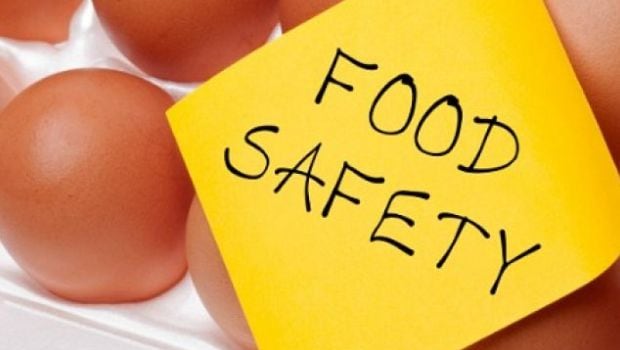
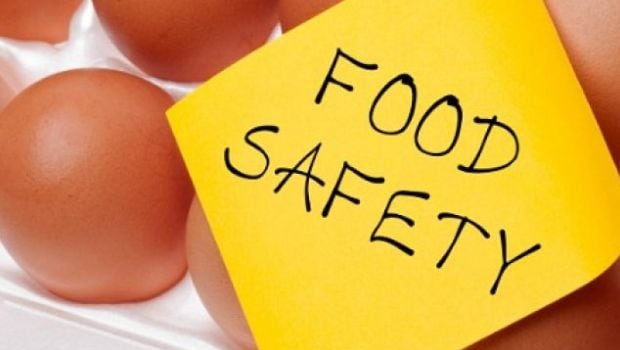
  • Telangana Government Forms Committees To Oversee Food Safety In State-Run Schools

    Telangana Government Forms Committees To Oversee Food Safety In State-Run Schools

    Amid the reports of food poisoning incidents in government schools, the Telangana government on Thursday constituted separate committees to ensure the safety of food served to the students. Taking serious note of such incidents, Chief Minister A Revanth Reddy directed district Collectors to undertake regular inspections in state-run educational institutions to ensure that there is no negligence in providing hygienic food to the students.

    Expressing anguish over the incidents of students falling ill after eating food, despite several directives given by him, CM warned that once the negligence was proved, the government would not hesitate to sack the employees responsible for that. State Panchayat Raj Minister D Anasuya Seethakka expressed doubts that conspiracies could be behind the ‘food poisoning’ incidents and vowed to expose them.

    State Chief Secretary Santhi Kumari issued orders constituting a three-member ‘Task Force Committee’ to ensure the safety of food distributed in all the state-run institutions, including schools, welfare hostels, residential schools, hospitals, and Anganwadi Centres running under the departments of scheduled caste development, tribal, backward classes, minority welfare and others.

    The ‘Task Force Committee’ shall consist Commissioner of Food Safety/Food Safety Officer, Head of the Department (HoD) of the concerned institution/Additional Director, and District level officer of the concerned institution. The Committee should visit and probe all food safety incidents reported in any institution, identify the reasons, and fix the responsibility against the persons and agencies, the orders issued by the Chief Secretary said.

    Separately, the Chief Secretary issued an order to constitute institution-level food safety committees to oversee the cooking and serving of food to prevent food contamination and food-borne illnesses.

    The committee shall consist Head of the Institution (Head Master/Principal) and two other staff members working in the institution. The panel shall inspect the store room and kitchen before cooking every meal and ensure the quality of provisions and hygiene in the kitchen room, the order said.

    The committee members should taste the food after the preparation of every meal to check the quality of the food before serving it to the children, the order said.

    The committee should take photos of these activities and keep them in the record without fail till a ‘nodal department’ develops a mobile-based app that would allow instant uploading of photos taken in each institution, it said.

    Alleging that BRS is shedding crocodile tears on the incidents of students falling ill, Minister Seethakka on Thursday asked if any minister visited the victims when such incidents happened during the previous BRS regime.

    “We will expose such conspiracies… If any officials are involved in such conspiracies, we will file criminal cases and remove them from service,” she told reporters.

    BRS Working President K T Rama Rao on Wednesday said his party MLAs and other leaders would visit the state-run educational institutions between November 30 and December 7 to study the conditions there. He alleged that the Congress government has thrown school education and social welfare residential schools into a crisis.

    The Telangana High Court on Wednesday sought a report from the government by December 2 over the recent incidents of students falling ill after consuming mid-day meals in government schools.

    (Disclaimer: Except for the headline, this story has not been edited by NDTV staff and is published from a syndicated feed.)

    Source link

  • The outlook is uncertain for AI regulations as the US government pivots to full Republican control

    The outlook is uncertain for AI regulations as the US government pivots to full Republican control

    WASHINGTON — With artificial intelligence at a pivotal moment of development, the federal government is about to transition from one that prioritized AI safeguards to one more focused on eliminating red tape.

    That’s a promising prospect for some investors but creates uncertainty about the future of any guardrails on the technology, especially around the use of AI deepfakes in elections and political campaigns.

    President-elect Donald Trump has pledged to rescind President Joe Biden’s sweeping AI executive order, which sought to protect people’s rights and safety without stifling innovation. He hasn’t specified what he would do in its place, but the platform of the Republican National Committee, which he recently reshaped, said AI development should be “rooted in Free Speech and Human Flourishing.”

    It’s an open question whether Congress, soon to be fully controlled by Republicans, will be interested in passing any AI-related legislation. Interviews with a dozen lawmakers and industry experts reveal there is still interest in boosting the technology’s use in national security and cracking down on non-consensual explicit images.

    Yet the use of AI in elections and in spreading misinformation is likely to take a backseat as GOP lawmakers turn away from anything they view as potentially suppressing innovation or free speech.

    “AI has incredible potential to enhance human productivity and positively benefit our economy,” said Rep. Jay Obernolte, a California Republican widely seen as a leader in the evolving technology. “We need to strike an appropriate balance between putting in place the framework to prevent the harmful things from happening while at the same time enabling innovation.”

    Artificial intelligence interests have been expecting sweeping federal legislation for years. But Congress, gridlocked on nearly every issue, failed to pass any artificial intelligence bill, instead producing only a series of proposals and reports.

    Some lawmakers believe there is enough bipartisan interest around some AI-related issues to get a bill passed.

    “I find there are Republicans that are very interested in this topic,” said Democratic Sen. Gary Peters, singling out national security as one area of potential agreement. “I am confident I will be able to work with them as I have in the past.”

    It’s still unclear how much Republicans want the federal government to intervene in AI development. Few showed interest before this year’s election in regulating how the Federal Election Commission or the Federal Communications Commission handled AI-generated content, worrying that it would raise First Amendment issues at the same time that Trump’s campaign and other Republicans were using the technology to create political memes.

    The FCC was in the middle of a lengthy process for developing AI-related regulations when Trump won the presidency. That work has since been halted under long-established rules covering a change in administrations.

    Trump has expressed both interest and skepticism in artificial intelligence.

    During a Fox Business interview earlier this year, he called the technology “very dangerous” and “so scary” because “there’s no real solution.” But his campaign and supporters also embraced AI-generated images more than their Democratic opponents. They often used them in social media posts that weren’t meant to mislead, but rather to further entrench Republican political views.

    Elon Musk, Trump’s close adviser and a founder of several companies that rely on AI, also has shown a mix of concern and excitement about the technology, depending on how it is applied.

    Musk used X, the social media platform he owns, to promote AI-generated images and videos throughout the election. Operatives from Americans for Responsible Innovation, a nonprofit focused on artificial intelligence, have publicly been pushing Trump to tap Musk as his top adviser on the technology.

    “We think that Elon has a pretty sophisticated understating of both the opportunities and risks of advanced AI systems,” said Doug Calidas, a top operative from the group.

    But Musk advising Trump on artificial intelligence worries others. Peters argued it could undercut the president.

    “It is a concern,” said the Michigan Democrat. “Whenever you have anybody that has a strong financial interest in a particular technology, you should take their advice and counsel with a grain of salt.”

    In the run-up to the election, many AI experts expressed concern about an eleventh-hour deepfake — a lifelike AI image, video or audio clip — that would sway or confuse voters as they headed to the polls. While those fears were never realized, AI still played a role in the election, said Vivian Schiller, executive director of Aspen Digital, part of the nonpartisan Aspen Institute think tank.

    “I would not use the term that I hear a lot of people using, which is it was the dog that didn’t bark,” she said of AI in the 2024 election. “It was there, just not in the way that we expected.”

    Campaigns used AI in algorithms to target messages to voters. AI-generated memes, though not lifelike enough to be mistaken as real, felt true enough to deepen partisan divisions.

    A political consultant mimicked Joe Biden’s voice in robocalls that could have dissuaded voters from coming to the polls during New Hampshire’s primary if they hadn’t been caught quickly. And foreign actors used AI tools to create and automate fake online profiles and websites that spread disinformation to a U.S. audience.

    Even if AI didn’t ultimately influence the election outcome, the technology made political inroads and contributed to an environment where U.S. voters don’t feel confident that what they are seeing is true. That dynamic is part of the reason some in the AI industry want to see regulations that establish guidelines.

    “President Trump and people on his team have said they don’t want to stifle the technology and they do want to support its development, so that is welcome news,” said Craig Albright, the top lobbyist and senior vice president at The Software Alliance, a trade group whose members include OpenAI, Oracle and IBM. “It is our view that passing national laws to set the rules of the road will be good for developing markets for the technology.”

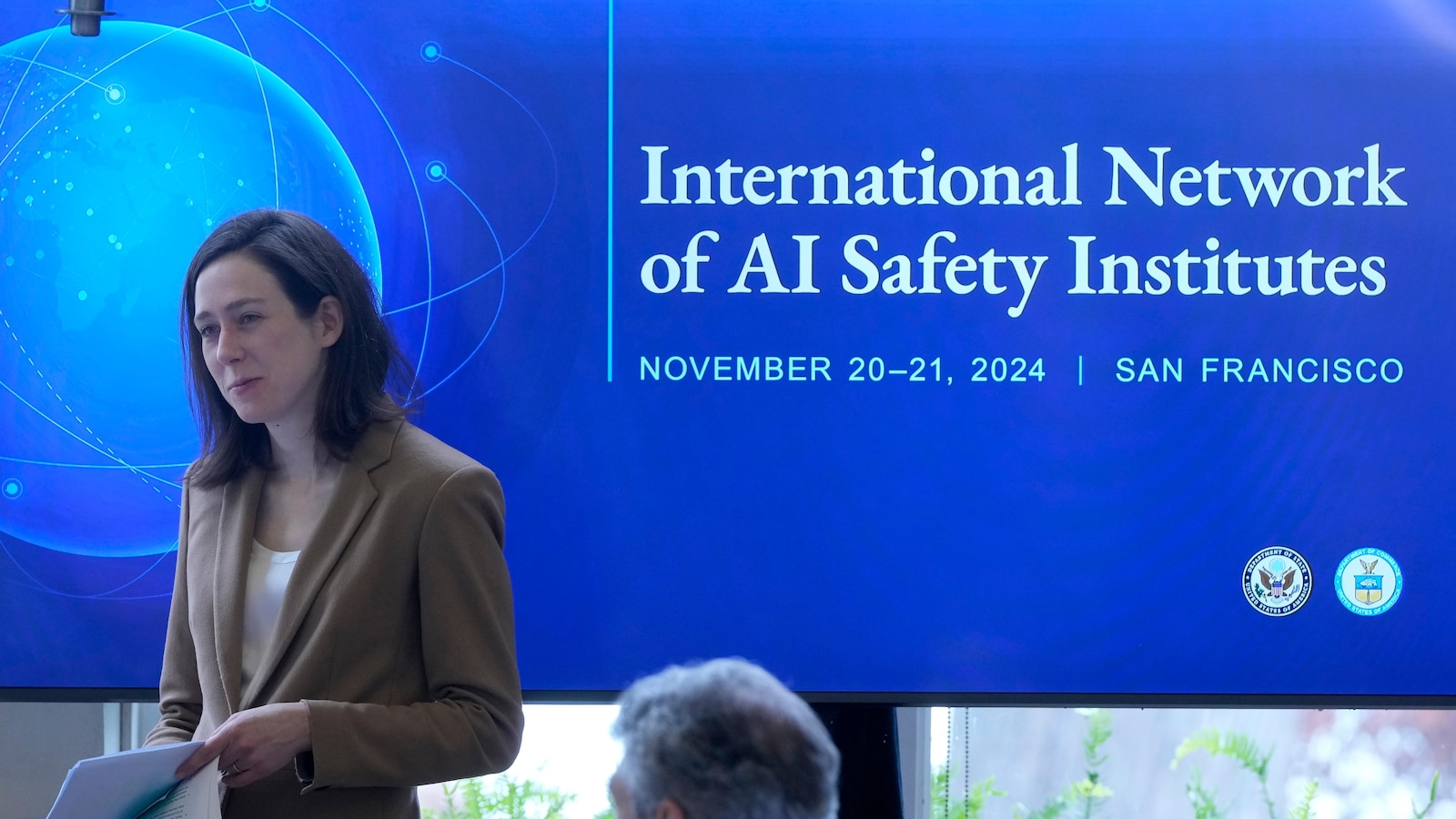
    AI safety advocates during a recent meeting in San Francisco made similar arguments, according to Suresh Venkatasubramanian, director of the Center for Tech Responsibility at Brown University.

    “By putting literal guardrails, lanes, road rules, we were able to get cars that could roll a lot faster,” said Venkatasubramanian, a former Biden administration official who helped craft White House principles for approaching AI.

    Rob Weissman, co-president of the advocacy group Public Citizen, said he’s not hopeful about the prospects for federal legislation and is concerned about Trump’s pledge to rescind Biden’s executive order, which created an initial set of national standards for the industry. His group has advocated for federal regulation of generative AI in elections.

    “The safeguards are themselves ways to promote innovation so that we have AI that’s useful and safe and doesn’t exclude people and promotes the technology in ways that serve the public interest,” he said.

    ___

    The Associated Press receives support from several private foundations to enhance its coverage of elections and democracy, and from the Omidyar Network to support coverage of artificial intelligence and its impact on society. AP is solely responsible for all content. See more about AP’s democracy initiative here and a list of supporters and funded coverage areas at AP.org


    Source link

  • This Government Teacher In Bihar Also Works As A Food Delivery Rider To Support His Family

    This Government Teacher In Bihar Also Works As A Food Delivery Rider To Support His Family

    Amit Kumar, a physical education teacher in Bihar, is struggling to sustain his family despite holding a government job. Earning a meagre monthly salary of Rs 8,000, he spends his days teaching at Babu Pur Middle School in Bhagalpur district and his nights working as a food delivery rider for a private company to make ends meet. The 35-year-old teacher juggles two jobs, tirelessly working from 5 PM to midnight after school hours. Amit’s story underscores the challenges faced by government employees with inadequate salaries and the extreme measures they take to support their families.

    Speaking about his struggles, Amit told ANI, “After a long wait, I finally got a government job in 2022. My family was overjoyed. I had taken the exam in 2019, and the results came in February 2020. I scored 74 out of 100, and we were thrilled. My family thought our situation would improve. Earlier, I worked at a private school, but when COVID hit, I lost that job. After two and a half years, I got this government position, but the salary was fixed at just Rs 8,000, and I was labelled a part-time employee, meaning I wasn’t required to stay long hours at school. Initially, we worked full-time and encouraged students to participate in sports.”

    “The students showed interest and even won medals. But even after two and a half years, the government hasn’t increased our salary or conducted eligibility exams. Life has become difficult. Senior teachers here receive Rs 42,000 as salary, while we get only Rs 8,000,” he added.

    The challenges don’t end there. Amit revealed that he didn’t receive his salary for four months earlier this year, forcing him to seek alternative income sources. “After February, I didn’t receive my salary for four months. I had to borrow money from friends, and the debt kept piling up. On my wife’s suggestion, I searched online and found I could work as a food delivery rider. There was no time restriction, so I created an ID and started working. After school, from 5 PM to 1 AM, I deliver food.

    “With Rs 8,000 as my salary, I can’t even think about expanding my family. I wonder how I can provide for the next generation when I’m struggling to feed myself. I got married two and a half years ago when I got the job. I’m the eldest son and need to stay at home to care for my elderly mother, which is why I am compelled to take up this additional work,” Amit explained.

    (Disclaimer: Except for the headline, this story has not been edited by NDTV staff and is published from a syndicated feed.)

    Source link

  • Government touts healthier lifestyle to combat NCDs

    Government touts healthier lifestyle to combat NCDs

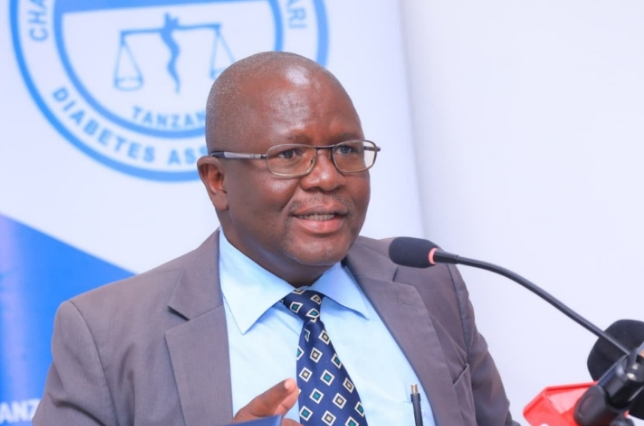
    DODOMA: THE government, through the Ministry of Health, has called on the public to take appropriate measures to protect themselves against diabetes and other Non-Communicable Diseases (NCDs) by adopting healthier lifestyle.

    The government made the call as the world observed World Diabetes Day on Thursday, an opportunity to raise awareness about diabetes as a critical global public health issue and emphasise the collective and individual actions needed to improve the prevention, diagnosis and management of the condition.

    Ministry of Health’s Director of Administration and Human Resources Issa Ng’imba made the call in Dodoma recently on behalf of the Permanent Secretary of the docket Dr John Jingu at the closing of a working session for directors of administration, human resources, policy directors which aimed at discussing ways to prevent and control NCDs in the workplace.


    Mr Ng’imba said that there is a need for every individual Tanzanian to take appropriate steps to prevent diabetes by changing their lifestyle and adopting a proper diet, which includes vegetables, fruits, whole grains and avoiding foods high in sugar, salt and fat.

    He said that following the rising cases of NCDs in the country, there is a need to increase public awareness on ways of preventing the diseases and encourage lifestyle changes such as making regular physical exercise, avoiding bad eating habit and inactivity.

    ALSO READ: Exercise urged as key to combating rising lifestyle diseases

    “NCDs contribute significantly to the high mortality rate, reduce the quality of life and affect families, communities and the economy at large. Therefore, it is our responsibility to ensure that we establish strong policies and strategies to prevent, early detection and treat these diseases as earlier as possible,” said Mr Ng’imba.

    He also said that NCDs such as hypertension, cancer, oral and dental diseases, diabetes and mental health challenges require urgent and collective action to ensure the nation remains safe.

    For his part, the Director of Medical Services at the Ministry of Health, Dr Hamad Nyembea said that the two-day meeting was aimed at strengthening strategies for controlling the increase NCDs, which have continued to be a major challenge in communities worldwide.

    “The goal of involving 15 ministries is because NCDs are cross-cutting and we need the participation of all ministries to address this challenge,” he said.

    Last month the government unveiled a robust strategy to combat the rising prevalence of Non-Communicable Diseases (NCDs), particularly diabetes, as part of its fifth health sector plan.

    Deputy Minister for Health, Dr Godwin Mollel outlined several key initiatives, including public education campaigns about diabetes prevention through health education programmes that promote healthy eating, regular physical activity and avoidance of harmful substances like alcohol and tobacco.

    According to the World Health Organisation (WHO), about 830 million people worldwide have diabetes, the majority living in low-and middle-income countries. More than half of people living with diabetes are not receiving treatment. Both the number of people with diabetes and the number of people with untreated diabetes have been steadily increasing over the past decades.

    World Diabetes Day is marked on every November 14. The theme for this year is “Breaking Barriers, Bridging Gaps,” which underpins our commitment to reducing the risk of diabetes and ensuring that all people who are diagnosed with diabetes have access to equitable, comprehensive, affordable and quality treatment and care. Join us in raising awareness, spreading knowledge and creating lasting change for all affected by diabetes.


    Source link

  • Government touts healthier lifestyle to combat NCDs

    Government touts healthier lifestyle to combat NCDs

    DODOMA: THE government, through the Ministry of Health, has called on the public to take appropriate measures to protect themselves against diabetes and other Non-Communicable Diseases (NCDs) by adopting healthier lifestyle.

    The government made the call as the world observed World Diabetes Day on Thursday, an opportunity to raise awareness about diabetes as a critical global public health issue and emphasise the collective and individual actions needed to improve the prevention, diagnosis and management of the condition.

    Ministry of Health’s Director of Administration and Human Resources Issa Ng’imba made the call in Dodoma recently on behalf of the Permanent Secretary of the docket Dr John Jingu at the closing of a working session for directors of administration, human resources, policy directors which aimed at discussing ways to prevent and control NCDs in the workplace.


    Mr Ng’imba said that there is a need for every individual Tanzanian to take appropriate steps to prevent diabetes by changing their lifestyle and adopting a proper diet, which includes vegetables, fruits, whole grains and avoiding foods high in sugar, salt and fat.

    He said that following the rising cases of NCDs in the country, there is a need to increase public awareness on ways of preventing the diseases and encourage lifestyle changes such as making regular physical exercise, avoiding bad eating habit and inactivity.

    ALSO READ: Exercise urged as key to combating rising lifestyle diseases

    “NCDs contribute significantly to the high mortality rate, reduce the quality of life and affect families, communities and the economy at large. Therefore, it is our responsibility to ensure that we establish strong policies and strategies to prevent, early detection and treat these diseases as earlier as possible,” said Mr Ng’imba.

    He also said that NCDs such as hypertension, cancer, oral and dental diseases, diabetes and mental health challenges require urgent and collective action to ensure the nation remains safe.

    For his part, the Director of Medical Services at the Ministry of Health, Dr Hamad Nyembea said that the two-day meeting was aimed at strengthening strategies for controlling the increase NCDs, which have continued to be a major challenge in communities worldwide.

    “The goal of involving 15 ministries is because NCDs are cross-cutting and we need the participation of all ministries to address this challenge,” he said.

    Last month the government unveiled a robust strategy to combat the rising prevalence of Non-Communicable Diseases (NCDs), particularly diabetes, as part of its fifth health sector plan.

    Deputy Minister for Health, Dr Godwin Mollel outlined several key initiatives, including public education campaigns about diabetes prevention through health education programmes that promote healthy eating, regular physical activity and avoidance of harmful substances like alcohol and tobacco.

    According to the World Health Organisation (WHO), about 830 million people worldwide have diabetes, the majority living in low-and middle-income countries. More than half of people living with diabetes are not receiving treatment. Both the number of people with diabetes and the number of people with untreated diabetes have been steadily increasing over the past decades.

    World Diabetes Day is marked on every November 14. The theme for this year is “Breaking Barriers, Bridging Gaps,” which underpins our commitment to reducing the risk of diabetes and ensuring that all people who are diagnosed with diabetes have access to equitable, comprehensive, affordable and quality treatment and care. Join us in raising awareness, spreading knowledge and creating lasting change for all affected by diabetes.


    Source link

  • Bull doge! Dogecoin soars as Trump announces a government efficiency group nicknamed DOGE

    Bull doge! Dogecoin soars as Trump announces a government efficiency group nicknamed DOGE

    NEW YORK — Wow, much bull market.

    Dogecoin, the cryptocurrency whose mascot is a super-cute dog that muses things like “much wow,” has been surging in value since Donald Trump won the presidential election last week. It’s hitting the afterburners now, after Trump named Tesla’s Elon Musk as one of the heads of a new “Department of Government Efficiency,” which is not a government agency but does have the acronym DOGE.

    All this makes sense and is maybe humorous for anyone who’s chronically online. For others, here’s some explanation about what’s going on:

    It’s a cryptocurrency, whose value rises and falls against the U.S. dollar based on however much people will pay for it.

    At first, it was seen as a joke. But over time, dogecoin has amassed a group of fans who have periodically sent its price soaring. Like other cryptocurrencies, supporters say it could be used to buy and sell things on the internet without having to worry about a central bank or government affecting how many are in circulation.

    One dogecoin — which is pronounced dohj-coin — was worth less than 16 cents just before Election Day. It’s since more than doubled to roughly 41.5 cents, as of midday Wednesday, according to CoinDesk.

    Cryptocurrencies have generally been shooting higher since Trump’s election. Bitcoin, which is the most famous digital currency, has set an all-time high above $92,000 after starting the year below $43,000.

    Excitement is racing because Trump has embraced crypto and said he wants the United States to be the “crypto capital of the planet” and create a bitcoin “strategic reserve.”

    Musk has become one of Trump’s close allies. He’s also been one of the most famous fans of dogecoin. In 2021, Musk played a character on “Saturday Night Live” who went by the nickname, the “Dogefather.”

    In 2022, Musk made more headlines when he suggested Twitter should perhaps accept dogecoin as payment for subscriptions.

    It all came to a head Tuesday, when Trump announced the “Department of Government Efficiency,” which will work from outside the government to offer the White House “advice and guidance” and will partner with the Office of Management and Budget to “drive large scale structural reform, and create an entrepreneurial approach to Government never seen before.”

    It has the acronym DOGE, which is also the ticker symbol under which dogecoin trades. Musk will lead it, along with former GOP presidential candidate Vivek Ramaswamy.

    Dogecoin’s history is interesting.

    In 2021, on April 20, dogecoin fans tried but failed to get its value above $1 on what they were calling “Doge Day.”

    April 20 has long been an unofficial holiday for marijuana devotees, and Musk himself has referred to 420 several times in his career, including his tweet in 2018 saying he had secured funding to take Tesla private at a price of $420 per share.

    Sadly, no. The dog, whose real name was Kabosu, passed away in Japan earlier this year at 18 years old. Much rest, may she have.

    Source link

  • When should kids start using social media? Australia’s government proposes age limit of 16

    When should kids start using social media? Australia’s government proposes age limit of 16

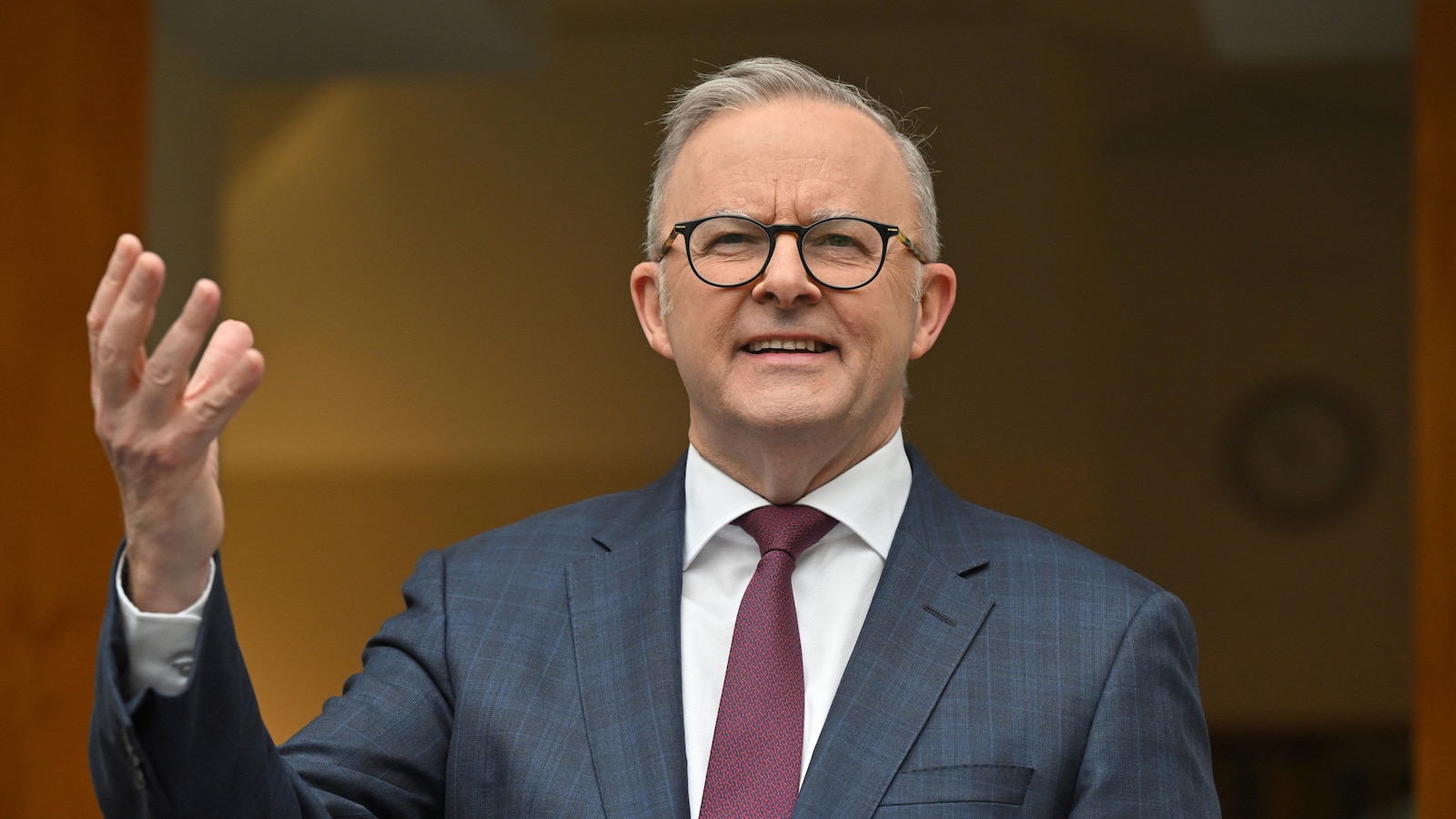
    MELBOURNE, Australia — The Australian government announced on Thursday what it described as world-leading legislation that would institute an age limit of 16 years for children to start using social media, and hold platforms responsible for ensuring compliance.

    “Social media is doing harm to our kids and I’m calling time on it,” Prime Minister Anthony Albanese said.

    The legislation will be introduced in Parliament during its final two weeks in session this year, which begin on Nov. 18. The age limit would take effect 12 months after the law is passed, Albanese told reporters.

    The platforms including X, TikTok, Instagram and Facebook would need to use that year to work out how to exclude Australian children younger than 16.

    “I’ve spoken to thousands of parents, grandparents, aunties and uncles. They, like me, are worried sick about the safety of our kids online,” Albanese said.

    Social media platforms would be penalized for breaching the age limit, but under-age children and their parents would not.

    “The onus will be on social media platforms to demonstrate they are taking reasonable steps to prevent access. The onus won’t be on parents or young people,” Albanese said.

    Antigone Davis, head of safety at Meta, which owns Facebook and Instagram, said the company would respect any age limitations the government wants to introduce.

    “However, what’s missing is a deeper discussion on how we implement protections, otherwise we risk making ourselves feel better, like we have taken action, but teens and parents will not find themselves in a better place,” Davis said in a statement.

    She added that stronger tools in app stores and operating systems for parents to control what apps their children can use would be a “simple and effective solution.”

    X did not immediately respond to a request for comment on Thursday. TikTok declined to comment.

    The Digital Industry Group Inc., an advocate for the digital industry in Australia, described the age limit as a “20th Century response to 21st Century challenges.”

    “Rather than blocking access through bans, we need to take a balanced approach to create age-appropriate spaces, build digital literacy and protect young people from online harm,” DIGI managing director Sunita Bose said in a statement.

    More than 140 Australian and international academics with expertise in fields related to technology and child welfare signed an open letter to Albanese last month opposing a social media age limit as “too blunt an instrument to address risks effectively.”

    Jackie Hallan, a director at the youth mental health service ReachOut, opposed the ban. She said 73% of young people across Australia accessing mental health support did so through social media.

    “We’re uncomfortable with the ban. We think young people are likely to circumvent a ban and our concern is that it really drives the behavior underground and then if things go wrong, young people are less likely to get support from parents and carers because they’re worried about getting in trouble,” Hallan said.

    Child psychologist Philip Tam said a minimum age of 12 or 13 would have been more enforceable.

    “My real fear honestly is that the problem of social media will simply be driven underground,” Tam said.

    Australian National University lawyer Associate Prof. Faith Gordon feared separating children from there platforms could create pressures within families.

    Albanese said there would be exclusions and exemptions in circumstances such as a need to continue access to educational services.

    But parental consent would not entitle a child under 16 to access social media.

    Earlier this year, the government began a trial of age-restriciton technologies. Australia’s eSafety Commissioner, the online watchdog that will police compliance, will use the results of that trial to provide platforms with guidance on what reasonable steps they can take.

    Communications Minister Michelle Rowland said the year-long lead-in would ensure the age limit could be implemented in a “very practical way.”

    “There does need to be enhanced penalties to ensure compliance,” Rowland said.

    “Every company that operates in Australia, whether domiciled here or otherwise, is expected and must comply with Australian law or face the consequences,” she added.

    Source link

  • Carbon removal industry calls on U.S. government for regulation in new industry report

    Carbon removal industry calls on U.S. government for regulation in new industry report

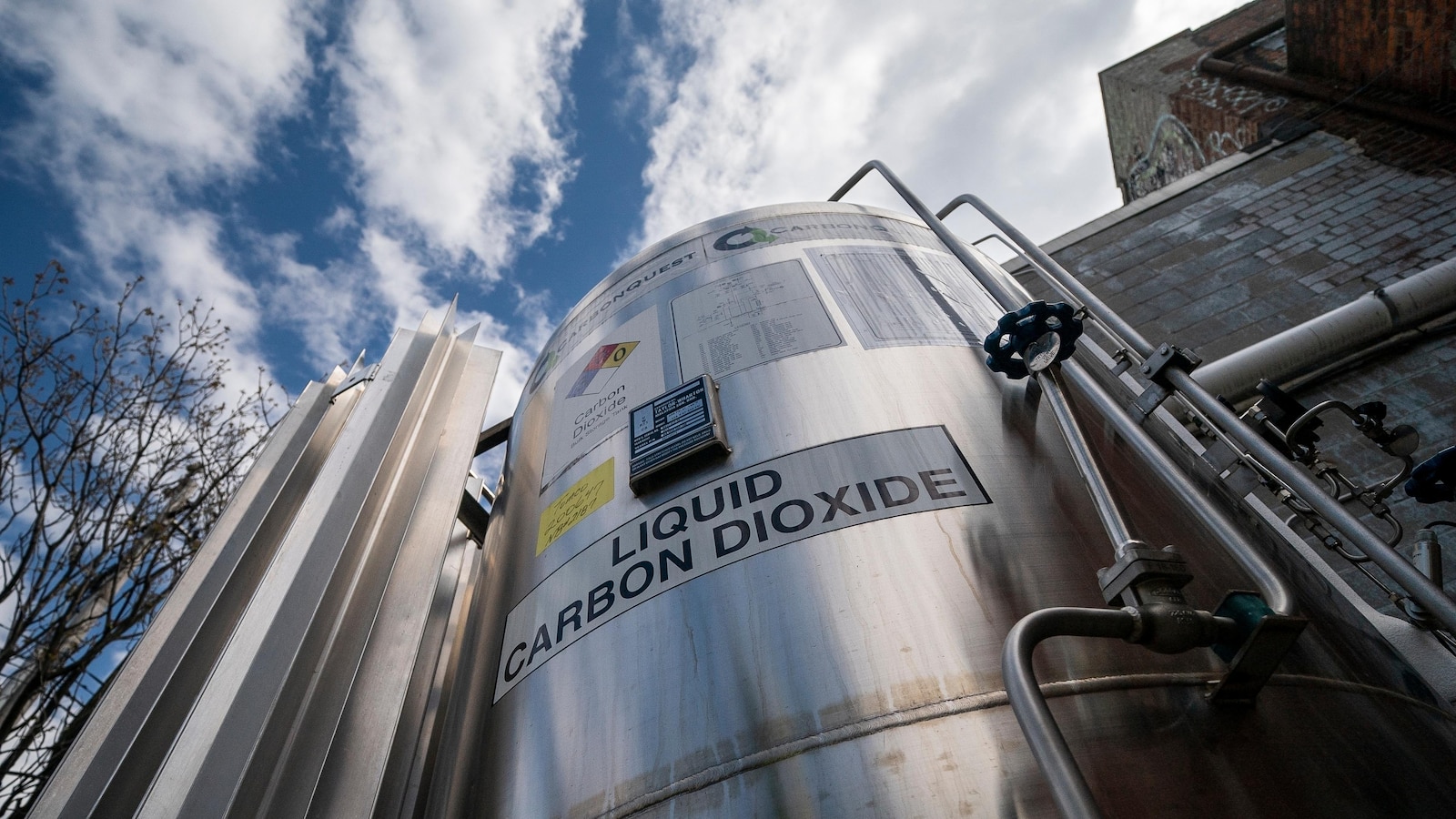
    The unregulated carbon dioxide removal industry is calling on the U.S. government to implement standards and regulations to boost transparency and confidence in the sector that’s been flooded with billions of dollars in federal funding and private investment.

    A report Wednesday by the Carbon Removal Alliance, a nonprofit representing the industry, outlined recommendations to improve monitoring, reporting, and verification. Currently the only regulations in the U.S. are related to safety of these projects. Some of the biggest industry players, including Heirloom and Climeworks, are alliance members.

    “I think it’s rare for an industry to call for regulation of itself and I think that is a signal of why this is so important,” said Giana Amador, executive director of the alliance. Amador said monitoring, reporting and verification are like “climate receipts” that confirm the amount of carbon removed as well as how long it can actually be stored underground.

    Without federal regulation, she said “it really hurts competition and it forces these companies into sort of a marketing arms race instead of being able to focus their efforts on making sure that there really is a demonstrable climate impact.”

    The nonprofit defines carbon removal as any solution that captures carbon dioxide from the atmosphere and stores it permanently. One of the most popular technologies is direct air capture, which filters air, extracts carbon dioxide and puts it underground.

    The Inflation Reduction Act and the Bipartisan Infrastructure Law have provided around $12 billion for carbon management projects in the U.S. Some of this funding supports the development of four Regional Direct Air Capture Hubs at commercial scale that will capture at least 1 million tons of carbon dioxide annually. Two hubs are slated to be built in Texas and Louisiana.

    Some climate scientists say direct air capture is too expensive, far from being scaled and can be used as an excuse by the oil and gas industry to keep polluting.

    Gernot Wagner, a climate economist at Columbia Business School at Columbia University, said this is the “moral hazard” of direct air capture — removing carbon from the atmosphere could be utilized by the oil and gas industry to continue polluting.

    “It does not mean that the underlying technology is not a good thing,” said Wagner. Direct air capture “decreases emissions, but in the long run also extends the life of any one particular coal plant or gas plant.”

    In 2023, Occidental Petroleum Corporation purchased the direct air capture company, Carbon Engineering Ltd, for $1.1 billion. In a news release, Occidental CEO Vicki Hollub said, “Together, Occidental and Carbon Engineering can accelerate plans to globally deploy (the) technology at a climate-relevant scale and make (it) the preferred solution for businesses seeking to remove their hard-to-abate emissions.”

    Jonathan Foley, executive director of Project Drawdown, doesn’t consider carbon dioxide removal technologies to be a true climate solution.

    “I do welcome at least some interventions from the federal government to monitor and verify and evaluate the performance of these proposed carbon removal schemes, because it’s kind of the Wild West out there,” said Foley.

    “But considering it can cost ten to 100 times more to try to remove a ton of carbon rather than prevent it, how is that even remotely conscionable to spend public dollars on this kind of stuff?” he said.

    Katharine Hayhoe, chief scientist of The Nature Conservancy and a distinguished professor at Texas Tech University, said standards for the direct carbon capture industry “are very badly needed” because of the level of government subsidies and private investment. She said there’s no single fix for the climate crisis, and many strategies are needed.

    Hayhoe said these include improving the efficiency of energy systems, transitioning to clean energy, weaning the world off fossil fuels and maintaining healthy ecosystems to trap carbon dioxide. On the other hand, she said, carbon removal technologies are “very high hanging fruit.”

    “It takes a lot of money and a lot of energy to get to the top of the tree. That’s the carbon capture solution,” said Hayhoe. “Of course we need every fruit on the tree. But doesn’t it make sense to pick up the fruit on the ground to prioritize that?”

    Other climate scientists are entirely opposed to this technology.

    “It should be banned,” said Mark Z. Jacobson, professor of civil and environmental engineering at Stanford University.

    Carbon removal technologies indirectly increase the amount of carbon dioxide in the atmosphere, Jacobson said. The reason, he said, is that even in cases where direct air capture facilities are powered by renewable energy, the clean energy is being used for carbon removal instead of replacing a fossil fuel source.

    “When you just look at the capture equipment, you get a (carbon) reduction,” Jacobson said. “But when you look at the bigger system, you’re increasing.”

    ___

    The Associated Press’ climate and environmental coverage receives financial support from multiple private foundations. AP is solely responsible for all content. Find AP’s standards for working with philanthropies, a list of supporters and funded coverage areas at AP.org.

    Source link