hacklink hack forum hacklink film izle hacklink marsbahisizmir escortsahabetpornJojobetcasibompadişahbetBakırköy Escortcasibom9018betgit casinojojobet

Tag: grassroots

  • Grassroots soccer, a practical antidote to Trump’s New York rally rhetoric

    Grassroots soccer, a practical antidote to Trump’s New York rally rhetoric

    AS A Trump rally at Madison Square Garden took centre stage in a typically awkward but nevertheless concerning manner in New York City in the build-up to the 2024 United States presidential election, the city’s grassroots soccer scene is providing an antidote.

    Throughout the city, people from all walks of life come together to play sports on a daily basis and below the surface, beneath the major leagues, is an active and organic grassroots soccer scene.

    Even if it is not always explicitly political, grassroots soccer in New York City carries a message in its very being that pushes back against the anti-immigrant rhetoric of Donald Trump and his cronies.

    Many of New York City’s oldest soccer clubs emerged from immigrant communities. Names like the Pancyprian Freedoms, Greek Americans, and Ukrainians are well-known among the grassroots scene, while newer teams continue to embrace the diversity of this global city.

    On Friday, nine members of one local community soccer club, New York International FC (NYIFC), continued the club’s partnership with the local soup kitchen and mutual aid organisation, EV Loves NYC, volunteering to help cook the meals that are sent out across the city to those in need.

    As its name suggests, NYIFC is a club made up of New Yorkers with roots spread across the world.

    NYIFC and EV Loves NYC naturally crossed paths through shared aims for the communities within the city.

    Both have grown since their formations at a similar time in 2019, and a community soccer club has proved to be a natural partner for the work carried out by a mutual aid organisation.

    NYIFC players have regularly helped out at the kitchen in the years since the two entities became aware of each others’ work, and both organisations have progressed on and off the field.

    NYIFC, along with many other clubs in New York’s Cosmopolitan Soccer League (CSL), regularly play home games on Randall’s Island, which is situated to the east of Manhattan and south of The Bronx between the Harlem River and the East River.

    The island has become home to the largest migrant shelter in the city amid a so-called migrant crisis in recent years.

    Stays in the shelter have been limited to anywhere between 30 to 60 days, and even families with children are now limited to 60 days having previously not faced any time limit.

    On the back of those regular evictions, a community has formed on the island made up of those kicked out of the shelter.

    As part of this, services such as outdoor barbershops, bodegas, and other vendors selling food and drink have formed within this mini-community, set up and run by its members.

    This can be useful for soccer players and supporters on matchdays as, despite its large number of soccer fields, Randall’s Island is fairly isolated with few provisions available for those visiting.

    New York International’s head of community engagement, Nicholas Alexandrakos, is hoping to involve these communities with NYIFC, and by extension the work of EV Loves NYC.

    “The coaching staff are already carpooling to every game on Randall’s. They are bringing all the necessary equipment like the tent [effectively the dugout], the defibrillator, the Veo which records and streams matches and the soccer gear,” says Alexandrakos.

    “If we can get some of the migrants, who are living in their own tents outside the Randall’s Island camp, to an NYIFC match, we’d like to set up a pre-game hangout where EV Loves NYC can provide a few meals.

    “The coaches would have no problem finding space for a few trays of food. This is what it means to be a part of a community club in NYC. We’ll find the space.”

    As EV Loves NYC recently moved their soup kitchen operation from East Village to a larger kitchen in the south of Greenwich Village, they have been able to expand their services, retaining the old base as part of their distribution efforts.

    This could once again tie in with the community work of NYIFC and its current presence on Randall’s Island.

    One such crossover may be the new CV-building service that EV Loves NYC now provides for migrants who volunteer in the kitchen. 

    Volunteers from any background can learn numerous skills from cooking to distribution and everything else involved with contributing to such a mutual aid organisation. They can then add this experience to their CV.

    Having gained promotion last season, NYIFC are also making an impact on the local soccer community in a sporting sense.

    They now play in Division 1 of the CSL for the 2024/25 season and have got off to an encouraging start at this higher level and currently sit fourth in the table.

    Though this is the top division of the CSL, there is still potential for further progress to be made by securing promotion to the Eastern Premier Soccer League (EPSL). 

    The EPSL acts as a pinnacle for several local leagues on the East Coast from Massachusetts to Maryland and has the potential to join with other similar national and regional leagues to form a pyramid in the United States similar to the one seen in England.

    Though New York is known for its big-name sports teams in baseball, American football, basketball and ice hockey, there is lots of participation in soccer across its fields and parks.

    Randall’s Island especially, with its large number of pitches, is very much a soccer island.

    Even as NYIFC searches for a permanent home ground of their own in the city, they will retain links to these communities that emerged alongside them on Randall’s, and continue to contribute to the wider region via the work with EV Loves NYC.

    Much of the rhetoric around this presidential election will be anti-immigrant, and while Trump sits in his New York tower and has his unfunny comedians, some of whom try to pass as politicians, make “jokes” about Puerto Ricans and peddle anti-immigrant lines borrowed from a Nazi rally at MSG in 1939, grassroots soccer is working to tackle real issues on the ground.

    Source link

  • FA launches four-year plan to ‘transform the landscape’ of grassroots football | The FA

    The Football Association has launched a new four-year strategy which aims to “transform the landscape” of the grassroots level. The ambition of the latest plan is to get a further 220,000 people playing across England by forming an additional 15,000 teams.

    Entitled “A Thriving Grassroots Game”, the strategy has a number of key pillars, with the aim of building on the work of the previous action plan and succeeding where it failed. There are five areas of focus for this approach as the FA look to take action to improve behaviour and increase the number of coaches and volunteers at amateur level, and retain those already in the system.

    The previous four-year plan fell short in a number of areas over a four-year period, unable to reach its target of having 90% of schools offering equal opportunities to boys and girls in extracurricular football. There will be a strong focus on widening the scope to allow women and girls to participate as currently female teams account for 12% of those playing regularly.

    Quick Guide

    How do I sign up for sport breaking news alerts?

    Show

    • Download the Guardian app from the iOS App Store on iPhone or the Google Play store on Android by searching for ‘The Guardian’.
    • If you already have the Guardian app, make sure you’re on the most recent version.
    • In the Guardian app, tap the Menu button at the bottom right, then go to Settings (the gear icon), then Notifications.
    • Turn on sport notifications.

    Thank you for your feedback.

    Further investment will be made into facilities, with two out of every three grass pitches being deemed “poor” quality. There is a need for a further 2,000 artificial 3G pitches to be laid to help cope with demand as 96% of local authorities have an insufficient number available for people to play.

    It is also feared that poor behaviour and discrimination puts people off participating in the game, so the FA has designed easier ways to report incidents to tackle the problem in addition to being “tougher with punishments, rewarding good behaviour and driving collective responsibility to change things for the better”.

    The FA outlined plans to support already successful clubs to help them sustainably grow, connect with more participants via a more effective digital offering and increase diversity at board level to ensure it greater reflects those playing the game.

    “Over the next four years we will transform the landscape of our grassroots game by investing in more new quality grass pitches to reach our 12,000 target, alongside over 300 new artificial pitches,” the FA chief executive, Mark Bullingham, said.

    “Through our new grassroots strategy, we want to inspire positive change through football by driving equal opportunities for women and girls, improving facilities across the county, tackling unacceptable behaviour and supporting our volunteers, coaches and referees. We have set clear and ambitious targets to focus on the biggest opportunities and challenges.”

    Source link

  • Grassroots football campaigner Willie Smith not giving up the fight

    Grassroots football campaigner Willie Smith not giving up the fight

    The magnificent facility – which took, from conception to completion, 25 years to build, cost nearly £2m and comprises four changing rooms, a multi-purpose hall, a fully-equipped kitchen and synthetic and grass pitches – provides an impressive base for their 16 age-group teams and hundreds of players to train and host matches at.

    A couple of their celebrated alumni – David McCracken, who turned out for Dundee United and Falkirk, and Peter MacDonald, who had spells at St Johnstone, Morton and Dundee – returned to show their gratitude to the outfit which provided them with a launchpad to careers as professionals.

    Hillwood have certainly come an awfully long way since their chairman Willie Smith, who was made an MBE in the New Year’s Honours list last year for his services to the Pollok area, founded them way back in 1966. 


    Read more:


    “I was an officer in the Boys Brigade and I took their football team,” said Smith. “But there was a religious element in football at that time. Things have changed for the better since I am pleased to say. Anyway, I had a dispute with someone. I wanted to play a young lad who was a Catholic and I was told I wasn’t allowed to. So I said, ‘No, I’m setting up my own team’.” 

    The first player he signed for Hillwood Boys Club, as they were originally known, was a local kid called Kenny Burns. He would go on to win the European Cup twice with Nottingham Forest, be named FWA Player of the Year in England and make 20 appearances for Scotland.

    Many more outstanding talents followed in the Burns’ sizeable stud marks in the years which followed as the club grew in both size and stature. Alex McLeish, Tommy Coyne, Bobby Hutchinson, Owen Coyle, Sandy Stewart and Ross McCormack, to name just a handful, all came through after him.

    (Image: Robert Perry) “I reckon the club has produced players who have won, all in all, 140 international caps,” said Smith proudly. “That shows the quality of the players who have come from the area. We have won the Scottish Cup 10 times in total.”

    Peter Lawwell, the former Celtic chief executive and current chairman of the Parkhead club, was another who donned their colours as a youngster who went on to, albeit not in a playing capacity, make a name for himself in football.

    So was Lawwell a bit of a ‘baller back in the day? “Peter was a midfielder,” said Smith. “He was a good player, a very good player, before he went away to university to study accountancy.”

    Smith does not, it is fair to say, have a great deal of admiration or respect for certain others who occupy positions of power in the Scottish game. He believes they have presided over a decline in standards and a reduction in participation levels in grassroots football.

    He is particularly scathing about the impact which the pro-youth system in this country has had on clubs like Hillwood in recent years. He is adamant it has cut the number of professional footballers we are producing and been detrimental to the quality of both our leading club teams as well as the national side. 

    “The first thing the senior clubs had to do when they started up pro-youth football was to set up teams,” he said. “So they just went out and completely raided, and destroyed, boys clubs.

    “There was a deterioration in both standards and in numbers at Hillwood and in boys club football in general when this started all those years ago. The deterioration in standards has not just happened at our senior clubs and at international level, it has happened right down through the game.

    “When pro-youth clubs took your players they used to have to pay your club £50.  It was in the rule book. But it is just £10 now. And they don’t pay it anymore anyway. They just ignore the rules. But the real tragedy for me is that the majority of these kids are eventually released, without any qualms, by these clubs and left in no man’s land.

    “I argued with Neil Doncaster [the SPFL chief executive] about this once. I asked him, ‘What have you produced? Where are the Billy Bremners? Where are the Kenny Dalglishes? Where are the Ally McCoists?’ Their fancy training development programmes have produced nothing in comparison with boys club football.”


    Read more:


    Smith was put in touch with another coach who shared his deep concerns about what was happening to his club and others like it across the country, Scott Robertson of Musselburgh Windsor, by a mutual acquaintance who was involved with the Scottish Youth Football Association.

    They formed an organisation called Real Grassroots together and lodged a petition at Holyrood entitled Improving Youth Football in Scotland in 2010 after securing the requisite 10,000 signatures.

    The Public Petitions Committee praised the SFA and SPFL for the changes they had implemented during the years the petition – the longest running in the Scottish parliament’s existence– was being considered when they released their report after 10 years in 2020.

    But they were damning about professional clubs getting children under the age of 16 to sign 30 month registrations and recommended “very strongly” they should be scrapped.

    (Image: Robert Perry) Smith feels that little if anything has improved as a result of Real Grassroots’ lengthy campaign. “We had the full backing of every party in the Scottish parliament, even the Tories, during that time,” he said.

    “We had every member of the Public Petitions Committee and the Health and Sport Committee supporting us. We had three full debates in Holyrood itself. It must have cost millions of pounds. And do you know what the Scottish government did after all of that? Nothing.”

    Smith continued: “What we were really pushing for, first and foremost, was for a child to be able to leave a club at any point in time during their registration. Because a registration is not a contract. It is not legally binding for a minor. 

    “But clubs were putting parents in a difficult position by saying, ‘Well, if he wants to play for this club he’s got to sign for three years – and he doesn’t get released until we say so’. And stupid parents were signing it. It’s just ridiculous.

    “Four sports ministers in a row tolerated that and ignored the advice from the Public Petitions Committee, the Health and Sport Committee, their own MSPs and MSPs from other parties. 

    “They ignored them and refused point blank to force the SFA to do away with them by introducing legislation. The SFA have tweaked things a little. But nothing has really changed. It is scandalous.”

    The Game Changer series which has appeared in these pages this month highlighted a concerning trend – professional clubs in England increasingly luring talented kids from their Scottish counterparts down south because Brexit prohibits them from signing players aged 16 and 17 from countries in the European Union. 

    One executive at a top flight club warned that academies could be forced to close down – something which Smith and many others in his position will doubtless not mourn – because they are no longer developing players who can represent the first team and then be sold for a seven figure profit and are operating at a significant loss. 


    Read more:


    The Transition Phase paper which was co-authored by Andy Gould, the chief football officer at the SFA, and Nick Docherty, their head of men’s elite strategy, and published back in May suggested that contracting players under the age of 16, something which happens elsewhere in Europe, could be a potential solution to the problem.

    But the Children and Young People’s Commissioner Scotland has claimed multi-year registrations breach six articles in the United Nations Convention on the Rights of the Child – which MSPs voted to incorporate into domestic law back in 2021.

    Smith and Robertson have no intention of admitting defeat in their crusade. They continue to agitate for change despite the brick walls they have hit. “There is more to come,” said Smith. “I am not finished yet.”

    (Image: Newsquest Design) Multi-year registrations are not his only bugbear. The SFA were among the organisations which, through the funding they received from the Department of Digital, Culture, Media and Sport, contributed towards the cost of the new Hillwood facility. But Smith is still convinced they are making fortunes from youth football.

    “There are a lot of different things which annoy me,” he said. “It is absolutely bonkers. I’ll tell you something, the SFA’s intervention in our game has been a disaster in terms of quality, it’s been a disaster in terms of the coaching. They admitted themselves in their report that what they are doing is not working.  

    “It’s all been money oriented as well. Our coaches are duty bound to do their online training and development courses or they can’t coach kids. I challenged Stewart Regan [the former SFA chief executive] about this once.

    “I asked him, ‘Can you tell me whether you take profits from the training and development courses to subsidise professional clubs?’ He said, ‘I can’t tell you that’. Apparently, it all gets put into one pot. To my mind, that money should be put back into the boys clubs.”

    Despite his grievances, Smith stresses that providing an opportunity for countless boys and girls to play football as well as a focal point for his local community during the past 58 years have been, and continue to be, enormously rewarding.

    “It’s fantastic, absolutely fantastic,” he said. “We’ve got a great following in the area. A lot of people come down and watch the games when their kids are playing. 

    “I decided to form a charity, the Hillwood Community Trust, in 1999 because I wanted to go further out into the community with other activities. Then I had the idea to build a hub so we had a home and didn’t have to constantly hire pitches. It was just a picture in my mind at that time. It’s been a fair old journey.”


    Source link

  • Cash4Clubs is BACK for 2024 with £400,000 of funding available to grassroots sports teams and charities

    Cash4Clubs is BACK for 2024 with £400,000 of funding available to grassroots sports teams and charities

    Grassroots sports teams and charities can now apply for a slice of £400,000 as Cash4Clubs, led by Flutter UKI, is back for 2024. 

    The flagship funding programme will help 200 community sports organisations in the UK and Ireland with two months to apply for grants of £2,000.

    Launched in 2008, Cash4Clubs has boosted the local sport ecosystem by helping teams develop their facilities, buy new equipment, and drive participation. 

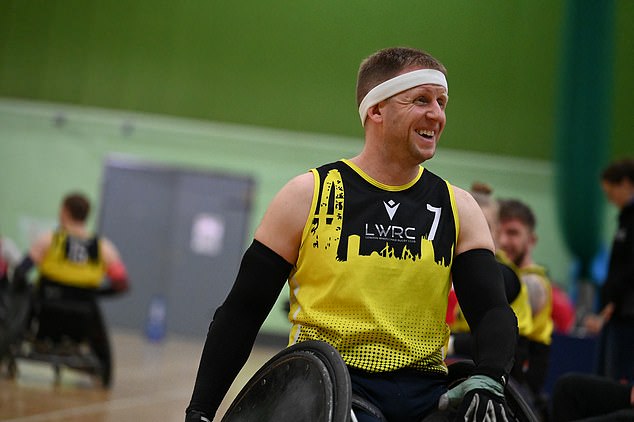
    Last year’s winners included Basa in Rochdale, which runs fitness classes for over-60s women; the Gosport Bowmen archery club in Hampshire; and the London Wheelchair rugby club, who sent four players to Team GB’s Paralympics squad in Paris.

    Of the clubs awarded funding last year, over 85 per cent said they had been able to deliver more activities – and a total of 9,000 new people aged 18 or over had engaged in health and fitness programmes thanks to the initiative.

    Cash4Clubs is back with £400,000 of funding available for sports teams to apply for

    Cash4Clubs is back with £400,000 of funding available for sports teams to apply for

    Two hundred winning clubs or charities will gain £2,000 to put towards their development

    Two hundred winning clubs or charities will gain £2,000 to put towards their development

    ‘The stunning success of Team GB at the Paris Olympics and Paralympics once again highlighted the power of sport. We hope Cash4Clubs can play an important part in helping at the grassroots level by enabling small clubs to play an even bigger role in their community,’ said Ian Brown, chief executive of betting and gaming group Flutter UKI. 

    ‘There are priceless benefits in people trying out a sport for the first time, getting active or having the confidence to take their hobby to the next level. We believe this programme can make a real difference in the areas that need it most.’

    One of last year’s winners, Welcome House Hull, used the Cash4Clubs grant to help set up Acorn FC, a football team made up exclusively of refugees and asylum seekers. They went on to make history by playing the first competitive match in the UK between asylum seeker teams.

    ‘We formed our football team Acorn FC and with the money from the grant we could be taken seriously as we could practise more, appear more professional, play better,’ said Shirley Hart of Welcome House, the charity that established the side. 

    ‘We teamed up with Active Through Football and made history by playing the first inter-city asylum seeker competitive football match. We could not have done this without your grant 

    ‘I hope that grassroots clubs will make the most of the opportunity to apply for a Cash4Clubs grant,’ said Conservative MP Dame Caroline Dineage, chair of the cross-party CMS Select Committee.

    London Wheelchair Rugby Club sent four athletes to the Paralympics with Team GB this year, including Aaron Phipps (pictured)

    London Wheelchair Rugby Club sent four athletes to the Paralympics with Team GB this year, including Aaron Phipps (pictured)

    The Gosport Bowmen archery club in Hampshire were one of the grateful recipients of funding last year

    The Gosport Bowmen archery club in Hampshire were one of the grateful recipients of funding last year

    ‘These clubs do great work in our communities, bringing people together, getting them active and developing new skills and passions. This money will make a huge difference.’ 

    The application period for funding runs until the middle of November. 

    For further information on Cash4Clubs pls visit www.cash-4-clubs.com 

    Source link