hacklink hack forum hacklink film izle hacklink marsbahisizmir escortsahabetpornJojobetcasibompadişahbetjojobet

Tag: Helene

  • Feds propose protection for giant salamanders devastated by Hurricane Helene

    Feds propose protection for giant salamanders devastated by Hurricane Helene

    You never forget your first time seeing a giant salamander, according to Andy Hill.

    He was a teenager, standing thigh-high in the Watauga River outside Boone, North Carolina, casting a line on an early fall day when he saw his first eastern hellbender. The salamander stretched 2 feet long and was camouflaged among rocks beneath the clear water.

    “You never lose your sense of wonder and otherworldliness when you see one,” said Hill, who now works as the Watauga Riverkeeper for MountainTrue, a nonprofit protecting natural ecosystems in western North Carolina, home to part of the Blue Ridge Mountains.

    The ancient species, which evolved on the supercontinent Pangaea and outlived the dinosaurs, was submitted for federal protection Friday by the U.S. Fish and Wildlife Service. If the proposal is adopted after a period of public comment, the creatures will be protected under the Endangered Species Act.

    Their population in the U.S. has rapidly declined in recent decades; dams, industry and even flooding worsened by climate change have threatened their habitat and ability to reproduce and find food. Today, just 12% of eastern hellbenders are successfully reproducing.

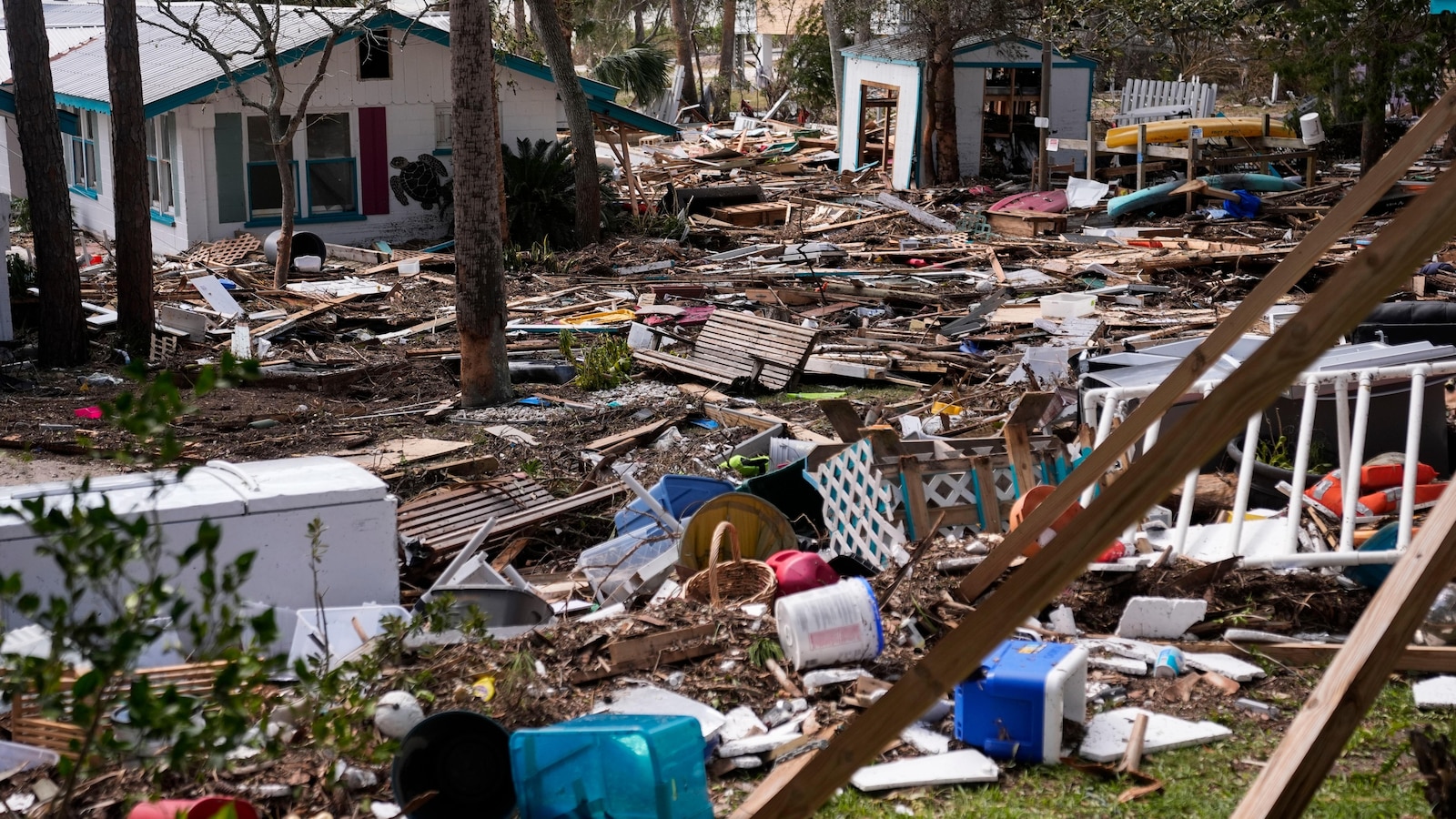
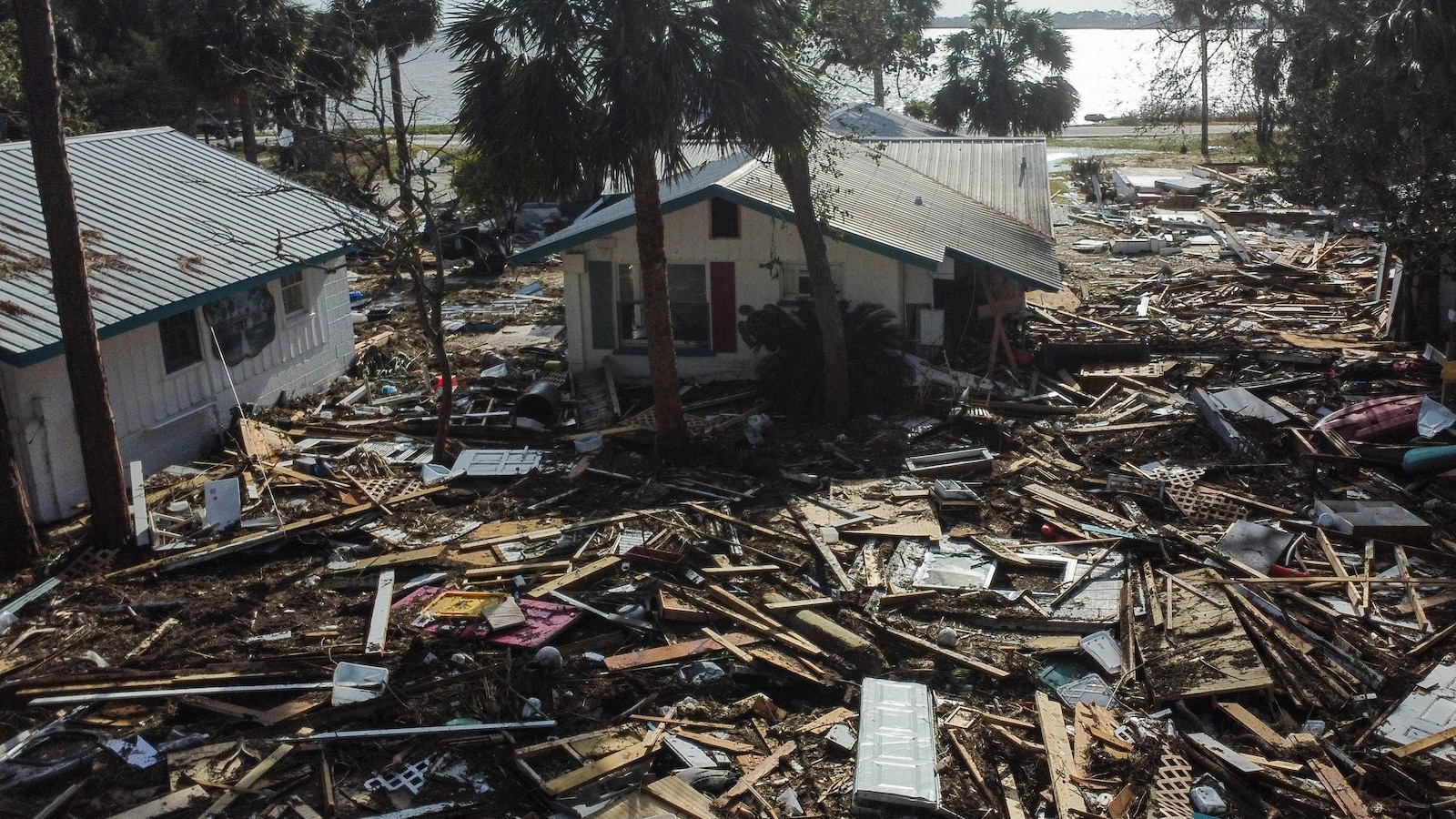
    Hellbenders in the Blue Ridge Mountains had been considered the healthiest population of the eastern subspecies but were devastated this fall by Hurricane Helene. Thousands were displaced or found dead amid rubble. Others were found in flooded church basements and returned to the river. But some rivers are so polluted, there’s still a “do not touch” advisory for people.

    Tierra Curry burst into tears when she learned of the proposed protection.

    “I just think it’s a moral failure that we’re pushing them to the brink of extinction,” said Curry, a senior scientist at the Center for Biological Diversity.

    The slimy, brown creature with a broad, flat head may never win a beauty contest, but it is famous as the largest amphibian in North America.

    The hellbender breathes dissolved oxygen in the water through its skin. Water that becomes slow-moving, warm or polluted holds less oxygen.

    Over the past five years, two dams were removed on the Watauga River to help improve water quality and reconnect hellbender communities. The most recent one came down this summer — and two months later, Helene upended life not just for people, but also for animals like the salamander.

    For those working to ensure the species’ survival, the newly proposed federal protection couldn’t come soon enough, said Erin McCombs, Southeast conservation director for American Rivers.

    “We have to be paying more attention to the health of our nation’s rivers and streams, and that means paying more attention to the critters that live in them,” she said. “When species like the hellbender, which are reliant on free-flowing and clean water, are declining, alarms need to be going off, because we’ll feel the impacts next.”

    The Center for Biological Diversity petitioned and won protection for the Ozark subspecies of hellbenders in 2011 and for Missouri hellbenders, another population of eastern hellbender, in 2021. The group sued, seeking protection for all eastern hellbenders. As of this week, all hellbenders in the U.S. are protected or slated for protection under the Endangered Species Act.

    Hill says he hopes the new federal protection will usher in “bold strategies” to help the species recover.

    “It’s going to take a massive effort,” he said.

    ___

    The Associated Press receives support from the Walton Family Foundation for coverage of water and environmental policy. The AP is solely responsible for all content. For all of AP’s environmental coverage, visit https://apnews.com/hub/climate-and-environment
    Source link

  • Control the path and power of hurricanes like Helene? Forget it, scientists say

    Control the path and power of hurricanes like Helene? Forget it, scientists say

    Hurricanes are humanity’s reminder of the uncontrollable, chaotic power of Earth’s weather.

    Milton’s powerful push toward Florida just days after Helene devastated large parts of the Southeast likely has some in the region wondering if they are being targeted. In some corners of the Internet, Helene has already sparked conspiracy theories and disinformation suggesting the government somehow aimed the hurricane at Republican voters.

    Besides discounting common sense, such theories disregard weather history that shows the hurricanes are hitting many of the same areas they have for centuries. They also presume an ability for humans to quickly reshape the weather far beyond relatively puny efforts such as cloud seeding.

    “If meteorologists could stop hurricanes, we would stop hurricanes,” Kristen Corbosiero, a professor of atmospheric and environmental sciences at the University at Albany. “If we could control the weather, we would not want the kind of death and destruction that’s happened.”

    Here’s a look at what humans can and can’t do when it comes to weather:

    A fully developed hurricane releases heat energy that is the equivalent of a 10-megaton nuclear bomb every 20 minutes — more than all the energy used at a given time by humanity, according to National Hurricane Center tropical analysis chief Chris Landsea.

    And scientists are now finding many ways climate change is making hurricanes worse, with warmer oceans that add energy and more water in the warming atmosphere to fall as rain, said Chris Field, director of the Stanford Woods Institute for the Environment.

    “The amount of energy a hurricane generates is insane,” said Colorado State University hurricane researcher Phil Klotzbach. It’s the height of human arrogance to think people have the power to change them, he said.

    But that hasn’t stopped people from trying, or at least thinking about trying.

    Jim Fleming of Colby College has studied historical efforts to control the weather and thinks humans have nowhere near the practical technology to get there. He described an attempt in 1947 in which General Electric partnered with the U.S. military to drop dry ice from Air Force jets into the path of a hurricane in an attempt to weaken it. It didn’t work.

    “The typical science goes like understanding, prediction and then possibly control,” Fleming said, noting that the atmosphere is far more powerful and complex than most proposals to control it. “It goes back into Greek mythology to think you can control the powers of the heavens, but also it’s a failed idea.”

    In the 1960s, 1970s and 1980s, the federal government briefly tried Project STORMFURY. The idea was to seed a hurricane to replace its eyewall with a larger one that would make the storm bigger in size but weaker in intensity. Tests were inconclusive and researchers realized if they made the storm larger, people who wouldn’t have been hurt by the storm would now be in danger, which is an ethical and liability problem, the project director once said.

    For decades, the National Hurricane Center and its parent agency, the National Oceanic and Atmospheric Administration, have been asked about nuclear-bombing a hurricane. But the bombs aren’t powerful enough, and it would add the problem of radioactive fallout, Corbosiero said.

    Bringing cooling icebergs or seeding or adding water-absorbing substances also are ideas that just don’t work, NOAA scientists said.

    Failed historical attempts to control hurricanes differ somewhat from some scientists’ futuristic ideas to combat climate change and extreme weather. That’s because instead of targeting individual weather events, modern geoengineers would operate on a larger scale — thinking about how to reverse the broad-scale damage humans have already done to the global climate by emitting greenhouse gases.

    Scientists in the field say one of the most promising ideas they see based on computer models is solar geoengineering. The method would involve lofting aerosol particles into the upper atmosphere to bounce a tiny bit of sunlight back into space, cooling the planet slightly.

    Supporters acknowledge the risks and challenges. But it also “might have quite large benefits, especially for the world’s poorest,” said David Keith, a professor at the University of Chicago and founding faculty director of the Climate Systems Engineering initiative.

    Two years ago, the largest society of scientists who work on climate issues, the American Geophysical Union, announced it was forming an ethics framework for “climate intervention.”

    Some scientists warn that tinkering with Earth’s atmosphere to fix climate change is likely to create cascading new problems. Pennsylvania State University climate scientist Michael Mann expressed worries on the ethics framework that just talking about guidelines will make the tinkering more likely to occur in the real world, something that could have harmful side effects.

    Field, of Stanford, agreed that the modeling strongly encourages that geoengineering could be effective, including at mitigating the worst threats of hurricanes, even if that’s decades away. But he emphasized that it’s just one piece of the best solution, which is to stop climate change by cutting greenhouse gas emissions.

    “Whatever else we do, that needs to be the core set of activities,” he said.

    ___

    Follow Melina Walling on X: @MelinaWalling.

    ___

    The Associated Press’ climate and environmental coverage receives financial support from multiple private foundations. AP is solely responsible for all content. Find AP’s standards for working with philanthropies, a list of supporters and funded coverage areas at AP.org.

    Source link

  • Clemson football helps T.J. Moore’s family after Hurricane Helene

    CLEMSON — Clemson football came together Wednesday to help one of its own who was affected by Hurricane Helene.

    Tigers freshman wide receiver T.J. Moore and his family lost everything — their home, car, belongings — in the storm when it hit Tarpon Springs, Florida, a city near Tampa.

    Moore’s aunt, Samantha Gonzalez, started a GoFundMe on Wednesday with a stated goal of $10,000, with all donations going toward a new apartment, apartment application fees, furniture and hotel room expenses. The fundraiser exceeded that number by Wednesday night, with more than 300 people donating $32,000.

    “I can’t even begin to thank everyone for the overwhelming support,” Moore’s mother, Alexandra Moore, wrote on X, formerly known as Twitter, on Wednesday. “I’m at a loss for words, wiping many tears. Knowing that we don’t have to wonder or worry where we’ll sleep next takes a huge burden off of our chest.”

    Various Clemson football and athletic department staffers donated to the cause. T.J. Moore’s teammates, defensive linemen Peter Woods and T.J. Parker, both gave $500. The largest donation was $7,500 from an anonymous contributor.

    According to the GoFundMe, Moore and his family “took on about 5ft of water in Hurricane Helene.” The page shows pictures of flooding in their home and car. Moore is among 14 Florida players who are on the Clemson team.

    Source link

  • Hurricane Helene brings climate change to forefront of the presidential campaign

    Hurricane Helene brings climate change to forefront of the presidential campaign

    WASHINGTON — The devastation wrought by Hurricane Helene has brought climate change to the forefront of the presidential campaign after the issue lingered on the margins for months.

    Vice President Kamala Harris traveled to Georgia Wednesday to see hard-hit areas, two days after her Republican opponent, former President Donald Trump, was in the state and criticized the federal response to the storm, which has killed at least 178 people. Thousands of people in the Carolinas still lack running water, cellphone service and electricity.

    President Joe Biden toured some of the hardest-hit areas by helicopter on Wednesday. Biden, who has frequently been called on to survey damage and console victims after tornadoes, wildfires, tropical storms and other natural disasters, traveled to the Carolinas to get a closer look at the hurricane devastation. He is expected to visit Georgia and Florida later this week.

    “Storms are getting stronger and stronger,” Biden said after surveying damage near Asheville, North Carolina. At least 70 people died in the state.

    “Nobody can deny the impact of the climate crisis any more,” Biden said at a briefing in Raleigh, the state capital. “They must be brain dead if they do.”

    Harris, meanwhile, hugged and huddled with a family in hurricane-ravaged Augusta, Georgia.

    “There is real pain and trauma that resulted because of this hurricane” and its aftermath, Harris said outside a storm-damaged house with downed trees in the yard.

    “We are here for the long haul,” she added.

    The focus on the storm — and its link to climate change — was notable after climate change was only lightly mentioned in two presidential debates this year. The candidates instead focused on abortion rights, the economy, immigration and other issues.

    The hurricane featured prominently in Tuesday’s vice presidential debate as Republican JD Vance and Democrat Tim Walz were asked about the storm and the larger issue of climate change.

    Both men called the hurricane a tragedy and agreed on the need for a strong federal response. But it was Walz, the governor of Minnesota, who put the storm in the context of a warming climate.

    “There’s no doubt this thing roared onto the scene faster and stronger than anything we’ve seen,” he said.

    Bob Henson, a meteorologist and writer with Yale Climate Connections, said it was no surprise that Helene is pushing both the federal disaster response and human-caused climate change into the campaign conversation.

    “Weather disasters are often overlooked as a factor in big elections,” he said. “Helene is a sprawling catastrophe, affecting millions of Americans. And it dovetails with several well-established links between hurricanes and climate change, including rapid intensification and intensified downpours.”

    More than 40 trillion gallons of rain drenched the Southeast in the last week, an amount that if concentrated in North Carolina would cover the state in 3 1/2 feet of water. “That’s an astronomical amount of precipitation,” said Ed Clark, head of the National Oceanic and Atmospheric Administration’s National Water Center in Tuscaloosa, Alabama.

    During Tuesday’s debate, Walz credited Vance for past statements acknowledging that climate change is a problem. But he noted that Trump has called climate change “a hoax” and joked that rising seas “would make more beachfront property to be able to invest in.″

    Trump said in a speech Tuesday that “the planet has actually gotten little bit cooler recently,” adding: “Climate change covers everything.”

    In fact, summer 2024 sweltered to Earth’s hottest on record, making it likely this year will end up as the warmest humanity has measured, according to the European climate service Copernicus. Global records were shattered just last year as human-caused climate change, with a temporary boost from an El Niño, keeps dialing up temperatures and extreme weather, scientists said.

    Vance, an Ohio senator, said he and Trump support clean air, clean water and “want the environment to be cleaner and safer.” However, during Trump’s four years in office, he took a series of actions to roll back more than 100 environmental regulations.

    Vance sidestepped a question about whether he agrees with Trump’s statement that climate change is a hoax. “What the president has said is that if the Democrats — in particular Kamala Harris and her leadership — really believe that climate change is serious, what they would be doing is more manufacturing and more energy production in the United States of America. And that’s not what they’re doing,” he said.

    “This idea that carbon (dioxide) emissions drives all of the climate change. Well, let’s just say that’s true just for the sake of argument. So we’re not arguing about weird science. If you believe that, what would you want to do?” Vance asked.

    The answer, he said, is to “produce as much energy as possible in the United States of America, because we’re the cleanest economy in the entire world.”

    Vance claimed that policies by Biden and Harris actually help China, because many solar panels, lithium-ion batteries and other materials used in renewable energy and electric vehicles are made in China and imported to the United States.

    Walz rebutted that claim, noting that the Inflation Reduction Act, the Democrats’ signature climate law approved in 2022, includes the largest-ever investment in domestic clean energy production. The law, for which Harris cast the deciding vote, has created 200,000 jobs across the country, including in Ohio and Minnesota, Walz said. Vance was not in the Senate when the law was approved.

    “We are producing more natural gas and more oil (in the United States) than we ever have,” Walz said. “We’re also producing more clean energy.”

    The comment echoed a remark by Harris in last month’s presidential debate. The Biden-Harris administration has overseen “the largest increase in domestic oil production in history because of an approach that recognizes that we cannot over rely on foreign oil,” Harris said then.

    While Biden rarely mentions it, domestic fossil fuel production under his administration is at an all-time high. Crude oil production averaged 12.9 million barrels a day last year, eclipsing a previous record set in 2019 under Trump, according to the U.S. Energy Information Administration.

    Democrats want to continue investments in renewable energy such as wind and solar power — and not just because supporters of the Green New Deal want that, Walz said.

    “My farmers know climate change is real. They’ve seen 500-year droughts, 500-year floods back to back. But what they’re doing is adapting,” he said.

    “The solution for us is to continue to move forward, (accept) that climate change is real” and reduce reliance on fossil fuels, Walz said, adding that the administration is doing exactly that.

    “We are seeing us becoming an energy superpower for the future, not just the current” time, he said.

    ___

    Associated Press writers Colleen Long in Raleigh, North Carolina, and Christopher Megerian in Augusta, Georgia, contributed to this report.

    Source link

  • Hurricanes like Helene are deadly when they strike and keep killing for years to come

    Hurricanes like Helene are deadly when they strike and keep killing for years to come

    Hurricanes in the United States end up hundreds of times deadlier than the government calculates, contributing to more American deaths than car accidents or all the nation’s wars, a new study said.

    The average storm hitting the U.S. contributes to the early deaths of 7,000 to 11,000 people over a 15-year period, which dwarfs the average of 24 immediate and direct deaths that the government counts in a hurricane’s aftermath, the study in Wednesday’s journal Nature concluded. Study authors said even with Hurricane Helene’s growing triple digit direct death count, many more people will die partly because of that storm in future years.

    “Watching what’s happened here makes you think that this is going to be a decade of hardship on tap, not just what’s happening over the next couple of weeks,” said Stanford University climate economist Solomon Hsiang, a study co-author and a former White House science and technology official.

    “After each storm there is sort of this surge of additional mortality in a state that’s been impacted that has not been previously documented or associated with hurricanes in any way,” Hsiang said.

    Hsiang and University of California Berkeley researcher Rachel Young looked at hurricane deaths in a different way than previous studies, opting for a more long-term public health and economics-oriented analysis of what’s called excess mortality. They looked at states’ death rates after 501 different storms hitting the United States between 1930 and 2015. And what they found is that after each storm there’s a “bump” in death rates.

    It’s a statistical signature that they see over and over, Hsiang said. Similar analyses are done for heat waves and other health threats like pollution and disease, he said. They compare to pre-storm times and adjust for other factors that could be causing changes in death rates, he said. Complicating everything is that the same places keep getting hit by multiple storms so there are death bumps upon death bumps.

    Just how storms contribute to people’s deaths after the immediate impact is something that needs further study, Hsiang said. But he theorized it includes the health effects of stress, changes in the environment including toxins, people not being able to afford health care and other necessities because of storm costs, infrastructure damage and government changes in spending.

    “When someone dies a few years after a hurricane hit them, the cause will be recorded as a heart attack, stroke or respiratory failure,” said Texas A&M University climate scientist Andrew Dessler, who wasn’t part of the study but has done similar studies on heat and cold deaths. “The doctor can’t possibly know that a hurricane contributed/triggered the illness. You can only see it in a statistical analysis like this.”

    Initially Hsiang and Young figured the storm death bump would go away in a matter of months, but they were surprised when they examined hundreds of bumps and found they stretch out, slowly, over 15 years, Hsiang said.

    It’s “almost like a trickle of mortality, like each month we’re talking about five to 10 individuals who are dying earlier than they would have otherwise,” Hsiang said.

    These people don’t realize that 10 or 15 years later their health issues are associated with a storm in some way, but Hsiang said it shows up in the data: “They would not have died at those times had the storm not arrived. And so essentially, these storms are accelerating people’s deaths.”

    The numbers proved so high that the researchers kept looking for mistakes or complicating factors they had missed. “It took years for us to really fully accept that this was happening,” Hsiang said.

    Storms are a factor in between 55,000 to 88,000 excess deaths a year, the study concluded. So for the 85 years studied, the team calculated between 3.6 and 5.2 million people died with storms being a factor. That’s more than the 2 million car accident deaths over that period, the study said.

    Before now the public looked at storms “as an inconvenience that is tragic for a small number of community members,” Hsiang said. But they really are “a major threat to public health,” he said.

    Hsiang said he and Young saw a trend of increasing hurricane-connected deaths, predominantly because of population growth. Starting in 2000, there’s been a big jump in the total volume of storms hitting large population, he said.

    Three outside scientists said the study made sense.

    “It seems like what they’re doing is reasonable,” said University of Albany hurricane expert Kristen Corbosiero, who wasn’t part of the research. “The numbers are really staggering.”

    Texas A&M’s Dessler said this is an important study because it brings home the deadly nature of climate change and extreme weather. He said he and his fellow climate scientists have been accurate in their warnings of the physics of what climate change would mean, but failed to emphasize enough how it would hurt people.

    “Reading this, it’s clear that humanity is very vulnerable to weather shocks, even in an incredibly rich country like ours,” Dessler said in an email.

    ___

    Read more of AP’s climate coverage at http://www.apnews.com/climate-and-environment

    ___

    Follow Seth Borenstein on X at @borenbears

    ______

    The Associated Press’ climate and environmental coverage receives financial support from multiple private foundations. AP is solely responsible for all content. Find AP’s standards for working with philanthropies, a list of supporters and funded coverage areas at AP.org.


    Source link

  • Here’s how Helene and other storms dumped a whopping 40 trillion gallons of rain on the South

    Here’s how Helene and other storms dumped a whopping 40 trillion gallons of rain on the South

    More than 40 trillion gallons of rain drenched the Southeast United States in the last week from Hurricane Helene and a run-of-the-mill rainstorm that sloshed in ahead of it — an unheard of amount of water that has stunned experts.

    That’s enough to fill the Dallas Cowboys’ stadium 51,000 times, or Lake Tahoe just once. If it was concentrated just on the state of North Carolina that much water would be 3.5 feet deep (more than 1 meter). It’s enough to fill more than 60 million Olympic-size swimming pools.

    “That’s an astronomical amount of precipitation,” said Ed Clark, head of the National Oceanic and Atmospheric Administration’s National Water Center in Tuscaloosa, Alabama. “I have not seen something in my 25 years of working at the weather service that is this geographically large of an extent and the sheer volume of water that fell from the sky.”

    The flood damage from the rain is apocalyptic, meteorologists said. More than 100 people are dead, according to officials.

    Private meteorologist Ryan Maue, a former NOAA chief scientist, calculated the amount of rain, using precipitation measurements made in 2.5-mile-by-2.5 mile grids as measured by satellites and ground observations. He came up with 40 trillion gallons through Sunday for the eastern United States, with 20 trillion gallons of that hitting just Georgia, Tennessee, the Carolinas and Florida from Hurricane Helene.

    Clark did the calculations independently and said the 40 trillion gallon figure (151 trillion liters) is about right and, if anything, conservative. Maue said maybe 1 to 2 trillion more gallons of rain had fallen, much if it in Virginia, since his calculations.

    Clark, who spends much of his work on issues of shrinking western water supplies, said to put the amount of rain in perspective, it’s more than twice the combined amount of water stored by two key Colorado River basin reservoirs: Lake Powell and Lake Mead.

    Several meteorologists said this was a combination of two, maybe three storm systems. Before Helene struck, rain had fallen heavily for days because a low pressure system had “cut off” from the jet stream — which moves weather systems along west to east — and stalled over the Southeast. That funneled plenty of warm water from the Gulf of Mexico. And a storm that fell just short of named status parked along North Carolina’s Atlantic coast, dumping as much as 20 inches of rain, said North Carolina state climatologist Kathie Dello.

    Then add Helene, one of the largest storms in the last couple decades and one that held plenty of rain because it was young and moved fast before it hit the Appalachians, said University of Albany hurricane expert Kristen Corbosiero.

    “It was not just a perfect storm, but it was a combination of multiple storms that that led to the enormous amount of rain,” Maue said. “That collected at high elevation, we’re talking 3,000 to 6000 feet. And when you drop trillions of gallons on a mountain, that has to go down.”

    The fact that these storms hit the mountains made everything worse, and not just because of runoff. The interaction between the mountains and the storm systems wrings more moisture out of the air, Clark, Maue and Corbosiero said.

    North Carolina weather officials said their top measurement total was 31.33 inches in the tiny town of Busick. Mount Mitchell also got more than 2 feet of rainfall.

    Before 2017’s Hurricane Harvey, “I said to our colleagues, you know, I never thought in my career that we would measure rainfall in feet,” Clark said. “And after Harvey, Florence, the more isolated events in eastern Kentucky, portions of South Dakota. We’re seeing events year in and year out where we are measuring rainfall in feet.”

    Storms are getting wetter as the climate change s, said Corbosiero and Dello. A basic law of physics says the air holds nearly 4% more moisture for every degree Fahrenheit warmer (7% for every degree Celsius) and the world has warmed more than 2 degrees (1.2 degrees Celsius) since pre-industrial times.

    Corbosiero said meteorologists are vigorously debating how much of Helene is due to worsening climate change and how much is random.

    In a quick analysis, not peer-reviewed but using a method published in a study about Hurricane Harvey’s rainfall, three scientists at the Department of Energy’s Lawrence Berkeley National Lab determined that climate change caused 50% more rainfall during Helene in some parts of Georgia and the Carolinas.

    For Dello, the “fingerprints of climate change” were clear.

    “We’ve seen tropical storm impacts in western North Carolina. But these storms are wetter and these storms are warmer. And there would have been a time when a tropical storm would have been heading toward North Carolina and would have caused some rain and some damage, but not apocalyptic destruction. ”

    ___

    Follow AP’s climate coverage at https://apnews.com/hub/climate

    ___

    Follow Seth Borenstein on Twitter at @borenbears

    ___

    Associated Press climate and environmental coverage receives support from several private foundations. See more about AP’s climate initiative here. The AP is solely responsible for all content.


    Source link

  • Colorado football, led by Deion Sanders, deletes X post after Hurricane Helene struck Florida

    Colorado football, led by Deion Sanders, deletes X post after Hurricane Helene struck Florida

    The University of Colorado’s football team, led by head coach Deion Sanders, will play the University of Central Florida Saturday in Orange County, Florida.

    Hurricane Helene has wreaked havoc in recent days across multiple states, including Florida, with a death toll over 40 and an expected $15 billion to $26 billion in property damage.

    Despite this destruction, Colorado’s social media team posted on social media Friday a computer-designed graphic showing safety Cam’Ron Silmon-Craig standing on a Florida beach with water up to his knees. 

    The post said “24 hours,” an apparent reference to the countdown to the game Saturday. The post was later deleted from Colorado’s social media account.

    The image also had a sign in the background that said “Beware of Sharks,” an apparent reference to Silmon-Craig’s nickname, “Shark.” 

    Fox News Digital has reached out to the Colorado football program for comment but had not received a response before the time of publication. 

    Flooding has been one of the biggest destructive forces of the hurricane, beginning along Florida’s coast well before Hurricane Helene made landfall, with rapidly rising waters reported as far south as Fort Myers on the state’s Gulf Coast.

    FOX Weather’s Ian Oliver said the surge quickly flooded streets around St. Pete Beach Thursday evening, with high tide several hours away.

    The hurricane made landfall in Florida’s Big Bend region, after intensifying into a catastrophic Category 4 hurricane with winds of 140 mph.

    The monster hurricane is unleashing a potentially “unsurvivable” 20-foot storm surge, catastrophic hurricane-force winds and flooding.

    The University of Colorado’s football team, led by head coach Deion Sanders, will play the University of Central Florida Saturday in Orange County, Florida. AP
    Colorado cornerback Ben Bouzi celebrates after an overtime win over Baylor on Sept. 21, 2024. AP

    The National Weather Service in Tallahassee issued a rare extreme wind warning for several counties in the Big Bend ahead of the approach of the eyewall.

    The National Hurricane Center (NHC) said there is a significant risk of a life-threatening storm surge along the entire west coast of the Florida Peninsula, as well as Florida’s Big Bend region because of Hurricane Helene’s massive size.

    Due to the storm, Saturday’s game between Colorado and UCF was moved inland to Orlando. 

    Sanders spoke about the weather before the Baylor game, saying the team was preparing as if it was not going to rain. Sanders bickered with a reporter who asked about his plans for the rain.

    The hurricane made landfall in Florida’s Big Bend region, after intensifying into a catastrophic Category 4 hurricane with winds of 140 mph. ERIK S LESSER/EPA-EFE/Shutterstock

    “I’m one of those good weathermen … 30% (chance of rain) is 70% (chance) it won’t. Let’s do drills that say, ‘It won’t rain,’” Sanders said at a press conference this week. 

    The game will mark the first-ever meeting between Colorado and UCF. The Knights became a Division I program in 1996 and joined the Big 12 in 2023.


    Source link

  • Officials warn that EVs could catch fire if inundated with saltwater from Hurricane Helene

    Officials warn that EVs could catch fire if inundated with saltwater from Hurricane Helene

    Electric vehicles can catch fire if they are inundated by saltwater, so owners who live in the path of a major storm like Hurricane Helene should take precautions and prepare for the possibility that they’ll be unable to charge their cars during a power outage.

    Florida Gov. Ron DeSantis urged EV owners this week to get their vehicles to higher ground before Hurricane Helene arrived. Although the problem is rare, there have been a number of instances in recent years of electric vehicles igniting after hurricanes.

    Keeping electric vehicles out of standing water is the best way to avoid the possibility of a fire.

    Tesla offers similar advice about avoiding letting its vehicles become submerged if at all possible, but if that does happen the carmaker suggests towing the vehicle at least 50 feet away from structures or anything combustible until it can be inspected by a mechanic.

    The best way to get through a power outage is to follow the same kind of advice your dad may have given you about keeping your gas tank full to make sure you wouldn’t be stranded. Keeping your electric vehicle charged offers the most flexibility.

    Of course, electric vehicle owners won’t be able to charge their cars during a power outage, so they may need to watch how much they drive. But EVs aren’t any worse off than conventional vehicles because gas stations can’t pump fuel in a power outage either.

    The National Highway Traffic Safety Administration has been researching this problem since it was first seen after Hurricane Sandy struck the Northeast in 2012. But no one seems to have detailed statistics on just how often this happens.

    Two years ago, Hurricane Ian compromised the batteries of as may as 5,000 electric vehicles, and 36 of them caught fire.

    Several more electric vehicles caught fire in Florida last year after Hurricane Idalia, although that storm was weaker than Ian. Researchers at NHTSA speculated that it may have also helped that more people were aware of the problem and moved their vehicles to higher ground before that storm.

    But it happens often enough that Florida officials were worried about the possibility before Hurricane Helene arrived because they were expecting a potentially devastating storm surge up to 20 feet deep in the northwestern part of Florida.

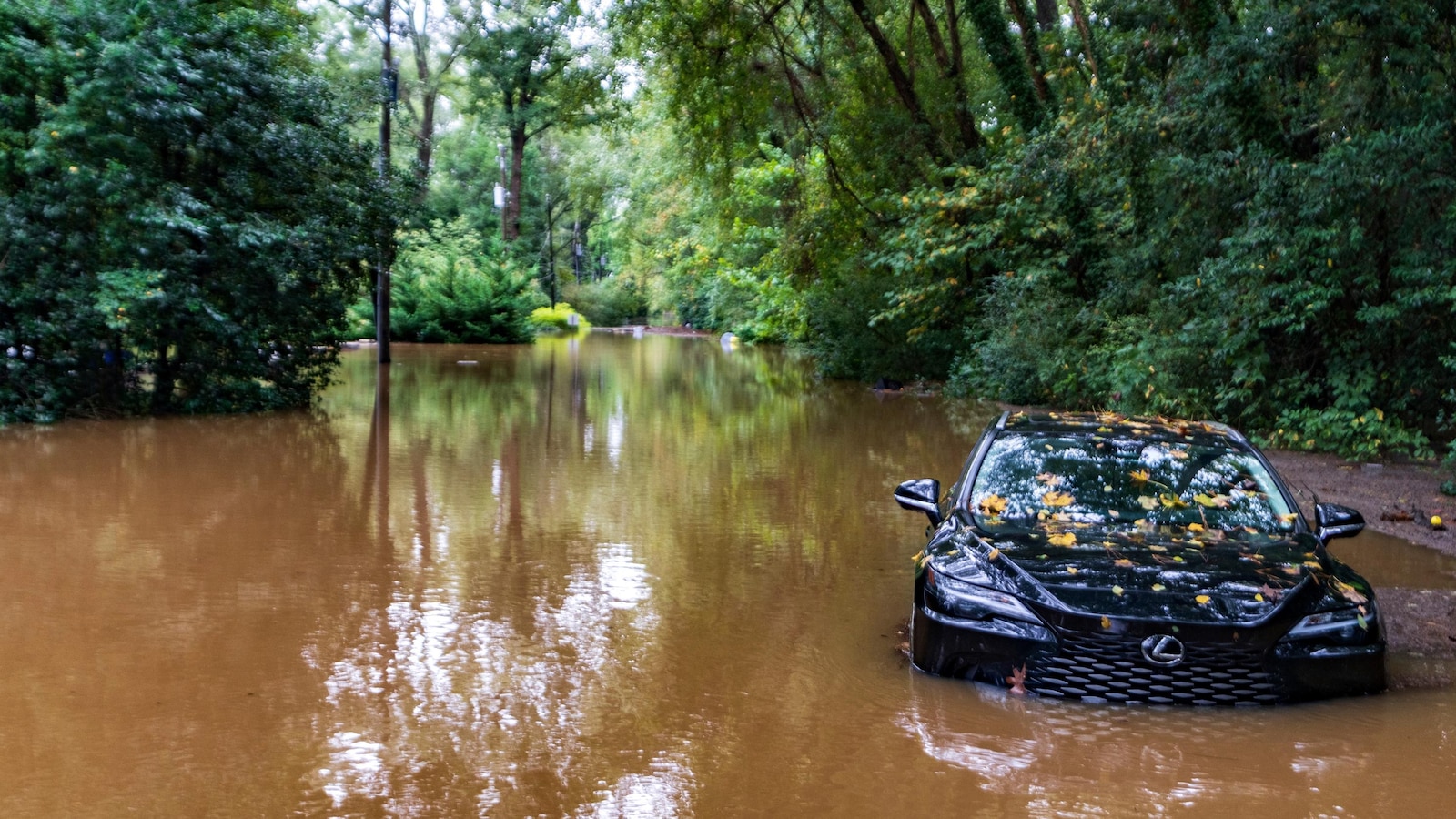
    These fires do seem to be linked specifically to saltwater because salt can conduct electricity. Similar problems haven’t been reported after freshwater flooding in California that was driven by heavy rains early this year.

    Electric vehicles with lithium ion batteries can catch fire if the batteries short circuit and start to heat up. Tom Barth with the National Transportation Safety Board said that if the heat starts to spread between different cells in the battery back it can cause a chain reaction called thermal runaway.

    “If the saltwater is able to bridge the gap between the positive and negative terminals of battery, then it can cause a short circuit,” said Barth, who is chief of the special investigations branch of the NTSB’s office of highway safety.

    Carmakers do design their batteries to try to prevent this problem. There are often separations or insulation barriers between different cells in the battery pack, and manufacturers take steps to keep moisture out. But they do have to include ways for the batteries to vent heat.

    “Where it begins to be a problem is if you have the batteries submerged in standing water. That’s where it starts to overcome the moisture seals in the battery,” Barth said.

    Sometimes electric vehicles can catch fire long after the floodwaters have receded because even after the water evaporates salt that can conduct electricity may be left behind. So it’s important to have them checked out if they are submerged.

    “It’s not like every vehicle that gets flooded is therefore going to ignite and catch fire,” Barth said.

    The National Highway Traffic Safety Administration said it is working to improve battery safety as officials learn more about the problems. The agency has proposed updating some of the safety requirements for electric vehicle batteries to reduce the risks.

    Follow AP’s coverage of tropical weather at https://apnews.com/hub/hurricanes

    Source link