hacklink hack forum hacklink film izle hacklink marsbahisizmir escortsahabetpornJojobetcasibompadişahbetGorabetcasibom9018betgit casinojojobetmarsbahismatbetmatbet

Tag: Hurricane

  • Feds propose protection for giant salamanders devastated by Hurricane Helene

    Feds propose protection for giant salamanders devastated by Hurricane Helene

    You never forget your first time seeing a giant salamander, according to Andy Hill.

    He was a teenager, standing thigh-high in the Watauga River outside Boone, North Carolina, casting a line on an early fall day when he saw his first eastern hellbender. The salamander stretched 2 feet long and was camouflaged among rocks beneath the clear water.

    “You never lose your sense of wonder and otherworldliness when you see one,” said Hill, who now works as the Watauga Riverkeeper for MountainTrue, a nonprofit protecting natural ecosystems in western North Carolina, home to part of the Blue Ridge Mountains.

    The ancient species, which evolved on the supercontinent Pangaea and outlived the dinosaurs, was submitted for federal protection Friday by the U.S. Fish and Wildlife Service. If the proposal is adopted after a period of public comment, the creatures will be protected under the Endangered Species Act.

    Their population in the U.S. has rapidly declined in recent decades; dams, industry and even flooding worsened by climate change have threatened their habitat and ability to reproduce and find food. Today, just 12% of eastern hellbenders are successfully reproducing.

    Hellbenders in the Blue Ridge Mountains had been considered the healthiest population of the eastern subspecies but were devastated this fall by Hurricane Helene. Thousands were displaced or found dead amid rubble. Others were found in flooded church basements and returned to the river. But some rivers are so polluted, there’s still a “do not touch” advisory for people.

    Tierra Curry burst into tears when she learned of the proposed protection.

    “I just think it’s a moral failure that we’re pushing them to the brink of extinction,” said Curry, a senior scientist at the Center for Biological Diversity.

    The slimy, brown creature with a broad, flat head may never win a beauty contest, but it is famous as the largest amphibian in North America.

    The hellbender breathes dissolved oxygen in the water through its skin. Water that becomes slow-moving, warm or polluted holds less oxygen.

    Over the past five years, two dams were removed on the Watauga River to help improve water quality and reconnect hellbender communities. The most recent one came down this summer — and two months later, Helene upended life not just for people, but also for animals like the salamander.

    For those working to ensure the species’ survival, the newly proposed federal protection couldn’t come soon enough, said Erin McCombs, Southeast conservation director for American Rivers.

    “We have to be paying more attention to the health of our nation’s rivers and streams, and that means paying more attention to the critters that live in them,” she said. “When species like the hellbender, which are reliant on free-flowing and clean water, are declining, alarms need to be going off, because we’ll feel the impacts next.”

    The Center for Biological Diversity petitioned and won protection for the Ozark subspecies of hellbenders in 2011 and for Missouri hellbenders, another population of eastern hellbender, in 2021. The group sued, seeking protection for all eastern hellbenders. As of this week, all hellbenders in the U.S. are protected or slated for protection under the Endangered Species Act.

    Hill says he hopes the new federal protection will usher in “bold strategies” to help the species recover.

    “It’s going to take a massive effort,” he said.

    ___

    The Associated Press receives support from the Walton Family Foundation for coverage of water and environmental policy. The AP is solely responsible for all content. For all of AP’s environmental coverage, visit https://apnews.com/hub/climate-and-environment
    Source link

  • Russia amplified hurricane disinformation to drive Americans apart, researchers find

    Russia amplified hurricane disinformation to drive Americans apart, researchers find

    WASHINGTON — Russia has helped amplify and spread false and misleading internet claims about recent hurricanes in the United States and the federal government’s response, part of a wider effort by the Kremlin to manipulate America’s political discourse before the presidential election, new research shows.

    The content, spread by Russian state media and networks of social media accounts and websites, criticizes the federal response to Hurricanes Helene and Milton, exploiting legitimate concerns about the recovery effort in an attempt to paint American leaders as incompetent and corrupt, according to research from the Institute for Strategic Dialogue. The London-based organization tracks disinformation and online extremism.

    In some cases, the claims about the storms include fake images created using artificial intelligence, such as a photo depicting scenes of devastating flooding at Disney World that never happened, researchers say.

    The approach is consistent with the Kremlin’s long-standing practice of identifying legitimate debates and contentious issues in the U.S. and then exploiting them. Previous disinformation campaigns have harnessed debates about immigration, racism, crime and the economy in an effort to portray the U.S. as corrupt, violent and unjust.

    U.S. intelligence officials and private tech companies say Russian activity has increased sharply before the Nov. 5 election as Moscow tries to capitalize on an opportunity to undermine its chief global adversary.

    By seizing on real concerns about disaster recovery, Russia’s disinformation agencies can worm their way into U.S. discourse, using hot-button issues to undermine Americans’ trust in their government and each other.

    “These are not situations that foreign actors are creating,” said Melanie Smith, director of research at ISD. “They’re simply pouring gasoline on fires that already exist.”

    The content identified by ISD included English-language posts obviously meant for Americans, as well as Russian-language propaganda intended for domestic audiences. Much of the disinformation took aim at the Federal Emergency Management Agency and the Democratic administration of President Joe Biden and Vice President Kamala Harris. She is her party’s nominee in the White House race against former President Donald Trump.

    Russia’s invasion of Ukraine remains the Kremlin’s prime motivation for spreading lies about the hurricane response. If Russia can persuade enough Americans to oppose U.S. support for Ukraine, that could ease the way for a Moscow victory, officials and analysts have said.

    U.S. intelligence officials have said Russia’s disinformation seems designed to support Trump, who has praised Russian President Vladimir Putin and disparaged the NATO alliance and Ukraine’s leaders. Posts linked to Russia routinely denigrate Harris, saying she is ignoring the pleas of storm victims. By contrast, a recent post from Russian state media company RT called Trump “a mystical figure of historic proportions.”

    Intelligence officials confirmed Tuesday that Russia created a manipulated video to smear Harris’ running mate, Minnesota Gov. Tim Walz.

    Russia has rejected claims that it trying to meddle in the U.S. election. The Russian Embassy hasn’t responded to messages this week seeking comment about recent allegations by researchers and intelligence officials.

    Researchers at ISD found that Russian disinformation agents exploited weak content moderation on U.S.-owned social media platforms such as X to spread their content far and wide. Before it was purchased and renamed by Elon Musk, the platform once known as Twitter required labels on content from authoritarian state media. Musk rescinded that rule and gutted the platform’s content moderation efforts, leading to a surge in foreign propaganda, hate speech and extremist recruitment.

    Often the false or misleading claims come from fake accounts or websites that mimic Americans or legitimate news outlets, making it difficult to determine their true origin. Unsuspecting Americans then repost and spread the content.

    In July, American intelligence officials warned that “unwitting Americans” were helping do Russia’s work for it.

    Vast armies of fake or automated accounts help spread the material further.

    Researchers at the Israeli tech firm Cyabra analyzed popular posts on X that criticized FEMA for its storm response. A significant number could not be verified as belonging to a real person; one-quarter of all the responses to popular posts were deemed fake. The posts were seen by users over half a billion times.

    In response, a spokesperson for X pointed to the platform’s system that allows users to add context to posts with false claims. The company did not respond to questions about its labeling policy.

    “The false claims, ranging from FEMA diverting funds to aid migrants to conspiracy theories about weather manipulation, undermine public trust in government as we near election day, which could seriously impact voter confidence,” Cyabra researchers said in a report.

    Politicians also have helped spread Russia’s talking points.

    Rep. Paul Gosar, R-Ariz., gave an interview to the Russian state media outlet Sputnik News for a piece that played up criticism of the hurricane response. He told Sputnik that the federal response was “nonexistent,” a claim easily debunked by photos and videos of FEMA recovery workers as well as the firsthand accounts of local leaders and residents in hard-hit regions.

    Gosar repeated another misleading claim that “billions of FEMA disaster funds” had been given instead to immigrants without legal status. In truth, money that funds U.S. border control and immigration programs comes from a different source than disaster funds.

    Gosar’s office did not respond to messages seeking comment Wednesday.

    Source link

  • Volunteers bring solar power to Hurricane Helene’s disaster zone

    Volunteers bring solar power to Hurricane Helene’s disaster zone

    BAKERSVILLE, N.C. — Nearly two weeks after Hurricane Helene downed power lines and washed out roads all over North Carolina’s mountains, the constant din of a gas-powered generator is getting to be too much for Bobby Renfro.

    It’s difficult to hear the nurses, neighbors and volunteers flowing through the community resource hub he has set up in a former church for his neighbors in Tipton Hill, a crossroads in the Pisgah National Forest north of Asheville. Much worse is the cost: he spent $1,200 to buy it and thousands more on fuel that volunteers drive in from Tennessee.

    Turning off their only power source isn’t an option. This generator runs a refrigerator holding insulin for neighbors with diabetes and powers the oxygen machines and nebulizers some of them need to breathe.

    The retired railroad worker worries that outsiders don’t understand how desperate they are, marooned without power on hilltops and down in “hollers.”

    “We have no resources for nothing,” Renfro said. “It’s going to be a long ordeal.”

    More than 43,000 of the 1.5 million customers who lost power in western North Carolina still lacked electricity on Friday, according to Poweroutage.us. Without it, they can’t keep medicines cold or power medical equipment or pump well water. They can’t recharge their phones or apply for federal disaster aid.

    Crews from all over the country and even Canada are helping Duke Energy and local electric cooperatives with repairs, but it’s slow going in the dense mountain forests, where some roads and bridges are completely washed away.

    “The crews aren’t doing what they typically do, which is a repair effort. They’re rebuilding from the ground up,” said Kristie Aldridge, vice president of communications at North Carolina Electric Cooperatives.

    Residents who can get their hands on gas and diesel-powered generators are depending on them, but that is not easy. Fuel is expensive and can be a long drive away. Generator fumes pollute and can be deadly. Small home generators are designed to run for hours or days, not weeks and months.

    Now, more help is arriving. Renfro received a new power source this week, one that will be cleaner, quieter and free to operate. Volunteers with the nonprofit Footprint Project and a local solar installation company delivered a solar generator with six 245-watt solar panels, a 24-volt battery and an AC power inverter. The panels now rest on a grassy hill outside the community building.

    Renfro hopes his community can draw some comfort and security, “seeing and knowing that they have a little electricity.”

    The Footprint Project is scaling up its response to this disaster with sustainable mobile infrastructure. It has deployed dozens of larger solar microgrids, solar generators and machines that can pull water from the air to 33 sites so far, along with dozens of smaller portable batteries.

    With donations from solar equipment and installation companies as well as equipment purchased through donated funds, the nonprofit is sourcing hundreds more small batteries and dozens of other larger systems and even industrial-scale solar generators known as “Dragon Wings.”

    Will Heegaard and Jamie Swezey are the husband-and-wife team behind Project Footprint. Heegaard founded it in 2018 in New Orleans with a mission of reducing the greenhouse gas emissions of emergency responses. Helene’s destruction is so catastrophic, however, that Swezey said this work is more about supplementing generators than replacing them.

    “I’ve never seen anything like this,” Swezey said as she stared at a whiteboard with scribbled lists of requests, volunteers and equipment. “It’s all hands on deck with whatever you can use to power whatever you need to power.”

    Down near the interstate in Mars Hill, a warehouse owner let Swezey and Heegaard set up operations and sleep inside. They rise each morning triaging emails and texts from all over the region. Requests for equipment range from individuals needing to power a home oxygen machine to makeshift clinics and community hubs distributing supplies.

    Local volunteers help. Hayden Wilson and Henry Kovacs, glassblowers from Asheville, arrived in a pickup truck and trailer to make deliveries this week. Two installers from the Asheville-based solar company Sundance Power Systems followed in a van.

    It took them more than an hour on winding roads to reach Bakersville, where the community hub Julie Wiggins runs in her driveway supports about 30 nearby families. It took many of her neighbors days to reach her, cutting their way out through fallen trees. Some were so desperate, they stuck their insulin in the creek to keep it cold.

    Panels and a battery from Footprint Project now power her small fridge, a water pump and a Starlink communications system she set up. “This is a game changer,” Wiggins said.

    The volunteers then drove to Renfro’s hub in Tipton Hill before their last stop at a Bakersville church that has been running two generators. Other places are much harder to reach. Heegaard and Swezey even tried to figure out how many portable batteries a mule could carry up a mountain and have arranged for some to be lowered by helicopters.

    They know the stakes are high after Heegaard volunteered in Puerto Rico, where Hurricane Maria’s death toll rose to 3,000 as some mountain communities went without power for 11 months. Duke Energy crews also restored infrastructure in Puerto Rico and are using tactics learned there, like using helicopters to drop in new electric poles, utility spokesman Bill Norton said.

    The hardest customers to help could be people whose homes and businesses are too damaged to connect, and they are why the Footprint Project will stay in the area for as long as they are needed, Swezey said.

    “We know there are people who will need help long after the power comes back,” she said.

    ___

    Associated Press coverage of philanthropy and non-profits receives support through the AP’s collaboration with The Conversation US, with funding from Lilly Endowment Inc. The AP is solely responsible for this content. For all of AP’s philanthropy coverage, visit https://apnews.com/hub/philanthropy.

    Source link

  • Hurricane Milton has caused thousands of flight cancellations. What to do if one of them was yours

    Hurricane Milton has caused thousands of flight cancellations. What to do if one of them was yours

    NEW YORK — Thousands of flights in and out of the U.S. have been canceled this week as Hurricane Milton barreled into the Gulf of Mexico and plowed across Florida — causing many airports to close their doors in the path of destruction.

    And airlines across the country grounded flights as a result. There were more than 2,250 U.S. flight cancellations as of midday Thursday, according to tracking service FlightAware, following 1,970 on Wednesday.

    After battering the southeastern U.S. and parts of Cuba Wednesday, the hurricane moved into the Atlantic Ocean Thursday. Dangers still persist — with officials pointing to storm-surge warnings for much of Florida’s east-central coast and farther north into Georgia, for example, as well as tropical storm warnings reaching South Carolina. That means travel disruptions across the region will likely continue.

    Airlines can’t control the weather, but they are still required to provide refunds for customers whose flights are canceled. Earlier this week, President Joe Biden and other government officials also warned companies not to overcharge people fleeing the storm — as some travelers reported unusually high prices — but airlines defended themselves, with some noting they had recently imposed fare caps.

    Here’s what to know about your rights, and what to do when cancellations start piling up.

    The widespread damage of Hurricane Milton, which arrives as the region is already reeling from Hurricane Helene, is still being assessed. And, again, storm-surge warnings continued to be in place on Thursday.

    Watching weather forecasts and checking your flight’s status ahead of time is key. In recent days, many airports in Florida ceased commercial operations — with Orlando International Airport and Tampa International Airport, for example, both remaining closed to the public Thursday.

    While both airports said they were assessing damage and hoped to provide an update soon, Orlando and Tampa still saw the largest number of cancellations on Thursday, per Flight Aware. And people currently in the region have been instructed to stay inside and shelter in place until officials say it’s safe.

    “If you’re traveling out of Florida, please do not head to the airport unless that airport is open and it’s safe to drive there,” the U.S. Transportation Security Administration wrote Thursday on social media platform X. “Always check with your airline(s) to verify flight status.”

    While Florida has been hit hardest by Milton, travel disruptions spread across the country. For those not in the storm’s path, some might be able to reroute their trips — but capacity will be limited. And it’s better to be stuck at home or in a hotel than to be stranded in an airport terminal, so use the airline’s app or flight websites to make sure that your flight is still on before heading out. Carriers try to cancel flights hours or even days before departure.

    And with nearly two months of Atlantic hurricane season left to go, it’s possible that we could see other severe storms in the near future. Keep an eye on weather forecasts leading up to your trip.

    Airlines should rebook passengers automatically, but that could take much longer as carriers recover from the hurricane, so passengers may have to take more initiative. And be more creative.

    People already at an airport usually go to an in-person help desk — but lines are long when there’s widespread disruptions. Travel experts suggest calling the airline and using an international help-desk number, if there is one, to reach an agent more quickly.

    Another tactic is to post a few words to the airline on the social platform X. Many airlines have staffers who will help rebook passengers who contact the carrier through social media.

    Use your airline’s app — it may have more-current information about flight status than delays and cancellations displayed in the airport terminal.

    You can, but airlines aren’t required to put you on another carrier’s flight. Some airlines, including the biggest ones except Southwest, say they can get you to a partner airline, but even then it’s often hit or miss.

    A good tip is to research alternative flights while you wait to talk to an agent. It may also be worth checking nearby airports for other routes.

    Passengers whose flights are canceled are entitled to a full refund in the form of payment they used to buy the ticket. That’s true even if the ticket was sold as non-refundable.

    A refund may be acceptable to travelers who no longer want to make the trip, but many people just want another way to reach their destination, and buying a last-minute replacement ticket could cost more than the refund will cover.

    There is no provision for additional compensation under U.S. law, and airlines set their own policies for reimbursing stranded travelers for things like hotels and meals.

    However, the Biden-Harris administration has been working to change that — and in other recent moments of widespread travel disruptions, Transportation Department has appeared to be taking the view that many cancellations and delays are within the airlines’ control, pressuring carriers to cover passengers’ costs.

    “We have reminded the airlines of their responsibilities to take care of passengers if they experience major delays,” Buttigieg said earlier this year, when a widespread technology outage also canceled thousands of flights in July.

    And last year, the Transportation Department fined Southwest $35 million as part of a $140 million settlement to resolve an investigation into nearly 17,000 canceled flights in December 2022.

    The department maintains a “dashboard” showing what each airline promises to cover during travel disruptions.

    _____

    Koenig reported from Dallas.

    Source link

  • Kricketfelt: Latest on Tampa lifestyle creator & TikToker who stayed in Florida home during Hurricane Milton cat 5 storm

    Kricketfelt: Latest on Tampa lifestyle creator & TikToker who stayed in Florida home during Hurricane Milton cat 5 storm

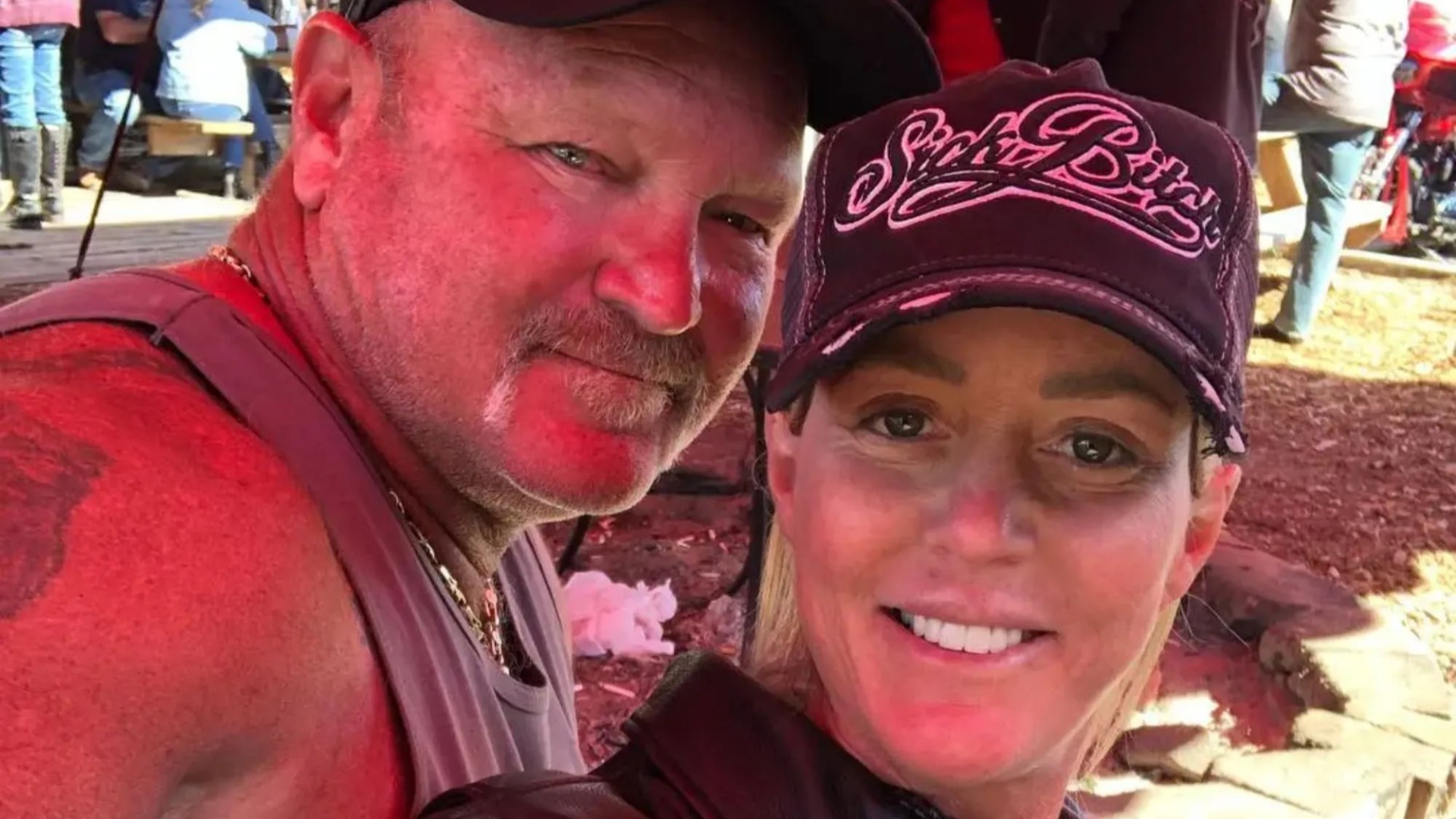
    KRICKETFELT is a TikToker who stirred up controversy during Hurricane Milton by ignoring evacuation orders and staying at home.

    Here’s everything we know about the content creator — as well as the range of reactions to her seemingly dangerous decision.

    TikToker Kricketfelt stayed in her Tampa home during Hurricane Milton storms

    2

    TikToker Kricketfelt stayed in her Tampa home during Hurricane Milton stormsCredit: Instagram/ kricketleefelt
    Her husband and three kids also ignored evacuation orders

    2

    Her husband and three kids also ignored evacuation ordersCredit: Instagram/ kricketleefelt

    Who is Kricketfelt?

    A Tampa-based lifestyle influencer, content creator and TikToker gained significant attention during Hurricane Milton.

    She goes by the handle @kricketfelt and as of October 10, 2024, has almost 380k followers.

    Instead of posting about her usual topics — the luxurious lifestyle she enjoys and day-to-day activities — she went viral for disregarding the advice of Tampa Mayor Jane Castor, who warned the city’s almost 400,000 residents to urgently evacuate.

    She became the center of online controversy when she decided to stay in her Florida home.

    Hurricane Milton controversy

    As Hurricane Milton approached Florida, local authorities issued mandatory evacuation orders for residents in vulnerable areas.

    However, Kricketfelt made the controversial decision to remain in her home, defying these orders.

    During the hurricane, the content creator documented her experience through a series of TikTok videos showing her going about her daily routines — including cooking meals and relaxing in her home — while the storm raged outside.

    Her content during this period garnered millions of views and sparked intense debate among viewers.

    In one of her videos, Kricketfelt states: “I’m not leaving. I’m staying right here in my house in Tampa, Florida.”

    She goes on to explain her reasoning: “My house is built to withstand hurricane-force winds. I’m in a non-flood zone. I have hurricane impact windows.”

    Hurricane Milton makes landfall in Florida as Cat 3 storm spawns tornadoes with millions at risk

    Justification for staying

    Kricketfelt offered several reasons for her decision to remain in her home, including:

    • Home Safety: She emphasized the structural integrity of her house.
    • Previous Experience: “I’ve been through many hurricanes before. I know what I’m doing.”
    • Preparation: “I have plenty of food, water, and supplies.”

    Public reaction and criticism

    Her decision elicited strong reactions from the public, with many people criticizing her actions as irresponsible and potentially dangerous.

    One commenter on social media wrote: “What about your kids? This is so selfish and ignorant.”

    I’m not leaving. I’m staying right here in my house in Tampa, Florida

    @KricketfeltTikTok

    Kricketfelt responded with: “I’m not being selfish. I’m being practical. My kids are safe here with me.”

    Privilege and responsibility

    Some pointed out that her ability to stay home safely during a hurricane reflected her wealth and privilege.

    Kricketfelt acknowledged this, stating: “I know I’m fortunate to have a safe home. Not everyone has that option.”

    As a social media influencer with a large following, Kricketfelt’s actions were scrutinized for their potential impact on her audience’s behavior during natural disasters.

    She addressed this concern, saying: “I’m not telling anyone else what to do. This is my personal decision.”

    Some also argued that individuals who choose to ignore evacuation orders could potentially strain emergency services, putting themselves and first responders at unnecessary risk.

    Source link

  • Kricketfelt: Latest on Tampa lifestyle creator & TikToker who stayed in Florida home during Hurricane Milton cat 5 storm

    Kricketfelt: Latest on Tampa lifestyle creator & TikToker who stayed in Florida home during Hurricane Milton cat 5 storm

    KRICKETFELT is a TikToker who stirred up controversy during Hurricane Milton by ignoring evacuation orders and staying at home.

    Here’s everything we know about the content creator — as well as the range of reactions to her seemingly dangerous decision.

    TikToker Kricketfelt stayed in her Tampa home during Hurricane Milton storms

    2

    TikToker Kricketfelt stayed in her Tampa home during Hurricane Milton stormsCredit: Instagram/ kricketleefelt
    Her husband and three kids also ignored evacuation orders

    2

    Her husband and three kids also ignored evacuation ordersCredit: Instagram/ kricketleefelt

    Who is Kricketfelt?

    A Tampa-based lifestyle influencer, content creator and TikToker gained significant attention during Hurricane Milton.

    She goes by the handle @kricketfelt and as of October 10, 2024, has almost 380k followers.

    Instead of posting about her usual topics — the luxurious lifestyle she enjoys and day-to-day activities — she went viral for disregarding the advice of Tampa Mayor Jane Castor, who warned the city’s almost 400,000 residents to urgently evacuate.

    She became the center of online controversy when she decided to stay in her Florida home.

    Hurricane Milton controversy

    As Hurricane Milton approached Florida, local authorities issued mandatory evacuation orders for residents in vulnerable areas.

    However, Kricketfelt made the controversial decision to remain in her home, defying these orders.

    During the hurricane, the content creator documented her experience through a series of TikTok videos showing her going about her daily routines — including cooking meals and relaxing in her home — while the storm raged outside.

    Her content during this period garnered millions of views and sparked intense debate among viewers.

    In one of her videos, Kricketfelt states: “I’m not leaving. I’m staying right here in my house in Tampa, Florida.”

    She goes on to explain her reasoning: “My house is built to withstand hurricane-force winds. I’m in a non-flood zone. I have hurricane impact windows.”

    Hurricane Milton makes landfall in Florida as Cat 3 storm spawns tornadoes with millions at risk

    Justification for staying

    Kricketfelt offered several reasons for her decision to remain in her home, including:

    • Home Safety: She emphasized the structural integrity of her house.
    • Previous Experience: “I’ve been through many hurricanes before. I know what I’m doing.”
    • Preparation: “I have plenty of food, water, and supplies.”

    Public reaction and criticism

    Her decision elicited strong reactions from the public, with many people criticizing her actions as irresponsible and potentially dangerous.

    One commenter on social media wrote: “What about your kids? This is so selfish and ignorant.”

    I’m not leaving. I’m staying right here in my house in Tampa, Florida

    @KricketfeltTikTok

    Kricketfelt responded with: “I’m not being selfish. I’m being practical. My kids are safe here with me.”

    Privilege and responsibility

    Some pointed out that her ability to stay home safely during a hurricane reflected her wealth and privilege.

    Kricketfelt acknowledged this, stating: “I know I’m fortunate to have a safe home. Not everyone has that option.”

    As a social media influencer with a large following, Kricketfelt’s actions were scrutinized for their potential impact on her audience’s behavior during natural disasters.

    She addressed this concern, saying: “I’m not telling anyone else what to do. This is my personal decision.”

    Some also argued that individuals who choose to ignore evacuation orders could potentially strain emergency services, putting themselves and first responders at unnecessary risk.

    Source link

  • Here’s what has made Hurricane Milton so fierce and unusual

    Here’s what has made Hurricane Milton so fierce and unusual

    With its mighty strength and its dangerous path, Hurricane Milton powered into a very rare threat flirting with experts’ worst fears.

    Warm water fueled amazingly rapid intensification that took Milton from a minimal hurricane to a massive Category 5 in less than 10 hours. It weakened, but quickly bounced back, and when its winds briefly reached 180 mph, its barometric pressure, a key measurement for a storm’s overall strength, was among the lowest recorded in the Gulf of Mexico this late in the year.

    At its most fierce, Milton almost maxed out its potential intensity given the weather factors surrounding it.

    “Everything that you would want if you’re looking for a storm to go absolutely berserk is what Milton had,” Colorado State University hurricane researcher Phil Klotzbach said.

    That’s not all. Milton’s eastward path through the Gulf is so infrequent the most recent comparable storm was in 1848. Tampa — the most populous metro area in its general path — hasn’t had a direct hit from a major storm in more than 100 years, making this week the worst-case scenario for many experts.

    The track “is not unprecedented but it’s quite rare,” said University of Miami hurricane researcher Brian McNoldy. “And of those that did that track, this is by far the most intense.”

    “It is unusual in a number of ways,” Princeton University climate scientist and hurricane expert Gabriel Vecchi said. “This storm is probably going to be very unlike any storm anyone has experienced on the west coast of Florida.”

    But it might be getting less rare, and the U.S. is already on a particularly unlucky streak. When Helene plowed through Florida less than two weeks ago, it was the seventh Category 4 or stronger storm to make landfall in the continental U.S. in eight years. That’s more than triple the average annual rate of such monster landfalls in the U.S. since 1950, according to a data analysis by The Associated Press.

    If Milton somehow hits as a Category 4 storm at landfall it will be only the second time the nation was struck twice in a year by hurricanes so powerful. This is after an unusual 12-year period when no Category 4 or higher storms hit the mainland between 2005 and 2016.

    University of Albany atmospheric scientist and hurricane expert Kristen Corbosiero said Milton’s threat now, compared to that 12-year quiet period, is probably a combination of luck — that those previous big storms didn’t make landfall — and climate change that is steering big storms differently than before.

    “With more and stronger storms, the chances of a major hurricane hitting the U.S. increase,” she said.

    So much of what makes Milton nasty is rooted in the warmer water of its birth and in human-caused climate change, Vecchi, Corbosiero and others said.

    Milton formed in the Bay of Campeche in the southwestern Gulf of Mexico. For awhile, forecasters didn’t give the unstable air mass much of a chance to develop into a tropical storm, let alone a monster hurricane. But once it defied the odds, it took off because of warm water and it managed to avoid high-level cross winds that often decapitate storms, especially in autumn. As Milton neared Florida it hit those winds, called shear, which ate away at its strength, as meteorologists had forecasted.

    Warm water fuels hurricanes. It’s crucial that the surface water be at least 79 degrees (26 degrees Celsius) and it helps incredibly when there’s deep warm water.

    The water at Milton’s birth and along its path was around 87 degrees (30.5 degrees Celsius). That’s almost 2 degrees (1 degree Celsius) warmer than normal and near record levels, both on the surface and deep, McNoldy said.

    “Part of the reason it was so warm is because of global warming,” Vecchi said, though he added that last year’s El Nino — a natural warming of ocean waters that influences weather worldwide — and other natural factors played a role. “Now the storm has a lot more energy to draw on.”

    That water became an all-you-can eat buffet for Milton.

    Much like an ice skater spinning with her arms close in rather than outstretched, Milton’s small size and pinhole eye — which became as small as 4 miles across — also made it easier to supercharge.

    And then there’s the track. Corbosiero couldn’t think of a similar track for such a powerful storm, especially in October when there are fewer strong storms in the Gulf and the nastiest storms are more in the Caribbean.

    Klotzbach found one in 1848, before good records were kept, unearthing a storm other experts weren’t quite familiar with.

    Usually storms in the Gulf of Mexico start in the east and go west or just go north, but Milton is heading east-northeast, Vecchi said. That’s because of a weather system in Canada and the U.S. East Coast that is pushing the westerly winds that are common in mid-latitudes down to where Milton is, where autumn wind from the west is less common.

    With water piling up with storm surge in this “very, very rare direction,” Corbosiero said Milton “has the potential to be a worst-case scenario” if it directly hits Tampa, where the last major hurricane direct hit was in 1921.

    “It’s extraordinarily bad,” McNoldy said.

    —-

    Mary Katherine Wildeman contributed from Hartford, Conn. and Christopher L. Keller contributed from Albuquerque, New Mexico

    ___

    Read more of AP’s climate coverage at http://www.apnews.com/climate-and-environment

    ___

    Follow Seth Borenstein on X at @borenbears

    ______

    The Associated Press’ climate and environmental coverage receives financial support from multiple private foundations. AP is solely responsible for all content. Find AP’s standards for working with philanthropies, a list of supporters and funded coverage areas at AP.org.


    Source link

  • Clemson football helps T.J. Moore’s family after Hurricane Helene

    CLEMSON — Clemson football came together Wednesday to help one of its own who was affected by Hurricane Helene.

    Tigers freshman wide receiver T.J. Moore and his family lost everything — their home, car, belongings — in the storm when it hit Tarpon Springs, Florida, a city near Tampa.

    Moore’s aunt, Samantha Gonzalez, started a GoFundMe on Wednesday with a stated goal of $10,000, with all donations going toward a new apartment, apartment application fees, furniture and hotel room expenses. The fundraiser exceeded that number by Wednesday night, with more than 300 people donating $32,000.

    “I can’t even begin to thank everyone for the overwhelming support,” Moore’s mother, Alexandra Moore, wrote on X, formerly known as Twitter, on Wednesday. “I’m at a loss for words, wiping many tears. Knowing that we don’t have to wonder or worry where we’ll sleep next takes a huge burden off of our chest.”

    Various Clemson football and athletic department staffers donated to the cause. T.J. Moore’s teammates, defensive linemen Peter Woods and T.J. Parker, both gave $500. The largest donation was $7,500 from an anonymous contributor.

    According to the GoFundMe, Moore and his family “took on about 5ft of water in Hurricane Helene.” The page shows pictures of flooding in their home and car. Moore is among 14 Florida players who are on the Clemson team.

    Source link

  • Hurricane Helene brings climate change to forefront of the presidential campaign

    Hurricane Helene brings climate change to forefront of the presidential campaign

    WASHINGTON — The devastation wrought by Hurricane Helene has brought climate change to the forefront of the presidential campaign after the issue lingered on the margins for months.

    Vice President Kamala Harris traveled to Georgia Wednesday to see hard-hit areas, two days after her Republican opponent, former President Donald Trump, was in the state and criticized the federal response to the storm, which has killed at least 178 people. Thousands of people in the Carolinas still lack running water, cellphone service and electricity.

    President Joe Biden toured some of the hardest-hit areas by helicopter on Wednesday. Biden, who has frequently been called on to survey damage and console victims after tornadoes, wildfires, tropical storms and other natural disasters, traveled to the Carolinas to get a closer look at the hurricane devastation. He is expected to visit Georgia and Florida later this week.

    “Storms are getting stronger and stronger,” Biden said after surveying damage near Asheville, North Carolina. At least 70 people died in the state.

    “Nobody can deny the impact of the climate crisis any more,” Biden said at a briefing in Raleigh, the state capital. “They must be brain dead if they do.”

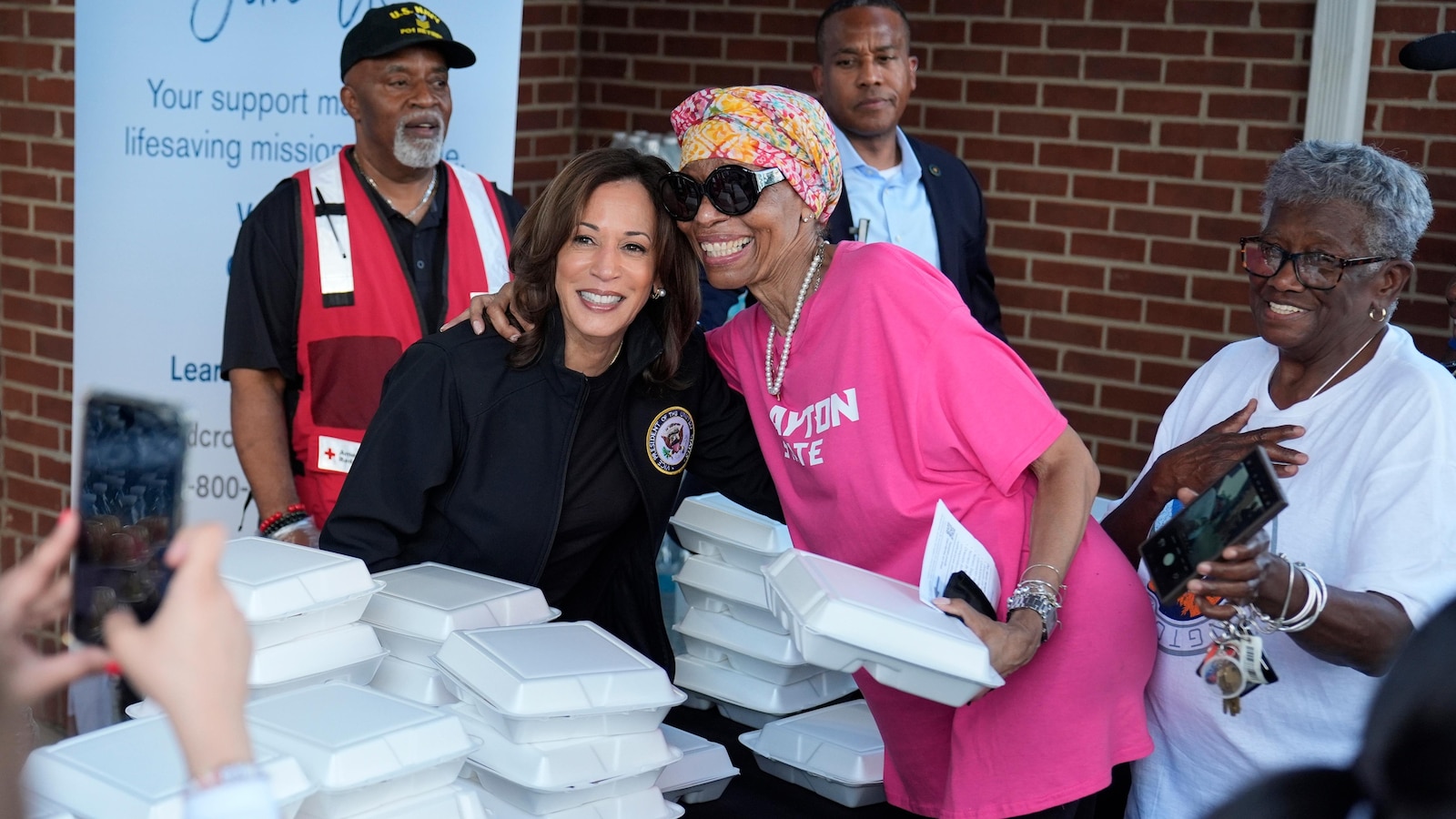
    Harris, meanwhile, hugged and huddled with a family in hurricane-ravaged Augusta, Georgia.

    “There is real pain and trauma that resulted because of this hurricane” and its aftermath, Harris said outside a storm-damaged house with downed trees in the yard.

    “We are here for the long haul,” she added.

    The focus on the storm — and its link to climate change — was notable after climate change was only lightly mentioned in two presidential debates this year. The candidates instead focused on abortion rights, the economy, immigration and other issues.

    The hurricane featured prominently in Tuesday’s vice presidential debate as Republican JD Vance and Democrat Tim Walz were asked about the storm and the larger issue of climate change.

    Both men called the hurricane a tragedy and agreed on the need for a strong federal response. But it was Walz, the governor of Minnesota, who put the storm in the context of a warming climate.

    “There’s no doubt this thing roared onto the scene faster and stronger than anything we’ve seen,” he said.

    Bob Henson, a meteorologist and writer with Yale Climate Connections, said it was no surprise that Helene is pushing both the federal disaster response and human-caused climate change into the campaign conversation.

    “Weather disasters are often overlooked as a factor in big elections,” he said. “Helene is a sprawling catastrophe, affecting millions of Americans. And it dovetails with several well-established links between hurricanes and climate change, including rapid intensification and intensified downpours.”

    More than 40 trillion gallons of rain drenched the Southeast in the last week, an amount that if concentrated in North Carolina would cover the state in 3 1/2 feet of water. “That’s an astronomical amount of precipitation,” said Ed Clark, head of the National Oceanic and Atmospheric Administration’s National Water Center in Tuscaloosa, Alabama.

    During Tuesday’s debate, Walz credited Vance for past statements acknowledging that climate change is a problem. But he noted that Trump has called climate change “a hoax” and joked that rising seas “would make more beachfront property to be able to invest in.″

    Trump said in a speech Tuesday that “the planet has actually gotten little bit cooler recently,” adding: “Climate change covers everything.”

    In fact, summer 2024 sweltered to Earth’s hottest on record, making it likely this year will end up as the warmest humanity has measured, according to the European climate service Copernicus. Global records were shattered just last year as human-caused climate change, with a temporary boost from an El Niño, keeps dialing up temperatures and extreme weather, scientists said.

    Vance, an Ohio senator, said he and Trump support clean air, clean water and “want the environment to be cleaner and safer.” However, during Trump’s four years in office, he took a series of actions to roll back more than 100 environmental regulations.

    Vance sidestepped a question about whether he agrees with Trump’s statement that climate change is a hoax. “What the president has said is that if the Democrats — in particular Kamala Harris and her leadership — really believe that climate change is serious, what they would be doing is more manufacturing and more energy production in the United States of America. And that’s not what they’re doing,” he said.

    “This idea that carbon (dioxide) emissions drives all of the climate change. Well, let’s just say that’s true just for the sake of argument. So we’re not arguing about weird science. If you believe that, what would you want to do?” Vance asked.

    The answer, he said, is to “produce as much energy as possible in the United States of America, because we’re the cleanest economy in the entire world.”

    Vance claimed that policies by Biden and Harris actually help China, because many solar panels, lithium-ion batteries and other materials used in renewable energy and electric vehicles are made in China and imported to the United States.

    Walz rebutted that claim, noting that the Inflation Reduction Act, the Democrats’ signature climate law approved in 2022, includes the largest-ever investment in domestic clean energy production. The law, for which Harris cast the deciding vote, has created 200,000 jobs across the country, including in Ohio and Minnesota, Walz said. Vance was not in the Senate when the law was approved.

    “We are producing more natural gas and more oil (in the United States) than we ever have,” Walz said. “We’re also producing more clean energy.”

    The comment echoed a remark by Harris in last month’s presidential debate. The Biden-Harris administration has overseen “the largest increase in domestic oil production in history because of an approach that recognizes that we cannot over rely on foreign oil,” Harris said then.

    While Biden rarely mentions it, domestic fossil fuel production under his administration is at an all-time high. Crude oil production averaged 12.9 million barrels a day last year, eclipsing a previous record set in 2019 under Trump, according to the U.S. Energy Information Administration.

    Democrats want to continue investments in renewable energy such as wind and solar power — and not just because supporters of the Green New Deal want that, Walz said.

    “My farmers know climate change is real. They’ve seen 500-year droughts, 500-year floods back to back. But what they’re doing is adapting,” he said.

    “The solution for us is to continue to move forward, (accept) that climate change is real” and reduce reliance on fossil fuels, Walz said, adding that the administration is doing exactly that.

    “We are seeing us becoming an energy superpower for the future, not just the current” time, he said.

    ___

    Associated Press writers Colleen Long in Raleigh, North Carolina, and Christopher Megerian in Augusta, Georgia, contributed to this report.

    Source link

  • Colorado football, led by Deion Sanders, deletes X post after Hurricane Helene struck Florida

    Colorado football, led by Deion Sanders, deletes X post after Hurricane Helene struck Florida

    The University of Colorado’s football team, led by head coach Deion Sanders, will play the University of Central Florida Saturday in Orange County, Florida.

    Hurricane Helene has wreaked havoc in recent days across multiple states, including Florida, with a death toll over 40 and an expected $15 billion to $26 billion in property damage.

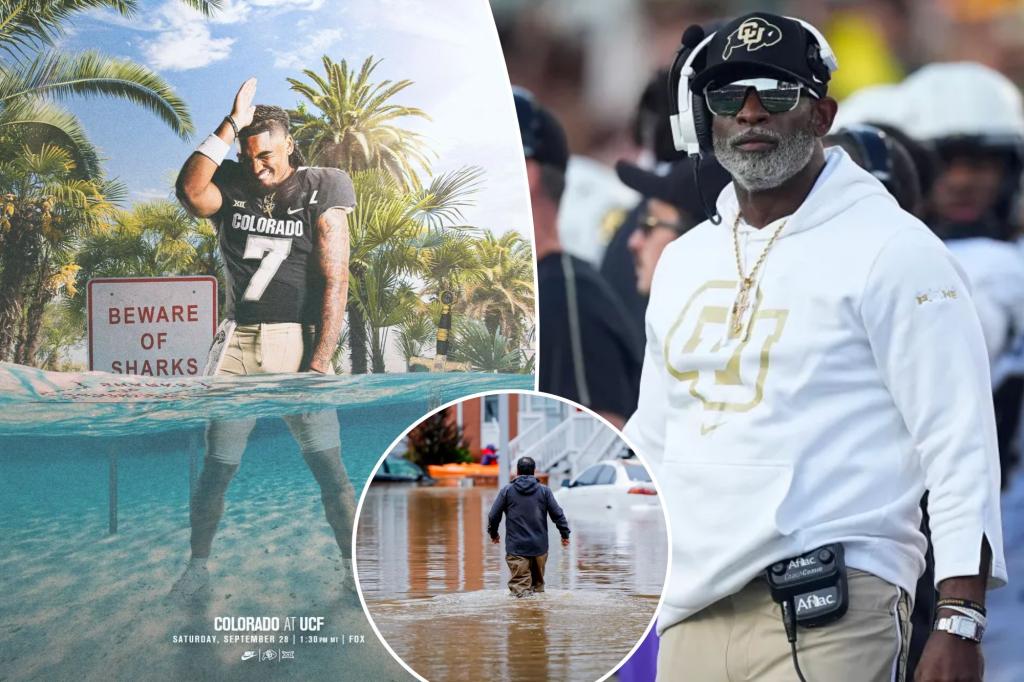
    Despite this destruction, Colorado’s social media team posted on social media Friday a computer-designed graphic showing safety Cam’Ron Silmon-Craig standing on a Florida beach with water up to his knees. 

    The post said “24 hours,” an apparent reference to the countdown to the game Saturday. The post was later deleted from Colorado’s social media account.

    The image also had a sign in the background that said “Beware of Sharks,” an apparent reference to Silmon-Craig’s nickname, “Shark.” 

    Fox News Digital has reached out to the Colorado football program for comment but had not received a response before the time of publication. 

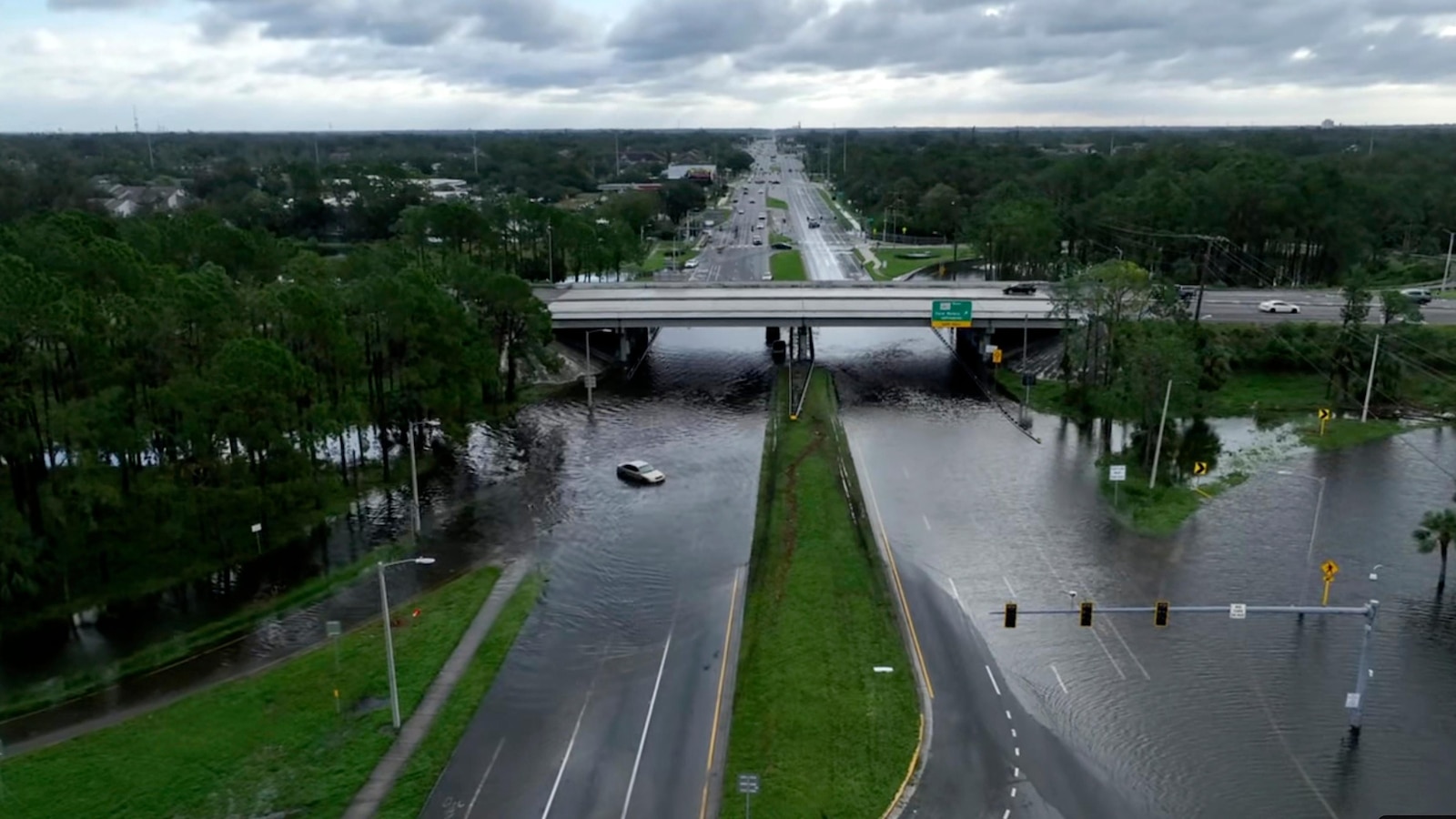
    Flooding has been one of the biggest destructive forces of the hurricane, beginning along Florida’s coast well before Hurricane Helene made landfall, with rapidly rising waters reported as far south as Fort Myers on the state’s Gulf Coast.

    FOX Weather’s Ian Oliver said the surge quickly flooded streets around St. Pete Beach Thursday evening, with high tide several hours away.

    The hurricane made landfall in Florida’s Big Bend region, after intensifying into a catastrophic Category 4 hurricane with winds of 140 mph.

    The monster hurricane is unleashing a potentially “unsurvivable” 20-foot storm surge, catastrophic hurricane-force winds and flooding.

    The University of Colorado’s football team, led by head coach Deion Sanders, will play the University of Central Florida Saturday in Orange County, Florida. AP
    Colorado cornerback Ben Bouzi celebrates after an overtime win over Baylor on Sept. 21, 2024. AP

    The National Weather Service in Tallahassee issued a rare extreme wind warning for several counties in the Big Bend ahead of the approach of the eyewall.

    The National Hurricane Center (NHC) said there is a significant risk of a life-threatening storm surge along the entire west coast of the Florida Peninsula, as well as Florida’s Big Bend region because of Hurricane Helene’s massive size.

    Due to the storm, Saturday’s game between Colorado and UCF was moved inland to Orlando. 

    Sanders spoke about the weather before the Baylor game, saying the team was preparing as if it was not going to rain. Sanders bickered with a reporter who asked about his plans for the rain.

    The hurricane made landfall in Florida’s Big Bend region, after intensifying into a catastrophic Category 4 hurricane with winds of 140 mph. ERIK S LESSER/EPA-EFE/Shutterstock

    “I’m one of those good weathermen … 30% (chance of rain) is 70% (chance) it won’t. Let’s do drills that say, ‘It won’t rain,’” Sanders said at a press conference this week. 

    The game will mark the first-ever meeting between Colorado and UCF. The Knights became a Division I program in 1996 and joined the Big 12 in 2023.


    Source link