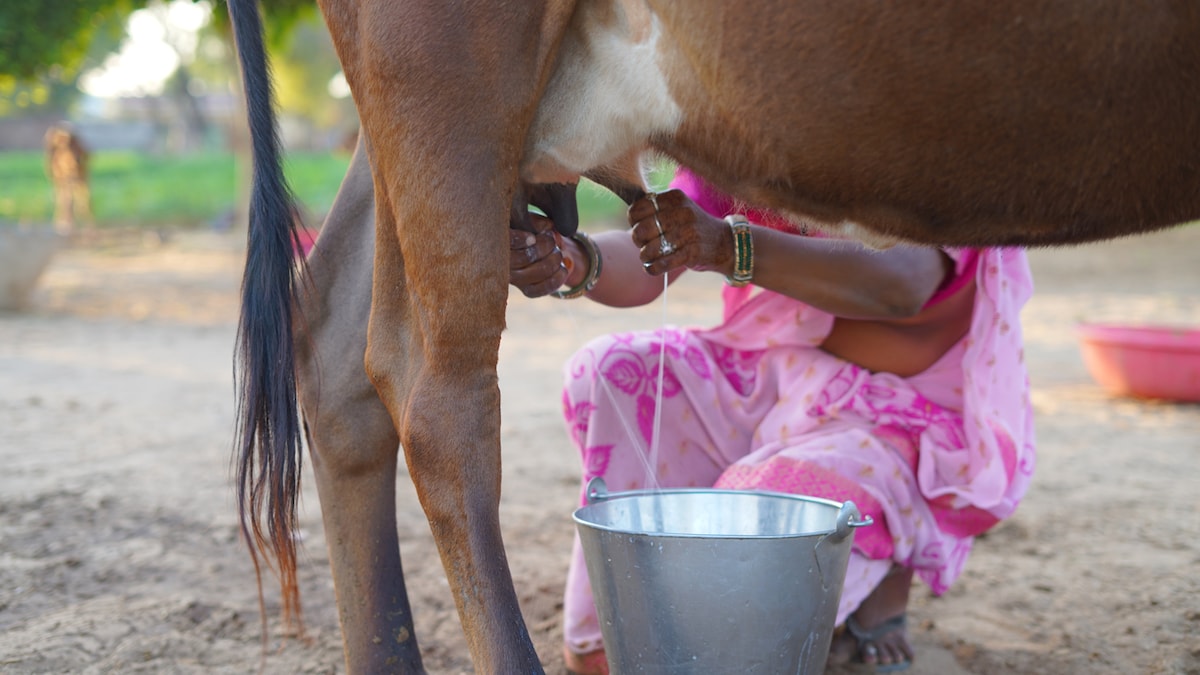
India’s milk production rose nearly 4 per cent annually to 239.3 million tonnes in 2023-24 on better productivity, even as milk output of buffaloes declined 16 per cent annually, according to government data on Tuesday. The milk output of India, the world’s largest milk producer, stood at 230.58 MT in 2022-23. However, the annual growth rate has slowed down in the previous two fiscal years, the data showed. The growth rate was 6.62 per cent in 2017-18; 6.47 per cent in FY19; 5.69 per cent in FY20; 5.81 per cent in FY21; and 5.77 per cent in FY22. In FY23 it came down to 3.83 per cent and 3.78 per cent in FY24.
Addressing an event to celebrate National Milk Day, Union Minister of Fisheries, Animal Husbandry and Dairying Rajiv Ranjan Singh said the milk production has increased to around 239 MT in 2023-24 on the back of improvement in productivity.
The minister released Basic Animal Husbandry Statistics 2024 on the occasion of National Milk Day 2024, which is celebrated every year on November 26 to honour the Father of white revolution, Verghese Kurien, who was born on this day.
Singh said the per capita milk availability has also increased to 471 gm per day in 2023-24 from 459 gm per day in 2022-23. The minister noted that the average growth in India’s milk production has been 6 per cent in the last 10 years as against the global average of 2 per cent.
As per government data, milk production from buffaloes has decreased 16 per cent in 2023-24 compared to the previous year. Milk output from exotic/crossbred cattle has increased 8 per cent while production from indigenous/non-descript cattle increased 44.76 per cent.
According to an official statement, the total milk production in the country is estimated at 239.30 MT during 2023-24, registering a growth of 5.62 per cent over the past 10 years. Milk output was 146.3 MT in 2014-15. The top five milk producing states during 2023-24 were Uttar Pradesh with a share of 16.21 per cent of total milk production followed by Rajasthan (14.51 per cent), Madhya Pradesh (8.91 per cent), Gujarat (7.65 per cent), and Maharashtra (6.71 per cent).
In terms of annual growth rate, West Bengal was at the top (9.76 per cent) followed by Jharkhand (9.04 per cent), Chhattisgarh (8.62 per cent), and Assam (8.53 per cent) as compared to the previous year.
Earlier, addressing the event, Singh emphasised the need to bring dairy farmers into the organised sector as this will boost milk production and their income and eliminate middlemen. He suggested formation of dairy cooperatives at village level. The minister also spoke on the need to boost exports of dairy products.
Singh asked dairy farmers to vaccinate their livestock. The government is making available free vaccinations. He said the foot and mouth disease and brucellosis will be eradicated from the country by 2030 and “this will help enhance exports”.
The minister also asked dairy farmers to adopt sex-sorted semen and artificial insemination in a big way. Singh added that the government is also focusing on breed improvement of livestock.
On whether the pace of growth of milk output has slowed, Jayen Mehta, Managing Director, Gujarat Cooperative Milk Marketing Federation, which markets dairy products under the ‘Amul brand’, told reporters that there has been a healthy increase of 4 per cent in annual milk production in the last fiscal year and the average growth of the last 10 years has been around 6 per cent, much more than the world’s average.
Mehta said the production depends on a lot of factors, including monsoon rains
(Disclaimer: Except for the headline, this story has not been edited by NDTV staff and is published from a syndicated feed.)
Roula Khalaf, Editor of the FT, selects her favourite stories in this weekly newsletter.
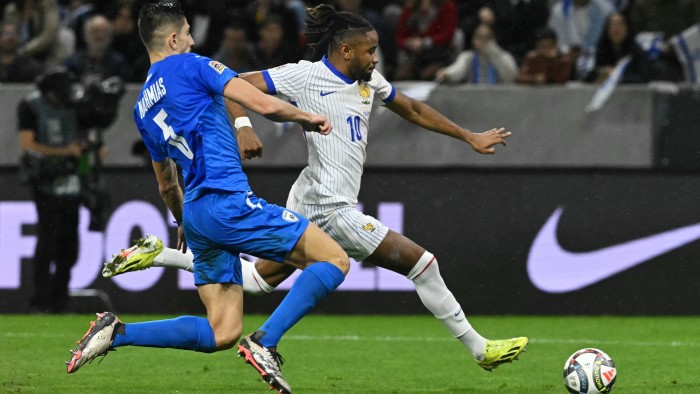
French authorities have bolstered security plans for a football match on Thursday between its national team and Israel as they seek to prevent similar violence to the attacks on Israeli fans in Amsterdam last week.
President Emmanuel Macron has announced he will attend the game to “send a message of fraternity and solidarity after the intolerable antisemitic acts” that last week followed a Europa League match between Amsterdam’s Ajax and Israel’s Maccabi Tel Aviv.
The upcoming match will be a big test for France, which is home to the biggest Jewish and Muslim communities in Europe and where conflicts in the Middle East have historically reverberated in the form of protests and increased antisemitic incidents.
Since the October 7 Hamas attack on Israel and the subsequent bombing of Gaza, tensions have brewed across Europe as pro-Palestinian protests have spread.
Laurent Nuñez, the police chief of the Paris region, said “extremely reinforced measures” would be put in place taking into account lessons from Amsterdam, namely that violent attacks took place not only at the stadium, but also around the city and on public transport.
“We need to be present all over . . . in the centre of Paris,” he told BFMTV on Sunday. “Incidents could potentially happen anywhere.”
A force of 2,500 police officers will be deployed to the Stade de France on the northern edge of Paris, while 1,500 others will be present on public transport and fanned out across the capital.
The force is double the size of the usual deployment of up to 2,000 officers for so-called high-risk matches.
Some 1,600 private security guards will also be deployed to the stadium.
“Spectators going to this match will have complete security,” Nuñez said. “We will not tolerate any disturbances, any disruptions.”
The decision to hold the France vs Israel match in front of fans and not behind closed doors was made by Bruno Retailleau, minister of interior, and approved by Prime Minister Michel Barnier.
They opted against moving the Uefa League match to a neutral country, as Turkey did for an upcoming game between Istanbul’s Beşiktaş and Maccabi Tel Aviv later this month, which will be played in Hungary with no spectators.
“France does not back down, since that would amount to surrendering to threats of violence and to antisemitism,” Retailleau said. “We are in France, and I want a football match, even if it’s France-Israel, to be able to take place under normal conditions.”
Former French presidents Nicolas Sarkozy and François Hollande are also planning to attend the highly symbolic event.
Ticket sales have been muted, with only some 20,000 sold for the stadium that has a capacity of about 80,000.
Multiple violent incidents occurred in Amsterdam on Thursday before and after the Ajax-Maccabi match, with five people taken to hospital and later discharged.
Israeli fans were chased through the streets and beaten up, according to Dutch authorities. Maccabi fans had also torn down a Palestinian flag and shouted anti-Arab slogans, the police said.
Israeli authorities on Sunday urged the country’s citizens to take precautions when travelling abroad and “to totally avoid sporting or cultural events in which Israelis are taking part, especially the upcoming match of the Israel national team in Paris”.
Jean-Christophe Couvy, a police union leader, said he was confident the police could secure the match and the city on Thursday, using a plan that was similar to the one implemented during the Paris Olympics.
“If you put a big number of police on the street, you occupy the ground and prevent things from getting out of hand,” Couvy said.
(MENAFN– Kashmir Observer) Srinagar- People with sedentary lifestyles and prolonged sitting habits are at a higher risk of developing osteoporosis compared to those who stay active and maintain a balanced diet, doctors warn.
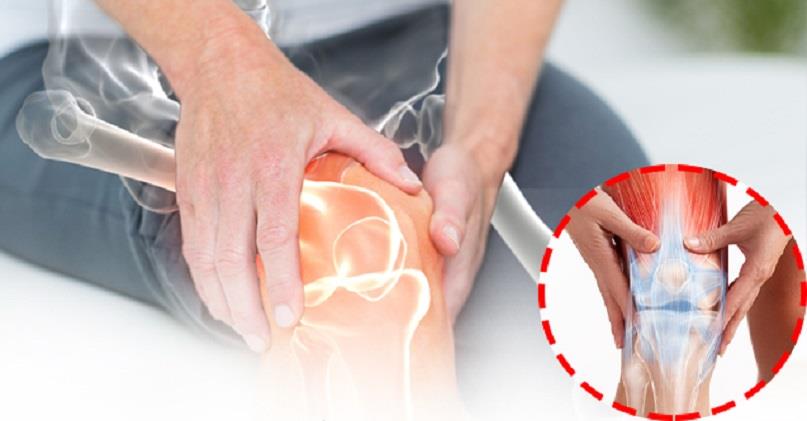
Medical experts said that osteoporosis is a disease that weakens bones, making them more prone to fractures. They said osteoporosis is a major public health issue, particularly among older adults, and understanding its types can help inform appropriate treatment and prevention measures.
ADVERTISEMENT
Dr Shariq Hussain, a physician with the Directorate of Health Services Kashmir (DHSK), said that factors contributing to osteoporosis include ageing, hormonal changes, dietary deficiencies, sedentary habits and chronic conditions such as rheumatoid arthritis and malabsorption disorders.
ADVERTISEMENT
“Osteoporosis leads to an increased risk of fractures, bone pain, weight loss, and posture changes, which can result in back pain and even breathing difficulties,” Dr Hussain said, according to news agency KNO.
Another doctor, Dr Hamid highlighted the importance of diet in maintaining bone health. He recommended foods rich in calcium and vitamin D, such as dairy products, leafy greens, and fish.“Vitamin D supplements may also be necessary for those with limited sun exposure,” he added.
Read Also
Unhealthy Dietary Habits Fuel Disease Burden In India: NIN
High BP Affects Breathing Capacity But Physical Activity Can Help: Study
Dr Hamid advised that weight-bearing exercises, such as walking, jogging, and strength training, can help strengthen bones, while balance-improving exercises can reduce the risk of falls. He also warned that lifestyle habits like smoking and excessive alcohol intake negatively impact bone density and interfere with calcium absorption.
For those at high risk or already diagnosed with osteoporosis, he suggested that medications like bisphosphonates or hormone therapy, as prescribed by a doctor, can reduce bone loss and improve bone density.
Doctors also called for early screening for osteoporosis through bone density tests, such as DEXA scans, which can help detect the condition early and allow for timely intervention. Osteoporosis prevention begins with a proactive approach: balanced nutrition, regular exercise, and avoiding habits like smoking,” they said, adding that early detection through screening is essential to managing this silent yet impactful disease.
Follow this link to join our WhatsApp group : Join Now
Powell said the exodus of landlords within many Victorian local government areas had also played a role in rising rents and will continue to do so.
She said the shortage of rental properties, fuelled by investors leaving the market because of land tax increases and concerns about rental regulation changes, was further driving up rents.
The Macedon Ranges council area recorded the largest jump in rents in regional Victoria.
KPMG director of planning and infrastructure economics Terry Rawnsley said strong regional economies played a significant role in the rental demand of these local government areas.
“Some of the regional areas like Mildura and Shepparton have good local economies coming through there, and it should be a relatively good year for agricultural production which brings in a lot of supporting workers,” he said.
In other areas, especially those within commuting distance of Melbourne, Rawnsley said affordability was a big driver.
“The Macedon Ranges corridor may appeal to those who have been priced out of Melbourne and are looking further afield, as well as those seeking space and affordability.”
Jellis Craig Central Victoria senior property manager Jane Vella said the rental market in the Macedon Ranges was very competitive.
“Demand for rentals has been on the rise, particularly due to the area’s proximity to Melbourne, which makes it attractive to those seeking a more relaxed, semi-rural lifestyle while still maintaining access to the city,” she said.
A limited supply of available rental properties had also put upward pressure on rental prices, which were at a high after lockdown due to the majority of applicants moving away from Melbourne, she said.
Loading
“The demand far exceeds the supply, especially for well-maintained properties in desirable locations with some land. For many properties, it is common to receive multiple applications within the first few days of listing.”
Vella said the area was attracting a broad mix of renters, including families, professionals and those seeking a tree-change lifestyle.
“We are also seeing interest from other regional areas and interstate renters, particularly from cities like Sydney,” she said.
“The appeal of the Macedon Ranges includes its proximity to Melbourne but also the lifestyle benefits such as access to nature, good schools and a strong sense of community.
“The area offers a blend of rural charm and modern conveniences, which makes it an attractive option for those looking to escape urban density without sacrificing amenities.”
Meanwhile, Shepparton Real Estate managing director Ryan O’Connor said it was job opportunities that were attracting renters to the greater Shepparton area.
“We aren’t seeing many applicants from Melburnians, but we are seeing plenty of applications from internationals moving here to work in the hospitals, factories and farms,” he said.
O’Connor said this was also creating a competitive rental market with any rental property under $450 receiving a lot of interest.
“At present, we are averaging somewhere between 30 to 40 rental applications per property. We had a two-bedroom unit and have 22 inspections and 60 applications this week alone,” O’Connor said.
India’s historic performance at the recently concluded Paris Paralympics, where the country won as many as 29 medals, was another big reminder of just how much and how quickly para-sport in the country is developing and becoming stronger.
Incredibly, India had won 8 medals in 10 editions of the Summer Paralympics from 1968 to 2012. The total number of medals won between the Rio edition in 2016 and Paris 2024, was a mind-boggling 52. Needless to say, all the stakeholders – the athletes, the government, the Paralympic Committee of India (PCI), the able-bodied federations which oversee individual para-sports, the Sports Authority of India, the sponsors etc have all done a stellar job.
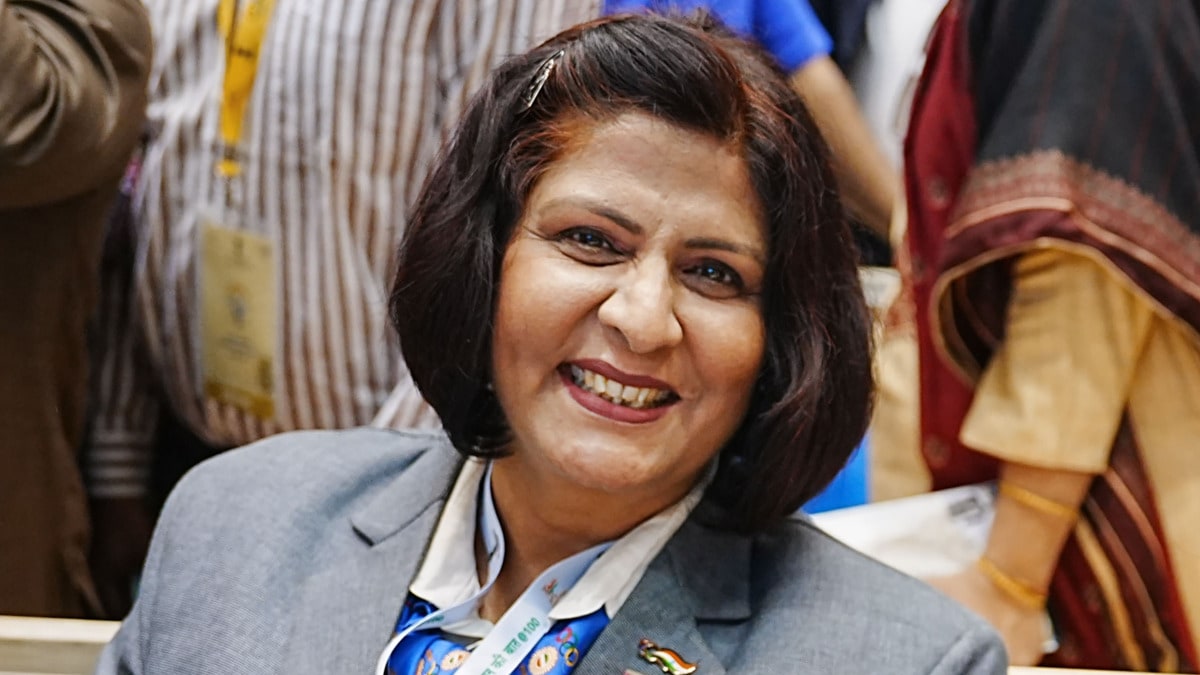
To see para-athletes as brand ambassadors and being promoted as role-models is a matter of immense pride. And according to the first Indian female Paralympic medallist and the former President of the Paralympic Committee of India, Deepa Malik, who oversaw some of the biggest changes that were brought about in the PCI, mainstreaming para-sport is the biggest reason for the continued success at the Paralympics and other global competitions.
Malik, who is also a four-time Asian Para-Games medallist and Padma Shri and Khel Ratna awardee, also talked about the importance of female participation in global para-sports, how Indian para-athletes are not resting on past laurels but aiming for bigger prizes, how para-sport administration in India has, over the years, become more and more professional and well-managed.
This is part one of an extensive interview with Deepa Malik.
Excerpts…
A historic performance by the Indian contingent this time. Before we dive into specifics, how proud are you of what we saw unfold in Paris – 29 medals – that’s really huge.
The way I feel – a happy administrator and a super-proud para-athlete. And a woman, whose dream came true. It was lonely in 2016 (when she became the first Indian female Paralympic medal winner). Now, so many women (are) coming-up – playing different sports, with different disabilities, from different parts of the country and making India proud.
Let’s look at the growth trajectory of our athletes’ performance at the Paralympics, going back say two editions before this one. In 2016, at the Rio Games, India won a total of 4 medals – one of them was your historic silver medal. That number then jumped to 19 in Tokyo – a jump of 15 medals. And then the tally in Paris this time was 29, which was a jump of 10 medals. What according to you have been the major driving factors for these hikes – from Rio to Paris?
Mainstreaming para-sport. Giving it the respect of being highly competitive and mainstream. That has changed. The taboo around disabilities was erased when our Prime Minister said ‘Divyang’ (one with a divine body part). The number of disabilities that were under welfare programmes rose from seven to twenty-one. The Disability Act is introduced in 2016. Instead of sympathy and charity, rights were given to persons with disabilities.
Parallelly, we could see when the policies became inclusive. We as a Federation had to work very hard, because suddenly, from an NGO kind of administration we had to immediately switch gears to (become) a National Sports Federation, which was answerable to the government. We had our own speed-breakers and journey of transition, because the changes happened very fast. We had to streamline everything, get a website up and running, all data had to be digitalised, state Federations had to be properly formed.
Of course, from 2010 onwards, this work had begun. I personally saw this change happen, because from 2006 to 2010, I became a proper athlete. I came to Delhi and I was a member of the Planning Commission, appointed by the HRD division of the Sports Ministry in the Working Group of formulation of these sports policies. They (the policies) were truly implemented in 2015. The funding programmes from the government increased. When you get credibility from the government, then you also get the faith of CSRs (Corporate Social Responsibility), sponsors. And when the Prime Minister himself started meeting, greeting and applauding the para-athletes’ performance, that also brought the focus of CSR funding.
I remember when the law came out that some percentage of CSR (funding) also has to go to sports. Media also helped a lot. Social media helped a lot. The way that in 2016 (Paralympic Games) the medals were applauded – Amul billboards featured us (para-athletes), every major show (on TV) invited us, athletes were made brand ambassadors of Swatch Bharat, the Election Commission, DigiDhan Yojna, Beti Bachao Beti Padhao, TB Mukt Bharat – these are some for which I was made the brand ambassador. I was also made the brand ambassador of the New Delhi Municipal Corporation (NDMC).
When you make para-athletes or persons with disabilities as role models and their visibility increases. The more visibility we got, there was more acceptance. Parallelly, the athletes themselves also became information-technology savvy.
Talk to me a little bit about the work done by the Paralympic Committee of India (PCI) during your tenure as president…
We used the Covid time well to make every athlete digitally well-educated. The State Federations also had to digitalise everything. A little bit of education came in. I had people teaching me things – there were senior administrators. We had role models to talk about. When we pitched for CSR funding, we knew how to prepare a project (blueprint), how to pitch for it, how to have your paperwork in place. These were the things that we worked on.
We also had international trainer programmes. We started conducting courses, we started encouraging sports coaches. When they saw that there were job opportunities (they became interested). I could employ a fitness trainer, a physiotherapist, a nutritionist, a wheelchair attendant. I got money for my fuel. So, there were job incentives for the people in this ecosystem. Because, charity can’t last very long. It has to be professional. And when the professionalism came in, you can see the difference.
I want to take you back to before the start of the Paris Games this time. There were many predictions before this edition of the Games. But I remember seeing an Instagram post of an interview of yours, where you said India will win 25-30 medals this time. That was a rather accurate prediction. Clearly you were very confident that this contingent would do very, very well….
See, I am not a jyotishi, there is no astrology involved here. It was just simple, plain, logical analysis of the continuous performance of the athletes. Also, in every competition you have to keep 10-15 per cent as a buffer, where things don’t go right, which actually happened also. There were so many medals which were so close and yet so far for us (at the Paris Paralympics).
280 days is the minimum number of days per year that a coach has to work for even the government to consider him or her for an award with a cash incentive. You can track the progress of an athlete and you compare it digitally, online with the progress of their competitors – because there is a proper data analysis system, there is a minimum eligibility criteria. The International Paralympic Committee (IPC) also has that minimum eligibility criteria rankings also.
So, you can compare what our athletes are doing today with what they need to do at a competition. Also, what will be the mental well-being state of the athletes, is the athlete robust enough to take the competition? There were many first-timers, so we had to be very, very cautious about their mental robustness. They might be good athletes, but mentally are they strong enough to take that pressure of that arena? The arenas in Paris were house-full. It was the first time I saw something like this. In Rio (2016), I never saw the stands being packed, in Tokyo (2021) we played under the impact of Covid-19 – there were no spectators. But, in Paris the stands were full.
The Paralympic Games in Paris witnessed big turnouts across all venues, from the track and field events at Stade de France to badminton and powerlifting at La Chapelle Arena. Reuters
I think Europeans make very good spectators because they are used to going for football matches etc. There is a different kind of energy that you feel there in the stands. They have different kinds of waves, claps etc. Like you have a bro-code, there is a spectator-code out there. So, to play in front of thousands of spectators like this, you have to be mentally well-prepared, so that much foreign exposure has to be given.
Athletes have to be taught not to be carried away by the food on offer. You go there and you have huge refrigerators full of beverages and big ice cream stalls. The whole idea of putting your hand into an ice cream basket and taking out four candies and not have to pay for it. But you can’t eat them because you can’t have that kind of sugar in your body if you have to compete the next day. So, you have to teach the athletes not to get carried away.
Let’s talk about some of the big highlights now of the Paris Games — there were multiple firsts of course – 17-year-old archer Sheetal Devi became the youngest ever Indian medallist, high-jumper Mariyapan now has medals in three straight editions of the Games, Preethi Pal becoming the first female track medal winner, Avani defending her gold medal…
Every achievement was special. What I loved to see was that the legacy (of Indian para-sport) was being continued. So, if a Devendra Jhajharia was not playing, there was an Ajeet (Singh Yadav – silver medal in men’s javelin throw F-46) and Sundar Gurjar (bronze medal in men’s javelin throw F-46) picking up medals. If Pramod Bhagat was not playing this time, there was a Nitesh (Kumar) (gold medal in men’s singles badminton SL3) picking up a gold.
Amit Saroha who was playing his fourth Paralympics and is a pioneer in the F-51 category (men’s discus and club throw) and now we have two new athletes coming in and winning in that category ( Dharambir Nain – gold in club throw F-51 and Pranav Soorma – silver in club throw F-51). So, what we are seeing is that the sport is not dying, it is experiencing a rebirth. And this is what is needed if you want to become a sporting nation. It cannot be ‘once upon a time a Milkha Singh, or once upon a time a Neeraj Chopra’. It cannot be that one Deepa Malik wins a medal after 73 years of independence (first Indian woman to win a Paralympic medal) and then nothing. Now we have 14 medals won by women. That one has become fourteen.
Avani Lekhara (right) poses with her gold medal after winning the women’s 10m air rifle standing SH1 event in the Paris Paralympics. PTI
So, this is what was special about this edition (of the Paralympics). This edition has provided us with a parameter to gauge that we are on the right path. We are moving in the right direction. These are the markers of growth. Also, out of the 84 Indian athletes in Paris, 40 were first timers. So, almost 50 per cent of the contingent is from the new breed of athletes. A new crop has come up. We are not resting on past laurels and old glory. That means as a Federation and as administrators, we have been able to follow the right path on growth markers. And I really hope this graph only goes higher from here. And I wish the new president (of PCI) Devendra Jhajharia all the very best.
Let’s talk about your sport – athletics – in a bit more detail. 17 out of the 29 medals at the Paris Paralympics were in athletics. Two medals in the discipline you won the 2016 Paralympic silver medal in – shot put. You must have had an extra soft spot in your heart for that, right?
It’s definitely incredible. It’s the fastest growing sport and it’s also directly handled by the Paralympic Committee of India (PCI). We also have more and more administrators also coming from a para-athletics background. It all began with para-athletics, so that will remain as a strong foothold.
There has been a lot of comparison between Paralympic medals and Olympic medals, but athletics is one sport where you have to be consciously aware that – there is only one javelin throw in the Olympics, there are so many javelin throw medal opportunities in the Paralympics, because there are different type of disabilities and different categories, so the number of medals in athletics (at the Paralympics) increase. Navdeep (Singh) won it in F-41, Sumit Antil won it in F-64. So, there were many javelin medals, there were many high-jump medals.
Sumit Antil celebrates with the tricolour after winning a second consecutive Paralympic gold in men’s javelin throw at the Stade de France in Paris. Reuters
So, we (Paralympians) also tend to get more medals in athletics. But that can’t take away from the level of competition, which is very high. Winning a medal (at the Paralympics) is not a cakewalk. It has become a sport of science. You are going up against the best of the whole world and the level of competition is only going up. Records are being broken every time (every edition). So, the performances are only going up and up.
Talk to me a little about female participation overall in Indian para-sports. You talked about so many Indian female athletes who went to Paris, so many who won medals. I read one of your quotes that in the last 4 years, Indian female participation went up by 40 per cent. Was that across the board?
I would say yes. How do we judge that? Say in the Asian Para Games in Hangzhou (2022), India participated in 17 sports. Women athletes participated in 16 of those sports. That was because the 17th was men’s blind football, there was no female blind football (event). Which means we had 100 per cent sporting participation by women. There wasn’t a single event in which women had not participated. Which goes to show that there is strong focus and endeavour to have as many women participate in as many sports as possible.
Even this time if you see (at the Paris Paralympics), most of the sports we had gone for, whether it was blind judo, or whether it was para-cycling or rowing, which were the three new sports, but in them we had both female and male participation. The Paris Paralympics and Olympics were gender-equal Games. So, if you want your country to win medals, you cannot ignore the 50 per cent (of gender) equality that is being brought in now. If you want to be high up on the medals tally, you will have to, have to work on women participation. This is something that we had got done.