MELBOURNE, Australia — Scientists suspect the first complete specimen ever recorded of the world’s rarest whale died from head injuries, an expert said Friday.
The first dissection of a spade-toothed whale, a type of beaked whale, was completed last week after a painstaking examination at a research center near the New Zealand city of Dunedin, the local people who led the scientific team, Te Rūnanga Ōtākou, said in a statement issued by the New Zealand Department of Conservation.
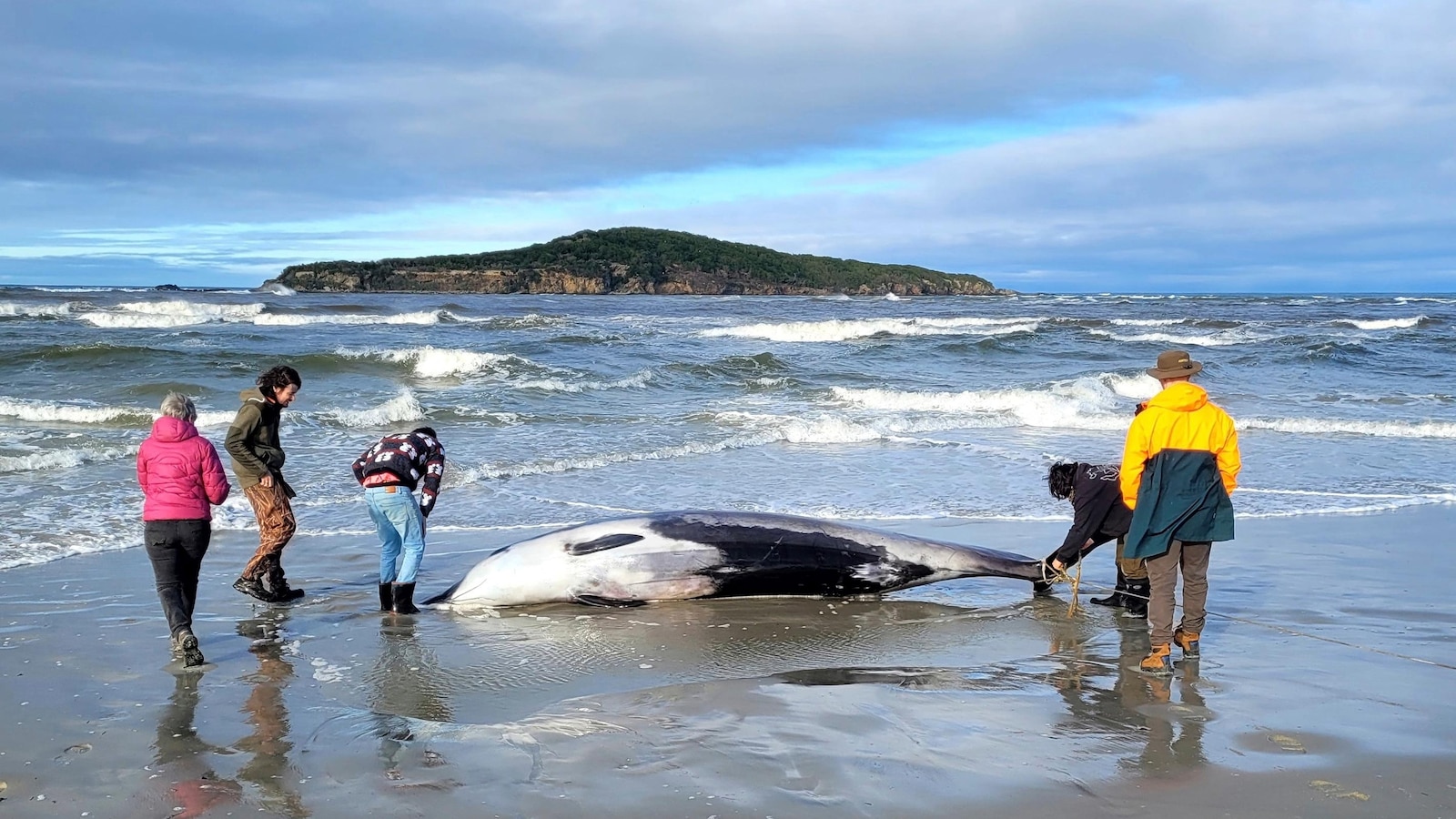
A near-perfectly preserved 5-meter (16-foot) male was found washed up on a South Island beach in July. It was the first complete specimen ever recorded. There have only been seven known sightings and never of a living spade-toothed whale.
New Zealand conservation agency beaked whale expert Anton van Helden said the whale’s broken jaw and bruising to the head and neck led scientists to believe that head trauma may have caused its death.
“We don’t know, but we suspect there must have been some sort of trauma, but what caused that could be anyone’s guess,” van Helden said in a statement.
All varieties of beaked whales have different stomach systems and researchers didn’t know how the spade-toothed type processed its food.
The scientific team found the specimen had nine stomach chambers containing remnants of squid and parasitic worms, the statement said.
Among the more interesting finds were tiny vestigial teeth in the upper jaw.
“These little teeth embedded in the gum tells us something about their evolutionary history. It’s remarkable to see this and it’s just another thing that we had no idea about,” van Helden said.
“It’s a week I’ll never forget in my life, it’s certainly a highlight and it’s the start of the storytelling around this beautiful animal,” van Helden added.
The dissection was also notable because scientists and curators worked together with local Māori people to incorporate Indigenous knowledge and customs into each step of the process.
Following the dissection, the local iwi, or tribe, will keep the jawbone and teeth of the whale before its skeleton is displayed in a museum. 3D printing will be used to replicate those parts retained by the iwi.
To Māori, whales are a taonga -– a precious treasure -– and the creature has been treated with the reverence afforded to an ancestor.
New Zealand is a whale-stranding hotspot, with more than 5,000 episodes recorded since 1840, according to the Department of Conservation.
The first spade-toothed whale bones were found in 1872 on New Zealand’s Pitt Island. Another discovery was made at an offshore island in the 1950s, and the bones of a third were found on Chile’s Robinson Crusoe Island in 1986.
___
Associated Press writer Charlotte Graham-McLay in Wellington, New Zealand, contributed to this report.
A new UTHealth Houston study focused on finding the best surgical technique for reconstruction of the acromioclavicular joint (ACJ), where the collarbone meets the shoulder blade, has the potential to enhance recovery and long-term shoulder health for young athletes.
Funded by a $3.5 million grant from the National Institutes of Health, researchers from the Department of Orthopedic Surgery at McGovern Medical School at UTHealth Houston, in collaboration with the Steadman Philippon Research Institute in Vail, Colorado, are working to establish a standardized approach for ACJ reconstruction. The joint is particularly vulnerable in young athletes engaged in contact sports such as football and hockey.
Currently, there is no standardized approach to treating ACJ injuries, which makes it challenging to determine the best method to repair an ACJ injury and position patients for successful, long-term outcomes. If left untreated, these injuries can lead to chronic pain, decreased mobility, and other complications, underscoring the need for an established treatment protocol.”
Payam Zandiyeh, PhD, assistant professor in the Department of Orthopedic Surgery and lead investigator on the project
The study, titled “Multicenter, Longitudinal Study of Acromioclavicular Joint Reconstruction Techniques for Restoring Shoulder Complex Biomechanics and Soft Tissue Health,” is the first of its kind to compare multiple surgical methods for ACJ reconstruction. Specifically, the study will evaluate three ACJ reconstruction techniques:
• Coracoclavicular (CC) ligament reconstruction alone, which stabilizes the joint vertically but does not address horizontal instability, potentially leaving the joint biomechanically vulnerable.
• Combined ACJ and CC reconstruction with bone tunnels, which enhances both vertical and horizontal stability by reconstructing the AC and CC ligaments using grafts or sutures passed through drilled bone tunnels in the clavicle and coracoid. While anatomically accurate, this method carries risks of fractures due to stress on the bone tunnels, requiring careful surgical technique and postoperative care.
• Combined ACJ and CC reconstruction without bone tunnels, which is a newer, tunnel-free technique designed to reduce fracture risks while maintaining joint stability. However, its long-term effectiveness in preserving joint function is not yet fully understood.
The study aims to identify the most effective technique for restoring stability, minimizing complications, and improving long-term outcomes, particularly for young athletes prone to ACJ injuries.
The study is built on the collaborative expertise of a multidisciplinary team. James Gregory, MD, associate professor in the Department of Orthopedic Surgery and a leading orthopedic surgeon on the project, played a pivotal role in shaping the study’s surgical protocols and ensuring their practical application for patient care.
“Dr. Gregory’s extensive surgical expertise is at the heart of this research,” Zandiyeh said. “His insight into the complexities of ACJ injuries and reconstruction techniques ensures that our work is both clinically relevant and impactful for the patients we aim to serve.”
The study also includes Manickam Nicks Kumaravel, MD, professor and Memorial Hermann Chair in the Department of Diagnostic and Interventional Imaging at McGovern Medical School, who will provide imaging diagnostics expertise for the study. Michael Jacobs, PhD, professor and Chair in Biomedical Engineering in the Department of Diagnostic and Interventional Imaging, contributed to the study’s state-of-the-art magnetic resonance imaging (MRI) sequence design and analysis. Dejian Lai, PhD, professor of biostatistics and data science at UTHealth Houston School of Public Health, contributed to the study’s advanced biostatistical and data science analyses.
The study uses state-of-the-art imaging technologies, including dynamic stereo X-ray, which provides real-time 3D imaging of joint movement, and MRI, offering detailed analysis of soft tissue health and shoulder function. Recovery progress will be monitored at six- and 12-months post-surgery.
In addition to imaging, researchers will incorporate patient-reported outcomes and surveys to evaluate the impact of surgical techniques on mobility, stability, and overall recovery from the patients’ perspective.
“This multifaceted approach allows us to gain a comprehensive understanding of how different procedures influence recovery,” Zandiyeh said. “By combining advanced imaging with patient feedback, we can identify the techniques that offer the best outcomes for long-term shoulder health.”
The study’s findings are expected to guide the development of evidence-based treatment protocols, helping physicians select the most effective surgical methods tailored to each patient’s needs.
“This research has the potential to establish a gold-star standard of treatment for ACJ injuries,” Zandiyeh said. “By providing physicians with evidence-based surgical options, we hope to help young athletes return to sports with a positive prognosis for long-term shoulder health.”
The grant was awarded by the National Institute of Arthritis and Musculoskeletal and Skin Diseases, part of the NIH (R01AR083471).
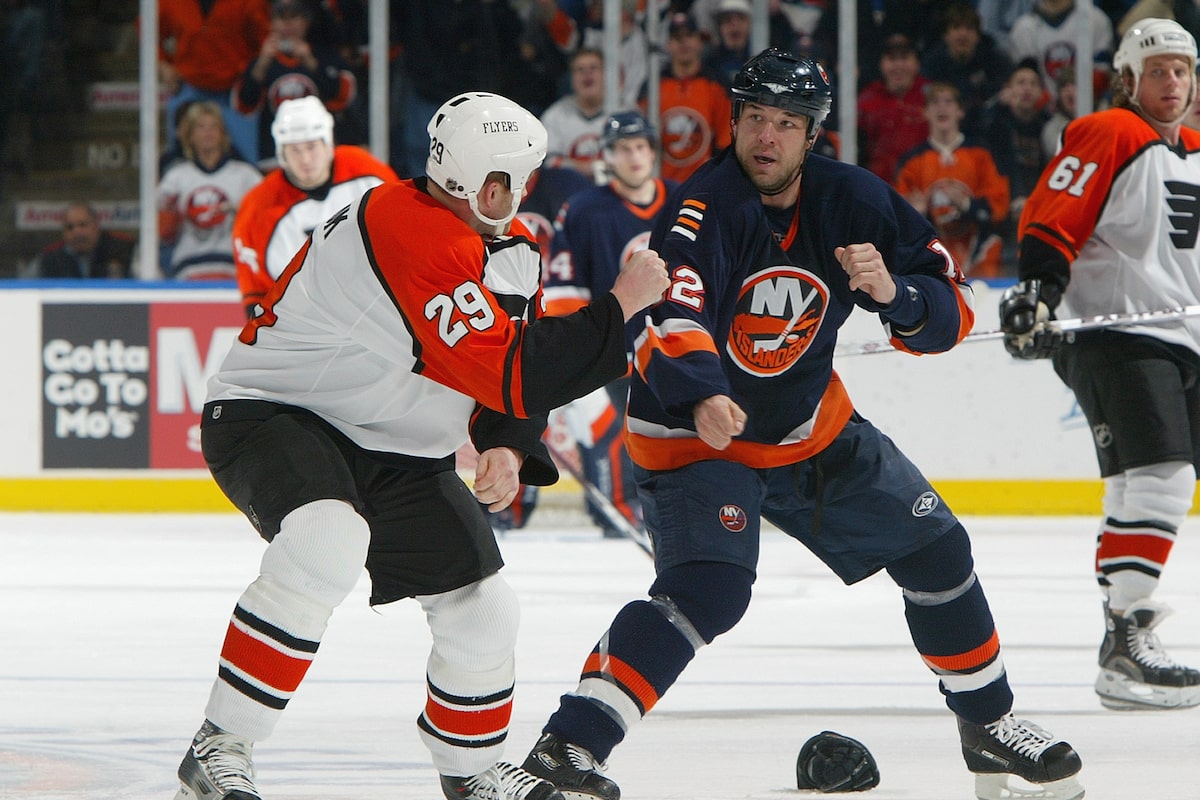
Chris Simon of the New York Islanders fights Todd Fedoruk of the Philadelphia Flyers in a 2007 game at Nassau Coliseum in Uniondale, N.Y.. Simon died in March.Jim McIsaac/Getty Images
Lauri Smith was visiting Orlando this past March when a journalist called about her ex-husband.
She had learned long ago to say “No comment” when reporters asked about Chris Simon, one of the toughest fighters in NHL history. She opted for the same approach this time around, especially considering the guy’s question: Do you have any comment on the death of your ex-husband?
She was stunned. Dead? He was 52, just a decade from his career on the ice, where he seemed virtually indestructible as an enforcer responsible for brutalizing any opposing player who endangered his team’s stars.
Simon’s family believes the brain disorder chronic traumatic encephalopathy (CTE) contributed to his death. Simon leaves the ice in a 2002 game against the Tampa Bay Lightning.CHRIS O’MEARA/The Canadian Press
“I thought it was a joke, to be honest, but then it was followed with my co-worker calling,” says Smith, an Ottawa-area law clerk who spent five years with Simon, who died by suicide on March 18.
For years, she’d been convinced that Simon had suffered a brain injury during a playing career that included stops in Quebec, Colorado and Washington. As far back as his 1993 rookie year with the Nordiques, she had researched his changing behaviour. Why had he begun blinking incessantly? Could blows to the head have triggered his anger-management issues? Can his employer help?
Those questions grew more urgent after their relationship dissolved and their son, Mitch, picked up the game. Would she have to worry about his head, too?
Sitting in Orlando last March, those unresolved questions intruded on her grief. At least with Simon’s death, she thought, the hockey world would be forced to recognize the devastating symptoms of the fighting she witnessed.
She thought wrong.
Instead, a new season has dawned with nary a mention of his name or chronic traumatic encephalopathy (CTE), the brain disorder Simon’s family believes led to his death. Smith, along with some of Simon’s old on-ice foes, want more accountability from the league and more assistance to prevent future deaths.
“I noticed after Chris’s passing that the story just went away,” she says. “No one’s talking about CTE and we should be talking about it more than ever. Did Chris have something hereditary? Was it a mental-health issue? Or was it actually CTE because of his job? I need to know for my son and the rest of the Simon family as well. And I think the NHL owes something to his family in terms of resolution.”
In death, Simon joined a tragic roll call of NHL fighters who died young – Derek Boogaard, Rick Rypien, Wade Belak, Jeff Parker and Todd Ewen, to name a few. All five men were posthumously diagnosed with CTE, which researchers say is caused by repeated brain injuries and can lead to depression, aggression, memory loss and physical impairment – sometimes long after triggering incidents.
Simon looks to shoot on Montreal Canadiens goalie Jose Theodore at Madison Square Garden in New York in December, 2003.KATHY WILLENS/The Canadian Press
In public statements, and in courtrooms, the NHL has denied any link between the game and the disease, and argued that it has gradually made the game safer by increasing penalties for fighting, introducing a concussion protocol and restricting contact to the head.
Two days after Simon’s death, reporter Frank Seravalli asked the NHL’s deputy commissioner, Bill Daly, if the league’s position had changed.
“No,” Daly said. “I think the science is still lacking.”
That’s consistent with the position the NHL took defending a lawsuit brought by hundreds of players who claimed the league ignored the effects of long-term head trauma. A judge declined to certify the class action in 2018 and the NHL eventually agreed to a US$18.9-million settlement with around 300 players – chump change compared with the reported US$1.2-billion the NFL has paid out so far related to a settlement in a similar case.
The Washington Capitals take a moment of silence for Chris Simon after he passed away, on March 20.John McCreary/Getty Images
There are many vocal critics of the league’s attitude toward CTE, but few as authoritative as a former World Wrestling Entertainment heel who went by the stage name Chris Harvard, so named for his Ivy League background. A mistimed drop kick in 2003 caused months of postconcussion syndrome, convincing him to retire and go back to school for a PhD in behavioural neuroscience under his real name, Chris Nowinski. As someone who approaches the issue as both a patient and a researcher, he can’t stomach the NHL’s position on CTE.
“People who care about hockey players need to recognize that what they are saying is not true, and we have to both push for them to tell the truth and also ignore what they’re saying as we try to help these hockey players,” said Nowinski, a doctor who co-founded Concussion Legacy Foundation, a charity that supports athletes and veterans affected by CTE.
Evidence continues to mount in his favour. A 2023 Boston University study found that a person’s risk of developing CTE increased by 23 per cent with each additional year of playing hockey.
Though they didn’t focus on CTE, Columbia University researchers found last year that NHL enforcers died 10 years earlier than non-enforcers. And the enforcer deaths were more strongly linked to drug overdose, suicide and neurodegenerative disease.
Matthew Barnaby of the Colorado Avalanche, right, fights Darren McCarty Detroit Red Wings during a 2004 match. Barnaby estimates he racked up at least 400 fights between his junior and pro career.Brian Bahr/Getty Images
Considering the number of punches that enforcers endure, Nowinski said it’s plausible to assume they have a higher risk of CTE, and potentially other neurodegenerative diseases, than other players.
Scrappers from Simon’s era tend to agree. Matthew Barnaby, a forward on a tough Buffalo Sabres team that terrorized opponents in the mid-90s, estimates he racked up at least 400 fights between his junior and pro career, enduring an average of five punches per bout, or 2,000 blows in total.
“It has to have some cumulative effects,” said Barnaby, 51, though he has not yet personally noticed any symptoms.
Dennis Vial, who led the league with 30 fights in the 1995-96 season, said his head gives him little trouble aside from a bit of anxiety when he hears of fallen foes. He can’t help but wonder what the future will bring. “One day am I going to wake up losing my mind and turning into some violent person?” says Vial, who runs a small business in Nova Scotia. “Will my brain deactivate because of all these injuries? I don’t know.”
One of Barnaby’s former teammates takes a starkly different view. As president of the local Sabres alumni association, Rob Ray said he hears about all manner of health problems among retired players. “The issues I deal with for players who never dropped their gloves are just as bad or worse than those that did,” he says.
“People have a burr up their ass about that physical style of game,” he adds. “They say any player who got in a fight suddenly has something wrong with them. And that bugs the piss out of me.”
Today, those old fights remain like ghosts in his bones. He’s got a plate with five screws in his thumb from the time he tried to give the Islanders’ Steve Webb an uppercut. His jaw occasionally locks up from the time it was broken in a fight. He’s got arthritis in both elbows and his hands are always stiff. But his head? “I’m doing fine, I got a few businesses, wife, family, kids. I don’t have a problem,” he says.
Not everyone’s fine. When NHL players first launched their class-action lawsuit against the league for the effects of head trauma, Mike Peluso was one of the star plaintiffs. A veteran of nine seasons who won a Stanley Cup with the New Jersey Devils, Peluso struggled with grand mal seizures following a 1993 knockout by St. Louis Blues tough-guy Tony Twist. In the years since his 1998 retirement he says he’s battled depression, dementia and suicidal thoughts.
Mike Peluso, left, fights with Tie Domi of the Winnipeg Jets in 1993. Peluso struggled with grand mal seizures following a 1993 fight and since his 1998 retirement he says he’s battled depression, dementia and suicidal thoughts.
A few years back, he loaded some of his prescription medication into a bowl of popcorn, with plans to end his life, but couldn’t stand the thought of his Labrador Retriever, Coors, being alone.
Coors has since died. He keeps the dog’s ashes in a room off his basement for the day they can be buried together.
“Had I known the side effects, I never would have played this game,” he said in an interview at his townhouse in Hudson, Wis., where he said he receives little assistance aside from a US$830-a-month pension.
But that lack of help is starting to change.
Seven years ago, former goalie Glenn Healy took over as president and executive director of the NHL Alumni Association, then known primarily as the organizer of old-timers’ games. From the start, he was inundated with calls about suicide, depression and other problems among players, for whom he had nothing to offer.
So the association hired a medical director, three social workers, a dental consultant and created a mental-health network based in Ottawa, Pittsburgh and Sweden that can see players on a moment’s notice.
Healy says his staff is helping around 200 players right now with anything from brain scans to rent money. “Most of our calls come from the wives saying they want their husband back, or from a kid saying they want their dad back. It’s rarely the player.”
They can’t reach everyone. Peluso dismissed the idea of asking for the association’s help. But nobody’s about to do it on his behalf.
“I don’t have anybody,” says Peluso, surrounded by hockey memorabilia, including a photo of Healy, in his basement. “Hopefully I’ll get a will done some time, and when that time comes, it comes.”
After Oregon football coach Dan Lanning used a loophole in the sport’s penalty for too many men on the field to drain critical seconds from the clock during his Ducks’ defense of an attempted Ohio State comeback in what became an Oregon win, the NCAA this week rushed to update its rule book.
Now, teams on the other side of that penalty can get their 5 free yards in addition to lost time back.
Problem solved.
Unfortunately, fixing the more common trend of rule exploitation once again marring the game won’t be so easy.
Give Lanning at least a little credit for figuring out a crafty way to give his team an edge.
His maneuver can be respected even while it was clear the rule should be adjusted.
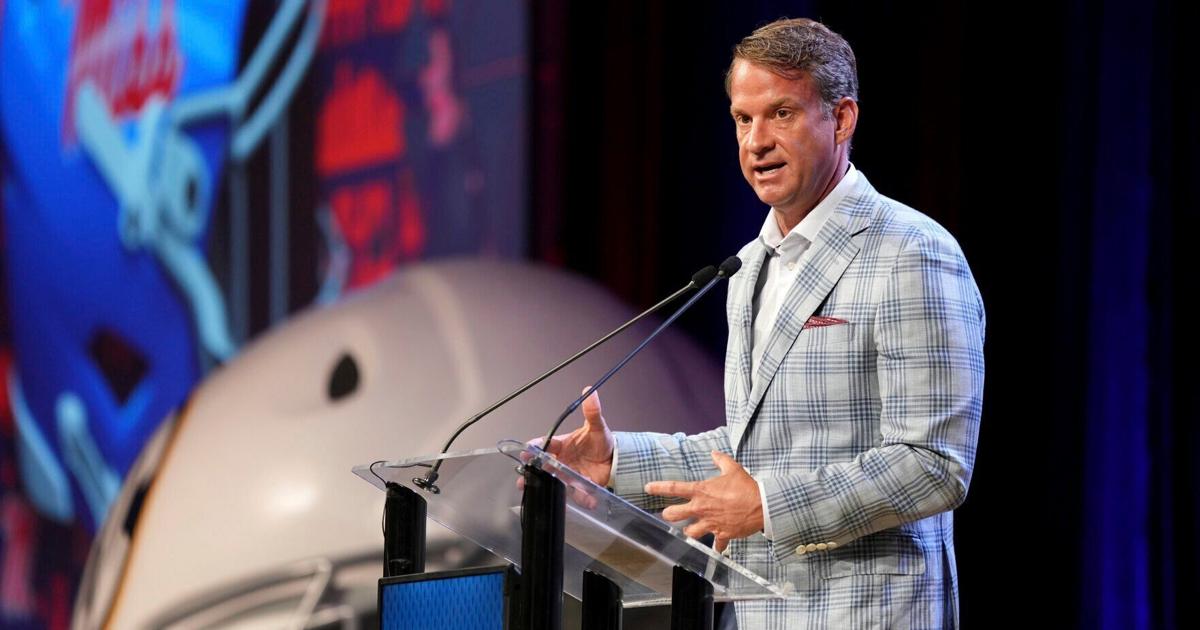
Nothing commendable can be said, however, about the coaches — and it’s not just Lane Kiffin of Ole Miss, although he has become the who-me face of it this time around — who continue to instruct players to fake injuries.
Because you can’t polygraph a supposedly injured player in real time and because asking officials to make a call on whether a player is truly hurt is a terrible idea, coaches like Kiffin (and others) continue to ask their players to do something unethical to give their teams an edge. Flops stall opponents’ momentum. They create mini timeouts. They’re obvious. But nothing has been done to stop them.
Oklahoma has been accused of it. Former Mizzou coach Barry Odom’s UNLV, too. Kansas State as well. Others have gotten away with it without social media scorn.
I feel bad for the players who are put in this position; they have to act unethically or defy their coach, which are both bad options.
I feel a sense of anger when I see it but not nearly as much as the coaches who are seeing it used against them or the broadcasters who see it happen live and feel like they have to ignore what seems obvious. Good on those who are done ignoring.
“I mean, coaches, all the time, we hear it all the time — molder of young men, accountability, discipline, do the right thing all the time,” Rece Davis said on a recent “College GameDay” Podcast. “All these things are very good values and things that should be adhered to — by the coaches too. You don’t want these fake injuries? Stop doing it. Stop doing it.”
Davis wasn’t done.
“Coaches — you’re the ones preaching accountability,” he added. “Stop doing it. Stop it already, you know. You can stop it.”
Davis, Alabama legend turned TV commentator Nick Saban and other opinion-shapers in the sport should be commended for calling out the football version of basketball flopping, which got so bad recently hoops did institute a way for officials to penalize the fakers.
It’s a lot harder of a fix in football, though, where a sudden leg cramp or delayed injury from a hit a few plays earlier really can suddenly pop up — and the fakers are even taught to mimic cramping symptoms, muddying the water. You can’t have officials attempting to measure injury seriousness in real time. That’s a recipe for disaster. The fakers capitalize on deceit.
The trend is getting talked about more this season, but unfortunately, it’s not new. Back when I covered Wyoming in 2012, former Mizzou offensive coordinator turned Cowboys head coach Dave Christensen went on a memorable rant about Air Force coach Troy Calhoun instructing his players to intentionally collapse in order to slow down Christensen’s speedy offense. In hindsight, Christensen calling Calhoun “fly boy” on Military Appreciation Night was not a good choice of words, but his anger was understandable.
Anyone who watched the game with unbiased eyes saw what Air Force was doing and how it helped the Falcons win the game. Christensen caught a suspension and a fine. Calhoun sneered and shrugged.
You can see why others coaches keep doing it. And as Saban has reminded TV viewers, any player who is taking a fake dive is being instructed by the sideline to do so.
Calhoun then, Kiffin now and any other coach who plays this card should be ashamed. Finding a rule glitch and exploiting it is one thing. Gamesmanship exists in any sport. Asking players to misrepresent their health in a violent sport is not that.
It’s poor sportsmanship. Period.
When a player takes off or loses his helmet during play, he has to sit out the next play unless the helmet came off as a result of a foul or unless his team calls a timeout. The rule is designed to make guys think twice about being properly protected with tightened chin straps.
Maybe a similar rule should be enacted to punish fake injuries. If a player goes down in a way that stalls the game, maybe he has to miss the rest of that series and the next one, too. Harsh, sure. But it would give coaches something to think about before drawing up the fake. Something beyond public shaming is needed.
Steve Shaw, the national coordinator for football officiating, has had to talk specifically with Ole Miss about the pattern that’s showed up in the Rebels’ games against Kentucky and South Carolina. Talking will only get so far.
Consequences will have to come, or nothing will change. Remember, teams were given a stern warning about this exact issue before the 2022 season. It didn’t help with some, clearly.
“The Art of Faking Injuries in College Football,” was an ESPN headline in 2020. This is not some new thing, but it does seem to be becoming an even more common thing.
“It’s fascinating to me to see how many injuries occur for them after the opposing offense makes a first down or makes a big play,” Gamecocks coach Shane Beamer said after losing to Ole Miss.
“The timing on some of the injuries,” he added, “it’s a really bad look for college football.”
Kiffin isn’t the only culprit.
He would, though, make a notable example now that it’s beyond time to crack down.
What Lanning did against Ohio State was creative. What injury fakers are doing is pathetic.
A new frontier or mad science? One doctornMail Sport consulted prefers to frame it as a possible step closer to the discovery of the ‘holy grail’ in the prevention of serious injury.
The object of the discussion is a piece of technology that is so arresting in its concept that it has drawn intrigue from Chinese Olympic circles to the Premier League and the elite end of US college sports.
It might also attract some scepticism.
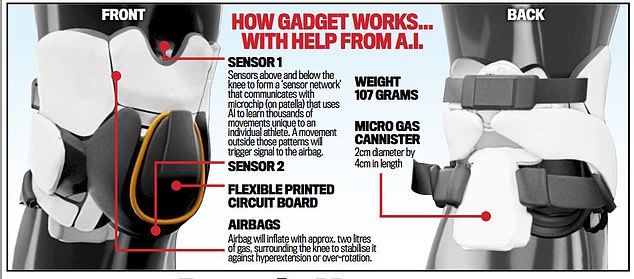
The device – created by 20-year-old London-based inventors Kylin Shaw and Bhavy Metakar, founders of the company Hippos Exoskeleton – is a knee brace that uses Artificial Intelligence to detect when the joint is approaching breaking point before deploying an airbag quicker than the time it takes a ligament to rupture.
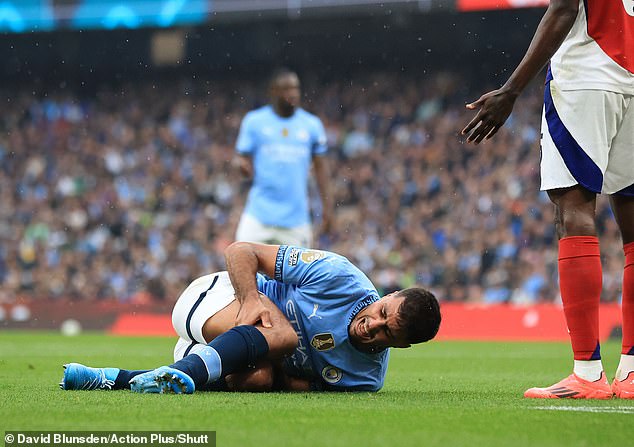
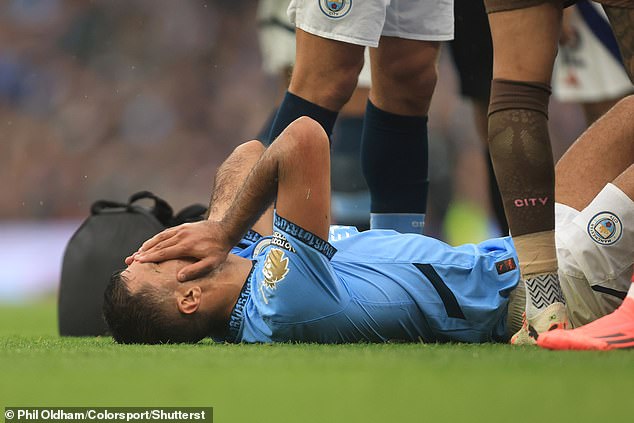
To the persistent threat of knee cruciate tears, like the one Manchester City’s Rodri is suspected to have suffered on Sunday, Shaw and Metakar say their design is capable of stopping 80 per cent of such injuries from occurring.
A revolutionary ‘air bag’ has been designed to help stop serious knee injuries like Rodri’s
The brace device uses Artificial Intelligence to detect when a joint is nearing breaking point
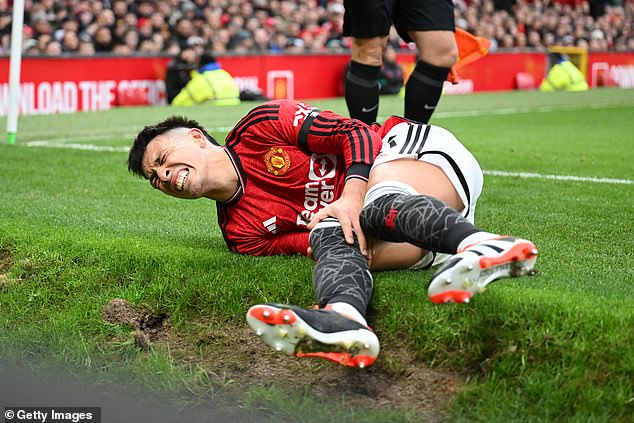
10 Premier League players suffered knee ligament tears last season, which strike with greater prevalence in the women’s game.
It is a striking claim that will raise eyebrows. But it is one that has generated curiosity within the sporting sector as the idea moves through its testing phase.
Crystal Palace were sufficiently interested to trial a prototype within their academy during the summer and, according to Shaw, he has already received a large pre-order from the Chinese Olympic Association.
The medical lead at UK Athletics, Dr James Brown, who has discussed the research with Shaw, described the prospect to Mail Sport as a potential ‘game-changer’.
‘We believe this can revolutionise the space in how knee injuries are prevented,’ Shaw tells Mail Sport, with an aim to introduce the device to elite sporting competition within two years.
The design centres on a pair of sensors placed at the top and bottom of a 107-gram brace, each tracking the movement patterns of the upper and lower leg.
‘They form a sensor network,’ Shaw explains. ‘A flexible PCB (printed circuit board, located on the knee cap) will use AI to learn thousands of the movements that your knee is conducting and will recognise anything outside of your normal pattern, after landing from a jump, for example.
The investors claim the design is capable of stopping 80 per cent of knee cruciate tears
Lisandro Martinez was one of 10 Premier League players to suffer a knee ligament tear last year
‘It can confirm if the hyper extension or rotation is serious enough to cause an injury and that will trigger a danger signal.’
If that occurs, the airbag is designed to inflate within 25 milliseconds via a micro gas canister to surround and stabilise the knee, thereby stopping hyperextension or over-rotation.
Theoretically, a season-ending injury would be prevented.
Shaw adds: ‘Research shows it typically takes 60 milliseconds for an ACL to tear and the airbag tightens after 20 to 25 milliseconds, protecting the knee. It then deflates almost instantaneously, so your knee is not frozen in place and you carry on playing. Our technology is reusable because the cannister is changed like you change a battery.’
The risks of an accidental discharge are tempting to imagine, which Shaw counters by claiming only six malfunctions occurred in more than 4,000 tests, featuring trials with professional athletes, including the American world champion skier Alex Schlopy.
It remains to be seen if it would be deemed compliant in some sports. Under Section 4 of the International Football Association Board’s laws, the details are vague: ‘Non-dangerous protective equipment, for example gloves, headgear, facemasks and knee and arm protectors made of soft, lightweight padded material are permitted.’
With letters of intent secured from within Spanish La Liga basketball and the NCAA US college system, as well as China, Shaw and Metakar have a patent application pending in the United States.
The Chinese Olympic Association have already made a large pre-order for the product
Broader interest is evidently spreading, which encompasses Dr James Brown, who has worked in high-performance sport for three decades across rugby, Yorkshire Cricket, British Triathlon and now UK Athletics.
‘If the product can match its premise this would represent a significant leap forward in protecting athletes,’ he says.
‘We are currently at a time when a lot of energy and resource goes into predicting when an athlete is at risk, but prevention is the holy grail and the hardest aspect to attain.
‘From what I’ve seen in the early stages this could be a game-changer if its reliability and compliance can be proved through the testing they are currently undertaking. It’s exciting.’