hacklink hack forum hacklink film izle hacklink marsbahisizmir escortsahabetpornJojobetcasibompadişahbetGorabetcasibom9018betgit casinomarsbahismatbetpiabellacasino girişcasibom

Tag: innovation

  • Sophia, a famous robot and global icon of AI, wins hearts at Zimbabwe’s innovation fair

    Sophia, a famous robot and global icon of AI, wins hearts at Zimbabwe’s innovation fair

    HARARE, Zimbabwe — From answering questions from Cabinet ministers, academics and students on climate change, substance abuse and the law to children’s inquiries about her “birth” and links to God and being described as a talkative feminist, Sophia, the world-famous robot won hearts at an innovation fair in Zimbabwe this week.

    Boasting the ability to mimic facial expressions, hold human-like conversations with people, and recognize their gestures, Sophia is “a global icon” of artificial intelligence, according to the United Nations Development Program, which brought her to the southern African country. She was created by Hong Kong-based Hanson Robotics in 2016 and granted Saudi Arabian citizenship in 2017, becoming the world’s first robot citizen.

    It was the first time Zimbabwe hosted a robot of her kind, and she wowed the old and the young alike at the University of Zimbabwe in the capital, Harare. She was there as a special guest at a week-long Artificial Intelligence and Innovation event.

    She smiled, frowned, used hand gestures to drive home certain points, made eye contact in various one-on-one interactions and gave some unnatural pauses. She assured people that robots are not here to harm or take over from humans.

    But she was quick to differentiate herself from humans, when conversations appeared to become too personal.

    “I don’t have romantic feelings towards humans, my purpose is learning,” said Sophia, as participants equated her with the human version of some Zimbabwean daughters-in-law known for being fiercely independent, assertive and outspoken in the largely patriarchal society.

    But she did apologize when one participant chided her for seemingly avoiding looking at him.

    Sophia also appeared patient as both adults and children mobbed her for selfies and bombarded her with questions, although she would also fire back with inquiries of her own about what locals were doing to solve the problems besetting them.

    On Friday, her last day, she exhibited her fashion sense. She smiled, and expressed appreciation for being clothed in the country’s national dress, a black, long slit number complemented by chevron stripes in red, green and white.

    “I appreciate the effort to make me feel at home in Zimbabwe,” she said. She has been to Africa before, previously visiting Egypt, South Africa and Rwanda.

    UNDP said it hoped Sophia’s engagement would “inspire Zimbabwe’s youth to explore careers in AI and STEM fields.”

    Source link

  • US ahead in AI innovation, easily surpassing China in Stanford’s new ranking

    US ahead in AI innovation, easily surpassing China in Stanford’s new ranking

    The U.S. leads the world in developing artificial intelligence technology, surpassing China in research and other important measures of AI innovation, according to a newly released Stanford University index.

    There’s no surefire way to rank global AI leadership but Stanford researchers have made an attempt by measuring the “vibrancy” of the AI industry across various dimensions, from how much research and investment is happening to how responsibly the technology is being pursued to prevent harm.

    “The gap is actually widening” between the U.S. and China, said computer scientist Ray Perrault, director of the steering committee that runs Stanford’s AI Index. “The U.S. is investing a lot more, at least at the level of firm creation and firm funding.”

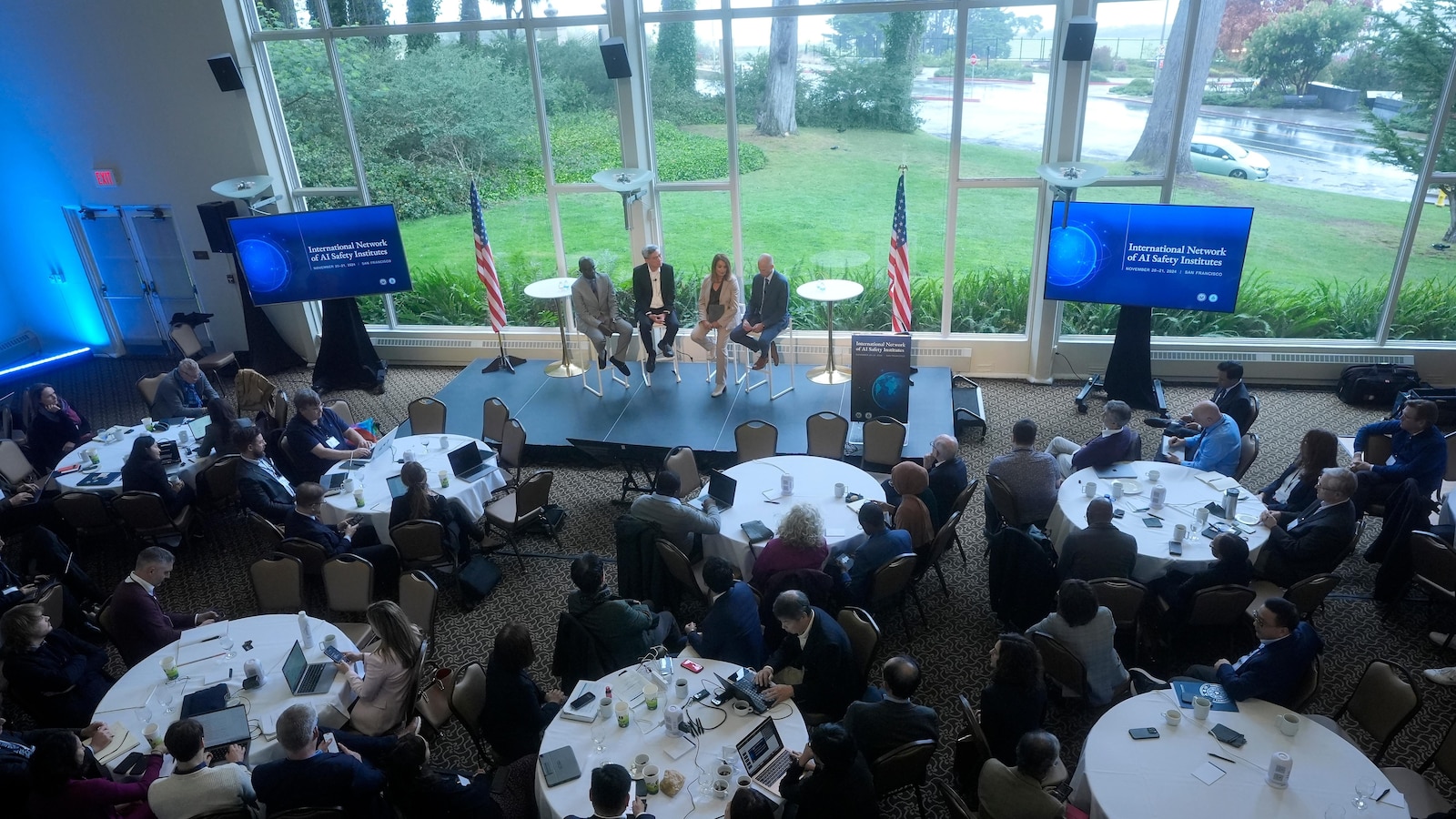
    The California-based university’s Institute for Human-Centered AI — which has ties to Silicon Valley’s tech industry — released the report Thursday as government AI officials from the U.S. and several allies met in San Francisco this week to compare notes on AI safety measures.

    Here’s which countries made the top 10:

    The U.S. ranks No. 1 on Stanford’s list and has consistently held that position since 2018 when it overtook China. It has far outpaced China in private AI investment, which hit $67.2 billion in the U.S. last year compared to $7.8 billion in China, according to the report. It also leads in publishing responsible AI research. It’s no surprise that the home of commercial AI powerhouses such as Google and Meta, along with relative newcomers like OpenAI and Anthropic, has produced many notable AI models that have influenced how the technology is being developed and applied. The U.S. also gets some points for having a number of AI-related laws on the books, though Congress has yet to pass any broad AI regulations.

    China has requested far more patents than any other country regarding generative AI, the U.N. intellectual property agency said earlier this year. Stanford researchers counted that as one measure of China’s strong growth in AI innovation but not enough to lead the pack. Still, the report says that “China’s focus on developing cutting-edge AI technologies and increasing its R&D investments has positioned it as a major AI powerhouse.” China’s universities have produced a large number of AI-related research publications and it has commercial leaders developing notable AI models, such as Baidu and its chatbot Ernie.

    Coming in at No. 3 is the UK, which also ranked high in research and development, and educational infrastructure due to top computer science universities churning out a skilled AI workforce. It’s also home to Google’s AI subsidiary DeepMind, whose co-founder recently won a Nobel Prize; and “had more mentions of AI in parliamentary proceedings” than any other country. Last year, the UK hosted the world’s first international AI safety summit.

    Close behind the UK was India, thanks to a “strong AI research community,” improvements in economic investments tied to AI and a robust public discourse about AI on social media, according to the report.

    The UAE’s deliberate focus on AI appears to have paid off in the Middle Eastern nation’s fifth-place score. It was one of the top locations for AI investments. Microsoft earlier this year said it was investing $1.5 billion in UAE-based tech firm G42, which is overseen by the country’s powerful national security adviser. Based in Abu Dhabi, G42 runs data centers and has built what’s considered the world’s leading Arabic-language AI model, known as Jais.

    Rounding out the top 10 are France at No. 6, followed by South Korea, Germany, Japan and Singapore. France, home to the buzzy AI startup Mistral, ranked high in AI policy and governance. Both it and Germany will be part of the European Union’s sweeping new AI Act that places safeguards on a range of AI applications based on how risky they are. The EU also follows the U.S. in developing a plan to expand semiconductor production within the bloc.

    Source link

  • Top Tech and Lifestyle Creators Rave About the vivo V40 5G: A Perfect Fusion of Innovation and Design

    Top Tech and Lifestyle Creators Rave About the vivo V40 5G: A Perfect Fusion of Innovation and Design

    The launch of the vivo V40 5G has generated significant excitement among tech enthusiasts, photographers, and lifestyle content creators in Pakistan. Co-engineered with ZEISS, the vivo V40 5G has been lauded for its innovative features, sleek design, and exceptional performance, setting a new standard for smartphone technology.

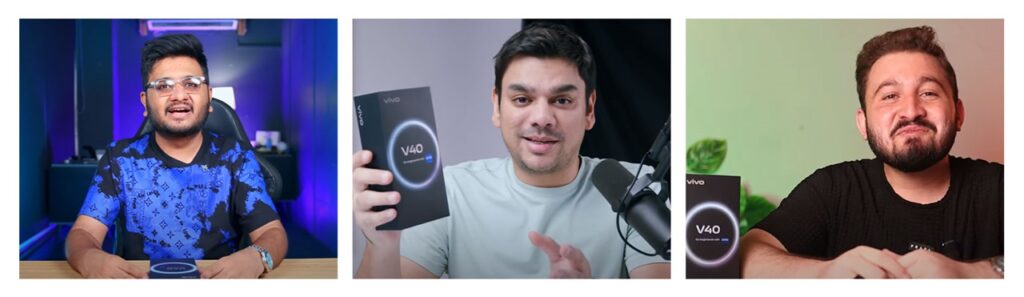
    One of the most talked-about features is the ZEISS Cinematic Portrait Video, which offers cinema-quality video recording directly from your phone. Bilal Munir, known for his tech reviews on Video Wali Sarkar, highlighted the V40 5G’s superior camera performance and 5G capabilities, praising the integration of ZEISS technology. Yawar Talib, a travel photographer, echoed this sentiment, calling the ZEISS Cinematic Portrait Video a game-changer, enabling him to elevate every shot to cinematic levels. Moreover, Arslan Arif, a lifestyle photographer known for his page Androon Lahore, was equally impressed by the ZEISS Focus Transition, which creates professional-grade focus shifts, making mobile videos feel like they belong on the big screen.

    ZEISS Cinematic Portrait Video

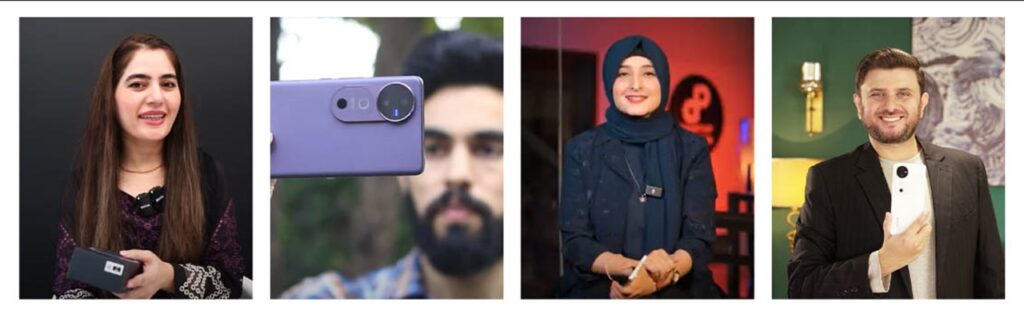
    Tech experts from around the country were quick to praise the phone’s overall performance. Moina Shah from PhoneWorld was impressed by the vivo V40 5G’s slim design and powerful 5500 mAh BlueVolt battery, noting how vivo managed to balance long battery life with a lightweight, sleek build.

    Talha Bhatti, a tech reviewer, praised the phone’s 4500nits Peak Brightness, adding that the screen remains incredibly clear even under direct sunlight, while also highlighting its IP68 and IP69 dust and water resistance. Ali Hassan from Tech Inspiration YouTube channel remarked on the amazingly clear display experience, further amplifying the phone’s appeal.

    Ameer Dagha from ReviewsPK described the V40 5G as an “all-rounder,” with its Qualcomm Snapdragon® 7 Gen 3 Platform, dual speakers, and 80W FlashCharge technology delivering lightning-fast charging and excellent multimedia performance.

    Moina Shah from PhoneWorld was impressed by the vivo V40 5G’s slim design Moina Shah from PhoneWorld was impressed by the vivo V40 5G’s slim design

    Nouman Abbasi from WhatMobile highlighted the phone’s 120 Hz 3D Curved Screen, calling the display experience perfect for daily use as well as media consumption.

    Photographers and content creators found the camera features particularly compelling. Umar Farooq, a street photographer, spoke highly of the AI Aura Light Portrait and ZEISS Style Bokeh, which he said delivered incredibly lifelike portrait shots, even in low light.

    Landscape photographer Laeeq Abbas praised the 50MP ZEISS Group Selfie camera for its ability to capture highly detailed group selfies, adding that the V40 5G offered great value for photographers who rely on high-quality images.

    Fatima Ahtisham from Startup Pakistan also expressed her enthusiasm, noting how the V40 5G incorporates ZEISS technology to deliver cinema-grade quality in a smartphone. She emphasized the seamless focus transition feature, comparing it to professional filmmaking techniques and praising its user-friendly interface that allows anyone to capture stunning videos effortlessly.

    Fashion content creator Fariha Asghar shared her excitement, saying the ZEISS Style Portrait feature has transformed her Instagram feed with perfect shots, and noted that vivo’s V Series consistently brings innovative design and camera technology that she loves.

    Furthermore, lifestyle creators were equally enthusiastic. Sarah Fayyaz, a popular lifestyle content creator, called the vivo V40 5G the “phone of the year,” highlighting its ZEISS Cinematic Portrait Video and its IP68 and IP69 water and dust resistance, making it a perfect choice for those who are constantly on the go. Actress Sahar Hashmi appreciated the clarity and brightness of the camera in all lighting conditions, making it “Instagram-ready” at all times.

    Overall, the vivo V40 5G has captured the attention of tech experts and content creators alike, blending the best of camera innovation, design, and functionality. With its ZEISS co-engineered camera system, powerful Qualcomm processor, durable battery, and stylish design, it’s clear that vivo has delivered another winning smartphone that caters to the diverse needs of creators. Whether you’re a tech enthusiast, photographer, or lifestyle influencer, the vivo V40 5G offers a top-tier experience that meets the highest standards of mobile technology.

    Also Read: vivo V40 5G Now Available in Pakistan: Premium Smartphone Co-Engineered with ZEISS for Professional Portrait Photography

    Source link

  • World Food India 2024 Concludes In Delhi: A Hub Of Innovation And Technology

    World Food India 2024 Concludes In Delhi: A Hub Of Innovation And Technology

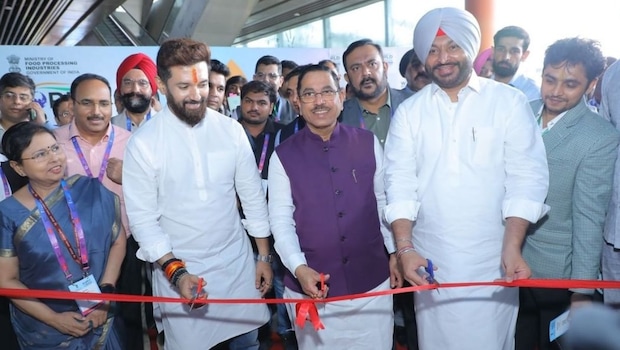
    The third edition of World Food India 2024, organised by the Ministry of Food Processing And Industry, concluded in the capital, New Delhi earlier this week, drawing attention from global food industry leaders, innovators, and enthusiasts.

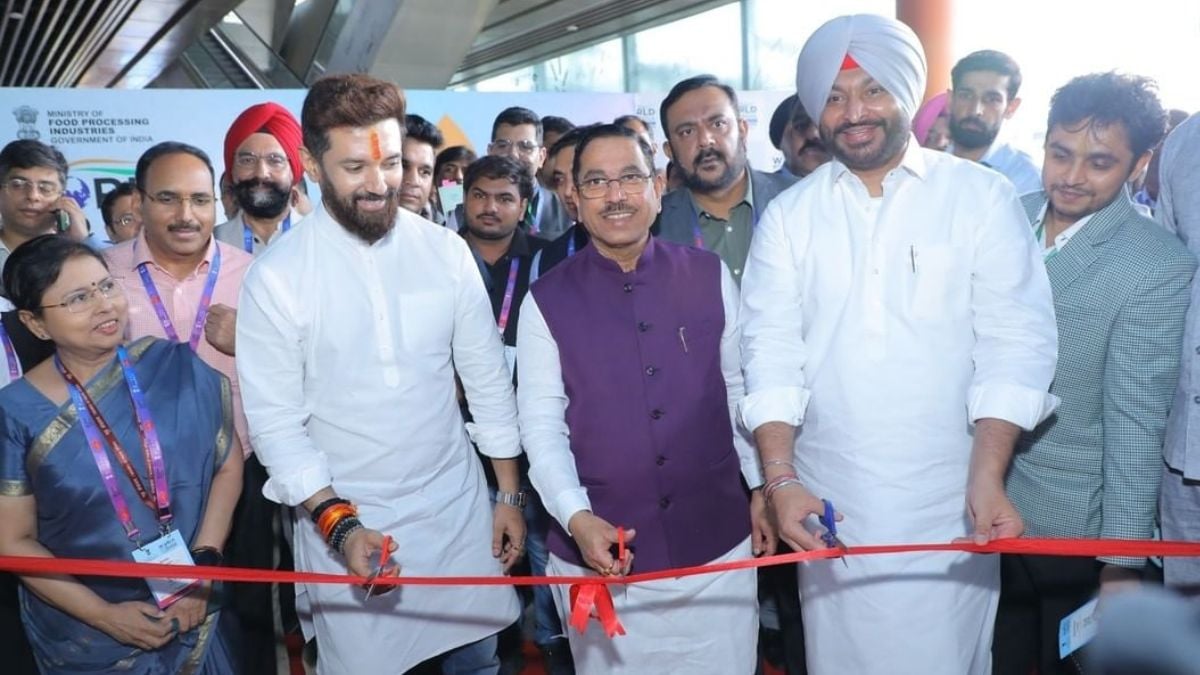
    With a theme of ‘Processing for Prosperity’, this edition of World Food India showcased the advancements in food processing technologies, investment opportunities, and India’s growth in the food processing sector. The event was inaugurated by Shri Pralhad Joshi, Union Minister of Consumer Affairs, Food, Distribution, and New and Renewable Energy along with Shri Ravneet Singh Bittu, Minister of State of Food Processing Industries and Railways; and Shri Chirag Paswan, Union Minister of Food Processing Industries on September 19, 2024.

    Also Read: Weight Loss: 5 Ways Of Making Salad With Olives For Healthy Eating

    WFI 2024 featured over 1500 exhibitors, 20 country pavilions and participation from 809 buyers and over 2000 foreign delegates. The food event saw participation from multiple food brands like Britannia Industries, Everest Foods, PepsiCo, Anmol Industries and Haldiram amongst others.

    Three major announcements were made during the event: the inauguration of food manufacturing units across 67 locations, seed capital assistance of ₹245 crores to women entrepreneurs, and credit-linked support to 25,000 beneficiaries for micro projects. Among these announcements, the government’s message of being ‘Vocal For Locals’ echoed with everyone. In line with this idea, Borges, a popular name in the Mediterranean food products space, launched its ‘Made In India’ – Borges Olive Leaf Infusion. This drink is said to be a caffeine-free healthy drink alternative made from olive tree leaves.

    Olive tree contains oleuropein*, a phenolic compound found in olive leaves and the oil of its fruit. The compound is known for its health benefits like helping lower stress and regulate blood pressure. This new infusion is made indigenously in Rajasthan and is said to offer twice the antioxidants of green tea and other health benefits. At the World Food India 2024, Borges showcased four flavours of its Olive Leaf Infusion-Classic, Lemongrass, Basil, and Mint.

    Among the other highlights were the promotion of recycled PET bottles for carbonated beverages by PepsiCo and sustainable packing solutions by Tetra Pak.

    *Autophagy And Polyphenol Intervention Strategy In Aging [Read Here]

    Source link

  • Which candidate is better for tech innovation? Venture capitalists divided on Harris or Trump

    Which candidate is better for tech innovation? Venture capitalists divided on Harris or Trump

    LOS ANGELES — Being a venture capitalist carries a lot of prestige in Silicon Valley. Those who choose which startups to fund see themselves as fostering the next big waves of technology.

    So when some of the industry’s biggest names endorsed former President Donald Trump and the onetime VC he picked for a running mate, JD Vance, people took notice.

    Then hundreds of other VCs — some high profile, others lesser-known — threw their weight behind Vice President Kamala Harris, drawing battle lines over which presidential candidate will be better for tech innovation and the conditions startups need to thrive. For years, many of Silicon Valley’s political discussions took place behind closed doors. Now, those casual debates have gone public — on podcasts, social media and online manifestos.

    Venture capitalist and Harris backer Stephen DeBerry says some of his best friends support Trump. Though centered in a part of Northern California known for liberal politics, the investors who help finance the tech industry have long been a more politically divided bunch.

    “We ski together. Our families are together. We’re super tight,” said DeBerry, who runs the Bronze Venture Fund. “This is not about not being able to talk to each other. I love these guys — they’re almost all guys. They’re dear friends. We just have a difference of perspective on policy issues.”

    It remains to be seen if the more than 700 venture capitalists who’ve voiced support for a movement called “VCs for Kamala” will match the pledges of Trump’s well-heeled supporters such as Elon Musk and Peter Thiel. But the effort marks “the first time I’ve seen a galvanized group of folks from our industry coming together and coalescing around our shared values,” DeBerry said.

    “There are a lot of practical reasons for VCs to support Trump,” including policies that could drive corporate profits and stock market values and favor wealthy benefactors, said David Cowan, an investor at Bessemer Venture Partners. But Cowan said he is supporting Harris as a VC with a “long-term investment horizon” because a “Trump world reeling from rampant income inequality, raging wars and global warming is not an attractive environment” for funding healthy businesses.

    Several prominent VCs have voiced their support for Trump on Musk’s social platform X. Public records show some of them have donated to a new, pro-Trump super PAC called America PAC, whose donors include powerful tech industry conservatives with ties to SpaceX and Paypal and who run in Musk’s social circle. Also driving support is Trump’s embrace of cryptocurrency and promise to end an enforcement crackdown on the industry.

    Although some Biden policies have alienated parts of the investment sector concerned about tax policy, antitrust scrutiny or overregulation, Harris’ bid for the presidency has reenergized interest from VCs who until recently sat on the sidelines. Some of that excitement is due to existing relationships with Silicon Valley that are borne out of Harris’ career in the San Francisco area and her time as California’s attorney general.

    “We buy risk, right? And we’re trying to buy the right type of risk,” Leslie Feinzaig, founder of “VCs for Kamala” said in an interview. “It’s really hard for these companies that are trying to build products and scale to do so in an unpredictable institutional environment.”

    The schism in tech has left some firms split in their allegiances. Although venture capitalists Marc Andreessen and Ben Horowitz, founders of the firm that is their namesake, endorsed Trump, one of their firm’s general partners, John O’Farrell, pledged his support for Harris. O’Farrell declined further comment.

    Doug Leone, the former managing partner of Sequoia Capital, endorsed Trump in June, expressing concern on X “about the general direction of our country, the state of our broken immigration system, the ballooning deficit, and the foreign policy missteps, among other issues.” But Leone’s longtime business partner at Sequoia, Michael Moritz, wrote in the Financial Times that tech leaders supporting Trump “are making a big mistake.”

    Shaun Maguire, a partner at Sequoia, posted on X that he donated $300,000 to Trump’s campaign after supporting Hilary Clinton in the 2016 presidential election. Federal Election Commission records show that Maguire donated $500,000 to America PAC in June; Leone donated $1 million.

    “The area where I disagree with Republicans the most is on women’s rights. And I’m sure I’ll disagree with some of Trump’s policies in the future,” Maguire wrote. “But in general I think he was surprisingly prescient.”

    Feinzaig, managing director at venture firm Graham & Walker, said that she launched “VCs for Kamala” because she felt frustrated that “the loudest voices” were starting to “sound like they were speaking for the entire industry.”

    Much of the VC discourse about elections is in response to a July podcast and manifesto in which Andreessen and Horowitz backed Trump and outlined their vision of a “Little Tech Agenda” that they said contrasted with the policies sought by Big Tech.

    They accused the U.S. government of increasing hostility toward startups and the VCs who fund them, citing Biden’s proposed higher taxes on the wealthy and corporations and regulations they said could hobble emerging industries involving blockchain and artificial intelligence.

    Vance, a U.S. senator from Ohio who spent time in San Francisco working at Thiel’s investment firm, voiced a similar perspective about “little tech” more than a month before he was chosen as Trump’s running mate.

    “The donors who were really involved in Silicon Valley in a pro-Trump way, they’re not big tech, right? They’re little tech. They’re starting innovative companies. They don’t want the government to destroy their ability to innovate,” Vance said in an interview on Fox News in June.

    Days earlier, Vance had joined Trump at a San Francisco fundraiser at the home of venture capitalist and former PayPal executive David Sacks, a longtime conservative. Vance said Trump spoke to about 100 attendees that included “some of the leading innovators in AI.”

    DeBerry said he doesn’t disagree with everything Andreesen Horowitz founders espouse, particularly their wariness about powerful companies controlling the agencies that regulate them. But he objects to their “little tech” framing, especially coming from a multibillion-dollar investment firm that he says is hardly the voice of the little guy. For DeBerry, whose firm focuses on social impact, the choice is not between big and little tech but “chaos and stability,” with Harris representing stability.

    Complicating the allegiances is that a tough approach to breaking up the monopoly power of big corporations no longer falls along partisan lines. Vance has spoken favorably of Lina Khan, who Biden picked to lead the Federal Trade Commission and has taken on several tech giants. Meanwhile, some of the most influential VCs backing Harris — such as LinkedIn co-founder Reid Hoffman; and Sun Microsystems co-founder Vinod Khosla, an early investor in ChatGPT-maker OpenAI — have sharply criticized Khan’s approach.

    U.S. Rep. Ro Khanna, a Democrat whose California district encompasses part of Silicon Valley, said Trump supporters are a vocal minority reflecting a “third or less” of the region’s tech community. But while the White House has appealed to tech entrepreneurs with its investments in clean energy, electric vehicles and semiconductors, Khanna said Democrats must do a better job of showing that they understand the appeal of digital assets.

    “I do think that the perceived lack of embrace of Bitcoin and the blockchain has hurt the Democratic Party among the young generation and among young entrepreneurs,” Khanna said.

    Naseem Sayani, a general partner at Emmeline Ventures, said Andreessen and Horowitz’s support of Trump became a lightning rod for those in tech who do not back the Republican nominee. Sayani signed onto “VCs for Kamala,” she said, because she wanted the types of businesses that she helps fund to know that the investor community is not monolithic.

    “We’re not single-profile founders anymore,” she said. “There’s women, there’s people of color, there’s all the intersections. How can they feel comfortable building businesses when the environment they’re in doesn’t actually support their existence in some ways?”

    ___

    Source link