hacklink hack forum hacklink film izle hacklink marsbahisizmir escortsahabetpornJojobetcasibompadişahbetjojobet

Tag: Iran

  • Rolling blackouts plague Iran and some suspect bitcoin mining may have a role in the outages

    Rolling blackouts plague Iran and some suspect bitcoin mining may have a role in the outages

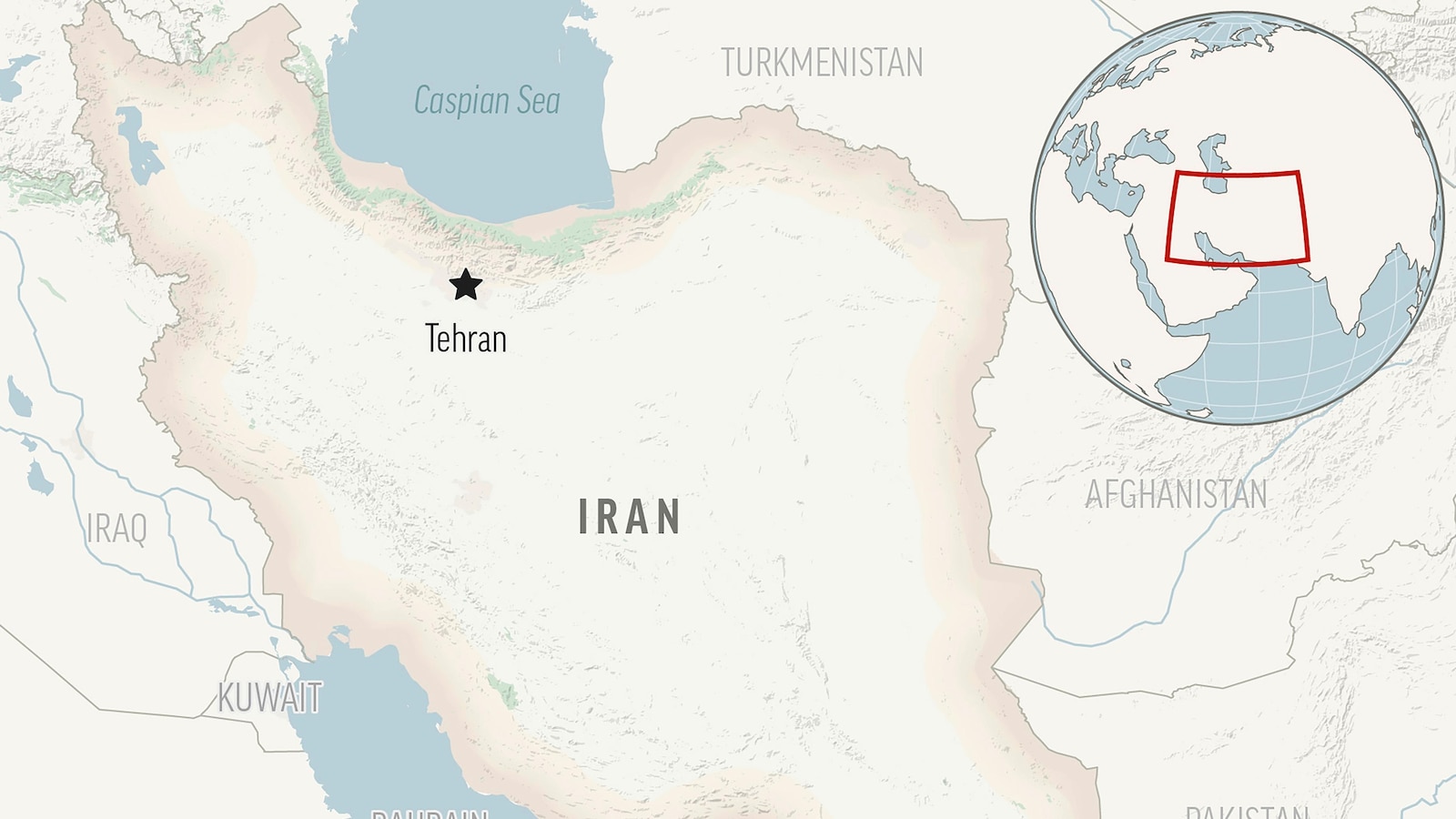
    TEHRAN, Iran — Iran’s capital and outlying provinces have faced rolling power blackouts for weeks in October and November, with electricity cuts disrupting people’s lives and businesses. And while several factors are likely involved, some suspect cryptocurrency mining has played a role in the outages.

    Iran economy has been hobbled for years by international sanctions over its advancing nuclear program. The country’s fuel reserves have plummeted, with the government selling off more to cover budget shortfalls as wars rage in the Middle East and Tehran grapples with mismanagement.

    The demand on the grid has not let up, however — even as Iranians stopped using air conditioners as the weather cooled in the fall and before winter months set in, when people fire up their gas heaters.

    Meanwhile, bitcoin’s value has rocketed to all-time highs after the U.S. election was clinched by Donald Trump. It hit the $100,000 mark for the first time last week, just hours after the president-elect said he intends to nominate cryptocurrency advocate Paul Atkins to be the next chair of the Securities and Exchange Commission.

    The surge has led some to suspect that organized cryptocurrency mining — sucking away huge amounts of power — has played a part in the outages in Iran.

    “Unfortunately, some opportunistic and exploitative individuals use subsidized electricity, public networks and other resources for cryptocurrency mining without authorization,” Mostafa Rajabi, the CEO of Iran’s government-owned power company, said back in August.

    Iran’s state energy company did not respond to a request for comment.

    Power outages have come and gone in the past in Iran, which struggles with aging equipment at many of its plants. Over the summer, sustained blackouts struck industrial parks near Tehran and other cities. Then in October and November, rolling power cuts across Tehran’s neighborhoods became the norm in daylight hours.

    Climate change has been blamed in part, with persisting droughts and less water running through Iranian hydroelectric dams.

    Iran’s reformist President Masoud Pezeshkian ordered several power plants to stop burning mazut, a high-polluting heavy fuel common in the former Soviet Union countries. Tehran has used it in the past to make up the difference in electricity generation.

    Fuel reserves, both in diesel and natural gas, also remain low even though Iran is an OPEC member and home to one of the world’s second-largest reserves of natural gas, behind only Russia. There’s been no explanation for the decision to keep those reserves low, though critics have suggested Iran likely sold the fuel to cover budget shortfalls.

    For his part, Pezeshkian has said that he must “honestly tell the public about the energy situation.”

    “We have no choice but to consume energy economically, especially gas, in the current conditions and the cold weather,” he said in mid-November. “I myself use warm clothes at home; others can do the same.”

    Still, winter heating isn’t in full swing quite yet on Tehran — raising questions where the power is going.

    In many poor and densely populated neighborhoods across the country, people have access to free, unmetered electricity. Mosques, schools, hospitals and other sites also receive free power.

    And with electricity in general sold at subsidized rates, bitcoin processing centers have boomed. They require immense amounts of electricity to power specialized computers and to keep them cool.

    Determining how much power is used up by mining is difficult, particularly as miners now use virtual private networks that mask their location, said Masih Alavi, the CEO of an Iranian-government-licensed mining company called Viraminer.

    Also, miners have been renting apartments to hide their rigs inside of empty homes. “They distribute their machines across several apartments to avoid being detected,” Alavi said.

    In 2021, one estimate suggested Iran processed as much as $1 billion in bitcoin transactions. That value likely has spiked, given bitcoin’s rise. Meanwhile, Iran’s blackouts began in earnest as bitcoin spiked from around $67,000 to over $100,000 in its historic rally.

    Rajabi, the state electricity company CEO, said his firm would offer rewards of $725 for people to report unlicensed bitcoin farms.

    The farms have caused “an abnormal increase in consumption, disruptions, and problems in power networks,” Rajabi said.

    The amount of power used by some 230,000 unlicensed devices is equivalent, he said, to the entire power needs of Iran’s Markazi province — one of the country’s chief manufacturing sites.

    Iranian officials and media have not linked bitcoin’s surge and the ongoing blackouts but the public has, with social media users resharing a video showing a massive bitcoin farm earlier this year uncovered in Iran. A voice off camera asks how it was possible the electrical company did not discover the farm sooner.

    The U.S. Treasury and Israel have targeted bitcoin wallets that they’ve alleged are affiliated with operations run by Iran’s paramilitary Revolutionary Guard to finance allied militant groups in Mideast war zones.

    That suggests the Guard itself — one of the most-powerful forces within Iran — may be involved in the mining.

    In contrast, Iranian media nearly every day report on individual mining operations being raided by police.

    Iran may see bitcoin as a hedge against increased pressure from the incoming Trump administration and as regional allies are engulfed in turmoil, said Richard Nephew, an adjunct fellow at the Washington Institute for Near East Policy.

    “The question for the economists inside Iran is do we trust this enough to fund the government,” said Nephew, who has long worked on Iran issues and sanction strategies in the U.S. government.

    However, he cautioned against thinking of bitcoin as a magic bullet for Iran, particularly as bitcoin wallets can be targeted in sanctions.

    “A pattern of behavior screams out to intelligence services,” Nephew said. “It screams out to bank compliance departments.”

    ___

    Gambrell reported from Dubai, United Arab Emirates. Associated Press writers Mehdi Fattahi and Amir Vahdat in Tehran, Iran, contributed to this report.

    Source link

  • Iran says it conducted a successful space launch in program long criticized by West

    Iran says it conducted a successful space launch in program long criticized by West

    MANAMA, Bahrain — Iran said Friday it conducted a successful space launch, the latest for its program the West alleges improves Tehran’s ballistic missile program.

    Iran conducted the launch using its Simorgh program, a satellite-carrying rocket that had had a series of failed launches, at Iran’s Imam Khomeini Spaceport in rural Semnan province. That’s the site of Iran’s civilian space program.

    The Simorgh carried what Iran described as an “orbital propulsion system,” as well as two research systems to a 400-kilometer (250-mile) orbit above the Earth. The system could allow Iran to change the orbit of a spacecraft, something Tehran long has wanted to do to be able to have geo-synchronized orbits for its satellites.

    There was no immediate independent confirmation the launch was successful. The U.S. military did not immediately respond to a request for comment.

    The announcement comes as heightened tensions grip the wider Middle East over Israel’s continued war on Hamas in the Gaza Strip and as an uneasy ceasefire holds in Lebanon.

    The United States has previously said Iran’s satellite launches defy a U.N. Security Council resolution and called on Tehran to undertake no activity involving ballistic missiles capable of delivering nuclear weapons. U.N. sanctions related to Iran’s ballistic missile program expired in October 2023.

    “Iran’s work on space-launch vehicles — including its Simorgh — probably would shorten the timeline to produce an intercontinental ballistic missile, if it decided to develop one, because the systems use similar technologies,” a U.S. intelligence community report released in July said.

    Under Iran’s relatively moderate former President Hassan Rouhani, the Islamic Republic slowed its space program for fear of raising tensions with the West. The late hard-line President Ebrahim Raisi, a protégé of Supreme Leader Ayatollah Ali Khamenei who came to power in 2021, pushed the program forward.

    Iran’s reformist President Masoud Pezeshkian, who has been signaling he wants to negotiate with the West over sanctions, has yet to offer strategy when it comes to Iran’s ambitions in space.

    Intercontinental ballistic missiles can be used to deliver nuclear weapons. Iran is now producing uranium close to weapons-grade levels after the collapse of its nuclear deal with world powers. Tehran has enough enriched uranium for “several” nuclear weapons, if it chooses to produce them, the head of the International Atomic Energy Agency repeatedly has warned.

    Iran has always denied seeking nuclear weapons and says its space program, like its nuclear activities, is for purely civilian purposes. However, U.S. intelligence agencies and the IAEA say Iran had an organized military nuclear program up until 2003.

    ___

    Associated Press writer Nasser Karimi in Tehran, Iran, contributed to this report.
    Source link

  • Efforts by Russia, Iran and China to sway US voters may escalate, new Microsoft report says

    Efforts by Russia, Iran and China to sway US voters may escalate, new Microsoft report says

    NEW YORK — Foreign adversaries have shown continued determination to influence the U.S. election –- and there are signs their activity will intensify as Election Day nears, Microsoft said in a report Wednesday.

    Russian operatives are doubling down on fake videos to smear Vice President Kamala Harris’ campaign, while Chinese-linked social media campaigns are maligning down-ballot candidates who are critical of China, the company’s threat intelligence arm said Wednesday.

    Meanwhile, Iranian actors who allegedly sent emails aimed at intimidating U.S. voters in 2020 have been surveying election-related websites and major media outlets, raising concerns they could be preparing for another scheme this year, the tech giant said.

    The report serves as a warning – building on others from U.S. intelligence officials – that as the nation enters this critical final stretch and begins counting ballots, the worst influence efforts may be yet to come. U.S. officials say they remain confident that election infrastructure is secure enough to withstand any attacks from American adversaries. Still, in a tight election, foreign efforts to influence voters are raising concern.

    Microsoft noted that some of the disinformation campaigns it tracks received little authentic engagement from U.S. audiences, but others have been amplified by unwitting Americans, exposing thousands to foreign propaganda in the final weeks of voting.

    Russia, China and Iran have all rejected claims that they are seeking to meddle with the U.S. election.

    “The presidential elections are the United States’ domestic affairs. China has no intention and will not interfere in the US election,” the Chinese Embassy said in a statement.

    “Having already unequivocally and repeatedly announced, Iran neither has any motive nor intent to interfere in the U.S. election; and, it therefore categorically repudiates such accusations,” read a statement from Iran’s mission to the United Nations.

    A message left with the Russian Embassy was not immediately returned on Wednesday.

    The report reveals an expanding landscape of coordinated campaigns to advance adversaries’ priorities as global wars and economic concerns raise the stakes for the U.S. election around the world. It details a trend also seen in the 2016 and 2020 elections of foreign actors covertly fomenting discord among American voters, furthering a divide in the electorate that has left the nation almost evenly split just 13 days before voting concludes.

    “History has shown that the ability of foreign actors to rapidly distribute deceptive content can significantly impact public perception and electoral outcomes,” Clint Watts, general manager of the Microsoft Threat Analysis Center, said in a news release. “With a particular focus on the 48 hours before and after Election Day, voters, government institutions, candidates and parties must remain vigilant to deceptive and suspicious activity online.”

    The report adds to previous findings from Microsoft and U.S. intelligence that suggest the Kremlin is committed to lambasting Harris’ character online, a sign of its preference for another Donald Trump presidency.

    Russian actors have spent recent months churning out both AI-generated content and more rudimentary spoofs and staged videos spreading disinformation about Harris, Microsoft’s analysts found.

    Among the fake videos were a staged clip of a park ranger impersonator claiming Harris killed an endangered rhinoceros in Zambia, as well as a video sharing baseless allegations about her running mate Tim Walz, which U.S. intelligence officials also attributed to Russia this week. Morgan Finkelstein, national security spokeswoman for the Harris campaign, condemned Russia’s efforts.

    Another Russian influence actor has been producing fake election-related videos spoofing American organizations from Fox News to the FBI and Wired magazine, according to the report.

    China over the last several months has focused on down-ballot races, and on general efforts to sow distrust and democratic dissatisfaction. A Chinese influence actor widely known as Spamouflage has been using fake social media users to attack down-ballot Republicans who have publicly denounced China, according to Microsoft’s analysts.

    Candidates targeted have included Rep. Barry Moore of Alabama, Sen. Marsha Blackburn of Tennessee, and Rep. Michael McCaul of Texas, all of whom are running for reelection, the report said. The group also has attacked Sen. Marco Rubio of Florida.

    Moore, McCaul and Rubio sent emailed statements warning that China’s aggression against American political candidates and its efforts to weaken democracy need to be taken seriously. A spokesperson for Blackburn didn’t immediately provide comment.

    In its statement, the Chinese embassy said U.S. officials, politicians and media “have accused China of using news websites and social media accounts to spread so-called disinformation in the US. Such allegations are full of malicious speculations against China, which China firmly opposes.”

    Iran, which has spent the 2024 campaign going after Trump with disinformation as well as hacking into the former president’s campaign, hasn’t been stymied by ongoing tension in the Middle East, according to the Microsoft report.

    Quite the opposite, groups linked to Iran have weaponized divided opinions on the Israel-Hamas War to influence American voters, the analysts found. For example, an Iranian operated persona took to Telegram and X to call on Americans to sit out the elections due to the candidates’ support for Israel.

    Microsoft’s report also said it observed an Iranian group compromising an account of a notable Republican politician who had a different account targeted in June. The company would not name the individual but said it was the same person who it had referenced in August as a “former presidential candidate.”

    The report also warned that the same Iranian group that allegedly posed as members of the far-right Proud Boys in intimidating emails to voters in 2020 has been scouting swing-state election-related websites and media outlets in recent months. The behavior could “suggest preparations for more direct influence operations as Election Day nears,” Watts said.

    Iran’s mission to the United Nations said in a statement that the allegations in the report “are fundamentally unfounded, and wholly inadmissible.”

    Even as Russia, China and Iran try to influence voters, intelligence officials said Tuesday there is still no indication they are plotting significant attacks on election infrastructure as a way to disrupt the outcome.

    If they tried, improvements to election security means there is no way they could alter the results, Jen Easterly, director of the U.S. Cybersecurity and Infrastructure Security Agency, told The Associated Press earlier this month.

    Intelligence officials on Tuesday also warned that Russia and Iran may try to encourage violent protests in the U.S. after next month’s election, setting the stage for potential complications in the post-election period.

    ___

    The Associated Press receives support from several private foundations to enhance its explanatory coverage of elections and democracy. See more about AP’s democracy initiative here. The AP is solely responsible for all content.

    Source link

  • Alleged plots against US campaign are only the latest examples of Iran targeting adversaries

    Alleged plots against US campaign are only the latest examples of Iran targeting adversaries

    DUBAI, United Arab Emirates — Iran has emerged as a twofold concern for the United States as it nears the end of the presidential campaign.

    Prosecutors allege Tehran tried to hack figures associated with the election, stealing information from former President Donald Trump’s campaign. And U.S. officials have accused it of plotting to kill Trump and other ex-officials.

    For Iran, assassination plots and hacking aren’t new strategies.

    Iran saw the value and the danger of hacking in the early 2000s, when the Stuxnet virus, believed to have been deployed by Israel and the U.S., tried to damage Iran’s nuclear program. Since then, hackers attributed to state-linked operations have targeted the Trump campaign, Iranian expatriates and government officials at home.

    Its history of assassinations goes back further. After the 1979 Islamic Revolution, Iran killed or abducted perceived enemies living abroad.

    A look at Iran’s history of targeting opponents:

    For many, Iran’s behavior can be traced to the emergence of the Stuxnet computer virus. Released in the 2000s, Stuxnet wormed its way into control units for uranium-enriching centrifuges at Iran’s Natanz nuclear facility, causing them to speed up, ultimately destroying themselves.

    Iranian scientists initially believed mechanical errors caused the damage. Ultimately though, Iran removed the affected equipment and sought its own way of striking enemies online.

    “Iran had an excellent teacher in the emerging art of cyberwarfare,” wryly noted a 2020 report from the King Faisal Center for Research and Islamic Studies in Saudi Arabia.

    That was acknowledged by the National Security Agency in a document leaked by former NSA contractor Edward Snowden in 2015 to The Intercept, which examined a cyberattack that destroyed hard drives at Saudi Arabia’s state oil company. Iran has been suspected of carrying out that attack, called Shamoon, in 2012 and again in 2017.

    “Iran, having been a victim of a similar cyberattack against its own oil industry in April 2012, has demonstrated a clear ability to learn from the capabilities and actions of others,” the document said.

    There also were domestic considerations. In 2009, the disputed reelection of hard-line President Mahmoud Ahmadinejad sparked the Green Movement protests. Twitter, one source of news from the demonstrations, found its website defaced by the self-described “Iranian Cyber Army.” There’s been suspicion that the Revolutionary Guard, a major power base within Iran’s theocracy, oversaw the “Cyber Army” and other hackers.

    Meanwhile, Iran itself has been hacked repeatedly in embarrassing incidents. They include the mass shutdown of gas stations across Iran, as well as surveillance cameras at Tehran’s notorious Evin Prison and even state television broadcasts.

    Iranian hacking attacks, given their low cost and high reward, likely will continue as Iran faces a tense international environment surrounding Israel’s conflicts with Hamas and Hezbollah, Iran’s enrichment of uranium to near weapons-grade levels and the prospect of Trump becoming president again.

    The growth of 3G and 4G mobile internet services in Iran also made it easier for the public — and potential hackers — to access the internet. Iran has over 50 major universities with computer science or information technology programs. At least three of Iran’s top schools are thought to be affiliated with Iran’s Defense Ministry and the Guard, providing potential hackers for security forces.

    Iranian hacking attempts on U.S. targets have included banks and even a small dam near New York City — attacks American prosecutors linked to the Guard.

    While Russia is seen as the biggest foreign threat to U.S. elections, officials have been concerned about Iran. Its hacking attempts in the presidential campaign have relied on phishing — sending many misleading emails in hopes that some recipients will inadvertently provide access to sensitive information.

    Amin Sabeti, a digital security expert who focuses on Iran, said the tactic works.

    “It’s scalable, it’s cheap and you don’t need a skill set because you just put, I don’t know, five crazy people who are hard line in an office in Tehran, then send tens of thousands of emails. If they get 10 of them, it’s enough,” he said.

    For Iran, hacks targeting the U.S. offer the prospect of causing chaos, undermining Trump’s campaign and obtaining secret information.

    “I’ve lost count of how many attempts have been made on my emails and social media since it’s been going on for over a decade,” said Holly Dagres, a nonresident senior fellow at the Atlantic Council who once had her email briefly hacked by Iran. “The Iranians aren’t targeting me because I have useful information swimming in my inbox or direct messages. Rather, they hope to use my name and think tank affiliation to target others and eventually make it up the chain to high-ranking U.S. government officials who would have useful information and intelligence related to Iran.”

    Iran has vowed to exact revenge against Trump and others in his former administration over the 2020 drone strike that killed the prominent Revolutionary Guard Gen. Qassem Soleimani in Baghdad.

    In July, authorities said they learned of an Iranian threat against Trump and boosted security. Iran has not been linked to the assassination attempts against Trump in Florida and Pennsylvania. A Pakistani man who spent time in Iran was recently charged by federal prosecutors for allegedly plotting to carry out assassinations in the U.S., including potentially of Trump.

    Officials take Iran’s threat seriously given its history of targeting adversaries.

    After the 1979 Islamic Revolution, its leader Ayatollah Ruhollah Khomeini signaled how Iran would target perceived enemies by saying, “Islam grew with blood.”

    “The great prophet of Islam, he had the Quran in one hand, and a sword in the other hand — a sword to suppress traitors,” Khomeini said.

    Even before creating a network of allied militias in the Mideast, Iran is suspected of targeting opponents abroad, beginning with members of Shah Mohammad Reza Pahlavi’s former government. The attention shifted to perceived opponents of the theocracy, both in the country with the mass executions of 1988 and abroad.

    Outside of Iran, the so-called “chain murders” targeted activists, journalists and other critics. One prominent incident linked to Iran was a shooting at a restaurant in Germany that killed three Iranian-Kurdish figures and a translator. In 1997, a German court implicated Iran’s top leaders in the shooting, sparking most European Union nations to withdraw their ambassadors.

    Iran’s targeted killings slowed after that, but didn’t stop. U.S. prosecutors link Iran’s Revolutionary Guard to a 2011 plot to kill the Saudi ambassador to Washington. Meanwhile, a suspected Israeli campaign of assassinations targeted scientists in Iran’s nuclear program.

    In 2015, Iran signed a nuclear deal that saw it greatly reduce its enrichment in exchange for the lifting of sanctions. Two years later, Trump was elected pledging to unilaterally withdraw America from the accord. As businesses backed away from Iran, Tehran renewed a campaign of targeting opponents abroad, but this time capturing them and bringing them to Iran for trial.

    Belgium arrested an Iranian diplomat, Assadollah Assadi, in 2018 and ultimately convicted him of masterminding a thwarted bomb attack against an exiled Iranian opposition group. Iran also increasingly has turned to criminal gangs for some attempts, such as what U.S. prosecutors have described as plots to kill or kidnap opposition activist Masih Alinejad.

    Among those targeted after Soleimani’s death was former U.S. national security adviser John Bolton. The U.S. has offered a reward of up to $20 million for information leading to the capture or conviction of a Revolutionary Guard member it said arranged to kill Bolton for $300,000.

    An FBI agent quoted Guard Gen. Esmail Ghaani as saying in 2022 in a court filing, “Wherever is necessary we take revenge against Americans by the help of people on their side and within their own homes without our presence.”

    Source link

  • Sweden says Iran was behind thousands of text messages calling for revenge over Quran burnings

    Sweden says Iran was behind thousands of text messages calling for revenge over Quran burnings

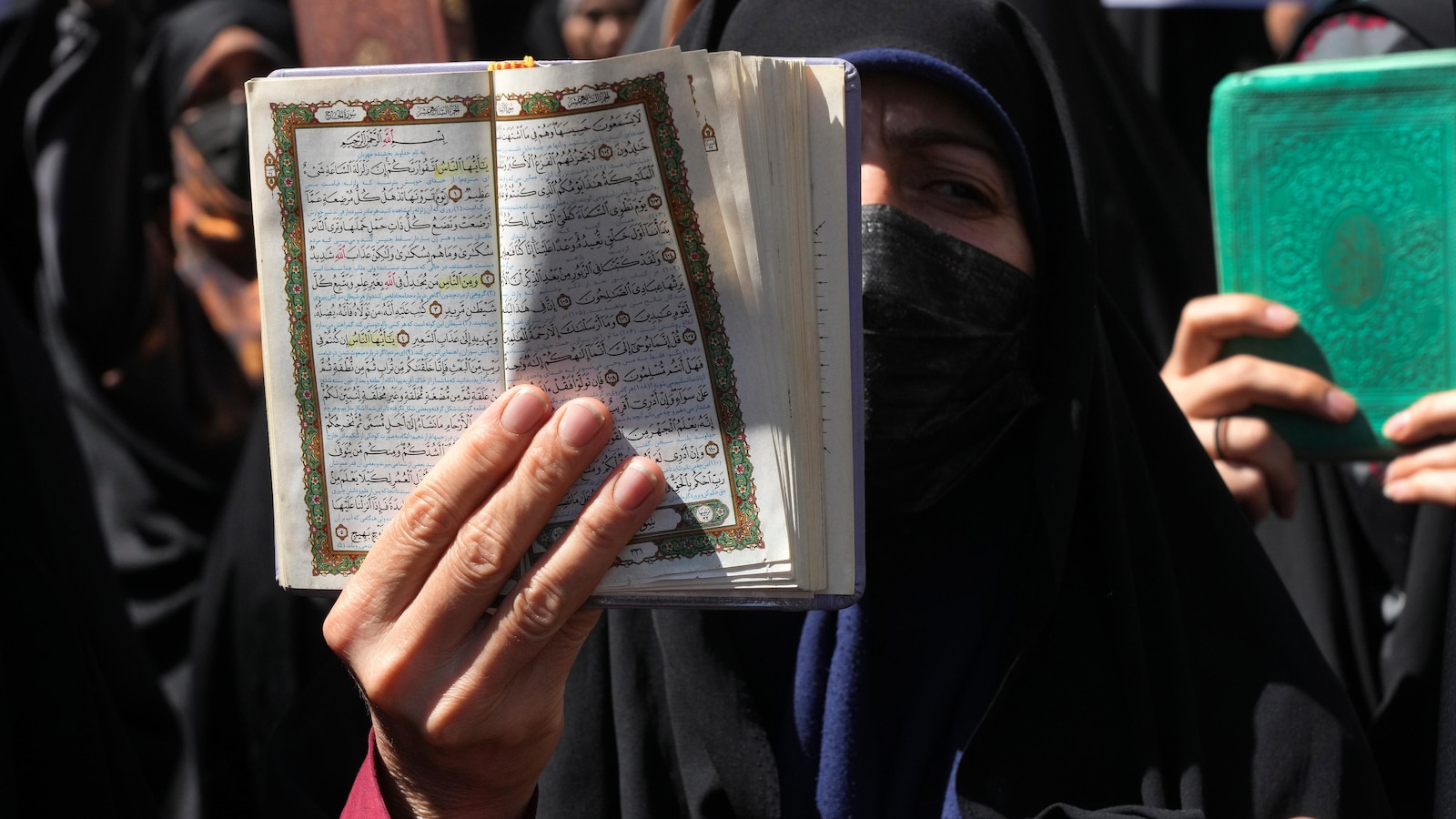
    COPENHAGEN, Denmark — Swedish authorities accused Iran on Tuesday of being responsible for thousands of text messages that were sent to people in the Scandinavian country calling for revenge over the burnings of Islam’s holy book in 2023.

    Officials in Stockholm claimed that Iran’s paramilitary Revolutionary Guard carried out “a data breach” and managed to send “some 15,000 text messages in Swedish” over the string of public burnings of the Quran.

    Senior prosecutor Mats Ljungqvist said that a preliminary investigation, carried out by Sweden’s SAPO domestic security agency, showed that “it was the Iranian state via the Iranian Islamic Revolutionary Guard Corps, IRGC, that carried out a data breach at a Swedish company that runs a major SMS service.”

    The Swedish company was not named. There was no immediate comment from Iranian authorities on the accusations from Sweden.

    In August 2023, Swedish media reported that a large number of people in Sweden had received text messages in Swedish calling for revenge against people who were burning the Quran, Ljungqvist said, adding that the sender of the messages was “a group calling itself the Anzu team.”

    Swedish broadcaster SVT published a photo of a text message, saying that “those who desecrated the Quran must have their work covered in ashes” and calling Swedes “demons.”

    The protests were held under the freedom of speech act, which is protected under the Swedish constitution. The rallies were approved by police.

    However, the incidents left Sweden torn between its commitment to free speech and its respect for religious minorities.

    In a separate statement, SAPO’s operational manager Fredrik Hallström said the text messages ‘ intent was to also “paint the image of Sweden as an Islamophobic country and create division in society.”

    He accused “foreign powers” of seeking to “exploit vulnerabilities” and said they were “now acting more and more aggressively, and this is a development that is likely to escalate.” He did not name any specific country.

    Meanwhile, Sweden’ justice minister, Gunnar Strömmer, told Swedish news agency TT “that a state actor, in this case Iran, according to (SAPO’s) assessment is behind an action that aims to destabilize Sweden or increase polarization in our country is of course very serious.”

    There is no law in Sweden specifically prohibiting the burning or desecration of the Quran or other religious texts. Like many Western countries, Sweden doesn’t have any blasphemy laws.

    “Since the actors are acting for a foreign power, in this case Iran, we make the assessment that the conditions for prosecution abroad or extradition to Sweden are lacking for the persons suspected of being behind the breach, “Ljungqvist said.

    Ljungqvist who is with the Sweden’s top prosecution authority said although the preliminary investigation has been closed, it “does not mean that the suspected hackers have been completely written off” and that the probe could be reopened.

    Sweden’s domestic security agency in May accused Iran of using established criminal networks in Sweden as a proxy to target Israeli or Jewish interests in the Scandinavian country.

    Source link

  • Iran says it successfully launched a satellite in its program criticized by West over missile fears

    Iran says it successfully launched a satellite in its program criticized by West over missile fears

    TEHRAN, Iran — Iran launched a satellite into space Saturday with a rocket built by the country’s paramilitary Revolutionary Guard, state-run media reported, the latest for a program the West fears helps Tehran advance its ballistic missile program.

    Iran described the launch as a success, which would be the second such launch to put a satellite into orbit with the rocket. There was no immediate independent confirmation of the launch’s success, nor did Iranian authorities immediately provide footage or other details.

    The launch comes amid heightened tensions gripping the wider Middle East over the ongoing Israel-Hamas war in the Gaza Strip, during which Tehran launched an unprecedented direct missile-and-drone attack on Israel. Meanwhile, Iran continues to enrich uranium to nearly weapons-grade levels, raising concerns among nonproliferation experts about Tehran’s program.

    Iran identified the satellite-carrying rocket as the Qaem-100, which the Guard used in January for another successful launch. Qaem means “upright” in Iran’s Farsi language. The solid-fuel rocket put the Chamran-1 satellite, weighing 60 kilograms (132 pounds), into a 550-kilometer (340-mile) orbit, state media reported.

    The U.S. State Department and the American military did not immediately respond to requests for comment over the Iranian launch.

    The United States had previously said Iran’s satellite launches defy a U.N. Security Council resolution and called on Tehran to undertake no activity involving ballistic missiles capable of delivering nuclear weapons. U.N. sanctions related to Iran’s ballistic missile program expired last October.

    Under Iran’s relatively moderate former President Hassan Rouhani, the Islamic Republic slowed its space program for fear of raising tensions with the West. Hard-line President Ebrahim Raisi, a protege of Supreme Leader Ayatollah Ali Khamenei who came to power in 2021, has pushed the program forward. Raisi died in a helicopter crash in May.

    It’s unclear what Iran’s new president, the reformist Masoud Pezeshkian, wants for the program as he was silent on the issue while campaigning.

    The U.S. intelligence community’s worldwide threat assessment this year said Iran’s development of satellite launch vehicles “would shorten the timeline” for Iran to develop an intercontinental ballistic missile because it uses similar technology.

    Intercontinental ballistic missiles can be used to deliver nuclear weapons. Iran is now producing uranium close to weapons-grade levels after the collapse of its nuclear deal with world powers. Tehran has enough enriched uranium for “several” nuclear weapons, if it chooses to produce them, the head of the International Atomic Energy Agency repeatedly has warned.

    Iran has always denied seeking nuclear weapons and says its space program, like its nuclear activities, is for purely civilian purposes. However, U.S. intelligence agencies and the IAEA say Iran had an organized military nuclear program up until 2003.

    The launch also came ahead of the second anniversary of the death of 22-year-old Mahsa Amini, which sparked nationwide protests against Iran’s mandatory headscarf, or hijab, law and the country’s Shiite theocracy.

    ___

    Gambrell reported from Dubai, United Arab Emirates.

    Source link

  • The US is preparing criminal charges in Iran hack targeting Trump, AP sources say

    The US is preparing criminal charges in Iran hack targeting Trump, AP sources say

    WASHINGTON — The Justice Department is preparing criminal charges in connection with an Iranian hack that targeted Donald Trump’s presidential campaign in a bid to shape the outcome of the November election, two people familiar with the matter said Thursday.

    It was not immediately clear when the charges might be announced or whom precisely they will target, but they are the result of an FBI investigation into an intrusion that investigators across multiple agencies quickly linked to an Iranian effort to influence American politics.

    The prospect of criminal charges comes as the Justice Department has raised alarms about aggressive efforts by countries including Russia and Iran to meddle in the presidential election between Trump and Democratic nominee Kamala Harris, including by hacking and covert social media campaigns designed to shape public opinion.

    Iran “is making a greater effort to influence this year’s election than it has in prior election cycles and that Iranian activity is growing increasingly aggressive as this election nears,” Assistant Attorney General Matthew Olsen, the Justice Department’s top national security official, said in a speech Thursday in New York City.

    “Iran perceives this year’s elections to be particularly consequential in impacting Iran’s national security interests, increasing Tehran’s inclination to try to shape the outcome,” he added.

    The Trump campaign disclosed on Aug. 10 that it had been hacked and said Iranian actors had stolen and distributed sensitive internal documents. At least three news outlets — Politico, The New York Times and The Washington Post — were leaked confidential material from inside the Trump campaign. So far, each has refused to reveal any details about what it received.

    Politico reported that it began receiving emails on July 22 from an anonymous account. The source — an AOL email account identified only as “Robert” — passed along what appeared to be a research dossier that the campaign had apparently done on the Republican vice presidential nominee, Ohio Sen. JD Vance. The document was dated Feb. 23, almost five months before Trump selected Vance as his running mate.

    The FBI, the office of the Director of National Intelligence and the Cybersecurity and Infrastructure Security Agency subsequently blamed that hack, as well as an attempted breach of the Biden-Harris campaign, on Iran.

    Those agencies issued a statement saying that the hacking and similar activities were meant to sow discord, exploit divisions within American society and influence the outcome of elections.

    The statement did not identify whether Iran has a preferred candidate, though Tehran has long appeared determined to seek retaliation for a 2020 strike Trump ordered as president that killed an Iranian general.

    The two people who discussed the looming criminal charges spoke on condition of anonymity to The Associated Press because they were not authorized to speak publicly about a case that had not yet been unsealed.

    The Washington Post first reported that charges were being prepared.

    Justice Department officials have been working to publicly call out and counter election interference efforts. The response is a contrast to 2016, when Obama administration officials were far more circumspect about Russian interference they were watching that was designed to boost Trump’s campaign.

    “We have learned that transparency about what we are seeing is critical,” Olsen, the Justice Department official, said Thursday.

    “It helps ensure that our citizens are aware of the attempts of foreign government to sow discord and spread falsehoods — all of which promotes resilience within our electorate,” he added. “It provides warnings to our private sector so they can better protect their networks. And it sends an unmistakable message to our adversaries — we’ve gained insight into your networks, we know what you’re doing, and we are determined to hold you accountable.”

    Last week, in an effort to combat disinformation ahead of the election, the Justice Department charged two employees of RT, a Russian state media company, with covertly funneling a Tennessee-based content creation company nearly $10 million to publish English-language videos on social media platforms with messages in favor of the Russia government’s interests and agenda.

    Source link