A recent convert to minimalism shared their experience with a like-minded community on the r/minimalism subreddit, and they invited others to share how becoming more minimalist has impacted them as well.
“Hey everyone! I’m excited to start this journey into minimalism and to connect with others who are embracing simplicity. Whether you’ve just started decluttering or have been living minimally for years, I’d love to hear how minimalism has impacted your life,” the poster wrote. “For me, letting go of unnecessary stuff has brought so much peace and clarity. I’ve learned to focus on what truly matters and prioritize experiences over things.”
Other members of the subreddit were eager to respond and share their own experiences. Some of the more common themes included saving money, less mess to deal with, and feeling more mental clarity.
“I’ve finally been able to save thousands of dollars and not feel my heart sink every time I open my bank account due to mindless spending and consumerism. And my house is always clean and easy to manage. I love the things I [own] and no longer buy random crap just to buy them. I’ve also been able to save more for experiences, which I value the most,” one commenter shared.
“Clean cabinets where I [immediately] find what I’m looking for. In my house and in my head,” wrote another.
While you certainly don’t need to immediately throw away all of your earthly possessions, there is certainly something to be said for embracing a more minimalist and decluttered existence — for all of the reasons the commenters on the Reddit thread said, and also because it’s better for our planet and our shared environment.
Your personal guide to a cleaner, cooler future
By reducing the number of new products we buy, we can cut down our contributions to plastic waste (from packaging and from the products themselves) as well as our demand on the supply chains that produce planet-overheating pollution.
It is also worth considering how much of our desire to buy new products is driven by the advertising we are constantly bombarded with. Companies are always trying to separate you from your money, but what’s good for the companies is not necessarily what is good for people.
If you ever do decide to embrace a more minimalist lifestyle, some steps you can consider include donating your old stuff, repurposing containers and packaging, and upcycling your old clothes.
Join our free newsletter for easy tips to save more and waste less, and don’t miss this cool list of easy ways to help yourself while helping the planet.
Just as we have to teach our children that the radioactive porn that nukes their phones and brains from around the age of 10 is not a healthy, desirable or accurate version of “normal” sex, we have to realise that sex on the page and sex between your own sheets is also very different.
That is because the fictional romance in the books of which you speak are escapist fantasy, designed to transport you from the humdrum quotidian reality of your actual flesh and blood partner in the metaphysical direction of a lusty seeing-to by a ripped fireman, an ice-hockey player or a workman with power tools (GEDDIT).
Yes, I have just checked Audible so that you don’t have to, and lo and behold a smorgasbord of audiobooks with the word “hot” or “rod” in the title, sometimes both, awaited my ears. Some examples include: “Hot Puck” in the “Rough Riders Hockey” series, “Hot Biker Daddy” and so on. I have to confess that I didn’t want to use up a credit by downloading one so I took your word for it that when the women climax they see stars and pass out. Of course, an orgasm at its best can be a very intense, pleasurable, almost ecstatic, experience but then so is eating a Caramel Double Magnum if you ask me.
As I was born in the 60s, my sex education came from novels by Nancy Friday, Lisa Alther and Jackie Collins, as well as that much-thumbed wedding bit in the Godfather, and even Thorn Birds. When I was at Oxford, I remember a summer holiday in Tuscany during which I was so gripped by some bonkbuster that every morning I refused to go to Rome, even though one of my specialist subjects for my finals was classical Greek and Roman art and architecture. “No thanks,” I’d tell my father without looking up from my Jilly Cooper novel. “I want to stay here by the pool reading Riders.”
Now, of course, what teenagers see is far more explicit than anything I saw and read and yes, I’m sure that romantic fiction is keeping up, to some extent. So is literary fiction, as it happens, which you should perhaps add to your Audible library for texture. I just read All Fours by Miranda July, having been warned that I’d need a fire extinguisher handy as I sizzled through what must be the first sexy novel about the perimenopause. Don’t Be A Stranger by Susan Minot is also cited as evidence of an “erotic reawakening” of women of a certain age too. Indeed, the New Yorker has decided that fiction has entered the “Season of the Witch”.
So the answer to your first question is also a yes, in the context of a pornified society, it’s more out there than it was, but that’s not to say you’re missing out on anything. Maybe just tell yourself, you’ve dodged a bullet! People are a bit more adventurous, or think they should be, but human nature doesn’t change. There will always be folk with niche interests – what my friend Mary Killen calls “special needs” – but there always have been, think of de Sade. As for whether women really do have such intense climaxes that they black out and so on, don’t forget that famous scene in When Harry Met Sally. As Meg Ryan almost once said, we’d all like to have what she’s having but that kind of experience is confined to fiction.
Also, if you’re after an exuberant, fleshy rendition of knockers-out nookie on screen head over to Disney+ and Rivals. The aforementioned author Dame Jilly Cooper is unusual in that she conveys a kind of schoolgirl giggly gusto in her sex scenes, which this adaptation captures perfectly.
Romantic fiction has shifted in recent decades to reflect more explicit and varied sexual experiences. Photo / 123rf
Dear Rachel,
Although I am 76, my wife is 73. We are in a good, loving relationship with an enviable lifestyle and diet. We make love every two or three days, sometimes more often. Ann nearly always has two or more orgasms while I rarely have even one. What do you suggest we should do please? Many thanks and best wishes from us both.
It doesn’t sound like much of a problem to me! “Two or three days maybe more often” is a frequency a teenager would envy, let alone those of us in the riper years. What a turn-up! I’d say a solid two thirds of my mailbag is from middle-aged men complaining about their wives and their unilaterally imposed Sus laws (Sus is short for shut up shop, which is what women of a certain age and stage tend to do after the oestrogen has left the building but their domestic duties haven’t).
Of course, sauce for the goose is sometimes sauce for the gander and I also get the odd, puzzled missive from a woman with the same issue. But I know readers across the world will read about your perfect golden years, the only cloud on the horizon the orgasm deficit on your side with envy and think, “I wish I had your problem!” Mazeltov to you both and as I am unable to assist in this department, I passed your letter to my expert, Sophie Haggard. Again, what follows may offend those who prefer to draw a discreet veil over the plumbing and hydraulics of the human male.
She tells me that there’s a technical diagram called “The Ladder of Desire”. It suggests that couples go up and down at different speeds. So that’s the first thing. Haggard says: “Any psychosexual therapist would advise not to make orgasm the be all.” But, she says, for you to have a diagnosable problem in reaching orgasm, the issue would have to have been around for six months and be causing “significant distress”.
It’s a Catch 22 as, of course, it’s something that gets worse if you stress about it (like everything else). The “refractory period” – Google is your friend, Readers – lengthens dramatically with age (oh alright then, it is the time it takes to, ahem, come), which means that you may struggle to achieve completion in what Haggard refers to as partner sex.
SSRIs are also well known to affect enjoyment and can “numb genital sensation” (I have never taken antidepressants so cannot verify this). Haggard concludes: “Readers may blanche… But if he DOES masturbate he may be used to a certain ‘grip’ [sorry] and he had better show it to her”.
Haggard reports that there are self-focus exercises you could do, such as “take a long shower and focus on your sensations as you wash different parts of his body”. In summary, she suggests that you explore fantasies and generally get in touch with your own sensual experiences. Try to fit that into your enviable lifestyle and do report back.
Rachel Johnson, is a journalist, author of eight books, broadcaster, host of the Difficult Women podcast and the Telegraph’s sex and relationships agony aunt
Just as we have to teach our children that the radioactive porn that nukes their phones and brains from around the age of 10 is not a healthy, desirable or accurate version of “normal” sex, we have to realise that sex on the page and sex between your own sheets is also very different.
That is because the fictional romance in the books of which you speak are escapist fantasy, designed to transport you from the humdrum quotidian reality of your actual flesh and blood partner in the metaphysical direction of a lusty seeing-to by a ripped fireman, an ice-hockey player or a workman with power tools (GEDDIT).
Yes, I have just checked Audible so that you don’t have to, and lo and behold a smorgasbord of audiobooks with the word “hot” or “rod” in the title, sometimes both, awaited my ears. Some examples include: “Hot Puck” in the “Rough Riders Hockey” series, “Hot Biker Daddy” and so on. I have to confess that I didn’t want to use up a credit by downloading one so I took your word for it that when the women climax they see stars and pass out. Of course, an orgasm at its best can be a very intense, pleasurable, almost ecstatic, experience but then so is eating a Caramel Double Magnum if you ask me.
As I was born in the 60s, my sex education came from novels by Nancy Friday, Lisa Alther and Jackie Collins, as well as that much-thumbed wedding bit in the Godfather, and even Thorn Birds. When I was at Oxford, I remember a summer holiday in Tuscany during which I was so gripped by some bonkbuster that every morning I refused to go to Rome, even though one of my specialist subjects for my finals was classical Greek and Roman art and architecture. “No thanks,” I’d tell my father without looking up from my Jilly Cooper novel. “I want to stay here by the pool reading Riders.”
Now, of course, what teenagers see is far more explicit than anything I saw and read and yes, I’m sure that romantic fiction is keeping up, to some extent. So is literary fiction, as it happens, which you should perhaps add to your Audible library for texture. I just read All Fours by Miranda July, having been warned that I’d need a fire extinguisher handy as I sizzled through what must be the first sexy novel about the perimenopause. Don’t Be A Stranger by Susan Minot is also cited as evidence of an “erotic reawakening” of women of a certain age too. Indeed, the New Yorker has decided that fiction has entered the “Season of the Witch”.
So the answer to your first question is also a yes, in the context of a pornified society, it’s more out there than it was, but that’s not to say you’re missing out on anything. Maybe just tell yourself, you’ve dodged a bullet! People are a bit more adventurous, or think they should be, but human nature doesn’t change. There will always be folk with niche interests – what my friend Mary Killen calls “special needs” – but there always have been, think of de Sade. As for whether women really do have such intense climaxes that they black out and so on, don’t forget that famous scene in When Harry Met Sally. As Meg Ryan almost once said, we’d all like to have what she’s having but that kind of experience is confined to fiction.
Also, if you’re after an exuberant, fleshy rendition of knockers-out nookie on screen head over to Disney+ and Rivals. The aforementioned author Dame Jilly Cooper is unusual in that she conveys a kind of schoolgirl giggly gusto in her sex scenes, which this adaptation captures perfectly.
Romantic fiction has shifted in recent decades to reflect more explicit and varied sexual experiences. Photo / 123rf
Dear Rachel,
Although I am 76, my wife is 73. We are in a good, loving relationship with an enviable lifestyle and diet. We make love every two or three days, sometimes more often. Ann nearly always has two or more orgasms while I rarely have even one. What do you suggest we should do please? Many thanks and best wishes from us both.
It doesn’t sound like much of a problem to me! “Two or three days maybe more often” is a frequency a teenager would envy, let alone those of us in the riper years. What a turn-up! I’d say a solid two thirds of my mailbag is from middle-aged men complaining about their wives and their unilaterally imposed Sus laws (Sus is short for shut up shop, which is what women of a certain age and stage tend to do after the oestrogen has left the building but their domestic duties haven’t).
Of course, sauce for the goose is sometimes sauce for the gander and I also get the odd, puzzled missive from a woman with the same issue. But I know readers across the world will read about your perfect golden years, the only cloud on the horizon the orgasm deficit on your side with envy and think, “I wish I had your problem!” Mazeltov to you both and as I am unable to assist in this department, I passed your letter to my expert, Sophie Haggard. Again, what follows may offend those who prefer to draw a discreet veil over the plumbing and hydraulics of the human male.
She tells me that there’s a technical diagram called “The Ladder of Desire”. It suggests that couples go up and down at different speeds. So that’s the first thing. Haggard says: “Any psychosexual therapist would advise not to make orgasm the be all.” But, she says, for you to have a diagnosable problem in reaching orgasm, the issue would have to have been around for six months and be causing “significant distress”.
It’s a Catch 22 as, of course, it’s something that gets worse if you stress about it (like everything else). The “refractory period” – Google is your friend, Readers – lengthens dramatically with age (oh alright then, it is the time it takes to, ahem, come), which means that you may struggle to achieve completion in what Haggard refers to as partner sex.
SSRIs are also well known to affect enjoyment and can “numb genital sensation” (I have never taken antidepressants so cannot verify this). Haggard concludes: “Readers may blanche… But if he DOES masturbate he may be used to a certain ‘grip’ [sorry] and he had better show it to her”.
Haggard reports that there are self-focus exercises you could do, such as “take a long shower and focus on your sensations as you wash different parts of his body”. In summary, she suggests that you explore fantasies and generally get in touch with your own sensual experiences. Try to fit that into your enviable lifestyle and do report back.
Rachel Johnson, is a journalist, author of eight books, broadcaster, host of the Difficult Women podcast and the Telegraph’s sex and relationships agony aunt
Just as we have to teach our children that the radioactive porn that nukes their phones and brains from around the age of 10 is not a healthy, desirable or accurate version of “normal” sex, we have to realise that sex on the page and sex between your own sheets is also very different.
That is because the fictional romance in the books of which you speak are escapist fantasy, designed to transport you from the humdrum quotidian reality of your actual flesh and blood partner in the metaphysical direction of a lusty seeing-to by a ripped fireman, an ice-hockey player or a workman with power tools (GEDDIT).
Yes, I have just checked Audible so that you don’t have to, and lo and behold a smorgasbord of audiobooks with the word “hot” or “rod” in the title, sometimes both, awaited my ears. Some examples include: “Hot Puck” in the “Rough Riders Hockey” series, “Hot Biker Daddy” and so on. I have to confess that I didn’t want to use up a credit by downloading one so I took your word for it that when the women climax they see stars and pass out. Of course, an orgasm at its best can be a very intense, pleasurable, almost ecstatic, experience but then so is eating a Caramel Double Magnum if you ask me.
As I was born in the 60s, my sex education came from novels by Nancy Friday, Lisa Alther and Jackie Collins, as well as that much-thumbed wedding bit in the Godfather, and even Thorn Birds. When I was at Oxford, I remember a summer holiday in Tuscany during which I was so gripped by some bonkbuster that every morning I refused to go to Rome, even though one of my specialist subjects for my finals was classical Greek and Roman art and architecture. “No thanks,” I’d tell my father without looking up from my Jilly Cooper novel. “I want to stay here by the pool reading Riders.”
Now, of course, what teenagers see is far more explicit than anything I saw and read and yes, I’m sure that romantic fiction is keeping up, to some extent. So is literary fiction, as it happens, which you should perhaps add to your Audible library for texture. I just read All Fours by Miranda July, having been warned that I’d need a fire extinguisher handy as I sizzled through what must be the first sexy novel about the perimenopause. Don’t Be A Stranger by Susan Minot is also cited as evidence of an “erotic reawakening” of women of a certain age too. Indeed, the New Yorker has decided that fiction has entered the “Season of the Witch”.
So the answer to your first question is also a yes, in the context of a pornified society, it’s more out there than it was, but that’s not to say you’re missing out on anything. Maybe just tell yourself, you’ve dodged a bullet! People are a bit more adventurous, or think they should be, but human nature doesn’t change. There will always be folk with niche interests – what my friend Mary Killen calls “special needs” – but there always have been, think of de Sade. As for whether women really do have such intense climaxes that they black out and so on, don’t forget that famous scene in When Harry Met Sally. As Meg Ryan almost once said, we’d all like to have what she’s having but that kind of experience is confined to fiction.
Also, if you’re after an exuberant, fleshy rendition of knockers-out nookie on screen head over to Disney+ and Rivals. The aforementioned author Dame Jilly Cooper is unusual in that she conveys a kind of schoolgirl giggly gusto in her sex scenes, which this adaptation captures perfectly.
Romantic fiction has shifted in recent decades to reflect more explicit and varied sexual experiences. Photo / 123rf
Dear Rachel,
Although I am 76, my wife is 73. We are in a good, loving relationship with an enviable lifestyle and diet. We make love every two or three days, sometimes more often. Ann nearly always has two or more orgasms while I rarely have even one. What do you suggest we should do please? Many thanks and best wishes from us both.
It doesn’t sound like much of a problem to me! “Two or three days maybe more often” is a frequency a teenager would envy, let alone those of us in the riper years. What a turn-up! I’d say a solid two thirds of my mailbag is from middle-aged men complaining about their wives and their unilaterally imposed Sus laws (Sus is short for shut up shop, which is what women of a certain age and stage tend to do after the oestrogen has left the building but their domestic duties haven’t).
Of course, sauce for the goose is sometimes sauce for the gander and I also get the odd, puzzled missive from a woman with the same issue. But I know readers across the world will read about your perfect golden years, the only cloud on the horizon the orgasm deficit on your side with envy and think, “I wish I had your problem!” Mazeltov to you both and as I am unable to assist in this department, I passed your letter to my expert, Sophie Haggard. Again, what follows may offend those who prefer to draw a discreet veil over the plumbing and hydraulics of the human male.
She tells me that there’s a technical diagram called “The Ladder of Desire”. It suggests that couples go up and down at different speeds. So that’s the first thing. Haggard says: “Any psychosexual therapist would advise not to make orgasm the be all.” But, she says, for you to have a diagnosable problem in reaching orgasm, the issue would have to have been around for six months and be causing “significant distress”.
It’s a Catch 22 as, of course, it’s something that gets worse if you stress about it (like everything else). The “refractory period” – Google is your friend, Readers – lengthens dramatically with age (oh alright then, it is the time it takes to, ahem, come), which means that you may struggle to achieve completion in what Haggard refers to as partner sex.
SSRIs are also well known to affect enjoyment and can “numb genital sensation” (I have never taken antidepressants so cannot verify this). Haggard concludes: “Readers may blanche… But if he DOES masturbate he may be used to a certain ‘grip’ [sorry] and he had better show it to her”.
Haggard reports that there are self-focus exercises you could do, such as “take a long shower and focus on your sensations as you wash different parts of his body”. In summary, she suggests that you explore fantasies and generally get in touch with your own sensual experiences. Try to fit that into your enviable lifestyle and do report back.
Rachel Johnson, is a journalist, author of eight books, broadcaster, host of the Difficult Women podcast and the Telegraph’s sex and relationships agony aunt
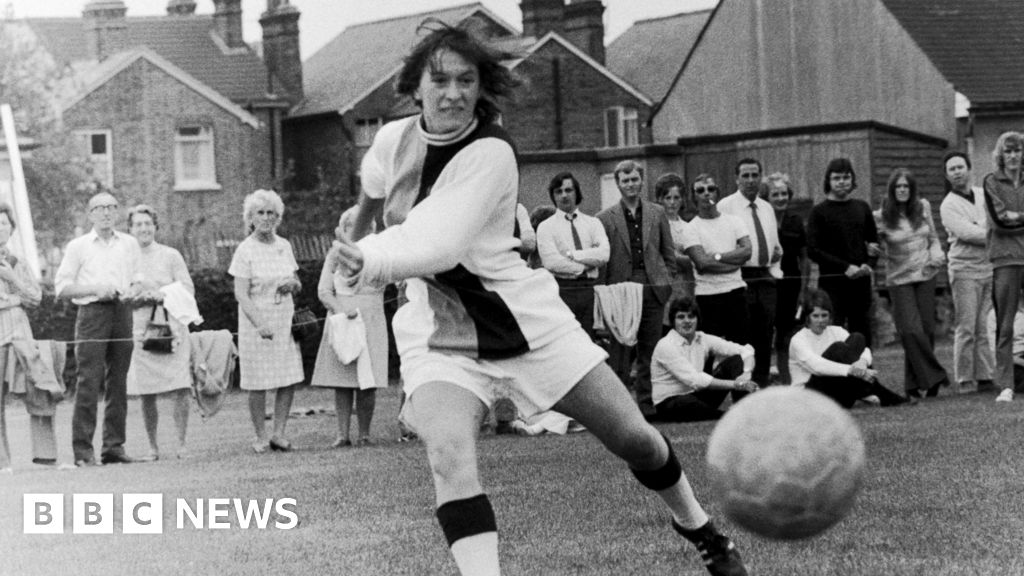
The Crystal Palace Ladies players in the 1970s had primitive facilities for both teams and fans
“What you got in your handbag love, is that your knitting? Shouldn’t you be in the kitchen?”.
Those were among the insults Hy Money recalls when she first entered a 1970s press room at Crystal Palace’s Selhurst Park ground.
“One chap walked up and deliberately barged into me,” she remembers. “‘Oh, sorry Sir I didn’t see you there,’ he said, trying to make his point.”
While the football club quickly embraced her as one of their own, Ms Money still faced significant barriers.
Hy Money has spent decades pitch side capturing Palace’s big moments
Her initial application for a National Union of Journalists (NUJ) pass was also denied due to a petition signed by 40 men.
Ms Money’s refusal to accept these setbacks led her to become the country’s first accredited female sports photographer.
Born in Bangalore, India, Hy Money moved to the UK at 19 with a camera in hand.
“My Mum sent me to England and told me to take a photo of the Queen,” she says. “I’ve barely put the camera down since.”
While she never photographed the Queen, Crystal Palace provided her with countless opportunities.
HY MONEY/ TOPFOTO
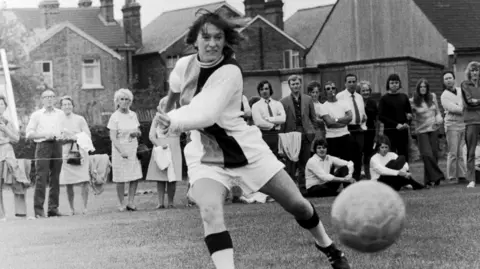
An 8-0 win over North Warnborough Belles saw Palace clinch the Women’s Home Counties League title at the first attempt
HY MONEY/ TOPFOTO
Hy Money’s camera lens became a regular feature at Crystal Palace Ladies matches
Her first chance to photograph Crystal Palace came from her own initiative.
“One of my sons wanted to see Crystal Palace play. We went to a game, and I immediately wanted to photograph a match,” she recounts.
After receiving no response to her requests for a photographer’s pass, she visited Selhurst Park and insisted on meeting manager Bert Head. Her persistence paid off when Mr Head, albeit begrudgingly, granted her a pass.
However, her first visit to Wembley was met with resistance.
“As I got to the door, the chap there said, ‘over my dead body love. Is there nowhere sacred you women don’t want to stick your noses in?’,” she recalls.
Despite recognising some photographers in the queue, no one assisted her, forcing her to watch the match from her car while her sons attended.
HY MONEY/ TOPFOTO
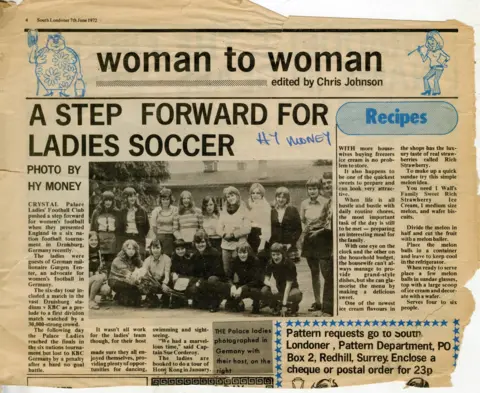
Crystal Palace Ladies FC, newspaper report (South Londoner on 7 June 1972) covering their May 1972 tour to Duisburg, Germany
Determined to continue, Ms Money challenged the NUJ’s decision to deny her accreditation.
“There’s no law against women taking sports photographs,” she insisted.
She hired a solicitor, met all membership requirements, and ultimately became the first female NUJ sports photographer. Her work soon featured in the Crystal Palace programme, the Croydon Advertiser and The Evening Standard, among other publications.
Crystal Palace Women, originally known as Ladies until June 2019, were founded in 1992 following the FA’s 1970 decision to lift a 50-year ban on women playing football. This led to the creation of numerous teams affiliated with top men’s clubs.
As a freelance photographer, Ms Money has documented women playing under the Crystal Palace banner for more than half a century.
One of her earliest photos captures two players celebrating an 8-0 home win over North Warnborough Belles, clinching the Home Counties League title in the early 1970s.
“I used to photograph the ladies’ games on the most terrible pitches. Hackney Marshes could be brutal but better than some places. To see them playing here is wonderful,” Ms Money tells BBC London while capturing a recent training session at the club’s state-of-the-art Beckenham venue.
The £20m facility, opened three years ago, now houses both the men’s academy and the women’s first team.
‘Paved the way’
In April, on a sunny afternoon at Selhurst Park, a goalless draw with Sunderland secured Crystal Palace’s promotion to England’s top division for the first time.
“They are my extended family,” says Ms Money. “To see them playing in the WSL [Women’s Super League] is like watching my children grow and flourish.”
During her latest visit, Ms Money focused her lens on head coach Laura Kaminski and captain Aimee Everett. Appointed in summer 2023, Kaminski led the team to promotion to the WSL in her first season, with Ms Everett playing a pivotal role in midfield.
HY MONEY/ TOPFOTO
Ms Money continues to capture the highs and lows at Selhurst Park
Today, while salary disparities between women’s and men’s football persist, all first-team players in the WSL are professional.
“Everyone involved in women’s football understands the struggles of Hy’s generation and others who paved the way,” says Aimee Everett.
Coach Kaminski also acknowledges Ms Money’s pioneering role.
“There are still battles to be fought and won in women’s football, but we’re in a much better place thanks to the likes of Hy.”
The walls of the Allison Suite at Selhurst Park – named after the charismatic manager from the 70s and 80s – are now adorned with her work.
“I’ve seen it all,” says Ms Money. “Promotions, relegations, play-offs, cup finals, great players like Ian Wright.”
‘Long may it continue’
For much of the women’s team’s history, media attention was scarce, but Ms Money consistently kept them in her frame.
“Sports photography is sports photography,” she explains.
“I’m more invested in the visuals of the game than the emotions. It’s about the beauty of movement.
“I first saw that beauty photographing my young boys playing football in the garden, leaping through the air to catch or kick a ball. You see that in all football, men’s and women’s, at whatever level.”
Ms Money says the Crystal Palace team are like “extended family”
Ms Money’s message to women aspiring to enter the male-dominated world of sports is clear: “Never give up.”
“If you feel that is what you want to do, give it a try,” she advises. “Just keep pursuing it because there is nobody who can say you cannot do that. Those days have gone; you can aspire to do anything now. I’ve proved that. Crystal Palace Women have proved that.
And Reds manager Damien Duff says he’s happy to live on his nerves and cope with the curve balls as his club enter the last two rounds of games in the season with their leadership of the league table intact.
At one stage on Friday night, when Shels were losing 1-0 at home to Waterford while Derry City were ahead away to Dundalk, the table had a grim look for the Reds and it looked as if they faced a challenge to see out a title challenge which was in danger of fading, on a run of one win in the previous 10 games.
Dan McDonnell and Seán O’Connor look back on a huge night of drama at both ends of the League of Ireland table
But a resurgence by the Reds, with goals from Sean Boyd (2) and Liam Burt, earned them a 3-1 win which allows them carry that two-point lead into next week’s games where Shels are at home to Drogheda United – a side they have yet to beat this season – and Derry are away to an in-form St Patrick’s Athletic.
“We speak about it, the nerves. Was I a bit nervous before the game? Yeah, but I like nerves,” Duff said after that win.
“Every time I pulled the jersey on as a player for whoever I was playing for, I was always a little bit nervous. It always drove me to have a real clarity and aggression in my play – it’s something I always talk about with our lads, the tension, the nerves. They’re going to be there but it has to be a driver. It could be a weight on your shoulders but it’s about striking that fine balance. On Friday, for sure, you’d have to say it drove the lads.”
“I just thought there was a beautiful energy. Granted, there was a beautiful tension in the ground, which is what we want here at Tolka Park. So always had faith, I guess. We knew we couldn’t make any more changes, obviously with the first change in the first half,” he says, referring to the enforced early substitution where Ali Coote had to withdraw, replaced by compatriot Liam Burt, as he also conceded that Shels lacked conviction with first half opportunities.
“We had three or four decent chances I thought. What stood out with Sean’s chances was he was calm, didn’t slash at it, whereas the rest in the first half we slashed at in real desperation to score. You can’t be desperate, you have to be cool as ice. Then the second half, did we create a lot at times? No. But we worked our way back. And the third goal, Liam, he can do that. In the pockets, rolling people, his shooting from distance is elite,” Duff added
“With the penalty, I’ve no ego. I want to play great football and dominate the ball, but also we do go direct.”
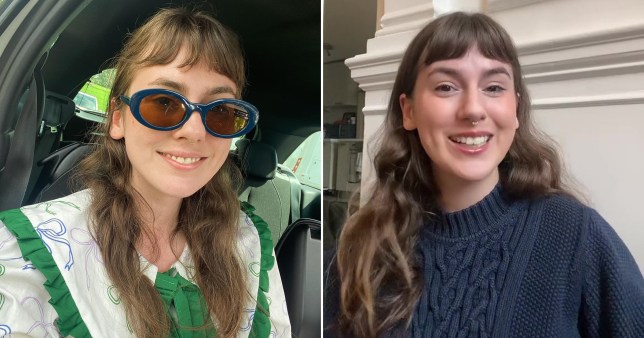
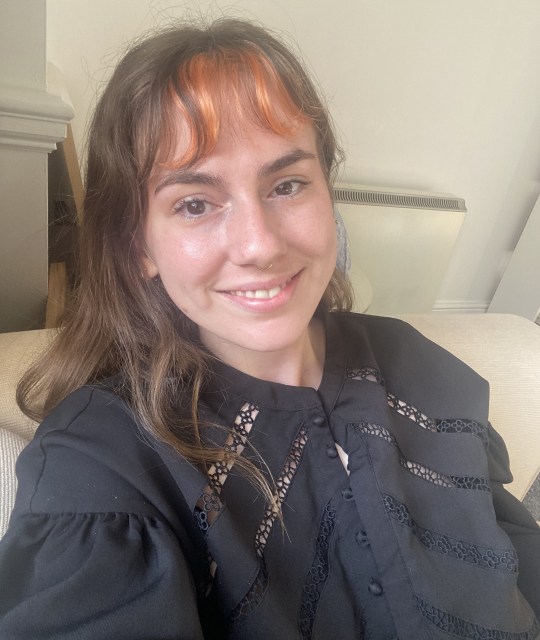
Mia Westrap only spends money on ‘absolute necessities’ (Picture: TikTok/ @miawestrap)
From overpriced coffee to impulse buys, we’ve all been guilty of splurging on things we don’t really need, but for PhD student Mia Westrap, her tendency to spend on ‘unnecessary items’ became a wake-up call.
Earning £2,100 a month post-tax as a health and social worker, Mia noticed her random purchases — including eating out, drinking and indulging in Pepsi Max — were quickly piling up.
‘Sick and tired’ of never having any money to spare and dipping into her overdraft at the end of every month, she decided to embark on a ‘no buy year’.
Speaking to Metro.co.uk, Mia said she defines her no buy year as only spending money on ‘absolute necessities’, such as rent, food bills and transport, meaning she can’t splurge on ‘treat’ items like books, clothes and nights out.
She spends around £1,200 on rent and bills for her flat in Southampton, Hampshire, and tucks what’s left into building up an ‘emergency fund’.
The only thing she doesn’t budget for is her weekly Asda food shop, which she says ‘works out pretty cheap’. She even sold her car, which was costing her £200 a month, to save money on transport.
Mia was ‘sick and tired’ of never having any money to spare and dipping into her overdraft at the end of every month (Credit: TikTok/ @miawestrap)
When Mia began her no-spend year, in January of this year, she started with zero savings and set herself the goal of banking £4,000 after 12 months.
She admits she was initially worried about experiencing FOMO. The 26-year-old was used to a busy social life, especially during the busy summer months when her weekends would typically fill up with bottomless brunches. But, this wasn’t enough to put her off her new, frugal lifestyle.
And surprisingly, she soon realised she didn’t have to turn down many plans, as she says she was ‘always happy to come along to plans with friends and just not spend any money’.
Instead of participating in rounds of drinks at the pub, Mia will usually just opt for water or bring her own coffee in a flask. She says: ‘My friends are very generous and may get me a soft drink, but I never expect it from anybody and prefer to encourage them to save their own money.
‘I haven’t found it to be awkward yet, because they all know about my savings journey.’
She was never bored either, managing to keep herself occupied with lots of free activities, from going on long walks to having picnics and girl’s nights in, ‘where everyone brings a bottle of wine’.
She adds: ‘A lot of what I’m “turning down” are things I would not have been able to afford in the first place prior to the no buy year so my life hasn’t changed much. ‘
However, she does say August was the toughest month of the year so far, due to a holiday in the South of France and attending Taylor Swift’s Era tour (both of which she had planned before starting the ‘no buy year’).
Mia documented her week-long trip to Marseille on TikTok, where she revealed that she stayed at her friend’s villa, so spent nothing on accommodation or food, and contributed just £280.77 for driving costs.
In fact, she says her biggest adjustment was actually to do with her wardrobe, saying she had to get used to wearing the same four or five outfits on a rotation, and ‘feeling confident’ in them.
She said: ‘It’s surprised me how nobody in my life or online has pointed this out, which definitely reflects how toxic my mindset towards outfit repeating and wanting to buy the latest trends was.’
The only time Mia broke her rules was back in January, when she ‘gained a little bit of weight’ after abdominal surgery and was ‘feeling awful’ in the clothes she had, so she allowed herself to buy a pair of trousers and a few T-shirts.
Apart from that, it’s been ‘smooth sailing’.
She says: ‘I haven’t broken anything massively and gone into debt or regretted anything that I’ve broken it for.’
And, her strict mindset has worked. By September, she’d already worked her way up to £5,500, which she said felt ‘fantastic’ and even began investing.
Now, she’s upped her target to £7,000 to build to her emergency fund even further, and allow herself ‘peace of mind’.
Mia admits one motivation to keep going is her TikTok account, where she has been regularly posting updates on her ‘no-buy’ year. She now has almost 30,000 followers to ‘hold her accountable’.
She’s found the majority of people supportive of her journey and says her friends are likely pleased she’s no longer recommending expensive brunch options.
Mia’s top tips for those thinking of doing a ‘no buy year’
‘Don’t avoid your bank balance like the plague’: ‘You’ll automatically become more careful with your finances if you’re facing them head-on’
Share your goals with friends and family: Mia suggests letting your nearest and dearest know so that they ‘can support you and be aware that you may not be turning up to every event’
Bring a big backpack everywhere: ‘Get used to carrying a really big backpack around every day, with a book, jacket and flask so you’re not tempted to buy anything when you’re out and about.’
Try and find people to hold you accountable: ‘Try and find people in your life that hold you accountable and don’t surround yourself with people who will encourage you to spend your money on things like takeaways if you consciously told them you don’t want to do that.’
She said: ‘I think that’s down to the fact we’re all living in the same cost of living crisis.’
As for Christmas though, Mia is going to relax her rules.
While she told her followers she would previously ‘blow her student loan’ on ‘ridiculous Christmas presents’ for her friends and family, this year she plans to be ‘mindful of asking people what they want’.
Mia doesn’t plan to set a budget for gifts, she said: ‘As long as it’s reasonable and it’s something the people in my life genuinely want then I’m more than happy to buy it for them.’
But Mia wouldn’t recommend a no-spend year for everyone. She says: ‘I never want to advise people to do a no buy year if they’ve got dependents like children or pets, because it’s just not doable. You can’t budget your way out of poverty.’
However, she adds: ‘If you’re like me and you were just rinsing your money dry every month on frivolous things and being reckless, it’s a good way to practice restraint.’
Although Mia is not planning to continue her no-buy year into 2025, she still intends to live frugally, making purchases in ‘moderation’.
The first thing she’ll buy? ‘A better hoover and a mattress.’
Do you have a story to share?
Get in touch by emailing MetroLifestyleTeam@Metro.co.uk.