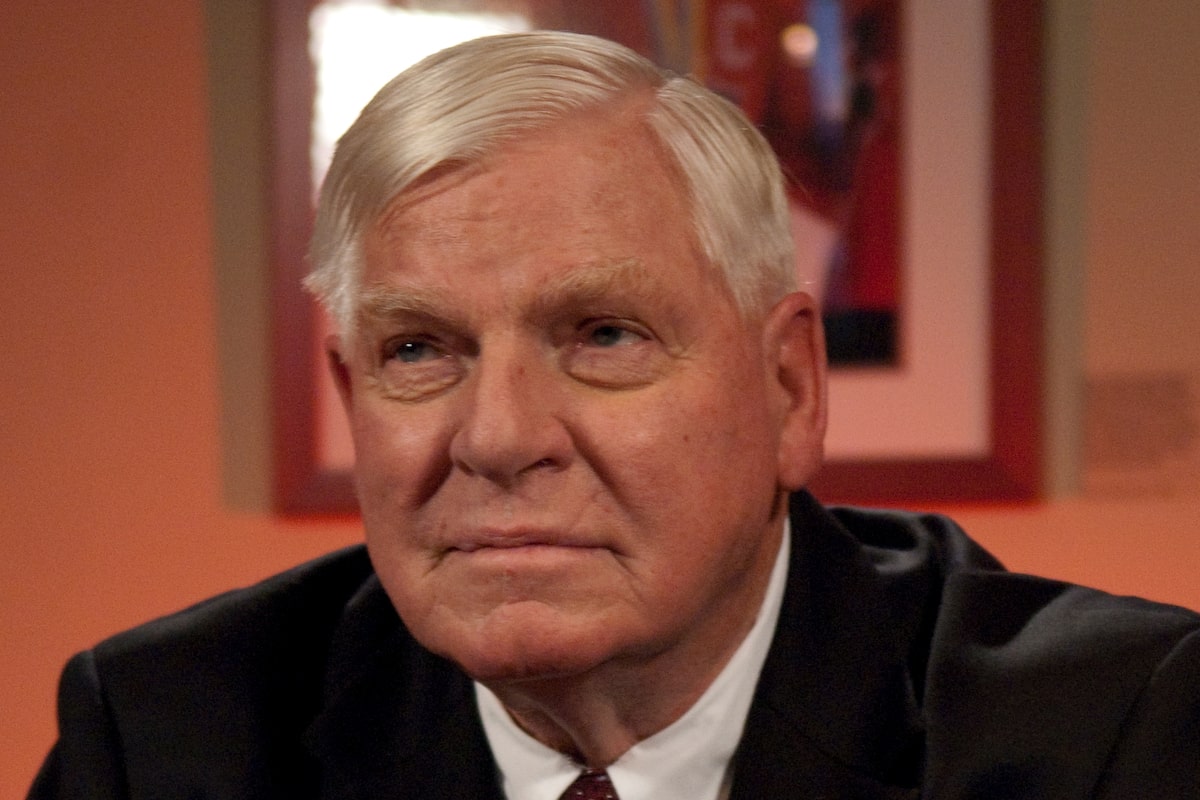
NICOSIA, Cyprus — Bolstering Cyprus ‘ defense capacity is critical for the east Mediterranean island nation so close to the war-wrecked Middle East, the country’s defense minister said Tuesday.
The priority for Cyprus is to procure better defense systems, said Defense Minister Vasilis Palmas. The minister, who spoke to The Associated Press in the nation’s capital of Nicosia, outlined some defense plans though he would not go into specifics about arms procurement programs.
“The situation in the eastern Mediterranean, with its continuous shifting geostrategic balances and competing interests makes it even more pressing for the island to bolster its defensive capabilities,” Palmas said.
Meanwhile, a senior government official confirmed to the AP that Cyprus recently received a part of the Israeli-made Barak MX integrated air defense system.
The official, who spoke on condition of anonymity to discuss the matter, said he expects the delivery of the rest of the system soon, with the whole system becoming fully operational in mid-2025.
The Israeli ground-based system is capable of simultaneously intercepting missiles, drones and aircraft from as far as 93 miles (150 kilometers) away, and represents a significant upgrade to Cyprus’ defense shield, which had until recently only consisted of Soviet-era weapons, such as the BUK M1-2 missile system.
Cyprus in recent years pivoted away from Russian weapons systems as part of a broader, pro-Western strategy to bring the small nation’s armed forces up to EU and NATO standards. The Cypriot president, Nikos Christodoulides, said earlier this month that Cyprus could apply to join NATO with U.S. help, once conditions allow for it.
Palmas said closer diplomatic and military ties with the United States have enabled Cyprus to leverage its geographic location as the closest European Union member to the Mideast to expand its diplomatic outreach in regional peace efforts and help in providing humanitarian assistance.
Earlier this year, some 20,000 tons of humanitarian aid was shipped directly to Gaza via a maritime corridor from Cyprus. That effort halted as fighting intensified but efforts are underway to reestablish the supply route, this time via the Israeli port of Ashdod.
The closer ties with the U.S. in recent years culminated in the lifting of a decades-old arms embargo Washington imposed on ethnically divided Cyprus to prevent an arms race.
Cyprus’ split came in 1974 when Turkey invaded after a coup on the island aiming at uniting it with Greece. Turkey continues to maintain more than 35,000 troops in the island’s breakaway, Turkish Cypriot north.
Following the lifting of the U.S. arms embargo, Cyprus’ elite underwater demolition teams have reportedly been recently supplied with modern, U.S.-made M5 carbines — rifles more suited for special warfare teams.
Palmas also told the AP that work is underway to enlarge Cyprus’ air base in the island’s southwest, including a longer runway.
A major upgrade is also in the pipeline, he said, for the Mari naval base on the southern coast, also significantly expanding its facilities to accommodate warships and submarines of allied and friendly countries.
We’ve had March Madness. Now there is December Drama.
On Sunday afternoon, there will be a college football bracket: 12 teams in the first year of the expanded College Football Playoff.
After a decade of four schools getting chosen, the sport adopted expansion to give more programs a shot. It created additional interest in the regular season and the feeling that the championship truly is up for grabs.
Shortly after noon, the pairings will be announced. The top four seeds will be given to the highest ranked conference champions instead of the four highest ranked teams, which could create chaos down the road.
The Post prepares you for the festivities:
Who is No. 1?
This is an easy one. Undefeated Oregon entered the Big Ten championship game the heavy favorite and locked up the top spot with a 45-37 victory over third-ranked Penn State.
Landing the No. 1 seed, however, isn’t a huge advantage, aside from receiving a bye.
Oregon will face the No. 8/No. 9 winner, which actually will likely be a tougher quarterfinal opponent than the fifth seed will face if it gets that far, since the four highest seeds are conference champions.
This is something that has to be addressed in the future.
Oregon quarterback Dillon Gabriel celebrates after his team’s 45-37 Big Ten title win over Penn State on Dec. 7, 2024. Robert Goddin-Imagn Images
Imagine if the second-place seed in the SEC or Big 12 received a worse seed than the AAC or Atlantic 10 winner in the NCAA Tournament on the hardwood?
Is Alabama in?
The Crimson Tide were thought to be done after that no-show performance at six-win Oklahoma a few weeks ago.
But everything has gone right since. Alabama manhandled Auburn in the Iron Bowl while Miami, Ole Miss and Texas A&M all dropped games that moved Kalen DeBoer’s three-loss team up.
Quarterback Jalen Milroe’s Alabama squad has a solid chance to gain at at-large bid into the 12-team College Football Playoff, The Post’s Zach Braziller says. USA TODAY Sports via Reuters Con
SMU has one fewer loss but not nearly the quality of Alabama’s win at home over Georgia, which looks even better now that the Bulldogs won the powerhouse SEC. And the committee has been bumping down teams off of losses by several spots.
It’s hard to see Alabama being left out. Miami, ranked 12th, doesn’t seem like it has a realistic shot, since it really is ranked 13th, as No. 15 Arizona State received the automatic as the Big 12 champion.
What does the opening round look like?
Oregon (Big Ten), Georgia (SEC) and No. 10 Boise State (highest-ranked Group of Five conference champion) get three of the byes.
Then, it comes down to Arizona State or Clemson for the fourth one. We give Arizona State the slight edge because it has one fewer loss.
Notre Dame, led by quarterback Riley Leonard, likely will be the No. 5 seed in the 12-team College Football playoff, The Post’s Zach Braziller predicts. AP
One-loss Notre Dame receives the top at-large and the fifth seed, drawing Clemson in an intriguing opening-round matchup.
I don’t see the committee punishing Texas too much for its conference championship game loss.
Texas drops down to No. 6, where it will face No. 11 Alabama. While Penn State played well against Oregon, it lost head-to-head to Ohio State, giving the Buckeyes the advantage.
Ohio State is the seventh seed as a result and meets No. 10 Indiana, while Penn State falls to No. 8 and takes on ninth-seeded Tennessee.
There are a few potential blockbusters in there, highlighted by the Texas-Alabama showdown.
All four contests will be played on campus, with the quarterfinals being moved to bowl sites. That’s another aspect of this new system that is appealing.
BANGKOK — China has banned exports of key materials used to make a wide range of products, including smartphones, electric vehicles, radar systems and CT scanners, swiping back at Washington after it expanded export controls to include dozens of Chinese companies that make equipment used to produce advanced computer chips.
Both sides say their controls are justified by national security concerns and both accuse the other of “weaponizing” trade. Analysts say the latest restrictions could have a wide impact on manufacturing in many industries and supply chains.
“Critical mineral security is now intrinsically linked to the escalating tech trade war,” Gracelin Baskaran and Meredith Schwartz of the Center for Strategic International Studies, wrote in a report on Beijing’s decision.
The full impact will depend partly on whether U.S. industries can compensate for any loss of access to the strategically important materials, equipment and components.
Here’s why this could be a tipping point in trade conflict between the two biggest economies, coming at a time when antagonisms already were expected to heat up once President-elect Donald Trump takes office, given his vows to hike tariffs on imports of Chinese-made products.
China has banned, in principle, exports to the United States of gallium, germanium and antimony — critical minerals needed to make advanced semiconductors, among many other types of equipment. Beijing also tightened controls on exports of graphite, which is used in EV and grid-storage batteries. China is the largest source for most of these materials and also dominates refining of those materials, which are used both for consumer goods and for military purposes.
The limits announced Tuesday also include exports of super-hard materials, such as diamonds and other synthetic materials that are not compressible and extremely dense. They are used in many industrial areas such as cutting tools, disc brakes and protective coatings.
Next on the list of potential bans, experts say: tungsten, magnesium and aluminum alloys.
The Chinese Commerce Ministry announced its measures after the U.S. government ordered a slew of new measures meant to prevent sales to China of certain types of advanced semiconductors and the tools and software needed to make them. Washington also expanded its “entity list” of companies facing strict export controls to include 140 more companies, nearly all of them based in China or Chinese-owned.
Commerce Secretary Gina Raimondo said the revised rules were intended to impair China’s ability to use advanced technologies that “pose a risk to our national security.” The updated regulations also limit exports to China of high-bandwidth memory chips that are needed to process massive amounts of data in advanced applications such as artificial intelligence.
Export licenses will likely be denied for any U.S. company trying to do business with the 140 companies newly added to the “entity list,” as well as the dozens of others already on the list. The aim, officials said, is to stop Chinese companies from leveraging U.S. technology to make their own semiconductors.
The Biden administration has been expanding the number of companies affected by such export controls while encouraging an expansion of investments in and manufacturing of semiconductors in the U.S. and other Western countries.
Washington also extended the restrictions on exports of advanced semiconductor technology to companies in other countries, though it excluded companies in key allies like Japan, South Korea and the Netherlands that are thought to have adequate export controls of their own.
In a word: very. For the U.S., Japan, South Korea, Taiwan and other producers of advanced technology and components, access to materials with such properties as high conductivity is crucial: gallium and germanium increasingly are used in advanced semiconductors in place of silicon.
The materials subject to Chinese export controls are among 50 the United States Geologic Survey has designated as “critical minerals” — non-fuel minerals essential to U.S. economic or national security that have supply chains vulnerable to disruption.
Gallium topped that list. It is needed to make the same high-bandwidth memory chips the U.S. wants to avoid allowing China to access for use in artificial intelligence and defense applications. It’s used to make LEDs, lasers and magnets used in many products. Germanium is used for optical fiber and solar panels, among other uses.
A USGS study recently estimated the likely total cost to the U.S. economy from disruptions to supplies of gallium and germanium alone at more than $3 billion. But the situation is complicated. China imposed licensing requirements on exports of both metals in July 2023. It has not exported either to the U.S. this year, according to Chinese customs data. Antimony exports also have plunged.
China produces the lion’s share of most critical minerals, but there are alternatives. Japan also imports nearly all of its gallium, for example, but it also extracts it by recycling scrap metal.
Washington has been moving to tap sources other than China, forming a “Minerals Security Partnership” with the EU and 15 other countries. President Joe Biden’s visit to Africa this week highlighted that effort. Potential supply disruptions also have spurred efforts to tap U.S. deposits of rare earths and other critical materials in southeastern Wyoming, Montana, Nevada, Minnesota and parts of the American Southwest.
Germanium has been extracted from zinc mined in Alaska and Tennessee and the U.S. government has a stockpile. The Department of Defense has a recycling program that can extract scrap germanium from night vision lenses and tank turret windows.
But China’s dominance as a supplier gives it an overwhelming cost advantage, and U.S. resource companies face strong pressures over the potential environmental impact of mines and refineries.
Since then-President Trump launched a trade war against Beijing that has ramped up over time, China has adopted a relatively constrained and cautious approach in responding to the U.S. limits on access to advanced technology.
Much depends on the future course of overall relations. It is unclear if Trump will follow through on his vows to push tariffs sharply higher once he takes office or if such declarations are the opening gambits in future trade negotiations.
China hit back with its own tariff hikes, but excluded many items crucial for its own economy. It sanctioned certain companies, especially defense contractors doing business with Taiwan, but refrained from outright bans on exports of vital materials to the U.S.
This time may be different.
Just after China’s Commerce Ministry announced its export ban, various Chinese industry associations including automakers and the China Semiconductor Association issued statements denouncing Washington’s moves to curb access to strategically sensitive technologies and declaring that U.S. computer chips are unreliable.
Beijing’s announcement also extends its ban on exporting Chinese-produced gallium and other critical minerals to the U.S. to apply to all countries, entities and individuals, saying violators will “be held accountable according to law.”
BANGKOK — China announced Tuesday it is banning exports to the United States of gallium, germanium, antimony and other key high-tech materials with potential military applications, as a general principle, lashing back at U.S. limits on semiconductor-related exports.
The Chinese Commerce Ministry announced the move after the Washington expanded its list of Chinese companies subject to export controls on computer chip-making equipment, software and high-bandwidth memory chips. Such chips are needed for advanced applications.
The ratcheting up of trade restrictions comes as President-elect Donald Trump has been threatening to sharply raise tariffs on imports from China and other countries, potentially intensifying simmering tensions over trade and technology.
China said in July 2023 it would require exporters to apply for licenses to send to the U.S. the strategically important materials such as gallium and germanium. In August, the Chinese Commerce Ministry said it would restrict exports of antimony, which is used in a wide range of products from batteries to weapons, and impose tighter controls on exports of graphite.
The limits announced by Beijing on Tuesday also include super-hard materials, which would include diamonds and other synthetic materials that are not compressible and extremely dense. They are used in many industrial areas such as cutting tools, disc brakes and protective coatings. The licensing requirements that China announced in August also covered smelting and separation technology and machinery and other items related to such super-hard materials.
China is the biggest global source of gallium and germanium, which are produced in small amounts but are needed to make computer chips for mobile phones, cars and other products, as well as solar panels and military technology.
After the U.S. side announced it was adding 140 companies to a so-called “entity list” subject to strict export controls. China’s Commerce Ministry protested and said it would act to protect China’s “rights and interests” Nearly all of the companies affected by Washington’s latest trade restrictions are based in China, though some are Chinese-owned businesses in Japan, South Korea and Singapore.
Both governments say their respective export controls are needed for national security.
China’s government has been frustrated by U.S. curbs on access to advanced processor chips and other technology on security grounds but had been cautious in retaliating, possibly to avoid disrupting China’s fledgling developers of chips, artificial intelligence and other technology.
Various Chinese industry associations issued statements protesting the U.S. move to limit access to advanced chip-making technology.
The China Association of Automobile Manufacturers said it opposed using national security as a grounds for export controls, “abuse of export control measures, and the malicious blockade and suppression of China.”
“Such behavior seriously violates the laws of the market economy and the principle of fair competition, undermines the international economic and trade order, disrupts the stability of the global industrial chain, and ultimately harms the interests of all countries,” it said in a statement.
The China Semiconductor Industry Association issued a similar statement, adding that such restrictions were disrupting supply chains and inflating costs for American companies.
“U.S. chip products are no longer safe and reliable. China’s related industries will have to be cautious in purchasing U.S. chips,” it said.
The U.S. gets about half its supply of both gallium and germanium metals directly from China, according to the U.S. Geological Survey. China exported about 23 metric tons (25 tons) of gallium in 2022 and produces about 600 metric tons (660 tons) of germanium per year.
___
AP researcher Yu Bing in Beijing contributed to this report.
Chairman of the Hockey Hall of Fame Bill Hay about to contact the 2012 Inductees Pavel Bure, Joe Sakic, Mats Sundin and Adam Oates on June 26, 2012. Mr. Hay died on Oct. 25 at the age of 88.Steve Poirier/Hockey Hall of Fame
On and off the ice, Bill (Red) Hay was a force in hockey.
As a player, he won the Calder Trophy as the National Hockey League’s rookie of the year in 1960. The following season, playing on Chicago’s Million Dollar Line, he won the Stanley Cup.
As an executive, he was president of the Calgary Flames, the president of Hockey Canada and the chief executive officer of the Hockey Hall of Fame.
Mr. Hay, who has died at 88, was a rare Canadian player of his era to have been formally educated. He is regarded as a trailblazer for having delayed the start of his professional hockey career to earn a degree from a U.S. college while playing for the varsity team.
The left-handed centre retired as a player at the age of 31 in 1967, though he likely had left several productive seasons.
“It wasn’t easy to leave hockey,” he said six years later. “At that time, league expansion had just begun. There was a great shortage of players and the money offered was good. The greatest difficulty was resisting the temptation to carry on for a few more years and make extra money.”
Mr. Hay was chief executive officer of the Hockey Hall of Fame.Steve Poirier/Hockey Hall of Fame
Mr. Hay left hockey for the oil patch. A decade earlier, his inability to find a job out of college had led him to sign a hockey contract.
William Charles Hay was born in Saskatoon on Dec. 9, 1935, the youngest of three children by the former Florence Miller and Charles Cecil Hay. Both parents were notable athletes and graduates of the University of Saskatchewan.
His mother, nicknamed String, was a goaltender for the women’s varsity hockey team. String Miller also played basketball and competed in track. She hailed from an athletic family, as a younger brother, Earl Miller, played left wing for parts of five NHL seasons with the Chicago Blackhawks and Toronto Maple Leafs.
The elder Mr. Hay was also a goaltender for the university, which he led to a Western Canadian senior hockey title in 1923, before losing the Allan Cup national championship to the Toronto Granites by 11-2 in a two-game, total-goals series. The Granites went on to win the Olympic gold medal the following year.
Young Bill played hockey before he started school in Lumsden, Sask. By the age of 15, he was skating for the junior Regina Pats. A giant of his era, at 6 foot 3 (190.5 centimetres) and 190 pounds (86 kilograms), Mr. Hay was neither a bully nor a bulldozer, showing skill as a smooth skater and playmaker, as well as an opportunistic goal scorer.
In the 1955 postseason, he scored 12 goals in 15 games, though his Pats lost the Memorial Cup to the Toronto Marlboros. The Marlies, featuring several future NHL players including Bob Pulford, Bobby Baun and Billy Harris, defeated the Pats four games to one in a series played in Regina. The lanky Mr. Hay scored a hat-trick in the desperate final game, only to lose, 8-5.
The Montreal Canadiens, who owned his rights, urged the promising centreman to attend McGill University while playing for one of the club’s farm teams. Instead, he hitchhiked south to talk his way into a scholarship with Colorado College.
Mr. Hay scored 60 goals in 60 games over two seasons with the Tigers. He was a two-time All-American. In 1957, the Tigers defeated Michigan 13-6 to claim the National Collegiate Athletic Association championship. Mr. Hay was named the all-star centre of the Frozen Four tournament held at Colorado Springs.
After graduating with a geology degree in 1958, Mr. Hay unsuccessfully sought employment in his field in Calgary.
That fall, he was one of 56 players invited to training camp with the Montreal Canadiens. He survived coach Toe Blake’s first cut of 30 skaters before being optioned to the Calgary Stampeders of the old Western Hockey League.
He scored his first pro goal in a 3-2 victory at home against the Spokane Flyers (soon to be renamed Spokes). His victim was former NHL netminder Emile (The Cat) Francis.
After a slow start, blamed by hockey writers on the higher calibre of play than that found at the collegiate level, the tall centre wound up with 54 points (24 goals, 30 assists) in 53 games.
The Canadiens, who were overloaded with young centres, including Jean Béliveau and Henri Richard, sold the prospect’s rights to Chicago for US$20,000 in April, 1959.
The tall, angular rookie, aged 23, was placed between right winger Murray Balfour, 23, who was another Montreal castoff from Saskatchewan, and Bobby Hull, 20, the flashy left winger dubbed the Golden Jet. The trio clicked immediately.
“There’s not much to this game when you have a guy like Bobby there,” Mr. Hay said. “All you have to do is get [the puck] to him and he scores.”
Mr. Hay won the Stanley Cup playing on Chicago’s Million Dollar Line in 1961. Former Chicago Blackhawk players, from left, Eric Nesterenko, Bill ‘Red’ Hay, Stan Mikita and Glenn Hall sing the national anthem after being honored for the 50th anniversary of the 1961 Stanley Cup champions, on Jan. 9, 2011.Charles Cherney/The Canadian Press
Chicago coach Rudy Pilous called the trio his Million Dollar Line. (The sobriquet is also attributed to the team’s owner, who was alleged to have said he would not part with them for that sum.) The centre skated in all 70 games in his inaugural campaign, scoring 18 goals with 37 assists.
At the end of the season, Mr. Hay was voted as the league’s top rookie by hockey writers. He outpolled Murray Oliver of Detroit by 139-101, followed by Ken Schinkel of New York, Chicago teammate Stan Mikita and linemate Mr. Balfour. The Calder Trophy came with a $1,000 prize.
In his sophomore campaign, the Blackhawks eliminated Montreal in the semi-finals before defeating Gordie Howe and the Detroit Red Wings by four games to two to claim the Stanley Cup. Mr. Hay scored a goal and added three assists in the finals.
“Nobody really relied on anybody in 1961,” he told the Calgary Albertan a decade later. “Everybody worked hard, especially at checking.”
Married and with three young children at home, Mr. Hay shocked the Blackhawks by retiring at the end of the 1965-66 season to become an executive with an oil exploration company.
Mr. Hay (left) shows his 1961 Stanley Cup ring to Anaheim Ducks General Manager Brian Burke during a ceremony at the Hockey Hall of Fame in Toronto on Jan. 25, 2008.Frank Gunn/The Canadian Press
“I wanted to settle down in Calgary and get into business,” he told Louis Cauz of The Globe and Mail. “It was pretty hard moving the family back and forth.”
He was lured back midway through the season, before retiring as a player for good in 1967, just as the NHL was about to double in size from six to 12 franchises. In eight seasons with Chicago, the centre skated in 506 games, scoring 113 goals with 274 assists. He had another 15 goals and 21 assists in 67 playoff games.
Oddly, his early retirement did not prevent other teams from selecting him in drafts. The new St. Louis Blues picked him in the 11th round, No. 66 overall, in the 1967 NHL expansion draft. A year later, Chicago claimed him back. He had not played competitive hockey for five years when the Calgary Broncos selected him in the 74th round of the World Hockey Association’s draft. As it turned out, the Calgary franchise folded before the start of the season, and Mr. Hay’s rights transferred to the Cleveland Crusaders.
Through his summers as a player, Mr. Hay drew maps and studied exploration research for Imperial Oil. He later reported on drilling operations in Alberta and Montana for Sedco Explorations, owned by the Saskatchewan-born brothers Donald, Daryl (Doc) and Byron (BJ) Seaman. As an executive with their Bow Valley Resource Services Ltd., Mr. Hay helped broker a meeting between Doc Seaman and NHL president John Ziegler about transferring the faltering Atlanta Flames franchise to Calgary, which happened in 1980.
Hockey Canada agrees to send a team to the 1978 World Championships, on Feb. 25, 1978. Clockwise from bottom, chief negotiator Alan Eagleson, Eric Morse, former National Hockey League president, Clarence Campbell, Ron Roberts, Torrance Wyllie, ex-national team coach Father David Bauer, Bill Watters, Chris Lang, Bill Hay, George Cariviere, Larry Gordon, Derek Holmes and chairman Douglas Fisher.Edward Regan/The Globe and Mail
Eleven years later, Mr. Hay became president of the club.
“I’ve got to throw all that [Blackhawks] stuff out,” he told Monte Stewart of the Calgary Herald. “Even my grandkids aren’t allowed to wear them now.”
By then, he was also president of Hockey Canada, the sport’s national governing body, a position once held by his father, who was responsible for organizing the famed 1972 Summit Series between the Soviet Union’s national team and Canadian NHL professionals.
Mr. Hay has been inducted into the Saskatchewan Sports Hall of Fame (1992), the Colorado College Athletic Hall of Fame (1995), the Colorado Springs Hall of Fame (1998), Saskatchewan Hockey Hall of Fame (2013) and the Alberta Hockey Hall of Fame (2017). He was elected to the Hockey Hall of Fame as a builder in 2015, again matching his father, who had been enshrined as a builder in 1974, a year after his death at the age of 71.
The hockey administrator was also honoured for his work as a geologist and executive by being named to the Saskatchewan Oil and Gas Hall of Fame in 1999.
Mr. Hay died on Oct. 25. He leaves the former Nancy Anne Livingstone Woodman, his wife of 67 years, as well as two daughters, five grandchildren, three great-grandchildren and a brother. He was predeceased by a sister. A son, Donald James Hay, died three days after his father, aged 62.
For his part, Mr. Hay was amused when his coach came up with the memorable nickname for his line.
“Million Dollar Line, that was a laugh,” he once said. “Bobby got $950,000 and Murray and I each got $25,000.”
You can find more obituaries from The Globe and Mail here.
To submit a memory about someone we have recently profiled on the Obituaries page, e-mail us at obit@globeandmail.com.
Punjab Governor Sardar Saleem Haider Khan addresses a public awareness event organised by the Internal Society of Internal Medicine regarding World Diabetes Day at Governor’s House on November 14, 2024. — Facebook@sardarsaleemhaidergroup
LAHORE: Punjab Governor Sardar Saleem Haider Khan said that diabetes could be avoided by adopting a healthy lifestyle. People cannot get diabetes treatment due to lack of resources in the villages.
He expressed these views while addressing a public awareness event organised by the Internal Society of Internal Medicine regarding World Diabetes Day at Governor’s House on Thursday.Addressing the ceremony, Punjab Governor said that it is the responsibility of the government to provide health and education facilities to every citizen. He said that all the health centres of Punjab should have free sugar test and treatment facility. He said that for a healthy body, at least one hour should be allocated for exercise every day.
Punjab governor also requested Prof Dr Javed Akram to provide free treatment to the diabetic government employees of the Governor’s House from one to ten scale.The governor also led a walk to raise awareness about diabetes prevention. Former provincial health minister and President Pakistan Society of Internal Medicine Prof Dr Javed Akram and Vice Chancellor King Edward Medical University Mahmood Ayaz and other doctors also addressed the ceremony. Vice Chancellor Fatima Jinnah Medical University Khalid Masood Gondal, medical students and others were present in the ceremony.
Meanwhile, Vice Chairperson Overseas Pakistanis Commission Punjab Barrister Amjad Malik called on Punjab Governor Sardar Saleem Haider Khan at Governor’s House. Barrister Amjad briefed the governor about the performance of the institution.
Speaking on this occasion, Punjab governor said that overseas Pakistanis are the asset of the country who are contributing a lot to the economy of the country by sending remittances. He said that the doors of the Governor’s House are open for overseas Pakistanis. He said that no effort will be spared to solve the problems of the overseas Pakistanis.
Governor Punjab said that whenever there was a difficult time for the motherland, Pakistanis living abroad always came forward to help. He further said that the protection of life and property of Overseas Pakistanis is the first priority of the government.Barrister Amjad Malik said that prominent overseas Pakistanis living abroad will be included in the advisory process through district overseas committees and advisories.
Jose Siri, #26 of Major League Baseball’s Houston Astros, steals second base as Dansby Swanson, #7 of the Atlanta Braves, is unable to handle the throw from Travis d’Arnaud, #16, in the eighth inning during Game 3 of the 2021 World Series at Truist Park in Atlanta on Oct. 29, 2021.
Daniel Shirey | Major League Baseball | Getty Images
Diamond Sports moved closer to exiting bankruptcy on Thursday after a bankruptcy judge approved its reorganization plan, which slashes the hefty debt load that toppled the company.
The green light is a significant milestone for the owner of regional sports networks, which has been under bankruptcy protection since March 2023. During that time, the company has made dramatic changes to its deals with professional sports teams and leagues, as well as its business model, to prove it can be a viable company in the future.
“This is a pretty significant day for this company. When we entered bankruptcy, I’d love to be able to tell you that I knew with confidence that we would reorganize this business. I thought we would, but couldn’t tell for certain that we could,” a Diamond Sports attorney said in court Thursday.
“We took a pretty twisted journey to get here with potential wind-down as an option, but we are here today to reorganize this business,” he continued.
In the weeks leading up to the hearing, Diamond inked various deals, including an agreement with Amazon’s Prime Video to stream games and a naming rights deal with Flutter’s FanDuel.
Diamond faced recent opposition from Major League Baseball and the Atlanta Braves, but the company managed to resolve those issues prior to Thursday’s court hearing. It presented its reorganization plan to the court with a standing objection from the U.S. Trustee, a watchdog overseeing the case. The judge on Thursday overruled the objection and approved the plan.
The reorganization plan that received court approval on Thursday will see Diamond’s debt load cut from nearly $9 billion to $200 million. The company will emerge from bankruptcy with more than $100 million in cash and cash equivalents on its balance sheet.
“Today is a landmark day for Diamond, as we embark on a new path for our business. Diamond is now unencumbered by legacy debt, financially stable and enthusiastically supported by new ownership,” Diamond CEO David Preschlack said in a release Thursday.
Diamond deals
Throughout Diamond’s bankruptcy process over the past year and a half, the company has seen the status of teams across the MLB, the National Basketball Association and National Hockey League shift, as they decided to either remain on the pay TV networks or exit for new deals.
On Thursday, attorneys for Diamond Sports said it now has the local rights to 13 NBA teams, eight NHL teams and six MLB teams.
Its agreements with MLB have been in particular focus over the past few weeks. In an October court hearing, Diamond said it was planning to drop all of its MLB teams, except the Atlanta Braves, unless it could renegotiate its contracts with them.
Since then, the MLB announced that three of the teams turned to MLB to produce their local games, and the Texas Rangers parted ways with Diamond. The Cincinnati Reds also ended their deal with Diamond and six MLB teams agreed to a deal to stay with Diamond, attorneys said during Thursday’s hearing.
The Reds will also be turning to MLB to produce and air their local games for next season, MLB announced Thursday after the hearing. The league first did this last year when the San Diego Padres exited Diamond.
Attorneys for Diamond on Thursday said there was one other team the company was in negotiations with. Based on CNBC’s earlier reporting that Diamond was working with 12 MLB teams, that leaves the Kansas City Royals as the unnamed team.
The Kansas City Royals did not immediately respond to CNBC’s request for comment.
“The reality is Diamond is a far smaller company than it was when it started this process,” said sports media consultant Lee Berke, noting the teams that have exited the networks.
He added the regional sports network universe in general is getting smaller. Last year Warner Bros. Discovery walked away from the regional sports networks business.
“This model doesn’t work anymore when it’s so dependent on the shrinking number of customers of pay TV distribution,” said Berke.
For decades, the regional sports networks business has proven to be a lucrative business model for the teams and leagues, as the networks pay high fees to air local games that prop up team payrolls. But similar to their peers in the pay TV bundle, while the businesses are still profitable, they have heavily suffered in the wake of cord-cutting.
In the wake of Diamond’s bankruptcy, some teams have opted out of their Diamond-owned networks, and signed deals with local broadcasters and various streaming platforms. While the deals with local broadcasters will expand the reach of the games, they are unlikely to replicate the fees generated by the regional sports network model since they are outside of the pay TV bundle.
While Diamond was in negotiations with lenders and TV distributors, its key discussions took place with the leagues and teams. Some of those conversations are still ongoing, and a Diamond attorney said Thursday that the company is willing to renegotiate with the teams that have already departed.
“Our door remains open, the phone lines remain up, and management is happy to engage those teams if they want to come back into the fold,” a Diamond attorney said in court Thursday.
BRENTWOOD, Tenn. —Conversion Interactive Agency and People.Data.Analytics (PDA) have recently released their Fall 2024 Driver Survey providing significant insights into the evolving priorities, challenges and sentiments of professional truck drivers in today’s market, offering key takeaways for industry stakeholders.
According to a media release, the survey delves into various critical topics, including assessing the level of optimism among drivers regarding the state of the freight market. It also explores the pivotal factors that lead drivers to contemplate making a change in their employment, and the preferences they hold when exploring new driving opportunities.
An essential insight from the survey highlighted drivers’ approach to job applications. The data showed that 85% of drivers apply to more than one trucking company when seeking a new job, with 39.9% applying to two or three carriers, and 28.3% applying to more than five. This trend demonstrates that drivers are keeping their options open and emphasizes the need for carriers to be swift and proactive in their recruitment efforts.
“With competition for drivers intensifying, recruiting teams must be equipped with the latest tools and technology to stand out and be the first to connect with drivers quickly,” said Kelley Walkup, president and CEO of Conversion Interactive Agency. “Speed and transparency are more critical than ever in the recruitment process.”
The survey revealed a noteworthy trend in driver job search behavior. The percentage of drivers currently seeking employment has surged to 40.7%, the highest level observed since Conversion and PDA began tracking this number.
When exploring why drivers are looking for new opportunities, predictable pay emerged as the top factor, cited by 81.9% of respondents. This was followed by better home time (65.7%) and the need for consistent miles (49.1%). The demand for better benefits saw a significant shift, with a 25% increase in drivers prioritizing improved benefits compared to the Spring 2024 survey. These findings highlight the importance of stability and quality of life considerations for drivers as they navigate an imbalanced freight market.
Driver sentiment about the future of the trucking industry was also captured. When asked if they believed 2025 would be a better year for drivers than 2024, 51.1% of participants expressed optimism. Carriers can use this positive outlook to their advantage by communicating improvements in their freight operations and sharing successes.
Retention continues to be a critical challenge for carriers. The survey showed that only 53.3% of drivers feel valued and appreciated in their current roles. This indicates that carriers must intensify efforts to foster trust, empathy, and transparent communication within their teams. Proactive engagement through tools such as PDA’s feedback platforms can help carriers quickly identify and respond to driver concerns, ensuring they feel heard and valued, according to the release.
“Collecting feedback is just the beginning; acting on that feedback is what truly builds trust,” said Scott Dismuke, vice president of operations at PDA. “When drivers see their concerns are being addressed, it significantly lowers turnover risk and enhances loyalty.”
Another compelling finding from the survey was the trade-off between pay and home time, according to the release. Nearly half of the drivers indicated they would consider job opportunities offering more home time, even if it meant reduced pay. This reflects the ongoing struggle for drivers to balance work and personal life. Carriers should ensure that their recruiters are equipped with strategies to highlight the benefits and trade-offs of different positions clearly and effectively.
Ultimately, the survey’s data shows the need for carriers to leverage technology and innovative tools to enhance recruitment and retention efforts. Prioritizing predictable pay, transparent communication, and understanding what drivers value most can position carriers to thrive in a competitive market.
“Retention strategies that integrate clear, empathetic communication and real-time responsiveness give carriers a true advantage,” Dismuke said. “Ensuring drivers feel valued is not optional—it’s essential for sustained success.”
The Fall 2024 Driver Survey serves as a vital resource for carriers aiming to adapt and stay competitive, according to the release As the trucking industry evolves, listening to drivers and implementing actionable insights remain crucial for long-term success.
Dana Guthrie is an award-winning journalist who has been featured in multiple newspapers, books and magazines across the globe. She is currently based in the Atlanta, Georgia, area.
Working odd hours or night shifts was found to disrupt signals liver sends to the brain telling it if eating is happening in sync with the body’s clock, a result that researchers said could help treat the negative effects of eating at unusual times, such as overeating. Eating at irregular times is said to be related to weight gain and diabetes, largely because it is not in sync with one’s body clock, or circadian rhythm — a 24-hour cycle of physical, mental, and behavioural changes, including sleeping and eating.
Researchers from the University of Pennsylvania, US, found that working unusual hours disturbs the liver’s internal clock and its signals, because of which the brain overcompensates, thereby leading to overeating at the wrong times. The results, published in the journal Science, suggested that targeting specific parts of the vagus nerve — via which the liver communicates with the brain — could help address overeating in people working night shifts or experiencing jet lag, the team said.
“Both mice and humans normally eat at times when they are awake and alert, and this circuit provides feedback from the liver to the central clock in the brain that keeps the system running smoothly,” senior author Mitchell Lazar, a professor of diabetes and metabolic diseases, University of Pennsylvania, said.
“This feedback is through a nerve connection from the liver to the brain,” Lazar said.
For the study, researchers looked at the REV-ERB genes in mice, which are known to have genetic material and biological processes similar to those in humans, and help them both control the body clock.
Turning off these genes made the mice’s liver develop a faulty clock, because of which eating habits were found to change dramatically, with more food being consumed during less active hours, the team said. However, the negative effects could be reversible, as cutting the nerve connection in obese mice was found to restore normal eating habits and reduce food intake.
“This suggests that targeting this liver-brain communication (route) could be a promising approach for weight management in individuals with disrupted circadian rhythms,” author Lauren N Woodie, a post-doctoral researcher in Lazar’s lab, said.
“Our findings reveal a homeostatic feedback signal that relies on communication between the liver and the brain to control circadian food intake patterns. This identifies the hepatic vagus nerve as a potential therapeutic target for obesity in the setting of chronodisruption,” they wrote.
(Disclaimer: Except for the headline, this story has not been edited by NDTV staff and is published from a syndicated feed.)
Twin sisters Jenna and Amanda Duke figured to be big scorers for the Mansfield field hockey team and they are doing their job well. The sisters are from Stroudsburg and Stroudsburg High graduates.
Jenna, a redshirt freshman, leads the Mounties with 26 points on 11 goals and four assists. She had three goals against Roberts Wesleyan and two goals against both D’Youville and Frostburg State. Jenna has taken just 30 shots on goal for a .789 average.
Sophomore Amanda is third on the team with five goals and two assists for 12 points. She had three goals and an assist against Roberts Wesleyan and has taken just nine shots on goal.
The twins have been coming up with big scores as well. Jenna has three game winners and Amanda two.
Mansfield, ranked ninth in Division II, is 10-6 overall and 4-3 in PSAC play after a 1-0 loss at No. 6 West Chester last Saturday.
Stroudsburg High School graduate Jenna Duke leads Mansfield University with 26 points on 11 goals and four assists this field hockey season. (Photo courtesy of Mansfield Athletics)
Logan Clouser – Duke field hockey (The Hill School)
The 5-foot-4 senior from Bethlehem is a key performer for the 10th-ranked Blue Devils who are 11-4 overall and second in the Atlantic Coast Conference after a 1-0 conference victory over No. 9 Boston College last Friday in Durham, N.C. Clouser picked up the assist after her shot was reflected to a teammate. She has two goals with three assists this season and had a goal and an assist in a 3-0 victory at No. 20 California on Oct. 4.
Sone Ntoh – Monmouth (N.J.) football (Emmaus)
The 5-foot-11, 235-pound graduate student leads the Football Champion Subdivision in touchdowns with 18. He’s fifth in all of college football. Ntoh had five touchdowns and rushed for 136 yards in a 63-21 victory over Fordham on Sept. 28. The touchdowns are a career best and ties a program record. He had four scores in a 55-17 triumph over Bryant on Oct. 16. He has carried the ball 73 times for 364 yards for the Hawks who are 4-4 overall and 2-2 in the Coastal Athletic Association.
Rayne Wright – Maryland field hockey (Liberty)
The fifth-year student was one of seven honored on Senior Day last Sunday and the 6th-ranked Terps responded with a 3-0 non-conference victory over Richmond. It was the team’s fifth shutout of the season. Wright has started 15 games and has played all 60 minutes four times. The team has given up just 13 goals. Maryland is 11-5 overall and 5-2 and second in the Big Ten Conference. Wright was an All-Big Ten first team choice and a National Field Hockey Coaches Association Mid-Atlantic Team pick last season.
Jared Richardson – Penn football (Bethlehem Catholic)
The 6-foot-2, 215-pound wide receiver leads the Quakers in catches with 23. He has 342 yards with three touchdowns. He opened the season with five catches for 98 yards and a touchdown in a 29-22 loss to Delaware on Sept. 18 and came back with six catches for 96 yards and a score in a 27-17 victory over Colgate on Sept. 28. Richardson earned All-Ivy League first team honors last year after having 67 receptions for 788 yards with eight touchdowns. Penn is 2-4 overall and 0-3 in Ivy games.
The graduate student is having a solid season as goalkeeper for the Huskies who are 12-2-1 overall and have clinched a PSAC playoff spot with a 7-1-1 record. Rimple has given up nine goals (0.65 goals against average) with 38 saves and eight shutouts. He didn’t have to make a save in Bloomsburg’s 6-0 victory over Shippensburg last Saturday and the Huskies’ offense was outstanding. Senior Patrick Walsh (Emmaus) led the way with two goals while graduate student Alex Wilsterman (Parkland) had two assists.
Alexander Kane – Dickinson men’s cross country (Southern Lehigh)
The junior will be out to finish strong starting with the Centennial Conference Championship this Saturday in Newville. Kane prepped for the race by finishing 31st out of 512 runners at the Mike Woods Invitational on Oct. 19 in Geneseo, N.Y. He had an 8,000-meter time of 25:13.5. That improved his time of 26:33.0 that he ran when he finished ninth in last year’s championship. Kane went on to finish 8th in the Mideast Regionals and 90th in the Division III NCAA Championship.
Kaden Moore – Virginia Tech football (Freedom)
The 6-foot-3, 310-pound redshirt senior is starting at offensive guard for the Hokies who are 5-3 overall and 3-1 in the Atlantic Coast Conference after 21-6 victory over Georgia Tech last Saturday in Blacksburg. The team had 233 yards in total offense. On the season Virginia Tech has accumulated 2,856 in total yards which averages out at 357.3 per contest. Moore has made 45 starts either at center or guard in 45 career games.
Christina Clymer – Slippery Rock field hockey (Easton)
The junior is tied for eighth in Division II with six defensive saves. The 6-foot midfielder/back has started all 14 games for The Rock. The team is 3-11 overall and 0-8 in PSAC play after a tough 2-1 loss to second-ranked Kutztown last Friday. Seven of the losses have come against nationally ranked teams. Clymer is a strategic Communications and Media major. She spent three years at Division I Ball State where she saw limited action.
Elaina Fragassi – Shippensburg field hockey (Parkland)
The 5-foot-6 freshman midfielder has come off the bench in every game for the unbeaten Raiders who are 15-0 overall and 8-0 in PSAC play and are ranked first in the Division II poll. Fragassi has played in all 15 games and has a goal and two assists. She scored her first collegiate goal in a 9-0 victory non-conference victory over New Haven on Sept. 13. She also helps on the defensive side, with the team limiting foes to eight goals (0.53 goals against average) with nine shutouts.
Casey Malone – College of Charleston women’s soccer (Pennridge)
The 5-foot-6 freshman defender has played in 17 games with 14 starts for the Cougars who are 11-3-5 overall and 4-2-4 in the Coastal Athletic Association after a 4-0 league victory over Campbell on Sunday. Malone has been on the pitch for 1,089 minutes and has played all 90 minutes in four games, helping the team hold foes to 15 goals (0.86 goals against average) with 11 shutouts. She scored her first collegiate goal in a 3-0 non-league victory over West Georgia on Sept. 15.