hacklink hack forum hacklink film izle hacklink marsbahisizmir escortsahabetpornJojobet

Tag: lawmakers

  • TikTok defends handling of Romania election content in grilling by EU lawmakers

    BUCHAREST, Romania — TikTok took down several networks that tried to meddle in Romania’s elections, executives said Tuesday as they defended the company’s election integrity measures to European Union lawmakers.

    The video-sharing platform is a focus of controversy in the Eastern European country after far-right outsider Calin Georgescu emerged as the frontrunner in the vote, plunging the country into turmoil amid allegations of electoral violations and Russian meddling.

    Among the networks that TikTok uncovered were two small groups that it disrupted on Friday, days after the first round of voting, Brie Pegum, the platform’s global head of product, authenticity and transparency, told a committee.

    Both networks targeted Romanian users. One had only 1,781 followers and supported Georgescu, who was a little-known independent candidate until he set off shockwaves by convincingly winning the first round of voting, beating out the incumbent prime minister. The other networks supported different candidates, Pegum said.

    Many observers chalked up Georgescu’s success to his TikTok account, which now has 5.8 million likes and 527,000 followers.

    He gained huge traction and popularity in the weeks leading up to the first vote. But experts suspect Georgescu’s online following was artificially inflated while officials hinted that he was given preferential treatment by TikTok.

    The controversy highlights how TikTok has become a key election tool in Romania, an EU and NATO member state that shares a long border with war-torn Ukraine.

    TikTok applied its “global playbook” for the Romanian election and took a local approach with staff on the ground, said Caroline Greer, the company’s top lobbyist in the EU.

    Greer and Pegum were being grilled by EU lawmakers about Tiktok’s role in the Romanian vote as well as its compliance with the 27-nation bloc’s Digital Services Act, a sweeping set of regulations designed to protect users online from illegal or harmful content.

    Greer said TikTok deployed 95 Romanian language content moderators, worked with a fact-checking group and met with political parties and a number of different authorities including the country’s electoral authority.

    But many lawmakers were not satisfied with their responses.

    “The feeling here is that we are losing patience … and that we need more specific answers,” said Dirk Gotink, a Dutch member of the European Parliament. He also questioned what the scores of Romanian content moderators were doing during the election, and compared Pegum and Greer to firefighters TikTok sent to put out a fire.

    “They come, they let the fire rage online for weeks, months, during an election. And then they send very nice people here into this committee to answer questions in a very polite way,” Gotink said. “But it is simply not convincing — and it also doesn’t reflect what is happening online.”

    According to a report by the Bucharest-based Expert Forum think tank, Georgescu’s TikTok account garnered 92.8 million views primarily within the last few months, a figure that grew by 52 million views a week later, just days ahead of the first-round vote.

    Another TikTok account solely featuring Georgescu content, which had 1.7 million likes on the night first-round polls closed, was removed the day after voting. It had posts with Georgescu attending church, doing judo, running around an oval track, and speaking on podcasts.

    In an emailed statement to The Associated Press on Monday, TikTok said the account was one of “more than 150 accounts impersonating Georgescu” to date that has been removed, but added: “We also removed more than 650 additional impersonation accounts belonging to other candidates.”

    Georgescu will face reformist Elena Lasconi, of the progressive Save Romania Union party, in a presidential runoff on Sunday.

    —-

    AP Business Writer Kelvin Chan reported from London.

    __

    This story corrects the spelling of lawmaker Dirk Gotink’s name.

    Source link

  • Mass. lawmakers reach deal on Revs stadium, econ development bill

    Mass. lawmakers reach deal on Revs stadium, econ development bill

    “We kept trying and trying to engage and just ran against brick walls,” the North End Democrat said in August.

    After the two sides reached a compromise on the nearly $4 billion bill, Michlewitz told the Globe the package that emerged was “well worth the effort and the wait.”

    He said the package will be a boon to the state’s economy by targeting the industries that “will continue to become very important to the growth of the overall economy [here].”

    The bill, dubbed the “Mass Leads Act,” follows months of closed-door talks between leaders in the House and the Senate. The agreement was announced just two days after Election Day, guaranteeing lawmakers would approve it during a lame-duck session, the very situation a decades-old rule governing the chambers was designed to avoid.

    House leaders are planning to call representatives back to the State House for a special formal session this week to approve this bill, a necessary step because the bill includes bonding measures, which require roll call votes. The Senate’s approval will likely follow, though the Senate’s rules allow members to participate in roll call votes remotely.

    House members had not moved to come back for a special formal session as of Tuesday afternoon.

    House and Senate leaders have been negotiating for months over the bill, which was the most high-profile proposal lawmakers failed to finish before they wrapped up formal sessions over the summer. The day after they gaveled out, Governor Maura Healey publicly pressured lawmakers to return to Beacon Hill to finish the bill — a major priority of the governor’s.

    The soccer stadium language initially included in the Senate’s version of the bill, had been closely watched in part because this marked the third time project supporters have tried to secure approval to remove the 43-acre stadium site from what’s known as a designated port area, where only industrial uses are allowed. The Kraft Group for years has searched for a property in or near Boston to build a stadium for the Revs and move them out of Gillette Stadium, which the Revs share with the New England Patriots. That hunt, as of late, has zeroed in on a shuttered power plant across the Mystic River from Charlestown, and across the street from the Encore Boston Harbor casino.

    Everett Mayor Carlo DeMaria has been championing the language, but Boston officials, including Mayor Michelle Wu, chafed at the proposal, lamenting the city was left out of negotiations between the Kraft Group and Everett. The Wu administration is particularly concerned about the potential impact on traffic in Charlestown.

    To address this, the latest language to remove the power plant land from the DPA now includes a provision requiring the Krafts to secure a community benefits agreements with Everett and with Boston; if an agreement can’t be reached with Boston, the issue would be resolved by an independent arbitrator. A community benefits agreement would include items to sweeten the deal, such as land for a public park or money for a community center.

    “It’s been a long but healthy process,” said Steve Tocco, a lobbyist at ML Strategies who represents Kraft Group and Wynn Resorts, which owns both the casino and the stadium site. “We look forward to having a real chance to put this together.”

    In a statement ahead of the bill’s release Tuesday, Wu said she is “grateful to the Legislature for recognizing the need for Boston to be included in discussions of this major proposal.”

    “We look forward to learning the details of this proposal and working on behalf of Boston residents to represent community needs at this site,” she said.

    The bill also includes language restricting how much state money officials can spend to improve the stadium’s site. Even with the Legislature’s approval, the stadium proposal still needs to undergo extensive state and local permitting, in addition to the mandated negotiations with Boston officials.

    The bill would reauthorize a steady stream of state spending for the life sciences sector that began under former governor Deval Patrick’s administration, while the clean-tech funding in the bill would give a significant boost for that sector, including up to $30 million a year in tax credits for climate-tech businesses. Also included: $100 million to stoke the artificial intelligence sector.

    State Senator Barry Finegold, the lead negotiator on the Senate side, said the bill is intended to grow sectors where Massachusetts is already a leader.

    “The areas that we’re winning at, we want to grow that lead,” Finegold said. “Here in Massachusetts, we can’t get comfortable. We have to continue to compete. We have to continue to grow. We have to make this state very attractive for businesses to not only start here but to stay here.”

    Brian Johnson, president of the Massachusetts Medical Device Industry Council, said Tuesday that while “it didn’t happen when we were hoping,” the bill’s expected passage is “timely” and “important.”

    The injection of funds into the life sciences sector represents a “generational investment” in up-and-coming areas such as robotic surgery, advanced organ transplants, and neurotechnology — all areas where New England’s “brain belt” thrives, Johnson said.

    “We have written the blueprint for other states, and many of the things we have done over the last 15 years have been very good,” he said. “But it’s time to invest in a seasoned product and cement our place.”

    Jim Rooney, chief executive of the Greater Boston Chamber of Commerce, agreed. He said he expects the new climate-tech funding to generate a similar reaction to the Legislature’s decision to support the life sciences sector in 2008, which received nationwide attention.

    “I think that sends a signal to the rest of the country who are also aiming to compete in that industry that Massachusetts is serious about it,” Rooney said of clean-tech. “I expect that the country will take notice that Massachusetts is getting in the game in a big way.”

    The bill included several policy riders and provisions, as well. Among the ones that made it into the final version of the bill were:

    Several policies were also axed in the process. Those that did not make the cut include:

    • A provision to bring back “happy hour” drink discounts
    • Tax credits for the computer game industry
    • A policy change to raise the age of juvenile jurisdiction to include 18-year-olds, meaning they would be tried as juveniles instead of adults for certain crimes

    Samantha J. Gross can be reached at samantha.gross@globe.com. Follow her @samanthajgross. Jon Chesto can be reached at jon.chesto@globe.com. Follow him @jonchesto.


    Source link

  • California lawmakers approve legislation to ban deepfakes, protect workers and regulate AI

    California lawmakers approve legislation to ban deepfakes, protect workers and regulate AI

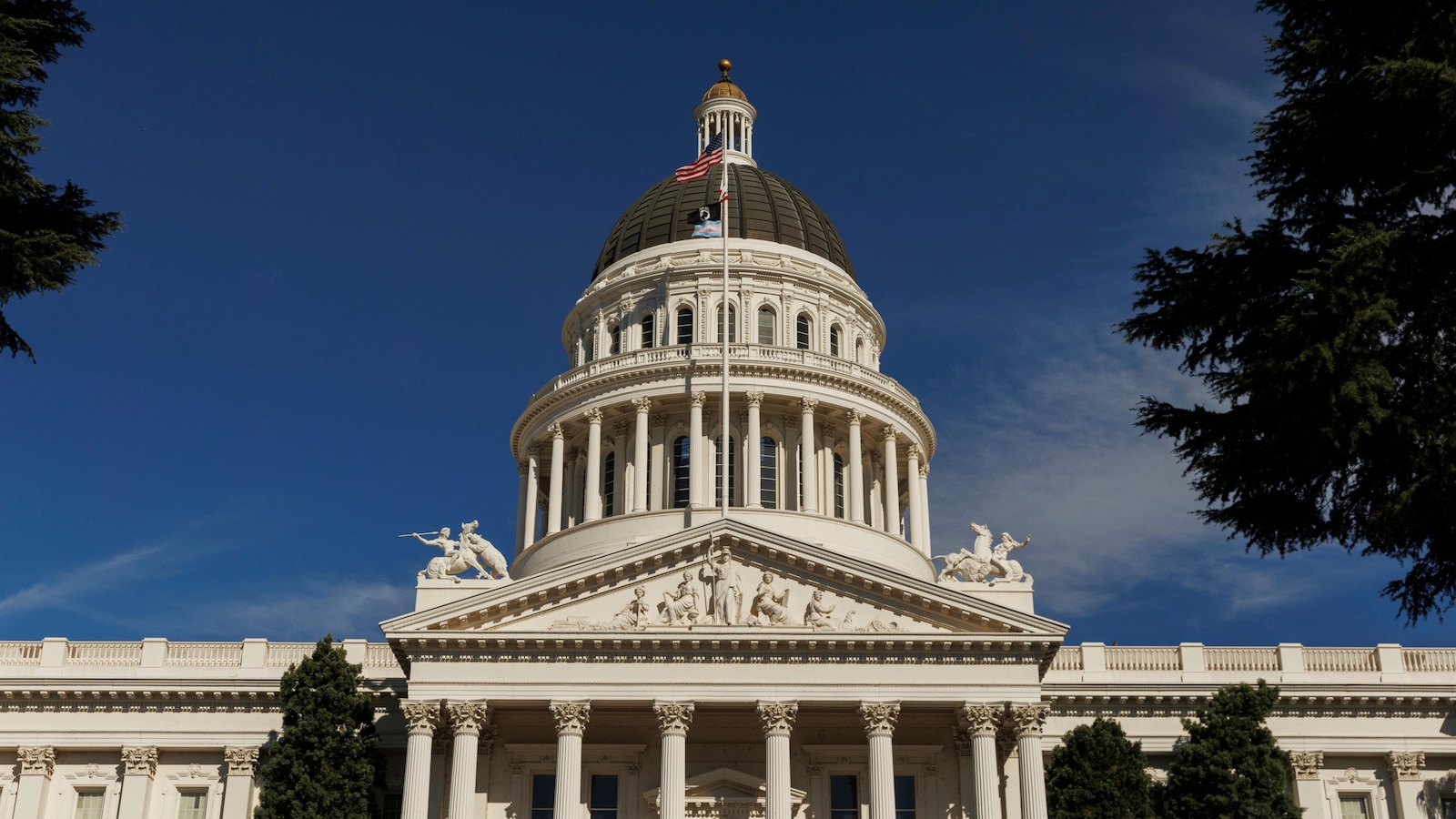
    SACRAMENTO, Calif. — California lawmakers approved a host of proposals this week aiming to regulate the artificial intelligence industry, combat deepfakes and protect workers from exploitation by the rapidly evolving technology.

    The California Legislature, which is controlled by Democrats, is voting on hundreds of bills during its final week of the session to send to Gov. Gavin Newsom’s desk. Their deadline is Saturday.

    The Democratic governor has until Sept. 30 to sign the proposals, veto them or let them become law without his signature. Newsom signaled in July he will sign a proposal to crack down on election deepfakes but has not weighed in other legislation.

    He warned earlier this summer that overregulation could hurt the homegrown industry. In recent years, he often has cited the state’s budget troubles when rejecting legislation that he would otherwise support.

    Here is a look at some of the AI bills lawmakers approved this year.

    Citing concerns over how AI tools are increasingly being used to trick voters and generate deepfake pornography of minors, California lawmakers approved several bills this week to crack down on the practice.

    Lawmakers approved legislation to ban deepfakes related to elections and require large social media platforms to remove the deceptive material 120 days before Election Day and 60 days thereafter. Campaigns also would be required to publicly disclose if they’re running ads with materials altered by AI.

    A pair of proposals would make it illegal to use AI tools to create images and videos of child sexual abuse. Current law does not allow district attorneys to go after people who possess or distribute AI-generated child sexual abuse images if they cannot prove the materials are depicting a real person.

    Tech companies and social media platforms would be required to provide AI detection tools to users under another proposal.

    California could become the first state in the nation to set sweeping safety measures on large AI models.

    The legislation sent by lawmakers to the governor’s desk requires developers to start disclosing what data they use to train their models. The efforts aim to shed more light into how AI models work and prevent future catastrophic disasters.

    Another measure would require the state to set safety protocols preventing risks and algorithmic discrimination before agencies could enter any contract involving AI models used to define decisions.

    Inspired by the months-long Hollywood actors strike last year, lawmakers approved a proposal to protect workers, including voice actors and audiobook performers, from being replaced by their AI-generated clones. The measure mirrors language in the contract the SAG-AFTRA made with studios last December.

    State and local agencies would be banned from using AI to replace workers at call centers under one of the proposals.

    California also may create penalties for digitally cloning dead people without consent of their estates.

    As corporations increasingly weave AI into Americans’ daily lives, state lawmakers also passed several bills to increase AI literacy.

    One proposal would require a state working group to consider incorporating AI skills into math, science, history and social science curriculums. Another would develop guideline on how schools could use AI in the classrooms.

    Source link