Challenges and reasons for hosting Olympics spark debate
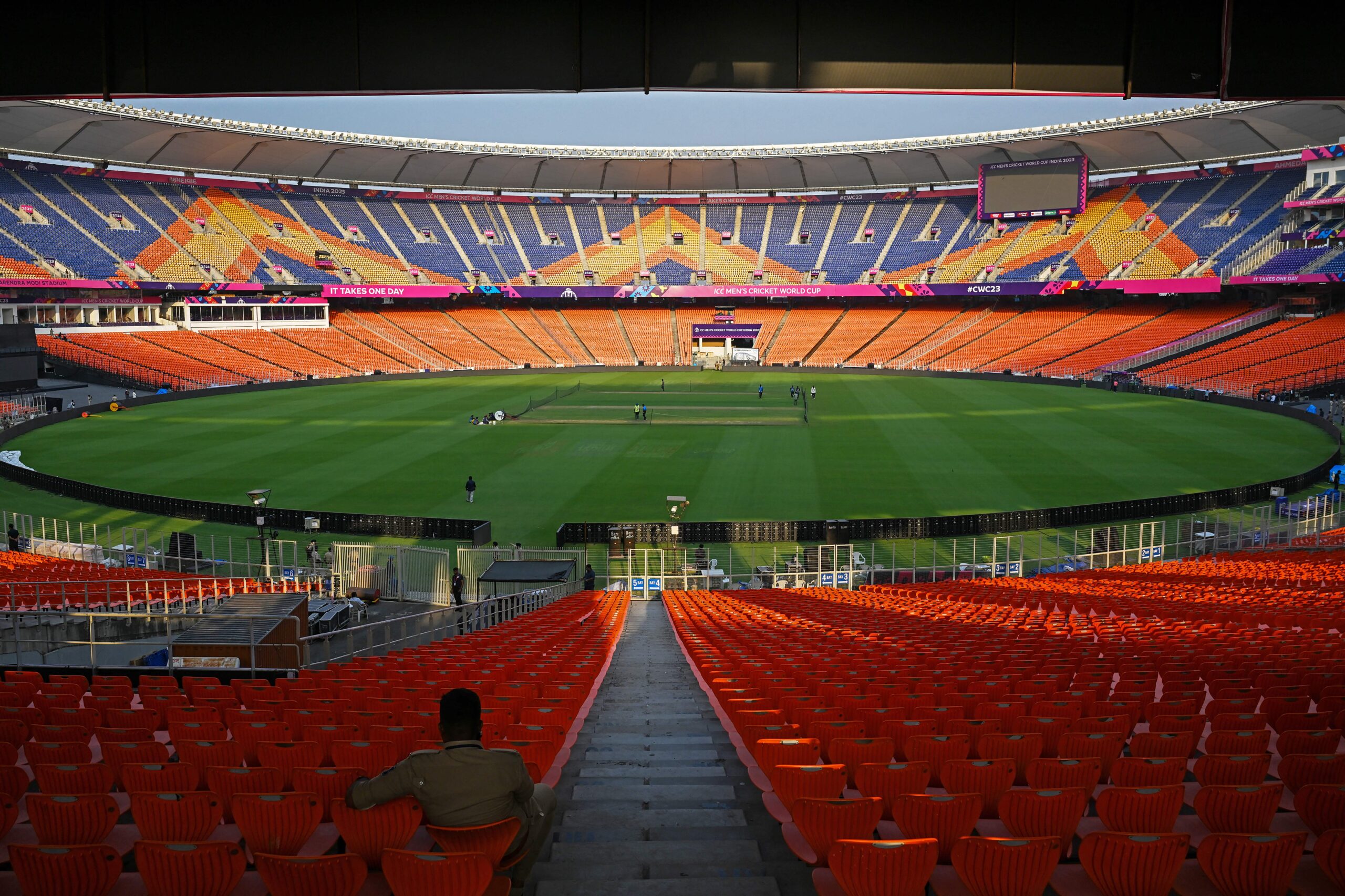
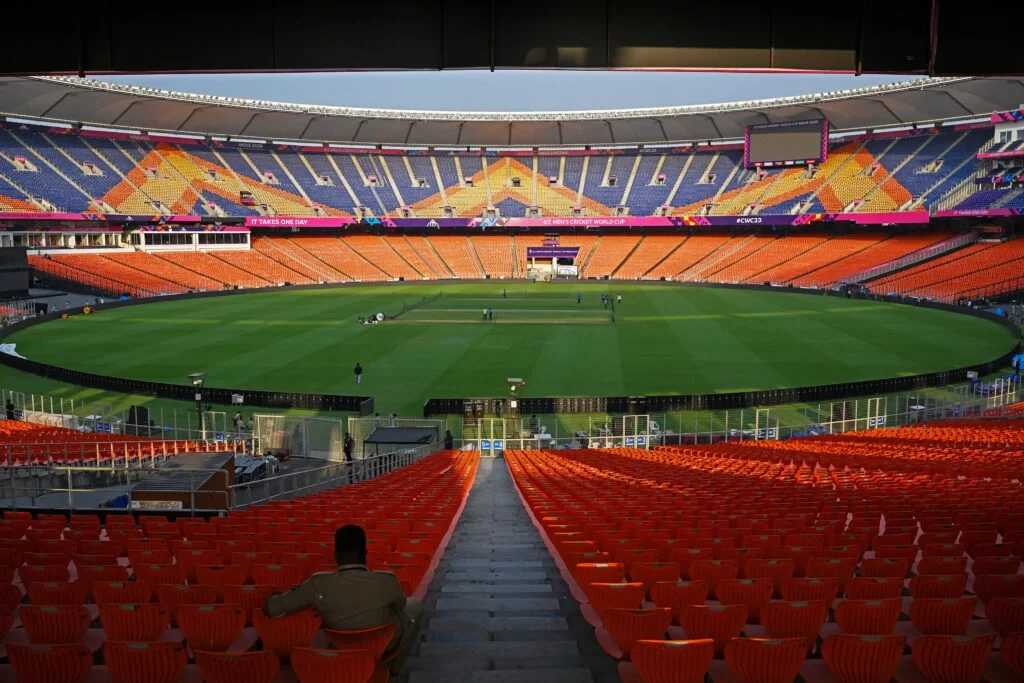
The Narendra Modi stadium in
Ahmedabad is being tipped to be the centrepiece in India’s Olympics plans
By:
Eastern Eye
INDIA says they want to host the 2036 Olympics in what is seen as an attempt by Narendra Modi to cement his legacy, but the country faces numerous challenges to stage the biggest sporting show on earth.
The prime minister says holding the Games in a nation where cricket is the only sport that really matters is the “dream and aspiration” of 1.4 billion people.
But experts say it is more about Modi’s personal ambitions and leaving his mark on the world stage, while also sending a message about India’s political and economic rise.
Modi, who is also pushing for a permanent seat on the UN Security Council, will be 86 in 2036.
“Hosting the Olympics will, in a way, burnish India’s credentials as a global power,” said academic Ronojoy Sen, author of Nation at Play: A history of sport in India.
“The current government wants to showcase India’s rise and its place on the global high table, and hosting the Olympic Games is one way to do it.”
Already the most populous nation, India is on track to become the world’s third biggest economy long before the planned Olympic Games.
The country submitted a formal letter of intent to the International Olympic Committee (IOC) in October, but have not said where the Games will be held.
Local media are tipping the city of Ahmedabad in Modi’s home state of Gujarat, where temperatures surge above 50ºC (122ºF) in summer.
The 2010 Commonwealth Games in Delhi was marred by claims of corruption and sub-standard infrastructure
Gujarat has already floated a company, the Gujarat Olympic Planning and Infrastructure Corporation, with a $710 million (£565.7m) budget.
Ahmedabad has about six million people, its heart boasting a Unesco listed 15thcentury wall which sprawls out into a rapidly growing metropolis. The city is home to a 130,000seater arena, the world’s biggest cricket stadium, named after Modi. It staged the 2023 Cricket World Cup final.
It is also the headquarters of the Adani Group conglomerate, headed by billionaire tycoon and Modi’s close friend, Gautam Adani.
Adani was the principal sponsor for the Indian team at this summer’s Paris Olympics, where the country won one silver and five bronze medals.
Despite its vast population, India’s record at the Olympics is poor for a country of its size, winning only 10 gold medals in its history.
Sports lawyer Nandan Kamath said hosting an Olympics was an “unprecedented window of opportunity” to strengthen Indian sport.
“I’d like to see the Olympics as a twoweeklong wedding event,” Kamath said.
“A wedding is a gateway to a marriage. The work you do before the event, and all that follows, solidifies the relationship.”
Outside cricket, which will be played at the Los Angeles Games in 2028, Indian strengths traditionally include hockey and wrestling.
New Delhi is reported to be pushing for the inclusion at the Olympics of Indian sports including kabaddi and kho kho – both are tag team sports – and yoga.
Retired tennis pro Manisha Malhotra, a former Olympian and now a talent scout, agrees that global sporting events could boost grassroots sports but worries India might deploy a “topdown” approach.
“Big money will come in for the elite athletes, the 2036 medal hopefuls, but it will probably end at that,” said Malhotra, president of the privately funded training centre, the Inspire Institute of Sport.
Veteran sports journalist Sharda Ugra said India’s underwhelming sports record – apart from cricket – was “because of its governance structure, sporting administrations and paucity of events”.
“So then, is it viable for us to be building large stadiums just because we are going to be holding the Olympic Games? The answer is definitely no,” she said.
The Indian Olympic Association is split between two rival factions, with its president PT Usha admitting to “internal challenges” to any bid.
After Los Angeles, Brisbane will stage the 2032 Games. The United States and Australia both have deep experience of hosting major sporting events, including previous Olympics.
India have staged World Cups for cricket and the Asian Games twice, the last time in 1982, but have never had an event the size of an Olympics.
Many are sceptical they can successfully pull it off.
The 2010 Commonwealth Games in New Delhi were marked by construction delays, substandard infrastructure and accusations of corruption. Many venues today are in a poor state.
“India will need serious repairing of its poor reputation on punctuality and cleanliness,” the Indian Express daily wrote in an editorial.
“While stadium aesthetics look pretty in PowerPoint presentations and 3D printing, leaking roofs or subpar sustainability goals in construction won’t help in India making the cut.”
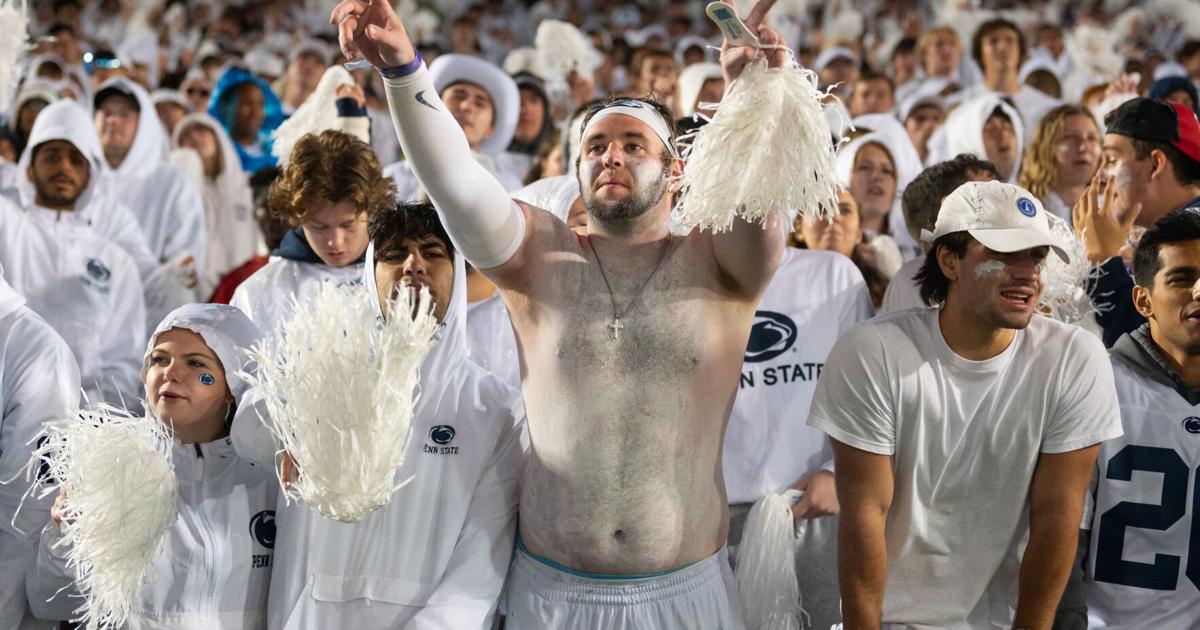
True freshman wide receiver Derek Moye dressed for the very first time in Beaver Stadium, ready to take on Notre Dame in 2007. He knew he’d be met with an electric crowd dressed in white, but Moye couldn’t even begin to imagine the lasting impacts of the first full-stadium White Out.
Penn State’s student section had put together a few White Outs of its own in the three years prior, starting with Purdue in 2004, when the athletic department asked the university’s students to wear white in an attempt to draw a crowd for the 2-3 Nittany Lions.
It wasn’t until that 2007 contest against Notre Dame, though, that the entire crowd donned white. Moye said his teammates had told him how “crazy” the student section White Outs were, but no one knew what was ahead.
“It was mind-blowing,” Moye said. “I didn’t know what to expect, but when I got in the stadium it was kind of like, really just ‘wow.’ Everything kind of seemed brighter. The energy was just so high … It was a really crazy experience thinking back on it.”
Moye, who ranks seventh all-time at Penn State with 2,395 career receiving yards, played in four more White Outs, but there was one specific moment the receiver can picture to this day, which came against Iowa in 2009.
“It was a rainy day, but the crowd was still full, didn’t care about the rain at all,” Moye said. “At this point in time, I don’t know if I’d heard it at all, or I just wasn’t overly familiar with the song, but they started playing ‘Don’t Stop Believin,’ and literally the whole crowd was singing as the rain was coming down. It was just one of those things I still envision in my mind perfectly to this day.”
The Nittany Lion hypes up the crowd at the White Out against Iowa on Saturday, Sept. 23, 2023 in Beaver Stadium in University Park, Pa. The Nittany Lions swept the Hawkeyes 31-0.
Sienna Pinney
The Nittany Lions ended up losing that game to the Hawkeyes, but the dedication of the fans Moye saw that night in Beaver Stadium is the epitome of what makes the White Out special. ESPN analyst Kirk Herbstreit has referred to the Happy Valley faithful as “the best fans in the country” multiple times, including last week when College GameDay was in town.
Former Penn State running back Evan Royster felt the love of Penn State’s fans for years during his time as a Nittany Lion, with one of the more iconic signs made by Nittanyville being for Royster. The banner featured a play on words of the band Blue Öyster Cult, and the running back remains thankful to the fans all these years later.
“I think that’s what makes the Penn State experience so great. Having fans that truly care about the team is priceless,” Royster said. “The Blue Royster Cult — they gave me that sign, and I still have it in my house right now, so some of the best memories that I have are because of fans at Penn State, so I hope that continues for every class to go through after me.”
As the years have gone on, those same supporters have continued to show up, rain or shine, and break attendance records — half of the top-10 most attended games in Beaver Stadium history were White Outs.
Fireworks light up the stadium to start off the White Out against Iowa on Saturday, Sept. 23, 2023 in Beaver Stadium in University Park, Pa. The Nittany Lions swept the Hawkeyes 31-0.
Sienna Pinney
Those are the games the players remember, especially Royster, who broke Penn State’s all-time rushing yards record in front of a sea of white in a win over Michigan in 2010. He said the White Outs “always, always, always” stand out in his mind, despite many games running together now for the 36-year-old.
Moye specifically made an effort to take in the environment and key in on the crowd during the White Outs, saying he would take a few seconds during warmups to “look up.”
“I took a few more seconds during the warmups … (when) you have a free second, whether it’s watching the defense play or whether it’s in between TV timeouts, you just kind of look up and see everything that’s going on,” Moye said. “You try to look at specific people and what they’re doing, and then also just kind of taking it in as a whole … Now it’s like, I look back and I go to the game, it’s like, damn, I used to play here.”
During his return to Happy Valley for the Minnesota contest in 2022, Moye saw firsthand how far the White Out has come since that win over Notre Dame, citing Herbstreit’s claim about Penn State fans as a significant reason for the spectacle’s growth.
“Kirk Herbstreit made the comments that he made, and it just took (the White Out) to a whole nother level,” Moye said. “Since Coach Franklin has gotten there, it’s really just gone from, I would say, from just the crowd being excited, wearing white, to actually, like a full-out event … The level that Coach Franklin has taken to is amazing. It’s more than even a football game. The White Out itself is an event.”
As Moye alluded to, the White Out has grown to unprecedented heights. Not only is it an event Penn State fans get excited for, it’s something the national media and college football fans everywhere turn their eyes to and have on their bucket list.
The team waits for their entrance during Penn State Football’s annual White Out game on Saturday, Oct. 22, 2022, at Beaver Stadium in University Park, Pa. The Nittany Lions won 45-17.
Ryan Bowman
Analyst Rece Davis has been to a few White Outs, and said the atmosphere might not be the “best” in the country, but there are “none better.”
“When everything around you is white, there’s an eeriness to it, and it’s exhilarating,” Davis said. “I think everybody that walks in there for the White Out is fired up, and if you don’t have a tingle running up and down your spine when you walk into a White Out game, you probably don’t have a spine.
Washington will experience that “tingle” for the very first time Saturday as the Huskies travel to Beaver Stadium for their inaugural visit, where they’ll be met with the iconic fireworks, dark sky and sea of white.
Huskies coach Jedd Fisch said in his weekly press conference he’s “not concerned” about preparing his team for the White Out crowd after experiencing it as a member of Michigan’s staff.
“I showed the guys what it looks like a little bit on Sunday night. I showed them some clips of, you know, playing at Penn State at the White Out. We did it when I was at Michigan … talked about that a little bit. … Showed them some clips of just the energy and the passion to expect,” Fisch said.
While Washington may be unbothered, Drew Allar and the Nittany Lions are excited for the annual event as Penn State looks to bounce back from its first loss of 2024.
“The White Out is, I don’t even know how to describe it really, it’s insane. I’m honored to be a part of a team that gets to play in an environment like that,” Allar said. “The energy that the crowd and fans bring to this game, and really, all games in general, is unmatched across the country, in my opinion. It’s super special to be a part of it, and as players we don’t take that for granted, we soak in these moments, because you only have one a year, and so many in your career … It’s going to be fun to just be in that type of atmosphere again this weekend.”
MORE FOOTBALL CONTENT
With five minutes left in the game and trailing 20-13, Penn State’s defense needed a stop to…
If you’re interested in submitting a Letter to the Editor, click here.
A first-of-its-kind TEDx event is set to take place in the Philippines. TEDxUP Visayas (TEDxUPV) Women: Anchored in Tech will feature a lineup of influential speakers from various industries, sharing their insights and experiences on November 15, 2024, at The Theatre at Solaire, Entertainment City, Aseana Ave, Parañaque.
The event, with Solaire Resort Entertainment City as the main sponsor and co-presenter, marks the first TEDx conference in the region with a dedicated focus on technology and its impact across various sectors.
The theme “Anchored in Tech” aims to spotlight the importance of forward-thinking leadership and the role of technology in shaping society’s future through thought-provoking talks and discussions.
TEDxUPV Women will bring together 26 prominent speakers from diverse industries, each poised to share insights on resilience, innovation, and growth in an era of rapid technological advancement. The event is structured around three core themes—Lifestyle, Leadership, and Legacy—each led by notable industry leaders, influencers, and innovators.
Headlining speakers include:
Jade Bonacolta, Head of North America Marketing at Google and LinkedIn influencer with over 370,000 followers, known for her platform The Quiet Rich
Nikki Huang, writer and content creator known for her unique insights into media and society
Lotis Ramin, Country Manager at AstraZeneca, with extensive experience in healthcare and pharmaceutical leadership
Belle Rodolfo, beauty editor and digital content creator in the fashion and lifestyle industries.
Dr. Fabi Carino, award-winning HR professional celebrated for her contributions to organizational development
Anda Nicolas, CMO of Rising Tigers to talk about the rising leaders in the region
In the Lifestyle track, attendees will hear from leaders like Andrea del Rosario, co-founder of Philippines’ Top 30 Leaders on LinkedIn, and Sydney Lai, head of developer advocacy at Gaia and CTO at EVM Capital, among others. This segment will explore the intersection of personal growth and technological progress, focusing on how tech influences modern lifestyles.
The Leadership segment will feature Mara Schulze, co-founder and managing director of PINO Studio, Susan Blanchet, CEO and founder of Origen Air, and Chezka Gonzales, founding vice president of the Blockchain Council of the Philippines. These speakers will address the challenges and opportunities of leading in a digital age.
In Legacy, speakers such as Nandini Singh, political activist, and Rana Gujral, CEO of Behavioral Signals, will discuss the lasting impact of technological and social leadership on future generations.
TEDxUPV Women offers an unparalleled opportunity for attendees to engage with trailblazers from across the globe, gaining actionable insights and bold ideas designed to inspire change. Supporting the TEDxUPV Women are Rising Tigers, VP Events, What Matters Coworking + Playlab, The Astbury, and Ifacilitate Thrive.
Tickets are now available for reservations, with early-bird discounts available at lu.ma/v7pnv8bf.
Learn more about the event at www.manilatedx.com, or contact the organizers for partnership inquiries at hello@manilatedx.com or franchezka.22c@gmail.com. (MCN)
Academy Award-winning director Spike Lee has long been lauded for his films exploring tough topics like race relations and other issues facing the Black community in the United States.
The two-time Oscar winner debuted when he wrote, produced and directed 1986’s She’s Gotta Have It. A few years later he earned a Best Screenplay Oscar nomination when he wrote, produced and directed the highly acclaimed Do The Right Thing. He won the 2019 Academy Award for Best Adapted Screenplay for BlacKkKlansman.
Despite his highly successful career in Hollywood, Lee is also well known for his love of the NBA‘s New York Knicks, where he can almost always be seen courtside. He also played a key role in helping boost the popularity of Michael Jordan and Nike’s Air Jordan brand, in which Lee’s self-portrayed character from his first film, Mars Blackmon, took a prominent role in a series of famous commercials exclaiming the key factor in Jordan’s success has “gotta be the shoes.”
The long-lasting partnership between Lee and Jordan led to the NBA great helping to play a key funding role in the production of Lee’s highly-acclaimed film Malcolm X in 1992.
In celebration of his art and efforts promoting racial equality through his films, Lee on October 17 was among the honorees at the 33rd annual Freedom Award held by the National Civil Rights Museum in Memphis, Tennessee, along with lawyer and Howard professor Sherrilyn Ifill and civil rights activist Xernona Clayton, who once traveled on speaking tours with Coretta Scott King and helped organize marches with the Rev. Martin Luther King Jr.
Held at the Orpheum on legendary Beale Street, the award honors those who have made strides in elevating and leading the charge on civil rights issues. Built at the site of the historic Lorraine Motel, where King was assassinated on April 4, 1968, the National Civil Rights Museum describes the award as among the “nation’s most prestigious honors,” with past recipients including popstars Usher and Stevie Wonder, former President Jimmy Carter and former Georgia State lawmaker Stacey Abrams.
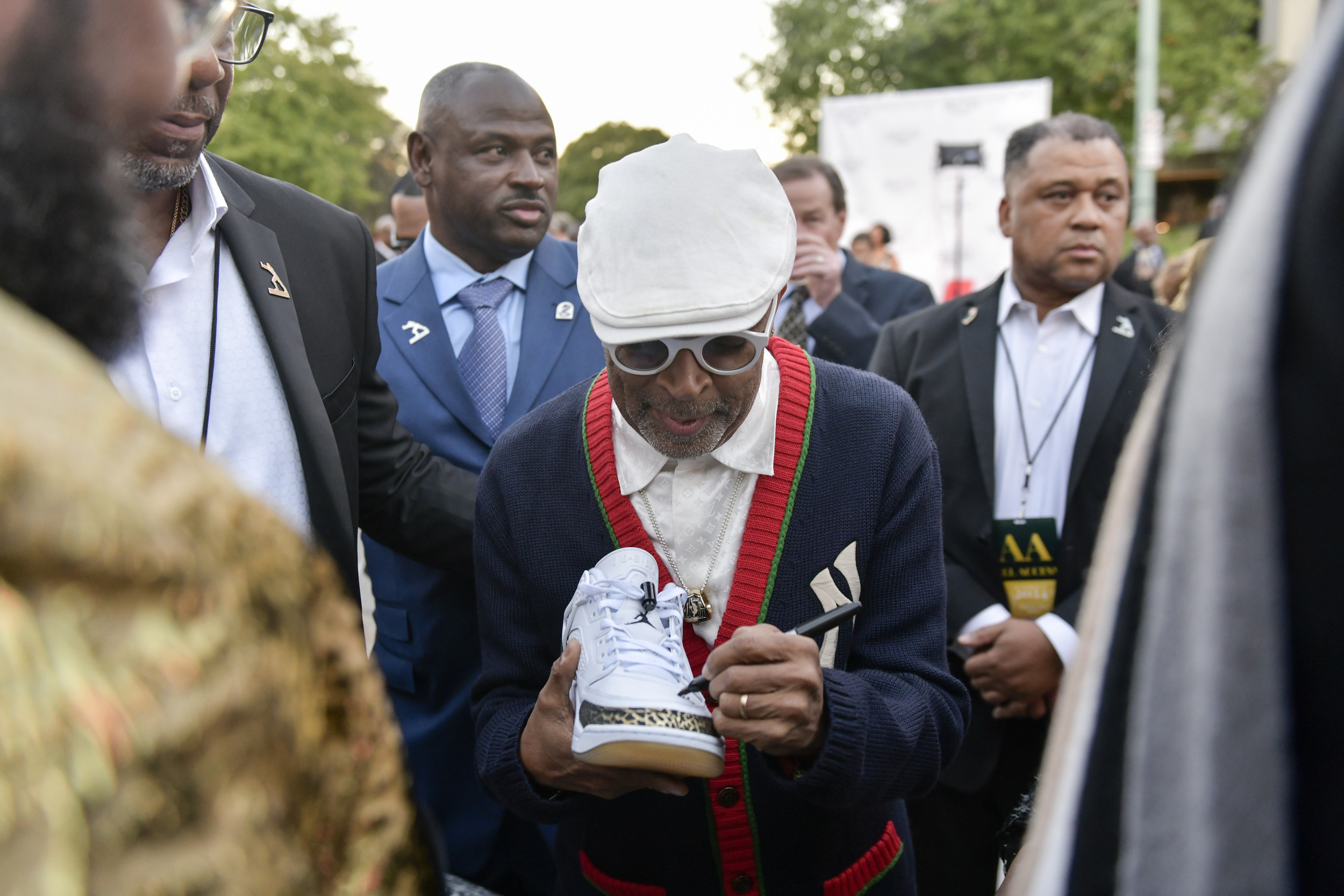
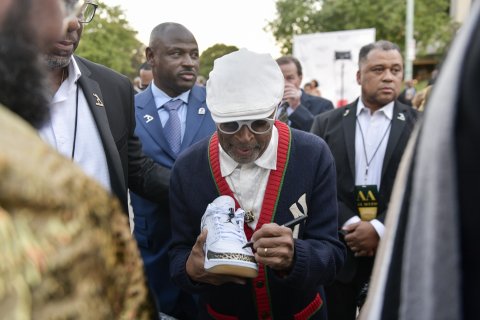
On the red carpet for the event, Lee signed Air Jordans, took photos with fellow Morehouse College alumni and cracked jokes with members of the NBA‘s Memphis Grizzlies before entering the venue.
“Spike is an integral member of the Jordan family and someone who, like Michael and the Jordan Brand, represents greatness and inspires others to do the same,” said Sarah Mensah, president of Jordan Brand, the event’s presenting sponsor.
Occurring just days before one of the contentious 2024 presidential election, the symposium was filled with political energy.
Ifill and Clayton implored the crowd to push for a “new American democracy” and for a brighter future, while Lee urged the crowd to support Vice President Kamala Harris while taking shots at the racial rhetoric of former President Donald Trump.
Ahead of the ceremony, hosted by rapper MC Lyte, Newsweek sat down with the acclaimed director to talk New York sports, the coming election, the legacy of Malcolm X and his history of bold predictions.
Director Spike Lee signs a sneaker on the red carpet of the Freedom Award ceremony, presented by the National Civil Rights Museum. Director Spike Lee signs a sneaker on the red carpet of the Freedom Award ceremony, presented by the National Civil Rights Museum. Courtesy of the National Civil Rights Museum/Brandon Dill
Spike Lee: What’s up, baby? How you doing? What’s your name?
Newsweek: Devin Robertson.
SL: What’s up, baby? Coming in with the fresh Jordans. Fresh Jordans. Hit me with the freshness, huh? Yeah, you said. You said you had to leave the dirty Spiz’ikes back home. All love, all love. And every time I come to Memphis. All love, all love.
NW: So, how are you feeling as a New York sports fan? You got the Liberty going into Game 3 [of the WNBA Finals]. You got the Yankees going into Game 2 [of the ALCS].
SL: No, we won Game 2 last night. Aaron Judge hit home at two. We’ll leave football out of it.
The Knicks. Let me piece some game to you. This ring right here, this is a ring from the 1972-’73 world championship New York Knicks. That’s the last time we won. We have two championships, ’69-’70 and the ’72-’73 team. It was all 50 years. But this year, F-I-Y-A–fire “orange and blue skies.” You know, I got the copyright? I got to talk to [ESPN pundit] Stephen A ’cause I got that. I copyrighted that. Yeah. Pat Riley copyrighted “threepeat.” Yeah, go ahead. So “orange and blue skies” is copyrighted.
NW: With the sports team, is it different when the expectations are high, or is it—
SL: Look, we. We haven’t won. I just told you, we haven’t won over five decades. That’s 50 years. Been to the finals twice, lost to Houston. We were up 3-2, lost Games 6 and 7. And then we lost against San Antonio.
But this year, expectations, New York City and Knick Nation are like sky-high. Now we got KAT too. Sorry Donte [DiVincenzo] had to go, but Minnesota’s not making that deal unless Donte was part of it. So, I feel we had the best point guard. Unless you say Steph [Curry] is a–You say Steph is your one or two?
NW: You know, it depends, because Draymond [Green] does a lot of the facilitating on that. And, you know, Steph is always moving without the ball. I would put him as more of a two.
SL: All right, so you just said it. My brother just said Steph is a two. So that means Jalen Brunson is the best point guard in the National Basketball Association. What?
And I know you got a guy here in Memphis. Peace and love. I will make no arguments, peace and love. But the people know it’s Brunson.
NW: So, as one of this year’s Freedom Award honorees, how would you like people to reflect on your contributions to promoting justice and equality?
SL: I think it’s really, in the films I’ve done, those are stories I’ve told, and a lot of those films have themes and messages that reflect what’s going on at that time when the film came out. Even still today, you have, you watched this past summer, June 30 was the 35th anniversary of Do The Right Thing. If you look at that film, I mean, you look at Ray Raheem, you don’t think about George Floyd? I wrote that script, came out ’89, wrote it in ’88. We’re talking about gentrification, global warming, a whole bunch of stuff.
It’s like I had a crystal ball. And that’s why my friends sometimes call me “Negro-damus.” (laughs) Come on, you give me some. Give me some “Negro-damus.” You predict this s*** before this s*** happens.
NW: And still relevant to these to this day, next year is going to be the 100th anniversary of Malcolm X’s birth.
SL: May 19
NW: And the 33rd anniversary of your film. I was just wondering if you could reflect on—
SL: Oh, yeah, look, none of that would be possible [without] Denzel Washington, that performance he gave will live forever. I think one of the best performances in a biopic that’s ever been done. A lot of obstacles, but we had, you could say, Allah was with us. We made that through.
We made that film through hell and high water. And also, I mean, that film went through various permutations. I mean, like 30, 40. You know, years to get that film made. So, uh, it almost killed me, though. We got it done.
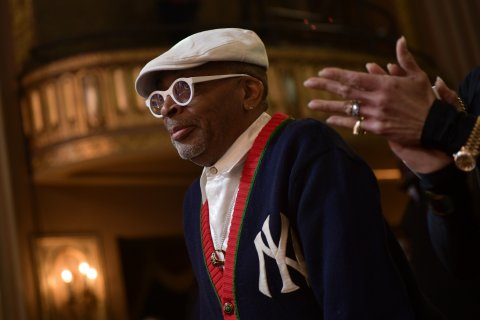
Spike Lee watches the Freedom Award ceremony hosted by MC Lyte. Spike Lee watches the Freedom Award ceremony hosted by MC Lyte. Courtesy of the National Civil Rights Museum/Brandon Dill
NW: That’s incredible because the story about the funding of that movie is like the stuff of Black legends.
SL: Yes. I had Warner Bros. not want the film to be 3 hours. So, they put the gun to my head and said, ‘if you’re not gonna cut the film, then we’re gonna get the film to just give it off to the bond company.’ They took the bond company, took the film over, and I had already put a million dollars. So, then they fired all, the entire production team got fired, registered letter, and I was stuck. And then it hit me because I became a student of Malcolm in doing this film. I read the autobiography of Malcolm X in junior high school. And that’s a book, that’s the most important book I’ve ever read. And I read that every year. And these two things kept coming in my mind. Self-reliance, self-determination.
I say, you know what? I know some Black folks got some cash, and I only, I got their phone numbers. But the tricky thing was, is that it was, they would not be, per se, getting an investment in the film to get money back. It was not a tax, it was just a gift. So, I made my list and Black folks came through and we were able to continue postproduction.
And then at Malcolm X’s birthday, I gave a press conference at the Schomburg library in Harlem, 135th street and Lenox, and told the world that these individuals gave us money.
And that was Malcolm’s birthday. February. No, no, it wasn’t. It wasn’t Malcolm’s birthday. Anyway, then once they made the announcement, the studio came back and, you know, started financing the film again.
But I was, there was some very dark days, you know, when they just fired production crew because, you know, we imposed production.
Funny story, though. So, we show. The first time the two presidents on Warner Bros. saw the film was the day of the L.A. uprising. I mean, you got me. The day L.A. is burning down is the day we show the first cut of Malcolm X.
So, to their credit, they stayed throughout that, and that cut was four hours. But, uh, I did not want that. They wanted me to cut the film to two hours. I wasn’t doing that. You know, that’s what happened.
NW: People are still drawing from Do The Right Thing.
SL: And I…I’ve been very proud of representing the culture.
The culture. And that’s where my soul is, my presence, who I am, the culture. And, you know, our stuff’s very specific, but loved all over the world.
NW: I get what you’re saying.
SL: You know what time it is.
NW: If you don’t mind us getting a little bit more serious.
SL: No, I’m with you, man. Whatever you want to do.
NW: Election time is coming up. You’ve been outspoken about telling everybody to get out. You were at the DNC [Democratic National Convention] earlier.
SL: Chicago. Yeah.
NW: What do you think are some of the most pressing issues and why do you feel it’s so important to share that message?
SL: Right now. Well, I’m just glad my brother [former President Barack Obama], he’s on the road. He’s really out there campaigning for a sister vice president [Harris], and he’s been really hammering. I mean, he’s really focused on Black men. Brothers, don’t go for the okie doke. Register to vote. And let’s get our sister in the White House. If you think that this guy [Trump] has done stuff for Black people, all I got to say is, “crack is whack.”
I’m not trying to be funny. This guy has never done nothing for Black folks, but him and his father were building buildings in New York City. Black folks couldn’t get in them. Don’t go for the okie doke. And definitely don’t go for the three S’s. Shenanigans, subterfuge. And the last one is a killer—skulduggery.
Don’t go for the okie doke. I mean, I don’t know how in your right mind you could think that. Let me finish to. Can I finish, please? All right. I don’t know. I don’t know how these young brothers in their right minds could think that this guy has, in his heart, what’s best for you.
Don’t do it. Don’t do it. Don’t do it. Support our sister. Let’s make her the first woman to be president of the United States, the first woman of color. And also don’t get tripped up that her mother’s Indian. A lot of us. Come on now. And we, you know, we go by the one drop rule. She’s Black. Peace and love. We good to wrap it up, my brother?
NW: I appreciate you.
SL: Thank you. Thank you.
Now, another thing I’d like to say. Behind me are two brothers. Young brothers. I see you got a team. And that makes me feel good that the young brothers out there doing their own thing and, you know, gotta keep this s*** going. So, the young generation. Young generation. Come on now. You know, myself, people for me have paved the paths for you guys. Get the handoff. We can’t fumble it, though. No fumbles. Put the work in. Put the work in.
fairness meter
fairness meter
Newsweek is committed to journalism that’s factual and fair.
Hold us accountable and submit your rating of this article on the meter.
Newsweek is committed to journalism that’s factual and fair.
Hold us accountable and submit your rating of this article on the meter.
Click On Meter To Rate This Article
About the writer
Devin Robertson
To read how Newsweek uses AI as a newsroom tool, Click here.
Massillon takes the field against Legacy School of Sport Sciences, TX, Friday , October 11, 2024.
Kevin Whitlock / Massillon Independent
Massillon’s Jacques Carter goes airborne over Legacy School of Sport Sciences, TX, defender Emias Brown in the first half, Friday, Oct. 11, 2024.
Kevin Whitlock / Massillon Independent
Massillon’s Ja’Meir Gamble (21) celebrates his first-half touchdown with teammate Chris Fair, left, against Legacy School of Sport Sciences (Texas), Friday, Oct. 11, 2024.
Kevin Whitlock / Massillon Independent
Massillon’s Ja’Meir Gamble runs for a first-half touchdown against Legacy School of Sports Sciences (Texas), Friday, Oct. 11, 2024.
Kevin Whitlock / Massillon Independent
Massillon’s Braylyn Toles runs for a first half gain with defense from Legacy School of Sport Sciences, TX’s Roland Etheridge, Friday, October 11, 2024.
Kevin Whitlock / Massillon Independent
Massillon’s Ja’Meir Gamble runs for a third-quarter touchdown against Legacy School of Sport Sciences (Texas), Friday, Oct. 11, 2024.
Kevin Whitlock / Massillon Independent
Massillon takes on Legacy School of Sport Sciences, TX, Friday , October 11, 2024.
Kevin Whitlock / Massillon Independent
Massillon takes on Legacy School of Sport Sciences, TX, Friday , October 11, 2024.
Kevin Whitlock / Massillon Independent
Massillon takes on Legacy School of Sport Sciences, TX, Friday , October 11, 2024.
Kevin Whitlock / Massillon Independent
Massillon football coach Nate Moore encourages his team against Legacy School of Sports Sciences (Texas), Friday, Oct. 11, 2024.
Kevin Whitlock / Massillon Independent
Massillon takes on Legacy School of Sport Sciences, TX, Friday , October 11, 2024.
Kevin Whitlock / Massillon Independent
Massillon takes on Legacy School of Sport Sciences, TX, Friday , October 11, 2024.
Kevin Whitlock / Massillon Independent
Massillon takes on Legacy School of Sport Sciences, TX, Friday , October 11, 2024.
Kevin Whitlock / Massillon Independent
Massillon’s Ja’Meir Gamble runs for a touchdown against Legacy School of Sports Sciences (Texas), Friday, Oct. 11, 2024.
Kevin Whitlock / Massillon Independent
Massillon takes on Legacy School of Sport Sciences, TX, Friday , October 11, 2024.
Kevin Whitlock / Massillon Independent
Massillon’s Ja’Meir Gamble celebrates against Legacy School of Sports Sciences (Texas), Friday, Oct. 11, 2024.
Kevin Whitlock / Massillon Independent
Massillon’s Ja’Meir Gamble finds running room against Legacy School of Sports Sciences (Texas), Friday, Oct. 11, 2024.
Kevin Whitlock / Massillon Independent
Massillon’s Ja’Meir Gamble runs for a touchdown against Legacy School of Sports Sciences (Texas), Friday, Oct. 11, 2024.
Kevin Whitlock / Massillon Independent
Massillon’s Ja’Meir Gamble runs for a touchdown against Legacy School of Sports Sciences (Texas), Friday, Oct. 11, 2024.
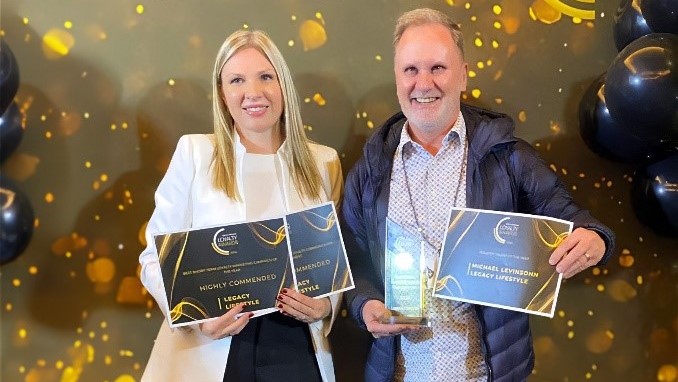
The Legacy Lifestyle rewards programme has been awarded Best Programme of the Year 2024 in the Travel and Hospitality category by The South African Loyalty Awards, which were held on Wednesday, 11 September.
The Legacy Lifestyle rewards programme brings together 250 partners in travel, hospitality, entertainment, retail and dining, and has a membership base of over 1.2 million.
The South African Loyalty Awards is an industry-focussed platform that celebrates loyalty excellence and innovation from the country’s best loyalty programmes.
Legacy Lifestyle says that it has consistently offered unique member benefits, exclusive rewards, a seamless user experience, unparalleled flexibility and significant value across various categories.
As a customer-centric brand, Legacy Lifestyle is dedicated to increasing member value through strong partnerships and effective communication campaigns. Moving forward, the brand adds that it will continue to refine its value propositions while staying responsive to emerging trends. This is ensuring that through innovation, Legacy Lifestyle empowers its members to live their best possible lifestyle.
By understanding member preferences, analysing their behaviour, and using a targeted multi-channel approach, Legacy Lifestyle says that it has successfully enhanced the value it offers to members — making it easier for them to travel more frequently and integrate leisure activities into their everyday lives. The programme boasts a 47% increase in redemption rates (versus 2023 results) and a massive 128% increase in repeat purchases in 2024.
Annual Return on Investment based on increased conversion rates and revenue growth is listed at 281%.
In addition to taking home the title of Best Programme of the Year 2024 in the Travel and Hospitality category, Legacy Lifestyle was also highly commended in the categories of Best Use of Multi-Channel Loyalty Communication and Best Short-Term Loyalty Marketing Campaign for 2024.
Legacy Lifestyle’s Managing Director Michael Levinsohn was also acknowledged in the category of Loyalty Industry Talent of the Year for his contributions to the loyalty sector.
“Entering four categories in the annual South African Loyalty Awards and winning in all four is a testament to the talent and dedication of our entire team. However, the most important recognition comes from our 1.2 million members who continuously support us by shopping with our partners and earning Cash-Back rewards,” says Michael Levinsohn, Managing Director of Legacy Lifestyle.
“That’s where our focus will remain in the weeks and months ahead as we develop new products and services for our members, delivering tangible value and innovation,” adds Levinsohn.
Legacy Lifestyle’s Chief Marketing Officer, Angela du Preez, concludes, “We are truly honoured to be recognised at the South African Loyalty Awards. These accolades highlight the significant value our members see in our programme and affirm that we are on the right path as we remain dedicated to enhancing our customers’ lives with even more meaningful travel and hospitality rewards and benefits.”
Legacy Lifestyle Wins at 2024 South African Loyalty Awards Legacy Lifestyle South African Loyalty Awards Best Programme of the Year Legacy Lifestyle rewards programme
LEADVILLE, Colo. — Rust-colored piles of mine waste and sun-bleached wooden derricks loom above the historic Colorado mountain town of Leadville — a legacy of gold and silver mines polluting the Arkansas River basin more than a century after the city’s boom days.
Enter a fledgling company called CJK Milling that wants to “remine” some of the waste piles to squeeze more gold from ore discarded decades ago when it was less valuable. The waste would be trucked to a nearby mill, crushed to powder and bathed in cyanide to extract trace amounts of precious metals.
The proposal comes amid surging global interest in re-processing waste containing discarded minerals that have grown more valuable over time and can now be more readily removed. These include precious metals and minerals used for renewable energy that many countries including the U.S. are scrambling to secure.
Backers say the Leadville proposal would speed cleanup work that’s languished for decades under federal oversight with no foreseeable end. They speak in aspirational tones of a “circular economy” for mining where leftovers get repurposed.
Yet for some residents and officials, reviving the city’s depressed mining industry and stirring up waste piles harkens to a polluted past, when the Arkansas was harmful to fish and at times ran red with waste from Leadville’s mines.
“We’re sitting in a river that 20 years ago fish couldn’t survive,” Brice Karsh, who owns a fishing ranch downstream of the proposed mill, said as he threw fish pellets into a pool teeming with rainbow trout. “Why go backward? Why risk it?”
Leadville – home to about 2,600 people and the National Mining Museum — bills itself as America’s highest city at 10,119 feet (3,0084 meters) above sea level. That distinction helped the city forge a new identity as a mecca for extreme athletes. Endurance race courses loop through nearby hillsides where millions of tons of discarded mine waste leached lead, arsenic, zinc and other toxic metals into waterways.
The driving force behind CJK Milling is Nick Michael, a 38-year mining veteran who characterizes the project as a way to give back to society. Standing atop a heap of mining waste with Colorado’s highest summit, Mount Elbert, in the distance, Michael says the rubble has a higher concentration of gold than many large mines now operating across the U.S.
“In the old days, that wasn’t the case,” he said, “but the tables have turned and that’s what makes this economic … We’re just cleaning up these small piles and moving on to the next one.”
City Council member Christian Luna-Leal grew up in Leadville — in a trailer park with poor water quality — after his parents immigrated from Mexico.
Disadvantaged communities have always borne the brunt of the industry’s problems, he said, dating to Leadville’s early days when mine owners poorly treated Irish immigrants who did much of the work. Almost 1,300 immigrants, most Irish, are buried in paupers graves in a local cemetery.
Stirring up old mine waste could reverse decades of cleanup, Luna-Leal said, again fouling water and threatening the welfare of residents including Latinos, many living in mobile homes on the town’s outskirts.
“There is a genuine fear … by a lot of our community that this is not properly being addressed and our concerns are not being taken as seriously as they should be,” Luna-Leal said.
The company’s process doesn’t get rid of the mine waste. For every ton of ore milled, a ton of waste would remain – minus a few ounces of gold. At 400 tons a day, waste will stack up quickly.
CJK originally planned to use a giant open pit to store the material in a wet slurry. After that was rejected, the company will instead dry waste to putty-like consistency and pile it on a hill behind the mill, Michael said. The open pit downslope would act as an emergency catchment if the pile collapsed.
The magnitude of mining waste globally is staggering, with tens of thousands of tailings piles containing 245 billon tons (223 billion metric tons), researchers say. And waste generation is increasing as companies build larger mines with lower grades of ore, resulting in a greater ratio of waste to product, according to the nonprofit World Mine Tailings Failures.
This month, gold prices reached record highs, and demand has grown sharply for critical minerals such as lithium used in batteries.
Economically favorable conditions mean remining “has caught on like wildfire,” said geochemist Ann Maest, who consults for environmental organizations including EarthWorks. The advocacy group is a mining industry critic but has cautiously embraced remining as a potential means of hastening cleanups through private investment.
CJK Milling could help do that in Leadville, Maest said, but only if done right. “The rub is they want to use cyanide, and whenever a community hears there’s cyanide or mercury they understandably get very concerned,” she said.
Overseeing Leadville’s water supply is Parkville Water District Manager Greg Teter, who views CJK Milling as potential solution to water quality problems.
Many waste piles sit over the district’s water supply, and Teter recalls a blowout of the Resurrection Mine compelled residents to boil their water because the district’s treatment plant couldn’t handle the dirt and debris.
More constant is the polluted runoff during spring and summer, when snowmelt from the Mosquito mountains washes through mine dumps and drains from abandoned mines.
Every minute, 694 gallons (2,627 liters) on average of contaminated mine water flows from Leadville’s Superfund site, according to federal records. Most is stored or funneled to treatment facilities, including one run by the U.S. Bureau of Reclamation.
Up to 10% of the water is not treated — tens of millions of gallons annually carrying an estimated six tons of toxic metals, U.S. Environmental Protection Agency records show. By comparison, during Colorado’s 2015 Gold King Mine disaster that fouled rivers in three states, an EPA cleanup crew inadvertently triggered release of 3 million gallons (11.4 million liters) of mustard-colored mine waste.
As long as Leadville’s piles remain, their potential to pollute continues.
“There are literally thousands of mine claims that overlay each other,” Teter said. “We don’t want that going into our water supply. As it stands now, all the mine dumps are … in my watershed, upstream of my watershed, and if they remove them, and take them to the mill, that’s going to be below my watershed.”
EPA lacks authority over CJKs proposed work, but a spokesperson said it had “potential to improve site conditions” by supplementing cleanup work already being done. Moving the mine waste would eliminate sources of runoff and could reduce the amount of polluted water to treat, said EPA spokesperson Richard Mylott.
Other examples of remining in the Rockies are in East Helena and Anaconda, Montana and in Midvale, Utah, Mylott said. Projects are proposed in Gilt Edge, South Dakota and Creede, Colorado, he said.
Despite the mess from Leadville’s historic mining, Teter spoke proudly of his industry ties, including working in two now-closed mines. His son in law works in a nearby mine.
“If it were not for mining, Leadville would not be here. I would not be here,” the water manager said.
“There are no active mines in our watershed, but I’m confident in what CJK has planned,” he said. “And I’ll be able to keep an eye on whatever they do.”
Maharaja Bir Bikram Kishore Manikya, the last ruler of Tripura from the Manikya dynasty, left an indelible mark on the history and development of the state. Despite his brief reign from 1923 to 1947, Maharaja Bir Bikram Kishore Manikya is celebrated as the ‘Architect of Modern Tripura’. His visionary reforms across various sectors set the foundation for the state’s progress that continues to shape its identity today.
Building Infrastructure: Maharaja Bir Bikram Airport
One of his most significant contributions was the establishment of the Agartala Airport, known today as Maharaja Bir Bikram Airport. Built in 1942, this airport played a crucial role during World War II as a supply base for the Allied forces. Maharaja Bir Bikram’s foresight in infrastructure development laid the groundwork for connectivity and economic growth in Tripura, making it a pivotal hub in the Northeast.
Education and Cultural Renaissance
Maharaja Bir Bikram Kishore Manikya was a staunch advocate for education. Under his patronage, the Vidyapattanam project was launched, leading to the establishment of Maharaja Bir Bikram College, the first-degree college in Tripura. This initiative marked a turning point in the state’s educational landscape, fostering intellectual growth and empowering generations of students from diverse backgrounds.
Meet Juneja Brothers: How they built Rs 95,876 crore Mankind Pharma, India’s fourth largest pharma company
Jamshedpur-Purulia-Asansol 3rd Line to feature 19 railway stations, 160 bridges; set to enhance connectivity between West Bengal and Jharkhand
Zepto’s Kaivalya Vohra, Aadit Palicha top 2024 Hurun India Rich List of youngest entrepreneurs
Meet the South Indian superstar with Rs 1,650 crore net worth, a 25,000 sq ft mansion, a private jet, and more – No, it’s not Rajinikanth, Prabhas, and Allu Arjun
Land Reforms and Tribal Welfare
Recognizing the importance of sustainable agriculture, Maharaja Bir Bikram implemented the Land Reforms Act and encouraged modern farming practices over traditional Jhum cultivation. His efforts included reserving significant land for indigenous tribes, and promoting settled cultivation and economic stability among local communities.
Architectural Legacy: Neermahal and Urban Planning
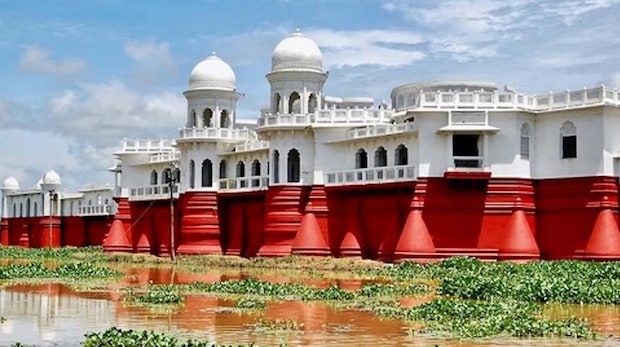
In 1939, Maharaja Bir Bikram commissioned the construction of Neermahal, a majestic palace amidst the waters of Sepahijala district. This architectural marvel not only symbolized the grandeur of the Tripura Royal Family but also attracted tourists, contributing to the state’s cultural and historical tourism. Additionally, he meticulously planned urban spaces like Maharajgunj and designed the town square, demonstrating his commitment to structured city planning.
Cultural Patronage and Global Connections
Maharaja Bir Bikram Kishore Manikya’s patronage extended beyond governance; he was a supporter of arts and culture. His association with Nobel laureate Rabindranath Tagore exemplifies this, showcasing his appreciation for literature and the arts. Their mutual respect and collaboration underscored Maharaja Bir Bikram’s broader cultural enrichment and exchange vision.
Legacy and Commemoration
Today, Maharaja Bir Bikram Kishore Manikya’s legacy endures through institutions, infrastructure, and cultural landmarks that continue to define Tripura’s identity. His progressive policies and visionary leadership set a precedent for regional governance, making him a revered figure in the annals of Tripura’s history.