Scientists are unraveling the mystery of what triggers Huntington’s disease, a devastating and fatal hereditary disorder that strikes in the prime of life, causing nerve cells in parts of the brain to break down and die.
The genetic mutation linked to Huntington’s has long been known, but scientists haven’t understood how people could have the mutation from birth, but not develop any problems until later in life.
New research shows that the mutation is, surprisingly, harmless for decades. But it quietly grows into a larger mutation — until it eventually crosses a threshold, generates toxic proteins, and kills the cells it has expanded in.
“The conundrum in our field has been: Why do you have a genetic disorder that manifests later in life if the gene is present at conception?” said Dr. Mark Mehler, who directs the Institute for Brain Disorders and Neural Regeneration at the Albert Einstein College of Medicine and was not involved in the research. He called the research a “landmark” study and said “it addresses a lot of the issues that have plagued the field for a long time.”
The brain cell death eventually leads to problems with movement, thinking and behavior. Huntington’s symptoms – which include involuntary movement, unsteady gait, personality changes and impaired judgment – typically begin between the ages of 30 and 50, gradually worsening over 10 to 25 years.
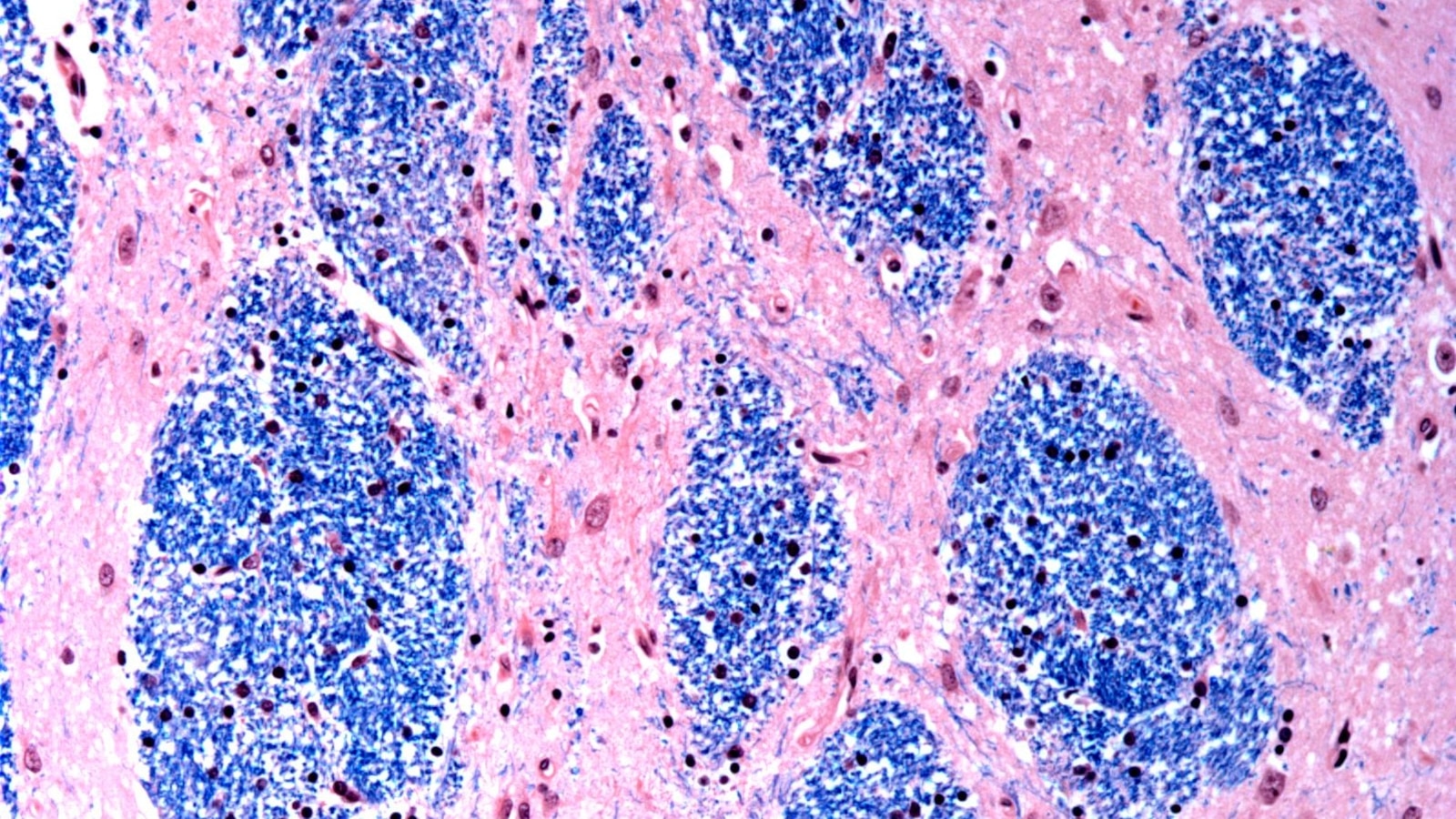
Scientists at the Broad Institute of MIT and Harvard, McLean Hospital in Massachusetts and Harvard Medical School studied brain tissue donated by 53 people with Huntington’s and 50 without it, analyzing half a million cells.
They focused on the Huntington’s mutation, which involves a stretch of DNA in a particular gene where a three-letter sequence – CAG – is repeated at least 40 times. In people without the disease this sequence is repeated just 15 to 35 times. They discovered that DNA tracts with 40 or more such “repeats” expand over time until they are hundreds of CAGs long. Once CAGs reach a threshold of about 150, certain types of neurons sicken and die.
The findings “were really surprising, even to us,” said Steve McCarroll, a Broad member and co-senior author of the study, which was published Thursday in the journal Cell. The study was partly funded by the Howard Hughes Medical Institute, an organization that also supports The Associated Press Health and Science department.
The research team estimated that repeat tracts grow slowly during the first two decades of life, then the rate accelerates dramatically when they reach about 80 CAGs.
“The longer the repeats, the earlier in life the onset will happen,” said neuroscience researcher Sabina Berretta, one of the study’s senior authors.
Researchers acknowledged that some scientists were initially skeptical when results were shared at conferences, since previous work found that repeat expansions in the range of 30 to 100 CAGs were necessary — but not sufficient — to cause Huntington’s. McCarroll agreed that 100 or fewer CAGs are not sufficient to trigger the disease, but said his study found that expansions with at least 150 CAGs are.
Researchers hope their findings can help scientists come up with ways to delay or prevent the incurable condition, which afflicts about 41,000 Americans and is now treated with medications to manage the symptoms.
Recently, experimental drugs designed to lower levels of the protein produced by the mutated Huntington’s gene have struggled in trials. The new findings suggest that’s because few cells have the toxic version of the protein at any given time.
Slowing or stopping the expansion of DNA repeats may be a better way to target the disease, researchers said.
Though there are no guarantees this would stave off Huntington’s, McCarroll said “many companies are starting or expanding programs to try to do this.”
——
The Associated Press Health and Science Department receives support from the Howard Hughes Medical Institute’s Science and Educational Media Group and the Robert Wood Johnson Foundation. The AP is solely responsible for all content.
Visitors to Resorts World Sentosa (RWS) can look forward to even more recreational activities with its new waterfront lifestyle development, which broke ground on Friday (Nov 15).
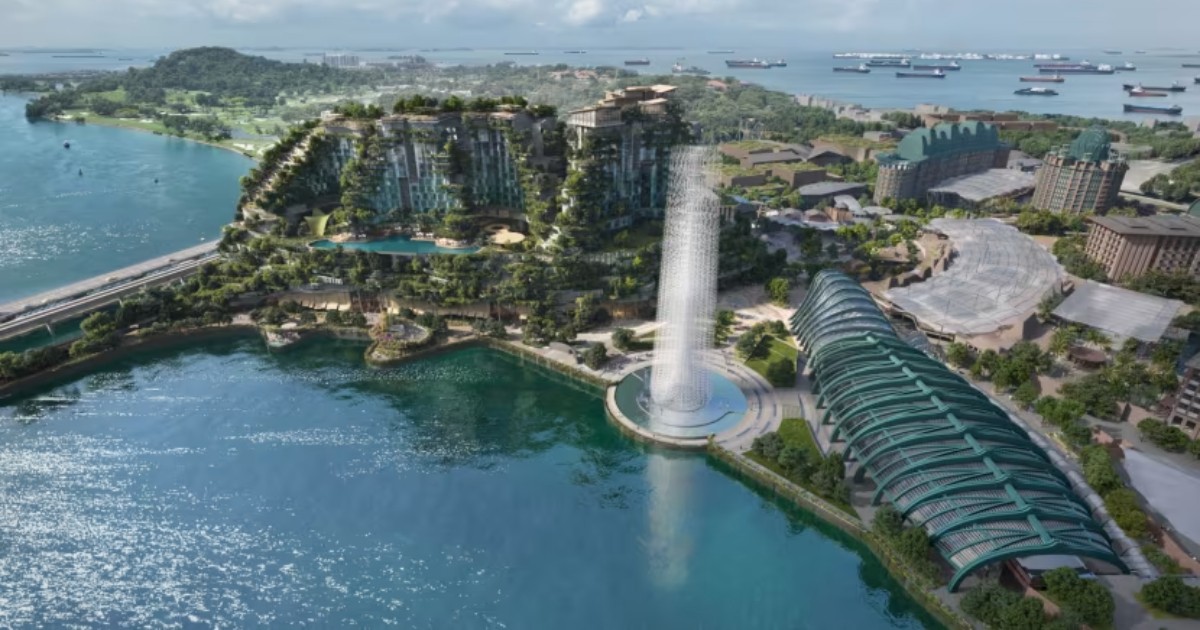
Slated to open by 2030 along the RWS waterfront, the lifestyle hub will feature a promenade, two luxury hotels, a “mountain trail”, a light sculpture as well as a four-storey retail and dining podium with entertainment offerings.
The project will be located near S.E.A. Aquarium and Universal Studios Singapore (USS), and will be designed by architectural firm Benoy, whose portfolio includes Ion Orchard, Terminal 4 Changi Airport and Jewel Changi Airport.
The two new hotels, featuring 700 rooms, would mean more accommodation options at the resort.
There are currently five hotels at RWS — Crockfords Tower, Equarius Hotel, Equarius Villas, Hotel Micheal and Hotel Ora — and a new one that’s slated to launch next year.
Perhaps one of the most intriguing aspects of the new development is the 88m-high “experiential mountain trail”.
At the peak, visitors will enjoy breathtaking views of the Central Business District from the south, as well as the Greater Southern Waterfront and Sentosa.
There will also be a sunset trail that guides visitors back down to the waterfront promenade of the development, which connects to Sentosa Boardwalk. This makes it convenient for visitors to walk to and from Harbourfront MRT and VivoCity.
At the heart of the complex is an 88m-tall sculpture that will dazzle with light shows at night. The structure is designed by Heatherwick Studio, which also worked on The Hive at Nanyang Technological University.
During the groundbreaking ceremony, RWS’ chief executive officer Tan Hee Teck said the development underscores the company’s commitment to bolstering Singapore’s identity as a global lifestyle destination.
Minister of State for Trade and Industry Alvin Tan, who was the guest-of-honour, noted that the new development is a key feature to RWS’ expansion and an “exciting new addition to Singapore’s tourism landscape”.
Sustainable design principles
The new waterfront development is big on sustainability, with the aim of achieving the Building and Construction Authority’s Green Mark Platinum certification.
RWS plans on using low-carbon concrete for its structure, installing solar panels and collecting rainwater for irrigation.
Those who drive Teslas, BYDs and other electric vehicles will be glad to know that there will be fast-charging electric vehicle stations.
All hotel rooms will also be embedded with smart features to maximise energy efficiency.
Other attractions at RWS
While 2030 is still a long way to go, there are some upcoming offerings at RWS to also look forward to.
The 40,000 sq ft venue will have a series of immersive and interactive exhibitions inspired by places in the series’ magical community.
Fans of the movie Despicable Me and the Minions will also be excited to know that Illumination’s Minion Land at USS will be ready by next year.
The zone, which will be divided up into three areas — Gru’s Neighbourhood, Minion Marketplace and Super Silly Fun Land — will have themed rides and food options.
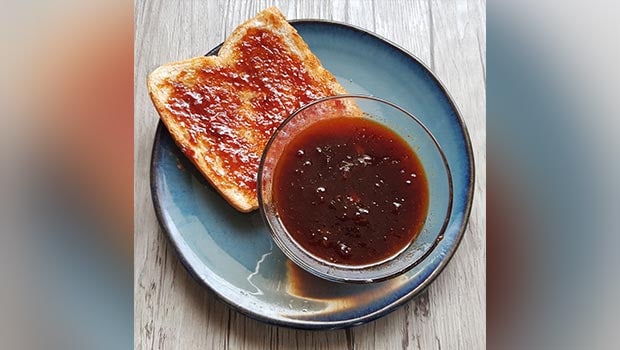
Let’s face it – jams are a classic breakfast sidekick. Whether it’s slathered on toast, spread over parathas, or smeared on chapatis, a good fruit jam adds that sweet burst of flavour that makes everything better. But let’s be real – store-bought jams often come loaded with preservatives, added sugars, and artificial colours, making them a little less wholesome than we’d like. Here’s the good news: homemade jam is way easier to make than you think, and you get to control what goes in it! And since fresh anjeer (figs) are in season, now is the perfect time to whip up a healthier version of jam that your whole family will love. So, if you’re all about fruity jams and anjeer, grab your apron and let’s dive into this simple and delicious recipe!
Also Read: Raw Mango, Mausambi And More: 5 Fresh Fruit Jams You Can Easily Whip Up At Home
Photo: iStock
Is Anjeer (Fig) Jam Healthy?
Definitely! Anjeer jam is packed with fibre, antioxidants, and essential vitamins. The best part? It’s made from only fresh, whole ingredients – no preservatives or additives here. This makes it a great, healthy option for kids and families looking for a natural, sweet spread. Figs are rich in potassium, calcium, and iron, making them a perfect, wholesome addition to your morning routine or snack time!
How Else Can You Make Anjeer (Fig) Jam More Nutritious?
This jam is already pretty healthy, but you can take it up a notch! For a fibre boost, toss in some chia seeds, or add a spoonful of flax seeds for those omega-3s. Want a little kick of flavour? Add a splash of ginger juice to give the jam some anti-inflammatory benefits. And for extra crunch, mix in some chopped nuts to make it even more delicious!
How to Make Anjeer Bread Spread | Anjeer Jam Recipe
Making your own anjeer bread spread at home is super simple! This recipe comes from Instagram creator Nitya Hegde. Here’s how to make it:
1. Prepare the Anjeer:
Take 7-8 fresh figs, wash them, and let them dry. Once they’re dry, chop them into four pieces. The finer you chop the figs, the faster they’ll cook.
2. Cook the Anjeer:
Heat a pan over medium flame and toss in the chopped figs along with lemon, jaggery, and a pinch of cinnamon. Stir well and let everything cook down until it’s mushy. Keep cooking until it thickens into a luscious jam – or until it reaches your preferred consistency. Don’t forget to taste it before adding any more ingredients!
3. Store It:
Once your jam is ready, let it cool down a bit, then transfer it into an airtight container. Keep it in the fridge for up to 20 days, or freeze it for up to three months. Enjoy it on chapatis, parathas, or your morning toast!
Watch the full video below:
Also Read: How To Make Gulamba: A Delicious Maharashtrian-Style Raw Mango Jam You Need To Try
Will you be trying this Anjeer (fig) jam recipe at home? Let us know in the comments below!
Come end November, you’ll get to witness the splendour of Italian gothic architecture right here in Singapore at this year’s Christmas Wonderland.
The 11th edition of this popular fair is returning to Gardens by the Bay from Nov 29 this year to Jan 1, 2025.
At this year’s event, an all-new 20m light display design for the Spalliera, handmade by artisans from the south of Italy, will be making its first appearance.
The attraction is inspired by the famous Orvieto Cathedral in Italy and features more than 100,000 LED bulbs.
A specially commissioned soundtrack called Magic of Christmas by Singaporean composer-conductor Darius Lim will also be making its debut as ‘snow’ falls over the display during Blizzard Time — a perennial favourite feature of the event alongside the Spalliera.
Ticket prices to Christmas Wonderland for adults differ depending on timeslot and date, ranging from $9 to $15.
For children aged three to 12, tickets are $7.
More information on ticketing can be found on their official website.
Light displays
In this edition of the annual yuletide event, visitors can also expect more festive light displaysincluding a larger-than-life 5m Santa Claus climbing a Supertree, as well as a trio of giant Merry Bears hanging out by the Lawn.
Some other highlights include a 50m Walk of Lights tunnel consisting of more than 75,000 bulbs and Odette’s Dance — a mixed-media light installation inspired by the famous Swan Lake ballet.
Return of fan favourites
This year’s Christmas Wonderland will see the return of several fan favourites — including the Garden Rhapsody at the Supertree Grove, a light and sound show where the Supertrees are illuminated and dance to various Christmas classics.
Other favourites include Santa’s Village where visitors can take photos with Father Christmas in his home and a carnival with plenty of games and rides, including a double-storey Venetian horse carousel.
Visitors can expect to enjoy a variety of performances, with an expanded entertainment line-up featuring more artistes, flash mobs and 50 per cent more choral performances than the previous edition of Christmas Wonderland.
Get ready to dine and shop
What’s a Christmas Wonderland without some good ol’ grub, right?
When it’s time for a recharge, there are also F&B offerings available from popular establishments like Brewerkz, Harry’s and Churros Republic.
Those in need of retail therapy or last-minute Christmas shopping can check out Mistletoe Alley.
Here, visitors can shop in brightly coloured festive huts and be greeted by cheery elves to add to the Christmas spirit.
Giveaway
In this season of giving, visitors can also stand a chance to win vouchers and merchandise when they take part in CDG Zig’s Jolly Jackpot Giveaway by collecting stamps at selected stations around the event.
The giveaway is subject to availability.
Address: Gardens by the Bay, 18 Marina Gardens Drive, Singapore 018953
Session times: 6.30pm, 7.30pm, 8.30pm, 930pm. Last entry at 10.15pm
Come end November, you’ll get to witness the splendour of Italian gothic architecture right here in Singapore at this year’s Christmas Wonderland.
The 11th edition of this popular fair is returning to Gardens by the Bay from Nov 29 this year to Jan 1, 2025.
At this year’s event, an all-new 20m light display design for the Spalliera, handmade by artisans from the south of Italy, will be making its first appearance.
The attraction is inspired by the famous Orvieto Cathedral in Italy and features more than 100,000 LED bulbs.
A specially commissioned soundtrack called Magic of Christmas by Singaporean composer-conductor Darius Lim will also be making its debut as ‘snow’ falls over the display during Blizzard Time — a perennial favourite feature of the event alongside the Spalliera.
Ticket prices to Christmas Wonderland for adults differ depending on timeslot and date, ranging from $9 to $15.
For children aged three to 12, tickets are $7.
More information on ticketing can be found on their official website.
Light displays
In this edition of the annual yuletide event, visitors can also expect more festive light displaysincluding a larger-than-life 5m Santa Claus climbing a Supertree, as well as a trio of giant Merry Bears hanging out by the Lawn.
Some other highlights include a 50m Walk of Lights tunnel consisting of more than 75,000 bulbs and Odette’s Dance — a mixed-media light installation inspired by the famous Swan Lake ballet.
Return of fan favourites
This year’s Christmas Wonderland will see the return of several fan favourites — including the Garden Rhapsody at the Supertree Grove, a light and sound show where the Supertrees are illuminated and dance to various Christmas classics.
Other favourites include Santa’s Village where visitors can take photos with Father Christmas in his home and a carnival with plenty of games and rides, including a double-storey Venetian horse carousel.
Visitors can expect to enjoy a variety of performances, with an expanded entertainment line-up featuring more artistes, flash mobs and 50 per cent more choral performances than the previous edition of Christmas Wonderland.
Get ready to dine and shop
What’s a Christmas Wonderland without some good ol’ grub, right?
When it’s time for a recharge, there are also F&B offerings available from popular establishments like Brewerkz, Harry’s and Churros Republic.
Those in need of retail therapy or last-minute Christmas shopping can check out Mistletoe Alley.
Here, visitors can shop in brightly coloured festive huts and be greeted by cheery elves to add to the Christmas spirit.
Giveaway
In this season of giving, visitors can also stand a chance to win vouchers and merchandise when they take part in CDG Zig’s Jolly Jackpot Giveaway by collecting stamps at selected stations around the event.
The giveaway is subject to availability.
Address: Gardens by the Bay, 18 Marina Gardens Drive, Singapore 018953
Session times: 6.30pm, 7.30pm, 8.30pm, 930pm. Last entry at 10.15pm
After an exhilarating 120 minutes of football followed by a nail-biting penalty shoot-out, Lionel Messi finally got his moment – the one he’d been dreaming of his whole life.
At long last, the best footballer of all time in the eyes of many had the one medal missing from his glittering collection, having ended Argentina’s 36-year wait for the World Cup crown with victory over France.
Going back through the highlight reels, the scenes of previous World Cup trophy lifts have been iconic, moments etched in the history books forever.
Diego Maradona (1986) and Zinedine Zidane (1998) both donning the blue and white colours of their nations, Pele in 1970 in the famous yellow of Brazil, and Bobby Moore four years earlier in England’s famed red strip at Wembley Stadium. Moments burned into the minds of millions across the globe.
But as Messi walked up to collect his long-awaited prize at the Lusail Stadium, it wasn’t his legendary number 10 shirt on show. The blue and white of Argentina was hidden after the emir of Qatar put a black bisht (traditional Arab cloak) around his shoulders. FIFA president Gianni Infantino stood beside him, smiling and clapping during this surreal scene.
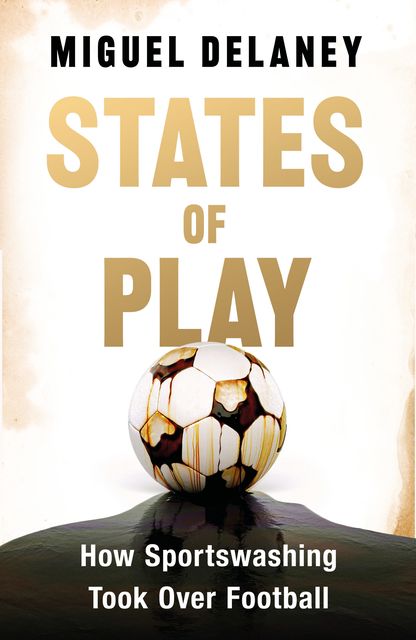
Miguel Delaney’s new book States of Play
Qatar 2022 was unlike any other World Cup, and its final moments only served to solidify that point.
Miguel Delaney was in the press box that evening in Qatar. The Independent’s chief football writer had the idea for a book about sportswashing for some time, but it ended up becoming far more than that.
What began as a detailing of how the rich and powerful have taken over football developed into a comprehensive history of just how the game has reached this point, from the 1936 Olympics, to Roman Abramovich purchasing Chelsea in 2003, all the way to those four controversial weeks in Qatar.
“A must-read on how modern football works,” is how Ian Wright described it.
So in 2024, who really owns and runs football?
“There was a realisation that there were bigger forces influencing football that were worth further scrutiny, more than just what was happening on the pitch,” explains Delaney, in an exclusive interview with the Irish Independent ahead of the release of his new book, States of Play: How Sportswashing Took Over Football.
“I had been covering a few of the issues for a few years, like state ownership. There were a few moments that crystallised that there was really something bigger going on worth assessing, like PSG signing Neymar [in 2017 for a world-record €222m], Manchester City winning the treble in 2019, and the long build-up to the Qatar World Cup.
“Once it got into doing the book itself, you realise you can’t talk about the topic of sportswashing or influence without talking about the context and what football is at the moment – which I would see as a sport where there’s almost a contradiction. It is, by a distance, the most popular sport in the world, but that popularity is basically being distilled into a few clubs.
“It’s almost like a map of global capitalism, sucking up interest and money from everywhere and then distributing it very narrowly.
“If you stand back, what has football become? It’s essentially interests that are far more powerful than the game – be it states or capitalist interests – seeing this very popular thing and essentially looking to hijack it for their own ends, just looking to extract profit from it. There’s no concern for what the game is or its direction.
“Underneath it was the failure of football’s authorities to assess what was going on. You could see situations where more and more leagues were getting more predictable. Things like Bayern Munich winning 10 Bundesliga titles in a row [in 2022], that had never happened before in this era. So, a book about sportswashing really became a modern history of football.”
Delaney’s book, which spans 436 pages, traces roots back to the 1890s but largely focuses on events over the last four decades. Having worked as a football journalist across the globe for nearly 20 years, he explains how a lack of foresight from authorities was a major factor in how the game has ended up where it is today.
“There are so many big moments you can track,” says the Greystones native. “From Tottenham Hotspur being floated on the London Stock Exchange in 1983, to the Bosman ruling [in 1995], a huge one was Figo’s signing for Real Madrid [2000], and a key one in state interest was the creation of Pep Guardiola’s first Barcelona team. It was almost this vision of football, it didn’t just bring excitement, it brought adulation.
“Autocratic states looking to get into football saw that and wanted it. It was the fact that it all came together and there was really no vision from the game over what to do. Graham Kelly [FA chief executive 1989-’98] basically puts it as ‘we were guilty of a tremendous lack of foresight’. That’s almost the story of regulation in football.”
In the modern game, sportswashing is a term regularly thrown around, but Delaney says it goes far deeper than just a word.
“I do have a specific chapter on what sportswashing means, this highly disputed term,” he explains.
“At this point the word itself is almost a superficial shorthand for something that’s much more complicated. Really, it’s the political use of football by autocratic states with a lot of centralised power, with probably more money than any entities have ever had in history to be able to use, all for the purposes of sustaining the structure of those autocratic states.
“Sportwashing used to be as basic as you could get, just staging a tournament, like the 1934 World Cup under Benito Mussolini [Italian fascist dictator], the 1936 Olympics [in Nazi Germany], or the 2018 World Cup in Russia. The idea of staging events for political purposes really goes back to Roman games in the Colosseum.
“Then you suddenly saw Emirates plastered everywhere, Qatar Airways too. There was a natural leap from tournaments, to sponsorship, to buying clubs and now we’re on to the next stage where it’s almost trying to buy competitions as you can see with Saudi Arabia’s supercharging of the Saudi Pro League.
“Although it should be said, developing one’s domestic league is a legitimate goal in its own right, but there’s never been a league like this where it’s so integrated into state policies,” he says, as the state’s Public Investment Fund bought 75pc stakes in four of the league’s biggest clubs last year.
“The partnership they have with FIFA now is absolutely remarkable. It’s amazing that the global regulator, who is supposed to safeguard the future game, is intertwining themselves with an autocratic state like that which has its own interest.”
The mention of Saudi Arabia leads us on to the state that borders it in the Arabian Gulf, Qatar. For Delaney, that night in Doha is still fresh in the memory.
“That whole moment was sportswashing distilled,” he says, having been chief football writer at the Independent since 2017. “Messi winning the World Cup, it’s the equivalent of Muhammad Ali reclaiming the heavyweight title, one of these sporting stories that will go down in history.
“But in Messi’s moment of victory, the ruler of Qatar essentially envelops the moment. When I wrote about it I remember getting pushback at the time, about how the bisht shouldn’t be seen as a negative, and that’s true, it’s a garment that’s usually very honourable. But the problem, and this is almost the story of the entire book in a way, is that you can’t detach the garment from who gave it to Messi and why.
“If you look back in history, every other World Cup lift is just the colours of the national team but in this one it’s the bisht. So in 30 or 40 years’ time people will ask why he was wearing it. It immediately associates that moment with the emir of Qatar, that’s where it is so powerful for Qatar.
“As someone said to me during the writing of the book, Qatar is now being associated with potentially the greatest football story in history. Doha is associated with Messi in the same way the Azteca is associated with Maradona or Pele. You can’t buy that emotional power.”
While social media commentary is often a cesspit nowadays, Delaney’s reporting on the game’s important issues has also attracted some in-person criticism from supporters of state-backed clubs like City and Newcastle United.
“I have had incidents in airports, with fans pointing and tutting at me, ‘there he is, f**king Delaney’. I’ve had fans screeching at me about what I’m writing.
“I remember the day Newcastle got to the League Cup final last year. I was walking up Wembley Way, and heard a Newcastle fan beside me say, ‘there he is, f**king d***head’. On one level you can sort of understand it, all people want to do is go to the game like they have done for years.
“But suddenly they are being confronted with all these discussions on human rights and whether this team they just want to enjoy is morally compromised. So I can understand it from that point of view, but it’s that emotion that states are trying to appropriate.
“I do have sympathy for the fans who have screamed in my face, that some of the greatest days in their lives are being discussed in this way, but the job of a football journalist has to look at these issues for the reader, for the good of the sport and the good of society.”
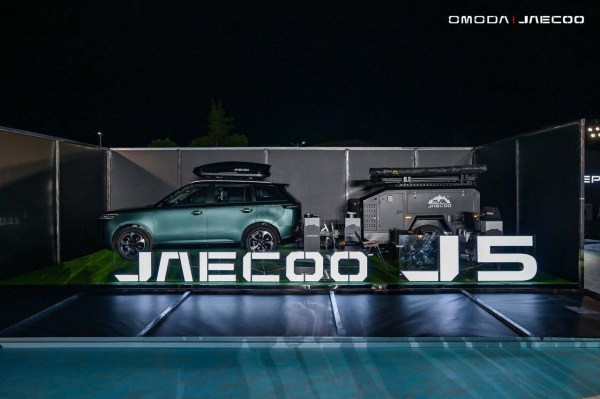
Amid the hustle and bustle of busy cities, people’s deep-seated longing for nature and freedom is growing stronger. This profound yearning has inspired the creation of the J5. As the OMODA&JAECOO International User Summit approaches, the J5 will be officially launched globally during the conference, elevating this inclusive and co-creative event to a new peak with its unique charm and forward-looking concept.
A masterpiece beyond classics: A new realm of natural aesthetics
J5 embodies the concept of “From Classic, Beyond Classic,” aiming to offer drivers and passengers a new travel experience that enriches their outdoor lifestyle. In terms of exterior design, J5, as an outstanding member of the JAECOO family, not only continues the iconic rugged aesthetics but also subtly incorporates a softer touch, reminiscent of snow-capped mountain springs. Its body lines resemble mountain ridges, complemented by gracefully transitioning fade surfaces, giving it vitality, like clear streams flowing through snow-capped mountains—adding an irresistible charm. At the upcoming J5 launch event, this pursuit of life aesthetics will be vividly showcased through a blend of design story TVCs and natural scenery.
Not only does the J5 captivate with its striking design, but it also excels in power performance, making it an ideal choice for outdoor travel. Equipped with a newly developed power system, the J5 can tackle various road conditions in daily commutes and leisure trips alike, delivering ample power to make each journey a chance to embrace nature and savor life.
A light off-road life: Harmonious coexistence of humans and pets, redefining outdoor living
In its functional design, the J5 carefully considers the interaction needs between humans and pets. Features such as a convenient pet feeding system and dedicated pet activity space make every trip a shared adventure for pets and owners. Additionally, the J5 will offer a range of accessories and services tailored to outdoor pet activities, creating an SUV that fosters a harmonious ecosystem for both humans and pets.
Boundless intelligence, the future has arrived: OMODA&JAECOO pioneer a new technological lifestyle
In this era of rapid technological advancement, OMODA&JAECOO keep pace with the times. At the OMODA&JAECOO International User Summit, the Mornine humanoid robot and the second-generation bionic quadruped mechanical dog, Argos, will be showcased. These products, born from the brand’s collaboration with AIMOGA technology, precisely address users’ aspirations for an elevated quality of life. By seamlessly integrating intelligent technology with users’ real-life needs, OMODA&JAECOO open the door to a new smart living experience.
Making intelligent technology a part of everyday life, OMODA&JAECOO continue to innovate!
Amid the hustle and bustle of busy cities, people’s deep-seated longing for nature and freedom is growing stronger. This profound yearning has inspired the creation of the J5. As the OMODA&JAECOO International User Summit approaches, the J5 will be officially launched globally during the conference, elevating this inclusive and co-creative event to a new peak with its unique charm and forward-looking concept.
A masterpiece beyond classics: A new realm of natural aesthetics
J5 embodies the concept of “From Classic, Beyond Classic,” aiming to offer drivers and passengers a new travel experience that enriches their outdoor lifestyle. In terms of exterior design, J5, as an outstanding member of the JAECOO family, not only continues the iconic rugged aesthetics but also subtly incorporates a softer touch, reminiscent of snow-capped mountain springs. Its body lines resemble mountain ridges, complemented by gracefully transitioning fade surfaces, giving it vitality, like clear streams flowing through snow-capped mountains—adding an irresistible charm. At the upcoming J5 launch event, this pursuit of life aesthetics will be vividly showcased through a blend of design story TVCs and natural scenery.
Not only does the J5 captivate with its striking design, but it also excels in power performance, making it an ideal choice for outdoor travel. Equipped with a newly developed power system, the J5 can tackle various road conditions in daily commutes and leisure trips alike, delivering ample power to make each journey a chance to embrace nature and savor life.
A light off-road life: Harmonious coexistence of humans and pets, redefining outdoor living
In its functional design, the J5 carefully considers the interaction needs between humans and pets. Features such as a convenient pet feeding system and dedicated pet activity space make every trip a shared adventure for pets and owners. Additionally, the J5 will offer a range of accessories and services tailored to outdoor pet activities, creating an SUV that fosters a harmonious ecosystem for both humans and pets.
Boundless intelligence, the future has arrived: OMODA&JAECOO pioneer a new technological lifestyle
In this era of rapid technological advancement, OMODA&JAECOO keep pace with the times. At the OMODA&JAECOO International User Summit, the Mornine humanoid robot and the second-generation bionic quadruped mechanical dog, Argos, will be showcased. These products, born from the brand’s collaboration with AIMOGA technology, precisely address users’ aspirations for an elevated quality of life. By seamlessly integrating intelligent technology with users’ real-life needs, OMODA&JAECOO open the door to a new smart living experience.
Making intelligent technology a part of everyday life, OMODA&JAECOO continue to innovate!
Amid the hustle and bustle of busy cities, people’s deep-seated longing for nature and freedom is growing stronger. This profound yearning has inspired the creation of the J5. As the OMODA&JAECOO International User Summit approaches, the J5 will be officially launched globally during the conference, elevating this inclusive and co-creative event to a new peak with its unique charm and forward-looking concept.
A masterpiece beyond classics: A new realm of natural aesthetics
J5 embodies the concept of “From Classic, Beyond Classic,” aiming to offer drivers and passengers a new travel experience that enriches their outdoor lifestyle. In terms of exterior design, J5, as an outstanding member of the JAECOO family, not only continues the iconic rugged aesthetics but also subtly incorporates a softer touch, reminiscent of snow-capped mountain springs. Its body lines resemble mountain ridges, complemented by gracefully transitioning fade surfaces, giving it vitality, like clear streams flowing through snow-capped mountains—adding an irresistible charm. At the upcoming J5 launch event, this pursuit of life aesthetics will be vividly showcased through a blend of design story TVCs and natural scenery.
Not only does the J5 captivate with its striking design, but it also excels in power performance, making it an ideal choice for outdoor travel. Equipped with a newly developed power system, the J5 can tackle various road conditions in daily commutes and leisure trips alike, delivering ample power to make each journey a chance to embrace nature and savor life.
A light off-road life: Harmonious coexistence of humans and pets, redefining outdoor living
In its functional design, the J5 carefully considers the interaction needs between humans and pets. Features such as a convenient pet feeding system and dedicated pet activity space make every trip a shared adventure for pets and owners. Additionally, the J5 will offer a range of accessories and services tailored to outdoor pet activities, creating an SUV that fosters a harmonious ecosystem for both humans and pets.
Boundless intelligence, the future has arrived: OMODA&JAECOO pioneer a new technological lifestyle
In this era of rapid technological advancement, OMODA&JAECOO keep pace with the times. At the OMODA&JAECOO International User Summit, the Mornine humanoid robot and the second-generation bionic quadruped mechanical dog, Argos, will be showcased. These products, born from the brand’s collaboration with AIMOGA technology, precisely address users’ aspirations for an elevated quality of life. By seamlessly integrating intelligent technology with users’ real-life needs, OMODA&JAECOO open the door to a new smart living experience.
Making intelligent technology a part of everyday life, OMODA&JAECOO continue to innovate!
Success at the final planning stage could represent a silver lining for local football amid dark clouds this week hanging over administration-threatened Caley Thistle.
Using delegated powers, Highland Council planning officials approved the building of changing rooms, an office and classroom, parking and access at the recently disused grass pitches across the road from the school.
There would be seven parking spaces mainly for those with accessibility needs.
The long-term plan for the 10-acre playing field expanse, secured on a 25-year lease from Highland Council, is to create a number of training and full-size pitches, including a show pitch that would make Caley Thistle’s women’s team one of the first in the country to have a dedicated home venue of their own.
One neighbour lodged an objection on the grounds of safety, security, noise and pollution, while Lochardil & Drummond Community Council qualified enthusiastic support for the project with “some concerns” over “not completely clear” traffic management plans.
A plan of where the building will take place at IRA pitches.Aerial photo of IRA playing field site with building zone marked.
But planning officials have included conditions which state that approved traffic management plans both for the construction and operational phases of the development must be in place before work can start and events can be hosted.
These would “ensure the safety and free flow of traffic on the public road”, as well as pedestrian safety.
There would also be active travel improvements to allow safe and easy access from the wider catchment area.
The new clubhouse and changing facilities would be “sensitively positioned” on the northern edge of the playing fields to minimise the building footprint impact on the playing fields and take advantage of the existing access to the playing fields.
They were previously heavily-used for football and rugby by the school, and also held grass athletics markings, but had fallen into disuse since the school’s rebuilding with state of the art synthetic pitches.
The old changing rooms and stores that still exist at the site are unused and boarded up.
When we first broke news of the plan for the site in March 2022, it was widely hailed as “game-changing” for the sport in Inverness, with Caley Thistle officials, Scottish Women’s Football (SWF), ICTWFC manager Karen Mason and a number of local sporting personalities all welcoming the proposal.
Artist’s impression of how the Inverness Caledonian Thistle sports development near Inverness Royal Academy would look.
As with all of the Trust’s work, it will operate independently of Caley Thistle and is not threatened in any way by the League One club’s current financial plight.
Documentation supporting the application stated that the proposal was being promoted by ICTCDT with “a view to supporting grassroots football development for children of all genders and abilities, (with) the backing of the Scottish Football Association (SFA), including associated Government grants and sponsorship funding.”
An existing private single-track access road connects to Culduthel Road, about 30 metres north of access to the school bus stance on the opposite side of the road.
Artist’s impression of how the Inverness Caledonian Thistle sports development near Inverness Royal Academy would look.
A transport statement included in the application stated: “The proposals are intended to improve existing facilities for the wider community and provide a single venue for grassroots football festivals and events that currently take place across three different venues on Saturdays and weekday evenings.
“The location is such that it has an excellent walking and cycling catchment to encourage sustainable travel and, being located adjacent to IRA, already has excellent footway and controlled pedestrian crossing provision.
“The existing parking availability within acceptable walking distances to the playing fields is considered to be suitable to cater for the future parking demands.”
Inverness Caledonian Thistle Community Development Trust were approached for comment.
Do you want to respond to this article? If so, click here to submit your thoughts and they may be published in print.