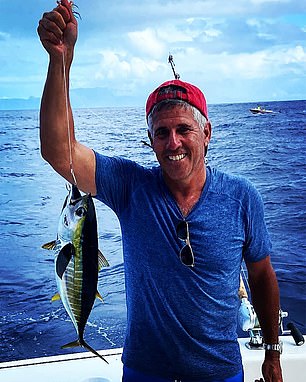
A wealthy American lawyer whose lifestyle features private jets, beachside properties and snazzy yachts is among the predatory legal eagles trying to cash in on Britain’s growing car finance scandal.
Harris Pogust, 61, a veteran of the US legal scene, has boasted online of his sprawling mansion which includes a pool, gym and wine cellar.
His firm, London-based Pogust Goodhead (PG) provides him and his British partner Thomas Goodhead the means to live in luxury thanks to the cut the firm takes from compensation rulings on big cases which can run into hundreds of millions of pounds.
The firm told The Mail on Sunday that 60,467 of its clients from previous cases had been brought on board for a car loan case.
When it wins class actions, it pockets up to 50 per cent of the victims’ money for itself. But consumer experts say motorists can make their own claim and keep 100 per cent of any payout.
New Jersey-born Pogust, frequently flaunts his wealth on Instagram, including a post last month showcasing his six-bedroom, eight-bathroom home. His wife’s social media features pictures of Pogust and their dog on a private jet and snaps on board yachts.
Fishing for business: Harris Pogust shows off his catch online
Goodhead is a barrister educated at both Oxford and Cambridge who co-founded the firm with Pogust in 2018.
It is locked in a high-profile battle in London’s High Court with Anglo-Australian mining giant BHP over the Samarco dam disaster in Brazil, which killed 19 people and contaminated waterways and land spanning several villages in 2015. The class action is estimated to be worth £36 billion. PG will reportedly receive up to 30 per cent for individuals and firms.
But Brazil’s former ambassador to the UK, Rubens Barbosa, accused the firm of encouraging hundreds of thousands of claimants to reject a £24 billion settlement scheme in favour of continuing action in the High Court, which they have no guarantee of winning.
A PG spokesman said: ‘Pogust Goodhead is representing 620,000 victims whose lives have been devastated – we make no excuses for using the means at our disposal to try to level a massively uneven playing field against some of the largest, most powerful and well-resourced companies in the world.’
The firm itself is looking to save on costs as it spends millions on its legal crusades including plans to cut about 20 per cent of its staff with up to 50 job losses at its London office, according to reports.
The Court of Appeal ruled last month that commissions paid to car dealers may be unlawful if they were not flagged to customers. Firms implicated include Close Brothers, one of the UK’s oldest merchant banks, as well as Lloyds and Santander.
DIY INVESTING PLATFORMS
AJ Bell
AJ Bell
Easy investing and ready-made portfolios
Hargreaves Lansdown
Hargreaves Lansdown
Free fund dealing and investment ideas
interactive investor
interactive investor
Flat-fee investing from £4.99 per month
Saxo
Saxo
Get £200 back in trading fees
Trading 212
Trading 212
Free dealing and no account fee
Affiliate links: If you take out a product This is Money may earn a commission. These deals are chosen by our editorial team, as we think they are worth highlighting. This does not affect our editorial independence.
Share or comment on this article:
Uncovered: Luxury lifestyle of US lawyer set to cash in on car loan scandal
Some links in this article may be affiliate links. If you click on them we may earn a small commission. That helps us fund This Is Money, and keep it free to use. We do not write articles to promote products. We do not allow any commercial relationship to affect our editorial independence.
ATLANTA — President Joe Biden’s administration announced Tuesday that the U.S. Department of Energy will make a $6.6 billion loan to Rivian Automotive to build a factory in Georgia that had stalled as the startup automaker struggled to become profitable.
It’s unclear whether the administration can complete the loan before Donald Trump becomes president again in less than two months, or whether the Trump administration might try to claw the money back.
Trump previously vowed to end federal electric vehicle tax credits, which are worth up to $7,500 for new zero-emission vehicles and $4,000 for used ones. Trump later softened his stance as Tesla CEO Elon Musk became a supporter and adviser.
Rivian made a splash when it went public and began producing large electric R1 SUVs, pickup trucks and delivery vans at a former Mitsubishi factory in Normal, Illinois, in 2021. Months later, the California-based company announced it would build a second, larger, $5 billion plant about 40 miles (64 kilometers) east of Atlanta, near the town of Social Circle.
The R1 vehicles cost $70,000 or more. The original plan was to produce R2 vehicles, a smaller SUV, in Georgia with lower price tags aimed at a mass market. The first phase of Rivian’s Georgia factory was projected to make 200,000 vehicles a year, with a second phase capable of another 200,000 a year. Eventually, the plant was projected to employ 7,500 workers.
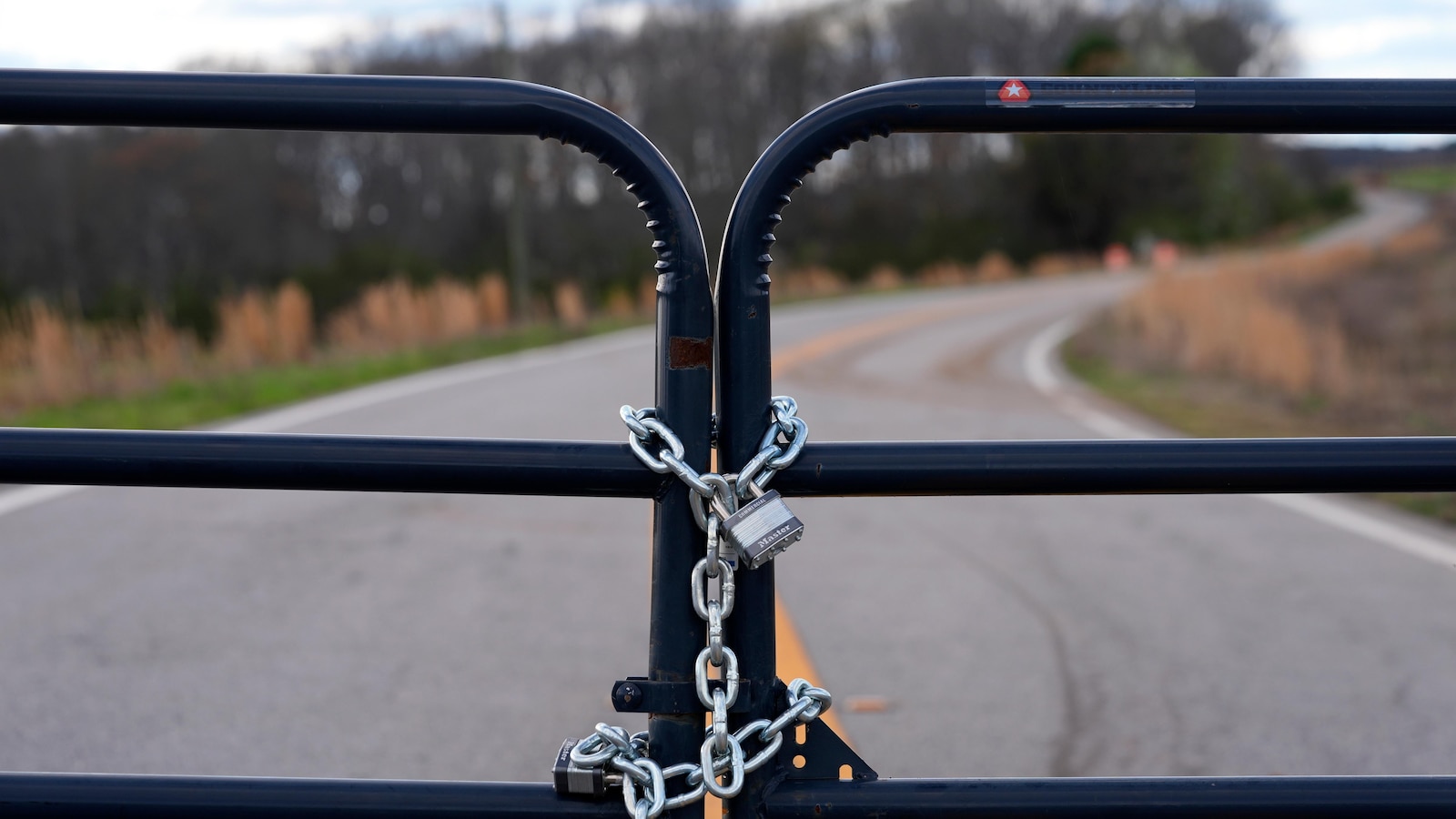
But Rivian was unable to meet production and sales targets and rapidly burned through cash. In March, the company said it would pause construction of the Georgia plant. The company said it would begin assembling its R2 SUV in Illinois instead.
CEO RJ Scaringe said the move would allow Rivian to get the R2 to market more quickly, sometime in 2026, and save $2.25 billion in capital spending. Since then, German automaker Volkswagen AG said in June it would invest $5 billion in Rivian in a joint venture in which Rivian would share software and electrical technology with Volkswagen. The money eased Rivian’s cash crunch.
Tuesday’s announcement throws a lifeline to Rivian’s grander plans. The company says its plans to make the R2 and the smaller R3 in Georgia are back on.
The money would come from the Advanced Technology Vehicles Manufacturing Loan Program, which has $17.7 billion to provide low-cost loans to make fuel-efficient vehicles and components. The program has focused mostly on loans to new battery factories for electric vehicles in recent years but also helped finance the initial production of the Tesla Model S and Nissan Leaf, two electric vehicle pioneers in the U.S.
The program, created in 2007, requires a “reasonable prospect of repayment” of the loan.
Democratic U.S. Sen. Jon Ossoff, who has been a vocal supporter of electric vehicle and solar manufacturing in Georgia, hailed Tuesday’s announcement as “yet another historic federal investment in Georgia electric vehicle manufacturing.” Ossoff had asked Energy Secretary Jennifer Granholm to support the loan in July.
“Our federal manufacturing incentives are driving economic development across the state of Georgia,” Ossoff said in a statement.
Georgia Gov. Brian Kemp says his goal is to make Georgia a center of the electric vehicle industry. But the Republican has had a strained relationship with the Biden administration over its industrial policy, even as some studies have found Georgia has netted more electric vehicle investment than any other state.
Kemp has long claimed that manufacturers were picking Georgia before Biden’s signature climate law, the Inflation Reduction Act, was passed. Garrison Douglas, a spokesperson for Kemp, said earlier this month that the governor wants Trump to prioritize “a market-based approach to economic growth.”
“As the e-mobility space was already growing in Georgia before the federal government’s intervention, the governor remains vocally opposed to the Biden administration’s decision to not only pick winners and losers but impose counterproductive mandates that disadvantage Georgia-based auto manufacturers and disincentivizes organic consumer adoption of electric vehicles,” Douglas said.
The loan to Rivian could rescue one of the Kemp administration’s signature economic development projects even as Biden leaves office. That could put Rivian and Kemp in the position of defending the loan if Trump tries to quash it.
State and local governments offered Rivian an incentive package worth an estimated $1.5 billion in 2022. The deadline for the company to complete its investment and hiring under that deal was extended to 2030. Neighbors opposed to development of the Georgia site mounted legal challenges.
State and local governments were projected to spend more than $125 million to buy the nearly 2,000-acre (810-hectare) site, clear trees and grade land. That work has been finished. The state also has completed most of $50 million in roadwork that it pledged.
The pause at Rivian contrasts with rapid construction at Hyundai Motor Group’s $7.6 billion electric vehicle and battery complex near Savannah. The plant in Ellabell, announced in 2022, could grow to 8,500 employees. The Korean automaker said in October that it has begun production there.
From reproductive rights to climate change to Big Tech, The Independent is on the ground when the story is developing. Whether it’s investigating the financials of Elon Musk’s pro-Trump PAC or producing our latest documentary, ‘The A Word’, which shines a light on the American women fighting for reproductive rights, we know how important it is to parse out the facts from the messaging.
At such a critical moment in US history, we need reporters on the ground. Your donation allows us to keep sending journalists to speak to both sides of the story.
The Independent is trusted by Americans across the entire political spectrum. And unlike many other quality news outlets, we choose not to lock Americans out of our reporting and analysis with paywalls. We believe quality journalism should be available to everyone, paid for by those who can afford it.
Your support makes all the difference.
“King” doesn’t disclose his real name. Even clients of his Sao Paulo newsstand have to call him by his moniker. The Brazilian online sports gambling addict lowered his profile after a loan shark threatened to put bullets in his head if he didn’t pay up.
Broke and embarrassed, King sought treatment and support earlier this year.
“I was once addicted to slot machines, but then sports betting was so easy that I changed. I got carried away all the time,” he told The Associated Press.
King’s story is that of many vulnerable Brazilians in recent years. The country has become the third-biggest market in the world for sports betting, following the U.S. and the U.K., a report by data analysis company Comscore said last year. But unlike those countries, rampant advertising and sponsorship have been coupled with an unregulated market. The government is now — belatedly, some say — striving to get a handle on the epidemic.
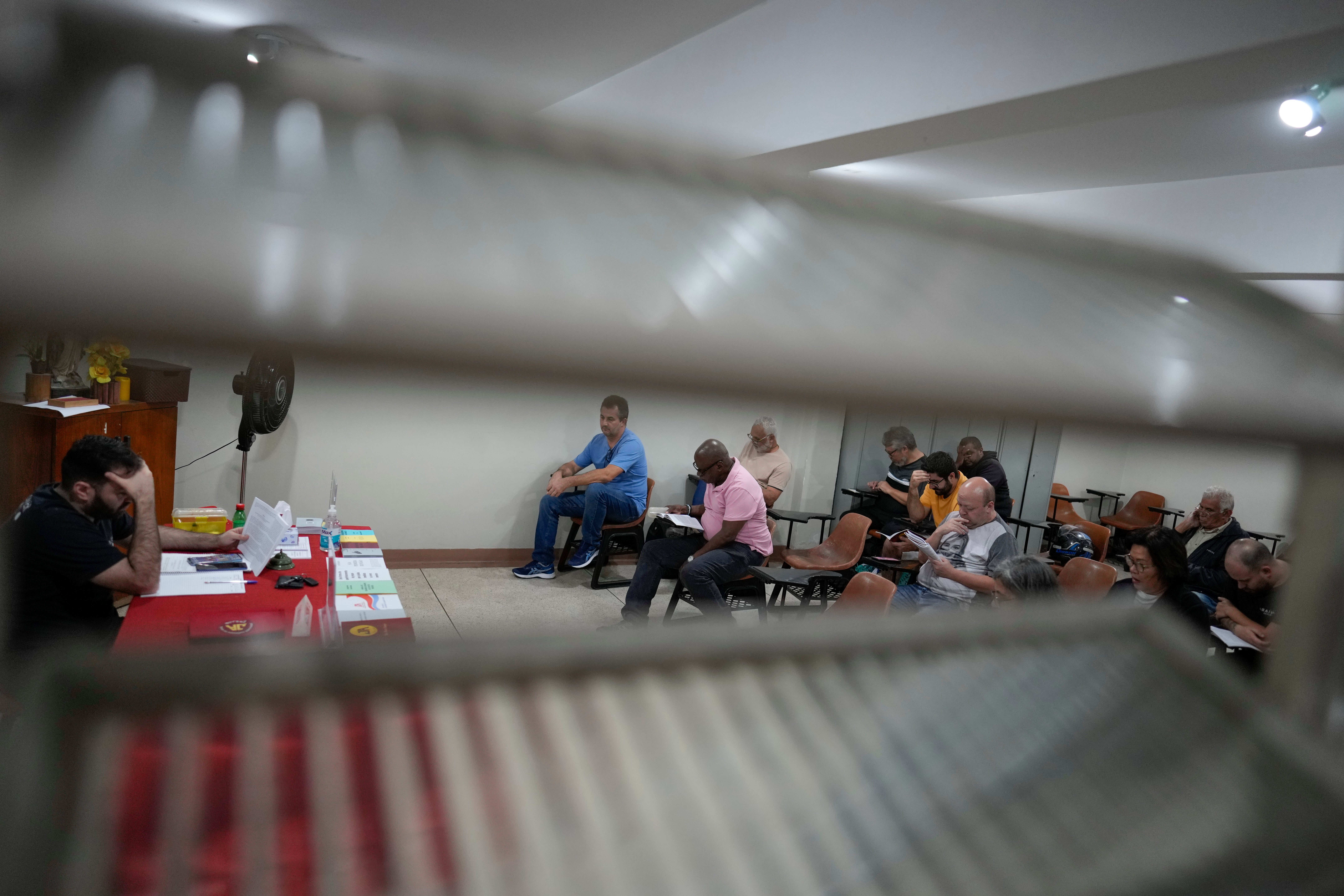
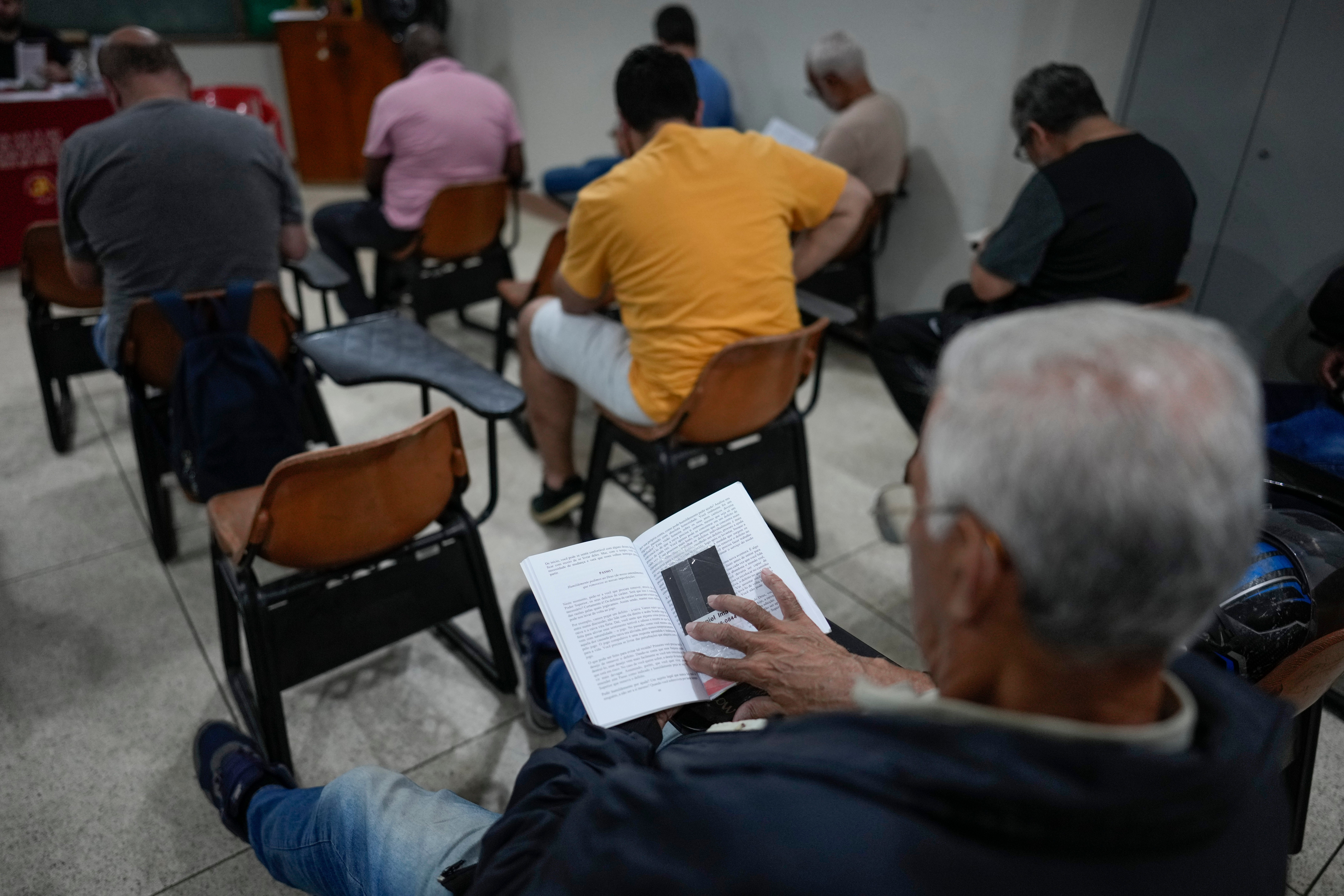
On a recent evening, King’s Gamblers Anonymous meeting took place in an improvised classroom inside a church, with coffee and cookies to keep everyone awake, and supportive messages scrawled onto the blackboard. One that’s become ubiquitous in Brazil and beyond: “Only for today I will avoid the first bet.”
King and other attendees, all Christian, started a prayer and the meeting began.
King said his financial problems arose from his addiction to online sports betting, chiefly on soccer.
“I miss the adrenaline rush when I don’t bet,” he said before the gathering. “I have managed to stop for a couple of months, but I know that if I do it once again, even a small bet, it will all come back.”
Gamblers in recovery attend a Gamblers Anonymous meeting in Sao Paulo, Monday, Oct. 21, 2024 (Copyright 2024 The Associated Press. All rights reserved)
The COVID-19 pandemic was a key driver for Brazilians embracing sports betting. King said he transformed almost every sale during that time into a bet. His hook was the non-stop advertising on TV, radio, social media as well as sponsorship of local soccer teams’ jerseys. He asked for bank loans to pay his gambling debts and then, to cover those, went to the moneylender. His total debt now amounts to 85,000 reais ($15,000) — impossible to pay off with his monthly income of 8,000 reais.
Digging oneself out of debt in Brazil is especially daunting with its sky-high interest rates. Loans from Brazilian banks could add interest of almost 8% per month to the borrowed sum, and from loan sharks could be even more.
Four Gamblers Anonymous meetings attended by the AP in October featured discussions about difficulties paying down debts, forcing working-class members to postpone housing payments and cancel family vacations.
Some members of impoverished Brazilian families have used welfare money for betting instead of paying for groceries and housing, official data suggests. In August, beneficiaries of Brazil’s flagship program Bolsa Familia spent 3 billion reais ($530 million) on sports betting, according to a report from the central bank. That was more than 20% of the program’s total outlay in the month.
Gamblers in recovery pray during a Gamblers Anonymous meeting in Sao Paulo (Copyright 2024 The Associated Press. All rights reserved)
Sports betting was made legal in 2018 in a bill signed by former President Michel Temer. The subsequent turmoil has recently been setting off alarm bells, with addicts venting on social media and media reports of people losing huge sums.
On Oct. 1, the economy ministry prevented more than 2,000 betting companies from operating in Brazil for having failed to provide all the required documents. Soccer-loving President Luiz Inácio Lula da Silva said in an interview on Oct. 17 that he will shut down the entire market in Brazil if his administration’s new regulations — presented at the end of July— fail to work. And Brazil’s Senate on Oct. 25 opened an investigation into betting companies, focusing on crime and addiction.
“There’s tax evasion, money laundering of organized crime, the use of influencers to trick people into betting. These companies need to be audited,” Sen. Soraya Thronicke, who proposed the inquiry, told journalists in Brasilia.
Sérgio Peixoto, a ride-sharing app driver in Rio, is one of many lower-middle-income Brazilians who have reduced their spending due to sports betting debt. Peixoto’s debt currently amounts to 25,000 reais ($4,400). His monthly income is four times less than that.
“It stopped being a game, it wasn’t fun. I just wanted to get the money back, so I lost even more,” said Peixoto, 26. “I could have invested that money. It would surely have given me more benefits.
Gamblers in recovery attend a Gamblers Anonymous meeting (Copyright 2024 The Associated Press. All rights reserved)
Pressure on people to gamble is everywhere. Current and former soccer players, including Vinicius Júnior, Ronaldo Nazário and Roberto Rivellino, are among the poster boys for local and foreign brands. All but one of the top-tier soccer clubs have betting companies among their main sponsors, with their name and logo emblazoned on their kits. There have been cases of kids and teenagers setting up accounts using their parents’ personal information and money, multiple local media outlets have reported.
Brazil’s economy ministry estimates that Brazil’s sports betting market had $21 billion in transactions last year, a 71% increase compared with the first year of the pandemic, 2020.
The ministry’s newly presented regulations include facial recognition systems for gamblers to bet, the identification of a single bank account for transactions involving sports betting, new protections against hackers and the government-authorized domain, bet.br, which will host all betting sites that are legal in Brazil. Once they are in place, come January, between 100 and 150 betting companies will continue to operate in the South American nation.
The changes in Brazil have prompted some companies to take preemptive action. A report by Yield Sec, a technical intelligence platform for online marketplaces, said several betting companies voluntarily restricted their operations in different places after the latest editions of the European Championships and Copa America in the hopes of presenting “the best possible license application face to the Brazilian authorities.”
Magnho José Santos de Sousa, the president of the Legal Gambling Institute, a betting think tank, said Brazil is currently “invaded by illegal websites that have licenses in Malta, Curação, Gibraltar and the United Kingdom.”
De Sousa expressed hope that the new regulations for advertising, responsible gambling and qualification of sports betting companies will transform the country’s deregulated arena into a more serious one that doesn’t exploit the vulnerable.
“The whole operation could turn from water into wine,” he said.
Meantime, the demand for Gamblers Anonymous meetings in Sao Paulo has grown so much in recent years that the weekly gathering, in place since the 1990s, was no longer enough. Many groups have added a second day in the week to help new people recover, mostly sports bettors.
Earlier in October, a group on Sao Paulo’s northern edge admitted a man who was struggling with sports betting and card games. The 13 other people in the room stressed that he wasn’t alone.
“Welcome,” one long-time attendee said, in a greeting that has become a regular for the group. “Today, you are the most important person here.”
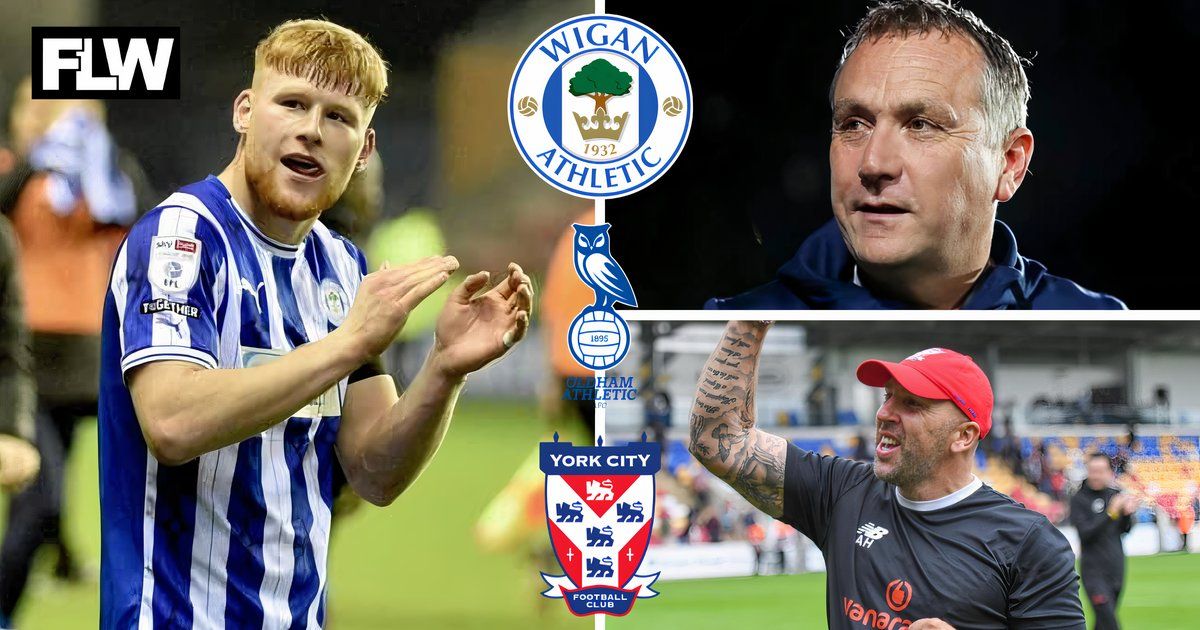
Out-of-favour Wigan Athletic striker Josh Stones is reportedly set to be allowed to leave the club on loan amid interest from two National League clubs.
That’s according to journalist Alan Nixon, who claims that National League promotion hopefuls Oldham Athletic and York City are both plotting a move for Stones as he continues to struggle for game time at the Brick Community Stadium.
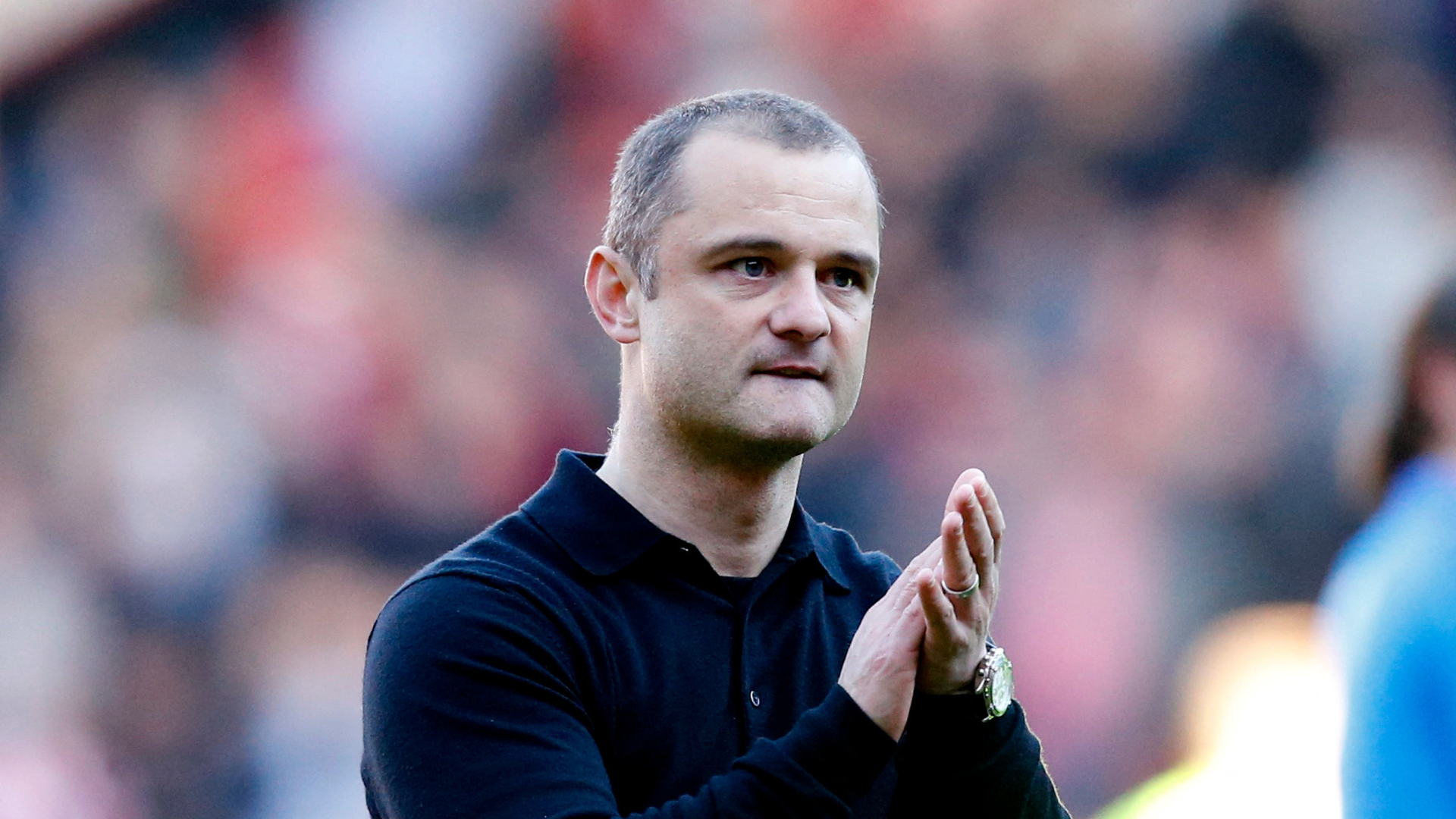
Wigan manager Shaun Maloney opted to keep Stones in Lancashire, and he was full of praise for the striker after he scored his side’s opening goal in the 2-0 win at Carlisle in the EFL Trophy last month.
“There’s still moments, I think his hold up play can be even better. But I thought his overall performance was very good.
“I was really happy with Josh today. His work-rate was outstanding.
“I’m glad he scored, and I just felt that the front three of Michael, Josh and Jonny Smith, they pressed really hard and were very aggressive. With and without the ball today, we were good.”
However, Stones’ goalscoring contribution at Brunton Park has not been enough for him to force his way into Maloney’s plans in the league, and he could now make another loan move to the National League, with Oldham and York set to battle his signature.
Despite only narrowly avoiding relegation last season, York currently sit top of the table after a remarkable start to the campaign, while Oldham are fifth and just five points behind the Minstermen in what is an incredibly competitive race for the automatic promotion spot.
Stoke City eyeing £3m Wigan Athletic transfer swoop
Thelo Aasgaard is thought to be on the Potters’ radar, ahead of the January window.
Oldham Athletic return could be perfect for Josh Stones
While Stones is clearly a player with potential, it seems unlikely he will receive much game time at Wigan this season, so a move away from the club would be a sensible option.
Despite the fact the Latics have scored just 12 goals in their first 13 league games this season, failing to find the back of the net on seven occasions, Stones has still not been given a chance by Maloney, suggesting he does not believe he is ready for League One.
Stones has had two loan spells away from Wigan since joining the club from Guiseley in the summer of 2022, so he could now be keen to make a permanent exit, but the Latics may be reluctant to sell him just yet.
With York looking stronger automatic promotion contenders than Oldham, the LNER Community Stadium could be an exciting destination for Stones, and he would get the chance to develop under Adam Hinshelwood, who is regarded as one of the best managers outside the EFL.
However, Stones thrived during his loan spell at Boundary Park last season before sustaining an injury, so a return to Micky Mellon’s side will no doubt be appealing for him, and it looks to be the most likely outcome at this point.
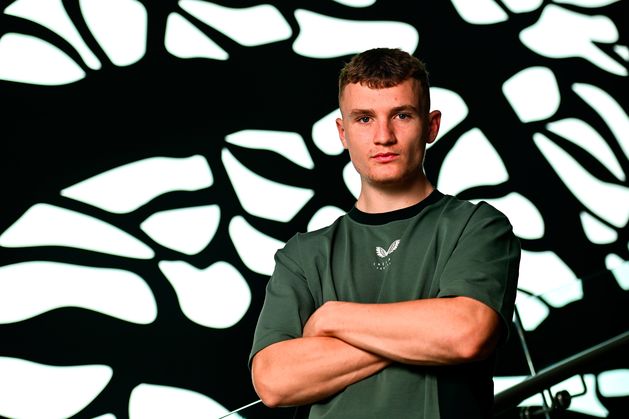
Mark O’Mahony’s journey started in Carrigaline before his breakthrough at Cork City. He then arrived at Brighton just under two years ago, and after rising through the ranks at the Seagulls his Premier League debut arrived last season as the 19-year-old was also rewarded with a new three-year deal.
This season, his path has taken him a short drive west to Championship side Portsmouth, where he’s on loan until next summer. It’s still early days, but with two goals in his last two league starts, he’s relishing this new chapter in his career.
So how has he found the Championship compared to U-21 football back at Brighton?
“It’s almost like a different sport at times, it’s completely different,” said O’Mahony, speaking from the Ireland U-21 camp ahead of tonight’s huge Euro 2025 qualifier at home to Norway (7.0).
“The biggest thing for me wasn’t even the playing, it was more the fans, knowing there are so many fans there but it makes it so much better. The physicality and intensity is a lot higher too but I feel like I’m doing well. The biggest thing for me was to learn men’s football.
“You actually get to feel pressure. They tell you there is pressure in Premier League 2 (U-21 league) but it’s not really pressure. Here you are playing with lads whose jobs are on the line at the end of the day. It’s only driving me on because I actually enjoy it, I play better with pressure. It’s a big factor in men’s football when you have fans travelling the country and paying money to come and see you, pressure comes with that, so it has been a massive difference.
“No matter how old you are or where you play, there’s always going to be pressure on you. Look at the best players in the world, (Cristiano) Ronaldo is 39 and still plays under pressure. That’s why the loan this season was all about these experiences, you don’t get it at academy level.”
Portsmouth’s Fratton Park may only hold just over 20,000 spectators, but O’Mahony has found it a particularly special place to perform.
“I wasn’t expecting the atmosphere to be that good. When I came on (for my debut) I was like ‘f*****g hell’,” smiled the Corkman, who made three Premier League appearances last term before netting his first senior Brighton goal in League Cup action last August.
“It’s different to the Premier League, but for me, I think the atmosphere is actually better than a lot of the Premier League. The fans are unbelievable. They live and breathe the club. I never really knew it beforehand, how big it is here.
“I have been told all about it (Portsmouth’s ‘glory years’ in the top-flight from 2003 to 2010). They showed me videos of (Thierry) Henry saying that Fratton Park was one of the best places he’s ever played at, Alex Ferguson said something similar too. I don’t think I have ever been in a stadium like it. When you stop to look around and see 21,000 people watching you, there’s no room for hiding. It’s class.”
Being able to handle the pressure will be key over the next few days as Jim Crawford’s U-21 side look to qualify for Euro 2025 in this final window of the campaign. A win over Norway at Turner’s Cross tonight would secure a November play-off and set up a winner-takes-all clash with Italy next Tuesday.
But this evening, O’Mahony will hope to make his first U-21 appearance in his old stomping ground, only a short hop from the family home.
“It would be a nice one, hopefully I can get a goal and three points. I’ll have family there and friends. I can’t wait,” he added, with three U-21 caps to his name to date.
“It helps the fact it’s in Cork. I love it. Playing for Ireland at Turner’s Cross, having grown up there and supported (Cork City) there, it’ll be a nice feeling to have. We know what’s on the line and know if we can go through, we can create history. We fully believe we can go and do it.”