Some foods taste better when they are crispy, hot, and crunchy. Regrettably, preserving the crispiness of our beloved fried foods can be challenging, especially if you have to serve them in bulk at a party or an event. But fret not! We have decoded the tricks to keep your favourite pakodas and fries perfectly crispy for a long and never succumb to sogginess. Sounds perfect, right? So, get your pen and paper now and take note of the tips to keep fried foods crispy for a longer time.
Why Does Your Food Lose Crispiness? What Is The Science Behind Food Turning Soggy?
According to The Journal of Texture Studies, crusted crispness refers to coatings with a dry and brittle surface contrasting a high-moisture core. This texture is “desirable for the enjoyment and quality of deep-fried goods.” The findings state that those fried foods typically lose crispiness “due to the adsorption of moisture from the atmosphere or water mass transfer from the internal component.” So, the idea is to avoid moisture absorption to keep up the crunchy texture of your food. Let’s find out how.
Also Read: 5 Deep Frying Hacks Every Novice Cook Must Keep In Mind
Photo Credit: iStock
Here Are 5 Easy Tricks To Keep Your Pakodas And Fried Foods Crunchy For Long:
1. Wire rack is the saviour:
Whether you air fry the food or follow the traditional deep-frying technique, transfer the fried food immediately to a wire rack to keep up the crispiness for long. Wonder why? It is because the wire rack provides 360-degree air circulation around the entire food item, allowing any excess moisture to escape.
2. Warm in the oven:
We often turn our foods soggy while reheating them. To avoid it, keep your fried foods in the oven, on a wire rack. Then bake it for around 15 minutes. This will help your food retain its texture easily.
3. Avoid reheating in a microwave oven
Do not reheat food in the microwave oven. Heating food in the microwave creates friction between water molecules inside the food, further creating steam. Instead, use a traditional oven, where the dry heat will help maintain the original texture of your dish.
4. Avoid adding sauce to the dish
The best practice is to avoid adding sauce to your crispy dish. And if at all you want to do it, wait until the last moment. Apply the sauce just before serving to retain crispiness until consumption.
5. Pack the fried food mindfully
If you want to pack your fried food for work, first wrap it in a paper towel to absorb excess moisture, then put it in an air-tight container. Also, take your dips and sauces separately to avoid moisture absorption.
Got all your answers? So, what are you waiting for? Follow these hacks and impress your guests with crispy fried foods at the party.
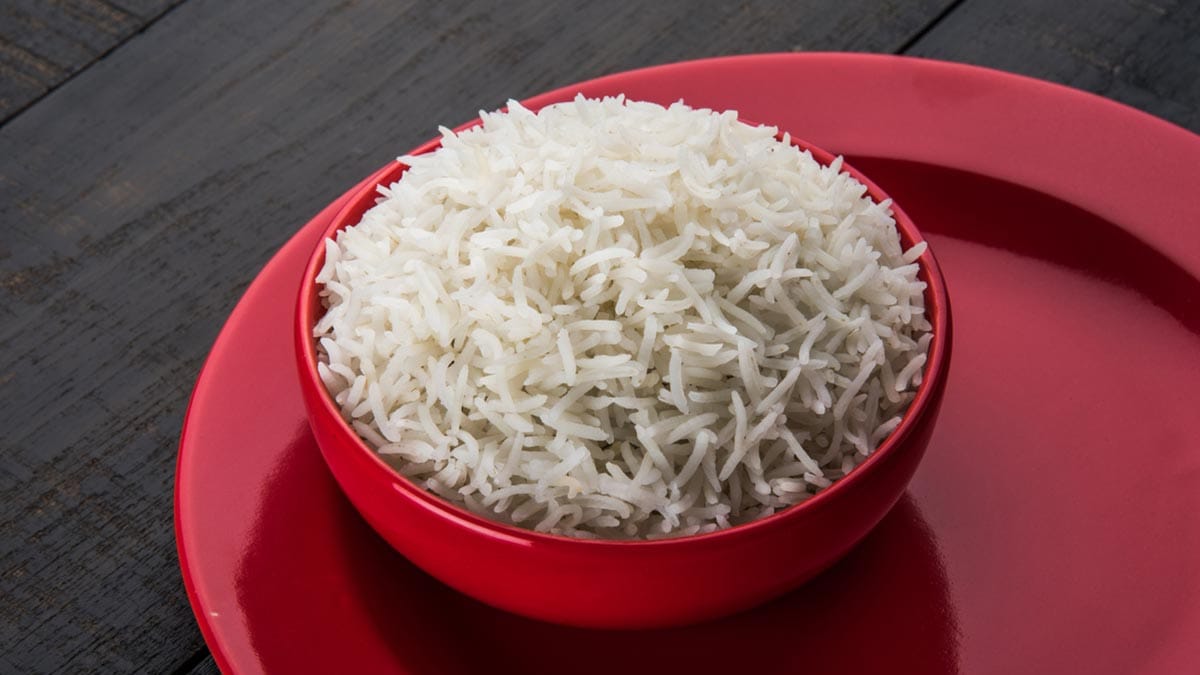
Dal chawal, rajma chawal, biryani, fried rice – the list of our favourite rice dishes goes on and on. This implies that Indian households cook a lot of rice, almost every day. And leftovers are more common than we realise. Unlike uncooked rice, cooked rice is susceptible to quick contamination. Therefore, it’s crucial to store it carefully to prevent foodborne illnesses. Always cool down cooked rice promptly and store it in an airtight container to avoid contamination. According to the USDA, cooked rice should be kept at 5 degrees Celsius or less. Additionally, remember to reheat it thoroughly before consumption.
Also Read: Leftover Recipe Ideas: 5 Delicious Left-Over Rice Recipes
How long should you store cooked rice in the refrigerator?
Gut Health and Ayurveda Coach Dimple Jangda reveals in an Instagram post that cooked rice should be stored in the fridge for no more than 24 hours. She credits The National Health Service (NHS) UK website for this recommendation, stating that rice kept in the fridge should be eaten within 24 hours and never reheated more than once.
Why is it important to store cooked rice properly?
Uncooked rice often contains spores of Bacillus cereus, a bacteria that can cause food poisoning. These bacteria can survive even after the rice is cooked and can grow rapidly if the rice is left at room temperature for too long. Even if the cooked rice is refrigerated, humidity and moisture can create an environment conducive to mould growth. The bacteria can produce toxins that can lead to food poisoning.
What is fried rice syndrome?
Fried rice syndrome refers to food poisoning caused by Bacillus cereus. This type of bacteria forms spores that release harmful toxins.
What types of rice are at risk?
Both brown and white rice can contain Bacillus cereus spores. Mold can also grow on rice, appearing as black, green, or white powdery substances. The most common mould on rice is Aspergillus oryzae, which can cause gastrointestinal discomfort.
Also Read: White Rice For Diabetics: Is It Good For Health Or Not?
What conditions promote mould growth on rice?
Mould thrives in specific conditions, including:
Lack of natural sunlight
Humidity levels above 55%
Ambient temperatures between 60 and 80 degrees Fahrenheit
A source of nutrients
What are the risks of consuming mouldy rice?
Mould can produce mycotoxins, such as aflatoxins, which can cause gastrointestinal discomfort, vomiting, diarrhoea, and even liver damage.
Can both mould and bacteria grow on cooked rice? Yes, it’s possible for both mould and bacteria to grow on cooked rice. The bacteria can survive the cooking process and multiply if left at room temperature. Additionally, certain mould strains can thrive in colder environments.
What are the health risks associated with consuming mouldy or contaminated rice?
Consuming mouldy or contaminated rice can lead to various illnesses, including food poisoning, characterized by vomiting, diarrhoea, chills, muscle fatigue, and stomach cramps. Aflatoxins, produced by mould strains like Aspergillus flavus and Aspergillus parasiticus, are cancer-causing toxins. In lower doses, they can cause gastrointestinal discomfort, nausea, headaches, and breathing difficulties.
How can you prevent food poisoning from cooked rice?
Serve cooked rice immediately.
Cool leftover rice rapidly in cold water before storing them in the fridge.
Store cooked rice in the fridge for no more than 24 hours.
Reheat rice thoroughly before consuming.
Discard any cooked rice with visible mould.
By following these guidelines, you can significantly reduce the risk of food poisoning associated with cooked rice.
Disclaimer: The opinions expressed within this article are the personal opinions of the expert. NDTV is not responsible for the accuracy, completeness, suitability, or validity of any information on this article. All information is provided on an as-is basis. The information, facts or opinions appearing in the article do not reflect the views of NDTV and NDTV does not assume any responsibility or liability for the same.
NO MATTER WHERE you are on your fitness journey, it can be tough to stay patient. Yes, you might wish you could fast-track your goals so you can cross that finish line (literally or figuratively) ASAP. The sense of accomplishment that comes with tangible progress and reaching new PBs is often what motivates you to keep going. But as a wise man once said, there’s no magic pill for immediate gratification. And, after all, if it were that easy, it wouldn’t be called “work,” right?
Don’t be discouraged if you feel like you haven’t noticed the results you were after immediately. There are lots of changes happening behind the scenes that are worth celebrating.
Just know, exactly how long it takes to see results from your workout routine will vary from person to person. “There are numerous factors that contribute to these timelines,” says Kurt Ellis, C.S.C.S., owner and coach at Beyond Numbers Performance. “Factors such as genetics, age, gender, type of training program, and lifestyle indicators can impact how soon someone will see changes.”
Here, Ellis digs into a few of these key elements, shares some of the results you can expect to see and when, and offers other perspectives on what it means to “see results” so you can celebrate your wins through every stage of your journey.
How long does it take to see results from working out?
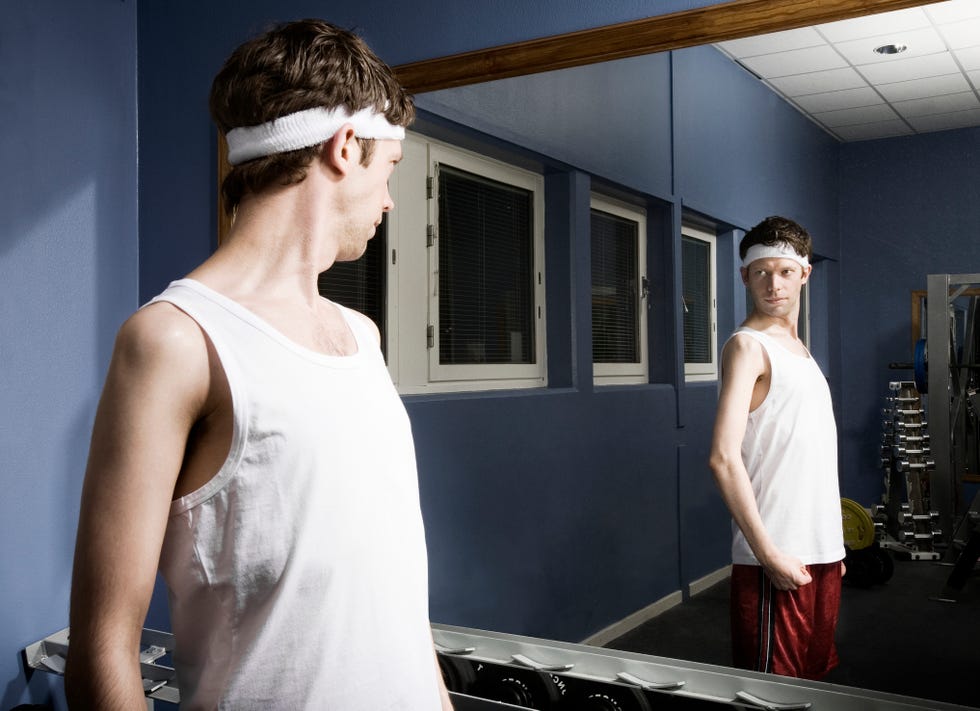
You might assume that seasoned gym-goers would see results sooner because they aren’t new to this game, but that’s not necessarily the case, according to Ellis. “Beginners will usually experience results sooner than more advanced athletes because both their baseline level of fitness and training age [how long you’ve been working out] is lower,” he says.
Think of it this way: If you’re a beginner staring at a ladder from the floor, there are more rungs to climb, and therefore more levels to reach – and with each rung, you’re making progress. Whereas more advanced athletes may have already hit some of the lower rungs and milestones and have less distance to travel to the top.
Holloway//Getty Images
There’s also the matter of neurological adaptations, a.k.a. “newbie gains.” When beginners start strength training, neural adaptations will lead to rapid progress in strength (and to a lesser degree, muscle growth). That early progress is exciting, but it only lasts so long (and probably won’t take you up to the point of accomplishing your larger training goals, anyway). Once you go beyond that initial progress and maybe even hit a plateau, it’s important to remember that you’ll still see results – just more slowly than you did at the start.
One often-cited study from 2009 shows that it takes a minimum of 18 days for someone to form a habit once a decision to change a behaviour is made, and that goes for athletes of all kinds, explains Ellis. So you might consider that timeframe your first benchmark toward progress—and that should be celebrated. Deciding to work toward something, make changes, and commit to them is no easy feat.
From there, “typically you can see tangible changes – whether it be body composition, change in resting heart rate, etc. – within two to six weeks,” says Ellis. That breaks down to roughly two to four weeks for beginners and four to six weeks (or more) for more seasoned athletes, he adds.
Signs you’re getting fitter
Even if weight loss is your goal, the number on the scale is certainly not the only meaningful metric to measure against your progress. (Not to mention, the benefits of fitness and staying active go far beyond just your weight or how you look.)
Neurological adaptations
Lots of the initial “results” from your workouts are happening on an imperceptible, cellular level. As outlined above, whenever you ask the body to do new or challenging things – trying a new sport, learning crow pose in yoga, or merely starting a workout routine for the first time – the brain has to create new pathways to signal the body to perform in ways it hasn’t before. “Neurological adaptations are changes that take place within the nervous system, which play a very important role in improving strength, coordination, motor learning and overall performance,” explains Ellis.
“Neural plasticity [the brain’s ability to adapt and evolve] allows you to continue developing new pathways throughout your fitness journey,” says Ellis. “Because of this, it’s beneficial to manipulate different variables in a training program such as incorporating a variety of movements and some novelty and proper training stimuli. It’s important to continually build on progress to strengthen and stimulate these neural pathways.”
The easiest way to do this is with a pre-made training plan. You’ll know exactly which exercises to do, when to up the intensity, and how much to rest. Get a personalized recommendation from our library of training plans using our Workout Finder below.
Energy
Also, “one of the earliest changes that people would notice is a change in energy levels,” says Ellis. Just as microtears in your muscles caused by strength training help the body to repair, grow, and come back stronger, there’s a similar process for your energy levels. Exerting yourself during a workout might make you feel taxed during a session, but this challenge actually signals to your body to produce more mitochondria, the energy stars of your cells, according to Harvard Health.
Mood
Also, thanks to the release of feel-good hormones like endorphins during exercise, your new fitness routine can also give you a mood boost. Physical activity of all kinds releases endorphins, but research is still evolving as to what type of training or workout intensity gives you the biggest endorphin rush. For example, one 2017 study published in the journal suggests that high-intensity training is the way to go if you’re looking for that “exercise high.”
Sleep
Another big result you’ll likely notice fairly early after beginning a new fitness routine or training program is better sleep. Don’t underestimate this as a key factor to your overall health. Adequate rest can be a crucial factor for maintaining motivation for training both in the short and long term, according to one small 2013 study.
Other benchmarks to consider to track workout results
In addition to some of the more lifestyle measures like energy and sleep, if you’re someone who is looking for something a bit more measurable, Ellis suggests one of two quantitative benchmarks depending on your fitness goals.
For those looking for results from strength training, you could track progress against absolute strength. This is often measured by the one-rep max (1RM) test – the heaviest weight you can lift in a single exercise, such as a bench press or a barbell squat, for one rep at the full range of motion and with proper form. (If you’re newer to strength training, we suggest you test for a three to five rep total, then use a training load chart for a one rep max rather than going all-out for a single rep.) You could also look at your progress in relative strength, which takes your body into account, looking at how much you can lift compared to your body weight, says Ellis. Simply divide the weight lifted by your body weight to find this measure.
If you have more endurance and cardio-focused goals, the universally used metric to measure progress is your VO2 max. This essentially measures how efficiently your body is able to use oxygen. But know this: Accurately tracking your VO2 max requires lots of fancy equipment and is best done in a lab setting. Luckily, due to the demand of athletes wanting a more realistic way to assess their numbers, many fitness trackers and smartwatches offer a VO2 max estimate, which you can use to track your progress.
Use SMART goals
Remember that when it comes to thinking about your workout results, how you set your goals initially can make a big difference. “Setting SMART (specific, measurable, attainable, realistic, time-bound) goals are major keys to success,” says Ellis. “Athletes will typically see long-term, sustainable results when they include process goals along the way to their big-picture goals.”
Think about it: Getting swole or “getting abs” involves so much more than simply working out. “Highlighting the importance of other aspects, such as sleep quality, proper nutrition principles, and joining a community, go a long way in setting habits that can change the trajectory for your overall well being for the better,” he says. Once you can think of your workout routine as being just one aspect of a more comprehensive healthy lifestyle, you might have an easier time staying patient.