hacklink hack forum hacklink film izle hacklink marsbahisizmir escortsahabetpornJojobet

Tag: luck

  • Why are lone homes left standing after the fires? It’s not entirely luck

    Why are lone homes left standing after the fires? It’s not entirely luck

    Emails and videos of burned buildings in Los Angeles next to those left standing have been flying back and forth among architects, builders and fire safety specialists around the world.

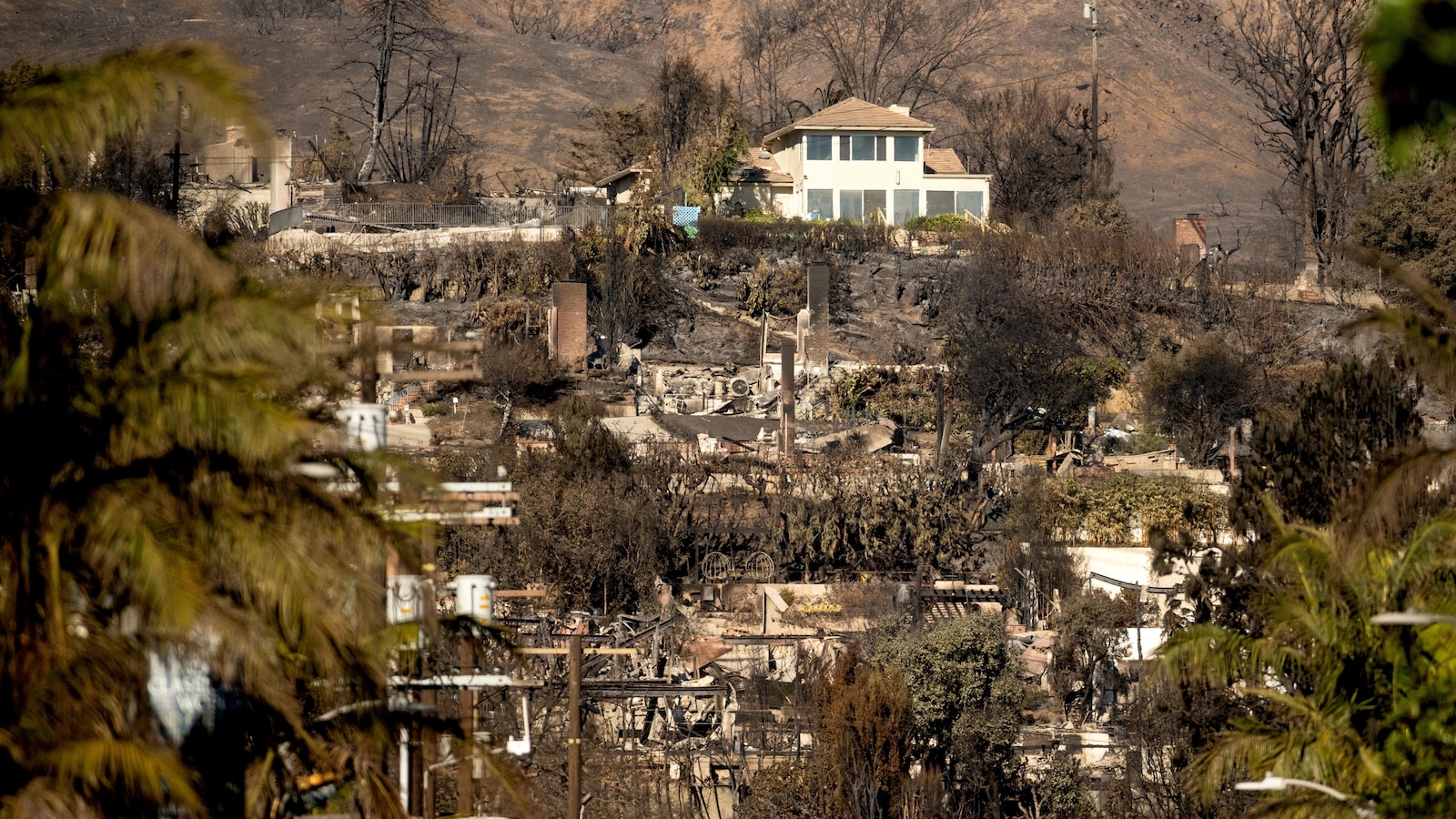
    For many homeowners, like Enrique Balcazar, the sometimes scattershot nature of the carnage can seem like random chance. Balcazar, a real estate agent, posted video that showed little more than chimneys remaining of most homes on his block after fire leapt through his Altadena neighborhood. Balcazar stood on his neighbor’s destroyed classic Mustang to douse his smoldering roof, but his home was otherwise fine.

    “It’s an older house and it still has the old wood sidings,” Balcazar said. “To me there’s nothing explainable in logical or scientific reason of why my house would not have burned.”

    Many experts say luck does play a part. After all, wind can shift 180 degrees in a split second, pushing fire away from your house and towards a neighbor’s. But they also say there are many ways that homes can be made less vulnerable to fire.

    “Because there are, say, 50 ways a fire can burn your house,” said Greg Faulkner of Faulkner Architects in California, who has focused on less combustible home exteriors for more than a decade. “If you eliminate half of those, or three-quarters of them, that’s not luck, that’s increasing your odds.”

    People in fire country generally know that trees, landscaping and wood fences near homes can be a fire risk. Architects and contractors are going beyond that, using newer materials and techniques in roofing, walls and windows to keep buildings standing. The measures do add cost to the homes — around 3% to 6%, Faulkner said, or as much as 10% for the most robust protection.

    Many of these experts no longer use wood siding. Where it is used, or still allowed, it needs to have a fire-resistant barrier underneath, often made of gypsum, the same material used to make drywall. That way if the wood catches fire, it takes longer for the heat to reach inside the home

    But even with that, you’re still putting a combustible material on the building, said Richard Schuh, with Nielsen : Schuh Architects. “So that would be something we would avoid. Use of fire-resistant materials is critical.”

    Stucco, a cement material, is a common exterior for Southern California houses and it’s fire-resistant. Reviewing AP photographs showing buildings still standing, Arnold Tarling, who has four decades experience in fire protection and building inspection in Britain, said houses with stucco walls appeared to survive the Los Angeles fires better. Yet if more of them had had a layer of gypsum beneath the stucco, it would have given more protection from the heat, he said.

    Windows are a huge factor in whether a home burns down, because so much heat is transmitted through them. Double-pane windows significantly slow heat coming from the burning building next door.

    “The outside layer protects the inside layer until it fails,” said Schuh. Codes in many places require one of the two panes to be tempered, which is much more resistant to heat than conventional glass, he said.

    Tarling noted one intact Malibu beachfront home, surrounded by gutted buildings. He speculated that the fact that no windows faced a neighbor helped protect it because radiated heat couldn’t penetrate as easily.

    In his buildings, Faulkner builds in fire shutters that can slide closed and cover the windows.

    Then there’s the roof — a convenient landing pad for fire embers.

    Simpler roof lines can allow red-hot embers to slide off. Spanish Mission, for example, is an iconic Los Angeles style — part of what says “Hollywood” in movies about the city, for example, as well as a reminder of its Mexican and Spanish history. That style doesn’t always have simple roof lines — the knee walls that are common on Mission-style roofs create corners.

    “The embers could, just like snow, gather in that corner,” Faulkner said.

    Many roofs in the U.S. are covered in asphalt. Areas that are designated as wildfire-prone in California – an ever-growing area – are required to use roofing that delays the transfer of heat to the inside of the building, called one-hour or Class A.

    Still, asphalt is a petroleum product. Some building professionals prefer metal, which doesn’t burn. Metal has its own downside, though: It conducts heat. Putting a layer of gypsum under a metal roof is becoming a common practice in some areas.

    Maybe as important as which material is used on a roof is whether the roof offers fire a way to get in. Here, as in so many tradeoffs, one effort to do good conflicts with another: Contractors have been more careful over the years to make sure moisture doesn’t build up in attics by making sure air circulates, using those vents that are visible on many roofs or under eaves.

    But in a powerful fire, Schuh says, “if you’re on the side where the wind is putting pressure against the house, it’s also blowing the flames into the house like a blow torch,” and fire gets in through the vents.

    On the other side of the house, it can create a vacuum, several experts said, sucking fire in.

    But you can’t easily just eliminate roof ventilation because it will cause moisture problems, said Cesar Martin Gomez, an architect at the University of Navarra, Spain, who’s worked for 25 years in building services.

    Faulkner said in some buildings he’s eliminating the need for ventilation in the roof structure by sealing the spaces. Schuh is using a cover on roof vents that can actually respond to fire with a mesh that closes.

    Martin Gomez noted that in some parts of Australia, new homes are required to have water tanks. “If each home has the ability to protect itself, fire won’t be able to spread as much,” he said.

    And some homes in the U.S. are now built with sprinkler systems for the outside of the house, not just the inside. It sprays water with a soapy solution to make it flow over the surface of the building, Schuh said.

    “You’re adding one more layer of protection to your building, and that’s more of a priority now than ever because your insurance company may or not be around for you,” he said.

    ___

    The Associated Press’ climate and environmental coverage receives financial support from multiple private foundations. AP is solely responsible for all content. Find AP’s standards for working with philanthropies, a list of supporters and funded coverage areas at AP.org.
    Source link

  • 8 Foods From Around The World That Are Said To Bring Good Luck In New Year

    8 Foods From Around The World That Are Said To Bring Good Luck In New Year

    As the New Year 2025 approaches, many cultures around the world celebrate with traditional foods believed to bring good luck, prosperity, and happiness for the year ahead. From lentils to fish, these foods symbolize various aspects of wealth, health, and good fortune. Whether you’re looking to add a bit of cultural flavour to your celebrations or simply want to try something new, here are some popular New Year’s foods from across the globe that are said to bring good luck.

    Also Read: New Year 2025: Ridiculous New Year Food Resolutions That Are Meant To Be Broken

    Here Are 8 Global Foods Believed To Bring Good Luck In New Year:

    1. Lentils – Italy and Brazil

    Lentils are a common food symbolizing prosperity in both Italy and Brazil. The small, round shape of lentils is said to resemble coins, representing wealth and financial good fortune. In Italy, it’s a tradition to eat lentils at midnight on New Year’s Eve, often served with pork to enhance the luck. Similarly, in Brazil, eating lentils on New Year’s Day is thought to bring prosperity, with many people also wearing new clothes to invite a fresh start to the year.

    2. Fish – Various Countries

    Fish are often considered symbols of abundance, fertility, and good fortune. In many cultures, fish is a must-have on New Year’s menus. For example, in Spain, it’s common to enjoy a feast with fish like cod or sardines, which is believed to bring good luck and a prosperous year. Similarly, in Germany, carp is eaten on New Year’s Eve, with the tradition of hiding a fish scale in the wallet for the year, symbolizing financial growth. In the United States, especially in the South, eating fish (particularly fish heads) is thought to bring prosperity because fish swim forward, symbolizing progress.

    3. Noodles – Japan and China

    Long noodles are a staple of New Year’s celebrations in Japan and China, representing longevity and a long, prosperous life. In Japan, toshikoshi soba (buckwheat noodles) are consumed on New Year’s Eve to symbolize the crossing over from one year to the next. The tradition is rooted in the belief that the long noodles will bring a long and healthy life. In China, long noodles often served in a hot broth, are a part of New Year’s festivities, and they are eaten without breaking to ensure good fortune and longevity.

    4. Grapes – Spain

    In Spain, a unique New Year’s tradition involves eating 12 grapes at midnight, one for each stroke of the clock. Each grape is said to represent a month of the coming year, and eating them is believed to bring good luck for each of those months. The tradition dates back to the early 20th century and is now practised in many Spanish-speaking countries, as well as in parts of the United States, where people of Spanish descent continue the custom for a year filled with good fortune.

    Also Read: New Year, New Kitchen! 5 Ways To Upgrade Your Kitchen And Make It Aesthetically Pleasing

    Add image caption here

    Many people make new meal plans in the new year
    Photo Credit: iStock

    5. Pomegranate – Greece and Turkey

    Pomegranates are associated with fertility, prosperity, and rebirth in many cultures. In Greece and Turkey, it’s traditional to smash a pomegranate on the ground as the New Year begins. The seeds that scatter are thought to bring good luck for the year ahead. In addition to this tradition, pomegranates are often eaten during New Year’s celebrations for their vibrant red colour, symbolizing wealth and good health.

    6. Cabbage and Greens – Southern United States and Germany

    In the Southern United States, collard greens are a staple on New Year’s Day. The greens are symbolic of money, as they resemble paper currency, and are believed to bring financial success in the coming year. They are often served with cornbread and black-eyed peas. In Germany, sauerkraut (fermented cabbage) is consumed for similar reasons, as it’s believed to bring wealth and good fortune.

    Also Read: 5 Surprising Reasons Why Raw Haldi Is THE Morning Ritual You Need In New Year

    7. Black-Eyed Peas – United States and Africa

    A quintessential New Year’s dish in the Southern United States, black-eyed peas are consumed on New Year’s Day to bring luck and prosperity. The peas are typically cooked with ham or pork and served with cornbread. The tradition is believed to have originated from African slaves who considered black-eyed peas to be a symbol of abundance and good fortune. The dish is also linked to the Southern belief that the peas represent coins, which will bring wealth in the coming year.

    8. Rice – Latin America and Asia

    Rice is often thought to symbolize abundance and good fortune, and it’s a common food to celebrate the New Year. In Latin America, especially in countries like Cuba and Puerto Rico, arroz con frijoles (rice with beans) is served as part of the festivities. Similarly, in Asia, rice is a symbol of prosperity, with dishes like Lunar New Year rice cakes (such as tteokguk in Korea) eaten for good health and fortune.

    The foods we eat during New Year’s celebrations are often more than just delicious dishes; they carry deep symbolic meaning in cultures around the world. Whether it’s the longevity symbolized by noodles, the wealth represented by lentils, or the prosperity signified by pomegranates, these traditions serve to invite positive energy and good fortune into the coming year. 

    Source link

  • Andrew Luck named new general manager of Stanford football

    Andrew Luck named new general manager of Stanford football

    At Stanford, Andrew Luck built a renowned football legacy under the guidance of coaches Jim Harbaugh and David Shaw from 2008 to 2011. Years after captivating the college football world, Luck is returning to the program where his talents first shone, now serving as its new general manager.

    After earning the starting quarterback role in 2009, he quickly transformed into a national sensation, leading the Cardinal to a 12-1 season and an Orange Bowl victory. Known for his precision and intellectual approach to the game, Luck shattered school records with 82 career touchdown passes and 10,387 total yards of offense. A two-time Pac-12 Offensive Player of the Year and Heisman runner-up, he exemplified the rare athlete who balanced athletic brilliance with academic excellence, earning the 2011 Academic All-America of the Year award.

    Luck redefined Stanford football program’s trajectory in many ways. Under his leadership, the Cardinal shattered previous milestones, winning a school-record 12 games in 2010 and accumulating 23 victories over two seasons. Before Luck’s arrival, Stanford had rarely been mentioned among the nation’s top programs; during his tenure, the team spent 24 weeks in the AP Top 10 and secured back-to-back BCS bowl berths. Stanford permanently honored him by endowing its offensive coordinator position as the “Andrew Luck Director of Offense.” His legacy was further cemented with inductions into the College Football Hall of Fame in 2022 and the Stanford Athletics Hall of Fame in 2023.

    NFL scouts recognized Luck’s potential long before he left Stanford. Ahead of his sophomore season in 2010, Sports Illustrated’s Tony Pauline dubbed him “the most NFL-ready” quarterback among draft prospects. Despite being widely projected as the No. 1 pick in the 2011 NFL Draft, Luck chose to return for his junior season. By 2011, top analysts like Mel Kiper Jr. were drawing comparisons to football legends, with Kiper declaring Luck the best quarterback prospect since John Elway in 1983.

    Even during Robert Griffin III’s Heisman-winning campaign, Luck remained the consensus top prospect. His NFL potential sparked the infamous “Suck for Luck” movement, with fans and teams hoping to secure the first overall draft pick. The Indianapolis Colts, reeling from Peyton Manning’s departure, ultimately landed the coveted top spot with a 2–14 record, winning the “Luck sweepstakes.”

    Luck’s NFL career began promisingly in 2012, breaking multiple rookie records, including most passing yards by a rookie and most wins by a No. 1 draft pick. He led the Colts to the playoffs and continued to impress in subsequent seasons, including a historic comeback against the Kansas City Chiefs in the Wild Card Round. His 2014 season saw him lead the league in passing touchdowns and reach the AFC Championship. However, injuries began to take their toll, including a shoulder issue that sidelined him for the entire 2017 season. After returning in 2018 and earning Comeback Player of the Year, Luck stunned the sports world by abruptly retiring from professional football at the age of 29 in August 2019.

    The role of a college football general manager has evolved significantly in recent years. While the role is primarily operational and supportive — designed to allow coaches to focus on game preparation — since the transfer portal created an environment of unprecedented player mobility for college athletics, GMs must now continuously track portal entries, assess potential impacts and prioritize recruits who can make immediate contributions. Unlike traditional recruiting, this approach requires targeting experienced players capable of quickly integrating into the program. Normally the head coach, however, remains the central decision-maker in these processes.

    Luck’s role as Stanford’s general manager will be distinctly different from traditional positions. He will have comprehensive authority over both football and business operations, with a highly hands-on approach to collaboration. Beyond typical GM responsibilities, he’ll take on business functions similar to an NFL team president, focusing on fundraising, sponsorships, attendance, sales, in-stadium experiences and alumni relations. 

    Luck told ESPN that the idea of him managing the football program came up “organically” in a conversation with President Jonathan Levin a month prior. The quarterback graduated from Stanford in 2012 and returned in 2022 to complete a master’s program in education.

    Luck is confident in the school’s ability to compete for and retain top talent. His custom-designed role, created specifically for his expertise, would enable him to work closely with head coach Troy Taylor and try to restore the program to national prominence.

    “I’m excited,” Luck told ESPN. “We’re undoubtedly the best athletic department in college sports. We have to re-prove it in football, and we’re excited to be part of that challenge.”

    Source link

  • Andrew Luck will return to Stanford football as Cardinal’s general manager

    Source link

  • The harder I work, the luckier I get? What coaches, athletes and fans need to understand about luck in sport

    The harder I work, the luckier I get? What coaches, athletes and fans need to understand about luck in sport

    In the world of elite sport, where everything is planned down to the last minute detail, surprisingly few are prepared to acknowledge the inherent role of luck in the outcomes of sporting contests.

    It is surprising because luck is a factor that has the potential to affect the outcomes of competition. It can be the difference between a premiership and an early finals exit, or a gold medal and no medal at all.

    It is also surprising because the notion of luck is ingrained in so many areas of sport and society – through common actions (fingers crossed, or wearing “lucky socks”), sayings (wishing competitors “good luck”), and religious connections (prayers to various gods of luck or fortune).

    Even if athletes, coaches and fans do not want to outwardly acknowledge it, luck is actually part of what makes sport so compelling.

    While stronger competitors and teams tend to win, weaker teams or athletes know they still have a chance to snatch victory based on something more than skill alone.

    The harder I work, the luckier I get

    Presumably, part of the reason that coaches and athletes in particular do not want to outwardly acknowledge the role of luck is that they spend most of their waking hours reducing the possible influence of luck (and increasing the array of things that are perceived as being under their control).

    This matches well with the variously-attributed maxim “the harder I work, the luckier I get”.

    But it’s not that simple.

    Take injuries for example. Coaches and sport scientists use a variety of training and recovery activities to prepare athletes for the rigours of competition.

    But as elite athletes push their bodies to the limits, they are more susceptible to injuries.

    The timing and severity of injuries can drastically alter careers and seasons.

    A key player getting injured before a crucial match can shift the balance of power – cricket fans will never forget Australian bowler Glenn McGrath rolling his ankle on a stray cricket ball in a pre-game warmup, which affected the outcome of the 2005 Ashes series.

    Similarly, avoiding injuries can be seen as fortunate for those who manage to stay fit. Take former NRL champion Cameron Smith, the only player to have surpassed the 400-game milestone.

    Life’s great lottery: birth

    Despite often having similar training regimes, some athletes in the same sports seem to be more or less lucky than their compatriots.

    This can be partly attributed to the luck involved in life’s great lottery – birth.

    There is great evidence supporting the advantages in sport that come with having lucky genetics.

    Think about Simone Biles’ height and power, having a lucky birth date (known as the relative age effect), birthplace (the birthplace effect), and other fortunate circumstances (socio-economic status or sibling order).

    External unpredictability

    Luck also exists beyond the individual and their circumstances.

    For example, unpredictability in physical environments, such as rain delaying matches, wind affecting ball trajectories and extreme temperatures impacting player performance.

    Athletes and teams often have little control over these conditions, and a result can sometimes come down to a matter of luck – a ball bouncing one way and not the other, or a gust of wind for one player and not their rival.

    The postponement of the 2020 Tokyo Olympic Games is a terrific example of this.

    An injured or young competitor who was able to make the 2021 event may have considered the delay a fortunate circumstance. But an older athlete who didn’t have the capacity to stretch out their career for an additional year may have been very unlucky.

    Getting ‘lady luck’ on your side

    In elite sports, the difference in skill between contestants can be razor thin – it is the best of the best.

    The subsequent suggestion is that luck therefore has the potential to play an increasingly important role.

    This significant and under-appreciated role of luck poses a number of challenges for coaches.

    Because it’s almost impossible for an athlete to train to develop luck like they develop a skill or physical attribute, coaches tend to focus on:

    Foregrounding process and backgrounding outcome: The importance of outcomes in elite sport is unquestionable.

    However, quality coaches emphasise the processes that are most likely to lead to a positive outcome, rather than focusing on the outcome itself.

    Even more specifically, the best coaches concentrate their attention (and that of their players) on the things they have most influence over, such as skills, preparation, and decision-making, rather than things they do not (like a coin toss, random bounces and deflections, poorly timed injuries or equipment failures).

    Training and recovery: Coaches plan for high level training that accounts for as many performance factors as possible, including biophysical (physical capacities of the athlete) and psychosocial (knowing themselves and working with others).

    They also try to fully leverage certain inherent forms of luck such as capitalising on genetics through talent identification and training.

    Avoiding overtraining is another approach that coaches take to reduce the chances of bad luck through injuries.

    Train for unpredictability: As well as generally emphasising quality repetitions for their athletes in training, contemporary coaches also regularly introduce variable practices, scenario-based disruptions, and natural variations in the physical environment.

    This not only provides players with opportunities to practice their core skills, it gives them opportunities to practice responding in positive ways to good luck (“seize the moment”) and bad luck (refocusing after freak occurrences).

    Balancing planning with instinct: Coaches work with their athletes to develop comprehensive game plans and a variety of contingency plans for competition.

    However, coaches will also often support their athletes to deviate from these established plans to “roll the dice” when appropriate. This typically involves coaches giving their players licence to take calculated risks (such as taking a long-range shot from a difficult angle in soccer) when certain circumstances arise.

    There’s no escaping luck in sports

    While skill and preparation are indispensable, the role of luck in elite sports is undeniable.

    From Steven Bradbury’s serendipity at the 2002 Winter Olympics to St Kilda’s unfavourable bounce at the end of the drawn AFL grand final in 2010, luck has almost certainly impacted all athletes at some stage of their careers.

    Luck adds an element of unpredictability, makes sports thrilling and, at times, heartbreakingly capricious.

    Source link