A wealthy American lawyer whose lifestyle features private jets, beachside properties and snazzy yachts is among the predatory legal eagles trying to cash in on Britain’s growing car finance scandal.
Harris Pogust, 61, a veteran of the US legal scene, has boasted online of his sprawling mansion which includes a pool, gym and wine cellar.
His firm, London-based Pogust Goodhead (PG) provides him and his British partner Thomas Goodhead the means to live in luxury thanks to the cut the firm takes from compensation rulings on big cases which can run into hundreds of millions of pounds.
The firm told The Mail on Sunday that 60,467 of its clients from previous cases had been brought on board for a car loan case.
When it wins class actions, it pockets up to 50 per cent of the victims’ money for itself. But consumer experts say motorists can make their own claim and keep 100 per cent of any payout.
New Jersey-born Pogust, frequently flaunts his wealth on Instagram, including a post last month showcasing his six-bedroom, eight-bathroom home. His wife’s social media features pictures of Pogust and their dog on a private jet and snaps on board yachts.
Fishing for business: Harris Pogust shows off his catch online
Goodhead is a barrister educated at both Oxford and Cambridge who co-founded the firm with Pogust in 2018.
It is locked in a high-profile battle in London’s High Court with Anglo-Australian mining giant BHP over the Samarco dam disaster in Brazil, which killed 19 people and contaminated waterways and land spanning several villages in 2015. The class action is estimated to be worth £36 billion. PG will reportedly receive up to 30 per cent for individuals and firms.
But Brazil’s former ambassador to the UK, Rubens Barbosa, accused the firm of encouraging hundreds of thousands of claimants to reject a £24 billion settlement scheme in favour of continuing action in the High Court, which they have no guarantee of winning.
A PG spokesman said: ‘Pogust Goodhead is representing 620,000 victims whose lives have been devastated – we make no excuses for using the means at our disposal to try to level a massively uneven playing field against some of the largest, most powerful and well-resourced companies in the world.’
The firm itself is looking to save on costs as it spends millions on its legal crusades including plans to cut about 20 per cent of its staff with up to 50 job losses at its London office, according to reports.
The Court of Appeal ruled last month that commissions paid to car dealers may be unlawful if they were not flagged to customers. Firms implicated include Close Brothers, one of the UK’s oldest merchant banks, as well as Lloyds and Santander.
DIY INVESTING PLATFORMS
AJ Bell
AJ Bell
Easy investing and ready-made portfolios
Hargreaves Lansdown
Hargreaves Lansdown
Free fund dealing and investment ideas
interactive investor
interactive investor
Flat-fee investing from £4.99 per month
Saxo
Saxo
Get £200 back in trading fees
Trading 212
Trading 212
Free dealing and no account fee
Affiliate links: If you take out a product This is Money may earn a commission. These deals are chosen by our editorial team, as we think they are worth highlighting. This does not affect our editorial independence.
Share or comment on this article:
Uncovered: Luxury lifestyle of US lawyer set to cash in on car loan scandal
Some links in this article may be affiliate links. If you click on them we may earn a small commission. That helps us fund This Is Money, and keep it free to use. We do not write articles to promote products. We do not allow any commercial relationship to affect our editorial independence.
Living a luxury lifestyle can be a dream come true for many, and it’s often associated with exclusivity and sophistication.
Of course, there’s far more to luxury than extravagant spending; to live a luxury lifestyle you need to adjust your mindset and embrace quality in every aspect of your life.
So, if you’re hoping to achieve your grandest dreams, then here are just five fantastic tips that can help set you on the path to living a more luxurious life.
1. Prioritise Quality over Quantity
Investing in quality will allow you to embrace luxury far more easily than if you’re looking for quantity. This means purchasing timeless pieces rather than chasing the latest trend as keeping up with trends can be a costly endeavour.
Consider owning a few high-quality outfits that are versatile for numerous occasions, as not only does this signal luxury far more than fast fashion, it’s also a more sustainable option.
And, if you’re willing to shop second-hand, you can find exclusive designer items on platforms such as Vinted. This will allow you to add luxury to your wardrobe at a fraction of the cost.
2. Cultivate Your Aesthetic
Finding your own aesthetic and implementing this into your fashion choices and home decor can be a great way to embody luxury.
Take the time to figure out your own personal tastes, particularly when it comes to colours and textiles, and work on implementing these into your fashion choices and interior design.
If you’re looking for inspiration on how to style your home and wardrobe, then platforms such as Pinterest are a great place to create mood boards which you can refer to when shopping.
3. Grow Your Career
For many of us, one of the biggest things that stands between us and the luxury lifestyle of our dreams is our financial situation. A great way to improve your finances is to climb higher up the career ladder and secure a pay rise.
Of course, you may find that you have travelled as far along your career path as you can with your current level of education. If this is the case, you may benefit from gaining further qualifications.
While retiring to education after a break can seem daunting, particularly if you’re already working in a career that you love, with distance learning you can return to university without having to put your profession on hold.
With online programs, such as the PhD in IT from Signum Magnum College, you can work towards completing your doctorate on a schedule that suits your needs. Obtaining a higher level of education, such as a master’s or PhD can open up a huge range of career options and better-paying positions, helping you finance your luxury lifestyle dreams.
4. Practice Better Self-Care
It can be hard to embody luxury if you don’t feel luxurious from within, and to achieve this you need to focus on taking care of your mind and body.
Practising better self-care is often the first step that should be taken on a journey towards luxury. Take the time to pamper yourself, ensure that you’re eating a balanced and nutritious diet, and get regular exercise whenever you can.
5. Develop Financial Understanding
While you might associate luxury with spending, this doesn’t mean that you should be irresponsible when you do so.
Take the time to develop a clear understanding of your finances and create a budget that first amounts to all of your necessary expenses.
Once you know that you have these covered each month, you’ll be clear on how much of your income can be devoted to your luxury lifestyle.
Salon Privé Magazine is the quintessence of luxury lifestyle journalism, renowned for its sophisticated portrayal of the opulent world since its inception in 2008. As a vanguard of high-end living, the magazine serves as an exclusive portal into the realms of haute couture, fine arts, and the aristocratic lifestyle. With over a decade of expertise, Salon Privé has established itself as the definitive source for those who seek the allure of luxury and elegance.
The magazine’s content is crafted by a cadre of experienced journalists, each bringing a wealth of knowledge from the luxury sector. This collective expertise is reflected in the magazine’s diverse coverage, which spans the latest in fashion trends, intimate glimpses into royal lives, and the coveted secrets of the affluent lifestyle. Salon Privé’s commitment to quality is evident in its thoughtful collaborations with industry titans and cultural connoisseurs, ensuring that its narratives are as authoritative as they are enchanting.
With accolades that include being voted the number one luxury lifestyle magazine in the UK, Salon Privé continues to be at the forefront of luxury journalism, offering its discerning readership a guide to the finest experiences the world has to offer. Whether it’s the grandeur of global fashion weeks, the splendor of exclusive soirées, or the pursuit of wellness and beauty, Salon Privé Magazine remains the emblem of luxury for the elite and the aspirants alike.
The Flipkart Black Friday Sale has become one of the most awaited shopping events of the year. Known for offering incredible discounts and offers, this sale gives shoppers a chance to grab luxury lifestyle products at unbeatable prices. Whether you’re upgrading your home decor, investing in designer fashion, or splurging on premium tech gadgets, Flipkart’s Black Friday Sale has something for everyone. Here’s a look at some of the luxury lifestyle brands featured during this massive sale and the exciting offers on them.
1. Apple – Premium Gadgets at Discounted Prices
Apple is synonymous with luxury tech products, and Flipkart’s Black Friday Sale brings steep discounts on popular devices like iPhones, MacBooks, and Apple Watches. With offers ranging from exchange deals to no-cost EMI options, it’s the perfect opportunity to get your hands on an Apple product. You might find deals such as cashback on selected models, or exclusive bank offers, making these premium products more accessible.
2. Michael Kors – Luxury Handbags and Accessories
Michael Kors is a go-to brand for luxury handbags, wallets, and accessories. During the Black Friday Sale, expect to see up to 40% off on select Michael Kors items. Flipkart often provides additional discounts through bank offers, making it the best time to invest in high-quality leather goods. Whether it’s a stylish handbag or a statement watch, Michael Kors’ collection promises to add elegance to any outfit.
Sustainability matters: Building consumer trust through green marketing strategies
Adventure tourism reaching for the skies
Aarize Group unveils ultra luxury mall on Dwarka Expressway
NCR’s High-End Market: How strategic locations drive property value
3. Fossil – Designer Watches at Reduced Prices
If you’ve been eyeing a luxurious Fossil watch, the Black Friday Sale is the ideal time to make the purchase. Fossil’s collection of designer watches offers style and sophistication, and you can avail discounts of up to 50% on select pieces. Keep an eye out for combo deals, which may include free straps or additional discounts on accessories when you buy a watch.
4. Guess – Trendy Fashion Apparel and Accessories
Guess is known for its trendy fashion that combines luxury and comfort. In the Flipkart Black Friday Sale, Guess offers great discounts on clothing, shoes, bags, and watches. Shoppers can expect to save up to 30-40% on select items. With additional bank discounts and flash sales, it’s a fantastic time to invest in high-end fashion pieces that can elevate your wardrobe.
5. Samsonite – Premium Luggage and Travel Accessories
For those who value both luxury and practicality, Samsonite luggage is an excellent choice. During the Flipkart Black Friday Sale, you can find discounts of up to 40% on Samsonite’s durable and stylish travel bags and suitcases. With features like anti-theft zippers and smart compartments, these high-quality products can make your travels more luxurious and stress-free.
6. Tissot – Swiss Watches on Sale
Tissot is a name synonymous with Swiss craftsmanship and luxury. Flipkart’s Black Friday Sale offers significant discounts on a range of Tissot watches, often paired with attractive exchange offers. Tissot watches provide elegance and precision, whether it’s a classic leather strap watch or a sleek metal design.
7. Philips – Premium Home Appliances
Philips is known for its luxury home appliances, from air fryers to advanced coffee machines. During the Black Friday Sale, Flipkart typically offers discounts of up to 30% on select Philips products. With features that cater to modern lifestyles, these products add luxury to your home and boost convenience.
8. Bose – High-End Audio Products
Bose is a leader in luxury audio products, and their premium headphones and speakers are perfect for audiophiles. Expect amazing discounts of up to 35% on select Bose products during the Black Friday Sale. With superior sound quality, noise-canceling features, and cutting-edge technology, investing in Bose is a decision that pays off in every note you hear.
Stadiums are redefining premium seating by offering a larger range of spaces and amenities—including private cabanas under the stands, a visit from a mascot, even the chance to fly on the team plane. Here’s why courtside fans are now looking up in envy.
In the weeks since the Los Angeles Clippers moved into their new $2 billion home, the Intuit Dome in Inglewood, much of the attention has focused on the arena’s enormous Halo Board, with its embedded T-shirt cannons, and on the steep seating section called the Wall, reserved for chanting superfans. Also being touted are the four-button gaming pads built into the armrests and the 1,400 toilets spread around the arena—three times the NBA average.
But the vast majority of fans at the 18,000-capacity building won’t ever see what may be its crowning achievement: the premium seats.
There are the standard luxury boxes on the upper level, of course, but fans in prime spots along the sidelines can also book “backstage bungalows,” posh private rooms that come with high-end food and drinks, a concierge and parking passes in the players’ garage. Those sitting along one of the baselines can take just a couple of steps down from their seats into private “courtside cabanas,” built underneath the stands. Then there are the luxurious communal club spaces, such as the Red Lounge for courtside fans, who reportedly have to pay between $25,000 and $35,000 per season ticket. Most impressive is the Lexus Courtside Lounge, where the players walk past a private bar and through a rope line on their way from the locker room to the court.
For decades, arenas have reserved upgraded spaces for VIPs and corporate sponsors, but the Clippers’ new offerings are just as cutting edge as the facial recognition technology at the Intuit Dome’s grab-and-go concession stands, reflecting an industrywide rethinking of the approach to premium seating. And that new philosophy is already translating to many more millions in revenue for teams.
The luxury seating evolution boils down to providing a much wider range of premium options. “Ten, really 15, 20 years ago, there would be one suite type, and that was it,” says Tracy Payne, a senior interior designer at Populous, the Kansas City, Missouri-based architecture firm that has designed modern sports and entertainment venues including the Atlanta Braves’ Truist Park, the New York Islanders’ UBS Arena and the Sphere in Las Vegas. “Now, we create an incredible breadth of premium inventory for each client, at different price points and different demographics.” Wesley Crosby, Populous’ interior design director, notes that one client now offers 13 different premium experiences.
For starters, the shift means fewer traditional luxury suites. When the Clippers’ old home, Crypto.com Arena in Downtown Los Angeles, opened in 1999, the trend was to cram as many as possible into a sports venue, and the arena was stuffed with an astonishing 170. Now, the Intuit Dome has 46 on its main suite level.
Similarly, the NHL’s Calgary Flames, who started construction on Scotia Place in July and expect the building to be ready for the 2027-28 season, are dropping to 54 suites, from 80 at their current arena, the Scotiabank Saddledome. And the NFL’s Tennessee Titans, who broke ground on a new Nissan Stadium in February for a 2027 grand opening, are going from 177 to 130.
The suites that remain are becoming more customizable and available in more configurations—sometimes as many as five different types of suites, in different sizes and with different amenities, Payne says. And some of those spaces are reaching new levels of opulence. The Titans, for example, will have a special subset of 23 top-of-the-line suites between what they are calling the Adams Club and the 1350 Suites, with access to an exclusive club space, and they are also building 11 field-level Touchdown Suites behind one end zone. (The pricing has yet to be determined, but the cost for a personal seat license at the new stadium—reserving the right to buy a season ticket—reportedly ranges from $750 all the way up to $75,000.)
The perks for these new spaces at modern stadiums go beyond marble countertops and fancy meals from celebrity chefs, starting outside the actual building with VIP parking or drop-off and a dedicated arena entrance. Premium customers may have access to otherwise restricted areas of the stadium—or even be able to fly to games with the team—and may get visits from the team mascot or a legendary retired player.
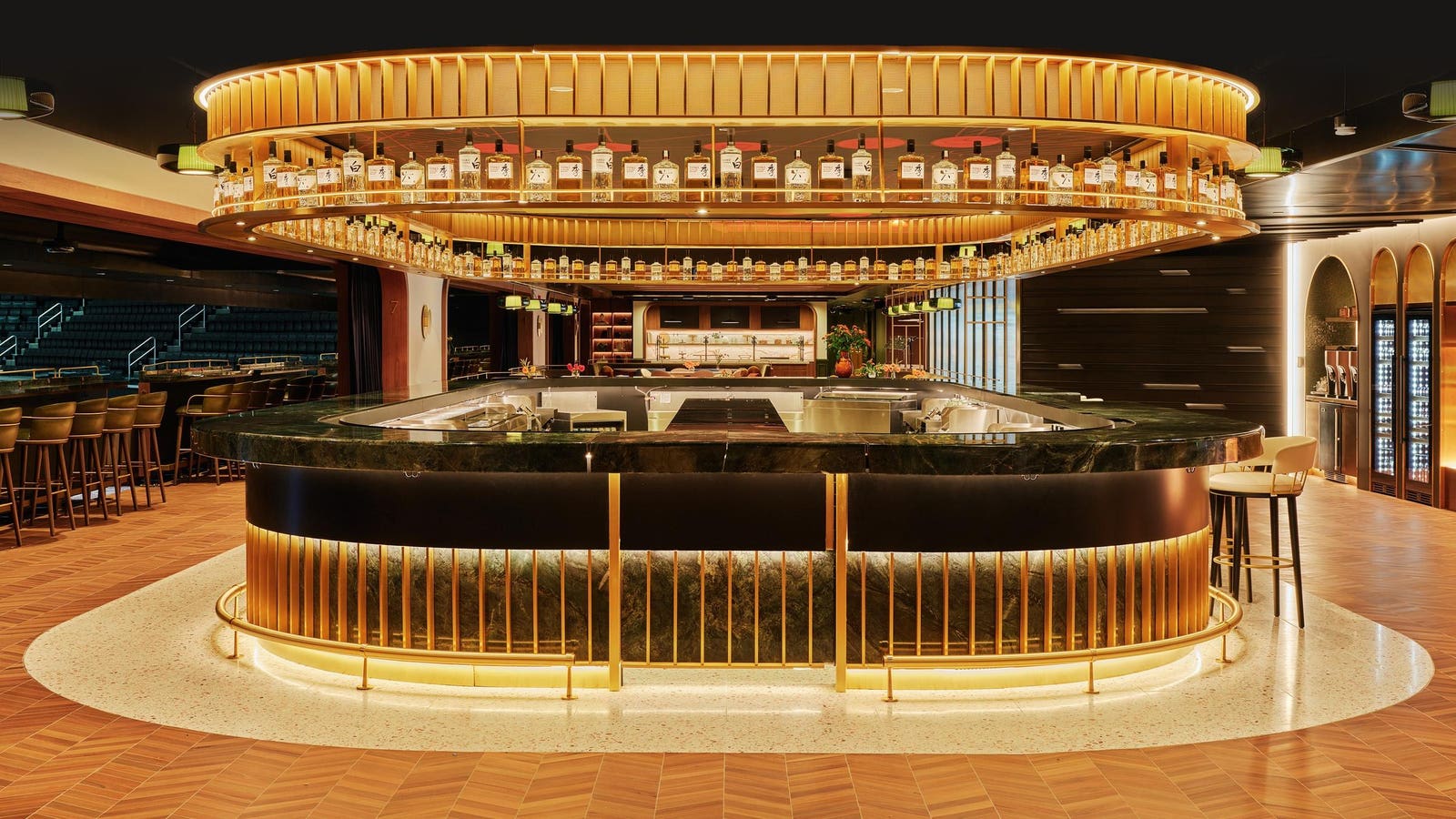
New on the Menu: The Patron Tequila Club is one of the new premium spaces at the Los Angeles Clippers’ $2 billion Intuit Dome, which has far fewer traditional suites than at the team’s old home, Crypto.com Arena.
L.A. Clippers
While the Titans are building an outdoor terrace area for premium customers, the San Francisco 49ers’ Levi’s Stadium is adding pool and shuffleboard tables and bocce courts as part of its new renovation. Venues may also offer opportunities to purchase limited-edition merchandise or have in-suite ice machines—or, in the case of the Vegas Golden Knights’ T-Mobile Arena, an entire ice room, churning out spherical cubes and clear ice for cocktails.
“Ice is a real thing,” Payne says, only somewhat tongue-in-cheek.
In some cases, these new amenities are meant to elevate an already-desirable location, like a seat at the 50-yard line. In others, they’re enough to overcome less-than-ideal sight lines, turning an arena dead zone into a hot spot.
“When I first was able to pay for my own tickets, my seats were very high, and I remember looking down to the courtside tickets—I’m like, I want to get down there,” says Shanon Ferguson, chief hospitality officer at BSE Global, parent of the Brooklyn Nets and Barclays Center. “Now the way we’re approaching this in the arena is we want everybody sitting courtside to look to the upper concourse and be like: ‘What’s going on up there? I want to go up there.’”
Dream Suites
An ultra-luxury experience for a marquee event can cost more than $1 million. Here are some of 2024’s most extravagant offerings.
🏈
Event: Super Bowl LVIII
Sport: NFL
ReportedPrice: $2.5 million
Selected Perks: Private space for 20 people, a full-service bar and high-end food (including wagyu beef hot dogs and lobster-stuffed potatoes), VIP parking passes, access to a VIP stadium entrance and to luxury club spaces
🥊
Event: Jake Paul vs. Mike Tyson fight
Sport: Boxing
ReportedPrice: $2 million
Selected Perks: Ringside seats, pre-fight and post-fight meet-and-greets, a post-fight in-ring photo opportunity, autographed gloves, access to a VIP lounge, a concierge and a security escort, two nights at a luxury hotel
🏎️
Event: Las Vegas Grand Prix
Sport: Formula 1
Reported Price: $1 million
Selected Perks: The Fontainebleau’s 2024 package included travel by private jet, a five-night stay, a table in the DJ booth at the LIV nightclub, a private dinner, food and resort credits, access to a suite for the race, and a limited-edition 2025 Aston Martin Vanquish (base price: $434,000).
Fueling the luxury suite trend is an increasing emphasis on business-to-business marketing and corporate hospitality. “Our experiences team works with over 200 brands per year,” says Flavil Hampsten, president for property sales at Charlotte, North Carolina-based sports consulting firm Elevate, “and we’ve seen clients’ spending increase 20% to 30%, generally being allocated toward bespoke, very unique experiences, oftentimes surrounding a sporting event.”
Teams are just as excited, however, about the opportunities at lower price points, what some are calling “entry-level premium.” Those offerings could be “mini suites,” with capacity for 10 or 12 rather than a more traditional 18 to 25, or even smaller semiprivate groups of seats, an increasingly popular stadium product that goes by many names (“loge boxes” and “opera boxes” among them). The Clippers’ Intuit Dome, for example, has 396 seats across what it is calling Halo Lofts while the Titans’ new stadium will have 576 seats—in configurations of four, six or eight—across 126 studio boxes.
“Think of leather movie theater seats,” says Dan Werly, the Titans’ chief operating officer. “They each have individual TVs in front of them, and they have their own cooler or refrigerator, too. And then each seat will also have access to a club.”
On a per-seat basis, loge boxes are significantly pricier than what a team could get for a regular ticket, often requiring six-figure lease payments. But given that teams typically require that traditional suites be rented on a season-long or multi-season basis—meaning a customer must pay for 20 or so seats across more than 40 games a year in the NBA and the NHL—these smaller spaces can reduce the cost considerably. “It’s opened up this whole new buyer group for teams to monetize,” Elevate executive vice president Dustin Vicari says.
Small Wonder: The Tennessee Titans’ new stadium will have 126 semiprivate “studio boxes,” in configurations of four, six or eight seats.
Manica/Tennessee Titans
The new premium customer could be a small business owner who wants to entertain just a client or two at a sporting event, or it could be a HENRY—“high earner, not rich yet,” to use a common marketing term. Regardless, there is clearly demand, fueled in part by a new emphasis on in-person experiences in the wake of the Covid-19 pandemic. Brian Ruede, CEO of Quint—a Charlotte-based premium hospitality company that was purchased by Liberty Media this year and creates luxury experiences at marquee events in partnership with leagues and teams—says that nearly 85% of the firm’s customers are individuals, not companies. And according to a study by Elevate, 34% of the buyers of one Southeastern Conference football program’s highest-priced premium offerings had household incomes of less than $100,000.
“We recognize that we’ve got fans that want to have popcorn and a beer, and we’ve also got fans that want to have a glass of Barolo and a lobster tail and a tomahawk steak,” says Lorenzo DeCicco, the Flames’ chief operating officer. “So we want to try to capture everything in between.”
The exact approach will differ by sport—based largely on the wildly different numbers of regular-season home games on, say, the NFL (eight or nine) and MLB (81) schedules—and by market. (Is the local fan base affluent? What are the potential corporate partners in the area? Should you bother building outdoor spaces if you play a winter sport in a northern city?) The financial impact will vary accordingly.
But for any team in the four big U.S. pro leagues, premium seating means major money—on average, an estimated $54 million in the NFL, $45 million in the NBA, $41 million in MLB and $35 million in the NHL during the most recent season of Forbes data. (Those figures represent increases of between 14% and 36%, depending on the league, since the last pre-pandemic season.)
For 15 teams across the four leagues, revenue from premium seating actually exceeded general ticket sales in that same season. Two teams—the Golden State Warriors, whose Chase Center opened in 2019, and the Los Angeles Kings, who play at Crypto.com Arena—made more from premium seating than from any other revenue stream, including media rights, according to Forbes estimates. And the luxury spaces can produce additional income by giving sponsors another spot where they can plaster their name.
“You can have large impact with large dollars in a limited number of seats by doing high-dollar functions,” Quint’s Ruede says, “but if you can figure out how to apply this down to all levels of seating, then you really have scale.”
Even older arenas are trying to capitalize on the trend, with teams recognizing that stadiums in the current environment can go only 10 or 15 years before needing a facelift. The Nets’ Barclays Center, which originally opened in 2012, is undergoing a five-year, $100 million renovation and, as part of the first phase, unveiled two new club spaces last month—JetBlue at The Key and the Toki Row—while dropping from 87 suites to just under 60. Membership starts at $12,500 and $33,000, respectively, covering a season of Nets and New York Liberty games as well as concerts and other events.
Meanwhile, the design of the Titans’ new premium spaces was inspired in part by—of all places—110-year-old Wrigley Field, which completed a five-year restoration project in 2019.
The ballpark hadn’t touched its suites since adding them for MLB’s 1990 All-Star Game, and its only other premium space was a roughly 70-person club, which had been converted later from a handful of the suites. Some stadiums can create new premium offerings by repurposing underutilized spaces—a green room or a storage room in the bowels of the building—but that wasn’t possible at Wrigley.
Dig It: To create the American Airlines 1914 Club at Wrigley Field, the Chicago Cubs had to unearth new space under the ballpark.
Chicago Cubs
“We excavated underneath the seating bowl, removed truckloads and truckloads of dirt,” Marquee 360 senior vice president Cale Vennum, who oversees the Chicago Cubs’ ticketing, says of three new club spaces that resulted from the renovation. (A fourth replaced two concession stands.) Wrigley’s suites, which hang from the ballpark’s upper level, gained some additional length and were revamped and enclosed, eliminating the need to travel between them on an outdoor workman’s catwalk “like you were going to change light bulbs or something,” Vennum says.
Demand remains high for the suites, which start at around $2,800 for eight people for a single game in 2025, and for the club spaces, which require commitments of at least a half-season and range from $275 to $1,000 per ticket per game. But even just five years after the end of the renovation, the Cubs know they can’t rest on their laurels.
“I think an area of opportunity that we are working on for next year—and we’ve got a concept that’s not quite ready for full reveal yet, but it’s getting close—is that four-to-eight-person elevated single-game experience,” Vennum says. “We don’t quite have that at Wrigley Field, but we think we’re going to have an offer that meets that hopefully next season.”
“The data reveals DINKs aren’t just spending more—they’re spending differently, with an emphasis on experiences that enhance their partnerships and personal growth,” Libby Rodney, chief strategy officer at the Harris Poll, said in a statement alongside the new survey. “It’s a segment that’s redefined discretionary spending as an investment in life experience.”
What’s a DINK? And why do they have so much money?
The term “DINK” has been around for a while, first exploding in the yuppie days of yore (the 1980s). But recently it has resurfaced, going viral on TikTok in late 2023 as millennial and Gen Z couples share that they’re putting off or entirely avoiding having kids, with the costs of child-rearing cited as a major factor.
The Harris Poll survey found that 61% of DINKs have a household income of over $100,000. The median net worth of a couple with no children was around $399,000 in 2022, over $100,000 more than it was in 2019 and around $150,000 more than that of couples with children.
While couples with children actually tend to make more money, they end up with a lower net worth because they’re faced with more debt than their childless counterparts, research shows.
Will DINKs ever have children? It depends on the couple
According to the survey, 65% of Gen Z and millennial DINKs plan to have children eventually, with 37% aiming to do so within the next five years. In the meantime, they’re spending on luxury and premium experiences in dining, travel, and personal development products.
“The rise of DINKs isn’t a rejection of parenthood—it’s a generation’s response to economic trauma, turning financial security into the ultimate luxury,” Rodney said.
There’s even an acronym for these DINKs who plan to become parents: DINKY, or dual income, no kids yet. If you’re single, you’d be a SINK (single income, no kids) or a SINKY (single income, no kids yet.)
It’s unclear how many people are really using all these other acronyms. But the DINK hashtag on TikTok boasts tens of thousands of posts, with videos racking up tens of millions of views.
What are DINKs spending their money on? Luxury, travel, and personal growth
DINKs, whom the report calls the 5% that’s the new one percent, are reshaping consumer trends with their financial flexibility and high discretionary spending. On average, they spend four times more on dining each month than other Americans ($816 vs. $215) and allocate nearly double the typical budget for vacations, investing around $2,000 per trip.
Their child-free lifestyle fuels frequent travel and personal growth, with 88% directing their income toward enriching experiences and self-development, while 76% credit their child-free status for enabling these pursuits. This spending power positions DINKs as a key audience for luxury brands, financial services, and quality-of-life upgrades.
For the record, many DINKs have expanded to call themselves DINKWADs: “dual-income, no kids with a dog.” That sparked an entire viral trend of videos posted from dogs’ perspectives as the “spoiled” only child.
Spoiling beloved pets isn’t the only perk DINKs say comes with their lifestyle. DINK couples Fortune spoke to previously said their choice was prompted by a range of reasons: pursuing passions, financial freedom, or a focus on their careers.
Why some people oppose the DINK lifestyle, including Elon Musk
Still, the DINK lifestyle isn’t without its critics.
Elon Musk, the CEO and founder of Tesla and SpaceX, recently warned society “will crumble” if younger generations don’t start having more kids. The billionaire, who is father to 12 children by three different women, also said last month that people “worry too much” and should “just have kids.”
“I think people worry too much about having kids, and it’s sometimes difficult to make ends meet and whatnot,” said Musk during a pro-Trump rally in October. “But honestly, there’s really no time like the present. Just have kids. You won’t be sorry. It’ll work out.”
Whether society will “crumble” remains to be seen, but reports do show a lower birth rate could impact overall GDP. The resulting drop in GDP from this aging population could be as much as 4%, James Pomeroy, HSBC’s global economist, previously told Business Insider.
Read more of Fortune’s coverage on DINK trends:
How many degrees of separation are you from the globe’s most powerful business leaders? Explore who made our brand-new list of the 100 Most Powerful People in Business. Plus, learn about the metrics we used to make it.
“The data reveals DINKs aren’t just spending more – they’re spending differently, with an emphasis on experiences that enhance their partnerships and personal growth,” Libby Rodney, Chief Strategy Officer at The Harris Poll said in a statement alongside the new survey. “It’s a segment that’s redefined discretionary spending as an investment in life experience.”
What’s a DINK? And why do they have so much money?
The term DINK, sometimes also referred to as double income, no kids, has been around for a while, first exploding in the yuppy days of yore (the 80s). But the term has resurfaced, going viral on TikTok in late 2023 as Millennial and Gen Z couples share that they’re putting off or entirely avoiding having kids, with the costs of child-rearing cited as a major factor.
The Harris Poll survey found that 61% of DINKs have a household income of over $100,000. The median net worth of a couple with no children was around $399,000 in 2022, over $100,000 more than it was in 2019 and around $150,000 more than couples with children.
While couples with children actually tend to make more money, they end up with a lower net worth because they’re faced with more debt than their childless counterparts, research shows.
Will DINKs ever have children? It depends on the couple
According to the survey, 65% of Gen Z and Millennial DINKs plan to have children eventually, with 37% aiming to within the next five years. In the meantime, they’re spending on luxury and premium experiences in dining, travel, and personal development products.
“The rise of DINKs isn’t a rejection of parenthood – it’s a generation’s response to economic trauma, turning financial security into the ultimate luxury,” Rodney said.
There’s even an acronym for these DINKs who plan to become parents: DINKY, or dual income, no kids yet. If you’re single, you’d be a SINK (single income, no kids) or a SINKY (single income, no kids yet.)
It’s unclear how many people are really using all these other acronyms. But the DINK hashtag on TikTok boasts tens of thousands of posts, with videos racking up tens of millions of views.
What are DINKs spending their money on? Luxury, travel, and personal growth
DINKs, whom the report calls the 5% that’s the new 1%, are reshaping consumer trends with their financial flexibility and high discretionary spending. On average, they spend four times more on dining each month than other Americans ($816 vs. $215) and allocate nearly double the typical budget for vacations, investing around $2,000 per trip.
Their child-free lifestyle fuels frequent travel and personal growth, with 88% directing their income toward enriching experiences and self-development, while 76% credit their child-free status for enabling these pursuits. This spending power positions DINKs as a key audience for luxury brands, financial services, and quality-of-life upgrades.
For the record, many DINKs have expanded to call themselves DINKWADs, “dual income, no kids with a dog.” That sparked an entire viral trend of videos posted from dogs’ perspectives as the “spoiled” only child.
Spoiling beloved pets isn’t the only perk DINKs say comes with their lifestyle. DINK couples who Fortune spoke to previously said their choice was prompted by a range of reasons: pursuing passions, financial freedom, or a focus on their careers.
Why some people oppose the DINK lifestyle, including Elon Musk
Still, the DINK lifestyle isn’t without its critics.
Elon Musk, the CEO and founder of Tesla and SpaceX, recently warned society “will crumble” if younger generations don’t start having more kids. The billionaire, who is father to 12 children by three different women, also said last month that people “worry too much” and should “just have kids.”
“I think people worry too much about having kids, and it’s sometimes difficult to make ends meet and whatnot,” said Musk during a pro-Trump rally in October. “But honestly, there’s really no time like the present. Just have kids. You won’t be sorry. It’ll work out.”
Whether society will “crumble” remains to be seen, but reports do show a lower birth rate could impact overall GDP. The resulting drop in GDP from this aging population could be as much as 4%, James Pomeroy, HSBC’s global economist, previously told Business Insider.
Read more of Fortune’s coverage on DINK trends:
How many degrees of separation are you from the globe’s most powerful business leaders? Explore who made our brand-new list of the 100 Most Powerful People in Business. Plus, learn about the metrics we used to make it.
Most golfers reside in Florida but Bryson DeChambeau. The 2-time US Open winner was born in California but has become a part of Texas and is known for being more of a Texan than a Californian. Over the years, DeChambeau has enjoyed much popularity and the millions he earned through victories on the PGA Tour, LIV Golf and when he signed the deal with LIV.
Having such wealth at his disposal, the 30-year-old couldn’t resist the temptation to buy the most luxurious, opulent home, and that’s exactly what he did in 2018. Six years ago, DeChambeau purchased a 5,339-square-foot mansion in the Melshire Estates neighborhood of Dallas’ Preston Hollow area at 5649 Brookstown Drive, which had five bedrooms, a golf simulator for the pro, and six bathrooms as shown in his YouTube video from two years ago.
After residing in the Dallas mansion for six years and enjoying his various victories there, DeChambeau listed the house for $3 million, according to Dallas Morning News. After a few months, the Dallas Mansion was sold for $2.8 million in August 2024. DeChambeau sold the house via his friend and fellow pro golfer, Austin Smotherman’s wife, Jessica Smotherman as the two shared many moments in that house and helped the LIV Golf pro to sell it quickly.
ADVERTISEMENT
Article continues below this ad
USA Today via Reuters
May 18, 2024; Louisville, Kentucky, USA; Bryson DeChambeau reacts after a putt on the first green during the third round of the PGA Championship golf tournament at Valhalla Golf Club. Mandatory Credit: Adam Cairns-USA TODAY Sports
After the move from Dallas, the 30-year-old pro now moved to Florida. Where did Bryson DeChambeau go after packing his bags from Brookstown Drive?
ADVERTISEMENT
Article continues below this ad
Bryson DeChambeau’s new house is on the opposite side of Dallas
After being a Dallas resident for quite a while, Bryson DeChambeau decided he needed a change. So, he packed his bag and chose Grapevine as his home for the time being. Like his previous Dallas mansion, the 2-time US Open winner has not revealed much about his new house. But when he won the US Open for the second time, it was announced, “The Jack Nicklaus Gold Medal for the winner of the 124th U.S. Open goes to Bryson DeChambeau, of Grapevine, Texas.”
It gave the hint about where DeChambeau moved to and it is said that his house is near the Dallas Fort Worth Airport in Tarrant County. The property is said to sit on a 2.5-acre land, with floor-to-ceiling glass walls. At his last house, DeChambeau had simulator golf to enjoy, but here he has a 60-yard golf hole.
ADVERTISEMENT
Article continues below this ad
Moreover, he has been using it pretty much every day for the last week as he has challenged himself to make a hole-in-one from his driveway to the putting green if the ball flight well over the house and dunks in the hole. The price point of his Grapevine home isn’t disclosed yet, but by the looks of it, it surely cost him millions.
Most golfers reside in Florida but Bryson DeChambeau. The 2-time US Open winner was born in California but has become a part of Texas and is known for being more of a Texan than a Californian. Over the years, DeChambeau has enjoyed much popularity and the millions he earned through victories on the PGA Tour, LIV Golf and when he signed the deal with LIV.
Having such wealth at his disposal, the 30-year-old couldn’t resist the temptation to buy the most luxurious, opulent home, and that’s exactly what he did in 2018. Six years ago, DeChambeau purchased a 5,339-square-foot mansion in the Melshire Estates neighborhood of Dallas’ Preston Hollow area at 5649 Brookstown Drive, which had five bedrooms, a golf simulator for the pro, and six bathrooms as shown in his YouTube video from two years ago.
After residing in the Dallas mansion for six years and enjoying his various victories there, DeChambeau listed the house for $3 million, according to Dallas Morning News. After a few months, the Dallas Mansion was sold for $2.8 million in August 2024. DeChambeau sold the house via his friend and fellow pro golfer, Austin Smotherman’s wife, Jessica Smotherman as the two shared many moments in that house and helped the LIV Golf pro to sell it quickly.
ADVERTISEMENT
Article continues below this ad
USA Today via Reuters
May 18, 2024; Louisville, Kentucky, USA; Bryson DeChambeau reacts after a putt on the first green during the third round of the PGA Championship golf tournament at Valhalla Golf Club. Mandatory Credit: Adam Cairns-USA TODAY Sports
After the move from Dallas, the 30-year-old pro now moved to Florida. Where did Bryson DeChambeau go after packing his bags from Brookstown Drive?
ADVERTISEMENT
Article continues below this ad
Bryson DeChambeau’s new house is on the opposite side of Dallas
After being a Dallas resident for quite a while, Bryson DeChambeau decided he needed a change. So, he packed his bag and chose Grapevine as his home for the time being. Like his previous Dallas mansion, the 2-time US Open winner has not revealed much about his new house. But when he won the US Open for the second time, it was announced, “The Jack Nicklaus Gold Medal for the winner of the 124th U.S. Open goes to Bryson DeChambeau, of Grapevine, Texas.”
It gave the hint about where DeChambeau moved to and it is said that his house is near the Dallas Fort Worth Airport in Tarrant County. The property is said to sit on a 2.5-acre land, with floor-to-ceiling glass walls. At his last house, DeChambeau had simulator golf to enjoy, but here he has a 60-yard golf hole.
ADVERTISEMENT
Article continues below this ad
Moreover, he has been using it pretty much every day for the last week as he has challenged himself to make a hole-in-one from his driveway to the putting green if the ball flight well over the house and dunks in the hole. The price point of his Grapevine home isn’t disclosed yet, but by the looks of it, it surely cost him millions.
Visitors to Resorts World Sentosa (RWS) can look forward to even more recreational activities with its new waterfront lifestyle development, which broke ground on Friday (Nov 15).
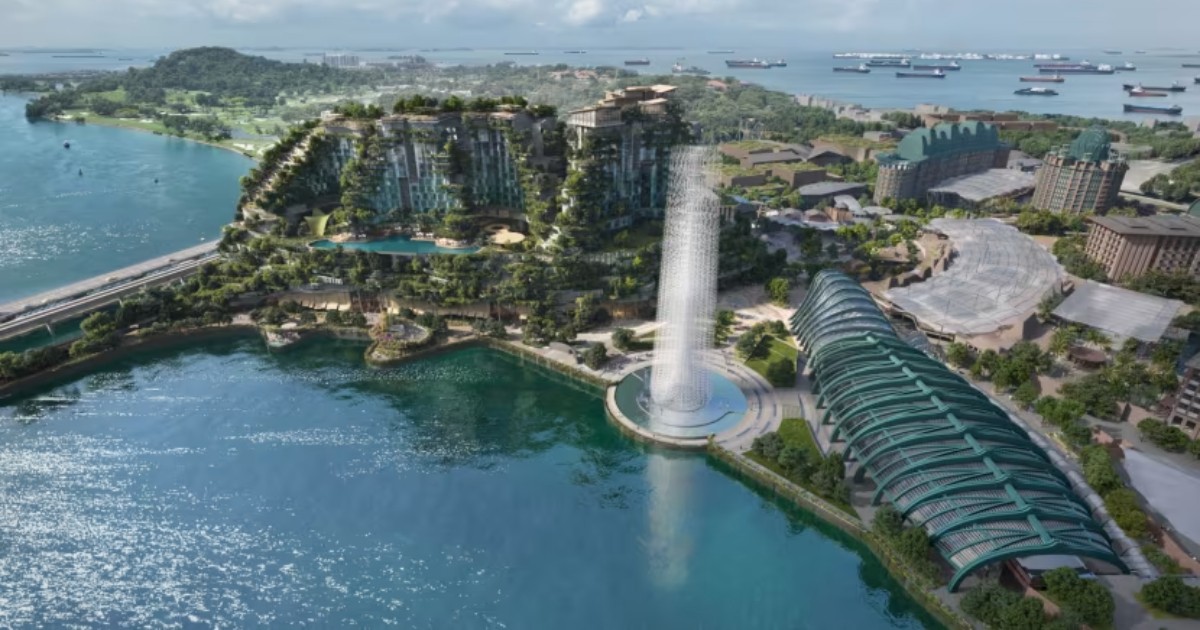
Slated to open by 2030 along the RWS waterfront, the lifestyle hub will feature a promenade, two luxury hotels, a “mountain trail”, a light sculpture as well as a four-storey retail and dining podium with entertainment offerings.
The project will be located near S.E.A. Aquarium and Universal Studios Singapore (USS), and will be designed by architectural firm Benoy, whose portfolio includes Ion Orchard, Terminal 4 Changi Airport and Jewel Changi Airport.
The two new hotels, featuring 700 rooms, would mean more accommodation options at the resort.
There are currently five hotels at RWS — Crockfords Tower, Equarius Hotel, Equarius Villas, Hotel Micheal and Hotel Ora — and a new one that’s slated to launch next year.
Perhaps one of the most intriguing aspects of the new development is the 88m-high “experiential mountain trail”.
At the peak, visitors will enjoy breathtaking views of the Central Business District from the south, as well as the Greater Southern Waterfront and Sentosa.
There will also be a sunset trail that guides visitors back down to the waterfront promenade of the development, which connects to Sentosa Boardwalk. This makes it convenient for visitors to walk to and from Harbourfront MRT and VivoCity.
At the heart of the complex is an 88m-tall sculpture that will dazzle with light shows at night. The structure is designed by Heatherwick Studio, which also worked on The Hive at Nanyang Technological University.
During the groundbreaking ceremony, RWS’ chief executive officer Tan Hee Teck said the development underscores the company’s commitment to bolstering Singapore’s identity as a global lifestyle destination.
Minister of State for Trade and Industry Alvin Tan, who was the guest-of-honour, noted that the new development is a key feature to RWS’ expansion and an “exciting new addition to Singapore’s tourism landscape”.
Sustainable design principles
The new waterfront development is big on sustainability, with the aim of achieving the Building and Construction Authority’s Green Mark Platinum certification.
RWS plans on using low-carbon concrete for its structure, installing solar panels and collecting rainwater for irrigation.
Those who drive Teslas, BYDs and other electric vehicles will be glad to know that there will be fast-charging electric vehicle stations.
All hotel rooms will also be embedded with smart features to maximise energy efficiency.
Other attractions at RWS
While 2030 is still a long way to go, there are some upcoming offerings at RWS to also look forward to.
The 40,000 sq ft venue will have a series of immersive and interactive exhibitions inspired by places in the series’ magical community.
Fans of the movie Despicable Me and the Minions will also be excited to know that Illumination’s Minion Land at USS will be ready by next year.
The zone, which will be divided up into three areas — Gru’s Neighbourhood, Minion Marketplace and Super Silly Fun Land — will have themed rides and food options.
(MENAFN– GetNews) “Our expansion into Scottsdale marks an exciting milestone for Griffin Concierge. Scottsdale’s luxury homeowners deserve a service that not only meets but exceeds their expectations in managing their properties. Our team is committed to delivering a level of care and detail that enhances the quality of life for our clients while giving them the freedom to focus on what truly matters.” James Anderson, Owner of Griffin Concierge Concierge expands its luxury home management services to Scottsdale, Arizona, bringing exclusive lifestyle solutions to discerning homeowners. Led by owner James Anderson, Griffin Concierge offers personalized, proactive property care, ensuring Scottsdale’s high-end homeowners receive unmatched service and attention to detail.
Griffin Concierge , a premier luxury lifestyle and home solutions company, is proud to announce its expansion into Scottsdale , Arizona . Griffin Concierge brings an unmatched level of personalized, proactive management services designed for luxury residence homeowners seeking to enhance their lifestyle and free themselves from day-to-day responsibilities. With a well-established presence in Denver, Colorado, Griffin Concierge now offers its bespoke services to discerning homeowners in Scottsdale, ensuring that every detail of home care is managed with meticulous attention, privacy, and elegance.
Griffin Concierge sets a Forbes-style standard in luxury home oversight, delivering seamless, proactive services that anticipate client needs and enrich their lives. “Our expansion into Scottsdale marks an exciting milestone for Griffin Concierge,” said James Anderson , Owner of Griffin Concierge. “Scottsdale’s luxury homeowners deserve a service that not only meets but exceeds their expectations in managing their properties. Our team is committed to delivering a level of care and detail that enhances the quality of life for our clients while giving them the freedom to focus on what truly matters,” added James Anderson.
A New Standard in Luxury Lifestyle and Home Solutions, Griffin Concierge’s dedicated team offers comprehensive management for every aspect of luxury homes, from meticulous maintenance and security to bespoke lifestyle services, including event coordination and personalized care. Understanding that each homeowner’s lifestyle is unique, Griffin Concierge tailors its services to match the highest standards of elegance, efficiency, and discretion. Whether homeowners reside full-time or part-time in Scottsdale, Griffin Concierge provides unparalleled attention, ensuring that every detail is handled, leaving homeowners with the peace of mind that their properties and lifestyles are expertly managed.
About Griffin Concierge
Griffin Concierge is a full-service luxury lifestyle and home solutions management company serving prestigious clients in Scottsdale, Arizona, and Denver, Colorado . With a team of dedicated professionals, Griffin Concierge provides personalized, proactive services that anticipate client needs, ensuring that homes are managed with the highest level of care and attention. At Griffin Concierge, the goal is to provide an experience that enhances comfort, preserves privacy, and allows clients to focus on living their best lives.
For more information visit us at:
FaceBook/Meta
LinkedIn
Google Maps
MENAFN13112024003238003268ID1108883913
Legal Disclaimer: MENAFN provides the information “as is” without warranty of any kind. We do not accept any responsibility or liability for the accuracy, content, images, videos, licenses, completeness, legality, or reliability of the information contained in this article. If you have any complaints or copyright issues related to this article, kindly contact the provider above.