hacklink hack forum hacklink film izle hacklink marsbahisizmir escortsahabetpornJojobetcasibompadişahbet

Tag: Medalists

  • IOC Rejects Idea of International Federations Paying Prize Money To Olympic Gold Medalists

    IOC Rejects Idea of International Federations Paying Prize Money To Olympic Gold Medalists

    The International Olympic Committee (IOC) firmly let its stance be known regarding international federations paying Olympic prize money during the first of three days of its Executive Board meeting on Tuesday.

    For the 2024 Paris Olympics, World Athletics became the first global federation to award each of its gold medalists with prize money, offering $50,000 to each event winner.

    Normally, National Olympic Committees (NOCs) and national federations award prize money to their athletes.

    The IOC Board made it clear their disapproval of the move, and the idea of it being something that’s carried forward, during the meeting.

    Another layer to this is the fact that World Athletics is led by President Sebastian Coe, who is one of seven candidates to succeed Thomas Bach as IOC President early next year.

    IOC spokesperson Mark Adams summed up the discussion during a post-meeting news conference:

    “There was a large amount of agreement on the topic, I might even say unanimity, and it was a question, it was said, of principle, efficiency and distribution within the Olympic Movement,” Adams said.

    “As was said by the Executive Board in June, athletes are in teams of their National Olympic Committees and the NOCs prepare them, ands they should reward them – and, also a reminder, by the way, – this has been done for many decades. Many NOCs do this; the President [Thomas Bach], in fact, gave his own example. He received prize money when he won his gold medal in 1976, so it’s not new.”

    Adams went on to say that given the differences between countries and how they compensate their athletes for Olympic success, each National Olympic Committee knows “the best way to reward the athletes from their teams, in the national context.”

    He added that the biggest reason why the IOC is against international federations awarding prize money is the idea of “fairness,” detailing how, if everyone used the 2024 World Athletics model, it would “downgrade the Games to an elitist event.”

    “But perhaps, I think it was agreed by everyone, the best argument, the biggest argument is one of fairness. And here we have some quite good figures: the Olympic Games Paris overall, as you probably know, 91 NOCs won medals. If all the medalists – athletes and teams of all the sports – were rewarded, it would be about 1,000 athletes and teams who would benefit,” Adams said.

    “They mostly come from what you might call the well-funded, the privileged National Olympic Committees: 65% of the individual medalists and teams winning medals are from 15 NOCs who were on top of the medal tally.

    “And if you count the individual athletes who win medals in the team events as well, the percentage of athletes benefitting from such a prize money model would come from 15 privileged NOCs.

    “This means that the prize money for them would only increase the existing inequalities even further. And, of course, I need hardly say it was felt by the Executive Board that this goes against the mission of the International Olympic Committee, and it could very easily downgrade the Olympic Games to an elitist event with competition among only less than 10% of the 206 NOCs.”

    As noted by The Sports Examiner‘s Rich Perelman, the World Athletics model wouldn’t work for too many federations, as only a select few would be able to afford to pay Olympic prize money, with the International Gymnastics Federation (FIG) among those who don’t even pay prize money for their own World Championships.

    This is among the issues Coe will have to tackle in late January when he makes his case for IOC President before the election in March.


    Source link

  • Olympic Silver medalists top 2024 Barfoot & Thompson Yachting NZ Excellence Awards

    Olympic Silver medalists top 2024 Barfoot & Thompson Yachting NZ Excellence Awards

    Olympic Silver medalists top 2024 Barfoot & Thompson Yachting NZ Excellence Awards

    by Yachting New Zealand 22 Nov 02:40 PST


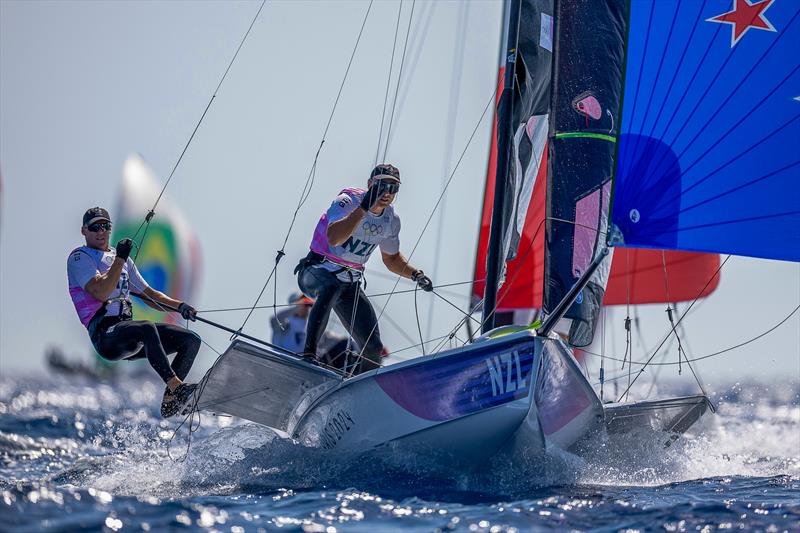
    Isaac McHardie and Will McKenzie (NZL) – Silver Medalists – Mens Skiff – Paris2024 Olympic Sailing Event – Marseille – August 2, 2024 © World Sailing / Sander van der Borch


    Isaac McHardie and William McKenzie won the top honour at the 2024 Barfoot & Thompson Yachting Excellence Awards on Friday, claiming the prestigious Orbit World Travel Sailor of the Year title as Olympic sailors dominated the major awards at the glitzy event held at the Royal New Zealand Yacht Squadron.


    The 49er team of McHardie and McKenzie were awarded the Sir Bernard Ferguson Trophy in front of over 220 attendees, recognising their stellar season, culminating in a silver medal at the Paris 2024 Olympic Games in August.


    Their achievement marked New Zealand’s fourth medal in the men’s skiff class across as many Games, following Peter Burling and Blair Tuke’s podium finishes in London, Rio de Janeiro, and Tokyo.


    Nacra 17 teammates Micah Wilkinson and Erica Dawson won the Barfoot & Thompson Male and Female Sailor of the Year awards after securing bronze in the mixed multihull event in Marseille during a dramatic medal race.


    McHardie, McKenzie, Wilkinson, and Dawson also received Performance Awards, alongside fellow Olympians Jo Aleh and Molly Meech (49erFX), Josh Armit and Veerle ten Have (windfoiling), and Tom Saunders (ILCA 7).


    “These awards are a wonderful reward and an excellent example of Isaac, William, Micah, and Erica’s commitment, dedication, and attention to detail,” said Yachting New Zealand chief executive David Abercrombie.


    “It’s encouraging to see the depth of talent emerging during the last Olympic cycle, which sets us up well for Los Angeles in 2028 and Brisbane in 2032.”


    Matt Steven, coach of the “McKiwis” – as McHardie and McKenzie are known – received the B&G Performance Coach of the Year award, while Wade Tresadern was recognised as Yachting New Zealand Emerging Coach of the Year.


    Numerous other awards celebrated achievements from club level to the international stage. Greta Pilkington, who debuted at the Games in Marseille, was named NZL Sailing Foundation Young Female Sailor of the Year, while 420 crew Joe Leith and Josh Ferrissey claimed the Young Male Sailor of the Year title. Leith and Ferrissey won bronze at the class world championships in Brazil in January, weeks after finishing fifth at the youth sailing world championships.


    Jamie Sutherland received the Millennium Hotels and Resorts Official of the Year Award, while Matteo Barker and Chloe Turner each received an Aon Emerging Talent award.


    Other honours included Don Salthouse (Cruising Award), Gary Smith (Outstanding Contribution Award), Sheryl Lanigan (Sustainability Award), Flying Fifteen New Zealand (Sportsmanship Award), and James Swinney (Young Leadership Award).


    Abercrombie praised the volunteers and committee members essential to the sport’s success. “The Barfoot & Thompson Yachting Excellence Awards are about more than just high-performance sailing – they’re an opportunity to acknowledge the selfless work, dedication, and resilience of our club members and volunteers,” he said. “They remain the heart of what makes sailing such a valued sport in New Zealand, and I can’t thank them enough for their contributions.”


    The evening also included a special tribute to Emirates Team New Zealand’s historic three-peat at the 37th America’s Cup in Barcelona, despite the defence of the Auld Mug falling outside the eligibility period for the 2024 awards.


    Ngati Whatua Orakei were honoured with an Outstanding Contribution Award by Yachting New Zealand chair Greg Knowles for their role in supporting Emirates Team New Zealand’s record-breaking campaign.


    2024 Barfoot & Thompson Yachting Excellence Awards

    • Orbit World Travel Sailor of the Year: Isaac McHardie and William McKenzie
    • Barfoot & Thompson Female Sailor of the Year: Erica Dawson
    • Barfoot & Thompson Male Sailor of the Year: Micah Wilkinson
    • NZL Sailing Foundation Young Female Sailor of the Year: Greta Pilkington
    • NZL Sailing Foundation Young Male Sailor of the Year: Joe Leith and Josh Ferrissey
    • Aon Emerging Talent Award: Matteo Barker, Chloe Turner
    • Millennium Hotels and Resorts Official of the Year: Jamie Sutherland
    • B&G Performance Coach of the Year: Matt Steven
    • Yachting New Zealand Emerging Coach of the Year: Wade Tresadern
    • Lawson’s Dry Hills Outstanding Contribution Award: Gary Smith
    • Evocean Sustainability Award: Sheryl Lanigan
    • North Sails Sportsmanship Award: Flying Fifteen New Zealand
    • MAST Academy NZ Young Leadership Award: James Swinney


    Service Awards supported by Yamaha Motor New Zealand

    • Hayden Bell (Macandrew Bay Boating Club)
    • Warren Collingwood and Murray McDonald (Waimakariri Sailing Club)
    • Delwyn Erceg (Royal New Zealand Yacht Squadron)
    • Peter Ganley (Thames Sailing Club)
    • Ross Hebner (Bucklands Beach Yacht Club)
    • Mike Leyland (Young 88 Owners Association)
    • Mervyn Read (Vauxhall Yacht Club)
    • Alison Rutherford (Pleasant Point Yacht Club)
    • Joyce Talbot (Auckland Anniversary Regatta)
    • Gill Waite (Gulf Harbour Yacht Club)
    • Gordon Wallis (Ngaroto Sailing Club)


    Cruising Award supported by Kiwi Yachting and Baltic

    • Don Salthouse (Opua Cruising Club)


    Performance Awards supported by Radix Nutrition
    Jo Aleh and Molly Meech (Torbay Sailing Club)

    • Josh Armit (Wakatere Boating Club)
    • Francesco Kayrouz (Torbay Sailing Club) and Hamish McLaren (Royal Akarana Yacht Club)
    • Eli Liefting (Royal Akarana Yacht Club)
    • Isaac McHardie and Will McKenzie (Torbay Sailing Club)
    • Tom Saunders (Tauranga Yacht and Powerboat Club)
    • Sam Street (New Plymouth Yacht Club)
    • Veerle ten Have (Royal New Zealand Yacht Squadron)
    • Megan Thomson (Royal New Zealand Yacht Squadron)
    • Micah Wilkinson (Ngaroto Sailing Club) and Erica Dawson (Murrays Bay Sailing Club)


    Youth Performance Awards supported by Andoo

    • Caleb Armit (Murrays Bay Sailing Club)
    • Ewan Brazle (Manly Sailing Club)
    • Will Leech (Charteris Bay Yacht Club) and Sean Kensington (Kohimarama Yacht Club)
    • Joe Leith and Josh Ferrissey (Murrays Bay Sailing Club)
    • Seb Menzies (Murrays Bay Sailing Club) and George Lee Rush (Wakatere Boating Club)
    • Greta Pilkington (Royal New Zealand Yacht Squadron)
    • Helena Sanderson (Wakatere Boating Club)
    • Zach Stibbe (Otago Yacht Club)
    • Zofia Wells (Glendowie Boating Club)
    • Westlake Girls High School Sailing Team


    Source link

  • Outshining USA, One of Japan’s Gold Medalists Reveals Secret to Wrestling Olympics Success

    Outshining USA, One of Japan’s Gold Medalists Reveals Secret to Wrestling Olympics Success

    After the Paris Olympics, there is no space for doubt about Japanese wrestlers. They came, they saw, and boy, oh boy, did they conquer! When the 2024 Olympics ended, Japan’s wrestling medal tally stood at 11, of which eight were gold. The world saw some of the greatest matches in both Greco-Roman and freestyle events go down this year. For starters, there was Daichi Takatani, who went on to take down Kyle Dake in the 74 kg freestyle finals.

    Then there is also Rei Higuchi, who took down an American legend. Rei went up against Spencer Lee, and to the world’s surprise, Lee lost. Rei went on to win 4-2. While the men’s wrestling was huge, the women were just as formidable. Akari Fujinami went on to continue her 130-0 streak and win the 53 kg freestyle gold. All of it left a very simple message to the world. Japan is here to stay and to stay right on top! But what is the secret to their medal sweep?

    Nao Kusaka tells his story, giving a glimpse into Japanese training!

    ADVERTISEMENT

    Article continues below this ad

    One of the Japanese wrestlers who won answers this for the world. Nao Kusaka was the man who took the Olympic gold in the 77 kg event. But his winning moment was perhaps one of the most iconic ones. He stood at Champ-de-Mars Arena, flag in hand, and dropped to his knees. It was an emotional moment, but at the moment of victory, they wondered about the secrets of Japanese training!

    Well, wonder no more! Nao Kusaka’s story and how it began give us a glimpse into the Japanese world of wrestling. Kusaka’s journey, however, began when he was just three years old. As a child, he was a “crybaby” who clung to his mother’s side. But amidst the loud cries, one man saw potential in him. It was Takeshi Takeshita, who later went on to become his coach. Takeshi has a very interesting equation for the results that Japan gets.

    Takeshi has a mix of wrestling and sumo in his training. As Takeshi himself puts it,30% wrestling and 70% sumo.” So why sumo? Well, the sumo sessions are intended to build Kusaka’s lower body strength and aggression in wrestlers. But that’s not all it does! When Nao Kusaka had an awful period during high school, he did not give up. An attitude his training had given him. Instead, he doubled down.

    From that loss on, Nao Kusaka doubled down on his squats, strengthening his legs and perfecting his balance. Today, whenever he feels out of sync, he returns to sumo stomping, a simple but powerful move that grounds him. As his coach puts it, “While most kids would compromise and give up, he never does. He’s a genius that can also put in the hard work.” Now, that’s the kind of training and attitude that gives you a clean sweep at the Olympics. While it was great for Japan, America saw some of its biggest names in wrestling fall.

    The fall of American legends like Spencer Lee and Mitchell Mesenbrink!

    For America, the wrestling mat turned into a battlefield that they couldn’t conquer. Let’s take Spencer Lee, for example! Lee is a Penn State legend with three NCAA titles and U20 championship wins, but even he fell short at the Olympics. He made it all the way to the finals, where he was set to go head-to-head against Japan’s Rei Higuchi. The match ended with Lee’s fall. While the Olympics have been big for Japan, the U23 World Championships were equally great!

    ADVERTISEMENT

    Article continues below this ad

    The U23 World Championships unfortunately saw the fall of another American wrestler. America’s beloved and Nittany Lion’s favorite, Mitchell Mesenbrink, had a fate quite like Lee’s. Mitchell, during the championships, had to face Japan’s Kota Takahashi. The match ended with Mitchell’s loss. It is evident that Japan has managed to adopt a style that is quick, agile, and makes every move count. Another American wrestler had something to say about this style!

    via Reuters

    Serbian-American wrestler Stevan Micic, impressed yet taken aback, went on to talk about Japan’s techniques. “I think that Japan just having a very outside style, very quick athletic, you know, it’s really difficult to kind of get your hands on them,” said Stevan. It’s a unique blend of speed, precision, and surprise that has even American wrestlers reconsidering their strategies. While some reconsider, there are others who have lived with the Japanese influence for a long time now! Remember Bo Nickal?

    ADVERTISEMENT

    Article continues below this ad

    Bo Nickal, over the years, has gone on record many times to talk about how Japan has influenced his wrestling. Bo is also a blue belt in Brazilian Jiu-Jitsu and has, over the years, infused the same into his techniques. While Japan’s wrestlers continue to break new ground and reimagine the wrestling mat as their own, it’s clear that their rivals are taking notes. The world might just be on the cusp of a Japanese wrestling revolution, and we just might have to scramble to even keep up!

    Source link

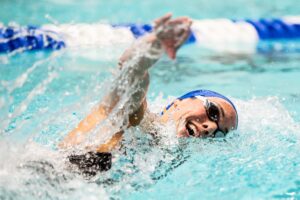
  • Huske and Walsh Highlight The 2024 Female Individual Olympic Medalists Returning to the NCAA

    Huske and Walsh Highlight The 2024 Female Individual Olympic Medalists Returning to the NCAA

    The 2024 Paris Olympics have come and gone. As the Olympic countdown resets for LA 2028, those who competed in Paris are headed in a multitude of directions. Some will take an extended break, while others will take shorter absences from the pool and return for either the World Cup or Short Course Worlds. Then, there are those headed back stateside for the 2024-25 NCAA season.

    Like the men’s side, four individual Olympic medalists from Paris will compete in the NCAA this season. However, only one swimmer is an international student as opposed to Luke Hobson being the lone American on the men’s side.

    Torri Huske, Stanford

    • 2024 Olympics: Gold, 100 butterfly — 55.59, Silver, 100 freestyle — 52.29, Gold, women’s 4×100 medley relay — 3:49.63, Gold, mixed 4×100 medley relay — 3:37.43, Silver, women’s 4×100 freestyle relay — 3:30.20

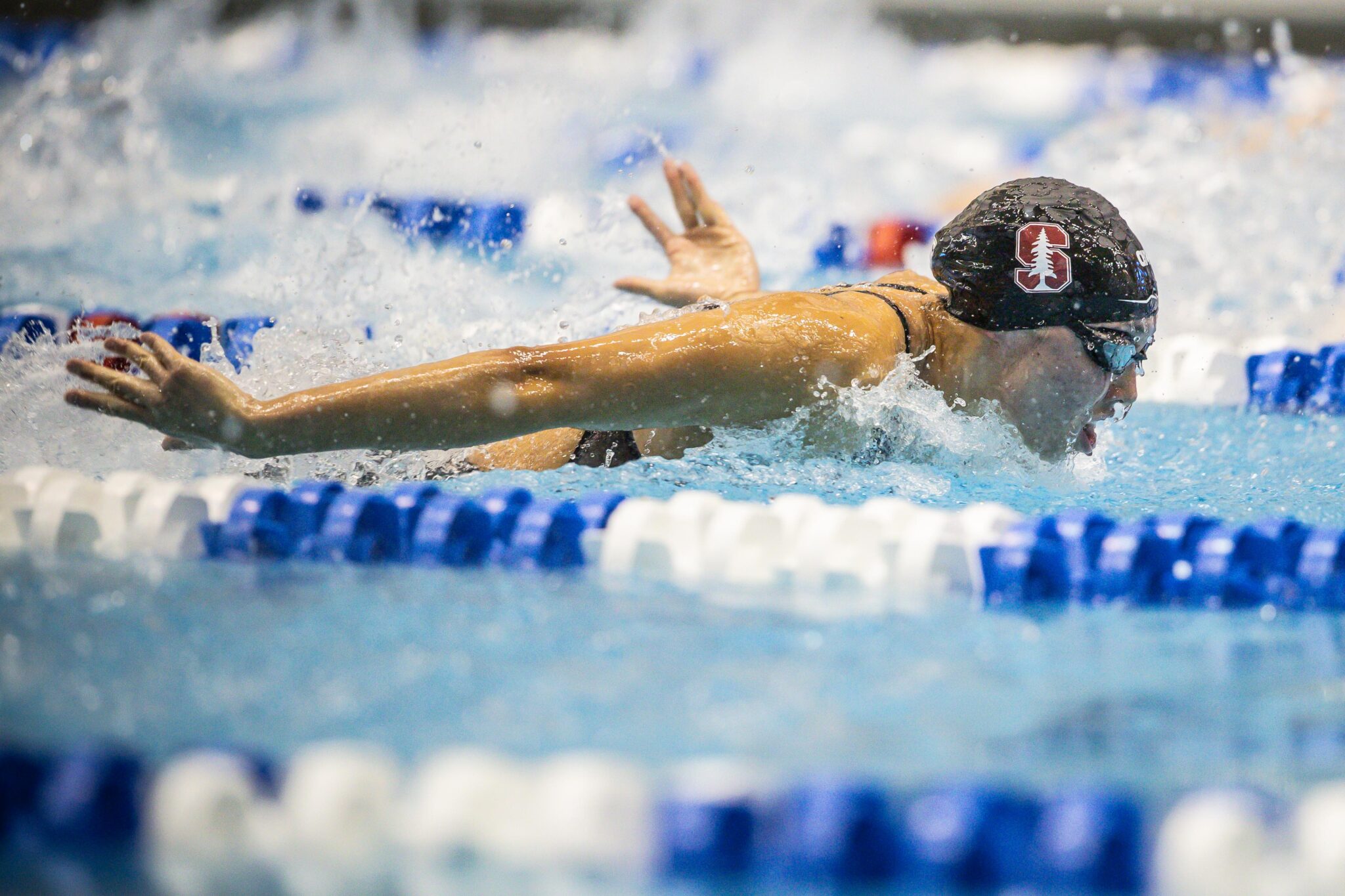
    Torri Huske made the most of her Olympic redshirt last season. She focused on long-course all year, culminating in her being the most decorated American athlete at the 2024 Olympics. She upset world record holder Gretchen Walsh in the 100 butterfly, claiming her first individual Olympic medal in the event where she was 4th by one-hundredth in Tokyo.

    Then, she broke through for a surprise silver medal in the 100 freestyle, dropping a 52.29 and becoming the first female American swimmer to medal in the 100 fly/100 free combination since Dara Torres. Now the second fastest female 100 freestyler in American history, she gave the United States plenty of options on their relays. Huske helped the U.S. set world records in the mixed 4×100 medley and women’s 4×100 medleys and added a silver in the women’s 4×100 freestyle relay.

    Back in a Stanford cap, Huske will electrify a team that didn’t take as many steps backward last season as many were expecting them to with a young roster that lacked the star power of seasons past. She will energize the relays as she chases her first individual NCAA title.

    Gretchen Walsh, Virginia

    • 2024 Olympics: Silver, 100 butterfly — 55.63, Gold, women’s 4×100 medley relay — 3:49.63, Gold, mixed 4×100 medley relay — 3:37.43, Silver, women’s 4×100 freestyle relay — 3:30.20

    What a year it’s been for Gretchen Walsh. At the start of 2024, she dominated the NCAA postseason—from breaking 20 seconds on a flying start to sweeping her events at the 2024 NCAA championships with three league records, she was the story in the 25-yard pool.

    She figured out how to carry that speed to long-course meters this summer, opening the 2024 U.S. Olympic Trials with a world record in the 100 butterfly. The next night, she qualified for her first Olympic team, later adding the 50 and 100 freestyle to her schedule. In Paris, she set a 100 fly Olympic record in the semifinals before collecting silver in the final, going 1-2 with Huske. She teamed up with Huske on the two U.S. world record-setting relays and the women’s 4×100 freestyle.

    Walsh returns to yards having dispatched the “bathtub-swimmer only” allegations, but she will continue to shine in the bathtub this season. Her underwaters set her apart from the field and whichever events she focuses on this season will be on record-watch. She’s one of three 2024 Olympians returning to Virginia this season, along with Tokyo Olympian Claire Curzan.

    Mona McSharry, Tennessee

    • 2024 Olympics: Bronze, 100 breaststroke — 1:05.59

    Mona McSharry (photo: Jack Spitser)

    Mona McSharry got a historic Games started for Ireland in the women’s 100 breaststroke. After qualifying second for the final in an Irish record of 1:05.51, she was out fast in the final. She made the turn in second place, behind only Tang Qianting. The field battled back during the final 50 meters and it came down to the touch for the final two spots on the podium behind Tatjana Smith. The times flashed onto the board—McSharry had held on for bronze by a hundredth ahead of Benedetta Pilato and Lilly King with a 1:05.59. Her medal was Ireland’s first Olympic swimming medal since 1996.

    She now returns to Tennessee for her fifth season. Last year, McSharry swept the 100 and 200-yard breaststrokes at the SEC Championships and was second in both at the NCAA Championships a few weeks later. She’s the SEC record holder in the former, with a 56.64 that ties her as the 4th fastest all-time.

    On top of her breaststroke accolades, McSharry can also be counted on for a fast 50 freestyle as she owns a 21.74 lifetime best. As such, she’s not only a feature on Tennessee’s medley relays but plays an important role on their sprint freestyle relays (she also split 47.92 on the Lady Vols’ 400 free relay at SECs).

    Emma Weyant, Florida

    • 2024 Olympics: Bronze, 400 IM — 4:34.93

    One year after getting disqualified at 2023 U.S. Nationals and missing the Worlds roster, Emma Weyant cruised to a second 400 IM Olympic berth at the 2024 U.S. Olympic Trials. At the Games in Paris, Weyant repeated on the 400 IM Olympic podium, taking bronze in 4:34.93 behind Summer McIntosh and Katie Grimes.

    Weyant has been a key part of the Florida women’s team since she transferred to Gainesville for the 2022-23 season. At 2024 NCAAs, she helped the Gators earn their best finish since 2010. Weyant was the team’s second-highest scorer, racking up 48 individual points from finishing 2nd in the 500 free, 2nd in the 400 IM, and 5th in the 1650 free. On the opening night, she swam on Florida’s 800 free relay, which captured their first title in the event in 35 years.

    Weyant was recently named a captain for the second-straight season, highlighting the role that she plays on the team. While she’s the only Paris Olympian returning to the women’s team this season, Tokyo Olympian Bella Sims also returns to help the Gators build off last season’s successes.

    Relay Medalists

    • Anna Peplowksi, Indiana — silver, 4×200 freestyle relay
    • Erin Gemmell, Texas — silver, 4×200 freestyle relay
    • Emma Weber, Virginia — gold, 4×100 medley relay

    Olympic Finalists


    Source link

  • NAWIS wants more recognition for women in sports, national honours for Paralympic medalists – Blueprint Newspapers Limited

    NAWIS wants more recognition for women in sports, national honours for Paralympic medalists – Blueprint Newspapers Limited

    The leadership of the National Association for Women in Sports (NAWIS) has called on the Federal Ministry of Sports and other relevant authorities in the country to prioritise and invest more in Para-Sports, if Nigeria is to sustain its rating as a powerhouse, in para sports for the foreseeable future.

    The National President of NAWIS, Professor Adefunke Suleiman, made this call, while reserving praise for Team Nigeria athletes to the just concluded 2024 summer Paralympics in Paris, France.

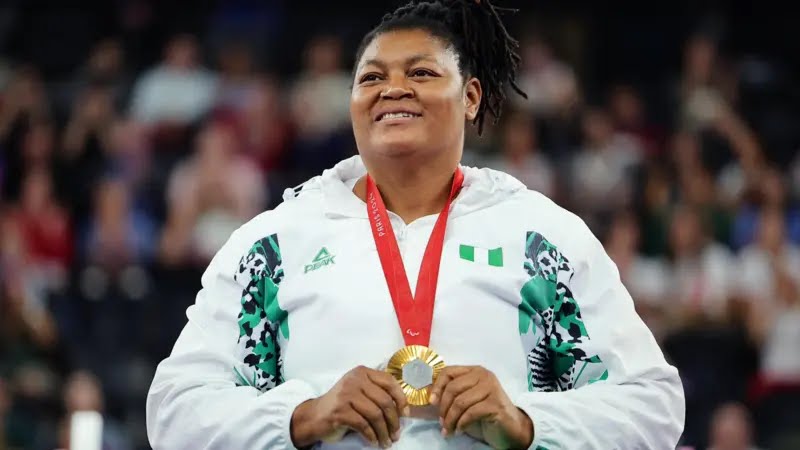
    In a statement released to the media by the spokeswoman of the organisation, Oluwafunmike Kanjuni, the NAWIS helmswoman also celebrated six of the podium athletes for winning seven of the medals – 2 Gold, 3 Silver, and 2 Bronze medals Nigeria won in Paris, to place overall 40th at the games.

    The heroins are Folashade Oluwafemiayo, who won Gold in Para-Powerlifting + 86 kg; Esther Nworgu who got a Silver medal in Para-Powerlifting 41 kg; and Bose Omolayo who also won Silver in Para-Powerlifting 79 kg.

    Others are Onyinyechi Mark who won the Para-Powerlifting 61 kg Gold; Flora Ugwunwa, winner of the Women’s Javelin throw F54 Silver medal; and Mariam Eniola Bolaji Badminton Women’s Singles SL3 Bronze medalist.

    The only man that medaled at the Paralympics is Isau Ogunkunle who won Bronze in Table Tennis Singles Class 4, also received a thumbs up from the NAWIS leadership.

    Also commenting on the feat performed by the Team Nigeria Para-Athletes, the 1st Vice President of NAWIS, Deputy Comptroller of Immigrations, Nkechi Ezeugwu, said with what was achieved in Paris, where Nigeria’s two Gold medals were won by women, the dominance of women in Nigeria’s sports should be given their rightful dues, and no longer taken for granted.

    “At the 2022 Commonwealth Games in Birmingham, all the 12 Gold medals won by Nigeria, came via women [one was eventually chalked-off after a doping infraction]. At present Tobi Amusan (100m Hurdles) is Nigeria’s first and only World Champion and record holder in track and field,” she said.

    The former National Grade 1 football referee added; “even at the Olympics, the women – Amusan, Ese [Brume], Blessing [Oborodudu] and Odunayo Adekuroye, and star girl Favour Ofili represented our best and elusive chances of winning medals,” Mrs. Ezeugwu asserted.

    Like the President, Mrs. Ezeugwu believes the time has come for more women to be included in the Sports ecosystem, including the highest decision and policy making organs, for the gains made in recent years, to be sustained and improved upon.

    She also echoed the wishes of the NAWIS President, that the gladiators that won medals for Nigeria at the Paralympics be handsomely rewarded, and given national honours awards.


    Source link

  • “Noah Lyles and Kenny Bednarek of the Paralympics”: Track & Field Community Shocked by Athletes’ Striking Resemblance to Olympic Medalists

    “Noah Lyles and Kenny Bednarek of the Paralympics”: Track & Field Community Shocked by Athletes’ Striking Resemblance to Olympic Medalists

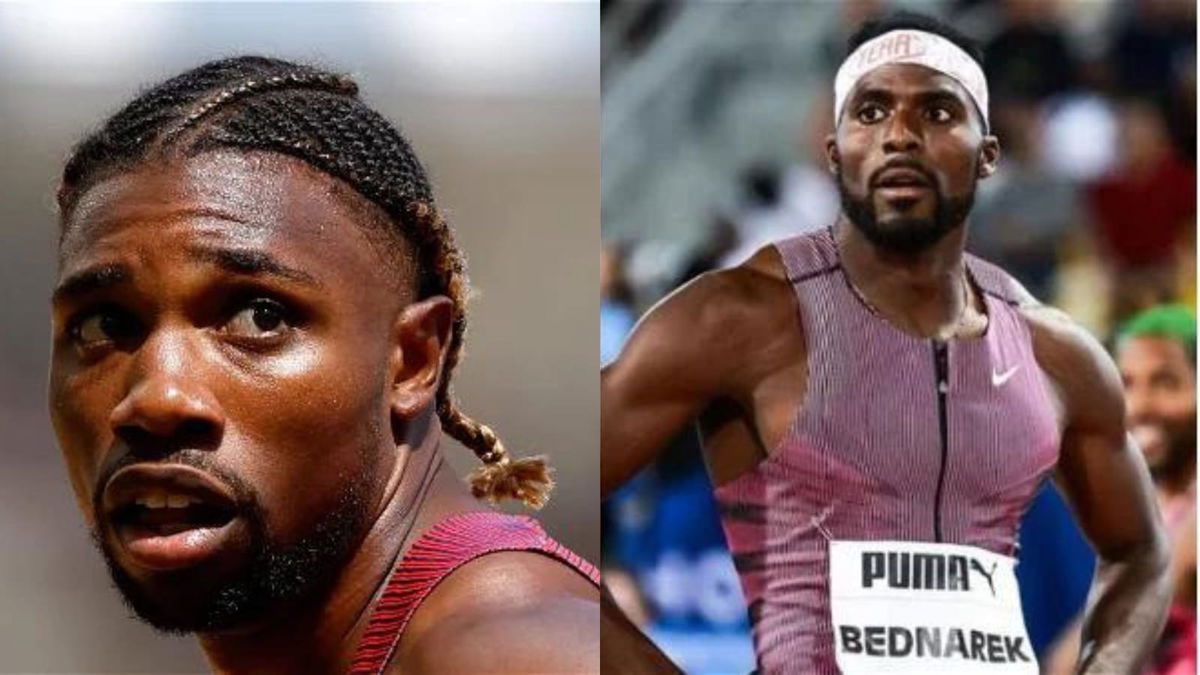
    The Paris Paralympics are in full swing, and the excitement is palpable. Among the stars shining brightest are Johannes Nambala and Samba Coulibaly, athletes who have been affectionately dubbed the Noah Lyles and Kenny Bednarek of the Paralympics. Curious how these comparisons came about? Well, these two have been tearing up the track, embodying the same electrifying spirit and speed that have made Lyles and Bednarek household names.

    Noah Lyles, the American track and field dynamo, has boldly staked his claim as the “fastest man in the world.” His lightning-fast personal best of 19.31 seconds in the 200 meters, now etched as the American record, is a testament to his electrifying speed. At the Paris Olympics, Lyles dazzled fans, bringing home both gold and bronze medals. On the same stage, Kenny Bednarek, another shining star in American sprinting, showcased his incredible talent, sprinting his way to a silver medal in the 200 meters and adding another chapter to his growing legacy.

    Johannes Nambala, a standout Paralympian from Namibia, made history in 2013 by clinching gold in the 400m at the IPC Athletics World Championships in Lyon, becoming the first Namibian to do so. He’s also earned two silver medals at the 2016 Rio Paralympics. Meanwhile, Samba Coulibaly, a Malian sprinting sensation, has captured hearts across Africa with his exceptional talent. Specializing in the 100m and 200m, Samba snagged the African T13 champion title in Marrakech and dazzled with four gold medals at an international meeting in Morocco.

    ADVERTISEMENT

    Article continues below this ad

    On Sunday, September 1, Track and Spice shared a post on X that captured Johannes Nambala and Samba Coulibaly making a grand entrance into the arena. The post playfully drew comparisons, especially noting how Samba Coulibaly’s entrance mirrored the electrifying style of Noah Lyles, hyping up the crowd with the same contagious energy.

    Samba Coulibaly sprinted his way to a 7th-place finish in the men’s 100m-T13, edging out Johannes Nambala, who crossed the line just a heartbeat later in 8th place. Nambala’s finish, timed at 11.09 seconds, wasn’t just a race; it marked his season’s best, a moment of personal triumph amid the fierce competition.

    And the fans? They jumped at the chance to make comparisons, flooding the comments with their thoughts and buzzing with excitement over the similarities.

    Fans weigh in: Paralympians vs. Olympians

    BBC Africa’s own sports reporter, Lynne Wachira, couldn’t help but remark, “The accuracy is crazy, super insane.” Nambala and Coulibaly’s electrifying presence on the track is sparking memories of Lyles and Bednarek, captivating the crowd with a dynamic energy that mirrors the Olympic duo.

    ADVERTISEMENT

    Article continues below this ad

    via Reuters

    As Samba Coulibaly mirrored Noah Lyles’s electrifying entrance, one user couldn’t help but post a GIF that read, “Hollup… Let him cook.” It was a playful nod to how Coulibaly’s grand entrance echoed Lyles’s signature flair, adding an extra layer of excitement to the Paralympic arena. The GIF captured the thrill of the moment, celebrating Coulibaly’s dramatic flair with a touch of humor and anticipation.

    Amidst the swirling drama surrounding Noah Lyles—whether it’s whispers about his covid or debates over his title as the “fastest man in the world”—one user cheekily remarked that the comparison seemed a bit more palatable without Lyles in the mix. They posted, “I’m here for it. It just seems less obnoxious because it’s not Noah lol,” adding a touch of humor to the lively conversation and hinting that the buzz around the Paralympians might feel a bit lighter without the shadow of Lyles’s controversies.

    ADVERTISEMENT

    Article continues below this ad

    Another user took a stand for Noah Lyles, reflecting on the playful mimicry of his crowd-hyping entrance. They remarked “He was like he did it and it got him a gold medal lemme do this rq” pointing out that while imitating Lyles’s electrifying style might capture attention, it’s not the key to winning medals. The comment underscores the idea that while emulating Lyles’s flair can be entertaining, it’s the gold medals that truly set him apart.

    The buzz around these comparisons is definitely heating up, with comments like “I ain’t gonna lie that was fun to watch” echoing through the crowd! As the debate continues to swirl, we’re eager to hear your take on the matter. Do you think Johannes Nambala and Samba Coulibaly are the Paralympic counterparts to Noah Lyles and Kenny Bednarek, bringing their own unique flair to the track?

    Source link