hacklink hack forum hacklink film izle hacklink marsbahisizmir escortsahabet

Tag: Media

  • Trump Administration shuts down White House Spanish-language page, social media

    Trump Administration shuts down White House Spanish-language page, social media

    Within hours of President Donald Trump’s inauguration, the new administration took down the Spanish-language version of the official White House website.

    The site — currently https://www.whitehouse.gov/es/ — now gives users an “Error 404” message. It also included a “Go Home” button that directed viewers to a page featuring a video montage of Trump in his first term and on the campaign trail. The button was later updated to read “Go To Home Page”.

    Hispanic advocacy groups and others expressed confusion at the abrupt change and frustration at what some called the administration’s lack of efforts to maintain communication with the Latino community, which helped propel him to the presidency.

    The Spanish profile of the White House’ X, @LaCasaBlanca and the government page on reproductive freedom also were disbanded. Meanwhile, the Spanish versions of other government agencies such as the Department of Labor, Justice and Agriculture remained available for users on Tuesday.

    Asked about the changes, White House principal deputy press secretary Harrison Fields responded Tuesday that the administration is “committed to bringing back online the Spanish translation section of the website.”

    “It’s day two. We are in the process of developing, editing and tweaking the White House website. As part of this ongoing work, some of the archived content on the website went dormant. We are committed to reloading that content in a short timeline,” he said without elaborating.

    Trump removed the Spanish version of the page in 2017. At that time, White House officials said they would reinstate it. President Joe Biden reinstated the page in 2021.

    The page’s removal coincided with Trump’s first-day wave of executive orders highlighted by the launch of an illegal immigration crackdown that was one of his key campaign pledges. Trump on Monday declared a national emergency at the U.S.-Mexico border and announced plans to send U.S. troops to help support immigration agents and restrict refugees and asylum.

    According to 2023 Census Bureau estimates, about 43.4 million Americans — 13.7% of the U.S. population age 5 and older — speak Spanish at home. The U.S. has no official language.

    Monica Rivera, a brand and communications strategist in New York City of Puerto Rican and Cuban descent, said the shutdown sends a clear signal.

    “There are 43 million Latinos who speak Spanish as their first language and removing access to information directly from the White House draws a distinct line as to who they are serving and more dangerously, signals to the administration’s MAGA base that we as Latinos are ‘other’ and a less significant part of this country,” Rivera said.

    Anthony Hernandez, a paralegal in the nation’s capital, wasn’t initially aware of the move and said it suggests what the coming years of a second Trump presidency would look like, with specific issues making headlines while “minor but equally malicious things like that go unnoticed.”

    “A move like shutting down the Spanish White House page and X profile serves no purpose other than to cut off resources for millions of Hispanic Americans and immigrants attempting to enter the United States legally,” Hernandez said. “And it’s a slap in the face to the millions of Hispanic voters that supported him in this recent election.”

    Trump’s secretary of state, Marco Rubio, is Cuban American and speaks Spanish. At his swearing-in Tuesday, he gave remarks in Spanish, thanking God, his family and Trump.

    Meanwhile, Hispanic leaders and communication strategy experts expressed surprise with the page’s removal, given Trump’s popularity with certain Latino voters.

    “If the White House is seriously interested in engaging with Latinos, the second largest group in this country, then they need to make sure that updates can also be distributed in Spanish, a preferred language for millions in our community,” said Frankie Miranda President and CEO of the Hispanic Federation.

    He called that a way to ensure “everyone is a part of the civic process.”

    Kris Klein Hernández, a U.S. historian specializing in race, gender, and sexuality at Connecticut College, said the content removal from official White House websites not only limits the access available to Spanish-speaking U.S. citizens and migrants but leads “some to question which constituencies the administration prioritizes.”

    Jeff Lee, former deputy cabinet secretary and deputy director of external and international affairs for former California Gov. Jerry Brown, said the move seems counterintuitive given the opportunity to “showcase” policy changes, especially ones related to economics and border security.

    “I didn’t see any other language mediums that got the kibosh. So I think that’s a really interesting thing to single out — if that’s the case,” Lee said.

    AP VoteCast, a nationwide survey of more than 120,000 voters, found Trump won a larger share of Black and Latino voters than he did in 2020, and most notably among men under age 45. Young Latinos, particularly young Latino men, also were more open to Trump than in 2020. Roughly half of young Latino men voted for Democratic Vice President Kamala Harris, compared with about 6 in 10 who went for Biden.


    Source link

  • Why Are We Taxing Popcorn Differently? Indias New GST Rates Cause Social Media Stir

    Why Are We Taxing Popcorn Differently? Indias New GST Rates Cause Social Media Stir

    NEW DELHI – India’s move to tax popcorn differently based on its sugar or spice content has drawn criticism from the opposition and sparked social media outrage, with two former government economic advisers questioning the tax system introduced in 2017.

    The Goods and Services Tax (GST) Council, chaired by the finance minister and including state representatives, announced on Saturday that non-branded popcorn mixed with salt and spices would attract a 5% GST, pre-packaged and branded popcorn 12%, and caramel popcorn, categorised as a sugar confectionery, 18%.

    The differential rates came into effect immediately, ending confusion over rates as popcorn was taxed differently across states.

    Explaining the rationale behind the decision to tax caramel popcorn at 18%, Finance Minister Nirmala Sitharaman said that any product with added sugar is taxed differently.

    The announcement, however, sparked a social media storm on Sunday, with opposition politicians, economists and supporters of Prime Minister Narendra Modi’s government criticising the move and others creating memes and poking fun at it.

    “Complexity is a bureaucrat’s delight and citizens’ nightmare,” India’s previous Chief Economic Adviser K V Subramanian wrote on X. He questioned the rationale of the decision he said will contribute minimally to tax revenues, but inconvenience citizens.

    His predecessor, Arvind Subramanian, said “the folly is compounded because instead of at least moving in the direction of simplicity we are veering to greater complexity, difficulty of enforcement and just irrationality”.

    One widely circulated post on X showed an image of a branded “salt caramel” popcorn packet and said how it would send the taxman into a tizzy calculating the tax rate on it.

    Jairam Ramesh, leader and spokesman of the main opposition Congress party, said the “absurdity of three different tax slabs for popcorn under GST … only brings to light a deeper issue that the growing complexity of a system that was supposed to be a Good and Simple Tax”.

    A finance ministry spokesperson, the GST Council Secretariat and a spokesman for the ruling Bharatiya Janata Party did not respond to requests for comment on the controversy.

    The GST system has run into similar controversies for its tax classifications in the past and faced questions although not on this scale.

    Previous controversies have involved taxing chapatis or unleavened Indian flatbread differently from layered flatbreads, different rates for curd and yogurt, and cream bun versus bun and cream served separately.

    (Reporting by Nikunj Ohri; Editing by YP Rajesh (Reuters))

    (Disclaimer: Except for the headline, this story has not been edited by NDTV staff and is published from a syndicated feed.)

    Source link

  • Former TV host Carlos Watson gets nearly 10 years in prison in case about failed startup Ozy Media

    Former TV host Carlos Watson gets nearly 10 years in prison in case about failed startup Ozy Media

    NEW YORK — Former talk show host Carlos Watson was sentenced Monday to nearly 10 years in prison in a federal financial conspiracy case that cast his once-buzzy Ozy Media as an extreme of fake-it-’til-you-make-it startup culture.

    So extreme that another Ozy executive impersonated a YouTube executive to hype Ozy to investment bankers — while Watson coached him, prosecutors said.

    Watson, 55, and the now-defunct company were found guilty last summer of charges including wire fraud conspiracy. He has denied the allegations.

    Watson, who has been free on $3 million bond, faced a mandatory minimum sentence of two years in prison and potentially as much as 37 years.

    Prosecutors accused the former cable news commentator and host of playing a leading role in a scheme to deceive Ozy investors and lenders by inflating revenue numbers, touting deals and offers that were nonexistent or not finalized, and flashing other false indications of Ozy’s success.

    Watson even listened in and texted talking points while his co-founder posed as a YouTube executive to praise Ozy on a phone call with potential investors, prosecutors said.

    “The quantum of dishonesty in this case is exceptional,” U.S. District Judge Eric Komitee said, later telling Watson: “Your internal apparatus for separating truth from fiction became badly miscalibrated.”

    Watson blamed any misrepresentations on others, and he said he was a target of “selective prosecution” as a Black entrepreneur in Silicon Valley, where African American executives have been disproportionately few.

    “I loved what we built with Ozy,” he said in court Monday, initially addressing supporters in the audience before the judge suggested he turn around. He portrayed himself as a founder who put everything he had into his company, saying that he took an average salary around $51,000 from Ozy in its final years, has triple-mortgaged his home and drives a 15-year-old car.

    The co-founder, Samir Rao, and former Ozy chief of staff Suzee Han pleaded guilty and are awaiting sentencing. Both testified against Watson.

    Ozy, founded in 2012, was styled as a hub of news and culture for millennials with a global outlook.

    Watson boasted an impressive resume: degrees from Harvard University and Stanford Law School, a stint on Wall Street, on-air gigs at CNN and MSNBC, and entrepreneurial chops. Ozy Media was his second startup, coming a decade after he sold a test-prep company that he had founded while in his 20s.

    Mountain View, California-based Ozy produced TV shows, newsletters, podcasts, and a music-and-ideas festival. Watson hosted several of the TV programs, including the Emmy-winning “Black Women OWN the Conversation,” which appeared on the Oprah Winfrey Network.

    Ozy snagged big advertisers, clients and grants. But beneath the outward signs of success was an overextended company that struggled — and dissembled — to stay afloat after 2017, according to insiders’ testimony.

    The company strained to make payroll, ran late on rent and took out pricey cash advances to pay bills, former finance vice president Janeen Poutre told jurors. Meanwhile, Ozy gave prospective investors much bigger revenue numbers than those it reported to accountants, according to testimony and documents.

    On the witness stand in July, Watson said the company’s cash squeezes were just a startup norm and its investors knew they were getting unaudited numbers that could change.

    Ozy disintegrated in 2021, after a New York Times column disclosed the phone-call impersonation gambit and raised questions about the true size of the startup’s audience.

    Source link

  • California to consider requiring mental health warnings on social media sites

    California to consider requiring mental health warnings on social media sites

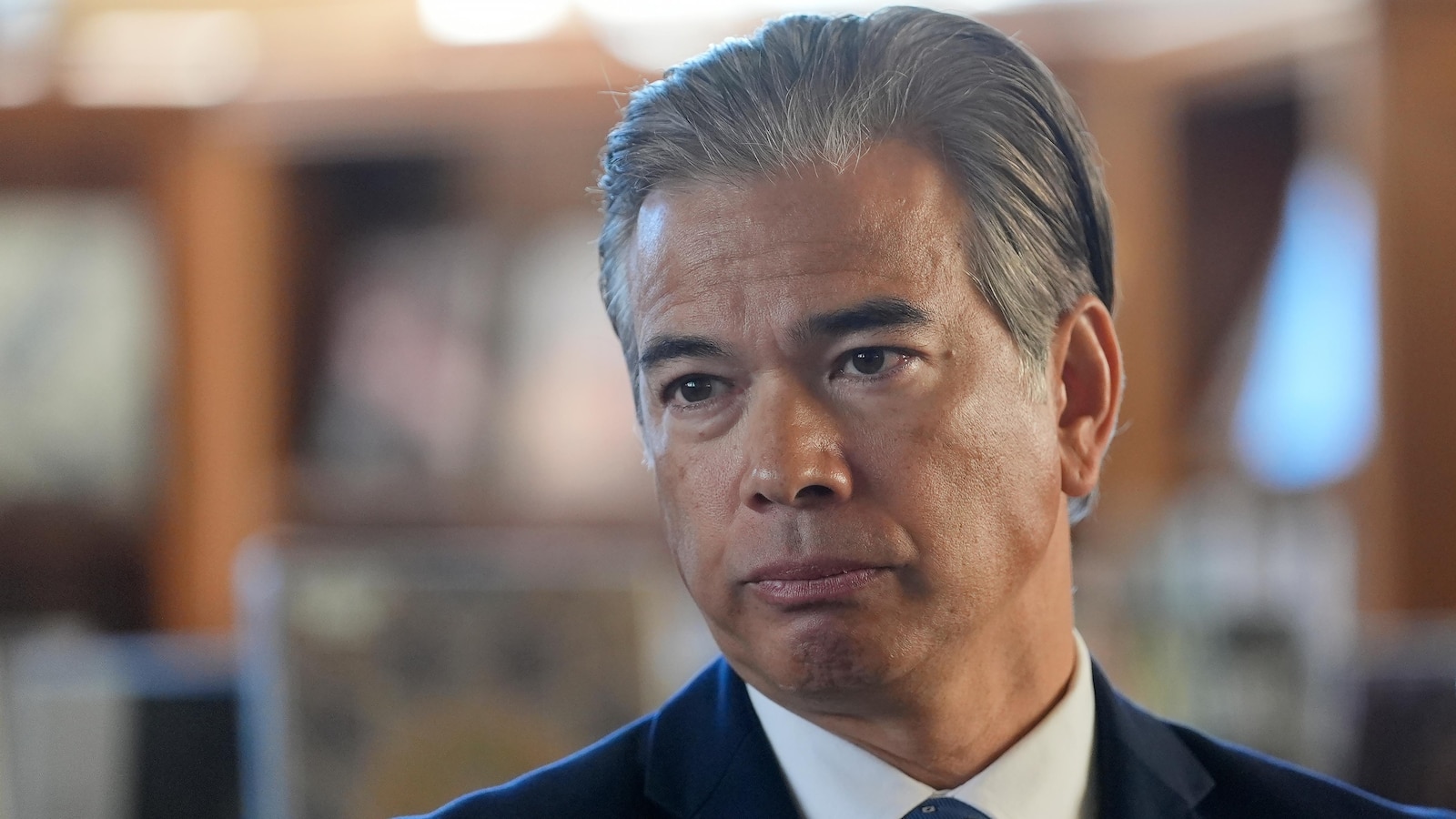
    SACRAMENTO, Calif. — California, home to some of the largest technology companies in the world, would be the first U.S. state to require mental health warning labels on social media sites if lawmakers pass a bill introduced Monday.

    The legislation sponsored by state Attorney General Rob Bonta is necessary to bolster safety for children online, supporters say, but industry officials vow to fight the measure and others like it under the First Amendment. Warning labels for social media gained swift bipartisan support from dozens of attorneys general, including Bonta, after U.S. Surgeon General Vivek Murthy called on Congress to establish the requirements earlier this year, saying social media is a contributing factor in the mental health crisis among young people.

    “These companies know the harmful impact their products can have on our children, and they refuse to take meaningful steps to make them safer,” Bonta said at a news conference Monday. “Time is up. It’s time we stepped in and demanded change.”

    State officials haven’t provided details on the bill, but Bonta said the warning labels could pop up once weekly.

    Up to 95% of youth ages 13 to 17 say they use a social media platform, and more than a third say that they use social media “almost constantly,” according to 2022 data from the Pew Research Center. Parents’ concerns prompted Australia to pass the world’s first law banning social media for children under 16 in November.

    “The promise of social media, although real, has turned into a situation where they’re turning our children’s attention into a commodity,” Assemblymember Rebecca Bauer-Kahan, who authored the California bill, said Monday. “The attention economy is using our children and their well-being to make money for these California companies.”

    Lawmakers instead should focus on online safety education and mental health resources, not warning label bills that are “constitutionally unsound,” said Todd O’Boyle, a vice president of the tech industry policy group Chamber of Progress.

    “We strongly suspect that the courts will set them aside as compelled speech,” O’Boyle told The Associated Press.

    Victoria Hinks’ 16-year-old daughter, Alexandra, died by suicide four months ago after being “led down dark rabbit holes” on social media that glamorized eating disorders and self-harm. Hinks said the labels would help protect children from companies that turn a blind eye to the harm caused to children’s mental health when they become addicted to social media platforms.

    “There’s not a bone in my body that doubts social media played a role in leading her to that final, irreversible decision,” Hinks said. “This could be your story.”

    Common Sense Media, a sponsor of the bill, said it plans to lobby for similar proposals in other states.

    California in the past decade has positioned itself as a leader in regulating and fighting the tech industry to bolster online safety for children.

    The state was the first in 2022 to bar online platforms from using users’ personal information in ways that could harm children. It was one of the states that sued Meta in 2023 and TikTok in October for deliberately designing addictive features that keep kids hooked on their platforms.

    Gov. Gavin Newsom, a Democrat, also signed several bills in September to help curb the effects of social media on children, including one to prohibit social media platforms from knowingly providing addictive feeds to children without parental consent and one to limit or ban students from using smartphones on school campus.

    Federal lawmakers have held hearings on child online safety and legislation is in the works to force companies to take reasonable steps to prevent harm. The legislation has the support of X owner Elon Musk and the President-elect’s son, Donald Trump Jr. Still, the last federal law aimed at protecting children online was enacted in 1998, six years before Facebook’s founding.

    Source link

  • Being a disability awareness advocate: Woman shares bond with blind son on social media, Lifestyle News

    Being a disability awareness advocate: Woman shares bond with blind son on social media, Lifestyle News

    Nothing can fully prepare one for parenthood. 

    First-time parents often understand that they should brace themselves for the challenges, expected or otherwise, that come with welcoming a new member to the family.

    But when you find out that your baby is blind, what happens then?

    This was the reality of Singaporean couple Koh Wei Shi, 34, and Eric Koh, 35, in 2020, when their son, Elliot, was born.

    It took them a while before they realised something was amiss.

    Wei Shi recalled how Elliot showed signs of “developmental delays” during his first few months.

    The first-time mum shared in a chat with AsiaOne: “We knew that he’s probably behind others his age but we just thought that different children would develop at a different pace.”

    ‘We were lost and shocked’

    Back then, Covid-19 was at its peak so country-wide restrictions and preventive measures kept social interactions to a minimum.

    This actually played a role in delaying Elliot’s diagnosis as his parents did not get a lot of opportunities for him to “meet people”.

    Once Covid-19 measures were lifted, a visit to a friend’s house helped Wei Shi notice how “behind” Elliot was in his development.

    The contrast when Elliot was sat alongside another baby of the same age was stark.

    Her son was neither flipping (rolling over) nor lifting his head, so this prompted a visit to the paediatrician.

    After getting a referral to an ophthalmologist, an eye care specialist, the couple’s worst fears were realised.

    While they suspected that their son might be going through “some developmental delays”, they did not expect to learn that he was blind and unlikely to ever gain sight.

    “We were both lost and shocked,” she recalled.

    Wei Shi acknowledged that, due to his visual impairment, Elliot’s life experiences were bound to differ significantly from her own and her husband’s.

    She also wondered if her son’s condition might limit his ability to experience everyday activities, whether it was a trip to the playground, socialising with friends or even going to school.

    She said: “I remember us looking at him sleeping and then just crying because we could not understand why this was happening to him.”

    Growing up blind 

    Reality sank in for Wei Shi and her husband when a doctor suggested they read a developmental guide for parents of babies with severely impaired sight, Show Me What My Friends Can See.

    Upon reading the book, Wei Shi understood that the next step was not about attempting to correct Elliot’s sight.

    Instead, they had to focus on how to best raise him as someone who cannot see.

    Four years on and Wei Shi’s description of her parenting journey is short and simple: Fulfilling.

    “Every day I’m learning and it has taught me to be a more empathetic and compassionate person,” she said.

    It’s a journey Wei Shi has shared with her husband, Eric, and along the way, the couple discovered their strengths in parenting.

    She’s often guiding Elliot with his schoolwork, while Eric would be on hand to plan and prepare for a family day out.

    They focus on playing to their strengths while supporting each other when needed.

    “If I do need his help, I will just have to voice out and he will come,” Wei Shi explained.

    [[nid:618095]]

    When asked about her son’s personality, Wei Shi broke into a smile and mentioned how outgoing and chatty Elliot is.

    His sense of humour has a tendency to amuse his peers and adults alike.

    Wei Shi is aware, however, that Elliot may not always have such a positive impact on everyone he meets.

    In fact, his lack of sight will likely lead to him having to deal with prejudice and discrimination as he grows up.

    For now, people are generally understanding when they find out that Elliot is blind, Wei Shi said.

    It’s a situation she has experienced numerous times when out and about with her son.

    A stranger’s immediate reaction tends to be one of shock.

    “Then you can see sadness [on their faces],” Wei Shi reflected, before saying: “I don’t actually know if it is sadness or compassion. They probably just pity him.”

    How does it make her feel? We ask.

    She admitted that, initially, dealing with such situations was tough and was a reminder that her son was seen as different.

    Eventually, Wei Shi got used to such interactions and understood that people may not be behaving or reacting this way on purpose.

    Nowadays, she views these situations as opportunities to raise awareness that blindness need not be looked down on or perceived as a disadvantage.

    “Instead of letting my emotions take over, I will take the chance to advocate for him and explain to [people] that he’s okay. It’s a chance for people to learn,” she said.

    Through such exchanges, Wei Shi hopes that it creates an effect where more people will begin to have a more positive outlook on blind individuals.

    Building an online community

    Creating a social media account to document the life of her young child was not something Wei Shi thought she would do but Elliot’s diagnosis shifted her perspective.

    She struggled to find information on raising blind children in Singapore and had to reach out to resources overseas instead.

    “I started to chat with some of them and they were really supportive. It was a nice community that was very open to sharing,” Wei Shi recalled.

    Learning about how well these blind children were doing was inspiring, and it gave Wei Shi hope that Elliot’s development would progress in due time.

    That’s when she decided to be a beacon of hope to others in Singapore, by starting the social media account Blindandshine, where she documents Elliot’s life journey.

    “If a baby gets diagnosed with the same condition, [the] parents can have somebody to reach out to. That was the initial intention [of the account],” she said.

    As of the time of writing, Blindandshine has more than 7,500 followers on Instagram and over 6,000 followers on TikTok.

    Scrolling through both accounts, one would find content documenting Elliot’s daily life — from his Brazilian jiu-jitsu classes to family outings.

    Unsurprisingly, curiosity about her son’s condition has prompted questions from people online, but Wei Shi has no qualms engaging with them in order to address common misconceptions on blindness.

    “I think people come from a place of sympathy, and they just mean well for the child and family,” she said.

    Generally, their social media content has been positively received by viewers, and what’s most heartening is the response by some.

    Whether it’s a parent showing their video to their child, or an educator sharing it with a class, Wei Shi is thankful for the conscious effort in raising awareness on the cause.

    “I think that means my message is not just reaching a particular group of people, the people have become advocates themselves,” she added.

    [[nid:682053]]

    amierul@asiaone.com

    Source link

  • Being a disability awareness advocate: Woman shares bond with blind son on social media, Lifestyle News

    Being a disability awareness advocate: Woman shares bond with blind son on social media, Lifestyle News

    Nothing can fully prepare one for parenthood. 

    First-time parents often understand that they should brace themselves for the challenges, expected or otherwise, that come with welcoming a new member to the family.

    But when you find out that your baby is blind, what happens then?

    This was the reality of Singaporean couple Koh Wei Shi, 34, and Eric Koh, 35, in 2020, when their son, Elliot, was born.

    It took them a while before they realised something was amiss.

    Wei Shi recalled how Elliot showed signs of “developmental delays” during his first few months.

    The first-time mum shared in a chat with AsiaOne: “We knew that he’s probably behind others his age but we just thought that different children would develop at a different pace.”

    ‘We were lost and shocked’

    Back then, Covid-19 was at its peak so country-wide restrictions and preventive measures kept social interactions to a minimum.

    This actually played a role in delaying Elliot’s diagnosis as his parents did not get a lot of opportunities for him to “meet people”.

    Once Covid-19 measures were lifted, a visit to a friend’s house helped Wei Shi notice how “behind” Elliot was in his development.

    The contrast when Elliot was sat alongside another baby of the same age was stark.

    Her son was neither flipping (rolling over) nor lifting his head, so this prompted a visit to the paediatrician.

    After getting a referral to an ophthalmologist, an eye care specialist, the couple’s worst fears were realised.

    While they suspected that their son might be going through “some developmental delays”, they did not expect to learn that he was blind and unlikely to ever gain sight.

    “We were both lost and shocked,” she recalled.

    Wei Shi acknowledged that, due to his visual impairment, Elliot’s life experiences were bound to differ significantly from her own and her husband’s.

    She also wondered if her son’s condition might limit his ability to experience everyday activities, whether it was a trip to the playground, socialising with friends or even going to school.

    She said: “I remember us looking at him sleeping and then just crying because we could not understand why this was happening to him.”

    Growing up blind 

    Reality sank in for Wei Shi and her husband when a doctor suggested they read a developmental guide for parents of babies with severely impaired sight, Show Me What My Friends Can See.

    Upon reading the book, Wei Shi understood that the next step was not about attempting to correct Elliot’s sight.

    Instead, they had to focus on how to best raise him as someone who cannot see.

    Four years on and Wei Shi’s description of her parenting journey is short and simple: Fulfilling.

    “Every day I’m learning and it has taught me to be a more empathetic and compassionate person,” she said.

    It’s a journey Wei Shi has shared with her husband, Eric, and along the way, the couple discovered their strengths in parenting.

    She’s often guiding Elliot with his schoolwork, while Eric would be on hand to plan and prepare for a family day out.

    They focus on playing to their strengths while supporting each other when needed.

    “If I do need his help, I will just have to voice out and he will come,” Wei Shi explained.

    [[nid:618095]]

    When asked about her son’s personality, Wei Shi broke into a smile and mentioned how outgoing and chatty Elliot is.

    His sense of humour has a tendency to amuse his peers and adults alike.

    Wei Shi is aware, however, that Elliot may not always have such a positive impact on everyone he meets.

    In fact, his lack of sight will likely lead to him having to deal with prejudice and discrimination as he grows up.

    For now, people are generally understanding when they find out that Elliot is blind, Wei Shi said.

    It’s a situation she has experienced numerous times when out and about with her son.

    A stranger’s immediate reaction tends to be one of shock.

    “Then you can see sadness [on their faces],” Wei Shi reflected, before saying: “I don’t actually know if it is sadness or compassion. They probably just pity him.”

    How does it make her feel? We ask.

    She admitted that, initially, dealing with such situations was tough and was a reminder that her son was seen as different.

    Eventually, Wei Shi got used to such interactions and understood that people may not be behaving or reacting this way on purpose.

    Nowadays, she views these situations as opportunities to raise awareness that blindness need not be looked down on or perceived as a disadvantage.

    “Instead of letting my emotions take over, I will take the chance to advocate for him and explain to [people] that he’s okay. It’s a chance for people to learn,” she said.

    Through such exchanges, Wei Shi hopes that it creates an effect where more people will begin to have a more positive outlook on blind individuals.

    Building an online community

    Creating a social media account to document the life of her young child was not something Wei Shi thought she would do but Elliot’s diagnosis shifted her perspective.

    She struggled to find information on raising blind children in Singapore and had to reach out to resources overseas instead.

    “I started to chat with some of them and they were really supportive. It was a nice community that was very open to sharing,” Wei Shi recalled.

    Learning about how well these blind children were doing was inspiring, and it gave Wei Shi hope that Elliot’s development would progress in due time.

    That’s when she decided to be a beacon of hope to others in Singapore, by starting the social media account Blindandshine, where she documents Elliot’s life journey.

    “If a baby gets diagnosed with the same condition, [the] parents can have somebody to reach out to. That was the initial intention [of the account],” she said.

    As of the time of writing, Blindandshine has more than 7,500 followers on Instagram and over 6,000 followers on TikTok.

    Scrolling through both accounts, one would find content documenting Elliot’s daily life — from his Brazilian jiu-jitsu classes to family outings.

    Unsurprisingly, curiosity about her son’s condition has prompted questions from people online, but Wei Shi has no qualms engaging with them in order to address common misconceptions on blindness.

    “I think people come from a place of sympathy, and they just mean well for the child and family,” she said.

    Generally, their social media content has been positively received by viewers, and what’s most heartening is the response by some.

    Whether it’s a parent showing their video to their child, or an educator sharing it with a class, Wei Shi is thankful for the conscious effort in raising awareness on the cause.

    “I think that means my message is not just reaching a particular group of people, the people have become advocates themselves,” she added.

    [[nid:682053]]

    amierul@asiaone.com

    Source link

  • BCN Visuals Partners with Liquid Outdoor Media to Bring 3D Advertising to Lifestyle Centers |

    Revolutionary 3D Digital Experiences Set to Transform the Advertising Landscape in High-Traffic Retail and Lifestyle Destinations

    NEW YORKDec. 4, 2024PRLog — BCN Visuals, a global leader in 3D anamorphic content creation, and Liquid Outdoor Media, a leading boutique outdoor advertising company, have partnered to launch immersive 3D anamorphic activations at lifestyle centers across the United States through BCN Visuals’ groundbreaking stand-alone digital display, Landmarks.

    Landmarks are digital cubes that stand 10 feet tall and wide, which transform any location into a fully immersive experience, driving audience engagement and leaving a lasting impression. This first-to-market product offering is a transformative tool that blends the digital and physical worlds. Landmarks redefine the advertising experience by bringing eye-catching, hyper-realistic 2D and 3D anamorphic digital installations to high-traffic retail and lifestyle destinations.

    BCN Visuals and Liquid Outdoor Media aim to revolutionize the advertising experience for brands looking to enhance their connection with consumers. By introducing 3D anamorphic activations to lifestyle centers, the partnership will allow brands to stand out in a new and innovative way with visuals that appear to burst from the screen, creating highly engaging experiences that invite passersby to stop, watch, and interact.

    “At BCN Visuals, our mission is to push the boundaries of visual storytelling. Through our collaboration with Liquid Outdoor Media, we are excited to bring the wow factor of 3D anamorphic technology to lifestyle centers across the U.S., making digital art a core part of the consumer journey,” said Charles Chimera, Global Chief Growth Officer at BCN Visuals. “Our immersive activations will not only elevate the brand presence of advertisers but also contribute to the vibrancy and appeal of these environments.”

    With more brands seeking innovative ways to captivate audiences, the partnership between BCN Visuals and Liquid Outdoor Media is well-positioned to deliver experiences beyond traditional advertising, allowing brands to make a lasting impression in prime, high-traffic locations.

    “Liquid is the leader in the open-air lifestyle center space, and this powerful addition to the portfolio aligns perfectly with our real-estate partners’ vision to enhance their visitor experience while generating additional ancillary revenue. Most importantly, it provides our advertising clients with a truly unique and powerful medium to deliver their brand message,” said Patrick Sherry, Managing Partner at Liquid Outdoor. “This is the perfect extension to our tech-driven national digital out-of-home media network. We believe this is the ideal environment for the Landmark – properties created as community hubs, designed to host large crowds and frequented by upscale audiences with extended dwell times.”

    Landmarks will debut across multiple high-profile mixed-use properties and tent-pole events in major markets, marking the beginning of this groundbreaking initiative. This launch will showcase the transformative power of 3D anamorphic content in a vibrant, high-traffic environment, setting the stage for future installations across the country. Both BCN Visuals and Liquid Outdoor Media are thrilled to bring this innovative experience to life, redefining how brands connect with audiences in dynamic, real-world settings.

    About BCN Visuals

    BCN Visuals is an award-winning innovation technology company and digital studio. Known for pioneering 3D anamorphic billboards and revolutionizing digital out-of-home, we collaborate with brands and agencies who want to leave an indelible mark. For more information, visit http://bcnvisuals.com and follow us on LinkedIn.

    About Liquid Outdoor Media

    Liquid Outdoor Media is a technology-focused, boutique outdoor advertising company with over 55 static and digital billboards and over 250 digital interactive smart kiosks in 12 major metropolitan markets. Since 2008, Liquid Outdoor has been developing successful projects in both public and private spaces that generate significant ancillary income for its partners.  Headquartered in Manhattan and with regional offices in Los Angeles, Miami, Westchester, NY, and New Jersey, Liquid has a talented team that prides itself on offering unique media assets with exceptional customer service. For more information, visit http://liquidoutdoor.com and follow us on LinkedIn.

    Source link

  • Sheridan Hawks Junior Hockey Team Sweeps Home And Home Series Vs. Gillette; Prepare For Return Trip To Great Falls – Sheridan Media

    Sheridan Hawks Junior Hockey Team Sweeps Home And Home Series Vs. Gillette; Prepare For Return Trip To Great Falls – Sheridan Media

    The Sheridan Hawks Junior Hockey Team took care of business against one team that was trying to catch up to them in the standings, and are now getting ready to play another team that’s right behind them.

    This past weekend, the team won a home and home series vs. Gillette with scores of 8-3 and 8-4.

    Josh Serino scored hat tricks in both games.

    Head Coach J.J. Santagata says when the games were being played 5-on-5, the Hawks did great, but work is needed on both sides of the power play.

    “I think we just came out, we just executed little details, face off plays were really great, getting pucks to the net were great, finding 2nd and 3rd opportunities were great. I think our special teams honestly were really really bad this weekend, but to walk away with 4 points and only score 1 power play goal and let up 3 penalty kill goals is obviously not ideal, but still walk away with 4 points and I think 5 on 5 we played really well, so I was happy with that.”

    Up next is another trip to Great Falls, Montana.

    The Americans are right behind Sheridan for 2nd place in the NA3HL Frontier Division, and are the only team so far to have success vs. first place Helena.

    Coach Santagata adds these 2 teams have split their 4 head-to-head games so far this season, and the Hawks are expecting a challenging weekend.

    “They have some new guys since we haven’t seen them in about a month, so we know they’re going to be a good team, coming off beating Helena 1-0 in Helena and then winning their last 3 games as well. They’re an extremely good team, they play a good structure, they’re physical, they’re simple, so we know we’re going into a dogfight. It’s going to be a game that is going to basically be like a playoff atmosphere, so we’re just going to treat it like it’s round 1 of the playoffs and we just got to get 1 game done at a time and hopefully just take care of Friday night and see what happens Saturday.”

    The puck drops at Great Falls on both Friday and Saturday at 7:05pm.

    The Hawks will be back at home on Friday and Saturday, December 6th and 7th vs. Cody.

    Hawks vs. Gillette Recap: (Courtesy: Sheridan Hawks)

    The Sheridan Hawks and Gillette Wild played a home and away weekend series, but while they split the travel the Hawks took both the wins.

    Friday night the Hawks played before a home crowd at the Whitney Rink in the M&M’s Center. 

    Early in the first period, Sheridan’s Josh Serino got things started with a goal, assisted by Zach Longnecker and Vincent Leaf.

    Kiefer Dunham got the Hawks another goal with assists from Daniel Shelden and Elijah Farris.

    The Wild weren’t out of the fight though, and tied it up to initiate the second period with a goal from Tai Kontrec to put the Wild on the board, and then one from Brady Johnson to even it up.

    Derek Laite, assisted by Logan Hume and Connor Hulett, added another goal for Sheridan to move them ahead again. 

    Longnecker got assisted by Leaf and Serino to move the Hawks backup by two to end the period.

    In the third, Hume with help from Kadin Edwards and Gavin Elliott got a goal, and Serino, assisted by Leaf and Longnecker, added another.

    Gillette kept up the pressure though, and Brady Johnson netted the puck a minute later to bring the game a little closer. 

    But the Hawks responded by adding to their lead with one from Tyler Kemp, with help from Vlad Zubriichuk and Ernest Allen.

    Serino then scored another, his third of the night, assisted by Leaf and Hume, to end the game with a final score of 8 to 3. 

    Hawks goalie John Simon made 44 saves for the Sheridan Hawks in the win.

    Saturday night the Hawks made the trip east to play before an excited group of Gillette fans. 

    Once again the game was fast paced and hard fought, with the action being much closer than the final score would suggest. 

    The Sheridan Hawks got off to a fast start, scoring each of the first three goals of the game.

    First off to put the biscuit in the basket was Eli White on a power play, assisted by Keifer Dunham. 

    Serino followed up two minutes later, with an assist by Longnecker, to move the Hawks to a 2-0 lead going into the 2nd period. 

    Keeping up the momentum, Dunham got one by the Wild netminder off an assist from Charlie Stow two minutes into the start of the period. 

    However, the Gillette Wild stormed back to make a game of it. In fact, they tied the game 3-3 heading into the third period, two of them on power plays from a Hawks slashing and then an interference call.  

    In addition, the Hawks lost the bench services of Head Coach JJ Santagata who was ejected following an attempt to dispute a fighting call and game ejection of Vincent Leaf. 

    But the Hawks players didn’t let that phase them and came roaring back into the game with a short handed goal from Serino, assisted by Logan Sidlauskas. 

    Zubriichuk scored next, with help from Serino and a Sean Harris to regain a 2 point Sheridan lead. 

    Hume then added another assisted by Allen to solidify the advantage. 

    The Wild managed just one more goal and then it was the Hawks the rest of the way with two unassisted goals, one from Serino and the last from Hume to make it 8-4 and put another one in the win column.

    Josh Serino scored a hat trick while adding an assist to lead his team to victory away from home, his second of the weekend and his 3rd hatty in his past three games. 

    Once again Simon had a great night between the pipes, stopping 33 shots for the win.

    Sheridan currently is at 15-5-2-0 and holds the second seed in the Frontier Division. 

    Serino holds on to his place as top goal scorer in the league and third in total points. 

    The Hawks are away this weekend to play the Great Falls Americans and return home on December 6 & 7 when they host the Yellowstone Quake in their final games before the NA3HL Showcase in Blaine, MN and the holiday break.

    Source link

  • Australian father of teen sextortion victim backs banning young children from social media

    Australian father of teen sextortion victim backs banning young children from social media

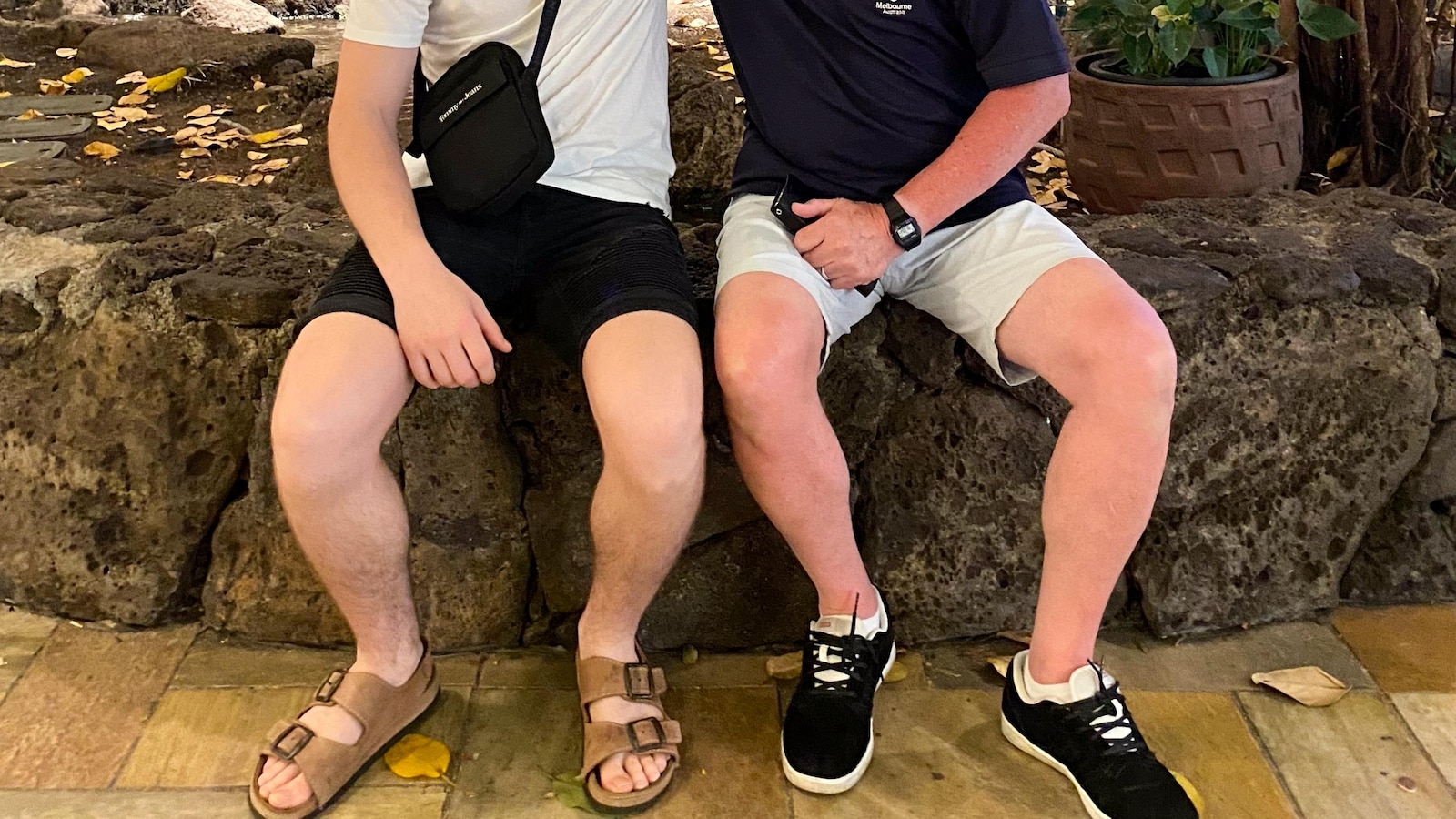
    MELBOURNE, Australia — Wayne Holdsworth became an advocate for banning Australian children younger than 16 from social media because his son took his own life after falling victim to an online sextortion scam.

    Mac Holdsworth died last year at his Melbourne family home at the age of 17 after a 47-year-old Sydney man who purported to be an 18-year-old woman demanded money for an intimate image the boy had shared.

    Since then, the grieving father has taken his tragic story to around 20 schools to warn students of the risks of social media.

    “I saw firsthand the damage that social media could do. I saw Mac, my son, get sexually extorted on social media,” Holdsworth said. “His mental health deteriorated at a rapid rate.”

    Online predators began approaching the teenager before his 16th birthday and his father believes such a ban could have saved his life.

    Australia’s House of Representatives on Wednesday voted for such a ban and the Senate is expected to make it law soon.

    Holdsworth said most of the 3,000 students he’s spoken to, from age 12 to 17, agree with a ban on children under the age of 16.

    “They come up to me and they say, ‘I’m so glad that this is going to be implemented,’” Holdsworth said. “Even the kids see it now that they’re going to be protected from those predators outside that are preying on them.”

    He said three girls approached him after a school address on Monday to tell him that they were being subjected to sextortion. One had already handed over 2,500 Australian dollars ($1,600) of her parents’ money to a blackmailer.

    Holdsworth said he was the first adult they had confided in.

    “The parent won’t know until the credit card statement comes out,” he said.

    “So it’s prevalent. It happened last night and it’ll happen tonight,” he added.

    Holdsworth described the government plan to ban children younger than 16 from social media as “absolutely essential for the safety of our children.”

    But not all parents are convinced that banning young children from social media is the answer.

    Critics say the legislation was rushed through Parliament without adequate scrutiny, would not work, would create privacy risks for users of all ages and would take away parents’ authority to decide what’s best for their children.

    They also argue the ban would isolate children, deprive them of positive aspects of social media, drive children to the dark web, make children too young for social media reluctant to report harms they encounter, and take away incentives for platforms to make online spaces safer.

    Independent Sydney lawmaker Kylea Tink on Tuesday became the first member of the House of Representatives to speak publicly against the bill, which would make platforms including TikTok, Facebook, Snapchat, Reddit, X and Instagram liable for fines of up to 50 million Australian dollars ($33 million) for systemic failures to prevent young children from holding accounts.

    “As a mom of three young adults … I’m very aware of the negative impacts of social media and the challenges of parenting in this digital world,” Tink told Parliament. “I also recognize, however, that my children are digital natives and are very literate about how these platforms work. For this reason, I encourage everyone involved in this debate to ensure they are listening to the voices of young Australians when it comes to this decision-making process rather than assuming that the grownups in the room know best.”

    Tink was among 13 lawmakers who voted against the bill in the House on Wednesday. They were overwhelmed by 102 legislators who voted for it.

    The platforms have urged a Senate committee that examined the legislation on Monday to delay a vote until after a government-commissioned evaluation of age assurance technologies is completed next June.

    The four-hour committee meeting on Monday attracted 15,000 written submissions.

    X Corp. told the committee that billionaire entrepreneur Elon Musk’s platform had “serious concerns as to the lawfulness of the bill,” including its compatibility with the U.N. Convention on the Rights of the Child and the International Covenant on Civil and Political Rights.

    “There is no evidence that banning young people from social media will work and to make it law in the form proposed is highly problematic,” X said.

    Meta, which owns Facebook and Instagram, said the legislation was “inconsistent with what Australian parents have told us that they want, which is a simple and effective way for them to set controls and manage their teens’ online experience.”

    Under the bill, parental consent for children to use social media does not override the ban.

    Lizzie O’Shea, chair of the Digital Rights Watch charity, which aims to uphold the digital rights of Australians, said she was appalled by the process and limited timeframe the government used to pass such significant and contentious legislation.

    She said she was very aware of the serious risks posed by social media platforms, “but I do not support a ban personally because I understand both the limits of that particular policy and the expert evidence that is coming out from people who work in this space about the problems for young people being excluded from those spaces,” O’Shea said.

    Her concerns centered on privacy, negative mental health impacts on excluded children and the possibility that young children would find ways to access social media spaces that would become even less child friendly as a result of the ban.

    “I’m profoundly aware of the dangers of large social media platforms running a certain kind of business model that prioritizes data extraction and exploitation of vulnerability over the public interest or the building of community and the protection of democracy,” she said.

    Swinburne University digital media expert Belinda Barnet, who supports the ban, feels she is part of a minority among professionals in the digital field.

    “I like it mainly because I think many of the social media platforms as they exist right now are not suitable environments for young children,” she said.

    Source link

  • Australia’s House of Representatives passes bill that would ban young children from social media

    Australia’s House of Representatives passes bill that would ban young children from social media

    MELBOURNE, Australia — Australia’s House of Representatives on Wednesday passed a bill that would ban children younger than 16 years old from social media, leaving it to the Senate to finalize the world-first law.

    The major parties backed the bill that would make platforms including TikTok, Facebook, Snapchat, Reddit, X and Instagram liable for fines of up to 50 million Australian dollars ($33 million) for systemic failures to prevent young children from holding accounts.

    The legislation passed 102 votes in favor to 13 against. If the bill becomes law this week, the platforms would have one year to work out how to implement the age restrictions before the penalties are enforced.

    Opposition lawmaker Dan Tehan told Parliament the government had agreed to accept amendments in the Senate that would bolster privacy protections. Platforms would not be allowed to compel users to provide government-issued identity documents including passports or driver’s licenses. The platforms also could not demand digital identification through a government system.

    “Will it be perfect? No. But is any law perfect? No, it’s not. But if it helps, even if it helps in just the smallest of ways, it will make a huge difference to people’s lives,” Tehan told Parliament.

    Communications Minister Michelle Rowland said the Senate would debate the bill later Wednesday. The major parties’ support all but guarantees the legislation will pass in the Senate, where no party holds a majority of seats.

    Lawmakers who were not aligned with either the government or the opposition were most critical of the legislation during debate on Tuesday and Wednesday.

    Criticisms include that the legislation had been rushed through Parliament without adequate scrutiny, would not work, would create privacy risks for users of all ages and would take away parents’ authority to decide what’s best for their children.

    Critics also argue the ban would isolate children, deprive them of positive aspects of social media, drive children to the dark web, make children too young for social media reluctant to report harms they encountered and take away incentives for platforms to make online spaces safer.

    Independent lawmaker Zoe Daniel said the legislation would “make zero difference to the harms that are inherent to social media.”

    “The true object of this legislation is not to make social media safe by design, but to make parents and voters feel like the government is doing something about it,” Daniel told Parliament.

    “There is a reason why the government parades this legislation as world-leading, that’s because no other country wants to do it,” she added.

    T he platforms had asked for the vote on legislation to be delayed until at least June next year when a government-commissioned evaluation of age assurance technologies made its report on how the ban could been enforced.

    Melbourne resident Wayne Holdsworth, whose 17-year-old son Mac took his own life last year after falling victim to an online sextortion scam, described the bill as “absolutely essential for the safety of our children.”

    “It’s not the only thing that we need to do to protect them because education is the key, but to provide some immediate support for our children and parents to be able to manage this, it’s a great step,” the 65-year-old online safety campaigner told The Associated Press on Tuesday.

    “And in my opinion, it’s the greatest time in our country’s history,” he added, referring to the pending legal reform.

    Source link