hacklink hack forum hacklink film izle hacklink marsbahisizmir escortsahabetpornJojobetcasibom girişgalabetBakırköy Escortcasibom9018betgit casinomarsbahismatbet girişcasibomlink 5k depositjojobetonwinmatbetalobet

Tag: mpox

  • Why is Congo struggling to contain mpox?

    Why is Congo struggling to contain mpox?

    KAVUMU, Congo — Health authorities have struggled to contain outbreaks of mpox in Congo, a huge central African country where a myriad of existing problems makes stemming the spread particularly hard.

    Last month, the World Health Organization declared the outbreaks in Congo and about a dozen other African countries a global health emergency. And in Congo, scientists have identified a new strain of mpox that may spread more easily. It has reached areas where conflict and the displacement of a large number of people have already put health services under pressure.

    Overall, Congo has more than 21,000 of the 25,093 confirmed and suspected mpox cases in Africa this year, according to WHO’s most recent count.

    Yes, Congo is one of the African countries where mpox has been endemic for decades.

    Mpox, once known as monkeypox, comes from the same family of viruses as smallpox but causes milder symptoms such as fever. People with more serious cases can develop skin lesions. More than 720 people in Africa have died in the latest outbreaks, mostly in Congo.

    Mpox is a zoonotic disease, meaning it can spread to humans from infected animals. In the global mpox outbreak of 2022, the virus spread between people primarily through sex and close physical contact.

    In September 2023, mpox spread to Congo’s eastern province of South Kivu; it had previously been seen in the center and far west. Scientists then identified a new form of mpox in South Kivu that may be more infectious.

    The WHO said that from the outbreak in South Kivu, the virus spread among people elsewhere in the country, arriving in neighboring province North Kivu. Those two provinces — some 2,000 kilometers (1,240 miles) from the capital, Kinshasa — face escalating violence, a humanitarian crisis and other issues.

    More than 120 armed groups have been fighting each other and the Congolese army for years in the eastern part of the country over the control of minerals. That has forced millions of people fleeing violence into refugee camps or nearby towns.

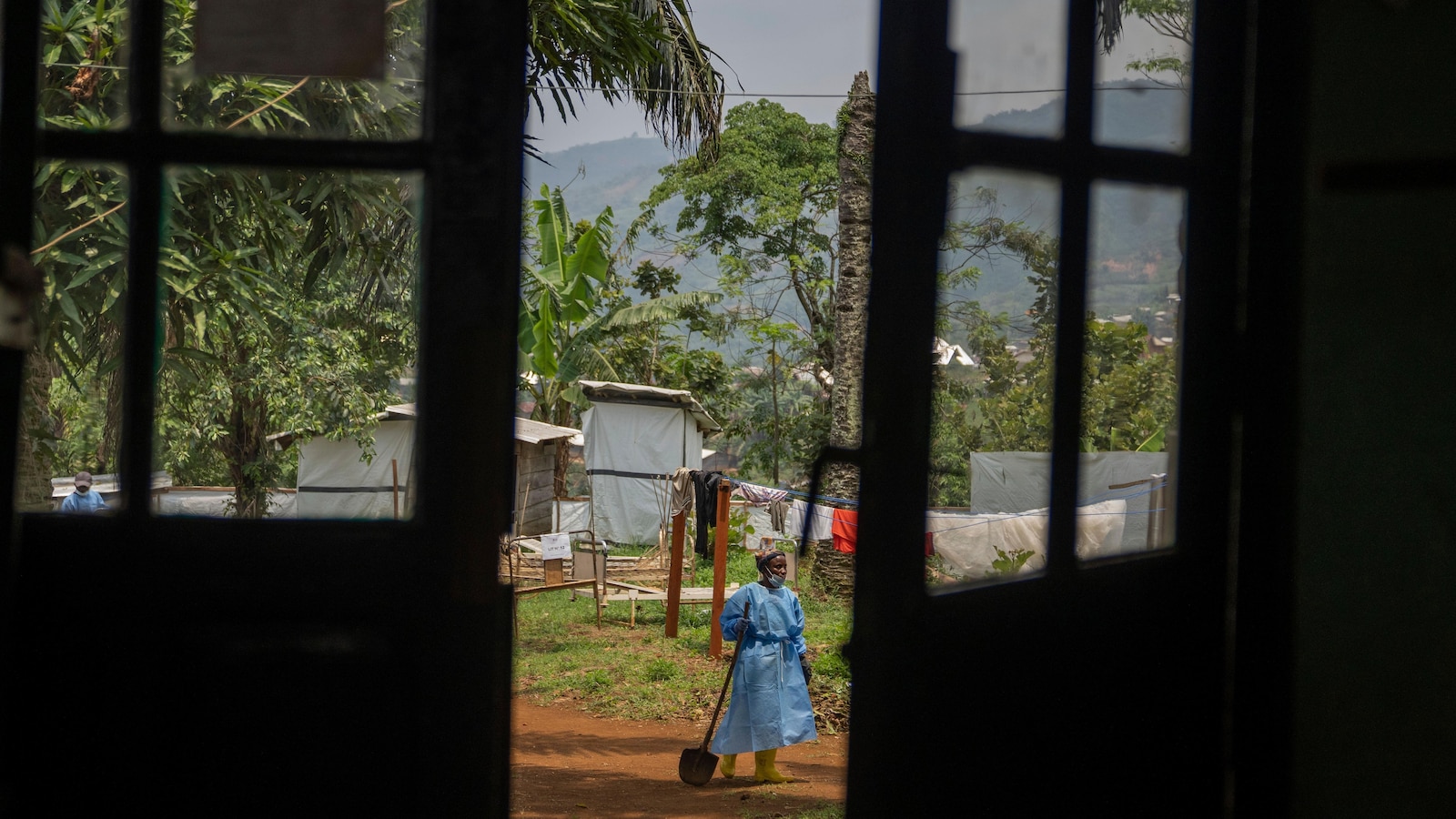
    That means mpox is hitting already-stretched health facilities. Dr. Musole Mulambamunva Robert, medical director of the Kavumu hospital in eastern Congo, said it is “truly a challenge” — sometimes treating as many as four times the facility’s capacity for patients.

    With more than 6 million displaced people in the east, authorities and aid agencies were already struggling to provide food and healthcare, while fighting other diseases such as cholera. Many people have no access to soap, clean water or other basics.

    Some eastern Congo communities are out of reach of health clinics — roads are unreliable, and hourslong risky boat trips are sometimes the only means of transport, said Mercy Muthee Lake of the International Federation of Red Cross and Red Crescent.

    People can be more susceptible to severe mpox cases because of malnutrition and undiagnosed HIV, she said.

    She also said health workers in eastern Congo have requested more mpox training as medications to treat fever and ease pain run out.

    Health authorities “are up against it because it’s such a complex area,” said Chris Beyrer, of Duke University’s Global Health Institute.

    Africa has no capacity to produce mpox vaccines. Around 250,000 doses have arrived in Congo from the European Union and the United States, and more are expected. Congolese authorities say they need around 3 million vaccines. It will likely be weeks before any vaccines reach people in eastern Congo.

    For now, the vaccine is approved only for adults. There’s limited evidence of how it works in children.

    Vaccines are desperately needed, but they’re just “an additional tool,” said Emmanuel Lampaert, the Congo representative for Doctors Without Borders. The key, Lampaert said, is still identifying cases, isolating patients, and executing grassroots health and education campaigns.

    Local conditions make that trying — Lampaert noted it’s almost impossible to isolate cases among poor, displaced people.

    “Families with six to eight children are living in a hut, which is maybe the space of the bed we are sleeping in,” he said. “So, this is the reality.”

    Unlike the millions of dollars that poured into Congo for Ebola and COVID aid, the response to mpox has been sluggish, many critics say.

    Health experts say the sharp contrast is due to a lack of both funds and international interest.

    “Ebola is the most dangerous virus in the world, and COVID wiped out the world economy,” said professor Ali Bulabula, who works on infectious diseases in the medical department at Congo’s University of Kindu. “While mpox is a public health emergency of international concern, there is a lack of in-depth research and interest in the virus, as it’s still seen as a tropical disease, localized to Africa with no major impact on Western economies.”

    ___

    Asadu reported from Abuja, Nigeria, and Imray reported from Cape Town, South Africa. AP reporter Sam Mednick contributed from Kamituga, Congo.

    ___

    For more news on Africa and development: https://apnews.com/hub/africa-pulse

    ___

    The Associated Press receives financial support for global health and development coverage in Africa from the Gates Foundation. The AP is solely responsible for all content. Find AP’s standards for working with philanthropies, a list of supporters and funded coverage areas at AP.org.

    Source link

  • A gold mining town in Congo has become an mpox hot spot as a new strain spreads

    A gold mining town in Congo has become an mpox hot spot as a new strain spreads

    KAMITUGA, Congo — Slumped on the ground over a mound of dirt, Divine Wisoba pulled weeds from her daughter’s grave. The 1-month-old died from mpox in eastern Congo in August, but Wisoba, 21, was too traumatized to attend the funeral.

    In her first visit to the cemetery, she wept into her shirt for the child she lost and worried about the rest of her family. “When she was born, it was as if God had answered our prayers — we wanted a girl,” Wisoba said of little Maombi Katengey. “But our biggest joy was transformed into devastation.”

    Her daughter is one of more than 6,000 people officials suspect have contracted the disease in South Kivu province, the epicenter of the world’s latest mpox outbreak, in what the World Health Organization has labeled a global health emergency. A new strain of the virus is spreading, largely through skin-to-skin contact, including but not limited to sex. A lack of funds, vaccines and information is making it difficult to stem the spread, according to alarmed disease experts.

    Mpox — which causes mostly mild symptoms like fever and body aches, but can trigger serious cases with prominent blisters on the face, hands, chest and genitals — had been spreading mostly undetected for years in Africa, until a 2022 outbreak reached more than 70 countries. Globally, gay and bisexual men made up the vast majority of cases in that outbreak. But officials note mpox has long disproportionately affected children in Africa, and they say cases are now rising sharply among kids, pregnant women and other vulnerable groups, with many types of close contact responsible for the spread.

    Health officials have zeroed in on Kamituga, a remote yet bustling gold mining town of some 300,000 people that attracts miners, sex workers and traders who are constantly on the move. Cases from other parts of eastern Congo can be traced back here, officials say, with the first originating in the nightclub scene.

    Since this outbreak began, one year ago, nearly 1,000 people in Kamituga have been infected. Eight have died, half of them children.

    Last month, the World Health Organization said mpox outbreaks might be stopped in the next six months, with governments’ leadership and cooperation.

    But in Kamituga, people say they face a starkly different reality.

    There’s a daily average of five new cases at the general hospital, which is regularly near capacity. Overall in South Kivu, weekly new suspected cases have skyrocketed from about 12 in January to 600 in August, according to province health officials.

    Even that’s likely an underestimate, they say, because of a lack of access to rural areas, the inability of many residents to seek care, and Kamituga’s transient nature.

    Locals say they simply don’t have enough information about mpox.

    Before her daughter got sick, Wisoba said, she was infected herself but didn’t know it.

    Painful lesions emerged around her genitals, making walking difficult. She thought she had a common sexually transmitted infection and sought medicine at a pharmacy. Days later, she went to the hospital with her newborn and was diagnosed with mpox. She recovered, but her daughter developed lesions on her foot.

    Nearly a week later, Maombi died at the same hospital that treated her mother.

    Wisoba said she didn’t know about mpox until she got it. She wants the government to invest more in teaching people protective measures.

    Local officials can’t reach areas more than a few miles outside Kamituga to track suspected cases or inform residents. They broadcast radio messages but say that doesn’t reach far enough.

    Kasindi Mwenyelwata goes door to door describing how to detect mpox — looking for fevers, aches or lesions. But the 42-year-old community leader said a lack of money means he doesn’t have the right materials, such as posters showing images of patients, which he finds more powerful than words.

    ALIMA, one of the few aid groups working on mpox in Kamituga, lacks funds to set up programs or clinics that would reach some 150,000 people, with its budget set to run out at year’s end, according to program coordinator Dr. Dally Muamba.

    If support keeps waning and mpox spreads, he said, “there will be an impact on the economy, people will stop coming to the area as the epidemic takes its toll. … And as the disease grows, will resources follow?”

    Health experts agree: What’s needed most are vaccines — even if they go only to adults, under emergency approval in Congo.

    None has arrived in Kamituga, though it’s a priority city in South Kivu, officials said. It’s unclear when or how they will. The main road into town is unpaved — barely passable by car during the ongoing rainy season.

    Once they make it here, it’s unclear whether supply will meet demand for those who are at greatest risk and first in line: health staff, sex workers, miners and motorcycle taxi drivers.

    Congo’s government has budgeted more than $190 million for its initial mpox response, which includes the purchase of 3 million vaccine doses, according to a draft national mpox plan, widely circulating among health experts and aid groups this month and seen by The Associated Press. But so far, just 250,000 doses have arrived in Congo and the government’s given only $10 million, according to the finance ministry.

    Most people with mild cases recover in less than two weeks. But lesions can get infected, and children or immunocompromised people are more prone to severe cases.

    Doctors can ensure lesions are clean and give pain medication or antibiotics for secondary infections such as sepsis.

    But those who recover can get the virus again.

    Experts say a lack of resources and knowledge about the new strain makes it difficult to advise people on protecting themselves. An internal report circulated among aid groups and agencies and seen by AP labeled confidence in the available information about mpox in eastern Congo and neighboring countries low.

    While the variant is known to be more easily transmissible through sex, it’s unclear how long the virus remains in the system. Doctors tell recovered patients to abstain from sex for three months, but acknowledge the number’s largely arbitrary.

    “Studies haven’t clarified if you’re still contagious or not … if you can or can’t have sex with your wife,” said Dr. Steven Bilembo, of Kamituga’s general hospital.

    Doctors say they’re seeing cases they simply don’t understand, such as pregnant women losing babies. Of 32 pregnant women infected since January, nearly half lost the baby through miscarriage or stillbirth, hospital statistics show.

    Alice Neema was among them. From the hospital’s isolation ward, she told AP she’d noticed lesions around her genitals and a fever — but didn’t have enough money to travel the 30 miles (50 kilometers) on motorbike for help in time. She miscarried after her diagnosis.

    As information trickles in, locals say fear spreads alongside the new strain.

    Diego Nyago said he’d brought his 2-year-old son, Emile, to the hospital for circumcision when he developed a fever and lepasions.

    It was mpox — and today, Nyago is grateful he was already at the hospital.

    “I didn’t believe that children could catch this disease,” he said as doctors gently poured water over the boy to bring his temperature down. “Some children die quickly, because their families aren’t informed.

    “Those who die are the ones who stay at home.”

    ___

    AP reporters Jean-Yves Kamale in Kinshasa, Congo, and Maria Cheng in London contributed.

    ___

    The Associated Press Health and Science Department receives support from the Howard Hughes Medical Institute’s Science and Educational Media Group. The AP is solely responsible for all content.

    Source link