Sporting body said Australia Day would not be commemorated in 2025
Cricket Australia did not mention Australia Day at Gabba Test
January 26 has become a very divisive day for Aussies
By JAMES COONEY FOR DAILY MAIL AUSTRALIA
Published: | Updated:
The incoming CEO of Cricket Australia says that Australia Day will be commemorated from now on after the sporting organisation decided to not make reference to the national public holiday earlier this year.
Cricket fans across the nation won’t see any team in green and gold playing on Australia Day this summer because of a clash with the Australian Open.
But recently appointed cricket CEO Todd Greenberg says that going forward Australia Day will be celebrated and cricket will be played.
‘The cricket Australia board has spoken about it and they will playing matches in the future on Australia Day – but they do understand that we will need to do that respectfully and consult the right people and the right groups,’ Greenberg told 2GB breakfast host Ben Fordham.
‘My personal view on this is that I’ve loved Australia Day since i was a kid, but when you reflect on history and listen to other people’s views you can appreciate it is a difficult day for some people.
‘So, we have to respect that, but ultimately I think what you’ll see going forward is that if there’s opportunities to play cricket on Australia Day we will be – we will just do it respectfully.
Australian cricket CEO Todd Greenberg (pictured) says that going forward Australia Day will be celebrated by the sporting body
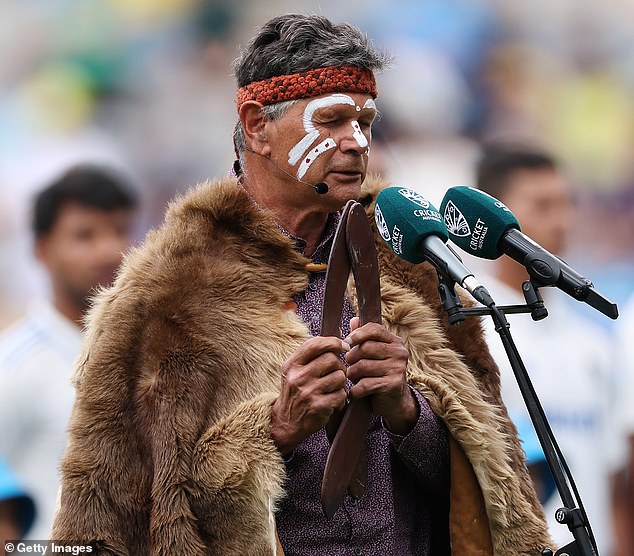
Cricket Australia refused to mention the national public holiday during the second Test at the Gabba in Brisbane earlier this year
Fordham quizzed Greenberg on what he meant by ‘respectfully’, explaining that many Australians feel like they aren’t allowed to celebrate the day.
‘Oh, no, we will be celebrating it – absolutely!’ Greenberg replied.
‘For those who who want to celebrate it, they are more than welcome to – and a day at the cricket is probably the best way to do it.
‘When I say ‘respectfully’, it’s just making sure that we understand that the day means different things to different people. And making sure we find a balance there.’
The decision to schedule the Test over the Australia Day weekend in 2024 was itself controversial, with women’s all-rounder Ash Gardner previously describing it as a day of ‘hurt and mourning’.
Gardner found support from men’s Test captain Pat Cummins and star batter Steve Smith.
Both claimed January 26 is not an appropriate time to celebrate the national holiday, with the date a highly controversial issue due to the landing of the First Fleet from Britain in Australia.
Smith formed his view after chatting with teammate Scott Boland, who has Indigenous heritage.
Indigenous cricketers Scott Boland and Ash Gardner have expressed their reservations about playing on Australia Day
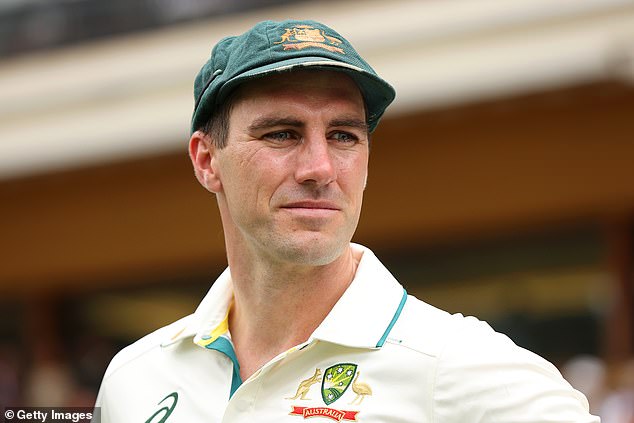
Australia cricket captain Pat Cummins (pictured) has called for the the date of Australia Day to be changed
However Cricket Australia’s attempt to placate such opponents by shying away from acknowledging the national day also angered players who wanted the day celebrated.
Former test player Greg Ritchie was one of those.
‘I am quite disappointed to read the Cricket Australia has decided not to use the phrase ‘Australia Day’ for this Test match,’ Ritchie said.
‘It will be at the Gabba, which is my home ground, and to have an Australia Day Test there is special.’
Ben FordhamAustralia Cricket
Share or comment on this article:
New cricket boss Todd Greenberg makes a STUNNING call on Australia Day after sport vowed to cancel the national holiday
Sprint prodigy Gout Gout has continued his metaphoric rise in Australian athletics with a stunning 100m heat run in gusty conditions at the Australian All Schools Athletics Championships in Brisbane.
Running in the final just hours later on Friday afternoon, Gout set a personal best and new under-18 national record after winning the U18 100m final in a legal time of 10.17 (+0.9).
Gout started behind the eight-ball before exploding over the final 50 metres with an elongated stride.
LIVE UPDATES:Australia v India second Test
READ MORE:Origin star drops contract bombshell on Cowboys
READ MORE:Aussie teen’s bold call in bid to emulate Bolt
Earlier, Gout delivered a blistering performance of 10.04 (+3.4 tail-wind) seconds to dominate his 100m heat.
The 16-year-old’s effort is the fifth fastest all-conditions time by an Australian man in history.
While not a legal time because of the wind, the time places him behind only Patrick Johnson, Rohan Browning, Tim Jackson and Matt Shirvington.
Gout Gout wins his boy;s U18 100m heat in 10.04 seconds with a +3.4 tail-wind at the Australian All Schools Athletics Championship. Cameron Spencer via Getty Images
Bottom aged, Gout burst out of the blocks before hitting his full stride at the 30m mark — and never looked back.
Gout’s recent showings have earned him comparisons to sprint legend Usain Bolt in his younger years.
“Sure this is heavily wind-assisted but the way Gout Gout just floats across the track over the last 40 metres is incredible. Tell me it doesn’t remind you of the way Usain Bolt glided at his peak,” 9News Brisbane reporter Mark Gottlieb wrote on X.
“Gonna be an absolute superstar this kid.”
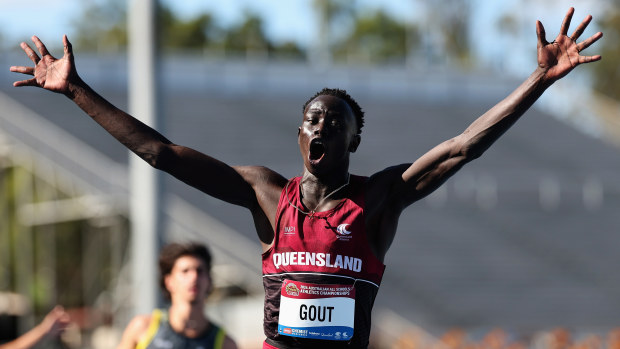
Gout Gout celebrates winning the boys’ U18 100m final at the Australian All Schools Athletics Championship. Cameron Spencer via Getty Images
Competing at his home track, Gout will contest the 100m and 200m events at the top meet for Australian school-aged track and field athletes.
“QSAC has a special place in my heart because of all the unforgettable memories I’ve made there. Cheering for my team and celebrating victories with friends makes it more than just a venue; it’s a part of my story for sure,” Gout said in an Athletics Australia statement ahead of the championships.
Last month, Gout clocked an Australian Under 20 record of 20.29 seconds over 200m at the Queensland All Schools Track and Field Championships.
In August, he announced himself on the world stage after dashing to silver in the boy’s 200m final at the World Athletics U20 Championships.
Sprint prodigy Gout Gout has continued his metaphoric rise in Australian athletics with a stunning 100m heat run in gusty conditions at the Australian All Schools Athletics Championships in Brisbane.
Running in the final just hours later on Friday afternoon, Gout set a personal best and new under-18 national record after winning the U18 100m final in a legal time of 10.17 (+0.9).
Gout started behind the eight-ball before exploding over the final 50 metres with an elongated stride.
LIVE UPDATES:Australia v India second Test
READ MORE:Origin star drops contract bombshell on Cowboys
READ MORE:Aussie teen’s bold call in bid to emulate Bolt
Earlier, Gout delivered a blistering performance of 10.04 (+3.4 tail-wind) seconds to dominate his 100m heat.
The 16-year-old’s effort is the fourth fastest all-conditions time by an Australian man in history.
While not a legal time because of the wind, the time places him behind only Patrick Johnson, Rohan Browning and Matt Shirvington.
Gout Gout wins his boy;s U18 100m heat in 10.04 seconds with a +3.4 tail-wind at the Australian All Schools Athletics Championship. Cameron Spencer via Getty Images
Bottom aged, Gout burst out of the blocks before hitting his full stride at the 30m mark — and never looked back.
Gout’s recent showings have earned him comparisons to sprint legend Usain Bolt in his younger years.
“Sure this is heavily wind-assisted but the way Gout Gout just floats across the track over the last 40 metres is incredible. Tell me it doesn’t remind you of the way Usain Bolt glided at his peak,” 9News Brisbane reporter Mark Gottlieb wrote on X.
“Gonna be an absolute superstar this kid.”
Gout Gout celebrates winning the boys’ U18 100m final at the Australian All Schools Athletics Championship. Cameron Spencer via Getty Images
Competing at his home track, Gout will contest the 100m and 200m events at the top meet for Australian school-aged track and field athletes.
“QSAC has a special place in my heart because of all the unforgettable memories I’ve made there. Cheering for my team and celebrating victories with friends makes it more than just a venue; it’s a part of my story for sure,” Gout said in an Athletics Australia statement ahead of the championships.
Last month, Gout clocked an Australian Under 20 record of 20.29 seconds over 200m at the Queensland All Schools Track and Field Championships.
In August, he announced himself on the world stage after dashing to silver in the boy’s 200m final at the World Athletics U20 Championships.
Sprint prodigy Gout Gout has continued his metaphoric rise in Australian athletics with a stunning 100m heat run in gusty conditions at the Australian All Schools Athletics Championships in Brisbane.
Running in the final just hours later on Friday afternoon, Gout set a personal best and new under-18 national record after winning the U18 100m final in a legal time of 10.17 (+0.9).
Gout started behind the eight-ball before exploding over the final 50 metres with an elongated stride.
LIVE UPDATES:Australia v India second Test
READ MORE:Origin star drops contract bombshell on Cowboys
READ MORE:Aussie teen’s bold call in bid to emulate Bolt
Earlier, Gout delivered a blistering performance of 10.04 (+3.4 tail-wind) seconds to dominate his 100m heat.
The 16-year-old’s effort is the fourth fastest all-conditions time by an Australian man in history.
While not a legal time because of the wind, the time places him behind only Patrick Johnson, Rohan Browning and Matt Shirvington.
Gout Gout wins his boy;s U18 100m heat in 10.04 seconds with a +3.4 tail-wind at the Australian All Schools Athletics Championship. Cameron Spencer via Getty Images
Bottom aged, Gout burst out of the blocks before hitting his full stride at the 30m mark — and never looked back.
Gout’s recent showings have earned him comparisons to sprint legend Usain Bolt in his younger years.
“Sure this is heavily wind-assisted but the way Gout Gout just floats across the track over the last 40 metres is incredible. Tell me it doesn’t remind you of the way Usain Bolt glided at his peak,” 9News Brisbane reporter Mark Gottlieb wrote on X.
“Gonna be an absolute superstar this kid.”
Gout Gout celebrates winning the boys’ U18 100m final at the Australian All Schools Athletics Championship. Cameron Spencer via Getty Images
Competing at his home track, Gout will contest the 100m and 200m events at the top meet for Australian school-aged track and field athletes.
“QSAC has a special place in my heart because of all the unforgettable memories I’ve made there. Cheering for my team and celebrating victories with friends makes it more than just a venue; it’s a part of my story for sure,” Gout said in an Athletics Australia statement ahead of the championships.
Last month, Gout clocked an Australian Under 20 record of 20.29 seconds over 200m at the Queensland All Schools Track and Field Championships.
In August, he announced himself on the world stage after dashing to silver in the boy’s 200m final at the World Athletics U20 Championships.
But if you believe the average Spanish sports fan has the capacity to distinguish between XVs rugby and the sevens version, or understands the team their country just beat actually didn’t contain a single All Blacks player, think again.
The breathless coverage reminded Sports Insider of the time when the USA Eagles beat our men’s sevens team for the first time and the headlines Stateside read: “USA Eagles shock the world.”
Pol Pla, of Spain, scores against the All Blacks Sevens in Dubai. Photo / Getty Images
It mattered not that it was the sevens team. Americans didn’t get that nuance.
Back to Dubai. Our men’s sevens team are hardly “titans”. Nor is it a shock when they get beaten (which seems to be increasingly often nowadays).
One wonders if the casual Arab sports fan is no different to the American. Did the All Blacks brand just take a hit in the Middle East, where the biggest sports money tap is now located?
The Dubai results simply reinforce how daft and inaccurate it is that New Zealand Rugby insists the men’s sevens team must be called the “All Blacks Sevens”.
In its collective wisdom, New Zealand Rugby (NZR) believes calling the sevens specialists the All Blacks adds to the lustre of the black jersey and creates additional commercial opportunities and increased awareness of our dominant rugby heritage.
I’d argue it does the opposite. If anything, it undermines the All Blacks brand as casual sports fans around the globe cast a superficial eye over international media coverage and see headlines of rugby minnows increasingly lowering our colours.
And now we have the added folly of the same smoke and mirrors being applied to the XVs game with the “All Blacks XV” now touring annually, when in fact most Kiwis would prefer they were called “New Zealand A” in convention with other national unions.
But Silver Lake and the marketing boffins at NZR don’t see it that way.
It’s obvious the majority of Kiwi fans disagree and overwhelmingly decry the All Blacks moniker being given to anything other than the best men’s XVs team we can put on the park.
Directors and executives grossly overpaying themselves
While this madness is going on, directors and senior executives at NZR are paying themselves unprecedented salaries and fees.
Gregor Paul’s revelations in the Herald this week that, on average, senior executives at NZR are paid $467,000 annually and that directors fees now total $1.4 million a year, the latter being more than the yearly grant paid to Heartland unions, should outrage rugby fans.
An average obviously means some executives are on higher wages.
The provincial rumour mill is claiming that the combined salaries of the top two executives in the game (one from NZR and one recently departed from its commercial arm) total more than $2 million.
If that’s accurate, it’s an even greater outrage.
Elite professional sport does need to employ capable executives and pay for competent directors, and those sorts of salaries and fees are not uncommon. But not when an organisation is bleeding money (almost $80m in losses in the past two years) and its flawed strategy is being exposed on a regular basis.
And nor when the independent Pilkington review, commissioned by NZR, has found the organisation’s governance no longer fit for purpose.
Meanwhile, the self-congratulation continues with NZR patting itself on the back for achieving one million subscribers to its All Blacks YouTube channel.
Let’s not forget that earlier this year, NZR ran the white flag up on its misguided NZR+ digital channel, which is costing it more than $10m a year, to pivot to promoting its premium content on YouTube instead.
And if you think a million subscribers on YouTube is some sort of incredible feat, here’s some context around how the numbers stack up for “the greatest team in the history of (all) sport”. Food for thought:
There are approximately 41,900 YouTube channels with over a million subscribers. The All Blacks need to swell their audience by more than five times to five million to even crack the top 100 in sports channels.
A single individual, Ilona Maher, an American rugby sevens player, has over eight million followers across social media, including 4.6 million on Instagram alone (the All Blacks have 2.6 million on Instagram).
A Canadian gymnast named Anna McNulty has almost 10 million YouTube subscribers, as does the Australian cricket team, while Pakistan and Sri Lanka both top five million each (five times the audience of the All Blacks).
French freestyle football player Sean Garnier has almost six million subscribers on YouTube.
If you’ve never even heard of Maher, McNulty or Garnier, join the club.
Even then, to increase the audience, the All Blacks have been forced to piggy-back off international YouTube “sports influencers” who have much bigger numbers.
Hence we have had visits to New Zealand at God knows what cost by the likes of some Americans named “Dude Perfect” (60 million subscribers) and a “Japanese sensation” called the Fischers (eight million), who performed such riveting content as learning how to kick a rugby ball and playing “monster tag”.
Dude Perfect (left and centre), with Richie McCaw, promote a new partnership with the All Blacks.
I wonder what traditional Kiwi rugby fans make of it all.
It’s yet another example of the squandering of money and more of the nonsensical rhetoric NZR continues to push down our throats.
NZR told us during the Silver Lake negotiation saga that there are 60 million All Blacks fans around the world and they wanted to “monetise” them with the Americans’ help. A dollar per fan and there’s $60m annually, went the spiel.
So three years into the deal, we’ve managed to, on average, convince one in every 60 global fans to follow the team’s YouTube content even though it’s free.
Not sure I’d be boasting about that.
Chris Wood and his colourful Notts Forest owner
Has New Zealand football (with a lower case ‘f’) ever had a more golden period than right now?
Auckland FC sit magnificently astride the top of the A-League table with five wins, not a single goal conceded, and the Wellington Phoenix breathing down their necks, therefore setting the stage for a bumper return derby at Mt Smart Stadium on Saturday that will rival Warriors crowds of this year.
Chris Wood has been shining for Nottingham Forest in the Premier League and for the All Whites. Photo / Photosport
Chris Wood’s match-winning penalty against Ipswich Town last weekend not only made the All Whites striker the joint top scorer in his club Nottingham Forest’s Premier League (EPL) history* but also reinforced his position among the EPL’s top scorers this season.
Only Liverpool talisman Mo Salah (13) Manchester City’s Erling Haaland (12) have found the net more often than the nine goals Wood has racked up so far this season.
The 32-year-old former Hamiltonian’s goal against Ipswich also reinforced his growing reputation as potentially the EPL’s best penalty taker.
Wood has an unblemished record of seven successes from as many attempts during his EPL career and has not missed from the spot in a match of consequence since 2016, when he was playing for Leeds United.
Wood might want to steer clear of celebrating too closely with Nottingham Forest’s owner though.
Greek shipping magnate Evangelos Marinakis is one of the more unusual EPL club owners.
For starters, he had previously been accused of heroin trafficking and match-fixing – both charges he successfully fought in court.
However, he now has fresh charges of “inciting sporting violence” and “funding a criminal organisation” to deal with, both related to the murder of a policeman with a flare gun.
Marinakis also owns leading Greek club Olympiakos and prosecutors in his native country claim he was in cahoots with the club’s notorious “Gate 7 firm” who are accused of killing the policeman during a riot.
He denies the charges.
SailGP and Sir Russell Coutts are flying high
If Kiwi football is soaring, our sailing stocks aren’t too far behind either.
Not only is the America’s Cup locked away for at least another two years but SailGP – the brainchild of Sir Russell Coutts – has never been in better shape as it heads into its fifth season.
The series will make its long-awaited Auckland debut in the second event of the 2025 season on January 18-19 and is set for bumper summer crowds eager to watch the action close-up.
But it is the commercial performance of the high-voltage foiling catamarans that is catching the eye.
SailGP is set to break even for the first time, with its managing director Andrew Thompson claiming revenue has “at least doubled” since the 2022-23 series.
The New Zealand SailGP team. Photo / Photosport
Luxury watchmaker Rolex has signed up as the series’ first-ever overall naming-rights sponsor and SailGP has since announced two other major commercial deals with Emirates Airlines and international logistics company DP World.
“Our league is growing revenues,” Thompson told business website SportsPro. “It has always been our aspiration that after five seasons, we’d be in a situation where we are at least breaking even. We’re on track to do that, which is something that’s never happened in this sport before.
Thompson described the 10-year title sponsorship deal with Rolex as a “coming-of-age” partnership, saying Emirates and DP World came on board because of SailGP’s growing presence in the Middle East.
“We have had a number of events in the Middle East now, in both Dubai and Abu Dhabi, which has sparked that interest, frankly,” he said, adding that the US and Asia are the next targets for an expanded presence.
Thompson said SailGP’s new deals put the series alongside some of the biggest global sports organisations from a commercial perspective.
“It is a privilege of ours to be alongside the likes of Wimbledon, [the] PGA Tour and Formula One and others,” he said. “It is certainly our aspiration to be amongst the top tier of sports properties.”
Last season, SailGP claimed its broadcast audience had increased by 48% to reach 193 million households across 212 territories.
First Nations Cup rugby tournament to be played in England in 2026
You read it here first … it will be announced shortly that England will host the inaugural Nations Cup tournament in 2026, between countries from the Northern Hemisphere and the Southern Hemisphere.
The second tournament will be hosted two years later by Qatar, with the blood money set to substantially boost the coffers of individual national unions as the Middle East finally adds rugby to its dubious hosting list of high-profile sports.
England’s Chandler Cunningham-South tackles All Blacks hooker Codie Taylor at Twickenham last month. Photo / Photosport
And the United States has been earmarked for 2030, although there are still several caveats on that yet to be satisfied.
If they are, it means the earliest a Southern Hemisphere country can host the tournament is 2032.
Will New Zealand ever host it?
Not unless Saudi Arabia buys us.
Time zones and commercial imperatives mean the Nations Cup will be no different to the World Cup now – its finals will never be played here.
Team of the Week
Team McLarenBruce McLaren’s name will be celebrated internationally if the team the Kiwi icon inspired can hold off Ferrari to win their first Formula One Constructors Championship in 26 years in the final round of the world championship series in Abu Dhabi on Sunday. Ferrari sit just 21 points behind McLaren’s Lance Stroll and Oscar Piastri.
Steven Adams Tops the Herald’s Sporting Rich list (yet again) with $21m-plus, despite a year out of action injured in the NBA.
Howick College The Auckland school’s golden-point win over red-hot favourites Hamilton Girls’ High School in the final was the best game of the popular Condor sevens tournament.
* Before the Premier League era, Grenville Morris scored the most goals for Nottingham Forest, with 217 career strikes in all competitions
A seismic shift in hockey’s landscape is sending tremors across every level in Canada.
CANMORE – The chaos that happened in November set in for Hudson Sedo.
After a landmark decision to allow Canadian Hockey League (CHL) players in NCAA Division I men’s hockey starting next year, a seismic shift in the winter sport’s landscape is sending tremors across every level in Canada.
By all accounts, it’s been a good kind of chaos for the 18-year-old rookie goaltender, who after quickly establishing himself as one of the best players in the Alberta Junior Hockey League (AJHL), became a top target for recruitment at a higher level elsewhere.
The Western Hockey League (WHL) came calling for Sedo, and so did Team Canada West for the World Junior A Challenge. Sedo flew to Prince Albert, Sask., for a tryout with the Raiders, in hot pursuit of the young netminder’s services, then he is back in Canmore this week before heading to Canada West tryouts.
“I would say it’s been a bit of a whirlwind. Lots of travel and driving and flying, but It’s been an amazing experience so far,” said Sedo, a tall and slim prospect from St. Albert.
Sedo, who has a 7-2-0 record and .926 save percentage with the Eagles, became a sought-after goalie in western Canada this month, after the NCAA voted to make major junior players in Canada eligible to play Division I men’s hockey.
Historically, if teenage players wanted to go the NCAA route, then the Canadian Junior A Hockey League (CJHL) was one of the main pipelines to get there. The NCAA, which regulates student athletics at U.S. post-secondary institutes, had banned what it considered professional athletes in Division I, which players under the CHL banner had fallen under due to receiving compensation – a $ 600 stipend- until the Nov. 7 decision.
The vote gives elite players in leagues like the AJHL the flexibility to now choose destinations like the WHL without fear of losing their NCAA Division I eligibility.
“For myself, as an 18-year-old, it’s a pretty awesome opportunity for me to be able to now look at making that jump to the WHL before heading to the NCAA,” said Sedo.
Clarity on hockey pyramid
President of the Canadian Junior A Hockey League (CJHL) Andy Harkness said he’s encouraged that the NCAA’s new ruling has given clarity on where the CJHL fits into the hockey ecosystem, which is essentially a feeder organization to the CHL.
“At the end of the day, I think this just benefits the hockey players,” said Harkness. “No more decisions at 14 or 15 [years old] of ‘Am I going to NCAA?’ … then we’re going to be a landing spot for CHL players that need more time to develop. So I think it’s all great news and we see it as a win.”
Harkness added the CJHL hasn’t experienced any significant changes but they are anticipating hurdles and a trickle-down effect eventually. However, it’s “great news” to now be able to work with the CHL, said Harkness, as opposed to being seen as competitors.
“We’re evaluating all the different scenarios, but at the end of the day we think it gives us clarity … on our job to develop players,” said Harkness.
Dan Mason, a professor with the University of Alberta’s Faculty of Kinesiology, Sport, and Recreation said that the recruitment implications for junior A leagues will fall on its ability to attract exceptional players.
The CJHL, which overlooks the AJHL, had a competitive advantage to lure players looking at a future in the NCAA.
“I think that there are going to be exceptional players that potentially go to the Western Hockey League before going to the NCAA, which is something that makes the AJHL exciting, at least before the break off of those franchises to the [British Columbia] Hockey League [earlier this year],” said Mason. “But I think that at the very high end, it’s gonna have implications for recruitment and that sort of thing.”
Sedo said he had mixed emotions about the NCAA vote due to the added difficulty and pressure that some Junior A players are now facing since the player pool for the NCAA has become much broader.
“They might not be getting the same eyes and attention as they were prior to the decision to change the rules,” said Sedo.
Teams checking in on Eagles players
This season, Canmore Eagles had its best start to a season in the past two decades, but that has become a double-edged sword for the local Junior A club, with eyes on its top players across multiple leagues.
Around the time of the NCAA vote, the Eagles went on a six-game losing skid that lasted well into November. Losing Sedo for a stretch of games hurt; however, head coach and general manager Andrew Milne thought part of the team’s struggles could have been a “mental battle” with the uncertainty and changes coming.
“Things are moving so fast that the players don’t know what to do and I think it’s just a distraction to the big picture, which is just to control your attitude and your effort,” said Milne in a Nov. 18 interview with the Outlook.
“There’s so much movement right now in the game of hockey, the loyalty is gone and that’s the part of the game that’s a little challenging. The players aren’t quite seeing what the path is to get to the next level because it’s uncertain right now.”
Teams within the British Columbia Hockey League (BCHL), an independent league which welcomed five teams from the AJHL earlier this year, are trying to recruit players.
During the BCHL’s Nov. 20 board of governors meeting, commissioner Steven Cocker said a “small percentage of players have left our league due to this change” in the NCAA.
Milne said BCHL teams were “calling some of our players” after about 40 players left the independent league to join major junior teams in leagues like the WHL or Ontario Hockey League (OHL).
“Where are they replacing those guys from?” said Milne. “Well, they’re calling our guys or their agents are getting a hold of our guys and having discussions and, unfortunately, it just causes a lot of stress for a lot of kids.”
Mason said the main thing to keep in mind is that when the WHL, or other major junior leagues are recruiting, it’s only the high-end players. He added the opportunities that the players will receive outweigh the losses of the individual clubs.
“But at the same time these [Junior A] teams are part of the communities that they play in and people are happy to watch the players play for the love of the game and chase the dream of playing at a higher level,” said Mason. “I think that’s not going to go away, necessarily.”
New opportunities are falling on players like Sedo.
As of Wednesday (Nov. 27), the goalie is the lone Eagles player to be also listed on a WHL roster.
“I’m really grateful for the opportunity that Canmore has provided me to develop as a hockey player, and with this rule change, I think that for me it’s very beneficial and it provides future opportunities at the next level and I’m really excited to entertain those,” said Sedo.
“I’m looking forward to putting on an Eagles jersey back on for this week and hopefully bring some more wins to the team and … I’m excited for what the future holds.”
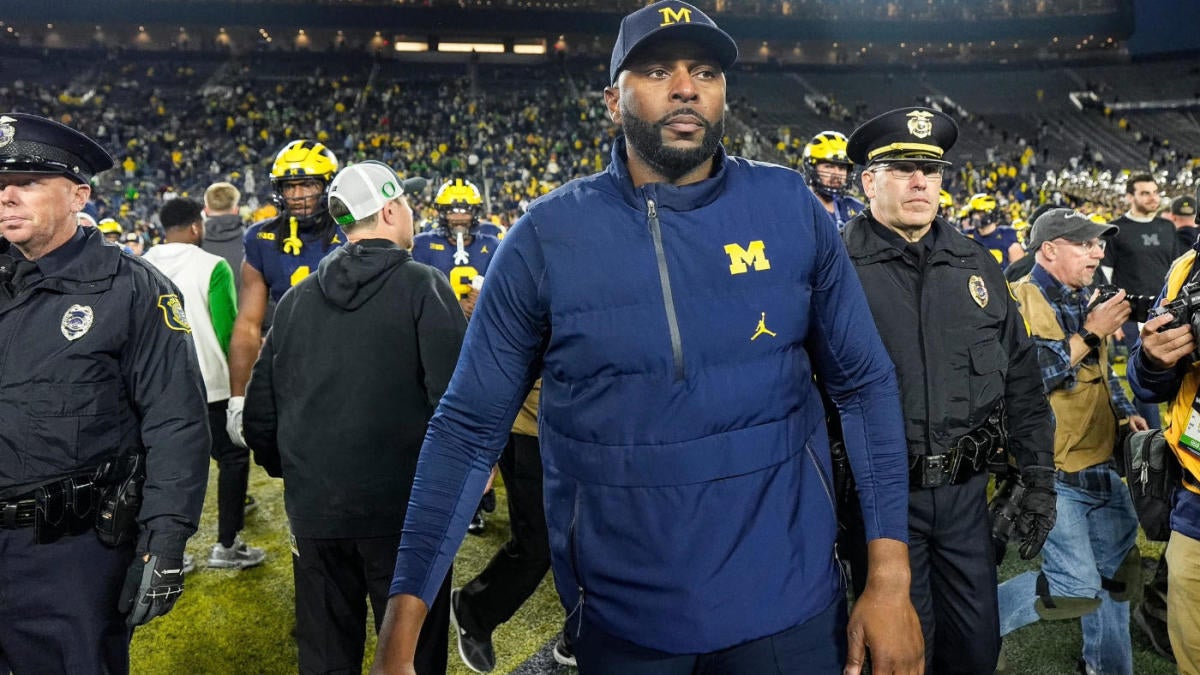
Early National Signing Day 2024 begins on Wednesday and lasts until Friday and there will be hundreds of high school football recruits who make life-changing decisions. Michigan football recruiting is red-hot after flipping five-star quarterback Bryce Underwood from LSU and the Wolverines continued to build momentum after upsetting Ohio State on Saturday. Michigan was only 7-5 coming off a national championship win last season, but there’s hope that Sherrone Moore can take the Wolverines back to the College Football Playoff in the near future with key Michigan football recruits.
The team at The Michigan Insider is providing on-the-ground updates on every development in the football coaching search, including insights from Sam Webb, Steve Lorenz, Zach Shaw and Alejandro Zuniga. The unrivaled insider team has the latest Michigan recruiting news and the inside scoop on the Michigan coaching search. And right now, The Michigan Insider is offering 75% off annual subscriptions*, so now is the time to sign up.
One high-priority recruiting target for Michigan football ahead of early National Signing Day 2024 is four-star Florida linebacker Nathaniel Owusu-Boateng. The No. 158 overall player in the Class of 2025 according to 247Sports holds dozens of offers and has named a top five that includes Michigan, Colorado, Texas, USC and Ohio State.
The IMG Academy product is the brother of former Notre Dame linebacker and current Cleveland Brown Jeremiah Owusu-Koramoah and originally started his high school career at Dematha Catholic in suburban D.C. before transferring. He’s a speed-and-space linebacker with the ability to chase down ballcarriers, spy the quarterback and mirror tight ends down the field in coverage.
How to get insider Michigan National Signing Day updates
The Michigan Insider also has a list of Michigan football recruiting targets, including several high school football prospects who could be flipped in the coming days. See who it is at The Michigan Insider.
*Terms: This offer is only available for new members who sign up for a The Michigan Insider annual subscription. After the first year, subscription will re-bill on an annual basis at the regular rate. 247Sports.com reserves the right to alter or cancel this promotion at any time. Please write support@247sports.com with any questions you may have.
Two vegetable varieties developed by the Department of Vegetable Sciences at Dr Y. S. Parmar University of Horticulture and Forestry at Nauni have been recognised as top-performing varieties for their consistent performance at the national level. The temperate carrot variety called Solan Shresth and the French bean variety Lakshmi ban were officially released by the Central Variety Release Committee (CVRC) in New Delhi.
The performance of these varieties was presented by Dr Rajesh Kumar, Project Coordinator of the All India Coordinated Research Project on Vegetable Crops (AICRP VC), at the national release event. Both Lakshami and Solan Shresth were praised for their outstanding performance across multiple regions, the university said in a statement.
The Lakshami bean variety has been recommended for cultivation in Jammu and Kashmir, Himachal Pradesh, Uttarakhand, Punjab, Uttar Pradesh, Bihar and Jharkhand, while Solan Shresth is suitable for parts of Punjab and Bihar.
These varieties were developed by the university in 1992 and 2016, respectively, and tested under the AICRP on vegetable crops from 2017 and 2019 before being approved for national release.
Ramesh Kumar Bhardwaj, breeder and Principal Investigator at the Solan Centre of AICRP (VC), explained that both varieties performed consistently over three years of testing. Their results were recognised at the 39th and 41st Annual Group Meetings of AICRP held in Varanasi and Srinagar.
Scientists Sandeep Kansal, D. K. Mehta, Kuldeep Thakur, and Rakesh have contributed significantly to the maintenance and mass multiplication of seeds for these varieties.
Director of Research, Sanjeev Chauhan, highlighted the qualities of Solan Shresth, a carrot variety known for its long, attractive, orange-coloured, cylindrical roots with self-cores. It matures early, is smooth with non-hairy roots, and is rich in beta-carotene.
Solan Shresth is resistant to common diseases and pests, and its average root weight is 255-265 g, yielding 225-275 quintals per hectare of marketable produce.
Similarly, Lakshami, the French bean cultivar, produces two to three long, attractive, stringless green pods per node, maturing in 65 to 70 days. It offers a high marketable yield of 150-200 quintals per hectare, with mature seeds that are white with light yellow stripes.
University Vice Chancellor Rajeshwar Singh Chandel praised the contributions of the scientists, noting that the Solan Centre of AICRP has brought great recognition to the university.
He emphasised that the success of these varieties, particularly in terms of their excellent performance and cost-effectiveness, will greatly benefit small and marginal farmers. Both varieties are open-pollinated, making them more accessible to farmers compared to expensive hybrid seeds.
(Disclaimer: Except for the headline, this story has not been edited by NDTV staff and is published from a syndicated feed.)
MELBOURNE, Australia — Australia’s states and territories on Friday unanimously backed a national plan to require most forms of social media to bar children younger than 16.
Leaders of the eight provinces held a virtual meeting with Prime Minister Anthony Albanese to discuss what he calls a world-first national approach that would make platforms including X, TikTok, Instagram and Facebook responsible for enforcing the age limit.
“Social media is doing social harm to our young Australians,” Albanese told reporters. “The safety and mental health of our young people has to be a priority.”
The government leaders had been discussing for months setting a limit, considering options from 14 to 16 years of age.
While Tasmania would have preferred 14, the state was prepared to support 16 in the interests of achieving national uniformity, Albanese said.
The legislation will be introduced into Parliament within two weeks, and the age ban would take effect a year after it passes into law, giving platforms time to work out how to exclude children. The government has yet to offer a technical solution.
The delay is also intended to allow time to address privacy concerns around age verification.
The main opposition party has given in-principle support to the 16-year age limit since it was announced on Thursday, suggesting the legislation will pass the Senate.
The minor Greens party was critical, saying the ban would prevent the emergence in Australia of future child environmental activists like Sweden’s Greta Thunberg.
More than 140 academics with expertise in fields related to technology and child welfare signed an open letter to Albanese last month opposing a social media age limit as “too blunt an instrument to address risks effectively.”
Critics say most teenagers are tech savvy enough to get around such laws. Some fear the ban will create conflicts within families and drive social media problems underground.
Meta, which owns Facebook and Instagram, argues that stronger tools in app stores and operating systems for parents to control what apps their children can use would be a “simple and effective solution.”
The government likens the proposed social media age limit to the laws that restrict the sale of alcohol to adults aged 18 and older across Australia. Children still find ways to drink, but the prohibition remains.
“We think these laws will make a real positive difference,” Albanese said.
But Lisa Given, professor of information sciences at RMIT University, described the legislation as “really problematic.”
“Many of our social networks are actually about the provision of extremely critical information to kids,” Given told Australian Broadcasting Corp.
“There’s no doubt that they’re also facing bullying and other challenges online, but they actually need the social supports to know how to navigate the platforms safely and so they need more support from parents, from care-givers, not less access to a single or multiple platforms,” Given added.
Communications Minister Michelle Rowland said children would retain access to online education and health services.
The legislation would also include strong privacy protections surrounding age verification.
“Privacy must be paramount, including that of children,” Rowland said. “We should also be very clear about the realities. These platforms know about their users in a way that no one else does.”
Rowland said YouTube would likely be included among the mainstream platforms defined under the legislation as age restricted services.
But YouTube Kids could be exempted. Gaming and messaging services would not face age restrictions, she said,
“This legislation would strike a balance between minimizing the harms experienced by young people during a critical period of their development while also supporting their access to benefits as well,” Rowland said.
Celebrated annually on November 7, National Cancer Awareness Day aims to raise awareness about cancer prevention, detection, treatment, and overall well-being.
With the theme “Hope, Love, and Strength: Our Weapons Against Cancer,” National Cancer Awareness Day was first announced by former Union Health Minister Dr. Harsh Vardhan in 2014. Since then, both government and private institutions have played a significant role in engaging the public to prevent and fight cancer, a major societal enemy. According to the National Cancer Institute, cancer is one of the leading causes of death worldwide. In 2022 alone, there were nearly 20 million new cancer cases and 9.7 million cancer-related deaths. It is also projected that by 2040, cancer-related deaths could rise to 15.3 million.
However, the question remains: Are lifestyle changes and early detection enough to prevent cancer-related deaths? While regular check-ups are essential for maintaining good health, there are several lifestyle adjustments that can help reduce the risk of cancer. These include:
Maintaining a healthy weight and avoiding a sedentary lifestyle
Staying active not only helps reduce the risk of cancer but also aids in preventing various other diseases. Excess weight leads to increased production of insulin and estrogen, which can promote the growth of cancer cells. Incorporating moderate exercise, along with occasional vigorous activity, can help maintain a healthy weight and active lifestyle.
Saying no to tobacco
Tobacco use is one of the leading causes of cancer, often coupled with an unhealthy lifestyle. Smoking can cause several types of cancer, including lung, mouth, esophageal, bladder, and kidney cancers. Even passive smoking is a known risk factor. Therefore, avoiding all forms of smoking is crucial in cancer prevention.
Always wear sunscreen
The harmful rays of the sun can contribute to skin cancer, which is mostly preventable. It’s essential to wear sunscreen whenever you venture outdoors to protect yourself from skin damage.
Understand your family history
If multiple family members have been diagnosed with cancer or have passed away due to it, your family history could play a significant role in assessing your own cancer risk. Consulting with healthcare professionals can help you understand and manage these risks.
In conclusion, making healthy lifestyle choices—such as eating nutritious foods, staying active, managing stress, and maintaining a healthy weight—can go a long way in reducing the risk of cancer and promoting overall well-being.