hacklink hack forum hacklink film izle hacklink marsbahisizmir escortsahabetpornJojobetcasibom girişgalabetBakırköy Escortcasibom9018betgit casinomarsbahismatbet girişcasibomlink 5k depositjojobetonwinmatbetalobet

Tag: nuclear

  • Nuclear bunker sales increase, despite expert warnings they won’t provide protection

    Nuclear bunker sales increase, despite expert warnings they won’t provide protection

    When Bernard Jones Jr. and his wife, Doris, built their dream home, they didn’t hold back. A grotto swimming pool with a waterfall for hot summer days. A home theater for cozy winter nights. A fruit orchard to harvest in fall. And a vast underground bunker in case disaster strikes.

    “The world’s not becoming a safer place,” he said. “We wanted to be prepared.”

    Under a nondescript metal hatch near the private basketball court, there’s a hidden staircase that leads down into rooms with beds for about 25 people, bathrooms and two kitchens, all backed by a self-sufficient energy source.

    With water, electricity, clean air and food, they felt ready for any disaster, even a nuclear blast, at their bucolic home in California’s Inland Empire.

    “If there was a nuclear strike, would you rather go into the living room or go into a bunker? If you had one, you’d go there too,” said Jones, who said he reluctantly sold the home two years ago.

    Global security leaders are warning nuclear threats are growing as weapons spending surged to $91.4 billion last year. At the same time, private bunker sales are on the rise globally, from small metal boxes to crawl inside of to extravagant underground mansions.

    Critics warn these bunkers create a false perception that a nuclear war is survivable. They argue that people planning to live through an atomic blast aren’t focusing on the real and current dangers posed by nuclear threats, and the critical need to stop the proliferation of weapons of mass destruction.

    Meanwhile, government disaster experts say bunkers aren’t necessary. A Federal Emergency Management Agency 100-page guidance on responding to a nuclear detonation focuses on having the public get inside and stay inside, ideally in a basement and away from outside walls for at least a day. Those existing spaces can provide protection from radioactive fallout, says FEMA.

    But increasingly, buyers say bunkers offer a sense of security. The market for U.S. bomb and fallout shelters is forecast to grow from $137 million last year to $175 million by 2030, according to a market research report from BlueWeave Consulting. The report says major growth factors include “the rising threat of nuclear or terrorist attacks or civil unrest.”

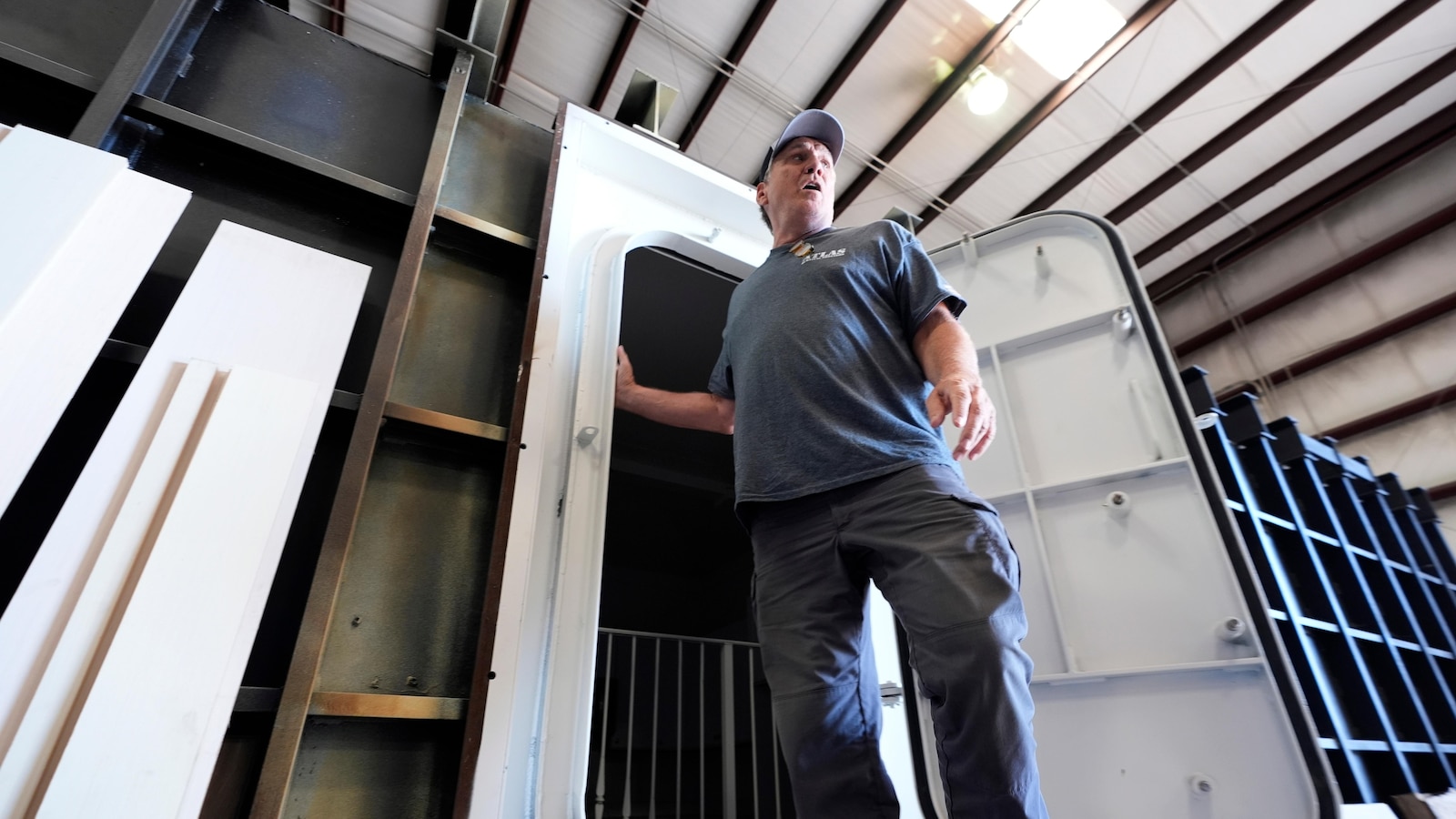
    “People are uneasy and they want a safe place to put their family. And they have this attitude that it’s better to have it and not need it then to need it and not have it,” said Atlas Survival Shelters CEO Ron Hubbard, amid showers of sparks and the loud buzz of welding at his bunker factory, which he says is the world’s largest, in Sulphur Springs, Texas.

    Hubbard said COVID lockdowns, Russia’s invasion of Ukraine and the outbreak of the Israel-Hamas war have driven sales.

    On Nov. 21, in the hours after Russia’s first-ever use of an experimental, hypersonic ballistic missile to attack Ukraine, Hubbard said his phone rang nonstop.

    Four callers ended up buying bunkers in one day, he said, and more ended up ordering doors and other parts for shelters they were already building.

    Hubbard said his bunkers are built for all disasters.

    “They’re good for anything from a tornado to a hurricane to nuclear fallout, to a pandemic to even a volcano erupting,” he said, sweeping his arms toward a massive warehouse where more than 50 different bunkers were under construction.

    A loaded shotgun at arm’s length and metal mesh window shields to block Molotov cocktails nearby, Hubbard said he started his company after building his own bunker about 10 years ago. He says callers ask about prices — $20,000 to multimillions, averaging $500,000 — and installations — they can go just about anywhere. He said most days he sells at least one bunker.

    Under Hubbard’s doomsday scenario, global tensions could lead to World War III, a situation he is prepared to live through.

    “The good news about nuclear warfare,” he said, “if there ever was any, that it’s very survivable if you’re not killed in the initial blast.”

    He’s not wrong, say U.S. government disaster preparedness experts.

    “Look, this fallout exposure is entirely preventable because it is something that happens after the detonation,” said Brooke Buddemeier a radiation safety specialist at Lawrence Livermore National Laboratory, where the U.S. government designs nuclear weapons. Buddemeier and his colleagues are tasked with evaluating what could happen after an attack and how best to survive. “There’s going to be a fairly obvious nuclear explosion event, a large cloud. So just getting inside, away from where those particles fall, can keep you and your family safe.”

    Buddemeier and others in the U.S. government are trying to get Americans — who decades ago hid under desks during nuclear attack drills — educated about how to respond.

    After a deadly and deafening blast, a bright flash and a mushroom cloud, it will take about 15 minutes for the radioactive fallout to arrive for those a mile or more away from ground zero, said Michael Dillon, a scientist at Lawrence Livermore National Laboratory.

    “It’s going to literally be sand falling on your head, and you’re going to want to get out of that situation. You want to go to your most robust building,” he said. In their models, they estimate people may need to stay inside for a day or two before evacuating.

    The government’s efforts to educate the public were reinvigorated after a false alarm missile alert in Hawaii in 2018 caused widespread panic.

    The emergency alert, which was sent to cellphones statewide just before 8:10 a.m., said: “BALLISTIC MISSILE THREAT INBOUND TO HAWAII. SEEK IMMEDIATE SHELTER. THIS IS NOT A DRILL.”

    For the next 40 minutes there were traffic jams, workers running into and out of buildings, families huddling in their bathrooms, students gathering in gyms, drivers blocking tunnels, all in an attempt to seek shelter, without any clear idea of what “seek immediate shelter” actually meant.

    Today the federal government offers a guide to prepare citizens for a nuclear attack that advises people to find a basement or the center of a large building and stay there, possibly for a few days, until they get word about where to go next.

    “Gently brush your pet’s coat to remove any fallout particles” it says, adding that the 15-minute delay between bomb and fallout allows “enough time for you to be able to prevent significant radiation exposure.”

    Jeffrey Schlegelmilch, who directs the FEMA-backed National Center for Disaster Preparedness at Columbia University, said “the scenarios of a nuclear detonation are not all or nothing.”

    If a small number of weapons detonate rather than all-out war, he said, sheltering inside a large building to avoid the fallout could save lives.

    Nonproliferation advocates bristle at the bunkers, shelters or any suggestion that a nuclear war is survivable.

    “Bunkers are, in fact, not a tool to survive a nuclear war, but a tool to allow a population to psychologically endure the possibility of a nuclear war,” said Alicia Sanders-Zakre at the International Campaign to Abolish Nuclear Weapons.

    Sanders-Zakre called radiation the “uniquely horrific aspect of nuclear weapons,” and noted that even surviving the fallout doesn’t prevent long-lasting, intergenerational health crises. “Ultimately, the only solution to protect populations from nuclear war is to eliminate nuclear weapons.”

    Researcher Sam Lair at the James Martin Center for Nonproliferation Studies says U.S. leaders stopped talking about bunkers decades ago.

    “The political costs incurred by causing people to think about shelters again is not worth it to leaders because it forces people to think about what they would do after nuclear war,” he said. “That’s something that very, very few people want to think about. This makes people feel vulnerable.”

    Lair said building bunkers seems futile, even if they work in the short term.

    “Even if a nuclear exchange is perhaps more survivable than many people think, I think the aftermath will be uglier than many people think as well,” he said. “The fundamental wrenching that it would do to our way of life would be profound.”

    That’s been a serious concern of Massachusetts Congressman James McGovern for almost 50 years.

    “If we ever get to a point where there’s all out nuclear war, underground bunkers aren’t going to protect people,” he said. “Instead, we ought to be investing our resources and our energy trying to talk about a nuclear weapons freeze, initially.”

    Next, he said, “we should work for the day when we get rid of all nuclear weapons.”

    Year after year he introduces legislation pushing for nonproliferation, but looking out his office window at the Capitol, he said he’s disappointed by the lack of debate over what will be a $1 trillion expenditure to build and modernize the U.S. arsenal.

    “The stakes, if a nuclear weapon is ever used, is that millions and millions and millions of people will die. It really is shocking that we have world leaders who talk casually about utilizing nuclear weapons. I mean, it would be catastrophic, not just for those that are involved in an exchange of nuclear weapons, but for the entire world.”

    McGovern pushed back against FEMA’s efforts to prepare the public for a nuclear attack by advising people to take shelter.

    “What a stupid thing to say that we all just need to know where to hide and where to avoid the most impacts of nuclear radiation. I mean, really, that’s chilling when you hear people try to rationalize nuclear war that way,” he said.

    Nuclear war was far from a couple’s mind when they went house-hunting in Southern California a few years ago. They wanted a home to settle down and raise their family, and they needed extra garage space. They spotted an online ad for a home with at least eight parking spots. On the basketball court, there was a metal hatch. Beneath it was a bunker.

    This was Jones’ former home, which Jones said he put up for sale for family reasons.

    The husband, who spoke on condition of anonymity because of concerns about his family’s privacy, went ahead and bought Jones’ home, bunker and all. They aren’t particularly worried about nuclear war, and haven’t spent a night in the bunker, but they have stored food and medical supplies down there.

    “We have told some of our friends, if something goes crazy and gets bad, get over here as fast as possible,” the husband said. “It does provide a sense of security.”

    —-

    Mendoza reported from Sulphur Springs, Texas, and Livermore, California.

    —-

    The Associated Press receives support for nuclear security coverage from the Carnegie Corporation of New York and Outrider Foundation. The AP is solely responsible for all content.

    —-

    Additional AP coverage of the nuclear landscape: https://apnews.com/projects/the-new-nuclear-landscape/

    Source link

  • Takeaways from the AP’s reporting on nuclear bunkers

    Takeaways from the AP’s reporting on nuclear bunkers

    Global security leaders are warning that nuclear threats are growing as weapons spending has surged around the world. At the same time, private bunker sales are on the rise globally. Critics warn these bunkers create a false perception that a nuclear war is survivable. They argue that people planning to live through an atomic blast aren’t focusing on the real and current dangers posed by nuclear threats, and the critical need to stop the proliferation of weapons of mass destruction.

    Meanwhile, government disaster experts say bunkers aren’t necessary. The Federal Emergency Management Agency’s 100-page guidance on responding to a nuclear detonation focuses on having the public get inside and stay inside, ideally in a basement and away from outside walls for at least a day. Those existing spaces can provide protection from radioactive fallout, says FEMA.

    Here are takeaways from the AP’s reporting on bunkers and the debate over the message building bunkers sends.

    The market for U.S. bomb and fallout shelters is forecast to grow from $137 million last year to $175 million by 2030, according to a market research report from BlueWeave Consulting. The report says major growth factors include “the rising threat of nuclear or terrorist attacks or civil unrest.”

    “People are uneasy and they want a safe place to put their family. And they have this attitude that it’s better to have it and not need it then to need it and not have it,” said Atlas Survival Shelters CEO Ron Hubbard. He says his bunker factory, in Sulphur Springs, Texas, is the world’s largest. Hubbard said COVID lockdowns, Russia’s invasion of Ukraine and the outbreak of the Israel-Hamas war have driven sales.

    “Look, this fallout exposure is entirely preventable because it is something that happens after the detonation,” said Brooke Buddemeier a radiation safety specialist at Lawrence Livermore National Laboratory, where the U.S. government designs nuclear weapons. “There’s going to be a fairly obvious nuclear explosion event, a large cloud. So just getting inside, away from where those particles fall, can keep you and your family safe.”

    After a deadly and deafening blast, a bright flash and a mushroom cloud, it will take about 15 minutes for the radioactive fallout to arrive for those a mile or more away from ground zero, said Michael Dillon, a scientist at Lawrence Livermore National Laboratory.

    “It’s going to literally be sand falling on your head, and you’re going to want to get out of that situation. You want to go to your most robust building,” he said. In their models, they estimate people may need to stay inside for a day or two before evacuating.

    Nonproliferation advocates bristle at the bunkers, shelters or any suggestion that a nuclear war is survivable.

    “Bunkers are, in fact, not a tool to survive a nuclear war, but a tool to allow a population to psychologically endure the possibility of a nuclear war,” said Alicia Sanders-Zakre at the International Campaign to Abolish Nuclear Weapons.

    Sanders-Zakre called radiation the “uniquely horrific aspect of nuclear weapons,” and noted that even surviving the fallout doesn’t prevent long-lasting, intergenerational health crises. “Ultimately, the only solution to protect populations from nuclear war is to eliminate nuclear weapons.”

    Massachusetts Congressman James McGovern year after year introduces legislation pushing for nonproliferation.

    “If we ever get to a point where there’s all out nuclear war, underground bunkers aren’t going to protect people,” he said. “Instead, we ought to be investing our resources and our energy trying to talk about a nuclear weapons freeze, initially.”

    Next, he said, “we should work for the day when we get rid of all nuclear weapons.”

    —-

    The Associated Press receives support for nuclear security coverage from the Carnegie Corporation of New York and Outrider Foundation. The AP is solely responsible for all content.

    —-

    Additional AP coverage of the nuclear landscape: https://apnews.com/projects/the-new-nuclear-landscape/
    Source link

  • Research reveals China has built prototype nuclear reactor to power aircraft carrier

    Research reveals China has built prototype nuclear reactor to power aircraft carrier

    Bangkok — China has built a land-based prototype nuclear reactor for a large surface warship, in the clearest sign yet Beijing is advancing toward producing the country’s first nuclear-powered aircraft carrier, according to a new analysis of satellite imagery and Chinese government documents provided to The Associated Press.

    There have long been rumors that China is planning to build a nuclear-powered aircraft carrier, but the research by the Middlebury Institute of International Studies in California is the first to confirm it is working on a nuclear-powered propulsion system for a carrier-sized surface warship.

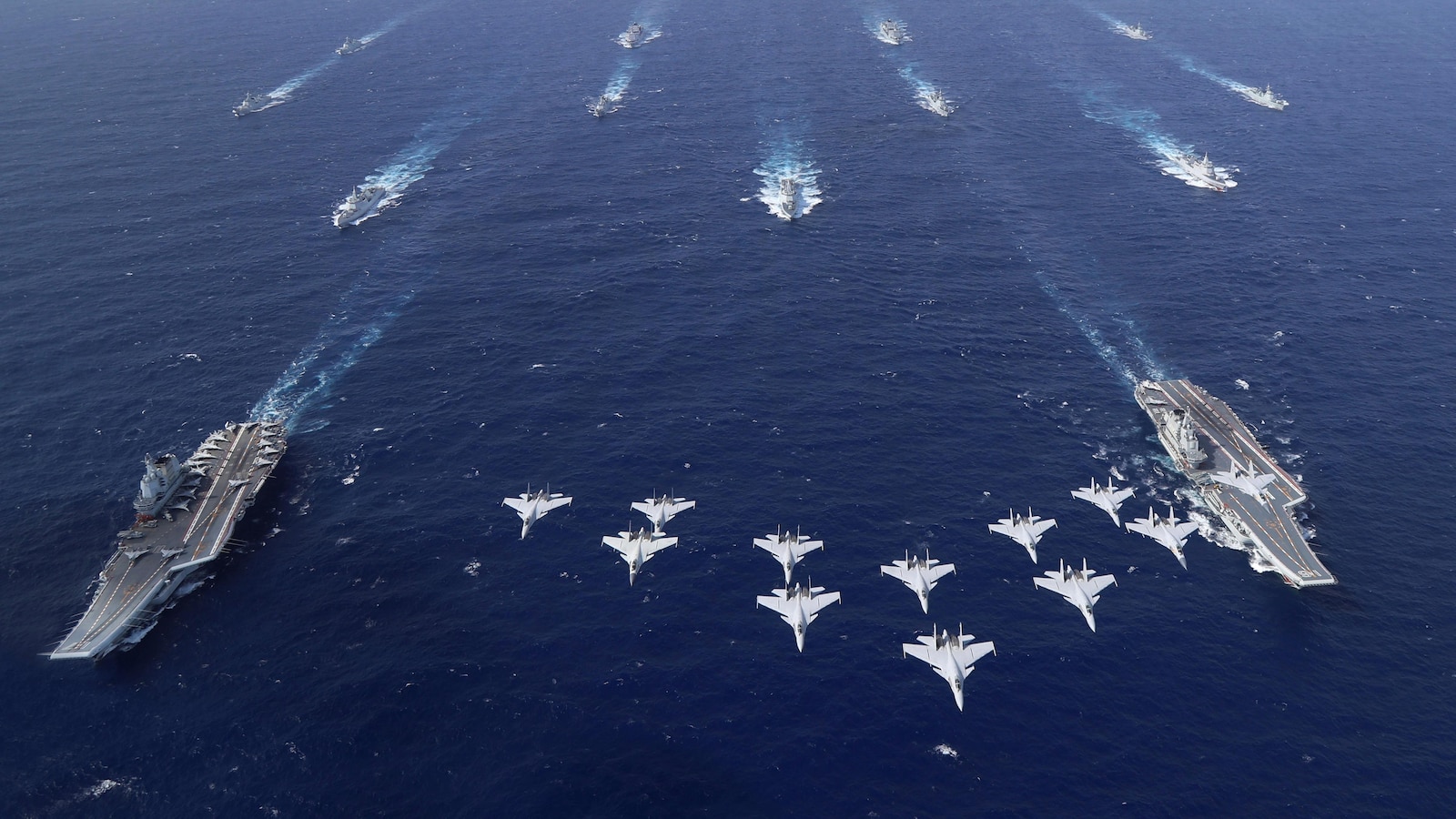
    China’s navy is already the world’s largest numerically, and it has been rapidly modernizing. Adding nuclear-powered carriers to its fleet would be a major step in realizing its ambitions for a true “blue-water” force capable of operating around the globe in a growing challenge to the United States.

    Nuclear carriers take longer to build than conventional carriers, but once in operation they are able to stay at sea for much longer because they do not need to refuel, and there is more room on board for fuel and weapons for aircraft, thus extending their capabilities. They are also able to produce more power to run advanced systems.

    Right now, only the United States and France have nuclear-powered carriers. The U.S. has 11 in total, which allows it to keep multiple strike groups deployed around the world at all times, including in the Indo-Pacific.

    But the Pentagon is growingly increasingly concerned about China’s rapid modernization of its fleet, including the design and construction of new carriers.

    China currently has three carriers, including the new Type 003 Fujian, which was the first both designed and built by China. It has said work is already underway on a fourth, but it has not announced whether that will be nuclear or conventionally powered.

    The modernization aligns with China’s “growing emphasis on the maritime domain and increasing demands” for its navy “to operate at greater distances from mainland China,” the Defense Department said in its most recent report to Congress on China’s military.

    Middlebury researchers were initially investigating a mountain site outside the city of Leshan in the southwest Chinese province of Sichuan over suspicions that China was building a reactor to produce plutonium or tritium for weapons. Instead they said they determined that China was building a prototype reactor for a large warship.

    The conclusion was based upon a wide variety of sources, including satellite images, project tenders, personnel files, and environmental impact studies.

    The reactor is housed in a new facility built at the site known as Base 909, which is under the control of the Nuclear Power Institute of China.

    Documents indicating that China’s 701 Institute, which is responsible for aircraft carrier development, procured reactor equipment “intended for installation on a large surface warship.” as well as the project’s “national defense designation” helped lead to the conclusion the sizeable reactor is a prototype for a next-generation aircraft carrier.

    Chinese President Xi Jinping has tasked defense officials with building a “first-class” navy and becoming a maritime power as part of his blueprint for the country’s great rejuvenation.

    The country’s most recent white paper on national defense, dated 2019, said the Chinese navy was adjusting to strategic requirements by “speeding up the transition of its tasks from defense on the near seas to protection missions on the far seas.”

    Sea trials hadn’t even started for the new Fujian aircraft carrier in March when Yuan Huazhi, political commissar for China’s People’s Liberation Army Navy, confirmed the construction of a fourth carrier. Asked if it would be nuclear-powered, he said at the time that would “soon be announced,” but so far it has not been.

    Neither China’s Defense Ministry nor Foreign Affairs Ministry responded to requests for comment.

    Even if the carrier that has been started will likely be another conventionally-powered Type 003 ship, experts say Chinese shipyards have the capability to work on more than one carrier at a time, and that they could produce a new nuclear-powered vessel concurrently.

    ___

    Tang reported from Washington D.C.

    Source link

  • Satellite images and documents indicate China working on nuclear propulsion for new aircraft carrier

    Satellite images and documents indicate China working on nuclear propulsion for new aircraft carrier

    BANGKOK — China has built a land-based prototype nuclear reactor for a large surface warship, in the clearest sign yet Beijing is advancing toward producing its first nuclear-powered aircraft carrier, according to a new analysis of satellite imagery and Chinese government documents provided to The Associated Press.

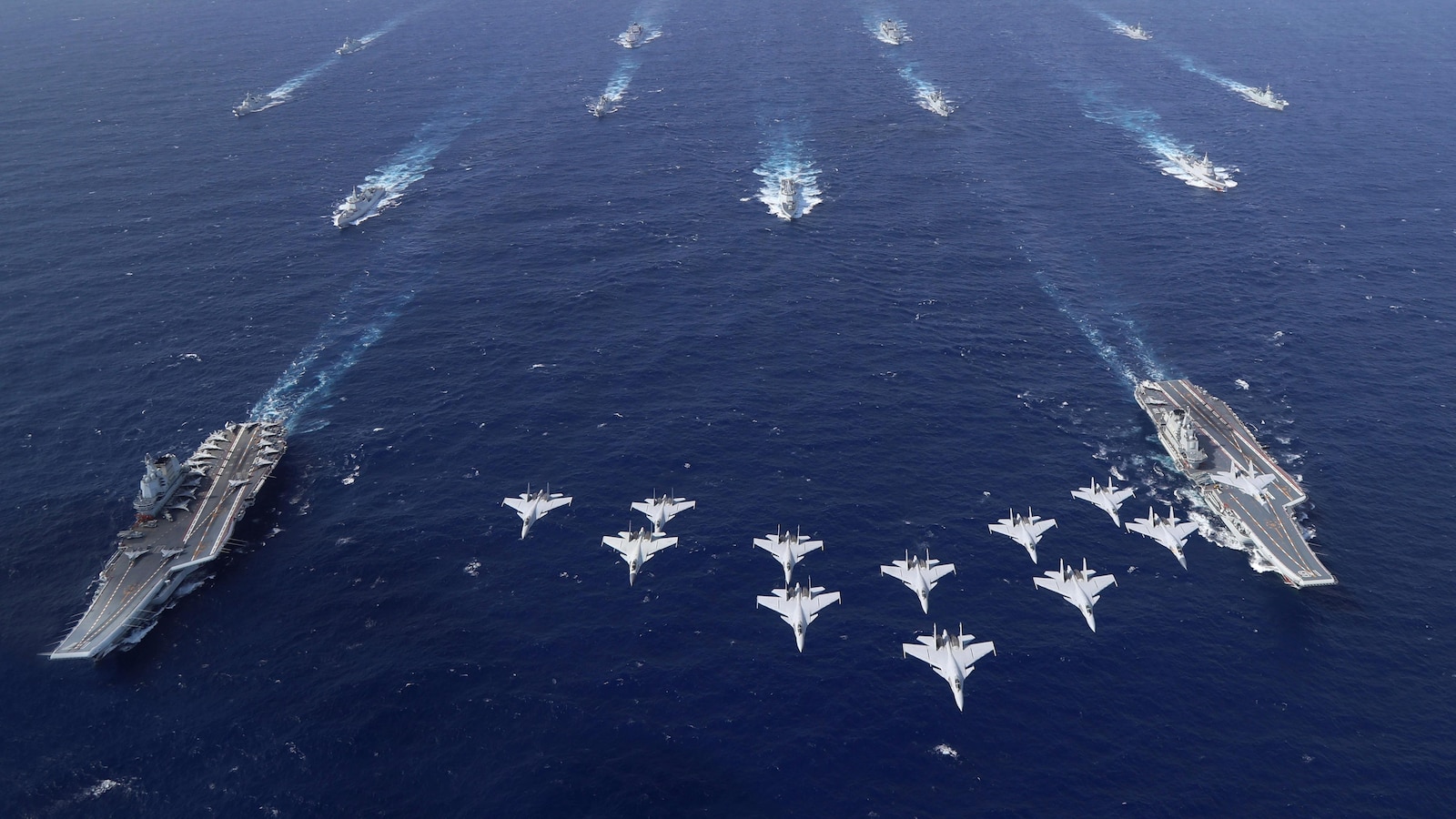
    China’s navy is already the world’s largest numerically, and it has been rapidly modernizing. Adding nuclear-powered carriers to its fleet would be a major step in realizing its ambitions for a true “blue-water” force capable of operating in seas far from China in a growing global challenge to the United States.

    “Nuclear-powered carriers would place China in the exclusive ranks of first-class naval powers, a group currently limited to the United States and France,” said Tong Zhao, a senior fellow at the Carnegie Endowment for International Peace in Washington, D.C. “For China’s leadership, such a development would symbolize national prestige, fueling domestic nationalism and elevating the country’s global image as a leading power.”

    Researchers at the Middlebury Institute of International Studies in California said they made the finding while investigating a mountain site outside the city of Leshan in the southwest Chinese province of Sichuan, where they suspected China was building a reactor to produce plutonium or tritium for weapons.

    Instead they concluded that China was building a prototype reactor for a large warship. The project at Leshan is dubbed the Longwei, or Dragon Might, Project and is also referred to as the Nuclear Power Development Project in documents.

    Neither China’s Defense Ministry nor Foreign Affairs Ministry responded to requests for comment.

    There have long been rumors that China is planning to build a nuclear-powered aircraft carrier, but the research by the Middlebury team is the first to confirm that China is working on a nuclear-powered propulsion system for a carrier-sized surface warship.

    “The reactor prototype at Leshan is the first solid evidence that China is, in fact, developing a nuclear-powered aircraft carrier,” said Jeffrey Lewis, a professor at Middlebury and one of the researchers on the project. “Operating a nuclear-powered aircraft carrier is an exclusive club, one that China looks set to join.”

    Drawing on satellite images and public documents including project tenders, personnel files, environmental impact studies — and even a citizen’s complaint about noisy construction and excessive dust — they concluded a prototype reactor for naval propulsion was being built in the mountains of Mucheng township, some 70 miles (112 kilometers) southwest of Sichuan’s provincial capital Chengdu.

    The reactor, which procurement documents indicate will soon be operational, is housed in a new facility built at the site known as Base 909, which houses six other reactors that are operational, decommissioned or under construction, according to the analysis. The site is under the control of the Nuclear Power Institute of China, a subsidiary of the China National Nuclear Corporation, which is tasked with reactor engineering research and testing.

    Documents indicating that China’s 701 Institute, formally known as China Ship Research and Design Center, which is responsible for aircraft carrier development, procured reactor equipment “intended for installation on a large surface warship” under the Nuclear Power Development Project as well as the project’s “national defense designation” helped lead to the conclusion the sizable reactor is a prototype for a next-generation aircraft carrier.

    Satellite mages from 2020 to 2023 have shown the demolition of homes and the construction of water intake infrastructure connected to the reactor site. Contracts for steam generators and turbine pumps indicate the project involves a pressurized water reactor with a secondary circuit — a profile that is consistent with naval propulsion reactors, the researchers say.

    An environmental impact report calls the Longwei Project a “national defense-related construction project” that is classified “secret.”

    “Unless China is developing nuclear-powered cruisers, which were pursued only by the United States and the Soviet Union during the Cold War, then the Nuclear Power Development Project most certainly refers to a nuclear-powered aircraft carrier development effort,” researchers wrote in a detailed 19-page report on their findings shared exclusively with the AP.

    Jamie Withorne, an analyst at the Oslo Nuclear Project who was not involved in the research and reviewed the findings, said Middlebury’s team made a “convincing argument.”

    “From the identifying reports, co-location with other naval reactor facilities, and correlating construction activity, I think it can be said that it is likely the Longwei Project is housed at Base 909, and it could potentially be located at the identified building,” she said.

    The research does not, however, provide clues as to when a Chinese nuclear-powered carrier could be built and become operational, she said.

    Sarah Laderman, a senior analyst with Open Nuclear Network, a program of the U.S.-based NGO PAX sapiens foundation, said the findings were “carefully conducted and thoroughly researched.”

    “Given the evidence presented here, I see a compelling case made that China seems to be working towards building a nuclear propulsion system for its naval surface ships (likely aircraft carriers) at this location,” said Laderman, who is based in Vienna and was not involved in Middlebury’s research.

    China’s first carrier, commissioned in 2012, was a repurposed Soviet ship, and its second was built in China but based upon the Soviet design. Both ships — named the Liaoning and the Shandong — employ a so-called “ski-jump” type launch method, with a ramp at the end of a short runway to help planes take off.

    The Type 003 Fujian, launched in 2022, was the country’s third carrier and its first to be indigenously designed and built. It employs an electromagnetic-type launch system like those developed and used by the U.S. Navy. All three carriers are conventionally powered.

    Sea trials hadn’t even started for the Fujian in March when Yuan Huazhi, political commissar for China’s People’s Liberation Army Navy, confirmed the construction of a fourth carrier. Asked if it would be nuclear-powered, he said at the time that would “soon be announced,” but so far it has not been.

    There has been speculation that China may begin producing two new carriers at once — one Type 003 like the Fujian and one nuclear-powered Type 004 — something that it has not attempted before but that its shipyards have the capacity to do.

    Matthew Funaiole, senior fellow at the Center for Strategic and International Studies’ China Power Project, said he doubts China’s next carrier will be nuclear-powered. Instead, he said, he would expect the People’s Liberation Army Navy’s fourth carrier to focus on optimizing the existing design of the Fujian carrier with “incremental improvements.”

    Nick Childs, senior fellow for naval forces and maritime security at the International Institute for Strategic Studies, said the Chinese “have taken an incremental approach to their carrier development with a number of ambitions that will evolve over time.”

    “For now, their deployments have been relatively cautious, remaining largely within range of shore support, but projecting influence and to some extent coercion within their near waters.”

    Eventually, however, “larger carriers more akin to their U.S. counterparts will give them more options to project power,” Childs said.

    It takes several years to build a carrier and bring it into operation, but developing nuclear propulsion for its next generation of warships would eventually give China more power to run advanced systems, such as electromagnetic launchers, radars and new technology weapons, Childs said.

    “As well as obviating the need for the ship to refuel regularly and therefore giving it much greater range, nuclear power means that without the need to carry fuel oil for the ship there will be room aboard for fuel and weapons for its aircraft, extending their capabilities,” Childs said.

    “Much will depend on what overall size the next carrier is, but the addition of nuclear power will represent a significant step further in China’s carrier development with a vessel more comparable to the U.S. Navy’s carriers.”

    Zhao, of the Carnegie Endowment for International Peace, said nuclear-powered carriers would provide the Chinese military “with greater flexibility and endurance to operate around strategic hotspots, especially along the First Island Chain, where most territories disputed by China are located,” said Zhao.

    The First Island Chain includes the self-governed island of Taiwan, which China claims as its own and vows to annex it by force if necessary.

    The U.S. is obligated by a domestic law to supply Taiwan with sufficient weapons to deter invasion, and it could provide assistance to the island from its bases in the Pacific in the event of an invasion or blockade. Tensions also have risen in the South China Sea between China and neighboring nations over territorial disputes and maritime claims.

    “These carriers could also extend Chinese operations deeper into the Western Pacific, further challenging the U.S. military’s ability to ‘intervene’ in regional matters that China views as best resolved by countries from the region only,” Zhao said.

    Chinese President Xi Jinping has tasked defense officials with building a “first-class” navy and becoming a maritime power as part of his blueprint for the country’s rejuvenation.

    The country’s most recent white paper on national defense, dated 2019, said the Chinese navy was adjusting to strategic requirements by “speeding up the transition of its tasks from defense on the near seas to protection missions on the far seas.”

    The People’s Liberation Army Navy is already the world’s largest navy with more than 370 ships and submarines. The country also boasts powerful shipbuilding capabilities: China’s shipyards are building many hundreds of vessels each year, whereas the U.S. is building five or fewer, according to a U.S. congressional report late last year.

    However, the Chinese navy lags behind the U.S. Navy in many respects. Among other advantages, the U.S. currently has 11 carriers, all nuclear powered, allowing it to keep multiple strike groups deployed around the world at all times, including in the Indo-Pacific.

    But the Pentagon is growingly increasingly concerned about China’s rapid modernization of its fleet, including the design and construction of new carriers.

    That aligns with China’s “growing emphasis on the maritime domain and increasing demands” for its navy “to operate at greater distances from mainland China,” the Defense Department said in its most recent report to Congress on China’s military.

    And China’s “growing force of aircraft carriers extend air defense coverage of deployed task groups beyond the range of land-based defenses, enabling operations farther from China’s shore,” the report said.

    ___

    Tang reported from Washington D.C.

    Source link

  • A tiny grain of nuclear fuel is pulled from ruined Japanese nuclear plant, in a step toward cleanup

    A tiny grain of nuclear fuel is pulled from ruined Japanese nuclear plant, in a step toward cleanup

    TOKYO — A robot that has spent months inside the ruins of a nuclear reactor at the tsunami-hit Fukushima Daiichi plant delivered a tiny sample of melted nuclear fuel on Thursday, in what plant officials said was a step toward beginning the cleanup of hundreds of tons of melted fuel debris.

    The sample, the size of a grain of rice, was placed into a secure container, marking the end of the mission, according to Tokyo Electric Power Company Holdings, which manages the plant. It is being transported to a glove box for size and weight measurements before being sent to outside laboratories for detailed analyses over the coming months.

    Plant chief Akira Ono has said it will provide key data to plan a decommissioning strategy, develop necessary technology and robots and learn how the accident had developed.

    Despite multiple probes in the years since the 2011 disaster that wrecked the plant and forced thousands of nearby residents to leave their homes, much about the site’s highly radioactive interior remains a mystery.

    The sample, the first to be retrieved from inside a reactor, was significantly less radioactive than expected. Officials had been concerned that it might be too radioactive to be safely tested even with heavy protective gear, and set an upper limit for removal out of the reactor. The sample came in well under the limit.

    That’s led some to question whether the robot extracted the nuclear fuel it was looking for from an area in which previous probes have detected much higher levels of radioactive contamination, but TEPCO officials insist they believe the sample is melted fuel.

    The extendable robot, nicknamed Telesco, first began its mission August with a plan for a two-week round trip, after previous missions had been delayed since 2021. But progress was suspended twice due to mishaps — the first involving an assembly error that took nearly three weeks to fix, and the second a camera failure.

    On Oct. 30, it clipped a sample weighting less than 3 grams (.01 ounces) from the surface of a mound of melted fuel debris sitting on the bottom of the primary containment vessel of the Unit 2 reactor, TEPCO said.

    Three days later, the robot returned to an enclosed container, as workers in full hazmat gear slowly pulled it out.

    On Thursday, the gravel, whose radioactivity earlier this week recorded far below the upper limit set for its environmental and health safety, was placed into a safe container for removal out of the compartment.

    The sample return marks the first time the melted fuel is retrieved out of the containment vessel.

    Fukushima Daiichi lost its key cooling systems during a 2011 earthquake and tsunami, causing meltdowns in its three reactors. An estimated 880 tons of fatally radioactive melted fuel remains in them.

    The government and TEPCO have set a 30-to-40-year target to finish the cleanup by 2051, which experts say is overly optimistic and should be updated. Some say it would take for a century or longer.

    No specific plans for the full removal of the fuel debris or its final disposal have been decided.

    Source link

  • A robot retrieves the first melted fuel from Fukushima nuclear reactor

    A robot retrieves the first melted fuel from Fukushima nuclear reactor

    TOKYO — A remote-controlled robot has safely returned with a tiny piece of melted fuel it collected from inside one of three damaged reactors at the tsunami-hit Fukushima Daiichi nuclear power plant for the first time since the 2011 meltdown.

    The Tokyo Electric Power Company Holdings, which manages the plant, said Saturday that the extendable fishing rod-like robot successfully clipped a gravel as big as 5 millimeters (2 inches), the size of a tiny granola bit, from the top surface of a mound of molten fuel debris that sits on the bottom of the No. 2 reactor’s primary containment vessel.

    The “telesco” robot, with its frontal tongs still holding the melted fuel bit, returned to the enclosed container for safe storage after workers in full hazmat gear pulled it out of the containment vessel earlier Saturday.

    The sample return marks the first time the melted fuel is retrieved out of the containment vessel. But the mission is not over until it’s certain that the sample’s radioactivity is below a set standard and safely placed into a container.

    If the radioactivity exceeds the limit, the robot must go back inside the reactor to find another piece. TEPCO officials said they expect the piece is small enough to meet the requirement.

    The mission initially started in August for what was supposed to be a two-week round trip but had been suspended twice due to mishaps.

    First one was the procedural mistake at the beginning that held up the work for nearly three weeks, then the robot’s two cameras designed to transmit views of the target areas for its operators in the remote control room failed. The camera problem required the robot to be pulled out all the way for replacement before the mission resumed Monday.

    Fukushima Daiichi lost its key cooling systems during the 2011 earthquake and tsunami, causing meltdowns in its three reactors. An estimated 880 tons of fatally radioactive molten fuel remains in them, and TEPCO has carried out a number of robotic probes to figure out how to decommission the plant.

    Telesco on Wednesday successfully clipped a piece presumably measuring less than 3 grams (0.1 ounce) from the planned area right underneath the Unit 2 reactor core, from which large amounts of melted fuel fell during the meltdown 13 years ago, TEPCO said.

    Plant chief Akira Ono said only the tiny spec can provide key data to plan decommissioning strategy, develop necessary technology and robots and retroactively learn how the accident had developed.

    The government and TEPCO have set a 30-to-40-year target for the cleanup, which experts say is overly optimistic and should be updated.

    No specific plans for the full removal of the fuel debris or its final disposal have been decided.

    Source link

  • TEPCO ex-chair at time of Fukushima nuclear disaster dies at 84 while on trial over responsibility

    TEPCO ex-chair at time of Fukushima nuclear disaster dies at 84 while on trial over responsibility

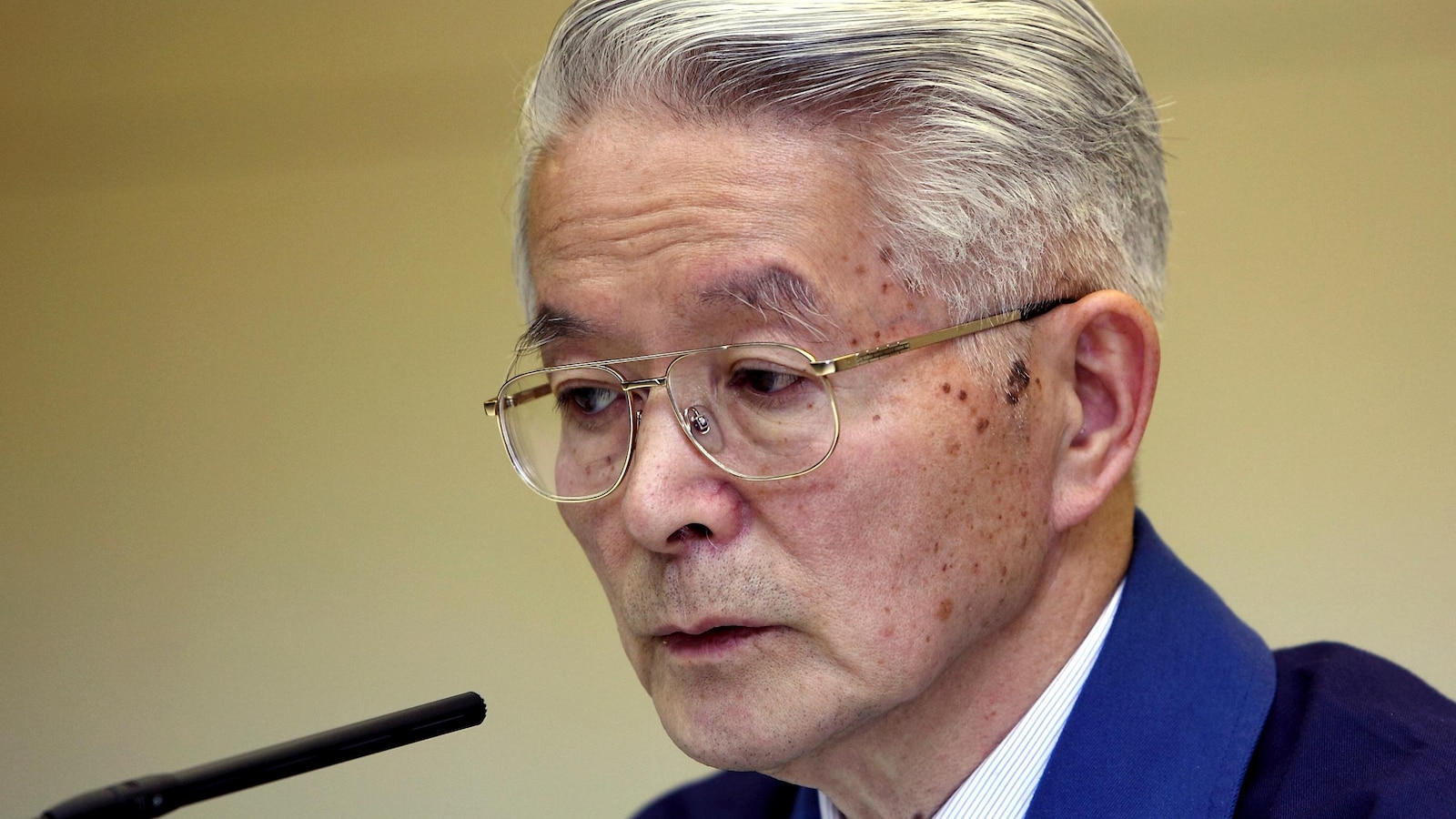
    TOKYO — Tokyo Electric Power Company Holdings’ former chairperson, who led the emergency response after a meltdown at its Fukushima Daiichi nuclear plant and was accused of being responsible for failing to prevent the disaster as top management, has died, with his trials still pending. He was 84.

    Tsunehisa Katsumata died on Oct. 21, TEPCO said Thursday, without providing further details including the cause of his death.

    Katsumata was TEPCO chair when Fukushima Daiichi was hit by a magnitude 9.0 earthquake and tsunami in March 2011 and suffered triple meltdowns. He led the emergency response after the company’s then-president stepped down due to health problems and served until mid-2012.

    He later became one of the defendants in high-profile criminal and civil lawsuits seeking TEPCO management’s responsibility over their alleged failure to anticipate the massive quake and tsunami and to take preventive measures.

    Nearly 6,000 Fukushima residents in 2012 filed the criminal complaint, accusing several former TEPCO executives, including Katsumata, of professional negligence in the death of more than 40 elderly patients during or after forced evacuations in the aftermath of the meltdown, which released large amounts of radiation to the surroundings.

    After prosecutors dropped the case, Katsumata and two other former executives were indicted in 2016 by a citizens’ inquest of prosecution and forced to stand trial in the only criminal case related to the Fukushima disaster.

    Katsumata and two co-defendants pleaded not guilty, saying predicting the tsunami was impossible, and were acquitted in the district and high court rulings. The case is now pending at the Supreme Court.

    Katsumata also faced a civil trial filed by a group of TEPCO shareholders and was ordered by the Tokyo District Court in 2022 to pay damages exceeding 13 trillion yen ($85 trillion) with three other former executives. The case is pending at Tokyo High Court.

    Katsumata, who was president of TEPCO from 2002 to 2008, was also in charge of damage control and pushing corporate governance following the utility’s earlier data coverup scandal. He joined TEPCO in 1963.

    As head of the powerful utility, Katsumata also served key posts in business organizations, such as Keidanren, and had major influence over Japanese politics and industry.

    Today, more than 13 years after the accident, Fukushima Daiichi is being decommissioned — a decades-long process that is still at an early stage.

    In recent months, TEPCO has struggled to get a first tiny amount of melted fuel debris from one of the three damaged reactors using a remote-controlled robo t. If successful, the sample’s return would be a milestone that could contribute to further research into analyzing the melted fuel and developing necessary technology to remove the 880 tons of melted fuel debris that remain inside the three reactors.

    Source link

  • Japanese nuclear reactor which survived earthquake that badly damaged Fukushima power plant restarts

    Japanese nuclear reactor which survived earthquake that badly damaged Fukushima power plant restarts

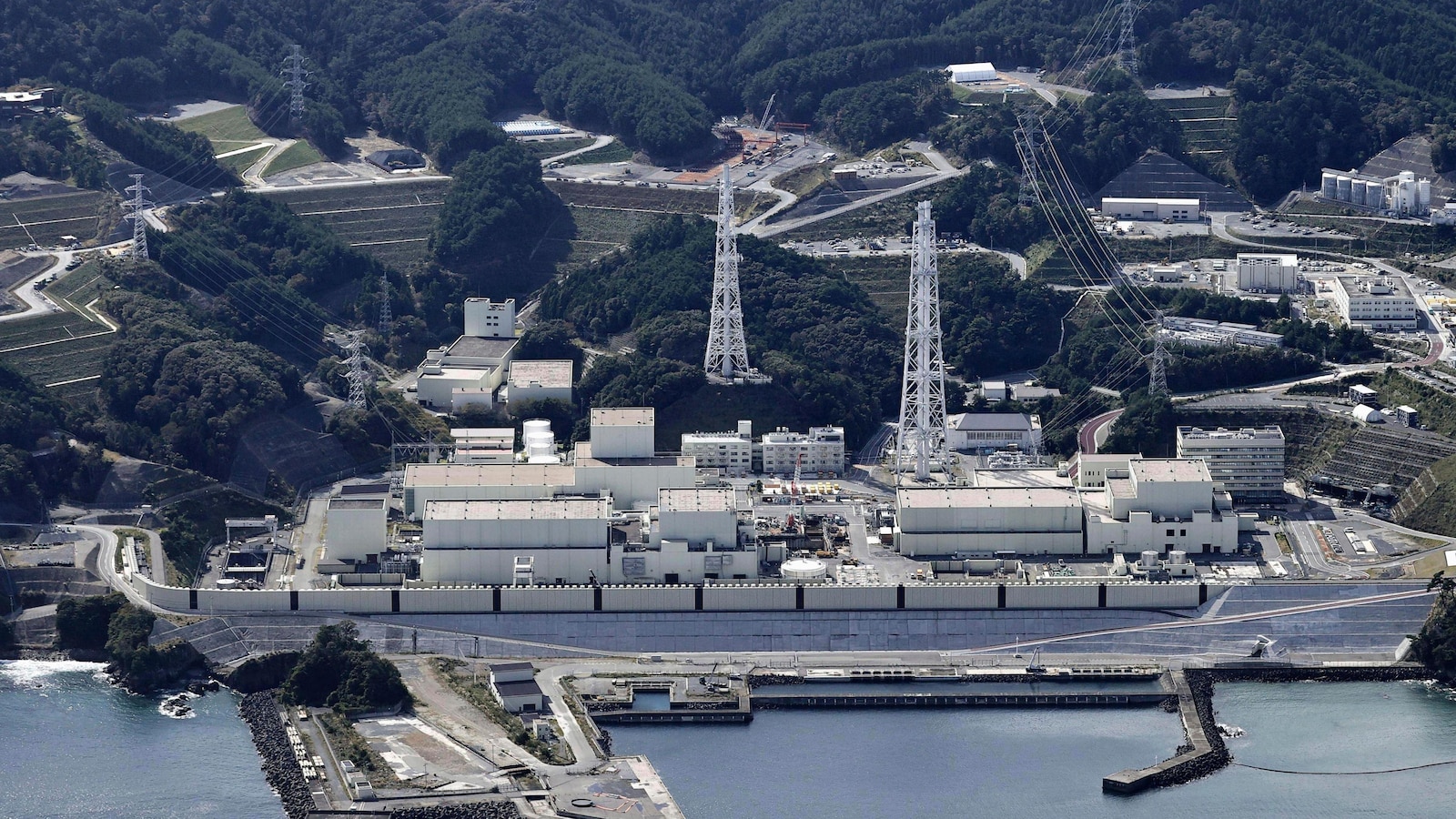
    TOKYO — A Japanese nuclear reactor which survived a massive 2011 earthquake and tsunami that badly damaged the nearby Fukushima nuclear power plant was restarted Tuesday for the first time since the disaster after a safety upgrade, as the government pursues a renewed expansion of nuclear energy to provide stable power and reduce carbon emissions.

    The No. 2 reactor at the Onagawa nuclear power plant on Japan’s northern coast was put back online and is expected to start generating power in early November, operator Tohoku Electric Power Co. said.

    The reactor is one of the three at the Onagawa plant, which is 100 kilometers (62 miles) north of the Fukushima Daiichi plant where three reactors melted following a magnitude 9.0 earthquake and tsunami in March 2011, releasing large amounts of radiation.

    The Onagawa plant was hit by a 13-meter (42-foot) tsunami but was able to keep its crucial cooling systems functioning in all three reactors and achieve their safe shutdowns.

    All of Japan’s 54 commercial nuclear power plants were shut down after the Fukushima disaster for safety checks and upgrades. Onagawa No. 2 is the 13th of the 33 still useable reactors to return to operation. It is also the first restart in Japan of the same type of reactor damaged in Fukushima.

    Tohoku Electric President Kojiro Higuchi said the reactor’s restart highlights the area’s recovery from the disaster.

    Last year, Japan’s government adopted a plan to maximize use of nuclear energy, including accelerating restarts of closed reactors, extending the operational life of aging plants, and developing next-generation reactors, as the country struggles to secure a stable energy supply and meet its pledge to reach carbon neutrality by 2050.

    “Nuclear energy, along with renewables, is an important power source for decarbonization,” Chief Cabinet Secretary Yoshimasa Hayashi said Tuesday. “We will maximize its use while ensuring safety.”

    Restarting nuclear reactors is also increasingly important for Japan’s economic growth, Hayashi said.

    Concern about the government’s revived push for nuclear energy grew after a magnitude 7.5 earthquake hit Japan’s Noto Peninsula on Jan. 1, 2024, killing more than 400 people and damaging more than 100,000 structures. Minor damage was reported at two nuclear facilities and evacuation plans for the region were found to be inadequate.

    For the Onagawa No. 2 reactor, Tohoku Electric in 2013 began upgrading its safety, including tsunami risk estimates and anti-quake measures. It also built an anti-tsunami wall extending up to 29 meters (95 feet) above sea level, and obtained safety approval from regulators in 2020.

    Twenty-one of Japan’s nuclear reactors, including six at Fukushima Daiichi and one at Onagawa, are currently being decommissioned because their operators chose to scrap them instead of investing large amounts for additional safety equipment required under the much-stricter post-Fukushima safety standards.

    Source link

  • Amazon, Google make dueling nuclear investments to power data centers with clean energy

    Amazon, Google make dueling nuclear investments to power data centers with clean energy

    Amazon on Wednesday said that it was investing in small nuclear reactors, coming just two days after a similar announcement by Google, as both tech giants seek new sources of carbon-free electricity to meet surging demand from data centers and artificial intelligence.

    The plans come as the owner of the shuttered Three Mile Island nuclear power plant said last month it plans to restart the reactor so tech giant Microsoft can buy the power to supply its data centers. All three companies have been investing in solar and wind technologies, which make electricity without producing greenhouse gas emissions. Now they say they need to go further in the search for clean electricity to meet both demand and their own commitments to cut emissions.

    Nuclear energy is a climate solution in that its reactors don’t emit the planet-warming greenhouse gases that come from power plants that burn fossil fuels, such as oil, coal and gas. The demand for power is surging globally as buildings and vehicles electrify. People used more electricity than ever last year, placing strain on electric grids around the world. Much of the demand also comes from data centers and artificial intelligence.

    The International Energy Agency forecasts that data centers’ total electricity consumption could reach more than 1,000 terawatt hours in 2026, more than doubling from 2022. Estimates suggest one terawatt hour can power 70,000 homes for a year.

    “AI is driving a significant increase in the amount of data centers and power that are required on the grid,” Kevin Miller, Amazon Web Services’ vice president of global data centers, told The Associated Press, adding: “We view advanced new nuclear capacity as really key and essential.”

    Energy Secretary Jennifer Granholm said she’s thrilled Amazon is the latest to “BYOP” or “bring your own power” to the buildout of data centers. Granholm spoke at an event for Wednesday’s announcement at Amazon’s second headquarters in Virginia. Virginia’s governor and two U.S. senators also attended.

    The United States aims to reach 100% clean electricity by 2035. Granholm said small modular reactors are a “huge piece of how we’re going to solve this puzzle,” a way to phase out fossil fuel power while responding to the increasing electricity demand from data centers and new factories. She said her department will provide $900 million to deploy more of these reactors.

    Small modular reactors are a type of nuclear reactor that can generate up to roughly one-third the amount of power of a traditional reactor. Developers say small reactors will be built faster and at a lower cost than large power reactors, scaling to fit needs of a particular location. They aim to start spinning up electricity in the early 2030s, if the Nuclear Regulatory Commission gives permission to build and operate their designs and the technology succeeds.

    If new, clean power isn’t added as data centers are developed, the U.S. runs the risk of “browning the grid,” or including more power that isn’t made from clean sources, said Kathryn Huff, a former U.S. assistant secretary for nuclear energy who is now an associate professor at the University of Illinois Urbana-Champaign.

    The reactors are currently under development, with none currently providing power to the electric grid in the U.S. Big investors can help change that, and these announcements could be the “inflection point” that makes scaling up this technology truly possible, Huff said.

    Jacopo Buongiorno, professor of nuclear science and engineering at the Massachusetts Institute of Technology, echoed that, saying the industry needs customers who value the reliability and carbon-free attributes of nuclear and are willing to pay a premium for it at first, until a number of the next-generation reactors are deployed and the cost comes down.

    On Monday, Google said it was signing a contract to purchase nuclear energy from multiple small modular reactors that Kairos Power, a nuclear technology company, plans to develop.

    The news highlights “the technologies that we’re going to need to achieve round the clock clean energy, not only for Google but for the world,” Michael Terrell, Google’s senior director of energy and climate, told the AP.

    With Kairos, Google said it expects to bring the first small modular reactor online by 2030, with more to come through 2035. The deal is projected to bring 500 megawatts of power to the grid. For context, Google consumed more than 24 terawatt hours of electricity last year, according to the company’s annual environmental report. One terawatt is equal to 1,000,000 megawatts.

    Meanwhile, Amazon’s announcements Wednesday included working with utility Dominion Energy to explore putting a small modular reactor near its existing North Anna nuclear power station in Virginia. It’s investing in reactor developer X-energy for its early development work, and collaborating with regional utility Energy Northwest in central Washington to put four of the X-energy reactors there.

    Combined, the three announcements could account for more than 5,000 megawatts of power by the late 2030s with the possibility of more. All of that is still likely only a small fraction of the company’s total energy consumption, a figure that Amazon does not report publicly.

    New reactor designs pair well with industrial applications because they can be built on a small footprint and generate reliable power, with some able to provide high-temperature heat too, at the site, said Doug True, chief nuclear officer at the industry trade association, Nuclear Energy Institute.

    “It seems like a really good fit to support those facilities, and for a lot of different applications depending upon the amount of power that’s needed by the customer,” he said.

    Both Amazon and Google have committed to using renewable energy to address climate change. By 2030, Google has pledged to meet net-zero emissions, and run carbon-free energy every hour of every day on every grid where it operates. It says it has already matched 100% of its global electricity consumption with renewable energy purchases on an annual basis. However, the company has fallen short on decreasing its emissions.

    Amazon has said it would match all of its global electricity consumption with 100% renewable energy by 2030, and recently announced it met that goal early in 2023. Though the company has matched its consumption as far as purchases of an equivalent amount of renewable energy, that does not necessarily mean it is using that to power its operations.

    Amazon saw its electricity emissions drop 11%, but direct emissions — known as Scope 1 — increased 7%, according to its 2023 sustainability report. The company is also targeting net zero-carbon by 2040.

    ___

    Read more of AP’s climate coverage at http://www.apnews.com/climate-and-environment

    ___

    The Associated Press’ climate and environmental coverage receives financial support from multiple private foundations. AP is solely responsible for all content. Find AP’s standards for working with philanthropies, a list of supporters and funded coverage areas at AP.org.

    Source link

  • North Korea discloses a uranium enrichment facility as Kim calls for more nuclear weapons

    North Korea discloses a uranium enrichment facility as Kim calls for more nuclear weapons

    SEOUL, South Korea — North Korea offered a rare glimpse into a secretive facility to produce weapons-grade uranium as state media reported Friday that leader Kim Jong Un visited the area and called for stronger efforts to “exponentially” increase the number of his nuclear weapons.

    It’s unclear if the site is at the North’s main Yongbyon nuclear complex, but it’s the North’s first public disclosure of a uranium-enrichment facility since it showed one at Yongbyon to visiting American scholars in 2010. While the latest unveiling is likely an attempt to apply more pressure on the U.S. and its allies, the images North Korea’s media released of the area could provide outsiders with a valuable source of information for estimating the amount of nuclear ingredients that North Korea has produced.

    During a visit to the Nuclear Weapons Institute and the production base of weapon-grade nuclear materials, Kim expressed “great satisfaction repeatedly over the wonderful technical force of the nuclear power field” held by North Korea, the official Korean Central News Agency reported.

    KCNA said that Kim went around the control room of the uranium enrichment base and a construction site that would expand its capacity for producing nuclear weapons. North Korean state media photos showed Kim being briefed by scientists while walking along long lines of tall gray tubes, but KCNA didn’t say when Kim visited the facilities and where they are located.

    KCNA said Kim stressed the need to further augment the number of centrifuges to “exponentially increase the nuclear weapons for self-defense,” a goal he has repeatedly stated in recent years. It said Kim ordered officials to push forward the introduction of a new-type centrifuge, which has reached its completion stage.

    Kim said North Korea needs greater defense and preemptive attack capabilities because “anti-(North Korea) nuclear threats perpetrated by the U.S. imperialists-led vassal forces have become more undisguised and crossed the red-line,” KCNA said.

    North Korea first showed a uranium enrichment site in Yongbyon to the outside world in November 2010, when it allowed a visiting delegation of Stanford University scholars led by nuclear physicist, Siegfried Hecker, to tour its centrifuges. North Korean officials then reportedly told Hecker that 2,000 centrifuges were already installed and running at Yongbyon.

    Satellite images in recent years have indicated North Korea was expanding a uranium enrichment plant at its Yongbyon nuclear complex. Nuclear weapons can be built using either highly enriched uranium or plutonium, and North Korea has facilities to produce both at Yongbyon. It’s not clear exactly how much weapons-grade plutonium or highly enriched uranium has been produced at Yongbyon and where North Korea stores it.

    “For analysts outside the country, the released images will provide a valuable source of information for rectifying our assumptions about how much material North Korea may have amassed to date,” said Ankit Panda, an expert with the Carnegie Endowment for International Peace.

    “Overall, we should not assume that North Korea will be as constrained as it once was by fissile material limitations. This is especially true for highly enriched uranium, where North Korea is significantly less constrained in its ability to scale up than it is with plutonium,” Panda said.

    In 2018, Hecker and Stanford University scholars estimated North Korea’s highly enriched uranium inventory was 250 to 500 kilograms (550 to 1,100 pounds), sufficient for 25 to 30 nuclear devices.

    Some U.S. and South Korean experts speculate North Korea is covertly running at least one other uranium-enrichment plant. In 2018, a top South Korean official told parliament that North Korea was estimated to have already manufactured up to 60 nuclear weapons. Estimates on how many nuclear bombs North Korea can add every year vary, ranging from six to as much as 18.

    Since 2022, North Korea has sharply ramped up weapons testing activities to expand and modernize its arsenal of nuclear missiles targeting the U.S. and South Korea. Analysts say North Korea could perform nuclear test explosions or long-range missile tests ahead of the U.S. presidential election in November with the intent to influence the outcome and increase its leverage in future dealings with the Americans.

    North Korea had conducted test-launches of multiple short-range ballistic missiles on Thursday. In an apparent reference to those launches, KCNA said Kim had supervised test-firing of nuclear-capable 600mm multiple rockets to examine the performance of their new launch vehicles.

    ___

    Follow AP’s Asia-Pacific coverage at https://apnews.com/hub/asia-pacific

    Source link