hacklink hack forum hacklink film izle hacklink marsbahisizmir escortsahabetpornJojobetcasibompadişahbet

Tag: parent

  • Agony of taking care of a parent who doesn’t know you

    Agony of taking care of a parent who doesn’t know you

    In Kenya, the weight of caregiving falls heavily on the shoulders of children when parents grow old or become terminally ill. Nursing homes remain a rare and culturally unpopular option, leaving adult children to manage the physical, emotional, and financial toll of caring for ageing or ailing parents.

    The burden becomes even heavier when these parents suffer from debilitating conditions like dementia or Alzheimer’s, a disease that destroys memory. For many caregivers, it is a silent struggle to take care of a loved one who does not know who you are. It is an act of love that reshapes their lives, often at a great personal cost.

    Elizabeth Mutunga understands this burden all too well. At just 17, her father began showing early signs of dementia, thrusting her into the role of primary caregiver. As the eldest of three, she put her dreams on hold to support her family, becoming the breadwinner while ensuring her younger siblings could finish their education.

    “My dad started getting sick in 1992, but it wasn’t until 2007 that we got the official diagnosis; Alzheimer’s disease,” Elizabeth recalls. “Before that, we didn’t know what was happening. He was a policeman, always dressing sharply, but suddenly, he started wearing pyjamas over his clothes. We didn’t have a clue,” the 49-year-old says.

    The lack of understanding about dementia made the early years incredibly difficult. With little medical information at the time, the family was left to search for answers on their own.

    “The doctor who gave us the diagnosis just told us to go and Google the disease,” Elizabeth remembers. “I had just finished high school and was toying with becoming an air hostess, but those dreams had to wait. My father needed me.” Despite the challenges, Elizabeth found solace in reaching out to others and having a support group.

    Her father passed away in 2007.

    It was this experience that prompted Elizabeth to found the Alzheimer’s and Dementia Organisation Kenya (ADOK), a support group that guides families affected by dementia.

    “Our main focus at ADOK is to support the caregivers. We help them understand what Alzheimer’s is and how to cope with it,” she explains. The stigma surrounding dementia, particularly in rural areas, adds to the burden. Many people still believe that dementia is caused by witchcraft, especially in regions with limited access to information. Elizabeth and her team at ADOK regularly visit villages to debunk these myths.

    Elizabeth Mutunga CEO and Founder of Alzheimer’s and Dementia Organisation Kenya during an interview at St. Andrews along Nyerere Road, Nairobi on September 14, 2024.

    Photo credit: Wilfred Nyangaresi | Nation

    “There’s so much stigma around the disease. People don’t realise it’s a medical condition, not just part of ageing or something caused by witchcraft,” she shares. The support group meets once every month.

    Writing became Elizabeth’s emotional outlet, helping her process the mental anguish she endured while caring for her father. “I would write about the pain I was going through, the questions I had, and the frustrations we faced,” she says.

    For Elizabeth, one of the most heartbreaking aspects of her father’s illness was his inability to recognise her. “Of all his children, I was the one he couldn’t remember,” she says.

    Wedding day

    “On my wedding day, when it was time to walk me down the aisle, I told him, ‘Okay, Dad, let’s go.’ But he just looked at me and said, ‘Don’t call me your father.’

    It was my wedding day, and I didn’t know whether to cry or laugh,” she recalls. After taking care of the family, Elizabeth went back to school and pursued a Bachelor’s degree in psychology, and she now has two Master’s degrees including a Master’s in dementia.

    Real sacrifice

    Julisa Rowe is also taking care of her mother, who has Alzheimer’s. When her parents moved back to Kenya, there was a lot of settling in to be done.

    “My parents were the founders of Daystar University, and they were called back, so they sold everything they had in the US and moved back to Kenya. This was in 2014, and they were settling down, building a house, and trying to adjust to the new life, we just assumed that maybe mom was having a hard time adopting. One thing that researching Alzheimer’s will tell you is that sometimes the symptoms can mimic many other causes, like anxiety and stress,” she says.

    Julisa Rowe an actress and Culture and Communication Specialist during an interview at St. Andrews along Nyerere Road, Nairobi on September 14, 2024.

    Photo credit: Wilfred Nyangaresi | Nation

    This disease smuggles itself in under the cover of other conditions. It was not until 2016 that they got a diagnosis and were informed that her mother has Alzheimer’s.

    Ms Rowe was spared the financial burden as her father had purchased a long-term care insurance policy in the US that helped cover the costs when her mother became frail and was diagnosed with the disease.

    “We were lucky that my father had planned for this, but even then, caring for my mother was a huge challenge,” Julisa recalls.

    “Medical care was mostly out of pocket, and we had to help her with everything; showering, dressing, and feeding.”

    Sitting in silence

    Visits were emotionally draining for the 58-year-old. “When you visit your mother, and she can’t communicate, it’s difficult. What do you say? How do you have a conversation when she’s not able to respond? It’s like sitting in silence, staring at the wall.”

    Though the experience was overwhelming, Julisa never saw caregiving as a sacrifice. “Yes, you give up certain things, but that’s just part of caring for your parents. I think the real sacrifice for me was my work. It took a back seat while I dealt with my mother’s illness and all the family responsibilities,” says Julisa, who is an actress and holds a doctorate in ethnodramatology, an academic discipline that studies world theatrical traditions.

    When her mother passed away a year ago, Julisa turned to acting for therapy, using her roles to express her emotions. She has also collaborated with Mugambi Nthiga to create a play, “In Other Words”, aimed at raising awareness about Alzheimer’s disease.

    “The arts can be a powerful way to bring these difficult issues into public conversation. Our play is a tribute to our parents, who have faced this disease with so much strength.”

    The play is set to premiere this month.

    Remember every face, name

    Apart from an unending love for theatre and arts, the other thing that Julisa and Mugambi Nthiga have in common is their parent’s struggle with dementia. In 2019, Mugambi’s father was diagnosed with dementia. Since then, Mugambi’s family has had to adapt to the rapidly changing needs of their father as his condition worsens. “Watching my father change so drastically has been one of the hardest things I’ve ever experienced,” Mugambi says.

    “He’s still physically present, but the man I knew, the one who could remember every face and name, has faded.”

    Mugambi Nthiga, a film and theatre storyteller during an interview at St Andrews along Nyerere Road, Nairobi on September 14, 2024.

    Photo credit: Wilfred Nyangaresi | Nation

    Caring for a parent with dementia is not just about memory loss; it affects cognitive function and personality. Mugambi talks about how relationships are built on shared memories, and without them, it becomes difficult to connect.

    “You realise just how much your interactions with people are rooted in memory. Without that, it’s like you’re meeting them all over again, every day,” he says.

    The financial burden of caregiving has also been significant. Mugambi’s father now requires a full-time caregiver, which costs the family between Sh25,000 and Sh50,000 per month, not including the cost of medication and therapy.

    “We’ve been fortunate that my father has a pension and medical insurance from his time working as a policeman. He is now retired. However, it is still incredibly expensive as we have to pay the caregiver,” the 44-year-old says.

    Besides the financial and emotional burden, finding the right caregiver for a dementia patient is also not easy either.

    “There are many people trained in basic caregiving, but understanding dementia requires more specialised knowledge, and that’s hard to come by,” Mr Nthiga says, noting, “However, old people’s care is growing at a very rapid rate. I fear that sometimes it might be growing at a rate that it’s becoming commoditised without being overseen. There still needs to be a function that oversees this field so that the quality of care for unwell people, particularly older people who are very vulnerable, is kept high. And people don’t come in as opportunists and decide that they’re going to provide care without any oversight,” he says.

    Despite the challenges, Mugambi finds solace in gardening and support groups. “You have to find your way to cope. For me, it’s being part of a support group and spending time in the garden. It helps me clear my mind.”

    Healthy lessons

    Damaris Ndichu’s mother, who had dementia, passed away four years ago, leaving her with valuable lessons on the importance of self-care. After an eight-year journey of caring for her mother through dementia, she realised the need to take care of her own well-being as well.

    Damaris Ndichu during an interview at St. Andrews along Nyerere Road, Nairobi on September 14, 2024.

    Photo credit: Wilfred Nyangaresi | Nation

    “I learned that I needed to care for myself too. It’s okay to take a break, walk away for a few minutes, and focus on your own health.”

    Now, the 52-year-old takes long walks and meditates to maintain her physical and mental health.

    “I don’t let myself get stressed by life’s challenges anymore. I learned the hard way that I need to prioritise my well-being. It’s not selfish; it’s necessary.”

    Elizabeth is also trying to maintain an active lifestyle to help prevent dementia. “I do crossword puzzles every day, and I make time for my friends. Sitting down for a face-to-face conversation is much more fulfilling than just talking on WhatsApp. I’ve also learned the favourite songs of the patients I visit, and I sing for them,” she says.

    Taboo of nursing homes

    For many families, the question of whether to place an ageing parent in a nursing home is a difficult one. As Elizabeth points out, it depends on the circumstances. She says, “A lot of young people are leaving the country for work abroad, so they may opt to leave their parents in nursing homes,” she explains.

    “But for those who are still in the country, it’s often best to keep parents in a familiar environment. Moving them to a new place can be traumatic, especially for someone with dementia. A drastic change like that can cause them to deteriorate even faster.”

    Dr Tasneem Yamani a Home health care specialist (geriatrics) during the interview at her home in Nairobi on September 11, 2024.

    Photo credit: Lucy Wanjiru | Nation

    Dr Tasneem Yamani, a geriatric general practitioner, explains that while the traditional approach is to care for parents at home, nursing homes can provide a supportive environment for ageing individuals.

    “Taking a parent to a nursing home is not about abandonment but about providing the right social and physical environment. Nursing homes are not a place to go and put the responsibility of care to the nurses. It’s more about creating a conducive environment for older people to thrive in. Just in the same way that you take a child to kindergarten first, not to primary school, because they will thrive in kindergarten as that is age-appropriate. Older persons also need a social environment that is conducive to ageing. That can be found around like-minded individuals where they are in the same category of activities, levels, and able to get a social life within peers,” she explains.


    Source link

  • Agony of taking care of a parent who doesn’t know you

    Agony of taking care of a parent who doesn’t know you

    In Kenya, the weight of caregiving falls heavily on the shoulders of children when parents grow old or become terminally ill. Nursing homes remain a rare and culturally unpopular option, leaving adult children to manage the physical, emotional, and financial toll of caring for ageing or ailing parents.

    The burden becomes even heavier when these parents suffer from debilitating conditions like dementia or Alzheimer’s, a disease that destroys memory. For many caregivers, it is a silent struggle to take care of a loved one who does not know who you are. It is an act of love that reshapes their lives, often at a great personal cost.

    Elizabeth Mutunga understands this burden all too well. At just 17, her father began showing early signs of dementia, thrusting her into the role of primary caregiver. As the eldest of three, she put her dreams on hold to support her family, becoming the breadwinner while ensuring her younger siblings could finish their education.

    “My dad started getting sick in 1992, but it wasn’t until 2007 that we got the official diagnosis; Alzheimer’s disease,” Elizabeth recalls. “Before that, we didn’t know what was happening. He was a policeman, always dressing sharply, but suddenly, he started wearing pyjamas over his clothes. We didn’t have a clue,” the 49-year-old says.

    The lack of understanding about dementia made the early years incredibly difficult. With little medical information at the time, the family was left to search for answers on their own.

    “The doctor who gave us the diagnosis just told us to go and Google the disease,” Elizabeth remembers. “I had just finished high school and was toying with becoming an air hostess, but those dreams had to wait. My father needed me.” Despite the challenges, Elizabeth found solace in reaching out to others and having a support group.

    Her father passed away in 2007.

    It was this experience that prompted Elizabeth to found the Alzheimer’s and Dementia Organisation Kenya (ADOK), a support group that guides families affected by dementia.

    “Our main focus at ADOK is to support the caregivers. We help them understand what Alzheimer’s is and how to cope with it,” she explains. The stigma surrounding dementia, particularly in rural areas, adds to the burden. Many people still believe that dementia is caused by witchcraft, especially in regions with limited access to information. Elizabeth and her team at ADOK regularly visit villages to debunk these myths.

    Elizabeth Mutunga CEO and Founder of Alzheimer’s and Dementia Organisation Kenya during an interview at St. Andrews along Nyerere Road, Nairobi on September 14, 2024.

    Photo credit: Wilfred Nyangaresi | Nation

    “There’s so much stigma around the disease. People don’t realise it’s a medical condition, not just part of ageing or something caused by witchcraft,” she shares. The support group meets once every month.

    Writing became Elizabeth’s emotional outlet, helping her process the mental anguish she endured while caring for her father. “I would write about the pain I was going through, the questions I had, and the frustrations we faced,” she says.

    For Elizabeth, one of the most heartbreaking aspects of her father’s illness was his inability to recognise her. “Of all his children, I was the one he couldn’t remember,” she says.

    Wedding day

    “On my wedding day, when it was time to walk me down the aisle, I told him, ‘Okay, Dad, let’s go.’ But he just looked at me and said, ‘Don’t call me your father.’

    It was my wedding day, and I didn’t know whether to cry or laugh,” she recalls. After taking care of the family, Elizabeth went back to school and pursued a Bachelor’s degree in psychology, and she now has two Master’s degrees including a Master’s in dementia.

    Real sacrifice

    Julisa Rowe is also taking care of her mother, who has Alzheimer’s. When her parents moved back to Kenya, there was a lot of settling in to be done.

    “My parents were the founders of Daystar University, and they were called back, so they sold everything they had in the US and moved back to Kenya. This was in 2014, and they were settling down, building a house, and trying to adjust to the new life, we just assumed that maybe mom was having a hard time adopting. One thing that researching Alzheimer’s will tell you is that sometimes the symptoms can mimic many other causes, like anxiety and stress,” she says.

    Julisa Rowe an actress and Culture and Communication Specialist during an interview at St. Andrews along Nyerere Road, Nairobi on September 14, 2024.

    Photo credit: Wilfred Nyangaresi | Nation

    This disease smuggles itself in under the cover of other conditions. It was not until 2016 that they got a diagnosis and were informed that her mother has Alzheimer’s.

    Ms Rowe was spared the financial burden as her father had purchased a long-term care insurance policy in the US that helped cover the costs when her mother became frail and was diagnosed with the disease.

    “We were lucky that my father had planned for this, but even then, caring for my mother was a huge challenge,” Julisa recalls.

    “Medical care was mostly out of pocket, and we had to help her with everything; showering, dressing, and feeding.”

    Sitting in silence

    Visits were emotionally draining for the 58-year-old. “When you visit your mother, and she can’t communicate, it’s difficult. What do you say? How do you have a conversation when she’s not able to respond? It’s like sitting in silence, staring at the wall.”

    Though the experience was overwhelming, Julisa never saw caregiving as a sacrifice. “Yes, you give up certain things, but that’s just part of caring for your parents. I think the real sacrifice for me was my work. It took a back seat while I dealt with my mother’s illness and all the family responsibilities,” says Julisa, who is an actress and holds a doctorate in ethnodramatology, an academic discipline that studies world theatrical traditions.

    When her mother passed away a year ago, Julisa turned to acting for therapy, using her roles to express her emotions. She has also collaborated with Mugambi Nthiga to create a play, “In Other Words”, aimed at raising awareness about Alzheimer’s disease.

    “The arts can be a powerful way to bring these difficult issues into public conversation. Our play is a tribute to our parents, who have faced this disease with so much strength.”

    The play is set to premiere this month.

    Remember every face, name

    Apart from an unending love for theatre and arts, the other thing that Julisa and Mugambi Nthiga have in common is their parent’s struggle with dementia. In 2019, Mugambi’s father was diagnosed with dementia. Since then, Mugambi’s family has had to adapt to the rapidly changing needs of their father as his condition worsens. “Watching my father change so drastically has been one of the hardest things I’ve ever experienced,” Mugambi says.

    “He’s still physically present, but the man I knew, the one who could remember every face and name, has faded.”

    Mugambi Nthiga, a film and theatre storyteller during an interview at St Andrews along Nyerere Road, Nairobi on September 14, 2024.

    Photo credit: Wilfred Nyangaresi | Nation

    Caring for a parent with dementia is not just about memory loss; it affects cognitive function and personality. Mugambi talks about how relationships are built on shared memories, and without them, it becomes difficult to connect.

    “You realise just how much your interactions with people are rooted in memory. Without that, it’s like you’re meeting them all over again, every day,” he says.

    The financial burden of caregiving has also been significant. Mugambi’s father now requires a full-time caregiver, which costs the family between Sh25,000 and Sh50,000 per month, not including the cost of medication and therapy.

    “We’ve been fortunate that my father has a pension and medical insurance from his time working as a policeman. He is now retired. However, it is still incredibly expensive as we have to pay the caregiver,” the 44-year-old says.

    Besides the financial and emotional burden, finding the right caregiver for a dementia patient is also not easy either.

    “There are many people trained in basic caregiving, but understanding dementia requires more specialised knowledge, and that’s hard to come by,” Mr Nthiga says, noting, “However, old people’s care is growing at a very rapid rate. I fear that sometimes it might be growing at a rate that it’s becoming commoditised without being overseen. There still needs to be a function that oversees this field so that the quality of care for unwell people, particularly older people who are very vulnerable, is kept high. And people don’t come in as opportunists and decide that they’re going to provide care without any oversight,” he says.

    Despite the challenges, Mugambi finds solace in gardening and support groups. “You have to find your way to cope. For me, it’s being part of a support group and spending time in the garden. It helps me clear my mind.”

    Healthy lessons

    Damaris Ndichu’s mother, who had dementia, passed away four years ago, leaving her with valuable lessons on the importance of self-care. After an eight-year journey of caring for her mother through dementia, she realised the need to take care of her own well-being as well.

    Damaris Ndichu during an interview at St. Andrews along Nyerere Road, Nairobi on September 14, 2024.

    Photo credit: Wilfred Nyangaresi | Nation

    “I learned that I needed to care for myself too. It’s okay to take a break, walk away for a few minutes, and focus on your own health.”

    Now, the 52-year-old takes long walks and meditates to maintain her physical and mental health.

    “I don’t let myself get stressed by life’s challenges anymore. I learned the hard way that I need to prioritise my well-being. It’s not selfish; it’s necessary.”

    Elizabeth is also trying to maintain an active lifestyle to help prevent dementia. “I do crossword puzzles every day, and I make time for my friends. Sitting down for a face-to-face conversation is much more fulfilling than just talking on WhatsApp. I’ve also learned the favourite songs of the patients I visit, and I sing for them,” she says.

    Taboo of nursing homes

    For many families, the question of whether to place an ageing parent in a nursing home is a difficult one. As Elizabeth points out, it depends on the circumstances. She says, “A lot of young people are leaving the country for work abroad, so they may opt to leave their parents in nursing homes,” she explains.

    “But for those who are still in the country, it’s often best to keep parents in a familiar environment. Moving them to a new place can be traumatic, especially for someone with dementia. A drastic change like that can cause them to deteriorate even faster.”

    Dr Tasneem Yamani a Home health care specialist (geriatrics) during the interview at her home in Nairobi on September 11, 2024.

    Photo credit: Lucy Wanjiru | Nation

    Dr Tasneem Yamani, a geriatric general practitioner, explains that while the traditional approach is to care for parents at home, nursing homes can provide a supportive environment for ageing individuals.

    “Taking a parent to a nursing home is not about abandonment but about providing the right social and physical environment. Nursing homes are not a place to go and put the responsibility of care to the nurses. It’s more about creating a conducive environment for older people to thrive in. Just in the same way that you take a child to kindergarten first, not to primary school, because they will thrive in kindergarten as that is age-appropriate. Older persons also need a social environment that is conducive to ageing. That can be found around like-minded individuals where they are in the same category of activities, levels, and able to get a social life within peers,” she explains.

    Source link

  • Trump will soon be able to sell shares in Truth Social’s parent company. What’s at stake?

    Trump will soon be able to sell shares in Truth Social’s parent company. What’s at stake?

    NEW YORK — For all the debate about just how rich former President Donald Trump is, one thing is clear: His ownership stake in Trump Media & Technology Group makes him a billionaire.

    The company behind the Truth Social platform is worth more than $3.5 billion on Wall Street, and Trump owns more than half of it. So far, Trump and other insiders in the company known as TMTG have been unable to cash in because a “lock-up agreement” has prevented them from selling any of their shares since TMTG began trading publicly in March.

    Trump’s lock-up deal looks set to expire later this week. But if he sells, Trump risks sending a negative signal to other shareholders and prompting them to dump their shares. For now, Trump says he’s not selling.

    Here’s a look at what the end of the lock-up could mean and what Truth Social actually does:

    Trump on Thursday will be free to start selling his shares of TMTG as long as they don’t close below $12 before then. They closed Friday at nearly $18.

    Trump entered into the lock-up agreement in March, when TMTG merged with a shell company named Digital World Acquisition Corp. and took its place on the Nasdaq stock market.

    Trump does not run TMTG. Its CEO is Devin Nunes, the former Republican U.S. Representative from California. But Trump is the biggest draw for its Truth Social network, posting his “truths” on the social-media platform.

    Trump owned 57.3% of all the company’s shares, as of Aug. 15. Based on the company’s total market value of nearly $3.6 billion coming into the week, that made Trump’s stake worth a little more than $2 billion.

    Trump launched Truth Social, in February 2022, after he was banned from major sites such as Facebook and the platform formerly known as Twitter following the Jan. 6 attack on the U.S. Capitol. He’s since been reinstated to both — and endorsed by X owner Elon Musk — but he still mostly posts on his own platform.

    While the platform sought to capitalize on the outrage over Trump’s social media bans to attract a broad audience, Truth Social, much like fellow right-leaning social media platforms Gettr and Parler, has not been able to move much beyond an echo chamber of conservative political commentary.

    Truth Social is marketed as the antidote to mainstream social media apps, which Trump and his supporters say discriminate against their views and limit free expression, said Roxana Muenster, a doctoral student at Cornell University who studies the far-right and digital communication. Its audience, she added, is mainly Trump’s MAGA base. “There is also a lot of hate speech and extremism on the platform due to their lax approach to content moderation.”

    As part of an agreement that runs until February 2025, Trump has agreed to wait six hours after posting on Truth Social before he can post any “non-political communications” on other social media platforms

    However, this is at the former president’s sole discretion, and as the company notes in a regulatory filing, as “a candidate for president, most or all of President Trump’s social media posts may be deemed by him to be politically related.”

    The company said in a recent regulatory filing that it relies on advertising for all of its revenue. That revenue is miniscule — it took in just $836,900 in its most recent quarter, down 30% from $1.2 million a year earlier. For the three-month period that ended June 30, the company posted a loss of $16.4 million. About half of that was legal expenses related to its merger with Digital World.

    In its latest quarter, Trump Media said it also incurred $3.1 million of technology consulting and software licensing expenses, mainly related to its software licensing agreement to power its new TV streaming service called Truth+.

    Unlike more mainstream social media platforms, Truth Social does not release information about certain measures of performance, such as signups and average revenue per user. This can make it more challenging for investors to determine how the company’s business is doing.

    Poorly, for the most part. After sitting above $60 in March, it tumbled toward $16 before perking up a bit on Friday and closing at $17.97.

    A stock’s price is supposed to rise and fall with its prospects for making money, but critics say TMTG’s stock has instead tended to move with investors’ expectations for Trump’s re-election chances. It’s also been incredibly volatile, diving and soaring through pulse-raising swings day to day if not hour to hour. The stock has had 15 days since the start of April where it’s jumped or dropped more than 10%.

    At a press conference on Friday, he suggested it may be because of fears that he would sell his own shares. “It’s different if I leave,” he said.

    The stock market works on supply and demand, and if many shares of any stock were suddenly to become available because a shareholder wanted to sell, that would likely hurt its price.

    Beyond that, though, Trump is a huge draw for TMTG’s stock himself. A stock is generally worth whatever the latest and the next buyer will pay for it. Investors would likely be less willing to pay higher prices for TMTG stock if its main draw were selling his own shares of the company.

    At the Friday press conference, he said he would not sell when the lock-up lifts. He said he does not need the money.

    “No, I’m not selling,” he said. “No, I love it. I use it as a method of getting out my word.”

    That caused a mini-rally for the stock of 11.8%.

    Yes. Major investors who own more than 10% of a company must report their sales of its stock to the U.S. Securities and Exchange Commission within two business days.

    When there will be a lot of selling, companies often arrange for a follow-on offering, an organized sale where underwriters can find buyers for the shares rather than just dumping them into the market, according to Jay Ritter, an expert on initial public offerings at the University of Florida’s Warrington College of Business.

    “With founders or large shareholders, such as Donald Trump, it is common for them to sell a modest fraction of their shares in order to diversify,” Ritter said. “It is unusual for them to sell a large fraction of shares as soon as they can.”

    No, says Ritter, who believes TMTG’s stock price is too high relative to how much money the company is making and looks set to make.

    Ritter said the stock could drop more than 80%. “Because of this probable large percentage decline, existing shareholders have a greater incentive than usual to sell now rather than wait,” he said.

    That could push other big shareholders, such as CEO Nunes, “to sell a lot of their shares quickly, whether or not Donald Trump sells any of his shares.”

    Source link

  • Kim Kardashian speaks out on the ‘struggle’ of being a parent of a child with a learning difference

    Kim Kardashian speaks out on the ‘struggle’ of being a parent of a child with a learning difference

    Kim Kardashian has opened up about the struggle of being a parent of a child with a learning difference.

    The reality TV star – whose daughter North West, 11, previously revealed she had been diagnosed with dyslexia – shared a video on her Instagram Stories of her pal Lauren Sánchez, speaking on ‘The View’ about her children’s book, The Fly Who Flew to Space, where she spoke about her own struggles with dyslexia as a child.

    Alongside the post, Kim, 43, wrote: ‘I’m reposting this not bc she’s my friend and I love her, but because every mom who has struggled with their kids with dyslexia or any learning difference needs to hear that it will be okay.’

    Last year, North revealed her diagnosis during a TikTok livestream.

    The daughter of Kim who has racked up over 19million followers on the social media platform said: ‘Guys, I have dyslexia. Do you even know what that is?’

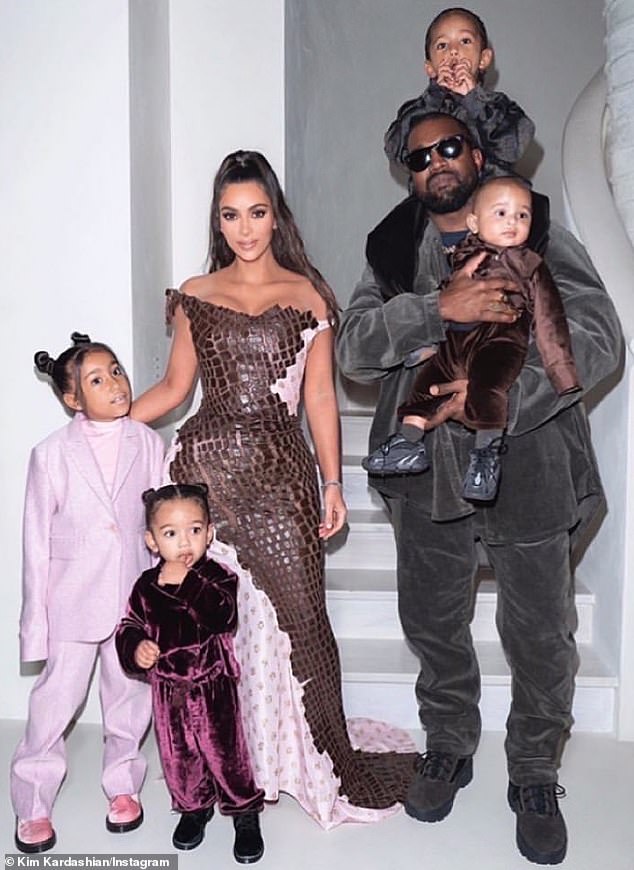
    Kim Kardashian has opened up about the struggle of being a parent of a child with a learning difference (pictured here in September)

    Kim Kardashian has opened up about the struggle of being a parent of a child with a learning difference (pictured here in September)

    The reality TV star - whose daughter North West, 11, was diagnosed with dyslexia last year- shared a video on her Instagram Stories telling other parents who were experiencing the same struggle that: 'Everything will be okay'

    The reality TV star – whose daughter North West, 11, was diagnosed with dyslexia last year- shared a video on her Instagram Stories telling other parents who were experiencing the same struggle that: ‘Everything will be okay’

    Kim responded: ‘Northie, you sure are spilling the tea on here,’ and later asked her to end the livestream, adding ‘you are just saying way too much. I purposely don’t talk about stuff that you are going through’.

    Meanwhile, North – whose father is controversial rapper Kanye West – previously revealed how she is already thinking about being a businesswoman like her parents.

    The KUWTK veteran said that she already has ambitions to take over the family businesses one day and is specifically eyeing up Yeezy and Skims.

    In her first solo cover interview with i-D magazine last year, she said: ‘One day I want to own Yeezy and Skims, and I want to be a business owner.’

    Until then, she said that she would like to earn some pocket money walking dogs to pay for her art tools.

    She said: ‘When I’m, like, 13, I want to walk dogs, to make money to buy art supplies, because everything around here is so expensive.’

    North told the Vice Media outlet that her biggest style iconic is herself and as far as she is concerned, the three words that sum up her existence are: ‘Blessed, awesome, cool,’ and her self-description is: ‘The Best Ever.’

    Kim’s impact on her was also in evidence, as North revealed that her most prized article of clothing that she owned was a ‘Michael Jackson jacket that my mom got me for Christmas!’

    Last year, North revealed her diagnosis during a TikTok livestream and said: 'Guys, I have dyslexia. Do you even know what that is?'

    Last year, North revealed her diagnosis during a TikTok livestream and said: ‘Guys, I have dyslexia. Do you even know what that is?’ 

    Kim quickly responded to the admission telling North that she was revealing too much personal information and later asked her to end the livestream

    Kim quickly responded to the admission telling North that she was revealing too much personal information and later asked her to end the livestream

    Following in her famous parents footsteps, North appeared on her first solo cove with i-D magazine last year, where she revealed she was interested in becoming a business owner

    Following in her famous parents footsteps, North appeared on her first solo cove with i-D magazine last year, where she revealed she was interested in becoming a business owner 

    Kim and Kanye, who married in Florence in 2014, are co-parenting four children - North, 11, Saint, eight, Chicago, six, and Psalm, five (pictured in 2019)

    Kim and Kanye, who married in Florence in 2014, are co-parenting four children – North, 11, Saint, eight, Chicago, six, and Psalm, five (pictured in 2019)

    Although Kim and Kanye split up in 2021, they have been seen amicably reuniting ever since in order to attend North’s basketball games.

    Basketball has clearly become a source of joy in the young girl’s life, and her dedication is such that she described the sport as ‘not a hobby’ but ‘a lifestyle.’

    Gushing that ‘I just love basketball so much,’ she spilled that her most treasured memory is ‘When I first tried basketball, because I was so bad. So I know those memories and I’m like: “Ooh, now I’m so good,” I got so much better.’ 

    Kim and Kanye, who married in Florence in 2014, are co-parenting four children – North, 10, Saint, seven, Chicago, five, and Psalm, four. 

    Source link

  • Stakeholder in Trump’s Truth Social parent company wins court ruling over share transfer

    Stakeholder in Trump’s Truth Social parent company wins court ruling over share transfer

    DOVER, Del. — A federal judge in Delaware has ruled in favor of a firm seeking assurance that it will be able to sell its minority stake in the parent company of former president Donald Trump’s Truth Social platform.

    The judge on Friday granted summary judgment to Florida-based United Atlantic Ventures LLC in a lawsuit filed against Minnesota-based Odyssey Transfer and Trust Co., a business that handles securities transfers among registered shareholders.

    UAV is owned by Andrew Litinsky and Wesley Moss, former contestants on Trump’s TV show, “The Apprentice” who also helped facilitate a merger that took Trump Media public in March.

    Since then, UAV and Trump Media have been battling in courts in both Delaware and Florida over UAV’s stake in the company. Attorneys for Trump Media assured a state judge in Delaware earlier this year that UAV was entitled to an 8.6% stake and would suffer no merger-related dilution. They now contend, however, that UAV is not entitled to its shares because of pre-merger mismanagement by Litinsky and Moss.

    Friday’s ruling involves UAV’s concerns that it will not receive its Trump Media shares, currently valued at about $350 million, from Odyssey when a post-merger lockup period expires Sept. 19. According to court filings, Odyssey told UAV earlier this year that it would be taking direction from TMTG and its lawyers.

    After Odyssey filed a lawsuit, the parties appeared to have reached a resolution, with Odyssey saying it would remove transfer restrictions on the share after the lockup period expires “without preference to any TMTG shareholder.” After seeking approval from Trump Media, however, Odyssey tried to change that language to “on the same basis as other similarly situated TMTG shareholders.”

    Trump holds about 115 million TMTG shares, or roughly 60% of the company’s outstanding shares.

    U.S. District Judge Gregory Williams questioned Odyssey’s conduct, noting that it claimed the language change was “immaterial,” while allowing it to scuttle settlement negotiations.

    “Even outside settlement negotiations, Odyssey’s conduct has been elusive,” Williams wrote.

    Williams ordered that when Odyssey is notified by TMTG of the expiration of the lockup provisions, it must promptly notify UAV, remove transfer restrictions on all shares and not interfere with the delivery of the shares.

    TMTG’s share price hit a high of $79.38 on its first day of trading but is now hovering around $17, closing Friday at $17.10.

    Source link