hacklink hack forum hacklink film izle hacklink marsbahisizmir escortsahabetpornJojobetcasibompadişahbetGorabetcasibom9018betgit casinojojobetmarsbahismatbetmatbet giriş

Tag: passes

  • Australia’s House of Representatives passes bill that would ban young children from social media

    Australia’s House of Representatives passes bill that would ban young children from social media

    MELBOURNE, Australia — Australia’s House of Representatives on Wednesday passed a bill that would ban children younger than 16 years old from social media, leaving it to the Senate to finalize the world-first law.

    The major parties backed the bill that would make platforms including TikTok, Facebook, Snapchat, Reddit, X and Instagram liable for fines of up to 50 million Australian dollars ($33 million) for systemic failures to prevent young children from holding accounts.

    The legislation passed 102 votes in favor to 13 against. If the bill becomes law this week, the platforms would have one year to work out how to implement the age restrictions before the penalties are enforced.

    Opposition lawmaker Dan Tehan told Parliament the government had agreed to accept amendments in the Senate that would bolster privacy protections. Platforms would not be allowed to compel users to provide government-issued identity documents including passports or driver’s licenses. The platforms also could not demand digital identification through a government system.

    “Will it be perfect? No. But is any law perfect? No, it’s not. But if it helps, even if it helps in just the smallest of ways, it will make a huge difference to people’s lives,” Tehan told Parliament.

    Communications Minister Michelle Rowland said the Senate would debate the bill later Wednesday. The major parties’ support all but guarantees the legislation will pass in the Senate, where no party holds a majority of seats.

    Lawmakers who were not aligned with either the government or the opposition were most critical of the legislation during debate on Tuesday and Wednesday.

    Criticisms include that the legislation had been rushed through Parliament without adequate scrutiny, would not work, would create privacy risks for users of all ages and would take away parents’ authority to decide what’s best for their children.

    Critics also argue the ban would isolate children, deprive them of positive aspects of social media, drive children to the dark web, make children too young for social media reluctant to report harms they encountered and take away incentives for platforms to make online spaces safer.

    Independent lawmaker Zoe Daniel said the legislation would “make zero difference to the harms that are inherent to social media.”

    “The true object of this legislation is not to make social media safe by design, but to make parents and voters feel like the government is doing something about it,” Daniel told Parliament.

    “There is a reason why the government parades this legislation as world-leading, that’s because no other country wants to do it,” she added.

    T he platforms had asked for the vote on legislation to be delayed until at least June next year when a government-commissioned evaluation of age assurance technologies made its report on how the ban could been enforced.

    Melbourne resident Wayne Holdsworth, whose 17-year-old son Mac took his own life last year after falling victim to an online sextortion scam, described the bill as “absolutely essential for the safety of our children.”

    “It’s not the only thing that we need to do to protect them because education is the key, but to provide some immediate support for our children and parents to be able to manage this, it’s a great step,” the 65-year-old online safety campaigner told The Associated Press on Tuesday.

    “And in my opinion, it’s the greatest time in our country’s history,” he added, referring to the pending legal reform.

    Source link

  • SpaceX launches giant Starship rocket, but passes up catching it with mechanical arms

    SpaceX launches giant Starship rocket, but passes up catching it with mechanical arms

    SpaceX on Tuesday launched another Starship rocket, but passed up catching the booster with giant mechanical arms.

    Unlike last month’s success, the booster was directed to a splashdown in the Gulf of Mexico. The catch was called off just four minutes into the test flight from Texas for unspecified reasons, and the booster hit the water three minutes later.

    Not all of the criteria for a booster catch was met and so the flight director did not command the booster to return to the launch site, said SpaceX spokesman Dan Huot. He did not specifying what went wrong.

    At the same time, the empty spacecraft launched from Texas atop Starship soared across the Gulf of Mexico on a near loop around the world similar to October’s test flight. Skimming space, the shiny retro-looking craft targeted the Indian Ocean for a controlled but destructive end to the hourlong demo.

    It was the latest test for the world’s biggest and most powerful rocket that SpaceX and NASA hope to use to get astronauts back on the moon and eventually Mars.

    SpaceX kept the same flight path as last time, but changed some steps along the way as well as the time of day. Starship blasted off in late afternoon instead of early morning to ensure daylight halfway around the world for observing the spacecraft’s descent.

    Among the new objectives: igniting one of the spacecraft’s engines in space, which would be necessary when returning from orbit. There were also thermal protection experiments aboard the spacecraft, with some areas stripped of heat tiles to see whether catch mechanisms might work there on future flights. Even more upgrades are planned for the next test flight.

    Donald Trump flew in for the launch in the latest sign of a deepening bond between the president-elect and Elon Musk, SpaceX’s founder and CEO.

    SpaceX wants to eventually return and reuse the entire 400-foot (121-meter) Starship. Full-scale recycling would drive down the cost of hauling cargo and people to the moon and Mars, while speeding things up. The recycling of SpaceX’s Falcon rockets flying out of Florida and California has already saved the company time and money.

    NASA is paying SpaceX more than $4 billion to land astronauts on the moon via Starship on back-to-back missions later this decade. Musk envisions launching a fleet of Starships to build a city one day on Mars.

    This was the sixth launch of a fully assembled Starship since 2023. The first three ended up exploding.

    ___

    The Associated Press Health and Science Department receives support from the Howard Hughes Medical Institute’s Science and Educational Media Group. The AP is solely responsible for all content.

    Source link

  • Google says it will stop linking to New Zealand news if a law passes forcing it to pay for content

    Google says it will stop linking to New Zealand news if a law passes forcing it to pay for content

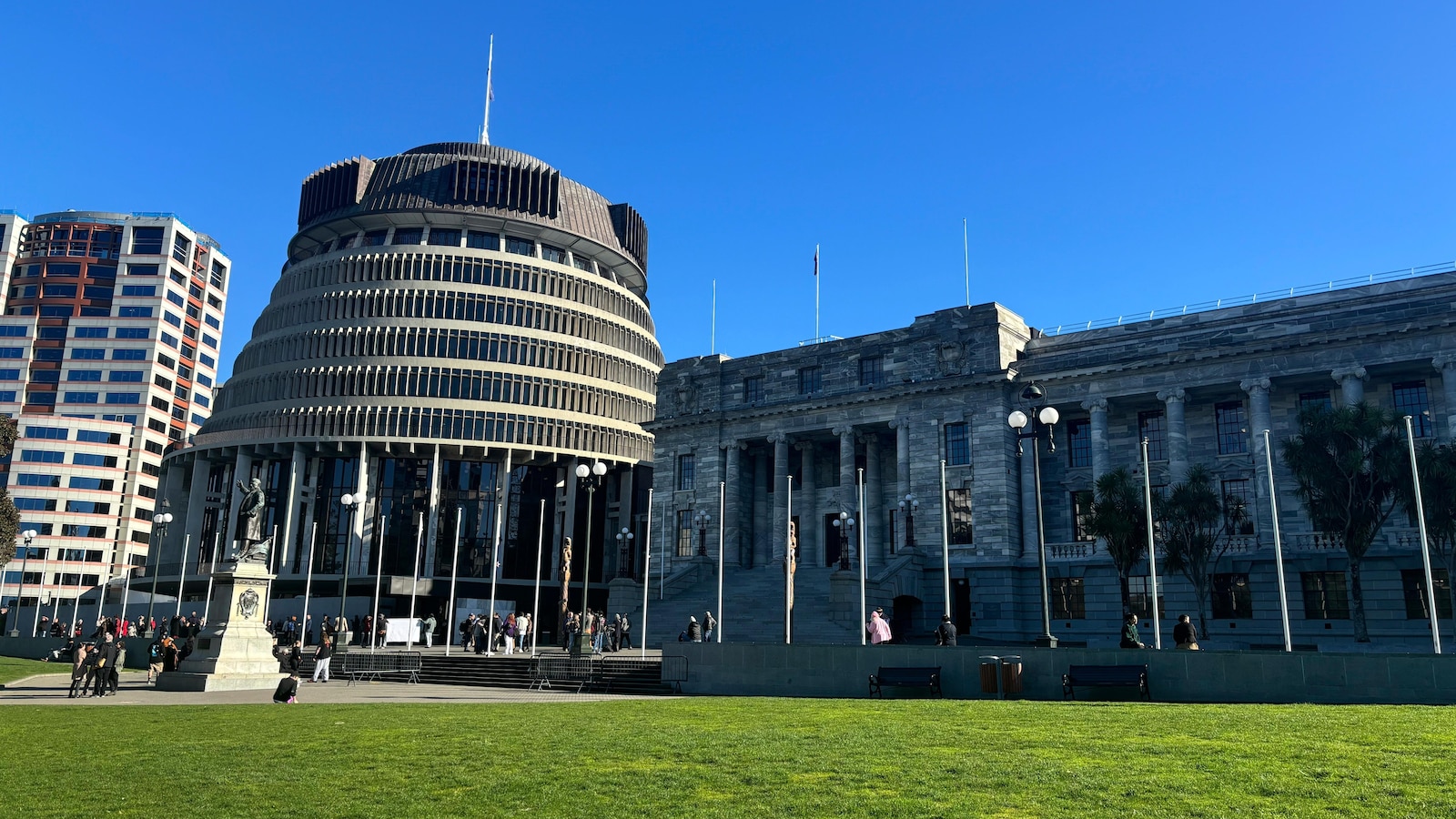
    WELLINGTON, New Zealand — Google said Friday it will stop linking to New Zealand news content and will reverse its support of local media outlets if the government passes a law forcing tech companies to pay for articles displayed on their platforms.

    The vow to sever Google traffic to New Zealand news sites — made in a blog post by the search giant on Friday — echoes strategies the firm deployed as Australia and Canada prepared to enact similar laws in recent years.

    It followed a surprise announcement by New Zealand’s government in July that lawmakers would advance a bill forcing tech platforms to strike deals for sharing revenue generated from news content with the media outlets producing it.

    The government, led by center-right National, had opposed the law in 2023 when introduced by the previous administration.

    But the loss of more than 200 newsroom jobs earlier this year — in a national media industry that totaled 1,600 reporters at the 2018 census and has likely shrunk since — prompted the current government to reconsider forcing tech companies to pay publishers for displaying content.

    The law aims to stanch the flow offshore of advertising revenue derived from New Zealand news products.

    Google New Zealand Country Director Caroline Rainsford wrote Friday that the firm would change its involvement in the country’s media landscape if it passed.

    “Specifically, we’d be forced to stop linking to news content on Google Search, Google News, or Discover surfaces in New Zealand and discontinue our current commercial agreements and ecosystem support with New Zealand news publishers,” she wrote.

    Google’s licensing program in New Zealand contributed “millions of dollars per year to almost 50 local publications,” she added.

    The News Publishers’ Association, a New Zealand sector group, said in a written statement Friday that Google’s pledge amounted to “threats” and reflected “the kind of pressure that it has been applying” to the government and news outlets, Public Affairs Director Andrew Holden said.

    The government “should be able to make laws to strengthen democracy in this country without being subjected to this kind of corporate bullying,” he said.

    Australia was the first country to attempt to force tech firms — including Google and Meta — to the bargaining table with news outlets through a law passed in 2021. At first, the tech giants imposed news blackouts for Australians on their platforms, but both eventually somewhat relented, striking deals reportedly worth 200 million Australian dollars ($137 million) a year, paid to Australian outlets for use of their content.

    But Belinda Barnet, a media expert at Swinburne University in Melbourne, said Meta has refused to renew its contracts with Australian news media while Google is renegotiating its initial agreements.

    As Canada prepared to pass similar digital news bargaining laws in 2023, Google and Meta again vowed to cease their support for the country’s media. Last November, however, Google promised to contribute 100 million Canadian dollars ($74 million) — indexed to inflation — in financial support annually for news businesses across the country.

    Colin Peacock, an analyst who hosts the Mediawatch program on RNZ, New Zealand’s public radio broadcaster, said Google “doesn’t want headlines around the world that say another country has pushed back” by enacting such a law.

    While Google pointed Friday to its support of local outlets, Peacock said one of its funding recipients – the publisher of a small newspaper – had told a parliamentary committee this year that the amount he received was “a pittance” and not enough to hire a single graduate reporter.

    Minister for Media and Communications Paul Goldsmith told The Associated Press in a written statement on Friday that he was still consulting on the next version of the bill.

    “My officials and I have met with Google on a number of occasions to discuss their concerns, and will continue to do so,” he said.

    Goldsmith said in July that he planned to pass the law by the end of the year.

    ——

    Associated Press writer Rod McGuirk contributed reporting from Melbourne, Australia.

    Source link